
The office of Mr. Movafagh Al Rabiee, Iraq’s National Security Advisor, has issued a statement. 
The security forces of Iraq have arrested a member of Mojahedin Khalq Organisation (aka: MKO, MEK, PMOI, NCRI, Rajavi cult) after he failed to carry out his suicide mission inside an Iraqi security base.
According to the source this resident of Ashraf camp (MKO base) gave himself up and is now being kept in secure and safe conditions.
According to the statement this member of Mojahedin Khalq has now complained about the severe exercise of torture and brainwashing techniques employed by the heads of the organisation.
According to his written statements, he claims that: “I was sent with a clear and precise plan to perform a suicide mission in this Iraqi base”.
According to the statement of the office of Iraq’s National Security Advisor, “the aim of this suicide attack has been to put pressure on the security forces of Iraq, to entangle them in this because it is this new force that has taken over the security of Ashraf camp from January 01, 2009”
The statement says it is believed that this was to be used in the media in the Arab world as well as the western media by MKO and its supporters. It also has the aim of making the disaffected members inside the camp afraid of giving themselves up to the Iraqi forces.
The statement adds that every effort is being made to either repatriate him voluntarily or find another country to transfer him. The Iraqi government wishes to announce that while the government of Iraq is committed to all its international obligations, including any promises made to the United State administration, that: “the security forces of Iraq are aware and conscious of the fruitless activities of Mojahedin Khalq Organisation in creating disturbances in Iraqi society and have been briefed to be able to carry out their duties”.
Buratha News in Baghdad, January 19, 2009
http://burathanews.net/news_article_58139.html
The U.S. State Department reaffirmed its designation of the anti-Iran Mojahedin-e Khalq Organization as a terrorist organization.
The presence in Iraq of the MKO has long been a source of friction between Washington and Baghdad, which intends to expel the terrorist group.
The MKO had filed a petition for revocation of its designation as a terrorist organization. But U.S. Secretary of State Condoleezza Rice wrote in a notice published Monday in the Federal Register that after reviewing the case she determined that the designation is still valid and appropriate.
Iraq’s government has long sought to get rid of the MKO, but the issue took on new urgency when Iraq assumed greater sovereignty Jan. 1 under a new security agreement that gave the Iraqis responsibility for Camp Ashraf.
Prime Minister Nouri al-Maliki, said on Jan. 1 that the Mojahedin-e Khalq Organization can ""no longer operate in Iraq"".
The MKO, whose main stronghold is in Iraq, is blacklisted by much of the international community, including the United States.
The MKO is on the European Union’s list of terrorist organizations subject to an EU-wide assets freeze, and has been designated by the U.S. government as a foreign terrorist organization. Yet, the MKO puppet leader, Maryam Rajavi, who has residency in France, regularly visits Brussels and despite the ban enjoys full freedom in Europe.
The MKO is behind a slew of assassinations and bombings inside Iran, a number of EU parliamentarians said in a recent letter in which they slammed a British court decision to remove the MKO from the British terror list. The EU officials also added that the group has no public support within Iran because of their role in helping Saddam Hussein in the Iraqi imposed war on Iran (1980-1988).
In recent months, high-ranking MKO members have been lobbying governments around the world in the hope of acknowledgement as a legitimate opposition group.
MKO is an exiled cult-like organization that resorts to armed attacks to destabilize the government in Tehran.
The US State Department has declared that the official designation of Mujahedin Khalq Organization as a terrorist group is appropriate.
In a notice published Monday in the Federal Register, US Secretary of State Condoleezza Rice announced that the MKO group should remain in its list of terrorist organizations.
The US announcement comes amid Iraqi government efforts to expel members of the terrorist group. Baghdad assumed control of the security of Camp Ashraf, the main MKO military base in Iraq’s Diyala province, on January 1, 2009.
The Mujahedin Khalq Organization is blacklisted by many countries, including EU member states and the United States as a terrorist organization. It relocated to Camp Ashraf from Iran after the Islamic Revolution.
Prior to the US-led invasion of Iraq in 2003, the MKO enjoyed the support of Iraqi dictator Saddam Hussain, who provided the group with arms and military equipment to launch attacks against the Islamic Republic during the Iraqi war against Iran (1980-88).
The Iraqi government says the MKO has played a significant role in destabilizing the war-torn country, blaming the group for terrorist attacks within Iraq.
The recent move provoked the group to file a petition in order to take the case to the court.”We will take the case to the court and we will win,” a Paris-based spokesman for the group, Shahin Gobadi, proclaimed.
The MKO has sought to have the group removed from the list of terrorist organizations, lobbying the European parliament and officials.
Baghdad urges the expulsion or relocation of the terrorist group, saying the MKO presence at Camp Ashraf may strain its diplomatic relations with Tehran.
In addition to terrorist attacks within Iran, which claimed the lives of 12,000 civilians, the MKO helped Saddam in suppressing Iraqi Kurds.
Iraqi govt won’t forcibly evict Iranians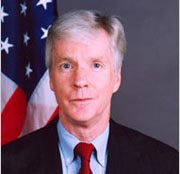
The Iraqi government has promised it won’t forcibly evict an Iranian opposition group based in Iraq since Saddam Hussein’s era, the U.S. ambassador said in a television interview broadcast Saturday.
The People’s Mujahedeen Organization of Iran, also known as the Mujahedeen Khalq, fears Iran is pressuring Iraq to expel its members and force them back to Iran.
Iraq’s government has taken over national security from the Americans under a new agreement. But the U.S. Embassy has said American forces remain at the group’s base known as Camp Ashraf.
U.S. Ambassador Ryan Crocker pointed out the Americans have designated the People’s Mujahedeen as a terrorist organization, and he understands the Iraqi government wants the group removed from its territory.
But he said the Iraqis have promised to respect the human rights of the group’s members."We’ve discussed this issue intensively with the Iraqi government," he told the U.S.-funded Alhurra television station. "They have provided assurances that none of these individuals will be forcibly sent to a third country where they have reason to fear for their safety or well-being, and we know those assurances will be respected."
Iraq’s deputy Foreign Minister Labid Abbawi said the government has been working with international agencies to try to find an acceptable way to remove the group, perhaps by finding other countries willing to take them.
"The Iraqi government’s position is that members of the Mujahedeen Khalq are unwanted here and they should leave Iraq and their camp should be closed, but Iraq will not make them leave forcibly," he told The Associated Press.
"We do not want to put their lives at stake," Abbawi said. "Even for those who wish to return to Iran, we have already gained assurances from Iranian officials that they will face no danger and we have ongoing talks regarding this issue with Tehran."
The People’s Mujahedeen, which allied with Saddam during the 1980s Iran-Iraq war, has about 3,500 people at Camp Ashraf. When U.S.-led troops overthrew the regime, they demilitarized the group and confined its fighters to the compound northeast of Baghdad, under the protection of the multinational forces.
"Clearly, Iraq would like to see an organization that they too consider a terrorist organization no longer on their soil," Crocker said. "At the same time, like a responsible democracy, they have recognized that these individuals have basic humans rights, and they have provided assurances to uphold them."
The U.S. Embassy said in December that American troops would remain at Camp Ashraf "to assist the government of Iraq in carrying out its assurances of humane treatment of the residents" after the transition to the new security agreement, which took effect on Jan. 1.
By SAMEER N. YACOUB
It is unfortunate to hear every few days a new story of terrorism and acts of extremism hits the news in which a number of innocent civilians are targeted and perished. It is not important to which country or race the victims belong; they are all humans and terrorism has to be condemned in any form. Of the most despised form is when instead of condemning the act itself, a party takes it an opportunity to blame another party to acquit itself of the deed, regardless of having played a role in the incident, or the main perpetrators to whom it has close affinity or glorifies their atrocity.
Reported by Iranian Fars News Agency originally in Persian, a man riding a bike hurled grenade toward a line of civilians who were moving as mourners of Ashura rituals in the Iranian eastern city of Torbat Jam on January 7, leaving a dead and a number of people wounded. The attacker was, however, arrested and awaits the trial and the punishment that he deserves regardless of to what group it belongs. But to hear a terrorist group that has shed the blood of hundreds of Iranian innocent people and has still escaped trial being sympathetic towards the attacking terrorist is absolutely intolerable.
Covering the report of the incident, the MKO-run media is taking the side of the attacker putting the blame on Iranian regime. It is not at all important that a man has been killed and many injured but what is of significance for them is that the regime is claimed to be “plotting to execute prisoners and dissidents”. Is it actually a granted permission to dissidents and opponents to kill people as a justified means to achieve their ends as MKO has followed the line itself? How can the group expect to be delisted from the terrorist lists when it still glorifies terrorism as an appropriate method to fight the opponent party? The Western advocates of the group who believe that MKO has denounced terrorism and violence are recommended to read between the lines of the reports delivered by MKO.
Maliki said Iraq”will not let any terrorist party harm its relations with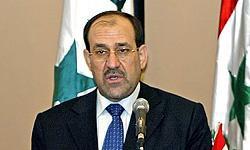 neighboring governments”and named the Mjahedin Khalq (MKO, MEK,PMOI,Rajavi cult)
Iraq’s government said on Wednesday it wanted 3,500 members of the terrorist Mojahedin-e Khalq Organization (MKO/PMOI) in Camp Ashraf, north of Baghdad, to leave the country.
The MKO, whose main stronghold is in Iraq, is blacklisted by much of the international community, including the United States.
Maliki repeated his government’s call for members of the group to leave in his comments to Al-Alam. He also said Iraq would not force them to leave to Iran or another country but would leave the choice to them.
Maliki said Iraq”will not let any terrorist party harm its relations with neighboring governments”and named the MKO, the Kurdistan Workers Party (PKK) that wants a homeland in southeast Turkey and PKK offshoot, the Party of Free Life of Kurdistan (PJAK), that stages terrorist operations in Iran’s western border areas and often clashes with Iranian forces.
MKO started assassination of the citizens and officials after the revolution in a bid to take control of the newly established Islamic Republic. It killed several of Iran’s new leaders in the early years after the revolution, including the then President, Mohammad Ali Rajayee, Prime Minister, Mohammad Javad Bahonar and the Judiciary Chief, Mohammad Hossein Beheshti who were killed in bomb attacks by MKO members in 1981.
The group fled to Iraq in 1986, where it was protected by Saddam Hussein and where it helped the Iraqi dictator suppress Shiite and Kurd uprisings in the country.
The terrorist group joined Saddam’s army during the Iraqi imposed war on Iran (1980-1988) and helped Saddam and killed thousands of Iranian civilians and soldiers during the US-backed Iraqi imposed war on Iran.
Since the 2003 US invasion of Iraq, the group, which now adheres to a pro-free-market philosophy, has been strongly backed by neo-conservatives in the United States, who also argue for the MKO to be taken off the US terror list.
The MKO has been in Iraq’s Diyala province since the 1980s…..
Full Report:
Maliki: Iraq won’t Be Used to Threaten Neighbors
TEHRAN (FNA)- Iraq’s prime minister, who started a visit to Iran on Saturday, said his government would not allow Iraq to be used as a base to threaten its neighbors.
Prime Minister Nuri al-Maliki told Iran’s Arabic news channel on Friday that Baghdad”will not let Iraq be a launching ground to threaten any country,”Al-Alam said on its website.
US forces in Iraq came under Iraqi mandate on January 1, a move Maliki said restored sovereignty nearly six years after the US-led invasion.
Iran is embroiled in a row over its nuclear plans with the United States, which has refused to rule out military action to end the dispute.
Washington and its Western allies accuse Iran of trying to develop nuclear weapons under the cover of a civilian nuclear program, while they have never presented any corroborative evidence to substantiate their allegations. Iran denies the charges and insists that its nuclear program is for peaceful purposes only.
Tehran stresses that the country has always pursued a civilian path to provide power to the growing number of Iranian population, whose fossil fuel would eventually run dry.
A US attack on the Syrian village of Sukkariyah on October 26, has raised speculation about the likelihood of a US unilateral strike on the Islamic Republic.
Speculation that Israel could also bomb Iran mounted after a big Israeli air drill in June. In the first week of June, 100 Israeli F-16 and F-15 fighters reportedly took part in an exercise over the eastern Mediterranean and Greece, which was interpreted as a dress rehearsal for a possible attack on Iran’s nuclear installations.
Iran has warned that it would target Israel and its worldwide interests in case it comes under attack by the Tel Aviv.
The United States has always stressed that military action is a main option for the White House to deter Iran’s progress in the field of nuclear technology.
Iran has warned that in case of an attack by either the US or Israel, it will target 32 American bases in the Middle East and close the strategic Strait of Hormoz.
An estimated 40 percent of the world’s oil supply passes through the waterway.
Analysts say any US attack against Iran would most likely involve air strikes rather than any land invasion. Washington used its bases in regional countries to attack Iraq in 2003.
Maliki also”emphasized that Iraq will open all pending files with neighboring states and others in order to build sound relations with them,”the report said, adding that Iraq would be an”axis for positive relations with Iran”.
Iraq’s government said on Wednesday it wanted 3,500 members of the terrorist Mojahedin-e Khalq Organization (MKO) in Camp Ashraf, north of Baghdad, to leave the country.
The MKO, whose main stronghold is in Iraq, is blacklisted by much of the international community, including the United States.
Maliki repeated his government’s call for members of the group to leave in his comments to Al-Alam. He also said Iraq would not force them to leave to Iran or another country but would leave the choice to them.
Maliki said Iraq”will not let any terrorist party harm its relations with neighboring governments”and named the MKO, the Kurdistan Workers Party (PKK) that wants a homeland in southeast Turkey and PKK offshoot, the Party of Free Life of Kurdistan (PJAK), that stages terrorist operations in Iran’s western border areas and often clashes with Iranian forces.
MKO started assassination of the citizens and officials after the revolution in a bid to take control of the newly established Islamic Republic. It killed several of Iran’s new leaders in the early years after the revolution, including the then President, Mohammad Ali Rajayee, Prime Minister, Mohammad Javad Bahonar and the Judiciary Chief, Mohammad Hossein Beheshti who were killed in bomb attacks by MKO members in 1981.
The group fled to Iraq in 1986, where it was protected by Saddam Hussein and where it helped the Iraqi dictator suppress Shiite and Kurd uprisings in the country.
The terrorist group joined Saddam’s army during the Iraqi imposed war on Iran (1980-1988) and helped Saddam and killed thousands of Iranian civilians and soldiers during the US-backed Iraqi imposed war on Iran.
Since the 2003 US invasion of Iraq, the group, which now adheres to a pro-free-market philosophy, has been strongly backed by neo-conservatives in the United States, who also argue for the MKO to be taken off the US terror list.
The MKO has been in Iraq’s Diyala province since the 1980s.
Maliki is expected to meet Supreme Leader of the Islamic Revolution Ayatollah Seyed Ali Khamenei, and President Mahmoud Ahmadinejad during his two-day visit.
TEHRAN (FNA)- Prime Minister Nuri al-Maliki vowed that he would expel the terrorist Mojahedin-e Khalq Organization (MKO) from the country after taking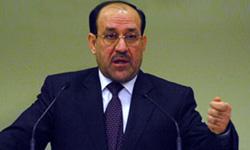 over their base from US forces.
"Based on taking over everything and in accordance with our constitution and our policies of opening up to our neighbors… our forces are going to take full control of the camp where the Mojahedin-e Khalq Organization live,"" Maliki said alluding to Camp Ashraf.
Maliki was speaking to reporters on the sideline of a ceremony during which the United States handed over to Iraqi forces security control of the Green Zone, symbol of the American occupation of the country.
The MKO "is a terrorist organization and thus cannot operate in Iraq because it will create a political crisis in contradiction with the constitution," Maliki said.
"We will treat them based on the international laws. We will not force them to go back (to Iran) but we will give them the opportunity to either go home, or to another country," he added.
"(Staying in) Iraq will not be an alternative for them," Maliki said.
Maliki, who was speaking ahead of a visit Saturday to Tehran, told Iranian President Mahmoud Ahmadinejad in March that he would take steps to ensure that Iraq was not used by "terrorists" from Al-Qaeda, or from Iranian rebel groups.
US forces confiscated the organization’s weapons following the March 2003 US-led invasion, taking away some 300 tanks, many of which were subsequently given to the Iraqi armed forces.
Two years ago Iraq decided to restrict the movements of the estimated 3,500 MKO members to their base at Camp Ashraf, near the Iranian border, where they have been held under a kind of US-supervised house arrest.
The MKO, whose main stronghold is in Iraq, is blacklisted by much of the international community, including the United States.
The MKO is on the European Union’s list of terrorist organizations subject to an EU-wide assets freeze, and has been designated by the US government as a foreign terrorist organization. Yet, the MKO puppet leader, Maryam Rajavi, who has residency in France, regularly visits Brussels and despite the ban enjoys full freedom in Europe.
The MKO is behind a slew of assassinations and bombings inside Iran, a number of EU parliamentarians said in a recent letter in which they slammed a British court decision to remove the MKO from the British terror list. The EU officials also added that the group has no public support within Iran because of their role in helping Saddam Hussein in the Iraqi imposed war on Iran (1980-1988).
Many of the MKO members abandoned the terrorist organization while most of those still remaining in the camp are said to be willing to quit but are under pressure and torture not to do so.
A May 2005 Human Rights Watch report accused the MKO of running prison camps in Iraq and committing human rights violations.
According to Human Rights Watch report, the outlawed group puts defectors under torture and jail terms.
The group, founded in the 1960s, blended elements of Islamism and Stalinism and participated in the overthrow of the US-backed Shah of Iran in 1979. Ahead of the revolution, the MKO conducted attacks and assassinations against both Iranian and Western targets.
Leaders of the group have been fighting to shed its terrorist tag after a series of bloody anti-Western attacks in the 1970s, and nearly 30 years of violent struggle against the Islamic Republic of Iran.
In recent months, high-ranking MKO members have been lobbying governments around the world in the hope of acknowledgement as a legitimate opposition group.
The UK initiative, however, has prompted the European Union to establish relations with the exiled organization now based in Paris. The European Court of First Instance threw its weight behind the MKO in December and annulled its previous decision to freeze its funds.
The group started assassination of the citizens and officials after the revolution in a bid to take control of the newly established Islamic Republic. It killed several of Iran’s new leaders in the early years after the revolution, including the then President, Mohammad Ali Rajayee, Prime Minister, Mohammad Javad Bahonar and the Judiciary Chief, Mohammad Hossein Beheshti who were killed in bomb attacks by MKO members in 1981.
The group fled to Iraq in 1986, where it was protected by Saddam Hussein and where it helped the Iraqi dictator suppress Shiite and Kurd uprisings in the country.
The terrorist group joined Saddam’s army during the Iraqi imposed war on Iran (1980-1988) and helped Saddam and killed thousands of Iranian civilians and soldiers during the US-backed Iraqi imposed war on Iran.
Since the 2003 US invasion of Iraq, the group, which now adheres to a pro-free-market philosophy, has been strongly backed by neo-conservatives in the United States, who also argue for the MKO to be taken off the US terror list.
The MKO has been in Iraq’s Diyala province since the 1980s.
FNA- 2009-01-03
UK wants”partnership”not”conflict”with Iran, says minister
The British government is insistent that it wants to improve relations with Iran  but remains adamant in continuing with its sticks-and-carrots approach in the dispute provoked over the country’s civilian nuclear programme.
“First I would like to make very clear we haven’t got any hostility towards Iran. Iran is a country with a long and distinguished history, a magnificent culture,”Foreign Office Minister Bill Rammell said.
“It is a country we want a strong and cooperative relationship with. We very much want a modern relationship as well one based on partnership not on conflict,”Rammell said.
But setting out Britain’s position in an interview with IRNA, he said that this could not be achieved at the moment because of”serious and legitimate concerns.”
These included not only the dispute over Iran’s nuclear programme but accusations of alleged support for terrorism and the promotion of instability in the region.
The minister, who was recently appointed for the Middle East, cited such claims that Iran was supporting the Taliban in Afghanistan, despite it warning the West about its dangers many years before its overthrow in 2001.
He denied that Britain itself was supporting terrorism by recently deproscribing the Mojahedin Khalq Organisation (MKO), which has been responsible for killing tens of thousands of Iranians, insisting it was a court decision opposed by his government.
When challenged, Rammell was unable to name any other terrorist group that was not outlawed by Britain, but said he wanted to make clear that his government still recognized the MKO’s”long-track record”of involvement in terrorism in Iran and the region.
On Thursday, former UK ambassador to Tehran Sir Richard Dalton suggested a new approach was needed to resolve the dispute over Iran’s nuclear programme after five years of deadlock.
A new report on Iran: Breaking the Nuclear Deadlock, edited by Dalton, recommended that Washington engages with Iran and that US president-elect Barack Obama appoints a special envoy as part of a plan to normalize relations with Tehran.
But Rammell remained adamant that Britain was sticking with its current strategy ahead of Obama coming to power, saying the 5 plus 1 had made a”very substantial offer”of incentives to Iran, which had the choice to take it or face the prospect of”tougher”sanctions.
“We don’t want be in position of being at loggerheads with Iran,”the minister told IRNA.
“We want progressive and forward-looking relations.”
But at the root of the deadlock preventing negotiations remains the demand made on Iran to suspend the enrichment of uranium, which it is entitled to do under the Non-Proliferation Treaty.
Recent calls to drop the precondition to talks have been made among others by former American National Security Adviser Zbigniew Brzezinski and for EU External Affairs Commissioner Chris Patten, but this was rejected by the British Foreign Office Minister.
He argued that the package offer was”very reasonable”and that he remained hopeful Iran would accept it.
At the same time, he threatened that pressure would be stepped up for Iran to”make the right choice.”
But when challenged, Rammell refused to say that the real intentions of the US and UK to deny Iran its right to enrich uranium by wanting to make the suspension permanent.
“We want Iran to suspend and engage,”he said without mentioning any time limit. If Iran does, it can meet its concerns for access to civilian nuclear power through the offer made, he suggested.
The Iranian government Monday hailed a November decision by Canada to maintain the anti-Iran Mojahedin-e Khalq Organization on its list of terrorist organizations.
Peter Van Loan, the Canadian public safety minister, said Ottawa in its final review of terrorist activity decided to keep the dissident MKO blacklisted, based on its past activities.
The European Court of First Instance last week, however, alleged that the European Union had "violated the rights of defense" of the MKO, adding Europe had not provided sufficient grounds to include the group on its list of terrorist entities.
The Canadian government last reviewed its list of terrorist organizations Nov. 20, before the European decision, according to the Web site for the Canadian Ministry of Public Safety.
Iranian Foreign Ministry Spokesman Hassan Qashqavi said the MKO had changed its tactics against Iran, slamming the court decision.
"Nothing has changed about the terrorist nature of the terrorist group. They are still following the same individuals, ideology and manifest," he said.
Ottawa reviews its list of terrorist organizations every two years.
The MKO, whose main stronghold is in Iraq, is blacklisted by much of the international community, including the United States.
The MKO is on the European Union’s list of terrorist organizations subject to an EU-wide assets freeze, and has been designated by the US government as a foreign terrorist organization. Yet, the MKO puppet leader, Maryam Rajavi, who has residency in France, regularly visits Brussels and despite the ban enjoys full freedom in Europe.
The MKO is behind a slew of assassinations and bombings inside Iran, a number of EU parliamentarians said in a recent letter in which they slammed a British court decision to remove the MKO from the British terror list. The EU officials also added that the group has no public support within Iran because of their role in helping Saddam Hussein in the Iraqi imposed war on Iran (1980-1988).
A May 2005 Human Rights Watch report accused the MKO of running prison camps in Iraq and committing human rights violations.
According to Human Rights Watch report, the outlawed group puts defectors under torture and jail terms.
The group, founded in the 1960s, blended elements of Islamism and Stalinism and participated in the overthrow of the US-backed Shah of Iran in 1979. Ahead of the revolution, the MKO conducted attacks and assassinations against both Iranian and Western targets.
Leaders of the group have been fighting to shed its terrorist tag after a series of bloody anti-Western attacks in the 1970s, and nearly 30 years of violent struggle against the Islamic Republic of Iran.
In recent months, high-ranking MKO members have been lobbying governments around the world in the hope of acknowledgement as a legitimate opposition group.
The UK initiative, however, has prompted the European Union to establish relations with the exiled organization now based in Paris. The European Court of First Instance threw its weight behind the MKO in December and annulled its previous decision to freeze its funds.
The group started assassination of the citizens and officials after the revolution in a bid to take control of the newly established Islamic Republic. It killed several of Iran’s new leaders in the early years after the revolution, including the then President, Mohammad Ali Rajayee, Prime Minister, Mohammad Javad Bahonar and the Judiciary Chief, Mohammad Hossein Beheshti who were killed in bomb attacks by MKO members in 1981.
The group fled to Iraq in 1986, where it was protected by Saddam Hussein and where it helped the Iraqi dictator suppress Shiite and Kurd uprisings in the country.
The terrorist group joined Saddam’s army during the Iraqi imposed war on Iran (1980-1988) and helped Saddam and killed thousands of Iranian civilians and soldiers during the US-backed Iraqi imposed war on Iran.
Since the 2003 US invasion of Iraq, the group, which now adheres to a pro-free-market philosophy, has been strongly backed by neo-conservatives in the United States, who also argue for the MKO to be taken off the US terror list.
The MKO has been in Iraq’s Diyala province since the 1980s.
Two Iranian exiles detained on Sunday. Iran is demanding that Finland extradite two Iranian men whom it accuses of being members of the MKO organisation, which it considers a terrorist group.
The two were stopped while entering Finland on Sunday.
The chairwoman of the Parliament’s Legal Affairs Committee, Heidi Hautala (Green) says that the men came to Finland to take part in preparations for the visit of the organisation’s leader Maruam Rajavi, who was invited to Finland by the Parliament’s human rights group.
Officials held the two at Helsinki-Vantaa Airport on the basis of an international arrest warrant issued by Interpol.
Helsingin Sanomat has learned that the warrant was issued at the request of Iran. There was no suspicion that the two would commit crimes while in Finland.
The police kept the two in custody from Sunday until the Wednesday court hearing.
Police asked the court to allow the two to be kept in jail until Finland decides on Iran’s extradition request.
The court let the men go, but they were ordered not to leave the country.
The Ministry of Justice will decide on the extradition request. Helsingin Sanomat was not able to reach Minister of Justice Tuija Brax (Green).
“It is very dangerous to let them go even for a short time, as they can flee. The Finns are not used to these kinds of people”, said Iranian Ambassador Reza Nazarahari to Helsingin Sanomat on Wednesday evening.
He says that the two should be handed over to Iran to face trial (…)
Helsingin Sanomat, Finland