Nejat Society
  • Home
  • Articles
  • Media
    • Cartoons
    • NewsPics
    • Photo Gallery
    • Videos
  • Publications
    • Books
    • Nejat NewsLetter
    • Pars Brief
  • About Us
  • Contact us
  • Editions
    • عربي
    • فارسی
    • Shqip
Nejat Society
Nejat Society
  • Home
  • Articles
  • Media
    • Cartoons
    • NewsPics
    • Photo Gallery
    • Videos
  • Publications
    • Books
    • Nejat NewsLetter
    • Pars Brief
  • About Us
  • Contact us
  • Editions
    • عربي
    • فارسی
    • Shqip
© 2003 - 2024 NEJAT Society. nejatngo.org
MEK defectors celebrate defection of Rafiq Dehghan
Former members of the MEK

MEK defectors celebrate defection of Rafiq Dehghan

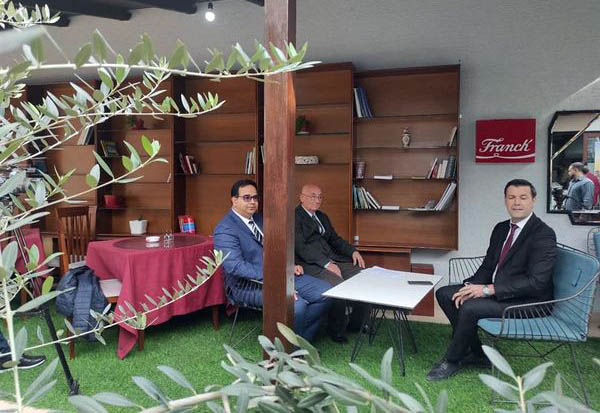
Defectors celebrated the official defection of Rafiq Dehghan from the Mujahedin Khalq.
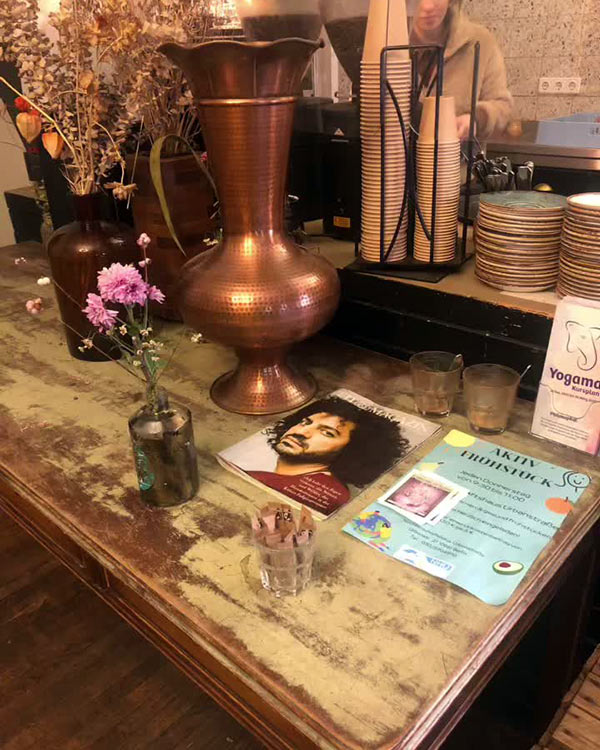
Survivors of the Cult of Rajavi once more gathered in the café owned by Hassan Heirani in Tirana to celebrate the official defection of Rafiq Dehghan after 17 years of mental and physical imprisonment in the group.
The MEK defectors published photos and video clips of their small party in the café on their Facebook and Instagram accounts.

MEK defectors celebrate defection of Rafiq DehghanMEK defectors celebrate defection of Rafiq Dehghan

MEK defectors celebrate defection of Rafiq Dehghan

MEK defectors celebrate defection of Rafiq Dehghan

MEK defectors celebrate defection of Rafiq Dehghan

MEK defectors celebrate defection of Rafiq Dehghan

October 10, 2021 0 comments
FacebookTwitterPinterestWhatsappTelegramSkypeEmail
Rafiq Dehghan
Former members of the MEK

Rafiq Dehghan declare defection from the MEK

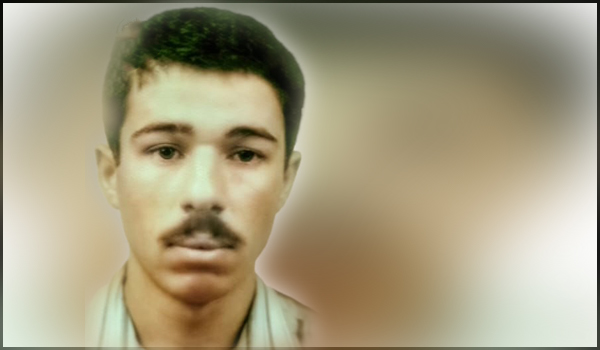
The former member, Rafiq Dehghan, officially declared his disassociation from the Mujahedin Khalq Organization.

Rafiq Dehghan from Iranshahr, Baluchestan, Iran, left the MEK in Albania after 17 years. In the announcement published by Rafiq on MEK Survivors’ website, he explains how he was deceived to join the group as a young Baluch who was seeking a happy life.

“About 17 years ago, I got to know a human trafficker named Ali,” he writes. “He told me that he could take me to Europe and I accepted what he said. After three days, I crossed the Iranian border and went to Pakistan where an Iranian man called Farid received me. Ali said that Farid would help me travel to Europe. Farid took me to an apartment in Golshahr region in Karachi.”

Though, Farid told Rafiq that he had to go to Iraq and stay there for some time before immigrating to Europe. “I asked him how long I had to stay in Iraq.” Rafiq recounts. “He told me that it would not take so long.”
By the way, Rafiq was sent to Iraq with a forged passport after bribing the Pakistani security guard at the airport. Three members of the MEK received Rafiq at Baghdad airport. “They took me to a paramilitary complex,” he recalls. “In the afternoon, I was taken to Camp Ashraf in which a man named Aidin received me. He gave me a military uniform and a pair of military boots and told me, ‘Now, you are a Mujahed’ “.

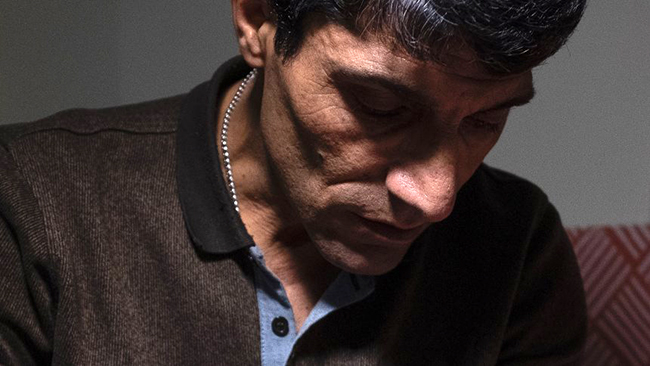
Rafiq Dehghan

Rafiq Dehghan; MEK defector in Albania

Rafiq was shocked. He had no way out. He had to stay in Iraq. “I spent tough years in Camp Ashraf until we were relocated in Albania,” he said. In Albania, he started doubting the MEK leaders who according to him were “just liars and storytellers whose lies had coerced me and brainwashed me.”
In Albania, Rafiq could manage to contact his family via another defector, Sarfaraz Rahimi who was also from Sistan Baluchestan. “I realized that the MEK cult had told me lies about my family,” he writes. “Families are not mercenaries. The MEK leaders themselves are the top mercenaries who are henchmen of Israel and the US and Saudi Arabia.”

After Rafiq left the MEK, he was not left free by the MEK agents. They forced him to spy on other defectors of the group in Albania in exchange for giving him the monthly payment that the UNHCR is supposed to pay every refuge seeker including all MEK members.
“For a period of time, I had to spy on defectors,” Rafiq admits. “Until the day I ran into Sarafraz in the Cafe. It was his birthday. I joined him and other defectors who were having a party in the Café but then I was punished by the MEK agents. They told me that I had passed the red line.”

In order to punish him, MEK agents Javad Khorasan and Abdollah Tehrani forced him to sign a paper containing some fabricated information on the defectors accusing them of being agents of the Iranian intelligence.
Rafiq Dehghan denied all the fabricated lies that the MEK websites published under his name. “I had financial issues,” Rafiq stated. “The cult commanders confiscated the monthly money that was mine. I had no income. Sarfaraz and his friends always helped me when I needed money. I felt guilty when I was spying against them.”

Ultimately, Rafiq Dehghan decided to defect the MEK completely. “I just want to live a free life and denounce the Cult of Rajavi that troubled me and others who are like me.”

October 10, 2021 0 comments
FacebookTwitterPinterestWhatsappTelegramSkypeEmail
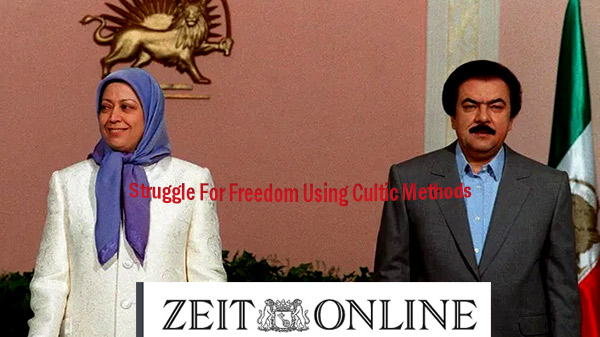
Maryam and Massoud Rajavi
Mujahedin Khalq; A proxy force

A glance at the crimes of the MEK in killing the Kurds

In the spring of 1991, at the request of Saddam, the Mojahedin Khalq Organization killed the people of Iraqi Kurdistan; Of course, the organization denies such things these days.

In the spring of 1991, during the first Persian Gulf War, the People’s Mojahedin Organization (MKO) killed the people of Iraqi Kurdistan.

However, in recent years, the Mojahedin Khalq Organization (MKO) has denied any involvement in the clashes with Iranian forces Mohammad Mohadessin, the foreign policy chief of the National Council of Resistance of Iran in Paris, said in an interview: “The Mojahedin did not cooperate with any government against the opposition of any country, including the Iraqi opposition.” But there is evidence that the MEK committed Kurdish genocide in an operation called “Pearl” after the imposed war and in support of Saddam’s Ba’athist regime.

In the first Persian Gulf War, following the weakening of Saddam’s Ba’athist regime, Iraqi Kurds, who had been chemically bombed by Saddam’s army in Halabja and Khurmal three years earlier, seized the opportunity and captured the Kurdish territory.

Maryam and Massoud Rajavi

Operation Pearl of the MEK against the Kurds

At the direct request of the Iraqi army, Massoud Rajavi sent troops to the Kurdish areas to save Saddam’s regime, under the pretext of the Islamic Republic of Iran’s forces attacking the MEK bases, and suppressed the Iraqi Kurds until the Iraqi Ba’athist forces which all gone south, return to northern Iraq.

Rajavi claimed that the Revolutionary Guards brigades had captured the city of Khanaqin militarily and issued an order to move artillery, tanks and infantry to the city at night. The city of Khanaqin was under heavy bombardment for a week, and many Kurdish forces opposed to Saddam’s regime were killed, and many homes in Khanaqin were completely destroyed in the operation.

Prior to the invasion to Kuwait, Saddam’s army had evacuated towns and villages in some specific area of northern Iraq from the Kurdish population, killed a number of people in the area, and exiled many to Iran and Turkey.

After Operation Forough Javidan, which led to the defeat of the MEK in Iran, Saddam entrusted the guarding of northern of Iraq, region of Kurdish villages to the Mojahedin Khalq Organization that with the beginning of the first Persian Gulf War, Rajavi’s forces went to that area from Ashraf garrison.

The Kurds were able to take control of the cities of Mosul and Sulaymaniyah and then advance towards cities such as Tuz, Kafri and Jalula. It was enough for the Kurds to cross the Sulaymaniyah Highway and reach the main road and advance towards Baghdad, in which case it would be very difficult to confront them; But the so-called Liberation Army of the Mojahedin Khalq Organization at this stage carried out Operation “Pearl 1 and 2” and suppressed the Kurds, but the Peshmerga in various cities prevented their advance.

Also, a week after Kurdish forces took control of northern Iraqi cities, Mujahedin-e Khalq forces entered Kirkuk in Kurdish costume with posters of Massoud Barezani and Jalal Talebani. They surprised Kurdish militants and Peshmerga in Kirkuk and caused the city of Kirkuk was recaptured by the Ba’athist government, during which, according to Iraqi Kurdish forces, hundreds of Kurdish residents of Kirkuk were killed by members of the MEK.

Kurds Massacre

Separators of the organization; Witnesses of the operation

Many members of the organization have shared narrations of the operation. Even some members left the organization due to the attack on the Iraqi Kurds, although these were the people who escaped the purge of the organization. “I did not say anything for fear of being harmed or sending me to the Iraqi intelligence” said Shokrollah Gorgizadeh, a separated member of the organization.

Shams Haeri, an old and separated member of the organization, wrote in the book Mordab: “The Mojahedin Khalq Organization occupied a large part of the Kurdish areas … before the Kurds came to these areas. In the city of Sulaymanbag, the first Mojahedin operation against the Kurds began. The weapons of these Peshmerga were Kalashnikovs and sniper rifles, but the MEK attacked them with B.M.P, A55 tanks and other heavy weapons.

… Many Iraqi Kurdish soldiers who fled the war and wanted to go to their families, crossing the mountains for fear of the Iraqi army and the insecurity of the roads, were attacked and killed by the MEK on the way.”

In this book, Haeri, in addition to stating that members of the Mojahedin Khalq Organization shot at Kurdish houses in the city of Tuz and looted their property, responds to the organization’s claim in recent years: “The MEK has called the war against the Kurds “Operation Pearl” to cover up Kurdish genocide and interfere in the internal affairs of the Kurds; If only in Khanaqin, that means in the border area between Iran and Iraq, a part of the Mojahedin Khalq forces… were attacked by the forces of the Islamic Republic; But in other places… there was no Revolutionary Guards. During the operation, four teenagers under the age of 20 were arrested and brought in front of Iraqi television cameras as ‘Guards’ to prove that the Iraqi Kurds were not – all – Kurds, but that agents of the regime were among them.”

Reza Asadi, a pilot and air force officer who was among the flight crews during the escape of Bani Sadr and Rajavi and was a member of the organization for many years and left the organization after a few years, has stated in his memoirs entitled “Vapasgara”: “Saddam had promised to stand in front of the Kurds until the Iraqi forces arrived and block the way for them … The MEK justified its forces and members by saying that they(the Kurds) were not – in fact – Kurds; but, it is the forces and soldiers of the Islamic Republic that are dressed as Kurds!”

Rajavi’s enmity with the Kurds

“Iranian soldiers, dressed in Kurdish uniforms, are trying to attack the Mujahedin,” – Massoud Rajavi told in briefing meeting to members of the organization. He said shortly afterwards when members became skeptical that “The Revolutionary Guards of the Islamic Republic and the Union of Kurdistan have united to attack the Mojahedin.”

After Operation Pearl, summarizing operations were held at Camp Ashraf. “The Iraqi Kurds were our long-time enemy … In this operation, we had strategic unity and common interests with the landlord and we saved the landlord (Saddam),” – Massoud Rajavi told in the meeting.

Maryam Rajavi also said: “I had previously told you that these people do not deserve to be shot and put them under the tank and keep the bullets for the guards.”

Majid Alamian, the commander of the 1st Axis Engineering, said in a report: “The locals, got killed with the forces surrounded by the armored and mechanized units of the First Axis and gathered in the heights of the Jebehdagh, we buried them with a loader, one of them was alive and was blown up several times by a person named Ghulam Nabi with a loader nail and hit the ground to be killed. This is the hatred of Maryam’s fighters against the Iraqi Kurds.”

Other documents and evidence

In terms of evidence, the Iraqi Kurds have repeatedly stated that they have documentary evidence that the MEK played a role in suppressing the 1991 Kurdish uprising.

After the situation calmed down, during Saddam’s visit to Diyala province, the governor of Diyala told Saddam in front of reporters’ cameras that “we owe Iraq and Diyala province to the services of the Mujahedin brothers.”

Saddam’s first deputy, Ezzat Ibrahim al-Duri, also congratulated Rajavi at the meeting of the Iraqi Ba’ath party after the repression of the Kurds, and everyone that was presented, applauded for a few minutes. The video of this meeting was broadcast by Rajavi at the internal meeting of the organization for all members.

Also in 2009, when the Iraqi Supreme Court was convened to investigate the crimes of the former Iraqi regime during the 1991 uprisings, it was announced that about 5,000 complaints had been filed against the Ba’athist regime and the Mujahedin Khalq Organization.

The Iraqi Kurds hate the MEK so much that after the fall of Saddam, they called for the trial of Massoud Rajavi, accused of collaborating with Saddam Hussein in suppressing the Kurdish people in Iraq.

By Jack Turner ,  geopolitica.ru

October 9, 2021 0 comments
FacebookTwitterPinterestWhatsappTelegramSkypeEmail
Abbas Golrizan uncle
Mujahedin Khalq Organization members' families

leaders of Camp Ashraf kidnapped Abbas from his family

Abbas Golrizan was a child when both his mother and father died. He was then raised by his uncle and his wife. His uncle was a farmer in one of the villages in the central province of Iran. He was 18 years old when he started serving as a soldier in the Iranian army. He went to the Iran-Iraq war front and soon he was taken as a war prisoner by the Iraqi forces.

“I and my sister got shocked to hear that Abbas was imprisoned by Iraqis,” Soltan Golrizan, Abbas’s sister says. “He used to write letters to us from Iraqi POW camp via the International Red Cross from time to time but when the war was over and eventually the Pows were released by the Iraqi government, Abbas did not return home.”

Abbas Golrizan family

Abbas Golrizan family

The Golrizan family tried to find Abbas. They were afraid of his being dead in Iraqi jail but they soon found out that Abbas had been taken to the camp of the Mujahedin Khalq Organization (MKO/ MEK/ PMOI/ Cult of Rajavi). Abbas has been in the MEK for over 30 years. His family have no access to him. Their only resort is writing letters to the Albanian authorities or to publish messages on the Internet.

The wife of Abbass’s uncle says that Abbas was like his son for her. “I miss him a lot, I hate the leaders of Camp Ashraf who kidnapped Abbas from his family,” she said in an interview with Nejat Society.
In her recent message to Abbas, Soltan Golrizan addresses her brother, “Abbas! You have not contacted me for many years. They showed me a photo of you, Last year. I could not believe it was you. You looked so old. What did the terrorist leaders of MEK do with you?”

Then she calls on the leaders of MEK, “Why did you imprison my brother? Why do you hate the Iranian people? Goddamn you! You made us suffer for years. You do not let my brother call me and you name yourself humans! In Iran, a prisoner has the right to visit his family. You are so cruel.”

October 6, 2021 0 comments
FacebookTwitterPinterestWhatsappTelegramSkypeEmail
Tahereh Nouri; MEK ex-member
Former members of the MEK

Tahereh was a prisoner of the MEK Cult

Tahereh Nouri was only twenty years old and the mother of a nine-months old baby when she was taken as a hostage by the Mujahedin Khalq Organization (MKO/ MEK/ PMOI/ Cult of Rajavi).
“As a young girl, I had married a greedy man who ruined my life,” Tahereh writes in the memoirs she has published on her experience of involvement with the MEK. “My husband was jailed in Arak, Iran, where he got to know a man named Mehdi.”

Mehdi was actually an MEK recruiter who succeeded to deceive Tahereh and her husband to join the MEK. “He promised to take us to Iraq to work in the MEK camps with good payments for two months and he claimed that eventually we would be sent to Europe to build a new life.”
As Mehdi asks them, Tahereh and her husband take their passports and travel to Turkey where they are welcome by MEK agents. “We were settled in a safe house of the MEK for about a week,” she recalls. “They showed us films of the life of families in Camp Ashraf.”

Tahereh Nouri; MEK ex-member

Tahereh Nouri

The group agents take them to Iraq. They are housed in base of the MEK in Baghdad called Tabatabayee. “We were received warmly with good food and residence,” Tahereh says. “Again, we were shown videos of Massoud and Maryam Rajavi’s speeches. After several hour, they put a document before me and told me to sign it. They told me to divorce my husband in order to comply with the rule of Massoud Rajavi.”

Fahimeh Arvani is the female commander to coerce Tahereh to leave her family life; to divorce her husband and to give her little daughter to the group. “I was shocked to hear that,” Tahereh utters. “I said that we were supposed to move to Europe via Iraq but Fahimeh started shouting at me that there would be no exit for a Mujahed. She told me ‘There is only war here’.”

Tahereh was not allowed to see her husband any more. Her daughter was not with her. She was only allowed to visit her twice a week. The group commanders had scheduled a daily work plan for her, she received military trainings, she worked and she attended daily self-criticism sessions and brainwashing meetings.
“The daily routines were exhausting,” she says. “I was looking for a way to release myself. Everyone who arrives in the Cult of Rajavi is stuck in a space that there is no way out of it. The Cult of Rajavi is very dangerous. When I looked at those women in the cult, they looked really desperate. They seemed to have a lot to say but they did not have the courage to say.”

Tahereh was surprised to see that even brothers and sisters were not allowed to meet each other in the MEK’s camp. “I asked Fahimeh Arvani why sisters cannot talk to their biological brothers,” she recalls. “She replied sexual instincts are equal for every one!”

Tahereh observed various examples of discriminations and brutality in the MEK. “I remember the day that I had to work in the kitchen of the camp. The rank and file had to eat food with a very bad quality but I saw some pots with special foods cooked for female commanders who were members of the group’s so-called Elite Council. Unlike other, they did not come to the eating place. Their meals were taken to their rooms.”

It took Tahereh a few years to get determined to leave the group. She endured long hours of criticism sessions in which commanders and peers tried to convince her to stay. “When I officially asked them to let me leave the group, they immediately hold meetings for me,” she says. “I was determined to leave. Fahimeh Arvani was mad at me. She threatened me to death. ‘I will bury you alive’, she said.”

Ultimately, Tahereh could manage to liberate her daughter and herself from the bars of the MEK. “Years after leaving the MEK, I am living a free life in Iran but I feel pity for the women who are still imprisoned in the cult of Rajavi.”

Taherh Nouri tries to keep in touch with Nejat Society. In her last text message to female members of the MEK she writes, “As I experienced it, I know that the cult-like pressure on female members is very high in the MEK. Maryam Rajavi claims of women’s right but no woman is free in the MEK. We had no right to open up for the cult leaders. We had no right to think about our children or our family. No one can ask for a phone call with her family.”

She adds, “We just worked as slaves. We had to chant ‘Maryam! Maryam!’. The cult of Rajavi is retarded it will not change. I released myself and chose a free life. You can do it too. Do not let the cult leaders demolish you behind the bars of their cult!”

October 6, 2021 0 comments
FacebookTwitterPinterestWhatsappTelegramSkypeEmail
Mohammad Mehdi Sabet Rostami family
Mujahedin Khalq Organization members' families

Why don’t leaders of the Cult of Rajavi respond to our requests?

Mohammad Mehdi Sabet Rostami is from Behshahr, a town in the North of Iran. He was a soldier in Iran-Iraq war in 1982 when he was taken as a prisoner of war by Iraqi forces. He was in Iraqi POW camps until 1988. He used to write letters to his family in Iran during those six years.

“We had no news of Mohammad Mehdi from 1988 to 2003,” his brother Hossein Sabet Rostami says. “In 2003, some defectors of the group told us that Mohammad Mehdi was in the Mujahedin Khalq (MKO/ MEK/ PMOI/ Cult of Rajavi).”

Mohammad Mehdi Sabet Rostami family

Mohammad Mehdi Sabet Rostami family

Mohammad Mehdi had been deceived to move to Camp Ashraf by the MEK recruiters who used to commute the POW camps of Iraq to recruit members. The MEK was the private army of Saddam Hussein before his collapse by the American invasion.

The Sabet Rostami family traveled to Iraq to visit Mohammad Mehdi at Camp Ashraf, in 2004. “We waited the whole day to get permission to meet my brother,” Hossein says. “Finally, we were only allowed to visit him for half an hour under the strict supervision of other members and commanders of the group.”

Since then, Hossein and his parents have not been able to meet Mohammad Mehdi. “In 2010 we went to Camp Ashraf, Iraq three times,” Hossein says. “The camp authorities did not allow us to visit my brother. This was the right of my parents to see their son but they were deprived of their right.”

Sabet Rostami Family

the Sabet Rostami family traveled to Iraq to visit Mohammad Mehdi at Camp Ashraf, in 2004

Hossein Sabet Rostami and his parents have taken a lot of actions in order to find a way to meet Mohammad Mehdi. They have written several letters to the Albanian authorities since the group has been relocated in Albania. They frequently send text and video massages addressing their beloved one who is a hostage in the Cult of Rajavi in Albania as well as the leaders of the cult. Nejat Society publishes the messages in the hope that Mohammad Mehdi might see them sometime.

“Why can’t my brother choose for his own life?” Hossein wonders in his last message. “Why can’t he call his family? Why don’t leaders of the Cult of Rajavi respond to our requests? My elderly parents are sick and tired of waiting for the day they will be able to see their beloved son in the free world after forty years of imprisonment.”

October 4, 2021 0 comments
FacebookTwitterPinterestWhatsappTelegramSkypeEmail
Ali Askar Jafarpour dad
Mujahedin Khalq Organization members' families

The MEK has deprived us from visiting our children

Mr. Jafarpour, the father of Ali Askar Jafarpour, a member of the Mojahedin-e Khalq Organization (MEK, MKO, Rajavi Cult), stated at the nationwide online conference of the Nejat Society held in August 2021:

Thanks to Mr. Khosropour and Mr. Moradi of the Nejat Society office in the Province of Lorestan, who have worked hard over the years. They have guided and have helped the families to follow their children’s case.

Ali Askar Jafarpour dad

The father of Ali Askar Jafarpour

I support the complaints of 42 former MEK members against the MEK leaders.

We have been requesting to meet with our children for years. But unfortunately, the MEK has deprived us of this meeting.

I thank God for the return of this number of separated members and I hope that they will be able to make a living in Iran without any problems.

I thank you all for your efforts.

October 4, 2021 0 comments
FacebookTwitterPinterestWhatsappTelegramSkypeEmail
Neda Hassani and Sedighe Mojaveri
The cult of Rajavi

Women Burned Alive to Save MEK leader

The Mujahedin-e Khalq Organization (MEK, a.k.a. MKO and PMOI) has a dreadful record of using women and girls as a tool to achieve its purposes. As a concrete example, the killing of two female members of the group in 2003 in Paris can be noted.

On June 17, 2003, French counter-intelligence forces stormed the MEK’s headquarters in Paris, seizing over $8 million in cash and detaining 159 people, including Maryam Rajavi, the group’s ringleader.

Neda Hassani and Sedighe Mojaveri

Neda Hassani and Sedighe Mojaveri who brainwashed by the MEK leaders into immolating themselves

Following the arrest, a number of brainwashed members of the group were forced to set themselves on fire in public. MEK members mobilized throughout Europe in order to hold demonstrations and then the victims carry out a series of forced self-immolations. The self-immolations had been staged publicly by 16 members of the group one after the other in Paris, Rome, Berne, London, Ottawa, Athens, and Nicosia.

Among the victims of the forced self-immolations, the names of three women stand out: Seddiqeh Mojaveri, 40, Neda Hassani, 26, and Marzieh Babakhani. The first two lost their lives and Babakhani was severely burned.

The poor women were used as a tool to pressure the French public opinion and legal system to free Maryam Rajavi. They may have been told that there was no cause to worry and the firemen would intervene to extinguish the fire soon after they set themselves ablaze. But they were duped and burned to death before the TV cameras to influence the court’s ruling. MEK leaders got their wish and the court, concerned that the immolations might be repeated, ordered Maryam Rajavi’s release on bail.

photo: The raid of the MEK’s Paris compound in 2003, which prompted acts of self-immolation by some of its members.

Following the awkward incident and the media reaction to it, the French officials highlighted various aspects and dimensions of the cult-like activities of the MEK. French Government spokesperson, Jean-Francois Cope, considered these self-immolations as “obviously, extremely dramatic”. He added, “Alas! It also tells us a great deal about the mindset of their leadership”.

The self-immolations were so unexpected for the French officials that they barred all the MEK gatherings “until further orders” and police banned the sale, transport and use of all inflammable products in certain parts of central Paris.

These are the women who are to be burned in the cult of MEK to save the life of the group’s leader and be used for further political leverage and to show their absolute loyalty to public opinion.

October 4, 2021 0 comments
FacebookTwitterPinterestWhatsappTelegramSkypeEmail
Nejat Newsletter No.86
Nejat Publications

Nejat Newsletter No. 86

Inside This Issue:

– Bring the MEK Cult leaders to justice
I am a member of the family of Ali-Madad Sadeqi, a member of the MEK from Zanjan province. Unfortunately, heNejat Newsletter No.86 has been brainwashed by the MEK for more than four decades. I, along with other family members,traveled to Iraq several times to secure his release, or at least visit him for a few moments. But the cult leaders denied us..

– Sufferings of the wife of an MEK member in 36 years of separation
Sedigheh Abbasi had just given birth to her third child when her husband Reza was recruited by the Mujahedin Khalq Organization (MKO/ MEK/ PMOI/ Cult of Rajavi). The newlyborn baby, Fatemeh has not seen her father since she was born. Thirty-six years ago, Reza Ali Mirzai was deceived by the MEK and cut off from the outside world and in particular his family…

– By deception, the prisoners of war were moved into Ashraf garrison
We wrote to the United Nations several times so that we could meet with him. But there was no answer for us. We continue to pursue the freedom of our uncle and we will not give up our efforts and complaints. We support the complaint lodged with the International Court of Justice in The Hague…

– Negar Abbasi’s family torn apart by the MEK
Negar was only three years old when her parents left her behind in Kermanshah, Iran, to
travel to Turkey seeking for a better life. In Turkey, Negar’s parents, Tayebeh Noori and
Mozafar Abbasi were deceived by the recruiters of the Muja hedin Khalq Organization (MKO/ MEK/ PMOI/ Cult of Rajavi).Tayebeh and Mozafar were taken by the recruiters to Iraq.This was the start of a one way journey in the isolated system of the Cult of Rajavi

– Father of an MEK member: I have forgotten the face of my daughter
Shokooh had just finished high school when she traveled to Turkey in the early 1990s. She was planning to immigrate to Europe via Turkey in order to study in a European university

– Nejat Society CEO remarks about the MEK ex-members’ complaints against the group leaders
Remarks by Ebrahim Khoda bandeh, CEO of Nejat Society, at the Nationwide Online Conference of the Society Ebrahim Khodabandeh gave the following explanations at the nationwide online conference of
the Nejat Society regarding the judicial process in and out of the country:

– Pay attention to the suffering fathers and mothers
We wanted to meet them in Albania, where we were also denied. The Rajavi Cult, which I do not know who is supporting it at the moment, does not allow us to visit our loved ones.Oppressed families and parents suffer a lot. We can tolerate more

– Mother of an MEK member: I am sick and I miss my daughter a lot
Mahin Habibi is the mother of Pravaneh Rabiee Abbasi, a member of the Mujahedin Khalq rganization (MKO/ MEK/ PMOI/ Cult of Rajavi). Parvaneh joined the MEK 28 years ago. She just contacted her other a few times in the early years of her residence in the group’s camp Ashraf, in Iraq. The contacts have been cut off since those days.

To view the pdf file click here

October 3, 2021 0 comments
FacebookTwitterPinterestWhatsappTelegramSkypeEmail
Hajar Yaqubi Brother
Mujahedin Khalq Organization members' families

The Rajavis are terrified of a meeting between me and you

Hajar Yaqubi was never a political person but she has been in the Mujahedin Khalq Organization (MKO/ MEK/ PMOI/ Cult of Rajavi) for near four decades. “She fell in the trap of the MEK just because her husband was a sympathizer of the group,” Mohammad Yaqubi, Hajar’s brother says.

Hajar is from Neka, Mazandaran, Iran but she has not seen her hometown for forty years. “Our village has become modern and more beautiful than the past,” Mohammad says. “I know that my sister has no access to the Internet otherwise she would be able to see its pictures on the net.”

Hajar Yaqubi Brother

Mohammad sends open letters addressing his sister, to Nejat Society, from time to time. “Whenever I look at the photos of you, I wonder what I should do to be able to meet you,” Mohammad writes to Hajar in his last message published on the website of Nejat Society.

Hajar’s brother has taken various actions in order to visit his beloved sister. He traveled to Iraq several times when the MEK was located there. Mohammad picketed in front of the gates of Camp Ashraf and Camp Liberty holding a placard with the name of his siter on it, calling her to leave the MEK and get back to the family.
Mohammad Yaqubi has also written several letters to the international human rights bodies and the Albanian authorities calling for their aid to families of those who are taken as hostages by the leaders of the MEK.

“The Rajavis are terrified of a meeting between me and you,” Mohammad writes to Hajar in his recent open letter. “They are terrified that you get aware of what is going on around you and you leave the group.”

He continues, “My lovely sister! I know that you think of us in your privacy and this would be a good turning point for you to get determined to leave the group and begin a new life. Please contact us. Hearing your voice will be so cheering for me and the family.”

October 3, 2021 0 comments
FacebookTwitterPinterestWhatsappTelegramSkypeEmail
Newer Posts
Older Posts

Recent Posts

  • A Criterion for Proving the Violent Nature of the MEK

    December 31, 2025
  • Rebranding, too Difficult for the MEK

    December 27, 2025
  • The black box of the torture camps of the MEK

    December 24, 2025
  • Pregnancy was taboo in the MEK

    December 22, 2025
  • MEPs who lack awareness about the MEK’s nature

    December 20, 2025
  • Facebook
  • Twitter
  • Instagram
  • Youtube

© 2003 - 2025 NEJAT Society . All Rights Reserved. NejatNGO.org


Back To Top
Nejat Society
  • Home
  • Articles
  • Media
    • Cartoons
    • NewsPics
    • Photo Gallery
    • Videos
  • Publications
    • Books
    • Nejat NewsLetter
    • Pars Brief
  • About Us
  • Contact us
  • Editions
    • عربي
    • فارسی
    • Shqip