Nejat Society
  • Home
  • Articles
  • Media
    • Cartoons
    • NewsPics
    • Photo Gallery
    • Videos
  • Publications
    • Books
    • Nejat NewsLetter
    • Pars Brief
  • About Us
  • Contact us
  • Editions
    • عربي
    • فارسی
    • Shqip
Nejat Society
Nejat Society
  • Home
  • Articles
  • Media
    • Cartoons
    • NewsPics
    • Photo Gallery
    • Videos
  • Publications
    • Books
    • Nejat NewsLetter
    • Pars Brief
  • About Us
  • Contact us
  • Editions
    • عربي
    • فارسی
    • Shqip
© 2003 - 2024 NEJAT Society. nejatngo.org
Nejat Newsletter 124
Nejat Publications

Nejat Newsletter No.124

INSIDE THIS ISSUE
– Gazeta Impakt reveals MEK disinformation machine
The Albanian newspaper Gazeta Impakt reports on the fake news published by the Albanian Daily news on behalf of the MEK.

– Suspicious Deaths at Camp Ashraf 3 (Albania): Unanswered Questions for the MEK Leadership
In recent years, multiple reports have emerged of repeated and suspicious deaths among members of the MEK at their camp in Albania, known as Ashraf 3. These reports raise serious concerns about the health, human rights, and transparency within the organization.

– The Rajavi Cult in the US: From Pressure Tool to Political Responsibility
The Mujahedin-e Khalq Organization of Iran (commonly referred to as the “Cult of Rajavi”) has remained a controversial fixture in U.S. Iran policy for decades. While some American hawks have used the group as leverage against the Islamic Republic, a growing wave of criticism from U.S. officials, analysts, and institutions has called into question its legitimacy and the risks associated with its support.

– The most recent illustration of MEK’s Cult-like nature
Nevertheless, the images of the Eid’s prayer at the MEK’s headquarters in Albania illustrates a sexually-segregated population wearing uniforms, repeating the same rituals with pale, dull faces without a hint of emotion in them.

– CIA analyst: we funded and trained the MEK
As the United States and Iran are at a critical juncture, worries on a military conflict are increasing. Tensions have escalated under President Donald Trump’s “maximum pressure” campaign meant to deter Tehran from developing its nuclear program

– Who are the MEK’s lobbyists in the US government?
In September 2012, the Mujahedin-e Khalq was removed from the list of foreign terrorist organizations of the US State Department. This was the outcome of the group’s heavy lobbying campaigns. However, the MEK lobbyists are still actively lobby in favor of the group in the US government. The mechanisms are complicated and fraudulent.

To view the pdf file click here

April 30, 2025 0 comments
FacebookTwitterPinterestWhatsappTelegramSkypeEmail
MEK Cult Trolls
Mujahedin Khalq Organization's Propaganda System

Gazeta Impakt reveals MEK disinformation machine

The Albanian newspaper Gazeta Impakt reports on the fake news published by the Albanian Daily news on behalf of the MEK. the report reads:

Albanian Daily News spread disinformation about “1 thousand French mayors” supporting Maryam Rajavi
Anisa Skëndaj’s “Albanian Daily News” has joined Maryam Rajavi’s Mujahideen disinformation campaign in Camp Ashraf 3 in Manzë.

The “Albanian Daily News” portal recently published one of the MEK’s communiqués, without verifying the news that was provided to it by Maryam Rajavi’s Mujahideen command. In a news item published on April 14 by “Albanian Daily News”, it claims that thousands of French municipalities have lined up against Iran and support the elderly terrorist Maryam Rajavi.
Mujahideen commanders visiting media outlets in Tirana to publish news against Iran, Islam and Palestine.

This is the published news:
“More than 1,000 French mayors have signed a joint statement calling for an immediate halt to executions in Iran, citing the alarming increase in death sentences under the administration of Masoud Pezeshkian. The mayors clearly supported Ms. Maryam Rajavi’s call for the abolition of the death penalty and referred to her Ten-Point Plan, which advocates for justice, democracy and an end to executions in a free Iran in the future.”

The news, published at the behest of Maryam Rajavi and sent by commanders like Shahin Qobadi who visits Tirana media and offers money for the publication of fake news, does not contain any verifiable facts. No concrete information is given on this alleged “support” by the mayors of French municipalities for the cult of Rajavi, neither their names, nor their location, nor anything. Neither Anisa Skëndaj nor the MEK, which has provided the news ready for publication, provide any names of these mayors who are alleged to support the former MEK terrorist organization.

The news published by the “Albanian Daily News” is in the same line with the news that the MEK has spread before, in 2023 during the action of the FNSH and the State Police in their camp, when the MEK claimed that the Albanian police had killed them.

This fake news comes just days after the MEK pressured the Albanian government and Prime Minister Rama, through paid American senators, to allow this organization to continue attacks against Iran from Albanian territory, violating the national security of Albanians.

Gazetaimpakt, Translated by Nejat Society

April 28, 2025 0 comments
FacebookTwitterPinterestWhatsappTelegramSkypeEmail
MEK Terrorists
Mujahedin Khalq; A proxy force

The Rajavi Cult in the US: From Pressure Tool to Political Responsibility

The Mujahedin-e Khalq Organization of Iran (commonly referred to as the “Cult of Rajavi”) has remained a controversial fixture in U.S. Iran policy for decades. While some American hawks have used the group as leverage against the Islamic Republic, a growing wave of criticism from U.S. officials, analysts, and institutions has called into question its legitimacy and the risks associated with its support. This article draws on critical American perspectives to analyze the nature of the group, its lack of credibility, and the dangers it poses to U.S. foreign policy.

A Dark History: Terrorism and Violence in the Group’s Past

Already designated as a terrorist organization by the U.S. State Department, the MEK is notorious for its involvement in the killing of American citizens in Iran in the 1970s. This legacy continues to tarnish its public image. Former US Ambassador to NATO Robert Hunter cited this bloody past to support the group’s rebranding as a terrorist organization, calling it inherently unreliable.

The US Official Rejection of the MEK

In November 2022, the US State Department officially stated that it did not recognize the MEK as a legitimate representative of the Iranian people or as a democratic movement. Then-spokesman Ned Price reinforced this position, stating that “Washington does not view the group as a credible or representative force for the Iranian people.” The motivation is clear: the group’s collaboration with Saddam Hussein, its cult-like internal structure, and serious allegations of human rights abuses.

Political Support or Corruption? The Lobby Machine

One of the most controversial aspects of the MEK is its heavy spending on political lobbying in Washington. The group reportedly paid millions of dollars to high-profile figures such as Rudy Giuliani, John Bolton, and Mike Pompeo in exchange for their public support of MEK events. Critics argue that this is not legitimate political support, but evidence of systemic corruption and a blatant attempt to buy political influence.

Saddam, Betrayal, and Lack of Public Support

Perhaps the most serious stain on the MEK’s record is its direct military cooperation with Saddam Hussein during the Iran-Iraq War. Viewed by many Iranians as an act of national treason, this collaboration has stripped the MEK of any remaining popular legitimacy, both within Iran and among the global Iranian diaspora. The group’s deep dependence on the Baathist regime for funding and intelligence underscores its agenda of alignment abroad and alienation from the Iranian people.

A Cult Masquerading as a Political Movement

Reports from organizations such as Human Rights Watch, along with testimonies from former members, describe a closed, cult-like structure characterized by psychological manipulation, suppression of dissent, and forced obedience. These characteristics not only prevent the group from being considered democratic, but also present it as an authoritarian entity that poses risks to political integrity and civil liberties.

Washington Divisions: Strategic Tool or Political Embarrassment?

Support for the MEK is largely limited to hard-line Republican circles, including figures such as John Bolton, Mike Pompeo, and recently Mike Pence. In contrast, progressive Democrats, including Barbara Lee, have consistently opposed supporting groups such as the MEK. This partisan divide reflects the lack of consensus in Washington and underscores growing unease about the long-term implications of supporting a group with such a deeply tainted history.

Conclusion: Is Supporting the MEK a Strategic Mistake?

Supporting a group that contradicts democratic principles—and has a history of terrorism, national betrayal, and human rights abuses—provides the United States with neither strategic advantage nor moral legitimacy. For many of its supporters in Washington, the motivation appears to be rooted more in political opportunism and financial gain than in genuine concern for the Iranian people.

Indeed, the growing chorus of criticism from US institutions and thought leaders signals a sharp decline in the MEK’s influence among American decision-makers. In the long run, continued support for this group is unlikely to serve US interests and may instead tarnish Washington’s reputation as a champion of democratic values.

Geopolitical Russia – Pouria Tajali – Translation: Costantino Ceoldo

April 27, 2025 0 comments
FacebookTwitterPinterestWhatsappTelegramSkypeEmail
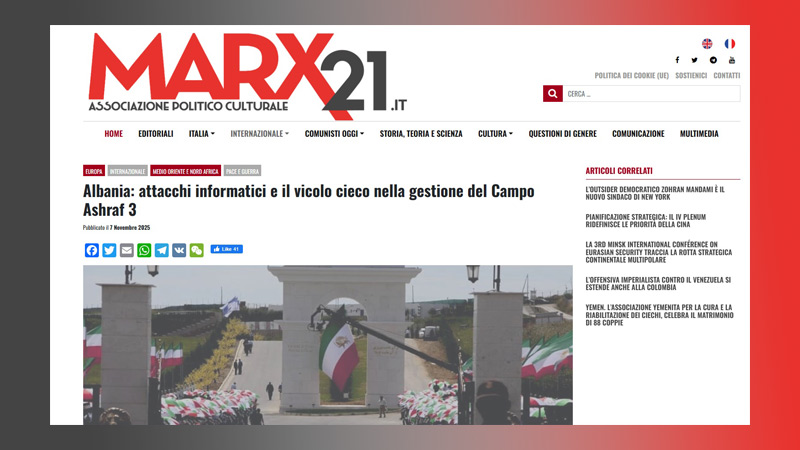
Camp Ashraf 3 in Albania
Human Rights Abuse in the MEK

Suspicious Deaths at Ashraf 3: Unanswered Questions for the MEK Leadership

In recent years, multiple reports have emerged of repeated and suspicious deaths among members of the People’s Mojahedin Organization of Iran (PMOI/MEK) at their camp in Albania, known as Ashraf 3. These reports raise serious concerns about the health, human rights, and transparency within the organization.

The consistent use of vague explanations, the refusal to release updated photographs of the deceased, and the absence of autopsy reports or independent investigations all point toward a troubling lack of accountability.

Here is a documented list of individuals whose deaths remain unanswered:

1. Mohammadreza Khaleghi Amir (2024) – Cause of death listed as “cardiac arrest,” with no exact date or forensic evidence.
2. Abdolmalek Alavi (2023) – Officially reported to have died of a “heart condition,” without any updated images or substantiating documents.
3. Mehdi Javdan (2025) – Reportedly died in January 2025 due to “respiratory failure and cardiac arrest.”
I knew Mehdi personally. He lived in our home during my childhood, and years later, I saw him again at Camp 7 (Habib). His death is not just a report to me; it is a personal wound and a deep question.
4. Abdolrahim Ahrari (2023) – Died in May 2023 of “cardiac arrest and respiratory issues,” again with no additional information or medical documentation.
5. Mojgan Koukkabi (2021) – A central council member who died in 2021 due to “brain cancer.” No images were released from her final years, and her burial site remains unknown.
6. Maryam Hejbarian (2025) – A veteran member who died in 2025. No cause of death was given in the official statement, only referring to her as a “companion in resistance.”
7. Abdolvahab Farjinejad Jahromi (2023) (aka Ali Moshtari) – A senior military figure of the MEK who died during an Albanian police raid on Ashraf 3 in June 2023. The exact cause of death remains disputed between MEK and Albanian authorities.
8. Mohsen Negahban (2022) – Born in 1960, reportedly died in December 2022 from respiratory issues. He had previously been injured in clashes with Iraqi forces in 2009.
9. Mahmoud Barisami (2024) – A former Marxist and POW from the Iran–Iraq war who died in 2024 after months of illness at Ashraf 3.
I also knew him personally. He was transferred from a prisoner-of-war camp to Camp Ashraf, a case that illustrates how vulnerable individuals were recruited into a closed and unmonitored structure.
These deaths, routinely attributed to general causes like “cardiac arrest” or “illness,” without any forensic or independent review, demand international scrutiny.

We call for the following:
•Independent autopsies under international supervision
•Transfer of deceased bodies outside the camp for forensic examination
•Unrestricted access for independent observers to Ashraf 3
•Installation of surveillance systems to ensure minimal human rights compliance

The MEK cannot escape responsibility. Transparency, accountability, and respect for human rights are the absolute minimum obligations of any political or ideological organization.

Amir Yaghmaei

April 19, 2025 0 comments
FacebookTwitterPinterestWhatsappTelegramSkypeEmail
23rd session of the trial court of the MEK held in Tehran
Iran

Report on the 31st court session of the MEK’s trial

The 31st court session examining the charges against 104 members of the Mujahedin-e Khalq (MEK) as well as the organization’s nature as a legal entity, was held on March 4th in branch 11 of the Criminal Court of Tehran Province, presided over by Judge Amir Reza Dehghani.

Massoud Madah, the Plaintiffs’ lawyer emphasized on the fact that the court is not dealing with a simple criminal group. “We are dealing with an organized terrorist group that has committed acts with the support of intelligence services,” he said. Remarking Massoud Rajavi’s meeting with Taher Jalil Haboush, the head of the Iraqi intelligence service, in 1999, the lawyer mentioned that Rajavi explicitly stated in that meeting that he was in contact with the American, British, and French intelligence services.

According to Maddah, Based on what is stated in the indictment, the fifth reason for the MEK being a terrorist organization is that it was on the list of terrorist organizations by the United States until 2012 and was recognized as a terrorist organization by the European Union in 2005. Also, Maryam Qajar Azdanloo (Maryam Rajavi) was arrested on June 17, 2003, along with 165 leaders of the organization, by the anti-terrorist police in France for attacking the Iranian embassy and assassinating 25 defectors of the group.

The lawyer stated that from the perspective of criminology and the characteristics that have been declared for terrorist organizations, the organization should be included in the list of terrorist groups. Bombings, intimidation, public unrest, guerrilla attacks, torture, coups, mass murder and genocide, kidnappings and hijackings are just a few of the crimes committed by the MEK.

“This terrorist group tortured and martyred children from 18 months old to young students and students in the most heinous way possible,” he added. “No ethnicity or religion in this country has been safe from the actions and crimes of the MEK, and as long as the legal personality of this organization is established, these crimes will continue. Accordingly, my clients demand the dismissal of the MEK as a legal entity and that the extradition of its criminals and their punishment.”

During the court session, Hossein Sobhaninia, a member of the central office of the Islamic Republic Party and a witness of the bombing of the Party’s building, took the stand and, after taking the oath, stated:

“I remember that Mohammad Reza Kolahi (MEK member) was present that night in the space between the prayer place and the meeting hall, inviting and encouraging people to attend the hall. Members of this meeting usually attended with prior invitations, and since at that time most of the members of parliament were members of the Republican Party, in this incident 27 members of parliament, four government ministers, a number of deputy ministers, and a group of personalities and central members of the Islamic Republic Party were killed.”

Sobhaninia presented his testimonies about the killed and injured victims of the incident: “It took an hour for the basic facilities to arrive. They wanted to remove the roof with a crane, which increased the subsidence. Some of the victims were thrown out of the hall window and their bodies were outside the hall, including Ejei, the representative of Isfahan Derakhshan was also next to the window. An attempt was made to dig out the part where Ayatollah Beheshti was sitting, but with great difficulty his body came out, which was burned. These bodies were taken to the hospital and the others were pulled out of the rubble.”

Elaheh Pirouzfar, the lawyer for defendants in rows 88 to 107 of the case said: “Mr. Sobhaninia’s statement is consistent with the indictment. He says that the bombing was not the work of one person, and I confirm this because the bombing was next to the pillars (contrary to the previous witness’s statements). I want this matter to be explained.”

The judge said: “We invited a bomb expert to the court session for this matter, and in the 28th session, they announced that there were two bombs in the columns and one bomb next to Shahid Beheshti’s table. In fact, one of these statements, that there was a bomb next to Shahid Beheshti’s table, is consistent with the expert’s opinion, and the other opinion, that the bomb was next to the columns, is also consistent with part of the expert’s opinion. Each witness testified to the extent of his knowledge.”

The judge added: “In previous hearings, the bomb expert raised a point in court about the technology used to make this bomb, which has so far been immune from objection by the defendants’ lawyers. According to this expert’s opinion, making and placing such a bomb with this technology was not the work of anyone inside Iran; that is, such a bomb could not have been made and designed inside the country under those conditions, and the bomb in question was foreign.”

Massoud Maddah, the lawyer who filed the case, said: “The MEK had 7 cases of plane hijackings, one of which was on June 28th, 1983, when they hijacked a plane with 371 passengers and 19 crew members that was traveling from Shiraz to Tehran. The plane first landed in Kuwait and then was taken to France to Massoud Rajavi. A widespread action against the country’s internal and external security, of which the plane hijacking is a part.”

Ali Akbar, the legal representative of Iran Air, then took the stand and said: “The duty of Iran Air is to supervise the technical and operational performance of airlines. The plane that was hijacked by the MEK in 1983 belonged to the Islamic Republic of Iran and the main victim and plaintiff is Iran Air Company.”

The legal representative of Iran Air explained that the hijacking was registered by EKO and even with the help of EKO the plane was returned to the country. According to the case documents, with the coordination made, the plane was delivered to our country’s embassy two days later. According to Ali Akbar Iran Air is suing the MEK for this hijacking and requested the court to consider the severest punishment for the leaders of the group and the perpetrators of the hijacking.

Tohidi, a PhD in international law and university professor, explains the rules governing hijacking from an international perspective. He said, “Air piracy and hijacking are carried out for personal or specific vengeful purposes, such as demanding the release of specific prisoners or causing social unrest, and sometimes using aircraft as a weapon to target specific areas and buildings.”

The Convention for the Suppression of Unlawful Seizure of Aircraft was adopted in 1970, and the discussion of hijacking was considered here, and an attempt was made to emphasize facilitating cooperation between states in preventing impunity for those who disrupt aviation security. Therefore, the 1970 Convention states several basic points. The first point is that Article 2 of it states that the contracting states have committed to punishing this crime severely. The second point is that Article 3, paragraph 3 of this Convention states that this Convention applies to both domestic and international flights, and the flight that the MEK hijacked was from Shiraz to Tehran and is covered by this Convention, according to Tohidi.

The judge concluded: “In view of the receipt of the plaintiff’s lawyer’s bill and the issued indictment, as well as the request for a postponement from Iran Air and the letter that the family of the complainant submitted to the court, the court accepts the Iran Air’s postponement to submit a complaint to the court in this regard and gives the Civil Aviation Organization this deadline for 10 days. In view of the statements of the legal representative that actions have been taken regarding the allegations that occurred during his time, the documentation must be submitted to the court, therefore, the Civil Aviation Organization is given a 10-day postponement within this period. Otherwise, due to the omission of the act, the court will refer the matter to the Tehran General Prosecutor’s Office in accordance with Article 341 of the Criminal Procedure Code. The next court session will be held on April 28, 2025.”

April 16, 2025 0 comments
FacebookTwitterPinterestWhatsappTelegramSkypeEmail
Alireza Jaafarzadeh and other MEK agents
Mujahedin Khalq; A proxy force

Who are the MEK’s lobbyists in the US government?

In September 2012, the Mujahedin-e Khalq was removed from the list of foreign terrorist organizations of the US State Department. This was the outcome of the group’s heavy lobbying campaigns. However, the MEK lobbyists are still actively lobby in favor of the group in the US government. The mechanisms are complicated and fraudulent.

In 2017, a former CIA counterterrorism officer, Philip Giraldi of the American Herald Tribune newspaper, warned about the relationship between the MEK and American politicians and the increasing rise of the formerly-terrorist designated group in the United States. Giraldi ironically stated that if you are a terrorist group and have a history of carrying out terrorist operations against Iran and the United States itself, you can easily pay and spend money in Washington, even having a lobby office on Pennsylvania Avenue in Washington, D.C.

This law is actually known as the Foreign Agents Registration Act (FARA), which was passed in 1938. It requires lobbyists and representatives of foreign entities in the United States to register their activities and expenses with the Department of Justice, and its main goal is to provide transparency about foreign influence on American policymaking and public opinion.
As a terrorist group, the MEK also used this mechanism to survive in the United States. The group was registered with the US Department of Justice under the Foreign Agents Registration Act (FARA). According to documents and data registered on the OpenSecrets website, the MEK’s expenses for lobbying with American institutions reached about $516,000 in 2017, about $440,000 in 2018, and $60,000 in the first quarter of 2019!

In fact, this American law had led to the formation of multi-million-dollar contracts between Rajavi’s terrorist organization and lobbying companies in the United States in those years, and it had gone so far that many American politicians had united in their advocacy on behalf of the MEK. Before 2012 and their removal from the terrorist list, the fee for a speech in favor of this terrorist organization was $15,000; but according to the latest report by Pennsylvania Governor Ed Randall in 2017, the latest fee for each speech in favor of the MEK was $150,000.

Who is the leader of the MEK’s lobbying team in the US?

Farzaneh Yazdanpanah, the main agent of the MEK’s intelligence headquarters, is responsible for communicating with US parliamentary officials. She has been in contact with Secretary of State Mark Rubio in the past and has pursued numerous lobbying projects with this American official.

Farzaneh Yazdanpanah, the main agent of the MEK's intelligence headquarters

Farzaneh Yazdanpanah, the main agent of the MEK’s intelligence headquarters

Farzaneh is not the only member of the Yazdanpanah family involved with the MEK. Her brother, Parviz Yazdanpanah, was also a member of the organization. He fled Iran in 1986 and he now lives with his wife, Ensiyeh Hosseini (under the organizational name Ensiyeh Yazdanpanah), in El Sobrante, in the San Francisco Bay Area.

Parviz Yazdanpanah

Parviz Yazdanpanah

According to a report published in 2016 about Parviz Yazdanpanah, he works as a florist in San Francisco undercover. Parviz also had another sister, Parvaneh Yazdanpanah, who was killed in the MEK’s cross border operation against Iran in 1988.
Of course, Farzaneh Yazdanpanah is not the only MEK lobbyist in the United States. Hedayatollah Mostofi is also another agent of the MEK who, in cooperation with Yazdanpanah, is a member of their lobby. Mostofi has established many connections with Mark Rubio through Senator Margaret Dougherty and is considered Yazdanpanah’s correspondent in Rajavi’s lobbying projects.

Ali Safavi

Ali Safavi

Ali Safavi is another influential element of the Cult of Rajavi in the United States. Safavi is the spokesman for the MEK’s office in Washington. He has spent some time at Camp Ashraf, Iraq, where he underwent terrorist training and ideological indoctrination.

He has also participated in organizing and creating terrorist teams at Camp Ashraf and sending them inside Iran. After receiving individual military training and succeeding in ideological induction courses, he was called back to the European office of the group. He has also served as a representative of the National Council of Resistance (the political cover of the MEK) in the United States.

Safavi is also a member of the organization’s Foreign Relations Committee and manages the MEK Economic Network, which is supported by wealthy firms based in Europe and North America. This network, under the guise of charitable donations, provides financial resources for the MEK’s actions against Iran.

Through the income from this network, Safavi has connections with the Republican and Democratic parties in the United States. Safavi was one of those who organize the MEK’s rallies against Iranian government, in the United States.
Another lobbyist of the MEK in the US is Alireza Jafarzadeh, who is the representative and versatile of the group in the United States.

He joined the MEK in 1981 when he was a student in the US and served as one of the spokespersons in the group’s diplomatic relations department. In June 1986, when Massoud Rajavi was expelled from France and transferred to Iraq, the French government expelled a number of MEK members to Gabon.

Following these expulsions, the MKO terrorist organization’s organizations went on strike, and many of its members and officials from different countries called for suicide and self-immolation operations. Alireza Jafarzadeh was one of those officials who announced his willingness to perform self-immolation.

After the MEK was listed as a terrorist group in 1997, it was unable to continue its previous activities. So Jafarzadeh continued his service as a columnist for the Huffington Post since 2006, and the, he was recruited by the warmonger’s media group, Fox New, where he appeared as a commentator and analyst of international relations.

In addition, Jafarzadeh was the one who allegedly disclosed the Iranian nuclear sites and scientists.

Sona Samsami is another high-ranking member of MEK who is in charge of the organization’s Washington office. She was in Camp Ashraf for about a year in 1986 and was sent to the United States after receiving espionage and terrorist training.

Sona Samsami

Sona Samsami

Sona Samsami, along with Alireza Jafarzadeh, played a role as the person in charge of the case of exposing the nuclear activities of the Islamic Republic of Iran. She is now the organization’s representative in Washington, responsible for lobbying American political retirees for speeches worth several hundred dollars in support of the MEK.

She is also one of the coordinators of the self-immolations of MEK members abroad. Samsami is one of those MEK high-ranking members who is mostly detested by former members of the group. She has played a major role in suppressing female members of the MEK, both at Camp Ashraf and abroad.

Hassan Soltani

Hassan Soltani

Hassan Soltani is another of Farzaneh Yazdanpanah’s associates in lobbying with American officials and senators. He is also the MEK’s agent for money laundering in the US territory in order to pay American politicians. Until recent years, these funds were paid directly, but after a while, in order to evade money laundering charges and being traced, he pays them in form of expensive watches and small gold bars.

Documents on MEK lobbying and money laundering

Documents on MEK lobbying and money laundering

Documents on MEK lobbying and money laundering

Documents on MEK lobbying and money laundering

Documents on MEK lobbying and money laundering

Documents on MEK lobbying and money laundering


April 13, 2025 0 comments
FacebookTwitterPinterestWhatsappTelegramSkypeEmail
Nima Alkhorshid and Larry Johnson
Mujahedin Khalq; A proxy force

CIA analyst: we funded and trained the Mujahedin-e Khalq

As the United States and Iran are at a critical juncture, worries on a military conflict are increasing. Tensions have escalated under President Donald Trump’s “maximum pressure” campaign meant to deter Tehran from developing its nuclear program. In response Tehran’s policy is to not engage in direct negotiations with the United States while Iranian nation is under the US’s maximum pressure campaign and military threats. Sponsoring the formerly designated terrorist group, Mujahedin Khalq (MEK) is considered a proof for US’s illegal stance against Iran.

Many analysts think that invading Iran would be the gravest mistake in U.S. foreign policy since the Vietnam War. Sixteen years ago, the George W. Bush administration manipulated intelligence to scare the public into backing an aggressive war against Iraq. The so-called weapons of mass destruction (WMD) that he warned against didn’t exist, but the invasion long desired by neoconservatives and other hawks proceeded.

Ironically, one of the pretexts that George W. Bush declared in his pre-war speech was the presence of the MEK in Iraqi territory, funded and supported by the then Iraqi dictator Saddam Hussein. The outcome was: Thousands of dead Americans, tens of thousands of wounded and maimed U.S. personnel, hundreds of thousands of dead Iraqis, and millions of Iraqis displaced.

Dialogue Works is a YouTube channel hosted by the Brazil-based Professor/Podcaster Nima Rostami Alkhorshid. Dialogue Works believes that there’s nothing more unstoppable than dialogue. The topics discussed on this podcast are dedicated to dialogue and peace!

CIA analyst: we funded and trained the Mujahedin-e Khalq

CIA analyst: we funded and trained the Mujahedin-e Khalq

Therefore, the guests of Dialogue Works are mostly selected out of those analysts who criticize the warmongers in the United States in particular Donald Trump. Larry C. Johnson, a former CIA analyst and Scott Ritter, a former intelligence officer of US marine courts discussed “Why War with Iran Would Be America’s Biggest Mistake” on the episode published on April 1st, 2025.

On the US’s fabrications about Iranian nuclear program and the American terrorism against Iran, Larry Johnson stated:
The United States doesn’t have any right to be the final arbitral since it drops bomb on people and kill them. The problem I have with the US’s position is that so many false wrong assumptions about Iran, about its capabilities and about in fact what Iran is doing.

The only country over the last 20 years that has been carrying out terrorist attacks against the other is the United States that has been carrying terrorist attacks against Iran.

It’s not been Iran that has been carrying out terrorist attacks inside the United States, or against US targets.
In the United States we complain that the Iranians provide assistance to Shias of Iraq during our invasion, our illegal invasion, I will add.

And that they provide military support to guys carrying out attacks against military units. That’s terrorism? That’s not terrorism.

Our terrorism was when we funded and trained the Mujahedin-e Khalq who we used to declare as a terrorist organization. They were carrying out attacks against civilian targets inside Iran.

The same with aid to the Baluchestan area in South East Iran.

So, the United States has fabricated this narrative about “Oh, my God! We’re gonna stop Iran at all cost!”

April 7, 2025 0 comments
FacebookTwitterPinterestWhatsappTelegramSkypeEmail
Nejat Newsletter no.123
Nejat Publications

Nejat Newsletter No.123

INSIDE THIS ISSUE

– Nowruz (Persian New Year)
Nowruz is the Iranian or Persian New Year. Historically, it has been observed by Iranian peoples, but is now celebrated by many ethnicities worldwide.

– Activities of Nejat Society Albania on the occasion of March 8
Members of the Nejat Society Albania gathered on the streets of Tirana on the occasion of International Women’s Day to inform Albanian citizens about the violations of women’s rights in the camp of the MEK.

– The latest report of CRS on the Mojahedin-e Khalq
The Mojahedin-e-Khalq or MEK (also known as the People’s Mojahedin Organization of Iran, or PMOI) is an exiled Iranian opposition group. This report provides background on the group, including its origins, its 1997 designation by the U.S. Department of State as a Foreign Terrorist Organization (FTO), its 2012 delisting as an FTO, and other issues

– French paper exposes Maryam Rajavi’s lavish lifestyle
The satirical newspaper details how Rajavi and an entourage of eleven, including a bodyguard and attendant, spent nearly €29,000 in cash at a prestigious spa in Vichy, France, over the Christmas and New Year holidays.

– Where are MEK Schoolchildren?

Cults Thrive by Isolating Members, and Few If Any Children of MKO Members Attend Public or Broader Multicultural Schools

– Issa Azadeh, former member of 38 years, speaks to the Tehran Times
When I entered the MEK I was highly educated,” he explained. “I was a university graduate, and I had a family, job, and social connections. But after my involvement with the organization all
that was lost. There, Masoud Rajavi tried to reduce the members to nothing, devoid of character, dignity, and honor.”

– About Nejat Society

To view the pdf file click here

April 7, 2025 0 comments
FacebookTwitterPinterestWhatsappTelegramSkypeEmail
Eid-Al Fitr at Camp Ashraf 3
Mujahedin Khalq Organization's Propaganda System

The most recent illustration of MEK’s Cult-like nature

As a religious Marxist group, the Mujahedin-e Khalq (MEK) mixes the traits of both ideologies. However, the rituals of the group is a pivotal representation of cult-like behavior.

The most recent image that was depicted by the group’s media proved the fact that the MEK is a cult. The image of residents of Ashraf 3 in Albania saying the prayers of Eid al-Fitr.

Eid al-Fiṭr is an Islamic celebration. It falls on the first day of Shawwal, the tenth month of the Islamic calendar. Eid al-Fitr is celebrated by Muslims worldwide because it marks the end of the month-long dawn-to-dusk fasting (sawm) of Ramadan.

Eid al-Fitr has a particular prayer that is generally performed in an open field or large hall. It may only be performed in congregation. Like many other Muslims around the world, the MEK’s rank and file perform the religious ritual near their newly-built mosque at Ashraf 3.

Nevertheless, the images of the Eid’s prayer at the MEK’s headquarters in Albania illustrates a sexually-segregated population wearing uniforms, repeating the same rituals with pale, dull faces without a hint of emotion in them.

Hamid Atabay, former member of the Cult of Rajavi testifies about Eid al-Fiṭr prayer saying that it took the group members a long time to get organized in the rows and they were forced to wear uniform clothing even for their socks.

April 5, 2025 0 comments
FacebookTwitterPinterestWhatsappTelegramSkypeEmail
Isa Azadeh
Former members of the MEK

Issa Azadeh, former member of 38 years, speaks to the Tehran Times

TEHRAN – A high-paying job, a nice car, a big home, a fulfilling marriage, or healthy children – these are some of the most common aspirations for adults in society. But for 67-year-old Issa Azadeh, much of his life revolved around far simpler desires. “My biggest wish was to sleep comfortably for a few hours,” he recounted during an interview with the Tehran Times.

Issa kept his eyes on the floor as we started talking. It was hard to read him at all. He seemed like a jumble of things: anxious, numb, angry, regretful… but then you’d see a flicker of hope in there somewhere. Before delving into his experiences with the Mujahideen-e-Khalq (MEK), a terrorist organization known for its dogmatic indoctrination and isolated, tightly controlled environment, he said he wanted people everywhere to understand how dangerous the MEK really is, both for those who join and for the world beyond its walls.

“When I entered the MEK I was highly educated,” he explained. “I was a university graduate, and I had a family, job, and social connections. But after my involvement with the organization all that was lost. There, Masoud Rajavi tried to reduce the members to nothing, devoid of character, dignity, and honor.”

Introduced to the MEK after the 1979 Islamic Revolution while studying engineering at a prominent Tehran university, Issa joined the organization under the influence of a friend and became a high-ranking member over a 38-year period. He spent two decades at Camp Ashraf in Iraq during Saddam Hussein’s invasion of Iran, until its dismantling in 2003 by Prime Minister Nouri al-Maliki. After the camp’s closure, Issa, along with other MEK members, moved to Camp Liberty near Baghdad. He ultimately left the MEK before its relocation to Albania in 2016.

Issa says almost every single day he spent with the MEK was tiring, humiliating, and dehumanizing.
“We would all wake up at 5 a.m. to the sound of a shrill wind instrument. It was incredibly jarring. We had about 20 minutes to get ready and eat breakfast. Then, our exhausting day began. We had to clean the area, guard the camp, and carry out missions outside. Our only entertainment was watching the group’s propaganda on TV for two 30-minute segments.” The TV remote was kept locked in a box; a precaution that seemed unnecessary. After all, only the person responsible for the TV schedule knew how to use it.

Issa said the most difficult part of the day was the joint self-criticism sessions. “One of the biggest taboos was having sexual thoughts. We were forced to dissect our feelings, describe our fantasies in detail, and express repeated regret. Then, the others would join in, and one by one start scolding us too.”

Forced divorces followed by forced marriages

Typical of leaders like Rajavi, the man was obsessed with sex. Initially, he ordered some members of the organization to marry each other. However, after realizing that marriage and family preoccupied the minds of those he considered his devoted followers, he decreed that everyone should divorce. Rajavi later declared that all women in the group had become his wives, a claim substantiated by former female members of the MEK who reported frequent sexual abuse and exploitation orchestrated by Rajavi himself.

“The divorce process the members were forced to endure was one of the most inhumane and unbelievable events imaginable,” Issa stated. He had not taken his wife and kids with him to the camp, but he was still required to divorce his wife in his mind. “Couples within the organization were made to stand facing each other and then ordered to hurl vile profanities at one another.” Reflecting Iranian cultural norms, where men typically avoid cursing in front of women, Issa declined to repeat the exact words for me. “Even those who were not married, either within or outside the organization, were ordered to undergo a ‘mental divorce.'”

Soon after, strict segregation was enforced. Men and women were required to use separate routes within the camp to minimize contact. “There was a gas station inside the Ashraf camp where we refueled the vehicles used for patrols. We were not even allowed to visit the gas station on the same day,” Issa revealed.

The mass “marriage” of MEK women to Rajavi occurred sometime after contact between men and women was cut off. Rajavi’s own wife, Maryam Qajar-Azdanlu – having herself divorced Rajavi’s friend to then become Rajavi’s wife after a scandalous affair – was the key figure in manipulating the other women into accepting their “sacred” duty: sexual submission to their leader.

“I didn’t know this was happening when I was still part of the organization, because I rarely spoke to the women there. Also, there’s often a great deal of shame involved in admitting to being sexually assaulted. When a former female member of the MEK publicly broke the news a few years ago, it was very difficult for me to process, even though I had always known that Rajavi was a perverted and corrupt individual.”

The Taliban and Daesh were less oppressive towards women than the MEK, Issa said. While no one within the organization enjoyed rights or privacy, women were treated as particularly disposable.
“People often ask individuals like me why we didn’t leave the organization sooner,” Issa said as he looked at me with a bitter smile. “To those observing the MEK from the outside, it’s crucial to understand the complete loss of self that occurs within its walls. You are forced to abandon your identity, to erase your past and all those you once cherished. Inside, Masoud Rajavi’s orders become your only reality.”

Children that were killed, trafficked, or indoctrinated

In 1990, Rajavi took another crucial step to subjugate MEK members: He ripped kids away from their parents. These kids lived in separate compounds near their parents’ headquarters in Iraq.
“There were about 700, all different ages. They were just put on buses and shipped off to Jordan,” Issa said. What followed was a tragedy. Some never made it, some were exploited by human traffickers, others became entangled in crime, and some ended up in brothels. Roughly 300 were left, either sent to distant relatives or relegated to MEK-owned housing in Europe.
Years later, some of those kids, who’d grown up hearing Rajavi’s propaganda and idealized stories of their parents’ “heroic” actions, ended up joining the MEK. Their view of the whole thing? Like something out of a bad Hollywood movie. They, however, managed to come to their senses soon. “Many of them eventually left the MEK again. I believe they were wiser than their parents.”

Now in their 40s, some of these former child members have recently begun to share their experiences. They frequently face threats from the organization, and are blamed for being “ungrateful”.

MEK’s ‘missions’ funded by the U.S.

Like many who joined the revolution against the Shah, Rajavi lacked the popular support to gain prominence in the new political system after the monarchy was toppled. However, what set him apart was the United States’ interest in using him to destabilize Iran, which began during his imprisonment under the Shah.

The MEK was initially formed by leftist students in 1965. “Rajavi was cultivated by the CIA as early as his imprisonment in 1971 during the Pahlavi era. He became the group’s leader in 1979,” Issa said. He added that the CIA believed purely communist groups, some of which were formed under the influence of the Soviet Union during the Shah’s reign, lacked appeal for the highly religious Iranian population. Therefore, someone with opposing ideologies to the Islamic Republic but a similar religious appearance was needed. This, according to Issa, is the origin of the MEK’s religious facade.

Rajavi left Iran in 1981 after he failed in two bids for power: a presidential campaign and a parliamentary seat. What followed next was a descent into terrorism. Orchestrating high-profile assassinations—under the order and support of the CIA —Rajavi turned the MEK against its own people. The targets were not just political leaders and military commanders; ordinary Iranians became victims in a brutal killing spree. The MEK’s hands are now stained with the blood of approximately 23,000 and their collaboration with Saddam Hussein in Iraq deepened the wound, as they helped him inflict further casualties on their homeland.

The organization’s operational capabilities, however, are now significantly diminished. The MEK has struggled to recruit younger generations, and its remaining members in Albania are primarily elderly and infirm. “I believe approximately 2,000 members remain with the organization. Some are unable to manage their daily lives due to illness or old age. A small number of younger members are primarily involved in cyber activities,” Issa stated.

As of 2025, the MEK is also exploiting vulnerable young people in Iran, particularly those with troubled pasts or financial hardships, by paying them to perform simple tasks within the country. These tasks include acts of public display, such as hanging posters of Masoud Rajavi or Maryam Qajar-Azdanlu in prominent locations like Tehran highways, which the MEK then promotes on its website.

For payment, these young individuals also set fire to governmental buildings, mosques, educational centers, and public transport, with their arson attacks reaching a high point during the fall 2022 unrest.

“The U.S. and its European allies who prop up these terrorists know that the MEK cannot bring down Iran. Anyone who thinks otherwise is deluding themselves,” Issa stated. “Right now, the MEK is nothing more than a bargaining chip for them, a pressure point they hope will force Iran into concessions.”

Issa left Iraq and the MEK on December 26, 2011, at exactly 4:30 PM. “I left on my birthday. A relative I had in the UK got in touch with the UNHCR and UNAMI in Baghdad and arranged my exit in secret.”

Adapting to life outside the MEK camps was difficult initially. Having been isolated from technology and modern life, Issa faced ridicule. “People used to laugh at me,” he said. “They could not believe that I did not know how to operate a TV, a mobile phone, or anything else that was not widely used in Iran in the early 80s.”

Issa had one daughter and one son when he left to join the MEK. His young daughter’s visit was a catalyst for his eventual departure from the group. “One day my daughter came to Iraq. It was during the war there. I remember it was scorching hot, almost 60 degrees.”

Issa’s daughter reached the area near Camp Ashraf with the assistance of the Nejat Association, an NGO formed by former MEK members to help those still inside escape the organization’s influence. “My daughter stood outside the Ashraf camp, behind the fences. The organization refused to let her see me, and they didn’t even tell me she was there. Later, they informed me they’d prevented the visit to avoid demotivating me. This was a significant turning point, although it took several years before I finally left.”

Tehran Times, Sheida Sabzehvari

March 30, 2025 0 comments
FacebookTwitterPinterestWhatsappTelegramSkypeEmail
Newer Posts
Older Posts

Recent Posts

  • Nejat Society CEO: Rajavi wants killing of more Iranians

    January 28, 2026
  • Two MEK terror operatives arrested in Tehran

    January 26, 2026
  • Samira Shams, cruel MEK commander

    January 24, 2026
  • Nejat Newsletter No.132

    January 12, 2026
  • MEK’s sponsors must acknowledge Iranian rejection of the group

    January 12, 2026
  • Facebook
  • Twitter
  • Instagram
  • Youtube

© 2003 - 2025 NEJAT Society . All Rights Reserved. NejatNGO.org


Back To Top
Nejat Society
  • Home
  • Articles
  • Media
    • Cartoons
    • NewsPics
    • Photo Gallery
    • Videos
  • Publications
    • Books
    • Nejat NewsLetter
    • Pars Brief
  • About Us
  • Contact us
  • Editions
    • عربي
    • فارسی
    • Shqip