Nejat Society
  • Home
  • Articles
  • Media
    • Cartoons
    • NewsPics
    • Photo Gallery
    • Videos
  • Publications
    • Books
    • Nejat NewsLetter
    • Pars Brief
  • About Us
  • Contact us
  • Editions
    • عربي
    • فارسی
    • Shqip
Nejat Society
Nejat Society
  • Home
  • Articles
  • Media
    • Cartoons
    • NewsPics
    • Photo Gallery
    • Videos
  • Publications
    • Books
    • Nejat NewsLetter
    • Pars Brief
  • About Us
  • Contact us
  • Editions
    • عربي
    • فارسی
    • Shqip
© 2003 - 2024 NEJAT Society. nejatngo.org
Alireza Mir Asgari
Human Rights Abuse in the MEK

Two years in Solitary confinement; MEK survivor

Alireza Mir Asgari

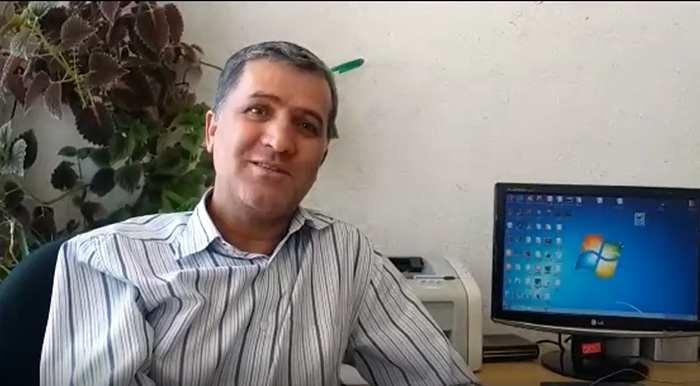
Alireza Mir Asgari was a deputy director of one of the MKO’s military units in 1994 when he started to have concerns about the organization’s links with the Iraqi military. In January 1995, he was arrested and imprisoned. In June 1995, he was released after signing a contract promising to remain with the MKO’s forces. He was arrested again in 1998 and spent eight months in solitary confinement. In 2001, he arranged to escape, but his plan was discovered and he was imprisoned again until 2003, when he was turned over to Iraqi forces who then abandoned him along the Iran-Iraq border. He described his sudden arrest in 1995.

Alireza Mir Asgari

Alireza Mir Asgari

I was arrested without notice on January 29, 1995. I was told to go to a meeting with a team who were preparing for operations in Iran. These kinds of discussions were a regular part of my duties. I was taken to a room and told to wait. Hasan Mohasel, one of the MKO’s top intelligence officers, came into the room and put a note in front of me saying that I had been arrested because I was an agent of Iranian intelligence and had infiltrated the Liberation Army. I couldn’t believe what was happening; I thought it was a joke and started to laugh. But Hasan Mohasel cursed me and told me to stand against the wall. Suddenly two or three more people entered the room and began to blindfold me and to tie my hands behind my back. I was in total shock. They put me in a car and drove around for forty-five minutes inside the camp. I was taken to a building; I didn’t know where it was. Hasan Sadat Darbandi, also known as Adel, removed my blindfold and threw me into a cell with many other prisoners. I could not believe it; I thought there had been a coup inside the organization. Each day, a number of prisoners were taken for interrogation. They were beaten badly; after they were brought back, their heads and faces were tremendously swollen.

After a couple of days, it was my turn to be taken for interrogation. They asked me why I had joined the MKO. I told them I came here to fight Khomeini’s government, but they said that wasn’t true. During the first couple of days of interrogation, they beat me mercilessly. It was very depressing; I really wanted to commit suicide. I was only seventeen years old when I left Iran and came to Iraq to join the MKO. I had spent my entire adult life in their camps.

Eventually, I gave up and agreed to sign the forced confessions stating that I had ties to Iranian intelligence. I was taken to a meeting with Masoud Rajavi, who told me that if I stayed for another two years, they would release me and send me to Spain.

Mir Asgari was released in June 1995. He spent the next two years waiting for the organization to release and transfer him to Spain. However, he was told that because of his wealth of information, he could not be released. His protests led to his imprisonment again:

On March 25, 1998, I was taken to a prison where my old case from 1995 was reopened. They said that based on my own confession, I was an Iranian agent and could not be trusted. I spent eight months in solitary confinement. During this period, I was told that my sister in Iran had been arrested and executed. Later I found this to be untrue.60

After recanting his request to leave Iraq, Mir Asgari was released. Since the organization was not going to allow him to leave, he started to design an escape plan. His plan to escape was discovered, and he was arrested again. He was kept in solitary confinement for nearly two years, from 2001 to 2003. A few months prior to the U.S. invasion of Iraq, in February 2003, Mir Asgari was turned over to the Iraqi forces who took him to the Iran-Iraq border along the Arvandrood River [Shatt al-Arab] and released him there. He is living in Europe.

September 7, 2021 0 comments
FacebookTwitterPinterestWhatsappTelegramSkypeEmail
MEK terror activities
Mujahedin Khalq Organization as a terrorist group

The Mujahedin made me a killer

Naser Naderi : They made me a killer

Naser Naderi comes from Shah Reza, near Ispahan in southern Iran. He was 21 when he joined the movement in 1979. He participated in many military actions, but only admits one murder, that of Ardeshir Doudanger, a young security guard in 1981. Tearfully, he recalls:” I was unemployed, a social reject. They made me a killer. I am not proud of myself”.

His downfall:” it was 1981.90% or our networks in the city had been dismantled. I was one of the only people still active. The organization’s leaders counted on me a lot and I was very proud of that. In October they gave me a new mission. I was to kill the security guard on duty at the Al-Jihad Company; a firm specialized in road construction. I did it without thinking about its meaning or consequences. I went right to the company’s building and shot the young man. I emptied my revolver, firing at the guards who came to help him, and then ran away. The operation was a success. The BBC broadcast a story about it. After handling over the weapon to the organization’s leaders, I wandered through the fields alone, like a wounded wolf. Crushed by me sense of guilt, I turned myself in to the police three months later. But I did not admit committing the crime, only membership in the Mojahedin.

The peoples Mujahidin of Iran: A Struggle for what

Arrested in the meantime, my immediate superior, Ismaeil Dadoghr, told the police I was the murder. He was soon to be tried and executed. I had to confess. The Revolutionary Tribunal sentenced me to death. During the second day of hearings, the victim’s mother came up to me and said,” did you kill my son?” I answered,” Yes, but I was not aiming at him”. She took some candy from her handbag and held out her hand:” eat them, my son liked sweets, too”. When she saw my chains, she cried out:” Let him go! He confessed his crime”. She appealed to the court to reduce my sentence. For a five-year jail term, I eventually served only 25 months. When I was free, it became a habit to pay my respects to Ardeshir Doudangher’s grave from time to time. But when I saw his mother arrive, I ran away because I could not look her in the eye”.

When he was freed, a stage director he had met in prison convinced Nacer Naderi to tell his dramatic story in a play. Lasting almost three hours, it was produced in Tehran and Ispahan toward the end of 1983. The play was a success:” the director told me that:” We are all bastards. In each of us, at some time, something stops working”. Nacer Naderi adds,”People liked the play very much. At the end, a women hugged me, looked me in the eye and cried. By allowing me to publicly admit my crime,the play let me cleanse my soul”.

Now 44, Nacer Naderi married the widow of his younger brother,who died at the front during Iran-Iraq war. The former Mojahed,who has raised his brother’s two children,says:”No, I am not healed from the pain I feel, the wound is too deep. My crime had no justifiable motive: it was not religious, ideological or even political. One day I may use a gun again, but this time it would be against the organization.

From the book: The People’s Mojahedin of Iran: A Struggle for what? “By Victor Charbonnier

September 6, 2021 0 comments
FacebookTwitterPinterestWhatsappTelegramSkypeEmail
Ali Ghashghavi
Human Rights Abuse in the MEK

MEK ex-member: I was imprisoned for forty-five days

Ali Ghashghavi joined the MKO as a fighter in Iraq in 1989. He was arrested in February 1995 during the “security clearance” phase and was imprisoned for four months in Camp Ashraf. He told Human Rights Watch of his experience during this period.

One night in January 1995, I was called over by my superior and told that a member of the Central Committee wanted me in her office. I was excited to be meeting such a high level official at such an unlikely hour. I assumed there was much importance attached to this meeting. We got into a military vehicle; it was around midnight. They took me to a place inside Camp Ashraf called Iskan. It is at the far corner of the camp where a series of apartment buildings were used to house families [before they were forcibly broken up]. It was a rather isolated spot – barren desert and frighteningly secluded.

Ali Ghashghavi

Ali Ghashghavi

There were a few people inside, five or six. I was taken to an empty room and told to wait. A few minutes later, another member, Hussein Nizam, was brought in. Hussein Nazim had spent many years inside the Islamic Republic’s prisons, so he knew something else was happening. I was somewhat naive and didn’t have much of a clue.

Suddenly the door opened and a group of people attacked us mercilessly, blindfolded us, tied our hands behind our backs, and put us inside a car. We were driven around for half an hour. We stopped inside an area that was approximately at the center of the camp. I didn’t know this was a prison until I was taken there. The prison was on Avenue 400 of Camp Ashraf near the water tanker. Until then, I had assumed that explosives or sensitive documents were guarded inside.

Our clothes were taken from us and we put on prison garb. We were led to a large cell holding nearly twenty-five prisoners. The prison cell was on the ground floor of the building; there was a small window near the ceiling for air circulation. A small toilet and shower were built at one end of the cell.

There was a period when prisoners were taken on a daily basis for interrogations and beatings. One method was to kick the prisoner’s legs and knees repeatedly with military boots with metal covers on the front. Another method was to put a thick rope around the prisoner’s neck and drag him on the ground. Sometimes prisoners returned to the cell with extremely swollen necks – their head and neck as big as a pillow.

I experienced the pain of leg-beatings firsthand. During one of my interrogation sessions, the interrogator told me that if I don’t give them guarantees that I will stay with the leaders forever, he would kill me right there and then. I asked him “what worthier guarantee there could be than my coming here to join your ranks and fight against Khomeini?” He replied that now that the ideological revolution had been instituted and life was harder, people like me couldn’t bear it and wanted to leave. He said, “I can see it in your eyes that you are dying to quit the organization.”

He went to the next room while he told me how he was going to beat me up badly. He changed his shoes and put on a pair of these military boots. He came back, and two hefty guards held me. He began kicking my legs repeatedly. My legs are still unbalanced from these beatings. Interrogations sometimes lasted for up to thirty or thirty-six hours non-stop.

Ghashghavi was released in May 1995, after a meeting with Masoud Rajavi who told him, “The judicial branch of the National Liberation Army has acquitted you.” After this experience Ghashghavi, explored ways to escape Camp Ashraf. On March 20, 1998, he was imprisoned for forty-five days and then turned over to Iraqi intelligence agents. He spent another forty-five days inside the mukhabarat prison in central Baghdad before being transferred to Abu Ghraib. He was repatriated to Iran on January 21, 2002. In Iran, he was interrogated and brought before a court that sentenced him to nine years in prison. After sixteen months of imprisonment, he was given a forty-eight hour release to visit his family. He used this opportunity to escape and leave Iran. In August 2003, he fled Iran and is currently living in Europe.

Human Rights Watch

September 5, 2021 0 comments
FacebookTwitterPinterestWhatsappTelegramSkypeEmail
Gholamreza Shekari
The cult of Rajavi

MEK ex-member testifies on systematic torture in the group

GholamReza Shekari was twenty years old when he crossed the Iran-Iraq border in order to immigrate to Europe seeking a better life. As his bad luck had it, Iraqi security forces delivered him to the Mujahedin Khalq Organization (MKO/ MEK/ PMOI/ Cult of Rajavi). This was the start of 27 years of detention in the cult-like structure of the MEK. His requests to depart the group was not met as long as they were in Iraq. The group had confiscated his documents and told him that if he left the group, he would end up with torture in Iraqi prison.
After the group was expelled from Iraqi territory, Shekari was relocated in Albania in 2017 and eventually he asked to leave the group again. He was allowed to leave but he was under the group’s control as far as he was given a monthly payment by the group. In 2018, when he announced that he was not willing to work for MEK, the group cut off his monthly pension. Since then the UNHCR supported him financially.

Gholamreza Shekari

A few months later, Shekari was interviewed by Luisa Hommerich, the correspondent of Der Spiegle. Hommerich’s investigative report on MEK, titled “Prisoners of Their Own Rebellion, The Cult-Like Group Fighting Iran” was published in February, 2019. As expected, The Spiegle’s article was labeled as the propaganda of the Iranian Government.

As Hommerich reports, “Gholamreza Shekari, a slender 50-year-old man with bony cheeks, says he spent 27 years as a member of the People’s Mujahedin, adding “the organization’s public face is liberal. Internally, though, it works by way of lies, manipulation and fear.””
“They spoke of freedom and democracy for Iran,” Shekari told Hommerich. “And then they promised me that they would arrange a visa for Europe for me.”

In March, 2019, Shekari officially declared his defection from the MEK. His statement of defection that was published by Nejat Society, contained horrific facts about the dark days he had experienced inside the MEK.
Eventually he began writing in Persian his account of the mental and physical torture he had endured in the MEK’s notorious Camp Ashraf, in a series of articles in Persian. This is an extensive account of what he mentioned about torture by MEK commanders in his interview with the Spiegle.

Shekari told Spiegle that he repeatedly asked when he would be allowed to leave. “But that turned out to be a mistake: According to Human Rights Watch, the organization began torturing members who wanted to leave the group or who asked critical questions in the mid-1990s,” Hommerich accurately states.
“They insulted me as a spy, beat my shins until they were bloody and put out burning cigarettes on my skin,” he told Hommerich. “After a week, he says, his lower legs were completely black. He rolls up his jeans to reveal scars covering his legs.”

Besides the strict regulations of the Cult of Rajavi that required absolute obedience, According to Shekari and many other defectors such as Bahman Azami, Adel Azami, Nader Naderi, Nader Chapachap, in 1994 and 1995, dozens of members of the group were imprisoned in groups and in solitary confinement, tortured and even killed by the commanders of the group. Defectors revealed the names of some of the torturers of the Cult of Rajavi. Mokhtar Jannat, Majid Alamian, Mahvash Sepehri, Assadollah Mosana, mohammad Eqbal and some other high-ranking members of the group were in charge of interrogating, beating and torturing the imprisoned members who did not even know what their accusation was.

After months of torture and imprisonment, Shekari told the Spiegle, “the leader Masoud Rajavi gathered all those who had been tortured”. “He threatened that if we ever spoke about it, we would be handed over to the Iraqis, which would mean additional torture or death,” Shekari added.

The group still claims that Shekari and other former members are agents to spread the disinformation of the Iranian Government. “The organization claims that we are all agents so that nobody believes us,” he told the Spiegle. “But I’m not working for anyone.”

Gholarmreza Shekari

This is just a short part of four episodes of Shekari’s memoirs of torture and imprisonment in Camp Ashraf:
“Majid Alamian and Mokhtar Janat, the two torturers and slaughterers received me…They took off my clothes. I was completely naked when Mokhtar began beating me. He gave me pajamas to put on. Again, they started beating on my head. I raised my arms to cover my head, he kicked me in the back. Then the major commander, who was called Kak Adel, came and told them to take me to the cell. They covered my eyes and took me around the place. Finally, they uncovered my eyes in a cell where about ten other of my comrades had been jailed.”
This was the start of Shekari’s five-months imprisonment, interrogation and torture in the Cult of Rajavi. He was under the most severe mental and physical pressures from January to May, 1994.

September 4, 2021 0 comments
FacebookTwitterPinterestWhatsappTelegramSkypeEmail
Nejat Newsletter no.85
Nejat Publications

Nejat Newsletter No. 85

Inside This Issue:

– Judiciary Process Against MEK. Ebrahim Khodabandeh Explains:
Following the start of a petition by former members of the Mujahedin Khalq (MKO/ MEK/ PMOI/ Cult of Rajavi) and families of the group’s current members against the leaders of the group, then obtaining the final verdictNejat Newsletter no.85 from the International Court of Justice in Tehran, and the following referring of it to the International Criminal Court in The Hague, as well as the growing wave of signatures of the online petition for the international trial of the leaders of the Cult of Rajavi, Mr. Ebrahim Khodabandeh the CEO of Nejat Society presented a comprehensive report on the process of the petition for the participants of the recent conference held by Nejat Society…

– Nejat Members Online Conference to denounce MEK leaders:
The five-day online conference started on August 7th, 2021. The conference was hosted by Ali Moradi former member of the Mujahedin Khalq Organization (the MKO/ MEK/ PMOI/ cult of Rajavi) and an expert on the cult-like group…

– Action talks louder than words:
Matthew Campbell of the Sunday Times published a video report of inside the camp of the Mujahedin Khalq (MKO/ MEK/ PMOI/ NCRI/ Cult of Rajavi), in Albania, that he calls “a heavily guarded enclave in rural Albania”. The report is titled “Inside a secretive Iranian resistance camp”. Although many other journalists have so far reported of the curious cult-like life inside MEK’s camps, Campbell’s visit seems to be pre-organized by the group to serve it as a promotional report. Campbell is welcome by the group’s spokesperson, Shahin Ghobadi and in a very rare occasion he is allowed to interview Maryam Rajavi, who is present in the camp to address the group’s annual gathering. Indeed, Maryam Rajavi never holds press conferences or TV interviews with independent media…

– Washington’s Terrorist Friends: Prominent Americans Continue to Support a Murderous Cult
One might ask if Washington’s obsession with terrorism includes supporting radical armed groups as long as they are politically useful in attacking countries that the US regards as enemies? It is widely known that the American CIA worked with Saudi Arabia to create al-Qaeda to attack the Russians in Afghanistan and the same my-enemy’s-enemy thinking appears to drive the current relationships with radical groups in Syria.

– Why the US should not trust the MEK
And that is exactly what happened in Iraq after 2003, when the majority of Shiite Islamist parties that dominated the political arena turned out to be loyal to the Iranian regime, allowing it to operate on Iraqi soil through well-funded and trained militias directed by the Islamic Revolutionary Guards Corps to launch attacks against US-led coalition troops in addition to kidnapping and assassinating Iraqis who opposed Tehran’s interference. Regarding Iran, the US is looking at an exiled opposition group, the Mujahideen-e Khalq (MEK), as the best alternative to the republic’s current rogue regime…

– Mandatory Uniform and Cultish Behavior in MeK:
o get rid of the cult’s appeal, you need to know how they work and what techniques they use. In most cases, the belief system of a religion is used as a tool for the use of techniques. In free societies, people can believe in anything they want, say whatever they think, and dress and wear whatever they want, but this is not the case in cults….

To view the pdf file click here


September 4, 2021 0 comments
FacebookTwitterPinterestWhatsappTelegramSkypeEmail
Ms. Akafian the mother of Mohammadali Sasani
Mujahedin Khalq Organization members' families

ICJ pave the way for the salvation of MEK hostages

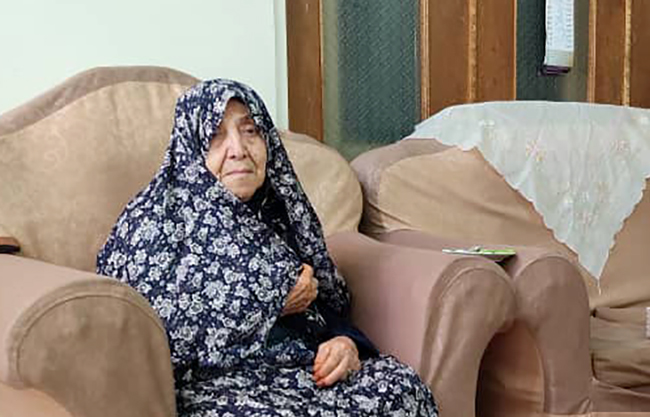
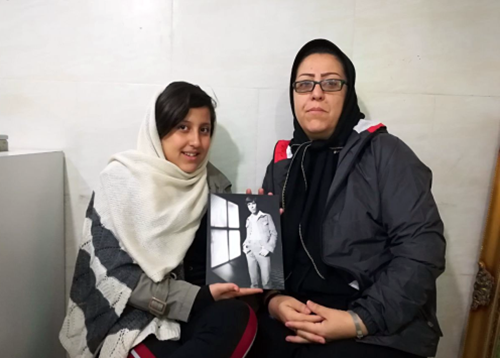
Mahnaz Akafian has not seen her son for 34 years. Her son MohammadAli Sasani was kidnapped by the Mujahedin Khalq Organization (MEK/ MKO/ PMOI/ Cult of Rajavi) in 1987 when he was a soldier of the Iranian army. Mrs. Akafian expressed her hopefulness for the release of her son from the Cult of Rajavi, in the recent online conference held by Nejat Society.

“I got so glad to hear that the appeal of 42 former members of MEK filed in the national court of Iran has been received by the International Court of the Hague,” she told the audience of the conference.

Ms. Akafian the mother of Mohammadali Sasani

Ms. Akafian the mother of Mohammadali Sasani

Mrs. Akafian said: “Although the trial of Massoud and Maryam Rajavi can not compensate the damage to the health and the life of former members in those years of living under the MEK rule, it may pave the way for the salvation of our children who are still captive behind the bars of the Cult of Rajavi. This is our ultimate desire.”

Sasani’s parents are two of many parents who are awaiting the release of their loved ones from the Mujahedin Khalq. Dozens of MEK members’ families participated in the five-day online conference of Nejat Society to express their support for the appeal against the MEK leaders in the international court calling for the release of their loved ones who are taken as hostages by the group in its camp in Albania.

September 2, 2021 0 comments
FacebookTwitterPinterestWhatsappTelegramSkypeEmail
Terrorism
Mujahedin Khalq Organization as a terrorist group

Global Fight against Terrorism to Maintain Peace, Security

Terrorism is known as an unjustifiable phenomenon, threatening international society, so confronting such an issue will help the world get rid of the menace and guarantee a globe free from insecurity and threat.

The phenomenon has been well-known in political literature for years and has been defined differently in different situations in accordance with global conditions and countries’ interests.

Terrorism, however, has got a more sophisticated definition since 20th century. Therefore, old forms of terrorism, such as intimidation, homicide, and massacre, were added up with new types such as sabotage, kidnapping, and hijacking. In fact, terrorism translates into a political act to remove a rival aimed at political objectives.

Iran has suffered a lot from terrorism since the victory of the Islamic Revolution in 1979. Numerous Iranian people and politicians were martyred, including President Mohammad-Ali Rajai and Prime Minister Mohammad-Javad Bahonar on August 30, 1981.

An IRNA researcher interviewed Javad Rezaimanesh, a university professor and political expert, on the occasion of anniversary of a terrorist explosion at Iran’s presidential office on August 30, 1981, named Counter-Terrorism Day in Iran.

Terrorism

Rezaimanesh told IRNA on Monday that the terrorist group of Mujahedin-e-Khalq Organization (MKO) committed heinous crimes in a bid to find a way to gain influence on political and social atmosphere of the Islamic Republic of Iran from the beginning of the government; they decided to conduct sabotage in different administrative offices and destroy the capacity of the country concerning manpower and equipment, but the Iranian people became angry with the group and their terrorist attacks on officials and buildings.

So, as part of their propaganda campaign against Tehran, the enemies of the Islamic Republic resorted to different strategies, including terrorist acts, to put pressure on the country. They have even tried to use false flag operations and put the blame on Iran.

The phenomenon of terrorism can be some acts of violence, pursuing political objectives, creating terror, and threatening preemptive reactions.

It is worth mentioning that the war initiated by powers against terrorism that kills more civilians is a sort of terrorism.

Terrorism is a strategy based on knowing psychological aspects. Propaganda is one of the components of psychological strategy of terrorism and every terrorist attack is considered a prelude to defeat a regime, so real understanding of the strategy will help confront the phenomenon.

While the fight against terrorism should follow a rational order, the international community lacks a clear-cut approach in dealing with threats and violation of peace. Thus, the existing anti-terror mechanisms are not in line with other tactics to guarantee global peace.

September 2, 2021 0 comments
FacebookTwitterPinterestWhatsappTelegramSkypeEmail
Majid Hajalirezaei family
Mujahedin Khalq Organization members' families

Mother of an MEK hostage: They brainwashed my son

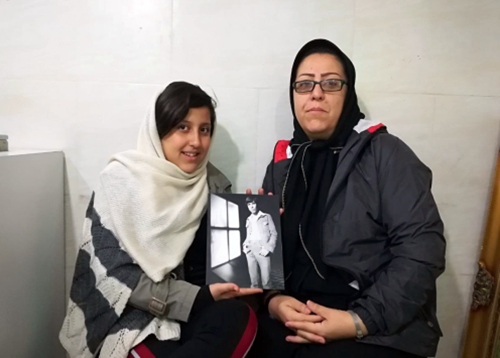
Azam Fadai is a heartbroken mother who has not been able to visit her son for twenty years. Her son is a member of the Mujahedin Khalq Organization (MKO/ MEK/ PMOI/ Cult of Rajavi). Majid Hajalirezai, the son of Azam was a soldier of the Iranian army when he was recruited by the Cult of Rajavi.
“We were informed by the garrison commander that Majid had been disappeared two days earlier,” Azam told the audience of Nejat online conference. “After a few days Majid called us and told that he was in Baneh (a town in West of Iran), he said “Pray for me”.”

The MEK recruiters used to call the Hajalirezaiees from time to time giving them contradictory information about Majid. “Once a woman called to say that Majid was in Greece, the other time a man called and said he was in the United States,” Majid’s mother says. Finally, Majid turned out to be in the MEK’s Camp Ashraf, Iraq.

Majid Hajalirezaei family

Majid’s parents traveled to Iraq to visit their son. The visits with Majid were strictly supervised by his commanders. In their first visit Majid tried to convince his parents about the authenticity of the so-called struggle he was involved in. In their second visit Majid apparently turned sour when he saw his mother and told her: “Why do you come here every day!?”. The exhausted distressed mother slapped him in the face. “I asked him if he was really my son! Majid loved me but the MEK had brainwashed him. They stole him from me,” Azam Fadai said.
“Maryam Rajavi knows nothing of human rights,” Azam continued. “She does not realize how a mother like me has suffered during these 20 years of separation of my only son. I am fed up. I am mentally and physically sick. I take a lot of tablets every day.”

Majid’s parents and sisters still look forward to the release of their beloved Majid from the Cult of Rajavi. “It not late,” says Azam in the message to her son. “Come back home dear! We receive you whole-heartedly.”

Ramezan Hajalirezai is Majid’s father. He also addressed Nejat online conference. “We went to Iraq four times,” he said. “Every time Majid got darker than the previous time. The last time, we were not even allowed to see him. We were standing in front of the gate of Camp Liberty. MEK agents insulted us and threw rocks against us.”
About the brainwashing system of the Cult of Rajavi he said, “They brainwash people so systematically that, as a 60- to 70-year-old-man, I might be deceived by them. I hope that the hostages of the Cult of Rajavi give up some day and return to their home land. You are loved by the Iranian people. You, the beloveds who have been deceived.”

September 1, 2021 0 comments
FacebookTwitterPinterestWhatsappTelegramSkypeEmail
MEK Terrorists
Iran

Swedish Courts, Where MEK Terrorists Are Witnesses

Habilian Association that protects families of terrorism victims in Iran called for legal prosecution of crimes committed by People’s Mujahedin Organization (MEK), known as Monafiqeen (hypocrites) in Iran.

Mohammad Javad Hasheminejad, Secretary General of Habilian Association, said in an interview with IRNA that several legal entities and communities outside Iran have acknowledged the terrorist nature of crimes committed by the MEK.

However, different administrations in Iran have failed to actively prosecute and follow up the terrorist group legally and realize the rights of families of terrorism victims, according to Hasheminejad.

He also said that the fact that the US and European Union had recognized the MEK as a terrorist group for years indicated that even Western countries admitted the terrorist essence of their crimes.

Pointing to the significant number of 17,000 people martyred in terrorist attacks in Iran, the secretary general said that the new administration should take the demands of families serious.

If Iran falls short of expressing the reality of these crimes and hold the perpetrators accountable, the committers who are now protected by some governments will present a reverse narrative of the realities taken place during the past decades, he insisted.

Hasheminejad also referred to the trial of an Iranian citizen in a Swedish court, saying that such trials are aimed at putting the victim in the place of the executioner.

He noted that some people who have attended the Swedish court as witnesses were accused of crime and massacre of Iranians and Iran should hold European countries accountable in this regard.

Habilian Association is an Iranian Human Rights NGO established in 2005 with the aim of elucidating the fact that Iran is one of the biggest victims of terrorism.

September 1, 2021 0 comments
FacebookTwitterPinterestWhatsappTelegramSkypeEmail
Torture in the MEK Cult
Human Rights Abuse in the MEK

Five years in solitary confinements of MEK camps

Farhad Javaheri-Yar is a former fighter with the MKO in Iraq. He served in various capacities in intelligence and security operations. In 1995, he became aware of dissident members being imprisoned inside the MKO camps in Iraq. He wrote a letter to his superiors requesting to be released from his duties and expressed his desire to leave the organization. His superiors tried repeatedly to intimidate him into staying. After his refusal, he was incarcerated in various prisons inside the MKO camps in Iraq from November 1995 to December 2000. He was subsequently turned over to the Iraqi officials and held in Abu Ghraib prison until January 2002, when he was repatriated to Iran.

Javaheri-Yar joined the MKO in August 1982 in Tehran and became active in their underground armed resistance. He was arrested in October 1984 by the Iranian authorities and spent the following four years inside Evin, Ghazal Hisar, and Gohardasht prisons in Iran. Upon his release, he contacted MKO operatives in Europe and was smuggled to Karachi and from there to Iraq. He entered Iraq in 1989 and became an active member of the MKO’s armed wing.

Camp Ashraf

Javaheri-Yar became disillusioned with the MKO in 1995 after learning from a number of other MKO cadres that they had been recently imprisoned by the organization:

In July 1995, I returned to Camp Ashraf from a reconnaissance mission. During the preceding months, I had noticed a number of my friends had “disappeared.” I was told that they were inside Iran to carry out missions. I met two of them, Akbar Akbari and Ali Taleghani, who told me that they were imprisoned inside Camp Ashraf during this period and were forced to sign false confessions indicating their ties to Iranian intelligence agents and [promising] that they would never leave the MKO.

I could not believe that the Mojahedin would engage in acts of torture and forced confessions similar to what the Iranian government used. I wrote a number of reports for my superior. In these letters I expressed my disapproval of the mistreatment of members and submitted my resignation. My request was repeatedly ignored.

Javaheri-Yar persevered with his request to leave the MKO, but was told that the organization could not relieve him of his duties because of his extensive knowledge of MKO’s activities. Once Javaheri-Yar realized he would not be free to leave, he escaped from Camp Ashraf on November 28, 1995 and attempted to reach the Jordanian border. On November 30, 1995, he was arrested by Iraqi security forces near the city of Tikrit. He pleaded with the Iraqi forces not to return him to the MKO camp, but his pleas were ignored and he was handed over to the MKO forces in Camp Ashraf. During the next five years he was held in solitary confinement in various locations inside the MKO camps, from November 1995 to December 2000.

During the first two months, I was kept inside a pre-fabricated trailer room called a bangal. I was told that I could not leave the camp but could resume life inside the camp if I chose to do menial labor, such as making bread or sweeping streets. I refused their offer, and their response was harsh. I was moved to a prison cell in Avenue 400 of Camp Ashraf. The cell’s dimensions were three by two-and-a-half meters [nine feet by eight feet]. It was connected to a narrow hallway – one meter [three feet] wide and three-and-a-half meters [ten feet] long – that led to a small toilet and sink.

In February 1996, I made very loud verbal protests from inside my cell. To punish me, they confined me inside a bathroom for three consecutive weeks. I was miserable. There was no room to stretch or lie down. The tiled floor was wet and cold. It was a terrifying experience.

The MKO’s leadership, including Masoud Rajavi, promised Javaheri-Yar that he would be released “soon,” but each time they broke their promise. Javaheri-Yar was imprisoned in solitary confinement inside Camp Ashraf, as well as Camp Parsian, until December 2000, when he was turned over to the Iraqi intelligence forces (mukhabarat). He spent one month in a mukhabarat prison before being transferred to Abu Ghraib prison. He was repatriated to Iran on January 21, 2002. He left Iran and is living in Europe.

August 31, 2021 0 comments
FacebookTwitterPinterestWhatsappTelegramSkypeEmail
Newer Posts
Older Posts

Recent Posts

  • MKO Rally Dispersed by French Police in Humiliating Blow to Terrorist Group

    June 27, 2026
  • Nejat Society Albania’s Conference on June 20th

    June 22, 2026
  • Maryam Rajavi’s Stance, Peace or Survival Tactic?

    June 22, 2026
  • France’s foreign ministry denies asking for ban of MEK’s rally

    June 20, 2026
  • The MEK did not allow them to visit their father

    June 20, 2026
  • Facebook
  • Twitter
  • Instagram
  • Youtube

© 2003 - 2025 NEJAT Society . All Rights Reserved. NejatNGO.org


Back To Top
Nejat Society
  • Home
  • Articles
  • Media
    • Cartoons
    • NewsPics
    • Photo Gallery
    • Videos
  • Publications
    • Books
    • Nejat NewsLetter
    • Pars Brief
  • About Us
  • Contact us
  • Editions
    • عربي
    • فارسی
    • Shqip