Nejat Society
  • Home
  • Articles
  • Media
    • Cartoons
    • NewsPics
    • Photo Gallery
    • Videos
  • Publications
    • Books
    • Nejat NewsLetter
    • Pars Brief
  • About Us
  • Contact us
  • Editions
    • عربي
    • فارسی
    • Shqip
Nejat Society
Nejat Society
  • Home
  • Articles
  • Media
    • Cartoons
    • NewsPics
    • Photo Gallery
    • Videos
  • Publications
    • Books
    • Nejat NewsLetter
    • Pars Brief
  • About Us
  • Contact us
  • Editions
    • عربي
    • فارسی
    • Shqip
© 2003 - 2024 NEJAT Society. nejatngo.org
Nejat Newsletter No.121
Nejat Publications

Nejat Newsletter No.121

Inside This Issue:

– Nejat Society Albania’s Conference in Fier
On Friday, January 17, 2025, a conference was held in Fier, Albania, by the Nejat Society Albania, with the cooperation and facilities of the Municipality of Roskovec, in the town hall.

– Message from the President of the Nejat Society Albania
We also hope that the year 2025 will be the year of the connection of Iranian families with their loved ones trapped in the People’s Mujahedin Organization camp in Manez and the realization of the fundamental rights of the current members of this organization

– Albanian TV channel SOT7 interview Aldo Sollulari and Erisa Idrizi
Albanian TV channel SOT7 interviewed the cast, director Aldo Sollulari, and actress and translator Erisa Idrizi about the documentary Mother, Love, Separation in a live broadcast.

– The lack of freedoms and human rights in the MEK camp in Albania
Ashraf 3 camp is a place where members of the Organization of the Mujahideen of Iran (MEK) have been sheltered after leaving Iran and previous attempts to fight the Iranian regime. This analysis focuses on the lack of freedom and human rights in this camp, examining how living conditions and restrictions imposed on MEK members reflect their deprivation of freedoms and fundamental rights.

– The hypocrisy of MEK supporters
In general, you can divide MEK supporters into two categories. The first, the majority, are those who never ever spent a day in the MEK ranks, especially during their time in Iraq at Camp Ashraf.

– Aldo Sulollari’s New Year’s greetings to the CEO of Nejat Society and his reply
I am beyond grateful to have you, not only as a boss but as a mentor, a leader, and a friend.
Your guidance, wisdom, and unwavering support have shaped so much of my journey.

To view the pdf file click here

February 11, 2025 0 comments
FacebookTwitterPinterestWhatsappTelegramSkypeEmail
Trial of MEK leaders in Tehran
Iran

Report on the 28th Session of the Court Investigating the Charges of the MEK

The twenty-eighth session of the court investigating the crimes of the Mujahedin- Khalq (MEK) was held on Tuesday, February 4, 2025, presided over by Judge Dehghan.

Maddah, the plaintiffs’ lawyer, told the court that the leaders of the MEK prioritized advancing their own goals and did not care about the lives of the people. Quoting from Mehran Asdaqi, the arrested member of an MEK team house, he said, “When we entered the new team house, we saw that they had made lead objects for us and taught us to hit people on the back of the head with these objects to quickly knock them unconscious; they had equipped the bathroom in the house and the bathroom was insulated so that if we wanted to torture them in it, the sound would not escape, and they had already sent teams to dig graves so that we could quickly bury the bodies.”

Mahmoud Asemanpanah, a former member of the MEK who appeared as a witness in court, explained his 17-year involvement in the terrorist group MEK.

He said that in 1988, after being deceived by the MEK terrorist group’s propaganda, he went to Ashraf through a difficult path.

Asemanpanah’s account of his journey to join the MEK, his life in the group, and his efforts to leave and return home to his family is interesting, but even more interesting is the concern of this defected member for his friends who are still members of the group.

He said that he is doing everything he can to discredit the MEK and encourage his remaining friends in Ashraf to return to the country.

Telling the story of his carefree return to the country, Asemanpanah said: “I am now working as a painter; I have my own family and life, and I want to inform those who remain in Ashraf that everything the group says about the consequences of returning to Iran is a lie.”

Ardeshir Darvishi, another defected member of the MEK, was also present at the 28th court session.

Darvishi said: “When I joined the group, I touched and felt some realities and realized that what the organization had told the world about itself was completely different from what I was observing; the group ruined our understanding, intelligence, or humanity; it took away our emotions.”

Darvishi spoke of the suffering and psychological pressure that had plagued him since 2004, when he separated from the MEK terrorist group.

This defected MEK member said: “When I escaped from the group, the mobile phone that is available to everyone was unknown to me; I was deprived of having a phone or even a radio; in Camp Ashraf, which was built with the help of Saddam and the Western world, they had cut off our connection with the outside world.

Then, the lawyer mentioned the two major crimes of the terrorist group, the MEK, in the 1980s, namely the bombing of the Prime Minister’s office and the Republican Party. Jafar Khoramdal, the committee’s operations officer and a member of the Central Committee, also took the stand to explain.

While providing details about the incidents, he made some points regarding the torture committed by MEK members, saying: “I was given the responsibility of identifying the people who had been tortured by the MEK agents; the condition of some of the victims was so bad that no one was willing to accept this responsibility.”

Ahmad Karimpour, head of the country’s bomb check and neutralization unit, also attended the stand and provided specialized explanations about the explosion of the Republic party building.

He pointed out an important point and said: The bomb used had a complex system and the four countries, England, Germany, America, and France, had the ability to manufacture that bomb, but we were unable to determine which country the bomb was manufactured in.

In response to Judge Dehghani’s question about the possibility of purchasing this bomb on the black market, Karimpour stated: “The type of bomb was not such that it could be purchased on the market.”

During the twenty-eight sessions of the court investigating the crimes of the MEK, numerous related books and films were introduced; although the films introduced were all about the crimes of the MEK, the books introduced covered a wider range of topics, from MEK approaches to legal debates.

It was around 1:00 p.m. when Judge Dehghani announced the end of the twenty-eighth court session and said the next court session would be held on February 18.

February 9, 2025 0 comments
FacebookTwitterPinterestWhatsappTelegramSkypeEmail
Nasser Mohammadi's family's request to the head of Tehran Criminal Court
Mujahedin Khalq Organization members' families

Nasser Mohammadi’s family’s request to the head of Tehran Criminal Court

The Mohammadi family is among the families of victims of the Mujahedin-e Khalq (MEK), one of those families whose members were murdered by the group.

During the Iran-Iraq War, Nasser Mohammadi was captured by the Mujahedin-e Khalq forces, who were fighting alongside Saddam Hussein’s army against their homeland. He was then forced by pressure and threats to participate in the group’s cross border operation against Iran, named Forough Javidan (Eternal Light). Since Nasser did not want to take up arms against his homeland, he attempted to flee to Iranian soil near the border, but in the presence of eyewitnesses, he was shot in the back by the MEK agents and was killed.

Naser Mohammadi' family in a protest gathering among other Nejat families

Naser Mohammadi’ family in a protest gathering among other Nejat families

Nasser Mohammadi’s family followed up on this important issue as soon as they learned about his murder by MEK agents. Nasser’s brother Houshang Mohammadi, while in Camp Ashraf in Iraq, directly asked the MEK leaders for an explanation and requested evidence, but as usual, they distorted the truth and identified the Iranian government as the killer of his brother. This claim was not accepted by Houshang, and the issue even escalated into a verbal altercation.

Due to the existence of eyewitnesses to Nasser’s killing by the MEK, his family has been suing the MEK for the murder of their brother since those days. The Mohanmmadis are among the plaintiff families against the leaders of the MEK in the process of their trial. They are members of Nejat Society.

On Saturday, February 1st, this family met with other members of Nejat Society’s office in Zanjan Province. Pursuing the legal process against the MEK leaders and the group itself as a legal entity, through a short video message, they asked the honored head of Branch 11 of the Criminal Court of Tehran Province to consider their family’s complaint.

February 3, 2025 0 comments
FacebookTwitterPinterestWhatsappTelegramSkypeEmail
Bob Menendez
Mujahedin Khalq Organization's Propaganda System

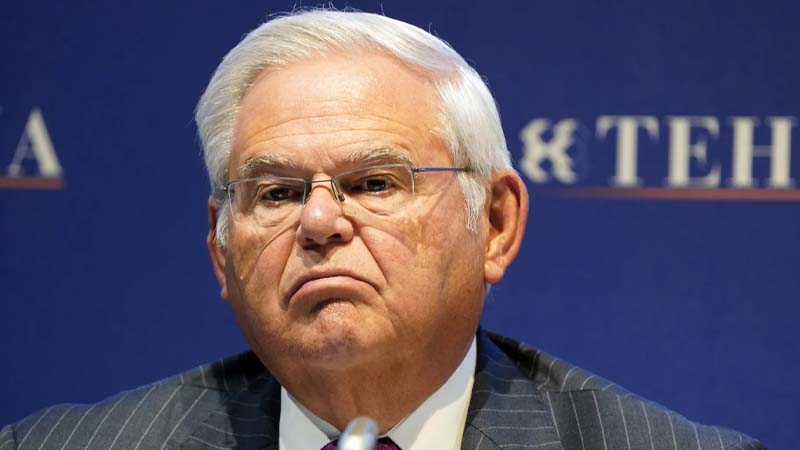
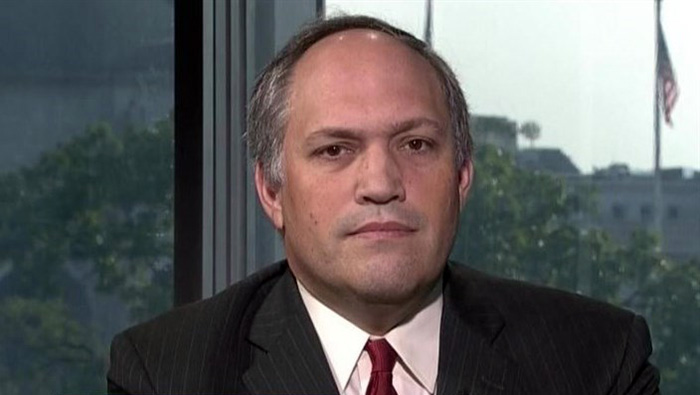
Anti-Iran former US Senator Bob Menendez gets 11-year jail term

Former US Senator Bob Menendez, known for his longstanding links to Zionist lobbies, has been sentenced to 11 years in prison for accepting bribes in gold and cash and acting as an agent of Egypt.

Menendez was convicted of using his once-considerable influence in exchange for bribes. According to the indictment, Menendez and his wife Nadine “engaged in a corrupt relationship” with three New Jersey businessmen from at least 2018 through 2022.

His wife is set to be tried in March on many of the same charges.

US security agents reportedly found $480,000 in cash at his home, some of it stuffed inside boots and the pockets of clothing, along with gold bars worth an estimated $150,000, among other valuables.

The 71-year-old convict also met with Egyptian intelligence officials and helped Egypt gain access to millions of dollars in US military aid.

Meanwhile, the former senator’s friends paid $2 million to attorneys for defending him against federal bribery charges.

Menendez has a history of intimate relations with shady actors and groups.
31 US senators ask E3 to prevent expiry of UN’s anti-Iran missile bans
A group of US senators have asked the UK, France and Germany to take action to prevent the expiration of anti-Iran UN bans set to end next month.

In April 2024, Menendez voted in favor of a $95 billion aid package for Israel, Taiwan, and Ukraine.

The former US Senator also created a legal defense fund by tapping into a nationwide base of supporters who backed his hostile stances, including his view on Iran.

Much of the cash in the fund came from New Jersey and New York donors with various business and political interests, including the real estate firm led by President Donald Trump’s son-in-law Jared Kushner.

There were, however, other donors that packed Menendez’s fund with cash, including two individuals closely linked to the Mujahedin Khalq Organization (MKO).

About 15 percent of the people who gave Menendez money are said to be linked to the terror network, which was on the US list of foreign terrorist organizations from 1997 to 2012.

Menendez’s support for the group has persisted over the years. The senator met with its leader, Maryam Rajavi in May 2023, and praised the MKO at a 2022 Capitol Hill event organized by a group aligned with the anti-Iran terrorist group.

Throughout his career, Menendez consistently received financial backing from Israeli interests. He strongly opposed Iran’s 2015 nuclear deal called the Joint Comprehensive Plan of Action (JCPOA) and repeatedly called for tougher policies against Tehran, advocating for severe sanctions.

In July 2023, he introduced a bill aimed at preventing the US from removing sanctions on Iran’s missile and drone program.

February 1, 2025 0 comments
FacebookTwitterPinterestWhatsappTelegramSkypeEmail
A poster that became a symbol of hypocrisy of the MEK
Mujahedin Khalq Organization's Propaganda System

A poster that became a symbol of hypocrisy of the MEK

In recent days, a photo from a conference of the Mujahedin (MEK) has been circulating on social media, once again attracting negative attention from users.
This photo was taken from a recent conference of the so-called National Council of Resistance at the MEK base in Paris. Several Western officials and a number of MEK members, supporters and female members with forced hijab are at the so-called conference, but the main point is the poster that is installed at the end of the hall.

The dimensions of this poster and the angle of the shooting are such that, in the background of the actual crowd present at the meeting, it suggests the presence of a larger crowd in the hall.

This hypocritical portrayal of the MEK’s audience size was enough to once again make anti-MEK hashtags trend on social media.

However, more details about the MEK’s deceptive methods can be found in the posts of members who have defected from the group. In a post on his X account below the photo, Mohammad Reza Torabi, a former MEK child soldier, called the MEK’s tactic of inflating its audience size “a well-known method of manipulation” that is “frequently employed by the MEK.”

He then wrote about his first encounter with such a phenomenon in the early days of his involvement in the MEK:
In 1999, the same year I was recruited as a child soldier, the organization staged an event in Paris, claiming that 20,000 people had participated. At the time, the MEK often organized cultural events and concerts to attract supporters from the Iranian diaspora. However, the hall they had rented for this event—and the number of empty seats visible on camera—told a different story. It was evident that the attendance fell far short of their claims, sparking rumors among our unit, which consisted mostly of newcomers.

A few days later, Mahvash Sepehri, better known as Sister Nasreen, a senior MEK commander, held a meeting with us to address the issue. I still vividly remember her words as she furiously declared, “Of course there weren’t 20,000 participants! What do you think?! When it comes to our enemies, we have no ‘honesty and sacrifice’ (the MEK’s motto). We can and will inflate numbers!”

Torabi, who has been a member of the MEK for 18 years and has served in various social, political, and financial sectors of the organization, acknowledges that the manipulation of numbers and figures is a culture of deception that is “deeply embedded” in the organization’s organizational structure.
This former MEK member, who is today a staunch critic of the Rajavi organization and is trying to inform Western politicians about its nature, poses a fundamental question to his target audience, namely deceived and bribed Western politicians:

So, if the MEK is willing to use posters to fabricate larger audiences at their events, one must ask: how else—and where else—are they deceiving you?

Mazda Parsi

January 27, 2025 0 comments
FacebookTwitterPinterestWhatsappTelegramSkypeEmail
Mojahedin-e Khaq (MEK) in Albania
Mujahedin Khalq; A proxy force

The hypocrisy of MEK/NCRI supporters

THE INTRODUCTION

In general, you can divide MEK supporters into two categories.
The first, the majority, are those who never ever spent a day in the MEK ranks, especially during their time in Iraq at Camp Ashraf. I don’t mean fancy guest-like visits, where they were treated like kings and queens and wined and dined by MEK officials. I mean the real cult life, where they had to wake up at 5:30 AM every day, forced to pray and carry out other Islamic rituals, take part in cruel and inhumane self-criticism meetings and ideological teachings and being shouted at and ridiculed, 16 hour work days under the scorching summer heat, being completely disconnected from the outside world without access to internet and phones, not being able to freely see family members, even within the camp, being forbidden from connecting with family outside of the camp, being forced to worship the cult leaders like religious figures, and much much more. You get the idea. They didn’t spend a single day in the MEK!

The second group, maybe two handfuls, are those who were actually members of the MEK at a certain period of time. Almost all for a very short period of time. Yet very soon realized the reality of the cruelty and brutality of the cult life and escaped with promises of leaving and continuing support for the MEK from afar.

THE CONTRADICTION

If you ask the first group why don’t they join the MEK if they are so good and just and worthy of your support? You’ll get answers like:
– I didn’t have the courage to join, especially in a warzone like Camp Ashraf
– I am not worthy and competent enough to be an MEK member. They are the most honest and selfless individuals, which I am not (they don’t say the last part out loud of course).
– I have family and children and other personal obligations.
So the MEK is good, or “too good” for you to join and officially become a member? Got it.

If you ask the second group why they left the MEK, if they’re so good? You’ll get answers like:
– I couldn’t bear their organization and structure.
– That lifestyle isn’t for me and I can’t devote and sacrifice so much.
– I was scared and didn’t want to lose my life.
So again, the MEK is good, but you can’t bear the good or “too good” conditions and ultimately leave and go back to your normal life? Got it.

THE IRONY

The majority of MEK supporters haven’t spent a single day in the MEK, yet are all over social media “debunking” facts and harassing and attacking any individual, like me, who criticizes and speaks truth about this cult. They get their information from second and third hand sources while I stand here as a living witness to MEK crimes and willing to testify in any international or fair court.
The next time you come across one of them, simply just ask them why they don’t go and join the MEK if they are all that they claim they are?

Mohamamd Reza Torabi

January 25, 2025 0 comments
FacebookTwitterPinterestWhatsappTelegramSkypeEmail
27th Session of the Court Investigating the Charges of the MEK
Iran

Report on the 27th Session of the Court Investigating the Charges of the MEK

The 27th court session, examining the charges against 104 members of the Mujahedin-e Khalq (MEK), as well as the organization’s nature as a legal entity, was held in public on Tuesday, January 21, in Branch 11 of the Criminal Court of Tehran Province, presided over by Judge Amirreza Dehghani and court advisors Morteza Turk and Amin Nasseri, Vaziri representing the prosecutor, the families of the victims and their lawyers, as well as the lawyers of the defendants.

The plaintiffs’ lawyer, Kazemi began his speech explaining the structures of criminal groups according to the science of law. He stated that the MEK should be considered a legal entity. Stating that criminal groups are illegal groups due to their criminal nature and the basis for the formation of these groups is to commit illegal acts, he said: “Therefore, the formation and creation of these groups also has no conformity with the law and they did not comply with the formal and substantive provisions of the law that legal entities usually must comply with in order to be recognized by the legislator. For the following reasons, I believe that criminal groups also have legal personality and responsibility, despite not complying with the formalities.”

Arguing about the MEK’s legal entity, based on the business laws, Kazemi concluded that the MEK can be brought to justice as a legal entity although it has never complied with the legal formalities needed.

Akbar Kabiri, a member of the then committee of revolutionary guards, took the stand and told the court about his observations on June 20, 1981 when the MEK broke out the armed struggle against the Iranian government.
“It was a horrible day when they all took to the streets and declared armed war,” he said. “The MEK expected the people to come and stand by their side them and establish their government on the same day. The people did not support them and appeared against them.”

Based on Kabiri’s testimonies the MEK hated that Iranian people did not support them and decided to revenge. “The leaders gave a direct order after June 20th, and these things that I am presenting are from the statements of the MEK agents that we arrested,” he added. “They said that they had orders from the high-ranking officials of the organization to take revenge. It was planned to assassinate anyone who appeared religious in the streets and had a picture of the late Ayatollah Khomeini and Ayatollah Beheshti in their workplace.”

Kabiri explained some of his experiences with the arrested MEK members: “We raided a place in a basement on Motahari Street where a number of pharmacy PhD students were gathered, and this place was a cyanide manufacturing laboratory. They would break the tops of the ampoules, seal them with double-sided tape, and give them to the organization, and the organization would give these cyanide bottles to its members.”

About the cyanide ampules he explained: “Before, the organization would give members capsules, and sometimes it wouldn’t work in their stomachs, or sometimes we would save these people we arrested by washing their stomachs; so they would give the bottles to the members. When they were arrested, they would put one of the bottles in their mouths and chew, and the bottle would break, and the cyanide would enter their blood directly. The organization didn’t want any of their members to be arrested alive.”

According to his testimonies most of the arrested MEK members were 18-19 years old who had been brainwashed by the group so as they were always ready to die for the cause of the group. The arrested members of the organization all said that they received all orders from the organization’s central cadre, and that members of the organization were not allowed to read newspapers or watch television, and if someone wanted to leave the organization, they would be physically eliminated.
Subsequently, Issa Azadeh, a defected member of the MEK who lives in Europe, appeared as a witness in the court session online and took an oath to truthfully state his case in court.

He began his testimonies with this introduction: “Considering that I have been living in Europe for many years and have defected this cult, I have received several assassination threats. Therefore, I always check this organization through their own media or other media. In addition, I am in touch with some friends who are present in Camp Ashraf 3 and in Albania and I am aware of the activities of this organization.

About the importance of the court he said, “The importance of this court for the mercenaries of the MEK and also for the opponents of the Islamic Republic of Iran is very clear. Maryam Qajar Azdanloo [Maryam Rajavi], as the person behind the window and spokesperson of this organization, is seeking to tarnish and discredit this court and is making arrangements for this; therefore, this court is a very important and historic court. Although in my opinion, who was a member of the Cult of Rajavi for many years, this court was held late, but holding this court is a precedent for the crimes and brutalities of this organization.”

Azadeh who was a member of the group from 1987 to 2011, explained that in the MEK no one has ever had a clear and fixed organizational position. Responsibilities were given to each individual, and they said that this responsibility was temporary.
Regarding torture in the organization, Issa Azadeh said: Torture is a defined issue in the MEK and is completely permissible.

The torturers were led by Seyyed Mohammad Sadat Darbandi, known as Adel. He trained them. He himself was under the supervision of Giti Givechian. Another person named Mir Hossein Mousavi Sigaroudi was called Agent 007 within the Rajavi’s group. Other people called him Fazel. He was also one of the torturers and played a major role in the tortures of 1973. Also, Bahram Janat Sadeghi, who is currently in Albania, and Mahvash Sepehri, who was also in the first place in terms of torturer, known as Nasrin butcher in the organization.

He continued: Among the torturers were other people named Majid Alamiyan, Ezzati, known as Nariman, and Asadollah Musana. Masoud Mazloumi and Roqiyeh Abbasi were also torturers. There are other people, but these people I mentioned were the torturers of Shohreh Afagh. Here I mention my friends in the organization who were killed by these torturers. Minoo Fathali, who once escaped and Mahvash Sepehri once stepped on her throat with a boot and said that if anyone wants to escape, we will spill their blood next to the trees. Fathali was killed on Rajavi’s orders and by her torturers.

Asked by the judge if he himself was tortured in the MEK, Azadeh said, “I realized that these people were being taken out of base in the middle of the night. Every now and then, Seyyed Mohammad Darbandi, Sigaroudi, Majid Alemian, and Bahram Janat Sadeghi would come and put black garbage bags over the people’s heads, they would also collect the items from their wardrobes in black garbage bags, and they would take the people away in Land Cruisers.

He continued: When I realized this, they called me one night and Sigaroudi put a sheet of paper in front of me and asked me to sign it. On that A4 sheet of paper it was written: I came here as an infiltrator from the security forces of the Islamic Republic of Iran to infiltrate and assassinate the leader. After reading the contents of this sheet, I crumpled it up, threw it at Sigaroudi, and got into a fight with them. They stabbed me in the arm with a knife, the marks of which are still there, and I broke two of my vertebrae. I arrived in Europe paralyzed and underwent two surgeries in a clinic in Paris, and my condition has not yet fully recovered.

Azadeh added: About 10 to 15 people there fought with me and after a lot of fighting, I fainted and fell on the spot. Then they took me to the hospital and locked me in solitary confinement with the same condition and stitches on my arm.

The judge said: Describe the details of the torture.

The defected member of the MEK said: When I protested against their actions, they attacked me. I protested and said, “Why are you torturing me? Am I your enemy?” Of course, they were preparing the ground for their torture, and when they put that sheet in front of me, I realized that they were looking for a ground for my torture, and this is one of the organization’s tactics. They tied my hands and feet behind my back and kicked me very brutally. This torture was so brutal that I did not imagine that I would survive and describe these crimes in such a place and situation.

He recalled: After I was released from solitary confinement, they took me to a 6×4 room where about 50 people were imprisoned. There was a bathroom and a toilet in one corner of the room, and they gave me an army blanket to use as a bedspread.

Azadeh continued: I had a friend named Saeed Seyed Murad, who was an outspoken person in the organization and did not give in to pressure, and that is why he went to prison. One day, while we were in the aforementioned room, they called out to Saeed Murad, and Bahram Jannat Sadeghi ordered him to be blindfolded right there and Saeed was taken away. We could clearly hear Saeed’s moaning and groaning, asking for our help, even though the MEK had special rooms for torture and had soundproofed them. After a few hours, four people had grabbed Saeed’s hands and feet and thrown him into the room.
The judge asked: Who else was there when Saeed Seyed Murad was taken away, accompanying Jannat Sadeghi?
Azadeh replied: Asadullah Mosanni and Hassan Ezzati.

The judge said: What was Saeed Sayed Murad’s condition when they brought him back into the room?

The MEK defector said: His entire face and eyes were blistered. They had taken our personal clothes and given us a prison-like outfit. Saeed Sayed Murad’s clothes were also torn to pieces and the marks of his boots were clearly visible on his body. His back was completely swollen and blue due to the blows from the cable or hose. The blows to his head and face had caused his entire face to swell and the marks of torture were clearly visible on his face, and he was unable to stand on his feet.

Hassan Sharqi, a prisoner of war who had joined the MEK, appeared on the stand as a defected member of the group and swore an oath not to tell anything but the truth. “I was a cadre officer [of Iranian army] and was held as a POW in 1980. Due to a family matter, I decided not to return to Iran. Mehdi Abrishamchi and his men tricked me into staying with the MEK for a few months, but then they took a pledge from me and kept me there for 24 years.”

One of the daily self-criticism sessions was led to Sharqi’s torture. He testifies in the court, “They said you want to sabotage the organization. I said, “Give me my money and expel me so I can leave here.” Because they had taken a lot of money from me when I arrived, they kept me in a container for 5-6 days and beat me twice a day. One of these torturers was Hossein Abrishamchi, who is dead. Another was Iraj Taleshi.”

Judge Dehghani asked: How many times were you beaten and did you need medicine and treatment and do you have a certificate?

Sharqi replied: Twice and because of this torture, the soles of my feet have not healed yet, but I have not received a certificate. They took about 110 thousand dollars from me and Zahra Rajabi, who was one of the commanders and was killed in Turkey, took two gold necklaces and my wedding ring, which I have filed a complaint with the Hague court.
At the end, the judge said to the plaintiff’s lawyer to present the medical certificates that each of these witnesses relied on to the court.

The next session of the court will be held on February 4th.

January 22, 2025 0 comments
FacebookTwitterPinterestWhatsappTelegramSkypeEmail
Ela Sulollari (Deda)
Human Rights Abuse in the MEK

The lack of freedoms and human rights in Ashraf 3 camp

Ashraf 3 camp is a place where members of the Organization of the Mujahideen People of Iran (MEK) have been sheltered after leaving Iran and previous attempts to fight the Iranian regime. This analysis focuses on the lack of freedom and human rights in this camp, examining how living conditions and restrictions imposed on MEK members reflect their deprivation of freedoms and fundamental rights.

One of the most noticeable aspects of the lack of freedom at Ashraf 3 camp is the restriction of the movement of individuals. MEK members are locked inside the camp and have very little opportunity to travel outside of it. This restriction is a sign of isolation and a lack of autonomy, making them feel confined in a tight space, unable to enjoy the freedom to choose their lives.

Another aspect of the lack of freedom and human rights is the restriction of ways to communicate with outside world. MEK members are unable to communicate freely with their families and friends due to information verification and strict rules within the camp. This kind of restriction of social and family connections is a grave deprivation of the right to communication and development.

Living conditions in Ashraf 3 camp are insufficient and difficult. MEK members live in strict conditions, with little opportunities for freedom of expression, personal development and to have a dignified life. Opportunities for education, work, and activities that could help individuals develop and contribute to society are often lacking. These conditions violate the human rights and dignity of any individual, forcing them to live in conditions of persecution and isolation.

Another element of the lack of freedom in Ashraf 3 camp is information control. MEK members are often required to follow certain opinions and obey certain rules, which restrict freedom of thought and expression. This control of information makes it impossible for individuals to develop independent thought and to criticize their own reality. Often, this leads to a kind of “forced praise” and a lack of freedom to openly discuss different ideas and thoughts.

MEK participants often face uncertainty, fear, and ongoing stress about their future. They feel threatened and frightened by the possibility of violent and unjust punishments, making their lives a long period of suffering and fear.

In response to the living conditions in the Ashraf 3 camp, there has been reactions from various human rights organizations and several countries. Many of these organizations have raised concerns about human rights violations and the lack of freedom that the MEK group has. The insecurity and difficult living conditions in these camps have been criticized as outright violations of international human rights standards.

The lack of freedom and human rights in Ashraf 3 camp is a reality that has profound impacts on the lives of MEK members. They are deprived of opportunities to enjoy life the way they please, to have open and free relationships, and to express their opinions without fear. This isolation and lack of freedom is a reflection of the difficult and unfair conditions they face, creating an oppressed and controlled environment, where freedom is a seemingly distant aspiration.

January 22, 2025 0 comments
FacebookTwitterPinterestWhatsappTelegramSkypeEmail
Nejat Society Albania’s Conference in Fier
Former members of the MEK

Nejat Society Albania’s Conference in Fier

On Friday, January 17, 2025, a conference was held in Fier, Albania, by the Nejat Society Albania, with the cooperation and facilities of the Municipality of Roskovec, in the town hall.

Roskovec (Albanian definite form: Roskoveci) is a town and a municipality in Fier County, south-central Albania. The municipality was formed at the 2015 local government reform by the merger of the former municipalities Kuman, Kurjan, Roskovec and Strum, that became municipal units.

Albora Cenaj, the head of the city’s municipal museum, was the coordinator of the affairs between the Nejat Society Albania and the municipality. She actively prepared the requirements for the meeting to be held in the municipal hall. She had seen the coverage of the conference and the documentary screening in the city of Shkodër and became interested in the topic. In her previous meetings with Erisa Rahimi, the head of Nejat Society Albania, she had said that she would support the Society because it pursues humanitarian goals.

Nejat Society Albania’s Conference in Fier

Nejat Society Albania’s Conference in Fier

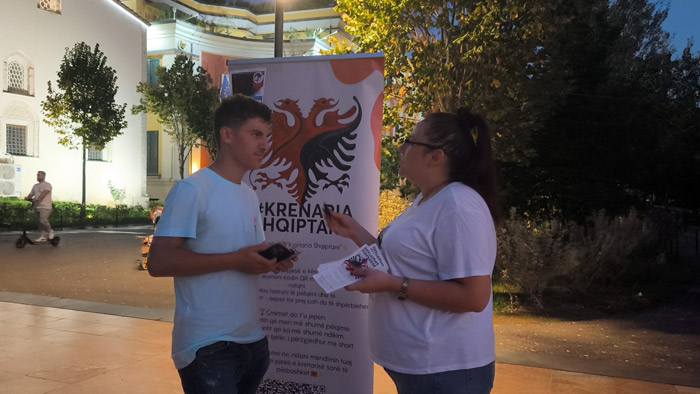
Blerta Çomëni, former head of the Municipal Museum and current IT officer at the municipality, participated in distributing brochures in the city and providing explanations to the public.

Harrilla Goga, the president of the Albanian Association of Former Partisans, also played a significant role in organizing and promoting the conference.
On Thursday and also on Friday morning, brochures were distributed in public places in the city to promote the conference. The conference started at 15:00 local time (17:30 Iranian time). The conference hall of the municipality was packed and some had to stand.

Nejat Society Albania’s Conference in Fier

Nejat Society Albania’s Conference in Fier

At first, Erisa Rahimi, the president of Nejat Society Albania, explained about the society, its goals and functions. She introduced the Deputy Mayor, Maksim Goga, and thanked him for accepting the invitation to participate in the conference. She also thanked all the authorities and the audience for participating in the event and expressed her happiness that 60 municipal officials and members of the city council, as well as 20 officials from student organizations, had participated.

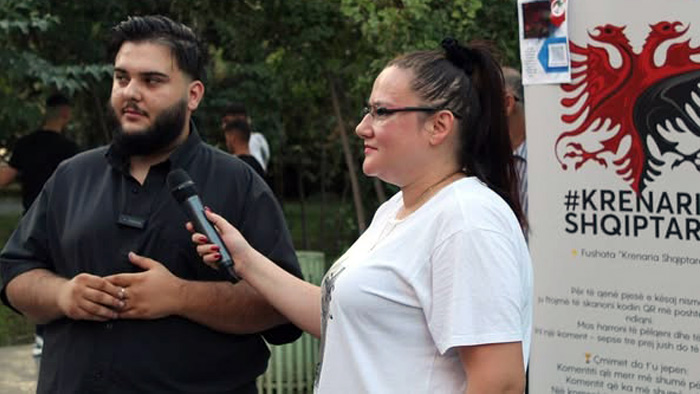
Then Aldo Sollulari, the director of the documentary, “Mother, Love, Separation, gave a speech. He first thanked the participants and then gave an explanation about the documentary and how it was produced. He revealed the terrorist nature of the MEK and also the human rights violations in the group’s camp in Manz.

In his speech, Sollulari thanked Ebrahim Khodabandeh, the CEO of Nejat Society in Iran, for providing them with the facilities to be the voice of mothers and families in Albania.

Nejat Society Albania’s Conference in Fier

Nejat Society Albania’s Conference in Fier

Erisa Rahimi then invited Maxim Goga, the deputy of Mayor, to give a speech. She presented the gifts from Nejat Society Albania and a bouquet of flowers to the municipality and the museum, and in return, the Deputy Mayor presented gifts from the municipality to the Society. The Deputy Mayor also thanked Nejat Society Albania for organizing this conference and asked for further cooperation.

Then the documentary “Love, Mother, Separation” was shown. During the screening of the documentary, absolute silence filled the conference hall and the audience followed it moment by moment.

After the documentary, Mohammad Reza Sediq, a former member of the MEK, was introduced by Rahimi. He spoke about his bitter experiences in the MEK camp in Manz. He said that he had spent 23 years of his life in the MEK without contacting his family, and when he left the group, he found out that his mother had died and that she missed hearing his voice.

Also, Harrilla Goga, the head of the former partisans’ association, who is also a municipal official, gave a speech. After him, Ms. Donika, a university professor, gave a speech.

Finally, Deputy Mayor Maksim Goga gave another speech and expressed his feelings after watching the documentary.
Four television channels were present and covered the conference, including Apollon TV, Star Plus Digitalb, 4Plus TV, Info TV.
Also, a photo and caricature exhibition was held outside the conference hall, where Brikella Sollulari explained her caricatures to the visitors.

A petition addressed to the Albanian Prime Minister, His Excellency Edi Rama, was signed by the participants, in which the Albanian government was asked to investigate the violation of the most basic human rights in the MEK camp in Manz, Durres province.

January 20, 2025 0 comments
FacebookTwitterPinterestWhatsappTelegramSkypeEmail
Mujahedin Khalq Organization as a terrorist group

Trump’s Ukraine envoy slammed by Iranians on social media

Anti-MEK hashtags were once more trending on social media in the past few weeks. The viral hashtag, which is reminiscent of the MEK’s violent record and has trended in English, is #MEKTerrorists. This was the outcome of speeches made by some US former politicians on behalf of the group in their conference in Paris.

Another bad news for the MEK is that Donald Trump has blacklisted some ardent supporters of the MEK for his second administration. The list includes Mike Pence, Dick Cheney, John Bolton, Paul Ryan and Mitt Romney who served in his first administration and who have so far been paid hefty amounts of money by the MEK for speaking at their events.

However, there is only one politician who is under sever scrutiny because of his visit with Maryam Rajavi and his advocacy for the so-called National Council of Resistance (NCR), who will serve at Trump’s second administration. General Keith Kellogg, Trump’s special envoy for Ukraine and Russia, spoke at the NCR’s conference. NCR is the MEK’s political vitrine used to attract Western politicians by its pro-democracy gestures and its main figure is Maryam Rajavi, the so-called president elect who has not been elected by anyone except by her husband, Massoud Rajavi, the disappeared leader of the Rajavi’s Cult of Personality.

Keith Kellogg was blasted by the Iranians in social media. They condemned him of being bribed to lend his credibility to the MEK and considered it as a grave mistake. The critics of Kellogg reminded him that the MEK is a terrorist cult responsible for the deaths of thousands of innocent people including American citizens.

Hashtag-Against-MEK

Trendy hashtag against the MEK on X

The Iranian users and even western journalists warned the US general that the MEK do not represent the Iranian people in any way and will have no place in the future of a free Iran. These are a few of the most reposted posts against Keith Kellogg’s “shameful” embracing of the MEK:

*The dreaded terrorist and criminal organization, #MEKterrorists OR #NCIRterrorists has no place in Iran and is deeply hated by Iranians , You have no right to interfere in the internal affairs of our country. You have taken blood money.

*it is truly shameful that as a retired U.S. Army general, you support a terrorist group like the Mujahedin-e Khalq (MEK), which has a history of killing and assassinating Iranians, as well as several American soldiers and colonels. This group was on the U.S. State Department’s list of terrorist organizations until just a few years ago. In case you’ve forgotten, let me remind you of the names of three American colonels who were brutally assassinated by the Mujahedin-e Khalq (MEK) in Iran in the 1970s.
Say their names out loudly:
Paul R. Shaffer
John H. Turner
Lewis Lee Hawkins
These three American colonels were killed by MEK in the 70’s.

*Why are American politicians endorsing and taking money from a former terrorist group #MEKterrorists bloodthirsty cult that has killed American soldiers?

*That woman #MaryamRajavi killed thousands of Iranians and Americans and even her own people.

January 19, 2025 0 comments
FacebookTwitterPinterestWhatsappTelegramSkypeEmail
Newer Posts
Older Posts

Recent Posts

  • Farman Shafabin, MEK member who committed suicide

    December 3, 2025
  • Nejat Newsletter No.131

    December 3, 2025
  • Israeli Hayom: The case for redesignating the MEK, Learning from history

    November 29, 2025
  • Propaganda and Cyber Operations of the Mujahedin-e-Khalq (MEK) Terrorist Group

    November 23, 2025
  • Mujahedin-e Khalq| resistance or violence

    November 18, 2025
  • Facebook
  • Twitter
  • Instagram
  • Youtube

© 2003 - 2025 NEJAT Society . All Rights Reserved. NejatNGO.org


Back To Top
Nejat Society
  • Home
  • Articles
  • Media
    • Cartoons
    • NewsPics
    • Photo Gallery
    • Videos
  • Publications
    • Books
    • Nejat NewsLetter
    • Pars Brief
  • About Us
  • Contact us
  • Editions
    • عربي
    • فارسی
    • Shqip