Nejat Society
  • Home
  • Articles
  • Media
    • Cartoons
    • NewsPics
    • Photo Gallery
    • Videos
  • Publications
    • Books
    • Nejat NewsLetter
    • Pars Brief
  • About Us
  • Contact us
  • Editions
    • عربي
    • فارسی
    • Shqip
Nejat Society
Nejat Society
  • Home
  • Articles
  • Media
    • Cartoons
    • NewsPics
    • Photo Gallery
    • Videos
  • Publications
    • Books
    • Nejat NewsLetter
    • Pars Brief
  • About Us
  • Contact us
  • Editions
    • عربي
    • فارسی
    • Shqip
© 2003 - 2024 NEJAT Society. nejatngo.org
Maryam Rajavi
Mujahedin Khalq Organization as a terrorist group

Families of Victims Ask EU Int’l Bodies to Prosecute MKO Terrorist Group

Families of terror victims in Iran asked global institutions affiliated to the European Union to launch legal proceedings against the Mojahedin-e Khaq Organization (MKO, also known as MEK, PMOI and NCRI) for terrorist operations that have claimed the lives of thousands of Iranian civilians.

Families of Iranian victims of terrorism wrote an open letter addressing the EU officials to take legal proceedings against Mujahedin-e Khalq terrorist group, after the group’s ringleader Massoud Rajavi reportedly ordered his terror cells to intensify their anti-Iran acts.

Iran Terror Victims

A recent statement attributed to Masoud Rajavi, presumably dead, invited top Iranian leaders to attend an international court case with him.

“We are the families of the victims of assassinations and violence of the terrorist group Mujahedin-e Khalq Organization who lost our children, parents and grandparents in targeted and blind operations of this group,” the letter read according to Habilian Association, an Iranian human rights NGO.

“The families of terror victims in Iran call on all international officials and institutions in the European Union to, along with restricting the activities of this group in Europe, prosecute the leaders of this terrorist group in an international court with the presence of their victims,” they added.

The letter noted that Rajavi’s order depicts a “violent strategy” toward the judicial process and the court hearing on March 8 and 9, 2021, during which a number of former members filed a complaint about years of torture and violation of human rights by the terrorist outfit.

They said the MKO’s recent activities proved that it is still a “militant cult” and too far to be an “opposition group,” citing Rajavi’s recent order to the terror cells to identify Iranian citizens working in judicial and military institutions and “execute justice on them.”

They declared their full readiness to cooperate in this process by providing necessary documents to the responsible institutions.

The MKO is listed as a terrorist organization by much of the international community. Its members fled Iran in 1986 for Iraq, where they received support from then dictator Saddam Hussein.

The notorious outfit has carried out numerous attacks against Iranian civilians and government officials for several decades.

In 2012, the US State Department removed the MKO from its list of designated terrorist organizations under intense lobbying by groups associated to Saudi regime and other regimes adversarial to Iran.

A few years ago, MKO members were relocated from their Camp Ashraf in Iraq’s Diyala Province to Camp Hurriyet (Camp Liberty), a former US military base in Baghdad, and were later sent to Albania.

Those members, who have managed to escape, have revealed MKO’s scandalous means of access to money, almost exclusively coming from Riyadh.

The MKO terrorist group specified the targets as martyred Lieutenant General Qassem Soleimani, who commanded the Quds Force of the Islamic Revolution Guards Corps (IRGC), and Iranian Judiciary Chief Seyed Ebrahim Rayeesi.

The terrorist organization said it would “welcome” their assassination, adding that it desired for the ranking officials to “join” Asadollah Lajevardi, Tehran’s former chief prosecutor, and Ali Sayyad-Shirazi, a former commander of the Iranian Army’s Ground Forces during Iraq’s 1980-88 war against Iran.

Earlier in June 2019, a leaked audio of a phone conversation between two members of MKO, revealed Saudi regime has colluded with the MKO elements to frame Iran for the tanker attacks in the Persian Gulf.

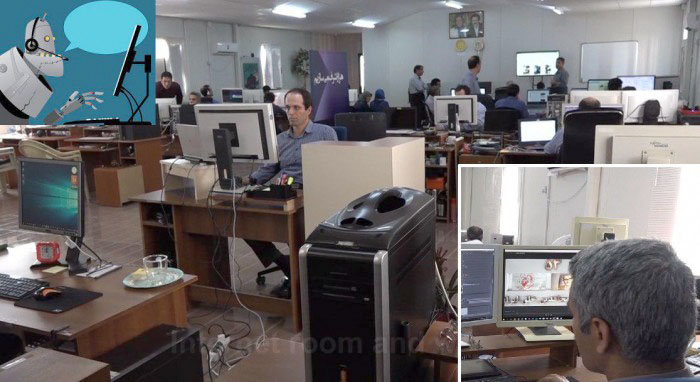
In the audio, which is being released by the Iran Front Page for the first time, Shahram Fakhteh, an official member and the person in charge of MKO’s cyber operations, is heard talking with a US-based MKO sympathizer named Daei-ul-Eslam in Persian, IFP news reported.

In this conversation, the two elements discuss the MKO’s efforts to introduce Iran as the culprit behind the tanker attacks in the Persian Gulf, and how the Saudis contacted them to pursue the issue.

“In the past week we did our best to blame the [Iranian] regime for the (oil tanker) blasts. Saudis have called Sister Maryam (Rajavi)’s office to follow up on the results, [to get] a conclusion of what has been done, and the possible consequences,” Fakhteh is heard saying.

“I guess this can have different consequences. It can send the case to the UN Security Council or even result in military intervention. It can have any consequence,” Daei-ul-Eslam says.

Attacks on two commercial oil tankers in the Gulf of Oman on June 13, 2019 and an earlier attack on four oil tankers off the UAE’s Fujairah port on May 12, 2019, have escalated tensions in West Asia and raised the prospect of a military confrontation between Iran and the United States.

The US, Saudi Arabia, and the UAE have rushed to blame Iran for the incidents, with the US military releasing a grainy video it claimed shows Iranian forces in a patrol boat removing an unexploded mine from the side of a Japanese-owned tanker which caught fire earlier this month.

It later released some images of the purported Iranian operation after the video was seriously challenged by experts and Washington’s own allies.

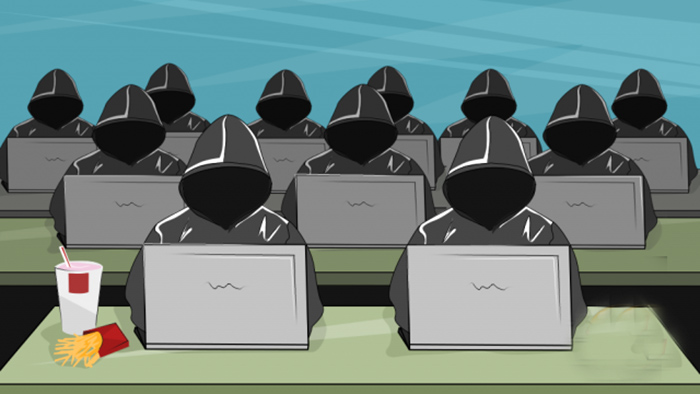
The MKO which is said to be a cult which turns humans into obedient robots, turned against Iran after the 1979 Islamic Revolution and has carried out several terrorist attacks killing senior officials in Iran; yet the West which says cultism is wrong and claims to be against terrorism, supports this terrorist group officially.

After the Islamic Revolution in 1979, the MKO began its enmity against Iran by killing over 17,000 Iranians and terrorist activities. Several members of the terrorist group and its leaders are living in France now, freely conducting terrorist activities.

The MKO terrorist group has martyred 17,161 Iranian citizens, including late president Mohammad Ali Rajayee, former prime minister Mohammad Javad Bahonar, late Head of Supreme Judicial Council Ayatollah Mohammad Beheshti, late Deputy Chief of the Iranian Armed Forces General Staff Ali Sayyad Shirazi, and 27 legislators, as well as four nuclear scientists.

March 17, 2021 0 comments
FacebookTwitterPinterestWhatsappTelegramSkypeEmail
MEK Terrorists
Mujahedin Khalq Organization

Five decades of MKO’s terrorism: From militia to terrorist cells

Throughout the contemporary history of Iran, numerous militia groups have been formed especially among the left streams,among whose common features are violent and terrorist measures. Although those groups were formed to fight the ruling political system, most of the victims of their operations were civilians. The Mojahedin-e Khalq Organization, also known as MKO or MEK, is one of the most well-known of these groups that officially launched its militia in the first months of the victory of the Islamic Revolution and started a period of violence and bloodshed in different parts of Iran. Now, nearly two decades after the MEK’s disarmament, the group has re-launched its terrorist cells under the new name”rebel centers.”

Maryam Rajavi and Giuliani

According to dictionary definitions, militia is a military force that is raised from the civil population to supplement a regular army in an emergency. Also, it has been defined as a military force that engages in rebel or terrorist activities in opposition to a regular army.What is meant by militia in this article is the latter definition i.e., the organized armed insurgent forces in the first years of the Iranian Revolution.

After the Islamic Revolution, the term militia was first used in Iran by the Mojahedin-e Khalq Organization (MKO) although this concept was not unfamiliar to left-wing groups. According to the statements and documents the MKO left behind, Massoud Rajavi, the group’s leader after the Revolution, announced formation of the militia on November 23, 1979 although it was officially announced on 27th of November in the Mojahed Magazine. The militia was an organized non-professional force whose members could continue education and work as well as organizational activities. Hence, a militia can perhaps be called a”part-time guerrilla”or, in MKO’s words,”part-time fighters”emphasizing its military and armed nature.

Iran’s Foreign Ministry says the US and Europe, as supporters of the MKO terrorist group, have the blood of Iranians on their hands.

The reason behind formation of the militia

After the siege of the American embassy and Ayatollah Khomeini’s mass mobilization order i.e., “the army of 20 million” on November 26, 1979, the MKO announced the formation of its militia. According to the military-political declaration No. 23 on November 23, 1979, the militia branch was formed in the MKO. In order to justify arming themselves and the formation of this small private army, the MKO announced that they aimed to stand against the United States (Collection of Declarations, Vol. 2, pp. 140-141). Mojahed, the official magazine of the MKO, on November 27, 1979 in its special issue No. 2, thanked Imam Khomeini and tried to turn the Supreme Leader’s order to its advantage by calling its militia the army of 20 million. They issued this statement:”And now all the revolutionary forces, all the brave warriors of the army and our brothers in the Revolutionary Guard Corps are to do everything in their power to establish the 20-million revolutionary army in particular and also organize the militia of thirty-seven million people”.

Next, the MKO issued another statement under the title of “regulations for carrying and maintaining weapons and objectives of the militia” to justify arming of most of their members. During the victory of the revolution, many army garrisons were looted by members of the MKO, and the group’s military branch, which had been active since 1971, was also illegally armed. Therefore, they used to pretend that their armed organization is somehow related to the regular armed forces in an effort to prevent sensitivities that arose after the formation of their militia.

The United Sects of America: How cultists help to form of the US foreign policy

Actions taken by the militia

Since January 1979, the militia was used as a lever at the service of propaganda techniques and social missions to disrupt social order and create confrontations in some neighborhoods of Tehran and other cities. Activities of the militia units augmented during the first presidential election campaign in support of Bani Sadr. Students made up majority of the members of the militia, and, given their revolutionary spirit and great interest in military and armed activities, they constituted a major part of these organized units’ recruitees. According to the policies of the MKO leaders before the crucial period of June 20, 1981, the militia units made several symbolic moves during this period in order to flaunt their power to the opponent. These units performed maneuvers to show their social power at different times such as December, January and February of 1980. At the time, Maryam Qajar Azdanlu (Rajavi), the current leader of the MKO, had various responsibilities with respect to organizing the women’s militia and leading female students’ revolutionary campaigns of construction activities in rural areas (Kayhan newspaper, March 10, 1980, p. 15). The militia marched from the University of Tehran to the US Embassy on Wednesday April 9, 1980, in order to demonstrate its firm grip on the opponents.

Following the tensions created by the MKO, on June 13, 1980, the militia demonstrated simultaneously in 10 locations in Tehran to exhibit its power. In this series of demonstrations, dozens of ordinary people and individuals resembling government supporters (characterized by being religious and having a beard) were beaten or injured by cold weapon. Dozens of buses, motorcycles and people’s automobiles were set on fire and the MKO chanted mottoes against Shahid Beheshti and the Islamic Republic Party and in favor of Bani Sadr. Most of the militia’s encounters in the clashes were physical and involved the use of cold weapon. Members of the militia had received military training and acted in an organized manner and could easily identify the opposition and beat them more. Throughout 1980, the militia started major riots in the cities of Sabzevar, Isfahan, Karaj, Abadan, Gorgan, Ghaemshahr, Tehran and Shiraz. Presence of the militia during Bani-Sadr’s speech at the University of Tehran on March 5, 1981, and its subsequent clash with government supporting forces was another manifestation of this militant group of the MKO.

On the afternoon of June 20, 1981, while the political inadequacy of President Bani Sadr was being examined in the Parliament, the militia which was equipped with knives, cutters, brass knuckles, Molotov cocktails, acid sprays and firearms (only for group heads and main cadres), organized demonstrations on streets of Tehran to revolt against the ruling government. Simultaneously with the movements in Tehran, similar sporadic clashes took place on a smaller scale in several cities such as Isfahan, Hamedan, Urmia, Shiraz, Ahvaz, Arak, Zahedan, Masjed Soleyman, Bandar Abbas and Mashhad, during which dozens were injured and several were murdered (IRIB Website).

Most of the militia’s activities were propaganda and sabotage. Up till June 20, 1981, the militia mostly performed as guardians of meetings and lectures of those they believed in. The activities they performed later on include selling the group’s publications, collecting financial aid for the benefit of the group, organizing construction campaigns in deprived areas of the country, and military activities. Construction activities of the militia and their presence in villages were mostly to compete with the Jihad of Construction (Jahād-e Sāzandegī), to carry out propaganda in favor of the MKO, and to gather supporters for this group, which in most cases failed. In fact, these actions of the militia, similar to the reason of its formation, were in competition with revolutionary institutions and organizations such as the Basij Force.

Having the illusion of owing the revolution, the MKO at this time tried to emulate the government structure as if it were a legitimate ruling system. The MKO had pinned its hope on the militia as a means of executing the group’s authoritarian intentions. Rajavi acknowledged that his militia had about 10,000 capable troops and used it to distrain the ruling government. This half-baked idea of the MKO soon created the illusion of being able to stand against the government. By triggering their revolt on June 20, which led to the apprehension or escape of the MKO militia members and exposure of their weaknesses not only in terms of military power but also in even revolting, this illusion quickly faded (Website of Rahenoo News Agency).

An Iranian Human Rights NGO for the first time releases the names of 1,503 martyrs killed by the MKO terrorist group in 1988.

Formation of National Liberation Army

In the street clashes of the summer of 1981 and on September 27, the militia, whose philosophy of existence was to form a private army for the promised day, entered the social insurgency phase once again by provoking students. According to the available documents, the militia organized eight unsuccessful riots between 1983 and 1985, which were of course much smaller than the flood of people supporting the revolution and simply failed. Nonetheless, the large-scale assassinations of government officials and ordinary people may be considered the greatest achievement of the MKO militia in these years (Document Archive of Habilian Association).

Coming to know its inability to conduct terrorist attacks inside Iran and according to the MKO’s policy on exiting the country, the militia gradually moved to Iraq and with the benefit of Saddam’s military and logistical facilities, changed its name to the so-called National Liberation Army in 1987. In his statement for the establishment of this army, Massoud Rajavi described the militia as the nucleus of the Liberation Army and said in that regard “… this is why the MKO founded the militia in the first year of (Ayatollah) Khomeini’s ruling” (Document Archive of Habilian Foundation). This so-called army of the MKO carried out several military operations against Iran on the battlefields during the last two years of the Iran-Iraq war and was eventually destroyed in Operation Mersad.

After the US occupation of Iraq in 2003, the MEK which was listed by the US as a terrorist group, was forcibly disarmed by the US Army and the group’s military wing was forced to hand over its heavy and semi-heavy weapons to the US forces in Iraq.

Albania

The MEK has since tried to adapt its tactics to the new situation. So, in order to get out of the terrorist lists in the UK, EU and US, it took a new approach that was more like a tactical change than a strategical one.In this way, through launching a political and propaganda campaign against Iran, the group sought to persuade the West that it is the only alternative to the Islamic Republic.In recent years, however, the MEK has attempted to direct its regime-change activities inside Iran by organizing its forces in the form of terrorist cells called “rebel centers”.

The fact is that the foundation of this group relied on armed activity both at the time of the official announcement of the formation of the militia in 1979, and during the 1980s. Thus, with Donald Trump coming to power and his non-diplomatic behavior and actions against Iran,the MEK gained the opportunity to gradually revive their past militant approach after 13 years of forced disarmament.

Launching terrorist cells

The MEK considered Trump to be the last circle of pressure on Tehran, whose unprecedented encounter with the Islamic Republic would lead to the collapse of the ruling political system in Iran. Thus, by focusing on the establishment of violent and terrorist cells inside Iran, they challenged the claim of some viewers regarding the group’s transition from military stage to the political phase and proved that the Mojahedin is still a violent militant group.

The remarks made by some senior MEK members during Trump’s presidency regarding the group’s new terrorist cells, known as rebel centers and describing them as an extension of the National Liberation Army militia prove that the political gestures of the MEK leader, Maryam Rajavi, are nothing but a deceptive approach to gain the support of some European and American politicians.

During the same period, the MEK carried out dozens of sabotage and violent operations against various targets in Iran. Although those operations did not cause any casualties or damage, the very establishment of terrorist cells and encouragement of the youth to join these destructive centers as well as inciting them to attack governmental and non-governmental sites, are examples of promoting violence and terror, and are as illegal as the threats of Canadian anarchist extremist groups to target the country’s infrastructure.

Now, with the end of the Trump era and fading of the MEK’s aspirations in the US presidential election, it remains to be seen whether the group’s terrorist cells will continue to act or not. Regardless of the ineffectiveness of the actions of these cells inside Iran during recent years, what seems to be important is that Europe has probably inadvertently become the main focus of the elements of this violent and terrorist group. Previously only present in Western Europe, former pro-Saddam Hussein militia terrorists have now spread to the other side of Europe, the Balkans.

(The views expressed in this article do not necessarily reflect those of Press TV.)

By Reza Alghurabi

Reza Alghurabi is an Arab journalist who lives in Iran. He is a former researcher at the Beirut Center for Middle East Studies and an independent researcher and journalist writing in Iranian newspapers including the Khorasan daily.

March 17, 2021 0 comments
FacebookTwitterPinterestWhatsappTelegramSkypeEmail
court hearing on MKO leaders crimes
Iran

Evidences of torture and abuse in the MEK

A court session was held in Tehran to investigate the complaints filed a by a group of former members of the Mujahedin Khalgh Organization (MKO/ MEK/ PMOI/ Cult of Rajavi) specifically to sue the leaders Masoud and Maryam Rajavi and certain other senior officials of the group.

https://dlb.nejatngo.org/Media/Report/PressTV/PressTV-Iran-MKO-Court-202103.mp4

To download the video file click here

42 people addressed the court, giving evidences on several cases of abuse and torture inside the MEK. The followings are only a few cases of the complainants’ testimonies:

Ali Moradi

Nightmares I still see
Ali Moradi, was a victim of forced labor, mal-treatment and deception in the MEK. He was deceptively told by the group commanders that his wife was executed by the Iranian government and his brother was killed by the Iranian revolutionary guard. He found both of them alive after he defected the group. “They deprived us of our family. We were mentally abused. I still see nightmares of those days, at least once in a month”, He told the court.

Akbar Khabare

They burned my tattoo
Akbar Khabareh was a war prisoner of the Iran-Iraq war who was recruited by the MEK. He was a member of the group for 17 years. “I lost the best years of my life in this illegitimate cult,” he addressed the court. “I had my mother’s name tattooed on my arm. They told me that it had to be burned. They burned it by soldering iron.”

Nader Chapchop

They pulled off my nails
Nader Chapchaap was deceived to join the MEK by its recruiters in Turkey where he had immigrated to work. He was taken to Iraq and forced to stay in Camp Ashraf for four years. “They pulled off my toe nails and then forced me to work in military and service units of the organization,” he addressed the court. “Consequently, my feet were infected.” Chapchaap’s feet were then amputated.
Another complainant in the court, Mohammad Javad Assadi who was recruited by the group in the same way as Chapchaap was, said, ”I was imprisoned by the MEK for three and a half years and then I was kept in the American camp for four years and I witnessed they pulled off Chapchaap’s toenails.”

Eskandari

They kept me in a cage
Fathollah Eskandari was a soldier in the Iran-Iraq war when he was shot and taken as a hostage by the MEK forces. “They kept me in a cage for the first three months,” he said. “During the 17 years of my imprisonment in the MEK, I witnessed a man named Khodam Golmohammadi set himself on fire, he survived, they took him somewhere, I did not see him anymore. I saw Hojat Azizi and Karim Pedram shot themselves dead and a blind man named Rasool set himself on fire too.”

Fereydoun Ebrahimi

Forced me to hunger strike
Fereidoon Ebrahimi escaped the MEK in 2015. He had been recruited by the MEK in Turkey. “The mental tortures are worse that the physical tortures in the MEK,” he told the judge. “I was forced to take part in the group’s hunger strike for 92 days in 2011.”
“Camp Ashraf was a forced labor camp,” he told about MEK’s cut-like system. “We had no time to think freely since we were forced to work hard from 5 am until night.”

Mahmoud Dashtestani

It was forbidden to speak of your mother
Mahmoud Dashtestani was only 15 when he was taken as a war prisoner by Iraqi forces, he was then recruited by the MEK. He escaped the group in 2009 and returned to Iran as a 41-year-old man. “Once, I told a memory about my mother, my peers sent a report against me to the superior members,” he recounted an experience of the cult-like structure of the MEK. “They jailed me for three days and then they made me sign a paper to promise that I would not think of my mother anymore.”

Kayoukan

I am the People
Leila Kayukan is the daughter of Rahim Kayukan, an MEK member. “For 40 years, the efforts of my family to contact my father have not been successful,” she told the court. “As a child, I lost my dad, I never even heard his voice. I am the people.” She refers to the alleged title of the group, “Fighters of Iranian People”.

Leila Qasemi

My brother was not in Denmark
Leila Qasemi is the sister of Habibollah Qasemi, a hostage of the MEK. “We have not seen my brother since 19 years ago,” she addressed the court. “My brother went to Turkey and then traveled to Greece where he was deceived by the MEK recruiters and was taken to Camp Ashraf, Iraq.”
The Qasemis thought that Habibollah had gone to Denmark from Greece. “We pursued his case via the Ministry of Foreign Affairs and realized that he had never gone to Denmark but he was kidnapped to join the MEK in Iraq.” In 2016 they went to Camp Ashraf to visit his brother. “They did not allow us to visit him but instead we were attacked by rocks,” she said.

Hadi Shabani

I am here to confirm their testimonies
Hadi shabani was a member of the MEK for 20 years. He left the group in 2004. He took part in the court hearing to give his testimony endorsing other complainants. “I was responsible of the reception unit in the MEK so I witnessed many things,” he said. “Soon after I myself entered the group, all the ideals I had about the cause of the group collapsed in my mind.”
“In the cult of MEK you are not allowed to ask questions, you are just the executors of the leaders’ orders,” he told the judge.

March 16, 2021 0 comments
FacebookTwitterPinterestWhatsappTelegramSkypeEmail
World Health Organization
Mujahedin Khalq Organization members' families

Mr.Zarei expressed concern about the health of his brother at MEK Camp

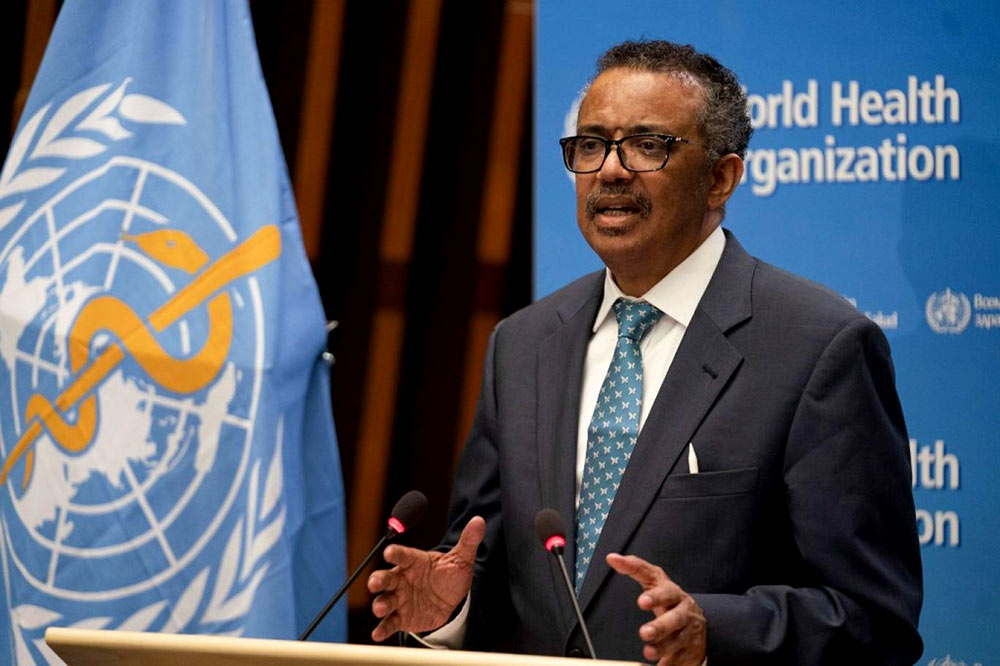
In a letter to the World Health Organization (WHO) in Albania, Mr. Mohammad Ebrahim Zarei expressed his deep concern about the health of his brother, Gholam Hossein Zarei, who is being held in the Mojahedin Khalq (MEK) camp in Albania.

World Health Organization

The text of the letter is as follows:

Representative of the WHO in Albania
Greetings and best regards

I am Mohammad Ebrahim Zarei, the brother of Gholam Hossein Zarei, who is now in a closed and remote camp of MEK in Albania with no connections to the outside world.

My family and I have not seen my brother for many years and we have not heard his voice on the phone and we have not even received a message from him, and this always bothers us.

But now the news worries us a lot, and that is that on the one hand, my brother is probably infected with the Covid-19 virus and is living in very acute conditions, and on the other hand, the health conditions inside the camp are unfavorable due to the group life.

We, the family of Gholam Hossein Zarei, have no desire other than hearing his voice and learning about his health. Of course, in support of the MEK, Albania does not grant us Iranians visas and does not allow us to travel. The MEK does not even allow a single phone call to its members.

I ask you not to neglect any action that is conceivable and fruitful in order to alleviate my and my family’s concerns, so that news of my brother reaches us and communication is possible.

Mohammad Ibrahim Zarei
Iran – Khorasan Razavi – Sabzevar
January 2021

Copy to:
Office of the Prime Minister of Albania
Office of the United Nations High Commissioner for Human Rights

March 16, 2021 0 comments
FacebookTwitterPinterestWhatsappTelegramSkypeEmail
Maryam Azad
Mujahedin Khalq Organization members' families

Who can help us deprived families?

Ms. Masoumeh Azad Manjiri, the sister of Maryam Azad Manjiri, who was detained in the Mojahedin-e Khalq (MEK) camp in Albania, wrote a letter to the World Health Organization requesting that her sister’s health be taken care of.

Maryam Azad

The text of the letter is as follows:

Representative of the World Health Organization in Albania

Greetings and best regards,

I am Masoumeh Azad Manjiri, the sister of Maryam Azad Manjiri. My sister is currently in the Mojahedin-e Khalq (MEK) camp in Albania. He left Iran with his wife Mohammad Norouzi 32 years ago.

We later found out that they were deceived by the forces of the MEK and transferred to the organization’s camp in Iraq. In all these 32 years, I have not met her or even heard her voice. It is the wish of every sister to be able to communicate with her loved one and be informed about her condition.

You know that even in the most horrible prisons in the world, and in the case of the most dangerous prisoners, families are allowed to call and visit, but we are deprived of this minimum possibility. Who can help us deprived families? Which international body should we take our complaint to? Who would support us?

Worst of all, I think my sister has a disease caused by Covid-19 and is living in difficult conditions, and the health facilities inside the camp are not good and they have suffered many casualties so far, because the environment there is completely closed. The MEK does not allow its members to communicate with their families, and the Albanian government does not allow Iranians to travel to that country to pursue the issue.

I desperately ask you not to neglect any action that is imagined in order to alleviate the worries of me and my expectant family, so that news of my sister will reach us and we will be able to communicate.
Please understand the feelings of me and my family and do not hesitate to pursue this issue.

Thanks and best regards,
Masoumeh Azad Manjiri
Iran – Khorasan Razavi – Sabzevar

Copy to:
Office of the Prime Minister of Albania
Office of the United Nations High Commissioner for Human Rights

March 15, 2021 0 comments
FacebookTwitterPinterestWhatsappTelegramSkypeEmail
Massoud Rajavi
Massoud Rajavi

Rajavi orders widespread assassinations throughout Iran

In response to the recent message of the Mojahedin-e Khalq Organization (MKO)’s leader, in which he ordered the group’s terror cells to initiate widespread assassinations throughout Iran, families of Iranian victims of terrorism have written a letter to the international institutions of the European Union calling for legal proceedings against this terrorist group.

“The families of terror victims in Iran call on all international authorities and institutions in the European Union to, along with restricting the activities of this group in Europe, prosecute the leaders of this terrorist group in an international court with the presence of their victims,” the letter read.

Terrorism

According to this letter, the MKO leader’s order demonstrates adoption of a violent strategy towards the judicial process and the court hearing on March 8 and 9, 2021 where a large number of former members filed a complaint about years of torture and violation of human rights by this group.

As the open letter points out: “the group’s recent move to establish terror cells in Iran and their acts of sabotage and violence, which is officially admitted and prompted by the group, proved that the MeK is still a militant cult and a far cry from becoming an opposition group.”

Referring to The MKO’s location in Europe and freely activity of its members in European countries, families of Iranian terror victims warned that the group’s previous crimes and the violent threats its leader made on March 8 as well as any upcoming terrorist acts and assassinations in Iran, are partly the responsibility of the countries which have sheltered this group.

Massoud Rajavi

Read the full text of the letter below:

We are the families of the victims of assassinations and violence of the terrorist group Mojahedin-e Khalq Organization (aka MKO, MeK, PMOI) who lost our children, parents and grandparents in targeted and blind operations of this group. We have repeatedly protested against the negligence of international institutions in carrying out their obligations such as restraining this group and taking necessary measures to start prosecuting its leaders for their terrorist acts and crimes against humanity.

In our earlier correspondence, we had warned that ignoring their violent acts and behaviors would lead to this group’s return to violence and aggression.

As a result of this negligence, on March 8, Massoud Rajavi, leader of the Mojahedin-e Khalq Organization who has been living in hiding for nearly two decades due to fear of criminal prosecution and has been leaving occasional voice messages for members of his cult, broadcast a message to members of his terror cells known as”rebel centers”in which he ordered them to make use of weapons and initiate widespread assassinations throughout Iran.

This order of the MKO leader clearly demonstrates adoption of a violent strategy towards the judicial process and the court hearing on March 8 and 9, 2021 where a large number of former members filed a complaint about years of torture and violation of human rights by this group.

Fearing that ex-members of his cult sue him in court in Tehran and disregarding dozens of international documents on MeK crimes, terrorist acts and violation of human rights, Massoud Rajavi has escaped forward and invited Iranian officials to appear in an international court. On the other hand, former members and survivors of this terrorist group demand to go to an international court of law along with Massoud Rajavi and other leaders of this group to be fairly judged. Do Massoud Rajavi and his wife, as leaders of this cult, dare to appear in an international court of law before the victims of the crimes they have committed? And are EU officials and international institutions based in this continent ready to hold such a trial? This is the legal obligation of European officials and institutions. The MeK is located in Europe and its members travel freely in it. Therefore, the group’s previous crimes and the violent threats its leader made on March 8 as well as any upcoming terrorist acts and assassinations in Iran, are partly the responsibility of the countries which have sheltered this group.

In his message which promoted violence, leader of the MeK called on his elements to provide his rebel centers, with names and addresses of employees of Iran’s military, security and judicial institutions so that for what he calls the”Great Day of Justice”, weapons can be fired at their chests! In the message, Rajavi made mention of the early years after the 1979 revolution when his group’s death squads assassinated Iranian civilians and officials. He requested the rebel centers to do the same.

As mentioned, numerous reports have been published by the research centers, governmental institutions and western intelligence agencies about this cult and its threats.

The FBI’s 1987 report; a Court of Appeals document on June 25, 1999, based on a CIA Report; US Government Statement in 1997; a report by Canada’s SIRC in 1992; US Department of Justice’s report in April 2009; State Department’s Reports in 2004, 2005, and 2006; Executive Order No. 13224 by the US Secretary of State on Terrorist Financing of the National Council of Resistance and the Mojahedin-e Khalq Organization in August 2003; US Court of Appeals’ verdicts in 1999, 2005, and 2009; FBI’s reports in August 2002 and November 2004; a report by the American Institute for Political Studies (IPS) in 2012; a 2005 Human Rights Watch report named No Exit; German BfV agency’s reports in 2004 and 2005; a document regarding the MEK’s inclusion in the European Union terrorist list printed in the Official Journal of the Union in December 2007; a report by security service of North Rhine-Westphalia State in October 2005; the 2008 North Rhine-Westphalia State Protection Office’s Report; Foreign Affairs Committee of the British Parliament’s report in July 2003; the British Foreign Relations Committee’s report in July 2004; official Statement by the UK Foreign Secretary in May 2008; Statement by the French Minister for Justice in June 2003; Swedish Government Resolution on 2 September 2004, and Swedish Immigration Office Decision against the MEK; EU Declaration on 5 April 2002; the US Deputy Secretary of State’s reports to Congress and the Foreign Affairs Committee of House of Representatives in October 1994; the 2009 Rand Corporation’s report; Saban Center for Middle East Policy’s report in June 2009; Columbia Court of Appeals’ report in 2010; and US Council on Foreign Relations’ report in July 2014.

These documents, reports and verdicts are only part of what proves the violence and terrorism of the Mojahedin. The group, which was disarmed in 2003 as a militant group affiliated with Saddam Hussein’s regime following the US invasion of Iraq, has since acted in Europe, pretending itself as a political group opposed to the Iranian government. However, the group’s recent move to establish terror cells in Iran and their acts of sabotage and violence, which is officially admitted and prompted by the group, proved that the MeK is still a militant cult and a far cry from becoming an opposition group. One should add to it the recent order of Massoud Rajavi to the terror cells to identify Iranian citizens working in judicial and military institutions and “execute justice on them”.

The families of terror victims in Iran once again call on all international authorities and institutions in the European Union to, along with restricting the activities of this group in Europe, prosecute the leaders of this terrorist group in an international court with the presence of their victims. We also declare our full readiness to cooperate in this process by providing the required documents to the responsible institutions.

To:
European Commission
Council of the European Union
European parliament
Secretariat of the European Parliament
European Court of Human Rights
Court of Justice of the European Union
Council of Europe Committee on Counter-Terrorism

Sincerely yours,
Habilian Association (Families of Iranian victims of terrorism)
March 12, 2021

March 14, 2021 0 comments
FacebookTwitterPinterestWhatsappTelegramSkypeEmail
Maryam Azad Manjiri sister
Mujahedin Khalq Organization members' families

Masoumeh Azad Manjiri expresses strong concern over the health of her sister Maryam

Ms. Masoumeh Azad Manjiri wrote the following letter to the World Health Organization in Albania regarding the health of her sister Maryam Azad Manjiri:

Maryam Azad Manjiri sister

Representative of the World Health Organization in Albania

Greetings and best regards
I am Masoumeh Azad Manjiri, the sister of Maryam Azad Manjiri, who is currently in the closed and remote camp of the Mojahedin-e Khalq (MEK) in Albania and has no connection with the outside world.

My family and I have not seen Maryam for many years and we have not heard her voice and we have not even received a message from her, and this issue always torments us.

Now the news worries us a lot, and that is that Maryam is probably infected with the Covid-19 virus and is in a very acute condition, and on the other hand, the health conditions inside the camp are also unfavorable.

We, Maryam’s family, have no desire other than hearing her voice and hearing about her health. Of course, Albania does not give us visas in support of the MEK and does not allow us to travel. The MEK does not even allow a single phone call to its members.

I desperately ask you not to neglect any action that is conceivable and fruitful in order to alleviate my and my family’s concerns, so that news of my sister reaches us and communication becomes possible.

You probably know very well how a sister feels in such a situation. Is it acceptable to prevent MEK members from communicating with their families in these circumstances?

Masoumeh Azad Manjiri
Iran – Khorasan Razavi – Sabzevar

Copy to:
Office of the Prime Minister of Albania
Office of the United Nations High Commissioner for Human Rights

March 14, 2021 0 comments
FacebookTwitterPinterestWhatsappTelegramSkypeEmail
Albania accession to EU
Albania

Illir Nezaj of Albania Reveals MEK a Problem in International Forum

A true indication of the dire state of Albania’s politics, and a red line for the EU was on display in the UN Human Rights Council this week; an international forum in which Albania’s small voice would not normally be expected to cause controversy. Yet as Iran criticised Javaid Rehman UN Special Rapporteur’s comments on human rights in Iran, Dr Illir Nezaj from the Albanian embassy in Geneva found himself reading a prepared statement defending the MEK presence in his country.

In this speech, Nezaj claims ‘MEK is not a terrorist organization’. That will be news to the many thousands of victims of MEK terrorism in Iran, Iraq and beyond. Delighted that their man has done his job, the MEK lost no time in spreading this around social media, using the fake Heshmat Alavi account to disseminate the news. (Apparently, the MEK have misplaced their English-speaking team since the translation is full of spelling and grammar errors.)

Albania accession to EU

However, critics of the MEK have welcomed the speech as it acknowledges once and for all in an international arena, that the MEK are a problem for Albania. Historian and activist Olsi Jazexhi Tweeted:

“If MEK is not a terrorist organization why does it run a paramilitary camp in #Albania? Why its members are kept in isolation? Why #MEK is fighting its defectors in Tirana? Why #MEK is smuggling people like #HadiSaniKhani into Europe? Why MEK is attacking foreign and local media?”

If MEK is not a terrorist organization why does it run a paramilitary camp in #Albania? Why its members are kept in isolation? Why #MEK is fighting its defectors in Tirana? Why #MEK is smuggling people like #HadiSaniKhani into Europe? Why MEK is attacking foreign and local media?

— Olsi Jazexhi (@OlsiJ) March 9, 2021

Contrary to what Nezai claims, the MEK was expelled by Iraq’s government as a terrorist entity which belonged to Saddam Hussein’s regime. They arrived in Albania as a foreign terrorist entity. They remain a terrorist entity – the MEK was not disbanded or deradicalized as had been the plan. MEK leader Maryam Rajavi was expelled from the EU in 2018 due to security concerns after a failed false flag bomb plot was found to have involved MEK sympathisers in Belgium.

MEK Terrorists

Rajavi is now in Tirana heading the nefarious, criminal activities of the MEK, including people trafficking. Anne Khodabandeh, long time MEK critic, Tweeted:

“Why are European security agencies investigating the troubling disappearance of former MEK member Hadi Sani Khani from Albania? He was trafficked by MEK into France and disappeared. What have MEK done with him? We expect full cooperation from Albanian authorities in this case.”

Why are European security agencies investigating the troubling disappearance of former MEK member Hadi Sani Khani from Albania? He was trafficked by MEK into France and disappeared. What have MEK done with him?
We expect full cooperation from Albanian authorities in this case.

— Anne Khodabandeh (@AnneKhodabandeh) March 12, 2021

Khodabandeh also questioned MEK impunity in Albania, Tweeting:

“Understand that threatening violent regime change against another country is illegal under Albanian law. What do you think the MEK have been doing since they arrived in your country? https://exit.al/en/2017/04/17/senator-mccain-meets-mek-in-albania/”

Understand that threatening violent regime change against another country is illegal under Albanian law.
What do you think the MEK have been doing since they arrived in your country?https://t.co/A89pySwLkz

— Anne Khodabandeh (@AnneKhodabandeh) March 12, 2021

The MEK presence in Albania is controversial. It will certainly prevent Albania’s accession to the EU; nobody throws rubbish out only to open the back door and take it back in again! There are plenty of solutions to this conundrum. But none of them will be found without courage and honesty. Let’s see where Albania’s path takes it in the next weeks.

March 14, 2021 0 comments
FacebookTwitterPinterestWhatsappTelegramSkypeEmail
, Maryam Azad Manjiri parents
Mujahedin Khalq Organization members' families

Parents of MEK member worried about the health of their daughter

Mr. Mohammad Jafar Azad Manjiri and his wife, Ms. Batool Qezi, wrote a letter to the head of the World Health Organization asking for information about the health of their daughter, Maryam Azad Manjiri, who is being held in the Mojahedin-e Khalq (MEK) camp in Albania.

, Maryam Azad Manjiri parents

The text of the letter is as follows:

Honorable President of the World Health Organization

Greetings and best regards,
I am Mohammad Jafar Azad Manjiri, the father of Maryam Azad Manjiri, who has been trapped in the Mojahedin-e Khalq Organization (MEK, MKO) for more than thirty-four years and is currently living in the organization’s camp in Albania.

My wife is very ill due to the grief of our daughter’s absence and the impossibility of communicating with her, and she has a very difficult situation. We have not heard from our daughter over so many years.

As the World Health Officer, I urge you to intervene in this situation of the spread of the coronavirus, which is epidemic and poses a great danger in closed environments where contamination can spread rapidly and cause irreparable damage. Please make the necessary checks, and I request you to enlighten the officials of the organization so that they can arrange for our daughter to contact us and get her family out of worry.

Many Thanks,
Mohammad Jafar Azad Manjiri
Sabzevar – Khorasan Razavi – Iran

March 13, 2021 0 comments
FacebookTwitterPinterestWhatsappTelegramSkypeEmail
US and terrorists
Mujahedin Khalq; A proxy force

To worry or not to worry: ‘Hidden war’ on Iran

Architects of the new warfare seek to find”the soft financial underbelly of the US enemies”.

Over the past decade, the United States has waged a new brand of financial warfare, unprecedented in its reach and ferocity and unique in its intricacy and slyness, mainly against Iran and other countries.

Initially launched as a “hidden war” to financially squeeze America’s principal enemies, it is no longer secret since it is viewed central to America’s national security doctrine.

US and terrorists

Far from relying solely on the classic sanctions or trade embargoes, the campaign has consisted of a novel set of financial strategies that harness the international financial and commercial systems to ostracize America’s enemies and constrict their funding flows with the aim of inflicting maximum pain.

Based on a blueprint developed after 9/11 attacks, this warfare is defined by the use of financial tools, pressure, and market forces to leverage the banking sector, private-sector interests, and foreign partners in order to isolate targets from the international financial and commercial systems and eliminate their funding sources.

The intricate plan is based on a simple hypothesis: If you can cut off funding flows to the enemies, you can restrict their ability to operate and force them to submission.

According to Juan Zarate who as deputy national security adviser helped the US Treasury develop the new warfare, “finding the soft financial underbelly of the US enemies” has become the mission of its architects whom he calls “bureaucratic insurgents” and “guerrillas in gray suits”.

For months, the group reportedly debated whether the same tools that the US had used to isolate al-Qaeda from the formal financial system after 9/11 and to target North Korea could be leveraged to attack Iran. Could the new brand of financial warfare be waged successfully against Tehran?

Though it had been subject to US sanctions for years, Iran and its business sector had continued doing billions of dollars’ worth of trade every year with the rest of the world. The sixth largest supplier of energy resources to the European Union in 2012, the country retained deep commercial and financial ties with economic powers such as Germany and South Korea and represented an important market for Europe and Asia.

Neighboring countries, including the United Arab Emirates and Turkey, had even deeper commercial and financial ties with Iran. Likewise, Iranian businessmen and companies did easy and open business in most parts of the world.

Most importantly, Iran had oil which remained its trump card. Oil provides instant access to markets and the business of extracting, selling, and transporting oil brings with it an array of business and financing relationships. Oil also creates ties to an international market reliant on the flow of crude from the Middle East.

Vulnerabilities

Still, Iran depended on its international connections in the global financial and commercial system. The same ties that gave Iranian businesses access to foreign markets created dependencies – and hence vulnerabilities – for them in the international financial system.

What’s more, the Iranian oil market was not immune from pressure. Global oil trading occurs in US dollars, and any deals for Iranian oil had to be priced and transacted in dollars.

Perhaps most important was the vulnerability of the Iranian banking sector. Iranian banks such as Bank Saderat, Bank Melli, Bank Mellat, and Bank Sepah had a deep international presence in places like London, Frankfurt, Tokyo, Beirut, and Dubai. They were important for Iran’s business ties and relations, providing lines of credit, correspondent accounts, and account access around the world to Iranians and their customers.

Enveloping trap

The US had already leveraged relevant multilateral forums to target purported terrorist financing and define international obligations according to its own interests. Just days after 9/11, the Treasury had taken the international components of the National Money Laundering Strategy (FATF) and directed its “bureaucratic insurgents” to steer this international body to focus on US priorities of combating terrorist financing.

The move draws attention again to the real motives and masterminds behind the mysterious attack which unleashed US troops across the Middle East under the moniker of “the war on terror”.

The FATF had been established by the Group of Seven (G7) largest developed economies at a Paris summit in 1989 to tackle the threat of money laundering to the international banking and financial system. By 2012, it had thirty-six members.

The new US campaign included bringing the full weight of the FATF to bear on Iran. If Iran was to be isolated financially, the FATF had to be engaged to pass judgment on Iran’s anti-money-laundering and counter-terrorist-financing system.

If the Iranians were found to be outside the bounds of the financial system or purportedly failing to cooperate or comply with G7-imposed standards, then there could be consequences.

In the post-9/11 era, the United States and other G7 members developed tools to isolate a jurisdiction deemed as non-compliant and make investment and business in that jurisdiction suspect.

As the FATF began engaging directly with the Iranian government, the process soon appeared to be an enveloping trap. Each letter from the FATF seeking sensitive financial intelligence raised Iran’s suspicions about the true intent of the process.

Amid this campaign to put increasingly greater financial pressure on Iran, there emerged an unexpected opportunity to hit the country through a witch hunt. In 2008, the US government searching for Iranian assets became aware of what appeared to be more than $2 billion in a Citibank account held by Clearstream.

In June 2008, a judge in the US District Court for the Southern District of New York froze over $2.25 billion in Clearstream assets belonging to the Central Bank of Iran under the counter-terrorist-financing prerogative.

That year, the US identified Bank Saderat as a principal target per Section 311 of the Patriot Act, under which the Treasury is authorized to designate foreign financial institutions as being “of primary money laundering concern”.

Pressuring Iran to answer questions about its nuclear program was a major goal. When it became clear that Iran would not budge, the United States turned to the use of an all-out financial pressure campaign.

According to Zarate, the aim was to stage the financial assault on Iran’s banks and its financial system—in large part by demonstrating to CEOs and compliance officers around the world that the risk of doing business with Iran was too high.

The Swiss banking giants UBS and Credit Suisse announced then that they would stop or curtail their business with Iran. Other banks and companies would soon follow, including the European banking giants ABN Amro and ING. Germany’s second-largest bank, Commerzbank, also ended its dollar-clearing transactions with Iran.

The financial pressure campaign continued to mount, with more designations and targeting of the private sector. In September 2008, the Treasury designated Iran’s shipping line IRISL and eighteen of its subsidiaries because they were critical to most of Iran’s primary overseas engagements.

‘Tool of hegemony and coercion’

The FATF has raised criticisms of an unfair process targeting easily identifiable and politically vulnerable states.

It is a non-binding regulatory institution formed by Germany, Britain, Italy, the US, France, Japan and Canada plus the European Commission, and eight other European states. It is based on the 40+9 Recommendations imposed by the G7 countries — 40 recommendations on money-laundering and nine special recommendations on terrorist financing.

FATF’s founders praise it for its global standards on countering terrorism financing and protecting the integrity of the international financial system.

Global standards, however, consist of a standard setter and a standard user. The standard setter influences independent organizations and standard users to adopt standards based on the expert knowledge that is suitable for the standard setters’ logic of appropriateness.

Unlike most intergovernmental bodies, the FATF is not regulated by an international treaty. This, experts say, has resulted in the organization having a vaguely defined constitution.

The FATF is also often referred to as a transnational expert network that consists of government officials, finance ministers or financial regulatory agencies. The transnational expert network produces standards that are normally considered to be neutral or fair.

However, various scholars argue that the FATF reflects the interests of powerful countries such as the EU member states and the US that enforce preferences on other jurisdictions. They say the organization reflects the interests of powerful countries because it depends on funds from Western governments, mainly the US.

The US has been at the center of the international counterterrorism policies through the Treasury and the Office of Foreign Assets Control, which is in charge of overseeing the counter-terrorism measures or recommendations and issuing sanctions to non-compliant countries and many states have adopted the American model.

Political scientist and sociologist Anja Jakobi says the US has adopted a Gramscian strategy understood through concepts of hegemony, coercion and consent, such that actors accept the USA preferences as their own.

According to Gramsci’s theory, the world order is controlled by an alliance of elites that have power to influence world affairs to serve their interests. The transnational alliances have common socio-economic and political values and manipulate civil society through the rule by consent.

Gramsci’s theory shows how the 40+9 Recommendations have been imposed by developed countries on developing countries through the use of coercion in the form of blacklisting countries or meting out hefty fines on financial institutions.

The FATF rule-making or decision-making process is also characterized by unequal negotiating power between the developed and developing countries and tends not to reflect the norms of developing countries.

According to Atanu Ghoshray, an economic researcher at Newcastle University, the FATF’s recommendations have been imposed by Western countries on the developing countries’ national laws and financial institutions without considering their different socio-political or economic realities.

It has therefore resulted in the developing countries being coerced to adopt the Western countries’ counter-terrorism measures without having had an input in the decision-making process.

James Thuo Gathii, a professor of law at University of Chicago, says the current setup of FATF’s recommendations and interpretative guidance notes tend to be insensitive to the concerns of the countries that are not economically powerful. Various countries have further implemented all the recommendations without having played a role in formulating the standards.

Other experts say the unequal negotiation power between the developed and developing countries has been worsened by the experts who are appointed and paid by the Western countries to participate on the formulation of FATF standards. The experts, they say, are accountable to institutions such as the UN Security Council and the IMF, which are dominated by powerful Western states.

According to Gathii, like the World Bank and the IMF, the FATF is controlled by the Western countries that manage and control the social and economic realities of the developing countries.

When countries do no not comply with the recommendations they face economic penalties such as reduction of foreign investments, increase on the interest rates on credits, reduction of a country’s credit rating, withdrawal of banking license, freezing of assets or hefty fines impose by US entities like the Office of Foreign Asset Control.

Financial institutions have further feared sanctions by not abiding by the FATF standards. However, countries from the West and their allies have not been subjected to risk- or standards-based reviews in implementing FATF recommendations.

Who is a terrorist? Who are terrorism sponsors?

The FATF views Iran as a jurisdiction of concern chiefly because of its support for Hezbollah which besides defending Lebanon against Israeli invasions is involved in building hospitals, schools and homes. The West also accuses Iran of terrorist links for supporting popular Palestinian movements such as Hamas which are fighting the Israeli aggression and occupation.

However, the FATF has never subjected the US and the Europeans to its anti-terrorism standards for supporting the Mujahedin Khalq Organization (MKO) which until recently was on their list of terrorist organizations. Ironically, a key architect of the anti-terror measures, John Bolton, is a familiar face at MKO’s annual meetings in Paris.

Other anti-Iran terrorist groups such as Jaish al-Adl and PJAK are widely believed to be in the pay of Saudi Arabia and connected to US and European spy agencies, but they have never come under scrutiny to prompt a standard-based review under FATF recommendations.

Saudi Arabia and other Western allies in the Persian Gulf are also known to be the key sponsors of the most violent terrorist groups such as al-Qaeda and Daesh, but they have robust trade ties marked by multibillion dollar arms deals with the US and the Europeans which always escape the FATF’s attention.

Even being wrong-footed by the FATF does not warrant sanctions to be imposed on those countries or to be isolated from the international financial system.

For example, the UAE has been the focus of numerous reports about its role in the dirty gold trade, and chastised by the FATF for inadequate oversight of the sector. A report by the UK’s Home Office and Treasury has also named the UAE as a jurisdiction vulnerable to money laundering by criminal networks because of the ease with which gold and cash could be moved through the country.

Reports have linked European companies, including Swiss refiner Valcambi, to the dirty gold trade by the UAE, but there have never been any consequences.

The US itself created and funded al-Qaeda, according to former Secretary of State Hillary Clinton. Former US president Donald Trump described his predecessor Barack Obama as the”founder”of Daesh and Hillary Clinton as co-founder.

Still, the FATF standards are not applied against the US for founding the most macabrely murderous terrorists, but Iran is a regular target for supporting Hezbollah which is currently a leading anti-terror force and the chief protector of Lebanon.

Israel, another US ally, is given the same treatment. Viewed by many independent international groups and institutions as a prime state terrorist, Israel is known for its sophisticated assassination of Muslim leaders, scientists and scholars.

Intel gathering from ‘gold mine’ of financial transactions

The twenty-first-century economy is defined by globalization and the deep interconnectedness of the financial system. The United States has remained the world’s primary financial hub, with inherent value embedded in access to the American financial system. The dollar serves as the global reserve currency and the currency of choice for international trade, and New York remains a core financial capital and hub for dollar-clearing transactions. With this concentration of financial and commercial power comes the ability to wield access to American markets, American banks, and American dollars as financial weapons.

To exert this power, US strategists found out that what they needed was to develop a more active financial intelligence capability.

Financial intelligence is any bit of information that reveals commercial or financial transactions and money flows, asset and capital data, and the financial and commercial relationships and interests of individuals, networks, and organizations.

Such information can come in a variety of forms, but the quintessential form is the information used and kept by banks and other financial institutions on its clients, customers’ accounts, and transactions. For this reason, the national and international anti-money-laundering frameworks built in the 1980s and 1990s focused on setting reporting requirements for banks and other bank-like financial institutions.

These requirements were expanded well beyond the classic banking sector with the passage of Title III of the USA PATRIOT Act, which further expanded the reporting requirements to nonbank financial institutions such as insurance companies, money-service businesses, and brokers and dealers in precious stones and metals.

Under these requirements, banks and regulated institutions around the world today have to submit transaction reports and currency transaction reports above a certain amount ($10,000 in the United States) to their host governments. Banks that make cross-border wire transfers are required to report specific information about the originator and ultimate beneficiary of any transaction.

The records of those transactions—addresses, phone numbers, real names, banks utilized—are deemed a gold mine of information for the US government.

According to US government planners, “such information can help complete the mosaic of intelligence being gathered by other means and the enemy networks can then be targeted, watched, and disrupted”.

Codename ‘Turtle’: US-Europe complicity

The idea prompted the Treasury to execute the most aggressive financial intelligence collection campaign it ever attempted, but it needed to tap into a system under the European oversight.

The US had to gain access to the bank-to-bank transfer information contained in the databases of the Society for Worldwide Interbank Financial Telecommunication (SWIFT), which operates a financial messaging service for financial transactions communicated between member banks.

The SWIFT system is used daily by thousands of institutions around the world. Based in Brussels, it is overseen by central banks from the Group of Ten (G10) countries. When assets are moved across borders from one bank to another, banks need a harmonized, secure system by which to communicate and transfer those assets—detailing where the transfer is coming from, what amounts are being transferred, and what institutions and clients are the recipients and beneficiaries.

SWIFT has a virtual monopoly as the switchboard of the international financial system. The Treasury never had access to this information, but it would need to find a way of gaining access to this treasure trove of financial data.

The US government had already tried to have access to SWIFT data, but without success. Intrigued by the idea of leveraging SWIFT data, US officials finally invited the CEO of SWIFT who was an American to visit the Treasury, “and he was there to cooperate—seeing himself first and foremost as an American”.

By the end of October 2001, the Treasury Department was reportedly getting the information from SWIFT that it requested and beginning to build the program that would later become known as the Treasury Terrorist Financing Tracking Program.

Within the Treasury, officials gave it the code name “Turtle”—the opposite of SWIFT. The program took on a great deal of secrecy and more code names, with limited access reportedly given to a select group of officials and analysts.

SWIFT was supposed to be apolitical and neutral, but with this move, it was cooperating with the United States in its economic warfare. SWIFT officials had made a risky decision, but the US government had achieved what it wanted.

As pressure on Iran increased, European and American politicians would put access to SWIFT squarely into the debate about isolating Iranian banks. In 2012, for the first time ever, SWIFT unplugged designated Iranian banks from its system, in accordance with a European directive and under the threat of possible US legislation.

Collapse of Western order

Member banks including from China and Russia are now questioning whether SWIFT and the FATF are merely a political tool of the West.

Alternative networks challenge SWIFT’s hold on its position as the core global banking communications system. Already, the Iranians have resorted to using the Internet and faxes to send messages to brokers and banks as a means of replacing SWIFT messages.

While the US has found new ways of using financial intelligence, tools, and campaigns to isolate perceived enemies from the formal financial system, the countries have adapted to avoid the pressure leveled by the formal financial system and the US Treasury.

Most importantly, the states and nonstate actors that the United States has targeted are inventing new means of avoiding sanctions. The United States has little influence over the separate financial and monetary systems that are emerging, particularly in the cyberrealm.

Moreover, there are increasing efforts, including by some US allies, to limit the United States’ unilateral leverage in the financial sphere which is coming home to roost on the yards of the Europeans.

A quick example is the Nord Stream project to bring Russian gas into the heart of Europe, which is nearing completion. However, it has emerged as a major source of friction in trans-Atlantic relations, with the US pushing back against it and threatening to sanction European companies involved in it.

The threat is antagonizing European allies such as Germany, Ukraine, Poland and the Baltic states which are unhappy with the US for using its domestic laws to impose sanctions on foreign companies.

Government’s puzzle

Amid this changing geopolitical power theater and push to channel financial processes away from the US system, there is renewed debate in Iran on the contentious anti-money-laundering and anti-terrorism financing legislation.

In a televised speech recently, President Hassan Rouhani advocated for the ratification of two remaining bills to complete Iran’s action plan with the FATF.

Rouhani admitted that the adoption of the two bills may not solve the country’s problems, but said officials who opposed them should consider how they would explain to the people how not ratifying them would allegedly hurt the country.

Iran’s government officials have said there is no guarantee that after fully signing on all FATF recommendations the West would lift the sanctions. That begs the question as to why then Iran should ratify something which would mean exposing some of its most crucial data to the enemies’ intelligence gathering in return for almost nothing.

The FATF is only one of the tools among US measures to find, in Zarate’s words, “the soft financial underbelly” of the Islamic Republic in order to strike at the country’s crucial economic and trade arteries.

Many observers believe the West’s main issue is with Iran’s nuclear and missile capabilities and joining the FATF would not stop the US and the Europeans from pushing the Islamic Republic further to the corner.

March 13, 2021 0 comments
FacebookTwitterPinterestWhatsappTelegramSkypeEmail
Newer Posts
Older Posts

Recent Posts

  • MKO Rally Dispersed by French Police in Humiliating Blow to Terrorist Group

    June 27, 2026
  • Nejat Society Albania’s Conference on June 20th

    June 22, 2026
  • Maryam Rajavi’s Stance, Peace or Survival Tactic?

    June 22, 2026
  • France’s foreign ministry denies asking for ban of MEK’s rally

    June 20, 2026
  • The MEK did not allow them to visit their father

    June 20, 2026
  • Facebook
  • Twitter
  • Instagram
  • Youtube

© 2003 - 2025 NEJAT Society . All Rights Reserved. NejatNGO.org


Back To Top
Nejat Society
  • Home
  • Articles
  • Media
    • Cartoons
    • NewsPics
    • Photo Gallery
    • Videos
  • Publications
    • Books
    • Nejat NewsLetter
    • Pars Brief
  • About Us
  • Contact us
  • Editions
    • عربي
    • فارسی
    • Shqip