Nejat Society
  • Home
  • Articles
  • Media
    • Cartoons
    • NewsPics
    • Photo Gallery
    • Videos
  • Publications
    • Books
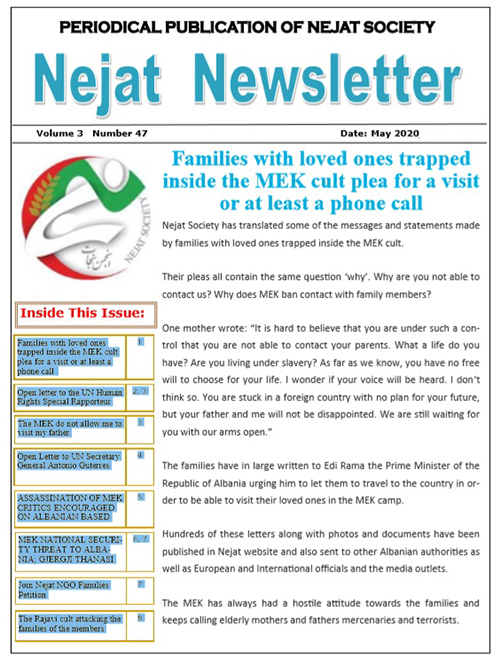
    • Nejat NewsLetter
    • Pars Brief
  • About Us
  • Contact us
  • Editions
    • عربي
    • فارسی
    • Shqip
Nejat Society
Nejat Society
  • Home
  • Articles
  • Media
    • Cartoons
    • NewsPics
    • Photo Gallery
    • Videos
  • Publications
    • Books
    • Nejat NewsLetter
    • Pars Brief
  • About Us
  • Contact us
  • Editions
    • عربي
    • فارسی
    • Shqip
© 2003 - 2024 NEJAT Society. nejatngo.org
Ann Singleton and Dr. Olsi interview
Albania

Why is Albania prohibiting Iranian families from meeting their relatives in MEK paramilitary camp?

Dr. Olsi Jazexhi discusses with Anne Khodabandeh (Singleton) a petition that an Iranian NGO, Nejat Society

https://www.nejatngo.org/en/posts/10625

has sent to the Prime Minister of Albania, Edi Rama.

Ann Singleton and Dr. Olsi interview

This petition which is being signed by thousands of persons in Iran and in the world:

http://chng.it/GCPbBfFPGr

asks the Albanian government to issue visas for Iranian families who want to meet their relatives who are being held as radicalized jihadis in the Mojahedin-e Khalq (MEK) camp in Manza in Albania.

This petition has alerted the MEK command and their cult leader Maryam Rajavi who are attacking the families of their soldiers as Iranian agents and doing their best to stop the Albanian government from allowing Iranian families to come and meet their radicalized relatives in Albania.

https://dld.nejatngo.org/Media/Interview/Ann_Olsi_MEK.mp4

Olsi and Anne discuss the nature of MEK, their fear of free media, democracy and an open society and their attacks against media such as the BBC, Channel 4, New York Times, al-Jazeera and the journalists in general.
They analyze the behavior of MEK, the Albanian government and the American administration which has turned the MEK camp in Manza into a center of illegal activities and a concentration camp for thousands of MEK who are deprived from their freedoms and human rights.

May 4, 2020 0 comments
FacebookTwitterPinterestWhatsappTelegramSkypeEmail
Netanyahu-Israel
Mujahedin Khalq; A proxy force

Mossad And MEK Role in Fabrication of Nuclear Documents against Iran

An investigation of supposed Iranian nuclear documents presented in a dramatically staged Netanyahu press conference indicates they were an Israeli fabrication designed to trigger US military conflict with Iran.

President Donald Trump scrapped the nuclear deal with Iran and continued to risk war with Iran based on Israeli Prime Minister Benjamin Netanyahu’s claim to have proven definitively that Iran was determined to manufacture nuclear weapons. Netanyahu not only spun Trump but much of the corporate media as well, duping them with the public unveiling of what he claimed was the entire secret Iranian “nuclear archive.”

In early April 2018, Netanyahu briefed Trump privately on the supposed Iranian nuclear archive and secured his promise to leave the Joint Comprehensive Plan of Action (JCPOA). That April 30, Netanyahu took the briefing to the public in a characteristically dramatic live performance in which he claimed Israel’s Mossad intelligence services had stolen Iran’s entire nuclear archive from Tehran. “You may well know that Iran’s leaders repeatedly deny ever pursuing nuclear weapons…” Netanyahu declared. “Well, tonight, I’m here to tell you one thing: Iran lied. Big time.”

Netanyahu-Israel

However, an investigation of the supposed Iranian nuclear documents by The Grayzone reveals them to be the product of an Israeli disinformation operation that helped trigger the most serious threat of war since the conflict with Iran began nearly four decades ago. This investigation found multiple indications that the story of Mossad’s heist of 50,000 pages of secret nuclear files from Tehran was very likely an elaborate fiction and that the documents were fabricated by the Mossad itself.
According to the official Israeli version of events, the Iranians had gathered the nuclear documents from various locations and moved them to what Netanyahu himself described as “a dilapidated warehouse” in southern Tehran. Even assuming that Iran had secret documents demonstrating the development of nuclear weapons, the claim that top secret documents would be held in a nondescript and unguarded warehouse in Central Tehran is so unlikely that it should have raised immediate alarm bells about the story’s legitimacy.

Even more problematic was the claim by a Mossad official to Israeli journalist Ronen Bergman that Mossad knew not only in what warehouse its commandos would find the documents but precisely which safes to break into with a blowtorch. The official told Bergman the Mossad team had been guided by an intelligence asset to the few safes in the warehouse contained the binders with the most important documents. Netanyahu bragged publicly that “very few” Iranians knew the location of the archive; the Mossad official told Bergman “only a handful of people” knew.

But two former senior CIA official, both of whom had served as the agency’s top Middle East analyst, dismissed Netanyahu’s claims as lacking credibility in responses to a query from The Grayzone.

According to Paul Pillar, who was National Intelligence Officer for the region from 2001 to 2005, “Any source on the inside of the Iranian national security apparatus would be extremely valuable in Israeli eyes, and Israeli deliberations about the handling of that source’s information presumably would be biased in favor long-term protection of the source.” The Israeli story of how its spies located the documents “does seem fishy,” Pillar said, especially considering Israel’s obvious effort to derive maximum “political-diplomatic mileage” out of the “supposed revelation” of such a well-placed source.

Graham Fuller, a 27-year veteran of the CIA who served as National Intelligence Officer for the Near East and South Asia as well as Vice-Chairman of the National Intelligence Council, offered a similar assessment of the Israeli claim. “If the Israelis had such a sensitive source in Tehran,” Fuller commented, “they would not want to risk him.” Fuller concluded that the Israelis’ claim that they had accurate knowledge of which safes to crack is “dubious, and the whole thing may be somewhat fabricated.”

No proof of authenticity

Netanyahu’s April 30 slide show presented a series of purported Iranian documents containing sensational revelations that he pointed to as proof of his insistence that Iran had lied about its interest in manufacturing nuclear weapons. The visual aides included a file supposedly dating back to early 2000 or before that detailed various ways to achieve a plan to build five nuclear weapons by mid-2003.

Another document that generated widespread media interest was an alleged report on a discussion among leading Iranian scientists of a purported mid-2003 decision by Iran’s Defense Minister to separate an existing secret nuclear weapons program into overt and covert parts.

Left out of the media coverage of these “nuclear archive” documents was a simple fact that was highly inconvenient to Netanyahu: nothing about them offered a scintilla of evidence that they were genuine. For example, not one contained the official markings of the relevant Iranian agency.

Tariq Rauf, who was head of the Verification and Security Policy Coordination Office at the International Atomic Energy Agency (IAEA) from 2001 to 2011, told The Grayzone that these markings were practically ubiquitous on official Iranian files.

“Iran is a highly bureaucratized system,” Rauf explained. “Hence, one would expect a proper book-keeping system that would record incoming correspondence, with date received, action officer, department, circulation to additional relevant officials, proper letterhead, etc.”

But as Rauf noted, the “nuclear archive” documents that were published by the Washington Post bore no such evidence of Iranian government origin. Nor did they contain other markings to indicate their creation under the auspices of an Iranian government agency.

What those documents do have in common is the mark of a rubber stamp for a filing system showing numbers for a “record”, a “file” and a “ledger binder” — like the black binders that Netanyahu flashed to the cameras during his slideshow. But these could have easily been created by the Mossad and stamped on to the documents along with the appropriate Persian numbers.

Forensic confirmation of the documents’ authenticity would have required access to the original documents. But as Netanyahu noted in his April 30, 2018 slide show, the “original Iranian materials” were kept “in a very safe place” – implying that no one would be allowed to have any such access.

Withholding access to outside experts

In fact, even the most pro-Israeli visitors to Tel Aviv have been denied access to the original documents. David Albright of the Institute for Science and International Security and Olli Heinonen of the Foundation for Defense of Democracies – both stalwart defenders of the official Israeli line on Iranian nuclear policy – reported in October 2018 that they had been given only a “slide deck” showing reproductions or excerpts of the documents.

When a team of six specialists from Harvard Kennedy School’s Belfer Center for Science and International Affairs visited Israel in January 2019 for briefings on the archive, they too were offered only a cursory browse of the supposedly original documents. Harvard Professor Matthew Bunn recalled in an interview with this writer that the team had been shown one of the binders containing what were said to be original documents relating to Iran’s relations with the IAEA and had “paged through a bit of it.”

But they were shown no documents on Iran nuclear weapons work. As Bunn admitted, “We weren’t attempting to do any forensic analysis of these documents.”

Typically, it would be the job of the U.S. government and the IAEA to authenticate the documents. Oddly, the Belfer Center delegation reported that the U.S. government and the IAEA had each received only copies of the entire archive, not the original files. And the Israelis were in no hurry to provide the genuine articles: the IAEA did not receive a complete set of documents until November 2019, according to Bunn.

By then, Netanyahu had not only already accomplished the demolition of the Iran nuclear deal; he and Trump’s ferociously hawkish CIA-director Mike Pompeo had maneuvered the president into a policy of imminent confrontation with Tehran.

The second coming of fake missile drawings

Among the documents Netanyahu flashed on the screen in his April 30, 2018 slide show was a schematic drawing of the missile reentry vehicle of an Iranian Shahab-3 missile, showing what was obviously supposed to represent a nuclear weapon inside.
Mossad And MEK Role in Fabrication of Nuclear Documents against Iran

Technical drawing from page 11 of David Albright, Olli Heinonen, and Andrea Stricker’s “Breaking Up and Reorienting Iran’s Nuclear Weapons Program,” published by the Institute for Science and International Security on October 28, 2018.

This drawing was part of a set of eighteen technical drawings of the Shahab-3 reentry vehicle. These were found in a collection of documents secured over the course of several years between the Bush II and Obama administrations by an Iranian spy working for Germany’s BND intelligence service. Or so the Israeli official story went.

In 2013, however, a former senior German Foreign Office official named Karsten Voigt revealed to this writer that the documents had been initially provided to German intelligence by a member of the Mujaheddin E-Khalq (MEK).

The MEK is an exiled Iranian armed opposition organization that had operated under Saddam Hussein’s regime as a proxy against Iran during the Iran-Iraq War. It went on to cooperate with the Israeli Mossad beginning in the 1990s, and enjoys a close relationship with Saudi Arabia as well. Today, numerous former US officials are on the MEK’s payroll, acting as de facto lobbyists for regime change in Iran.

Voigt recalled how senior BND officials warned him they did not consider the MEK source or the materials he provided to be credible. They were worried that the Bush administration intended to use the dodgy documents to justify an attack on Iran, just as it exploited the tall tales collected from Iraqi defector codenamed “Curveball” to justify the 2003 invasion of Iraq.

As this writer first reported in 2010, the appearance of the “dunce-cap” shape of the Shahab-3 reentry vehicle in the drawings was a tell-tale sign that the documents were fabricated. Whoever drew those schematic images in 2003 was clearly under the false impression that Iran was relying on the Shahab-3 as its main deterrent force. After all, Iran had announced publicly in 2001 that the Shahab-3 was going into “serial production” and in 2003 that it was “operational.”

But those official claims by Iran were a ruse aimed primarily at deceiving Israel, which had threatened air attacks on Iran’s nuclear and missile programs. In fact, Iran’s Defense Ministry was aware that the Shahab-3 did not have sufficient range to reach Israel.

According to Michael Elleman, the author of the most definitive account of the Iranian missile program, as early as 2000, Iran’s Defense Ministry had begun developing an improved version of the Shahab-3 with a reentry vehicle boasting a far more aerodynamic “triconic baby bottle” shape – not the “dunce-cap” of the original.

As Elleman told this writer, however, foreign intelligence agencies remained unaware of the new and improved Shahab missile with a very different shape until it took its first flight test in August 2004. Among the agencies kept in the dark about the new design was Israel’s Mossad. That explains why the false documents on redesigning the Shahab-3 – the earliest dates of which were in 2002, according to an unpublished internal IAEA document – showed a reentry vehicle design that Iran had already discarded.

The role of the MEK in passing the massive tranche of supposed secret Iranian nuclear documents to the BND and its hand-in-glove relationship with the Mossad leaves little room for doubt that the documents introduced to Western intelligence 2004 were, in fact, created by the Mossad.

For the Mossad, the MEK was a convenient unit for outsourcing negative press about Iran which it did not want attributed directly to Israeli intelligence. To enhance the MEK’S credibility in the eyes foreign media and intelligence agencies, Mossad passed the coordinates of Iran’s Natanz nuclear facility to the MEK in 2002. Later, it provided to the MEK personal information such as the passport number and home telephone number of Iranian physics professor Mohsen Fakhrizadh, whose name appeared in the nuclear documents, according to the co-authors of a best-selling Israeli book on the Mossad’s covert operations.

By trotting out the same discredited technical drawing depicting the wrong Iranian missile reentry vehicle – a trick he had previously deployed to create the original case for accusing Iran of covert nuclear weapons development – the Israeli prime minister showed how confident he was in his ability to hoodwink Washington and the Western corporate media.

Netanyahu’s multiple levels of deception have been remarkably successful, despite having relied on crude stunts that any diligent news organization should have seen through. Through his manipulation of foreign governments and media, he has been able to maneuver Donald Trump and the United States into a dangerous process of confrontation that has brought the US to the precipice of military conflict with Iran.

By Gareth Porter, Iranian.com

May 3, 2020 0 comments
FacebookTwitterPinterestWhatsappTelegramSkypeEmail
Nejat Family petition to the Albania's Prime Minister
Missions of Nejat Society

More than 8000 signatures after 12 days

The families’ petition addressed to the Albanian government has been shared over 1000 times.

The message of the families to the Albanian Prime Minister: Our children are captives in the hands of terrorists in your country.

Some Tehran families of the members trapped inside Rajavi’s terrorist cult in Albania, in a message addressed to the Prime Minister of that country, demanded a response to more than 8000 signatures to the petition

“urging the Albanian government to allow the families to contact their loved ones in the MEK camp”.

The text of the message is as follows:

Nejat Family petition to the Albania's Prime Minister

Mr. Edi Rama
Prime Minister of the Republic of Albania
As you are aware, a petition addressed to your government and the ministry of foreign affairs is ongoing. After 12 days this petition has already gained more than 8000 signatures from all over the world and has been shared over 1000 times.

The Mojahedin-e Khalq Organization (MEK, Rajavi cult) is an invitee in your country and under your government’s protection. But our innocent children are captives inside this terrorist cult and because of your government’s support, they have no access to the outside world particularly their family and friends.

We the suffering families would like to ask for how long you wish to prolong this situation? For how long do you wish to deprive elderly mothers and fathers from contacting their children? For how long do you wish to preserve intact this security threat for your country as well as Europe against the best interests of your people? For how long do you wish to have no control over the MEK camp and have no information about what is going on inside there? Are you aware about the extent of the spread of Covid-19 disease inside the camp which is a potential threat for your people? For whose interests should our children be captives in the hand of those terrorists?
The petition will be ongoing until we receive a response from you. If you have authority over your country’s executive affairs, it’s not a bad idea for you to go to the link below and react to the demands of the families.

http://chng.it/GCPbBfFPGr

We are anxiously waiting for you response

Some Tehran families

May 2, 2020 0 comments
FacebookTwitterPinterestWhatsappTelegramSkypeEmail
MEK terrorists in Albania
Albania

Terrorists do not need visas; they are already welcomed in Albania

A petition was launched by Nejat Society of Iran on behalf of the suffering families of Mojahedin-e Khalq Organization (MEK, Rajavi cult) members urging the Albanian government to allow these families to contact their loved ones trapped in the MEK camp. Link below:

http://chng.it/GCPbBfFPGr

This petition concludes:

“We urge the Albanian government and the ministry of foreign affairs to issue visas to the suffering families on humanitarian grounds to allow them to travel to Albania and help them visit their loved ones in the MEK camp.”

nejat families petition

Signatures on the petition have well exceeded 1500 after just 9 days and are rapidly increasing. The daily list of signatories and their locations is forwarded to the Albanian authorities.

This has, of course, alarmed the MEK since like all other destructive mind control cults, the leaders are scared to death of the families of the cult’s members. They know that familial emotions will counter their brainwashing practices on the members.

A few days after the campaign was launched, the MEK fearfully reacted on April 23, 2020 in its website ‘Iran Probe’ with a lengthy article titled: “Iranian regime is campaigning for Albanian entry visas for its terrorists”.

The article is a stream of fabricated lies trying to persuade the Albanians not to issue visas for the families.

This shows how much the presence of the families is a nightmare for Massoud and Maryam Rajavi, the cult leaders.

MEK terrorist cult was expelled from Iraq and admitted into their country by the Albanian government in 2016 and located in a remote, isolated camp. Security experts have always considered this a security threat for Albania as well as for Europe. The MEK presence has also been regarded a negative point for Albania as it tries to become a member of the EU.

The MEK camp, which holds the terrorists imported from Iraq, is entirely and secretly run by the cult’s leaders. Albanian officials have no jurisdiction over it. The inhabitants have no access to, or contact with, the outside world, particularly with their friends and families.

MEK terrorists in Albania

The truth is that the genuine terrorists are already welcomed and living in Albania and they do not need visas.

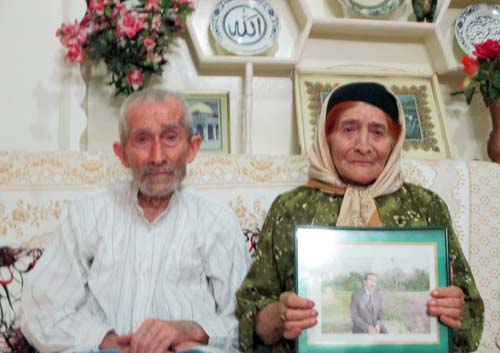
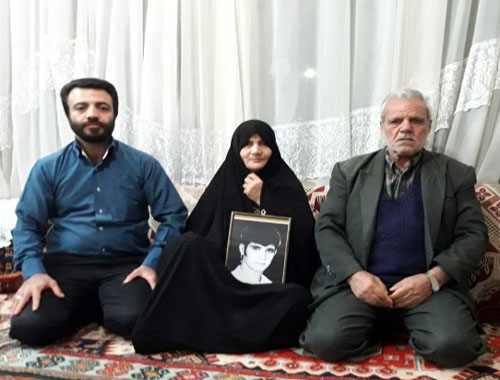
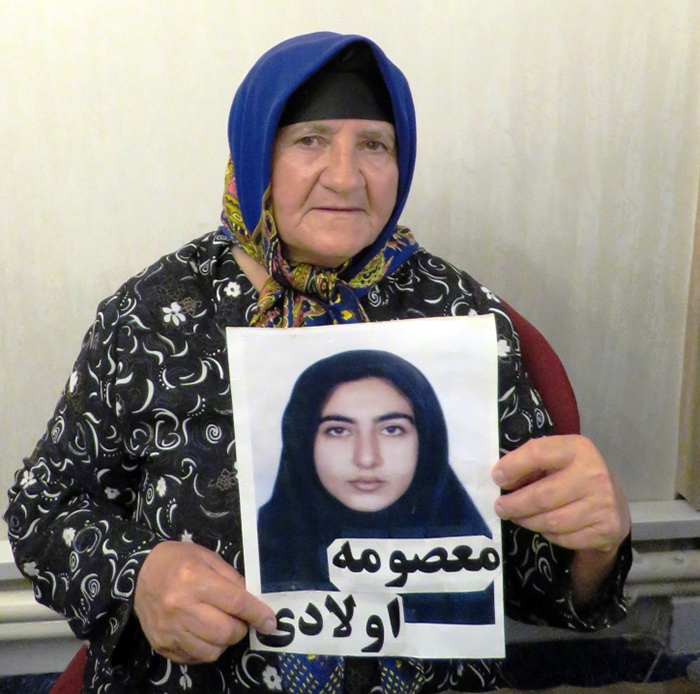
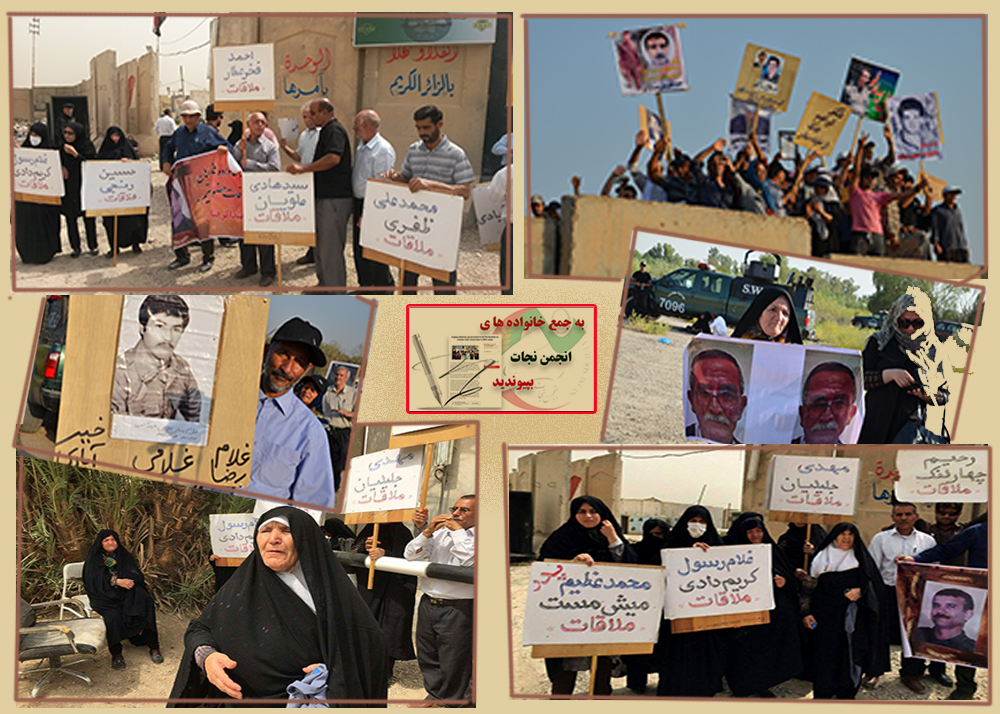
Those who are denied entry and deprived of contacting their loved ones are old mothers and fathers who have not seen or had any contact with their children for decades.
The Albanian government should pay attention to the just request of the families and enable them to contact their loved ones.

April 30, 2020 0 comments
FacebookTwitterPinterestWhatsappTelegramSkypeEmail
Albania - MEK - Ashraf 3
Albania

Is MEK guilty of spreading Covid-19 in Albania?

Albanian Prime Minister Edi Rama has issues strict instructions to combat the spread of the virus. Only one person per household will be authorized to leave their house for one hour a day to shop for groceries or other necessary items, and this only after applying for authorization. Consequences for violating this restriction include denial of unemployment benefits and student scholarships for at least one year. Enforcement of this and related restrictions will be done by police and special security forces who will use force against violators. The Prime Minister has even said that retirees, who among the people highest at risk to die from coronavirus, who do not comply with regulations can be considered traitors. Although extreme, this shows the seriousness with which the Prime Minister takes the threat of the disease.

Albania - MEK - Ashraf 3

This situation is worsened with the knowledge that there are more than three thousand members of the Mojahedin-e Khalq (MEK) in Tirana. Most of these MEK members are all considered to be administrative retirees, but are confined to work in the MEK’s terrorist camp. Many elderly men and women are spending their senior years behind computer systems in the MEK camp, using media accounts on social networks, to engage in media warfare to oppose the legitimate government of Iran, one that the people chose during the Revolution of 1979. Those people in the MEK’s terrorist camp are at high risk of contracting the disease and dying from it.
This is due to two main factors: First, the sectarian and colonial way of life of the MEK, which has gathered more than 3,000 people in a crowded military camp, will cause widespread and rapid spread of the virus, should even one member of the camp contract it. With a small national population, and over 100,000 people returning to the country from Italy, which has been very heavily hit by the virus, it is highly likely that someone in the camp will get it.

Secondly, since most members of the cult are older, they are at risk. Around the world, people who have compromised immune systems, respiratory problems or who are over the age of 60 are being particularly cautioned to avoid any activities which might expose them to coronavirus. Many MEK members are over 60, because the organization wanted total dedication to the cause, which its leaders expected to be quickly successful, and therefore discouraged them from marrying and having children, which would have distracted them from their illegal and immoral goals. This has made the Mojahedin camp like an isolated nursing home, and in many countries it is nursing homes where the virus has hit the hardest. Also, their long years of living in a fairly isolated area has prevented their exposure to many minor illnesses, which has left them with lowered immunity.

Because of this, the coronavirus is not only a threat to the survival of this cult, but also to the Albanian people. If cult members become ill with the virus and leave the camp (if allowed to do so) to obtain medical treatment or even to live with relatives, they will expose everyone they contact to the disease. With so many Albanians returning from Italy, which has the second highest number of coronavirus cases, and the third number of recorded coronavirus deaths, in the world, the additional risk posed by the elderly MEK members only worsens the situation for the nation.

There have been some news reports indicating that the outbreak and growth of the coronavirus in Albania can be traced to the MEK camp. Yet that initial reporting has had no follow-up, and it appears that powerful influences may have silenced these reports.

Regardless of the source of the disease in Albania, it is apparent that the MEK, always a terrorist organization, is now unwittingly increasing the risk to the health of the people of Albania. MEK terrorists are incapable of working toward any common good; their terrorist activities now include the possible spreading of coronavirus in a nation ill-equipped to handle it.

Robert Fantina, balkanspost

Robert Fantina is an author and peace activist. His writing has appeared on Mondoweiss, Counterpunch and other sites. He has written the books Empire, Racism and Genocide: A History of U.S. Foreign Policy and Essays on Palestine.

April 29, 2020 0 comments
FacebookTwitterPinterestWhatsappTelegramSkypeEmail
Murteza Hussein
Mujahedin Khalq Organization's Propaganda System

MEK members run online information operations from France, Albania: Murtaza Hussain

The Intercept’s Murtaza Hussain says members of the Mojahedin-e Khalq, an exiled Iranian militant group better known as the MEK, are tasked all day to run the cultish group’s propaganda campaign against the Iranian government.
Murtaza Hussain

“The MEK is a very secretive organization but defectors have told us that on their bases in Albania and France members are tasked all day with posting articles online and running the MEK’s information operations,” Hussain said in an interview with the Balkans Post.

“It is unclear how this is funded but it would be expensive,” he added.

Murteza Hussein

The following is the transcript of the interview:

BP: Mr. Hussain, in a piece you co-wrote with Matthew Cole about the MEK, you reported shocking details about the MEK’s torture and forced sterilization of its members. If these details are accurate, why is the cultish organization is still allowed to operate?

Murtaza Hussain: The MEK was designated a terrorist group by the State Department but for years still did lobbying work on Capitol Hill. It seems that the law has always been unevenly applied on the question of terrorism designations.

BP: The MEK was relocated to Albania a few years ago, making the country a hub for anti-Iran activities. In your opinion, why did Albania decide to become a country that hosts such a cultish organization?

Murtaza Hussain: I’m not sure what the Albanian government’s decision-making was but it seems highly likely that they made this decision based on the desire to be on good terms with the U.S. administration and right-wing elements in that country. There has been some speculation also about financial compensation in exchange for taking in this group on their soil.

BP: You had written another article on June 9, 2019, saying that Heshmat Alavi, a self-proclaimed Iranian activist, “appears not to exist” and is “a persona run by a team of people from the political wing of the MEK”. What’s the MEK’s agenda here?

Murtaza Hussain: Heshmat Alavi is a persona used by the MEK to continue its public relations work in the Western countries, aiming to sway elite and public opinion by placing news articles and running social media campaigns promoting its vision for itself as the future government of Iran. The MEK is a very secretive organization but defectors have told us that on their bases in Albania and France members are tasked all day with posting articles online and running the MEK’s information operations. It is unclear how this is funded but it would be expensive.

BP: On that issue, you have also said the MEK runs an “extensive propaganda operation out of its base in Albania with the aim of steering the United States and Iran into a war that could lead to regime change.” Do you think the MEK has a shot in Iran?

Murtaza Hussain: The MEK has killed thousands of Iranians over the years and was involved in the 2009-2011 assassination of Iranian scientists alongside the Israeli Mossad. They are a deeply unpopular group including among opponents of the Iranian government.

Murtaza Hussain is a journalist whose work focuses on national security, foreign policy, and human rights. He writes in The Intercept. His work has previously been featured in the New York Times, The Guardian, and Al Jazeera English.

Balkanspost

April 28, 2020 0 comments
FacebookTwitterPinterestWhatsappTelegramSkypeEmail
Ebrahim Khodabande- Nejat Society ceo
Missions of Nejat Society

CEO of Nejat Society pens letter to the Prime Minister of Albania

Mr. Edi Rama, Prime Minister of the Republic of Albania

I am writing on behalf of hundreds of suffering families of the members of the Mojahedin-e Khalq Organization (MEK, Rajavi cult) who have settled in your country. I would like to remind you that the families’ letters to the President’s Office have remained completely unanswered so far.

Ebrahim Khodabande- Nejat Society ceo

You are aware that the members of this organization are billeted in a camp in Manëz in Durrës County, western Albania. The camp is completely controlled by the organization’s leader – Albanian officials have no authority over it. The MEK organization is run as a destructive mind control cult which prevents its members from communicating with the outside world, especially with friends and relatives.

One week ago, a petition was created for the families, addressing the Albanian government, and by the time I write this letter to you, more than 800 of them have signed it. Link below:
http://chng.it/GCPbBfFPGr

The text of the petition, which calls on the Albanian government to provide conditions for families to communicate with their loved ones in the MEK camp in Albania, as well as the list of more than 800 signatories to the petition are attached.

Please answer why the Albanian authorities, in cooperation with the Rajavi cult, are preventing families from communicating with their loved ones? Why has the Albanian Ministry of Foreign Affairs ordered all its embassies not to issue visas to Iranians so that families would not be able to travel to your country?

The level of cooperation of the Albanian government – which aspires to join the European Union – with a terrorist cult, is shocking.

I look forward to hearing from you and, of course, I am sending this open letter to international, European and Albanian authorities, as well as to the human rights bodies and the media.

Many thanks, in anticipation, for your kind reply to this letter.

Ebrahim Khodabandeh
Nejat Society – CEO

April 27, 2020 0 comments
FacebookTwitterPinterestWhatsappTelegramSkypeEmail
MEK in albania and the resk of corona
Albania

MEK cult in Albania poses public health risk

With its small population of 2.8 million people, the Republic of Albania may appear to have a more manageable task (depending, of course, on the availability of health care resources) of testing and tracking contacts to halt the spread of the coronavirus, than countries with multiple millions of citizens living in large, sprawling cities and conurbations. But as Albania extends its lockdown to stop the spread of the coronavirus, the country faces a specific problem that some other countries also face — notably South Korea — the presence of a closed and secretive cult in the midst of the population.

mek in labania and the coronavirus

Since its arrival in Albania in 2016, the Iranian Mojahedin-e Khalq (MEK), also known as the Rajavi cult after its leaders Massoud and Maryam Rajavi, the group has caused problems for the authorities and citizens of their host country. Exploiting the unresolved problems of crime, corruption, and a weak state dependent on American approval, the MEK has manipulated, bribed, and intimidated its way into the political, media, and criminal elements of Alabania. According to well-known historian Olsi Jazexhi, the MEK has even perverted Albania’s foreign policy making it a hub for anti-Iran activities and creating a security nightmare for Albania’s police and security services.

NYT photo of the Ashraf3 CAmp of MEK in Tirana

Now the group poses another risk to the country — a public health risk that cannot be assessed or managed.
In 2017, both tacit support from the Trump administration, and overt support from neoconservative personalities, enabled MEK leaders to evade a planned de-radicalization program and instead build a closed secure camp in Manez — a remote town in the county of Durres — to house up to 2,000 cult members. Camp Ashraf 3 — as it is known — is guarded by private armed security personnel as well as MEK officials; only invited persons are allowed entry. Before this mass incarceration, dozens of members took advantage of the move to Albania to separate from the group. They reported terrible human rights abuses and conditions of modern slavery in the MEK. Journalists were refused entry to the camp to interview members locked up there.
For the majority of MEK members then, a lockdown may seem irrelevant since they were already in forced isolation from the outside world, but for Albania, the existence of the group in the country poses a real dilemma.
Although most cult members will not emerge in public, the group relies on regular supplies from outside, particularly food and medicine, and those who emerge to procure these supplies are part of a greater chain of contacts that stretch all the way to Italy. Not only are MEK members who move around Albania unaccountable and untraced, the MEK is notorious for trafficking its own members past national borders.

MEK in albania and the resk of corona

The MEK’s leading members made frequent trips to Italy in the early months of this year, exposing them to COVID-19. In this respect, it is important to acknowledge that the MEK members are not all based in the closed camp. Last year, MEK leader Maryam Rajavi was forced to leave her base in France and set up her new headquarters in Albania. Many leading members live in the capital Tirana and occupy a variety of premises — from business offices to an entire floor of the International Hotel in Skanderbeg Square in Tirana. Where are those people now? What contact did they have between Italy and the residents of Camp Ashraf 3? Durres county is the epicenter of the current coronavirus epidemic in Albania. Have MEK members inside been infected?
We don’t know and we may never know. The Albanian authorities, including the security services, do not have access to the camp. According to investigative journalist Gjergji Thanasi, who lives in Durres county near the MEK camp, the Health Ministry “deals with Camp Ashraf 3 as if it does not exist. There is not a single line in the Durres Municipality health officials’ paperwork written about the camp and its residents. No Albanian health official has ever entered the camp.”
This means that no matter how hard epidemiologists may be working to trace the contacts of positive cases throughout the country, the MEK will not submit to allow Health Ministry staff inside the camp to test the individuals there. Thanasi goes on to explain, “the MEK have their own doctors, nurses, and dentists. When they have seriously ill patients, they hire private ambulances to transport them to a public hospital in Tirana.”
What is deeply concerning in this crisis, however, are the messages emerging from the camp and covertly passed to those who are concerned with their welfare. Over a thousand families of these disappeared MEK members, who have been trying for two decades to gain contact with their loved ones, say these messages are alarming. They say that the MEK leaders have blocked every form of access to medical care and hospital visits have been cancelled. They also report that some people have gone missing and nobody knows where they are. Everyone inside the camp is worried about the virus and that they are getting no help. They say there is a general sense of dread about the spread of COVID-19.
According to Thanasi, employees of Durres Municipality who engaged in disinfecting streets, squares, flea markets, and agriculture produce markets had contacted the MEK camp via the local Manez council officials offering to disinfect the camp. “We were thanked profusely before our offer was very politely turned down. The commanders at the camp insisted they had already thoroughly disinfected the camp”, Thanasi was told. The Municipal workers however added there was “no evidence this had been done.”
Outside the camp, local residents have observed the MEK’s efforts to deal with the crisis. Speaking to Thanasi, one resident said, at the camp entrance, Albanian armed security guards and MEK members have been observed wearing masks and gloves, “but those on duty at a second gate do not always use protective gear.”
It appears that in public, MEK personnel will wear the masks and gloves, but a group of MEK members who work in a small facility outside the camp fence opposite the main entrance generally do not wear protection. It could be that a shortage of PPE means the MEK has to adopt a public relations exercise to be seen to observe distancing, isolation and protective measures. More cynically, the patchy distribution of protective gear could be linked to a hierarchy of privilege.
Without official oversight, it is not known how many MEK members will contract the virus and how many will die as a result. What is known is that since arriving in Albania, dozens of MEK members have died — reportedly from old age and illness — yet their reported cause of death cannot be relied upon.

MEK leaders mostly refuse post-mortem examinations. The MEK leaders are just as unlikely to report incidences of COVID-19 infections and deaths. MEK members are especially susceptible to the ravages of this virus. Their average age is around 65, with some members in their seventies and eighties. Many members have underlying health issues, and weakness brought on by the decades of overwork and harsh living conditions endured in Iraq. Rajavi herself is so frightened of succumbing to the virus that back in March she had one of her parliamentary lobbyists raise the possibility of travelling to the UK where even as a visitor she could access world class medical facilities.
Clearly, even if the MEK does eventually allow sick members to be tested and gain access medical care, Albania is barely equipped to deal with a widespread outbreak of the coronavirus among the indigenous population. If this troublesome group consumes badly needed resources, the finger of blame will surely go to Albania’s corrupt politicians who allow this group to flout the country’s laws and national interests and pursue its own agenda. That finger of blame must as well point directly at the Trump administration too. Secretary of State Mike Pompeo is happy to use MEK propaganda churned out by the troll farm in Camp Ashraf 3 by enslaved members to attack Iran and justify the continuation of extreme sanctions. What responsibility will he take for the health and wellbeing of these people and the people of Albania.

Responsible Statecraft,

April 26, 2020 0 comments
FacebookTwitterPinterestWhatsappTelegramSkypeEmail
Mujahedin Khalq; A proxy force

Chief Iranian diplomat denounced Trump for retweeting MEK-linked account

Iranian Foreign Minister Mohammad Javad Zarif on Thursday accused US President Donald Trump of making threats that were cheered on by”Saddam’s terrorists”.

The chief Iranian diplomat was referring to the formerly US-designated terrorist group Mujahideen-e Khalq (MEK), an Iranian opposition group that was allied with the late Iraqi autocrat Saddam Hussein.

It all started on Wednesday, when Trump said in a tweet that he ordered the US Navy to”shoot down and destroy”any Iranian gunboats that harass American ships.
The US president’s post was celebrated by an MEK-linked account. Trump retweeted that response, taking a dig at the presumptive Democratic nominee, former vice president Joe Biden.
“The mullahs’ regime ruling Iran harasses UN [sic] Navy ships for propaganda purposes,“Heshmat Alavi, a popular MEK-linked Twitter account, responded to Trump’s post.
“Thank you, President Trump, for reminding this regime that the Obama years are gone.”
In turn, Trump shared Alavi’s post commenting:”Sleepy Joe thought this was OK. Not me!”

Heshamt Alavi

The case of Heshmat Alavi

Alavi, who has penned opinion pieces in several major international publications, has been the subject of an ongoing controversy since the Intercept published a story last year alleging that he is not a real person, but a”propaganda operation”run by the MEK.
The report cited former members of the Iranian opposition group as saying that a group of MEK members in Albania manage Alavi’s persona.
Twitter briefly suspended the account after the publication of the Intercept story. Alavi had pushed back against the story, saying that it was a”highly biased article full of lies”.
He did acknowledge that he supports the MEK and does not write under his real name.
“No, I will never reveal my real identity or photograph. Not as long as the mullahs’ regime is in power,”Alavi wrote in a blogpost in June 2019.
“No activist in his/her right mind would do so. That would place all of my family, friends and myself, both inside & outside of Iran, in complete danger.”

Fake or not, Alavi’s voice was amplified by the president of the United States on Wednesday, who shared the controversial account’s content with his more than 78 million followers.
Critics were quick to call out Trump for promoting the MEK-affiliated account.
“Behold Donald Trump’s open coordination with an Iranian terrorist organization. The person he retweets does not exist, the account is run by six people in the MEK’s terrorist base in Albania,”tweeted Trita Parsi, executive vice president of the Quincy Institute for Responsible Statecraft, an anti-war think-tank in Washington.
“Yes, the president of the United state [sic] is retweeting a terrorist account.”
The MEK has a long history of violent attacks in Iran, and until 2012 it was considered a terrorist organisation by the United States.

‘More of a cult’

Ryan Costello, policy director at the National Iranian American Council (NIAC), a Washington-based group that opposes war with Iran, said the US administration’s ties to the MEK were”deeply concerning”.
“This is still a group that’s more of a cult than an advocacy organisation or a legitimate organisation… To think this is an organisation that is influencing the president and the administration should be cause for concern,”Costello told Middle East Eye.
The group has managed to garner strong relations with key members of both major parties in Congress. Trump’s personal lawyer Rudy Giuliani and his former security adviser John Bolton are also ardent supporters and have spoken at the group’s events for hefty fees.
The White House did not return MEE’s request for comment.
Detractors also accuse the group of being a”totalitarian cult”centred around its leader, Maryam Rajavi. Moreover, the MEK is tainted by its past ties to Iraq’s Hussein, who is loathed as a brutal figure in both Iran and the United States.

‘To think this is an organisation that is influencing the president and the administration should be cause for concern’
– Ryan Costello, NIAC

But MEK supporters dismiss such accusations, insisting that it is the most organised opposition group calling for a democracy in Iran.
The MEK supporters are no fans of NIAC. They often falsely accuse the organisation of being a lobby for the Iranian government in Washington. On Wednesday, Alavi called out Parsi, who is the co-founder and former president of NIAC, for his past association with the group.

“He constantly parrots Zarif’s talking points,”Alavi said of Parsi.

To prove that point, Alavi shared a video showing Parsi mirroring Zarif’s criticism of Saudi Crown Prince Mohammed bin Salman by bringing up the Qatar blockade, kidnapping of former Lebanese Prime Minister Saad Hariri and the war in Yemen.
Such talking points against bin Salman’s policies have not been uniquely denounced by Zarif. Many of the kingdom’s critics, including members of the US Congress, have cited them in the past.
The Iranian opposition group enjoys close ties with Saudi Arabia. Saudi commentators and officials have praised the group and spoken at its events in the past.
The MEK and a US advocacy group aligned with it did not return MEE’s request for comment.
Costello said the MEK’s animosity with NIAC goes to the fact that the Iranian-American organisation opposed removing the group from the US terror list.

Tensions in the Gulf

Trump’s threat to shoot Iranian boats on Wednesday renewed fears of a military confrontation between the US and Iran at a time when both countries are combatting the spread of the coronavirus.
In 2018, the US administration nixed the multilateral Iran nuclear deal, which saw Tehran scale back its nuclear programme in exchange for lifting sanctions against its economy.
Over the past two years, Washington has been piling up sanctions against various Iranian individuals and industries as part of its”maximum pressure”campaign.
The two countries came to the verge of war earlier this year when a US drone strike killed top Iranian general Qassem Soleimani.
Last June, Trump ordered, then cancelled, military strikes against Iran after Islamic Republic downed a US drone over the Gulf, claiming that it violated Iranian territorial waters.
NIAC’s Costello said in the past the US Navy has done an”exemplary job”of de-escalating tensions with IRGC boats that try to make life difficult for American ships in the Gulf.
He added that Trump’s threat risks inviting the hardliners in Iran to continue to”test the resolve”of the US, endangering everyone involved.
“I’m very concerned that what Trump has done here increases the risks that there’s another movement toward war or some sort of incident that results in ships being sunk in the Persian Gulf,”Costello said.

By Ali Harb – Middle East Eye

April 25, 2020 0 comments
FacebookTwitterPinterestWhatsappTelegramSkypeEmail
Mujahedin Khalq Organization's Propaganda System

Trump tweet, MEK, fake identity

On Wednesday morning, just a few hours after once again threatening to go to war with Iran, President Donald Trump shared a tweet from an account from someone by the name of Heshmat Alavi. Like many of the tweets the president circulates, Alavi was praising Trump, this time for his hard-line stance against the Islamic Republic.

Trump’s amplification of the post was bad enough on its own: Alavi is a supporter of a militant Iranian cult called the Mojahedin-e-Khalq, known as the MEK, an organization that was designated for decades as a terrorist organization and is widely hated inside Iran. What makes it even worse, however, is that Heshmat Alavi does not exist.

As The Intercept reported last June, Alavi is a composite identity run by a team of MEK members based mainly at the group’s compound in Albania, according to defectors who were involved with managing the account and other sources.

https://dlb.nejatngo.org/Media/Report/Aljazeera_Alavi_MEK.mp4

“Heshmat Alavi is a persona run by a team of people from the political wing of the MEK,” a former MEK member named Hassan Heyrani, who helped manage the Alavi persona in Albania, told The Intercept in 2019. “They write whatever they are directed by their commanders and use this name to place articles in the press. This is not and has never been a real person.”

In a blog post published after The Intercept story, the Alavi account admitted for the first time that there was no real Heshmat Alavi, claiming instead to be using a pseudonym. “No, I will never reveal my real identity or photograph,” the account wrote. “No activist in his/her right mind would do so. That would place all of my family, friends and myself, both inside & outside of Iran, in complete danger.”

While the Alavi account has never declared itself a member of the MEK, the content produced under the name frequently toed a pro-MEK line. In the same post published after The Intercept story, however, the account explicitly stated its support of the group: “Why do I support the MEK? 1) They have an organization. 2) They have an agenda. 3) They are serious and dedicated.”

Under Alavi’s name, a steady stream of blog posts and tweets have been produced over the years, always advocating harsh U.S. policies toward Iran and occasionally sliding in messages of support for the MEK and its leadership. And it’s not just social media activity: Articles under Alavi’s name were published in an array of mostly right-leaning news outlets in the U.S. At least one of these articles, published under Alavi’s name in Forbes, was cited in the past by the Trump administration to the press to justify its aggressive Iran policy.

Following The Intercept’s 2019 expose, publications like Forbes, the Daily Caller, and The Diplomat that had published articles by Alavi either removed or updated them to reflect his nonexistence as a person.

While news outlets with editorial standards showed a willingness to remove articles by people demonstrated to not exist, social media outlets like Twitter remain useful vectors for getting misinformation out to the public — as in Alavi’s case. Today, Alavi’s account still exists and is still producing superhuman amounts of content.

The account was briefly suspended following The Intercept’s report, but after a storm of pro-MEK advocates tweeting at Twitter’s support account and the company’s CEO, the account was reinstated a few days later. Twitter does not comment on its decisions regarding individual users, but a source familiar with the organization told the Saudi-government owned al-Arabiya news that, after temporarily being banned, the Alavi account was reactivated after being deemed a “credible use of pseudonymity.”

Social media companies have been under increasing criticism for their roles in helping amplify disinformation, including from sources connected to foreign governments and political movements. During the 2016 presidential election, troll farms connected to the Russian government were accused of helping sway American public sentiment over the vote. These activities are only believed to have increased since then.

The MEK, for its part, has a checkered history. A half-century-old revolutionary group, the organization has cycled through ideologies and tactics — from Marxism to democratic advocacy, from terrorist violence to protests and active lobbying in Washington — to rise to prominence. The turn toward seeking U.S. support is a decade-old tactic for a group that once allied with the Palestinian Liberation Organization and, in the 1980s and 1990s, Iraqi dictator Saddam Hussain.

This year, an Intercept investigation documented allegations by former members of the group depicting a cult-like atmosphere inside the organization. The former members detailed practices of forced sterilization, torture, and other methods of controlling followers.

Ghorban Ali Husseinnejad

Nonetheless, the MEK now has powerful allies throughout Washington. Most notably, as of today, the group has found a friend in the White House — a president who has never been uncomfortable with blurring the lines between reality and falsehood.

Murtaza Hussain, theintercept.com

April 25, 2020 0 comments
FacebookTwitterPinterestWhatsappTelegramSkypeEmail
Newer Posts
Older Posts

Recent Posts

  • From Baghdad to Washington: How the MEK Aligns with Corrupt Global Politicians

    July 4, 2026
  • Former child soldier reveals MEK’s double standards  

    July 4, 2026
  • Slovenian PM Janez Janša, MEK & Israel promoter

    July 1, 2026
  • MKO Rally Dispersed by French Police in Humiliating Blow to Terrorist Group

    June 27, 2026
  • Nejat Society Albania’s Conference on June 20th

    June 22, 2026
  • Facebook
  • Twitter
  • Instagram
  • Youtube

© 2003 - 2025 NEJAT Society . All Rights Reserved. NejatNGO.org


Back To Top
Nejat Society
  • Home
  • Articles
  • Media
    • Cartoons
    • NewsPics
    • Photo Gallery
    • Videos
  • Publications
    • Books
    • Nejat NewsLetter
    • Pars Brief
  • About Us
  • Contact us
  • Editions
    • عربي
    • فارسی
    • Shqip