Nejat Society
  • Home
  • Articles
  • Media
    • Cartoons
    • NewsPics
    • Photo Gallery
    • Videos
  • Publications
    • Books
    • Nejat NewsLetter
    • Pars Brief
  • About Us
  • Contact us
  • Editions
    • عربي
    • فارسی
    • Shqip
Nejat Society
Nejat Society
  • Home
  • Articles
  • Media
    • Cartoons
    • NewsPics
    • Photo Gallery
    • Videos
  • Publications
    • Books
    • Nejat NewsLetter
    • Pars Brief
  • About Us
  • Contact us
  • Editions
    • عربي
    • فارسی
    • Shqip
© 2003 - 2024 NEJAT Society. nejatngo.org
weekly digest
Iran Interlink Weekly Digest

Iran Interlink Weekly Digest – 255

++ There was a lot written about the devastating floods in Iran this week and how the MEK are misusing the crisis. Sara Zahiri of the Farsi NITV News site (Canadian/American-Iranians) quotes some of this commentary, including Massoud Khodabandeh, which is saying that Maryam Rajavi is effectively asking people to take up arms and fight their rescuers. This, say some, is probably the biggest gaffe she has given in recent years as she is asking flood victims to fight to repel the armoured vehicles come to rescue them. Zahiri compares this to their behaviour when they worked for Saddam Hussein. For the MEK, everything has to come back to violence and terrorism, they can’t do without it.

++ On the anniversary of the attack on Camp Ashraf in 2011, former members have written their memories of how Rajavi tried to get people killed; sending them against the Iraqi police and soldiers with false pretences – without arms etc. Those people were killed only because Rajavi wanted more money from the Americans. It was already clear by then they would have to evacuate the camp and go to a third country.

++ Hassan Raahi, an MEK veteran from the time of the shah, had an interview with Cheshmandaz-e Iran publication belonging to the famous Lotfollah Maysami (also a former MEK veteran). Raahi talked about Massoud Rajavi’s mentality. He mentioned every detail about him. For example, how when he was in prison, Rajavi tried a few times to become the MEK leader, but those still alive then knew him very well and prevented it. How Rajavi managed, after the Revolution, to exploit the chaos and take over and destroy the original MEK. How he went to France then Iraq etc and derailed the organization.

In English:

++ A blog by Ali Alavi examined some of Maryam Rajavi’s stances – along with that of other ‘instant experts’ – over the floods. Interestingly according to Alavi, Rajavi didn’t know what to do and had to take instruction from Massoud Khodabandeh’s criticisms to finally make some pretence at helping. But even this was ‘churning out breath-taking lies’ rather than real help. Rajavi advised flood victims to resist their rescuers. She claimed that MEK ‘Resistance Units’ were helping, but all they could do was print and hand out leaflets “instructing people to come to their own aid!”

++ Stephanie Baker in Bloomberg examines ‘Where Rudi Giuliani’s money comes from – While he represents the president for free, he travels the world consulting, giving speeches, and building his brand’. In a long and detailed article, Baker reveals that from Ukrainians, Chechens, the Polish, Brazilians, Columbians and of course the MEK, Giuliani doesn’t hesitate to take money for consultation and speeches advocating foreign interests while wielding unchecked influence with the POTUS.

++ Albanian investigative journalist Gjergji Thanasi writes in Gazeta Impakt to advise PM Rama against servility and myopia in relation to Maryam Rajavi. Thanasi speaks about former MEK member Manoucher Abdi who is a grandfather and wants to return to his family in Iran. The Albanian government is hindering his efforts so that Abdi has started a hunger strike in protest. This will reflect badly in foreign and world media, says Thanasi, starting with the Danish Dagens Naeringsliv, France’s Le Monde, Italy’s RAI and the US’s Wall Street Journal. He concludes “In my article I am not appealing to the human feelings of my country’s prime minister, but merely his sound judgment. Keeping an Iranian grandfather hostage in Albania will not bring any benefit to the prime minister but will be a source of endless trouble in the field of public relations.”
April 05, 2019

April 7, 2019 0 comments
FacebookTwitterPinterestWhatsappTelegramSkypeEmail
Rudy Giuliani
Mujahedin Khalq; A proxy force

Where Rudy Giuliani’s Money Comes From

While he represents the president for free, he travels the world consulting, giving speeches, and building his brand.
When Rudy Giuliani traveled to Ukraine’s second-biggest city, Kharkiv, in November 2017 to advise the mayor, an unconventional scene awaited him. In an anteroom outside the mayor’s office, his pet parrot, Johnny, perched in a large metal cage. Giuliani doesn’t speak Russian, so Johnny’s standard squawk to visitors—“Privet!” (Russian for “hello”)—was perhaps lost on him. But the mayor’s security precautions certainly were not.
An armed policeman in a bulletproof vest guarded the anteroom, where a motley collection of visitors waited with Johnny to see the mayor, Hennadiy Kernes, who’s ruled over this city less than an hour from the Russian border for the past nine years. Beyond the bird lay another waiting area with bodyguards, all with the blunt, ex-mixed-martial-artist look common to the profession in the former Soviet Union. Inside the mayor’s office were a large lion and a small lynx, stuffed.
“I’m not surprised by heavy-duty security anywhere,” Giuliani said when I asked him recently what he thought of the bodyguards around Kernes. “I do a lot of work in dangerous places.” Giuliani said he was in the country, for his second visit in less than a year, as a private citizen to advise Kharkiv on security. But he was also serving at the time as President Trump’s cybersecurity adviser, and Ukrainian TV headlined it as a “visit by Trump’s adviser.” On both visits, Giuliani met with Ukrainian President Petro Poroshenko, who’s now fighting an uphill battle for reelection.
On a freezing January day, I visited Mayor Kernes, 59, in his office while a Russian soap opera played on a large TV. He’s been in a wheelchair since April 2014, when an unknown hit man shot him while he was jogging near the forest on the city’s outskirts. Before the assassination attempt, the mayor maintained an active Instagram account on which he posted photos of himself flashing his expensive watches, traveling on private jets, and meeting with Chechen leader Ramzan Kadyrov, a close ally of Russian President Vladimir Putin who was sanctioned by the U.S. in 2017 for “extrajudicial killing, torture, and other gross violations” of human rights. Kernes himself was a close ally of Ukrainian President Viktor Yanukovych, who was forced from the country by the Maidan Revolution in February 2014 and fled to Russia.
Speaking in a gravelly voice, Kernes explained that he’d wanted to tap Giuliani’s vast experience. Giuliani advised him to create an emergency service akin to 911. “Giuliani met with President Poroshenko, and with the support of the president we decided to go ahead,” he said, sipping tea.
The story of how Giuliani ended up advising a mayor in eastern Ukraine is a tangled one. Kernes wasn’t paying Giuliani; instead, his one-year contract, the value of which no one involved will discuss, was funded mostly by a Ukrainian-Russian minigarch named Pavel Fuks, who moved back to Ukraine in 2015 after about 20 years in Moscow, where he made a fortune in real estate and banking. In the mid-2000s, Fuks had held talks with Trump about building a Trump Tower Moscow, but they couldn’t agree on a deal.
I visited Fuks in Kiev, where he, too, had armed bodyguards outside his office door. A 47-year-old Kharkiv native who’s been friends with Kernes for 30 years, Fuks said he’d hired Giuliani to give back to his hometown. “Giuliani’s company provides lobbying services, and they are very strong in security,” he said. “He’s a star.”
The Ukrainian gig is one slice of a globe-trotting consulting business Giuliani has continued to pursue while serving first as a key campaign surrogate for Trump, then as his cybersecurity adviser, and finally as his personal lawyerduring special counsel Robert Mueller’s probe into Russian interference in the 2016 presidential election. Now that Attorney General William Barr has reported that Mueller didn’t find Trump’s campaign to have knowingly conspired with the Russian government and didn’t draw a conclusion on whether the president had obstructed justice, Giuliani is taking a victory lap. His success in shielding Trump from an in-person interview with Mueller may have helped the president steer clear of an obstruction charge, an accomplishment that could make Giuliani’s currency as a consultant even more valuable around the world.
Long lauded as the prosecutor who skewered the New York Mafia and once known as “America’s mayor” for leading New York after Sept. 11, Giuliani is still courting clients for security contracts such as the one in Kharkiv. He’s made millions of dollars while acting as Trump’s unpaid consigliere—$9.5 million in 2017 and $5 million in 2018, according to disclosures from his ongoing divorce proceedings with his third wife, Judith Nathan. At the age of 74, Giuliani has eschewed a quiet retirement in favor of life in the limelight. “If I retired, I would shrivel up,” he said. “What I do is enormously exciting.” In addition to Ukraine, in the past two years he’s given speeches and done consulting and legal work in Armenia, Bahrain, Brazil, Colombia, Turkey, and Uruguay, among other countries.
Much about the Trump presidency is unprecedented, but Giuliani’s role is particularly unusual. His work abroad led seven Democratic senators in September to request that the U.S. Department of Justice review whether he should be disclosing his activities under the Foreign Agents Registration Act (FARA), which requires registration by individuals and organizations acting as agents of foreign principals “in a political or quasi political capacity.” FARA was rarely a hot topic until 2017, when Mueller indicted former Trump campaign manager Paul Manafort and his associate Rick Gates for failing to register as foreign agents as required.
“As President Trump’s personal attorney, Mr. Giuliani communicates in private with the president and his senior staff on a regular basis,” the senators wrote to the Justice Department. “Without further review, it is impossible to know whether Mr. Giuliani is lobbying U.S. government officials on behalf of foreign clients.”
Giuliani has consistently denied lobbying U.S. officials on behalf of Ukraine or any other foreign government. He told me that most of his work has been in the form of consulting within foreign countries, which FARA experts say typically wouldn’t trigger an obligation to file as a foreign agent. “Most of our contracts involve giving a state within the national government a security plan to reduce crime, investigate terrorism, secure critical infrastructure,” he said. In Ukraine, he said, he advised only on security issues, not on how to promote Kharkiv’s interests in the U.S.
“If I retired, I would shrivel up. What I do is enormously exciting”
When I first called Giuliani in mid-February, he said over a crackling line that he was at a Warsaw conference on Iran, a U.S. government-led summit at which Trump administration officials urged European allies to withdraw from the Iran nuclear deal. It was the first of two phone calls; in both, Giuliani said he had five minutes, then spoke for almost 45. His still-sharp mind and natural argumentativeness were evident, but he also misstated the dates of his many recent foreign trips.
Giuliani said he’d come to Poland to give a speech about Iran, and he defended his dual roles working closely for Trump and foreign clients, noting that he spells out in his contracts with those clients that he doesn’t lobby the U.S. government. “There’s no conflict. What’s the conflict?” he said. “I don’t ask the president for anything for them ever. I’ve never represented them in front of the U.S. government. I don’t peddle influence. I don’t have to. I make a good deal of money as a lawyer and as a security consultant.”
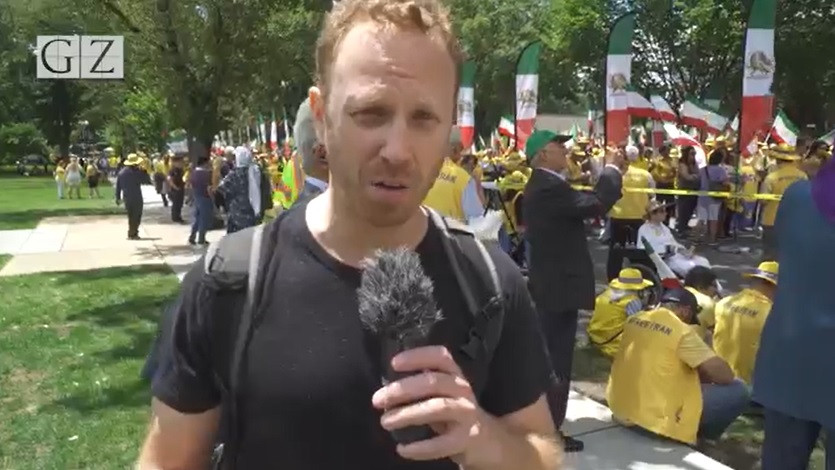
The question of conflict arises, in part, because Giuliani keeps popping up in world capitals to make pronouncements that dovetail with Trump’s foreign policy positions. While in Warsaw, just outside the official Iran conference, he spoke at a rally organized by the Paris-based National Council of Resistance of Iran (NCRI), a political front controlled by the Mujahedin-e Khalq, or MEK, which has agitated for regime change in Tehran. It was a cold and gray day when Giuliani, his trademark U.S.-flag pin affixed to his lapel, stood at a podium in front of hundreds of people waving Iranian flags. “In order to have peace and stability in the Middle East, there has to be a major change in the theocratic dictatorship in Iran,” he said. “It must end and end quickly.”

Giuliani told me he’s worked with the MEK since 2008. At the time, the U.S. Department of State designated the group a foreign terrorist organization, describing it as “cultlike” and saying members were forced to take a vow of “eternal divorce” and participate in weekly “ideological cleansings.” When the State Department revoked the designation in 2012, it nevertheless expressed serious concerns about the organization, “particularly with regard to allegations of abuse committed against its members.”

Giuliani isn’t alone in stumping for the organization. The MEK has a history of enlisting prominent American politicians on both sides of the aisle, including national security adviser John Bolton—and paying $20,000 or much more for a brief appearance. Giuliani’s advocacy has been quite open. In January 2017 he joined almost two dozen other former U.S. officials in writing a letter to the president urging him to open “dialogue” with the NCRI. After he became Trump’s personal lawyer in April 2018, Giuliani gave speeches at several MEK events, including a Paris rally during which the French security services foiled a bomb plot they blamed on Iranian intelligence. Giuliani appears to revel in his rock-star status at the group’s events. At the 2018 Iran Uprising Summit at a hotel in Manhattan’s Times Square in September, MEK supporters greeted Giuliani with a standing ovation and whoops and whistles. “I hope I say enough offensive things so they put me on that list to kill me, if I’m not already there,” he said to laughter. His speeches railing against Iran echo Trump’s hard-line stance on Tehran but go further by explicitly calling for the regime’s ouster.

“It’s wildly inappropriate for Giuliani to continue to openly associate with” the MEK, says Suzanne Maloney, an Iran expert at the Brookings Institution. “Those who have any association with them really can’t claim ignorance of how bizarre and cultlike the group is. This is one of those cases that in any other administration, Republican or Democrat, it would be a front-page scandal.”

His anti-Iran rhetoric didn’t stop him from working for Reza Zarrab, the man accused of orchestrating a $1 billion money laundering scheme to help Iran evade U.S. sanctions
Dan Pickard, a partner and FARA specialist at the Washington law firm Wiley Rein LLP, declines to discuss Giuliani specifically, but he says that if someone is paid by a foreign political group to give a speech in the U.S. to influence policy, he should file as a foreign agent. “FARA is so much broader than just lobbying,” he says. Giuliani told me he’s getting paid not by the MEK but rather by an American organization of Iranian dissidents. Is it the Organization of Iranian-American Communities, which is allied with the MEK, I asked? “I can’t remember the exact name,” Giuliani said. He dismissed concerns about FARA, saying, “It’s no different than if you did work for an American Jewish group that has strong views on Israel.”
His anti-Iran rhetoric didn’t stop him from working for Reza Zarrab, the man accused of orchestrating a $1 billion money laundering scheme to help Iran evade U.S. sanctions. In February 2017, while acting as Trump’s cybersecurity adviser, Giuliani traveled to Turkey to meet President Recep Tayyip Erdogan in hopes of resolving Zarrab’s case. A Turkish-Iranian gold trader, Zarrab had been arrested in the U.S. and accused of helping Iran dodge U.S. sanctions by processing hundreds of millions of dollars through his network of companies. At the time, there was dismay in Turkey over Trump’s Muslim travel ban, and Giuliani had recently told Fox News he’d advised on the policy during the president’s campaign. Giuliani said he tried to negotiate a deal for Zarrab to return to Turkey as part of a prisoner swap. It didn’t work. Instead, Zarrab pleaded guilty to money laundering, bribery, and sanctions violations and became a U.S. government witness against a banker in the case. He hasn’t been sentenced, and it’s unclear if he remains in federal custody.
Giuliani’s role shocked many, including U.S. District Judge Richard Berman, who oversaw the Zarrab case. “I knew the old Rudy,” says Berman, who was appointed by Giuliani as a family court judge in 1995. “There seems to be somewhat of a disconnect between the old Rudy and the new Rudy.” In an interview with Courthouse News in June, Berman went further: “I am still stunned by the fact that Rudy was hired to be—and he very actively pursued being—the ‘go-between’ between President Trump and Turkey’s President Erdogan in an unprecedented effort to terminate this federal criminal case.”
Lawyers are usually exempt from requirements to file as a foreign agent, but that exemption may not apply in this case, according to Ben Freeman, who studies influence operations at the Center for International Policy in Washington. “There’s an exemption for lawyers, but none of their activities can go outside of the courtroom,” he says. “Once you do something FARA would constitute as a political activity, just one thing, that would prevent you from being able to claim that exemption.” Berman says Giuliani never stepped foot into the courtroom during the sanctions case.
Sounding like an annoyed prosecutor, Giuliani disputed that interpretation of the law. “I didn’t represent the Turkish government,” he said. “I represented a single individual who was in jail, and he wanted to see if he could get a prisoner exchange with the Turkish government.”
Giuliani markets himself globally as the supercop who reduced crime in New York City using the “broken windows” strategy, which pursued crackdowns on minor offenses to prevent bigger ones. Crime rates did drop dramatically in the city while he was mayor, though the cause remains hotly debated; some experts attribute it as much to the economic boom of the 1990s and to a fall in unemployment. During his time as mayor, Giuliani was also heavily criticized for police brutality and the shootings of unarmed black men, a record that was largely forgotten when he emerged from the wreckage of the Twin Towers to speak for the city and was applauded worldwide for his composure and courage.
Once his second term as mayor ended, Giuliani sought to quickly capitalize on his fame. Early in 2001, during divorce proceedings with his second wife, Donna Hanover, Giuliani’s lawyer claimed his client had just $7,000 to his name. Giuliani did, however, have a $3 million book deal. He went on to set up a series of companies: Giuliani Partners LLC, a management consulting firm for governments and businesses; Giuliani Security & Safety LLC, another consulting business, this one focused on law and order; and Giuliani Capital Advisors LLC, an investment bank (which he sold to Macquarie Group Ltd. in 2007). As private firms, they don’t have to disclose how much they earn.
Within a few years, Giuliani had made many more millions. In 2002, Mexico City agreed to pay him $4.3 million for his advice on fighting crime. In 2004 he traveled for the first time to Ukraine. He also visited Russia, where he met with Russian Minister for Foreign Affairs Sergei Lavrov; it’s unclear if Giuliani was paid for the visit or who financed the trip. He was also on the speaking circuit, routinely pulling in $100,000 to $200,000 per speech. When he made a run for the Republican presidential nomination in 2007, he reported earning more than $11 million in speaking fees alone in the preceding year and a half, according to Federal Election Commission filings.
Giuliani lost the nomination and returned to his peripatetic life as a consultant and after-dinner speaker. “Since the day I left being mayor, I’ve given over 1,000 speeches,” he told me. “I’ve been in at least 80 countries. Giuliani Security & Safety has worked in 30 different countries, probably three, four different ones per year.”
He’s convinced dozens of clients around the world, from small-town mayors to presidents, that what worked in New York can work anywhere. In Brazil, for example, the state of Amazonas signed a $1.6 million contract with Giuliani Security & Safety in February 2018 to improve border security and policing. (The arrangement is now under investigation by local prosecutors. John Huvane, chief executive officer of Giuliani Security & Safety, says the probe isn’t targeting the firm: “They’re investigating the Brazilian process for picking us.”) In Colombia, where Giuliani said he’s probably done the most consulting on security, his firm signed a five-month, $295,000 contract in 2015 to help police design a crime-reduction strategy in Medellín called puntos calientes (“hot spots”). Huvane says the plan reduced crime in Medellín by 42 percent while the company was on the job, though the homicide rate has worsened since it left. Luis Felipe Davila, a security researcher based in Medellín, says Giuliani Security & Safety didn’t address the structural issues behind the city’s crime.
Giuliani’s consulting has given him access to a unique network of global politicians, some of whom sought his advice when Trump won the presidency. He’s kept close ties with Juan Manuel Santos, Colombia’s president when Trump was elected, which may have come in handy when the Colombian government was looking for guidance on what to expect from the new administration. In November 2016, two days after the presidential election, Giuliani spoke with Santos and assured him that Trump was committed to maintaining aid levels set by President Obama, according to a person familiar with the conversation. On Nov. 11, Santos tweeted, “I spoke with President-elect Donald Trump. We agreed to strengthen the special and strategic relationship between Colombia and the United States.” Giuliani has returned to Colombia at least once since Trump became president, delivering the keynote address at a security conference in Medellín in December 2017.
Giuliani said he doesn’t recall talking about Trump with Santos, who stepped down in August. “I probably have assured them at various times that our government is supportive,” he said. “I have never done anything to help Colombia with the U.S. government formally or informally.”
Giuliani’s foreign clients may be more necessary than ever. When he started working as Trump’s lawyer in April 2018, he agreed to do so for free. Within weeks he’d resigned from the law firm Greenberg Traurig LLP, which he joined in 2016 as global chair of its cybersecurity and crisis-management practice—a position that provided him from $4 million to $6 million in annual income, according to his divorce proceedings. And Giuliani lives well. At a court hearing in November, a divorce lawyer for Nathan said the former mayor spent $12,000 on cigars and $7,000 on fountain pens over five months. Giuliani and his future ex-wife calculated their personal monthly expenses at about $230,000 each. Their bitterness erupted into the open during a March hearing at which they squabbled over how to share a house they own in the Hamptons, and the judge told them to stay away from each other at a Florida golf club where both are members.
As Trump’s personal lawyer, Giuliani has sometimes given cable-TV interviews sprinkled with contradictions that have often left viewers baffled. When he was asked on NBC’s Meet the Press in August why Trump shouldn’t agree to be interviewed by Mueller, Giuliani said the president risked falling into a perjury trap even if he told the truth. In an exchange that may go down as one of the Trump era’s most memorable, Chuck Todd, the host, responded, “Truth is truth.” To which Giuliani replied: “Truth isn’t truth.”
To Giuliani’s admirers, Barr’s summaryof the Mueller report makes any missteps immaterial. “He’s as smart and quick as he was 25 years ago,” says Jon Sale, a former assistant special Watergate prosecutor who went to law school with Giuliani. “Most of the time you judge a lawyer’s performance by the result. In this case the result was a home run.”
Giuliani and Trump have known each other since the late 1980s. Trump supported him during his various political campaigns, and they were close enough that in 2000, as part of an annual parody show, Giuliani dressed in drag in a skit with the future president. A video clip shows Trump nuzzling Giuliani’s bosom as the mayor exclaims, “Oh, you dirty boy, you!” After Giuliani endorsed Trump in April 2016, he became a frequent campaign surrogate and one of the few people to defend the candidate after the leak of a recording in which Trump bragged about grabbing women by the genitals. Giuliani’s son, Andrew, who now works in the White House office of public liaison, “considers Trump an uncle,” Giuliani told me. Many people expected Giuliani to take a plum post in the administration, but he said he bowed out early from any cabinet positions. He denied that his foreign work had complicated his prospects of becoming secretary of state. “My soon-to-be ex-wife didn’t want me to do it, because of the significant reduction in pay,” he said.
As it is, Giuliani’s consulting work has often left him sounding like a wannabe secretary, sometimes creating headaches for the State Department. Just a few days after his “truth isn’t truth” declaration, Giuliani penned a letter to Romanian President Klaus Iohannis, warning that the country’s battle against corruption had gone too far. Giuliani said he was paid to write the letter at the request of Louis Freeh, a former director of the FBI. Freeh represents Gabriel Popoviciu, a Romanian American real estate investor convicted in 2016 over a land deal and sentenced to seven years in prison. Giuliani’s letter didn’t mention Popoviciu by name, but Freeh issued a statement in 2017 saying the conviction wasn’t supported by “either the facts or the law.”
“I got paid by Louis Freeh, not by anybody else,” Giuliani said. “It was all directed to the Romanian government, not the U.S. government. Therefore, it doesn’t require any foreign agent representation. I was working as a subcontractor.”
Was he concerned his letter might be perceived as a message from the White House, given his other hat as Trump’s lawyer? “Of course it wasn’t,” Giuliani said. “I am not his White House counsel.” The State Department distanced itselffrom Giuliani’s actions: The U.S. Embassy in Bucharest issued a statement saying it “doesn’t comment on the opinions or conclusions of an individual American citizen” and reaffirmed its support for Romania’s fight against corruption. Freeh declined to comment for this story.
In October, while representing Trump in the Russia probe, Giuliani gave a speech at a conference in Yerevan, the capital of Armenia, organized with the support of the Armenian government and the Eurasian Economic Commission, which brings together Russia and four other former Soviet countries and is broadly seen as Putin’s attempt to reassert Moscow’s influence. Giuliani spoke about cybersecurity right after speeches by Russian First Deputy Prime Minister Anton Siluanov and Sergei Glazyev, a Kremlin adviser the U.S. sanctioned for his role in Russia’s annexation of Crimea and subsequent conflict with Ukraine.
Giuliani said he never met Glazyev at the conference and wasn’t concerned about attending the event alongside a sanctioned Russian official. “I didn’t know who he was. I found out afterwards,” he said, declining to say how much he was paid for the speech or who paid him. “I got up, gave my speech, and walked out.”
Giuliani’s ties to Ukraine go back more than a decade. In 2008 he advised Vitali Klitschko, a former boxing champion who was campaigning for mayor of Kiev, on what lessons the city could draw from New York. Giuliani described Klitschko, who won the office on his third try, in 2014, as a friend. In June 2017, Giuliani was paid by another prominent Ukrainian, billionaire Victor Pinchuk, to speak at a conference in Kiev, much to the annoyance of fellow oligarch Fuks, who thought his deal with Giuliani was exclusive. For his lecture, titled “Global Challenges, the Role of the U.S., and the Place of Ukraine,” Giuliani argued before more than 600 people that U.S. foreign policy should be focused on making sure the Ukrainian government regains control over the east from Russian separatists. On the same trip he met with the Ukrainian president, prime minister, foreign minister, and prosecutor general. “I didn’t advise them” on anything, Giuliani told me, declining to comment on his lecture fee. “It was nothing to do with President Trump.”
Less than two weeks later, Poroshenko traveled to Washington and sat down in the Oval Office for what the White House described as a brief “drop-in” ahead of Trump’s meeting with Putin the next month at the Group of 20 summit in Hamburg. A White House transcript said the two discussed “support for the peaceful resolution to the conflict in eastern Ukraine.” (Giuliani said he had nothing to do with setting up the encounter.)
At the time, Trump’s views on Ukraine and its war with Russia were unclear. He’d spent much of the campaign and early months in office sounding conciliatory toward the Kremlin, a prospect that had many Ukrainian politicians worried Trump might side with Russia—and especially that he might lift sanctions on their adversary, mindful of Poroshenko’s perceived support for Democratic candidate Hillary Clinton leading up to the election. These fears had prompted outreach by Ukrainian politicians and businessmen; just prior to the inauguration, the Ukrainian government signed a $600,000 contract with the BGR Group, a Washington lobbying firm founded by prominent Republicans.
Fuks also traveled to D.C. to attend events around the inauguration. He didn’t meet the president. A few months later, Fuks signed the contract with Giuliani to advise Kernes. Giuliani said he’d met Fuks twice in New York before seeing him again in Kharkiv, but he expressed surprise when I told him Fuks had met with Trump several times in the mid-2000s to discuss a Trump Tower Moscow deal.
When I met Fuks at his dark-panneled office in central Kiev, he talked expansively about his work with Giuliani but wouldn’t say how much he’d paid him. He dismissed a local press report that Giuliani received $400,000 just to give a speech during the trip. Everyone involved has a different understanding of Giuliani’s role. Fuks recalled talking to Giuliani about relations between the U.S. and Ukraine: “He said, ‘Ukraine is our partner, we will help.’ He has a very positive attitude toward Ukraine, so he undertook to lobby for us.”
“I got clients before I represented President Trump, and I’m gonna get clients afterwards”
Giuliani is adamant he doesn’t lobby. He explained that Fuks and Kernes wanted his advice because “they had been invaded by allegedly Russians and were afraid they’d be invaded again.” Fuks and Kernes said nothing to me about the Russia threat prompting their interest in bringing Giuliani to Kharkiv, and in fact Kernes faced allegations of siding with pro-Russia separatists during the Maidan Revolution—Ukrainian prosecutors questioned him about reports that he kidnapped and beat up anti-Russian activists. Kernes said his political enemies had cooked up the allegations, and criminal proceedings were dropped in 2018 after local prosecutors failed to pursue the case. After the questioning, he stopped supporting Yanukovych and backed Poroshenko, who won the presidency later that year.
Kernes is a wealthy man. He earns an official salary of about $32,000 a year as mayor, a position he’s held since 2010. Before then, he was president of a local refinery and a member of the city council for eight years. In recent mandatory filings he declared that he had almost $2 million in cash and had received $674,000 in dividends from an asset management company. He also reported owning shares in a local energy distributor and a bank. Despite his substantial influence in Kharkiv, and despite a lengthy report from Giuliani Security & Safety, the Kharkiv emergency service center remains unbuilt.
Transparency International calls Ukraine the most corrupt country in Europe after Russia, but Giuliani brushes off concerns about taking on clients there. “I do business honestly,” he said. “I’m doing the same things today as I was five years ago. They haven’t changed as a result of my representing the president.” Whatever he does next, whether it’s continuing as Trump’s personal lawyer or going back to full-time consulting, Giuliani is confident the business will continue to flow. “I got clients before I represented President Trump, and I’m gonna get clients afterwards,” he said. “After I stop representing him, I’ll be doing more work overseas, because I’ll have more time.” —With Daryna Krasnolutska, Ezra Fieser, Luiza Ferraz, Erik Larson, and Andrew Martin
Bloomberg, By Stephanie Baker

April 6, 2019 0 comments
FacebookTwitterPinterestWhatsappTelegramSkypeEmail
US Warmonger Hawks
Mujahedin Khalq; A proxy force

Hawks Clamoring to Attack Iran

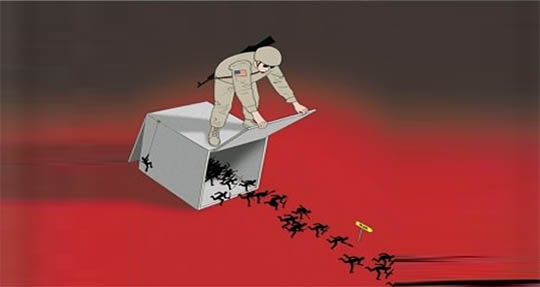
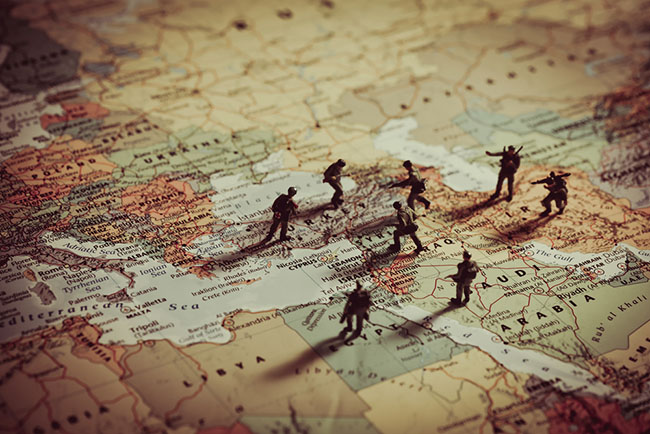
As Vice President Mike Pence, Secretary of State Mike Pompeo, National Security Advisor John Bolton, Israeli Prime Minister Benjamin Netanyahu, and Saudi crown prince and de facto ruler Mohammad bin Salman clamor for a war against Iran, they seem to have conveniently forgotten the destruction and mayhem wrought by the American invasion of Iraq 16 years ago.
These war drummers are underestimating the potential negative consequences of the war and overestimating the Iranian people’s dislike of their theocratic regime. They, like the advocates of the Iraqi invasion in the winter of 2002 and early spring 2003, are confusing Iranians’ dislike of the ayatollahs with their potential embrace of a foreign invader.
On the eve of the Iraq war, former President George W. Bush, Vice President Dick Cheney, Defense Secretary Donald Rumsfeld, National Security Advisor Condoleezza Rice, Deputy Secretary of Defense Paul Wolfowitz, the Vice President Chief of Staff and Assistant to the President David Addington all claimed that the Iraqi invasion aimed at liberating the country from the brutal regime of Saddam Hussein. Removing Saddam from power, they maintained, would eliminate the threat of weapons of mass destruction (WMD) and bring stability, security, and democracy to Iraq.
As developments unfolded over the past 16 years, the “liberation” claims proved to be bogus. The invasion and the decision to de-Ba’athify Iraq and dissolve the Iraqi military created an environment conducive to sectarianism, insurgency, and terrorism. The vacuum that followed the regime collapse, the incompetence of the American administration in the “Green Zone,” and the pervasive corruption of the new Iraqi governing councils was quickly filled by pro-Iranian militias, al-Qaeda, and later the Islamic State. The promise of stability and security was replaced by chaos, bloodshed, and mayhem.
The massive destruction of Iraq and the horrendous human and material cost the American “liberation” caused for the country will be child’s play compared to what could happen if Trump and his Israeli and Saudi allies decide to attack Iran. Unlike Iraq—which the British cobbled together after World War One out of the Shia, Sunnis, and Kurds under a minority Sunni rule— Iran has been in existence for centuries with a vast territory and a huge population. If attacked, Iran has the capability to retaliate against its neighbors, especially Saudi Arabia. Its air and missile forces could quickly destroy the oil and gas facilities and the water and power grids on the Arab side of the Gulf. A war against Iran could easily spread to the Gulf and the Levant. The entire region could go up in flames.

Hubris and Ignorance
The Bush administration was not willing or interested in answering the “morning after” questions regarding the post-Saddam future of Iraq. Whenever I and others urged policy makers to consider the law of unintended consequences and what could go wrong in Iraq following the invasion, Vice President Cheney and Secretary of Defense Rumsfeld dismissed our concerns and arrogantly claimed that the U.S. military and civilian administration following the invasion would be able to control the situation in Iraq. Their hubris regarding America’s power and ignorance of Iraqi realities on the ground led to a total breakdown of Iraqi society following the demise of the Saddam regime.
The Trump administration seems to be equally arrogant and ignorant about Iran. It has displayed a similar disregard for strategic thinking about the future of Iran beyond the clerical regime. The Iranophobes within the administration seem to be more obsessed with Iran than the Bush administration was ever with Iraq.
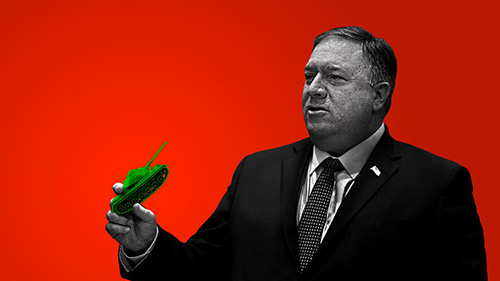
Instead of relying on calm, expert-based analysis, Secretary of State Pompeo has made a series of trips to the region that have involved bullying, threats, and hilarious, if not tragic, mischaracterizations. In a recent conversation with Christian broadcasters in Jerusalem, Pompeo waxed eloquent about God’s presumed divine plan designating Trump as a possible savior of the “Jewish people,” Sunni Islam, Maronite Lebanon, Alawite Syria, and the rest of the world from the perceived modern-day Persian “Hamans.”
The American foreign policy process is in serious trouble if Pompeo truly believes that Trump could be the twenty-first-century version of Queen Esther or Hadassah and that this religious vision could chart the path to a grand strategy in the Middle East. When warped religious interpretations are offered as a substitute for rationally debated policy, whether by a radical Wahhabi Salafist, an evangelical Christian, or an ultra-Orthodox Jew, democratic governments should fear for their future. Invoking the divine as an inspiration or a justification for violence against another country, much as Osama bin Laden did on the eve of 9/11, is a rejection of rational discourse and a return to the barbarism of previous epochs.
Pompeo’s imagined “shuttle diplomacy” in the Middle East has been reduced to supporting Netanyahu’s upcoming election bid, threatening Hezbollah in Lebanon, recognizing Israeli sovereignty over the Golan Heights, and lambasting any state that does business with Iran. His ambassador-designee to Saudi Arabia, John Abizaid, told Congress that the threat from Iran supersedes concerns for human rights in Arab autocracies.
Furthermore, Trump administration policy operatives, including John Bolton and Rudy Giuliani, have treated an Iranian group called the Mujahedin-e Khalq or MEK as a legitimate alternative to the clerical regime in Iran. The MEK, however, is a terrorist cult that has received funding from all sorts of dubious sources and is often used as a tool by outside groups, states, and organizations, including intelligence services of regional and international state actors, to further an anti-Iran agenda.
Similarly, the Bush administration viewed Ahmed Chalabi, the Iraqi émigré, and the organization he founded, the Iraqi National Congress, as the legitimate alternative to the Saddam regime in Iraq. Vice President Cheney and Secretary of Defense Rumsfeld fully bought into Chalabi’s snake-oil sales. Chalabi was instrumental in instigating America’s invasion of Iraq at the cost of trillions of dollars and thousands of American and Iraqi lives. Iraq has never recovered from that ill-fated, unnecessary war. Bolton and Giuliani are as susceptible to MEK’s claims as Cheney and Rumsfeld were to Chalabi’s.
For the sake of whipping up regional animus toward Iran and preparing the ground for a war against the “Persian menace,” Pompeo in effect has told Arab autocrats that so long as they keep mouthing anti-Iran rhetoric, Washington will ignore their despicable human rights record and the continued repression of their people. The thousands of political prisoners in Egyptian, Saudi, and Bahraini jails will have to wait for another day.
Arab regimes have become masters in the art of communicating with their American benefactors. During the Cold War, they received American aid as long as they brandished anti-Communist slogans. After the collapse of the Soviet Union and with the rise of terrorism, these same strongmen were happy to adopt an anti-terrorism rhetoric in order to continue receiving American military and economic aid. Their current anti-Iran public posture is the latest phase in their communication with Washington and is as equally profitable as the previous two phases.
When some regional politicians demurred about getting tough with Iran, as happened during Pompeo’s recent visit to Lebanon, he did not hesitate to threaten them with a panoply of economic sanctions. Vice President Mike Pence used similar language at the recent meeting in Warsaw to berate and even threaten America’s European allies if they dared to take a conciliatory posture toward Iran. The European reaction to Pence’s speech showed that his pathetic performance backfired. Pompeo’s Warsaw meeting ended in utter failure.

Iran Nuclear Deal
Managing Iran’s malign behavior through the Iran nuclear deal or the Joint Comprehensive Plan of Action (JCPOA) was a stroke of diplomatic genius, which former Secretary of State John Kerry and Secretary of Energy Ernest Moniz negotiated. The Obama administration placed Iran’s objectionable behavior in two baskets—a nuclear basket, which they addressed through the Iran deal, and a non-nuclear one, which the Obama administration was to address once the nuclear inspection became operational and Iran fully compliant. That approach would have worked: most experts judged Iran to be in compliance with the conditions of the nuclear deal. Unfortunately, President Trump decided not to recertify the agreement.
Trump’s decision contradicted the judgment of most nuclear and intelligence experts about Iran’s compliance. The International Atomic Energy Agency (IAEA), for example, affirmed Iran’s compliance in more than a dozen of its successive quarterly reports and as recently as earlier this month.
In his open testimony to Congress in January, the Director of National Intelligence Dan Coats stated that Iran continued to comply with the deal even after Trump announced his intention to scuttle it. Coats said, “We do not believe Iran is currently undertaking activities we judge necessary to produce a nuclear device.” Iran was of course cheating in other areas, according to the DNI’s testimony, but not on the nuclear agreement.
In a statement issued April 25 of last year, over two dozen Israeli senior military and intelligence officials judged that it was “in Israel’s best interest that the United States maintains the nuclear agreement with Iran.” The Israeli statement went on to say that “The current deal is better than no deal” and that “Iran’s destructive regional policies and actions, its support for acts of terrorism, its presence in Syria, and its ballistic missiles program should be dealt with outside the framework of the agreement.” This was precisely the position of the Obama administration when it negotiated the deal in the first place.

The Path Forward
Fifty-plus retired American generals and diplomats, in a statement published earlier this month, urged the Trump administration to rejoin the Iran nuclear deal and work on resolving outstanding concerns with Iran diplomatically. They advised against a war because they saw no good outcome. The statement did not seek to exonerate Iran’s destabilizing behavior and its involvement in Yemen, Syria, Iraq, or Lebanon. Nor did the retired senior leaders ignore Iran’s link to terrorism. The statement, however, pointed out, among other things, that the 2015 nuclear deal “put limitations on Iran’s nuclear program that provided assurances that it would not be used to develop weapons, improved American intelligence about potential future development and significantly improved the security of the United States and our allies.”
Additionally, the retired generals and diplomats emphasized that Iran is complying with the agreement and that, under the JCPOA, Iran is barred from engaging in nuclear weapons development program, which prevents it from producing a nuclear device. “Reentering the agreement and lifting the sanctions will greatly enhance United States’ ability to negotiate improvements and enable us to address concerns with the existing agreement.”
Coming from these military and policy realists, who are dedicated to the security of this country, Israel, and America’s allies, this advice is grounded in sane strategic analysis, not in theological whimsy.

by Emile Nakhleh,

April 6, 2019 0 comments
FacebookTwitterPinterestWhatsappTelegramSkypeEmail
Maryam Rajavi

Maryam Rajavi’s lies flood the internet while Iranians struggle with reality

Heavy rain continues to cause severe flooding all over the country in Iran. Tens perhaps hundreds of people have died in the last week, many more are injured. Thousands have had their home and their livelihood swept away. Authorities are working flat out to rescue and help people including the Red Crescent and the military. It is a national emergency and people are suffering.
As usual when Iran is in the news, we get the usual reaction from Iran haters. Like other events these floods are just an excuse to make Iran a political football to be kicked around western media. First the instant experts pop up. Some are recycled from other news items. They change from being experts in the exchange rate of the dollar, petrochemical, experts, nuclear experts, experts in human rights and now the same person is an expert in water management. Iranians who have not been in Iran for decades, if at all, suddenly pop up to give interviews and share their expert analysis of why unprecedented rain caused unprecedented flooding and with one breath blame failure to anticipate climate changes and in the other breath blame Iran’s government policies for the damage.
Some of them even think they are helping the people of Iran by standing on the side lines to criticise the government as if Iranians are somehow too childish to think for themselves.
The worst of all these fraudulent experts is Maryam Rajavi who has deluded herself that she is leading a mass revolt in Iran instead of deceiving and suppressing her elderly slaves in Albania. In the middle of a national emergency she has been telling Iranians to help each other!!! They must wish they’d thought of that.
For a while, what was most interesting was the mysterious absence of the MEK in that helping effort. For a group that claims to have huge support inside Iran and claims to be working to help the Iranian people against their own government, the MEK was completely absent. Maryam Rajavi is so obsessed with her own image that it was surprising she didn’t even order a photoshopped picture of MEK helping flood victims with her photo in the background to publish on her sites.
That was until Massoud Khodabandeh wrote about it in his Iran-Interlink site. Apparently Rajavi does read the site and does take instruction from Khodabandeh about how normal people respond to national emergencies.
After Khodabandeh pointed out MEK’s “lack of wit” Rajavi’s propaganda machine has woken up and started churning out breath-taking lies. Just what a nation in crisis needs. After first stupidly instructing flood victims to “resist” their rescuers (the Sepah or Pasdaran who by the way helped defeat Rajavi’s heroes Daesh on the ground, rescuing not only Iraq and Syria but the entire Iranian nation from this threat), Rajavi must have read Khodabandeh’s comments and realised that you can’t really expect people whose homes and livelihoods have been swept away in a flood to start a revolution. Not this time dear!
Now she has invented something called “Resistance Units” which have apparently sprung up like a virus inside Iran and spread overnight to every town and village – totally undetected by the formidable Intelligence Ministry and its network of spies that her followers are so petrified of all the time!
It is difficult to read Rajavi’s propaganda without laughing because it really is just nonsense. According to her, these MEK supporters are not only freely wandering around disaster areas handing out “aid” which they have magicked up out of nowhere, but they also have enough spare time to print and hand out leaflets instructing people to come to their own aid!
You couldn’t make this up… except Rajavi did just that.

BY Ali Alavi,

April 4, 2019 0 comments
FacebookTwitterPinterestWhatsappTelegramSkypeEmail
MKO former members in Tirana
Former members of the MEK

MKO former members celebrated Nowruz

Mujahedin-e Khalq former members in Albania gathered together and celebrated the Iranian New Year.
They wished their friends who are still captivated at Camp Ashraf 3, liberty from the MKO cult.
During last years, the MKO defectors in Albania, most with more than three decades of membership in the group, shared with the outsiders what they underwent and witnessed in the oppressive cult-like system of the Mujahedin-e Khalq camps.
The former members’ testimonies and insights caused the liberation of several other members and this process has continued and increased day by day.

MKO former members in Tirana
March 31, 2019 0 comments
FacebookTwitterPinterestWhatsappTelegramSkypeEmail
weekly digest
Iran Interlink Weekly Digest

Iran Interlink Weekly Digest – 254

++ International Women’s Day, and many have written about women in the MEK’s Manez camp. They talk of the historic abuse of women members by Massoud and Maryam Rajavi, the slavery situation and the specific problems for women who don’t have any place to go if they run away. Many have compared their situation with domestic violence and coercive control. They highlight the financial dependence of the women, especially now that they are in their 60s and 70s. On the other side of this is Maryam Rajavi’s pretence at being a feminist.
++ The anniversary of the death of Dr Mohammad Mossadegh prompted Maryam Rajavi, as usual, to jump on the publicity bandwagon. In a complete irrelevance Rajavi posed for photos in front of a picture of Mossadegh. Many commentators have written critical articles about her, assessing her as the direct opposite of Mossadegh. Mossadegh was overthrown by a CIA coup, Maryam Rajavi is proud of being a mercenary for the CIA. Some linked this to her history of selling herself to Saddam and now the Saudis.
++ In the week of Chaharshanbeh Souri, several people have written about the MEK and Rajavi’s long tradition of every year asking people to rise up against their government, followed by publishing photoshopped images of fireworks during the celebrations and claiming these are from disturbances. Even though every year these photoshopped images are exposed by the media and internet searches as fake, Rajavi has never given up and this has now become an annual joke for the people.
++ A group of former MEK women members were invited to participate in an inter-parliamentary committee meeting organized by the European Parliament’s Gender Equality Committee. After the meeting they caught up with a relaxed looking Federica Mogherini who was happy to pose for photos with them. This reminded several people of Maryam Rajavi’s last fateful and imposed visit to the EUP when Mogherini avoided her like the plague and when Rajavi’s henchmen violently attacked critics and by-standers just outside the parliament building.

In English:
++ An article by Anne Khodabandeh published by Lobelog asked ‘Are regime change and the MEK running out of road’. Describing the American version of violent regime change as a bandwagon, Khodabandeh pictured the MEK as paying passengers with the likes of John Bolton doing the driving. However, with its unsolvable internal problems, which are being exposed by western reporters, the MEK cannot progress its agenda. If the MEK – as the only tool in the regime change toolbox – are absent, does it signal that the whole regime change shebang is running out of road?
++ Fars News reported on a visit by Code Pink activists and others to Iran. Medea Benjamin, speaking at a conference at the FNA College of Journalism in Tehran, criticised the relationship between some members of the US Congress and groups like the MEK. Speaking openly in Iran, Benjamin clarified that she does not endorse the behaviour or beliefs of the Islamic Republic of Iran, but she and other activists are against war and violence to resolve the standoff between the US and Iran.
++ Ali Alavi – whose brother escaped the MEK some time ago – has joined the blogging platform on Iran Interlink (after some persuasion). He agreed to write about Iranian views of the MEK (a view often overlooked in western analysis). Alavi is interested in conveying the views of Iranians inside Iran and outside about the MEK. We look forward to his writing.
++ Ebrahim Khodabandeh’s latest blog concerns the MEK’s charity in the UK which openly solicits donations for the MEK – a political entity. This is a clear breach of the Charity Commission rules which bans charities from promoting political agendas.
March 15, 2019

March 17, 2019 0 comments
FacebookTwitterPinterestWhatsappTelegramSkypeEmail
MEK Cult
The cult of Rajavi

The special moment to say no to the Cult of Rajavi

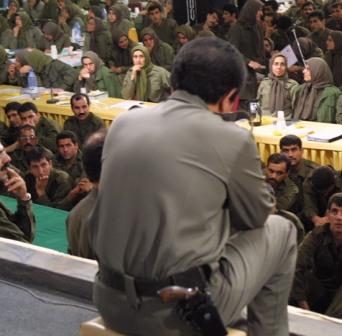
Imagine terrorist extremists attacking European citizens, cutting their throats with knife, breaking their hands, removing their eyes with fingers, and tearing their mouth open. Even imagining such scenes seems horrific but there are some people out there who have been trained to do so. A large group of these trained terrorists are members of the Mujahedin Khalq Organization (the MKO/ MEK/ PMOI/the Cult of Rajavi). Coincidently, they live in Europe now.

The recent report published by Der Spiegel revealed the above-mentioned horrific facts about the evil of the MKO. The history of the MKO has proved that committing such violent acts is not far from the background of the group. There are numerous reports and testimonies on the MKO’s armed and unarmed violence. Today, there are hundreds of people in the MKO camp in Albania who have been trained to commit these evil deeds whenever they deem them necessary. One may wonder what makes such brutal trainings as ordinary routine choirs of a community.
The German born prominent philosopher Hannah Arendt is best known for her works on the problem of “evil”. Can one do evil without being evil? This was the puzzling question that she grappled with when she reported for The New Yorker in 1961 on the war crimes trial of Adolph Eichmann, the Nazi operative responsible for organizing the transportation of millions of Jews and others to various concentration camps.
Arendt was remarkably sensitive about some of the deepest problems, confusions and dangerous tendencies in modern political life, many of them still with us today. The suffocating atmosphere of the MKO camps –where members have to pressure their peers abusing them verbally and physically in their everyday life and are always prepared to attack outsiders —is a significant example of complex and dangerous tendencies within a community in the modern world.
Arendt believes that all aspects of the life under the totalitarian ruling systems are controlled by the totalitarian leaders. The evil of the dictatorship leads the followers to an abyss in which they practically lose their mental power. According to her, conscience of the citizens in a dictatorship is paralyzed; they lose their individuality.
This process has been the exact mechanism that has been used in the MKO.

The most recent defector of the MKO in Albania, Hadi Sani Khani admits that once he was an MKO member, he was like a robot, not able to choose for a moment of his private life. “We were brainwashed in daily meetings, our minds had to be drained of any personal thoughts during daily and weekly brainwashing sessions,” he says.

Actually, totalitarianism has sickened members in a dangerous way that they submit to the decisions that the dictator (in this case Massoud Rajavi) makes for them. Members believe in what the top of the hierarchy says. They think that Massoud and Maryam Rajavi are protectors of their rights and interests. “Massoud Rajavi was idolized like a prophet, a god for us,” Sani Khani says.
Hanna Arendt thinks that the evil-seized members are in return the factors to consolidate the absolute power of the dictator. “In politics obedience and support are the same”, she suggests. To break this awkward equation, she suggests a deep inner conversation that awakes the individuality of the citizen.
Those who defect the MKO definitely had experienced the unique moment that they gained the ability to have this inner conversation. This special moment is usually declared in the firsthand accounts of former members’ testimonies. For instance, former member of the group Bahman Azami, speaks of the moment he saw some children playing in the park over the walls of the MKO’s camp in Tirana, Albania. The kids took his mind to the life outside the group. He was eventually punished by his female commandant for he had broken the regulations of the cult that forbids thinking about normal life. However, the inner conversation had started for Bahman. He started doubting the group’s cause questioning himself for all the years of his life he had lost in the group and he finally left the group.
Although Massoud and Maryam Rajavi have been making efforts to remove the past and future of their followers’ lives in order to conquer their minds, we should always be hopeful for the advent of that particular moment that revives past memoirs and experiences in their minds and hearts that will inspire their willingness for a normal future.
Mazda Parsi

March 17, 2019 0 comments
FacebookTwitterPinterestWhatsappTelegramSkypeEmail
Mujahedin Khalq; A proxy force

What do Iranians think of the MEK?

Reporters who talk about the MEK usually want to talk about the politics and the money. They say, for example, that John Bolton supports them, that they get money from Saudi Arabia, that they want regime change in Iran. Sometimes these reporters even mention Iranians. When they do, they say the MEK doesn’t have much support in Iran because of siding with Saddam Hussein in the war that ended in 1988. That’s all.
Maybe they don’t say anything else because they don’t know anything else. Maybe they don’t care what Iranians think of the MEK because they are too busy talking about what America wants and what Europe wants from Iran.
Iranians have a lot to say about the MEK. Not just inside Iran. Not just ex-members. The Iranian opposition outside Iran has its own view of the MEK.
Let’s hear more from Iranians about the MEK.
Ali Alavi,

March 16, 2019 0 comments
FacebookTwitterPinterestWhatsappTelegramSkypeEmail
the mek terrorists charity in London- Iran Liberation Organization
Mujahedin Khalq Organization as a terrorist group

MEK’s so-called charity breaches rules of the UK Charity Commission

A charity organisation registered in London called the “International Library Association” has launched a widespread campaign under the title “Support the Voice of the People” to collect public donations for a television channel belonging to the Mojahedin-e Khalq Organization (aka MEK, MKO, NCR, NLA, Rajavi Cult).
Link to the MEK affiliated outlet: http://iliberty.org.uk/what-we-do/support-the-voice-of-the-iranian-peoples-human-rights/

International Library Association- the MEK terrorists charity in London

Massoud Kalani, a high-ranking member of the MEK and presenter on their satellite television, asking for donations for the cult

This so-called charity organization does not hide the fact that it is supporting the goals of the MEK, a terrorist cult which has not only advocated violence and bloodshed for regime change but killed 12,000 people in Iran since 1981. And through all these years, London has been the centre for the illegal financial activities of the MEK from its bogus charities to having a chain of buildings and even hotels and shops apparently donated to these charities.
London is well known for having been a haven for the money laundry activities of the MEK over many years. Going back to the 1980s and the registered charity organization called “Iran Aid” which had the support of many British politicians and then later proved to be a front group for the MEK set up for deception and fraud. Amazingly the British authorities let this charity operate unchallenged and the MEK opened and registered other charity organizations.

the mek terrorists charity in London- Iran Liberation Organization

London is well known for having been a haven for the money laundry activities of the MEK over many years

It should be clear to everyone who is familiar with the MEK that the purpose of these registered charities is money laundry. Money is paid as donation by cheques and cash in large sums and then transferred to the UAE (Dubai) for so called charity spending and at that point all trace of the money disappears. The MEK’s charities are registered in the name of low-ranking members of the cult who conveniently vanish if and when there is any problem and then another charity is registered immediately to replace it. The MEK is equally known for its people smuggling as well as money laundry.

MEK terrorists charity in London - iran liberation organization

Is it customary in the UK that a terrorist group can register a charity to collect donations to be used for extremist agenda?
Is it customary in the UK that a terrorist – or even a political – group can register a charity to collect donations to be used for propaganda for its political – especially extremist – agenda? Does the Charity Commissioner approve such behaviour which violates its own regulations? Certainly, the MEK is not an unknown group. The Charity Commission should ensure that a full investigation is conducted into this blatant breach of its own rules.

March 16, 2019 0 comments
FacebookTwitterPinterestWhatsappTelegramSkypeEmail
Former members of the MEK

Female defectors of the MKO in the EU Parliament on March 8th

Female defectors of the Mujahedin Khalq Organizaion (the MKO/ MEK/ PMOI) participated an inter-parliamentary committee meeting organized by Parliament’s gender equality committee.

IRan Zanan participated at the international women's day conference at Eu Parliament

The conference that was held a day ahead of the International Women’s Day was focus on young women in politics as well as women’s real power in politics and how to boost it.
Women’s Rights and Gender Equality Committee members debated with more than 20 national MPs from 15 EU member states and Norway during an inter-parliamentary meeting on ‘‘Women’s power in politics’’.
Opening the event chaired by Vilija Blinkevičiūtė (S&D, LT), EP President Antonio Tajani declared: ‘‘We must keep working to have more women in politics, but also in businesses. It is a battle for dignity and respect that must be fought by all of us.’’
EP Vice-President and Chair of the High-level group on Gender Equality Dimitrios Papadimoulis added that even though women’s participation in politics was on the rise, ‘‘most of the important positions are still filled by men, and this has to change. If we continue according to the rhythms we are following now, we will achieve gender equality in 182 years!’’
The first-ever female President of Croatia, Kolinda Grabar-Kitarović, delivered a keynote speech in which she recalled how she had to fight for her place, both in life and in politics, and to break countless glass ceilings. “The starting point is a change in mind-set: we need to build a political culture which leads to women’s equal participation’’. In conclusion, her message to women and girl was: ‘‘Have faith and believe in yourselves, in your values, your strength and your capabilities. Your determination will make all remaining obstacles fall.’’

Among the other participants, Justice, Consumers and Gender Equality Commissioner Věra Jourová, EU foreign policy Chief Federica Mogherini and Women’s Rights Committee Vice-Chair João Pimenta Lopes advocated for more women in decision-making, pleaded for men to be involved in the fight for gender equality and for existing legislation on the subject to be properly enforced.
Batoul Soltani, Homeira Mohammadi and Zahra Moini of Women Association and Reza Jebeli of Aawa Association attended the meeting to denounce violent attitudes of the MKO leaders against their rank and files. Batoul Soltani condemned the MKO authorities for they separated her six-month old and two-year old children from her and smuggled them to Europe in 1991. She stated that the MKO has violated the rights of hers and her children’s.
Homeira Mohammad nezhad was a teenager when she joined the MKO. She addressed the conference on the psychological pressure she endured inside the MKO. As a fourteen year-old girl she was not allowed to contact her parents during the years she was a member of the group.
Zahra Moini gave testimony on forced divorce, forced celibacy, brainwashing sessions and violation of the most basic human rights in the MKO camps.
Reza Jebeli also talked to a number of representatives warning about the potential violence of the MKO and the destructives role of the group’s lobbies to obstruct the future EU elections.
In the margins of the conference, the defectors tried to enlighten EU parliament representatives offering them documented testimonies on the cult-like nature of the MKO. They called on the EU Parliament to recognize the rights of defectors of the MKO as refugees submitting their letters of requests for medical care and living facilities.
The human rights violations committed by the MKO was condemned by the representatives.

March 13, 2019 0 comments
FacebookTwitterPinterestWhatsappTelegramSkypeEmail
Newer Posts
Older Posts

Recent Posts

  • A Criterion for Proving the Violent Nature of the MEK

    December 31, 2025
  • Rebranding, too Difficult for the MEK

    December 27, 2025
  • The black box of the torture camps of the MEK

    December 24, 2025
  • Pregnancy was taboo in the MEK

    December 22, 2025
  • MEPs who lack awareness about the MEK’s nature

    December 20, 2025
  • Facebook
  • Twitter
  • Instagram
  • Youtube

© 2003 - 2025 NEJAT Society . All Rights Reserved. NejatNGO.org


Back To Top
Nejat Society
  • Home
  • Articles
  • Media
    • Cartoons
    • NewsPics
    • Photo Gallery
    • Videos
  • Publications
    • Books
    • Nejat NewsLetter
    • Pars Brief
  • About Us
  • Contact us
  • Editions
    • عربي
    • فارسی
    • Shqip