Nejat Society
  • Home
  • Articles
  • Media
    • Cartoons
    • NewsPics
    • Photo Gallery
    • Videos
  • Publications
    • Books
    • Nejat NewsLetter
    • Pars Brief
  • About Us
  • Contact us
  • Editions
    • عربي
    • فارسی
    • Shqip
Nejat Society
Nejat Society
  • Home
  • Articles
  • Media
    • Cartoons
    • NewsPics
    • Photo Gallery
    • Videos
  • Publications
    • Books
    • Nejat NewsLetter
    • Pars Brief
  • About Us
  • Contact us
  • Editions
    • عربي
    • فارسی
    • Shqip
© 2003 - 2024 NEJAT Society. nejatngo.org
Mujahedin Khalq; A proxy force

Mattis and Our Bankrupt Iran Policy

James Mattis’ tenure at the Pentagon ends today. Sina Azodi and Barbara Slavin consider what his departure could mean for the future of Iran policy:

The retired Marine general had policy differences with the president about Iran as well. While a supporter of containment, Mattis advocated remaining within the Joint Comprehensive Plan of Action (JCPOA). His departure tilts the balance in Trump’s national security team in favor of more hawkish individuals who have openly advocated regime change as the ultimate solution to US differences with the Islamic Republic.

When Mattis resigned, I warned that his successor would likely be more of a yes-man and less willing or able to restrain the president’s belligerent tendencies. That might seem like a strange thing to say until we remember that Mattis was responsible for curbing the president’s desire for a much larger military response against the Syrian government in the spring of this year, and according to some accounts he was a major obstacle to an attack on North Korea in 2017. Trump supporters have been quick to credit the president for de-escalation and limited intervention that happened because Mattis restrained him, and they have been equally swift in shifting blame for his escalations of other wars to the people around him. Mattis was unwilling to end our current pointless and illegal wars, but it is also true that he was responsible for keeping Trump from starting new ones.

Mattis shared the administration’s Iran obsession to an alarming degree, but as Azodi and Slavin point out his departure removes one of the only counterweights inside the administration to the much more rabid Persophobes in Bolton and Pompeo. It could also mean one less obstacle inside the administration to an attack on Iran that Bolton and Pompeo have wanted for many years. Azodi and Slavin continue:

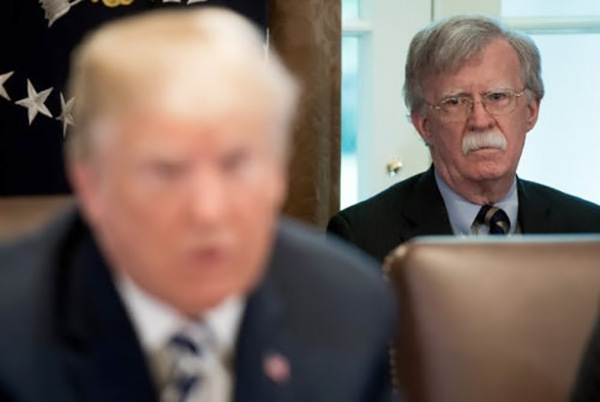
Left atop Trump’s national security team is national security adviser, John Bolton, a so-called “offensive realist” who has long pushed for bombing Iran’s nuclear facilities. Bolton also distrusts multilateral agreements and has close ties with the Mujahedin-e Khalq or MEK, an Iranian opposition group with a past history of assassinating American citizens.

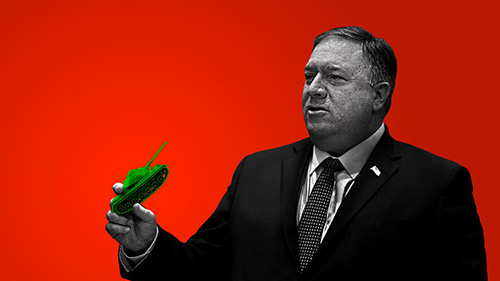
The other survivor so far of Trump’s reality show administration is Secretary of State Mike Pompeo. A self-described “counterpuncher,” Pompeo, who replaced the more moderate and less Iran-phobic Rex Tillerson, has also suggested in the past that US should consider attacking Iran’s nuclear facilities.

U.S. forces may be withdrawn from Syria in the coming year (or maybe they won’t be), but that doesn’t mean that war with Iran has become less likely.
By Daniel Larison ,

January 13, 2019 0 comments
FacebookTwitterPinterestWhatsappTelegramSkypeEmail
MEK Global Terrorism
Iran

safe Europe for terrorists and MEK has to get shocking message

Iran not to stay in JCPOA at any cost, official warns Europe

The Special Assistant to the Speaker of the Iranian Parliament for International Affairs Hossein Amir-Abdollahian in a tweet has said Iran will send “a shocking message” to Europe over commitment to the Joint Comprehensive Plan of Action.

“Having strong relations with Europe is a part of Iran’s foreign policy logics. But the West should face a shock to realize we won’t remain in one-way tunnel of current JCPOA at any cost,” Trend reports citing Amir-Abdollahian’s tweet.

The official’s tweet, apparently aimed at Europe’s delaying the opening of a Special Purpose Vehicle, also criticized the European countries’ harboring the People’s Mojahedin Organization (Mujaheedin-e Khalq or MEK), a political-militant organization based on Islamic and Socialist ideology.

“Now, safe Europe for terrorists and MEK has to get a logical, prudent but shocking message,” added Amir-Abdollahian.
Trend.az

January 12, 2019 0 comments
FacebookTwitterPinterestWhatsappTelegramSkypeEmail
Iran

Iran: accusing Iran won’t absolve EU responsibility for housing Mojahedin Khalq (MEK)

Slamming bans, Zarif says accusing Iran won’t absolve EU responsibility for housing terrorists

Iranian Foreign Minister Mohammad Javad Zarif has lambasted the European Union (EU) for harbouring notorious MKO terrorists, warning that “accusing” Iran and imposing sanctions against the Islamic Republic will not “absolve” Europe of responsibility for housing members of the terror outfit.

Iran’s top diplomat made the remarks on Tuesday, hours after the customs union froze the assets of an Iranian intelligence unit and two of its staff over terror charges. It was the first time the EU imposed sanctions on Iran since lifting an array of embargoes following Iran’s 2015 nuclear deal with world powers.

“Europeans, incl Denmark, Holland & France, harbor MEK—who killed 12000 Iranians & abetted Saddam’s crimes against Iraqi Kurds—as well as other terrorists staging murder of innocent Iranians from Europe. Accusing Iran won’t absolve Europe of responsibility for harboring terrorists,” Zarif said in a post on his official Twitter account.

Europeans, incl Denmark, Holland & France, harbor MEK—who killed 12000 Iranians & abetted Saddam’s crimes against Iraqi Kurds—as well as other terrorists staging murder of innocent Iranians from Europe. Accusing Iran won’t absolve Europe of responsibility for harboring terrorists pic.twitter.com/pUXmSjmgyB

— Javad Zarif (@JZarif) January 8, 2019

The Iranian foreign minister referred to the Mujahedin-e-Khalq Organization (MEK or MKO), a terrorist group which is detested for collaborating with the former Iraqi dictator Saddam Hussein during his war on Iran in the 1980s and killing thousands of Iranians in a violent campaign of assassinations and bombings, particularly in those years.

Earlier on Tuesday, Danish Foreign Minister Anders Samuelsen said in a tweet that the “EU just agreed to enact sanctions against an Iranian Intelligence Service for its assassination plots on European soil.”

He further described the step taken by the union as a “strong signal from the EU that we will not accept such behavior in Europe.”

Also on Tuesday, the Netherlands government accused Tehran of hatching plots and involvement in two killings in 2015 and 2017, sending a letter, signed by the foreign and interior ministers, to the Dutch parliament to warn of further economic embargos if Tehran did not cooperate with European probes.

The letter said representatives from Britain, France, Germany, Denmark, the Netherlands and Belgium had met Iranian officials to convey “their serious concerns regarding Iran’s probable involvement in these hostile acts on EU territory,” Reuters reported.

“Iran was informed that involvement in such matters is entirely unacceptable and must be stopped immediately … further sanctions cannot be ruled out,” the letter said.

The provocative move by the European bloc follows last year’s statements by Denmark and France that they suspected a so-called Iranian government intelligence unit pursued killing plots on their territories. Copenhagen at the time sought an EU-wide response.

Tehran has time and again strongly denied any involvement in the purported plots, saying the accusations were merely intended to damage EU-Iran relations. Iran also stresses that it is a victim of terrorism, particularly inflicted by the MKO outfit, whose members largely live freely in the EU countries.

The MKO was once listed as a terrorist organization in the US and Europe and is still widely viewed as a Marxist cult built around the personality of its leader, Maryam Rajavi.

Some of its uncouth practices include forcing the group’s male members to divorce their wives and have them married to Rajavi’s husband Massoud.

The terrorist group is also known for its extremely suppressive control over members in its camps where access to the Internet and other information sources is prohibited.

January 12, 2019 0 comments
FacebookTwitterPinterestWhatsappTelegramSkypeEmail
Mujahedin Khalq; A proxy force

Were the Iranians really ready to carry out an attack in Europe?

The Albanian government has expelled two Iranian diplomats. They are Ambassador Gholamhossein Mohammadnia and Mohammed Roodaki, an official at the embassy in Tirana accused of being a member of Iranian undercover intelligence. The Independent newspaper wrote that the two were linked to a cell that was organizing “a conspiracy dating back to March 2018 to attack the Iranian opposition in Albania”; a reference to the case of the two Iranian journalists officially invited by the Bektashi community of Albania to their Nowruz party, who were arrested by the Albanian police and released shortly thereafter.
The move was implemented following talks with interested countries including Israel and the United States; it is no coincidence that the Washington administration immediately congratulated the Albanian executive for the action taken.
Several international and national newspapers have spoken of “a cell ready to strike in Albania and in Europe”, but looking deeper into the question elements emerge that cannot but raise doubts regarding the alleged plot on Albanian soil last March when the Albanian authorities announced the arrest of two individuals suspected of terrorism, identified as Seyed Mohammad Alavi Gronabadi (59) and Firouz Bagher Nezhad Zenjabi (65).
The Albanian investigative journalist Gjergj Thanasi had followed the case and had managed to show how the two were in fact [retired] Iranian journalists invited by the well-known Bektashi Albanian community for the celebrations of the Shiite festivity of Nowruz and to attend a conference on Imam Ali. Their visas had been validated by the Albanian consulate in Istanbul, there was an official letter of invitation from the Bektashi community (documents found by Thanasi himself) and their profiles were examined by Albanian anti-terrorism, complete with “clearance”.
Following the temporary detention of the two Iranians, journalists from the Albanian newspaper Gazeta Impakt, a delegate of the Bektashi community and a lawyer had gone to the police station No. 1 of Tirana, where they discovered that the two detainees had been detained and released after a brief questioning because nothing had emerged against them; the police even had to apologize for their detention.
Meanwhile, Baba Mondi, head of the Bektashi World Headquarters, who had personally invited the two journalists, had been forced to call the Interior Minister and President Ilir Meta to request the immediate release of the two guests, with a lot of protest against the offense caused to the Bektashi community of Albania by having the two guests treated as outlaws.
Gazeta Impakt newspaper later discovered that the Albanian authorities had proceeded with the arrests following [false] reports by the Mojahedin e-Khalq (MEK), a paramilitary opposition group with a base camp in Albania. Moreover, on March 15, 2018, a few days before the arrest of the two Iranian journalists, Gjergj Thanasi published a piece in the Albanian newspaper City News Albania, where he illustrated how the National Council of Resistance of Iran (NCRI), an umbrella organization linked to the MEK, had asked the Albanian authorities to expel two Iranian diplomats, including Roodaki.
A few days after the arrest of the journalists, City News Albania highlighted some unusual aspects of the story, starting with the age of the two “terrorists”, a bit high for an operation like that. In addition, no evidence has ever been presented that could in any way prove the allegations against the journalists.
The fact that the two had passed through all the necessary bureaucratic and anti-terrorism checks, complete with a visa that would even be granted free by the Albanian consulate in Istanbul, makes doubt over the allegations even more legitimate. If therefore the expulsion of the two Iranian diplomats is linked to the case of March 2018, as already stated by the Albanian authorities, then the doubts are more than legitimate.

What is the MEK?
According to Tehran it is a “terrorist organization” based on the “cult of the personality of its leaders” as well as “directors and perpetrators of attacks and acts of political violence”; for the United States it is “the main opposition force promoting democracy and secularism in Iran”.
The story of the MEK is at least controversial: the organization was created in Iran in 1963 with the aim of opposing western influence in the country and fighting the Shah’s regime. In 1979 it participated in the revolution led by Khomeini, but with its popularized ideology, an intersection of Marxism, feminism and Islam, it clashed with that of the ayatollahs and the group was banned.
In 1981 the MEK moved to Paris where it made its headquarters and five years later moved to Camp Ashraf, north of Baghdad, from where it supported Saddam Hussein’s eight-year war against Iran and participated in the repression of the Kurds. In 2003 the MEK was disarmed by the Americans and moved to Camp Liberty where it continued to play a leading role in the political and diplomatic activity against the regime in Tehran and continues to do so today from Albania.
Previously the organization was blacklisted not only by Iran and Iraq, but also by the European Union, Britain, the US and Canada, only to be “cleared” between 2008 and 2012. A New York Times article from September 21, 2012 illustrates how the then Secretary of State, Hillary Clinton, had decided to delist the MEK, removing it from the black list in order to then relocate them out of the reach of Tehran’s agents, in a country willing to accept them, in this case Albania.
Numerous international sources have documented the presence of a large complex near the Albanian village of Manez. The Eyes of War had already been engaged last October with a focus on the headquarters and international support for the organization and also, in March, with an in-depth analysis of the 3,500 Mojahedin hosted in Albanian territory.
Apparently, the clash between the Shiite axis and the Salafite/Wahhabi galaxy, as well as between Israel and Iran, is now also taking place on Albanian soil and the MEK may play a major role in this scenario. However, the Mojahedin base on the Adriatic threatens to increase destabilization in the Balkans, an area already characterized by strong ethnic-religious and political tensions, all to the detriment of Europe. Albania for its part is reconfirmed as among the most loyal allies of the United States and Israel.
GIOVANNI GIACALONE
Gli Occhi Della Guerra, Rome, Italy, Translated by Iran Interlink

January 12, 2019 0 comments
FacebookTwitterPinterestWhatsappTelegramSkypeEmail
stop terrorism
Human Rights Abuse in the MEK

Amnesty’s controversial visits to the camp of the People’s Mujahedin in Albania

From Wikipedia, the free encyclopedia
https://en.wikipedia.org/wiki/Criticism_of_Amnesty_International#Amnesty’s_controversial_visits_to_the_camp_of_the_People’s_Mujahedin_in_Albania
In December 2018, Amnesty published a report entitled, ‘Blood-soaked Secrets,’ that accused Iran of carrying out the mass executions of political prisoners in 1988.
Much of the evidence used in the report was based on the testimonies of members of the People’s Mujahedin who are now resident at a camp complex located in Albania, just outside of the capital, Tirana.
According to the report, Amnesty’s researchers,”undertook three field trips to Tirana, Albania, where a substantial number of survivors and family members are based.”
However, many reports indicate that human rights abuses take place at this camp and that members are allegedly subjected to indoctrination and torture.
An NGO, the Nejat society, which represents the families of members of the People’s Mujahedin who have been denied access to meet them, has complained that Amnesty should never have been complicit in human rights abuses that occur at the camp by approaching members that have likely offered testimonies under duress.
Iran Interlink, a charity run by two former members of the People’s Mujahedin, has also lent weight to the criticism by the Nejat Society of Amnesty for visiting the camp in order to elicit information.

January 12, 2019 0 comments
FacebookTwitterPinterestWhatsappTelegramSkypeEmail
Former members of the MEK

Another member of the MKO left the group

Abdorrahman Mohammadian declared his defection from the Mujahedin Khalq Organization (the MKO/ MEK/ PMOI/ the Cult of Rajavi).

Mr. Mohammadian was a soldier of the Iranian army in the Iran-Iraq war when he was imprisoned by Iraqi forces in 1980. He spent 9 rough years in Saddam’s jail before he was recruited by the MKO.

“In 1989 a team of MKO recruiters headed by Mehdi Abrishamchi launched their propaganda in the POW’s camps to recruit us,” Mohammadian writes in his statement of defection. “Together with some other Iranian prisoners, I joined them but, soon I found out that their propaganda was completely false.”

He witnessed an immoral, undemocratic and inhuman atmosphere in the group. It was like the collapse of a mirage for him. “It was a pity that we had no way out despite the entire hypocrisy we witnessed there,” he asserts.
After the MKO’s relocation in Albania, Mohammadian felt more discrimination because he saw other refuge seekers from other countries who were free to go out and back to the camp but as a member of the MKO he was not allowed to go out to visit the city like a normal resident. This helped him to get determined to leave the cult-like group that has taken him as a hostage for 28 years.
“I felt that I could no more tolerate the group,” he says. So, he left the group on November 10th, 2018 and on the early days of January, 2019, he officially declared his defection from the MKO.
Nejat Society

January 9, 2019 0 comments
FacebookTwitterPinterestWhatsappTelegramSkypeEmail
Whitewashing terrorism
Mujahedin Khalq Organization as a terrorist group

The AI report which whitewashes the MEK

Towards the end of 2018, a flawed and suspicious 140-page report was published by Amnesty International (AI) about events which took place in Iran in the summer of 1988. This report, after more than 30 years, talked about the alleged executions of Mojahedin-e Khalq (MEK) members. The MEK was referred to as a peaceful democratic opposition to the Islamic Republic of Iran even though the MEK was conducting terrorist and military operations against Iran before and after that time.Examination shows that the report was written by Raha Bahreini, Mansoureh Mills, Shadi Sadr, and of course mainly by the MEK in Albania, and it was approved for publication by Philip Luther, research director for MENA (Middle East and North Africa) at AI.
Following publication of the report many families and victims of the MEK sent letters of complaint to Mr Luther at philip.luther@amnesty.org about anomalies in the report. To date, these have remained unanswered and AI has apparently adopted a policy of ignoring and silence.
When approached in person, AI officials have not accepted responsibility for the content of this report and have instead referred complainants to the authors at raha.bahreini@amnesty.org and mansoureh.mills@amnesty.org and asked them to send their complaints to the writers directly, which is quite odd. Amnesty International did not deny the role of the MEK and Shadi Sadr in preparing this report.
One of the central complaints about this shameful whitewashing propaganda piece by AI concerns the war crimes committed by the MEK in its Eternal Light operation. This operation took place less than a month before the executions. Yet amazingly in these 140 pages there was no mention of the over ambitious and doomed military invasion into Iran in which more than 3000 MEK members – many non-combatant civilians – were killed. Responsibility for the Eternal Light operation lies entirely with the MEK, in particular the leaders Massoud and Maryam Rajavi.
Another glaring fault is that all those whose testimony was included in the report are supporters of the MEK. Yet there are many, many families both in and outside Iran who do not support the MEK but whose testimony was not invited. The report cannot be said to be fair or independent based on this omission.
Among other complaints are that the report does not mention that currently the MEK, facilitated by the Albanian government, still does not allow families to have contact with their loved ones trapped in this group in the closed camp in Manez in Albania. This represents an ongoing violation of basic human rights which families have complained about for several years now.
It is a great pity that a human rights organization with more than a half-century background, has become a tool for political games in the region, and has produced such a long-outdated, narrowly researched and biased report, without addressing any of the complaints it has provoked.
In this regard, the first letter of complaint sent by the families to the Secretary General of Amnesty International Mr. Kumi Naidoo at sct@amnesty.org.uk can be found at the link below:

MEK (Rajavi cult) victims’ families reject Amnesty International report endorsing gross human rights abuse in Albania

January 8, 2019 0 comments
FacebookTwitterPinterestWhatsappTelegramSkypeEmail
Bolton and Rajavis
Mujahedin Khalq; A proxy force

2018 is gone! The collapse of John Bolton’s dream for the MEK

As the world rings in the New Year, hostages of the Mujahedin Khalq (the MKO, MEK, PMOI, the Cult of Rajavi) residing in Camp Ashraf 3 near Tirana, Albania still wait for the promises of their masters to come true. Actually their 40 -year-old promise is the overthrow of the Islamic Republic.
The promise has been repeatedly stated by the MEK’s foreign sponsors including from Saudi Arabian prince Turkie Faisal to US president’s national security advisor John Bolton. John Bolton is estimated to have received 180000 $ for only one year (2017) of lobbying for the MEK.
Therefore it was no surprise to see Bolton so excited to flatter the MEK leaders. In July of 2017, the MEK’s paid supporter gave a speech at the group’s so-called Grand Gathering of Iranians for Free Iran in which he openly called for regime change in Tehran.
“There is a viable opposition to the rule of the ayatollahs, and that opposition is centered in this room today,” he uttered at the gathering in front of Maryam Rajavi. “I had said for over 10 years since coming to these events, that the declared policy of the United States of America should be the overthrow of the mullahs’ regime in Tehran. The behavior and the objectives of the regime are not going to change, and therefore the only solution is to change the regime itself. And that’s why, before 2019, we here will celebrate in Tehran!”
Now that 2018 is gone, John Bolton is not able to rationalize his unfulfilled promise as well as the MEK leaders whose annual promise is the overthrow of the Iranian government at the beginning of the Persian New Year.
However, naturally Bolton’s speech receives more attention as he is definitely a more influential figure than the MEK leaders. BBC Persian’s NYC/UN correspondent, Bahman Kalbasi’s ironic tweet on the New Year ’s Eve recalls the shallowness of claims of the MEK and its paid sponsors:

There is still a few hours left before John Bolton runs out of time to fulfill his promise to celebrate with a group that used to be on US terror list for almost 2 decades in #Tehran, #Iran. #2019

The post was retweeted 181 times and was likes by 666 people. The comments on the post are also worth reading.

It is obvious that John Bolton is considered as a stupid warmonger politician who supports the traitors to Iran, the violent Mujahedin Khalq Organization that has almost no popular base in Iran.
“It would be hard to find a serious observer who believes the MEK has the capacity or support within Iran to overthrow the Islamic republic,” states Arron Merat of the Guardian. “But the US and UK politicians loudly supporting a tiny revolutionary group stranded in Albania are playing a simpler game: backing the MEK is the easiest way to irritate Tehran.”
By Mazda Parsi

January 2, 2019 0 comments
FacebookTwitterPinterestWhatsappTelegramSkypeEmail
Albania

Historian Kocaqi on the MEK: ‘They should not have been taken in by Albania’.

A Live debate, ‘360 degrees’ hosted by Artur Zheji on Ora News asked – “2019, the best year for Albanians?” Guests included historians Dr Olsi Jazexhi and Dr Elena Kocaqi who both explained why the presence of the MEK terrorist group was damaging for their country. The corrupting and interfering presence of MEK in Albania is causing a backlash in civic society as well as damaging the political life of the country. After the independent reports of various UK and American media, the people of Albania now know who they are dealing with.

Historian Elena Kocaqi speaking on “360 Degrees” at Ora News, considers it wrong that the Iranian Mojahedin were taken in by Albania.

https://dld.nejatngo.org/Media/Interview/Oranews-201901.mp4

Kocaqi: Our government should not be involved at all with issues relating to Iran, and for me, the Mojahedin should not have been taken in by Albania at all. Taking thousands of people and thereby importing conflict is, for me, very wrong. Albanians have been so persecuted in the last two centuries, even by Europe, there is nowhere to go. Normally there would be a rise and not a drop, and you will protect those few Albanians who left Europe. The Albanian factor keeps the balance in the Balkans and is much more important than we think. From the secret letters of Austro-Hungary, they linked their empire to the existence of the Albanian nation. We will also become part of Europe.

Ora News, ‘360 Degrees’,Translated by Iran Interlink

January 1, 2019 0 comments
FacebookTwitterPinterestWhatsappTelegramSkypeEmail
Albania

John Bolton, Mojahedin Khalq (MEK) and the expulsion of the Iranian ambassador

The expulsion of the Iranian ambassador from Albania by order of the US Security Adviser John Bolton is an act that has seriously shaken Albanian politics. The Albanian government of Prime Minister Rama, Foreign Minister Ditmir Bushati and President Ilir Meta not only did not welcome the dictates of John Bolton, but until now have not made any official statement to welcome the expulsion of the ambassador. The fearful Albanian politicians have no other choice but to obey the American government which, after settling the Iranian Mojahedin terrorist organization there, is turning Albania into a second Afghanistan where the country is a battlefield between the MEK jihadists and Iran.

https://dld.nejatngo.org/Media/Interview/Impakt-201901.mp4

In the IMPAKT show, attorney Migena Balla, who has defended clients who have been raped by Maryam Rajavi’s cult, discusses with investigative journalist Gjergji Thanasi, analyst Alfred Cako and historian Dr Olsi Jazexhi the most recent diplomatic scandal in Albania that came after America commanded Albania to expel the Iranian ambassador from the country. Gjergji Thanasi, who knows the MEK well, shows that the decision to expel the Iranian ambassador was an American decision that did not bring Albania any benefit except for Edi Rama who hopes to organize a meeting with Trump and allow a free run by Americans to transport drugs. Speaking as a nationalist, Thanasi asks: what has Albania gained from this ban?

Dr Olsi Jazexhi, who has written for the international media about the risk that MEK has brought to Albania, exposes the fake news campaign that MEK is running from their Manza paramilitary camp and shows that the expulsion of the Iranian ambassador was in fact a demand that the terrorist group has been making in Albania for several months. Dr Jazexhi blames the MEK for this diplomatic scandal and analyses the defamatory campaign that MEK is running from Albania which accuses Iran of committing terrorist acts in Europe. He points out that the organization, which was brought to Albania on humanitarian grounds, has now hijacked Albanian politics and this group of magicians with their so-called president Maryam Rajavi are behaving as though they are kings of Albania and not some victims that began by wailing and seeking shelter and help.

Alfred Cako, who analyses Albania’s fealty to the great powers, exposes the war that is happening today in the US administration between the Zionist Jews and the American Trump administration. Cako thinks Trump is playing with Zionist extremists, and the expulsion of the Iranian ambassador was part of this game as Trump is co-operating behind the scene with Putin and Russia to end the rule of Jewish Zionists in the world and the US. During the debate Dr Jazexhi explained that MEK has not only managed to establish a firm hold in Albania, but demonstrates how, from its paramilitary camp, the MEK is organizing a fake news campaign, a campaign through which this group – which holds its members hostage, threatens the media, radicalizes its members, calls for jihad against Iran and which has in the past has committed acts of terrorism and murder – ironically presents itself as an Iranian opposition. The historian concludes that the MEK’s defamatory campaign is crazy since the MEK is a terrorist organization and the people of Iran do not see MEK as an Iranian opposition because Iran has democracy and hundreds of political parties take part in elections which divide power.

Gjergji Thanasi, who has been studying the MEK for years, explained how MEK has managed to build a state within the state in Albania. They have managed to take control of the police, the border, and carry out illegal acts in the country, while the Albanian government behave like fools in front of this elderly terrorist group. After visiting Iran several days ago, he shows how the government there serves the people of Iran and is more democratic and humane than the ruling government of Edi Rama and Pandeli Majko, and that the dreams of Maryam Rajavi and John Bolton for insurrection to overthrow the regime in Iran are in vain.

Returning to the local context, Dr Jazexhi shows how the MEK began scheming to influence Albanian domestic politics. They complain to the Americans against the government of Edi Rama and have begun to exploit the opposition’s position for their own interests. In the global context, Alfred Cako sees the US ambassador’s expulsion as part of a two-scenario game that Trump is playing against Iran. One scenario is that Trump might want to hit out at Iran, while the second scenario may be that the US government may sooner or later attack the Iranian Mojahedin, who are currently Israel’s forces, but that one day the Americans could expel from Albania.

The conclusion of the debate is that Albania has major problems with hosting these Iranian terrorists in the country, and the expulsion of the US ambassador was a scandal of international proportions. This scandal exposed Albania’s weakness and servility before the Americans, the threat that the MEK constitutes for the stability of Europe and Albania, and how the MEK’s fake news campaign has placed the country in a scandalous diplomatic situation.
Translated by Iran Interlink

January 1, 2019 0 comments
FacebookTwitterPinterestWhatsappTelegramSkypeEmail
Newer Posts
Older Posts

Recent Posts

  • A Criterion for Proving the Violent Nature of the MEK

    December 31, 2025
  • Rebranding, too Difficult for the MEK

    December 27, 2025
  • The black box of the torture camps of the MEK

    December 24, 2025
  • Pregnancy was taboo in the MEK

    December 22, 2025
  • MEPs who lack awareness about the MEK’s nature

    December 20, 2025
  • Facebook
  • Twitter
  • Instagram
  • Youtube

© 2003 - 2025 NEJAT Society . All Rights Reserved. NejatNGO.org


Back To Top
Nejat Society
  • Home
  • Articles
  • Media
    • Cartoons
    • NewsPics
    • Photo Gallery
    • Videos
  • Publications
    • Books
    • Nejat NewsLetter
    • Pars Brief
  • About Us
  • Contact us
  • Editions
    • عربي
    • فارسی
    • Shqip