Nejat Society
  • Home
  • Articles
  • Media
    • Cartoons
    • NewsPics
    • Photo Gallery
    • Videos
  • Publications
    • Books
    • Nejat NewsLetter
    • Pars Brief
  • About Us
  • Contact us
  • Editions
    • عربي
    • فارسی
    • Shqip
Nejat Society
Nejat Society
  • Home
  • Articles
  • Media
    • Cartoons
    • NewsPics
    • Photo Gallery
    • Videos
  • Publications
    • Books
    • Nejat NewsLetter
    • Pars Brief
  • About Us
  • Contact us
  • Editions
    • عربي
    • فارسی
    • Shqip
© 2003 - 2024 NEJAT Society. nejatngo.org
Azim Alizadeh family - the mko cult hostage
Mujahedin Khalq Organization members' families

My brother is denied the right to live freely

Mr. Azim Alizadeh Rad was a prisoner of Iran-Iraq war when the Mujahedin-e Khalq deceived him into joining the group.

Azim Alizadeh family - the mko cult hostage

His suffering mother attended the Nejat Society office of Gilan branch along with her other son, Kazem. The aging mother says:” … despite our efforts and several travels to Iraq, Camps Ashraf and liberty, we couldn’t meet our dear Azim. We were harassed and offended by the cult elements. Albania differs from Iraq however. Albania is a European country. How does it come that we cannot visit our dear ones in that country?!I am sure that some deals are done behind the scene…”

Azim Alizadeh family - the MKO cult hostage

Mr. Kazem Alizadeh rad says:” my brother was a soldier… he has been denied the right to live a real life for more than thirty years..”

May 1, 2018 0 comments
FacebookTwitterPinterestWhatsappTelegramSkypeEmail
torture
Albania

Albania! Be careful of torture and abuse in the MKO camps

When in May2005, the Human Rights Watch published the NO Exit report on the human rights abuses committed by the Mojahedin Khalq Organization (MKO/MEK/ PMOI/ the Cult of Rajavi), the group’s propaganda made efforts to deny the facts that were testified based on numerous testimonies by former members of the group. The HRW responded to the allegations of the group’s propaganda and its paid supporters in a detailed report in February 2006.

MEK Camp in Albania

The report revealed cases of human rights abuses inside the MKO’s military camps in Iraq from 1991 to February 2003, prior to the fall of their former landlord Saddam Hussein .One of the most horrific cases of imprisonment and torture in Camp Ashraf was Parviz Ahmadi who died due to severe beating and torture.

The death of Parviz is meticulously explained in the newly published book by Mohsen Zaal, titled “the Organization of Massoud” based on the testimonies of former members of the MKO:

“In another case, Parviz Ahmadi is picked up by Asadullah Mosana’s Jeep after he comes back from a dentist’s office in Baghdad. Under the pretext that the female commander Batul Rajaiee has summoned him, he is taken to prison. He is interrogated at the very night and is thrown in the cell after a few hours with torn clothes, swollen face and beaten body. He is being severely tortured even in the corridor to the cell where some of the men who are under his command are imprisoned too.

“He is faced with people who were once under his command and now he is beaten and accused of spying before their eyes. This is a disaster for him; he cries all night long. In the morning, one of the men of his unit tries to sympathize with him offer sympathy to him. This is a very unique rare moment in the organization. Two comrades get close to each other and make a personal and humane relationship rather than organizational relations which is dominated by cold regulations and duties.[…]

“Parviz accepts the cigarettes his cellmates offers him although he is not a smoker. Speaking sadly he tells them that he is accused of being the agent of the Iranian Intelligence Ministry to assassinate the Ideological leader [Massoud Rajavi]. However, some of the prisoners guess that this is a test to select operatives for the next cross border operation teams. Some others think that this is an ideological test to evaluate member’s loyalty to the organization and the leader.

“The next day Parvis is taken by Mokhtar and Nariman for interrogation an hour before Iftar [the meal after sunset in Ramadan fast] and is thrown back to the cell hours after midnight at Sahar [the meal before sunrise in Ramadan]. His catastrophic condition shocks his cellmates. He is just identifiable by his clothes. His face is awfully swollen and bruised, his nose and ears are broken and bloody. He cannot breathe by his nose. He cannot open his swollen injured eyes. Fingers are broken, hands are bruised up to elbows. His pants are torn. Legs are wounded and completely bruised. The cellmates try to help him to breathe better. They ask Mokhtar to give them some warm water but he refuses saying that “this mercenary is showing off. He is OK”. Then he closes the window of the cell and leaves. Parviz gets a seizure and passes away in the arms of one of his comrades before the tearing eyes of his cellmates. They call to Mokhtar. He takes Parviz’s dead body to the corridor indifferently. After a while Mokhtar gets back and tells Parviz’s cellmates,” Save Parviz’ meal. He will get back”. But Parviz never gets back to the cell and is not seen in the group anymore. (Jamali/ 6)

“After the death of Parviz, Massoud Rajavi brings up his case in a meeting. Admiring him, Massoud calls Parviz a martyr. He claims that Parviz has been killed in a clash with Iranian forces in Kermanshah. He even gives some details on the location and the way he was killed. (Mesdaghi/ 92/136)”

According to the writer of “the Organization of Massoud”, imprisonment and eventually torture and assassination of the rank and file increased after the dissension was on the rise in the group. During the 1990s a large number of members had started challenging the group’s attitudes. So a large number of members were arrested by the authorities of the group under the charge of being the agents of the Iranian government. The estimated number of detainees mounts from 250 to 800 people. The number is not clear because imprisonments were secret until the fall of Saddam Hussein.

That situation is very similar to the conditions ruling inside the group in Albania now. There are a large number of dissident members who seek to leave the group but they are intimidated by the group leaders who use any tools to keep members in the Cult of Rajavi.

The Albanian government and the UNHCR authorities should be watchful about what is going on inside the MKO. Human rights violations are committed in the destructive cults on the daily basis. The MKO is actually proved to be a destructive cult and documented facts about various cases of human rights abuses including the HRW report are quiet accessible to everyone.

By Mazda Parsi

April 29, 2018 0 comments
FacebookTwitterPinterestWhatsappTelegramSkypeEmail
The MKO leaders keep on intimidating the defectors of their cult
Missions of Nejat Society

The MKO leaders keep on intimidating the defectors of their cult

The authorities of the Mujahedin Khalq Organization (the MKO, MEK, the PMOI, the Cult of Rajavi) intimidate those who left the group in Tirana.

The MKO leaders keep on intimidating the defectors of their cult

The MKO authorities have bought some van cars in order to patrol in the locations where the defectors live in Tirana, one of the defectors of the group stated in a post on Sahar Family Foundation.

According to the report, one of the insiders of the group asserts that each van has certain passengers who leave the group’s camp in the morning and get back at night on a regular schedule.

Defectors who see the vans in their neighborhood are concerned about their lives. They guess that the suspected passengers of the vans seek to pursue the defectors getting information about their activities.

These survivors of the cult of Rajavi have the evidences of the group’s pervious violent acts against the defectors. The group’s agents had attacked them abusing them verbally and physically.

The writer of the post on SFF asks the Albanian government and the UNHCR to supervise the MKO preventing it from intimidating its former members.

April 28, 2018 0 comments
FacebookTwitterPinterestWhatsappTelegramSkypeEmail
Gareth Porter, the investigative journalist
Mujahedin Khalq; A proxy force

Is Iran really a nuclear threat?

“Iran is moving ‘very quickly’ towards production of a nuclear bomb and could have a weapon within two years,”the United Press International reported.

The quote was published in a 1984 article headlined”‘Ayatollah’ bomb in production for Iran”but it might as well have been published today.

Gareth Porter, the investigative journalist

For more than three decades Western politicians and the press have been claiming that Iran is a nuclear threat.

Israeli leaders Benjamin Netanyahu and Shimon Peres echoed this claim numerous times in the 1990s, warning that Iran would build an atomic bomb by the next decade.

In the fall of 2012, Netanyahu declared at the United Nations General Assembly meeting – with his infamous bomb cartoon – that Iran would be able to build a nuclear weapon by June 2013.

The following October, former US President Barack Obama followed with a new deadline – that Iran is a year away from making a nuclear bomb.

Israeli Prime Minister Benjamin Netanyahu points to a cartoon bomb representing Iran’s nuclear programme at the UN General Assembly in September 2012 [Lucas Jackson/Reuters]

Most recently, the press reported earlier this month that Yossi Cohen, head of Israel’s Mossad intelligence agency, stated he is”100 percent certain”that Iran is seeking to build a nuclear weapon.

And yet, the International Atomic Energy Agency (IAEA) has released eight statements over the years confirming that Tehran has been meeting its nuclear commitments fully.

In July 2015, a landmark nuclear deal known as the Joint Comprehensive Plan of Action (JCPOA) was reached between Iran and the P5+1 countries: China, France, Russia, the UK, the US plus Germany, in which Iran agreed to reduce its enrichment of uranium, curbing its nuclear programme and ending decades of sanctions on the country.

While Iran has proved to be following its commitments, US President Donald Trump has found a new threat – Iran’s ballistic missile programme – and has threatened to scrap the nuclear agreement, which he has called the”worst deal ever”.

So how much of a nuclear threat is Iran?

Al Jazeera spoke with Gareth Porter, a historian, investigative journalist and author of Manufactured Crisis: The Untold Story of the Iran Nuclear Scare, with more than a decade of research into the topic, to learn more.

Al Jazeera: We heard yet another claim earlier this month, this time from the chief of Mossad, that Iran is planning to build a nuclear bomb. You’ve uncovered a wealth of evidence that proves Iran is not a threat. What are some of the most important pieces of evidence?

Gareth Porter: I think the most important set of documentary evidence is the so-called”laptop”documents. Those were documents that were supposedly [smuggled out] from a covert Iranian nuclear weapons research programme in the early 2000s, but I was able to show in my book that these documents were in fact passed on to Western intelligence by the Mujahedeen-e-Khalq (MEK), who of course were sworn enemies of the regime.

They were considered a terrorist organisation for many years, and most importantly the MEK was working hand in glove with Israel’s Mossad during the period when these documents surfaced.

The Israelis had both the motive and the opportunity to manufacture these documents that Mossad had created, a special programme to circulate”information”about the Iranian nuclear programme to other governments and the news media of the world in 2003. That was just when these documents would have been produced.

There are multiple indications that these documents are forgeries – the most important of which are the drawings of what is alleged to be in the documents, a series of efforts to make a nuclear weapon with the Iranian Shahab 3 missile.

These drawings actually show the wrong missile warhead. It’s a missile warhead that the Iranians are known now to have abandoned by the time these drawings were supposedly brought into existence. It is the most important giveaway that these documents were not genuine; they were fake.

Al Jazeera: You have previously said that to understand Iranian policy towards nuclear weapons, one should refer to the historical episode of its war with Iraq from 1980-1988. What can you tell us about that?

Porter: If you go back to the Iran-Iraq war, what was happening for eight years was that Iraq’s armed forces were hitting both military and civilian targets in Iran with chemical weapons, which caused as many as – if I remember the figure – 110,000 serious injuries and tens of thousands of deaths to Iranians because of the chemicals dropped on them by the Iraqis.

The IRGC (Iranian Revolutionary Guard Corps) – in charge of Iran’s defences against the Iraqi attack – wanted Ayatollah Khomeini to agree to go ahead with not just chemical and biological weapons but nuclear weapons, to have programmes to prepare the capability at least to retaliate, in order to try to deter at the very least the attacks of weapons of mass destruction by Iraq.

There were those early in the war and late in the war… who hoped that Khomeini would change his mind; and the reason that he gave in both cases is quite simple – he said Iran cannot possess or use any weapons of mass destruction because it is illegal, illicit under Islam.

He was the person in charge of the interpretation of what Islam meant for policies and laws of the Islamic Republic of Iran. This is an extremely important and supremely convincing argument for the seriousness of the Iranian refusal to have a nuclear weapons programme… There’s no real evidence to the contrary that suggests that Iran ever had a real nuclear weapons research programme.

Al Jazeera: We’ve seen over the years that Iran has acted cooperatively regarding its nuclear programme. However, in the end, there’s always a new accusation that comes up.

This time the US and allies are concerned with Iran’s ballistic missile programme. Why are they focused on Iran’s programme when other countries have ballistic missile programmes as well? Have we seen any credible evidence that proves that Iran is a threat that should be carefully watched?

Porter: It’s absolutely clear that Iran has simply used ballistic missiles as a deterrent far more than any other state in the Middle East because they do not have an air force. They do not have fighter jets or fighter-bombers that could deliver any conventional weapons as a retaliation for an attack on Iran. And that has been the case since the Islamic Republic of Iran was established in 1979.

The other major players in the Middle East, including Israel and Saudi Arabia, both have ballistic missiles that are capable of hitting Iran. This is very clearly a matter of self-defence in terms of deterrence for Iran. And I think the reason for the United States taking a position that it has, has nothing to do with the reality of the situation; this is pure politics – both international and domestic that have governed the position of US government – not just under Trump but under George W Bush and Obama as well.

Al Jazeera: Some say Iran is a threat because its leaders have allegedly stated their aim is to destroy Israel. How credible are these claims?

Porter: The Iranians have never threatened an aggressive attack on Israel. What they have said is that Israel should cease to exist as a state in which only Jews have full rights, just as South Africa had to cease to exist as a state for whites. It is the same position taken by supporters of Palestinian rights around the world.

This interview has been edited for length.

by Mersiha Gadzo,

April 25, 2018 0 comments
FacebookTwitterPinterestWhatsappTelegramSkypeEmail
Mujahedin Khalq Organization members' families

MKO Cult leaders didn’t allow the aging mother to visit her son

Ms. Soghra Azadi’s son is captivated by the Muajahedin-e Khalq Organization for many years. Her son ; Amir Parvizi lives behind the bars of the MKO Cult base in Tirana, Albania.

Before the MKO members’ moving to Albania,the ailing, aged mother traveled to Iraq and behind the gates of Camp Liberty in order to visit her dear son. However the cult leaders didn’t allow her to visit Parviz.

April 24, 2018 0 comments
FacebookTwitterPinterestWhatsappTelegramSkypeEmail
Olsi Jazexhi
Albania

Dr. Olsi Jazexhi: Americans have brought 3000 Mojahedin Khalq Jihadis to Albania

https://dld.nejatngo.org/Media/Interview/Vasko-Eftov-MEK-Albania.mp4

Vo Centar with Vasko Eftov, Nedela (22.04.2018) at 21: 45h on Alfa TV

Since February 2016, the Americans have brought around 3000 Iranian Jihadis. This is an Army. The Americans approached Macedonia to take them and Macedonia refused. Americans contacted Romania, but Romania refused. The only country who is ready to remove his pants in front of Americans is Albania. And the Albanians removed their pants.

So we have 3000 Iranian Mojahedin Khalq (aka Maryam Rajavi cult or MEK, NCRI, MKO, Saddam’s private army …). They now have two military camps in Albania. One of them is in Tirana and the other one is in Durres. The one in Durres is 32 hectares.

—

Wikipedia:

Vasko Eftov is a freelancer journalist from Macedonia. He is editor and host of the political tv program Vo Centar.

Vasko Eftov started to work as a Journalist at the macedonian newspaper Vecer.[1] His first TV show was called Revers and it started to air in 1996, in March 1999 he had an offer from Sitel which he accepted and renamed the show to Vo Centar (English: In Center).[2] The show was aired on Kanal 5 and Alfa. The show was aired and later cancelled from Alsat-M on March 23, 2015 from the Chief editor Muhamed Zakiri.[3] It continued to be aired on Kanal 5.[4] In his job so far he has interviewed: Kiro Gligorov, Branko Crvenkovski, Ljubčo Georgievski, Srgjan Kerim, Stojan Andov, Vlado Bučkovski, Pande Petrovski, Adem Demaci, Ljube Boskovski, Ljubomir Frčkoski, Petre Roman, Zhelyu Zhelev, Bojko Borisov, Miroslav Lazanski, Momir Bulatovic, Vuk Draskovic, Kristijan Golubović, Pieter Feith, Christopher Hill, Jamie Shea, Peter Carington, Alois Mock, Klaus Kinkel, David Owen, Miroslav Lazanski and many others.

Vasko Eftov, In Center,

April 23, 2018 0 comments
FacebookTwitterPinterestWhatsappTelegramSkypeEmail
weekly digest
Iran Interlink Weekly Digest

Iran Interlink Weekly Digest – 228

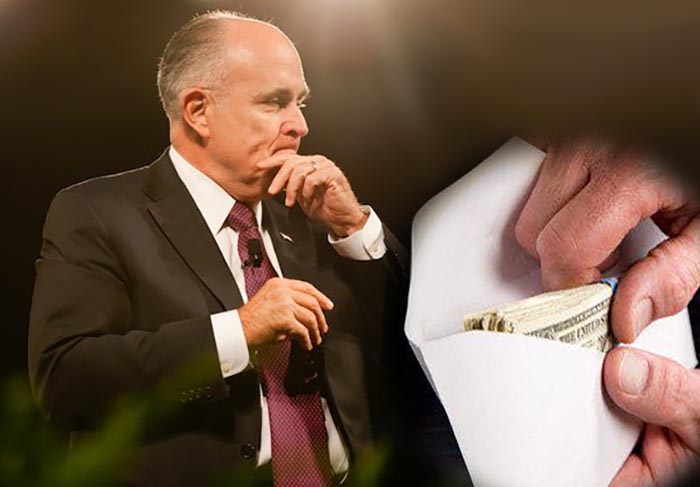
++ In Albania, using the pretext of having no money, the MEK has begun contacting the families, trying to get money in exchange for letting them talk on the phone with their relatives. Ex-members have written comments reminding the families that all the money they can send is not comparable to the tens of thousands of dollars in fees that the MEK pays daily to lobbyists and gang masters. The MEK’s aim is, one, to launder money received from Saudi and Israel under the pretense that the MEK is funded by ordinary people. Secondly, in the case that somebody does pay, to set them up by informing the Iranian authorities and claiming that the family has been put in prison.

++ In Albania again, they suddenly collapsed after the prospect of American war with Syria disappeared, Now MEK websites ignore Syria as if they had never mentioned it before. The escape of four more people this week is attributed to the vacuum of hope which opened up after the failure of yet another of Rajavi’s promises. Also last week, one person has been killed or has committed suicide, it is not known which. Some writers comment that the major achievement of bombing Syria has been the exposure of Rajavi and her gang again – nothing else.

++ It is also reported from Albania that Maryam Rajavi is settling there. MEK has built a new place for her by the sea where she lives with around 200 top people to cook and clean, etc, but they haven’t let the rank and file know because they are living in miserable conditions in Camp Ashraf Three. She has also appointed her first husband, Mehdi Abrishamchi, as commandant of Camp Ashraf Three, in charge of suppressing dissent and preventing escapes. Although he is based at the sea-side resort he comes and goes regularly to the camp. Abrishamchi is notorious in MEK for his brutality and as a torturer. He was the liaison between MEK and Saddam Hussein’s Intelligence services who escaped just as Operation Iraqi Freedom was launched in 2003 as a wanted man for crimes against humanity, including torture of MEK inmates in Abu Ghraib.

In English:

++ EU Reporter published a report of the open meeting about the Mojahedin Khalq Threat in Albania which was held in the European Parliament on April 10th hosted by MEPs Ana Gomes (S&D) and Patricia Lalonde (ALDE). The report encapsulated the information given by the speakers. This covered the MEK’s toxification of political debate on Iran by infiltrating parliaments and corrupting and misleading political representatives. The MEK is replicating this methodology in Albania according to Nicola Pedde of the Rome based Institute for Global Research. In Albania, MEK is interfering not only in the political life of the country but also attacking religious tolerance, freedom of expression and cultural heritage, said historian Olsi Jazexhi. Lawyer Migena Balla explained how, through her work helping ex-members, it had become clear that MEK members have no UNHCR refugee status, no right to residence in Albania and no work permits. This has left them dependent on MEK financial support under a secret deal struck between the American and Albanian governments with MEK in 2013. Linking this information with the discrepancies in actual numbers of MEK in Albania, Anne Khodabandeh, de-radicalisation consultant, explained how unaccountable the MEK are. Nobody knows how many they are, or exactly who they are, she said. They are living as modern slaves.

++ Olsi Jazexhi, Historian, took part in a televised debate in the Arena programme along with Ermir Gjinishi – Educator and former vice deputy of the Muslim Community of Albania, Ylli Zyla – former Director of Albania’s Military Intelligence Service, and Hajro Limaj – retired general and former Military Attaché of Albania to Turkey. The programme ended with a discussion of MEK in Albania. Gazeta Impakt transcribed this part and Iran Interlink has translated it into English. The conclusion of all the participants was that the MEK Is not a good thing for Albania.

++ Dr Nadejda K. Marinova, in Informed Comment, uses the past history of lies and misinformation by people like Ahmed Chalabi before the Iraq war, to warn against believing groups like MEK now. The piece concludes “Will we see MEK in front of the cameras, speaking on behalf of 80 million Iranians and the Iranian diaspora, telling us that they all support a bombing or invasion, and that it will remake the region for the better?

“When Chalabi told us lies sixteen years ago, supported by the White House, many in the public (and in Congress) believed him. Let’s not make the same mistake again. The consequences can wreak havoc, and inflict pain and misery on millions of people that support neither these lies, nor the greed for power and domination that gives rise to them.”

++ Massoud Khodabandeh in The Iranian, writes about the MEK’s role in toxifying political debate on Iran in the European Parliament. Khodabandeh points out that there was an opportunity in the round table debate for the MEK’s supporting MEPs to come and defend or explain the MEK’s positions. However, even “MEP Gérard Deprez, Chair of the Friends of a Free Iran in the European Parliament (affiliated to the MEK), who claims to have gathered over 200 signatures from fellow MEPs in favour of the MEK, was unable or unwilling to join the debate. When asked by MEPs to give the names of the signatories, he refused to do so.”

April 20, 2018


April 22, 2018 0 comments
FacebookTwitterPinterestWhatsappTelegramSkypeEmail
MEK violence
Mujahedin Khalq Organization as a terrorist group

April 1992 marks the MKO’s determination to conduct terror acts abroad

Experts and political representatives from Albania were in the European Parliament last week, asking Europe for help in preventing the Mojahedin-e Khalq (MEK) from toxifying their country’s internal and foreign relations. MEPs Ana Gomes and Patricia Lalonde hosted a round-table meeting, titled ‘Mojahedin-e Khalq (MEK) threat in Albania’ to discuss the problem.

The MEP Ana Gomes declared her concerns about the free access of the MKO agents to the EU parliament despite its terrorist background. The other attendees also warned about the threat of the MKO in Europe particularly Albanian territory.

Olsi Jazexhi, Director of the Free Media Institute in Tirana addressed the meeting: ”The irony is that the Albanian government prosecutes those who want to join the jihad in Syria but does nothing to curtail the MEK, which is something the media have queried. Another issue is that refugees from other countries have shown that they want to integrate into Albanian society. The MEK do not want to integrate. They have come as a terrorist organization and will commit acts of terrorism in the future. They live in a paramilitary camp and their leader Maryam Rajavi every day breaks the law of Albania by calling for jihad against a foreign country. This has resulted in Sunni leaders asking, if MEK can pursue jihad, why can’t we?”

The meeting was held 26 years after the MKO’s coordinated raids on the Iranian diplomatic missions in April 1992. Operatives of the MKO have on many occasions trespassed on Iranian missions abroad. It has carried out numerous terrorist attacks against Iranian civilians and government officials over the past three decades inside Iran or abroad. A 1997 State Department report confirms the violent acts of the group in western countries, “In April 1992 the MEK carried out attacks on Iranian embassies in 13 different countries, demonstrating the group’s ability to mount large-scale operations overseas.”

Canadian Network for Search on Terrorism describes the attack on the Iranian embassy in Ottawa, that was carried out by the Mujahedin Khalq and left seven people injured, as successful. This is the description of the incident:”04/05/1992: At about 12:18 p.m. the Iranian Ambassador and other Embassy staff in Ottawa were assaulted. A group of members and supporters of the Mujahedin e Khalq (MEK) demonstrating outside the Iranian Embassy in Ottawa forced their way into the building using iron bars and sledgehammers. They assaulted the Iranian ambassador, injured six other people, and caused extensive damage. Twenty-nine individuals were charged in connection with this attack. Twenty-one were convicted, two for assault with a weapon and the rest on lesser charges.”

The raids included the Iranian Mission to the United Nations in New York. The Iranian Embassy in Canberra was also over-run and some staff were seriously injured.

Regarding the outrageous history of the MKO, It seems quiet natural that the Albanian Journalist such as Olsi Jazexhi recommended the EU Parliament to be watchful about the MKO. “EU parliament, which has a lot of influence in Albania, should ask the Albanian government to demand the MEK abandon their violent jihad, to integrate into our society and to accept the values of democracy,” he said. “The MEK must end the intimidation, calls for terrorism, lies and misinformation and fake news in Albania. They must dismantle their paramilitary organization. And if Maryam Rajavi and those like Struan Stevenson disagree with us, they should deal with us in a democratic way. They must come and debate with us. I ask you as Europeans to put the utmost pressure on the Albanian government to save us from this very strange terrorist organization.”

Mazda Parsi

April 21, 2018 0 comments
FacebookTwitterPinterestWhatsappTelegramSkypeEmail
Bolton and Maryam Rajavi in Albania
Mujahedin Khalq; A proxy force

MEK’s Role Is To Toxify Political Debate On Iran

Politicians and experts gathered in the European Parliament last week to discuss the Mojahedin-e Khalq (MEK) threat to Albania.

Albania, a small NATO country in the Balkans, has found itself increasingly coerced against its own political will into taking positions alien to its national interests.

That coercion has come indirectly from the Americans through the agency of the discredited Mojahedin Khalq terrorist organisation (MEK) also known as the Rajavi Cult. The MEK has been present in Albania since 2013 when they were transferred from Iraq under a secret agreement between the American and Albanian governments and MEK leaders. Under this deal, the UNHCR agreed to move them while the MEK agreed to ‘behave’ and pay their own expenses. The Americans said they would establish a De-Radicalization Institute – a prelude to bringing more ‘terrorists’ in future. The budget languishes unspent with the American embassy in Tirana. Instead, by the end of 2016, there were 2,745 radicalized MEK in Albania who have re-grouped in a closed, isolated paramilitary training camp they named Camp Ashraf Three, to resume their anti-Iran activities unhindered.

Calling for regime change against another country is a criminal offence in Albania. But this has not stopped the MEK from doing exactly this. They have even drafted in several American supporters – John Bolton, John McCain, Rudi Giuliani – to come and add ‘veracity’ to their claim to be ready to overthrow the Iranian government from Albania. This is a problem not least because Albania is a peaceful country which, after its emergence from the controls of Soviet Russia, is proud of its religious tolerance and freedom of speech. Albania has also enjoyed a long history of shared traditional and cultural links with Iran. In the febrile atmosphere of US-Russia tensions, provoking enmity against Iran is not in Albania’s national interests at all.

In this context, experts on the MEK and political representatives from Albania gathered in the European Parliament on Tuesday 10th April, as MEPs Ana Gomes and Patricia Lalonde hosted a round-table meeting titled ‘Mojahedin-e Khalq (MEK) threat in Albania’ to discuss the problem.

Ms Gomes had called for an open debate but had to inform delegates that over thirty of her colleagues had signed an MEK instigated letter demanding the meeting should not go ahead. Ms Gomes denounced this approach saying that with the JCPOA in place and with an eye to the human rights situation in Iran, it is vital for the European Parliament to engage in dialogue with and about the Islamic Republic of Iran, even though it is obvious both sides will have very different opinions and views. The MEK are profoundly undemocratic and certainly do not believe in freedom of speech. That they are able to influence political behaviour in the EUP to try to silence MEPs is totally unacceptable.


https://dlb.nejatngo.org/Media/Interview/EUReporter-Gomes.mp4

Above: Mojahedin-e Khalq (MEK) Threat in Albania – Ana Gomes MEP

Indeed, none of the MEK’s lobbyists turned up for the debate. MEP Gérard Deprez, Chair of the Friends of a Free Iran in the European Parliament (affiliated to the MEK), who claims to have gathered over 200 signatures from fellow MEPs in favour of the MEK, was unable or unwilling to join the debate. When asked by MEPs to give the names of the signatories, he refused to do so.

Nicola Pedde, director of the Rome based Institute for Global Studies, described a similar situation in Italy. “When the MEK and Maryam Rajavi had free access to the Italian parliament, invited by various government agencies, they gathered signatures from around 70% of MPs. But after interviewing these members it was found that most MPs did not remember signing or what they signed for. Only five members deliberately supported the MEK. There was misuse of members’ ignorance on Iran issues. Such letters were used to increase the MEK’s infiltration inside institutions where they could toxify the bilateral relations and debate between the Italian Republic and the Islamic Republic of Iran.”

The MEK are replicating these methods in Albania; approaching MPs, media and opinion makers and influencing them with information which is “produced in a way to derail the interests of the country toward the Iranian government”. What Pedde calls “the toxification of political debate on Iran”.

But the problems for Albania are not limited to politics. According to an Albanian police report “…Iranian asylum seekers from [MEK]… could pose implications to our internal security, as these individuals are deeply indoctrinated, have been part of military structures, and have participated in fighting a war and in acts of terror.” Historian Olsi Jazexhi pointed out, “the MEK calls for jihad against a foreign country. According to the Albanian penal code, the MEK is unequivocally a terrorist organisation in my country.”

A fundamental difficulty in dealing with the MEK is that they are unaccountable. “We don’t know who they are or exactly how many there are”, said Anne Khodabandeh, a UK De-Radicalization consultant. “In 2003, the US army detained 3,800 MEK in Iraq. The UNHCR brought 2,901 to Albania. A now outdated report by the Albanian police accounts for 2,465 members. Since then, more have left or died. Yet their American lobbyist Senator Robert Torricelli claims there are 4,000 of them in Camp Ashraf Three. Where did the extras come from?”

According to Albanian lawyer, Migena Balla who helps former MEK members, the MEK do not have UN refugee status either from Iraq or in Albania. The Albanian state does not give them right to residence or work permits. They are, in effect, stateless. Even the International Organisation for Migration will not take responsibility for them. This picture is hugely complicated because when the UNHCR registered individuals in Iraq prior to transfer, the MEK deliberately used false names and identities – using borrowed and faked passports. We really don’t actually know who they are.

The MEK not only fake information, but identities too. This means the MEK can move members around without detection. The larger amorphous group also provides cover for around fifty highly radicalized members who are ‘deeply indoctrinated’, trained and willing to kill and die to order in pursuit of the MEK’s regime change agenda.

In a country notorious for corruption and with serious security and economic problems, the unaccountability of the MEK allows them unprecedented influence. This group, whether in Albania or Europe, is a danger to political debate, to civil society and to its own members. Olsi Jazexhi told delegates in the debate, “Europe is pluralistic and democratic and strong. We Albanians have come to ask for your help in dealing with the MEK”. But, if the MEK is not accountable to anybody, and nobody will take responsibility for the MEK, how will Europe answer?

Massoud Khodabandeh, Iranian.com,

April 19, 2018 0 comments
FacebookTwitterPinterestWhatsappTelegramSkypeEmail
Ilir Meta
AlbaniaMissions of Nejat Society

Members of Nejat Society Khuzestan branch appeal to Albanian president

Nejat Society office in Khuzestan Province has recently hosted certain family members of those who are taken as hostages in the camps of the Mujahedin Khalq Organization (the MKO/ MEK/ PMOI/ the Cult of Rajavi) in Albania.

Asghar Ali Qasemi, the brother of Shahin, Adel Hezbepour, the brother of Abdol Amir, Gholam Ali Allafpour the brother of Nasrin, visited the responsible of Nejat office in Ahvaz. They were informed about the latest news on the MKO in Albania including the defection of a few individuals form the group’s cult-like bars.

These family members are seriously concerned about their loved ones who are imprisoned in the Cult of Rajavi in the remote camp in the outskirt of Tirana. They wrote separate letters to the President of Albania Ilar Meta asking him to take a civil and humanitarian action for the release of their siblings from the mind control system of the group.

Qasemi, Hezbepour and Allafpour who suffer a long-time separation from their loved ones asked the Albanian president to pave the way for family contacts and visits.

Most of MKO members have not been allowed to contact their families for over two decades.


April 19, 2018 0 comments
FacebookTwitterPinterestWhatsappTelegramSkypeEmail
Newer Posts
Older Posts

Recent Posts

  • A Criterion for Proving the Violent Nature of the MEK

    December 31, 2025
  • Rebranding, too Difficult for the MEK

    December 27, 2025
  • The black box of the torture camps of the MEK

    December 24, 2025
  • Pregnancy was taboo in the MEK

    December 22, 2025
  • MEPs who lack awareness about the MEK’s nature

    December 20, 2025
  • Facebook
  • Twitter
  • Instagram
  • Youtube

© 2003 - 2025 NEJAT Society . All Rights Reserved. NejatNGO.org


Back To Top
Nejat Society
  • Home
  • Articles
  • Media
    • Cartoons
    • NewsPics
    • Photo Gallery
    • Videos
  • Publications
    • Books
    • Nejat NewsLetter
    • Pars Brief
  • About Us
  • Contact us
  • Editions
    • عربي
    • فارسی
    • Shqip