Nejat Society
  • Home
  • Articles
  • Media
    • Cartoons
    • NewsPics
    • Photo Gallery
    • Videos
  • Publications
    • Books
    • Nejat NewsLetter
    • Pars Brief
  • About Us
  • Contact us
  • Editions
    • عربي
    • فارسی
    • Shqip
Nejat Society
Nejat Society
  • Home
  • Articles
  • Media
    • Cartoons
    • NewsPics
    • Photo Gallery
    • Videos
  • Publications
    • Books
    • Nejat NewsLetter
    • Pars Brief
  • About Us
  • Contact us
  • Editions
    • عربي
    • فارسی
    • Shqip
© 2003 - 2024 NEJAT Society. nejatngo.org
Mujahedin Khalq; A proxy force

Nasty deals with MKO terrorists

What makes a terrorist who has assassinated your country fellow men a dear trustworthy friend?

The beginning paragraph of the extensively published article of Jon Gombrell of the Associated Press indicates how controversial is the affairs between the Mujahedin Khalq Organization (the MKO) and the United States: “An official in U.S. President Donald Trump’s cupboard and no less than considered one of his advisers gave paid speeches for an Iranian exile group that killed Individuals earlier than the 1979 Islamic Revolution, ran donation scams and noticed its members set themselves on fireplace over the arrest of their chief.”[1]

This short statement of the article is enough to learn that the MKO is a cult-like group with deceptive methods of fund raising and brainwashed members who set themselves on fire to protest against the arrest of their She-guru; it has assassinated some US citizens while it is donating large amounts of money to some other US citizens!

A few cases of the MKO’s paid sponsors are discussed in Gambrell’s report while the MKO’s pay roll is full of bipartisan US politicians who intentionally or unintentionally ignore the true nature of the MKO as a destructive terrorist cult. The group has the blood of the Iranian people, Iraqi people, US military personnel and civilians on its hands. The group has also been involved in massacring it own members who disassociated themselves  and did not go along with the attitudes and approaches of the Cult during different periods.  

Donald Trump’s aggressive policies against Muslim countries, particularly Iran, is warmly welcome by the MKO. The group’s propaganda machine is evidently pleased to see the perspective of further sanctions the US might impose on Iranian people. But, Are the Iranian people deserved to be treated like this? Are they deserved to be banned from entering the US?

Michael Jansen of the Jordan Times writes about Trumps’ hostile acts against Iranians, “Trump needlessly and heedlessly included Iran in the group of seven Muslim countries when imposing his hasty, poorly prepared and ill-conceived ban on US entry on citizens from these countries holding visas.” [2]

“Although federal judges issued restraining orders, temporarily rescinding Trump’s ban, Iranians are upset and confused by this measure, as it is meant to apply to citizens of countries involved in “terrorist” incidents in the US.,” She adds. “There have, in fact, been no attacks by Iranians on US citizens in the US and only one in Iran itself.” [3]

And then, she ironically points to nasty deals that are based on hypocrisy.  “This took place in 1975, when two air force officers were killed en route to an air base,” She reminds the audience. “This was before the 1979 overthrow of Washington’s ally, the shah, by the Islamic Revolution.” [4]

She explains that the American terror victims of the MKO were serious to pursue the case of their murdered loved one. “The family of Lt. Col. Jack Turner, one of the victims, filed a lawsuit, arguing his death was in revenge for the killing by the shah’s intelligence agency, Savak, which was supported by the US and Israel, of nine anti-shah elements fleeing arrest,” Jansen repeats what Gambrell had ended his article with. [5]

“The commander and members of this group [anti-shah elements], the Mujahedin e-Khalq, were executed in 1976,” Jansen links the MKO terrorist background to their today’s paid sponsors. “It does not make sense that the Turner family is suing Savak, which is long gone, or the Mujahedin, an enemy of the current Iranian regime and the friend of some senior members of the Trump administration.” [6]

By Mazda Parsi

References:

[1] Gambrell, Jon, Clarification: Trump-Iranian Exiles story, The Associated Press, February 16, 2017

[2] Jansen, Michael, Keeping Iran a bogeyman to further destabilise the region, The Jordan Times, February 8, 2017

[3] ibid

[4] ibid

[5] ibid
February 27, 2017 0 comments
FacebookTwitterPinterestWhatsappTelegramSkypeEmail
Mujahedin Khalq Organization as a terrorist group

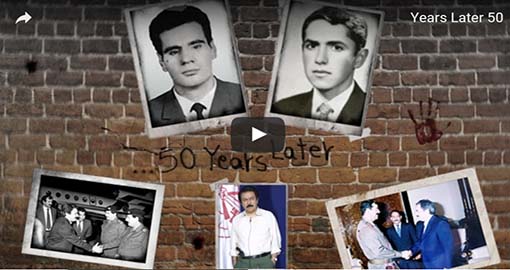
50 Years Later (Mojahedin Khalq)

Synopsis

Mojahedin_Khalq_Rajavi_Cult_50_YearsIn 1965, a number of university students in Iran decided to take up arms against the dictatorship of Mohammad Reza Shah, a proxy-war against US imperialism.

To that end, they founded the “Mojahedin-e-Khalq Organization,” also called “MEK” or “MKO.” It was an organization established based on Islamic ideology and tilted toward Marxist armed struggle. The security apparatus of Iran, namely SAVAK (Organization of Intelligence and National Security) decided to nip the organization in the bud: most of its members were arrested, tortured, and executed. In the meantime, Taghi Shahram, among the arrested, brushed aside the Islamic ideology to become a true follower of Marxism. He managed to escape from prison and changed officially the organization’s ideology from Islam to Marxism. But not all the key members were all for it. Majid Sharif Vaghefi and Morteza Samadiyeh Labbaf were among the founding members of the organization who opposed the ideological change. Their opposition, however, cost them their lives. Press TV’s investigative documentary, “50 Years Later,” recounts what exactly happened 50 years ago to Majid Sharif Vaghefi and Morteza Samadiyeh Labbaf through conducting interviews with Majid Sharif Vaghefi’s family members. In the documentary, we see how, four decades after the assassination of these two members of the organization, the MKO infighting makes its way onto the Iranian silver screen. “Cyanide” is a movie which deals with the ideological U-turn in the MKO. Behrouz Shoeibi, the director of the film, talks about his underlying philosophies which led to the making of the film. Moreover, other different individuals including film critiques and an ex-member of MKO pass their comments and judgments in this regard. Throughout the documentary, we witness different scenes of the film which have been used to portray the past events in lieu of using reconstruction footage.

Download 50 Years Later (Mojahedin Khalq)

February 26, 2017 0 comments
FacebookTwitterPinterestWhatsappTelegramSkypeEmail
Albania

Iranian and Albanian News agencies sign cooperation agreement

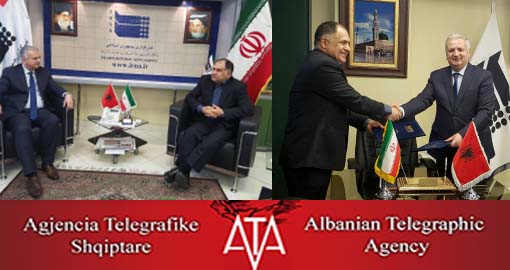
Agreement of cooperation signed in Tehran between Iranian News Agency (IRNA) and Albanian Telegraphic Agency (ATA)

The open communication established with counterpart agencies based on a professional point of view has enabled the Albanian Telegraphic Agency to expand its institutional cooperation with news agencies not only in the region but also beyond it. In the framework of this cooperation and a new approach of communication between the two countries, the Iranian News Agency (IRNA) and Albanian Telegraphic Agency (ATA) have signed an agreement of cooperation.

For the Albanian part, the agreement was signed by director general, Gëzim Podgorica, meanwhile for the Iranian part it was signed by director general, Muhammad Khodadi.

Both sides described the signing of agreement as a crucial moment for both countries and a great opportunity to bolster the joint communication. While Iran and Albania are expected to boost their exchanges in trade, tourism and culture, the official information shared via institutional channels will be to the mutual benefit of this cooperation.

At the meeting between the two delegations, director Mohammad Khodadi pointed out that for the agency IRNA any cooperation is of high importance and the signing of this agreement is a concrete and great opportunity to gain new insights into Albania and everything your country offers, but also to give a new boost to communication between the two countries. I believe that the information we are going to exchange will ramp up the media presence of Iran and Albania and vice-versa, however they increase in value due to the timely information items portraying the latest developments in both countries.

For his part, ATA director general Gëzim Podgorica thanked Mr. Muhammad Khodadi for the invitation to visit Iran and the willingness to sign this agreement. Mr. Podgorica went on saying: “Iran, as a country that has witnessed an array of civilizations and empires, has made a great contribution to the world culture. The relations of Albanians with Iran go back a long way in history, suffice it to mention our great national poet, Naim Frashëri, whose first poetry book Tehajula (Dreaming) has been written in Persian. The conference slated for October, this year in Iran in honor of this outstanding personality is a testimony to these relations and a high appreciation of Naim Frasheri as well as a sign of the will to add a civilized dimension to our rapport.

As agencies, today we pave the way for a new communication, which will enable the public of both countries to develop new insights into complex developments, but also into history, traditions, culture, tourism and others. Iran boasts great assets in this direction not only as a big country but also as a country steeped in ancient history. On the other hand, Albania, although a small country geographically, boasts exceptional assets in culture and art. Through an open communication, there will be ample opportunity to turn the spotlight on these assets and this is all that matters – ATA director general Gezim Podgorica said. During the stay in Iran, the ATA delegation has visited a number of important historic and cultural sites.

ATA delegation also toured the venues of IRNA, where they were briefed with the efforts to deal with challenges on media market. The agency IRNA broadcasts in 8 languages and has correspondents and broadcasting centers in 32 countries worldwide. It has a staff of 1300 employees and issues 5 daily newspapers in Persian and English. It has 256 correspondents in different cities across Iran and 36 regional agencies. During the visit to IRNA, the delegation of ATA was also informed on the performance in photo archives and digitalization.

Sonila Mehmeti, ATA, Tirana,

February 26, 2017 0 comments
FacebookTwitterPinterestWhatsappTelegramSkypeEmail
Iran Interlink Weekly Digest

Iran Interlink Weekly Digest – 181

++ Following the death of Mohammad Ali Jaberzadeh Ansari (aka Ghasem), Maryam Rajavi’s speech drew criticism as she offered her condolences not to the deceased’s family and friends, but to Massoud Rajavi. ‘You can’t offer condolences to a dead person’ wrote most commentators. Instead of attending the funeral in Paris, Maryam Rajavi went to Albania to firefight the chaos there among the members. In Albania she has been in desperate talks with people. Her main message is ‘please don’t run away’. Copying Massoud Rajavi’s well-worn formula, she tells the members ‘if only I had just four proper people I would have toppled the regime by now. It’s your fault, you can’t do, you are not dedicated enough to me’. She blames the members for her failures. The MEK leadership has established a ‘State of Alert’ in Albania in case any of the families come there. The members’ cult phobia is activated by dire warnings: ‘Agents of the regime are outside the door. If you leave they will kidnap, torture and kill you. Families are agents disguised as families. Weak families are used and behind every grandfather is an agent that wants to kill us. They are agents of the Khodabandehs. The Khodabandehs are very active and their agents are everywhere and they have even infiltrated inside us, so we must be careful, you must report everything in order to discover who the infiltrators are.’

These scare tactics have been used to the point that over 90% of the members can’t leave the building at all and are suffering sunlight deficiency – even the curtains are closed. For that reason, the families have published a petition condemning Maryam Rajavi’s refusal to allow people to contact their families. Some commentators on this situation link the death of Jaberzadeh with the deaths, one after another, of other members due to age and overwork and the untreated sicknesses they have endured for decades. Every death means that one more testimony, more piece of evidence is lost which, in a court of law, would allow the facts to be established about this group. One writer, examining these deaths, describes it thus: “The Angel of Death is circling over Auvers-sur-Oise, picking them off one by one”.

++ Davoud Baghervand Arshad, ex-MEK  member, participated in the 9th Geneva Summit for Human Rights and Democracy. Also attending the Summit was Dr Fariba Hashtroudi, a famous journalist and writer who lives in Paris. She was, for some time, a member of the NCRI but left over disagreements about human rights.

In English:

++ In the febrile atmosphere created by President Donald Trump, the respected Professor Hamid Dabashi of Columbia University has introduced a calm and reasoned tone with an article titled ‘Ten things Iranians can do to pre-empt a Trump war’. He encourages ordinary people (not just Iranians) to feel empowered and to take various actions not reliant on their government. The second item on his list is: “…denounce those treacherous forces among the expat opposition – now led by the cultic People’s Mujahedin of Iran (MEK), and Reza Pahlavi, the son of the former Shah – that demand “regime change” in Iran.

“Neither of these characters has the slightest legitimacy inside Iran. A blind hatred of the Islamic Republic is definitive to these expat forces, no matter what the consequences for Iranians as a people. That hatred is categorically different from any legitimate critical stand vis-a-vis Iran.

“There must remain no false claim that any one of these discredited expat oppositions represents the Iranian people. They do not.”

++ Sonila Mehmeti from ATA News Agency, Albanian announced the agreement of professional and institutional cooperation signed in Tehran between Iran’s official agency IRNA and the Albanian Telegraphic Agency (ATA). On the same day, Iran’s Fars News Agency attacked human rights bodies for trying to whitewash the MEK’s terrorist crimes and criminal history. “[The] Secretary of Iran’s Human Rights Council Mohammad Javad Larijani in a letter to EU foreign policy chief Federica Mogherini in November called on the European states to annul the legal immunity of MKO members.

“’The spread of plights and dangers of terrorism in the European countries as well as its negative consequences, including the refugees crisis which has inflicted the European states too, have more than ever shown the necessity for real serious determination to fight against it,’ Larijani wrote in his letter.

“He stressed that the European states’ double-standards on human rights issues and their support for the MKO terrorist group whose hand is stained with the blood of the Iranian and Iraqi people and even its own members is not acceptable at all.”

++ Press TV has produced several documentaries and film reviews covering MEK history. Modern Slaves is an informative review of the film ‘Mina’s Facility’ about MEK activities just after the Iranian Revolution. The film won several prizes in Iran’s Fajr International Film Festival. The documentary ’50 Years Later’ covers the period before the Revolution when the MEK was riven by schism and internal violence.

February 24, 2017

February 25, 2017 0 comments
FacebookTwitterPinterestWhatsappTelegramSkypeEmail
Iran

Iran, a Major Victim of Terrorism

From the very beginning of the Revolution in 1979, Iran  has suffered many terrorist attacks. One could even say Iran is somehow one of the major victims of terrorism in the world.  If you take a look at the history of countries in the world, you’ll notice that no other country has ever lost such a great number of officials in terrorist acts as Iran has.  Interestingly, those who are claiming to be at war with terrorism provide those responsible for the death of civilians with office and the free rein to work in their countries.
The contradiction sharpens and reaches to the point that one of these terrorist groups rented an office a block away the White House which is the so-called pioneer of war on terror! All these measures prove the fact that terrorism is divided into two forms of "good" and "bad" from the point of view of certain Western countries; since they describe those who are for them as "good terrorists" and those who are against them as "bad terrorists".

That is why each year Iran faces different kinds of labels by the West as well as the usurper Zionist regime.

Below you will find brief accounts of the terrorist attacks carried out against the Iranian people over the last 38 years.

Attacks by Mujahedin-e-Khalq

The People’s Mujahedin of Iran (also called Mujahedin-e-Khalq, MeK or MKO) is a terrorist organization regarded by the Iranian, the U.S. governments, and others as a terrorist organization. This group has publicly accepted the killing and assassination of 17000 innocent Iranians (including both ordinary people and government officials).

On 28 June 1981, bombs set by the MKO killed 70 high-ranking officials of the Islamic Republic Party, including Chief Justice Mohammad Beheshti who was the second highest official after Ayatollah Khomeini at the time. Two years after the Islamic Revolution of Iran, the MKO detonated bombs at the headquarters of the now-dissolved Islamic Republic Party. Two months later, the MKO detonated another bomb in the office of the president, killing President Rajai and Premier Mohammad Javad Bahonar. Their attacks did not succeed in overthrowing the Islamic Republic of Iran government.

There is also a deep-seated resentment toward the group in Iraq because of its criminal past. The MKO widely supported Saddam in his brutal crackdown on opponents.

In recent years, attacks carried out by the Mujahedin-e-Khalq include:

Asadollah Lajevardi assassination (1998)

Two members of Mujahedin-e-Khalq assassinated Asadollah Lajevardi, a prosecutor and director of Evin Prison, along with his brother and a bystander on 23 August 1998.

Assassination of Ali Sayad Shirazi (1999)

On April 10, 1999, 6:45 local time Brigadier-General Ali Sayad Shirazi, deputy chief of staff of the regular army of the Islamic Republic and a military adviser to the Supreme Leader of Iran, was assassinated outside his house as he left for work. The People’s Mujahedin of Iran claimed responsibility for the assassination of Sayyad Shirazi.

Attacks by Taliban extremists:

Mashhad bombing (1994)

On June 20, 1994 explosion of a bomb in a prayer hall of Imam Reza shrine in Mashhadthat killed at least 25 people. The Pakistani daily The News International reported on March 27, 1995, "Pakistani investigators have identified a 24-year-old religious fanatic Abdul Shakoor residing in Lyari in Karachi, as an important Pakistani associate of Ramzi Yousef. Abdul Shakoor had intimate contacts with Ramzi Ahmed Yousef and was responsible for the June 20, 1994, massive bomb explosion at the shrine Imam Ali Reza in Mashhad".

Mazari Sharif killings (1998)

On August 8, 1998 the Taliban assisted by Al-Qaeda, attacked the Afghan city of Mazari Sharif killing 11 Iranian diplomats and journalists along with thousands of Afghan civilians, in what was considered an attack motivated by takfir against Shia.

The Taliban were also thought to have "secretly" backed anti-Iranian terrorist groups. The group received weapons and support from the Taliban.

The group sought to overthrow what it called the "Shia Iranian government", despite the fact that Iran has always been home to both Shias and Sunnies and has always strived to foster amity and unity amongst all Muslims of different faiths.

Jundallah (since 2003)

Jundallah is a notorious terrorist organization in Balochistan.  It is believed to have to have killed 800 Iranians. The group has been identified as a terrorist organization by Iran and Pakistan and many have confirmed  it is linked to Al-Qaeda. It is also believed to receive support from the US government.

Zahedan bombing (2007)

A car filled with explosives stopped in front of a bus full of Revolutionary Guards in Ahmabad district, Zahedan, Sistan-Baluchestan Province at 6:30 a.m. on 14 February 2007. A few seconds later the bombs exploded, killing 18 Guards.

Jundallah claimed responsibility for the attack on 15 February.

The Iranian government has arrested five suspects, two of whom were carrying camcorders and grenades when they were arrested, while the police killed the main "agent" of the attack.

Tehran attacks (2001)

MKO members fired five rockets at the general command of the Internal Security Forces in Tehran, killing and injuring several, on 7 January 2001. MKO members fired mortar shells at several government buildings, including the Supreme Court, in Tehran on 21 January 2001.

Ahvaz Bombings (2005)

The Ahvaz bombings were a series of bomb explosions that took place mostly in Ahvaz, Iran. The first bombing came ahead of the presidential election on 12 June.

Shiraz bombing (2008)

A terrorist bombing inside a mosque in Shiraz in April 2008 killed 14 people including 10 men, 2 women and 2 children. More than 200 were also injured.

Scientist assassinations (2010 -2012)

Four Iranian nuclear scientists-Masoud Alimohammadi, Majid Shahriari, Darioush Rezaeinejad and Mostafa Ahmadi Roshan-were assassinated between 2010 and 2012, and one further scientist wounded in an attempted assassination. Two of the killings were carried out using magnetic bombs attached to the targets’ cars; Darioush Rezaeinejad was shot dead; and Masoud Alimohammadi was killed in a motorcycle bomb explosion. Israel was behind the killings. In 2011-12, the Iranian authorities arrested a number of Iranians it said had carried out the assassination campaign on behalf of Mossad, the Israeli intelligence service. Western intelligence services and U.S officials are said to have confirmed the Israeli connection. In June 2012, the Iranian government stated that it was confident it had arrested all the assassins.

Moshe Ya’alon, the Israeli defence minister, stated, "We will act in any way and are not willing to tolerate a nuclear-armed Iran."

According to private American intelligence firm Stratfor, a fifth Iranian scientist was poisoned by Mossad in 2007. In January 2015, the Iranian authorities thwarted a further attempt by Mossad to assassinate an Iranian nuclear scientist.

February 25, 2017 0 comments
FacebookTwitterPinterestWhatsappTelegramSkypeEmail
Iran

Iran Blasts HR Bodies for Attempts to Cleanse MKO Terrorists’ Crime History

 Spokesman of Iran’s Supreme National Security Council (SNSC) Keivan Khosravi rapped certain human rights organizations for their attempts to erase the history of the terrorist crimes committed by Mojahedin-e Khalq Organization (MKO, also known as the MEK, PMOI and NCRI).

"The Islamic Republic of Iran is among the victims of terrorism and most assassinated Iranian citizens and officials have been killed by the Monafeqin (Hypocrites as MKO members are called in Iran) terrorist group but human rights bodies are trying to clean up their black record without paying attention to their crimes," Khosravi said in a meeting with a media delegation from Albania on Tuesday.

He called on the European media to clarify the dangerous approach adopted by the MKO ringleaders against their members to meet their illegitimate interests.

The MKO has been incarcerating, torturing and killing all dissident members as well as those suspected of future plans for defection. The terrorist organization has assassinated many of its defected members in Europe and Canada.

Secretary of Iran’s Human Rights Council Mohammad Javad Larijani in a letter to EU foreign policy chief Federica Mogherini in November called on the European states to annul the legal immunity of MKO members.

"The spread of plights and dangers of terrorism in the European countries as well as its negative consequences, including the refugees crisis which has inflicted the European states too, have more than ever shown the necessity for real serious determination to fight against it," Larijani wrote in his letter.

He stressed that the European states’ double-standards on human rights issues and their support for the MKO terrorist group whose hand is stained with the blood of the Iranian and Iraqi people and even its own members is not acceptable at all.

"Therefore, I ask your excellency and other relevant European officials to consider the numerous crimes committed by Monafeqin terrorist group and adopt serious measures to prevent the free activities of the terrorist group’s members in Europe, try its leaders and criminal members and make them account for their deeds," Larijani concluded.

The MKO, founded in the 1960s, blended elements of Islamism and Stalinism and participated in the overthrow of the US-backed Shah of Iran in 1979. Ahead of the revolution, the MKO conducted attacks and assassinations against both Iranian and western targets.

The group started assassination of the citizens and officials after the revolution in a bid to take control of the newly-established Islamic Republic. It killed several of Iran’s new leaders in the early years after the revolution, including the then President, Mohammad Ali Rajayee, Prime Minister, Mohammad Javad Bahonar and the Judiciary Chief, Mohammad Hossein Beheshti who were killed in bomb attacks by the MKO members in 1981.

The group fled to Iraq in 1986, where it was protected by Saddam Hussein and where it helped the Iraqi dictator suppress Shiite and Kurd uprisings in the country.

The terrorist group joined Saddam’s army during the Iraqi imposed war on Iran (1980-1988) and helped Saddam and killed thousands of Iranian civilians and soldiers during the US-backed Iraqi imposed war on Iran.

Since the 2003 US invasion of Iraq, the group, which now adheres to a pro-free-market philosophy, has been strongly backed by neo-conservatives in the United States, who argued for the MKO to be taken off the US terror list.

The US formally removed the MKO from its list of terror organizations in September 2012, one week after Secretary of State Hillary Clinton sent the US Congress a classified communication about the move. The decision made by Clinton enabled the group to have its assets under the US jurisdiction unfrozen and do business with the American entities, the State Department said in a statement at the time.

In September 2012, the last groups of the MKO terrorists left Camp Ashraf, their main training center in Iraq’s Diyala province. They have been transferred to Camp Liberty. Hundreds of the MKO terrorists have now been sent to Europe, where their names were taken off the blacklist even two years before the US.

The MKO has assassinated over 12,000 Iranians in the last 4 decades. The terrorist group had even killed large numbers of Americans and Europeans in several terror attacks before the 1979 Islamic Revolution.

Some 17,000 Iranians have lost their lives in terror attacks in the 35 years after the Revolution.

Rumors were confirmed last September about the death of MKO ringleader, Massoud Rajavi, as a former top Saudi intelligence official disclosed in a gaffe during an address to his followers.

Rajavi’s death was revealed after Turki al-Faisal who was attending the MKO annual gathering in Paris made a gaffe and spoke of the terrorist group’s ringleader as the "late Rajavi" twice.

Faced with Faisal’s surprising gaffe, Rajavi’s wife, Maryam, changed her happy face with a complaining gesture and cued the interpreter to be watchful of translation words and exclude the gaffe from the Persian translation.

February 22, 2017 0 comments
FacebookTwitterPinterestWhatsappTelegramSkypeEmail
Iran

Ten things Iranians can do to preempt a Trump war

Donald Trump wants the US to go to war with Iran, but Iranians can still stop or at least delegitimise his efforts.

Are nations entirely helpless in the face of blatant warmongering targeting their homeland? What can ordinary people do, independent of the state that is ruling them, to prevent, or at least make it difficult, for US militarism, now under the command of a mentally unstable “commander-in-chief”, first to demonise before starting to bomb them?

For those of us who still actively remember the preparatory stage of the United States-led invasion, destruction, and occupation of first Afghanistan in 2001 and then Iraq in 2003, we know how demonising entire nations was and remains the indispensable first step before starting to bomb a country.

That history has now assumed an added urgency. Donald Trump needs a war and all the indications point to Iran as what seems like the easiest target in his crosshairs. He will never pick a fight with China, or Russia, or even North Korea. Like all bullies, he picks a fight he thinks (falsely) he can easily win.

A war with Iran will “justify” his Muslim ban, drum up his xenophobic base, distract people from his terrifying domestic atrocities, create a state of emergency in which no resistance is tolerated, critical thinking and civic opposition will be equated with treason, Muslim registry and even internment will not be too off their marks.

In what follows, I enumerate 10 things Iranians, as a people, can do to preempt a war on their country. Although I will be specific to Iran – for I think it is the most obvious target of Trump’s warmongering – the same ideas can be extended to any other potential target of US militarism, which predates and will outlast Trump.

Reclaim the nation

First and foremost reclaim the term “Iran” for the nation and away from “the state” that rules over it.

In the current diplomatic and journalistic parlance, “Iran” summons both the “nation” and the “state” that claims it together. This is a false coupling.

As a signifier, “Iran” belongs to the Iranian people. The state, the current or any other, is an appendix to it.

Like all other states around it, “the Islamic Republic” is today integral to a geopolitics of the region with almost all their soft and hard powers active in each other’s territories.

From Turkey to Iran to Saudi Arabia – at the head of an eleven Arab nation coalition – are militarily engaged outside their own borders.

Turkish, Iranian, and Arab nations are trapped inside their states and have little to no control over their diplomatic and military operations.

States seek to survive their hostilities, while nations pay the unfathomable price of suffering their leaders’ decisions. Reclaim the name of the country and do not allow it abused as the first political move towards a military attack.

Second, denounce those treacherous forces among the expat opposition – now led by the cultic People’s Mujahedin of Iran (MEK), and Reza Pahlavi, the son of the former Shah – that demand “regime change” in Iran.

Neither of these characters has the slightest legitimacy inside Iran. A blind hatred of the Islamic Republic is definitive to these expat forces, no matter what the consequences for Iranians as a people. That hatred is categorically different from any legitimate critical stand vis-a-vis Iran.

There must remain no false claim that any one of these discredited expat oppositions represents the Iranian people. They do not.

Third, give voice to the legitimate internal dissidents who oppose foreign intervention and domestic tyranny at one and the same time.

These forces must be mobilised to denounce war and demand civil liberties in one breath. Their active opposition to a possible US war on Iran will have domestic, regional, and global echoes.

Fourth, the more democratic, a nation the lower the possibility of a military invasion by the US and its allies.

If the ruling regimes in Afghanistan and Iraq had any semblance of democratic legitimacy, they would not have been so easily demonised, invaded, and destroyed.

Iranians do not live in a democratic country. They cannot freely mobilise a demonstration denouncing Trump’s warmongering and Ali Khamenei’s tyranny at the same time.

Nevertheless, they habitually turn their periodic presidential and parliamentary elections into a major force to register their democratic will within the tight limits of the ruling theocracy.

The forthcoming presidential election in May 2017 must be turned into a full spectrum of staging their antiwar and democratic will, whether they opt to participate in this election or boycott it, they must use it as a stage to show the world their opposition to “regime change” by nefarious forces cooked up in the US, Europe, and their own region.

Fifth, the globally celebrated Iranian filmmaker Asghar Farhadi and the lead actress Taraneh Alidoosti have publicly denounced Trump’s Muslim ban and declined to come to the US to attend the Academy Awards for which their new film, Salesman, has been nominated.

In a bold and brilliant move, Sadiq Khan, the Muslim mayor of London, has just announced on that designated night – February 26 – he will have a public screening of Farhadi’s film at Trafalgar Square, in which around 10,000 people are expected to attend, and leading British filmmaker Mike Leigh is scheduled to speak.

On this, and other international public scenes, Iranian artists and intellectuals and their non-Iranian colleagues must use their forum to denounce war on their homeland.

Iran without borders

Sixth, the expat intellectuals must clearly and unequivocally denounce economic sanctions and war on their homeland.

They must remember how expat Iraqi intellectuals were used and abused by the US propaganda to pave the way for the invasion of Iraq.

Whatever qualms they may have with the ruling regime – and they are plenty – is secondary to the territorial integrity of their homeland and the physical wellbeing of their people.

Seventh, prominent Iranians in the US in various industries must start employing their social capital and call their senators and representatives, opposing more sanctions and warmongering against their homeland.

They need to find out more about the so-called “Authorization of Use of Force Against Iran Resolution, H J Res 10”, introduced by Representative Alcee Hastings days before Trump’s inauguration.

They need to find out who inspired this man to pave the way for the US military action against Iran, and how to counter it.

Eighth, Iranians outside their homeland must join antiwar mobilisations in Asia, Africa, Latin America, and Europe, and make their voices integral to all other antiwar voices. They must exit their habitual nativism and learn a far more global antiwar culture.

Ninth, the Iranian community in the US has an even more critical role to play. They must join the massive protests against Trump’s domestic and foreign policies. If their concerns against war on Iran is to be taken seriously, they must equally care about Trump’s war on the environment, on Native American rights to their lands, voter suppression, the immigrant communities, deregulation of Wall Street, assault on public education and healthcare.

Tenth, none of these may, in fact, prevent the war, but they can strip American militarism of any claim to legitimacy.

Our task is not to side with either of the two ruling regimes in Iran or the US. Our task is to unite Iranians, Americans, and other nations against any and all acts of violence and warmongering in any country.

By Professor Hamid Dabashi at Columbia University, New York

 Hamid Dabashi is the Hagop Kevorkian Professor of Iranian Studies and Comparative Literature at Columbia University.

February 21, 2017 0 comments
FacebookTwitterPinterestWhatsappTelegramSkypeEmail
Mujahedin Khalq Organization's Propaganda System

Rajavi’s “crocodile tears for oppressed Syrians”

The misleading, deceptive and false propaganda of the Mujahedin Khalq Organization (the MKO/the MEK/the Cult of Rajavi) is plainly clear to a large number of people regardless of their political viewpoint. Ben Davies is an analyst and writer, formerly filming in Syria in 2013 with the primary focus on the Middle East, with an emphasis on Syria, Iraq and Iran. He is an anti-Bashar Assad and so an anti-Iran journalist –although he introduces himself as independent in his website. His emphatic focus on Syria, Iraq and Iran has led him to the case of the MKO. In August 2014 he wrote a probed article on the group and its support for the Syrian opposition titled “Revolt Without Rajavi: Syria’s Opposition Must Not Embrace the MEK”.
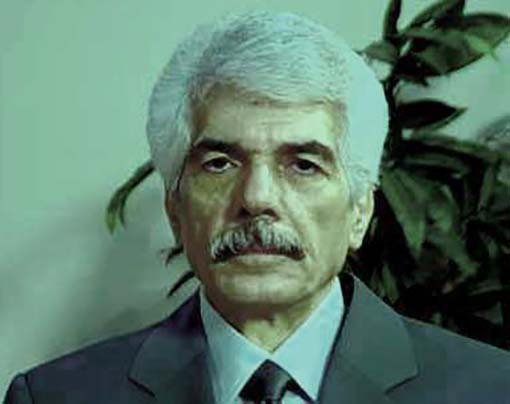
Ben Davies describes the efforts of the MKO propaganda to voice its support for “Syrian people”. “The support given to the MEK (or rather, the approval that some anti-Assad activists show in its general direction) is down to the fact that since the start of Syrian revolution against the Assad regime in 2011, the group has spiced up its usual monotonous, anti-Iranian regime rhetoric with anti-Assad rhetoric too,” he writes. It was just a few months later, in December 2014 that Davies posted a perfectly investigated article on how the MKO propaganda system works.

This former writer of Radio Free Syria warns about Maryam Rajavi’s hypocritical rhetoric for the Syrian opposition giving a brief of the MKO’s violent past, its alliance with Saddam Hussein and combat against its own people. “The problem is not with the words”, he writes about Maryam’s “well-worded performance” for Syrian people. “The problem is with who is speaking them. Rajavi is able to so fluently describe the horrors that a sadistic dictatorship puts people through because she runs one herself in the MEK’s base.”

Davies explains the cult-like system ruling the MKO fairly:

“The ways in which the mujahideen work are almost identical to the very regimes they ostensibly despise. Yes, they claim to be strongly opposed to Khamenei’s regime in Iran. Yes, they have a history of fighting against it (to the point of self sacrifice all too often), and yes, they claim to strongly support the Syrian revolution. Maryam Rajavi, the leader of the MEK, even met with former SNC leader Ahmed Jarba, and regularly condemns the Assad regime.

“Maryam and Massoud literally and metaphorically watch over the lives of their followers.

“While it is true that the MEK did indeed start out as an idealistic (and it still is, at the ground level, where many genuinely believe in fighting for Iran) organisation which helped to unseat the repressive regime of the Shah, it degenerated into a dystopic cult, ruled by the two-headed tyranny of the Rajavi couple. Members have been forced into self-criticism sessions in which they are forced to humiliate themselves if they get any thoughts about the opposite sex, men and women have been forced to divorce if they are married (although this didn’t stop Maryam and Massoud from getting together of course), members are taught that they must give themselves over utterly to Maryam and Masoud, dissenting members are imprisoned and killed.”

The journalist also refers to parts of an article written by the prominent journalist of the New York Times, Elizabeth Rubin who was first to label the MKO as “the Cult of Rajavi” in 2003. Rubin’s first-hand account on the life of MKO members in Camp Ashraf was at the time a huge revelation on the oppressive cult-like system the Rajavis run.

 Besides, Ben Davies quotes Rubin’s second article on the MKO in 2011 after she got to know about paid speakers such Rudy Guilliani, Howard Dean and Michael B. Mukasey who spoke on behalf of the MKO in the group’s rallies. “I thought I was watching The Onion News Network. Did Mr. Giuliani know whom he was talking about?”, Writes Rubin who is stunned with the exaggerated compliments of Giuliani for Maryam Rajavi.

Davies blames the then US Secretary of State Hillary Clinton for ignoring the warnings of journalists and scholars, delisting the MKO from the list of Foreign Terrorist Organizations of the US State Department. Thus, he warns the leaders of Syrian opposition on the futile and even destructive fallouts of approaching the Cult of Rajavi:

“I would personally very much like to know what Ahmed Jarba, then head of the Syrian National Coalition, was thinking when he met with Rajavi in May 2014. What was he hoping to achieve? Did he think that such a meeting would give his unpopular, disorganised, and so far ineffective coalition some sort of clout? Did he imagine that he would gain access to their bottomless pits of pecuniary resources? Was he naively trying to establish some perverse form of solidarity with the Iranian people through this organisation? In short, was he as heartless or thoughtless as the group’s western backers seemingly are?

“If he was seeking any of these things, he will be disappointed. Far from bringing him any clout, meeting with the MEK can only earn derision and disdain from the majority of well-informed, sane, non-fraudulent pro-democracy activists, Iranian and otherwise. As one US state department official frankly admitted about the group: “They are the best financed and organized, but they are so despised inside Iran that they have no traction.” Such a meeting only lends ammunition to pro-Khamenei propagandists, which they can use to smear the Syrian opposition by mere association with the Rajavi death cult.

“It isn’t like he could gain any form of useful resources or funding from such a meeting either. All the MEK’s money, when it isn’t being used to enable Maryam to live in luxury far from her suffering followers in the baked Iraqi desert, is used for endless lobbying in the west. Running a PR machine for a Middle Eastern 21st century Marxist cell cum Heaven’s Gate Sect takes up a lot of money, after all. He isn’t going to see a penny of it.

“If he was seeking to establish solidarity with the Iranian people, then he’d come to the wrong place altogether. Iranians despise the MEK; not only did it fight against their young men in the Iran-Iraq war and kill so many of its fellow Iranians, but it deliberately fed Saddam Hussein’s regime intelligence on Iranian targets to bomb, costing the lives of thousands more. The MEK has also teamed up with Israel to assassinate Iranian nuclear scientists.”

Although Davies announces his disdain for the Islamic Republic and Bashar Assad constantly, he is reasonable to denounce the MKO as a treasonous force. “Syrian revolution activists, freedom advocates and opposition members should think carefully when it comes to the MEK,” he write. “Yes it claims to support you in its finely crafted words and rhetoric, yes it does fill its websites with news of the resistance fighters’ military successes, and yet it has a history of fighting the regime in Tehran… By killing and fighting against its own people.”

February 20, 2017 0 comments
FacebookTwitterPinterestWhatsappTelegramSkypeEmail
Members of the MEK

Veteran MEK member Mohammad Ali Jaberzadeh Ansari died in Paris

Veteran MEK member Mohammad Ali Jaberzadeh Ansari (aka Ghasem) died in Paris last week. He was famous in the MEK for writing the speeches and communications of Massoud Rajavi, and was in charge of all the Mojahedin’s publications. While doing that he is also accused by many formers of acts of brutality, beatings and torture. Several writers responded to his death with their memories of what he had done to them while they were members of the MEK.

Mohammad Ali Jaberzadeh Ansari died in Paris

February 19, 2017 0 comments
FacebookTwitterPinterestWhatsappTelegramSkypeEmail
Iran Interlink Weekly Digest

Iran Interlink Weekly Digest – 180

++ A delegation of former MEK members met with MEP Ana Gomes in the European Parliament. They explained the situation of the MEK and described conditions for the members now in Albania.

++ Marking the anniversary of the 1979 Iranian Revolution several writers brought up the history of MEK activity at that time. Starting with the MEK’s attempts to side with Ayatollah Khomeini and then betraying the people and siding with Saddam Hussein One lengthy article from Ebrahim Khodabandeh from Nejat Society gives a detailed timeline. He starts when the MEK members were released from prison at the start of the revolution and follows their activities through the 1980-88 Iran Iraq war and afterwards. The article explains the MEK’s place in the Revolution.

++ Veteran MEK member Mohammad Ali Jaberzadeh Ansari (aka Ghasem) died in Paris last week. He was famous in the MEK for writing the speeches and communications of Massoud Rajavi, and was in charge of all the Mojahedin’s publications. While doing that he is also accused by many formers of acts of brutality, beatings and torture. Several writers responded to his death with their memories of what he had done to them while they were members of the MEK.

++ Many commentators talk about MEK switching off every other issue but repeating war mongering from US and Saudi etc. Only focusing on this one issue.

++ Col. Wes Martin wrote attacking Anne and Massoud Khodabandeh in The Hill. Several Farsi commentators dismissed this as an attempt by the MEK to boost their Google ratings. Further analysis points out that if President Trump dumps the MEK (which he will) it can be blamed on the ex-members. This represents the usual pattern for the MEK; creating a scapegoat before begging Trump for support as insurance for when it all goes wrong.

++ The MEK has instigated several fundraising programmes to ask ordinary people for money. Many writers publish facts and figures that point to this being part of an obvious money laundry scam – the MEK claims it is financed by contributions from ordinary people, but in fact receives large sums of money from other major donors. Articles say that the MEK claim to be financially self-sufficient is ridiculous. The MEK started getting external funding in Iran when they took money from the former Soviet Union. They then moved to France with support from the CIA, before going to Iraq where they were paid by Saddam Hussein for helping his war effort against Iran. MEK long term receipt of money from Saudi Arabia has always been obvious for everyone. There is not a day that the MEK has been financially self-sufficient.

In English:

++ Mazda Parsi of Nejat Bloggers writes ‘Once More “Backing the Winning Horse” Doesn’t Work for the MKO’. The article is an analysis based largely on Jon Gambrell’s piece for AP which exposes the links of several of President Trump’s choice of officials and cabinet members with the MEK. And a piece by Saeed Kamali Dehghan in The Guardian which also exposes this information. Parsi details the MEK’s crimes against Americans and their current attempt to whitewash this history and concludes by reminding us that the 2009 RAND Corporation report on the MEK describes the group as “skilled manipulators of public opinion”.

++ Mehr News and Habilian Association which defends the rights of MEK victims interviewed Rick Alan Ross, an American deprogrammer, cult specialist, and founder and executive director of the nonprofit Cult Education Institute. The interview focuses on the cultic nature of the MEK.

++ Iran Interlink responded to the defamatory article by Col. Wes Martin by republishing it on the website along with the comment: “Fake News, Alternative Facts and Opinions – MEK succumbs to the American disease of hysteria – The following OpEd by MEK advocate Col. Wes Martin was published first in The Hill, followed by Mojahedin Khalq’s “Iran Probe” and the “NCRI” websites. Iran Interlink has published it here as indication of how hysteria has become the new normal in American published writing. A form of madness appears to have infected US politics and now all and sundry are dancing on the Hill.” Wes Martin is the latest in a roll-call of former officials and academics who have put their reputations on the line by advocating for the MEK. For example, Martin has allowed the MEK to use his name to bizarrely accuse Anne Khodabandeh of supporting “psychological torture” by “…taking images of herself standing near the loudspeakers”.

++ Associated Press released a revised version of its previous article with the explanation:

“A Feb. 5 story by The Associated Press on contacts between people associated with the Trump administration and the Iranian opposition group Mujahedeen-e-Khalq, known as the MEK, stated as fact long-standing accusations against the group, including its alleged responsibility for the killing of Americans in the 1970s.

“The U.S. State Department and the FBI concluded that the group carried out those killings, and claims of responsibility were made at the time in the name of the MEK. However, the story should have stated higher up that the current MEK leadership disavows the killings, as well as several other allegations.

“The story also omitted the reason the State Department delisted the group as a foreign terrorist organization in 2012: The U.S. government acknowledged that the organization had renounced violence and had committed no terrorist acts for more than a decade.”

February 17, 2017

February 19, 2017 0 comments
FacebookTwitterPinterestWhatsappTelegramSkypeEmail
Newer Posts
Older Posts

Recent Posts

  • Why Mike Pompeo’s Embrace of the MEK Ignores Its Lack of Popular Base

    October 3, 2026
  • Fourteen years after US delisting, MKO terror cult’s political rebranding collides with its violent legacy

    September 30, 2026
  • How Did Maryam Rajavi Become All-Powerful in the MEK?

    September 29, 2026
  • Soraya Abdollahi’s Letter to International Human Rights Bodies

    September 28, 2026
  • How Did Maryam Rajavi Become All-Powerful in the MEK?

    September 27, 2026
  • Facebook
  • Twitter
  • Instagram
  • Youtube

© 2003 - 2025 NEJAT Society . All Rights Reserved. NejatNGO.org


Back To Top
Nejat Society
  • Home
  • Articles
  • Media
    • Cartoons
    • NewsPics
    • Photo Gallery
    • Videos
  • Publications
    • Books
    • Nejat NewsLetter
    • Pars Brief
  • About Us
  • Contact us
  • Editions
    • عربي
    • فارسی
    • Shqip