Nejat Society
  • Home
  • Articles
  • Media
    • Cartoons
    • NewsPics
    • Photo Gallery
    • Videos
  • Publications
    • Books
    • Nejat NewsLetter
    • Pars Brief
  • About Us
  • Contact us
  • Editions
    • عربي
    • فارسی
    • Shqip
Nejat Society
Nejat Society
  • Home
  • Articles
  • Media
    • Cartoons
    • NewsPics
    • Photo Gallery
    • Videos
  • Publications
    • Books
    • Nejat NewsLetter
    • Pars Brief
  • About Us
  • Contact us
  • Editions
    • عربي
    • فارسی
    • Shqip
© 2003 - 2024 NEJAT Society. nejatngo.org
Mujahedin Khalq; A proxy force

Michael Rubin : Outreach to the MKO is the worst possible move

Michael Rubin is a former pentagon official and a resident scholar at the American Enterprise Institute whose major research areas are the Middle East, Turkey, Iran and diplomacy. He publishes his analytical comments onthe Commentary Magazine. He has several times discussed issues relating the Mujahedin Khalq Organization (the MKO). Following the election of Donald Trump as the next US president, Rubin finds it crucial to discuss the possibility of embracing the MKO by the Trump administration. His post on the Commentary Magazine is titled “Will Trump Embrace the MKO?” .
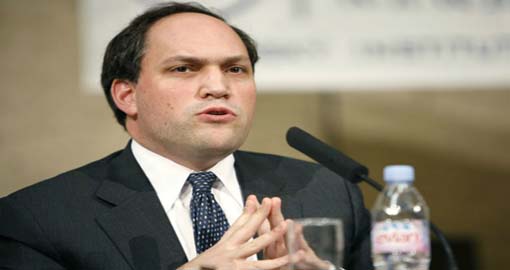
Rubin considers embracing the MKO as “going into an uncharted territory”. “Some Trump advisors appear to have endorsed the group at one point or another, “he asserts. “To be fair, the MKO is no longer designated a terror group, and its advocates argue that the only reason it was in the first place was in order to appease Iran. Not only prominent Republicans but also Democrats have appeared with Maryam Rajavi, the group’s leader.

However he warns the Trump administration about the truth of the MKO, ”Still, it is important to remember that the MKO is a Marxist, authoritarian cult with minimal support inside Iran.” Rubin’s claim on the MKO’s unpopularity inside Iran is based on his authentic experience of spending a seven- month long residence in Iran during the 1990s. Based on his real life account Iranian people have various views about the Islamic Republic and the exiled opposition groups but “the only unifying factor was the absolute antipathy with which they viewed the MKO, a group which allied itself with Iraqi dictator Saddam Hussein during the Iran-Iraq War.” He clarifies his account writing, “Many Iranians view the MKO in the same way as Americans view John Walker Lindh, the American Taliban. That the MKO conducted terrorism which victimized ordinary Iranians has only solidified Iranian public opinion against the group even further.”

 While Rubin is a detractor of the Iranian government and criticizes it ruthlessly, he is very sensible about the fraudulent propaganda of the MKO. He writes, “The MKO’s rhetoric about democracy can be alluring, but if the goal of the Trump administration is to contain, weaken, and roll back the influence of the Islamic Republic, then outreach to the MKO is the worst possible move because it would rally Iranians around the flag and strengthen the current regime.”

He advises President Trump by the ending sentence of his commentary: “The enemy of an enemy is not always a friend.”

Michael Rubin, Commentary Magazine

November 15, 2016 0 comments
FacebookTwitterPinterestWhatsappTelegramSkypeEmail
Former members of the MEK

Possible Trump Cabinet Members’ Links to the Mojahedin Khalq Could Spell Trouble for Iran

Among the foreign policy think tanks and pundits of New York and DC, few supported Trump or even countenanced the possibility of his election. Now that the dust has settled and the populist tycoon is soon to move into the White House, speculations abound as to what his foreign policy will be like.

What makes Trump hard to predict is that the 70-year-old billionaire has a history of zigzagging. He doesn’t seem to be a genuine ideological right-winger, but rather an opportunist who marketed a series of what could only loosely be described as “policies” because he knew they’d play well with his right-wing base. Prior to 1987, he was a registered Democrat, before flipping to the Republican party, then to Ross Perot’s right-wing Reform Party, then back to the Democrats, then—after Obama’s victory—back to Republicans once more.

During the campaign, too, he took vague and contradictory positions and flip-flopped on major issues. Banking on Hillary Clinton’s reputation as a hawk and the US population’s resentment at their country’s many foreign military adventures, Trump often appeared to take an isolationist stance, which sadly fooled even some left-wingers who claimed he was “less of a threat” to the world than his competitor. But on major issues, he often wanted more not less military intervention.

Trump advocated a higher military budget and an escalation of the fight against ISIS. While initially demanding 20 to 30,000 US boots on the ground, he later retracted this position and said Saudi Arabia should supply these forces. At times he said the UN-backed war in Afghanistan was a mistake and at other times he supported it. At the time of the UN-backed intervention in Libya, he supported bringing down of the country’s ruler, Moammer Gaddafi, but has since changed his position more than once.

It is safe to say that we can’t pretend to know the direction of Trump’s foreign policy. This seems to be evolving as the President-elect starts having to deal with a prospect of actually sitting behind the most powerful desk in the world.

What predictions can we then make regarding the possible Iran policies of the Trump administration?

Even though he promised to tear up the Iran Deal during the all three presidential debates, analysts have pointed out that he “probably” won’t do that, especially as the deal has the support of other world powers such as EU and Russia, whose Tehran-allied president Putin Trump has wooed for a while. On the other hand, the Israeli commentator Zvi Bar’el has pointed out that if Trump actually moves on to “fiddle with the nuclear deal,” this would favor Iran, as it could portray the US as a violating party and enlist the help of others. What remains unsaid is that any such belligerence on Trump’s part would also bolster the anti-reform and anti-deal hardliners in the Iranian establishment, some of whom have spoken favorably of Trump. Iran’s Supreme Leader Ali Khamenei came close to endorsing the business mogul when he said that “they call him a populist because he speaks the truth”.

What might make the Trump policy clearer is the make-up of his cabinet, in particular his national security team. This is where advocates of peace and democracy in Iran and the Middle East should find cause for worry.

Two of the main contenders for the position of Secretary of State are the former House speaker Newt Gingrich and the former UN ambassador John Bolton. Not only have both of these men supported a military attack on Iran and “regime change” there, they are some of the closest American “friends” of a notorious Iranian political-militant organization known as Mojahedin-e-Khalq (MEK) which is almost universally hated inside Iran after having collaborated with Saddam Hussein in the Iran-Iraq War.

MEK was designated a terrorist organization by the US until it was de-listed in 2012. After the overthrow of its patron, Saddam Hussein, in 2003, the group became mostly irrelevant and no figure of repute in Iranian politics would go anywhere near it after the evidence of the major abuses it perpetrated was laid bare over the last few years. 

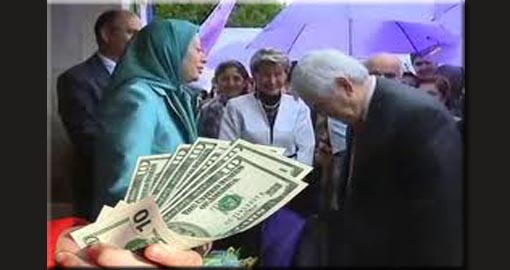
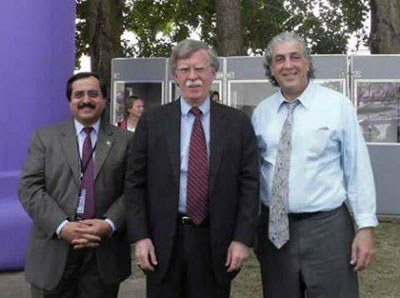
John Bolton also has a long history of support for MEK and is a frequent guest at its rallies. In March 2015, as the talks surrounding the Iran Nuclear Deal were reaching a sensitive stage, he called for a military attack on Iran and “vigorous American support” for MEK “aimed at regime change in Tehran”. Last summer, Gingrich spoke at MEK’s rally in Paris alongside Turki bin Faisal, the former head of Saudi intelligence. Gingrich went as far as to solemnly bow down to MEK’s leader, Maryam Rajavi, calling her by her favored title, “President-elect”. When running for the Republican party presidential nomination in 2012, Gingrich openly called for “replacing the leadership of Iran”, saying that this could be accomplished within a year.

With Gingrich and Bolton likely to be appointed to two of the highest national security positions in the Trump administration, will Rajavi’s totalitarian cult gain influence?

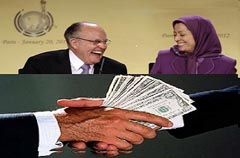
Other possible members of a Trump administration are also leading anti-Iran hawks. Former New York Mayor Rudy Giuliani, tipped for the position of attorney general, has been paid handsome sums to appear at MEK rallies. New Jersey governor Chris Christie, head of the Trump transition team, has called Iran a “greater threat than ISIS”. Mike Flynn, possibly the next secretary of defense, is on the record as saying, “I’ve been at war with Islam, or a component of Islam, for the last decade” and complaining about Iran’s “lies, their flat out lies, and then their spewing of constant hatred, no matter whenever they talk”.

Last but not least, one of the primary funders of Trump’s campaign is casino-owner Sheldon G. Adelson, who endorsed him in May and gave $25 million to an anti-Clinton Super PAC last week. Adelson is known for having advocated a nuclear strike on Iran. This 25th richest man in the world is also a close ally of Israel’s right-wing Prime Minister Benjamin Netanyahu, and a close associate of Gingrich, whose 2012 campaign he supported. Adelson is so close to Netanyahu that he pumps 50 million dollars a year into a free news daily, Israel Hayom, that attacks Netanyahu’s domestic enemies on both the left and the right. The two are so close that when there a bill that would have hurt Israel Hayom was tabled in the Knesset, Israel’s national legislature, Netanyahu opposed it at the cost of the collapse of his own coalition government. The next coalition government was formed only when his partners promised not to bring media-related bills that could hurt Adelson.

Trump’s Iran policy would depend on many factors, including his relationships with Moscow, Riyadh and Tel Aviv, his position on US military involvement in Iraq, Syria and Yemen, and the demands of the Republican-led Congress, the majority of which opposed the Iran Deal. But the links with MEK are a serious cause for worry, and the reason Iranians should be vigilant and make it clear that this cult doesn’t speak for the people of Iran, nor they are genuine advocates of democracy in the country.

Arash Azizi, Global voice,

November 13, 2016 0 comments
FacebookTwitterPinterestWhatsappTelegramSkypeEmail
Mujahedin Khalq; A proxy force

National Security: Could Maryam Rajavi blackmail her friends in high places – Giuliani, Bolton and Gingrich

As the reverberations of the American election echo and ripple across America and around the world, some of its repercussions are already being felt – demonstrations, racist attacks, global market and currency fluctuations, the Russian reaction and more. But as President-elect Trump considers who to appoint to the most influential positions in his Administration, the hopeful candidates may want to consider repercussions which may arise from their own backgrounds.

In particular, Rudi Giuliani, John Bolton and Newt Gingrich. Putting aside their weak personalities as well as their individual neoconservative agendas, the common thread which links these names together is their decade long support for the Mojahedin Khalq terrorist organisation (also known as Saddam’s Private Army or Rajavi cult).

Newt Gingrich bows to Maryam Rajavi

It is certain that neither these three hopefuls nor the MEK believed they would make a comeback. Rudi Giuliani, John Bolton and Newt Gingrich are not Republican favourites. But apparently, with the election of Donald Trump, their time has come. The MEK also didn’t think Trump could win and therefore advertised for Hillary Clinton in their websites.

Rudi Giuliani with Maryam Rajavi

In American politics, such things can be quickly glossed over, dismissed as political strategies. But Donald Trump does need to take this past into consideration. What Rudi Giuliani, John Bolton and Newt Gingrich do not know is that the MEK have a full record of all their meetings, dialogue and discussions. After being tutored by Saddam’s Intelligence service the MEK learned to film and record every conversation with an external person, particularly people like Rudi Giuliani, on every occasion whether in the US, Paris or Europe, even during dinner gatherings. This means that every time they hosted speakers and supporters in Paris or America these meetings were recorded. The MEK is now in possession of hundreds of hours of audio/video recordings as well as emails and phone calls of individuals like these three who have been mingling openly over the past decade with people they took to be ordinary oppositionists, but were in fact trained agents of the MEK and Saddam. The recordings can be edited and published by the MEK to suit the time, need and place.

John Bolton with Mojahedin Khalq operatives

The MEK’s hope was, of course, that by recording these private conversations they could be used in future to pressurise or even blackmail individuals if needed. They perhaps didn’t have any hope then that these individuals would reach such high office. As such this is a national security concern for the US. No one knows what is in the tapes and no one knows how these three, who have done everything for a fee in the past, would be able to stop the MEK from exposing them.

These three entered into paid lobbying for a group such as Mojahedin Khalq knowingly (perhaps not envisaging a day which they could be back in the game) accepting the end of their careers as officials. If they are now brought back and appointed to key positions, US policy could simply be taken hostage by a notorious terrorist organisation such as the Mojahedin Khalq.

Even if these three gave assurances that the paid support they gave to Maryam Rajavi and her terrorist cult Mojahedin Khalq has been done purely on straightforward lobbying grounds, no one can be certain that a decade of recordings and document gathering by the MEK would not end up producing enough leverage to highjack the national security of the United States and or its allies across the globe.

President Trump (and security advisors) simply can’t afford to take such a risk with the future of the country.

National Security: Could Maryam Rajavi (Mojahedin Khalq) blackmail her friends in high places – Rudi Giuliani, John Bolton and Newt Gingrich

Massoud Khodabandeh,Director at Middle East Strategy Consultants.

November 12, 2016 0 comments
FacebookTwitterPinterestWhatsappTelegramSkypeEmail
Iran Interlink Weekly Digest

Iran Interlink Weekly Digest – 167

++ Mahnaz Akafian, mother of MEK hostage Mohammad Ali Sassani, gave an interview to Mardom TV. Speaking with Parsa Sorbi, Akafian explained that in 1987 her son had been a soldier with the Iranian army. He was stationed in Kurdistan. But on the last day of his service he was captured by Komeleh – the armed anti-Iran Kurdish group. They traded him and other captives to the Saddam regime for a sack of sugar each. The Iraqis deliberately mistreated the POWs in order to coerce them into accepting ‘refuge’ with the MEK who would at least feed them. Ever since then the MEK have held him illegally. In spite of the fact he is a POW, no official body has done anything to help or rescue him. Now he has been forcefully transferred to Tirana and is again being held incommunicado by the MEK. Still, after all these years, explains his mother, the Pentagon and CIA do not allow any agencies to contact him or others like him in Tirana.

‘We mothers will never forget the nasty work of the Americans just to keep their favourite terrorist group from collapsing’, said Akafian. ‘We families are paying the price’. Akafian has travelled to Europe and came to the UK in 2008 where she spoke to several parliamentarians who expressed sympathy and pledged their help. Unfortunately, American pressure meant they had to back off. ‘As long as I am alive’, says Akafian, ‘I will try to rescue my son and have it written into the history books that this is what the Americans did to promote terrorism’.

++ Maryam Rajavi has announced a new phase of ‘toppling the regime by political assault’. She has dispatched her top people to the European bases, but especially to Tirana where she also sent her former husband Mehdi Abrishamchi. Those members burned and injured in various MEK violence were also sent to put emotional pressure on the members not to leave and abandon them. Rajavi said ‘we never said we would not change our phases but still our aim is to topple the regime’. Apparently, this explanation and the emotional pressure are not working. People that Iran Interlink has contact with in Tirana say they do not understand her reasoning and there are many unanswered questions. How can you say, 5,000 km from Iran, that a political assault will topple the regime? What, in any case, is a ‘political assault’ and how do I fit in? These are some of the questions raised by the MEK members.

People close to the leadership in Paris, however, say that Maryam has been assigned to perform the lobbying and media work for other anti-Iran terrorist groups which are backed by Saudi Arabia and Israel. So, if a terrorist group kills people in Baluchistan or Kurdistan, or there is a demonstration like the one in Pasargad, the MEK is tasked with claiming the act as belonging to them and creating publicity for them; creating external pressure on Iran on behalf of Saudi Arabia and Israel. These same people, however, say that being her, and in the absence of Massoud Rajavi, Maryam is stuck. She is not capable of taking people with her in a different direction as Massoud was. The members are falling by the way side. The MEK’s backers are used to seeing the organisation’s work under Massoud Rajavi and do not realise yet that Maryam is incapable of doing the same, Her ex-husband Abrishamchi does know this and does know her limitations.

In English:

++ Nejat Society reports on the letter writing campaign by families of MEK hostages warning the new UN Special Rapporteur on Human Rights in Iran not to fall for the same deception tactics of the MEK as her predecessor which led to his loss of face.

++ Iran Interlink reports that the authorities in Albania will be interested to learn that the MEK in Tirana are using the members as slave labour in new businesses they have set up in the capital. The businesses are partly to make money, but also to keep the members occupied. The MEK has used its members as slaves for thirty years and never paid or rewarded them in any way.

++ Eldar Mamedov, advisor in the European Parliament, has written ‘Europe Capitalizes on the Iran Deal’. Based on a report by the EP the article highlights the positives and progress made in relations between Iran and the European Union. However there is some lingering opposition described thus: “Despite the overwhelming support the house has given the report, a minority of MPs expressed vocal opposition. Some of the criticisms reflect what rapporteur Richard Howitt called ‘the lobbying interests’ of forces opposed to the nuclear agreement with Iran in the first place: right-wing pro-Israeli organizations, Saudi Arabia, and the exiled Iranian dissident group Mojaheddin-e Khalk (MEK), which was on the EU terror list until 2009 and removed on technicality. The hawkish American Jewish Committee blasted the report for allegedly ‘giving Iran a free pass on human rights and support for Assad regime,’ although it somewhat mitigated its criticisms when the EP adopted the last-minute amendment condemning Iran for its ‘calls for destruction of Israel and denial of Holocaust.’ MEK, meanwhile, managed to convince enough MPs to consider an amendment calling to investigate the 1988 massacres of political prisoners in Iran—a crime indeed, but one that Iranians themselves, and not foreign legislative bodies, are best placed to address. However, the house ultimately rejected this amendment.”

++ Nejat Society: “On Saturday October 29th former member of the Mujahedin-e Khalq Organization (the MKO) addressed a seminar in Koln University. Mr Davoud Arshad member of ‘No to Terrorism and Cults Society’ was invited to attend the seminar by the Union of students and scholars of Koln University. Human Rights, Energy Crisis and Cultural Interactions were subjects discussed in the seminar. Mr. Arshad spoke on the relations between violation of human rights in cults and expansion of terrorism in the world. As a victim of the MKO (the cult of Rajavi), Mr. Arshad describes how horribly members of the MKO particularly female members are victims of human rights abuses.”

++ Mazda Parsi writes about the MEK reaction to the events around Mosul in Iraq. The group’s silence and pretended ignorance of Daesh’s atrocities – calling them “Iraqi revolutionary tribes” – confirms MEK support for the group. Similarly, the MEK approach to the child victims of Yemen’s war (ignoring them) and the idealization of children in Syria as victims of the Russian and Syrian armies reflect the MEK’s beliefs. Parsi says that the MEK cannot condemn Daesh’s use of human shields because they don’t recognise it as being wrong. It is something they do themselves albeit in a different way. The MEK leaders exploit the members as human shields to protect their very existence. Even using them as slave labour for businesses. “It is absolutely wrong to conclude that leaders of the group are thinking of entrepreneurship. The leaders of the group are the ones who benefit from this. The members are being abused. The absolute truth is that the Cult of Rajavi does not value the lives of its members but it wants to make the most profit out of them. ‘The businesses belong to the MEK and are not part of a rehabilitation scheme’, according to Iran-Interlink. ‘MEK members exist in a state of modern slavery and have never benefitted from pay or worker rights during their decades of membership of the cult.’”

November 04, 2016

November 8, 2016 0 comments
FacebookTwitterPinterestWhatsappTelegramSkypeEmail
Albania

Albania: Toxic Waste, Cannabis and the Iranian Mojahedin Khalq are part of the same equation under the devilish Justice Reform

In October, City News published an article by Kastriot Myftaraj criticising Prime Minister Edi Rama’s Justice Reforms. The article outlines what Myftaraj calls a black market deal with Washington to bring thousands of Iranian members of the Mojahedin Khalq organisation to Albania. This is a large number in relation to Albania’s own population and its place amongst other NATO countries. What may have been profitable for some is very harmful for the country and its inhabitants.

Rama’s government is accused of covertly striking other harmful deals. First to transform the country into a large plantation of cannabis production. Second, to transform the country into a centre for processing trash and hazardous waste from Europe and beyond. Both deals earning multi-billion euros for a minority of people.

In order to push these deals, Myftaraj says Prime Minister Rama invented the idea of ‘Justice Reform’, but argues that it doesn’t take a genius to realise that ‘reformers’ of justice are not really interested in making the justice system functional or independent because if this were so, judges and prosecutors would reveal and punish the authors of the above three schemes.

An independent prosecutor would ascertain what agreement there was to allow the introduction of the Mojahedin Khalq organisation in Albania. According to Albania’s constitution, any such agreement should have been passed to Parliament for approval. An independent court, therefore, would prosecute the Prime Minister and the Minister of the Interior as criminals.

An independent prosecutor would only need to chart the chronology of events to understand the connection implicit in the title of the article. It is no coincidence that the bill for the arrival of garbage and hazardous waste before the Assembly came after the massive influx of Mojahedin.

The author of this equation – as expressed in the title of the analysis – is Soros, who lobbied Washington to support this scheme, aiming to provide income to finance the activities of his Foundation in the Balkans and beyond Europe.

In coming years, Albania will be known for the import of Mojahedin Khalq organisation, imported toxic waste and the mass cultivation of cannabis. Time will tell how the ‘reformed’ justice system will deal with this challenge. In conclusion, Myftaraj forecasts that Rama’s ‘Justice Reform’ will not affect the progress of this hellish business.

November 8, 2016 0 comments
FacebookTwitterPinterestWhatsappTelegramSkypeEmail
Iran

Iran-Albania to develop bilateral ties, MKO to open fast food

Having been completely relocated in Albania, the Mujahedin Khalq Organization (the MKO) is making futile efforts to reestablish its cult in the new hosting country. This is while a large number of members of the group have left it immediately after their resettlement in Albania. Besides, recent news on relations of the Iranian and Albanian government is not good news for the group.
On october19, the new Iranian ambassador in Tirana met Albania president Bujar Nishani. In the meeting to receive Gholamhossein Mohamamdnia’s letter of credentials, Nishani called Iran a great country with a rich culture and history. “Economic and cultural exchanges between the two countries are of great value to Albania,” he said.

On October31, president Rouhani also received credentials of the new Albanian ambassador, Genti Gazheli to Tehran. President Rouhani said the two countries have cultural common grounds and Iran is interested to develop ties and help carry out economic development and boost cultural, tourism and scientific relations with Albania.

According to the news media, both presidents emphasized on the expansion of cultural, political and economic ties. However, the news of Iran–EU newly-established relation based on nuclear deal seems to be worse than the news of Iran- Albania warm relation because the MKO lobbying groups and propaganda have spent too much to gain the support of certain EU countries.

    The European Union’s foreign policy chief Feredrica Mogrini had previously stated that the EU member states once again wanted to become Iran’s biggest trading partner. Thus, the cluster matchmaking event with the aim to foster cooperation between clusters from Europe with Iranian clusters, industrial associations and development agencies was held on October 17th and 18th, in Tehran.

The normalization of the ties between   Iran and Europe and Albania have left the MKO in a state of desperation and impasse. To break down such a condition, the MKO leaders have no way out except imposing more pressure on members. The cult jargons to indoctrinate the rank and file have been intensified in Albania. The group leaders are seeking new fraudulent tactics to maintain members inside the cult.

Furthermore, having lost their financial sponsor Saddam Hussein, the group authorities have to rely on new investments. Opening fast food restaurants in Tirana might be a last resort to earn money via a righteous way – selling Iranian national interests to the enemies of Iranians, have been so far a more common way to earn money used by the MKO.

Mazda Parsi,

November 7, 2016 0 comments
FacebookTwitterPinterestWhatsappTelegramSkypeEmail
Mujahedin Khalq Organization members' families

RC: MEK members in Albania have no access to the outside world

Mujahedin-e Khalq members have had no contact with the outside world for the last 35 years. They have had no contact with their families. Members are held hostages within the MKO Cult camps. The whereabouts of some are even unknown to their families.    

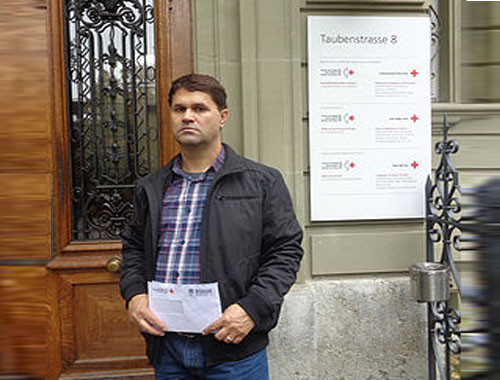
Mr. Mir Bagher Sedaghi has been seeking to find a way to visit his brother who is living at Mujahedin-e khalq Camp in Tirana, Albania.

He perused the issue through the Red Cross office of Bern. 

The Red Cross officials reported him their several months of perusing the case, last week.

Mr. Sedaghi reiterated the Red Cross report:

“More than twenty Iranian families living in Swiss have contacted us during the last year. They asked us to help them with sending their letters to their family members at MKO Camp in Tirana. We perused the subject through the Red Cross office of Tirana. The Red Cross office of Tirana sent us an email. The email reads:

“ the MEK is a closed cult. They don’t allow us to contact the members of the group. We couldn’t contact any member of the group. We just could hand the letters to the MEK officials. However we know that the letters have not reached the members.  The MEK members in Albania are not allowed to have phone, Internet or TV. They have no access to the outside world and we can do nothing for them. …”

Nejat Society reporting from Iran-Setaregan Website

November 6, 2016 0 comments
FacebookTwitterPinterestWhatsappTelegramSkypeEmail
Terrorist groups and the MEK

Human Shield, Useful tool for the MKO and ISIS

While the world-wide news media are focusing on the operation against ISIS in Mosul the propaganda websites of the Mujahedin Khalq Organization (the MKO) keeps on its deadly silence about any news on the battle of coalition forces against terrorists of Islamic State. As ISIS extremist terrorists have been already called as “Iraqi revolutionary tribes” by the MKO propaganda, meaningful ignorance of the group regarding the atrocities of ISIS confirms their sympathy for them.
The latest news on Mosul indicated huge aspects of atrocities of the ISIS radical Islamists. Islamic State fighters have taken “tens of thousands” of people hostage and are herding them towards the city of Mosul for use as human shields as the battle for the militant group’s last major Iraqi stronghold intensifies, the United Nations has told the Guardian.

Considering the massacre of Yemeni civilians, the same position is taken by the MKO. Yemeni children are forgotten in the MKO propaganda while children of Aleppo have become an icon in the group website. The former are victims of the enemy of Iran, Saudi Arabian forces and the later are said to be victims of the friends of Iran, Syrian and Russian forces.

A glance on the group’s propaganda media demonstrates its eagerness to be the voice of Saudi Arabia against Iran. Definitely, ISIS and Syrian rebels are considered friends of MKO as well. Actually, the long-life policy of the leaders of the MKO has always gotten in line with policies of enemies of the Iranian Government, regardless of ethics and moralities and justice. Double standard is the tool for hypocrites.

Moreover, atrocities of the ISIS terrorists might seem so natural to the MKO that they cannot take position against it. Victimizing people by using them as human shields is a very common tactic which has been used by the MKO leaders several times. The MKO-provoked clashes with Iraqi forces are significant examples of such deceitful tactic.

After the Iraqi Government took control of Camp Ashraf in 2008, the group leaders made efforts to create problems for Iraqi government to prevent them from performing its obligations. On July 29, 2009 there was a report of deadly clashes between hundreds of Iraqi police forces who wanted to settle a police station in Camp Ashraf and the residents of the camp. The clashes left 11 members dead and scores injured from both side. While the reasons for the clash was said to be unclear at first, it was then became clear that it was a pre-organized plan indoctrinated by group leaders. Devotees of Massoud Rajavi were converged to provoke Iraqi forces to trigger the clash by forming a human shield.  That was well videotaped and broadcasted by the organization itself. While the Iraqi Police had the obligation to protect residents of the camp, the MKO leaders used the opportunity to fuel their propaganda machine.

There are a lot of individuals out there including ex-members of the MKO, Journalists and experts who have tried to tell the world of the concerns about the members not living but enslaved by MKO against their own will. They have always warned the international community to beware how the Cult-like ruling system of the MKO exploits insiders as human shields to safeguard its own entity.

Having been relocated in Albania hostages of the MKO are still being exploited by the Cult leaders. As Iran-Interlink reports, the organization is buying several fast food restaurants in the city in order to use them for its members to work there.

It is absolutely wrong to conclude that leaders of the group are thinking of entrepreneurship. The leaders of the group are the ones who benefit from this. The members are being abused. The absolute truth is that the Cult of Rajavi does not value the lives of its members but it wants to make the most profit out of them. “The businesses belong to the MEK and are not part of a rehabilitation scheme”, according to Iran-Interlink. “MEK members exist in a state of modern slavery and have never benefitted from pay or worker rights during their decades of membership of the cult.”

Living their luxurious life in Paris, leaders of the Cult of Rajavi do not have any regard for humanity. They have proved to care only for their own survival. They keep violating human rights continuously in the camp while they pretend they care for humanity. They only care for themselves and the members are served as playthings in the hands of their corrupt leaders.

Mazda Parsi

November 5, 2016 0 comments
FacebookTwitterPinterestWhatsappTelegramSkypeEmail
Nejat Publications

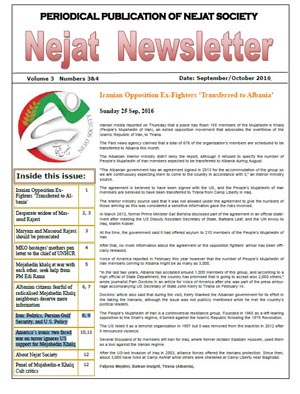
Nejat NewsLetter NO.40

Inside This Issue:

  1. Iranian Opposition Ex-Fighters ‘Transferred to Albania’
  2. Desperate widow of Mas-soud Rajavi
  3. Maryam and Massoud Rajavi should be prosecuted
  4. MKO hostages’ mothers pen letter to the chief of UNHCR
  5. Mojahedin khalq at war with each other, seek help from PM Edi Rama
  6. Albanian citizens fearful of radicalised Mojahedin Khalq neighbours deserve more information
  7. Iran: Politics, Persian Gulf Security, and U.S. Policy
  8. America’s ironic two faced war on terror ignores US support for Mojahedin Khalq
  9. About Nejat Society
  10. Panel of Mujahedin-e Khalq

Download Nejat NewsLetter ISSUE NO.40

November 3, 2016 0 comments
FacebookTwitterPinterestWhatsappTelegramSkypeEmail
Europe

Europe Capitalizes on the Iran Deal

As Washington think-tanks, with some notable exceptions, keep churning out papers advising the next American president to double down on containing Iran, the European Parliament adopted a report on October 25 that is strikingly different in tone and substance. Drafted by the UK Labour Party politician Richard Howitt , the motion received overwhelming support in the house: 459 votes in favor, with 174 against and 67 abstentions. It outlines a set of recommendations for the EU and its member states to fully capitalize on the opening provided by the historical nuclear agreement between Iran and the P5+1.

The report praises the Joint Comprehensive Plan of Action (JCPOA) as a success of a multilateral diplomacy, which has already boosted economic and trade connections between Europe and Iran. The report calls on both the EU and Iran to build on this opening by expanding cooperation in counter-terrorism, environmental protection, academic and cultural exchanges, and aviation and maritime safety.

The report is notable also for the respectful and constructive tone it uses. Although by no means short on legitimate criticisms of Iran, it avoids the kind of bashing that can only provoke angry reactions and further alienation. For example, it recognizes the complexities of Iran’s internal politics and does not seek to take sides in Iran’s domestic political debates. It acknowledges the long history of relations between Iran and various European countries as a foundation to further expand ties. Instead of blasting the “repressive theocracy,” it states that “Iran’s revolutionary legacy and constitution as an Islamic Republic” should not be an obstacle to finding common ground on issues of democracy and human rights, where possible. These are novel formulations for an official position of an elected Western body on the Islamic Republic, and convey an intention to have a dialogue of equals.

Lingering Opposition

Despite the overwhelming support the house has given the report, a minority of MPs expressed vocal opposition. Some of the criticisms reflect what rapporteur Richard Howitt called “the lobbying interests” of forces opposed to the nuclear agreement with Iran in the first place: right-wing pro-Israeli organizations, Saudi Arabia, and the exiled Iranian dissident group Mojaheddin-e Khalk (MEK), which was on the EU terror list until 2009 and removed on technicality. The hawkish American Jewish Committee blasted the report for allegedly “giving Iran a free pass on human rights and support for Assad regime,” although it somewhat mitigated its criticisms when the EP adopted the last-minute amendment condemning Iran for its “calls for destruction of Israel and denial of Holocaust.” MEK, meanwhile, managed to convince enough MPs to consider an amendment calling to investigate the 1988 massacres of political prisoners in Iran—a crime indeed, but one that Iranians themselves, and not foreign legislative bodies, are best placed to address. However, the house ultimately rejected this amendment.

A different kind of opposition emerged from the Alliance of Liberals and Democrats (ALDE), traditionally the third pillar of European politics, after Christian democrats and social democrats. Although ALDE does not oppose the nuclear agreement as such, it rejected the report on the basis that it was “weak” on human rights and “has not preconditioned” any improvement of relations with Iran on tangible progress in this area.

These criticisms do not hold water. The report has no fewer than 34 references to human rights in its 51 paragraphs. It contains very detailed, carefully crafted wording on the death penalty and on the rights of women and religious minorities. It also makes a clear appeal to Iran to release all political prisoners. In the process of drafting the report, the rapporteur and his team consulted extensively with credible human rights organizations, such as Human Rights Watch and Amnesty International.

But pre-conditioning any cooperation on specific, unilaterally imposed benchmarks could have easily undermined any prospects for progress, for example, by leading the Iranians to cancel talks with the EU on human rights scheduled for November 9 in Brussels. Crucially, these talks involve the Iranian judiciary, the bastion of the conservatives and the main source of the human rights violations. As Howitt said during the debates on his report, “those who say they support human rights, but would jeopardize our leverage to influence them, should examine their own consciences.”

As to the regional situation, the report is careful not to take sides between Iran and its antagonists, such as Saudi Arabia. The critics would have liked to see a strong condemnation of Iran’s support for the Bashar al-Assad regime in Syria and the removal of clauses that acknowledge the EU and Iran’s common interest in fighting the so-called Islamic State. Instead, the report acknowledges that by following the JCPOA the EU now has increased its leverage over Iran while maintaining ties with Saudi Arabia, Turkey, and other traditional Western allies in the region. The EU is thus in a unique position to play the role of an honest broker in the conflicts ravaging the region, from Syria to Yemen.

Indeed, it is disingenuous for the critics to claim that they support the nuclear agreement while at the same time putting so many conditions to any cooperation with Iran. The irony is that such an approach would not only squander an opportunity to build a new relationship with Iran but also undermine the nuclear deal itself. The JCPOA is not something once achieved and put in the freezer until the regime in Iran changes—which, one suspects, is the real agenda of many of the critics of the report. For the agreement to survive, all sides need incentives to comply, and that requires trust. This process would be so much more difficult to accomplish in the absence of a broader rapprochement.

Glimmers of Hope

There are signs that the pragmatic approach espoused by the report works. Contrary to the war of words that usually followed EP resolutions in the past, the Iranian foreign ministry welcomed the report as a positive indication that the EU seeks closer relations with Iran. Of course, the reactions of other factions within the regime are yet to be seen. As the string of totally unacceptable arrests and harassment of dual Western-Iranian nationals shows, influential forces that thrive on confrontation exist in Iran as well as in the West. But ultimately, this is how diplomacy works – by taking patient, reciprocal steps, that strengthen moderates on all sides and eventually lead to the demise of old enmities.

This most recent statement reflects a broader European approach to relations with Iran. Just as the EP was debating the Howitt report, the EU lifted sanctions on Bank Saderat, which, however, remains on the OFAC (US Treasure’s Office of Foreign Assets Control) black list. The EU Commissioner for humanitarian aid and crisis management Christos Stylianides, meanwhile, was in Tehran on the same day committing additional 6 million euros to help Afghan refugees in Iran, bringing the total EU humanitarian support to 12.5 million euros in 2016.

These steps by the EU executive and the parliament reinforce the upward trend in the EU-Iran relations. This rapprochement will enable both sides not only to pursue common interests but also to address problematic issues such as human rights and some aspects of Iran’s regional policies without derailing the relations. Given the investment the EU has already made in these relations, it won’t likely follow the new US president if he or she chooses to heed the advice of hawkish Washington-based think tanks and return to the policy of sanctions and isolation of Iran. And that’s another reason why the next American president would be wise to disregard such advice.

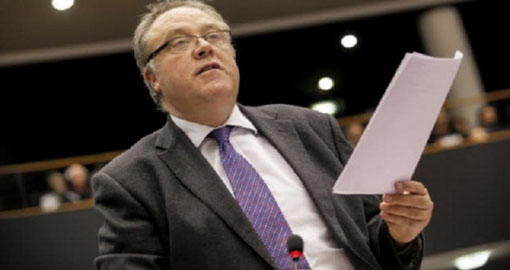
This article reflects the personal views of the author and not necessarily the opinions of the European Parliament.  Photo: Richard Howitt

By Eldar Mamedov,

November 3, 2016 0 comments
FacebookTwitterPinterestWhatsappTelegramSkypeEmail
Newer Posts
Older Posts

Recent Posts

  • How the MEK tried to sell a stage stunt as grassroots support?

    October 4, 2026
  • Why Mike Pompeo’s Embrace of the MEK Ignores Its Lack of Popular Base

    October 3, 2026
  • Fourteen years after US delisting, MKO terror cult’s political rebranding collides with its violent legacy

    September 30, 2026
  • How Did Maryam Rajavi Become All-Powerful in the MEK?

    September 29, 2026
  • Soraya Abdollahi’s Letter to International Human Rights Bodies

    September 28, 2026
  • Facebook
  • Twitter
  • Instagram
  • Youtube

© 2003 - 2025 NEJAT Society . All Rights Reserved. NejatNGO.org


Back To Top
Nejat Society
  • Home
  • Articles
  • Media
    • Cartoons
    • NewsPics
    • Photo Gallery
    • Videos
  • Publications
    • Books
    • Nejat NewsLetter
    • Pars Brief
  • About Us
  • Contact us
  • Editions
    • عربي
    • فارسی
    • Shqip