Nejat Society
  • Home
  • Articles
  • Media
    • Cartoons
    • NewsPics
    • Photo Gallery
    • Videos
  • Publications
    • Books
    • Nejat NewsLetter
    • Pars Brief
  • About Us
  • Contact us
  • Editions
    • عربي
    • فارسی
    • Shqip
Nejat Society
Nejat Society
  • Home
  • Articles
  • Media
    • Cartoons
    • NewsPics
    • Photo Gallery
    • Videos
  • Publications
    • Books
    • Nejat NewsLetter
    • Pars Brief
  • About Us
  • Contact us
  • Editions
    • عربي
    • فارسی
    • Shqip
© 2003 - 2024 NEJAT Society. nejatngo.org
Mujahedin Khalq; A proxy force

The Well-Funded Exile Group’s Desperate Attempts to Sabotage Diplomacy on Iran

A month ago, intense negotiations in Lausanne, Switzerland, resulted in a framework for a final nuclear deal between six world powers and Iran. As negotiators from Iran and the P5+1 (China, France, Russia, the United States and United Kingdom, plus Germany) continue nuclear talks to reach a comprehensive deal before the end of June, opponents of diplomacy and potential détente have intensified their efforts to derail any accord.

Prominent in this effort is exiled Iranian dissident organization, the Mujahedin-e-Khalq (MEK or MKO, also known as the People’s Mujahedin of Iran, or PMOI) which was classified as a terrorist organization by the EU until 2009 and by the United States until 2012. MEK is bitterly opposed to the current Iranian government and seeks its overthrow.

The cult-like organization has spent vast sums of money to lobby political elites on both sides of the Atlantic for recognition as an alternative to the current Iranian government. Since a negotiated, multilateral deal with Iran would effectively bury prospects of Western-led regime change in Iran, the MEK is attempting to leverage its extraordinary influence to sink talks.

Regime change in Iran, by any means, is the only item on the MEK agenda. Like experienced salesmen, its members employ different tactics to “sell” this approach to various audiences.

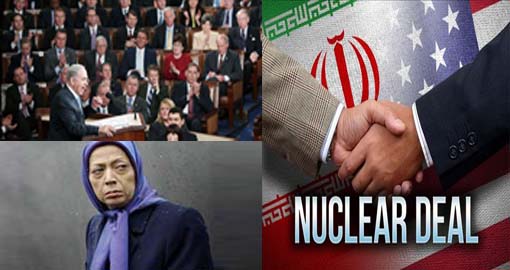
In testimony before the House Subcommittee on Terrorism, Non-proliferation and Trade last month (delivered via videoconference from Paris), Maryam Rajavi, the self-proclaimed “president-elect” of the National Council of Resistance of Iran (NCRI), which serves as the MEK’s front office, suggested the best way for Western nations to combat the threat posed by ISIS is to oust the regime in Iran. Of course, no reference was made of the fact that Iran was one of the first countries to commit blood and treasure to the fight against ISIS. Nor did Rajavi mention that, when ISIS first overtook Mosul in the summer of 2014, the MEK hailed the militant group and its supporters as “part of a popular revolution against the Maliki regime” in Iraq, which the MEK views as an Iranian pawn. Once the U.S. military joined the fight against ISIS, however, it became politically untenable to defend or minimize its crimes. So, the MEK quickly changed its tune, suddenly portraying ISIS as Iran’s creation.

Exploiting local political sensitivities in Europe, the MEK has chosen a different tactic to advocate for government overthrow. To European audiences, the MEK has emphasized Iran’s human rights issues, such as the high number of executions in the country, as well as issues to do with women rights and infringements on religious liberty. In mid-April, MEK operative Firouz Mahvi, a member of NCRI’s so-called “Foreign Affairs Committee” and a fixture at the Brussels-based European Parliament (EP), sent an e-mail to parliamentarians (MEPs) calling on them to adopt an urgent resolution on capital punishment in Iran. The proposed resolution would have almost certainly led to the cancellation of a scheduled visit by members of the Majles, the Iranian parliament, to Brussels. In fact, this very thing happened last year: following the adoption of a different resolution on Iran critical of its human rights record, the Majles delegation cancelled a planned trip in protest.

Inter-parliamentary dialogue is one of the only institutionalized platforms for interaction between officials from the EU and Iran. For progress in EU-Iranian relations to occur, whether on the nuclear issue or otherwise, it is essential to keep Iranian conservatives at the table.

Realizing the issues at stake and familiar with the MEK’s modus operandi, the parliamentary majority read the situation correctly: The MEK’s push for a resolution on capital punishment had little to do with genuine concern for the human rights of Iranians, and everything to do with ongoing attempts to sabotage the nascent EU-Iran dialogue.

When their plan failed, MEK associates, this time under the guise of the dubious “Iranian Refugee Association in Belgium” (it has neither an e-mail address nor a website) launched a call for MEPs to boycott the May visit from the Iranian delegation. While the call was not heeded by Polish conservative Janusz Lewandowski , chair of the EP delegation for relations with Iran, other MEPs fell into the MEK’s trap. For example, Beatriz Becerra, a Spanish MEP from the centrist Alliance of Liberals and Democrats of Europe (ALDE) challenged her colleagues to raise new legislation in the Iranian parliament, which is said to limit the sexual and reproductive health rights of Iranian women, with delegation members. She also tabled a written question on the issue to the Council of the EU and the European Commission. Becerra may be a well-intentioned defender of women rights, but her aggressive advocacy on behalf of the MEK and Maryam Rajavi certainly does more harm than good.

Another common MEK strategy is to hold public hearings in the EP, like the one organized last month on religious freedom in Iran by the European Conservatives and Reformists (ECR) group. ECR is a strange mix of seemingly respectable mainstream parties such as British Conservatives and fringe right-wing outfits, such as the Dutch Calvinist party (which until recently forbade women from becoming members) and the Islamophobic, anti-immigrant Danish People’s Party. When it comes to foreign policy, what binds these disparate forces together is their fervent support for Israel, extreme hostility to Palestinians and hardline hawkishness on Iran. In the recent past, even after the election of Iranian president Hassan Rouhani, the ECR tried to block the first official visit of European parliamentarians to Tehran. The bid failed and the delegation visited Iran in mid-December 2013.

In light of this, it is unsurprising the ECR yielded the floor to Sanabargh Zahedi, chair of NCRI’s so-called “Judicial Committee.” Presenting himself as an “Islamic scholar,”  even though there was no evidence of his scholarship on Islam or any other field for that matter, Zahedi asserted that, “unless all countries put improvement of human rights as a pre-condition to doing business and trade with this regime, we will not see any real progress in any area, including the nuclear issue.”

None of this is to say that human rights in Iran should not be a matter of grave concern. [..]

Still, there are more effective ways to address these crucial issues than calling for regime change, undermining nuclear negotiations, or following the agendas of those with obvious ulterior motives. Ultimately, the nuclear deal and the possibility of engagement with Iran hold a better promise for achieving real progress in the human rights sphere than any delusions about  “regime change.” This is certainly how respectable human rights organizations and activists see it.

Hadi Ghaemi, director of the New York-based International Campaign for Human Rights in Iran welcomed last month’s Lausanne agreement as an important step toward creating better conditions for discussing human rights with Iran. Those in the West who genuinely care about the human rights of Iranians would do well to listen to these voices rather than let themselves become puppets in the MEK’s destructive schemes.

Eldar Mamedov, Muftah.org

May 10, 2015 0 comments
FacebookTwitterPinterestWhatsappTelegramSkypeEmail
Mujahedin Khalq; A proxy force

Not The Onion: Tom Cotton Befriends Radical Marxist Muslim Cult

How badly does Senator Tom Cotton (R-AR) want to squander a deal with Iran over its civilian nuclear program? Bad enough to become the fastest rising star of the neoconservative wing of the Republican Party, yes, but this week the freshman senator went even further than sending a letter to the Iranian government.

On Wednesday, Cotton participated in a panel called “After Iran Nuclear Framework Agreement, Now What?” organized by the Organization of Iranian American Communities (OIAC) in a Senate meeting room. The OIAC, through spending millions of dollars lobbying, is responsible for getting an Iranian dissident terrorist group removed from the State Department’s official list of terrorist organizations in 2012 by then-Secretary of State Hillary Clinton.

That would be the Mujahedin-e-Khalq (MEK), a group that assassinated half a dozen Americans in Iran and targeted many others in the run up to the 1979 Islamic Revolution. The MEK was founded with Marxist, feminist, and Islamic tenets and incorporated cultish tendencies including personality worship of its husband-wife founders, forced divorces for elderly women, and a forbiddance to marry for young women.

The revolutionary group considers itself a government-in-exile, ready to return to Iran once the current regime is overthrown. The MEK has no measure of support from the Iranian people.

Its possible Tom Cotton is (willfully?) ignorant to the leftist, tyrannical values and aspirations of the MEK. But like Howard Dean, Rick Perry, Rudy Giuliani, and many other politicians, there are big opportunities to work together for mutual political growth and enrichment.

Here’s a tweet heralding the alliance between Cotton and the MEK-fronting OIAC:

For Cotton and the MEK, prospects of their shared enemy in Iran reaching a nuclear deal inspires outrageous rhetoric. The female co-founder of the MEK, Maryam Rajavi, has said that toppling the government in Iran is the best shot the US has at defeating the Islamic State. Cotton has said bombing Iran would last no longer than how long proponents of the 2003 Iraq War promised.

A little more on the MEK: Prior to giving themselves up to Americans in the immediate aftermath of the 2003 US invasion in Iraq, the group was financed by Saddam Hussein (remember the reason for invading, his support for terrorists?). Since then their anti-imperialist leanings have given way to promoting “human rights,” and they’ve dropped their anti-Israel schtick for a partnership with the Mossad, Israel’s secret intelligence service. Through American intelligence officers, NBC News and Seymour Hersh have each concluded that the MEK carried out assassinations on five Iranian nuclear scientists after training with Mossad.

Neocons and Marxist-Islamist terrorist cultists joining together to undermine US-led international negotiations to prevent war with Iran. Politics makes strange bedfellows.

by Nick Hankoff, VoicesofLiberty.com

May 9, 2015 0 comments
FacebookTwitterPinterestWhatsappTelegramSkypeEmail
Iran Interlink Weekly Digest

Iran Interlink Weekly Digest – 95

++ Paris this week saw the start of the court case against leading MEK member Mehdi Abrishamchi on terrorism charges. Several former MEK members staged a picket in support of the prosecution.

++ More responses are rumbling through the Commentariat in reaction to Maryam Rajavi’s speech to Congress. The underlying theme is ‘how on earth did they end up bringing Maryam Rajavi to speak?’ Most concluded that this exposes high levels of financial corruption at the top levels of the US political system. But in that respect only America and Israel are paying the price because Iran is able to use this situation to its favour in the negotiations. By itself the event is a comedy – “bringing the representative of ISIS to talk against ISIS”. Some point out that Maryam Rajavi didn’t even attempt to say anything about ISIS to show any expertise. Worse than that she announced that to fight ISIS you need regime change in Iran fronted by the MEK; which will take the credit and take power. Rajavi complains that nobody should believe there are differences between Sunni and Shia because both Iran and ISIS are both after power. Then immediately follows that by demanding regime change in Iran to give power to the MEK! That, according to her and completely missing her own irony, is the way forward. Even the Americans acknowledge that the only effective force pushing back ISIS in Iraq is the Iranian backed militias alongside the Iraqi army. Some analyses conclude that the presence of Rajavi shows the utter weakness of the Israelis and the Americans. The Israeli lobby and its sub class have been brought so low and powerless as to play this card.

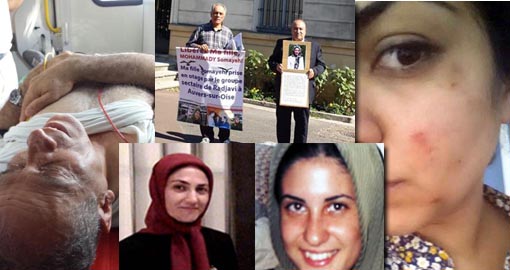
++ The Mohammadi family have written to state that they have not and will not give up on their struggle to make contact with their daughter Somayeh. They, along with other families, are asking ‘where is this so-called international community, where are the human rights organisations? How come, when it comes to the Mojahedin they can do what they want? Why are these organisations so useless?’

++ The MEK is preparing for its annual show in Villepinte celebrating the start of its terrorist campaign inside Iran and again the Commentariat is exposing the MEK saga of buying both audience and speakers.

++ Ehsan Bidi from Albania says the MEK has changed its tactics this week. Now MEK commander Afshin Ebrahimi is asking ex members “why are you still here?” He is encouraging them to leave Albania illegally. Bidi says this makes it even more obvious that they want to establish a base in Albania. The MEK has brought money, forces and have bought land and property there for a reason.

++ Mir Bagher Sedaghi from Setaregan Assoc in Switzerland published a short article asking ‘Is Rajavi as great as she thinks she is, or is she just daft?’ The article quotes Rajavi claiming victory “because the agents of Iran’s Intelligence ministry – Daniel Benjamin and Robert Ford – who tried to stop Maryam Rajavi speaking to Congress failed and we won.”

In English:

++ Fallout from Maryam Rajavi’s appearance by video conference in the US Congress continued this week. Some former MEK members wrote in English to congratulate Robert Ford and Daniel on their stance.

Daniel Larison in The American Conservative writes “The refusal of these former officials to play along with some hawks’ disturbing admiration for the MEK is appropriate, but it is unfortunate that it should be necessary. The attention and praise lavished on the MEK in recent years by former officials, retired military officers, and politicians has been an embarrassing spectacle. Now the strange infatuation that many hawks have with the “former” terrorist group is spilling over into the regular business of Congress. As if to underscore how misguided inviting Rajavi was, a copy of the cult leader’s testimony shows that she intends to use her time to argue for regime change in Iran. Ali Gharib comments: But more to the point, the MEK has always had only one goal: the overthrow of the Iranian regime. For decades, it has tried to shoehorn regional and geopolitical dynamics into its aim, irrespective of any salient connections.”

Atwiw.com’s take on the event is even more blunt. After unpicking the MEK’s attempts to buy respectability, the jokey article concludes: “So, hey, if you’ve ever wanted to testify before Congress but there’s no discernible reason why they should invite you to do so, plus maybe you’ve got some unsavory things in your past that could complicate matters, don’t worry! Just fork over a few tens of thousands to your favorite congressperson and you could soon find yourself offering your “expertise” (or irrelevant ranting, but whatever, you bought your time fair and square) to our nation’s top legislators! Good luck!”

Mazda Parsi in Nejat Bloggers argues that the “Appearance of the self-claimed president of National Council of Resistance, Maryam Rajavi in a hearing in US Congress indicates the absurdity of the claim of fighting against terrorism. Although the credibility of this so called leader is questionable getting support among some US congressmen for her presence in the congress is interesting and creates doubts in everybody’s mind.”

++ Also in America, Eli Clifton writing in Lobelog reveals that ‘Tom Cotton Allies Himself with the MEK’. “It appears that Cotton, who has quickly displaced Lindsey Graham as the Senate’s most hawkish member, has decided that it is necessary – perhaps even politically desirable – to make common cause with a group that has committed serious human rights abuses, allied itself for some two decades with Saddam Hussein, and carried out terrorist acts, including against U.S. citizens and servicemen – all in the interests of sabotaging an Iran nuclear agreement.”


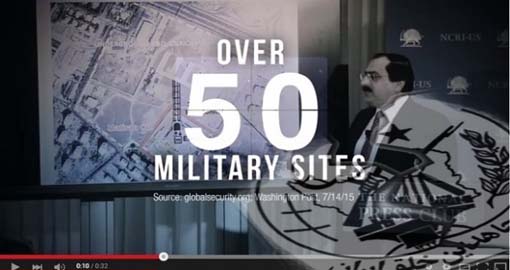
++ On the subject of the nuclear negotiations Akbar Ganji’s article in the Huffington Post suggests ‘Why Tehran Fears the Iraqization of Iran on Nuclear Inspections’. In a well-argued piece he analyses Iran’s mistrust of American intentions. “Iranian leaders are deeply concerned about the IAEA inspection regime, and are afraid that Iran will meet the same fate as Iraq’s, right before its invasion in 2003, when the agency demanded inspecting even Saddam Hussein’s palaces. The IAEA searched everywhere and found no evidence of a nuclear program, yet Iraq was invaded… Ayatollah Khamenei and the military leaders believe that, beginning with the day after signing the final agreement, Israel and the Mujahedeen-e-Khalq will surely declare every single military site as “suspect,” claiming that the Islamic Republic is secretly trying to make nuclear bombs there. If Iran does not allow inspecting the “suspect” sites, Israel and MEK will declare victory, and if Iran does allow the inspection, the agency may eventually demand to inspect even Khamenei’s bedroom.”

++ Iran Interlink believes ‘Maryam Rajavi and her cult brand prove too toxic for The Hill’ after an article by long term MEK supporter Struan Stevenson omitted to mention either Maryam Rajavi or the MEK.

May 9, 2015 0 comments
FacebookTwitterPinterestWhatsappTelegramSkypeEmail
Mujahedin Khalq; A proxy force

Tom Cotton Allies Himself with the MEK

Freshman Sen. Tom Cotton (R-AR) garnered two profiles this week, one in The Wall Street Journal and another in The New York Times, highlighting his efforts to disrupt normal Senate procedure in hopes of adding “poison pill” amendments to the Corker-Cardin bill that, if passed, would give Congress a say in any comprehensive agreement reached between the P5+1 and Iran.

But in a Senate meeting room Wednesday, Cotton, seated alongside Sen. Thom Tillis (R-NC), may have outdone himself by joining a panel hosted by the Organization of Iranian American Communities (OIAC), a front group for the Mujahedeen-e-Khalq (MEK or MKO).

Cotton and Tillis were not alone. They were joined on the OIAC panel by former Ambassador to Morocco Marc Ginsberg, Senior Belfer Center fellow (and United Against Nuclear Iran advisory board member) Olli Heinonen, former Undersecretary of State for Arms Control and International Security Robert G. Joseph, and the former director of the National Counter Proliferation Center, Joseph R. DeTrani.

The MEK, which has worked hard – and spent a lot of money — to gain respectability in Washington since its armed units surrendered to U.S. forces in Iraq in 2003, is believed to have been responsible for the killing of six Americans in Iran between 1973 and 1976. Exiled following a power struggle in the early years of the Islamic Republic, the group fought alongside Saddam Hussein in the Iran-Iraq war. Following a lengthy lobbying and legal campaign that included the payment of substantial honoraria to prominent U.S. politicians and retired national-security officials, the MEK was removed from the State Department’s terrorism list in 2012.

The group, along with its numerous fronts in the U.S. and Europe, describes itself as Iran’s democratic government-in-exile but has little to no support within its homeland, according to independent Iran experts.

A 2005 report by Human Rights Watch detailed the group’s cult-like control over its members and a record of human rights violations designed to severely punish dissidents or would-be deserters.

But Cotton and the MEK share a common agenda when it comes to the nuclear negotiations with Iran. In a controversial video appearance from her Paris headquarters before the House Foreign Affairs subcommittee on counterterrorism last week, the group’s co-leader, Maryam Rajavi, recommended that the best way to defeat the Islamic State in Syria and Iraq was to pursue regime change in Iran. And, in January, Cotton, a protégé of Bill Kristol of the Emergency Committee for Israel, told an audience at the Heritage Foundation:

Certain voices call for congressional restraint urging Congress not to act now, lest Iran walk away from the negotiating table, undermining the fabled yet always absent moderates in Iran. But the end of these negotiations isn’t an unintended consequence of congressional action. It is very much an intended consequence — a feature, not a bug.

Neither Cotton nor the MEK, in other words, thinks there should be any negotiations with the Iranian government.

It appears that Cotton, who has quickly displaced Lindsey Graham as the Senate’s most hawkish member, has decided that it is necessary – perhaps even politically desirable – to make common cause with a group that has committed serious human rights abuses, allied itself for some two decades with Saddam Hussein, and carried out terrorist acts, including against U.S. citizens and servicemen – all in the interests of sabotaging an Iran nuclear agreement.

As Rajavi herself might say, “Quel enfant terrible.

By Eli Clifton

May 9, 2015 0 comments
FacebookTwitterPinterestWhatsappTelegramSkypeEmail
Mujahedin Khalq; A proxy force

Maryam Rajavi and her cult brand prove too toxic for The Hill

Struan Stevenson has written an article for The Hill titled ‘Iraqi pipe dreams’ which attacks both the Islamic Republic of Iran and the Iraqi government led by Al Abadi. But in spite of the usual hyperbolic tone, driven by his support for the remnants of the former Saddam regime, the article has not a single mention of the Mojahedin Khalq or Maryam Rajavi.

For those who know his background, this absence is significant. It indicates very strongly that the Rajavi brand has become so toxic that it is better to omit it completely. It’s not as though Stevenson has dropped the MEK though. His biography admits he is currently President of the Mojahedin Khalq’s lobby group ‘European Iraqi Freedom Association (EIFA)’. Before this he spent a decade in his former position as an MEP advocating for the MEK and its destructive role in Iraq as chairman of the European Parliament’s Delegation for Relations with Iraq. Here he misused the parliamentary system to recruit other MEPs to his side by using the MEK’s deceptive blend of fact and fiction, aided by the MEK’s financial incentives and its neoslave labour. Several times he hosted Maryam Rajavi in parliament to pass the message of ‘violent regime change’ against both Iran and Iraq.

Now, although the MEK has publicised Stevenson’s article and other writings in its websites, he has not been able to reciprocate by giving them desperately needed publicity in one of America’s top political publications. Apparently The Hill has drawn the line at that kind of propaganda stunt.

May 9, 2015 0 comments
FacebookTwitterPinterestWhatsappTelegramSkypeEmail
Maryam Rajavi

Maryam Rajavi, ludicrous testimony in a “historic hearing”

Appearance of the self-claimed president of National Council of Resistance, Maryam Rajavi in a hearing in US Congress indicates the absurdity of the claim of fighting against terrorism. Although the credibility of this so called leader is questionable getting support among some US congressmen for her presence in the congress is interesting and creates doubts in everybody’s mind.

The support is basically due to multi—million dollar lobbying campaign over years which includes paying good money for speaking and providing first class flights plus fancy hotel for those congressmen who support this terrorist organization.  These are the true motivation behind supporting this cult like group.

The hearing was hosted by Congressman Ted Poe, chairman of the congressional subcommittee on the threats posed by ISIS. Why did Poe and the Republican majority on the terrorism subcommittee decide to invite Maryam Rajavi while main victims of ISIS terror acts are mostly among Iraqi Yazidis.  However, no one of the Yazidi community was invited to the hearing!  The reason is crystal clear since we know that Yazidis do not have such financial resources to attract any congressman.

“Poe received $17,900 in campaign contributions from supporters of the MEK between 2009 and 2014, according to an analysis I conducted of campaign finance data,” Eli Clifton writes. ”Surprisingly, nearly half—or $8,600—of the total flowed into his campaign while the group was still on the State Department’s terrorism list between 2009 and its delisting in 2012.”

Clifton adds,” In 2013 and 2014, the group also paid for $19,671 in travel expenses (including business-class plane fare) for Poe’s travel to MEK events in France.”

Indeed, it is so unusual to have Maryam Rajavi to testify in a hearing about ISIS.  It is as if bringing Stalin to testify about Fascism, or asking Hitler to testify about Nazism. It seems money is everything in the US Politic. “Money talks” is an appropriate phrase here. 

Shaylyn Hynes, a spokeswoman for Poe, told Joshua Keating by email that Rajavi has a “long history of speaking against what she calls ‘Islamic fundamentalism,’” and “can speak to how ISIS’ ideology is both similar to and different from the mullahs leading Iran.” Asked if there were any concerns given the MEK’s history, Hynes replied, “the administration does not consider them a terrorist group and neither do we.”

Hynes might be right to say that Rajavi has a “long history of speaking against what she calls ‘Islamic fundamentalism,’” but he should notice that “actions speak louder than words”.  In other words, this does not mean that she herself is a moderate Muslim or she is pro-democracy.  As it has manifested in her cruel treatment of its own members.

As Sean Nevins of Mint Press News asserts, “the MEK is a kind of cult, according to the FBI, Human Rights Watch, the Rand Corporation, and just about every other organization which has investigated the group.” He correctly writes that the MKO is “precisely the kind of organization that should not testify about Islamic extremism.”

Jeremiah Goulka, author of “The Mujahedin-e Khalq in Iraq: A Policy Conundrum,” a report published by the Rand Corporation in 2009, told MintPress, “At the MEK camps, there’s a whole set of practices that are all textbook out of cult theory – sleep deprivation, make-work projects… forced celibacy, forced divorce, [and] gender segregation.”

Nevins also interviews Masoud Banisadr, a former member of the MKO, who had served as the group’s representative to the United Nations and the U.S. Banisadr confirmed that forced divorces were common in the group. Banisadr told MintPress: “All members were forced to divorce their spouses, and later they have to send their children abroad to Europe and United States to be adopted by supporters and other members.”

This is Eli Clifton’s description of the MKO: “The group has long faced criticism from Iran specialists and rights groups such as Human Rights Watch that it has devolved into a cult based on devotion to Maryam and her long-missing husband, Massoud Rajavi. According to numerous accounts, the group exerts a high degree of control over its followers, going so far as to mandate divorces and celibacy for their soldiers.”

According to the report by Julian Pecquet  the congressional correspondent at Al Monitor, “Other lawmakers, including ranking member William Keating, D-Mass., ignored Rajavi and directed their questions only at the other witnesses. Rep. Danny Davis, D-Ill., who also isn’t a committee member, was the only one to challenge her to explain why the United States should put its trust in a group that was kicked out of Iran in the early 1980s and fought alongside Saddam Hussein against Tehran.

"Over the past 30 years, the United States has been drawn into some serious diplomatic and military dead-ends in the Mideast by mistakenly backing individuals and organizations claiming popular support, which turned out to be exaggerated and somewhat manufactured," Davis told Rajavi. "Would you please tell us about the role of the [MEK] … and its place in the current Iranian political life?"

Rajavi’s reasoning in responding to Davis just included the same old fallacy that “regime’s "fear" of the group and its efforts at "demonizing" was a strong indication of the MEK’s "strength." However, her claim has been numerously rejected by international investigated report that clearly acknowledge that MKO has hardly any support among Iranians. 

By the way, could the event organizers really define the enemy and the threat of ISIS by listening to the MKO cult leader? In conclusion, what can be achieved by listening to the MKO’S cult leader? Can the threat of ISIS be eliminated?

Mazda Parsi

May 7, 2015 0 comments
FacebookTwitterPinterestWhatsappTelegramSkypeEmail
Maryam Rajavi

US Envoy Becomes Next to Refuse Attending House Hearing Due to MKO Leader’s Attendance

Former US Ambassador to Syria Robert Ford joined former State Department counter-terror official Daniel Benjamin as a second witness that refused to testify at a House hearing because of the presence of the leader of the anti-Iran Mojahedin-e Khalq Organization (MKO also known as MEK, PMOI and NCRI) in the meeting.

“I didn’t want to be on a panel with the MEK. I was shocked they invited the MEK. What the MEK has to do with the ISIL, I don’t have a clue,” Ford told FP.

“I told the committee to put me on a panel without the MEK or I wouldn’t appear,” the former envoy stressed.

The April 29 hearing, in front of a House subcommittee on terrorism and nonproliferation, will focus on the threat from the ISIL, which has overrun much of Syria and Iraq. Among the invited speakers is Maryam Rajavi, president of the Paris-based National Council of Resistance of Iran (NCRI), which is the umbrella organization for groups that include Mojahedeen-e-Khalq (MKO), the foreign policy reported.

Earlier, former State Department counterterror official Daniel Benjamin balked at sharing the spotlight with terrorist group’s leader.

Daniel Benjamin, formerly the State Department’s counterterror coordinator, also was slated to testify at the House hearing. But on Monday, Benjamin declared that “I will not appear at a hearing” about the ISIL with the MKO’s leader, because “I know of no substantive expertise that the MKO has developed on the ISIL.” News of Benjamin’s cancellation was first mentioned on Twitter by ALM Congress Pulse.

In an email to Foreign Policy, Benjamin noted that the MKO’s “exclusive focus” of concern has for decades been Iran. “So one has to wonder what the purpose of Rajavi’s presence on this panel is,” said Benjamin, who is now director of an international studies program at Dartmouth University.

“Being delisted as a Foreign Terrorist Organization — a decision I took part in — doesn’t mean that this group … has suddenly … become trustworthy or worthy of engagement,” he said.

Meanwhile, in a follow-up interview with Foreign Policy, Benjamin — who had a role in the State Department’s decision to delist the MEK — criticized the House panel for agreeing to let Rajavi testify by video. He said that is not a perk that is offered to US witnesses.

“Why won’t she travel here to testify?” Benjamin asked.

"MEK offered me tens of thousands of dollars to speak on its behalf, but i turned down the request," he underlined.

“This is still a group that has American blood from killings in the 1970s on its hands and killed many other innocents as well. That has never been apologized for,” the former senior American official stressed.

The Obama administration believed the MKO was providing misinformation in an effort to derail recent nuclear talks with Iran. During negotiations the MKO insisted Tehran was building underground nuclear facilities, an assertion dismissed by the State Department.

The MKO, founded in the 1960s, blended elements of Islamism and Stalinism and participated in the overthrow of the US-backed Shah of Iran in 1979. Ahead of the revolution, the MKO conducted attacks and assassinations against both Iranian and western targets.

The group started assassination of the citizens and officials after the revolution in a bid to take control of the newly-established Islamic Republic. It killed several of Iran’s new leaders in the early years after the revolution, including the then President, Mohammad Ali Rajayee, Prime Minister, Mohammad Javad Bahonar and the Judiciary Chief, Mohammad Hossein Beheshti who were killed in bomb attacks by the MKO members in 1981.

The group fled to Iraq in 1986, where it was protected by Saddam Hussein and where it helped the Iraqi dictator suppress Shiite and Kurd uprisings in the country.

The terrorist group joined Saddam’s army during the Iraqi imposed war on Iran (1980-1988) and helped Saddam and killed thousands of Iranian civilians and soldiers during the US-backed Iraqi imposed war on Iran.

Since the 2003 US invasion of Iraq, the group, which now adheres to a pro-free-market philosophy, has been strongly backed by neo-conservatives in the United States, who argued for the MKO to be taken off the US terror list.

The US formally removed the MKO from its list of terror organizations in early September, one week after Secretary of State Hillary Clinton sent the US Congress a classified communication about the move. The decision made by Clinton enabled the group to have its assets under the US jurisdiction unfrozen and do business with the American entities, the State Department said in a statement at the time.

In September 2012, the last groups of the MKO terrorists left Camp Ashraf, their main training center in Iraq’s Diyala province. They have been transferred to Camp Liberty. Hundreds of the MKO terrorists have now been sent to Europe.

Earlier this month, the managing editor of Veterans Today from Atlanta said the number of Iranian terror victims is “in effect almost six 9/11’s,” but these attacks never got enough coverage in international media.

Jim W. Dean said even now, very few people know the scale of the Iranians who were killed in terrorist acts. “I would imagine your maimed casualties would also be high, and those statistics should be publicized as well.”

He went on to say that despite this great number of terror victims, “Iran did not crank up a huge War on Terror that slaughtered countless thousands of innocents, as happened with the Bush, Cheney and Rumsfeld gangsters and their army of helpers.”

The US political analyst underscored that the story of Iranian victims of terror, “with all of its gory details,” still has to be brought to the international audience. “The Western media blackout shows they fear their audiences wanting to know more about why this was being covered up and eventually figuring out that these were offensive Western Intel operations during peacetime.”

"You have been maligned in Western media as a longtime supporter of international terrorism, but we know that hiding the history of Iran having been the top victim of terrorism was part of the false propaganda," he continued.

“Suppressing publicity of your being the major victim of terrorism at the time played a key role in falsely casting Iran as a major terror threat to everyone else,” Dean continued. “This is what people remember as it was an organized campaign in the Jewish controlled media for years and years.”

Regarding the presence of Iranian terrorist groups such as MKO in the US and their role in anti-Iran policies, Jim Dean said, “They have no negative profile here whatsoever. They are presented as oppressed freedom fighters and that is all the public ever hears.”

He pointed out that American people would be shocked, if Iranian terror victim groups and families were constantly touring the American college campuses and the church networks on speaking tours. “But the Zionist Lobby, the NeoCons and Christian Zionists would fight any attempt to do this, but that would be good as it would show they fear exposure.”

The US veteran went on to say that Iran should not act alone in exposing the state sponsors of terrorism, “as the victims of terror are now manufactured on an industrial scale, most of it state-sponsored terrorism, and the guilty parties naturally dread having this exposed.” “This is why I feel Iran is in a unique position to be the tip of the spear for efforts to uncover the long sordid history of state-sponsored terrorism and to publicize it on a continual basis to challenge the various nations involved to hold their leaders and operational organs responsible.”

“Their goal to destabilize target countries to protect their own nations will not be believable once the truth is out that these were purely offensive operations straight out of the Cold War operations manual, where anything could be done to hurt ‘the other side’ and be done with immunity, despite there being no state of war existing.”

He also made a reference to the Zionists’ killing of Iranian nuclear scientists and said, “Unfortunately, we see old tactics being reused, the ones with a track record of being successful and low risk.” “The killing of a few scientists would not have much effect on a major program. Personnel losses get replaced. And with 20/20 hindsight, we see from the 18 months of nuclear talks with Iran that neither Israel nor Britain ever disclosed any hard evidence of an Iranian nuclear weapons program.”

He finally said that he saw Iran nuclear deal as “an offering of good will from Obama,” and that “he wants to turn the corner on the sordid past of US diplomacy and start a new era.” “The average American is not aware of how our CIA and British intelligence basically hijacked your country and terrorized it under the Shah for a long time. No reparations for that flagrantly offensive act have ever been discussed here.”

May 6, 2015 0 comments
FacebookTwitterPinterestWhatsappTelegramSkypeEmail
Mujahedin Khalq; A proxy force

The Backlash Against the MEK’s Fans in Congress

The enthusiasm of some hawks in Congress for the Mujaideen-e Khalq (MEK) has started to create a bit of a backlash. The Terrorism, Nonproliferation, and Trade Subcommittee of the House Foreign Affairs Committee invited the cult’s leader, Maryam Rajavi, to testify remotely as part of a panel on ISIS. That prompted one former State Department official to withdraw from the meeting entirely. Robert Ford, the former ambassador to Syria, has also said he won’t take part in a panel that includes Rajavi:

“I didn’t want to be on a panel with the MEK. I was shocked they invited the MEK. What the MEK has to do with the Islamic State, I don’t have a clue,” Ford told FP. “I told the committee to put me on a panel without the MEK or I wouldn’t appear.”

The refusal of these former officials to play along with some hawks’ disturbing admiration for the MEK is appropriate, but it is unfortunate that it should be necessary. The attention and praise lavished on the MEK in recent years by former officials, retired military officers, and politicians has been an embarrassing spectacle. Now the strange infatuation that many hawks have with the “former” terrorist group is spilling over into the regular business of Congress. As if to underscore how misguided inviting Rajavi was, a copy of the cult leader’s testimony shows that she intends to use her time to argue for regime change in Iran. Ali Gharib comments:

But more to the point, the MEK has always had only one goal: the overthrow of the Iranian regime. For decades, it has tried to shoehorn regional and geopolitical dynamics into its aim, irrespective of any salient connections.

The plan to bring down ISIS by toppling Iran’s government, then, is little more than the latest chapter of group’s 50-year history of monomaniacally trying to install itself atop the Iranian government.

This obviously has nothing to do with combating or understanding ISIS, and allowing her to speak at such a meeting just lends a totalitarian cult a platform from which it can promote its own warped agenda. Inviting Rajavi demonstrates exceptionally poor judgment, and her testimony will make a farce of the proceedings tomorrow. It would be one thing to invite a representative of this awful group if it had anything useful to contribute to the subject being discussed, but of course it doesn’t. The invitation to Rajavi is simply a way for hawks on this subcommittee to flaunt hostility to Iran and to indulge the fantasy that the MEK speaks for the Iranian opposition.

By Daniel Larison

May 5, 2015 0 comments
FacebookTwitterPinterestWhatsappTelegramSkypeEmail
Mujahedin Khalq; A proxy force

Why Is Congress Listening to an Ex-Terrorist Iranian Cult Leader?

In what one member of Congress called a “historic hearing” yesterday, Maryam Rajavi, leader of the controversial Iranian dissident group Mujahedeen-e-Khalq, or MEK, testified via satellite before a congressional subcommittee on the threats posed by ISIS and Iran, which she sees as one and the same. The MEK is considered a dangerous cult by many, and until three years ago was labeled a terrorist organization by the U.S. government. But after years of concerted lobbying, it enjoys a surprising amount of support on Capitol Hill. And yesterday the MEK displayed its growing influence in U.S. foreign policy debates.

It’s been a long and winding road for the MEK. Ideologically, the MEK originally sought to fuse revolutionary Marxism with Islam, but it has largely abandoned that rhetoric today for something more palatable to Western supporters. The group was formed in the 1960s by leftist Iranian students opposed to the Shah’s regime. During the 1970s it carried out attacks that killed several Americans working on defense projects in Iraq, and supported the takeover of the U.S. Embassy in 1979. After the Iranian Revolution, the group fell out with the new Islamic state and went underground, carrying out a series of high-profile attacks against the Iranian government while its leaders fled to Paris. During the 1980s and 1990s, the MEK fought as a private militia on behalf of Iraqi leader Saddam Hussein.

But things changed after the U.S. invasion of Iraq in 2003, when the MEK renounced violence (after being disarmed by the American military) and cast itself as supporters of the democratic opposition in Iran. Not everyone bought the group’s transformation into defenders of liberty, secularism, and women’s equality. Critics say the group began to transform into a cult centered around its leaders, the married couple Massoud and Maryam Rajavi, after the Iran-Iraq War, when thousands of its fighters were killed.

In 2003, New York Times reporter Elizabeth Rubin visited the group’s Iraqi compound at Camp Ashraf and described it as resembling a “fictional world of female worker bees … dressed exactly alike, in khaki uniforms and mud-colored head scarves, driving back and forth in white pickup trucks, staring ahead in a daze as if they were working at a factory in Maoist China.” Followers at Ashraf were reportedly cut off from the outside media, required to attend regular self-criticism sessions, and barred from personal friendships and emotional relationships. 

But the group played its cards well as Western concerns grew over Iran’s nuclear program, reportedly passing information from its supporters within the Islamic Republic on nuclear facilities to the U.S. and, according to some reports, cooperating with Mossad to assassinate Iranian scientists. It also began a multiyear, multimillion-dollar lobbying campaign to remove itself from the terrorist list, including paying American figures like Rudy Giuliani and Howard Dean to give speeches on its behalf. It worked, and in 2012, Hillary Clinton took the MEK off the list.

Since then, the group’s influence has been growing. Its supporters regularly crowd hearings on Capitol Hill dealing with Iran and its increasing influence in Iraq. The Iraqi government has long viewed the MEK with hostility and has carried out several brutal attacks on its compound. U.S. officials also believe Iranian troops participated in a 2013 attack  that killed at least 50 MEK members in 2013. One of its staunchest supporters on Capitol Hill, Sen. Robert Menendez of New Jersey, held up a planned arms sale to former Iraqi Prime Minister Nouri al-Maliki’s government in part over concerns about the treatment of the MEK.   

Ted Poe, R-Texas, chairman of the House Subcommittee on Terrorism, Nonproliferation and Trade, which held Wednesday’s hearing, is another prominent MEK backer. Shaylyn Hynes, a spokeswoman for Poe, told me by email that Rajavi has a “long history of speaking against what she calls ‘Islamic fundamentalism,’” and “can speak to how ISIS’ ideology is both similar to and different from the mullahs leading Iran.” Asked if there were any concerns given the MEK’s history, Hynes replied, “the administration does not consider them a terrorist group and neither do we.”

Rajavi was certainly feeling the love from Congress on Wednesday, testifying before an overflow crowd at the hearing, which was titled “ISIS: Defining the Enemy.” Rep. Brad Sherman, D-California, compared her appearance to Prime Minister Shinzo Abe’s address to Congress that day, noting that Japan had also once been an enemy of the United States. Rep. Sheila Jackson Lee, D-Texas, is not a member of the subcommittee but dropped in to refer to Rajavi as a “great leader.”

Still, not everyone was as welcoming. Former State Department counterterrorism director Daniel Benjamin, who had been scheduled to testify, dropped out of the hearing rather than appear with Rajavi. Another, former ambassador to Syria and prominent administration critic Robert Ford, told Foreign Policy he was “shocked” to learn she was on the panel and demanded that the subcommittee “put me on a panel without the MEK or I wouldn’t appear.” He wound up speaking earlier in the day.

Suspect groups playing on American naiveté by telling gullible politicians exactly what they want to hear. Anybody remember that great band Ahmed Chalabi and the Iraqi Expatriates? They sure were reliable sources, weren’t they…  More…

In her appearance, via satellite from Paris, Rajavi made a case familiar to anyone who listened to Benjamin Netanyahu’s speech to Congress in March: that ISIS and Iran are two sides of the same coin, despite the fact that Iranian-backed militias are fighting the group in Iraq. “The Mullahs regime is not part of any solution to the current crisis. Instead, it is the heart of the problem,” she said, referring to the Iranian government as the “Godfather of ISIS.” She referred to the current fight between ISIS and Iran as merely an “internal power struggle” within Islamic fundamentalism and warned that “fundamentalism of the Shiite kind is more dangerous than the Sunni one” because Shiites already have a state, Iran, which is projecting its power in Yemen, Lebanon, Iraq, Syria, and elsewhere.

While the support for Rajavi was a bipartisan affair, her message seemed to resonate in particular with critics of the Obama administration’s Iran policy. Hynes denied to me that the timing of the hearing had anything to do with the ongoing debate over nuclear diplomacy and Iran sanctions, saying “There is no relation. Ms. Rajavi is an expert on radical Islamist extremism and is being called to testify in that capacity.” Still, Rep. Lee Zeldin, R-New York,, who praised Rajavi and the MEK as the legitimate democratic opposition of Iran, said during the hearing that when he listens to the administration’s rhetoric on the Iranian regime, “I honestly do not know if my president is on the same team as I am.”

By Joshua Keating, Slate.com

May 4, 2015 0 comments
FacebookTwitterPinterestWhatsappTelegramSkypeEmail
Iran Interlink Weekly Digest

Iran Interlink Weekly Digest – 94

++ The appearance of Maryam Rajavi by videolink (because she is refused a visa to enter the USA) in Congress last week attracted a flurry of responses from critics and ex members in Iran Interlink’s Farsi site. These largely ignored American politics and instead demanded to know what was being done to help the 2000+ hostages being held captive in Camp Liberty by the Rajavis. Open letters from families and ex members were addressed to Ban Ki Moon and UN Rapporteur Ahmad Shahid asking ‘where is the international community, why do you not have power over a cult?’ Several petitions sprung up with the same demands.

++ The daughter of former MEK member Ghorban Ali Hossein Nejad had visited Baghdad with her husband in another attempt to get a meeting with her estranged sister inside Camp Liberty. Along with several other families, she met with UN officials to plead for help in securing the safety and freedom of their loved ones from the camp. The MEK reacted by publishing a photograph of her but with the faces of UN officials blacked out and a caption underneath saying this was evidence of her working with the Iranian Intelligence ministry and Pasdaran.

++ The situation in Albania has worsened for around five hundred ex MEK members who were transferred there over the past two years. They report that Rajavi has sent two top level fixers – Mehdi Abrishamchi and Zohreh Merikhi – to intervene to stop the rapid dissolution of the MEK. Growing numbers are escaping the hold of the MEK and the cult is very worried about them exposing the internal crimes and abuses to the world. To stop people talking the MEK has employed intimidation tactics, saying that because the group is backed by the might of America and Israel it only takes a phone call for anybody’s refugee status to be denied and all aid cut off. Their message is that only the MEK can endorse a person’s refugee status and allow them to go to another country, claiming falsely that they endorsed the transfer of those accepted by the US. The MEK also says it will pay people if they declare themselves to the UN as ‘Mojahedin’ not as individuals and insist that they want to stay in Albania. This is interpreted as further evidence that the MEK is seeking to establish a closed cult base in that country with the intention of bringing Massoud Rajavi there. Outspoken critics of the MEK in Albania are now openly threatened in public meetings. People like Ehsan Bidi are told in front of the others that they will be killed and nobody will know how or by whom.

++ Former Iranian President Abol Hassan Bani Sadr has published the first of a series of damning articles in his newspaper ‘Enghelab Eslami’. Bani Sadr has begun to explain the real reasons why he left Massoud Rajavi and his Mojahedin Khalq after they arrived in Paris in 1981. It was not only, he says, because the MEK were traitors. In more detail he exposes what the MEK were doing in collaboration with Saddam Hussein without the knowledge of most of the MEK members. Further articles will be published revealing this hidden history.

In English:


++ The headlines tell the story this week as several articles reported on Maryam Rajavi’s testimony to Congress. ‘Cult Leader Will Tell Congress: Fight ISIS by Regime Change in Iran’ says Ali Gharib in The Nation. An analysis which was confirmed after the event with the headline ‘Controversial MEK Leader, Asked to Talk Islamic State, Instead Talks Iran’ by David Francis in Foreign Policy blog The Cable. Anger at the inclusion of Rajavi was expressed in Al Monitor’s article ‘Congressional invite to MEK (Mojahedin Khalq) sparks furious backlash’ with the succinct and accurate reaction from America’s former ambassador to Syria Robert Ford who said “What the fuck do the MEK know about the Islamic State?” He only agreed to testify in a separate panel because he said American soldiers deserved the benefit of his expertise. Ex-counterterrorism coordinator Daniel Benjamin refused to testify because of Rajavi citing as his reason that he “did not believe the MEK had anything to contribute to a discussion of [IS], and that this would be a distraction from an important issue,” he told Al-Monitor. “I said the story of the day would be the rehabilitation of the MEK, and I did not want to be associated with that in any way.”

Most articles pointed out the financial links between the MEK and members of Congress who support the cult.

In an article titled ‘Congress cannot rely on Rajavi’s testimony – Camp Liberty residents must be taken to safety now’, Anne and Massoud Khodabandeh predicted that Rajavi would not be able to criticise the Islamic State because she is on the same side as them. They urged members of Congress to question Rajavi about her hostages in Camp Liberty.

“Instead of condemning the Islamic State, Maryam Rajavi will speak about how the Iranian government wants to kill the people in Camp Liberty and is plotting every day to find ways to massacre them all. This is an old script. It has been the MEK script for thirty years. Does Ted Poe think the MEK has suddenly flipped sides and will line up with Iran against the Islamic State?

Whatever threats are faced by the residents of Camp Liberty, one thing is certain. The reason they cannot leave is because the MEK leaders refuse to allow them to leave. Members of Congress should robustly question Maryam Rajavi about that. They need to ask why the UN is unable to progress its work with these vulnerable people. Why, if they are in such direct danger, she doesn’t allow the Iraqi authorities to remove them to separate accommodation. The Iraqis have offered to place the MEK in various secure hotels and apartments in order to make life safer and more comfortable for them. The MEK have refused. Congress needs to ask Maryam Rajavi why the residents of Camp Liberty are not able to make contact with their relatives. Hundreds of families have travelled to Iraq since 2003 attempting to make contact with their loved ones. The MEK have accused them all of being ‘agents of the Iranian regime sent to kill them’. Is this plausible? Most of the family members are old people; the parents and siblings and in some cases the children of people trapped in Camp Liberty. Are they really desirous of massacring their loved ones?”

May 1, 2015

May 4, 2015 0 comments
FacebookTwitterPinterestWhatsappTelegramSkypeEmail
Newer Posts
Older Posts

Recent Posts

  • A Criterion for Proving the Violent Nature of the MEK

    December 31, 2025
  • Rebranding, too Difficult for the MEK

    December 27, 2025
  • The black box of the torture camps of the MEK

    December 24, 2025
  • Pregnancy was taboo in the MEK

    December 22, 2025
  • MEPs who lack awareness about the MEK’s nature

    December 20, 2025
  • Facebook
  • Twitter
  • Instagram
  • Youtube

© 2003 - 2025 NEJAT Society . All Rights Reserved. NejatNGO.org


Back To Top
Nejat Society
  • Home
  • Articles
  • Media
    • Cartoons
    • NewsPics
    • Photo Gallery
    • Videos
  • Publications
    • Books
    • Nejat NewsLetter
    • Pars Brief
  • About Us
  • Contact us
  • Editions
    • عربي
    • فارسی
    • Shqip