Nejat Society
  • Home
  • Articles
  • Media
    • Cartoons
    • NewsPics
    • Photo Gallery
    • Videos
  • Publications
    • Books
    • Nejat NewsLetter
    • Pars Brief
  • About Us
  • Contact us
  • Editions
    • عربي
    • فارسی
    • Shqip
Nejat Society
Nejat Society
  • Home
  • Articles
  • Media
    • Cartoons
    • NewsPics
    • Photo Gallery
    • Videos
  • Publications
    • Books
    • Nejat NewsLetter
    • Pars Brief
  • About Us
  • Contact us
  • Editions
    • عربي
    • فارسی
    • Shqip
© 2003 - 2024 NEJAT Society. nejatngo.org
Mujahedin Khalq Organization as a terrorist group

Rearmament of the recently Disarmed MKO terrorists?

As the forerunners of armed struggle, the Mujahedin Khalq Organization has always been proud of its violent history. The group’s journals are filled with glorification of violent acts against Iranian authorities and civilians as well as the assassination of American citizens and military advisors before the Iranian revolution in the 1970s.To ensure its violent strategy the group’s flag is symbolized with sickle and Kalashnikov.

During the history of the MKO, weapon has always been part of the identity of the group. Once the group was harbored by Iraqi former dictator, Saddam Hussein, it was donated large scale weaponry and military vehicles. Since then the group became “Saddam’s Private Army”.  It launched several military and spying missions on behalf of the Baath regime.

The life in the MKO camps was disciplined with army regulations. The group members were involved in cleaning their weapons all day long. It can be said they were obsessed with them. All over the camps one could see men and women in army uniforms busy working with military equipments.

After the American invasion of Iraq in 2003, the MKO was disarmed by the US army following an agreement signed between the group and American military. Disarmament of an armed group which its entire strategy was based on arm was a turning point for the collapse of the group.

The MKO members who were left empty handed with no financial and military sponsor began doubting the group’s ideology and its long-life strategy of armed struggle. Process of defection got on the rise while cult-like control over members was also stepped up.

Listed as a foreign terrorist organization by the US State Department, in 1997, the MKO was not free enough to launch its propaganda campaign in the US government. It spent large amounts of money to get its name removed from the FTO list. A long list of American Congressmen and former high profiles were offered bribe by the MKO’s propaganda apparatus to pressure the State Department to delist the group. They based their argument to defend the group on the allegation that the MKO has been disarmed in 2003 and it has not carried out any violent act since then.

The MKO wants to be rearmed again

Finally in September 2012 the MKO multi-million dollar campaign succeeded to delist the group. Now, the next step for the MKO was to buy support of the American authorities to use it against Iranian government. The group’s paid supporters advocated for more sanctions against Islamic Republic and obstructed the nuclear negotiations going between the US and Iran. The new tactic was not so successful since President Obama promised to veto any new sanction bill passed by the Congress.

So, the MKO leaders cried a ludicrous proposal: Give our weapons back! The new demand of the MKO was first uttered by a unanimous spokesperson of the group in Norway and it then became a part of the group’s propaganda.

A few weeks ago, in the propaganda show held by the MKO to honor 36th anniversary of antimonarchy revolution in Iran“, the group’s leader Maryam Rajavi said, “The US must provide and guarantee the protection of Camp Liberty or at least, as 4000 parliamentarians have declared, return some of the Mujahedin’s personal weaponry, which they need for their protection against the Revolutionary Guards Quds Force and their affiliated militias.”

Besides, the MKO’s European friends like Alejo Vidal-Quadras, the president of a so-called Non-Governmental organization affiliated to the MKO told : ‘’The residents of Camp Liberty and Camp Ashraf have right to self-defense.”

Deep Contradiction between words and action

While Maryam Rajavi tells a German newspaper,” Our objective can be summed up in three words: freedom, democracy and equality”, how can she order the West to give their weapons back?

Such contradictory ideas can be only originated from a mixed hypocritical ideology that shifts from time to time. The analyst of the American Conservative, Daniel Larison may suggest the best description of the MKO Cult:

“The MEK is neither moderate nor democratic, and it seeks only the aggrandizement of its leaders. The group is understandably distrusted and loathed by most Iranians for its past record of hostilities against Iran, and it doesn’t speak for any of the legitimate opposition to Iran’s regime. Anyone advocating for Western support of this organization and its allies is not helping anyone inside Iran. All that MEK boosterim does is to try to whitewash a monstrous group that has killed both Americans and Iranians.”

By the way, is it rational to ask to rearm a recently disarmed group with a longtime background of violent acts? People should ponder and use their wisdom in facing this question.

Mazda Parsi,

February 24, 2015 0 comments
FacebookTwitterPinterestWhatsappTelegramSkypeEmail
Mujahedin Khalq; A proxy force

The Terror Bombing, the Prosecutor, the Spy and Mossad

The apparent murder of Argentine prosecutor Alberto Nisman last month has given rise to two opposing theories. One is that the government of President Cristina Fernandez de Kirchner was responsible for Nisman’s death, to prevent him from indicting the president and foreign minister for an alleged conspiracy to lift the accusation against Iran for the 1994 terror bombing of the AMIA Jewish community center in Buenos Aires, which killed 85 people and injured 300.

The other theory, from Kirchner government officials, is that it was the most powerful figure in the country’s intelligence service, Horacio Antonio Stiuso, better known as "Jaime Stiuso," who had the motive to kill Nisman. The argument holds that having "manipulated" Nisman to bring the indictment against Kirchner and foreign minister Hector Timerman – and then having been fired from his position as chief of operations of the intelligence agency – Stiuso hoped to get revenge against Kirchner by provoking suspicion that her administration was responsible for the murder.

However Nisman died, his fate was deeply intertwined with that of Stiuso. From the time Nisman took over the AMIA investigation in 2004, he relied heavily on the shadowy intelligence official for secret information in putting together his indictment of Iran for the bombing. The story of Nisman’s reliance on Stiuso, which has shaped the narrative on the terror bombing, reveals both the enormous power that Stiuso has wielded over that narrative as well as the overweening influence of Israel’s foreign intelligence agency, Mossad, on Stiuso’s position on the issue.

It also shows how the crucial elements of that narrative were falsified.

"The Man Whom Everyone Fears"

Jaime Stiuso entered what was known for decades as the Secretaría de Inteligencia de Estado, or SIDE, in 1972 at the age of 18. When the "dirty war" began in 1976, SIDE became an arm of the Argentine military dictatorship, deployed against domestic leftist enemies. Thousands were killed, and thousands more disappeared during the war, which targeted Jewish intellectuals based on an anti-Semitic theory prevalent in the Argentine military and intelligence services.

In 1980, in the midst of that repressive war, Stiuso joined the counterintelligence directorate and became an expert in the use of telephone wiretaps. He rose to become head of counterintelligence. But Stiuso’s expertise was not only applied against those considered subversives, foreign spies and criminals. Over the years, he began to acquire a reputation for keeping files on large numbers of prominent figures in Argentine politics and society and for making clandestine videos of political figures in compromised situations.

In July 2004, then-Minister of Interior Gustavo Beliz learned about details of illegal activities allegedly carried out by Stiuso. Beliz met with then-President Nestor Kirchner about what he had learned. But one of the things Beliz had discovered about Stiuso’s operations was that Kirchner’s 2003 presidential campaign had been financed in large part by secret funds from the $100 million that had been added to SIDE’s budget that year, according to an account by Jorge Rosales in La Nacion, Argentina’s leading conservative daily.

Within a few hours of the meeting with the president, Beliz was ordered to sign a letter of resignation. But Beliz shocked the entire country by going on a television show to announce that he had been dismissed from the government. He went on to denounce SIDE as a "parallel security ministry." He said the intelligence agency had become the secretariat of a "secret police state" over which there were no controls.

Beliz held up a black-and-white photograph of Stiuso – the only image of him ever seen by the public up to that time – and referred to him as "the real power in the SIDE" and "the man whom everyone fears."

Well before the AMIA terror bombing, Stiuso had begun tapping Iranian embassy phones and carrying out systematic surveillance of Iranian diplomats and the new Iranian head of the local mosque in Buenos Aires, Mohsen Rabbani. And Stiuso was sharing all the data he collected on the Iranians with Mossad in Israel, according to the author of the most detailed account of Stiuso’s career, SIDE, La Argentina Secreta, by journalist Gerardo Young of the daily Clarin.

After the July 1994 explosion, Stiuso had control over the AMIA investigation. But the three top US Embassy officials and the head of the FBI’s Hezbollah office, James Bernazzani, all told this writer in 2007 that SIDE had found no evidence of Iranian involvement in the bombing in the first few years. In 1996, the lead role in the investigation at SIDE was taken away from Stiuso and given to another group, called "Sala Patria," which had been cooperating with CIA and Mossad on trying to penetrate what were assumed to be terrorist cells in the "Triple Frontier" area where Argentina, Brazil and Paraguay meet.

Responsibility for the AMIA case was shifted back to Stiuso, however, after an internal power struggle between counterintelligence and the "Sala Patria" group resulted in the firing of Patricio Pfinnen, the "Sala Patria" official who had been in charge of the investigation, in December 2001. "Stiuso regained control over all the files," Gerardo Young told me in a 2007 interview.

"Boy, You Are Going to Work With Him"

In September 2004, after four suspects accused of being part of the AMIA bombing plot had been acquitted, President Kirchner created a new special prosecutor’s unit for the AMIA investigation and named General Prosecutor Nisman to lead the unit.

But it was understood from the beginning that Nisman would take his cues from Stiuso. In a meeting with Nisman and Stiuso, later reported in the Argentine press, Kirchner pointed to Stiuso and told Nisman, "Boy, you are going to work with him."

Stiuso had worked closely with both the CIA and Mossad, but Mossad had been more aggressive in providing intelligence implicating the Iranians in the bombing. And, as Young observed in his book, Stiuso "had a weakness for Mossad."

In 2002, Stiuso had begun compiling a 1,000-page final report on the AMIA investigation, according to Young, based in crucial respects on intelligence supplied by Mossad.

The most important information he got from Mossad was a series of reports claiming that the "suicide bomber" was a Lebanese member of Hezbollah, Ibrahim Hussein Berro. Stiuso testified in the AMIA court case in September 2003 that as early as 1995, an unidentified "collateral" intelligence service had given SIDE information that an individual named "Brru" had traveled from Lebanon to the "triple frontier" area and had participated in the AMIA bombing.

That "collateral" service was Mossad. Nisman used a lot of the details he had gotten from Stiuso’s report. Young told this writer in 2007 that a Mossad agent had revealed to him shortly before our conversation that the Israeli service had been unhappy about the intelligence relating to Berro that had been included in Nisman’s report. "There was a lot of information they had transmitted [to SIDE] that they wouldn’t want in a public report," Young said.

Stiuso testified that information from the "collateral" agency had prompted SIDE to send a spy to get more detailed information in Lebanon on the AMIA bombing. The spy, who apparently had ties to Mossad, claimed to SIDE officials that a former Hezbollah militant had revealed to him that Berro, a Hezbollah member who had been reported killed in an attack on Israel troops in Southern Lebanon, had actually been killed carrying out the AMIA bombing.

But the creator of "Sala Patria," Patricio Pfinnen, who had been in charge of that operation before being fired in late 2001, told the court that when SIDE got back to the spy with questions about what he called "gaps" in the story, it "fell apart." He suggested that the spy may have been "lying to us" and declared, "I have my doubts about [Berro] being [the] person who was immolated."

Stiuso had chosen to ignore the questionable end of the operation and instead accepted Mossad’s claims about Berro. One of those was a story that Mossad had a recording of the telephone call Berro had made to his family shortly before carrying out the bombing, according to reports by Haaretz military affairs correspondent Ze’ev Schiff and El Diario del Juicio in Buenos Aires.

That story would imply that Mossad had been sitting on the recording of a call by the suicide bomber to his family for nearly a decade rather than turning it over to the Argentine prosecutor from the beginning.

Nisman nevertheless cited Stiuso as the authority for the conclusion in his 2006 request for the arrest of senior Iranian officials that the bombing had been carried out by Berro.

The other sensational claim that Nisman’s report made was purported evidence that the entire senior Iranian government leadership, including the Supreme Leader Ali Khamenei, had made the decision on the AMIA bombing at a mid-August 1993 meeting. Nisman quoted court testimony by four officials of the Mujahideen-e-Khalq (People’s Mujahedeen, or MEK), the exile Iranian organization trying to use the West to overthrow the regime.

The MEK officials claimed to know the exact day, hour, place and agenda of the meeting (although two different dates were mentioned). But an exile group, which had been at war with the Islamic regime for 13 years, obviously was not in a position to obtain such information. And the MEK had long been a client of the Mossad, which the Israelis used to put out information about Iran that it did not want to be linked to Israel itself. And Mossad leaked to Haaretz the claim that it had its own account of that meeting.

Nisman and Stiuso turn against Kirchner

Nisman adopted the Israeli accusation of Iranian responsibility for the AMIA bombing, at least in part, because President Nestor Kirchner’s government had decided to go along with Bush administration pressure to blame the bombing on Iran. A May 2008 WikiLeaks cable reveals that, when Nisman was preparing a request for the arrest of former President Carlos Menem for allegedly covering up the "local connection" with the bombing, both an Argentine foreign ministry official and a political adviser to the umbrella organization of the Jewish community, DAIA (Delegacion de Asociaciones Israelitas) observed that Nisman was doing so because he was "completely beholden" to Kirchner’s chief of staff, Alberto Fernandez. The US Embassy agreed with that assessment.

But having tied his career to the accusation of Iranian responsibility, Nisman became passionately attached to that position. When Fernandez de Kirchner reached an agreement with Iran in 2013 for a "truth commission" on AMIA, Nisman reportedly viewed the agreement as a dismissal of his 900-page indictment of Iran. His first response was to release a 502-page report arguing that Iran had been building a network of terrorist cells throughout Latin America, in which the central evidence was the tendentious claim that Iran had been directly involved in a half-baked plot to blow up fuel tanks at JFK airport.

Stiuso, who had loyally served Nestor Kirchner up to that moment, also saw a threat to his own career. He had been tapping the phones of everyone who had contact with the Iranians, including government officials, and he made the transcripts available to Nisman. So for the second time in his career, Nisman began drafting a long, rambling indictment based on material from Stiuso. This time, he aimed at showing that Kirchner and Timerman had secretly reached an agreement with Iran to clear the Iranians of the AMIA bombing. Like his 2006 indictment of Iranian officials, it contained many pages – quotes from the wiretaps that didn’t prove his thesis.

In late 2014, the Cristina Fernandez de Kirchner government learned about the Stiuso-Nisman collaboration and fired Stiuso and two other top SIDE officials known to be allied with him. The stage was set for Nisman’s mysterious death on January 18.

The Kirchner government’s argument that Stiuso "manipulated" Nisman is far too pat. Nisman used Stiuso’s information because it suited his interests. Whether the interests of Nisman and Stiuso ever diverged before January 18 remains to be seen.

Truthout,

Gareth Porter (@GarethPorter) is an independent investigative journalist and historian writing on US national security policy.  His latest book, Manufactured Crisis: The Untold Story of the Iran Nuclear Scare, was published in February 2014.

February 24, 2015 0 comments
FacebookTwitterPinterestWhatsappTelegramSkypeEmail
Iraq

Iraq to facilitate the meeting of MKO Camp residents and their families

Human Rights Minister discuss with UN official three issues including returning Failis property

The Minister of the Ministry of Human, Mohammed al-Bayati discussed with the High Commissioner for Refugees (UNHCR), David Neal Rights, the issue of Rafha refugee camp, Faili Kurds and displaced Kurds.

According to a statement of the ministry, al-Bayati demanded UNHCR of the possibility of reviewing the available information database of the residents of Rafha Camp about them who have been registered in the Red Cross when they entered Iran after leaving Saudi Arabia to verify it to include them with privileges granted to them under political prisoners Corporation Law.

He explained that the Iraqi government is working hard to recover property of Faili Kurds as well as giving them the Iraqi nationality and provide them with all the official documents which increases their integration into the economic and social life.

He added that the ministry is currently working on Faili Kurds file through bilateral meetings with the Iranian embassy in Baghdad and coordination in returning those who wish to return to Iraq, depending on the approach of voluntary return and compensate the victims in accordance with Iraqi law in force.

With regard to the problem of displaced , The Minister said according to the statement that there are local , international and regional organizations working to provide aid and relief to those displaced people who fled to central and southern Iraq.

For its part, Rights stressed that the problem of the Mojahedin-e-Khalq Organization (MKO) in Iraq on its way to a solution where the Albanian government received numbers of them, and some states refused their requests for asylum.

At the same level, the Iraqi Minister added that the Iraqi government is working to bring the families of the People’s Mojahedin of Iran for the purpose of meeting them in Baghdad as part of a humanitarian mission undertaken by the Government.

Shafaq News

February 22, 2015 0 comments
FacebookTwitterPinterestWhatsappTelegramSkypeEmail
Mujahedin Khalq; A proxy force

The Disgraceful Pro-MEK Campaign Continues

Ken Maginnis wants Western governments to jump on the bizarre pro-MEK bandwagon to which he belongs:

In adapting policy to meet the increasing threats from Iran and the increasingly obvious vulnerability of the ruling religious establishment, the West should be seeking to develop proper relationships with those identifiable moderate influences who courageously pursue freedom and democracy. Mayram Rajavi, the president of one of those rare moderate groups, the National Council of Resistance of Iran (NCRI), has consistently offered a voice of moderate and informed opinion. Yet the West stubbornly cuddles up to Rouhani while treating NCRI with something akin to disdain.

Maginnis’ post is a good example of the egregious misuse of the word “moderate” in U.S. foreign policy debates about the Near East. He urges the U.S. and other Western governments to cultivate closer ties with the NCRI, which is the political umbrella group that includes the Mujahideen-e Khalq totalitarian cult. He repeatedly dubs Rajavi and the NCRI as “moderate” when they are nothing of the kind. This is a reminder that “moderate” is often the preferred word to describe groups that sane people would abhor but which are deemed useful in an effort to destabilize a foreign government.

The MEK is neither moderate nor democratic, and it seeks only its the aggrandizement of its leaders. The group is understandably distrusted and loathed by most Iranians for its past record of hostilities against Iran, and it doesn’t speak for any of the legitimate opposition to Iran’s regime. Anyone advocating for Western support of this organization and its allies is not helping anyone inside Iran. All that MEK boosterim does is to try to whitewash a monstrous group that has killed both Americans and Iranians. Maginnis is just one of many current and former Western politicians and officials to be recruited into the disgraceful campaign to legitimize this monstrous group. This campaign relies on deceiving Western audiences into thinking that the MEK and its friends are something that they are not, and if Western governments are to avoid pursuing another disastrous policy of regime change they can’t be allowed to succeed.

By Daniel Larison

February 22, 2015 0 comments
FacebookTwitterPinterestWhatsappTelegramSkypeEmail
Albania

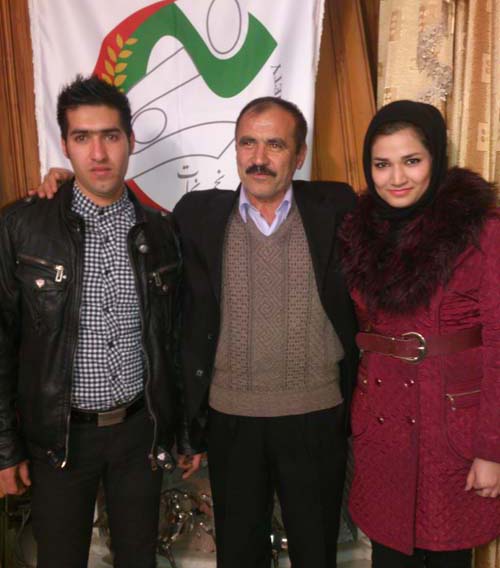
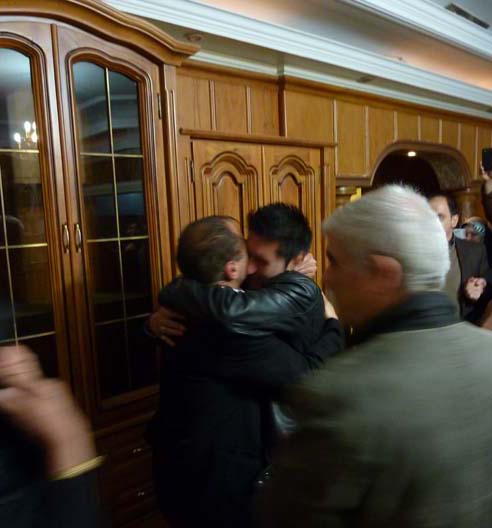
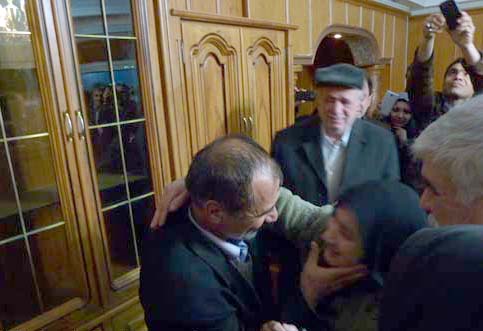
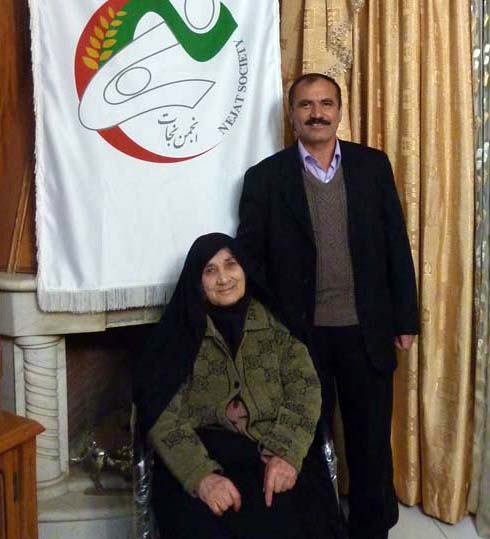
Alireza Amiri defected MKO Cult in Albania and returned to his homeland

After long years of captivity behind the physical and psychological bars of the Mujahedin-e Khalq Cult, Mr. Amiri managed to release himself from the Cult and returned to his family.

Amiri family did their utmost efforts to liberate their beloved son.  Amiri family who are members of Nejat Society West Azarbaijan,Iran branch, wrote several letters to the human rights bodies such as Amnesty International, HRW, etc. They also met the Red Crescent representatives and emphasized on the release of their beloved son; Alireza.

The cult leaders eventually were forced to transfer Alireza to Albania along with some other residents of Camp Liberty.

In Tirana, far from the closed affaires of the MKO Cult, Mr. Alireza Amiri parted away with the group and contacted his family.

Nimnegah Website reported

February 21, 2015 0 comments
FacebookTwitterPinterestWhatsappTelegramSkypeEmail
Nejat Publications

Pars Brief – Issue No. 85

Inside This Issue:

  • Iraqi Politician Warns US about Military Support for MKO Terrorists
  • The Nisman Murder and the AMIA Terror Bombing: A Tangled Thread
  • And the Winner of the ‘War On Terror’ Financed Dream Home 2014 Giveaway Is…
  • Mujahedin Khalq Organization (MKO): US-Israel Sponsored Terrorist Entity directed against Iran
  • How To Stop Being Terrorists: A Guide For ISIS, Courtesy Of The MEK

Download Pars Brief – Issue No. 85

February 19, 2015 0 comments
FacebookTwitterPinterestWhatsappTelegramSkypeEmail
Iraqi Authorities' stance on the MEK

Iraqi Politician Warns US about Military Support for MKO Terrorists

An Iraqi politician cautioned Washington against the consequences of its possible military support for the anti-Iran terrorist Mojahedin-e Khalq Organization (MKO).Iraqi Politician Warns US about Military Support for MKO Terrorists

“The MKO has asked the US to send weapons for the group again,” Kurdish politician Tahsin al-Fili was quoted by Iraqi Al-Masalah news website as saying on Sunday.

He said the request by the MKO is not a new one but will be followed by an “appropriate” response from the Iraqi political circles.

The Iraqi politician also emphasized that the Islamic Resistance groups in Iraq and volunteer forces will pressure Baghdad to take the necessary decision to expel the members of the group from the Arab country.

The MKO – listed as a terrorist organization by much of the international community – fled Iran in 1986 for Iraq and was given a camp by former Iraqi dictator Saddam Hussein. They fought on the side of Saddam during the Iraqi imposed war on Iran (1980-88). They were also involved in the bloody repression of Shiite Muslims in southern Iraq in 1991 and the massacre of Iraqi Kurds.

The notorious group is also responsible for killing thousands of Iranian civilians and officials after the victory of the Islamic revolution in 1979.

More than 17,000 Iranians, many of them civilians, have been killed at the hands of the MKO in different acts of terrorism including bombings in public places, and targeted killings.

Back in December 2011, the United Nations and Baghdad agreed to relocate some 3,000 MKO members from Camp New Iraq, formerly known as Camp Ashraf, to the former US military Camp Liberty outside Baghdad.

The last group of the MKO terrorists was evicted by the Iraqi government on September 11, 2013 to join other members of the terrorist group at Camp Liberty and await potential relocation to other countries.

February 18, 2015 0 comments
FacebookTwitterPinterestWhatsappTelegramSkypeEmail
Mujahedin Khalq; A proxy force

Bin Laden and Bibi, Together At Last, Israel’s alliance with al-Qaeda

Remember the brouhaha a few months ago when it was revealed that fighters of the Nusra Front, the al Qaeda

affiliate in Syria, had seized territory adjacent to Israel? The “let’s intervene in Syria” crowd was up in arms: this supposedly proved the absolute necessity of going full-bore into the region, with US bombing raids and unrestrained support for “moderate” jihadists out to overthrow Syrian strongman Bashar al-Assad. After all, we can’t leave our loyal ally, Israel, at the mercy of Osama bin Laden’s heirs, can we?

As it turns out, however, Nusra has left the Israelis alone – and, indeed, it looks like there is a de facto alliance between bin Laden’s boys and Bibi’s bombardiers. As the Wall Street Journal reports:

“Nusra Front, however, hasn’t bothered Israel since seizing the border area last summer – and some of its severely wounded fighters are regularly taken across the frontier fence to receive treatment in Israeli hospitals.”

We are told by the Israelis that they don’t check the identities of these injured fighters: “We don’t ask who they are, we don’t do any screening… Once the treatment is done, we take them back to the border and they go on their way,” says one Israeli military official. This from a country one can’t enter from the United States without an extensive interrogation at the airport.

Like most reporting on Israel, this story is chock full of hasbara, with the disturbing news of terrorist fighters treated in Israeli hospitals leavened with a touching tale of a young Syrian boy given a prosthetic arm due to the beneficence of his Israeli hosts. Yet this is overlaid with some darker overtones. While reporter Yaroslav Trofimov is careful to note “it would be a stretch to say that the U.S. and Israel are backing different sides in this war,” he goes on to write:

“But there is clearly a growing divergence in US and Israeli approaches over who represents the biggest danger – and who should be seen, if not as an ally, at least as a lesser evil in the regional crisis sparked by the dual implosion of Syria and Iraq.”

Indeed, Trofimov’s reportage refutes his careful qualifications. He points out that, while leaving Nusra alone – its encampments are “yards” away from a border that is a frequent site of tours by Israeli schoolchildren – the Israelis have begun attacking Assad’s troops and their Hezbollah allies. He also cites Amos Yadlin, former chief of Israeli military intelligence and a likely defense minister if Bibi should lose the election, who avers:

“There is no doubt that Hezbollah and Iran are the major threat to Israel, much more than the radical Sunni Islamists, who are also an enemy. Those Sunni elements who control some two-thirds to 90% of the border on the Golan aren’t attacking Israel. This gives you some basis to think that they understand who is their real enemy – maybe it isn’t Israel.”

This has always been the Israeli perspective, no matter who sits in the Prime Minister’s office. In a 2003 meeting with then undersecretary of state John Bolton, Ariel Sharon made a point of saying that, while the US should indeed attack Iraq, “Israel was concerned about the security threat posed by Iran, and stressed that it was important to deal with Iran even while American attention was focused on Iraq.” Israel is clearly taking a side in the religious civil war wracking the Muslim world: while the Saudis and the Gulf sheikdoms supply weapons and money to Sunni jihadists fighting for control of the Levant – including not only Nusra but also ISIS – the Israelis are bombing Assad and sending injured jihadists back onto the battlefield.

None of this is very surprising. Israel has never hesitated to ally with the worst elements on earth in order to advance what its leaders regard as the Jewish state’s interests. From South Africa’s apartheid regime to the death squads of Central and South America, to the Mujahideen-e-Khalq (MEK) – an Iranian exile group of Marxist terrorists – Israel has always given a helping hand to whoever merits it according to their amoral calculus. And as Israeli and American interests began to radically diverge – a process that has been ongoing since the demise of the Soviet Union – it makes perfect sense that they should align with our worst enemies.

The conventional wisdom that the 9/11 attacks showed there’s no daylight between the US and Israel – “We’re all Israelis now!” exulted the Israel Firsters before the smoke cleared over Manhattan – was quite wrong. Netanyahu told an audience at Bar Ilan University “We are benefiting from one thing, and that is the attack on the Twin Towers and Pentagon, and the American struggle in Iraq.” Al-Qaeda’s act, he averred, had “swung American public opinion in our favor.”

Yet American opinion has always been pro-Israel, with very little sympathy for the Palestinians: what Bibi meant was that the Israeli strategic perspective – constantly pushing for the US to fight its wars – was more popular as the Bush administration began its rampage across the Middle East.

However, this war fever was necessarily of limited duration: once the madness had worn off, and the backlash against the post-9/11 hysteria began to roll in, the US public turned against the War Party. That’s when the long range impact of the “war on terrorism” on the “special relationship” between Washington and Tel Aviv began to be felt.

It didn’t take long for the “We’re all Israelis now” propaganda to wear thin in Washington. For in order to defeat radical Islamism it was necessary for the US to split the jihadist base from the leadership and dry up the pool of recruits that were flocking to bin Laden’s banner. Far from drawing away from the Muslim world, it was more than ever important for Washington to court it – and to eventually take advantage of the Sunni-Shi’ite split in favor of the latter.

We are seeing this today in the war against ISIS, with Iranian-led Iraqi Shi’ite troops on the ground getting air support from the US – and the Israelis helping the other side, albeit as discreetly as possible, along with their de facto Saudi and Gulf state allies. The open propaganda war now being waged by the Israelis against their supposed American allies is increasingly taking on a military aspect in the battle for the Levant.

The Obama administration is determined to forge a deal with the Iranians for the simple reason that it cannot defeat the jihadists without occupying not only Iraq but also Syria and parts of Lebanon – a political, economic, and military impossibility. The Israelis, who see Iran as their principal – indeed, only – rival for regional hegemony are equally determined that this must not come to pass. The “special relationship,” which has been strained ever since the latter part of George W. Bush’s second term, has now reached the breaking point. And this is going to be true no mater who sits in the Oval Office.

Bibi is now playing the only card he has left: the well-funded and politically entrenched Israel lobby, which could formerly make or break politicians. Yet the power of this lobby has necessarily diminished over the years as the geopolitical realities of the post-9/11 era set in.

On the intellectual front, the publication of The Israel Lobby, by leading foreign policy “realists” John Mearsheimer and Stephen Walt, set the tone for what was to come. In exposing the key role played by Israel’s fifth column in distorting the making of American foreign policy – and dragging us into the disastrous Iraq war – the book broke the lobby’s monopoly on elite opinion and set the stage for its subsequent political defeats. The lobby’s attempt to quash the nomination of Chuck Hagel was not only defeated, but the sheer nastiness of the smear campaign aimed at him discredited the Israel Firsters among key opinion-makers and in Democratic party circles.

The final straw was Sen. Tom Cotton’s “open letter” to Iran’s leaders – which was really a letter to the American people, telling them that in any conflict between Washington and Tel Aviv GOP hard-liners would side with the latter. The backlash against this open attempt to sabotage American diplomacy in the interests of a foreign power provoked outraged cries of “treason” and calls for the 47 Senators to be charged under the Logan Act. While Cotton’s letter hardly falls under the restrictions imposed by the Logan Act – and the call itself is a dangerous not to mention stupid invocation of the growing authoritarian impulse in American politics – this kind of reaction is telling. It shows that the American people are waking up to the inordinate – and inappropriate – influence wielded by the Israeli government on our domestic political scene, and that Bibi’s playing of this particular card no longer trumps the President’s hand.

And that’s a cause for optimism. For the Israel lobby and the War Party are, in many instances, virtually identical. Diminish the power of the former, and you have clogged the engine of the latter. Which is not to say the machinery that churns out endless war propaganda has been silenced – far from it – but it is getting more difficult to start it, and, once started, it tends to stall.

Justin Raimondo,

February 17, 2015 0 comments
FacebookTwitterPinterestWhatsappTelegramSkypeEmail
The cult of Rajavi

The MKO, Fruit of the Tree of Extremism

Today the world is obsessed with the threat of extremism. The menace of the Islamic State terrorists and their affiliates is touched all over the world. However, the international community should not be distracted from other extremists who are manipulating Western politicians under the guise of democracy and modernity.
While the world’s eyes are focused on and rising tensions in the Middle East, a former terrorist group from Iran is tromping through the halls of Congress, and garnering support from some of America’s most powerful and prominent politicians and officials, writes Sean Nevins of Mint Press News in Washington. [1]
In his documented, investigated article Nevins warns that the Mujahedin Khalq Organization (the MKO/ Mek) is not actually what it claims to be.  He explores “how does a group go from being one of the most dangerous terrorist organizations in the world to having an office on Pennsylvania Avenue in Washington, D.C., with backing from the likes of the former U.S. Ambassador to the U.N. John Bolton and former Director of Homeland Security Tom Ridge, among many others” . Based on documents and reports of the FBI, Human Rights Watch, and the Rand Corporation, Sean Nevins conclude that “not only is it an opposition group to the current Iranian regime, but it is a kind of cult” verifying the reality of the MKO’s anti-American attitudes by the group’s own journals. [2]
This is not the first warning to Western audience on the threat of the MKO cult. Many other journalists, historians, scholars and etc. have so far cautioned about the risks of supporting a group with a dark, violent history of extremist acts and a cult-like nature. The extremism that the world is exposed to by the side of the MKO can be much more destructive than the one from ISIS or AlQaida because the MKO is disguising its cult-like beliefs and policy under pro-democracy and pro-feminism slogans.
The case of the MKO indicates that the roots of extremism are based in cultic manipulation not religious beliefs. Mohammed Jebara who is chief Imam and resident scholar at the Cordova Spiritual Education and writer of books and articles on Islam, suggests that the extremism is originated from cult-like exploitation. “Most cults have two main distinguishing characteristics: A great opposition to critical thinking with an insistence on blindly following a set of dogmatic ideals, all the while giving their followers the false sense of self-determination and free choice,” writes Jebara.”Secondly, isolating their devotees with threats of heavy penalties, including death, for “apostasy” through “deviation” from their “path.” [3]
Jebara describes extremist ideas as “puritanical, self-righteous, judgmental viewpoints” that “always allege to be the ultimate truth’’. He notifies, “The modern extremists are not a new phenomenon, neither to the Islamic world, nor to the world at large. Puritanical sects have existed from ancient times, as fringes, and have even overtaken the mainstream of some world religions.” [4]
“If someone can be induced to believe in irrational, ludicrous and intolerant ideas, they can be led to violently enforce and act upon them, “concludes Imam Mohammad Jebara. His description of cultist extremists perfectly meets the substance of the Cult of Rajavi (the MKO). [5]
The peak of irrational, ludicrous and intolerant ideas was demonstrated in June 2003 after the arrest of the group leader Maryam Rajavi by the French Police. To protest her arrest, a number of her brainwashed followers and sympathizers committed the most irrational act; they set themselves on fire in European cities. Two women burned to death and others were paralyzed.
One of the two dead women was Neda Hassani who was in her 20s when she set herself alight outside French Embassy in London. Neda was a Canadian citizen with links to the MKO.  After the arrest of the cult leader, she was indoctrinated to commit self-immolation in order to put pressure of French Police to liberate Maryam Rajavi. [6]
Prior to 2003, suicide operations to target Iranian officials and civilians were also carried out by the group terror teams as well as cross border terror acts against Iran.
Furthermore, as it was mentioned on the top of this post, cult-like treatment of members inside the MKO camps have been reported by several international bodies and investigated reports. Thus, what is crystal clear is that the MKO is not a democratic secular group. It is definitely an extremist cult of personality and is as dangerous as or even more dangerous than ISIS or al Qaida.
Mazda Parsi
 Sources:
[1]Nevins, Sean, How To Stop Being Terrorists: A Guide For ISIS, Courtesy Of The MEK, Mint Press News, January 21, 2015
[2] ibid
[3] Jebara, Mohamad, Imam Mohamad Jebara: Fruits of the tree of extremism, Ottawa Citizen, February 6, 2015
[4] ibid
[5] ibid
[6]BBC News, Fourth person in fire protest, June 20, 2003
 

February 16, 2015 0 comments
FacebookTwitterPinterestWhatsappTelegramSkypeEmail
Iran Interlink Weekly Digest

Iran Interlink Weekly Digest – 85

++ Mohammad Mohammady, brother of Somayeh who remains trapped within the MEK, has added to the series of writing about her situation. Mohammady had joined the MEK’s militia (youth army) as a teenager and knows many of the people still there, including some who have arrived in Albania. Mohammady reports that although the MEK at first gave these new arrivals accommodation and bribed them with $500 to keep quiet, the group has now evicted them and says the money must cover all their expense including accommodation. This of course is totally inadequate. Unfortunately they have also cut off their contact with the UNHCR and are therefore struggling to survive.

Alongside this, several people have written open letters to the Albanian authorities, including the Prime Minister and Ambassadors in their various countries of residence. In Paris a group of ex-MEK members met with diplomats in the Albanian embassy. They conveyed their gratitude for Albania’s generous acceptance of over four hundred refugees from Iraq. But presented evidence that the MEK is trying to re-create closed cult conditions in their country, to the detriment of the human rights of these vulnerable people. They said the MEK try to prevent contact with the families and the outside world and because these former MEK combatants have been so isolated and remain so ignorant, they are more easily manipulated. The delegation reiterated their warning that the MEK must not be allowed to create closed camps in Albania.

In spite of its efforts, the MEK has been unable to prevent many of the new arrivals from contacting their families, friends and former MEK members. Some do this straightaway, some are more fearful and take longer. But in all, there is a circle of contact and support among these groups which is growing all the time.
++ Continuing the controversy of the MEK’s publication of receipts and financial affairs to attack critics, several people have shown various reactions. Rowhani – former NCRI member and currently an ‘internal critic’ – has published his own facts and figures and ridiculed the MEK for not understanding how transparent they are for the outside world. He says, “If you think this will stop me from talking, be sure it won’t. Although when I left the NCRI I acknowledged that I can’t match you for money and propaganda, but I firmly believe that my truth and the facts will firmly win over MEK lies.” Other comments challenge these so-called internal critics to decide where they stand and ask why they are trying to prove to Rajavi that they are good people. Ex-members write, ‘no, you are not a good person. We are not good people. We all helped Rajavi in his crimes and immorality. You won’t escape your situation until you admit this to yourself. And then your eyes will be opened and you won’t keep wanting to justify yourself to Rajavi and you can join the rest of us in the real world. Until then you are still one of them and you haven’t left the cult.” A few others reacted to the MEK’s publication of these documents showing how millions of dollars have been paid here and there. They say that the French judicial decision not to investigate the MEK for money laundering when the MEK is blatantly admitting this is what it does, is as ridiculous as taking them off the terrorism lists.

++ C Bloggers (independent Iranian bloggers), has this week blogged about the MEK’s satellite channel Simayeazadi, with evidence and documents from the MEK’s own websites and TV. The fact that the MEK is the only Iranian entity using this satellite channel (any other Iranian programme has abandoned it and gone elsewhere), shows that they don’t have an Iranian audience – people simply don’t adjust their satellite receiver for just one Farsi channel. The MEK’s programme has almost no viewers, yet on one occasion the programme’s telephone-in was suddenly inundated by sixty callers apparently from inside Iran pledging to donate money – even though such a facility isn’t available to people inside Iran. The blog says it is obvious the MEK don’t care about Iranians and never have. The only purpose of this channel is as a lobbying tool to claim they have some support.

++ Iran’s right wing Kayhan newspaper demanded the ‘Monafeqin’ [hypocrites] be brought to justice and punished and killed. The article refers to members of the Green Movement and supporters of Mousavi. But Rajavi has gone into overdrive to say that ‘by referring to the Monafeqin, they must mean us and the Americans must stop them from killing us’. Commentators say Rajavi is writing this because of the backlash from ex-MEK members who have exposed his threats to kill them. This is a diversion from that issue. But it is also interesting that the MEK insist their name is hypocrites.

++ Saber from Tabriz (known to Iran Interlink) has analysed Maryam Rajavi’s latest speech in France. By examining her speech sentence by sentence he identifies contradictions and mismatches. For example, Rajavi insists the people of Iran are still resisting the government and haven’t given in. Yet she then insists on more sanctions on Iran without apparently understanding that one of the reasons for sanctions is to provoke the people to resist their government! Saber says it seems these speeches are not made by one person – and certainly not Rajavi herself. She is merely told what to say.
In English:

++ Another investigative article by Gareth Porter helps unpick the tangled thread surrounding the 1994 AMIA bombing in Argentina. Porter identifies that State Prosecutor “Nisman asserted that the highest Iranian officials had decided to carry out the bombing at a meeting on 12 or 14 August, 1993, primarily on the testimony of four officials of the Mujahedeen E-Khalq (MEK), the Iranian exile terrorist group that was openly dedicated to the overthrow of the Iranian regime. The four MEK officials claimed to know the precise place, date and time and the three-point agenda of the meeting. When US Ambassador, Anthony Wayne, meeting with Nisman in November 2006, asked him about Argentine press reports that had criticised the document for using the testimony of “unreliable witnesses,” Nisman responded, according to the Embassy reporting cable, that “several of the witnesses were “former senior Iraqi [sic] officials, e.g. Bani Sadr, with direct knowledge of events surrounding the conception of the attacks.” Nisman’s suggestion that former Iranian president Abolhassen Banisadr had “direct knowledge” related to the AMIA bombings was a stunningly brazen falsehood.”

++ In an Open Letter to the Albanian Prime Minister Edi Rama, Iran Ghalam (Pen Club) says “Once they arrive in Albania one of the first things all the new arrivals do is to contact their families and seek out other forms of support. The refugees are given time limited support by the UN refugee agency accommodation and a small living allowance which is deemed sufficient for them to settle in their new country and make new lives for themselves. And the MEK does not easily relinquish its control over these former members and has made every effort to prevent them from living independently. But more importantly, these new arrivals are desperate to tell their stories. They want to speak out about the suffering they endured, some for many, many years.”

++ A Sepinoud from Nejat Bloggers says hatred is one of the main tools used by the MEK to control members: “the cult leaders do not primarily focus on hatred rather, through deceitful methods, propaganda, and misinformation they create an atmosphere among its members in which hatred toward anyone except the cult leader thrives virtually unchecked. The manipulation and control in the cult is so strong that nobody can trust each other. Even the very close family members such as father and daughter or spouses distrust one another, having friendly relations is not allowed and considered taboo. The members are being brain washed and celibacy is forced upon them. In the cult, members are suspicious of each other. Members are made by coercion or enticement to snitch on each other. They are encouraged to curse one another in brainwashing sessions so as to create abhorrence, animosity, and hostility among members. The cult leaders try to empty members of all their humanity.”

++ NIAC Statement: “Washington, DC – Today, the DC Circuit Court of Appeals issued an opinion regarding aspects of cost sharing in NIAC’s defamation lawsuit against Seyyed Hassan Daioleslam [MEK operative]. In the appeal, NIAC won on several issues, overturning aspects of the lower court’s previous rulings, and resulting in a more favorable outcome for NIAC. While NIAC objected to the decision of the court that it should pay a fraction of the discovery costs, it is Mr. Daioleslam who must pay the large majority of the costs for his legal fishing expedition. This further accentuates the larger outcome of the case, in which Mr. Daioleslam backtracked from his accusations against NIAC and instead hid behind the argument that NIAC could not prove that he knew his allegations against NIAC were false.”

“…NIAC brought the lawsuit against Daioleslam in response to his false accusations that the organization was a lobbyist for the Iranian Government. Once in front of the court, Daioleslam had the opportunity to make his case for the truth. Instead, he changed his tune and did not seek to argue that his accusations were correct and truthful. He essentially abandoned the truth and instead argued that NIAC could not prove that he knew what he was saying was false, i.e. malicious. While we believe the evidence clearly showed that Daioleslam knew he was lying, based on his systematic disregard for the truth, neglect of readily available information that contradicted his conspiracy theories, declaration that he aimed to “destroy NIAC” in order to “bring down Obama,” as well as his support for the Mujahedin-e Khalq terrorist organization, the judge felt this didn’t meet his standard and denied us the opportunity to take Daioleslam in front of a jury.”

February 14, 2015 0 comments
FacebookTwitterPinterestWhatsappTelegramSkypeEmail
Newer Posts
Older Posts

Recent Posts

  • National Pride of Iranians: Reject the Rajavis and their Patrons

    July 22, 2026
  • Italian legislators fooled by MEK’s polished presentations

    July 18, 2026
  • The Rhetorical Style and Polemical Language of the MEK

    July 15, 2026
  • Death of Lindsey Graham, notorious hardliner against Iran

    July 13, 2026
  • Nejat Society Albania’s 2026 Peace Delegation

    July 11, 2026
  • Facebook
  • Twitter
  • Instagram
  • Youtube

© 2003 - 2025 NEJAT Society . All Rights Reserved. NejatNGO.org


Back To Top
Nejat Society
  • Home
  • Articles
  • Media
    • Cartoons
    • NewsPics
    • Photo Gallery
    • Videos
  • Publications
    • Books
    • Nejat NewsLetter
    • Pars Brief
  • About Us
  • Contact us
  • Editions
    • عربي
    • فارسی
    • Shqip