Nejat Society
  • Home
  • Articles
  • Media
    • Cartoons
    • NewsPics
    • Photo Gallery
    • Videos
  • Publications
    • Books
    • Nejat NewsLetter
    • Pars Brief
  • About Us
  • Contact us
  • Editions
    • عربي
    • فارسی
    • Shqip
Nejat Society
Nejat Society
  • Home
  • Articles
  • Media
    • Cartoons
    • NewsPics
    • Photo Gallery
    • Videos
  • Publications
    • Books
    • Nejat NewsLetter
    • Pars Brief
  • About Us
  • Contact us
  • Editions
    • عربي
    • فارسی
    • Shqip
© 2003 - 2024 NEJAT Society. nejatngo.org
Iran

Americans should first stop using terror groups like MKO

Iran dialogue or US diplomatic detour?
Americans should first stop using terror groups like MKO
It is very unfortunate to note that the United States has constantly sought to depict the Islamic Republic in the light of a tenacious nation resilient to any logic and dialogue whatsoever.

Iran’s Foreign Minister Ali Akbar Salehi has emphasized the Islamic Republic’s readiness to hold negotiations on the country’s nuclear energy program in a win-win situation.

“We have repeatedly expressed our readiness and announced that we are ready for talks in a win-win situation.”

He added that Iran has never lost the “opportunity for diplomacy.”

Iranian officials are pessimistic about any upcoming dialogue with the US as they almost unanimously believe that Washington is not consistent in its policies and that it should first show some good will instead of resorting to an unacceptable bullying attitude. Spokesman for Iranian Majlis Committee on National Security and Foreign Policy Hossein Naqavi Hosseini slams the contradictions between what Washington says and what it does and urges the US to show some goodwill if it ever seeks to hold talks with the Islamic Republic.

“The Americans are not honest in their words….there is no consistency in their words and actions.”

A historical look at Tehran-Washington relations testifies to the antagonistic nature of Washington in dealing with Iran.
According to Tim Guldimann, former Swiss ambassador to Tehran, Iran issued a proposal to the United States in May 2003 and called for negotiations on a number of issues.

Based on the proposal, the US should accept a dialogue “in mutual respect” and agree that Iran put the following aims on the agenda:

1) Halt US hostile behavior and rectifications of status of Iran in the US: (interference in internal or external relations, “axis of evil”, terrorism list.)

2) Abolishment of all sanctions: commercial sanctions, frozen assets, judgments (FSIA), impediments in international trade and financial institutions.

3) Iraq: democratic and fully representative government in Iraq, support of Iranian claims for Iraqi reparation, respect for Iranian national interests in Iraq and religious links to Najaf/Karbala.

4) Full access to peaceful nuclear technology, biotechnology and chemical technology.

5) Recognition of Iran’s legitimate security interests in the region with according defense capacity.

6) Terrorism: pursuit of anti-Iranian terrorists, above all the MKO and support for repatriation of their members in Iraq, decisive actions against anti-Iranian terrorists, above all MKO and affiliated organizations in the US.

However, the Bush administration rejected the proposal and exerted additional pressure on the Islamic Republic.

In August 2005, France, Germany, and the United Kingdom presented their proposal for a long-term agreement which was dismissed by Iran simply because it did not recognize Iran’s right to enrichment.

In 2010, Brazil and Turkey conducted a diplomatic initiative to broker the TRR (Tehran Research Reactor) fuel swap with Iran. It was agreed that the Islamic Republic of Iran deposit 1200 kg LEU in Turkey. In an April 20 letter to the leaders of the two countries, US President Obama said, “For us, Iran’s agreement to transfer 1,200 kilograms of Iran’s low enriched uranium (LEU) out of the country would build confidence and reduce regional tensions by substantially reducing Iran’s LEU stockpile. I want to underscore that this element is of fundamental importance for the United States.”

The fruit of the initiative was the May 17 Tehran Declaration agreed among Lula da Silva, Erdogan, and Ahmadinejad. While the trio recalled “the right of all State Parties, including the Islamic Republic of Iran, to develop research, production and use of nuclear energy (as well as nuclear fuel cycle including enrichment activities) for peaceful purposes without discrimination”, they agreed:

1) The nuclear fuel exchange is instrumental in initiating cooperation in different areas, especially with regard to peaceful nuclear cooperation including nuclear power plant and research reactors construction.

2) Based on this point the nuclear fuel exchange is a starting point to begin cooperation and a positive constructive move forward among nations. Such a move should lead to positive interaction and cooperation in the field of peaceful nuclear activities replacing and avoiding all kinds of confrontation through refraining from measures, actions and rhetorical statements that would jeopardize Iran’s rights and obligations under the NPT.

3) Based on the above, in order to facilitate the nuclear cooperation mentioned above, the Islamic Republic of Iran agrees to deposit 1200 kg LEU in Turkey. While in Turkey this LEU will continue to be the property of Iran. Iran and the IAEA may station observers to monitor the safekeeping of the LEU in Turkey.

4) Iran will notify the IAEA in writing through official channels of its agreement with the above within seven days following the date of this declaration. Upon the positive response of the Vienna Group (US, Russia, France and the IAEA) further details of the exchange will be elaborated through a written agreement and proper arrangement between Iran and the Vienna Group that specifically committed themselves to deliver 120 kg of fuel needed for the Tehran Research Reactor (TRR).

However, France, Russia, and the United States rejected the Tehran Declaration for reasons only known to themselves and easily comprehensible to others.

In 2006, Iranian President Mahmoud Ahmadinejad made an unprecedented move and sent an 18-page letter to George W. Bush, the then US president, an act which was interpreted by some as an invitation to dialogue with the United States.

While the letter – thought to be the first from an Iranian president to a US leader since Iran’s 1979 revolution- addressed the paradoxical nature of Washington’s policies all across the world and addressed crucial issues such as the fake claim that Iraq possessed WMDs as a pretext to launch an invasion of the country, and billions of dollars spent from the common purse to inflict pain and misery upon the people of Iraq and America, it could have been used by the United States as a first step towards resolving an old-time gaping problem between the two countries.

Instead, Washington officials made a strategic mistake, ponderously ignored the letter and US Secretary of State Condoleezza Rice dismissed the letter as "offering nothing new" and the White House said there would be no formal written reply.

The letter was favorably received by many media channels. The Peninsula, a Qatari news site, saw it as "a taboo-breaking initiative … an opening-even if only slim-for the longtime foes to engage in a dialogue." Arab News of Saudi Arabia hailed it as "remarkable and encouraging … an unexpected diplomatic opening." Germany’s Der Spiegel calls it "a deft move for Ahmadinejad’s image in the Middle East."

After all, the letter was a good sign that Iran was interested in talks but on equal terms and in an ambience of mutual respect, a condition the US has spitefully declined.

In a sudden turn of events, however, things seem to be taking a new spin and the US has made some gestures to the effect that it wishes a direct talk with the Islamic Republic. A recent report indicates that US President Barack Obama is planning to propose to Iran that it negotiate directly with the Americans about its nuclear program. According to the report, Obama’s move was made without any coordination or consultation with Israel and that Washington will allow a period of four to five months for negotiations with Tehran. If the talks fail, the report says, they may then resort to the military option.

Be that as it may, so far, the Islamic Republic has taken constructive steps towards talks with Washington in order to allay international concerns and resolve any ambiguities surrounding its nuclear program and each time Washington has embarked on a crooked diplomatic detour and has demonstrated a strong penchant for political approach-avoidance.

Does it not mean that Iran’s nuclear issue is not an issue at all but part of their pretext to persevere in its path of political pungency?

By Ismail Salami

December 17, 2012 0 comments
FacebookTwitterPinterestWhatsappTelegramSkypeEmail
Iran

Commander: US Spending Serves Iran’s Interests

A senior Iranian commander said that the US is moving on a path of decline, and added that the United States’ heavy spending to maintain its hegemony in the region has actually backfired as it has resulted in the interest of the Islamic Republic.

"It is now 10 years that the US has been spending money but earns nothing. That is why it has the largest debt, i.e. $16trillion, among the world governments," Lieutenant Commander of the Islamic Revolution Guards Corps (IRGC) Brigadier General Hossein Salami said, addressing a conference here in Tehran on Sunday.

He pointed to the $3,000bln cost of the US war in Iraq, and said Saddam’s overthrow and expulsion of the anti-Iran terrorist group, the Mojahedin-e Khalq Organizations (MKO), have gifted Iran with "political interests".

Salami further stated that the US has been defeated in all the wars that it has waged against other countries, while all its plots against Iran have failed.

"Thus, we believe that the US is through with the climax of its power and is now moving on a downward slope and its result will be seen soon," he concluded.

In relevant remarks earlier this month, Iranian Parliament Speaker Ali Larijani said Iran enjoys such a powerful and vast regional influence that it cannot be ignored by the world powers

"In the past, Iran had been known as a US-backed power … but today it has reached a point that no world power can ignore its influence in the region," Larijani said at the time.

"Today, Ian has achieved a scientific and technological power that the West has resorted to adventurist moves against the Iranian nuclear and missile academy in the last few years to hinder this growing scientific trend," the Iranian speaker said.

December 17, 2012 0 comments
FacebookTwitterPinterestWhatsappTelegramSkypeEmail
Mujahedin Khalq; A proxy force

American Jounralist: MKO engaged in violence against innocent civilians

The U.S. and Israel have made a Joke of the United Nations Security Council

Glenn Greenwald is a prominent American journalist, author, lawyer and blogger. His writings Glenn Greenwaldand articles have appeared on several newspapers and magazines including The New York Times, the Los Angeles Times, The American Conservative, The National Interest and In These Times. Greenwald has received different awards including the first Izzy Award for independent journalism in 2009, and the 2010 Online Journalism Award for Best Commentary.

Until a few months ago, he was a columnist and blogger for Salon.com, but he left his job there and continued cooperating with The Guardian newspaper which he has been contributing to since June 2011.

Greenwald has published four books which include “How Would a Patriot Act?” and “A Tragic Legacy.” A progressive journalist, Glenn Greenwald is an outspoken critic of the U.S. military expeditions in Afghanistan, Iraq and Libya and its war threats against Iran.

He has written extensively on the underground operations taken by Israel and the United States to empower and finance the exiled Iranian terrorist group MKO which has declared as one of its key objectives the overthrowing of Iranian government. With regards to the U.S. Department of State’s decision in taking the name of MKO off the list of foreign terrorist organizations, he says: “[t]his shows that anything the United States government says about terrorism and really the whole concept of terrorism itself should be viewed as nothing more than a ridiculous joke. MKO is a classic group that is a terrorist organization. They have engaged in violence against innocent civilians, they have devoted themselves to overthrow a government using violence and there are credible reports that they are the ones who are working with Israelis and are behind the assassination of civilian scientists in Iran that included the shooting of not only the scientists, but also in two cases their wives.”

I had the opportunity to talk to Glenn Greenwald for an exclusive interview which was originally appeared in Persian on Tasnim News Agency. What follows is the full text of my interview with Glenn Greenwald in which we discussed a variety of topics pertaining to the international political and military developments.

Q: What do you think about President Obama administration’s plans for shaping a new Middle East based on the national interests of the United States and dominating the vast oil reserves of these countries?

A: A crucial part of the Obama administration’s strategy and the strategies of all the prior administrations in the United States was to basically put into place dictatorships in the Muslim world that would keep the population suppressed and serve the interests of the U.S. government, particularly in the countries with remarkable oil and energy resources. So you see the relationships the United States has with the [Persian] Gulf states such as Qatar, United Arab Emirates, Saudi Arabia and Jordan. These are the governments which suppress their population, but serve as loyal allies of the United States and make oil available to the U.S. and the Obama administration continues supporting them.

Q: In the recent months, we have been witness to the continued killing of the pro-democracy protesters and imprisonment of political activists in Bahrain. However, the U.S. government hasn’t taken any practical steps to stop bloodshed and persuade the Al Khalifa regime to stop using force and violence. What’s your idea in this regard?

A: Well, this is a perfect example of what I was describing. The governments which I named and the Bahraini government are unbelievably oppressive. They murder protesters who are demonstrating peacefully, put people in prison and torture them and the Obama administration does nothing about that and continues to strengthen that regime through financing it and even sending it a lot of arms, while the regime is cracking down on the citizens in such a brutal way. The reason the U.S. government supports Bahrain is that the regime allows the U.S. to maintain a very large fleet of naval resources off the coast of Bahrain that can be used to threaten Iran and that generally allows the U.S. government to dominate the [Persian] Gulf region, and so in extreme for the regime in Bahrain, that is basically the puppet and client government of the United States, the U.S. government supports the regime as it murders its own citizens and suppresses of all forms of freedoms. And Bahrain is a perfect example of the strategy the Obama administration has adopted to just dominate the region militarily and help the dictators of the region suppress their populations.

Q: One of the electoral promises of President Obama was to close the Guantanamo bay detention facility within one year after being elected. However, on January 7, 2011, he signed the 2011 Defense Authorization Bill which placed restrictions on the transferring of detainees to the U.S. or other countries, thus impeding the closure of the underground detention camp. What’s your take on that?

A: The excuse the Obama administration gave was that the people in the Congress refused to allow Obama to close down Guantanamo. But the truth is that from the beginning, Obama’s plan was to keep the system of Guantanamo in place and transfer the detainees to the U.S. while people from all around the Muslim world still are allowed to remain in prison without charges of any kind and without due processes at any time. But to remove them from Guantanamo and placing them in a new prison inside the United States would only add some sort of a symbolic aspect to it. So it was always the Obama administration’s plan to keep the Guantanamo open. They simply wanted to move it, not to close it. And this Defense Authorization Bill which you ask about was passed in December 2010 and January 2011 is a sort of legislation that empowers the president whoever he wants on accusations of terrorism, without having to charge that person with any crime, without having to in any way offer the person the opportunity to contest the allegations or present compelling evidence, and President Obama has signed a law that actually strengthened this system of indefinite lawless detention.

Q: What’s your perspective on the U.S. drone attacks on Pakistan, Yemen and Somalia and its violation of Iran’s airspace last year in December 2011 and in the last week?

A: The drone attacks on Pakistan, Yemen and Somalia have repeatedly killed all sorts of innocent civilians; women, children and innocent men, and the Obama administration simply believes that it has the right to kill anyone it wants anywhere in the world regardless of who dies, and this is the policy that the Obama administration has actually pursued even more aggressively than the Bush administration and the drone attacks have increased significantly under President Obama. He has used drones on six different Muslim countries; Iraq, Afghanistan, Pakistan, Libya, Somalia and Yemen. I should point out that President Obama has extremely aggressive beliefs that in the name of combating terrorism, he can kill whoever he wants or attack anyone he wants without regard to any nation’s sovereignty. The ironic part about that is that it’s precisely the drone attacks which cause terrorism in the first place.

The reason why there are so many people in the world, especially in the Muslim world want to attack the United States is precisely because they watch on a regular basis the United States attacking their countries, killing their children, innocent men and women and they come to the conclusion that the only way to stop this is by having the violence go both ways. The drone attacks not only kill innocent people, but they make the problem of terrorism far worse. As far as the drones in Iran are concerned, Iran has the absolute right, like any other country does, to take down surveillance instruments that fly over their land without permission. What strikes me is the way this is reported and discussed here in the United States, and that is when Iran successfully shoots down or disables a U.S. drone that has entered its airspace, it’s talked of as if it’s some sort of aggressive action on the side of the Iranian government.

But of course if Iran ever sent a drone anywhere near the airspace of the United States, let alone into the United States, not only that drone would be immediately shot down, but everyone in the United States would talk of it as if it was a horrible act of war and would probably result in bombs being dropped on Iran in retaliation. So you see here this extreme double standard that the United States thinks that it has the right to send drones on Iran’s airspace, but nobody in the United States and almost nobody would think that Iran would have the right to do the same to the United States.

Q: The United States has always called itself a champion of combating terrorism and frequently criticizes other countries for their alleged sponsorship of terrorist groups. But in a controversial decision, they took the name of Mujahedin-e-Khalq Organization off the State Department’s list of foreign terrorist organizations, and there’s credible evidence showing that Washington has been supporting MKO in its terrorist operations, both militarily and financially. Isn’t this a hypocritical approach in dealing with the issue of terrorism?

A: This shows that anything the United States government says about terrorism and really the whole concept of terrorism itself should be viewed as nothing more than a ridiculous joke. MKO is a classic group that is a terrorist organization. They have engaged in violence against innocent civilians, they have devoted themselves to overthrow a government using violence and there are credible reports that they are the ones who are working with Israelis and are behind the assassination of civilian scientists in Iran that included the shooting of not only the scientists, but also in two cases their wives. And because this group has paid so many influential politicians in the United States and also because this group now carries out terrorist operations on behalf of Israel and the United States in promotion of the interests of Israel and the United States, they have been removed from the list of terrorist organizations by the Obama administration and this really shows that the United States is not against terrorism.

The U.S. government uses terrorism continuously to serve its interests. The United States government says that it is against terrorism only because terrorism is the word that applies to anybody who opposes or impedes the agenda of the United States, and the willingness to remove the name of MKO from the list of terrorist organizations even though they are committed to the use of violence and killing of Iranian officials proves how worthless the United States’ claims about terrorism are.

Q: What do you think about the humanitarian impacts of the anti-Iranian sanctions? In one of your articles, you alluded to some facts regarding the scarcity of foodstuff and other goods in Iran as a result of the sanctions. I’ll add the medicine, travel restrictions and unsafe aviation fleet to your list. Isn’t it some sort of violation of human rights by the United States?

A: Of course. One of the worst crimes that the United States has committed over the last several decades was the sanctions regime that it imposed on Iraq which killed several hundred thousands of children, deprived people of basic food and medicine and strengthened Saddam Hussein by making everybody in the country poor and dependent on him. This is now repeating itself in Iran, not to the same extent yet but it has its own effects where there are poor Iranian children who are sick and unable to get medicine and are dying as a result. Obviously the American officials openly brag about the destruction of Iranian economy and the collapse of Iranian currency which they are causing with their sanctions regime, and you see it’s a kind of collective punishment to terrorize the Iranian people for the alleged crimes of their government; the kinds of crimes that the United States has condemned the other countries for committing for many decades. So absolutely the sanctions regime which the United States is leading is really an act of war and a way of making Iranians and innocent civilians suffer greatly, and absolutely a kind of collective punishment that should be judged by the decent people.

Q: What’s your idea about the U.S. mainstream media’s portrayal of the developments in the Middle East and especially Iran? They don’t allow the citizens to be aware of the fact that, for example, the economic sanctions are paralyzing the daily life of ordinary Iranian citizens, as they did with regards to the Iraqi people. Why do the American media want to leave their people in ignorance and unawareness?

A: The role of the U.S. media in general is to serve the interests of the U.S. government. They claim that we have a free media, but for a lot of different reasons, these media are owned by the corporations and these corporations are very well to the U.S. government. And so part of what any government wants to do when it wants to be aggressive on other countries is to dehumanize their population; to depict them in very simplistic ways. What the U.S. media generally show of Iran is nothing more than the claims that they have evil, extremist leaders and almost never talk of the complexities of Iran and tens of millions of Iranian citizens who produce a complicated and difficult to caricature society.

Q: How do you perceive the relationship between Obama and the Israeli lobby? How much influence has the Israeli lobby had on Obama and what role has it played in the reelection of Obama? Do you think that Obama was at odds with Netanyahu on such cases as settlement constructions, or they were simply superficial conflicts and they were practically close allies?

A: Any differences between Obama and Netanyahu are, as you said, superficial and symbolic and never resulted in meaningful action. If you turn to Israelis, they will tell you that the relationship between the United States and Israel under Obama is closer than it has ever been under any prior U.S. President. We saw that with the Israeli attack on Gaza, the Obama administration 100 percent justified and stood behind Israel, and just in the two recent votes in the United Nations, one on Palestinian statehood and the other that demanded Israel to open its nuclear stockpile to inspection, the United States sided with Israel and isolated itself in almost the entire world.

So you have this extremely loyal relationship between Obama and Israelis including Netanyahu, and it’s in large part because as many prominent American columnists including Jewish and pro-Israel commentators have observed there’s a very strong pro-Israeli lobby in the United States which is very well-funded and very powerful and that basically keeps both the political parties completely on the side of Israel in every single controversy or dispute, even when doing so harms the United States, they force both political parties to choose loyalty to Israel over the interests of the United States and as a result, neither political party is able, even if they want to, to in any meaningful way pressure the Israelis or challenge them.

And despite all the loyalty that the United States has to Israel, Israelis continue to pursue policies that the United States doesn’t want them to do, like the expansion of settlements in the West Bank and yet the United States in unwilling to punish them or sanction them because of the domestic political pressures.

Q: Iran has assumed the three-year presidency of the Non-Aligned Movement in the 16th summit of the organization which was held in Tehran in August 2012. What’s your viewpoint regarding the importance of this summit for Iran which the UN Secretary General Ban Ki-moon and Egyptian President Muhammad Morsi along with several leaders from across the world attended?

A: I think it’s significant because one of the main objectives of Israel and the United States was to depict Iran as isolated from the rest of the world. But what we are seeing is that to some extent, they are Israel and the United States that are increasingly being isolated from the rest of the world. And the refusal of so many countries in denouncing Israel and the United States’ calls for not attending the summit and otherwise isolating the Iranian government is very significant in that regard as are the two votes that just took place in the UN that overwhelmingly sided against Israel. So I think the Israelis have become their own worst enemies through their extreme pursuance of the ideological vision, their refusal to compromise, their expansion of settlements that are illegal and their use of violence and aggression have alienated a huge part of the world, much more than Iran has, and if there’s anyone in the danger of isolation, I think it’s Israel.

Q: And finally, what’s your viewpoint regarding Israel’s aggressive war rhetoric against Iran and its continued threats of using force against Iran? These war threats clearly violate the UN Charter, but the Security Council hasn’t taken any practical steps to criticize and punish Israel for its illegal behavior. What’s your take on that?

A: Well, I think that UN Security Council’s enforcement of those roles is practically impossible because almost everybody knows that the United States will veto any resolution to condemn Israel for its use of those threats. It’s also the case that many countries that are in the Security Council, mostly the United States, but also Russia and China also use threats against other countries in violation of the UN Charter, so everyone is a little bit afraid of punishing Israel for violating rules that those countries themselves like to violate, but it’s really the case that the United States and Israel have made a joke of the UN Charter and continuously threaten Iran to use military force against Iran, to bomb Iran, to keep all options on the table including a military strike, and this is a clear violation of the UN Charter and everything that it was intended to stand for. As long as the U.S. has the veto power, the Security Council will be completely unable to act against Israel’s violation of the UN Charter.

By Glenn Greenwald and Kourosh Ziabari

December 17, 2012 0 comments
FacebookTwitterPinterestWhatsappTelegramSkypeEmail
Mujahedin Khalq Organization's Propaganda System

MKO Concerned about Human Rights!

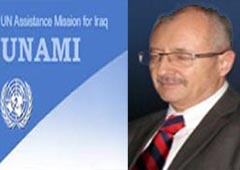
MKO expresses concern over attendance of Mr. Kobler in marking Iraq’s HR’s Day

An assessment of the human rights situations in the world’s countries tells that the situation in general is worrying. There are, however, essential differences between the results according to findings and reports of local and international NGOs which vary from country to country according to their political, social and historical characteristics and particularly if a country experiences post-war crises. Even in such a country, Iraq for example, many people today realize that their government has obligations in the sphere of human rights and the government has also started to meet these obligations; the existence of the Ministry of Human Rights expresses how important human rights are for this country.

But the important thing and the responsibility on the international organizations active to monitor and promote human rights are to push states to respect the obligations to which they have signed up. These international bodies play an active role by taking measures aimed at encouraging states to respect these obligations and they can also play a more active role by following the recommendations issued by these bodies. It is clear that an exceptional improvement of the human rights situation means a positive step forward that needs an international encouragement to be followed by many other, a responsibility that Mr. Martin Kobler, Special Representative of the Secretary-General (SRSG) for Iraq, carried out by attending the official Human Rights Day celebrations hosted by Prime Minister Nouri Al-Maliki at the Iraqi Institute of Human Rights in Baghdad.

Appreciated as an overall promising and urging move, the attendance is being criticized by the leaders of the forcefully relocated MKO that the Iraqi government is decisive to expel from its soil for its very same role in violation of human rights and many Iraqi rules as well as interfering in domestic affairs. In a statement issued by the group’s office in France, Mr. Kobler’s attendance was condemned as “an abhorrent flattering” which was claimed to be in complete contradiction to his earlier reports of human rights violations in Iraq. Mr. Kobler is quoted to have flattered in the presence of Nouri Al-Maliki by saying:

“The Prime Minister’s remarks are in line with the UN’s agenda on human rights. This is a correct and realistic obligation to human rights. ….. The existence of the Ministry of Human Rights expresses how important human rights are for this country. ….His Excellency the Prime Minister and the Human Rights Minister, I am very happy to participate in this gathering. I am very happy that the Prime Minister is in this event and this is a very important indication that His Excellency the Prime Minister’s honorable presence means he pays notice to human rights in Iraq. I express my gratitude to the Minister of Human Rights for his enormous cooperation with UNAMI and me personally and human rights in Geneva. What we are doing in Iraq is in line with the government’s actions and parallel to strengthening human rights in Iraq.”

Even if we suppose that Mr. Kobler has flattered the Prime Minister Al-Maliki, Iraq is a country that needs strong and considerable encouragement to pass over the hard days and to be promoted with confidence to make efforts for bringing sorts of improvement to the human rights situation in the country. Of course, MKO’s displeasure is mostly because the Iraqi government turns a blind eye to ceaseless and illogical demands of the group that is imposed on the government, and which is only one of many unwelcome legacies of the ousted Saddam to tackle with. At the present, MKO has the least required cooperation with both the Iraqi government and the UN bodies to bring an end to the agonies and plights of some 3,200 enslaved members of the group waiting under an unrelenting, cultic, psychological pressure in a transitory camp near Baghdad for their destiny to be decided. Having a long record of violating its insiders’ rights, the group itself is the bottleneck that hampers the processing process and continues to break principles in dealing with insider’s rights.

December 16, 2012 0 comments
FacebookTwitterPinterestWhatsappTelegramSkypeEmail
Former members of the MEK

MKO defector, Hassan Sharqi returns home

Hassan Sharqi returned his homeland following the release from the Cult of Rajavi (the MKO). After settlement in a hotel in Baghdad, Mr. Sharqi contacted his family. Consequently the calls with family, particularly his old mother made him determined to get back home by the help of the governments of Iran and Iraqi.

Once he returned home He contacted Nejat Society Gilan Office. Appreciating the efforts of Gilan office; Mr. Sharqi notified that Nejat Society aided him so much in his return process.

It is worth to notify that Mr. Sharqi is a former member of the MKO. He spent 9 years as a war prisoner in Saddam Hussein’s prisons and then he was recruited by the MKO that once again captured him behind its cult-like bars for 23 years.

Hassan could manage to leave Camp Liberty (Temporary Transit Location) on August 20th, 2012.

Hoping the release of other hostages taken by the Cult of Rajavi , Nejat Society congratulates Mr. Sharqi on his release from the cult and eventually his return to his beloved family.

December 16, 2012 0 comments
FacebookTwitterPinterestWhatsappTelegramSkypeEmail
MEK Camp Ashraf

Pictorial – MEK set Docs on fire before departure

Camp Ashraf after evacuation

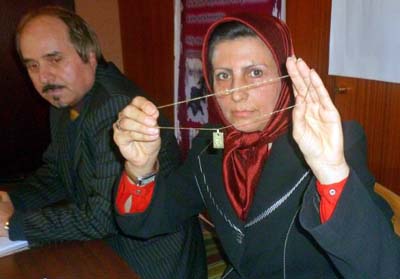
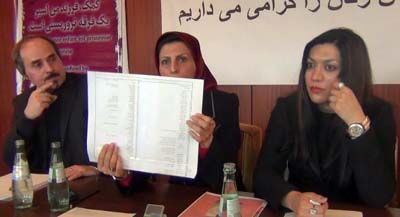
MKO members set all documents and photos on fire before their departureMKO members set all documents and photos on fire before their departure

December 15, 2012 0 comments
FacebookTwitterPinterestWhatsappTelegramSkypeEmail
MEK Camp Ashraf

Pictorial – Dissident members to revenge the group leaders

Dissident members to revenge the group leaders

December 15, 2012 0 comments
FacebookTwitterPinterestWhatsappTelegramSkypeEmail
Mujahedin Khalq Organization as a terrorist group

Regime Change in Iran by the MKO?!

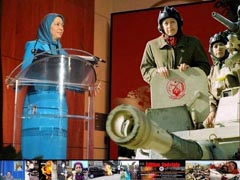
In the new P.R. show of the Mujahedin Khalq Organization(the MKO), the self- appointed president of the National Council of Resistance ,Maryam Rajavi on Wednesday 5 December, Regime Change in Iran by the MKO?!launched a campaign to have France and the European Union grant it the same recognition they have accord to the Syrian coalition battling to overthrow Bashar al-Asad, AFP reported.[1]

AFP quotes from Rajavi as saying that “The West’s biggest error has been to ignore the key movement for change in Iran,” referring to her so-called “resistance” which is the political arm of the cult-like Mujahedin khalq group.

The wife of the disappeared leader of the MKO, addressed a group of 10 French deputies at France’s National Assembly. France government has no official contact with the group, although the MKO’s propaganda base is located in the suburb of Paris.

Rajavi claim that “only solution in Iran is a change of regime by the Iranian people”. She asked France and the European countries to “remove obstacles on the path of the resistance" and to support ”a democratic change in Iran.” This way, she introduces her cult as the alternative of the Iranian government. During the meeting, former US congressman, Patrick Kennedy –definitely well funded by the MKO’s propaganda – told the conference that Maryam Rajavi “seeks to bring democracy and human rights to her country,” reported Reuters.[2]
Maryam Rajavi to bring democracy and human rights?!

Actually, the "cult of Rajavi" is described by the State Department as “fundamentally undemocratic “and “not a viable alternative to the current government of Iran”.[3]

“Internally the Mujahedin run their organization autocratically, suppressing dissent and eschewing tolerance of differing viewpoints,” the DOS report said.

Massoud Rajavi, the disappeared ideological leader of the MKO ” has fostered a cult of personality around himself,” according to the DOS report.[4]

As AFP reports, the MKO seeks Syrian style recognition. France as the Western power to recognize Syria’s opposition coalition as the sole representative of the Syrian people. [5]
One thing is sure! The MKO does not represent the Iranian people. Rajavi suggests “a change of regime by the Iranian people “. What does she mean by the “Iranian people” who would support her “resistance”?

Jeremiah Goulka, is an American expert on the MKO. He is one of the authors of the famous RAND report on the group. Goulka explains how the MKO lost its support among Iranian public: "Once upon a time, the MEK did enjoy some measure of popular support in Iran. But after getting shoved aside by Ayatollah Ruhollah Khomeini’s party after the 1979 Iranian Revolution, the MEK spent the next two decades launching terrorist attacks against the new regime and its military, harming bystanders in several instances. The MEK joined sides with Saddam Hussein in the Iran-Iraq War (1980-1988), moving to camps in Iraq in 1986 and fighting against Iranian conscripts. Frustrated that Saddam failed to install it in power in Tehran by the end of the war, the MEK attempted its own invasion of Iran (using more of Saddam Hussein’s military munificence), resulting in the death of thousands of its members. These acts destroyed the MEK’s credibility among Iranians. Trapped in the Iraqi desert, the group’s leaders transformed the MEK into a cult after the failed invasion—engaging in such practices as mandated divorce and celibacy, sleep deprivation, public shaming, separation of families, and information control—and continued its terrorist attacks in Iran. “[6]

Jason Rezaian a Foreign Policy correspondent who has a ten- year experience of traveling to Iran and writing about it for a mostly American audience points out how the MKO leaders are detached from the reality of the Iranian society,” for many people in Iran, though, especially those who remember the early years after the 1979 revolution, the MEK has come to represent an evil much more toxic that the American view of the Taliban and Al-Qaeda”, he writes.[7]

The deep antipathy among the Iranian population against the MKO has even led many of previous sympathizers of the group to hide or deny their past links with it. Being extremely unpopular in Iran, the MKO’s dream for regime change in Iran can never be peaceful as its leaders claim. “The MEK may deny wanting violent regime change, but the only conceivable way it would become the next government in Tehran would be at the head of a US invasion force,” Jeremia Goulka suggests.[8]

The words of Maryam Rajavi addressing French deputies are helpful to testify how much the MKO leaders are mastered in their puffed-up propaganda campaign. The world community should know that they are never “representatives” of Iranian people but definitely enemies of them.

By Mazda Parsi

References:
[1] AFP, Iranian opposition seeks Syria-Style recognition, December 5, 2012
[2] Reuters, Iranian dissidents and French lawmakers urge new policy on Iran, December 5, 2012
[3] Engel, Richard Windrom, Robert, Israel trams with terror group to kill Iran’s nuclear scientists, US officials tell NBC News, NBC News, February 9, 2012
[4]ibid
[5] AFP, Iranian opposition seeks Syria-style recognition, December 5, 2012
[6]Goulka, Jeremiah, The cult of MEK, The American Prospect, July18, 2012
[7]Rezaian, Jason, Washington’s dangerous (and deluded) support for the MEK, Foreign Policy, March1, 2011
[8]Goulka, Jeremia, The cult of MEK, The American Prospect, July18, 2012

December 15, 2012 0 comments
FacebookTwitterPinterestWhatsappTelegramSkypeEmail
The cult of Rajavi

The Cult of Mojahedin; A Modern Cult of Personality – 2

The transformation of MKO to a pseudo-religious cult occurred through a lengthy process

For sure, as many experts on the subject believe, there are certain similarities between cults and The transformation of MKO to a pseudo-religious cult occurred through a lengthy processterrorist groups in the way each uses sophisticated psychological techniques to indoctrinate their devoted members. As a matter of fact, there exists a high potentiality in a terrorist group to actually change into a dangerous cult as it possesses cult features, because any group that challenges adopted norms that advocates moving against the current for sure it avails backdrop of a cult. In the same way, any cult has the potential to be a terrorist group. in the case of MKO it is not an exception.

But still there is a question to put that how and when it happened that MKO transformed from a Marxist-oriented political group with a fundamental ideology of advocating armed warfare to what is today known as a total cult of personality. Speculations fueled by a considerable bulk of studies as well as assertions by detached and former MKO members center on the fact that it was not an overnight transformation but a plot that hatched gradually through some lengthy process of guilefully outlined stages. Ali Akbar Rastgoo, an ex-member, firmly believes that MKO had some cult-like features even from the beginning but due to some reasons, they did not break the surface:

The transformation of MKO to a dangerous pseudo-religious cult occurred through a lengthy process. It has to be pointed out that it was a potentiality existing from the very beginning in the organization’s Islamic-Marxist eclectic ideology. If it failed to be manifested in those first years of its formation, it was because it was impossible to build up the current relations at that time. [1]

There are more than enough evidences to prove that Massoud Rajavi had a personal ambition of establishing a cult of personality after a complete failure in armed warfare and facing an overall political stalemate that led his group into total isolation from the masses. Even before the initiation of the military phase and declaring armed struggle against the regime in 1980, some eminent political figures well acquainted with MKO envisaged it would turn into a cult sooner or later. And Rajavi needed some information before taking the first step. Ali Ferasati, an ex-member, discloses that in 1984 while in Paris, Rajavi ordered the information bureau of umbrella groups and associations to do comprehensive studies about the structure of cults in the West:

In 1984, the information bureau of associations was asked to conduct a study into the Western religious cults. The reason was said to be since the imperialists were pushing policies ahead through religious cults, the organization needed to find out what the cults were doing and under what mechanism. … At the time I got to the bottom that Massoud [Rajavi] was aware of the fact that the organization was getting disintegrated and thus, he wanted to see how the western cults operated so he could follow their model. [2]

It may seem hard to believe that the first seeds of MKO’s transition to a cult of personality were sown in the heart of the Western democratic and free soil following the shocking initiation of a heretic inter-organizational revolution within MKO. In fact, before MKO relocation to Iraq to execute cultic relations in Camp Ashraf as its main cult bastion, the cult thought had passed beyond its embryo stage at Auvers-Sur-Oise in Paris. The four-year settlement of MKO in France and a great accumulation of members made them engaged in a routine bureaucracy that caused a staff crisis. Many other factors such as daily-life problems, lack of a clear strategy in 1981 to 1985, critical detachment and separation of members and lack of motivation as a result of long residence in France, attractions of life and beauties of European countries all and all caused the organization suffer acute crises. Besides, Rajavi was receiving formal messages and invitations from Saddam Hussein for a complete transfer of the organization to Iraq. The group had been caught in a difficult dilemma since Iraq was at war with Iran and Saddam was the most hated man in the eyes of Iranian. As a matter of fact, move to Iraq was equal to involving in an unforgivable conspiracy against a nation for whom the group had promised freedom and democracy.

Knowing the problem and hearing murmurs of protest from the ranking members against his goals and plans, Massoud Rajavi came to a conclusion to make a basic change in the already adopted conventional model of the Leadership Council for steering his group. On the other hand, the very existence of the Leadership Council had to be dissolved as it was an obstacle and threat to his authoritative leadership and he needed a plan to dissolve it. To find a way around all these problems and to pave the way to break any probable resistance, it required a very wise, deep plan which should also support a kind of revolutionary move. Besides, Rajavi was already embroiled in the scandal of having intimate and amorous relations with his office secretary, Maryam Qajar Azodanlu, the wife of Mehdi Abrishamchi at the time. The relation uncovered, it could cause a serious crash against the structure of the group that claimed to highly value moral principles in its campaign.

References:

1. Ra’isi and et al. Ravand-e Jodaee (originally in Persian) “The process of separation”. 1979. Samadie publication. p.164.
2. Massoud Jabani; Ravanshenasi Khoshunat va Terror (originally in Persian) “A psychology of aggression and terror” , Khavaran publication. p.127.

December 15, 2012 0 comments
FacebookTwitterPinterestWhatsappTelegramSkypeEmail
Mujahedin Khalq Organization's Propaganda System

MKO Dismisses to Admit Errors

MKO leaders are making more mistakes by holding onto cult practices inside

There is always another chance for those who make mistakes, even serious ones, but the fatal MKO leaders are making more mistakes by holding onto cult practices insideone to make is to avoid admitting them. Of the recent expressions which best describes the terrorist MKO is the one stated by Alan Berger, a Boston Globe editorial writer expert on foreign policy and security issues. In his article entitled Iranian exiles and international blunders, he points to his last year’s interview with MKO’s leader, Maryam Rajavi, and the group’s members he talked to and concluded that “People caught up in a blood feud are not inclined to dwell on their past errors”. As a matter of fact, MKO has been pursuing a never-ending and long lasted vendetta against the Islamic Republic regime for many bloods the group’s own past errors themselves have been the main cause to shed. And MKO laid the cornerstone of all errors when it concluded the inevitability and necessity of initiating armed struggle and violent acts in 1981, a rebellion which was supposed to speed up the collapse of the regime just for a change of power rather than for the accomplishment of democratic and civil causes.

But did MKO ever admit the fatal error the leaders made? Never. Just after a year of engaging in a massive terrorist bloodshed and killing hundreds of personalities and innocent civilians, in an analysis of the year-long armed struggle, Rajavi made another mistake by openly admitting that armed struggle was the spirit of the organization without which it failed to survive: “In essence, we owe our existence and survival before anything to the widespread armed combat of the Iranian Mojahedin-e Khalq Organization”.

Despite MKO is removed from the US terror list, today most of parliamentarians and politicians, with whom Maryam Rajavi attempts to show is in alliance with, are aware of the terrorist nature and record of her group. And of course, the group’s leaders never stop emphasizing the strategy of terror and violence whenever grabbing at a chance. The number of casualties and those killed in the course of a pseudo-democratic struggle have never been important for MKO and its leaders since their natures are not familiar with humane passion and mercy. What is important for them is achieving cultic goals with the Rajavis at the lead, human beings are just tools.

Being a devotee of Masoud Rajavi as well as being his wife, Maryam Qajar Azdanlou, was sent from Iraq to France in 1993 as an elected future transitional President to undertake her tactical and organizational mission of filling the gap of a political campaign out of the cult. But in none of her messages delivered to the military branch based in Iraq she ceased to emphasize that “everything at the end is bomb, bullet and gun”. However, her first task there has been to advertise a different side of the mother terrorist group, to demonstrate a pro-democratic alias on struggle that outwardly outweighs disadvantages of engaging in terrorist acts in order to take advantage of the European support. But in fact, she is still the very devoted member faithful to the principles of the mother group.

It is deceit that makes hypocrisy what it is and Maryam Rajavi has proved to be a real prototype. The West and the group’s advocates there are deceived by her democratic manners and maneuvers and, of course, her extravagance. The errors of MKO are beyond any calculation atop of which stand its rampant terrorist deeds and crimes following committing the fatal error of advocating an armed struggle policy to regain a lost struggle. Thus, greatly hailing a philosophy of “ends justify the means”, violence became the opt means to achieve no democratic and human cause but the power. Expelled from Iran as a rebellious group, it vowed as an archenemy of Iranian people and has so far swum against the current. In fact, the serious errors have been its ideological drift and political misconduct that led it afield of a conventional political group and the world came to develop an idea of recognizing it not only a terrorist group but also a highly destructive cult evolving its own mind control techniques and sharing common properties with other dangerous cults. Still MKO leaders dismiss to admit the grave errors that could halt deflection of a group that could continue on a democratic, non-violent path. And still they are making more mistakes by holding onto cultic practices inside but portraying a democratic organization outside.

Rosa Kaviani,

December 15, 2012 0 comments
FacebookTwitterPinterestWhatsappTelegramSkypeEmail
Newer Posts
Older Posts

Recent Posts

  • Is Rudy Giuliani so naïve to support MEK terrorists?

    July 27, 2026
  • National Pride of Iranians: Reject the Rajavis and their Patrons

    July 22, 2026
  • Italian legislators fooled by MEK’s polished presentations

    July 18, 2026
  • The Rhetorical Style and Polemical Language of the MEK

    July 15, 2026
  • Death of Lindsey Graham, notorious hardliner against Iran

    July 13, 2026
  • Facebook
  • Twitter
  • Instagram
  • Youtube

© 2003 - 2025 NEJAT Society . All Rights Reserved. NejatNGO.org


Back To Top
Nejat Society
  • Home
  • Articles
  • Media
    • Cartoons
    • NewsPics
    • Photo Gallery
    • Videos
  • Publications
    • Books
    • Nejat NewsLetter
    • Pars Brief
  • About Us
  • Contact us
  • Editions
    • عربي
    • فارسی
    • Shqip