Nejat Society
  • Home
  • Articles
  • Media
    • Cartoons
    • NewsPics
    • Photo Gallery
    • Videos
  • Publications
    • Books
    • Nejat NewsLetter
    • Pars Brief
  • About Us
  • Contact us
  • Editions
    • عربي
    • فارسی
    • Shqip
Nejat Society
Nejat Society
  • Home
  • Articles
  • Media
    • Cartoons
    • NewsPics
    • Photo Gallery
    • Videos
  • Publications
    • Books
    • Nejat NewsLetter
    • Pars Brief
  • About Us
  • Contact us
  • Editions
    • عربي
    • فارسی
    • Shqip
© 2003 - 2024 NEJAT Society. nejatngo.org
Mujahedin Khalq Organization

Rajavi’s Marathon of retreats

A condition for test the weight and position of MujahedeenRajavi's Marathon of retreats

Analyzing the reasons for Rajavi’s withdrawals, which Mujahedeen call it "relentless battle", Indicates that the MEK tactics in confronting the Iraqi government with the U.S, Europe and the United Nations are defeated and they are forced to retreat.

– The Iraqi government has no right to interfere in the affairs of the Camp Ashraf, and this base is under protection of the U.S.

A little later:
– The U.S is required to perform its obligations towards the mujahedeen.
– There is no withdrawal from Ashraf, we have the right to asylum.

A little later:
– We accept European plan to exit Iraq.
– MeK should be given public asylum.

A little later:
– We welcom Preparation of the High Commissioner for Refugees to address the individual asylum.
– Iraqi deadline is artificial and illegal.

Now:
– Iraq to extend the deadline!

These retreats were reviewed neither to humiliate the MEK leadership nor to heighten his stupid Positions. Analyzing the reasons for Rajavi’s withdrawals, which Mujahedeen call it "relentless battle", Indicates that the MEK tactics in confronting the Iraqi government with the U.S, Europe and the United Nations are defeated and they are forced to retreat.

Also, this situation shows that the MeK long term plan to be delisted and their efforts to satisfy the U.S are failed, because their position is not valid. Considering this fact, the inescapable prerequisite for any future mobility is that MEK to dissolve the current organization, to dismiss the culprit leadership, and to make a new arrangement!

November 2, 2011 0 comments
FacebookTwitterPinterestWhatsappTelegramSkypeEmail
Mujahedin Khalq Organization members' families

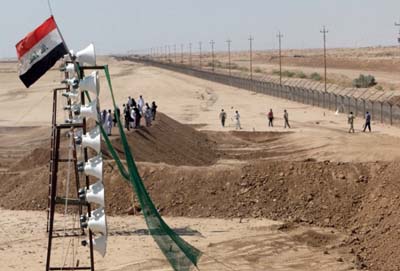
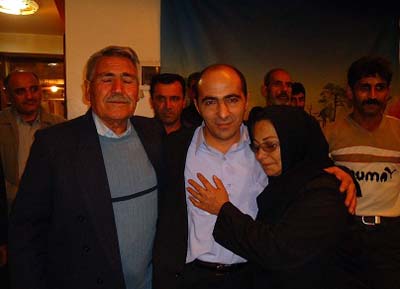
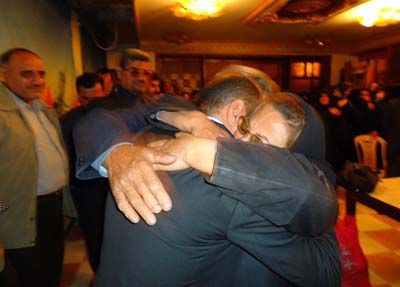
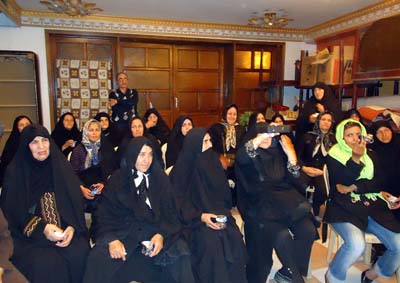
Pictorial- Nejat Society Gilani Families at Ashraf Gates

On Wednesday, October 19th, a number of family members of Ashraf residents from Gilan joined other families picketing in front of Camp Ashraf in the hope of visiting their loved ones kept by force in the camp, in a free atmosphere without the presence of the cult officials.
Nejat Society Gilani Families at Ashraf Gates

November 2, 2011 0 comments
FacebookTwitterPinterestWhatsappTelegramSkypeEmail
Iraq

Iraq to close HQ of Mojahedin Khalq by 2011

Iraqi Foreign Minister Hoshyar Zebari says Baghdad is determined to close down camp Ashraf, which hosts members of the terrorist Mujahedin-e Khalq Organization (MKO), by the end of the Iraqi Foreign Minister Hoshyar Zebari says Baghdad is determined to close down camp Ashrafyear.

Speaking at a news conference in the Iraqi capital alongside his Iranian counterpart Ali Akbar Salehi, Zebari said on Monday that Baghdad has informed the United Nations refugee agency and the European Union about its plan to expel MKO members.

"We have already made it clear about closing … Camp Ashraf before. The decision will be implemented by the end of this year," Zebari said.

"The government insists on completing this mission … There is no government that would agree to an organization staying against its (authorities’) will, laws and sovereignty," he added.

The Iraqi Foreign Minister’s remarks came one day after country’s Minister of Human Rights Mohammad Shayaa al-Sudani stressed that the notorious camp, located about 120 kilometers (74 miles) west of the border with Iran, would be closed before US troops pull-out and by the end of the year.

Al-Sudani said that a high-profile team consisting of officials from the justice, human rights and defense ministries were looking for a legal solution to the issue.

The MKO has carried out numerous acts of terror and violence against Iranian civilians and government officials.

The group fled to Iraq in 1986, where it enjoyed the support of Iraq’s executed dictator Saddam Hussein, and set up Camp Ashraf in Diyala Province, near the Iranian border.

The organization is also known to have cooperated with Saddam in suppressing the 1991 uprising in southern Iraq and the massacre of Iraqi Kurds.

Iran has repeatedly called on the Iraqi government to expel the group, but the US has been blocking the expulsion by mounting pressure on the Iraqi government.

November 1, 2011 0 comments
FacebookTwitterPinterestWhatsappTelegramSkypeEmail
The MEK Expulsion from Iraq

Zebari Reiterates”Definite”Expulsion of MKO

Iraqi Foreign Minister Hoshyar Zebari said that Baghdad will definitely expel the terrorist Mojahedin-e Khalq Organization (MKO) from Iraq’s soil by the next one or two months. Baghdad will definitely expel the terrorist Mojahedin-e Khalq Organization (MKO) from Iraq's soil

Speaking at a joint press conference with his visiting Iranian counterpart Ali Akbar Salehi in Baghdad today, Zebari said, "MKO’s expulsion from Iraq by the end of 2011 is definite."

"Based on agreements, MKO members will be expelled from Iraq’s soil at the end of 2011 and should be transferred to a third country," the Iraqi premier reiterated.

Yet, he pointed out that it is not yet clear which country will host the terrorist group once they are expelled from Iraq.

The MKO, whose main stronghold is in Iraq, is blacklisted by much of the international community, including the United States.

The MKO is behind a slew of assassinations and bombings inside Iran, a number of EU parliamentarians said in a recent letter in which they slammed a British court decision to remove the MKO from the British terror list. The EU officials also added that the group has no public support within Iran because of their role in helping Saddam Hussein in the Iraqi imposed war on Iran (1980-1988).

The group started assassination of the citizens and officials after the revolution in a bid to take control of the newly established Islamic Republic. It killed several of Iran’s new leaders in the early years after the revolution, including the then President, Mohammad Ali Rajayee, Prime Minister, Mohammad Javad Bahonar and the Judiciary Chief, Mohammad Hossein Beheshti who were killed in bomb attacks by MKO members in 1981.

The group fled to Iraq in 1986, where it was protected by Saddam Hussein and where it helped the Iraqi dictator suppress Shiite and Kurd uprisings in the country.
The terrorist group joined Saddam’s army during the Iraqi imposed war on Iran (1980-1988) and helped Saddam and killed thousands of Iranian civilians and soldiers during the US-backed Iraqi imposed war on Iran.

Since the 2003 US invasion of Iraq, the group, which now adheres to a pro-free-market philosophy, has been strongly backed by neo-conservatives in the United States, who also argue for the MKO to be taken off the US terror list.

Since the beginning of this year, the Baghdad government has repeatedly assured Iranian officials and people that it is determined to expel the MKO from Iraq by the end of 2011.
"Expulsion of the MKO from Iraq’s soil and termination of its presence which has lasted for several years is a definite decision," Iraqi Government Spokesman Ali Al-Dabbaq told FNA in April, adding, "The MKO will be expelled from Iraq by the end of the current year."

"The only option for the members of the MKO is leaving Iraq and they have no other choice," he reiterated.

Reminding the black record of the terrorist group and its crimes against the Iraqi people, Dabbaq said, "Collaboration with the former Iraqi dictator and massacre of thousands of our people is just part of their crimes".

Dabbaq announced in early April that the cabinet is determined to shut down Camp Ashraf located North of the capital, Baghdad, and disband the terrorist group.
"The council of ministers is committed to implement the earlier decision about disbanding the terrorist group by the end of this year at the latest, and is well informed of the necessity of getting it out of Iraq," the official noted.

But, the US is trying to convince Iraqi officials to relocate MKO members within Iraq.

Under the US plan, the approximately 3,400 residents of Camp Ashraf would be temporarily relocated within Iraq, farther from the border with Iran, a US State Department official announced.

The relocation would be temporary, the official said, with final settlement of the inhabitants in other countries.

That would not include the United States, the official said, "Since US law bars anyone associated with a terrorist organization from settling there".

November 1, 2011 0 comments
FacebookTwitterPinterestWhatsappTelegramSkypeEmail
Iraq

Iraq to close Camp Ashraf before pullout

A senior Iraqi official says Baghdad aims to close down camp sheltering, which hosts members of the terrorist Mujahedin-e Khalq Organization (MKO), before US troops pull-out. Baghdad aims to close down camp sheltering, which hosts members of the terrorist MKO, before US troops pull-out

In a recent meeting with the Swiss Ambassador to Baghdad Martin Aishnbachr, Iraqi Minister of Human Rights Mohammad Shayaa al-Sudani stressed that the notorious camp, located about 120 kilometers (74 miles) west of the border with Iran, would be closed by the end of the year.
He added that a high-profile team consisting of officials from the justice, human rights and defense ministries were looking for a legal solution to this matter, IRNA reported.

The MKO has carried out numerous acts of terror and violence against Iranian civilians and government officials.

The group fled to Iraq in 1986, where it enjoyed the support of Iraq’s executed dictator Saddam Hussein, and set up Camp Ashraf in Diyala Province, near the Iranian border.

The organization is also known to have cooperated with Saddam in suppressing the 1991 uprisings in southern Iraq and the massacre of Iraqi Kurds.

Iran has repeatedly called on the Iraqi government to expel the group, but the US has been blocking the expulsion by mounting pressure on the Iraqi government.

November 1, 2011 0 comments
FacebookTwitterPinterestWhatsappTelegramSkypeEmail
Iraqi Authorities' stance on the MEK

The file of Camp Ashraf will be closed by year end

Following is an extract from the statement issued by the Iraqi Ministry of Human Rights in Arabic following the meeting between Iraq’s Human Rights Minister Mr. Mohammed Shi’ya’ al-Sudani with the Swiss Ambassador Mr. Martin Ashbacher.

Human Rights Minister: The file of Camp New Iraq (formerly Camp Ashraf) will be closed by the end of the year

(…)
With regard to the issue of Camp New Iraq (formerly Camp Ashraf), the Minister said "that the Iraqi government is seriously engaged in closing this file during the rest of the year, through the Committee, headed by the Undersecretary of the Ministry of Foreign Affairs and members of the Ministries of Justice, Human Rights and Defense for the purpose of reaching a solution and a legal way out for these people. He added "that the ministry was able to successfully repatriate a large number of members of the Mojahedin organization between 2004 and 2005 who were subsequently visited in inside Iran for the purpose of making sure they are able to integrate and return to work without any harassment".
(…)

Ministary of Human Rights, Baghdad, Translated by Iran Interlink

October 31, 2011 0 comments
FacebookTwitterPinterestWhatsappTelegramSkypeEmail
Mujahedin Khalq Organization

MEK try to cover up involvement in failed coup attempt

MEK and its Western backers try to cover up involvement in failed coup attempt in Baghdad

After last week’s failed coup d’etat by Saddamist Baathists the Mojahedin-e Khalq now tried to MEK and its Western backers try to cover up involvement in failed coup attempt in Baghdaderase evidence of its involvement by removing from its own websites and media all the material against al-Maliki’s government and the incitement to violence against the government which it had copied from Baathist websites and media.

The Mojahedin-e Khalq terrorist cult has long enjoyed strong support and backing from some members of the European Parliament, specifically Struan Stevenson and Alejo Vidal Quadras, who are both members of the Iraq Delegation. They warn against Iraqi interference in the situation of the MEK headquarters Camp Ashraf which is known as the last Saddamist Baathist stronghold in Iraq.

Over time, the government of Al-Maliki has complained both directly and through its diplomatic representatives, of Western and specifically European interference in the internal affairs of Iraq. Some of this was linked to evidence of MEK involvement.

With the arrest of 615 Saddamist Baathists in the middle and south of Iraq charged with activities that threatened the safety and security of the state, it may be that the dots are finally being joined up.

Up until yesterday the MEK’s websites and media were forcefully promoting the views of several Iraqi politicians who are among those arrested. Today their names have been carefully expunged from the site. Also among the prominent names which have been removed are Heydar Molla, and Saleh Mutlaq.

Saleh Mutlaq was linked with financial support for the MEK prior to the last election. He was based in Brussels working closely with the MEK lobby against the de-Baathification process.

Interestingly, articles promoting the position of Struan Stevenson and Alejo Vidal Quadras still feature on the MEK site. As well as his well-known support for the MEK, Stevenson, in his capacity as Chair of the Iraq Delegation, has made several visits to Jordan in addition to those he made to Iraq. Jordan, of course, is where many prominent Saddamist Baathists relocated after 2003, including Saddam’s daughter. Between 2003 and 2009 the MEK’s base, Camp Ashraf in the Diyala province of Iraq was used as a secret gathering and training base for Saddamist Baathists as well as indigenous and foreign insurgents, under the protection of the American military.

October 31, 2011 0 comments
FacebookTwitterPinterestWhatsappTelegramSkypeEmail
Mujahedin Khalq Organization's Propaganda System

The MEK’s Propaganda Machine

The National Interest will be running on Monday a response to Raymond Tanter’s missive on behalf of the Iranian cult/terrorist group Mujahedeen-e-Khalq. Given that Tanter goes out of his way to raise my name a couple of times, it would be appropriate for me as well to point out a couple of the more glaring misdirections in his piece.

Tanter’s premise, as reflected in his title, is that anything bad you ever heard about the MEK is a product of propaganda from the Iranian regime. Evidently this means that anyone, either inside or outside of Iran, who has ever been critical of the group must have been brainwashed by the propaganda. If that were true, those responsible for U.S. public diplomacy have a lot of valuable lessons to learn from the Iranians; their propagandists must be doing something right.

The Iranian regime flings propaganda as freely as any other regime. And it certainly has had a lot of unfavorable things to say about the MEK. Some of those things may be exaggerated or even outright lies. But one could erase completely everything the Iranian regime has ever said on this subject, and there would remain the large, long, sordid record of what the MEK has done, what it has stood for, and the abhorrent cult it still is. The record extends from the days it was killing Americans while opposing the shah, through when it was in league with the clerical regime and supporting further anti-American acts such as the hostage-taking at the U.S. embassy in Tehran, through the long period during which it was working for the Iraqi regime of Saddam Hussein. The record is not based just on what is said by the State Department or an intelligence agency or any governmental component with a policy to support, much less on anything the Iranian regime might say. If you want a recent independently reported portrait of the group, see, for example, this article by Elizabeth Rubin.

Tanter tries to smear critics and criticism of the MEK, including some of the contents of an open letter to which I was a signatory, by saying it “resembles regime propaganda against the MEK.” The MEK has conducted terrorism and other violent acts against U.S. interests and against the Islamic Republic of Iran. Is it any surprise that some of the critical things said about the group from the standpoint of U.S. interests resemble some of what the Iranian regime puts out? (And if it’s not brainwashing, then just what is Tanter suggesting is the reason for the resemblance?)

One of the respects in which Tanter’s piece diverges most widely from reality is his attempt to argue that the MEK has any support to speak of within Iran. He notes that the group was the source of some revelations about Iran’s nuclear program. True—and we ought to remember our reliance on the accident of this weird sourcing when we think about how much confidence we ought or ought not to have in our knowledge of this program—but what does that have to do with popular support? It only takes one person to serve as a source. The most telling indication of the MEK’s unpopularity in Iran, as pointed out in the aforementioned open letter, is that the Iranian regime uses that unpopularity as a way to discredit the democratic opposition in Iran, by trying to associate it with the MEK. For the same reason, the leaders of the Green Movement have emphatically said that they want nothing to do with the MEK. Tanter also mentions attendance at pro-MEK rallies in the United States as a measure of support, without mentioning that the MEK campaign has resorted to such measures—used in a rally outside the State Department this summer—as padding attendance by busing in homeless people who don’t know squat about the MEK or Iran but come for the free food.

Tanter precedes a reference to me with the odd statement that “Intelligence communities are targets of Iran’s disinformation.” Odd because I have been out of the intelligence business for more than six years, and anyone who views my thinking as having any connection with judgments that an intelligence agency would reach today will be disappointed and wasting their propaganda resources. Tanter later mentions me again as someone who ought to be concerned about the “political motivation” for having the MEK on the State Department’s list of Foreign Terrorist Organizations, or FTOs. It is true that the listing process is not immune to policy considerations, but that has been much more a matter of avoiding the listing of a group that really ought to be on the list (the Provisional Irish Republican Army of fifteen years ago is the example that comes to mind), than of including on the list a group that should not. Not listing someone means simply not initiating the listing process. Listing a group requires a lengthy process of review by the Departments of State, Justice, and Treasury and the intelligence community, according to the criteria specified by law.

Tanter seems to believe that a group has to have committed terrorist acts within the previous two years to be kept on the list. Not true. (Having been directly involved in the laborious process of compiling the required administrative records for the initial listings after enactment of the law in 1996 that created the FTO list, I know a thing or two about this subject.) Two years used to be the interval between recertifications of listed groups, and it is now the period after which a group can petition for delisting. But no terrorist acts have to have been committed during that period; retaining the capability and presumed intent to commit them is sufficient to stay on the list. If performing terrorist acts recently was a requirement to stay on the list, many of the 49 groups currently on the list would have to come off. Lebanese Hizballah, for example, probably would be one of them. I expect that many of the pro-MEK campaigners would be among the first to scream if that happened.

There is indeed a large amount of political influence that is being exerted in an effort to affect a decision about the FTO list, and it is almost all coming in the form of the large and well-funded campaign to delist the MEK. In fact, the campaign is extraordinary, and nothing remotely resembling it has ever been waged on behalf of any other group on the FTO list. Whatever is being said in the opposite direction is only a modest reaction to the pro-MEK campaign itself. Here is what I said on the subject two months ago, after that rally outside the State Department:

The secretary of state should pay no heed to what Melvin Santiago and the other hungry homeless outside her office window are saying, or to what the high-paid hired guns are saying, about the MEK. Nor does she need to pay any attention to what people like me are saying about the group. She should keep the windows closed and just pay attention to the terms of the law and to what officials in the departments and agencies involved say about whether the terms of the law still apply in this case.
If Raymond Tanter really wanted to inform us about political influence being exerted on what ought to be administrative and legal decisions, he could shed more light on the campaign of which he is a part. In particular, he could help us understand where all that funding is coming from. It evidently is coming from quarters who would like to stoke ever more tension and animosity between the Iran and the United States. I have a guess who that might be, but so far it is only a guess.

Paul R. Pillar, The National Interest

October 30, 2011 0 comments
FacebookTwitterPinterestWhatsappTelegramSkypeEmail
Iran

Saudi Envoy plotter a member of Paris based MKO

Iran’s Foreign Minister Ali Akbar Salehi said Interpol has requested information about a alleged suspect wanted over US allegations of an assassination plot, but suggested the name was too common to pinpoint the individual.

Salehi said there are 150 names similar to the one requested by Interpol for the alleged plot to kill the Saudi envoy to Washington.

"There are 150 Gholam Shakuris (in Iran). Interpol sent us a question about this name, and our investigation showed a certain Gholam Shakuri who lives in the United States and is a member of the Mojahedin-e Khalq Organization (MKO)," Salehi was quoted by Saudi newspaper Asharq al-Awsat as saying in Saudi Arabia.

The United States alleges Gholam Shakuri co-conspired with an Iranian-American car salesman, Manssor Arbabsiar, to kill the Saudi ambassador to Washington.

While Arbabsiar is in US custody, US officials say they believe Shakuri is in Iran and they have called on Tehran to turn him over to face charges.

Iran has strongly denied any involvement in the alleged plot.

It has also suggested that the Shakuri being sought is part of the terrorist MKO, a Paris-based Iranian exile group, that aims to overthrow the Islamic Republic and has so far staged hundreds of terrorist operations inside and outside Iran.

Both Iran and the United States consider the group to be a terrorist organization.
Salehi made the comments in an interview with Asharq al-Awsat during a visit to Riyadh for the Tuesday funeral of Saudi Arabia’s crown prince Sultan bin Abdul Aziz.

In the exchange, the Iranian foreign minister again denied that his country plotted to kill the Saudi ambassador to Washington, Adel al-Jubeir.

"We reject these accusations. There is no justification for Iran, which is a brotherly country to Saudi Arabia, to do such an act. It’s an American accusation – they want to create divisions between Muslim countries and specially the two most important countries in the Islamic world, Saudi Arabia and Iran," he said.

He also noted that Arbabsiar had pleaded not guilty in a New York court this week to the charges, and ridiculed the idea that Iran would engage such a character in the alleged plot.

Even before the plot claims, the ties between the two regional rivals were strained over Saudi Arabia’s military assistance to Bahrain to put down pro-democracy protests by peaceful demonstrators.

Iran and Saudi Arabia have had some differences during the last three decades after the establishment of the Islamic Republic in Iran as Riyadh is considered a main US ally and always tries to materialize the US interests in the region.

On the opposite, Tehran is an arch foe of the White House and represents independent nations who do not sway under the pressure of any superpower. It is seeking its own national interests and many world states have pinned hope on its success and progress as an independent, Muslim power.

October 30, 2011 0 comments
FacebookTwitterPinterestWhatsappTelegramSkypeEmail
Mujahedin Khalq; A proxy force

Iran Claims U.S.-Sponsored MKO Terrorists Conceived Saudi Ambassador

Since news broke that there was an alleged plot by Iran to assassinate the Saudi ambassador to the United States, Adel A. Al-Jubeir (left), and destroy a number of embassies, Iran has adamantly denied the accusations. Likewise, skeptics questioned whether the plot could have been staged by Iran, who would have had little to nothing to gain from such an endeavor, and claimed that the plot was uncharacteristic of Iranian terror. Others have asserted that the entire plot was in fact manufactured by American law enforcement agencies as an impetus for war against Iran. Adding yet another layer to this news story, Iran has come out and said that the plot was in fact planned by the French/Iraqi-based Mujahedin-e Khalq Organization (MEK), which is actually funded and supported by the United States.

Last week, the United States charged American-Iranian Mansour Arbabsiar, a used car salesman, for his role in an alleged plot to murder Ambassador Adel Al-Jubeir and attack Saudi installations in the U.S. in a plan reportedly plotted earlier this year. According to the Justice Department, Arbabsiar conspired with Gholam Shakuri, a member of Iran’s Qods Force — an arm of the Iranian Islamic Revolutionary Guard Corps.

Iran immediately denied the accusations, with the Iranian Foreign Ministry spokesman Ramin Mehmanparast declaring, “These attitudes, which are based on the age-old and hostile policies of the American-Zionist axis, are a ridiculous show in line with a scenario that aims to divide and that emanates from enemies of the region.”

A number of experts across the globe came forward and questioned the claims that the plot had been sponsored by the Iranian government. They argued that the Qods Force is far too methodical and effective in its choice of proxies to have chosen a used car salesman and member of a Mexican drug cartel. Others assert that it is unlikely that Iran would sponsor such an act of terror as it does not serve Iranian interests in any way.

Iran has now raised accusations against another party, which they claim to be responsible for hatching the plot. The British paper The Guardian reports, “Tehran has pointed the finger at a dissident group it considers a ‘sworn enemy’ in an attempt to distance itself from US accusations that the Islamic regime in Iran conspired to kill the Saudi ambassador to Washington.”

According to Iran’s news agency Mehr, one of the two suspects that the United States asserted was involved in the plot to assassinate the Saudi ambassador is a “key member” of MEK. "The person in question has been travelling to different countries under the names of Ali Shakuri/Gholam Shakuri/Gholam-Hossein Shakuri by using fake passports, including forged Iranian passports," said Mehr.

MEK has been declared a terrorist organization by the U.S. State Department. Listed as number 28 on the Department’s list of terrorist organizations, MEK has been responsible for terrorism against both the United States and Iran for years.

Yet MEK was considered by the Brookings Institution as a prime candidate for U.S. backing to remove the Iranian government. A 2009 report by the Brookings Institution, entitled “Which Path to Persia?” reads:

Perhaps the most prominent (and certainly the most controversial) opposition group that has attracted attention as a potential U.S. proxy is the NCRI (National Council of Resistance of Iran), the political movement established by the MEK (Mujahedin-e Khalq). Critics believe the group to be undemocratic and unpopular, and indeed anti-American.

In contrast, the group’s champions contend that the movement’s long-standing opposition to the Iranian regime and record of successful attacks on and intelligence-gathering operations against the regime make it worthy of U.S. support. They also argue that the group is no longer anti-American and question the merit of earlier accusations. Raymond Tanter, one of the group’s supporters in the United States, contends that the MEK and the NCRI are allies for regime change in Tehran and also act as a useful proxy for gathering intelligence. The MEK’s greatest intelligence coup was the provision of intelligence in 2002 that led to the discovery of a secret site in Iran for enriching uranium.

In the 1970s, however, MEK was responsible for the death of three American officers and three civilian contractors in Iran. The group also voiced significant support for Iran’s taking of hostages during the Iranian hostage crisis, and some reports indicate that members of the group celebrated the 9/11 attacks, though the organization publicly condemned the attacks.

MEK has conducted a number of other terrorist attacks as well, but most have been excused because they were directed against the Iranian government. In 1981, MEK bombed the headquarters of the Islamic Republic Party, killing approximately 70 officials. The organization has also taken credit for dozens of Iranian civilian and military attacks between the years 1998 and 2001.

Still, the United States has reportedly supported the organization. In a 2008 New Yorker article entitled “Preparing the Battlefield,” Seymour Hersh revealed,

“The M.E.K. has been on the State Department’s terrorist list for more than a decade, yet in recent years the group has received arms and intelligence, directly or indirectly, from the United States. Some of the newly authorized covert funds, the Pentagon consultant told me, may well end up in M.E.K. coffers. “The new task force will work with the M.E.K. The Administration is desperate for results.” He added, “The M.E.K. has no C.P.A. auditing the books, and its leaders are thought to have been lining their pockets for years. If people only knew what the M.E.K. is getting, and how much is going to its bank accounts — and yet it is almost useless for the purposes the Administration intends.”

Hersh also appeared on National Public Radio and indicated that the United States had trained a number of MEK members.

There has been an effort in the United States to remove MEK from the list of terrorist organizations, presumably so that the federal government could provide even more funding to the group.

For some, information such as this is enough to convince them that the entire war on terror is fraudulent and should be approached with skepticism. One popular blog wrote of the war on terror:

From the beginning, even for those wanting to believe the fairy tale that 9/11 was carried out by cave dwellers carrying box cutters directed by Osama Bin Laden, who by all accounts was dying or already dead from kidney failure in 2001 — "unfortunate blunders" in US foreign policy can still be blamed for the creation and perpetuation of the ubiquitous, unceasing terror organization known as Al Qaeda. However, in light of recent events in Libya, Syria, Iran, and Algeria, there is exposed a truth, many have known for over 10 years, and many more are catching onto now — that the "War on Terror" is an absolute fraud, started, fueled and simultaneously fought against by the same handful of corporate-financier interests for the sole purpose of spreading Wall Street and London’s hegemony across the globe.

According to Iran’s president Mahmoud Ahmadinejad, it is this type of fraud that has led the U.S. government to accuse Iran of the plot to assassinate the Saudi ambassador. Comparing it to assertions that Iraq maintained weapons of mass destruction, Ahmadinejad said that the U.S. simply “fabricated a bunch of papers” to support its claims at the time. “Is that a difficult thing to do?” he asked.

by Raven Clabough – The new American

October 30, 2011 0 comments
FacebookTwitterPinterestWhatsappTelegramSkypeEmail
Newer Posts
Older Posts

Recent Posts

  • A Comparative Analysis of Psychological Control Mechanisms in Jeffrey Epstein’s Cult and the MEK

    August 3, 2026
  • Operation Mersad: How Iran foiled Saddam’s final gambit 37 years ago

    August 1, 2026
  • Ideology Cannot Prevail over Human Dignity

    July 29, 2026
  • Is Rudy Giuliani so naïve to support MEK terrorists?

    July 27, 2026
  • National Pride of Iranians: Reject the Rajavis and their Patrons

    July 22, 2026
  • Facebook
  • Twitter
  • Instagram
  • Youtube

© 2003 - 2025 NEJAT Society . All Rights Reserved. NejatNGO.org


Back To Top
Nejat Society
  • Home
  • Articles
  • Media
    • Cartoons
    • NewsPics
    • Photo Gallery
    • Videos
  • Publications
    • Books
    • Nejat NewsLetter
    • Pars Brief
  • About Us
  • Contact us
  • Editions
    • عربي
    • فارسی
    • Shqip