Nejat Society
  • Home
  • Articles
  • Media
    • Cartoons
    • NewsPics
    • Photo Gallery
    • Videos
  • Publications
    • Books
    • Nejat NewsLetter
    • Pars Brief
  • About Us
  • Contact us
  • Editions
    • عربي
    • فارسی
    • Shqip
Nejat Society
Nejat Society
  • Home
  • Articles
  • Media
    • Cartoons
    • NewsPics
    • Photo Gallery
    • Videos
  • Publications
    • Books
    • Nejat NewsLetter
    • Pars Brief
  • About Us
  • Contact us
  • Editions
    • عربي
    • فارسی
    • Shqip
© 2003 - 2024 NEJAT Society. nejatngo.org
Mujahedin Khalq; A proxy force

US lawmakers warn Iraq over MKO relocation

US lawmakers have warned Iraqi leaders about relocating more than
three-thousand MKO members from Camp Ashraf in northern Iraq

A resolution presented by Democratic lawmakers has also called on President Barack Obama to stop the relocation of members of the terrorist Mojahedin Khalq Organization (MKO) from Iraq.
According to a plan ordered by Prime Minister Nuri al-Maliki the group should first be moved to the Iraqi capital of Baghdad and later to a 1950s detention camp in southern Iraq.

Some 120 House members backed a resolution, presented by Democrat Bob Filner, to ask Obama to defuse the Iraqi move.

"We are here to call on whoever will listen, the Iraqi government the US government, to halt the forcible relocation of the residents of Camp Ashraf," AFP quoted Filner as telling to reporters.
Members of the terrorist group also defied the Iraqi government’s orders to leave.

Meanwhile, Iraqi army Colonel Bassel Hamad told reporters that "Camp residents have been aware since October 19 that they are to be cleared out today and moved elsewhere while respecting international human rights standards."

Former Iraqi dictator Saddam Hussein dedicated Camp Ashraf to host the group. They resided in Camp Ashraf near the Iranian border for the past two decades and were lucky enough to receive protected status following the US-led invasion of Iraq in 2003.

However, control of the camp was handed over to Iraqi forces earlier this year and the Baghdad government stepped up efforts to expel the anti-Iran terrorists.

The Baghdad government had been warning for months that its patience with the grouplet was wearing thin.

Iran has condemned Washington for supporting the terrorist group and has asked Iraq to expel MKO members.

The MKO has been blacklisted as a terrorist organization by many international organizations and countries including the United States.

In Iran, members of the Mujahidin Khalq organization are regarded as traitors for siding with the Ba’ath regime during the Iraq-imposed war on Iran (1980-1988).

The group became especially notorious after they masterminded a torrent of terrorist operations inside Iran, one of which was the 1981 bombing of the offices of the Islamic Republic Party that killed more than 72 cabinet members, including the second-elected president of Iran, Mohammad Ali Rajai, and judicial chief Mohammad Beheshti In Iraq, MKO is seen as “a brainwashed cult from a high-trained terrorist organization” which assisted the Saddam regime in oppressing the Iraqi nation and suppressing the Kurds and Shias in the 1990’s.

December 17, 2009 0 comments
FacebookTwitterPinterestWhatsappTelegramSkypeEmail
Iraq

PMOI relocation voluntary, Iraq says

Iranian dissidents at Camp Ashraf in Iraq’s Diyala province can transfer to another facility on a voluntary basis, Iraqi military officials said Tuesday.

Iraqi government officials last week said members of the People’s Mujahedin of Iran had until Tuesday to leave their Camp Ashraf enclave or face possible deportation to Iran.

Baghdad plans to relocate the PMOI first to Baghdad and then to another facility in the south of the country.

Iraqi Brig. Bassel Hamad told the Voices of Iraq news agency that national forces would not forcibly expel the 3,000 or so members of the PMOI from their camp.

"The transfer will be voluntary," he said. "The residents will have the option to move out or to stay inside the camp."

He added that if the residents defied government efforts to close Camp Ashraf, Baghdad would "find suitable solutions for this."

The PMOI is listed as a terrorist organization by the U.S. and Iraqi governments for its violent opposition to the clerical regime in Iran. The group surrendered its weapons to the U.S. military shortly after the 2003 invasion of Iraq and now claims its policy is based on peaceful opposition to Iran.

The U.N. Assistance Mission in Iraq called on all parties to negotiate to find a resolution that was in line with Iraq’s sovereignty rights and international law.

The United Nations added it was committed to monitoring the situation at Camp Ashraf "on a daily basis."

December 17, 2009 0 comments
FacebookTwitterPinterestWhatsappTelegramSkypeEmail
MEK Camp Ashraf

MKO refuses to comply with Iraqi order to leave

MKO representative Mehdi Farahi (C) talks to reporters during a demonstration by members of the anti-Iran group.

After Iraq moved to transfer the anti-Iran Mujahedin-e-Khalq Organization (MKO) from their camp in the country, members of the group defied the Iraqi government’s orders to leave.

Iraqi police were out in force in Camp Ashraf near the border on Tuesday, calling on its nearly 3,500 residents to leave as a first stage towards leaving Iraq.

According to a plan ordered by Prime Minister Nouri al-Maliki the group should first be moved to the Iraqi capital of Baghdad and later to a 1950s detention camp in southern Iraq.

A representative from the terrorist organization, Mehdi Farahi, warned Iraqi officials against any attempt to expel the group.

"Any attempt to expel us forcibly will lead to the same clashes and confrontations as those of July 28 and 29," he said, referring to a July incident during which Iraqi forces raided the camp in a melee leaving 11 people dead.

Meanwhile, Iraqi army Colonel Bassel Hamad told reporters that "Camp residents have been aware since October 19 that they are to be cleared out today and moved elsewhere while respecting international human rights standards."

"If they refuse, a high committee will decide what measures to take and we will resolve the problem in a peaceful manner," he added.

The MKO has been blacklisted as a terrorist organization by many international organizations and countries including the United States.

The terrorist group targeted Iranian government officials and civilians in Iran and abroad in the early 1980s. The group also attempted an unsuccessful invasion of Iran in the last days of the Iraq-Iran war in 1988.

The MKO was also involved in the massacre of Iraqis under the Ba’athist regime of former Iraqi dictator Saddam Hussein.

December 17, 2009 0 comments
FacebookTwitterPinterestWhatsappTelegramSkypeEmail
Iraq

Iraqi Maysan residents reject presence of MKO

Text of report by Qatari government-funded, pan-Arab news channel Al-Jazeera satellite TV on 15 December 

 
[Ali Khalaf video report]

The Iraqi city of Al-Samawah has refused to host members of the Mojahedin-e Khalq group, staging protests to state this refusal. Today, the group was transferred to the area of Al-Mansuriyah al-Jabal, which is adjacent to Baghdad. Al-Arabiya correspondent Ali Khalaf has more details.

[Begin recording] [Khalaf] The Mojahedin-e Khalq Organization [MKO] is a knot that the former Iraqi president tied and that the current government has become confused about untying. The former regime supported the organization in response to Iran’s embracing the Iraqi Badr Organization, which was opposed to the former regime. Maysan’s people accuse the organization of carrying out operations they describe as criminal acts against them for the sake of Saddam Husayn during the uprising that followed the war to liberate Kuwait. On this basis, the governorate council was angered when some websites said that some government authorities intend to transfer this organization to their city.

[Unidentified Iraqi man] It [the MKO] repressed worshippers and killed Al-Amarah’s people and notables. Saddam Husyan killed them through this desperate organization.

[Unidentified Iraqi woman] No, we do not want them.

[Another unidentified Iraqi man] Iraq is a secure, respectable, and wealthy country. We do not want these people.

[A third unidentified man] We host them on humanitarian grounds, no more no less, and in accordance with a strategy to be designed by the governorate and the chairman of the governorate council.

[A fourth unidentified Iraqi man] It [the MKO] committed terrorist acts; it quelled the uprising in a very terrifying and extreme manner.

[Khalaf] The chairman of the governorate council has urged the central government to expel this organization from all Iraq governorates and said that the world has labelled it as terrorist. He added that he has documents proving that this organization committed criminal acts against the residents of the Misan Governorate.

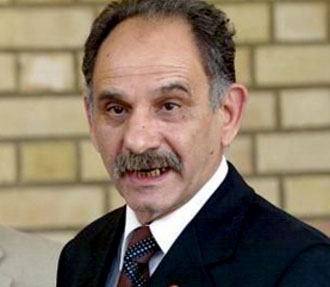
[Abd-al-Husayn Abd-al-Ridha al-Sa’idi, chairman of Maysan Governorate Council, addressing a news conference] There are documents proving that, over the past years, this organization and its affiliates were involved in criminal acts and in killing large numbers of Iraqi people in a flagrant manner.

[Khalaf] The Governorate Council of Maysan has flatly refused to host the Mojahedin-e Khalq for fear that the city might become a place for settling scores between the members of this organization and Iran-backed militias. [end recording; video shows the above speaking to Al-Arabiya]

Aljazeera TV (Arabic) – Transcript by BBC Monitoring Middle East

December 17, 2009 0 comments
FacebookTwitterPinterestWhatsappTelegramSkypeEmail
Mujahedin Khalq; A proxy force

A hostile attitude against any legal decision on MKO

The Iraqi government has confirmed that it will transfer the residents of Ashraf Camp to an unknown place in Baghdad or to a prison as the Mojahedin Khalq Organization has made it known through released news. The organization also states that transfer of its Ashraf Camp from Diala province to Baghdad violates all international calls and that it denounces claims of an agreement with the Iraqi government in this regard. Does the Iraqi Government actually needs confirmation of a terrorist group and arriving at any agreement to expel or relocate it to any place to have full control over it? Some may be of the opinion that long nurtured by Saddam Hussein and receiving supports by America after its invasion to recognize its members as refugees has emboldened the group to take a hostile attitude against any legal decision by Iraq.

But it seems that even Americans have lost their interest in the group since they may be accountable for any reaction by the group to protest its relocation as it did in July when the Iraqi police decided to establish a controlling post inside the camp. An evidence to present that US remains impartial, and putting the responsibility all on the Iraqi Government, is when the State Department spokesman in a press briefing gave details about the announcement by Iraqi Prime Minister Nori Al-Maliki of intentions to relocate or deport the Iranian dissidents at Camp Ashraf.

"QUESTION: On Iraq, Camp Ashraf, the Iranian opposition, says that the Iraqis are going to move them next Tuesday, I think. Are you going to try and use your influence with the Iraqis not to move them? The opposition says there’ll be bloodshed if they do attempt to do that.

MR. KELLY: Well, I think what we would do, first and foremost, is to urge the Iraqi authorities to conduct any such relocation with the residents of Camp Ashraf, that it be done in a lawful and humane way. They’ve made clear to us, to the Government of the U.S., that they do plan to do this. And this is entirely an Iraqi planned initiative. And as I said before, we’d expect this be carried out in a humane way.

We have, all along, recognized Iraqi sovereignty over the entire territory of Iraq, including the area where Camp Ashraf is located. And as I think we’ve said before, the Government of Iraq has assured us that they would not deport any of these citizens to any country where they would — if you have a well-rounded fear of being treated inhumanely.

So we — I mean, we’re engaging the Government of Iraq. Diplomatically, we respect Iraqi sovereignty. But of course, we’re making it clear that we would expect these – the residents of Camp Ashraf to be treated well and with respect.

The underlying truth in his response is that the United States deems the Mojahein Khalq a registered terrorist organization on its list notwithstanding its removal by judicial judgments from Britain’s list of terrorist organizations and from that of the EU. And of course it seems that the US has taken the right side since the organization has recently warned about any attempt to force its insiders from Ashraf and the US is among the firsts that were and are well aware of the group’s potentiality in waging violence to counteract moves by the Iraqi Government. Also to influence the public opinion, it has hired people to spread rumors of being relocated to notorious places that might jeopardize the life and security of its members.

Accounted by Allan Gerson, one of the advocates of the organization presently involved with other attorneys in representing it in its efforts to be removed from the U.S. List of Foreign Terrorist Organizations, the group is the subject of an appeal to be heard by the U.S. Court of Appeals in Washington DC on January 12th. But what is he much concerned about is relocation of Ashraf residents to a place where he reveals to be Neqrat as-Salman, referring to it as a desolate military prison and as Iraq’s most feared prison after Abu Ghraib that has been used since 1921 for detaining mostly political prisoners.

For sure, there is no ambiguity in the case of Mojahedin Khalq; it is a proven terrorist organization and has to leave the country that is determined to remove the last remnants of a notorious dictator whose adherents are still embroiling the country in disorder and civil war that is taking many lives every day.

December 17, 2009 0 comments
FacebookTwitterPinterestWhatsappTelegramSkypeEmail
Mujahedin Khalq Organization as a terrorist group

MKO attacks reporters prior to covering Ashraf relocate

Reporters preparing to cover the Mujahedin-e Khalq Organization (MKO) members’ relocate from Camp Ashraf were attacked today in Baghdad.

The blast was one of the three car bombs killing at least 4 people, Habilian Association (families of terror victims) website quoted the Kuwait News Agency (KUNA) as reporting.

Upon a call from the Iraqi government, the reporters were going to go to Camp Ashraf to cover the MKO’s relocate to Baghdad. The blast at least wounded a reporter who was waiting with colleagues at Baghdad’s Green Zone to move to the camp. Another car bomb was blasted in a car park opposite to the Iranian embassy in Baghdad.

The Iraqi government had vowed to relocate the MKO from Camp Ashraf to Bghdad on Tuesday.
The MKO terrorists had threatened the Iraqi government to resist the security forces upon their entering Camp Ashraf.

December 16, 2009 0 comments
FacebookTwitterPinterestWhatsappTelegramSkypeEmail
Iraqi Authorities' stance on the MEK

Iraqi MPs support the transfer of Mojahedin Khalq to Baghdad

Iraqi MPs support the transfer of Mojahedin Khalq to Baghdad
Demand America respect Iraqi sovereignty and invite them to take responsibility for protecting MKO

BAGHDAD / Aswat al-Iraq: Iraqi lawmakers on Monday expressed support for the Government plan to transfer members of the Mojahedin Khalq, an Iranian opposition, to Baghdad, calling on Iraqi MPs support the transfer of Mojahedin Khalq to Baghdad Demand America respect Iraqi sovereignty and invite them to take responsibility for protecting MKOthe U.S. Government to respect the decision as a sovereign right of Iraq. But the Vice-Council has urged the U.S. Government to take over responsibility for security for the camp’s members who should be transferred to the U.S. Forces.

The MP, Abdul Hadi al-Hassani, said in respect of the rule of law, the Government would deal with members of the People’s Mojahedin Organization humanely, but at the same time we want the United States to respect our decision and comply with non-interference in the internal affairs and sovereignty over Iraq’s territory, as we do not want to alienate our relations with neighbouring countries.

Mr al-Hassani told Aswat al-Iraq that the Iraqi Government sees "the need to remove the MKO from the Iranian border and the PKK from the Turkish border," pointing out that the two sides "are a danger to Iraq’s relations with its neighbours ".

He explained that the Government’s holds documents and pictures which are compelling evidence "which condemns the members of the MKO and the PKK for their armed operations during the former regime and the current phase."

The United States yesterday called on the Iraqi government to treat the Iranian dissidents, living on Iraqi territory for twenty years, humanely following the announcement of the transfer of the MEK camp to Baghdad.

State Department spokesman Ian Kelly said in a statement from the U.S. embassy in Baghdad, we urged the Iraqi authorities to go about the transfer of Camp Ashraf in a legitimate and humanitarian way, emphasizing Iraqi sovereignty over all Iraqi territory, including the area on which Camp Ashraf stands. And the Iraqi government assured us that "it would not expel any of these persons to a country where they may face inhuman treatment”.

On the other hand, the Deputy of the Iraqi National Coalition, Hamid Malp, in a statement rejected the U.S. State Department demand that the Iraqi government deal humanely with the members of the MKO which were involved in terrorism in Iraq during the former regime as well as now embracing armed groups in Diyala and Baghdad."

Malp told (Voices of Iraq) that there is intelligence information with the Government which "emphasizes the organization and financing of a link from some quarters outside the law." In an afterthought he said "his forces would take the decision to hold people accountable only after support and documentation of this information," he says.

Malp said that the transfer to the MKO camp to Baghdad, "will lead to positive results in the various sectors," pointing out that the Organization’s presence in Diyala has been "a controversial subject for a long time."

The Government spokesman Ali al-Dabbagh said on Thursday, 10 December, that the population of Camp New Iraq (formerly Camp Ashraf) would be transferred next week to Baghdad.

The Iraqi Government took over responsibility for security inside Camp Ashraf from U.S. forces early this year and re-named it Camp New Iraq in August.

In the same context, Mohammed Tamim, MP for the Dialogue Council, said the U.S. State Department’s demand for the Iraqi government to deal with the MKO humanely was "insufficient" and called on U.S. forces to "take over security responsibility for the camp, so the Iraqi government can transfer members of the organization to the U.S."

Tamim told Aswat al-Iraq that the decision to transfer the members of the Mojahedin from Camp Ashraf to Baghdad after two days of bombings (Bloody Tuesday) was "erroneous and imported from Iran." He said the decision was a “negative step resulting from the Iraqi Government’s efforts to convince the Iranians that the MKO was behind explosions that occur in the country".

Attorney Tamim said that the people of Camp Ashraf are "refugees, entitled to Iraqi Government help to provide an appropriate atmosphere to them after their escape from a terrorist group, such as is the obligation of the Arab and international community.”

According to the MP from the Kurdistan Alliance bloc Abdul Bari Zebari, "the Iraqi Government condemns the group for their documented participation in the suppression of the popular uprising in 1991 and attack on the worshipers in a mosque in Sadr City in Baghdad the same year, and that the regime of Saddam Hussein used the MKO to attack his opponents."

Zebari told Aswat al-Iraq that he believed that the Government "only took the decision to transfer the group to Baghdad after discussion with the U.S. embassy in Baghdad and after guaranteeing the members of the Organization would not be exposed to danger”. He added, "For the time being we should not repeat the process of involving the embassy in local affairs as happened when Iraqi security forces entered into Camp Ashraf for the establishment of a police base inside it."

The Mojahedin Khalq, an Iranian opposition group, numbers about 3500 people, based in Camp Ashraf, which covers an area of 16 square kilometers, 55 km north of Baquba, capital of Diyala province where it has been based since 1986.

December 16, 2009 0 comments
FacebookTwitterPinterestWhatsappTelegramSkypeEmail
MEK Camp Ashraf

Iraq orders MKO to vacate Camp Ashraf

Iranian dissidents protest the Iraqi government’s orders that they vacate Camp Ashraf, even as

Iraqi policemen stood ready at Camp Ashraf in case violence erupted
Iraqi policemen stood ready at Camp Ashraf in case violence erupted. The government says it intends to take the exiles, members of the Mujaheddin-e Khalq, to camps in the south. (Hadi Mizban/associated Press)

Iraqi policemen, at right, stood ready in case violence erupted. The government says it intends to take the exiles, members of the Mujaheddin-e Khalq, to camps in the south. (Ernesto Londoño/the Washington Post)

CAMP ASHRAF, IRAQ — With loudspeakers mounted on pickup trucks and riot police offering backup, Iraqi troops on Tuesday ordered a group of Iranian dissidents here to vacate their sanctuary, which has become an irritant in Iraq’s relationship with Iran.

"Today is the day we start moving things out," Brig. Gen. Basel Hamad told reporters during a rare trip to the camp, 40 miles north of Baghdad. "We will not allow any foreigners to establish their own laws on Iraqi soil."

Members of the Mujaheddin-e Khalq, or MEK, who reside in the 10-square-mile compound, have warned that they will not be taken out alive. Residents and Western officials fear the increasingly tense stalemate at Camp Ashraf could end in bloodshed.

The standoff has raised questions about the extent to which the United States, which once protected the MEK, is indebted to armed groups with which it brokered deals during the course of the war. The deadlock also has shed light on the degree to which an increasingly sovereign Iraq is haunted by its past, swayed by erstwhile nemesis Iran and willing to use force.

The Iraqi government invited reporters to the camp Tuesday. The day began ominously, with three car bombs detonating at the site where the journalists later gathered. At least four people were killed in the blasts, which occurred near the Iranian Embassy in Baghdad.

At midday, Iraqi policemen donned riot gear at a staging area and spoke about what might happen at Camp Ashraf in the days ahead.

"Our instructions are that we are not to beat anyone," said Aquil Ahmed, the police commissioner, adding that troops were armed only with rubber batons and electric shock wands. "If the demonstrations reach another stage, we will need to use weapons."
Packing dozens of Iraqi and Western journalists into the backs of pickup trucks, Iraqi troops drove down the tree-lined streets of the camp dropping leaflets and blaring messages in Farsi on loudspeakers. They asked MEK members to defect and invited them to hop into four small white-and-blue buses. None obliged.

A point of contention
The MEK camp includes dozens of people with dual nationalities or with residency permits for the United States, Canada and European countries.

Their continued presence in Iraq has been a sore spot in Baghdad’s relations with Tehran, which became close after the March 2003 U.S. invasion. The Shiite-led government of Iraqi Prime Minister Nouri al-Maliki says the group must be disbanded and expelled, but no country seems willing to give the MEK sanctuary.

The group began as a student opposition movement in Tehran in the 1960s that sought to overthrow Mohammad Reza Pahlavi, the shah. It resorted to violence during the 1970s, with members accused of bombing government facilities and killing U.S. citizens in Iran.

The MEK moved its headquarters to Iraq in the mid-1980s and fought alongside Saddam Hussein’s forces during the second half of the war between the neighboring countries. U.S. and European officials say the group helped the Iraqi government crush uprisings by Shiites and Kurds.

Shortly after the U.S.-led invasion, the American military brokered the group’s disarmament and offered it protection. The MEK says it gave U.S. officials valuable information about Iran’s nuclear program.

The roughly 3,200 residents of the camp have since lived in a Marxist-like commune, and they say they aspire to overthrow the Iranian regime.

A group with few friends
In recent months, as the Iraqi government has become increasingly assertive, the residents’ fate has become precarious. In July, Iraqi troops barged into the camp to set up a police station. Group members resisted, and Iraqi officers opened fire and ran over residents with American-donated armored Humvees, killing 11 people and wounding scores.

While it seeks a permanent home for the Iranians, the Iraqi government says it intends to take them to other camps in southern Iraq. But officials have not disclosed details.

As others debate the MEK’s fate, the group appears more isolated than ever. It recently broke off communications with the International Committee of the Red Cross. The European Commission has begun distributing a white paper to lawmakers, many of whom support the MEK, in an effort to taper their support for the group.

"We’re trying to educate them," said a senior Western diplomat involved in the efforts, speaking on the condition of anonymity because of diplomatic rules. "We collectively tend to forget what bad guys the MEK are."

American officials say they can do little under the terms of a bilateral agreement other than urge the Iraqis to act humanely.
"We not only have no obligation to protect them, we cannot intervene," said Philip Frayne, a spokesman for the U.S. Embassy.

MEK members say the United States owes them more.

"I am afraid of these soldiers," said Maryam Zoljalali, 28, who moved to the camp eight years ago from Sweden. "I don’t know what they will do in the future."
After standing by uncomfortably for a few minutes as camp residents waved placards and photos around journalists, Iraqi troops ordered the reporters back to their vehicles.
Inside one bus, an Iraqi soldier scoffed as he looked out the window.

"They had satellite dishes before anyone in Iraq," he said, a reference to the preferential treatment accorded to the MEK under Hussein. "We used to come here as laborers when they were the commanders."

Asked whether the turned tables were an opportunity for revenge, another soldier laughed.

"I have nothing to do with this," he said. "But their state wants them back."

Special correspondent Aziz Alwan contributed to this report.
By Ernesto Londoño – Washington Post Foreign Service

December 16, 2009 0 comments
FacebookTwitterPinterestWhatsappTelegramSkypeEmail
MEK Camp Ashraf

MKO;Iran ex-rebels defy police orders to quit Iraq camp

CAMP ASHRAF, Iraq – Disarmed Iranian rebels and their families defied Iraqi police instructions on Tuesday for them to leave a border camp the government has ordered closed, an AFP correspondent reported.

Police toured the camp reminding residents over loudspeakers of the deadline set by Prime Minister Nuri al-Maliki for their departure for alternative accommodation in southern Iraq but they refused to leave.

Maliki wants the former fighters of the People’s Mujahedeen, which fought with Saddam Hussein’s regime against Iran in the 1980-88 war, to move to the new camp with their families as a first stage towards leaving Iraq.

But People’s Mujahedeen representative Mehdi Farahi told Iraqi officials residents would not leave Camp Ashraf, where they were installed by Saddam’s regime 80 kilometres (50 miles) north of Baghdad in 1985.

“Any attempt to expel us forcibly will lead to the same clashes and confrontations as those of July 28 and 29,” he said, referring to violence at the camp this year in which the group says 11 people were killed.

“The manner in which the Iraqi government is acting is contrary to international law,” he added.
Iraqi police were out in force and an AFP correspondent saw few residents on the camp’s well-tended streets.

One of the camp’s leaders, Shahriar Kia, said the People’s Mujahedeen had invested more than 200 million dollars in Ashraf and residents were determined to resist the orders to move to Neqrat al-Salman, a desert camp 350 kilometres (220 miles) south of Baghdad where Saddam used to send opponents of his regime.

Bakak Saraz, who has lived in Ashraf virtually since it was first set up, told AFP: “They want to chase us out of here so that they can kill us but we would rather die in Ashraf than go to Salman.”
Washington, which disarmed the Iranian rebels after the invasion of 2003 and placed the camp residents under its protection, said on Friday it expected the Baghdad government to act legally and humanely in relocating camp residents.

“The government of Iraq has assured us that they would not deport any of these citizens to any country where they would be having a well-grounded fear of being treated inhumanely,” said State Department spokesman Ian Kelly, in allusion to Iran.

But Iraqi army Colonel Bassel Hamad insisted the security forces had behaved correctly throughout.

“We respected all the human rights; there was no transgression,” he told reporters.

“The decision came according to a central decision from the Iraqi government. They live on Iraqi ground and there are local laws, and I don’t think there is a pressure made by Iran on the Iraqi government to make this decision.” he said.

A statement from the Iraqi prime minister announcing the camp’s closure was released last Thursday.

“We have taken the decision to get them (the People’s Mujahedeen) out of Iraq … and the process of their moving to Neqrat al-Salman is a step on the way of taking them out of the country,” Maliki said.

“Their presence in Ashraf represents a danger because of their historical relations with certain political groups, notably with the remains of the former (Iraqi) regime and members of Al-Qaeda.”
The People’s Mujahedeen was founded in 1965 in opposition to the shah of Iran and subsequently fought the clerical regime that ousted him in the 1979 Islamic revolution.

The group, which has been blamed for bombings and other attacks inside Iran in the past, is anathema to the Tehran regime which derides its members as “hypocrites.”

Philip Frayne, spokesman for the US embassy in Baghdad, said on Tuesday the United States had “no obligation, and no right … to provide protection to the residents of Ashraf.

“We still expect the Iraqi government to treat them humanely, in accordance with its laws and international obligations, and not to forcibly deport them to any country where they have a fear of torture or persecution,” he said.

December 16, 2009 0 comments
FacebookTwitterPinterestWhatsappTelegramSkypeEmail
MEK Camp Ashraf

Shutting down the notorious Ashraf Garrison, the end of treason and crime

After nearly thirty years residing in Iraq , finally it seems despite of fruitless and futile efforts by cult’s leaders , the stronghold of Rajavi’s cult will be shut down and dismantled for good by popular Iraqi government, and decades of treason and crime against Iraqi and Iranian people will come to end at last.

The Iraqi government has decided to expel the remnant of Saddam’s suppressive forces, PMOI, from its soil according to its national sovereignty and constitution which is a fair and square decision . The first step is to shut down the Ashraf Garrison and transfer all the residents to the remote location which is called “Naqreh Salman” in southern part of Iraq. Iraq with its new and popular government after the fall of its savage dictator , Saddam Hussein, cannot tolerate and bear the existence of such criminals and saddam’s complicit on its soil anymore.

The leaders of this notorious and barbaric cult(Rajavi’s cult) have been terrified by Iraqi government decision upon shutting down the cult’s stronghold in Iraq, because they are perfectly aware that shutting down of their stronghold in Iraq will affect directly upon the cult’s headquarter in Paris which controls and manipulates minds of all those stranded and stuck victims in Ashraf garrison. Ashraf garrison in Iraq has been the heart and Maryam Rajavi’s headquarter in Paris is the brain of this cult, so while the heart stops working and pumping blood to the brain , brain will die.

The cult’s leaders are fully aware that dismantling and shutting down of their notorious garrison in Iraq ,will have harsh and severe consequences in their cult and put an end to the survival of this cult for good , consequently they will resort to inhumane tactics such as “self burning and self immolation” to avert and prevent it. Self immolation and self burning have been the road map and pressure leverage of this cult whenever the cult leaders feel harassed and pestered by outsiders.

They will react severely and harshly and they use their inhumane tactics to confront and deal with their problems and conflictions as they did in the past. The French people have not forgotten self burning and self immolation of a number of PMOI’s brainwashed and deceived victims who set themselves on fire to put pressure on French government to release their cult leader , Maryam Rajavi, from French police custody in 2003.

The essence of this cult rules while the entity of this cult is in danger , the leaders of this cult instruct self immolation of their rank and file in order to rescue themselves from the crisis which they have stuck and stranded in it. Like a scorpion which is surrounded by fire and finds no way out of fire to rescue itself, it stings itself to death , but in this cult the rank and file should pay the price and victimize themselves in order to rescue their leaders from justice.

We have seen and witnessed a number of these inhumane methods such as self burning, hunger strike, and the like, which the cult leaders have imposed upon their victims during past decades.

The only way to stop and put an end to all these brutal and barbaric methods in this cult which has taken numerous lives is to shut down and dismantle the notorious Ashraf- garrison and allow the stranded victims of this cult who have been trapped in this cult for decades to breathe and inhale freedom which has been taken from them by the cult leaders for a long period of time .

The victims who have lost everything they had in their lives and the majority of those victims lost their loved ones without knowing it ,because having any connection with their families was completely forbidden and restricted, any sentiment in this cult toward any member of family was considered as a deadly sin and crime against the well being of the cult leaders.

The members should have sacrificed their love and affection to their families and loved ones just to show their dedication and devotion toward their cultic leaders. Being dedicated and devoted to their supreme leaders , Massoud and Maryam Rajavi, they had to be brain washed and indoctrinated which was implemented via horrendous and terrifying sessions and cultic rituals by the members of governing council under direct supervision of the spiritual leaders of the cult.

All those victims who have been captives and hostages for decades in the hands of the cult’s spiritual leaders need to be rescued from that hell hole ,Ashraf garrison, as soon as possible to breathe and inhale freedom and find their real humane essence after all . The only way to do so is to shut down and dismantle the garrison which carries the curse of history on its name for ever.

I hope such human catastrophe and exploitation which occurred in that cultic garrison never happen for anyone else again. Believe me no one should go through the horrendous and tragic experiences which we went through in Rajavi’s cult.

Respectfully

Hassan Piransar/A victim of Rajavi’s cult/ Paris

December 15, 2009 0 comments
FacebookTwitterPinterestWhatsappTelegramSkypeEmail
Newer Posts
Older Posts

Recent Posts

  • Rebranding, too Difficult for the MEK

    December 27, 2025
  • The black box of the torture camps of the MEK

    December 24, 2025
  • Pregnancy was taboo in the MEK

    December 22, 2025
  • MEPs who lack awareness about the MEK’s nature

    December 20, 2025
  • Why did Massoud Rajavi enforce divorces in the MEK?

    December 15, 2025
  • Facebook
  • Twitter
  • Instagram
  • Youtube

© 2003 - 2025 NEJAT Society . All Rights Reserved. NejatNGO.org


Back To Top
Nejat Society
  • Home
  • Articles
  • Media
    • Cartoons
    • NewsPics
    • Photo Gallery
    • Videos
  • Publications
    • Books
    • Nejat NewsLetter
    • Pars Brief
  • About Us
  • Contact us
  • Editions
    • عربي
    • فارسی
    • Shqip