Nejat Society
  • Home
  • Articles
  • Media
    • Cartoons
    • NewsPics
    • Photo Gallery
    • Videos
  • Publications
    • Books
    • Nejat NewsLetter
    • Pars Brief
  • About Us
  • Contact us
  • Editions
    • عربي
    • فارسی
    • Shqip
Nejat Society
Nejat Society
  • Home
  • Articles
  • Media
    • Cartoons
    • NewsPics
    • Photo Gallery
    • Videos
  • Publications
    • Books
    • Nejat NewsLetter
    • Pars Brief
  • About Us
  • Contact us
  • Editions
    • عربي
    • فارسی
    • Shqip
© 2003 - 2024 NEJAT Society. nejatngo.org
Iraq

MKO on the Agenda of Troika

According to Buratha news, Iranian ambassador to Iraq Hassan Kazemi Qomi, who headed the Iranian delegation in Iran-US talks on Iraq, answered questions of reporters in a press conference after meeting his American counterpart; in response to a question on MKO, he said: "We didn’t talk about this top in this session but it’s on our agenda for future meetings."

The report adds that Maliki has asked the two sides to continue the meetings.

On the other hand, Sotaliraq website quoted Member of Parliament "Alsaneed" saying: "Nuri Al-Maliki will discuss the issue of MKO and how to stop their activities in Iraq. The issue will be future discussed by the troika of the US, Iran and Iraq."

Irandidban –   2007/05/30

May 31, 2007 0 comments
FacebookTwitterPinterestWhatsappTelegramSkypeEmail
Iraq

Mojahedin Khalq Organisation should be tried in Iraq

Last week, Habilian association had a meeting with some Iraqi NGOs officials and talked about Iraq status and position of Mujahedin in there.

In this meeting, Mr. Sheikh Emadodin Tamimi, director of Ansar-ul-hojjeh association in Baghdad, Sheikh Safa Tamimi, Friday Prayer Leader of Baghdad’s Mosques, and Asadollah Feli, secretary of Shiite Kurds Islamic movement in Iraq, met and talked to Habilian general secretary and executive director about Mujahedin terrorist group’s crimes and determination of nation and government to expulsion of them.

Mr. Sanavi, executive director of Habilian association, after welcoming them reminded on last negotiation with Iraqi friends, in which was not necessary to explain more about Mujahedin status and we became so glad that Iraqi nation know backgrounds of this terrorist group.

Then Sheikh Safa condoled and expressed his sympathy to family of martyrs, who have been martyred by Mujahedin.

Then Sheikh Emadodin Tamimi refused any claims of Mujahedin and occupiers to presence of this terrorist group in Iraq by according to Iraq’s constitution and criminal backgrounds of this group and also stressed that: “Munafeqin as Saddam’s mercenaries and murderer of Iran and Iraq’s children, would be expelled early and in this issue nation and all political group of Iraq have solidarity”.

Sheikh Emadodin Tamimi expressed his regret on their terrorist actions in Iran and also represented some recent events that happen in Iraq, especially the oppression and prosecution of Shiite.

Mr. Emadodin also noticed that now the occupiers support Mujahedin without any attention to Iraq nation and interests.

Then Mr. Feli, secretary of Islamic movement of Iraq Shiite Kurds, condoled martyrs’ families and explained the role and criminal actions of Munafeqin group on suppress of Kurds and described it as a massacre case, which caused that Munafeqin leaders can’t leave Iraq without trial and replay to Iraqi Kurds.

Mr. Hasheminejad also expressed his regret on Iraq recent status and expressed hope that terrorist activities and occupation of Iraq land will be ended and Iraqi people live in safe and comfort.

After that participants started their negotiations by according to agenda.

May 31, 2007 0 comments
FacebookTwitterPinterestWhatsappTelegramSkypeEmail
Iraq

Iraq says MKO behind violence

A senior Iraqi prosecutor has said there is evidence to suggest the terrorist Mujahedin Khalq Organization is involved in the ongoing violence in Iraq.

“The Iraqi Supreme Criminal Court has been provided with documents on the Mujahedin Khalq Organization’s (MKO) crimes against the people in southern Iraq and the people of Tuz Khormato in the south of Kirkuk,” the Iraqi Chief Prosecutor, Ja’far al-Mousavi, told the Iraqi Al-Bayyinah al-Jadidah paper.

“The prosecutors have filed a lawsuit against MKO ringleaders based on the documents and will bring them to trial for committing atrocities against the Iraqi nation,”al-Mousavi said.

“The names of the people taking orders from MKO leaders and the names of the victims will be announced to the media as soon as possible,”he added.

“There are pictures among the documents depicting the intelligence officers of the former Iraqi regime delivering a great deal of money to MKO leaders,”he continued.

Members of the MKO, an anti-Iranian terrorist organization which has long been on the lists of terror groups compiled by the US, the European Union, Canada and Iran, are active in the US, Iraq and several European countries.


May 31, 2007 0 comments
FacebookTwitterPinterestWhatsappTelegramSkypeEmail
Iran

Ambassador: We raised our concerns transparently in Baghdad meeting

Iranian Ambassador to Iraq Hassan Kazemi homi said Iran’s concerns were brought up in a transparent way in the trilateral meeting in Baghdad between Iran, US and Iraq.

Speaking in a press conference after the meeting, Kazemi Ghomi said, "We made clear the role of occupiers in Iraq and reminded them their mistakes in running the affairs in Iraq."

"We also told the Americans explicitly that the problems of Iraqi people will increase if the US continues its occupation of Iraq." "Our main reason for taking part in the negotiation was supporting the government of Prime Minister al-Maliki in Iraq and we are ready to offer any kind of assistance to Iraq Government to increase its ability in running the country," Ambassador Kazemi said.

On the accusations raised by the US delegation about Iran’s intervention in Iraq, the ambassador said,"This is not the first time that Americans raise that accusation and we gave appropriate responses to them in the meeting."

He said the three sides agreed on helping the government of Iraq that it can restore national sovereignty.

Stressing that the lack of security was the most serious problem in Iraq, the participants underlined the necessity of helping the legitimate government of Iraq to achieve the ability for establishing security in the country.

The ambassador said the establishment of a trilateral security committee to strengthen the military and defensive abilities of Iraqi government was discussed in the meeting.

Kazemi said today’s talks were the first step of a process and the Iraqi government has proposed the resumption of them in near future which should be examined in Tehran.

On the issue of Iranian diplomats captured in Iraq by US forces, Kazemi said that issue was not raised in the talks because "we believe the Iraqi government is responsible for it and should take the required steps in this regard."

On the terrorist group of MKO, Kazemi said based on the decisions taken by the government of Iraq, the members of the group must leave Iraq and Baghdad is determined to implement its decisions

IRNA –   May 29, 

May 31, 2007 0 comments
FacebookTwitterPinterestWhatsappTelegramSkypeEmail
Iran

Iran-US Talks

Talks between Iran and the US were covered widely by the media. BBC wrote:

"Al-Hayat and Asharq Al-Awsat, two major Arab international newspapers, also published in Iraq, have both given their headlines to the issue.

Among Iraqi newspapers, Al-Sabah newspaper, which is close to the government and is considered to be the most influential newspaper in Iraq, has discussed the issue with a big headline on the first page reading: ‘Three sides, a case and ambiguous talks’.

In its editorial, Al-Sabah wrote that observers believe that Iran-US talks on the issue of Iraq could lead to success if Iran stopped supporting the groups that attack US forces; in return, Americans should lift threats against Iranian political system. On of these threats is the presence of MKO in Iraq."

IranDidban – 2007/05/29

May 31, 2007 0 comments
FacebookTwitterPinterestWhatsappTelegramSkypeEmail
Mujahedin Khalq 's Function

Mujahedin Treachery

Meeting between Abbas Davari; Head of the MKO Central Committee and officials from Saddam Hussein’s Secret Intelligence Service (IIS, Mukhaberat).

During the Iran-Iraq conflict of 1980-1988, the MKO would spy on the Iranian army and deliver their information to the Iraqis, in exchange of funds and military equipments.

These films were part of a long established policy of the Iraqi intelligence service, where they would secretly tape every meeting for future”insurance”. After the fall of Saddam Hussein the tapes got out to the public.

This shot clip is only a small segment of films currently available.


Download Mujahedin Treachery

May 30, 2007 0 comments
FacebookTwitterPinterestWhatsappTelegramSkypeEmail
Iraq

expert: Iran-U.S. dialogue should create direct communication link

Neocon impulses of Bush administration have largely evaporated

TEHRAN, May 25 (MNA) — Diplomats from Iran and the United States are scheduled to meet in Baghdad on May 28 to discuss the deteriorating security situation in Iraq. It is the first time since the 1979 Islamic Revolution that officials from Iran and the U.S. will be meeting face to face.

Even though Iranian and U.S. officials have stated that the security situation in Iraq is the only topic on the agenda of the talks, some analysts say that the meeting provides a good opportunity to discuss other differences between the two countries, particularly the standoff over Tehran’s nuclear program.

Bahram Rajaee, the director of international and external relations for the American Political Science Association, told the Mehr News Agency in an interview on Tuesday that he believes the most important goal of the planned talks between Iran and the U.S. should be to “establish a direct avenue of communication regarding regional affairs.”

Following is the text of the interview:

Q: What do you think of the planned Iran-U.S. negotiations on Iraq? Do you think the negotiations will only focus on Iraq or will the discussion be expanded to include other subjects as well?

Rajaee: Given that the security situation in Iraq has deteriorated markedly since 2003, I believe U.S.-Iran talks on Iraq are long overdue. The Bush administration is facing increasing domestic pressure to demonstrate it can demonstrate progress, and engaging Iraq’s neighbors such as Iran in a bid to tamp down the violence in Iraq is one way of doing so. From my perspective, it is highly likely that the talks will focus heavily on Iraq. Officials from both governments have already said that this will be their focus, and this is probably a good thing as dragging other issues into the process now may be premature and serve to undermine mutual confidence. I believe the most important goal, aside from working to reduce instability in Iraq, is for the U.S. and Iran to establish a direct avenue of communication regarding regional affairs.

Q: What points will be discussed in the negotiations?

Rajaee: Most likely, the immediate points of discussion will be Iran’s alleged support for various Shia militias, or alleged ties to other insurgent groups, and its intelligence/counterintelligence/military operations presence on the ground. In addition, Iran’s intentions regarding Iraq’s future government will also likely come into play. For its part, Iran will likely question the duration of the U.S. presence in its neighbor, allegations of U.S./Israeli cross-border operations into Iran, U.S. intentions regarding the Iraqi Shia, and the future of the MEK (the terrorist group Mojahedin Khalq).

Q: Some analysts argue that moderates in the Bush administration are winning over the dwindling ranks of neoconservatives. What is your view?

Rajaee: I agree that it is abundantly clear the “neoconservative” impulses of the Bush administration have largely evaporated under the costs of their own actions and heavy domestic political opposition. Even if this worldview were still in place, virtually the entire political universe around the president has shifted since 2003 in a way that makes acting on this perspective nearly impossible. Simply put, the American public and most American politicians have come to realize the very heavy costs the president’s ideology has imposed on them — with no end in sight. The case of Iran is one instance where this shift is gradually becoming apparent, but North Korea is another. In both cases, while there is still significant pressure to use greater force, the administration has opted for a diplomatic path for now. Again, this may well be more a belated recognition of their political inability to achieve their goals than a true shift in perspective, but nevertheless this is the political reality of Washington today.

Q: What do you think of the combined influence of Condoleezza Rice and Secretary of Defense Robert Gates on the Iran-U.S. dialogue?

Rajaee: I think the roles of these individuals in the process of adopting a different approach to U.S. foreign policy is instrumental, but I would draw a clear distinction between Sec. Rice and Sec. Gates. Rice has been part of George W. Bush’s inner policy making circle since 1999/2000 and was intimately involved in the post-9/11 response as well as the planning and execution of the Iraq war. She also apparently shares the president’s predilection for viewing the world in black-white terms (“good vs. evil”) and even as she has chosen or been forced into being more of a diplomat recently, she will not be able to escape this past. However, I understand that she is increasingly relying on experienced senior advisors in the State Department (such as Nick Burns) who arguably favor diplomacy over the use of force regarding Iran — but tough diplomacy that aims to achieve U.S. objectives.

Robert Gates has a quite different background and arguably his entry into the administration — and the departure of Rumsfeld — was a huge turning point and major step in the erosion of the neoconservative hold on U.S. foreign policy. He is a well-known pragmatist and moderate. I think his ability to encourage more flexible approaches in both Bush and Rice will serve the U.S. well — both in these upcoming talks with Iran as well as larger deliberations on U.S. regional policy.

Mehr News, May 25, 2007

http://www.mehrnews.com/en/NewsDetail.aspx?NewsID=492100

May 28, 2007 0 comments
FacebookTwitterPinterestWhatsappTelegramSkypeEmail
European Union

MKO on the EU’s Terror List Next Week

Reported by MKO-run website, NCR, the EU’s Council of Ministers intends to maintain MKO on the terrorist list. It is planning to announce its decision next week.

Calling it a continuation of appeasement of Iranian regime, MKO condemned the decision taken by the EU and said: “In defiance of EU Court ruling, the EU Council intends to maintain the PMOI on the terror list”.

The Council intends to designate MKO because the group has failed to provide any convincing document that would justify its deproscription. Although MKO claims it has forsworn terrorism since June 2001, there are countless evidences that the group was actively plotting and carrying out terrorist operations until 2003 when it was disarmed by the coalition forces in Iraq. A remarkable document on the group’s activities is recently released report by the State Department after the group was redesignated as a terrorist group. On the description of MKO and its terrorist activities after 2001 the report reveals:

In 2003, French authorities arrested 160 MEK members at operational bases they believed the MEK was using to coordinate financing and planning for terrorist attacks. Upon the arrest of MEK leader Maryam Rajavi, MEK members took to Paris’ streets and engaged in self-immolation. French authorities eventually released Rajavi. Although currently in hiding, Rajavi has made appearances via video-satellite to "motivate" MEK-sponsored conferences across the globe.

According to evidence which became available after the fall of Saddam Hussein, the MEK received millions of dollars in Oil-for-Food program subsidies from Saddam Hussein from 1999 through 2003, which supported planning and executing future terrorist attacks. In addition to discovering 13 lists of recipients of such vouchers on which the MEK appeared, evidence linking the MEK to the former Iraqi regime includes lists, as well as video footage of Saddam Hussein handing over suitcases of money to known MEK leaders, and video of MEK operatives receiving training from the Iraqi military.

The Mojahedin cult’s she-guru, Maryam Rajavi, in reaction to the decision states that “If the Council decides to maintain the PMOI on the list, the organization will again refer the matter to the European Court of Justice”.

Mojahedin.ws – 27/5/2007

May 28, 2007 0 comments
FacebookTwitterPinterestWhatsappTelegramSkypeEmail
Ann SingletonFormer members of the MEK

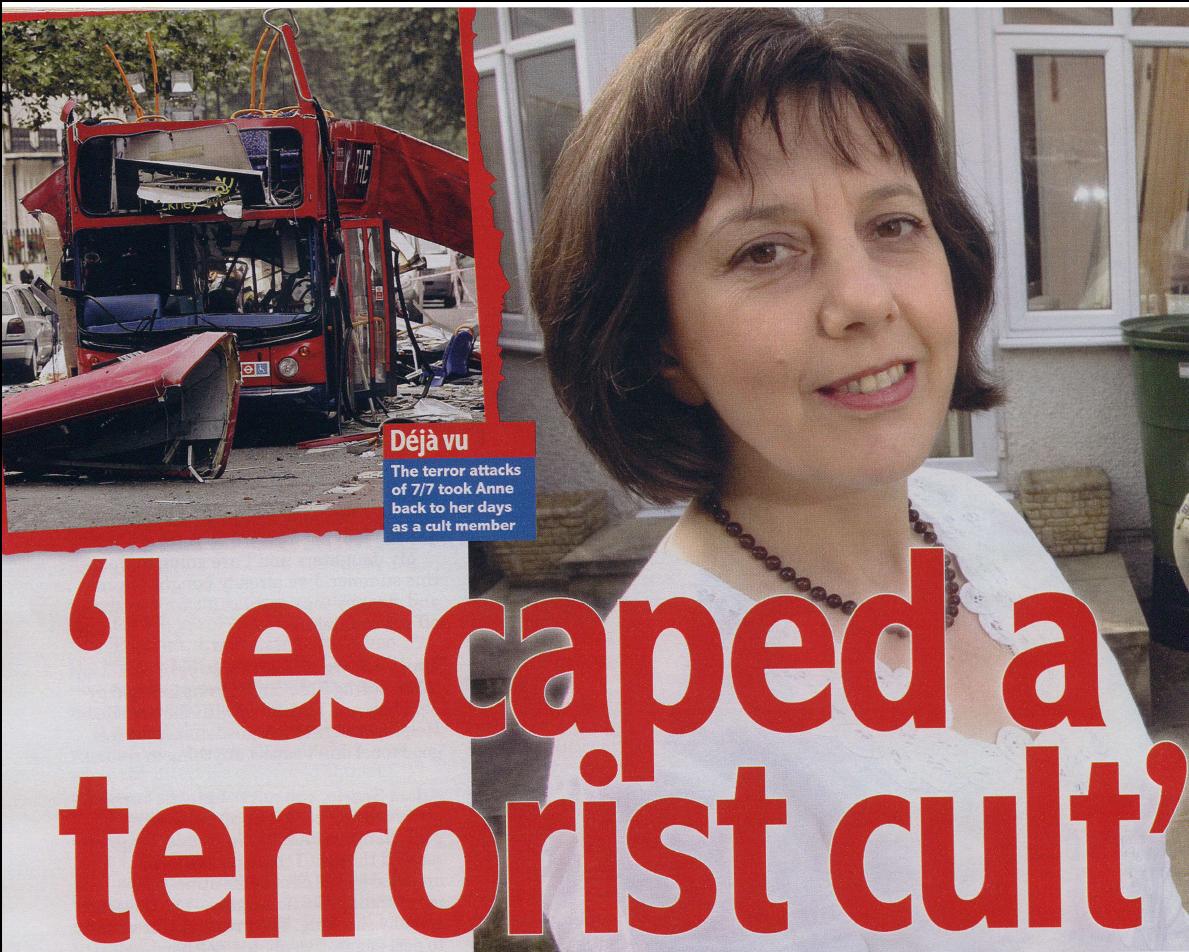
Woman tells of terror group

Anne Singleton was interviewed today, May 24, 2007 on BBC1 News, Look North, explaining the tactics and damage inflicted by Mojahedin Khalq Organisation (Rajavi cult)


May 28, 2007 0 comments
FacebookTwitterPinterestWhatsappTelegramSkypeEmail
Mujahedin Khalq Organization as a terrorist group

MKO Supporters Involved in Terrorism

Khalaf El-Ayan, strong supporter of terrorist Mojahedin-e Khalq organization, is the commander of terrorist group of Iraqi Islamic Army.

Revealing this, General Aboud Qanbar, in charge of Baghdad security plan, said that 15 members of Parliament were directly in touch with terrorist groups in Iraq.

Those whose names have been revealed by General Qanbar are known for their opposition to the Iraqi government and for their support for the MKO. Saleh Mutlak, Mohammed Daini, Adnan Al-Dulaimi and Khalaf El-Ayan are known figures of this movement.

General Qanbar has said that TNT found in El-Ayan’s house matches explosives used in explosion in Parliament’s building.

These people conduct terrorist acts under parliamentary immunity, which obstructs the process of prosecution.

These people are well aware that in the case of any prosecution, their terrorist activities will be revealed; therefore they have threatened to leave coalition and parliament and to challenge the government…

It’s amazing because their behavior is similar to that of MKO during the first days after Iranian revolution.

Despite the discovery of weapons, spying for Soviet Union and involvement in illegal act, MKO considered itself above the law and took part in political activities in order to enjoy immunity. Whenever asked to conform to law and accept disarmament, they made noise and threatened to enter military phase!

MKO’s lining with these people and repetition of their stances and positions leaves no doubt that anarchist gang of Rajavi can’t accept democracy and social laws and that it has always found similar groups and has sided with them.

So, part of this group’s role in Iraq is to transfer experience and training to such so-called groups.

May 28, 2007 0 comments
FacebookTwitterPinterestWhatsappTelegramSkypeEmail
Newer Posts
Older Posts

Recent Posts

  • The black box of the torture camps of the MEK

    December 24, 2025
  • Pregnancy was taboo in the MEK

    December 22, 2025
  • MEPs who lack awareness about the MEK’s nature

    December 20, 2025
  • Why did Massoud Rajavi enforce divorces in the MEK?

    December 15, 2025
  • Massoud Rajavi and widespread sexual abuse of female members

    December 10, 2025
  • Facebook
  • Twitter
  • Instagram
  • Youtube

© 2003 - 2025 NEJAT Society . All Rights Reserved. NejatNGO.org


Back To Top
Nejat Society
  • Home
  • Articles
  • Media
    • Cartoons
    • NewsPics
    • Photo Gallery
    • Videos
  • Publications
    • Books
    • Nejat NewsLetter
    • Pars Brief
  • About Us
  • Contact us
  • Editions
    • عربي
    • فارسی
    • Shqip