
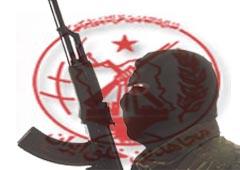
In an attempt which can be seen as the newest effort to put pressure on Iran and push it toward isolation, the United States removed the name of exiled anti-Iranian group Mujahedin-e-Khalq (MKO) from its list of foreign terrorist organizations.
The move which astounded the world and came as a great surprise to many Iranians is apparently one of the last cards which the U.S. has decided to play in order to isolate Iran, derail its international position and undermine its growing power in the Middle East.
MKO is said to be responsible for the killing of more than 40,000 Iranians following the Islamic Revolution of 1979. They have assassinated several high-ranking Iranian officials including former President Mohammad Ali Rajaei, Prime Minister Mohammad Javad Bahonar and judiciary chief Ayatollah Mohammad Beheshti. In the recent years, they have also cooperated with Mossad and CIA in assassinating Iran’s nuclear scientists in a bid to thwart Iran’s scientific progress and ruin its peaceful nuclear program.
American investigative journalists Seymour Hersh and Glenn Greenwald have revealed in some of their articles that MKO has received training, funding and military equipment from the United States, Israel and even Saudi Arabia.
Some of the defected members of MKO such as Qorban Ali Husseini Nezhad and Maryam Sanjabi who fled Camp Ashraf since last year revealed the underground ties between MKO and Saddam Hussein, and the U.S. government after the occupation of Iraq in 2003.
MKO is extremely unpopular among the Iranians, even among those who live abroad. The atrocities this group has committed seem to be unforgivable, and although the Iranian government has always demanded that the members of MKO return to the country to be put on a fair trial and even enjoy Islamic clemency, they refused to leave their horrendous cult.
Being headed by the Paris-based Maryam Rajavi, this group has not only killed hundreds of Iranians during the 8 years of war which Saddam Hussein imposed on Iran, but has also spilled the bloods of many Iraqis and even high-ranking U.S. military officials such as Lieutenant Colonel Louis Lee Hawkins, Colonel Paul Shaffer and Lieutenant Colonel Jack Turner.
The terrorist operations carried out by this Western-funded organization have been widely discussed even by the U.S. mainstream media, but it’s not clear that how the American government will justify its controversial and bizarre decision in delisting MKO.
MKO has demonstrated that it does not show mercy even to its own members, and reports have leaked to the media on how the high-ranking MKO officials have mistreated and threatened the low-level members of the organization so as to dissuade them from escaping or giving up their mission.
According to the American journalist Tony Cartalucci, former MKO members have revealed that the organization bans marriage, use of radios, internet and holds many members against their will with the threat of death if ever they are caught attempting to escape. It also uses dangerous psychological methods to brainwash the members and make them committed to "martyrdom" for the sake of the group’s objectives, holding them obedient and compliant to the orders of their major commanders.
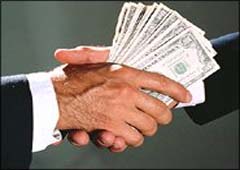
In the recent years, MKO spent millions of dollars in order to persuade the neo-conservative members of the Congress to lobby for the delisting of the organization. Some of the prominent figures in the U.S. who have voiced their support to this organization simply because of its opposition to the Iranian government include the New York City mayor Rudy Giuliani, former FBI Director Louis Freeh, retired General Wesley Clark, former Obama National Security Adviser General James Jones and American Jewish lawyer Alan Dershowitz.
The removal of MKO’s name from the list of foreign terrorist organizations allows this organization to follow its anti-Iranian policies under the umbrella of a peaceful civilian group. The senior figures in the group have constantly announced that their ultimate goal is a regime change in Iran, and from now on, they will have the official and unrestricted backing and support of the U.S. government toward this end.
Although nothing about the nature and reality of MKO changes by removing its name from the U.S. Department of State’s list of foreign terrorist organizations, it is now clear that the United States has never been sincere in its claims of being opposed to terrorism.
The U.S. politicians divide the terrorists into two groups: friendly terrorists and bad terrorists. Of course MKO falls under the first category and the recent decision made by the U.S. government is a testimony that it’s not terrorism and violence which the White House is truly concerned about. MKO will be exempted from accountability before the international community because of the felonies it has committed in the past three decades, simply because it strides on a path which the White House likes. This is nothing but a flagrant parade of double standards.
Kourosh Ziabari
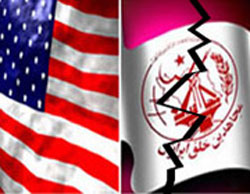 September 28, showing its unconditional support to the sworn enemies of the Iranian nation straight from the shoulder.
  inspired militant organization that advocates the overthrow of the Islamic Republic of Iran. The group was founded in 1963 as an armed guerrilla group after the Shah Mohammad Reza Pahlavi violently suppressed opposition to his regime.
.jpg) Section 219 of the Immigration and Nationality Act enumerates the authorities of the secretary of state in listing a group as a foreign terrorist organization (FTO). The act references the existing statutory definitions of terrorism, provides avenues for appeal of the classification, and otherwise lays out various processes for review.
Section 219 of the Immigration and Nationality Act enumerates the authorities of the secretary of state in listing a group as a foreign terrorist organization (FTO). The act references the existing statutory definitions of terrorism, provides avenues for appeal of the classification, and otherwise lays out various processes for review.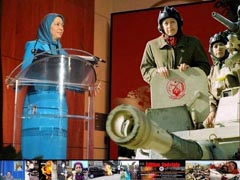 murder of Americans, according to a State Department report. Indeed, it was at times more hardline than the Ayatollahs: The group reportedly condemned the new Iranian government’s decision to release the American hostages in 1980 as "surrender."
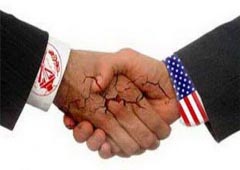 terrorist groups) — lies hidden behind the curtain? Could some members of the MEK “foreign terrorist organization,” their murderous history magically erased, be sent to a nice suburb somewhere to live as your next door neighbor as happens with the organized crime “witness protection program?” Or will the soon-to-be-legalized “terrorism” of the People’s Mojahedin Organization of Iran (or Mojahedin-e Khalq, usually referred to as MEK) find more utilitarian function in the mode of how U.S. neoconservative officials plotted with and used convicted con artist Ahmad Chalabi and his Iraqi expatriate group to gin up the false “intelligence” that served to launch the unjustified and counter-productive war on Iraq? Even worse, might this new MEK operation end up resembling the sequel to Charlie Wilson’s War?
  ways.
ways. 
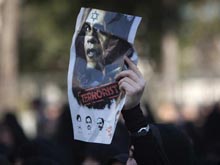 (MeK), an Islamo-Marxist terror cult notorious for murdering Americans, should no longer be on the State Department’s list of designated terrorist organizations. Experts say the decision paves the way to begin openly showering U.S. taxpayer money on the anti-American outfit in its bid to overthrow the Iranian regime.
  declares itself dedicated to destroying the US government and has been involved in car bombing urban centres, kidnapping and murdering members of the country’s security forces, and assassinating government scientists, as well as perpetrating countless random murders on businessmen and ordinary families.
  know that MEK was only taken off of the US’ terrorist list after years of high pressure lobbying by a veritable galaxy of the some of the biggest and most expensive stars in Washington. Bill Clinton placed them on the terrorist list in 1997, and this decision was reaffirmed by the Bush administration in 2007.