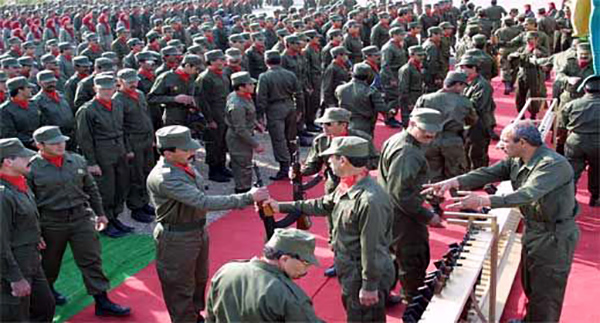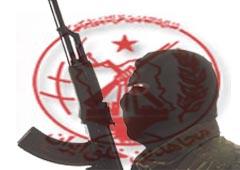
On the occasion of the MEK’s anniversary, the group’s agents in Iran launched 61 operations across the country.
The Mujahedin-e Khalq (MEK) presents a profound contradiction in contemporary political analysis. On one hand, the organization operates an extensive international lobbying apparatus, positions itself as a democratic alternative to the clerical regime in Tehran, and frequently convenes high-profile summits attended by former Western officials. On the other hand, its historical record—including an armed campaign against the Iranian government, alignment with Saddam Hussein during the Iran-Iraq War, and ongoing militant actions inside Iran—leads critics and academic researchers to question the validity of its democratic claims.
To understand how the MEK reconciles its militant past and ongoing underground operations with its stated goals of democratic change, scholars of political violence and Middle Eastern studies generally analyze the organization through three main dimensions: its ideological framing, its strategic rationale for internal operations, and the skepticism it faces from international observers.
Ideological Framing and the “Democratic” Platform
The MEK has abandoned its original blend of Marxist and Islamist ideology in the late 1980s, claiming a platform centered on a secular republic, gender equality, the abolition of the death penalty, and a non-nuclear Iran. Its political wing, the National Council of Resistance of Iran (NCRI), tries to function as a parliament-in-exile.
The MEK argues that visible acts of resistance inspire broader public defiance and demonstrate that the regime can be actively contested.
However, critics and security analysts point out that these tactics rely on methods—such as bombings, targeted assassinations, and clandestine sabotage—that violate international norms regarding the laws of armed conflict and civilian protection.
International Skepticism and the Contradiction of Change
The juxtaposition of the MEK’s democratic rhetoric with its history of violence has been a central subject of international scrutiny. For decades, the United States, the European Union, Canada, and the United Kingdom designated the MEK as a terrorist organization, citing its involvement in the killings of both Iranian officials and American military personnel in the 1970s, as well as its violent internal campaigns. Although these governments eventually removed the MEK from their terrorist lists between 2009 and 2012—largely following legal challenges and intensive political lobbying—policymakers in the West rarely endorse the MEK as a viable democratic successor to the Iranian regime.
Many human rights organizations, Middle East scholars, and Iranian dissidents outside the MEK’s network argue that the group’s internal governance structure closely mirrors the authoritarian characteristics of the system it seeks to replace. They highlight the organization’s history of rigid ideological control, mandatory loyalty to its leadership, and a lack of transparency regarding its internal decision-making processes. Consequently, while the MEK presents its operations as practical steps toward liberation, mainstream opposition figures and political analysts frequently view the group as lacking genuine democratic legitimacy among the broader population inside Iran.
The claim of advocating for democratic change while simultaneously engaging in clandestine, violent operations highlights a central tension in the group’s strategy. While the MEK utilizes the vocabulary of human rights and democracy to build international alliances, its operational methodology remains rooted in militant opposition and underground resistance, leaving its democratic credentials a subject of intense global debate.
Mazda Parsi