
An Iraqi lawmaker has reportedly revealed that the terrorist Mojahedin-e Khalq Organization
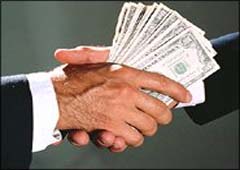 |
| MKO buying Iraqi politicians with USD5K monthly payments |
(MKO) has been buying support for the cell by paying off senior Iraqi politicians and journalists.
The source, who wished to remain anonymous, told Habilian – an association that brings together families of those killed in terror operations across Iran – that one of the most senior Iraqi officials bribed is lawmaker and spokesman for the al-Iraqiya bloc Haidar al-Mulla, who has been receiving a monthly payment of USD 5,000 from the terrorist cell.
The official added that the list of the bribed Iraqi officials also includes Zafar al-Ani, former lawmaker; Sarmad Abdolkarim, Baathist refugee in Denmark who manages the Iraq4allnews.dk website; Safi al-Yaseri, author; and Hamid al-Mutlaq and Maysoon al-Damluji, both members of the Iraqiya party.
The Iraqi lawmaker said the hefty amounts were being paid to garner support for the MKO in Iraq and to buy condemnation of Iraqi policies towards the terrorist cell.
Last month, an award-winning investigative journalist revealed that numerous prominent US political figures are receiving “substantial fees” from the MKO to become the terrorist cell’s “passionate defenders.”
The Christian Science Monitor also reported last August that former US four-star generals, intelligence chiefs, governors, and political heavyweights had been paid “tens of thousands of dollars” to call for the US government to take the MKO off the terror list.
 Yorker reported over the weekend that the US trained members of the Iranian opposition group Mujahideen-e-Khalq. According to previous reports, Israel has been cooperating with the group, which allegedly carried out hits on Iranian nuclear scientists.” Ynetnews also reported that US officials doubt Iran is or will be developing nuclear weapons, as has been claimed to justify years of sanctions, covert subversion, terrorism, and unprovoked attacks by the West against Iran.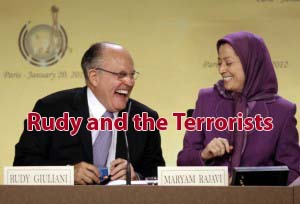
 intelligence at a facility in Nevada during the Bush era. The MEK was then and is now on the US State Department’s terrorism watch list, so the Pentagon’s deployment of this group was quite illegal.
 miles northwest of Las Vegas, was once used for nuclear testing, and now includes a counterintelligence training facility and a private airport capable of handling Boeing 737 aircraft. It’s a restricted area, and inhospitable—in certain sections, the curious are warned that the site’s security personnel are authorized to use deadly force, if necessary, against intruders.
  —accurately—that Iran had begun enriching uranium at a secret underground location. Mohamed ElBaradei, who at the time was the director general of the International Atomic Energy Agency, the United Nations’ nuclear monitoring agency, told me later that he had been informed that the information was supplied by the Mossad. The M.E.K.’s ties with Western intelligence deepened after the fall of the Iraqi regime in 2003, and JSOC began operating inside Iran in an effort to substantiate the Bush Administration’s fears that Iran was building the bomb at one or more secret underground locations. Funds were covertly passed to a number of dissident organizations, for intelligence collection and, ultimately, for anti-regime terrorist activities. Directly, or indirectly, the M.E.K. ended up with resources like arms and intelligence. Some American-supported covert operations continue in Iran today, according to past and present intelligence officials and military consultants.
  sponsor of Terror — as it often does — it at least usually has the tact to first remove them from its formal terrorist list (as the U.S. did when it wanted to support Saddam in 1982 and work with Libya in 2006), or it just keeps them off the list altogether despite what former Council on Foreign Relations writer Lionel Beehner described as “mounds of evidence that [they] at one time or another abetted terrorists” (as it has done with close U.S. allies in Saudi Arabia and Pakistan, along with the El Salvadoran death squads and Nicaraguan contras armed and funded in the 1980s by the Reagan administration). But according to a new, multi-sourced report from The New Yorker‘s Seymour Hersh, the U.S. did not even bother going through those motions when, during the Bush years, it trained the Iranian dissident group Mujahideen-e-Khalq (MEK) at a secretive Department of Energy site in Nevada:
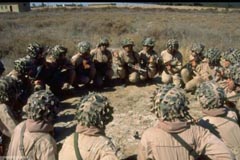 Yorker, says that the Bush administration provided MEK operatives terror training at secret facilities in Nevada starting in 2005.
 Organization. Seemingly the war on terror has turned into the war of terror. The world can also expect the day US Congress will be lobbied by Al-Qaida supporters to delist their notorious cult as what the MKO is doing today. “It’s extraordinary that so many distinguished public servants would shill for a group that has American blood on its hands, “according to a US official who was shocked by his colleagues’ dual approach towards terrorism.[1]