
MP, Mahma Khalil, of the Kurdistani Alliance denied the reports over "Relations link the President of Kurdistan Region, Masoud Barzani, and the Kurdistani Alliance with the Iranian Mujahedeen-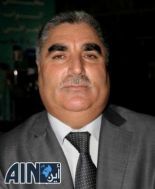 e-Khalq Organization."
He stated to All Iraq News Agency (AIN) "Barzani has no relations with the MKO because it targeted the Iraqis and the KA is adherence to establish good relations with Iran."
"All these reports are political accusations aim at defaming Barzani to attack him politically by declining sides," he concluded.
MKO is classified as a terrorist group according to the USA standards, but the EU decided to relief the Organization from such classification in 2009.
All Iraqi News,
——————————————————–
Same news on ISNA
Kurdish MP rejects rumors of Barzani, MKO relations
A senior member of the Kurdistan Coalition in Iraq’s parliament denies the rumors about the relationship between the president of Iraq’s self-rule Kurdistan Region in northern Iraq, Masoud Barzani and the terrorist Mujahedin-e Khalq Organization (MKO, a.k.a. MEK and PMOI).
“Masoud Barzani, the president of the Kurdistan Region, has no relationship with the terrorist Mujahedin-e Khalq Organization since the group has targeted Iraqi people, and besides the Kurdistan Coalition insists on good relations with neighboring Iran,” Mahma Khalil told Habilian Foundation –families of Iranian terror victims–.
The remarks follow the claims raised by the political advisor to the Iraqi Prime Minister Nouri al-Maliki, Saad al-Matlabi who told Habilian in his recent interview that Barzani was likely to have relationship with the MKO terrorists.
Earlier this month, Dr. Habib al-Tarfi, a member of Iraq’s Supreme Islamic Council, said presence of the terrorist group in Iraq was political and Saddam’s security forces had utilized it to murder people.
He further explained that Mujahedin-e Khalq supporters are “as corrupt as the terrorist group itself”.
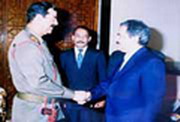
MKO is known to have received millions of dollars in return for its services to Saddam Hussein, particularly for the suppression of 1991 uprisings in southern Iraq and carrying out the massacre of Iraqi Kurds.
 continues to be dragged out and will continue to be dragged for at least three more months, if not much longer.
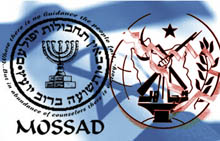 Arabia.
 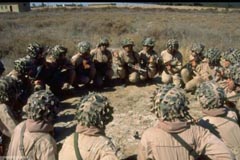 Nevada from 2005 to at least 2007, as reported by Seymour M. Hersh at The New Yorker.
 US State Department since 1995. The MEK, however do not simply attack Americans. According to The American Muslim: “The M.E.K. are terrorists. They were driven out of Iran and given a home at a place called Camp Ashraf in Iraq by Saddam Hussein, who they supported. Saddam Hussein used the M.E.K. to carry out terrorist acts in Iran.” In 2001, the MEK “renounced” terrorism. Irrespective of this renunciation, a 2004 FBI report on the MEK which was revealed in June 2011 states that the MEK The long and short is that the MEK are current terrorists not former terrorists. So why would the US consider removing the designation from the group?
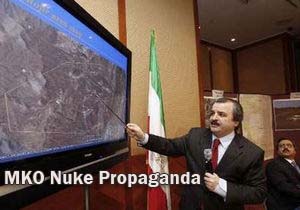
 Khalq Organization to assassinate Iranian scientists.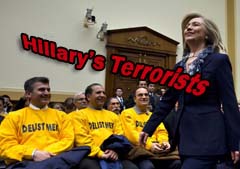
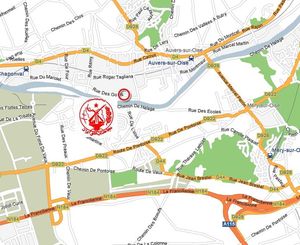
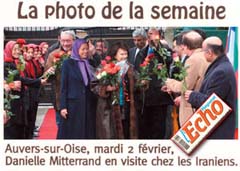
 a terrorist organization, French anti-terrorist police raided various MEK offices in and around Paris, including its garrison at Auvers-sur-Oise, arresting 160 members of the MEK and confiscating millions of euros. Nicolas Sarkozy, Interior Minister at the time, expressed concern that the MEK "wanted to make France its support base, notably after the intervention in Iraq," while Pierre de Bousquet de Florian, head of France’s domestic intelligence service, warned that the group was "transforming its Val d’Oise centre into an international terrorist base."
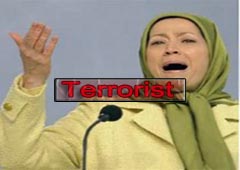
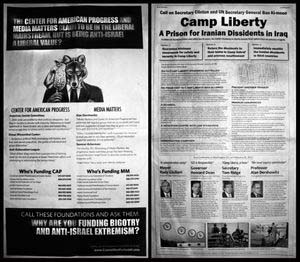
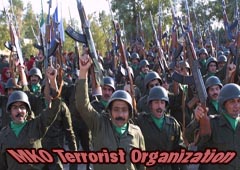 freedom fighter” is a cliche because the truth it conveys is so banal and obvious that it often seems redundant to mention it. A group can employ terrorist tactics while also seeking to achieve self-determination for the people it claims to represent. While the phrase may sometimes be used to justify terrorist attacks, it expresses a truth about the nature of political violence that partly explains but does not excuse the atrocious acts carried out by “liberation” groups.
  on organizations deemed ‘terrorist’ by the US government.