
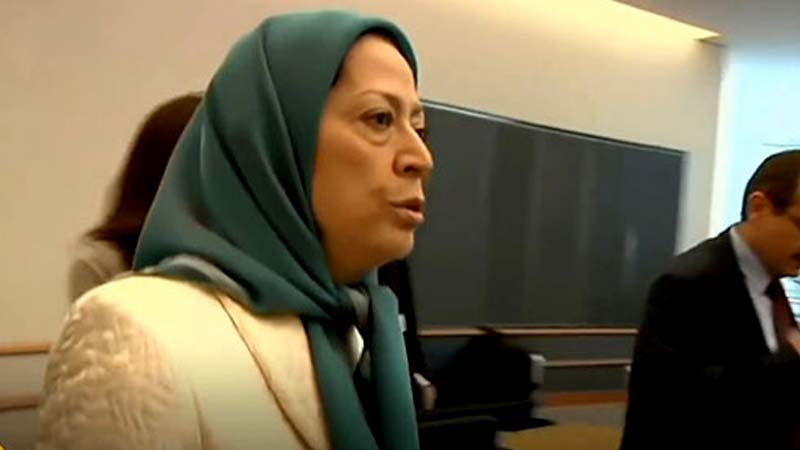
After the Israeli attacks on Iran, given the prospect of the so-called regime change in Iran, journalists are exploring the landscape of Iranian opposition groups. Dozens of news media have published articles analyzing the viable alternatives to the Iranian government. The majority of these investigative reports conclude that there is a lack of a unified and credible opposition for Iran.
The New York Times was also one of those news outlets that analyzed the main Iranian dissident groups stating that “Amid Attacks, Iran’s Exiled Opposition Remained Divided”. The article was very similar to that of Newsweek that “As Israel Eyes Regime Change, Iran’s Opposition Is Divisive and Divided.” In these articles, Mujahedin-e Khalq (MEK) and Reza Pahlavi are regarded two of the main opposition groups against the Islamic Republic.
However, the MEK’s propaganda media slammed New York Times considering the article “crafted to undermine the MEK.”
Ali Safavi as a foreign affairs spokesman of the MEK is the one who is charged to write against the NY Times again. This is while what is told by the New York Times about the MEK and even about its adversary Reza Pahlavi was very similar to several other articles that has been recently published on the issue.
MEK’s Anger against NYTimes
The New York Times is generally considered a liberal-leaning newspaper. Investigative journalism is a form of journalism where reporters deeply research and expose information that is often concealed or difficult to access.
The New York Times, as the MEK’s own article states has so far published three investigative reports on the world inside the MEK in 2003, 2011 and 2020.
Although the MEK propaganda denounces these reports, they are still the most referred documents about the group, especially the one that was authored by Elizabeth Rubin in June 2003 after the US invasion to Iraq. Since then, the MEK’s grudge against the New York Times began. Perhaps the biggest media blow to the MEK was dealt by the New York Times.
Rubin titled her first-hand account of visiting Camp Ashraf Iraq, “The Cult of Rajavi.” Rubin described the life at Camp Ashraf as a “fictional world of female worker bees,” asserting the group possessed absolutely no support within Iran.
Through over 2 past decades, “The Cult of Rajavi” of Elizabeth Rubin has been one of the most reliable articles for the journalists and academics because very few journalists could enter Camp Ashraf so far.
Her next article on the MEK was published in July 2011 after the group’s well-paid lobbying campaign was enhanced to remove the group from the list of Foreign Terrorist Organizations of the State Department.
In the article titled “An Iranian Cult and its American Friends”, Elizabeth Rubin warned about the sponsorship of the US high-profiles for the MEK as a terrorist cult.
In February 2020, the history repeated itself for the MEK, another NYTimes correspondent, Partrick Kingsley, was allowed to take a tour at Ashraf 3, the MEK’s headquarters in Albania. Although the MEK made efforts to picture the gesture of a democratic group for Kingsley, he found out that something was wrong behind the scenes that the MEK had prepared for him.
He published his investigative report under the title, “Highly Secretive Iranian Rebels Are Holed Up in Albania. They Gave Us a Tour.” Kingsley stated that depending on whom you ask, the People’s Jihadists are Iran’s government-in-waiting or a duplicitous terrorist cult that forbids sexual thoughts. Thus, besides the members inside the camp, the NYTimes reporter interviewed a number of former members of the group to know “What are they doing in Albania?”
Defectors of the MEK –who were interviewed by Rubin and Kingsley “to deeply research and expose information that is often concealed or difficult to access about the MEK”—are considered as agents of the Iranian government by Ali Safavi and so are the NYTimes journalists who added their narratives to their investigative reports.
Kingley’s article was ironically ended with the express of ignorance of Ashraf residents about the whereabouts of the MEK’s disappeared leader, Massoud Rajavi. After publishing the article, Kingsley posted further information on his X account about the secretive cult-like atmosphere at Ashraf 3 where members are not allowed to speak freely.
What does the NYTimes say about the MEK now?
The NYTimes’s recent article on Iranian oppositions, including decentralized activist groups, Reza Pahlavi and Maryam Rajavi, suggests that none of these groups have the capacity to bring regime change in Iran.
In particular, about the MEK, the NYTimes cites from a university professor: “The MEK has next-to-zero popularity in Iran. In my scholarly judgment, the MEK has more supporters in Washington, than in Iran.”
And, that’s it! This was what Ali Safavi calls “intervention” while other journalists and academics state similar opinions about Iranian dissidents. The followings were extracted out of many articles and reports on the very topic:
Jacobin:
While some members of the Iranian diaspora support exiled opposition figures such as Reza Pahlavi or Maryam Rajavi, these individuals lack meaningful support within Iran and are unlikely to serve as viable alternatives to the current regime. In the absence of a unified and credible domestic opposition, alternative strategies for facilitating change must be followed.
Newsweek:
While both Pahlavi and the MeK claim to seek establishment of a secular and democratic Iran, they often criticize one another. The MeK, spawned as a leftist rebel group in 1965, has a legacy of conducting attacks during the reign of Pahlavi’s father before the Islamic Revolution, which the group initially supported.
Elnet.uk:
The NCRI is part of this rebranding, presenting a more politically palatable front for the MEK’s goal of regime change in Iran. Despite rebranding efforts, the MEK remains unpopular within Iran due to its former support for Saddam Hussein and perceived Marxist, extremist elements.
Eurasian Times:
However, in Albania, the MEK is struggling to hold on to its own members, who have begun to defect. No strategic analyst thinks that the MEK has the capacity or support within Iran to overthrow the Islamic Republic.
Abc News:
The NCRI has notable supporters among traditional Iran hawks in the U.S., with figures including former Vice President Mike Pence, former Secretary of State Mike Pompeo, former national security adviser John Bolton and others having spoken at their events in recent years.
The NCRI has called for the establishment of a democratic and secular republic in Iran. The MEK — and by extension the NCRI — were recognized as terrorist organizations by the U.S. until 2012.
The Economic Times:
Apart from Pahlavi’s monarchists, the main opposition faction outside Iran is the People’s Mujahideen Organisation, also known as the MEK or MKO. A revolutionary faction in the 1970s, it lost a power struggle after the shah was toppled.
Many Iranians have not forgiven it for then siding with Iraq during the stalemated war of 1980-88 and rights groups have accused it of abuses at its camps and of cult-like behaviour, both of which it denies.
Jerusalem Post:
While some members of the Iranian diaspora support exiled opposition figures such as Reza Pahlavi or Maryam Rajavi, these individuals lack meaningful support within Iran and are unlikely to serve as viable alternatives to the current regime.
Ali Safavi has no defensible response to the arguments of the journalists about the unpopularity of the MEK among Iranians. He never denies that the MEK pays hefty sums to buy its American supporters. About the ban on marriage in the MEK he refers to an NYTimes article dated to 1996! The only frequent argument used by the MEK propaganda and namely Ali Safavi is that any journalist who criticizes the MEK is an agent of the Iranian government. The journalists of the NY Times are condemned more harshly because they have revealed more steadfast evidence about inside the MEK.
Mazda Parsi
