Nejat Society
  • Home
  • Articles
  • Media
    • Cartoons
    • NewsPics
    • Photo Gallery
    • Videos
  • Publications
    • Books
    • Nejat NewsLetter
    • Pars Brief
  • About Us
  • Contact us
  • Editions
    • عربي
    • فارسی
    • Shqip
Nejat Society
Nejat Society
  • Home
  • Articles
  • Media
    • Cartoons
    • NewsPics
    • Photo Gallery
    • Videos
  • Publications
    • Books
    • Nejat NewsLetter
    • Pars Brief
  • About Us
  • Contact us
  • Editions
    • عربي
    • فارسی
    • Shqip
© 2003 - 2024 NEJAT Society. nejatngo.org
Javad Ahmadi aka Dr. Vahid
The cult of Rajavi

The black box of the torture camps of the MEK

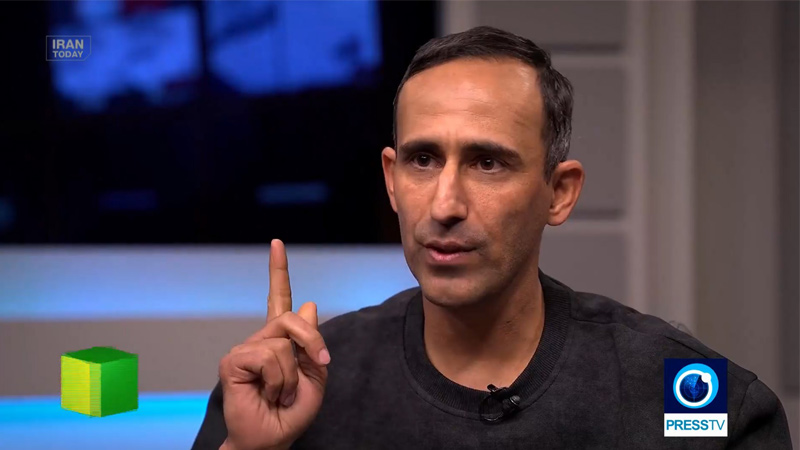
Javad Ahmadi, known as “Dr. Vahid,” is a physician who, after taking the medical oath, spent a large part of his life serving at in the health facilities in the headquarters of Mujahedin-e Khalq (MEK).

It seems that in the violent history of the MEK, which includes imprisonment, interrogation, and torture, Dr. Vahid, given his expertise, is a unique repository of secrets. He is actually a black box for the Rajavi’s system, particularly during the 1990s, at Camp Ashraf, Iraq.

According to the testimonies of many defected members, Dr. Vahid not only did not prioritize the treatment of MEK members, but also fully cooperated with the organization’s leaders in covering up many of the murders that occurred within the organization.

Ignoring torture and beatings

Reza Gooran, former member of the MEK was imprisoned, interrogated and tortured by the MEK commanders because he had criticized the leaders. After enduring long interrogations, beatings, and extreme hunger in solitary confinement, Reza Goran was taken to Camp Ashraf’s infirmary where he begged Dr. Vahid to stop the torturers, but he remained silent. Goran writes: “As far as I know and have heard, Dr. Vahid was completely obedient to the leaders of the MEK and did whatever they dictated to him, without any ifs or buts.”

Hassan Moradi, another former member MEK, believes that Dr. Vahid is one of those who know many secrets about the conditions prevailing in the MEK. According to him, “many of those who were tortured or died under torture eventually ended up in infirmary, and Dr. Vahid was responsible for processing and issuing death certificates.”

Issuing fake death certificates

Hassan Moradi recalls: “I remember in 1971, Nasser Mohammadi Deljo in the 37th Division, while on guard duty at night, had put a gun to his heart and shot himself. The next day, his body was taken to a cemetery in the city of Khalis and buried. One of the forces who went to his burial later told me that they had told the Iraqi officer that he had fallen asleep while on guard duty and that the shooting had been unintentional. The death certificate, which Dr. Vahid had prepared and signed, stated that the shooting had been unintentional.”

One of those who died under torture by the MEK interrogators was Ghorban Ali Torabi. Several of Torabi’s cellmates witnessed his harrowing death. The official testimony of these witnesses was first published in the 2005 Human Rights Watch report titled “No Exit,” but Ghorban Ali’s son, Mohammad Reza Torabi, a former child soldier of the MEK, only learned of his father’s murder by the MEK interrogators when he left the organization 18 years later and gained access to the free world. He was informed by other defectors of the group.

After leaving the MEK, Mohammad Reza Torabi (Ray Torabi) began his activities on social media and among other defectors to pursue the murder of his father, whom he had not seen since childhood. Along the way, he obtained more information about his father’s death. Among the messages he received, a sender wrote about Dr. Vahid’s role in the disappearance of his father’s body: “Mohammad Reza, I must inform you with great regret that your beloved father was martyred under torture in Ashraf Prison. And your father was buried in the Al-Karkh cemetery near the former Badi’zadegan camp, in an unidentified plot, and only a number was placed above his grave. In addition, about twelve people are buried in that cemetery. I swear to God to witness and testify that it is the truth and that a few people know this. Mokhtar Jannet, Majid Alemian, Nariman and Adel, and Dr. Vahid know about it.”

Also, in the 27th session of the trial of the leaders of the MEK held in Tehran in last February, Issa Azadeh, a former member, told the judge about the torture of members inside the MEK headquarters. “If someone committed suicide or was killed under torture, the most trustworthy and reliable person in the organization for filming was Javad Ghadiri,” he testified. “Dr. Vahid was also responsible for issuing burial permits for the killed and tortured.”

Medical Negligence

Seyed Javad Ahmadi Alvanabadi, now in Albania at the Ashraf 3 camp, continues to serve as a confidential doctor devoted to Maryam and Massoud Rajavi. Members who have left the MEK in recent years, in Albania speak of Dr. Vahid’s shortcomings in medical care and treatment of members.
According to them, he and his colleagues simply ignore people’s health problems to prevent members from leaving the camp in better words to prevent their escape. Ali Zamani, a member of Nejat Society Albania who has left the group for a few years, says the following about Dr. Vahid: “In Albania, I was sick. In the MEK’s health center, Dr. Vahid and several doctors said that if you get a surgery, you will get worse. They misled me. The specialist I went to said that I would be treated with surgery, but the group’s doctors scared me that there would be complications.”

Mazda Parsi

December 24, 2025 0 comments
FacebookTwitterPinterestWhatsappTelegramSkypeEmail
Zhina (Zeinab) Hosseinnejad, a former child soldier of the MEK
The cult of Rajavi

Pregnancy was taboo in the MEK

Zhina (Zeinab) Hosseinnejad, a former child soldier of the MEK who spent her childhood and youth in the organization. Although she is now a staunch opponent of the Islamic Republic, she tries to inform Iranian public opinion about the nature of the destructive MEK cult by occasionally publishing accounts of her experience as a member of the group.

Zhina is one of the former child soldiers of the MEK who testified against the MEK in the Hamburg court in Amin Gol Maryami’s case. She was also interviewed by some journalists and filmmakers in Europe. This is her account on gender separation inside the MEK camps that she has recently published on the Facebook in Persian:
In 1995, I was about seventeen years old when I was discharged from the reception unit at Camp Ashraf and transferred to army units. At that time, army divisions and centers were mixed, only the workrooms, dormitories, sports, the distance between dining tables, and the rows of chairs in classrooms and meetings were gender-segregated.
After a while, perhaps only a few months, all the women were called to the Badi Zadeh camp near Baghdad for an important meeting. The meeting was held by one of the high-ranking officials named Nasrin (Mahvash Sepehri). She told everyone: “A woman has betrayed the ideological revolution. She had an affair with a man. They were seen behind a car. She was arrested and she will be soon punished.”

Then she lectured for hours and days against male-female relationships. And she made all the women write down their thoughts and confess that if they even thought about someone in their minds; this was considered a form of betrayal and they had to confess.
Out of curiosity, I was looking for someone who was absent and probably the same absentee was under punishment. When I noticed the absence of a woman, I secretly asked my comrades and some of them confirmed that it was her. She had been missing for a long time. Even when the meetings were over and we returned to Camp Ashraf, she was not there. She was probably a prisoner.

Gender segregation laws

When we returned, they imposed new regulations called “Revolutionary Laws,” such as the followings:
– Women were prohibited from leaving the center alone
– Talking to men alone was prohibited
– Men and women were prohibited from riding in the same car
– Men were prohibited from smoking in front of women
– Laughing loudly and joking was prohibited
Meetings between men and women who were relatives and acquaintances were also considered anti-value and had to be determined from higher ranks based on necessities, such as illness, etc. I may have forgotten some other rules.

Walls raised between men and women of Ashraf

After a while, about a few months later, we were called again to a larger meeting, in which the center and the special women’s division were announced to everyone as “a progress” and a celebration was held in this regard.
After that, separate centers and headquarters for women were established, which were a long desert distance from the men. Only a few older women who were officials and their offices remained in the men’s centers. No young women were allowed to stay in the men’s headquarters.

From then on, we could only see men from a distance once or twice a year, during major ceremonies such as Nowruz and Eid al-Fitr. During meetings known as “To’meh”, anyone who kept even a memento of their former lover or fiancé, or had the slightest emotional relationship with another woman, was severely tried. The description of those days needs too many details.

After that, all the men of Ashraf were transferred to border camps, such as Basra in southern Iraq, Kut and Jalula, etc., except for a few sick old men and a few elderly repairmen. All the protection of the great Ashraf was the responsibility of women. No birds flew and the silence of the desert was noisy.

We did not see a single man for a long time. No longer could a girl secretly make eye contact with her lover from a distance even once a year during ceremonies– to be filled with energy from that. Therefore, emotional relationships between women with each other became many, and trials and forced separations even between some women became intense.

In 2003, after the end of the American invasion to Iraq and the fall of Saddam, the men returned tired and wounded from the border camps, some had been killed, some had escaped and surrendered to American camps. Weapons and tanks were surrendered to them in the siege of the American army. Therefore, from now on, artistic, political and cultural ceremonies increased.

Some women, who were now older and more specialized, were transferred to the headquarters and were in the same headquarters with the men. Again, a few secret relationships between men and women occurred, which made the authorities regret very much. All female members were sent to women’s units again.

One of the most famous trials of that time was the trial of “Marjan Akbarian”, which led to her heartbreaking suicide. I previously published her photo in the Ashraf guidance boarding school when we were little.

Rebellion and madness

Sometimes a woman would rebel or go crazy, for example, she would run away from the women’s quarters at night with a backpack and go to the men’s quarters, take off her hijab and shout: “Catch me if you can!”
Or a woman who had fallen in love with another woman or had a forbidden friendship and emotional relationship. They were tried and one of them was dragged on the ground befire the eyes of everyone, and she would shout: “Finally, one day the whole of Ashraf will rebel against you.”

The leaders told members that they were psychotic. I remember three women in particular whose faces were unusually puffy and who had become strangely quiet and calm, and were not as rebellious as before. Later I found out that they were being injected with drugs.

Secret trials were also held in a cell, where people were imprisoned and forced to confess and repent. And if someone tried to escape, they were severely beaten. By the time we reached Camp Liberty next to Baghdad airport, although the imprisonment and beatings had decreased due to the UN’s visit to the camp. But for example, there was a woman who was not allowed to leave the women’s headquarters and was assigned to guard shifts, and even with a visa and under the supervision of other women, she was not allowed to leave, except in a medical emergency with a senior commander.

I inquired about this during those days and found out that she was secretly writing letters to a man among the bricks and blocks of the camp. When we arrived in Albania, along with other more serious criticisms and protests, I asked one of the officials about her, whether writing letters was a sufficient reason to imprison her in the headquarters? She replied: “Did you forget Camp Ashraf, what worse trials such betrayals had? We only gave her such a lenient trial because of the UN visit.” Another official replied to me: “If she had become pregnant, who would have responded? It starts with a letter and ends with pregnancy, and we had an example.”

I was shocked by this answer. I had never heard of it. Even the word “pregnancy” was taboo, and no one was allowed to use this word, let alone have it happen in her body. I had no other answer or question. Because my brain was not yet ready for words. My lips fell silent… and there I learned for the first time that one of the women who had been tried in Ashraf for a serious love affair was pregnant. She committed suicide after the trial.

December 22, 2025 0 comments
FacebookTwitterPinterestWhatsappTelegramSkypeEmail
Maryam Rajavi
Mujahedin Khalq Organization's Propaganda System

MEPs who lack awareness about the MEK’s nature

Maryam Rajavi, leader of the Mujahedin-e Khalq, MEK, frequently addresses the European Parliament to advocate for “regime change” in Iran, allegedly calling for international support for the Iranian people’s struggle against the Iranian government, emphasizing human rights, women’s rights, and offering the so-called National Council of Resistance of Iran’s (NCRI) plan for “a democratic, secular republic”. However, the European Parliament’s stance on the MEK is not supportive.
While the MEK has been delisted as a terrorist organization by the European Union, individual members of the European Parliament (MEPs) have at times, engaged with the group and its leader, Maryam Rajavi. This engagement does not necessarily reflect an official endorsement by the entire Parliament.

A few MEPs who have expressed support for the MEK, view them as a viable opposition to the current Iranian government, while others have raised concerns about the group’s past and present human rights record and cult-like practices.

Active, well-funded MEK lobby

The reasons for individual MEPs meeting Maryam Rajavi despite reports and documents of human rights abuses inside her group, are varied. They can include a view on the MEK’s potential to bring about regime change in Iran, a desire to engage with all opposition groups regardless of their notorious background, and/ or a lack of awareness or acceptance of the criticisms leveled against the organization.

The MEK has actively lobbied European politicians and institutions, presenting itself as a democratic alternative to the Iranian government. This lobbying effort has included inviting MEPs to their events and to their headquarters in France and Albania. The MEK’s lobbying and public relation activities often involves compensating individuals for their participation in events, writing in media and advocacy.

Critics including former members and human rights organizations have consistently accused the MEK of sever human rights abuses, including psychological and physical torture, forced divorces and isolation from the outside world within their camps.

MEK’s extensive and well-funded lobbying efforts in the US government have been several times verified by independent media. A large number of newspapers and media outlets published investigated and documented reports and analysis indicating that various American politicians have received heavy payments and honoraria for speaking at the MEK events. One of the most comprehensive reports was published by the New York Times in 2011 and subsequently updated, detailing how the MEK, while still on the US State Department’s list of foreign terrorist organizations, paid prominent American figures substantial sums to speak at their conferences and rallies. These payments ranged from $10000 to $50000 or more per appearance. Rudy Giulliani, John Bolton, Newt Gingrich, Howard Dean and Tom Ridge are the key figures frequently cited in the reports.

Financial temptation of MEPs

The nature of the efforts in European Parliament has typically included expenses related to events, travel, luxurious flight and accommodation and public relations. Individuals like Struan Stevenson, the former Scottish MEP, is one of the prominent and consistent advocates of the MEK. He is Maryam Rajavi’s is constant companion in the European Parliament. Critics and some media outlets widely believe that he receives financial remuneration or other benefits for his support, given the professional nature and frequency of his engagements.

Through its various front organizations, the MEK has indeed spent significant amounts of money on lobbying activities in Europe and the United States. Actually, the group uses its considerable financial sources to influence politicians. Their activities are designed to raise the group’s profile, propagate its narrative, and garner political support.

The lavishness of the MEK-run events and the high fees paid to prominent speakers to speak on behalf of the group, indicate the financial power of the group’s lobbying apparatus. Opacity of the MEK’s financial resources and its political funding and lobbying also highlights the group’s invalidity in its financial interactions. The MEPs who welcome Maryam Rajavi in the halls of the parliament must be aware of that they put their reputation at risk by supporting a formerly-designated terrorist group with a violent, undemocratic history and human rights abuses within its camps in Iraq, France and Albania.

Mazda Parsi

December 20, 2025 0 comments
FacebookTwitterPinterestWhatsappTelegramSkypeEmail
Divorce
The cult of Rajavi

Why did Massoud Rajavi enforce divorces in the MEK?

The MEK leaders have never publicly offered a detailed explanation for why they enforced divorces among their members or why Massoud Rajavi “married” a large number of female members beyond ideological justifications. Actually, they just deny such an enforcement in their system. However, former members and analysts have provided interpretations for these actions. The analysis on the Massoud Rajavi’s immoral leadership over the MEK often links it to his so-called “ideological revolution”.

Ideological Revolution and Absolute Loyalty

The forced divorces and subsequent marriages to Massoud Rajavi are widely understood by former members and observers as a mechanism to enforce absolute loyalty and devotion to Rajavi himself, rather than to spouses or family.

According to the testimonies of former members, Rajavi argued that familial ties and romantic relationships were distractions that diverted members’ focus and loyalty away from the organization and its cause –and leaders. By eliminating these personal bonds, he aimed to create a monolithic, single-minded force entirely dedicated to his leadership and the group cause.

Elimination of Rival Loyalties

“Ideological revolution” was designed to dismantle any potential rival loyalties that could challenge Rajavi’s authority. Spouses, children, and personal relationships wear seen as potential sources of dissent or divided allegiances. Forcing divorces and separating families was a way to sever these ties and ensure that Rajavi was the sole object of devotion.

Control and Manipulation

Critics argue that these practices were a form of extreme psychological manipulation and control. By isolating members from their families and personal relationships, Rajavi could exert greater influence over their thoughts and actions. The “marriages” to Rajavi, as described by former members, further cemented this control, creating a direct, personal and often coercive bond between female members and the leader.

Symbolic and Actual Power Consolidation

The marriages to Massoud Rajavi are not conventional marriages but rather a symbolic and actual consolidation of power. Former members describe these as a form of sexual exploitation and a means to assert Rajavi’s ultimate authority over the female members, framing it as an “ideological union”.
This also served to elevate Rajavi to a quasi-divine status within the organization, where he was seen as the ultimate figure of devotion and the “husband” of all female members.

Suppression of Dissent

The strict ideological framework and the dismantling of personal relationships also served to suppress any potential dissent. Members who questioned these practices and expressed reluctance faced severe pressure, public self-criticism sessions, and potential ostracization.
In summary, while the MEK leadership maintains silence or denial regarding the specifies of these practices, external analysis and testimonies from former members consistently point to these actions as integral to Massoud Rajavi’s strategy for absolute control, loyalty, and the consolidation of his personal power within the organization.

December 15, 2025 0 comments
FacebookTwitterPinterestWhatsappTelegramSkypeEmail
Maryam and Massoud Rajavi
Massoud Rajavi

Massoud Rajavi and widespread sexual abuse of female members

Massoud Rajavi, the disappeared leader of the Mujahedin-e Khalq (MEK), has been accused of widespread sexual abuse of female members within his group, including forced divorces and sexual exploitation.

There are reports and testimonies that describe a systematic pattern of abuse under Rajavi’s leadership, where women were forced to divorce their husbands and were subjected to sexual submission to Rajavi himself.

Former female members such as Batoul Soltani, Zahra Moini, have provided testimonies detailing about abuses, including forced sexual acts and manipulation of women into “marrying” Rajavi.

Soltani testified in various documentaries and investigative reports that Rajavi had hundreds of “wives” within Camp Ashraf, Iraq, as many as the number of members of the MEK’s so-called Elite Council that consisted only female members.

The Elite Council is the symbol of women hegemony in the MEK’s system. The Council is a source of pride for the group.
According to the testimonies of Batoul Soltani and Zahra Moini, Maryam Rajavi, the MEK’s so-called President Elect and Massoud’s wife was involved in facilitating these “marriages” and threatening women who resisted. Batoul Soltani underwent the forced marriage ceremony called “Salvation Dance” which was actually a nude dancing, wedding party. After dancing nude with Masoud Rajavi, dozens of members of the Elite Council got married to him.

Additionally, some female defectors like Zahra Mirbagheri and Fereshteh Hedayati stated that at least one hundred of the MEK’s female members underwent forced hysterectomies without consent, which was retrospectively justified as sign of loyalty to the leader.

These practices were part of a broader “ideological revolution” initiated by Rajavi, which included banning marriage, enforcing mandatory “eternal” divorce, and separating children from their parents, often sending them abroad.

The MEK has consistently denied these allegations attributing them to “mullahs’ propaganda” but it has never explained why its leaders forced their members to divorce their spouses and why Massoud Rajavi married members of the Elite Council.

Mazda Parsi


December 10, 2025 0 comments
FacebookTwitterPinterestWhatsappTelegramSkypeEmail
MEK Cult
The cult of Rajavi

Farman Shafabin, MEK member who committed suicide

Farman Shafabin was a member of the Mujahedin-e Khalq (MEK) who committed self-immolation in 1999. Farman had been recruited by the MEK from one of the Kurdish families who resided in the Ramadi Camp, Iraq.

During Saddam Hussein’s rule, some Iranian Kurdish families resided in the Ramadi Camp in Iraq primarily due to the Iran-Iraq War and the subsequent unrest in Kurdistan, which led to their forced replacement across the border into Iraq. The Baathist government of Iraq relocated these Iranian Kurds to a camp in Ramadi, west of Baghdad in 1981. The location was specifically called Tash, a camp near the city of Ramadi.

MEK recruited forces from refugee camps

The MEK used to recruit forces from within the residents of Camp Tash, in particular from families suffering from poor life and economic conditions. They faced numerous interconnected challenges affecting them and their children’s health, education, housing, and overall well-being. Camp Tash housed Iranian Kurdish refugees until its closure. Due to a deteriorating security situation, including water shortages and violence, the camp’s population was relocated to safer areas in northern Iraq, particularly near Sulaymaniyah, in the mid-2000s.

Mahvash Sepehri a torturer of the MKO

Mahvash Sepehri a torturer of the MKO

Due to the harsh living conditions, lack of facilities, and uncertain future, refugee camps could have been a suitable breeding ground for groups such as the MEK. Individuals in these camps, especially young people and teenagers, may have been looking for a way to improve their situation or to find a purpose in life.

Mehri Aligholi

Mehri Aligholi

The MEK’s need for forces

The MEK attempted to recruit Iranian refugees in Iraq using propaganda and promises such as fighting for Iran’s freedom, a better life, and social status. These promises could have appealed to vulnerable families and young people in the camps. Farman and his sisters, Shokrieh and Sabrieh were among these victims.
During and after the Iran-Iraq War, the MEK, which was based in Iraq, sought to recruit forces to strengthen its military and political organization. Iranian refugees in Iraq, including the residents of the small city of Ramadi, were considered a potential source of recruitment.
There are numerous reports, documents, and testimonies that indicate MEK’s recruitments from among Iranian refugees in Iraq. Farman, Shokrieh and Sabrieh were recruited as child soldiers of the MEK’s so-called National Liberation Army (NLA).

Who was Farman Shafabin?

At least three former members of the MEK, Siamk Naderi, Mirbagher Sedaghi, and Maryam Sanjabi recounted the heart-breaking story of Farman Shafabin who joined the MEK in 1997 from Camp Tash.

Farman Shafabin was a young man without knowledge of the history and nature of the Cult of Rajavi, and thought that he could leave the group whenever he changed his mind. After a year or so, when he realized that the group has no exit door, he asked to leave, but like other ill-fated members who faced great hardship when they asked to leave, he was met with a flood of insults and slander. He was labeled as “traitor” by the MEK commanders and a traitor was not allowed to leave the MEK.

Farman’s only demand was to return to his family. He tried for a year to be freed, and during this time he was constantly under pressure. Manipulation meetings were organized for him to force him to back down from his demands and stay in the camp.

Farman did not know Persian because he grew up in Iraq. He spoke Kurdish. So, he was always criticized for not speaking Persian in the MEK’s headquarters, Camp Ashraf. In the last large criticism meeting that Mehri Ali Qoli, a female commander, had organized for him on this issue, she shouted at him, “Farman!… Who are you? Do you remember that your father sold your sisters in Ramadi to feed your stomach!? Now you have become a thorn in our side, and you do not obey to speak Persian?”

After this meeting, Farman went outside and poured oil on his body. He returned to the hall, lit a lighter and set himself on fire. Other comrades tried to put him out. Then, he was sent to a hospital in Baghdad but died two days later.

Following the death of Farman, a high-ranking commander held a meeting to convince other members about Farman’s fate. Mahvash Sepehri (Nasrin), the then top commander of Camp Ashraf, criticized Farman’s comrades for his death, saying, “You were not harsh enough against Farman (meaning you didn’t criticize sharply). If you had slammed him, Farman wouldn’t have spoiled himself!”

There is no information about the fate of Farman’s sisters.

December 3, 2025 0 comments
FacebookTwitterPinterestWhatsappTelegramSkypeEmail
Nejat Newsletter no.131
Nejat Publications

Nejat Newsletter No.131

INSIDE THIS ISSUE
1. Washington’s Double Standard on Terrorism Betrays the Spirit of Liberty
The U.S. government says its “war on terror” protects free dom. In practice, every new intervention narrows the perimeter of freedom at home. The language of confronting evil abroad has become a cover for expanding state power

2. Emotional Dependency of MEK Children on their Arms
The recruitment and use of child soldiers by any armed group is a violation of international law, including the Optional Protocol to the Convention on the Rights of Child on the involvement of children in armed conflicts.

3. Albania: Cyberattacks and the dead end in the management of Camp Ashraf 3
Ashraf-3, the fortified camp of the Mojahedin-e-Khalq (MEK) in Manzë, Albania, is a “city of exiles”: approximately 40 hectares with over a hundred buildings, isolated by high walls and
checkpoints. Around 2,500 dissident refugees live there under strict internal rules, a “sect”
whose members are denied a normal family life and can only conform to the association’s uncompromising line.

4. Letter of Houshang Pour Ebrahim’s sister to the UN
I am Soghra Pour Ebrahim, the sister of Houshang Pour Ebrahim. My brother was captured by the forces of the MEK on October 16, 1987, while serving his military service in the Baneh region of Kurdistan Province, Iran. Since that time, we have had no information about his fate, whereabouts, or condition.

5. Appeal from the Family of Mehraban and Kiumars Balaei
We sincerely request your assistance in arranging a meeting with my brothers, Mehraban Balaei and Kiumars Balaei, who are currently held in Manza Camp (known as Ashraf 3) in Albania

6. Ponerology of the MEK’s Pathocracy
A detailed examination of the leadership of Massoud and Maryam Rajavi over the Mujahedin-e Khalq (MEK) indicates that the group’s ruling system aligns with the concepts of ponerology and pathocracy.

7. About Nejat Society

 To view the pdf file click here

December 3, 2025 0 comments
FacebookTwitterPinterestWhatsappTelegramSkypeEmail
Terrorism
Mujahedin Khalq Organization as a terrorist group

Israeli Hayom: The case for redesignating the MEK, Learning from history

The Mujahedin-e Khalq (MEK) was previously listed as a Foreign Terrorist Organization by the United States until September 2012 due to the killing of US personnel in Iran during the 1970s and its ties to former Iraqi leader Saddam Hussein. The US State Department’s criteria for FTO designation include being a foreign organization that engages in terrorist activity or retains the capability and intent to do so, and whose actions threaten the security of the United States.
Arguments for redesignation often point to the MEK’s past violent activities and current human rights abuses within its own ranks. Historically the MEK orchestrated terrorist attacks against the Shah’s regime that killed several Americans working in Iran in the 1970s. While the MEK denies involvement attributing these to a breakaway Marxist-leninist faction, a 2011 State Department report asserted MEK members participated in and supported the 1979 takeover of the US Embassy in Tehran.

The group also engaged in a campaign of assassinations against Iranian officials and civilians in the early 1980s including the 1981 bombing of the Islamic Republic Party headquarters killing over 70 people. During the Iran-Iraq war, the MEK sided with Saddam Hussein and participated in spying and military operations against Iran. Since then, the group has been considered as traitors by Iranians.

Irandokht Pazooki, an anti-Islamic Republic journalist of Israel Hayom believes that “the decision to remove the MEK from terrorist lists appears to have prioritized political considerations over substantive evaluation of the group’s fundamental nature and documented history.” She states that the MEK should be returned to international terrorist lists as “a necessary correction based on documented historical facts.”

Furthermore, critics and former members of the MEK have described it as exhibiting the traits of a personality cult, testifying about authoritarian control, confiscation of assets, mandatory divorce and celibacy, emotional isolation, forced labor, sleep deprivation, and physical abuse.

Human Rights Watch reported in 2005 on prison camps run by the MEK and severe human rights violations against its members, including prolonged incommunicado and solitary confinement, beatings, coerced confessions, and threats of execution. These reports should be considered as “terrorist activity” or a threat to US national security because they are alighned with the criteria for FTO designation.

Pazooki also reminds her audience of reports from Human Rights Watch and other independent observers that “have documented concerning internal practices based on interviews with former members, including allegations of enforced celibacy, forced divorces, separation of family members, and mandatory ideological re-education sessions.” She added, “When French authorities detained MEK leadership during a 2003 investigation, several supporters engaged in self-immolation in protest – events thoroughly covered by international media.”

The correspondent of Israel Hayom believes that The MEK’s delisting in 2012, “occurred despite significant unresolved questions about the organization’s violent past and without compelling evidence of genuine reform.”

The US State Department delisted the MEK in 2012, citing the group’s renunciation of violence and cooperation in closing its Iraqi military base, while still voicing concerns about mistreatments of its members. However, the decision was influenced by intensive lobbying of American lawmakers who were paid hefty sums by the MEK.

“To what extent might organizations with reported ties to the MEK – operating under different names – be engaged in political lobbying abroad, without consistently clarifying their connection to the MEK?” asks Pazooki. “This critical question remains largely unaddressed in policy discussions.”

While the Israel Hayom’s journalist wants to exploit the MEK’s redesignation as a policy against the Islamic Republic, she correctly criticizes the double standards regarding terrorism: “Redesignation would restore integrity to counter-terrorism frameworks by ensuring consistent application of standards based on factual historical records rather than political expediency. Proper designation decisions must be grounded in thorough assessment of an organization’s documented history and demonstrated actions.”

As she asserts, the call for redesignation is not based on political preferences but on widely documented history, legal records, and personal testimonies. The MEK’s legitimacy and its cult-like nature continues to contradict its alleged commitment to nonviolence and democracy.

Mazda Parsi

November 29, 2025 0 comments
FacebookTwitterPinterestWhatsappTelegramSkypeEmail
Behzad Alishahi
Missions of Nejat SocietyMujahedin Khalq Organization's Propaganda System

Propaganda and Cyber Operations of the Mujahedin-e-Khalq (MEK) Terrorist Group

1. Executive Summary

This report presents verified information and first-hand evidence on the propaganda methods, psychological operations and cyber activities of the terrorist organization Mujahedin-e-Khalq (MEK). The findings are based on the sworn testimony of Mr. Behzad Alishahi, a former member of the group, delivered during the 41st session of the public trial of 104 MEK members in Tehran on October 20, 2025. Mr. Alishahi’s statements provide a clear picture of the MEK’s coordinated media and cyber network, operating from Camp Ashraf 3 in Manëz, Albania, with financial and technical support from foreign actors.

2. Methodology

The report relies on three main sources:
–  Mr. Alishahi’s official and public testimony before the Tehran court;
-Documentary and media evidence on MEK propaganda and cyber-operations activities;
– Comparative analysis of international reports, including Human Rights Watch (2005) and RAND Corporation (2009), documenting the sectarian structure and systematic human rights violations within the organization.
The data has been collected and analyzed with the aim of providing reliable material for United Nations human rights mechanisms and Special Procedures.

3. Parallel

The Mujahedin-e-Khalq Organization of Iran (MEK) was founded in 1965, fusing Islamic and Marxist ideologies. During the 1970s, it carried out many assassinations, including the assassinations of American consultants to Rockwell International and Pan American Airlines.
After the Islamic Revolution of 1979, the group attempted to infiltrate the new political structures, but soon turned to armed confrontation. In June 1981, the MEK launched a violent uprising that killed hundreds of civilians and government officials, including President Mohammad-Ali Rajai and Prime Minister Mohammad-Javad Bahonar.
During the 1980s, MEK leaders fled to France and then to Iraq, where they collaborated directly with the Saddam Hussein regime and carried out cross-border attacks on Iran. The 1988 “Forough Javidan” (Operation Eternal Light) offensive led to the deaths of many Iranian soldiers and civilians, including women and children, and is widely considered a war crime and an act of treason.

After the fall of Saddam in 2003, US forces took control of Camp Ashraf in Iraq, and members were gradually relocated to Camp Ashraf 3 in Albania. Many international sources—including HRW (2005) and RAND (2009)—have documented coercive practices within the MEK: forced divorces, gender segregation, psychological conditioning, and imprisonment of dissidents.

In the past decade, with the loss of its military capabilities, the MEK has transformed into a foreign-sponsored propaganda and cyber machine. Hundreds of its members now work full-time online from Camp Ashraf 3, creating fake accounts and coordinated content to project a positive image of the sect and a negative image of Iranian society and government.
Documented examples include: • Spreading fake news about prison conditions and human rights issues in Iran; • Fabricating staged videos of so-called “hunger strikes” or “public protests”; • Collaborating with Zionist and Western media to spread distorted narratives; • Manipulative use of “human rights” or “democracy” slogans to lure vulnerable individuals abroad.

4. Findings (Testimony of Mr. Behzad Alishahi)

a) Personal context
Mr. Alishahi stated that he was a member of the MEK from 1984 to 2002, working mainly in the media and television section. In 1994, he was arrested and tortured within the organization after expressing internal criticism, and was then forced to continue working under surveillance.
b) Evolution of media activities
• Initially, the MEK published only one magazine called Mojahed and occasionally burned copies in public to attract attention. • During its stay in Iraq, the group produced Persian-language television programs under Saddam Hussein, with the aim of discrediting Iran during the war. • After moving to France, the MEK received significant financial and technical assistance from French entities, expanding into satellite broadcasts and digital networks.
c) Cyber operations in Camp Ashraf 3
According to the witness, members of Ashraf 3 work online 24 hours a day using fake accounts on platforms such as X (Twitter), Facebook and Telegram. The main objectives are: • Cleansing the image of past crimes and violence; • Historical revisionism and distortion of facts; • Recruiting supporters under the deceptive label of “human rights” or “pro-democracy”; • Artificially amplifying popularity through coordinated hashtags such as #FreeIran and #IranProtests.
d) Cooperation with foreign media and governments
Mr. Alishahi testified that several Western and regional media outlets cooperate with the MEK, often through paid publications or political influence operations. He cited the active support of France, Germany and Israel, which often use the MEK’s media infrastructure to spread anti-Iranian disinformation.
e) Declining public influence
He further stated that since the start of public trials in Iran exposing the MEK’s crimes, the group’s credibility in Europe has declined significantly. Events that once attracted hundreds of participants in Belgium now gather only a few attendees.

5. International Legal Framework

MEK propaganda and cyber operations clearly violate international law, including: • Articles 19 and 20 of the International Covenant on Civil and Political Rights (ICCPR), which prohibit incitement to hatred and violence;
• The International Convention for the Suppression of the Financing of Terrorism (1999); • UN Security Council Resolution 2396 (2017) on the prevention of the terrorist use of information and communication technologies; • The Budapest Convention on Cybercrime (2001), binding on European states, including Albania.
According to these instruments, any facilitation or tolerance of terrorist information operations creates state responsibility for the host state.

6. Analysis

The evidence and relevant evidence demonstrate that the MEK has evolved from an armed militant group into a structured information warfare apparatus. Today, it operates as a foreign-sponsored propaganda and intelligence agency engaged in systematic disinformation aimed at societal destabilization, delegitimization of Iranian institutions, and manipulation of international perception. Such activities constitute a form of non-state extremism and fall within the framework of international counterterrorism law.

7. Conclusions and Recommendations

Conclusions

• The MEK’s media and cyber divisions function as a coordinated information arm serving the political interests of foreign powers; • The group exploits the principle of freedom of expression in Europe to spread hate speech, falsified reports, and incitement against the Iranian nation; • The Government of Albania has an obligation to ensure that its territory is not used for terrorist cyber operations.
Recommendations
– The Special Rapporteur on the situation of human rights in Iran and the Special Rapporteur on freedom of expression should jointly investigate the MEK’s propaganda and cyber activities;
– The Government of Albania should exercise effective oversight over Camp Ashraf 3 and limit any misuse of its digital infrastructure for hostile operations;
– UN Member States should conduct transparent reviews of the financial and media networks linked to the MEK;
– The United Nations Office for Counter-Terrorism (UNOCT) should study the MEK’s cyber network as a case of extreme non-state information warfare;
– The Financial Action Task Force (FATF) should examine the financial flows linked to the MEK’s online propaganda and its affiliated NGOs.

Gazeta Impakt – Translated by Nejat Society

November 23, 2025 0 comments
FacebookTwitterPinterestWhatsappTelegramSkypeEmail
Mujahedin-e Khalq
Mujahedin Khalq Organization as a terrorist group

Mujahedin-e Khalq| resistance or violence

The Mujahedin-e Khalq (MEK) claims that it has publicly stated a commitment to non-violent regime change since 2001, advocating for a democratic, secular, and non-nuclear Iran. However, reports and visual evidence, including videos attributed to their “resistance units” (Kanoonhaye Shooreshi), continue to depict activities that suggest a more complex and contradictory stance on violence. These videos often circulated on the group’s social media and channels, sometimes show individuals displaying weapons and expressing support for the MEK’s leadership and their struggle against the Islamic Republic.

Armed Resistance Units

While the MEK maintains that these “resistance units” are engaged in acts of civil disobedience and symbolic defiance, critics and some analysts interpret the imagery of armed individuals and explicit calls for overthrowing the regime as indicative of a continued belief in the efficacy of armed struggle, or at least a willingness to employ it if deemed necessary. The distinction between “resistance” and “violence” in this context remains a point of contradiction.
The perception of support for the MEK among Baluch Iranians in Sistan and Baloochestan, an area with active drug and arms trafficking is a complex issue. The region is also potentially at risk of Balooch separatists and so the MEK strategically makes efforts to exploit the existing discontent and instability in the region.

The MEK has a long history of leveraging ethnic and religious minorities within Iran to further its objectives against the Iranian government. The Sisitan and Baloochestan province, characterized but its porous borders, ethnic Balooch majority and Balooch separatists, and significant economic disparities, presents a fertile ground for such exploitation. The presence of armed group and criminal trafficking networks can also create an environment where alternative power structures, even those with violent histories like the MEK, might gain a foothold by offering protection or economic opportunities, however illicit.

Criticizing the MEK’s video that has been recently published showing some armed Balooch resistance units, Siamak Naderi, former member of the MEK writes: “The MEK published a video of Balooch smugglers who receive money under the guise of resistance units and the MEK’s Liberation Army inside Iran. These smugglers and even their literate head cannot read correctly from the text sent by the MEK from Albania and Ashraf 3. There is a ridiculous mispronunciation.”

Violent acts of “Resistance Units”

The MEK’s violent acts often involve actions such as setting fire to government buildings and religious centers. While the MEK frames these actions as acts of resistance and civil disobedience, the intentional destruction and damage of property are interpreted as violent acts and even terrorism. Such actions even if symbolic, contribute to violence.
From the perspective of the Iranian nation and many independent analysts, such acts are indeed examples of violent struggle and are considered terrorism. The historical record of the MEK’s use of violence, coupled with these actions, support this view. The scale of the MEK’s experience in acts of violence is undeniable, given its history as an armed organization.

Mazda Parsi

November 18, 2025 0 comments
FacebookTwitterPinterestWhatsappTelegramSkypeEmail
Newer Posts
Older Posts

Recent Posts

  • The black box of the torture camps of the MEK

    December 24, 2025
  • Pregnancy was taboo in the MEK

    December 22, 2025
  • MEPs who lack awareness about the MEK’s nature

    December 20, 2025
  • Why did Massoud Rajavi enforce divorces in the MEK?

    December 15, 2025
  • Massoud Rajavi and widespread sexual abuse of female members

    December 10, 2025
  • Facebook
  • Twitter
  • Instagram
  • Youtube

© 2003 - 2025 NEJAT Society . All Rights Reserved. NejatNGO.org


Back To Top
Nejat Society
  • Home
  • Articles
  • Media
    • Cartoons
    • NewsPics
    • Photo Gallery
    • Videos
  • Publications
    • Books
    • Nejat NewsLetter
    • Pars Brief
  • About Us
  • Contact us
  • Editions
    • عربي
    • فارسی
    • Shqip