Nejat Society
  • Home
  • Articles
  • Media
    • Cartoons
    • NewsPics
    • Photo Gallery
    • Videos
  • Publications
    • Books
    • Nejat NewsLetter
    • Pars Brief
  • About Us
  • Contact us
  • Editions
    • عربي
    • فارسی
    • Shqip
Nejat Society
Nejat Society
  • Home
  • Articles
  • Media
    • Cartoons
    • NewsPics
    • Photo Gallery
    • Videos
  • Publications
    • Books
    • Nejat NewsLetter
    • Pars Brief
  • About Us
  • Contact us
  • Editions
    • عربي
    • فارسی
    • Shqip
© 2003 - 2024 NEJAT Society. nejatngo.org
Library of US Congress on the MEK
USA

Library of Congress on the MEK

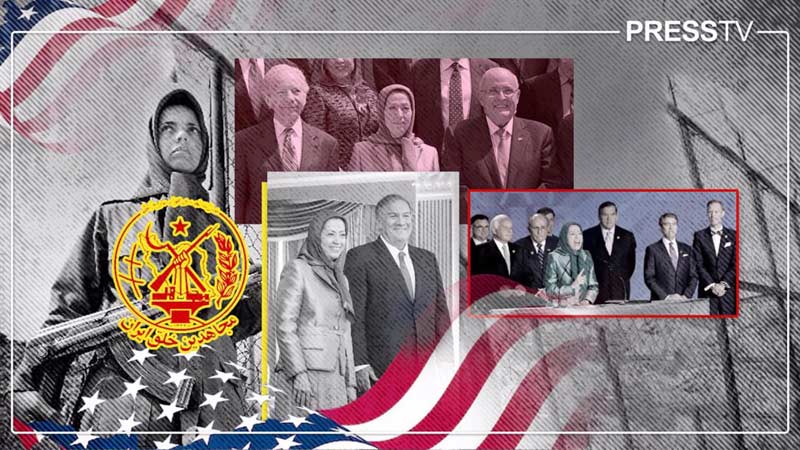
On 25th February, 2025, Clayton Thomas, a Specialist in Middle Eastern Affairs at the Congressional Research Service (CRS), published a report titled “The Mojahedin-e-Khalq (MEK) or People’s Mojahedin Organization of Iran (PMOI)”.

Congressional Research Service (CSR) is a nonpartisan public policy research institute under the Library of Congress of the United States Congress that serves the Congress throughout the legislative process by providing comprehensive and reliable legislative research.

The above-mentioned research provides background on the MEK, including its origins, its 1997 designation by the U.S. Department of State as a Foreign Terrorist Organization (FTO), its 2012 delisting as an FTO, and the current concerns of the US government about the MEK’s violence.

While the group is still embraced by some American politicians including Mike Pompeo and John Bolton, some keynotes from the report needs to be emphasized.

On the MEK’s terrorist background regarding US citizens and interests the report reads:

The MEK in the 1960s and 1970s sought the overthrow of the then-U.S.-backed Shah through guerilla attacks against the Iranian government and other targets. Some of these attacks killed U.S. military personnel stationed in Iran according to a 1994 congressionally mandated State Department report. The MEK participated in the 1979 Iranian Revolution and, after the fall of the Shah, supported the takeover of the U.S. embassy, and opposed the release of American hostages, according to the 1994 State Department report.

On Massoud Rajavi’s undemocratic approach in ruling the MEK and its political vitrine the so-called National Council of Resistance (NCR), Clayton Thomas quotes from the very DOS’s report:

According to the State Department report mentioned above, NCRI “disintegrated in the 1980s” as various partners “left the organization because of their objections to Rajavi’s dictatorial methods and his unilateral decision to ally with Iraq.

On the claims that the black listing of the MEK in 1997 was intended as a goodwill gesture to Tehran and its newly elected moderate president, Mohammad Khatami that has featured prominently in MEK efforts to portray the designation as baseless and politically motivated, the CSR report states:

A 1999 State Department report announcing the redesignation of most of the original designees (including the MEK) featured several frequently asked questions, including, “Why was the MEK designated?” The report answered: We have sufficient grounds for concluding that they are a terrorist organization and continue to engage in terrorist violence. The designation is based on activities much more recent than the takeover of our embassy. Additionally, directing terrorism against a government or entity with whom we have differences does not exclude an organization from designation as an FTO. MEK is designated as a Foreign Terrorist Organization because of the acts they commit, not who they act against and not who they are. In 1999, the State Department also added “National Council of Resistance” and NCR as aliases of the MEK.

On the MEK’s delisting under the order of the then US Secretary of State, Hillary Clinton, in September 2012, the author of the report clarifies that the MEK’s removal from the FTO list did not mean that the DOS ignored the group’s past activities:

On September 28, 2012, the State Department announced the MEK’s delisting as an FTO. In the announcement, the Department said, “With today’s actions, the Department does not overlook or forget the MEK’s past acts of terrorism, including its involvement in the killing of U.S. citizens in Iran in the 1970s and an attack on U.S. soil in 1992. The Department also has serious concerns about the MEK as an organization, particularly with regard to allegations of abuse committed against its own members. The Secretary’s decision today took into account the MEK’s public renunciation of violence, the absence of confirmed acts of terrorism by the MEK for more than a decade, and their cooperation in the peaceful closure of Camp Ashraf, their historic paramilitary base.

On the MEK’s propaganda about their so-called pubic support among Iranians, the report is pretty cautious to prove the opposite:

The MEK claims to be a focal point for broad-based opposition to the Iranian government. To bolster the group’s claims that it has support within Iran, the MEK has argued that it has received information from domestic sources on the government’s nuclear program and crackdowns on public protests. Limited public opinion polling suggests the group may not have broad popular support in Iran or within the Iranian-American diaspora.

And, the report once more emphasizes the concerns of the US government over the MEK’s abusive conduct against its own members:

In a 2022 statement to Foreign Policy, a State Department spokesperson was quoted as saying that “the United States does not see the MEK as a viable democratic opposition movement that is representative of the Iranian people.” The spokesperson also reportedly relayed that the State Department “continues to have serious concerns about the MEK as an organization, including allegations of abuse committed against its own members.” The group has long faced accusations that it holds members against their will and commits torture—allegations the group denies.

Nejat Society


June 1, 2026 0 comments
FacebookTwitterPinterestWhatsappTelegramSkypeEmail
MEK terrorists killed Americans
USA

FBI Document Confirms: MEK Killed Americans

A declassified 2004 FBI document from 2004 details how the MEK was responsible for the killings of multiple American citizens and U.S. military personnel in Iran during the 1970s. The document titled “Mujahedin-e Khalq (MEK) Criminal Investigation” was published on November 29th, 2004.

According to the FBI report, the American victims of the MEK included:


• U.S. Army Colonel Lewis Hawkins


• U.S. Air Force officers Paul Shaffer and Ja Turner


• Three American Rockwell International employees: William Cottrell, Robert Krongard, and Donald Smith


• American executive Paul Grimm

The document also references attacks against U.S. interests, including the U.S. Embassy in Tehran.

Yet today, the same organization desperately tries to present itself as “pro-American,” democratic, and aligned with Western values.

The irony is unbelievable: a group once investigated by the FBI for murdering Americans now attempts to market itself as a trusted ally of the United States and the West.

Amir Yaghmai

June 1, 2026 0 comments
FacebookTwitterPinterestWhatsappTelegramSkypeEmail
Women in the MEK: Trapped, tortured, and silenced
Human Rights Abuse in the MEK

Injustice in the MEK as told by a former child soldier

Perhaps no organization among the Iranian struggle movements has spoken of “justice” as much as the MEK. “A classless, monotheistic society” was an ideal that the early MEK leaders used to coerce many supporters, and for a while it was effective in attracting supporters. But gradually, and with changing patterns of governance, the MEK tried to embellish the ideal with the terms like “democracy” and “pluralism.” In recent years, the organization no longer speaks of a classless, monotheistic society, and instead constantly repeats that it seeks to replace the Iranian government with a “democratic and pluralistic state, based on the separation of religion and state.”

Pluralistic democracy is, by definition, a political system in which there is more than one center of power. Modern democracies are pluralistic by definition because democratic systems allow freedom of associations and parties. But the half-century history of the MEK’s activities has shown that there is only one center of power in the group, and that is Massoud Rajavi, who is at the top of the organizational pyramid, followed by Maryam Rajavi and then some higher-ranking members of the group’s hierarchy.

Establishing justice in a society is not possible without deepening democracy, and in an organization like the MEK, which is run hierarchically, democracy is sacrificed first and then justice is gone. Discrimination is one of the definitive consequences of such a structure. Although the MEK, with its uniformed forces and the use of titles such as “Sister Mujahed” and “Brother Mujahed,” tries to hide its structural injustices, members who have left the group have repeatedly testified about the severe inequalities between the higher-ranking members and commanders of the group compared to the lower-ranking members and subordinate forces.

Aylin Moghadam, a former member of the MEK, was a child soldier who served the MEK for many years. In her posts on her X social media account, she writes about the extreme injustices and the discriminating system of access to facilities in Rajavi’s cult:

The authorities of the MEK eat well, but the rest of the ranks eat beef. Mehdi Abrishamchi and his daughter Ashraf Abrishamchi have natural fruit juice for breakfast. Of course, high-ranking officials like Faezeh Ranjkar, Sedigheh Hosseini, and Zohreh Akhiani all have special diets and are never the subject of any criticism session. And whether in Ashraf Iraq or Ashraf 3, they always stay in air-conditioned rooms, but the rest have air conditioning for just a few hours of the day and are mostly in the sun and in the heat, with terrible nutrition and $8 a month, the equivalent of Albanian money, with which they really can’t buy anything.

But in the wallets of the commanders there is at least a thousand dollars in cash. I said at least. In the wallets of people like Fahimeh Arvani there is even three thousand dollars in cash apart from credit cards. It is up to you!

 In addition, having a phone is free for the leadership council and high-ranking brothers, but it is forbidden for low-ranking forces!!

From these few lines written by Aylin, we can see that inequality in the MEK dominates all aspects of its members’ lives. As can be seen from the memories of other former members, this injustice in terms of nutrition, medical treatment, use of urban facilities, and enjoyment of entertainment has created a deep class gap between high-ranking and low-ranking members.

Also, in terms of enduring psychological pressure and organizational coercion, low-ranking members are greater and more numerous victims. In the pluralistic democracy claimed by the MEK, the number of underprivileged individuals is much greater than that of the well-off commanders and leaders.

Mazda Parsi

May 30, 2026 0 comments
FacebookTwitterPinterestWhatsappTelegramSkypeEmail
Maryam Rajavi vs Reza Pahlavi
Mujahedin Khalq as an Opposition Group

Guardian: Opposition Divided, Battle Among Mujahedin and Monarchists

On Monday, May 25th, the Guardian reported that supporters of Reza Pahlavi were clashing with those of the Mujahedin-e Khalq (MEK) in the streets of London.

Daniel Boffey, the chief reporter of the Guardian begins the report with an aggressive rap demonstration made by a Pahlavi supporter, named Mohraz in London. In his music show, this monarchist is pretending to shoot  the paramilitary organization known as Basij in Iran and the IRGC referred to the Islamic Revolutionary Guard Corps, and the MEK.

Boffey asserts that the aggressive drill music made by Mohraz, is only the most public evidence of a battle being played out on the streets of London that is not between supporters and opponents of the Iranian government but instead, within the opposition.

“It is a clash that has been electrified by the hopes raised by the US and Israeli military action over the past three months, but is now posing a headache for British police, as well as being a source of anxiety for the Iranian diaspora touched by it,” The Gurdian reporter states. “Scuffles at protests against Tehran’s regime, often requiring police intervention, have been attributed to tensions between the sparring sides, raising the concerns that matters could escalate.”

The journalist refers to other “battles” taken place among Iranian opposition in exile including the Nowruz celebration. He tries to cover the opinions from both sides. Ray (Mohammad Reza) Torabi, former child soldier of the MEK is one of those interviewed by Boffey.

According to the author, Ray Torabi, 44, who lives in Cologne, was once a member of the MEK but today regards Pahlavi as a potential transitional leader in Iran. He said he recognised that there were extremists among the supporters of the shah’s son but that it was not the full story.

He told Boffey: “One thing you can differentiate between the Pahlavi crowd and the MEK crowd is because the MEK is a cult, they have complete control over their supporters, their members, and you know they’re very well organised.”

“That’s why you really don’t see the feeling falling out of line and then doing things, but on the other hand, the Pahlavi crowd, they’re not organised the same way; they’re not a cult, they’re individuals, they’re people who, a lot of them, they see Pahlavi as the only hope for Iran. There’s a group that are really extremists, and then they really worship Pahlavi. Sometimes they take it too far.”

The deep competition between the two groups who claim they want to bring peace and democracy for Iran, indicates that they are thriving to grab the opportunity to gain some more credibility among Iranian public opinion. But, it seems that both groups have lost the game.

The MEK’s five-decade record and the Pahlavi’s past monarchy have left Iranians with memoirs and experiences of violence and treason. What Massoud Rajavi literally did, Reza Pahlavi advocates for: war for Iran and bloodshed of Iranians. Iran does not need such an opposition.

Mazda Parsi

May 25, 2026 0 comments
FacebookTwitterPinterestWhatsappTelegramSkypeEmail
Premier of Aldo Sollulari's documentary
Missions of Nejat Society

Premier of the Documentary “Aldo in Iran” and the Novel “The last Secret”

A special ceremony for the first premiere of the documentary film “Aldo in Iran”, along with the presentation of the novel “The Last Secret”, took place in Opera Hotel, Tirana, on May 18th, 2026. The event was attended by artists, writers, cultural activists, media and many other interested in arts and culture.

The event was opened by Ella Deda’s speech. In her opening speech, she spoke about the importance of the realization of the documentary “Aldo in Iran”, and presented the theme and atmosphere of the novel “The Last Secret”.

After the ceremony, the author and director of the film, Aldo Sollullari, entered the hall amidst applause and a warm welcome from those present.

Then, Aldo Sollullari gave his speech on the experience of traveling to Iran, the process of making the documentary and the motivation for writing the novel “The Last Secret”. He also spoke about the importance of telling human experiences and untold stories that are rarely heard.

After the speech, the screening of the documentary “Aldo in Iran” began. The documentary, which dealt with the issue of immigration, the life of members of the Mujahedin-e Khalq (MEK) organization and the experience of traveling to Iran of an Albanian citizen, attracted the attention and appreciation of the audience.

Premier of "Aldo in Iran"

Premier of “Aldo in Iran”

Premier of "Aldo in Iran"

Premier of “Aldo in Iran”

Premier of "Aldo in Iran"

Premier of “Aldo in Iran”

Premier of "Aldo in Iran"

Premier of “Aldo in Iran”

Premier of "Aldo in Iran"

Premier of “Aldo in Iran”

Premier of "Aldo in Iran"

Premier of “Aldo in Iran”

A short break took place in the middle of the program, during which interviews were conducted with Albanian participants, as well as conversations for the media and television networks.

After  the film screening, two of the Iranians present at the ceremony,  Khalil Ansarian and Hasan Shahbaz, former members of the MEK shared their thoughts and feelings on Aldo’s documentary.

At the end of the ceremony, copies of the novel “The Last Secret” were distributed to the participants and the guests participated in the special commemorative photo section.

Thanking all the guests, media and participants, Nejat Society Albania expresses the hope that the organization of such events will create opportunities for the expansion of cultural, artistic and human exchanges between peoples.


May 23, 2026 0 comments
FacebookTwitterPinterestWhatsappTelegramSkypeEmail
Media Literacy
Mujahedin Khalq Organization's Propaganda System

How Washington profits from Iran’s pain


There is a strange ritual in Washington whenever Iran is discussed. The language begins with democracy, women’s rights, non-proliferation and regional stability. It then somehow ends with sanctions, threats, aircraft carriers, television panels and, eventually, bombs. Since Washington withdrew from the 2015 nuclear agreement, coercion has been sold as concern. In May 2026, even as a U.S. peace proposal circulated, Trump was still threatening renewed attacks and demanding that Iran reopen the Strait of Hormuz. The gap between vocabulary and policy is no longer hidden inside power. It is power.

This is the ethical collapse at the heart of America’s Iran policy. The ordinary Iranian is invoked as the object of compassion, then made to live under policies designed to squeeze the country until daily life becomes the battlefield. Sanctions tighten through banks, shipping, medicine, food prices, import costs and family savings.

Washington may insist that pressure is targeted, but the consequences do not remain inside a ministerial office. They travel through ports, exchange rates, hospitals and kitchens. A policy that claims to stand with Iranians while making the horizon narrower for them has lost the right to call itself humane.

War is not born only when a missile leaves a launcher. It is prepared in hearings, studio interviews, think-tank papers, donor meetings and headlines. The public is taught that diplomacy is naive, then told that force is inevitable. That pattern is visible again in the current Strait of Hormuz crisis. A waterway through which a significant share of global energy moved before the war has now become the stage for threats, sanctions and bargaining. Trump has even discussed whether to lift sanctions on Chinese firms buying Iranian oil, not as a moral question, but as a bargaining chip in a larger great-power transaction.

This is where lobbying and money matter. AIPAC describes its mission as helping pro-Israel candidates win and defeating critics of the U.S.-Israel relationship. That is legal politics, but legality is not moral neutrality. Outside groups, including AIPAC, poured roughly $70 million into six open congressional races in Illinois in 2026. The problem is not that voters hear arguments about Israel or Iran.

The problem is that a foreign-policy consensus can be purchased, disciplined and enforced until elected officials learn which red lines may end their careers. Iran policy is debated after it has already been financed.

Iran International and the Mujahedin-e Khalq reveal another layer of the same machine: the conversion of exile politics into a Western theatre of legitimacy. Iran International has long faced serious questions about opaque Saudi-linked funding, while the channel has denied government influence. The MEK was removed from the U.S. terrorism list in 2012 and later courted by former U.S. officials as a possible interlocutor. The deeper issue is not simply funding or history. It is substitution. Complex Iranian society, with all its classes, memories, losses and political instincts, is flattened into English-language soundbites and conference-stage slogans. The exile microphone becomes useful precisely when it confirms what Washington already wants to hear.

Human rights language should protect people from being instrumentalised. In the American debate on Iran, it too often does the opposite. Iranian women, students, workers and families are invoked as moral witnesses, but they are rarely allowed to define the remedy. Their suffering becomes portable: carried into congressional speeches, cable-news segments and donor dinners, then used to justify policies they did not choose. Solidarity would mean lowering the temperature, opening diplomatic space and refusing to turn a nation into a laboratory for coercion. What Washington offers instead is pity with a policy memo attached.

The domestic politics are also revealing. As the war and blockade pushed oil toward $109 a barrel, Americans were asked to absorb the cost as proof of resolve. Neutral ships became bargaining symbols in a conflict sold as humanitarian management. New sanctions on buyers of Iranian oil moved through the same logic: punish the channels of survival, then call the pain leverage. Even diplomacy is framed as pressure by other means, not as a recognition that regional security cannot be built over the heads of the people who live there.

A serious Iran policy would separate the Iranian people from the uses others make of their suffering. It would return diplomacy to the centre, recognise the limits of force, and stop treating sanctions as a painless alternative to war. Above all, it would admit that democracy cannot be delivered by networks that profit from fear, exile spectacle and regime-change fantasy.

America’s crisis is not only strategic. It is ethical. It has learned to speak the language of human rights while building the infrastructure of coercion. That is why war with Iran is manufactured first in Washington’s money, media and moral imagination.

Jenny Williams, Middle East Monitor


May 20, 2026 0 comments
FacebookTwitterPinterestWhatsappTelegramSkypeEmail
Nejat Albania on World Family Day
Albania

Nejat Society Albania on the Occasion of International Family Day

Members of Nejat Society Albania celebrated the “International Family Day” together. On May 15, on the occasion of International Family Day, Iranian and Albanian members of the Nejat Society gathered with the lovely people of Tirana in the city’s central park and held a warm and passionate celebration by the beautiful lake in the park.

This gathering was not just a simple celebration; it was a symbol of returning to social life, liberation from years of isolation and regaining the self-confidence that had been taken away from them in the closed and limited space of a cult-like system of Mujahedin-e Khalq (MEK).

Nejat Albania on World Family Day

Nejat Albania on World Family Day

Nejat Albania on World Family Day

Nejat Albania on World Family Day

Nejat Albania on World Family Day

Nejat Albania on World Family Day

Nejat Albania on World Family Day

Nejat Albania on World Family Day

About 30 Albanian citizens and all members of the association participated in this program. Defectors of the MEK, those who had been kept away from family, society and human connections for many years, freely laughed, danced and experienced moments full of joy and hope alongside the Albanian people. The warm presence of the people of Tirana showed that people can return to society and start a new life, regardless of their bitter past.

The event was held in a very positive, warm and happy atmosphere. During the program, traditional Albanian and Iranian dances were performed, songs were sung and fun activities were organized that created beautiful moments of friendship and cultural exchange between all participants.

During the activity, food and drinks were served to the participants, while interviews and interactions from the participants and citizens present in the area were also conducted.

While celebrating Family Day, Nejat Society Albania emphasizes the importance of family, freedom of human communication and the right of every person to live alongside society and their loved ones.

Nejat Society Albania

May 16, 2026 0 comments
FacebookTwitterPinterestWhatsappTelegramSkypeEmail
Nejat Society Cultural Event in Tirana
Albania

Nejat Society Albania to Hold a Cultural Event in Tirana

Nejat Society Albania proudly announces that for the first time, the documentary “Aldo in Iran” and the book “The Last Secret” will be introduced and unveiled in a special cultural and artistic event.

The documentary “Aldo in Iran” deals with the issue of immigration, the challenges of immigrants, the lives of members of the Mujahedin-e Khalq Organization (MEK/ MKO), and the experience of an Albanian citizen in Iran, and narrates human and rarely heard realities.

The book “The Last Secret” is also a psychological and thrilling novel that tells a shocking and terrifying story inspired by hidden networks of abuse and human trafficking at the levels of power.

At this event, the author of the book and the documentary maker will talk about the experience of traveling to Iran, the process of making the film and writing the book.

Date: May, 18th, 2026

Time: 17:00

Place: Hotel Opera, Tirana

All those interested in art, documentaries, culture, and literature are invited to attend this special event and follow this cultural experience closely.

Nejat Society Albania


May 13, 2026 0 comments
FacebookTwitterPinterestWhatsappTelegramSkypeEmail
Amir on the right & Adel on the left
Members of the MEK

To a Brother in the MEK: I Cried When I Saw Your Photo

Amir Hezbepour was serving his army service in 1987 when he was taken as hostage by the Mujahedin-e Khalq agents in Iran-Iraq border. He was a soldier of Iranian army who was kidnapped by the MEK and since then he has been isolated from the outside world including his family in Iran.

Amir has not contacted his family for 39 years except for two times: The first time was in Iraq, in 2004 when his father went to Camp Ashraf. He was just allowed to visit Amir for a few minutes under the supervision of MEK commanders. His later trips to Camp Ashraf were not successful. He was no more permitted to visit his beloved son.

During these years, Amir’s brother, Adel has been cooperating with Nejat Society in order to send messages to his beloved brother in the MEK and so he has been labeled as an agent of the Islamic Republic’s Intelligence ministry. This is the MEK’s tactic to demonize all families who want to contact their children taken as hostages in the group’s cult-like system.

The second contact was made by Amir! He was forced by the group leaders to write against his own family calling them “Monsters”. “My family are the Resistance Units who are fighting the regime in Iran,” he added.

However, Adel had learned from former members of the MEK that Amir and many other members of the group are manipulated and coerced to write such words against their families. Thus, he continued writing letters to send love to his beloved brother. This is a part of his last letter that has been published in Persian on Nejat website:

Yesterday I received a new photo of you. To be honest, I was very happy that I was able to see a picture of you once again, and I was also very sad that after all these years I only had to see your photo and why can’t I even hear your voice?

My good brother, when I saw your photo, I just cried in silence for a few minutes, and in those few minutes, all the past memories with you flashed before my eyes. I remembered the cries and moans of our parents, because of their distance and lack of news about you, and I felt sad for them, who passed away with a lot of regret and sighs.

Amir Hezbepour is now in the MEK’s headquarters called Ashraf 3, in Manez, Albania. Residents of Ashraf 3 are not allowed to leave the camp. They are not allowed to have any contact with the outside world either. Their families, in Iran and across the world, like the Hezbepours are deprived from their basic rights to contact their loved ones.


May 11, 2026 0 comments
FacebookTwitterPinterestWhatsappTelegramSkypeEmail
Amir Yaghmai & his Mom in Sweden
Former members of the MEK

To his mom, he was worth less than the MEK

In cults, children are either seen as an inconvenience or used as means for growing the cult. In both situations, children are seen as objects who are victims of the destructive system that rules the cult. Cults, by nature, break down parental and familial bonds. In the cult-like extremist terrorist organization such as the Mujahedin-e Khalq (MEK) abusing childrens’ rights has led to their recruitment in the group’s military arm, the so-called Liberation army. Child soldiers who had first considered as inconvenience by the leader Massoud Rajavi. Once they were grown up, they were seen as means for growing the group.

Social psychologist Alexandra Stein, Ph.D., specializes in cult phenomena and teaches courses at several universities in London. Her article, “Mothers in Cults: The Influence of Cults on the Relationship of Mothers to Their Children,” examines the impact of the cult experience on the mother-child bond. Dr. Stein notes that this bond is controlled in multiple ways:

mothers are often discouraged from having a special bond with the child;

mothers may spend very little or no time with their children because of the demands of the cult;

the child is physically taken from the parents; and

mothers’ behavior toward their children is carefully monitored.

Stein writes: “Doing ‘the right thing’ (for God, the Revolution, one’s personal growth, whatever) becomes synonymous with obeying the leader. To go against the leader’s directive is to go against God himself. The mother becomes psychologically trapped: she wants to be a good person, but the definition of goodness resides entirely in the cult’s domain.

In 1991 around one thousand children of Mujahed couples were separated from their parents and smuggled to Europe and North America under the order of Massoud Rajavi. More than 3 hundred of the smuggled children were later, at the ages of 14 to 19, sent back to Iraq to receive military trainings at the MEK camps.

Amir Yaghmai is one of these former child soldiers who managed to leave the MEK fighting the group leaders as well as his own leader.

He wrote and published his memoirs of being born in a Mujahed family, grown up at camp Ashraf until his 5 year-old age, smuggled to Sweden, recruited as a child soldier at the age of fourteen.

His mother is still in the MEK’s cult-like structure. She resides in the group’s headquarters in Albania. She denies that Amir is her son because as Dr. Stein expresses, she is psychologically trapped; She wants to be a good person by the definition of goodness that Massoud and Rajavi define for MEK members.

At his forties, Amir Yaghmai is a father of two girls but he is still impressed by the behaviors of his brainwashed mother trying to shed light on the nature of the MEK as a destructive terrorist cult. Here is a short memoir Amir has recently published on his X account sharing a photo of him and his mother:

  1. I am around 10 years old.

My mother is in Sweden – on behalf of the organization.

For a few days she lives in their office.

On the last day we meet in Guldfynd in the center of Kista.

She asks what I wish for.

I choose a bronze Thor’s hammer.

She buys it for me.

I think it is a farewell between mother and son.

At the last moment, just before she says goodbye, she says:

“Amir, I didn’t come here to see you.

I am here on behalf of the organization.”

The world stops.

Everything goes in slow motion.

I remember every sensory impression –

how my breath evaporates in the chilly air,

exactly where I am standing on the uphill slope,

and above all how my heart breaks.

I wanted to feel needed.

After several years of absence, I thought she came for me.

But instead I was told that I was worth less than the organization.

A feeling that was confirmed over and over again during my upbringing.

Mazda Parsi


May 9, 2026 0 comments
FacebookTwitterPinterestWhatsappTelegramSkypeEmail
Newer Posts
Older Posts

Recent Posts

  • Library of Congress on the MEK

    June 1, 2026
  • FBI Document Confirms: MEK Killed Americans

    June 1, 2026
  • Injustice in the MEK as told by a former child soldier

    May 30, 2026
  • Guardian: Opposition Divided, Battle Among Mujahedin and Monarchists

    May 25, 2026
  • Premier of the Documentary “Aldo in Iran” and the Novel “The last Secret”

    May 23, 2026
  • Facebook
  • Twitter
  • Instagram
  • Youtube

© 2003 - 2025 NEJAT Society . All Rights Reserved. NejatNGO.org


Back To Top
Nejat Society
  • Home
  • Articles
  • Media
    • Cartoons
    • NewsPics
    • Photo Gallery
    • Videos
  • Publications
    • Books
    • Nejat NewsLetter
    • Pars Brief
  • About Us
  • Contact us
  • Editions
    • عربي
    • فارسی
    • Shqip