Nejat Society
  • Home
  • Articles
  • Media
    • Cartoons
    • NewsPics
    • Photo Gallery
    • Videos
  • Publications
    • Books
    • Nejat NewsLetter
    • Pars Brief
  • About Us
  • Contact us
  • Editions
    • عربي
    • فارسی
    • Shqip
Nejat Society
Nejat Society
  • Home
  • Articles
  • Media
    • Cartoons
    • NewsPics
    • Photo Gallery
    • Videos
  • Publications
    • Books
    • Nejat NewsLetter
    • Pars Brief
  • About Us
  • Contact us
  • Editions
    • عربي
    • فارسی
    • Shqip
© 2003 - 2024 NEJAT Society. nejatngo.org
MKO children
The cult of Rajavi

MEK baby sitter testify on violation of children’s rights in the group

Zahra Moeini, former member of the Mujahedin Khalq Organization (MEK/ MKO/ PMOI/ NCRI/ Cult of Rajavi) was in charge of taking care of the children who have been smuggled by the MEK agents from Iraq to Germany during the first Gulf war.

Zahra Moeini got to know about the MEK immediately after she married her ex-husband, a member of the MEK, in Iran. In 1987, the newlyweds, Zahra and her husband joined the MEK in Iraq where they received military trainings and were made to attend cross border operations against Iranian forces. Zahra was wounded in an operation. She was then sent to Europe where she worked in the MEK’s so-called “financial-social section”.
Their duty was to raise funds for the group in the streets of Köln and Berlin by showing pictures of alleged Iranian orphans. The fake charity organizations founded by the MEK was later condemned by German government but the MEK leaders could raise large amounts of money by deceiving both German authorities and citizens.
In 1991, when the coalition forces invaded Iraq, Massiud Rajavi ordered his commanders to transfer about nine hundred children of the Mujahedin to Europe. The children included from new-born infants to 14-year-old teenagers. “They made fake passports for the children and smuggled them from Jordan to Europe,” Zahra Moeini says in a recent interview with Mardom TV.

Zahra Moeini

Zahra Moeini

Poor life conditions, forced labor
In Germany, Zahra Moeini was ordered to serve in a three-story house of the MEK in which 50 children were kept in four rooms. “There were only six rooms,” she explains. “Two of them were for the commanders of the base and the fifty children had to stay in the other rooms. They had to sleep on the floor too tightly next to each other. In the morning they had to stay in a long line to go to the bathroom.”
According to Zahra’s testimonies, the children of the MEK were kept under poor sanitary conditions and poor food hygiene. She says, “The bread was always stale. It was actually the stale bread that the bakeries wanted to send for animals that the MEK agents took them for free. We had to put the bread in the oven before feeding the children.”
The children were supposed to cooperate in the choirs around the house. “They were always tired,” Zahra says. “We had to take them to school by bus. The commanders intentionally enrolled the kids at schools far from the house. They fell asleep at school. Their teachers asked us about the reason. These children had to work hard at home. There was no washing machine. They had to wash their clothes. They had to help with preparing foods. For example, in the weekends children had to peel a lot of eggplants or other stuff.”
The children also had to work in the streets to raise fund for the MEK. They were actually workers of the financial-social section too.

MEK Militia

Maltreatment
Children of Mujahed parents had to be trained as Mujahed. The leaders of the MEK had planned to train them as what they called “militia” so they were treated as young soldiers. They had to sleep alone. They did not have the right to miss their parents. They did not have the right to ask about their parents. The only letters they receive were from “Uncle Massoud” and “Aunt Maryam” –Massoud and Maryam Rajavi the leaders of the group.
Zahra Moeini recalls some of those kids who missed their mother and cried all night. “They asked me to sleep by their side but the commander of the base did not allow me to get closer to them. If I expressed affection for the kids, I would be punished for not being strict enough to them.”
These distressed children had different problems. One of the problems was bedwetting that resulted in verbal and physical punishments for children. “A woman named Razieh, was really cruel. She shouted at the kid, beat her in the hip and verbally abused her,” Zahra says about the 7- to 8-year-old girl who had wetted her bed.

MEK children

MEK leaders stole Children’s money
The MEK leaders kept children under such poor conditions while German government has one of the most reliable care systems for children in the world. The child benefit is a monthly payment given to all parents in Germany, regardless of their income, to ensure that their children’s basic needs are covered. As Zahra Moeini presents the documents, at the time, the child allowance paid by German government was about 600 marks for each child but the money was confiscated by the MEK leaders. The children had no personal property.
“Every weekend a group of ten children were allowed to go shopping,” Zahra says. “We took them to a store. Each kid was allowed to shop something for only one mark! The poor child who was watching different snacks and foods, tried to choose something that she could share with her other friends at home. For example, she chose cookies because she could share it with other children who could not go shopping at that weekend.”
Based on Zahra’s evidences, no clothes were bought for the children. “Although the German government gives annual payments to families for buying clothes for children, the clothes of MEK’s children came from charity organizations or the Red Cross,” she says.

The testimonies of Zahra Moeini are nothing of new. A perfectly detailed account of the life of children in the MEK‘s team houses in Germany was written by another MEK defector, Nadereh Afshari, in the 1990s. Like Zahra Moeini Nadereh Afshari was also an unpaid teacher and baby sitter for the MEK’s children. The book written by the deceased Nadereh Afshari is titled “Love Forbidden”. It gives a huge number of cases of children, particularly girls, who became victims of the Cult of Rajavi in different ways.

By Mazda Parsi

November 29, 2021 0 comments
FacebookTwitterPinterestWhatsappTelegramSkypeEmail
weekly digest
Iran Interlink Weekly Digest

Iran Interlink Weekly Digest – 302

++ A play called Baba Adam has been staged by the City Theatre in Tehran. The play charts the journey of the father from Iran to Iraq in search of his long-lost son who is a member of the MEK. On arriving at Camp Ashraf, instead of letting him know that his son is alive or not, fanatics of the MEK throw stones at him and break his head. Ebrahim Khodabandeh who was consulted by the writers as they created the work, attended the first performance and thanked the writers. The play was well received by Tehran theatre goers.

++ Rahman Mohammadian in Albania wrote that for the last four decades Massoud and Maryam have been telling us that all their critics are agents of the regime. The actual intelligence ministry of Iran has answered that in order to be legitimate, the members should be allowed to criticise the regime 80% and MEK 20%. Mohammadian argues that “this means Iran is more tolerant than you. At least allow your critics to do that. This could not be in favour of the regime.” But, asks Mohammadian, “would you allow 99% criticism of the regime and 1% criticism of MEK, or even just one question about you. You can’t tolerate even that. Why?”

In English:

++ Kourosh Ziabari writes in Asia Times, ‘Well-Funded Exile Regime-Change Outfits Are Hardly Paragons of Virtue’. He asks are “these kaleidoscopic opposition groups the ‘saviors’ that will cultivate democracy in Iran and put national interest above anything else when they rule the roost, including ideological dogmas, ethnic divisions and partisan interests? The answer is a clear, if not resounding, “no.” Among the groups he covers, MEK is prominent. Ziabari charts the MEK’s murky behaviours and activities – from collusion with Saddam Hussein to arguing for severe sanctions against Iran – as well as questioning its internal workings so that “it is so cryptic in its workings and so unethical in its conduct that the majority of Iranians reckon it to be a shadowy cult, leaving it with little to zero credibility among the populace it professes to be fighting for.” He offers us the example of his own treatment by the MEK after publishing a critical article. “ As soon as the story went viral, hundreds of Twitter accounts began slandering me – posting identically worded tweets – as an apologist of the Islamic Republic, and some of them went so far as to claim that I was a member of the Islamic Revolutionary Guard Corps!” As for the credibility of the opposition groups he concludes that the “alternative to a bad situation is not a parlous one.”

++ Jack Turner interviewed Robert Fantina, journalist and political analyst, about the MEK for Geopolitica. Concerning recent court cases against Iranian officials – in Belgium and the Swedish court case which has now moved to Albania – Fantina says it highlights double standards that western criminals such as the assassins of Soleimani are not prosecuted by the International Criminal Court and yet Iranian officials are being brought to trial in other countries.

“The MEK is a terrorist organization that seeks the overthrow of the legitimate government of the Islamic Republic of Iran. Their terrorist activities – the killing of innocent people – are well-known. Yet they receive support from some western nations, most notably the United States, because that nation’s government harbors an irrational hatred of Iran, and will support any organization, even a terrorist one, that opposes it.”
“The leaders of the MEK should be charged in the International Criminal Court with the many crimes they have committed.”

++ The MEK proudly advertised that UK MP Bob Blackman attended their ‘Free Iran’ rally in London this week. Blackman made an intervention in a parliamentary debate on the government’s treatment of asylum seekers crossing the channel in small boats. Blackman offered the example set by the Albanian government “who moved, satisfactorily, Camp Liberty from Iran into Camp Ashraf?” Iran? The MEK pays these people, yet they can’t even do their homework and get their facts right.

Nov 26 2021

November 29, 2021 0 comments
FacebookTwitterPinterestWhatsappTelegramSkypeEmail
Luisa Hommerich
Mujahedin Khalq Organization's Propaganda System

German Journalist who troubles MEK’s propaganda

A German investigative journalist, Luisa Hommerich has irritated the propaganda media of the Mujahedin Khalq (the MEK). The prominent journalist Hommerich has pinned a thread of tweets on her tweeter account to state extra clarifications on her recent article on the MEK as a cult-like group, titled “Iranian Mojahedin Khalq – Struggle For Freedom Using Cultic Methods” 13608 :

Luisa Hommerich

Luisa Hommerich

An Iranian political sect is said to have controlled members in Berlin with psychotechnics. For example, they should have confessed to sexual thoughts, report defectors.
And, now it’s getting strange: Several German politicians (especially CDU) support the sect.
The organization in question is the Iranian People’s Mujahedin (also known as #MEK / MKO / PMOI / NCRI). They didn’t reply to an email with questions. On their homepage they described the allegations as “lies and slander”.

Hommerich continues the thread revealing the paid German politicians who attended MEK-run propaganda events:
New information includes:
– Norbert Lammert, @VriesChristoph
, @christophploss
and many more participated in a conference with the leader of the People’s Mujahideen
– People’s Mujahedin should make some payments to foreign Politicians settled through Berlin
– Donors are said to have been deceived

Gholamreza Shekari

Gholamreza Shekari; Tirana; Der Spiegel

This is the third article authored by Luisa Hommerich. The first one covered the experience of an MEK defector named Gholamreza Shekari who had been deceived to join the MEK and had been tortured by the group commanders in Camp Ashraf, Iraq. It was published by Spiegle International on February 18th, 2019.

Amin Golmaryami ; The MEK former member

Amin Golmaryami

The second article was published on October 29th, 2021 on the Zeit Magazine, in which Hommerich went through the heartbreaking story of a child victim of the MEK Amin Golmaryami. The article was not only based on Amin’s testimonies but also based on unbiased sources and documents which proved that the MEK leaders violated the rights of at least 200 children of Mujahed parents who have been smuggled from Iraq to Germany.
Hommerich is labeled by the MEK propaganda as the agent of the Islamic Republic of Iran, although the group has never responded her questions on the cases investigated in the articles.

November 28, 2021 0 comments
FacebookTwitterPinterestWhatsappTelegramSkypeEmail
ASILA Association established in Albania
Albania

Formation of the association for the support of Iranians living in Albania (ASILA)

Defectors of the Mujahedin Khalq (MEK) who reside in Albania established an association to support the MEK defectors in Albania.
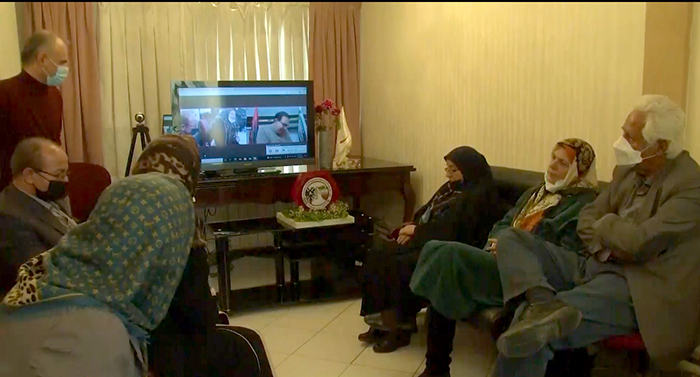
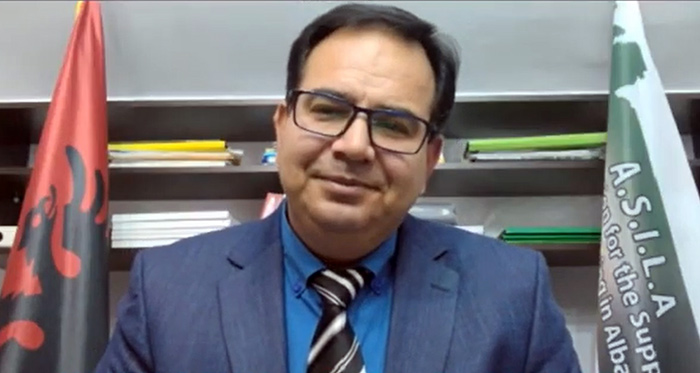
Hassan Heirani, former member of the MEK announced the establishment of the association which is supposed to help Iranians who leave the MEK’s camp in Durres, near Tirana. “The Association was registered as a legal institute to support those who defect the Cult of Rajavi,” Hassan Heirani said.

the association for the support of Iranians living in Albania (ASILA)

This first meeting of the association was held on Wednesday, November 24th. A number of former members of the group attended the first meeting of ASILA. “As the issuing of ID cards to all non-Albanians has started in Albania, the association supports defectors of the cult in order to enjoy their civil rights, find a job, deal with their legal issues and have a family.” Heirani said. “We will try our best to aid defectors of the MEK to experience a new life, without fears, outside the bars of the terrorist cult of Rajavi.”

https://dld.nejatngo.org/Media/Report/Asila-Albania-202111.mp4

To download the video file click here

The issuing of ID cards for all non-Albanians in Albania was done under the pressure of the European Union is a good opportunity for those who are still taken as hostages by the MEK leaders in Camp Ashraf 3.

November 27, 2021 0 comments
FacebookTwitterPinterestWhatsappTelegramSkypeEmail
Robert Fantina
Mujahedin Khalq; A proxy force

Fictitious Courts: The Illegitimate Relation of MEK and West

As we have all heard, double-standard policies in the world are always adopted and enforced, and in many cases, these policies are simply overlooked by the international community and the media. In a general view, it may be possible to state that the main point according to this cliché that “the end justifies the mean”, which means, in some cases the reactions of Western countries in the face of two identical events that occurred in two different places are completely different and sometimes contradictory. In the present interview with Mr. Robert Fantina, we address a few questions about the Mujahedin-e Khalq (MEK), which are an epitome of these inconsistencies and dual policies of the Western political community and media.

Robert Fantina

Robert Fantina; Journalist

Mr. Robert Fantina is a journalist and political analyst, and an author of wonderful books that you can find on Amazon. He’s working for peace and social justice. He writes extensively about US foreign policy and the Middle East, which focus on Palestine, he serves on the board of Canadian voices for Palestinian rights and Canadian for peace and justice in Kashmir.

JT: As you know, in the war condition when two countries are in conflict, if someone betrays his or her country, in most countries of the world, this person is sentenced to death. Does this law also apply in the United States?

– As you know the MEK betrayed their country during the Iran-Iraq war and massacred a large number of innocent people in their country. They even massacred hospital patients in their invasion to Iran, this kind of action which is also prohibited by international law is known as a terrorist act. What do you think is the verdict of these people in wartime?

RF: yes, it does. Treason, the act of being a traitor, is dealt with severely in most circumstances. Some countries have outlawed execution, the United States has not, and this is an option if somebody doing that.

The MEK is a terrorist organization that seeks the overthrow of the legitimate government of the Islamic Republic of Iran. Their terrorist activities – the killing of innocent people – are well-known. Yet they receive support from some western nations, most notably the United States, because that nation’s government harbors an irrational hatred of Iran, and will support any organization, even a terrorist one, that opposes it.

The leaders of the MEK should be charged in the International Criminal Court with the many crimes they have committed.

JT: As you know, the money of the MEK has led to the non-observance of international law in Western countries, and as we have seen in the case of Asadullah Asadi, an Iranian diplomat with political immunity, was illegally detained in Germany and in a Belgian court, he has sentenced to 20 years in prison that this verdict violates the 1961 Geneva Convention, and now Mr. Hamid Nouri has been arrested by the Swedish police on a sham complaint and is on trial. On his trial, he had repeatedly stated that he had not served in the Iranian judiciary at the time due to the pregnancy of his wife, and another point was that Mr. Nouri was not a decision-maker in the judiciary at that time, Do you think that a person who did not appear in the court and did not even a decision-maker can be condemned on behalf of a government?

– As you know, the courts issue the verdicts according to the judicial laws of the same country. Do you think that a court in a European country or any other country has the right to decide on the rulings of the Iranian courts? If that were the case, would it not be better to prosecute the US and Saudi Arabian court judges who sentenced people to death, or an American police officer who pressed his knee against the neck of George Floyd for 9 minutes for being black and suffocating him?

RF: This is another case of western hypocrisy. If an official of any country is accused of a crime, there are international bodies, such as the International Criminal Court, that are responsible for dealing with the situation. One must consider, for a moment, if a U.S. official, say, for example, former President Donald Trump, was visiting a European nation and was arrested for the murder of Iranian General Qasem Soleimani. Trump ordered his assassination, while the general was visiting Iraq. Several international laws were violated by Trump’s order. Yet he has not been held accountable. But if he were to be arrested for this crime when traveling outside of the United States, the U.S. government would condemn the nation that arrested him, issue sanctions, and possibly invade. Yet the U.S. supports the arrests and incarceration of Iranian officials outside of their nations. This double standard is typical of the United States. It also shows that the U.S. remains powerful, despite its decreasing influence on the world stage, because the ICC has not charged Trump or any else in the former U.S. administration for the general’s murder.

Albania ID Card

JT: A while ago, the representatives of the Albanian government intrusively entered the camp of the MEK and fingerprinted the members of the entire camp to present the citizenship identity card. As you know, when a member enters the cult of MEK, he has to hand over all his identity cards to the superiors of the group from the first day, and he no longer has the right to take them back, and he somehow loses his identity. According to recent investigations, a large number of members of Camp Ashraf in Albania intend to flee the group but have avoided fleeing due to lack of identity documents, but now that new identity cards are being issued and due to electronic version of these identity cards, those documents can no longer be confiscated by the group. For this reason, a large number of people will be estimated to leave this cult. Now, considering this issue, how do you assess the future of the MEK if it loses a large part of its members?

RF: Reports indicate a great degree of dissatisfaction among members of the MEK. It is one thing to disagree with some policies of a government; it is another to want to violently overthrow it. U.S. officials often speak about any protest demonstrations that occur in Iran as indicating that the people there want a new form of government. Yet in the summer of 2020, when millions of people demonstrated in the streets of major U.S. cities across the country, these same officials didn’t see the situation quite the same way. Some MEK members disagree with some Iranian government policies; no government will ever exist that pleases all its citizens. But following their involvement in the MEK, and seeing the mental and physical manipulation that membership in it involves, the MEK’s numbers will likely see a substantial decrease now that electronic identity cards have been issued.

JT: As you know, Albania has been a safe haven for terrorists for several years, and it hosts ISIS, MEK, and other terrorist groups, and the Albanian government made separate camps formed for each of these groups. What do you think are the reasons why a country like Albania is willing to turn its country into a safe haven for US-backed terrorists?

RF: The reason is simple: the U.S. has ordered it to. When the MEK was forced to flee Iraq, the U.S. government forced Albania to accept its members. The U.S. wants its terrorists physically united so that when the U.S. government wants to mobilize them to destabilize some nation that refuses to do the binding of the U.S. or Israel, it can do so with ease.

JT: The MEK ceremonies are usually attended by former American political figures, who give speeches and receive large sums of money from this group. These speeches have been legal since 2012 due to the removal of the MEK from the list of terrorist organizations, but with the regard that the group has a history of killing six American advisers, does the community of political, cultural, and social elites tolerate the presence of their politicians in these ceremonies?

RF: This goes back to what I mentioned earlier, about the irrational hatred that U.S. government officials have for Iran. The Iranian people overthrew the brutal U.S. puppet, the Shah of Iran. The newly-formed government severed ties with the Zionist entity and has offered stalwart support for the Palestinian people. It must be remembered that it is very expensive to run a political campaign in the U.S., and many U.S. officials rely heavily on financial contributions from pro-Israel lobbies. So if Israel tells them to oppose the JCPOA and support brutal and illegal sanctions, they will do so. The lobbies, not the citizenry, are their constituencies, and it is from them, and not the voters, that they take their orders. The fact that the MEK is responsible for the deaths of U.S. citizens is not important to these people.

JT: As you know, the corruption case of some American figures has been investigated these days, and even the issue of the presence and receiving money by Rudy Giuliani from the group of MEK has been included in the case of his financial corruption, which is being investigated by the FBI. In another case, John Bolton attended and spoke at a time when the group was on a list of terrorist organizations, which is considered a crime under US law. Now the question arises that what are the motives of politicians to cooperate with American killers? Is it just about money or something else?

RF: It is partly money, but also partly ideology. Iran is a mainly Muslim country; there is a great amount of hostility towards Muslims by U.S. government officials. Also, many U.S. officials, especially those that have been appointed by the current president, or previous presidents, are avowed Zionists. They will, therefore, do whatever it is that Israel wants, and Israel seeks to be the only powerful nation in the Middle East. Its main competitor for that title is Iran.

Additionally, especially during the disastrous Trump administration, there were many members of the so-called Christian Right in positions of power; former vice-president Mike Pence and former Secretary of State Mike Pompeo were two among many. It must be remembered that the evangelical Christian movement has strayed so far from the teachings of Jesus Christ that he wouldn’t recognize them as Christian if he were to attend any of their meetings. These people support Israeli terrorism and see Islam as the arch-enemy of Christianity. I can assure you that that is not what true Christianity is about. Yet that is why many of these people embrace MEK and any and all enemies of the peaceful nation of Iran. This is a nation that hasn’t invaded another country since at least 1798; conversely, the U.S. has been at war for at least 227 years of its 245-year history, and most of those have been offensive, not defensive wars.

Officials of the U.S. government need to use diplomacy, and not discredited religious ideology in dealing with other nations in the world. This is a lesson they have yet to learn.

geopolitica.ru

November 27, 2021 0 comments
FacebookTwitterPinterestWhatsappTelegramSkypeEmail
Ahmad Tavakol; victim of the MEK
The cult of Rajavi

In Memory of victims of the MEK – Ahmad Tavakol

The stories of other victims of the Mujahedin Khalq, Mehran Gholami and Bahman Atiqi, were published in the previous parts of this series of articles.

Ahmad Tavakol was from Mahshahr, Khuzestan Province, Iran. He was married and had two children. He was not a political person and had no idea about the Mujahedin Khalq before he was recruited by the group. As his wife was a relative of Masoomeh Rabiee –a female member of the MEK who was forced by Massoud Rajavi to divorce her husband– Ahmad got familiar with the group.

Ahmad Tavakol; victim of the MEK

Ahmad Tavakol; victim of the MEK

The cult of Rajavi promised him to transfer him and his family to Europe after a short stay in Iraq. The group’s human smuggling team took Ahmad, his wife and their two kids to Iraq.
He was first employed in the reception unit of Hanif Camp in Abu Ghraib region and then he was transferred to battalion 3 under the command of Parviz Karimian (Jahangir).

Ahmad was an emotional person; he was very emotionally attached to his children who were very young at the time. He was always counting the minutes for Thursday, the day that he was able to visit his children.
In the early days of his presence in the MEK, he was so cheerful and energetic. He had a great sense of humor. He made us laugh so much in our gatherings. The sound of his laughter often filled the eating place. His sweet accent of southern Iran while talking of memories of his home town, Mahshahr, reminded us all of our life before joining the group, and, that made the authorities very angry with him. Ahmad’s fault was that he reminded members of their family and their previously normal life.

Ultimately, the commanders of the battalion gave him a serious warning to leave all non-organizational relationships and to become a flawlessly serious and organizational person. The next time I saw him in the eating place, unlike other times, he was so silent. I asked about the reason. “They punished me severely,” he told me using an expression in Mahshahri accent. Jahangir the commander of the battalion 3 had warned him to leave the normal culture and relations of the society and become organizational.

Since then, Ahmad was no more as energetic as before. He looked depressed. He had been trained as an RPG shooter of battalion 3 so he was often made to participate in military maneuvers. Battalion 3 was the newest battalion of Hanif Camp and was famous for is diversity of ethnic groups. It was known as nomad battalion in the MEK. The battalion 3 was the first to get prepared for the operations called “hitting hills”.
As he was getting closer to the time of operation, he was getting more and more depressed. He had not visited his kids for the past weekend and he was really desperate. His kids also missed him too much. They were more attached to their father than they were to their mother.

A week before the operation, I saw him with his kids in the eating place. Both of them were sitting on his knees. He was kissing them. I am not sure but I think it was Ahmad’s last visit with his kids.
It was a sad day when Ahmad and his comrades in battalion 3 said good buy to go for operation. Every one wondered if it was their last visit. Ahmad was very quiet. There was no sign of vigor in his face. He looked back several times. Perhaps, He was looking for his kids to have the last farewell. But his kids did not come. He said goodbye to everyone and it was my turn. He hugged me warmly and told softly in my ear, “Pray for me and say hello to my wife and kids for me. I really wished they were here now.” Taking his RPG bullets, he smiled bitterly and said, “See you, maybe on Doomsday.”.

Ahmad was finally killed in the operation in Meima region at the age of 32. He was one of the victims of Rajavi’s ambitions. He might have dreamed of his kids, deep in their memories, in the last moments of his life.
Shame on Massoud Rajavi who deprived Ahmad, and hundreds of people like Ahmad, of having their family and children and saved his own invaluable life. By going into hiding, he continued his underground scandalous lifetime.

November 24, 2021 0 comments
FacebookTwitterPinterestWhatsappTelegramSkypeEmail
brainwashing
The cult of Rajavi

Brainwashing as a tool in the MEK cult

Processes of brainwashing rest on the creation of stress or threat with no escape other than the apparent unsafe haven of the group. This is exactly the atmosphere ruling the MKO members in the group camps formerly in Iraq and in France and Albania now. Self-criticism meetings, permanent supervising of a hierarchical system, mandatory working schedule, sleep deprivation, forced celibacy are all tools to maintain the stressful, threatening structure. This results in a state of terror that causes a dissociative state resulting from a disorganized bond to the leader, or the group as proxy.

This way, members are gradually driven to engage in acts they would not have done before their involvement in the totalist system of the cult. For examples, acts of terror, suicide and self-immolation committed by the MKO operatives are numerous in the official history of the group published by different sources including the US State Department, The Human Rights Watch and the RAND Corporation etc.

brainwashing

November 24, 2021 0 comments
FacebookTwitterPinterestWhatsappTelegramSkypeEmail
Gholamali Mirzaei
The cult of Rajavi

MEK defector testifies about emotional suppression in the group

Gholam Mirzai is in his fifties. He defected the Mujahedin Khalq in Albania, three years ago and he returned to his home town a year later. Gholam writes about his experiences of living in the cult-like structure of the group for Nejat society website. His recent piece published on the Persian page of the website points out certain cases of Mujahed mothers whose kids were separated from them under the order of Massoud Rajavi.

Gholamali Mirzaei

Gholamali Mirzaei

Gholam Mirzai was recruited by the MEK recruiters after he was imprisoned in Iraqi jail for ten years. The recruitment of Iranian POW’s by the MEK was part of the alliance between Saddam Hussein and Massoud Rajavi.
Gholam was stuck in the MEK’s notorious regulations for 30 years and thus he witnessed a large number of cases of human rights violation in the MEK’s camps. Here, he particularly recounts a memoir of Massoud Rajavi’s plot to separate children from their parents during the first Gulf War.

About nine hundred children were smuggled from Iraq to Jordan and then to different European countries. The German Zeit Magazine has recently covered a detailed story of one of these children, Amin Golmaryami. However, Gholam Mirzai recounts the other side of these stories: mothers.
“When I was in the MEK in 1991, every day I witnessed three women weeping tears for their beloved children, in a corner of Camp Hanif, the operational garrison of the MEK.” Gholam writes. “Shahin was from Khuzestan. Her husband Mohammad Taqi Saket was a fellow citizen of mine. Together with two other women, Masoomeh and Azam we served as service workers there. Their children had been separated from them and transferred to Europe.”

MEK Militia

“At that night, before the end of the work time, I saw them crying again,” Gholam continues. “I started talking to them.” Shahin breaks the rules of the Cult of Rajavi that bans members from talking about their personal affairs. She opens up to Gholam recalling her last visit with her little girl. “They took me to Baghdad to meet my daughter for the last time,” she told Gholam. “She was crying while they took her from me and sent her to get on the bus. I feel so sad and I am always worried about her.”

This was the start of a long-life grief for most female members of the MEK. Since then, Mujahed mothers have been trained by the cult leaders to suppress their emotions for their children. They actually made them avoid feelings for their family and specially their children but this has not always worked for the leaders. Some mothers like Mitra Yusefi and Fereshteh Hedayati could manage to release themselves from the bars of the cult but there are still hundreds of mothers who devoted their love to the guru of the cult, Massoud Rajavi instead of their children.

By Mazda Parsi

November 23, 2021 0 comments
FacebookTwitterPinterestWhatsappTelegramSkypeEmail
Bahman Atiqi; victim of the MEK
The cult of Rajavi

In Memory of victims of the MEK – Bahman Atiqi

The story of another victim of the Mujahedin Khalq, Mehran Gholami, was published in part one of this series of articles.

Bahman Atiqi was born in 1973 in Mahsharhr, Khuzestan, Iran. He was brought to Camp Ashraf, Iraq by one of the MEK’s recruiters in June, 1997. The recruiter teams of the MEK smuggled people to Iraq on a promise of immigrating to Europe through Iraq. Bahman was told that his temporary stay in Camp Ashraf would be in order to gain visa for traveling to Europe. However, he was never transferred to Europe as he got stuck in Ashraf.
He had recently come to Ashraf when I met him in a dinner party, for the first time. At the time, Bahman had been settled in the reception unit of the camp together with Mehdi Baymani and Rasool Ghanavati –who were also victimized by the Cult of Rajavi later. They were receiving military and organizational trainings. As we were from the same home town, they had requested the reception authorities to visit me. I visited them in the reception unit at a Thursday night of July, 1997.

Bahman Atiqi; victim of the MEK

Bahman Atiqi; victim of the MEK

The authorities had organized a musical event for them, in which Mehdi Baymani sang folkloric songs of southern Iran and Bahman and Rasool played musical instruments of the region. After the show ended, we greeted hugging each other. I had not visited them before. I think they had not been even born when I left Mahshahr. I was curious to know how they knew me. Mehdi and Rasool said, “We were your neighbors on Sharifi street. So, we knew about your activities and that you had left Iran. We really liked to meet you.” They seemed so honest and kind to me.

A few minutes later, we were sitting at the dinner table enjoying talking about our hometown memories. Among us, Bahman Atiqi seemed shy and did not talk a lot. As we were chatting, I got to know that they had no idea about politics and particularly about the MEK so I asked them about the reason of their presence in Camp Ashraf.
They answered, “job conditions in Iran were not satisfying and we also dreamed about living abroad. A fellow citizen –actually an MEK sympathizer– told us about a human smuggler who transfers people to Europe via Iraq. We got so happy and hopeful for a better life in Europe. We asked him to introduce us to the human smuggler. A week later we arrived in Camp Ashraf.”

The smuggler had told them they would stay for a short time in a camp called Ashraf and their visa for Europe would be ready during this time. I was shocked to hear that. I asked them several times, “Are you sure?” Their answer was “yes”. Although it was absolutely unacceptable to me, I trusted the MEK; I convinced myself that there was probably a new agenda that I did not know about.
By the way, after that visit, I was transferred to another unit and I could rarely see Bahman. After I defected the group and returned to my home town, I visited Bahman’s family and told them about his conditions in the MEK. They said that they had gone to Camp Ashraf to visit Bahman, in 2003, after the collapse of Saddam Hussein. His family had asked him to leave the group but he had promised them that he would not participate in the group’s military acts. As he told his family, Bahman hoped that the US State Department would help them transfer to Europe.

During the visit, the MEK authorities asked Bahman’s family for financial aid but the family did not admit to help them. Thus, the MEK leaders formed a plot for Bahman’s family in order to terrify them and prevent them from coming to Ashraf again. The MEK authorities planted some CD’s and announcement papers to call people for riots, in a pastry box, and gave it to Bahman’s father. The father opened the box accidentally a few minutes before they got to the Iranian border. He threw it away right away.
Bahman’s family traveled to Iraq to visit Bahman a few more times but they were never allowed by the group leaders who called them Iranian agents in their propaganda. Siavash, Bahman’s brother picketed in front of the gates of Camp Ashraf four times. Not only he was not able to meet Bahman, but also, he was attacked and insulted by the group elements.

In April 8th, 2011, MEK leaders made members encounter with Iraqi security forces who had just taken control of Camp Ashraf. Iraq forces entered the camp to build a station there. The rank and file of the group were instigated by their commanders to lie down under the Iraqi military vehicles. Bahman was injured in the spinal cord.
In the pictures taken and published by the MEK propaganda media, Bahman was shown bleeding severely but the group agents were only filming him instead of taking him to hospital. Nevertheless, the MEK media propaganda later announced that Bahman died on My, 2012 at the age of 38.
Bahman Atiqi was deceived to join the Cult of Rajavi on the charming promise of taking refugee in Europe but he turned victim of the warmongering policies of Massoud Rajavi. He passed away while he was young and he had still so many wishes to come true.

By Ali Ekrami, former member of the MEK

also read: In Memory of victims of the MEK – Mehran Gholami

November 21, 2021 0 comments
FacebookTwitterPinterestWhatsappTelegramSkypeEmail
weekly digest
Iran Interlink Weekly Digest

Iran Interlink Weekly Digest – 301

++ Albanian media has reported on the arrival of the Swedish court in Durres to take witness testimony from MEK members in the trial of Iranian national Hamid Nouri for alleged crimes against humanity in 1988. Swedish prosecutors invoked “the principle of ‘universal jurisdiction’ by which a state can assert jurisdiction over an accused person regardless of their citizenship, residence or where the alleged crimes took place.”

According to observers in Albania, the situation is “chaotic” as one witness was dismissed by the judge because he suffers dementia. Another MEK member claims they witnessed the “massacre of 30,000 people”. Certainly the legal teams on both sides will have a lot of work to sort out fact from fiction in this case. The MEK witnesses are led by the MEK’s legal representative, Behzad Safari, a man who defrauded his own father of $30,000 and who studied dentistry in London before joining MEK in the 1980s.

This, as much as anything, signals that not a lot of legal principle is involved in pursuing this case. Ironically, simultaneous to this trial, Iran’s judiciary is pursuing the MEK leaders through the International Criminal Court in The Hague to seek redress for 42 former MEK members who, it was found, were subjected to human rights abuses while members of the organisation. A petition raised by families of MEK members exposes why the Swedish prosecutors have had to travel to Albania: “At present, about 2,000 members of the MEK are living in the organization’s forced labor camp in Albania under the control of a destructive mind control cult and in modern slavery situation, and have no right to have any contact with the outside world, especially family and friends.”

++ Zeit Online in Germany has published another lengthy and informative piece by Louisa Hommerich. Last week the MEK exploded with anger at publication of her interview with a former MEK member and child soldier who has now returned to Germany. He accepted to be named and he talked in some depth about the abuses committed against the children of MEK members like himself. This led to the MEK issuing defamatory rants and death threats against Hommerich. This week’s article exposes activities linked to the MEK’s Berlin headquarters. Speaking to former MEK members, Hommerich has pieced together the ways MEK controls its members through psychological manipulation and what essentially amounts to captivity. She also writes about how and why German politicians have been advocating for the MEK for years. Delving into the history of the MEK, Hommerich elicits a damning picture of the extreme cultic abuse used by Rajavi to control and exploit the members. In Germany, former members describe their activities as fundraising through deception and computer work. They describe how politicians who were persuaded to support the MEK were victims of this deception.

“You only need one or two famous names,” a former member of the People’s Mojahedin explains of its lobbying strategy. You have to invest a lot of energy in the first contact person. You have to shower the person with attention and compliments, give them gifts – and give them the feeling of being committed to a meaningful, noble cause. In the second step, one would then slowly introduce the idea that the person could establish an association or a society that advocates for the People’s Mojahedin. ‘It’s a psychological trick: when you ask someone for a favour after so much flattery, people think they owe you something and can hardly say no.’ With a single respected politician, you can attract many more prominent supporters.”

Although the former members speak of historical events, Hommerich leaves us in no doubt that these practices are still ongoing and that from the inside of the MEK “many things look different with the People’s Mojahedin or Iranian Mojahedin Khalq than from the outside.”

++ A protest in Isfahan attracted around half a million citizens who asked for changes to the water management which causes the Zayanderud river to dry up. Anti-Iran media and commentators were quick to jump on the event to either claim it was an entirely government created event or that an uprising was imminent. When it became clear that this was a genuine, peaceful demonstration concerning a genuine grievance of ordinary citizens, several outlets withdrew their posts. Hilariously, the protest breathed life back into the long-dead Massoud Rajavi, who announced his support for “toppling the regime” in Esfahan and essentially claiming he had organised it. This prompted a flurry of social media posts ridiculing both Massoud and Maryam Rajavi for supporting the Esfahan protest.

Hundreds of people in the central Iranian city of Isfahan have joined farmers on the dried-up riverbed of Zayandehrud to demand that the government release water into the river.

State broadcaster reports that First VP Mokhber will address the protesters on live TV today. pic.twitter.com/Q1jQhPu2gA

— Kian Sharifi (@KianSharifi) November 19, 2021

In English:

++ A right-wing British newspaper reported on the Home Office’s openly racist attempts to remove ‘illegal’ asylum seekers before their claims are considered by flying them to Albania. According to a source close to the MEK in Durres, Maryam Rajavi is very unhappy about this influx of brown migrants. She believes this will lower public tolerance of ‘foreigners’, ‘dilute’ the attention paid to her and undermine her monopoly on corrupt government collusion. This comes on top of previous reports that America will send Afghan refugees to Albania for processing before accepting them in the US. No wonder the prospects for EU membership are diminishingly small.

++ The same right-wing British newspaper, The Daily Mail, picked up on another controversy this week as Jordan’s FA alleged that the Iranian women’s team goalkeeper is actually a man. In addition to Zohreh Koudaei’s own retort that this is bullying from Jordan, this prompted an angry response from Iranians who accused Jordan of being sore losers. Some pointed out that the Jordanian mindset is so backward that they can’t conceive of a woman saving goals and therefore conclude that she must be a man. Several commentators remarked that Maryam Rajavi said absolutely nothing about this situation because she will never waste her breath unless she is being paid for it. And that since she never supports women or Iranians, she herself is neither Iranian nor a feminist.

Nov 19, 2021

November 21, 2021 0 comments
FacebookTwitterPinterestWhatsappTelegramSkypeEmail
Newer Posts
Older Posts

Recent Posts

  • Nejat Society Albania’s Conference on June 20th

    June 22, 2026
  • Maryam Rajavi’s Stance, Peace or Survival Tactic?

    June 22, 2026
  • France’s foreign ministry denies asking for ban of MEK’s rally

    June 20, 2026
  • The MEK did not allow them to visit their father

    June 20, 2026
  • June 17th, 2003, a Counterproductive Event for the MEK

    June 17, 2026
  • Facebook
  • Twitter
  • Instagram
  • Youtube

© 2003 - 2025 NEJAT Society . All Rights Reserved. NejatNGO.org


Back To Top
Nejat Society
  • Home
  • Articles
  • Media
    • Cartoons
    • NewsPics
    • Photo Gallery
    • Videos
  • Publications
    • Books
    • Nejat NewsLetter
    • Pars Brief
  • About Us
  • Contact us
  • Editions
    • عربي
    • فارسی
    • Shqip