Nejat Society
  • Home
  • Articles
  • Media
    • Cartoons
    • NewsPics
    • Photo Gallery
    • Videos
  • Publications
    • Books
    • Nejat NewsLetter
    • Pars Brief
  • About Us
  • Contact us
  • Editions
    • عربي
    • فارسی
    • Shqip
Nejat Society
Nejat Society
  • Home
  • Articles
  • Media
    • Cartoons
    • NewsPics
    • Photo Gallery
    • Videos
  • Publications
    • Books
    • Nejat NewsLetter
    • Pars Brief
  • About Us
  • Contact us
  • Editions
    • عربي
    • فارسی
    • Shqip
© 2003 - 2024 NEJAT Society. nejatngo.org
MEK terrorists in Albania
Albania

Criminals And Terrorists In Albania

In Albania, the growth of the democratic state proceeds slowly, hampered by an economic crisis that is difficult to overcome and the security and legal problems that afflict the country. We address them in this report by Polo de donno.

SPREAD OF RADICAL ISLAMIST TERRORISM: The spread of Jihadism in the Balkans, and more particularly in Albania, cannot be framed within a generalized scheme of action but is based on specific dynamics that relate to the weakness of the state control structures of certain regional entities. As Giovanni Giacalone explains on “InsideOver”, where the state is socio-economically weak and lacking or absent in the activity of monitoring the territory, terrorist cells find fertile ground. In the case of Albania it was thought that the doctrine of state atheism, imposed by Hoxha in 1967, would discourage the formation of radical religious cells; in reality, this belief is not corroborated by the facts as is doubtful the opposite thesis, which sees the emergence of a jihadist hotbed as an equal reaction and contrary to Hoxha’s vision. More likely, Giacalone continues, these cells were indirectly fostered by the climate of religious tolerance that communist intervention fostered, within a Muslim-majority community but with a good presence of Catholics, Orthodox and Bektashi. It can be said that the climate of mutual tolerance has fostered the blurring of the priority role of religion in favor of the concept of nationhood or “albanianity”. Radical Islamism in Albania is a phenomenon of an exogenous nature, stimulated by the religious currents of the Gulf, which aim to spread Wahhabism and Salafism through cash funding of mosques or cultural centers and the indoctrination of local imams. As Giacalone explains, the Albanian Islamic community has always worked with the security forces to remove the most radical fringes; on the other hand, however, there is the problem of the most ardent hate preachers who, through the web and the unrecognized Islamic centers, spread the most radical messages of Wahabism and Salafism (messages of intolerance and malfeasance). In 2014 there was a major police operation that killed a jihadist network of ISIS recruiters led by the two Albanian imams Genci Balla and Bujar Hysa. The areas where proselytizing of these radical sectors is concentrated are included on the Albanian periphery: Elbasan, Cerrik, Kavaja, Librazhd, Pogradec, Scutari, as well as the outskirts of Tirana. As we have seen in France, in the terrible recent period of the ISIS massacres, the subjects targeted by the jihadist propaganda recruiters are young people in precarious economic and social conditions (the kind of poor individual of the Parisian banlieues). Another source of Islamist infiltration in the country is Erdogan’s Turkey, which is linked to the Muslim Brotherhood, which uses its cultural and political power; it happened, as Giacalone reports, with the construction of the largest mosque in the Balkans in Tirana (about 32,000 square meters), where the Imams give sermons identical to those of the countries of origin, with strong political as well as ideological-religious tints.

Female operators in ISIS and MEK, victims of destructive cults

Secondly, since 2016 the headquarters of the People’s Mujahedin-e of Iran (MEK) has been established on Albanian soil in Manez, near Durres; Historically, this group had supported the struggle against the Shah in 1963 and then participated in the Khomeinist revolution of 1979. From an ideological point of view, it is a synthesis of Marxism, feminism and Islamism, positions that have distanced the group from the ayatollahs and brought it closer to Saddam Hussein’s Iraqi regime. It had been blacklisted by the EU, US, Canada and Britain before being delisted by Secretary of State Hillary Clinton during Obama’s first presidential term. Seen on the American side as the bearer of democracy and freedom in Iran and on the contrary side in Tehran as a terrorist organisation, it is certainly an extremely inconvenient tenant for Albania, especially in a context of multi-ethnicity such as the Balkan one. As reported in an article by Margherita Furlan in the magazine “Antimafia 2000”, the MEK is strongly supported by the American secret services: for what objective and with what tasks? Some Albanian political sources have suggested an exchange: since “the Americans gave us Kosovo, now we have to give them something in return”.

Canadian-Albanian historian Olsi Jazexhi even suggested that “America wanted to turn Albania into a safe haven for international jihadism, a second Afghanistan in the heart of Europe.

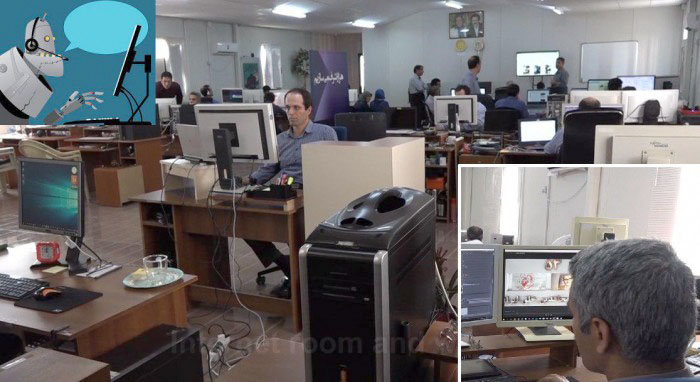
” It is estimated that there are about 4400 members of the MEK in Albania, with a group of militants (according to an Al-Jazeera documentary) trained in the techniques of computer-led anti-Iran misinformation and diversion objectives. It would be a “cyber-jihad” as Furlan says, aimed at spreading false news both in Iran and in Europe in order to discredit the regime in Tehran as a possible negotiator.

According to an article dated 2015, which appeared in the Huffington Post, Albania would become a sorting center for jihadists from neighboring countries, including Italy; In fact, the Salafist nuclei present in the district of Librazdhi and Elbasan for years have been offering support and hospitality to volunteers who arrived by air or sea (at the port of Durres), heading to Syria after transiting through Turkey.

FOREIGN FIGHTERS: In the field of terrorist threat analysis, the crucial problem for the Balkan country is that of so-called “foreign fighters”. As we know, the outbreak of the war in Syria in 2011 has had an effect and repercussions not only on neighbouring Arab countries but also on the Balkan peninsula. In a 2019 article on “InsideOver”, Giovanni Giacalone explains how such a mobilization of Balkan foreign fighters for a distant conflict had never been seen in history; a sign of the propaganda capacity of jihadism on the peninsula. We must divide the phenomenon of fighters abroad between round-trip trips. It is estimated that Albania has mobilized about 180-200 jihadist foreign fighters, about half as many as in Kosovo; Given the figure of a population of 2,873 million, it can be argued that the country has managed the problem of terrorist flows to the outside world well. The “Country report on terrorism”, compiled by the US State Department in 2018, explains how Albania, thanks to high-level collaboration with US agencies, has achieved good results, certified by the Personal Identification Secure Comparison and Evaluation System (Pisces) to protect Albanian borders, in addition to controls in maritime and airport nodes. If we look at the Balkan region as a whole, more than a thousand people have started out since the outbreak of the war in Syria, of whom 67% are men, 15% women and 18% children. Of these, 260 fighters have died in theatres of war, 500 are still in Syria and Iraq, and about 460 have returned to their countries of origin. The latter figure makes the western Balkan region the area with the highest number of “return” fighters. The phenomenon remained confined to Kosovo, Albania, Northern Macedonia and Bosnia, with a small group of Albanian militants still engaged in the Syrian scenario; However, the impact should not be underestimated because, as Giacalone argues, individuals returning from Syria and Iraq may have been more or less deeply involved in Isis and Al-Qaeda. For example, the wife of a jihadist may have played a negligible role compared to a husband fully involved in terrorist operations; just as we must not overlook the level of indoctrination that minors may have suffered, some of whom were even involved in the execution of prisoners.

Although Albania, more than other fellow travellers in the Balkans, seems to have contained the threat of Islamic terrorism (neglecting the Iranian group mentioned above, of which there is no well-defined profile), also through the use of US prevention systems, on the other hand it is necessary to keep under close surveillance places of worship as possible vehicles of political messages or intolerant religious radicalism and also the role of the Internet, a tool capable of making criminal information fluid, rapid and difficult to trace.

CRIMINAL GROUPS: A LOOK AT THE ROUTES OF THE CRIME: As indicated in the report on crime hot spots in the Western Balkans in 2019, this region presents itself as a vital hub in the trafficking of drugs, weapons and human beings. In fact, it is located between the largest opium producer, Afghanistan, and the largest heroin market, Western Europe. It is also becoming an important point of access and exchange for cocaine, as well as a place of marijuana production (Albanian plantations). First of all, the trafficking of heroin is moving along the so-called ‘Balkan Route’, which originates in Afghanistan and, after transit through Turkey, is spread into Europe by the Balkan countries. This route then is divided into a track that goes from Albania and Montenegro to Italy and a second passage from Northern Macedonia and Serbia to Central Europe (Austria, Switzerland, Slovakia, Hungary). A second route is that of cocaine trafficking, which sees Albania and Montenegro as links to the criminal chain between South America and Europe. Ships usually arrive in Durres (Albania) and Bar (Montenegro), then send the goods to Kosovo and Serbia and from there trade it in Central Europe. As far as cannabis is concerned, as we have mentioned, Albania has become the largest producer in the region; The main destinations for cannabis shipments are the Italian ports of Brindisi, Bari and Otranto, while Greece and Turkey are at lower levels. Finally, with regard to synthetic drugs, the Balkans are the recipient of cargoes from the Netherlands; local production in Bosnia and Serbia is the exception. We must not forget the illegal trade in cigarettes, in which Montenegro has an absolutely important role; In fact, through the port hub of Bar, it smuggles cigarettes with official or fake marks to Europe, the Middle East and Africa. In the arms trade, Albania is distinguished by its trade with the Sicilian Mafia, which is the most frequent of its customers. The analysis of these “hot zones” is divided around three pillars: 1) the geographical location of the region, the transit point of such criminal trading especially through airport, port and isolated border areas; 2) the economic vulnerability of some countries makes it easy to infiltrate a poor infrastructure, characterised by very high unemployment (long-term and especially youth), emigration and consequent problems of a socio-psychological nature; 3) a weak state government, often implicated in illegal or corrupt activities, connoted by a poor territorial grip and the typical arrangement of countries not fully developed or even backward.

A SNAPSHOT OF THE MAIN ALBANIAN MAFIOSO GROUPS: From the mapping carried out in 2019 by “Antimafia Two Thousand ” emerges the accurate territorial location of the most important Albanian criminal groups. Three structured criminal organisations operate in Tirana, which has been strengthened since the fall of the Hoxha regime thanks in part to corrupt links with local politics and entrepreneurship. Some are involved in laundering the proceeds of mafia activities; others manage drug trafficking, extortion and debt collection on behalf of third parties; finally, there are those who make investments in catering and the exploitation of chromium deposits, which are particularly flourishing in Albania. Not only that, but the city is also an important back office for operations abroad, especially in the Netherlands, the UK, Belgium, Switzerland, Spain, Germany, Italy and Kosovo. In Scutari there are at least four major mafias involved in the trafficking of drugs, organs, weapons and human beings. The main activity of these groups is the production and trade of cannabis, an area in which they could achieve primacy in the region in a few years’ time. This role is played by the bordering proximity with the Montenegrin groups, with which the Albanians have forged strong ties, and with the Kosovars. Durazzo, on the other hand, not only represents a decisive port issue in the dense criminal network that brings cocaine from South America to Europe, but also offers a vast landscape of criminal investments in the hotel industry, in the trade of stolen cars and also in many social and political activities. The families of the Caushi, Kakami and Gaxhai, currently at war with each other for control of the territory, have settled in Valona. Murders have been numerous in recent years precisely because of the struggle for supremacy in the international routes of the arms and narcotics trade, especially towards Spain and Italy. In Fier we see more qualitatively refined groups not so much in the type of criminal activity (extortion and drug trafficking) as in the bond that unites them, based not only on the blood but also on the community of belonging (Kosovar and Cham). To understand the excellent links of these groups, it is enough to think that in 2017 Arjan Shanaj was arrested in Greece carrying cocaine from a Colombian cartel. In Berat, the three elements present share the criminal market slices in the tourism sector, having entered into some sort of agreement between them. On the contrary, Elbasan has a strong conflict between criminal groups, certified by the high number of murders in recent times; This certifies a high degree of criminal activity in the city despite the dismantling of the So-called Mandela and Tan Kateshi. It is estimated that the two most powerful groups in Albania are involved in the trafficking of cocaine across Western Europe and the United Kingdom.

After a leopard-spot description of this type and the certainty of facing a well-established and highly integrated criminal phenomenon with the main illegal hubs from Latin America to the Far East (we also remember the so-called “Golden Triangle” of drugs between Laos, Burma and China), we can affirm the structural link between the scourge of terrorist-mafia lawlessness and the weak state presence on the territory, especially with regard to the functions of control and administration of the population. Where the crisis of the socio-economic fabric (unemployment, low income, low reliability of the public accounts of the country of reference) is settling with the lack of transparency in the procedures and with a flourishing counter-state activity of mafias and terrorists, able to offer an alternative (albeit criminal) to the poorest strata, will always find fertile ground in a black economy, made up of deception, fraud, corruption and wretched trafficking.

By Paolo de Donno, europeanaffairs – Translated by Iran Interlink

May 27, 2020 0 comments
FacebookTwitterPinterestWhatsappTelegramSkypeEmail
Bahman Mohammadnejad'd family who is trapped in the MEK Camp AShraf in Albania
Mujahedin Khalq Organization members' families

Let us see my brother after being away for 39 years

The leaders of the MEK destroyed our family

Your brothers were imprisoned by the MEK.
Alireza escaped and left Iraq to Jordan.
After 19 months in Jordan and trying hard, he managed to become refugee in Sweden.

Rasoul was in Abu-ghuraib prison. We managed to get him out with a lot of difficulties and he went to Sweden too.

Alireza and Rasoul are both in Stockholm now…

We tried hard but Massoud and Maryam Rajavi did not let us to see you

Call us if you can
My phone number is :
+989141462712

Bahman Mohammadnejad'd family who is trapped in the MEK Camp AShraf in Albania

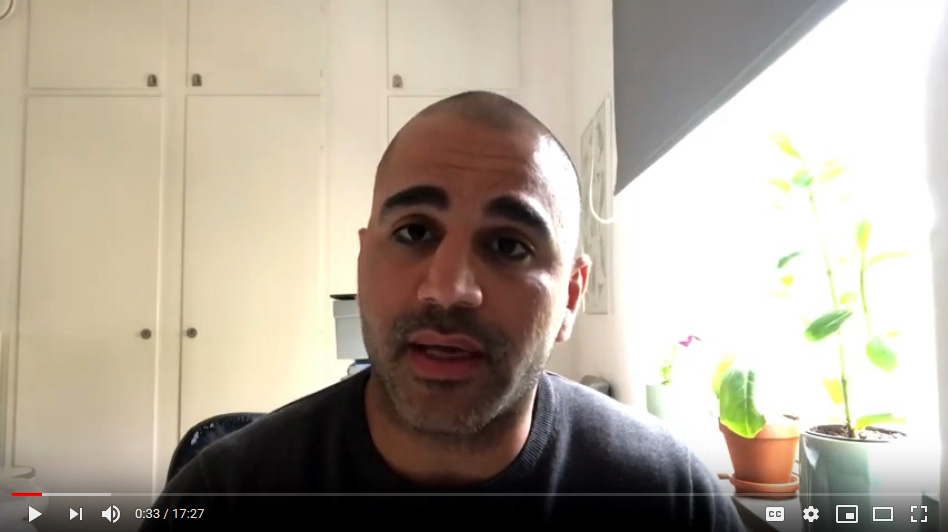
Family members of Mr. Bahman Mohammad-nejad, who is currently being held captive by the MEK cult in Albania, have sent a video message to the Albanian government as well as the human rights organizations asking them to let the family travel to Albania in order to see their brother after being away for 39 years:

https://dlb.nejatngo.org/Media/Report/Mohammadnejad_Bahman_Bro_1.mp4
https://dlb.nejatngo.org/Media/Report/Mohammadnejad_Bahman_Bro_2.mp4


May 26, 2020 0 comments
FacebookTwitterPinterestWhatsappTelegramSkypeEmail
Hamael Ghanizadeh mother of Mehri, Nahid and Mahmoud Saadat who are fell trapped in the MEK
Mujahedin Khalq Organization members' families

Open Letter to UN Secretary General Antonio Guterres

H.E. Mr. António Guterres
Secretary-General of the United Nations

Your Excellency,
I am Hamael Ghanizadeh, the elderly mother of three children who are in the Mujahedin Khalq Organization (the MKO) in Albania. My children Mehri, Nahid and Mahmoud Saadat have been mentally and physically imprisoned in the MKO for 33 years and we have not been allowed to meet or contact them (except for one time) during these past years.

Mr. Secretary General,
You just condemn such actions. Taliban kill people and you condemn. The people of Syria are being killed and you just condemn terrorists. The children of Yemen are massacred, you just condemn!
Condemning is of no use for us, the old parents who have not seen our children for years. What a Secretary General you are that you take no practical action for us! Our children are jailed in the hands of an oppressive dictatorship that isolates them under slavery and mandatory celibacy. We need your help, at least to be able to have a personal visit or a phone call. I have not heard the voice of me loved ones for years.

Mr. Secretary General,
Please think of us for just five minutes. Our only request is a private visit. If you have emotions, if you love your children, you might understand us.
Not only you should condemn but also you should pay attention to the grieves and sufferings of a mother, aiding me to visit my children.
I am looking forward for your response.

Sincerely Yours,
Hamael Ghanizadeh, 75 years old
Tabriz, Iran

Hamael Ghanizadeh mother of Mehri, Nahid and Mahmoud Saadat who are fell trapped in the MEK

HamayelGh2020@gmail.com

May 23, 2020 0 comments
FacebookTwitterPinterestWhatsappTelegramSkypeEmail
Nejat Families of Gilan Province
Missions of Nejat SocietyMujahedin Khalq Organization members' families

Gilani families letters to the Albanian Prime Minister Edi Rama requesting to have contact with their loved ones

Simultaneous with the nationwide signature petition, a number of families of the members trapped in the Mojahedin-e Khalq Organization (MEK) camp in Albania from Gilan province (north of Iran), have sent separate messages and letters to the Albanian prime minister, to enable them to visit or at least have video or audio contact with their loved ones.

Each of these letters was accompanied by photographs, specifications, and documents, and copies were sent to other Albanian officials, as well as to European and international officials and to the Albanian and international media.

The families also expressed concern about the health of their loved ones in the context of the outbreak of coronavirus disease.

Families are waiting for the Albanian government, as a humanitarian gesture, to respond appropriately to these demands and solve the problems ahead. Many of these families have not heard from their loved ones in Albania for decades now.

It should be noted that during these years, many families in Gilan province died while waiting to see their loved ones, and they never managed to find out about them, whose names are now missing in the attached list.

Other Gilani families also keep sending letters and messages to the Albanian Prime Minister.

Nejat Families of Gilan Province

The mailing list sent so far from Gilan province is attached.

Here are some examples of Gilani’s elderly mothers and fathers’ messages to the Albanian Prime Minister, whom Rajavi calls agents and terrorists:

Yahya Ostadian, the father of Majid Ostadian, wrote:“I am old now and I miss my son.”

Seyed Ebrahimpour Shafi’i, the father of Seyyed Khalilpour Shafi’i, wrote:“My son has an incurable disease. I am very worried about his health. Why am I not informed about his condition?”

Ameneh Foumani, the the grandmother of Rad Mohammad Alizadeh, wrote:“I haven’t heard from my son for years. For God sake tell me about his health.”

Khadijeh Mollazadeh, the mother of Mansour Rahdar, wrote:“My son was a soldier in the village who was deceived by MEK. Why shouldn’t he be able to have a call with his mother and announce his health?”

Yousef Sabahi, Jabbar Sabahi’s father, wrote:“I wish to see my son after many years. Help me to hear from him.”

Zabihullah Qaderi, the father of Mohammad Qaderi, wrote:“I have amnesia because of waiting for so long. How many more years do I have to wait for a simple call? Help me.”

Mohammad Vali Gholizadeh, Ali Gholizadeh’s father, wrote:“I just want to meet my son. Is this a very big request? Why should I have not heard from him for years?”

Seyedeh Zahra Nourani, the mother of Seyed Vali Mohammadzadeh, wrote:“I am exhausted and sick. Someone help me. Who should I complain to and where should I go?”

Seyyed Hassan Mir Mousavi, the father of Seyyed Morteza Mir Mousavi, wrote:“My son was captured in the war and fell into the MEK’s trap. Why aren’t they allowed to at least tell us they are safe?”

Alireza Yousefi, the father of Mohammad Taghi Yousefi, wrote:“I want to meet my son. Give us at least one simple call and take us out of our worries.”

Rahim Ali Jame, the father of Ismail Jame and Ibrahim Jame, wrote:“I am looking forward to meeting my sons. I am looking forward to hearing from them.”

Mohammad Taghi Rezaian, Ismail Rezaian’s father, wrote:“His mother died while waiting for her son to call. Now I am waiting to hear from him. Can I see my son once before I die?”

Houshang zad Ismaili, the father of Davood zad Ismaili, wrote:“His mother died in the sorrow of separation from her son. Now I am waiting to see my son. Is it possible to communicate?”

Shahrbanou Marandi mother of Khosro Saliqedar wrote:“My son went to Germany to study and was deceived by MEK. Why shouldn’t he have a simple contact with his mother?”

Abolhassan Ghanipour, Roozbeh Ghanipour’s father, wrote:“My son went to study and fell into MEK trap, and now they don’t allow him to communicate with his family. Why?”

Farhad Mobrahan, Yousef Mobrahan’s father, wrote:“His mother is old, disabled and waiting for her son. Why don’t they let him call?”

Ali Pour-Ahmad – Nejat Society, Gilan Province Representation

May 21, 2020 0 comments
FacebookTwitterPinterestWhatsappTelegramSkypeEmail
Javaid Rehman UN Human Rights Special Rapporteur
The cult of Rajavi

Open letter to the UN Human Rights Special Rapporteur

Special Rapporteur Mr. Javaid Rehman ,

To begin with, Gafour Fatahian, a longtime member of the Mojahedin, was one of the best young people in the organization’s camps in Iraq for more than twenty years. Fortunately, I had been rescued and I am currently living in France.

Ghafour FAtahian - MEK defector living in France

Now I consider it my human and legal duty to disclose everything that happened to me and my friends during these two decades, because I know very well that the Mojahedin Organization, contrary to what its leaders, especially Maryam Rajavi , claims in Europe, they pretend to follow a path of democracy and human rights, and in fact they not at all. Their claims are not true at all because they themselves are violating the most basic human rights in Iraq and still in Albania till right now.

I vowed to convey to the world the oppressed voice of my friends who are currently trapped in Albania. by the way,

I wrote you a letter before about this subject.

Mr. Javaid Rehman I want just to expose to you that many former friends who have been dating for nearly thirty years now have no connection to the outside world.

No one in this organization, whether male or female, knows the meaning of life, because any marriage, love, and family formation, and any contact with family members and the outside world, is forbidden and trafficked. Even thinking about family and women and life is forbidden and an unforgivable crime.

And when an Iranian or European member of a family of these imprisoned people wants to visit them, the officials of this organization do not allow them to do so they even do not have permission to demand such a thing.

In addition, the Albanian government does not issue visas to Iranian people to travel to Albania in order to visit their families.

Mr. Javaid Rehman I am writing to you this letter; first, in order to expose this problem again, and second so as to demand your intervention to save these people and to find a solution to this dilemma.

I confirm Mr. Javaid Rehman that your contribution in this problem and your reaction to save these people will be memorable for these families.

With the warmest regards,

Gafour Fatahian – Paris

May 20, 2020 0 comments
FacebookTwitterPinterestWhatsappTelegramSkypeEmail
EU_VOX_Spain
Mujahedin Khalq Organization as a terrorist group

The MEK terrorists’ creed for recruitment of Eurodeputies

The next elections to the European Parliament will take place in two weeks and never before have the elections been labelled so decisive by so many European leaders. Many things have changed since the previous elections of 2015 won by centre-right liberal-conservative and centre-left social-democratic parties. Millions of refugees and migrants from the Middle East and Africa have fled to Europe, thus causing the ongoing migrant crisis, and tens of European cities have been hit by terrorist attacks, leaving hundreds of civilians dead. All this has resulted in fueling people’s fears about the security, as well as in growing popularity of far-right populist, anti-immigrant and Islamophobic political parties. Numerous political analysts are predicting the success of such parties in the upcoming elections in late May.

EU_VOX_Spain

One particularly interesting example of far-right populism recently emerged in Spain, a country in which the centre-right and centre-left have been exchanging in government for decades. However, in December last year Spain saw a noisy irruption of Vox, a hitherto marginal extreme right party, into mainstream political life. The Vox won almost 11% of the popular vote in the regional election in Andalusia, the most populous and the second largest autonomous community in the country, gaining 12 seats and entering a regional parliament for the first time. The latest polls show that Vox will win 10-13% of national votes in the upcoming elections, in other words, 6-8 secured seats in the European Parliament.

Santiago Abascal, the Vox party leader, built his campaign on a platform of Euro-scepticism, anti-feminism, xenophobia, and exacerbated Spanish nationalism. The transatlantic extreme right political guru Steve Bannon sees Vox as a valuable part of his global ideological crusade against the”liberal elite”and”cultural Marxism.”In April, the Vox launched its election campaign in the tiny town of Covadonga, sometimes referred to as the”cradle of Spain.”According to the historical narrative of Spanish conservatives, Covadonga was the site of the first victory by Christian Hispania against Spain’s then-Muslim rulers, and the start of the Reconquista, the 780-year process of reclaiming Iberian lands for Christendom.”Europe is what it is thanks to Spain, thanks to our contribution of stopping the spread and the expanse of Islam,”Vox’s vice secretary of international relations Iván Espinosa de los Monteros said. One of the party’s earliest controversies was a wildly Islamophobic video conjuring a future in which Muslims had imposed sharia in southern Spain, turning the Cathedral of Córdoba back into a mosque. Javier Ortega Smith, the Vox secretary general, was recently investigated by Spanish prosecutors for hate speech after he spoke of an”Islamist invasion”that was the”enemy of Europe.”

Given Vox’s staunch Islamophobia, independent observers were surpised several months ago when El País newspaper revealed that Vox’s emergence is intimately linked to Mujahedin-e Khalq (MEK), an exiled Iranian cult bitterly opposed to the current government of Iran. Only in the early 1980s, the MEK conducted over three hundred terrorist attacks against targets in Iran, and in total more than 16,000 people have been killed in Iran alone, not counting their atrocities against Iranian and Iraqi civilians during the aggressions of MEK’s ally Saddam Hussein. Mujahedin-e Khalq has also conducted attacks against numerous Western targets, in Europe, North America and elsewhere. The organization is designated as a terrorist organization by Iran and Iraq, and was on European Union’s terrorist list until 2009 and on the US terrorist list until 2012. Reason for delisting lies in the long-term lobbying by MEK’s leading sponsors, namely US neocons, Israel and Saudi Arabia, who see the organization as a useful tool for political pressure against Iran.

The Vox-MEK link goes beyond any ideological affinity that might exist between the two groups. According to an investigation on Vox’ finances conducted by El País, a leading Spanish newspaper, in 2014 Vox received a donation of 500.000 euros from the MEK. The money reportedly came via thousands of contributions ranging from 200 to 5000 euros from individual members and sympathisers of the MEK. This money allowed the party to kick-start its election campaign for the European Parliament. The person who played a key role in securing this funding was Alejo Vidal-Quadras Roca, a veteran Spanish politician who served as a vice-president of the European Parliament from 2004 to 2014, and then became one of the founders of Vox. During his years as a vice-president, Vidal-Quadras Roca was the most influential MEK lobbyist in the EP, leading the cross-party group”Friends of Free Iran”which acted mostly as a mouthpiece for the MEK. On numerous occasions, he also hosted the MEK”president-elect”Maryam Rajavi in the European Parliament. A self-professed”defender of the West,”Vidal-Quadras Roca was lobbying on behalf of an organisation that was responsible for terrorist attacks on Westerners.

The Vox party did not make it to the EP in 2014, and Vidal-Quadras Roca eventually parted ways with the party in 2015. He still spends a lot of time in Brussels, however, continuing to promote the MEK. His abandonment of a party does not mean that the Vox-MEK ties have been severed. Rafael Bardají, a radical Zionist and Vox member since 2018, recently joined advocating Trump’s”maximum pressure”policy against Iran. Current leaders of Vox insist that they no longer receive any funding from foreign sources, and that the party is supported exclusively by small Spanish firms and crowdfunding. El País and independent analysts dispute such statements, emphasizing the Vox’s financial strength which has enabled them to acquire real estate, hire new personnel, pay lawyers to file complaints and petitions against the government, etc. Even former party leaders accuse the current leadership of running financially opaque operations, falling far short of satisfying legal standards for transparency.

Analysts have so far focused only on individual connections between the MEK and local national parties like Vox, what they are missing is the wider picture of the MEK mercenary network, stretching all over Europe. Taking into account the MEP attendees at the Rajavi-led”Friends of a Free Iran”(FoFI) meetings over the past year and a half, this informal group of pro-MEK terrorist advocates includes Heinz K. Becker (Austria), Mark Demesmaeker, Gérard Deprez (Belgium), Jozo Radoš and Ruža Tomašić (Croatia), Jaromír Štětina, Pavel Telička, Jan Zahradil (Czech Republic), Tunne Kelam (Estonia), Petri Sarvamaa (Finland), José Bové, Robert Rochefort (France), Stefan Eck (Germany), Patrizia Toia (Italy), Laima Andrikienė (Lithuania), Jim Nicholson (Northern Ireland), Ryszard Czarnecki, Anna Fotyga, Janusz Wojciechowski (Poland), José Inácio Faria (Portugal), Pál Csáky, Eduard Kukan, Ivan Štefanec, Anna Záborská (Slovakia), Franc Bogovič, Milan Zver (Slovenia), Teresa Giménez Barbat, Beatriz Becerra, Jordi Solé i Ferrando (Spain), David Campbell Bannerman, Anthea McIntyre, and Julie Ward (United Kingdom).

Thirty-two advocates do not belong to any specific EP political group or affiliation, they are conservative, liberal, green, and so on. Three-quarters of them come from smaller EU members, half from Eastern Europe, one-eighth from the Balkans. Among those from the five main EU member states, all are relatively unknown and belong to the opposition parties or independent. Obviously, the MEK’s purchasing a prominent MEP of a serious party and country represents an issue, not only due to price but also international repercussions. On the other hand, dealing with cheap marginal figures from the European periphery does not pose any problem.

The collective strength of such peripheral lobbyists can be sufficiently explained by the fact that MEK, a terrorist group responsible for more civilian casualties than ISIL, currently holds roughly five percent of the European Parliament. Taken as a national entity, it’s the seventh most represented member, after five main members and Poland. With the growing popularity of pro-US and pro-Israeli populist parties in Eastern and Southern Europe, it can be expected that the MEK’s representation will no longer be limited to individuals but to entire parties (like Vox), and that their share in the EP could even increase.

Filip Vuković – balkanspost

Filip Vuković is a Serbian politologist and investigative journalist from Belgrade, covering the western Balkan area for Serbian, English and Italian outlets. His focus is on nationalism, ethnic tensions and economic policy in the post-Yugoslav area. Currently, he is preparing a PhD dissertation at the University of Padua.

May 19, 2020 0 comments
FacebookTwitterPinterestWhatsappTelegramSkypeEmail
Najmoddin Fani's brother
Mujahedin Khalq Organization members' families

Fani’s brother’s letter to Albanian Prime Minister

Mr. Edi Rama, the Albanian Prime Minister,

I am Abdossamad Fani, Najmeddin’s brother. My brother has been recruited by the MEK for 30 years and because of the pressures from the leaders of the group, we have not visited him during these entire years. This has left us with a terrible concern.

We have no information of my brother’s health condition. We ask your Excellency who are the host of MEK leaders in your country to coordinate with us providing us with an opportunity to meet my brother after years of separation.

We are looking forward for your humanitarian action.

Yours Truly,

Abdossamad Fani, Khuzestan, Iran

Najmoddin Fani's brother

May 18, 2020 0 comments
FacebookTwitterPinterestWhatsappTelegramSkypeEmail
weekly digest
Iran Interlink Weekly Digest

Iran Interlink Weekly Digest – 272

++ Usually during the month of Ramazan, Maryam Rajavi likes to ‘entertain’ in ways that amplify her contrived public persona. This year due to the lockdown in Albania, she cannot go out or bring people to her headquarters. Instead she’s taken to writing. Several people have commented on this writing. Ali Shirzad from Norway says: “Among your multiple complaints against Iran you say that Iran has been burying chickens without killing them first and that this doesn’t match with the spirit of Ramezan. May I remind you that last week a rejected member of your MEK had staged a picket outside the Interior ministry of Albania asking for food because, after over twenty years working for you without payment, you had cut the money you are obliged to pay him in Albania under agreement with the government there. For the whole of last week, you brought all your money, power and backers to attack this person saying, ‘how dare you ask for food’. Never mind about chickens, what are you actually doing and talking about during Ramezan?”

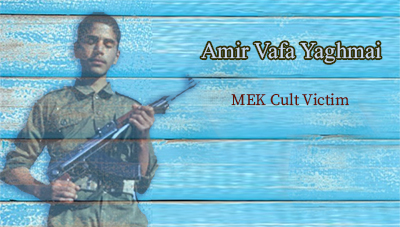
++ Eighty percent of this week’s MEK Farsi output has been dedicated to attacking the families and their petition addressed to Albanian PM Edi Rama asking for help to contact their loved ones in the MEK camp. The other twenty percent has been the usual; repeating what the Saudis and Americans say with gross exaggeration. Many Farsi commentators have been surprised that this has been such an important issue for the MEK. Some have questioned why MEK has even wheeled out some of their veteran members like Mohammad Mohaddessin to come to their TV to talk and to answer supporters’ questions. Ironically, Mohaddesssin couldn’t explain why for decades the MEK has not allowed families meet with their relatives. Indeed, he clearly revealed in this programme that he is personally affected by this issue and is ‘gone’ – what the MEK call ‘borideh’. Ebrahim Khodabandeh, CEO of Nejat, wrote a note on this issue. In it he explains “we have news from inside the camp that the hostages are really happy that there is support for them from outside. The MEK’s counter-attack to suppress any hopes of the members is to declare that ‘nothing will happen, there will not be any meetings with families’. However, we also have news from inside the camp saying that even if this doesn’t happen, these families putting pressure on the Albanian government for our human rights results in the pressure on us inside lifting as MEK don’t want anyone to rebel or leave. A few members were brought to the TV to swear at their own families. One was the mother of Amir Vafa Yaghmai, who was clearly reading from a prepared statement as she swore against her own son. Amir had recently made a video pleading with MEK to allow him to visit his mother in the camp. Some of the families welcomed these theatrics because at least ‘we now know that these people are still alive. The fact that MEK is forced to bring them out for us to see is welcome’.”

In English:
++ Nejat Society has translated some of the messages and statements made by families with loved ones trapped inside the MEK cult. Their pleas all contain the same question ‘why’. Why are you not able to contact us? Why does MEK ban contact with family members? One mother says, “It is hard to believe that you are under such a control that you are not able to contact your parents. What a life do you have? Are you living under slavery? As far as we know, you have no free will to choose for your life. I wonder if your voice will be heard. I don’t think so. You are stuck in a foreign country with no plan for your future, but your father and me will not be disappointed. We are still waiting for you with our arms open.”

++ Anne Khodabandeh in The Iranian writes that the coronavirus crisis presents a unique opportunity for Albanian PM Edi Rama to take control of MEK activities in his country. Pointing out that the MEK operate in extrajudicial terms from an extraterritorial garrison, there is no accountability or access for Albanian officials, whether health officials or security officials. Khodabandeh points out that denying families visas to travel to Albania to find their loved ones “is just one element in a panoply of tactics designed to prevent defections. The MEK members have been denied the identity papers, travel documents and work permits which would enable them to live independently. This means that those who have managed to leave the MEK cannot work, cannot get a driving license and cannot even open a bank account to allow their families to transfer funds to cover their basic sustenance. These conditions of forced dependence are all part of a deliberate scheme to close every possible door to help from outside the MEK.” Stuck between the conflicting demands of the Trump administration and the European Union, Rama should address the MEK issue. The article concludes: “In a strange way then, the pandemic offers an opportunity for PM Rama to address this issue once and for all. To deal with the MEK not as a political or terrorist problem but instead as a social problem. The petition of the families points to an obvious solution to this problem: allow the families of MEK members to make contact with them and help them individually. But this relies on the acknowledgement of government that MEK poses a threat to Albanian society, along with the willingness to deal decisively with them. This is possible. But will PM Rama have the courage and wisdom to take this opportunity?”

++ In an interview with Balkans Post, investigative journalist Gjergji Thanasi, who lives in Durres county near the MEK camp, reveals some of the MEK’s activities, pointing out the differences between the ranks: Before the outbreak some of the rank and file inmates were allowed to go to Tirana… to do some shopping, to pay respects to the graves of dead MEK members, to see a doctor etc. They traveled in groups consisting of minimum 3 persons. The commanders were allowed to visit Tirana and other towns more freely. The rank and file inmates used to go to Tirana using public transport, while the commanders used private cars… The commanders used a couple of motorbikes to travel to the center of the small town of Manez or to reach the nearby highway linking Tirana to Durres… Up to the end of 2017 the rank and file inmates every couple of months were allowed to have a half day pleasure trip by bus… to different Albanian towns like Durres, Berat… to Kruja… etc. The rank and file inmates were allowed to have an ice cream, to drink tea at local cafes, to buy things at local shops during such pleasure trips.
“After the outbreak no rank and file members are allowed to go to Tirana, but for medical emergencies. The commanders continue to visit Tirana including the luxurious Tirana Hotel at Skanderbeg Square.”
Thanasi goes on to say, “the rules, regulations and Albanian law cease to exert power at the front gate of the camp. The degree of the extraterritoriality the camp enjoys vis-a-vis Albanian law comes close to that of the Camp in Guantanamo Bay vis-a-vis Cuban law.” He goes on to criticise the official response to MEK during the coronavirus outbreak: “The Health Ministry or its directorates in Durres has nothing to do with the camp. I defy the Health Ministry to make public even one document issued by the ministry or its local directorates regarding Camp Ashraf 3 during outbreak. This camp with its over 2,000 inmates simply does not exist for our Health Ministry. I defy the ministry to produce a scrap of paper to prove that Albanian doctors has inspected the camp even one time!”
Asked what he makes of the MEK’s allegation that he is an Iranian spy, Thanasi answered: “I love my country and I consider the MEK a security threat to my country… I have chosen to do my bit for my country regarding the MEK threat to Albania and Albanians… I am proud of myself as what I continue to do is not simply journalism. It is patriotism, too!”

May 18, 2020 0 comments
FacebookTwitterPinterestWhatsappTelegramSkypeEmail
MKO hostages families in Iraq
Mujahedin Khalq Organization members' families

MEK hostages’ families from Kermanshah write letter to Edi Rama

We are families of those who are taken as hostages under the hegemonie of Maryam Rajavi in your country, in a camp in Manez.

Mr. Prime Minister,
As you know, they are in your country under the rule of your government. So we ask you to take action to pave the way for us to contact our loved ones in the MEK camps.

Regardless of how the MEK reacted our previous efforts to visit our children, we just ask you to use your authority to provide us with an opportunity to visit our beloved children in your country.

Sincerely,

Signatories:
Akbar Moradi
Mostafa Abbasi
GholamReza Jaafari
AliReza Darvishtabar
Mahmoud Karimi
Jahanbakhsh Najafi
Tajeddin Heidarian
Mehri Maleki
Javaher Heidari
HeidarAli Khaloo Kakaiee
Elham Moradi Azadi
Ardeshir Afzali
Faramarz Parva
Nahid Moradpour

May 17, 2020 0 comments
FacebookTwitterPinterestWhatsappTelegramSkypeEmail
Mehdi Hamidfar mum
Mujahedin Khalq Organization members' families

The mother of a hostage who does not know his son is dead or alive

Your Excellency

Prime Minister Edi Rama,
I am Tajoddoleh Heidarian, the mother of Mehdi Hamidfar who is taken as a hostage under the cult-like hegemony of the Rajavis.

Mehdi Hamidfar mother

My son was relocated in your country, isolated in a camp with no access to the outside world. I am not aware of my son. I even do not know if he is alive or dead.

I ask you to require the MEK authorities to remove the restrictions and allow my son to contact me, otherwise, please take action to make regulations so that I will be able to contact or visit my son.

Sincerely,
Tajoddoleh Heidarian, Mehdi Hamidfar’s mother

May 16, 2020 0 comments
FacebookTwitterPinterestWhatsappTelegramSkypeEmail
Newer Posts
Older Posts

Recent Posts

  • Rebranding, too Difficult for the MEK

    December 27, 2025
  • The black box of the torture camps of the MEK

    December 24, 2025
  • Pregnancy was taboo in the MEK

    December 22, 2025
  • MEPs who lack awareness about the MEK’s nature

    December 20, 2025
  • Why did Massoud Rajavi enforce divorces in the MEK?

    December 15, 2025
  • Facebook
  • Twitter
  • Instagram
  • Youtube

© 2003 - 2025 NEJAT Society . All Rights Reserved. NejatNGO.org


Back To Top
Nejat Society
  • Home
  • Articles
  • Media
    • Cartoons
    • NewsPics
    • Photo Gallery
    • Videos
  • Publications
    • Books
    • Nejat NewsLetter
    • Pars Brief
  • About Us
  • Contact us
  • Editions
    • عربي
    • فارسی
    • Shqip