Nejat Society
  • Home
  • Articles
  • Media
    • Cartoons
    • NewsPics
    • Photo Gallery
    • Videos
  • Publications
    • Books
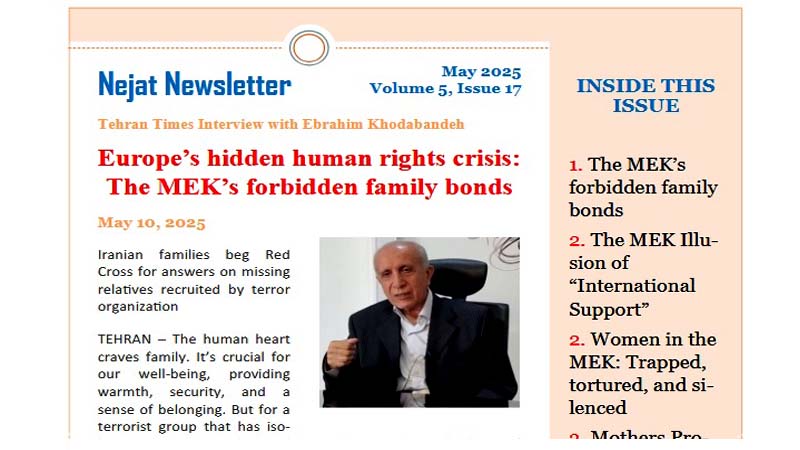
    • Nejat NewsLetter
    • Pars Brief
  • About Us
  • Contact us
  • Editions
    • عربي
    • فارسی
    • Shqip
Nejat Society
Nejat Society
  • Home
  • Articles
  • Media
    • Cartoons
    • NewsPics
    • Photo Gallery
    • Videos
  • Publications
    • Books
    • Nejat NewsLetter
    • Pars Brief
  • About Us
  • Contact us
  • Editions
    • عربي
    • فارسی
    • Shqip
© 2003 - 2024 NEJAT Society. nejatngo.org
Nejat Newsletter No.119
Nejat Publications

Nejat Newsletter No.119

Inside This Issue:

– Documentary “Mother, Love, Separation” Qualifies for Los Angeles Film Festival LAF
The documentary “Mother, Love, Separation” directed by Aldo Sulollari, media director of Nejat Society Albania, was accepted into the Los Angeles Film Festival. This festival is one of the most prestigious and well-known film festivals in the United States.

– MEK; threat to fundamental human rights
The Mujahedin-e-Khalq (MEK) organization has often been involved in debates and criticisms regarding its actions, especially concerning human rights violations. This article aims to evaluate some of the most serious allegations against the group and explain why it is considered by many to be a threat to fundamental human rights.

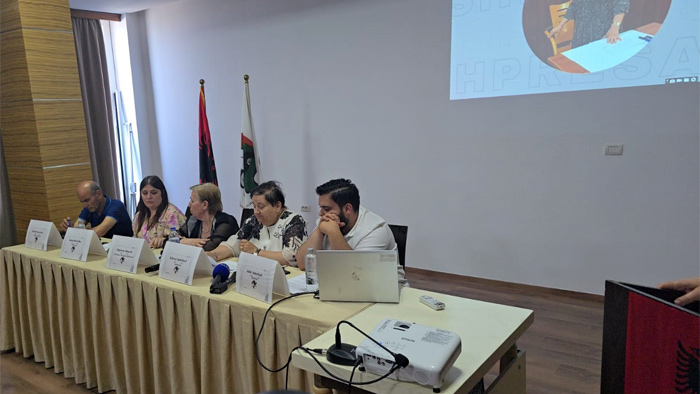
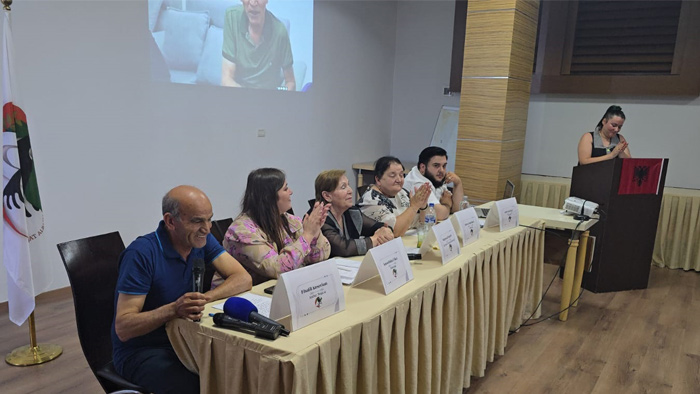
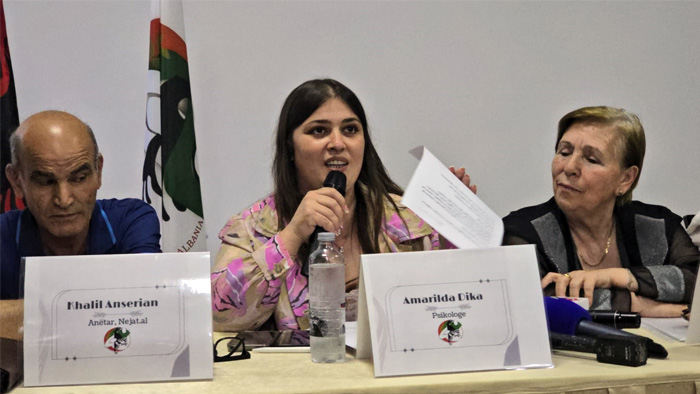
– “Mother, Love, Separation” was screened in Elbasan, Albania
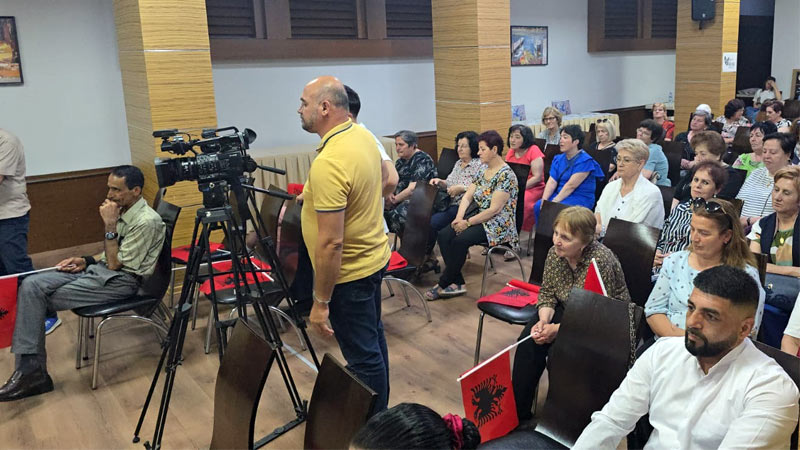
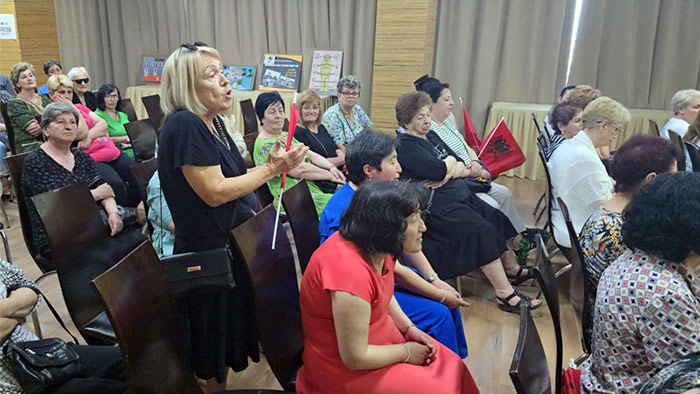
The screening of the documentary “Mother, Love, Separation” was held in the conference hall of Hotel Skampa in Elbasan, Albania on Sunday, November 17, 2024.

– A call for awareness
The opening of the public screening of the documentary Mother, Love, Separation held yesterday, November 3rd, in the city of Shkodër. Aldo sullolari director of the 40-minute documentary made
a speech after the screening: Today we are gathered here to share a story, a story that feels the deep pain of mothers who face a pain that many of us cannot imagine.

– The Mujahedin Khalq Organization and violation of Human Rights
A Clear Picture of Terrorism and Psychological Oppression Against Innocent Individuals . At a time when the world is striving for progress toward a peaceful and sustainable future, some terrorist groups, which claim to fight for freedom and justice, continue to cause immeasurable harm. One such group is the People’s Mujahedin Organization of Iran (MEK), notorious for its use of violence, psychological manipulation, and blatant human rights violations.

To view the pdf file click here

December 3, 2024 0 comments
FacebookTwitterPinterestWhatsappTelegramSkypeEmail
Hamid Atabay
The cult of Rajavi

On the eve of Christmas, MEK hostages deprived of joy of life

On the eve of Christmas, former members of the Mujahedin-e Khalq who are currently residing in Europe speak of their past experience of living in the Cult of Rajavi during this time of the year.

Most ex-members of the group post their photos by the side of a Christmas tree on their accounts in the social media writing a caption of the restrictions they suffered when they were a member of the Cult of Rajavi.

In the destructive cult, celebrating, having party, hanging out with friends is forbidden. Residing in Albania, as European country, does not mean that MEK members can ever enjoy the New Year’s atmosphere.

Living in a remote camp, named Ashraf 3, which is guarded by security agents and monitored by CCTV cameras, has turned them into hostages who are punished on a daily basis because they have once been joined the MEK.

MEK hostages are deprived from any type of joy and happiness while New Year celebrations and Christmas are two of the most significant events of the year for Europeans. The festive atmosphere with its shining lights, colorful and musical celebration spreading across Western countries is a taboo for members of the Cult of Rajavi because it reminds them of life!

December 2, 2024 0 comments
FacebookTwitterPinterestWhatsappTelegramSkypeEmail
MEK child soldiers -Alavi's border camp
The cult of Rajavi

The MEK’s Use of Child Soldiers: A Human Rights Violation That Demands Accountability

The Mujahedin-e Khalq (MEK), often touted by its advocates as a legitimate opposition to Iran’s authoritarian regime, has faced mounting evidence of egregious human rights abuses, including the recruitment of child soldiers. While the MEK portrays itself as a democratic alternative to Tehran’s theocracy, survivor testimonies and investigative reports reveal practices that undermine this narrative. These allegations highlight the urgent need for international accountability and a reassessment of the support granted to this organization.

Testimonies from former MEK members expose a systematic effort to recruit and exploit children, particularly during the organization’s years at Camp Ashraf in Iraq. Survivors such as Amin Golmaryami and Amir Vafa Yaghmai recount being forcibly separated from their families as minors and subjected to ideological indoctrination designed to suppress individuality and enforce obedience. This psychological manipulation served as the foundation for coercing children into roles ranging from logistical support to direct participation in armed conflict.

The trauma endured by these individuals has left long-lasting scars, manifesting as post-traumatic stress disorder (PTSD), alienation, and severe difficulties in reintegrating into civilian life. Such exploitation of children not only contravenes basic human rights but also highlights the MEK’s disregard for the fundamental welfare of its members. These narratives dismantle the MEK’s carefully curated image as a pro-democracy movement, exposing it instead as a group willing to sacrifice vulnerable lives for its militant agenda.

The MEK has aggressively lobbied for recognition as a democratic force, securing backing from influential politicians in Europe and the United States. However, the organization’s history of authoritarian practices starkly contradicts its claims. Allegations of child soldier recruitment are emblematic of a broader pattern of coercive control, including the suppression of dissent within its ranks and the enforcement of absolute loyalty to its leadership.

The MEK’s leadership has denied these accusations, often dismissing whistleblowers as propagandists aligned with Tehran. Yet, the consistency of survivor accounts and corroborative investigations by credible outlets such as “Le Monde” paint a damning picture. For international supporters, these revelations necessitate a moral reckoning: continued support for the MEK risks enabling practices that violate international law and basic ethical principles.

The MEK’s recruitment of children places it in the company of notorious organizations such as the Lord’s Resistance Army (LRA) in Uganda and armed factions in conflict zones like Syria. These groups employ similar tactics—psychological manipulation, forced separation from families, and the use of fear and propaganda to secure loyalty.

However, the MEK’s centralized structure and political ambitions distinguish it. Unlike fragmented groups operating in lawless territories, the MEK’s leadership operates within a hierarchical system that oversees both militant activities and international lobbying efforts. This organization-wide complicity makes the MEK’s actions even more troubling, as they are not isolated incidents but part of a calculated strategy that implicates the group’s upper echelons.

Countries hosting or supporting the MEK bear significant responsibility for addressing these allegations. Albania, which has provided refuge to many MEK members, faces scrutiny for its role in sheltering an organization accused of grave human rights abuses. Under international law, including the Optional Protocol to the Convention on the Rights of the Child on the Involvement of Children in Armed Conflict (OPAC), states are obligated to prevent the recruitment of children and ensure accountability for perpetrators.

For nations like the United States and European countries that advocate for the MEK as a counterweight to Iran, the ethical stakes are high. Ignoring the group’s documented abuses undermines their credibility as defenders of human rights and could tarnish their foreign policy agendas. Supporting the MEK without demanding accountability risks complicity in its violations.

The voices of survivors must drive the global response to these allegations. Their testimonies provide invaluable insights into the MEK’s exploitative practices and call for an end to impunity. Truth commissions, reparations, and legal action against those responsible are necessary steps to ensure justice for victims and to deter similar abuses in the future.

Moreover, the international community must reassess its engagement with the MEK. Support for opposition groups cannot come at the expense of fundamental human rights. By holding the MEK accountable, the global community can send a clear message that the exploitation of children will not be tolerated, regardless of a group’s political alignment.

The MEK’s alleged use of child soldiers is a profound betrayal of the principles it claims to uphold. Survivor narratives expose the devastating human cost of the group’s actions, challenging its legitimacy as a pro-democracy force. For the international community, these revelations are a test of its commitment to universal human rights. Accountability for the MEK is not just a moral imperative—it is a necessary step to ensure that justice prevails over political expediency.

Pouia Tajali – Geopolitika.ru

November 30, 2024 0 comments
FacebookTwitterPinterestWhatsappTelegramSkypeEmail
MEK women
The cult of Rajavi

A look at the situation of the MEK women

On the occasion of the International Day for the Elimination of Violence against Women
November 25th is the International Day for the Elimination of Violence against Women. This day should remind us of the violence that has been inflicted on female members of the MEK for more than four decades. Violence that has been hidden under the cover of lavish titles of libertarian, freedom and democracy. By founding his destructive cult of personality through a process that he called the “ideological revolution,” Massoud Rajavi innovatively wrapped femicide in the MEK in an aura of holiness and spirituality.

According to the UN report, femicide – the most extreme form of violence against women and girls – remains prevalent worldwide, according to global estimates. The cycle of gender-based violence has progressed to the point where one woman is killed every ten minutes. The UN report continues by stating that in 2023, 85,000 women and girls were intentionally killed worldwide. 60 percent of these murders (51,100) were committed by a sexual partner or a family member. Data shows that 140 women and girls lose their lives every day at the hands of their partners or close relatives.

It is necessary to admit that the women of the MEK should also be considered in this category. Indeed, the person who subjected these women to violence is the “Supreme leader” of the organization, Massoud Rajavi, whom all women in the group should consider the closest person to them. These women are within the personal space of the leadership. They are the wives of the leader!

One might think that the word femicide is an exaggeration to describe Massoud Rajavi’s approach towards women, but if having a deep understanding of the conditions of women in his cult of personality, one will realize that in addition to the number of women who were killed and disappeared in Rajavi’s cult or committed suicide and self-immolation, many female members of the cult were killed psychologically and mentally.

The crucial situation of women in the MEK must be meticulously supervised because all violence that has occurred and continues to occur against women in various dimensions within inside the group has a flamboyant cover: the so-called pro-democracy, pro-freedom, and feministic attitude of Maryam Rajavi. Therefore, both the victims of the Cult of Rajavi’s violence and external observers have difficulty realizing the depth of the disaster.

Below is a list of the crimes committed by the Rajavi sect against women and the cover that the leaders of this sect have provided for them:
– Forced divorce and forced celibacy under the cover of “ideological revolution” or “Maryam’s revolution”. After Maryam Qajar Azdanloo’s divorced from her first husband, Mehdi Abrishamchi, she married Massoud Rajavi and became the leader’s confidant, and from then on, other women in the cult were also pressured to divorce their husbands. All women were ultimately supposed to only think of Massoud Rajavi as their husband.

–Separating children from their mothers under the guise of protecting their life. Separating children from their mothers was the next step after forced divorces, which was taken by Massoud Rajavi’s opportunism after the coalition forces invaded Iraq in the first Gulf War. Thousands of children were separated from their mothers forever and smuggled to third countries because of a war that lasted only two months. Many mothers lost track of their children forever.

– Sterilizing female members under the guise of “the ideal Summit.” The removal of women’s wombs was initially carried out under medical pretexts in Camp Ashraf Hospital, but over time, female members of the group’s Elite Council were encouraged to break all ties to anything other than “struggle” in order to reach the “ideal summit.”

-Sex work under the title of “Liberation Dance.” The Liberation Dance is the name of the sessions in which women from the upper echelons of the leadership, encouraged by Maryam Rajavi, strip naked in front of Massoud Rajavi, dance, and present themselves to him, thus “liberating” themselves from all other attachments!
-Sexual assault under the guise of “unification with the leader.” Women who were collectively married to Massoud Rajavi in liberation dance sessions under conditions created by various mind control tecatics (brainwashing) must now have sex with him. Maryam Rajavi calls this sexual rape “unification with the leader” and sends the woman chosen for each night to Massoud’s bedroom.

–Cult-like isolation under the title of “denial of individuality and gender.” Denial of individuality and gender is an approach that the women of the MEK are proud of and with which they define and admire their abnormal life behind the fences of the MEK base.

– Self-immolation as a “paying the price.” Self-immolation of members of the MEK following the arrest of Maryam Rajavi by the French police in 2003 is still considered a highly valued behavior within the MEK that other MEK members should emulate. Being willing to sacrifice your life for the struggle (to protest the arrest of your leader) is a “price” that all MEK members must be prepared to pay. Two women, Neda Hassani and Sedigheh Mojaveri, were killed due to of those ordered self-immolations.

Women of the MEK have systematically been victims of violence at the hands of Sister Maryam and Brother Massoud, and this attitude still continues in the MEK. On the International Day for the Elimination of Violence against Women, officials and activists in this field should be aware that violence is taking place behind the wall of the MEK’s camp in Albania. The violence that is not at all visible in Maryam Rajavi’s polished, colorful, and smiling face. A deeper look and investigation is needed to uncover the crimes of the Rajavis.

إBy Mazda Parsi

November 27, 2024 0 comments
FacebookTwitterPinterestWhatsappTelegramSkypeEmail
Edona Honda
Human Rights Abuse in the MEK

Violation of human rights in the MEK and Massoud Rajavi’s lust for power

The Mojahedin-e Khalq Organization (MEK, MKO), as one of the most controversial political and paramilitary groups in Iran’s contemporary history, has been widely criticized for years for its inhumane practices and methods. The heads of this organization, especially Masoud Rajavi, have caused not only the members of this group, but also their families to suffer with their actions.

A bitter account of human rights violations

In a conversation with my husband, who himself was one of the victims of this organization, I realized the depth of human rights violations in this group. He remembers his time in the MEK as a bitter and painful experience, but even recounting its memories is sad and disturbing for him. For fourteen years, my husband and many other members were like prisoners who were kept in an isolated environment, under strict control and deprived of any communication with the outside world.

Families have been the silent victims of this tragedy. His mother, sister, brother and brother-in-law spent years missing news about him, shed tears and spent days and nights in sorrow. They even thought that he was killed because they did not receive any sign of his life or death. This denial of communication with the family is one of the most obvious examples of human rights violations in this organization.

Request from governments and the international community

As a member of the Nejat Society in Albania, I request my government to at least recognize the human rights of the members of this organization. The government must provide conditions so that these people, who are practically in a prison built and paid for by Masoud Rajavi in Albania, can benefit from their most basic human rights; Rights such as communication with family, freedom of expression and decision about one’s future.

I also request the international communities and human rights organizations to carry out the necessary measures to guarantee their basic rights by researching and carefully examining the conditions of the members of this group. Visiting the camps of this organization and documenting the living conditions of the members can be an important step towards putting pressure on the leaders of this group to respect human rights.

Lust for power instead of struggling for freedom

The leader of MEK, Masoud Rajavi, is only seeking his own domination over members instead of struggling for the freedom and rights of the Iranian people. Cooperating with the enemies of Iran and using foreign resources for the survival of this organization is a clear betrayal of the people and the country. Rajavi has shown by his behavior that he is willing to sacrifice the human rights of the members and even their families in order to maintain power.

The MEK is a clear example of violating human rights and abusing people under its control. The cultic leader of this organization, instead of trying to realize justice and freedom, has acted as agents of repression and violation of human rights. It is now the duty of governments and international communities to put an end to this situation and work to restore human dignity to the victims of this group.

Masoud Rajavi and other heads of the organization must be held accountable for their actions and the members of this organization have the right to return to an honorable life in a free environment.

Edona Honda, wife of Mehdi Soleimani, members of Nejat Society Albani

November 27, 2024 0 comments
FacebookTwitterPinterestWhatsappTelegramSkypeEmail
court hearing on MKO leaders crimes
Former members of the MEK

200 former members of MKO agree to testify in court

The judge in the Mujahedin-e Khalq Organization (MKO) case has announced that about 200 former MKO members have agreed to testify in court.

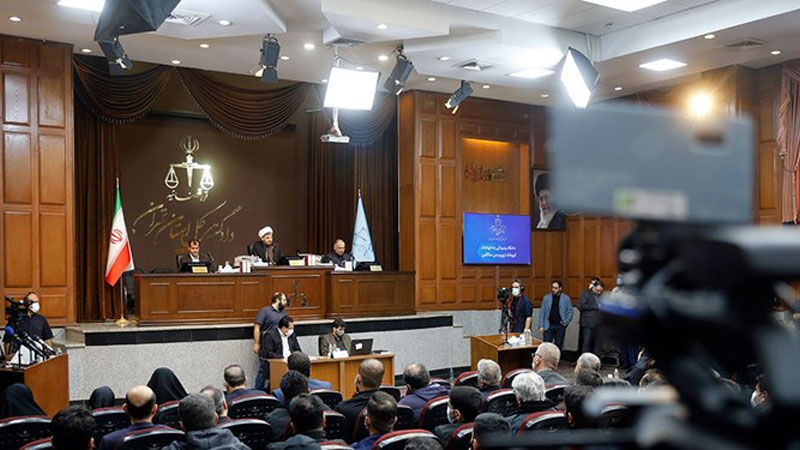
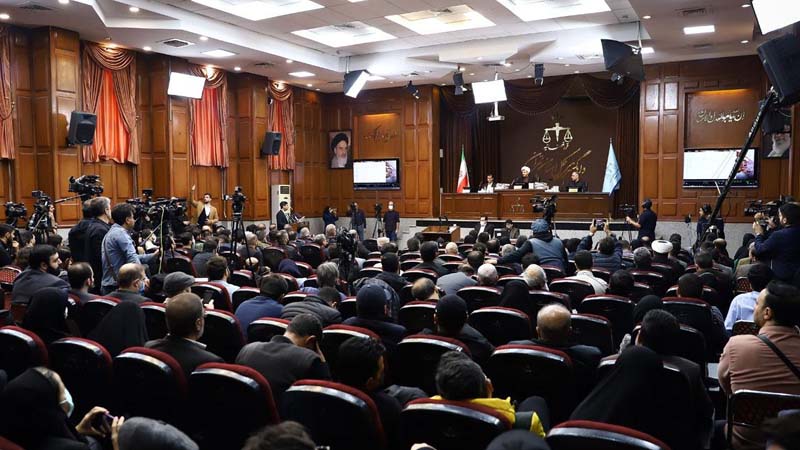
The 23rd court session of the trial of 104 terrorist MKO members was held in Tehran on Tuesday.

Presided over by Judge Dehghani, the trial took place at the 11th Branch of the Criminal Court of Tehran.

Iran considers itself the biggest victim of terrorist acts and strives to adhere to the law, justice and fairness while complying with all legal and international standards. The injured parties and the families of the martyrs filed a complaint in the Tehran Prosecutor’s Office against the MKO and its 104 defendants, he added.

He noted that charges in this case are examples of human rights violations and terrorist acts, and that the world should be informed of that.

Regardless of the type of accusations, the court was conducted under the presumption of innocence, with respect for the defense rights of the accused and the appointment of defense lawyers. The court announced that the accused can appoint their lawyer.

The MKO has killed 13,000 Iranians and stood by the former Iraqi dictator Saddam Hussein during his fight against Iran in 1980-88.

November 26, 2024 0 comments
FacebookTwitterPinterestWhatsappTelegramSkypeEmail
Documentary "Mother, Love, Separation" Qualifies for Los Angeles Film Festival LAFA
Former members of the MEK

Documentary “Mother, Love, Separation” Qualifies for Los Angeles Film Festival LAFA

The documentary “Mother, Love, Separation” directed by Aldo Sulollari, media director of Nejat Society Albania, was accepted into the Los Angeles Film Festival. This festival is one of the most prestigious and well-known film festivals in the United States.

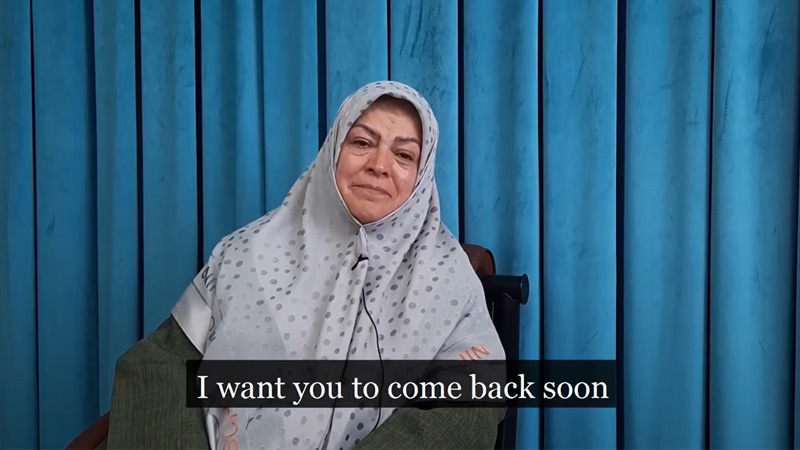
This documentary looks at the lives of suffering mothers of members trapped in the camp of the Mujahedin-e Khalq in Albania who have been far from their loved ones for years due to the refusal of the group’s leaders. Languishing mothers who have longed for contact and a visit with their loved children for years.

In a letter to Ebrahim Khodabandeh, CEO of Nejat Society, Aldo Sulollari expressed his happiness over the acceptance of the documentary Mother, Love, Separation at the LAFA Festival:
“This is a great moment for us, as we are now one of the nominees for an award at this international festival. The selection of our film is a great achievement, as it competes among hundreds of films from all over the world. This project is a special opportunity to convey a strong and important message against the MEK, a cause to which we have been working with deep passion and commitment.”

Aldo Sololari wrote to the Los Angeles Film Festival organizers:
“I am honored and delighted that my film “Mother, Love, Separation” will be participating in your prestigious festival in the United States. This film is an attempt to convey strong and emotional messages about the values of love, family and sacrifice.

Through this work of art, we want to help build a stronger connection between cultures and people from all over the world. Art is the bridge that connects us and I authorize this festival to provide an opportunity for a fair and honest competition, where our messages can be transmitted further and reach a global audience.

This is an important step towards uniting people through art and promoting the universal values that connect us. I hope that this festival will be an opportunity to share our message, expressed with passion and commitment, and to all those who believe in the power of art to change the world.

Thank you for this opportunity and I look forward to this journey together at this amazing festival.”
Who is Aldo Sulollari?

Aldo Sulollari is a well-known journalist and media professional in Albania with over 10 years of experience.
In addition to his career in journalism, Aldo is a well-known actor. He has played in several prominent films that have been screened at international festivals, including those in Spain and Asia. As a leading actor, he has made a great impact with his roles and has been regularly praised for his skills.

Aldo also has four years of successful experience as a host in the United States, where he has successfully hosted various television shows.

In addition to his activities in the media and arts, Aldo has also held high management positions, serving as an editor in several Albanian media outlets and as a director in charitable associations. His involvement in charity is another dimension of his career that has brought help and support to those in need.

He has been a health activist and has worked in private health clinics, contributing greatly to this field with his knowledge and commitment to health.

Another important aspect of Aldo’s career is his role as a brand face for large companies in Albania. He has participated in advertising campaigns and helped brands reach a wider audience, giving them a credible and positive image.

Aldo Sulollari remains a well-known and respected figure in many fields, and his activities in media, arts, health, and charity have had a profound impact on Albanian society and beyond.

November 25, 2024 0 comments
FacebookTwitterPinterestWhatsappTelegramSkypeEmail
stop terrorism
Human Rights Abuse in the MEK

MEK; threat to fundamental human rights

The Mujahedin-e-Khalq (MEK) organization has often been involved in debates and criticisms regarding its actions, especially concerning human rights violations. This article aims to evaluate some of the most serious allegations against the group and explain why it is considered by many to be a threat to fundamental human rights.

Human Rights Violations by the Mujahedin-e-Khalq

In numerous instances, MEK has been accused of violating basic human rights, including the use of violence, manipulation, and the oppression of dissenters within its ranks. Above all, the organization has been criticized for its authoritarian methods of managing its members and creating an atmosphere of fear and control within its camps.

1. Mind Control and Psychological Manipulation
One of the most serious allegations against MEK is the use of mind control techniques and psychological manipulation against its members. Many former members have reported long periods of forced training, harsh discipline, and a hierarchical structure that controls every aspect of their lives. Members are often forced to sever ties with their families and embrace an ideology that detaches them from their past and forces them to live under difficult conditions.

2. Suppression of Dissent and Lack of Individual Freedom

In such authoritarian organizations, dissenters and those who dare to speak out against the leadership are often met with harsh repression. There have been numerous reports of individuals who opposed the leadership being excluded, imprisoned, or even physically abused. This culture of repression and the refusal to accept individual freedoms contradicts the fundamental principles of human rights, which emphasize freedom of expression and thought.

3. Violence and Use of Force
At various points in its history, MEK has been involved in violent actions, including attacks and assassinations against individuals and groups that opposed the organization. These violent actions have been reported as a means to strengthen the group’s power and intimidate those who might be seen as threats to its order.

4. Social Exclusion and Personal Life Consequences
Another significant aspect to highlight is that many individuals who have been part of MEK are often forced to sever or forget their ties with family and friends. This action results in major emotional and social consequences for those who wish to leave the organization. The resulting separation often causes deep trauma and painful experiences, severely damaging the personal lives of its members.
Conclusion

In conclusion, the allegations against the Mujahedin-e-Khalq organization for human rights violations are numerous and well-documented. Mind control, psychological manipulation, suppression of dissent, and the use of violence are some of the methods that help the organization maintain control over its members but also place it under strong criticism for violating human rights. While MEK may have had political goals and motivations, the methods it uses to achieve these goals are condemnable in the context of respecting individuals’ fundamental rights.

Aldo Sullolari, Media Manager of Nejat Society Albania

November 25, 2024 0 comments
FacebookTwitterPinterestWhatsappTelegramSkypeEmail
Isa Azadeh
Former members of the MEK

Former MEK commander to testify in the MEK’s trial

Issa Azadeh, a former commander of the Mujahedin Organization (MEK), who currently resides in France, attended the 23rd session of the court investigating the charges against the MEK leaders and expressed his observations of the crimes committed by the leaders of the group.

Isa Azadeh was a high-ranking member of the MEK for over 30 years. He left the group in 2003 after the US army disarmed the group in Iraq.

Taking the stand in the court of hearing on November 19th, he introduced himself as saying:
“I am a former official and commander and executive director of the MEK. What I will testify in this court today is about the painful incident of August 28, 1988 and the killing of President Mohammad Ali Rajai and Prime Minister Dr. Bahonar.”

He testified about the agent of the MEK who detonated the bomb in the Prime Minister’s office. He explained about him: “In terms of character, Baqer was a person who appeared to be completely religious, and the form and method of holding his religious rituals were completely different from ours.”

Baqir used to work in the same unit that Azadeh was working. After a while Baqer disappeared. Isa Azadeh had no news of him. The meeting to coerce members to divorce their spouses have already started. In the lower ranks many members had not divorced their spouses yet. Baqer was one of them.

Isa Azadeh said about Baqer: “Out of curiosity, we always wondered where Baqir was? Until someone told me that Baqir had said in the meetings that he would not divorce his wife because he loved his wife. Rajavi had personally talked to him, but he was not convinced to obey.”
“The ideological revolution” or forced divorce meeting were held with the presence of Massoud and Maryam Rajavi. The main topic of such meetings was divorce. “Sometimes there were husbands and wives present,” Azadeh said. “A very offensive language was used between wives and husbands.”

This time the meeting was particularly held to punish Baqer for his disobedience. The eyewitness of the MEK’s trial told the judge what he had seen in the hall:
“Rajavi entered with Maryam Qajar [Rajavi], they sat in the front scene and announced that the hero of the Mujahedin’s Liberation Army, brother of the Mujahedin, Massoud Kashmiri to come over. This was a military order.

As soon as he went to the microphone, the former Baqer and now Massoud Kashmiri, whose real name was revealed there, said: “Forgive me, brother, forgive me! I did not understand, I made a mistake, and other terms that were used in the organization.”

Azadeh recalls that Massoud Rajavi said, “Sisters and brothers! I introduce to you the brother and the hero of the People’s Mujahideen, Massoud Kashmiri, who blew up the Prime Minister’s office.” Maryam Rajavi said, “Did you take the bag?” She said, “Yes, sister.” He said, “Did you put it in the same place where you were told to put?” Baqir said, “Yes, sister.”
Azadeh continued: “That night became known in the organization as Baqer’s Night, because later it was a lever of power in Rajavi’s hands that he could mention when necessary. Now why did Baqir ask Rajavi for forgiveness so much? Because this person had asked to leave the group a few months earlier. Rajavi has never publicly claimed responsibility for the operations of June 27th and August 28th, 1988. Of course, he has made some references from time to time, but he has not publicly stated this explicitly.”

According to Isa Azadeh, “Because in the classification of terrorist acts, the two operations of June 27th and August 28th 1981 are classified as deadly operations that, if exposed and proven, could pose an existential threat to Rajavi’s terrorist organization. The level of such operations in terms of danger and existential threat to the terrorist organization is very high.”
Based on Azadeh’s testimonies, under the order of Massoud Rajavi, a fake passport was prepared for Massoud Kashmiri. He was allegedly sent to England. But from the summer of 1989 to this day, the name of Masoud Kashmiri (Baqer) has not been mentioned in the MEK.

November 23, 2024 0 comments
FacebookTwitterPinterestWhatsappTelegramSkypeEmail
23rd session of the trial court of the MEK held in Tehran
Iran

23rd session of the trial court of the MEK held in Tehran

The 23rd session of the trial court of 104 Mujahedin-e Khalq (MEK) members and the group as a legal entity was held in Tehran. The recent session was held at the 11th branch of the criminal court of Tehran province on Tuesday, November 19th, 2024. The court was presided by Judge Dehqani.

At the beginning of the court, Judge Dehqani declared that some of the injured ones and families of the victims filed a complaint in the Tehran Prosecutor’s Office the Mujahedin-e Khalq (MEK) and its 104 defendants due to the terrorist acts that occurred.

“The charges in this case are examples of human rights violations and acts of terrorism,” he said. “Despite the nature of the charges, this court was formed with the presumption of innocence and observance of the rights of defense for the defendants and the appointment of occupying lawyers, and announced that the defendants can introduce lawyers to the court.”

lawyer of plaintiffs, Kazemi, said: “The MEK terrorist group has so far assassinated more than 12,000 Iranian citizens blindly or in a targeted and organized manner, while the number of those injured in terrorist acts is more than twice the number of those killed.”

A former high-ranking member of the MEK took the stand in order to testify against the group. Isa Azadeh who was a member of the MEK for 37 years left the group in 2003 and lives in France now. He traveled to Iran to attend the trial court of the MEK and its 104 defendants.

Isa Azadeh stated in his testimony that he had been working in the same unit with the operator of the bombing of the Iranian Prime Minister’s office, Massoud Kashmiri. At the time, he was called by his nickname, Bagher.

Azadeh testified how Massoud and Maryam Rajavi revealed Kashmiri’s identity in a meeting because they wanted to prevent his defection. “There was a meeting of ideological revolution,” Azadeh said. “The meetings for forced divorce. Massoud Rajavi called on Mujahed brother! Massoud Kashmiri! This was a military order”

According to Isa Azadeh’s testimonies, Kashmiri was shocked by being called with his real name. This was Rajavi’s tactic to stop him because Kashmiri had criticized Rajavi’s ideological revolution and did not want to divorce his wife. In the meeting Maryam Rajavi implied that Kashmiri took the bomb to the Prime Minister Mohammad Javad Bahonar’s office. Azadeh also confirmed that the operation had been launched under the direct order of Massoud Rajavi.

Two other witnesses were present in court who asked not to be named. One of them introduced himself: “I was in the MEK for a total of 23 years, but due to my young age, I was in the organization for 18 of those years. I was taken there by my family at the age of 11 and joined the group at the age of 16 again. I left the group in 2006 and have been in Iran for 18 years.”

He testified about Kashmiri as the agent of the Prime Minister’s office explosion as saying, “In 2006, when I left the organization, the Americans had set up a camp. I went there with other friends who were there and were watching TV. Speaking of the Prime Minister’s office bombing, they said it was Kolahi’s work and Kolahi was Baqer. And then I realized that Baqer was Masoud Kashmiri. Friends said it was him. Later, when I saw his photo on social media, I realized that it was 100 percent him. We heard about the explosion of the prime minister’s office from Masoud Rajavi himself many times in public meetings where he attended and he had repeatedly mentioned the explosion of the presidency and the prime minister’s office. He said it was our work. Masoud Kashmiri is Baqer and he was involved in the explosion.”

Ebrahim Khodabandeh, the head of Nejat Society was the lsa witness to testify in the 23rd session of the court. He told the court about Massoud Rajavi: “I heard a sentence from a member of the MEK when we were on a mission, that was shocking, and he quoted Rajavi as saying that when step in Iran, everyone you encounter is an enemy.”

According to Khodabandeh’s testimony, other people he later met in Iran where those who were part of the operational teams, they were arrested, went to prison, tried, and later released, and some went abroad. They also told Khodabandeh that everyone on this side of the border is an enemy. Anyone you encounter should be killed on the spot so that they don’t have the opportunity to go anywhere and reveal the operation.

At the end of the court hearing, the judge announced that all members of the MEK who are willing to participate in the trial, observing the legal standards and the principle of innocence can attend the court. And anyone who has information about the charges in this case should appear in court. The next court session will be held on December 4th.

November 20, 2024 0 comments
FacebookTwitterPinterestWhatsappTelegramSkypeEmail
Newer Posts
Older Posts

Recent Posts

  • A Criterion for Proving the Violent Nature of the MEK

    December 31, 2025
  • Rebranding, too Difficult for the MEK

    December 27, 2025
  • The black box of the torture camps of the MEK

    December 24, 2025
  • Pregnancy was taboo in the MEK

    December 22, 2025
  • MEPs who lack awareness about the MEK’s nature

    December 20, 2025
  • Facebook
  • Twitter
  • Instagram
  • Youtube

© 2003 - 2025 NEJAT Society . All Rights Reserved. NejatNGO.org


Back To Top
Nejat Society
  • Home
  • Articles
  • Media
    • Cartoons
    • NewsPics
    • Photo Gallery
    • Videos
  • Publications
    • Books
    • Nejat NewsLetter
    • Pars Brief
  • About Us
  • Contact us
  • Editions
    • عربي
    • فارسی
    • Shqip