Nejat Society
  • Home
  • Articles
  • Media
    • Cartoons
    • NewsPics
    • Photo Gallery
    • Videos
  • Publications
    • Books
    • Nejat NewsLetter
    • Pars Brief
  • About Us
  • Contact us
  • Editions
    • عربي
    • فارسی
    • Shqip
Nejat Society
Nejat Society
  • Home
  • Articles
  • Media
    • Cartoons
    • NewsPics
    • Photo Gallery
    • Videos
  • Publications
    • Books
    • Nejat NewsLetter
    • Pars Brief
  • About Us
  • Contact us
  • Editions
    • عربي
    • فارسی
    • Shqip
© 2003 - 2024 NEJAT Society. nejatngo.org
Isa Azadeh
Former members of the MEK

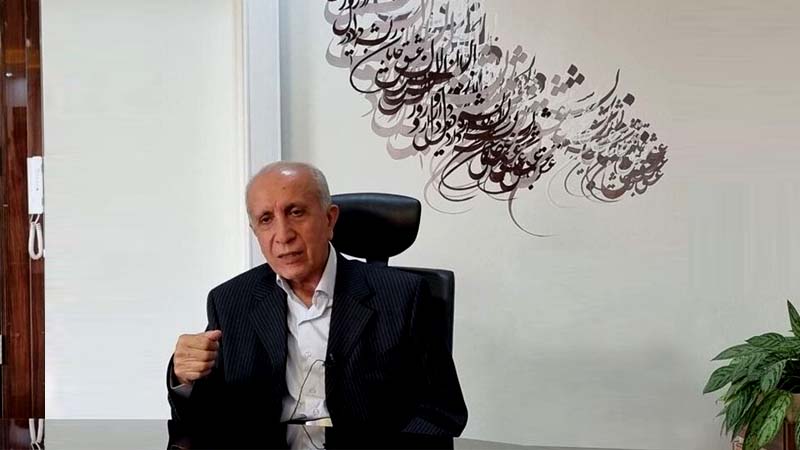
Issa Azadeh, former member of 38 years, speaks to the Tehran Times

TEHRAN – A high-paying job, a nice car, a big home, a fulfilling marriage, or healthy children – these are some of the most common aspirations for adults in society. But for 67-year-old Issa Azadeh, much of his life revolved around far simpler desires. “My biggest wish was to sleep comfortably for a few hours,” he recounted during an interview with the Tehran Times.

Issa kept his eyes on the floor as we started talking. It was hard to read him at all. He seemed like a jumble of things: anxious, numb, angry, regretful… but then you’d see a flicker of hope in there somewhere. Before delving into his experiences with the Mujahideen-e-Khalq (MEK), a terrorist organization known for its dogmatic indoctrination and isolated, tightly controlled environment, he said he wanted people everywhere to understand how dangerous the MEK really is, both for those who join and for the world beyond its walls.

“When I entered the MEK I was highly educated,” he explained. “I was a university graduate, and I had a family, job, and social connections. But after my involvement with the organization all that was lost. There, Masoud Rajavi tried to reduce the members to nothing, devoid of character, dignity, and honor.”

Introduced to the MEK after the 1979 Islamic Revolution while studying engineering at a prominent Tehran university, Issa joined the organization under the influence of a friend and became a high-ranking member over a 38-year period. He spent two decades at Camp Ashraf in Iraq during Saddam Hussein’s invasion of Iran, until its dismantling in 2003 by Prime Minister Nouri al-Maliki. After the camp’s closure, Issa, along with other MEK members, moved to Camp Liberty near Baghdad. He ultimately left the MEK before its relocation to Albania in 2016.

Issa says almost every single day he spent with the MEK was tiring, humiliating, and dehumanizing.
“We would all wake up at 5 a.m. to the sound of a shrill wind instrument. It was incredibly jarring. We had about 20 minutes to get ready and eat breakfast. Then, our exhausting day began. We had to clean the area, guard the camp, and carry out missions outside. Our only entertainment was watching the group’s propaganda on TV for two 30-minute segments.” The TV remote was kept locked in a box; a precaution that seemed unnecessary. After all, only the person responsible for the TV schedule knew how to use it.

Issa said the most difficult part of the day was the joint self-criticism sessions. “One of the biggest taboos was having sexual thoughts. We were forced to dissect our feelings, describe our fantasies in detail, and express repeated regret. Then, the others would join in, and one by one start scolding us too.”

Forced divorces followed by forced marriages

Typical of leaders like Rajavi, the man was obsessed with sex. Initially, he ordered some members of the organization to marry each other. However, after realizing that marriage and family preoccupied the minds of those he considered his devoted followers, he decreed that everyone should divorce. Rajavi later declared that all women in the group had become his wives, a claim substantiated by former female members of the MEK who reported frequent sexual abuse and exploitation orchestrated by Rajavi himself.

“The divorce process the members were forced to endure was one of the most inhumane and unbelievable events imaginable,” Issa stated. He had not taken his wife and kids with him to the camp, but he was still required to divorce his wife in his mind. “Couples within the organization were made to stand facing each other and then ordered to hurl vile profanities at one another.” Reflecting Iranian cultural norms, where men typically avoid cursing in front of women, Issa declined to repeat the exact words for me. “Even those who were not married, either within or outside the organization, were ordered to undergo a ‘mental divorce.'”

Soon after, strict segregation was enforced. Men and women were required to use separate routes within the camp to minimize contact. “There was a gas station inside the Ashraf camp where we refueled the vehicles used for patrols. We were not even allowed to visit the gas station on the same day,” Issa revealed.

The mass “marriage” of MEK women to Rajavi occurred sometime after contact between men and women was cut off. Rajavi’s own wife, Maryam Qajar-Azdanlu – having herself divorced Rajavi’s friend to then become Rajavi’s wife after a scandalous affair – was the key figure in manipulating the other women into accepting their “sacred” duty: sexual submission to their leader.

“I didn’t know this was happening when I was still part of the organization, because I rarely spoke to the women there. Also, there’s often a great deal of shame involved in admitting to being sexually assaulted. When a former female member of the MEK publicly broke the news a few years ago, it was very difficult for me to process, even though I had always known that Rajavi was a perverted and corrupt individual.”

The Taliban and Daesh were less oppressive towards women than the MEK, Issa said. While no one within the organization enjoyed rights or privacy, women were treated as particularly disposable.
“People often ask individuals like me why we didn’t leave the organization sooner,” Issa said as he looked at me with a bitter smile. “To those observing the MEK from the outside, it’s crucial to understand the complete loss of self that occurs within its walls. You are forced to abandon your identity, to erase your past and all those you once cherished. Inside, Masoud Rajavi’s orders become your only reality.”

Children that were killed, trafficked, or indoctrinated

In 1990, Rajavi took another crucial step to subjugate MEK members: He ripped kids away from their parents. These kids lived in separate compounds near their parents’ headquarters in Iraq.
“There were about 700, all different ages. They were just put on buses and shipped off to Jordan,” Issa said. What followed was a tragedy. Some never made it, some were exploited by human traffickers, others became entangled in crime, and some ended up in brothels. Roughly 300 were left, either sent to distant relatives or relegated to MEK-owned housing in Europe.
Years later, some of those kids, who’d grown up hearing Rajavi’s propaganda and idealized stories of their parents’ “heroic” actions, ended up joining the MEK. Their view of the whole thing? Like something out of a bad Hollywood movie. They, however, managed to come to their senses soon. “Many of them eventually left the MEK again. I believe they were wiser than their parents.”

Now in their 40s, some of these former child members have recently begun to share their experiences. They frequently face threats from the organization, and are blamed for being “ungrateful”.

MEK’s ‘missions’ funded by the U.S.

Like many who joined the revolution against the Shah, Rajavi lacked the popular support to gain prominence in the new political system after the monarchy was toppled. However, what set him apart was the United States’ interest in using him to destabilize Iran, which began during his imprisonment under the Shah.

The MEK was initially formed by leftist students in 1965. “Rajavi was cultivated by the CIA as early as his imprisonment in 1971 during the Pahlavi era. He became the group’s leader in 1979,” Issa said. He added that the CIA believed purely communist groups, some of which were formed under the influence of the Soviet Union during the Shah’s reign, lacked appeal for the highly religious Iranian population. Therefore, someone with opposing ideologies to the Islamic Republic but a similar religious appearance was needed. This, according to Issa, is the origin of the MEK’s religious facade.

Rajavi left Iran in 1981 after he failed in two bids for power: a presidential campaign and a parliamentary seat. What followed next was a descent into terrorism. Orchestrating high-profile assassinations—under the order and support of the CIA —Rajavi turned the MEK against its own people. The targets were not just political leaders and military commanders; ordinary Iranians became victims in a brutal killing spree. The MEK’s hands are now stained with the blood of approximately 23,000 and their collaboration with Saddam Hussein in Iraq deepened the wound, as they helped him inflict further casualties on their homeland.

The organization’s operational capabilities, however, are now significantly diminished. The MEK has struggled to recruit younger generations, and its remaining members in Albania are primarily elderly and infirm. “I believe approximately 2,000 members remain with the organization. Some are unable to manage their daily lives due to illness or old age. A small number of younger members are primarily involved in cyber activities,” Issa stated.

As of 2025, the MEK is also exploiting vulnerable young people in Iran, particularly those with troubled pasts or financial hardships, by paying them to perform simple tasks within the country. These tasks include acts of public display, such as hanging posters of Masoud Rajavi or Maryam Qajar-Azdanlu in prominent locations like Tehran highways, which the MEK then promotes on its website.

For payment, these young individuals also set fire to governmental buildings, mosques, educational centers, and public transport, with their arson attacks reaching a high point during the fall 2022 unrest.

“The U.S. and its European allies who prop up these terrorists know that the MEK cannot bring down Iran. Anyone who thinks otherwise is deluding themselves,” Issa stated. “Right now, the MEK is nothing more than a bargaining chip for them, a pressure point they hope will force Iran into concessions.”

Issa left Iraq and the MEK on December 26, 2011, at exactly 4:30 PM. “I left on my birthday. A relative I had in the UK got in touch with the UNHCR and UNAMI in Baghdad and arranged my exit in secret.”

Adapting to life outside the MEK camps was difficult initially. Having been isolated from technology and modern life, Issa faced ridicule. “People used to laugh at me,” he said. “They could not believe that I did not know how to operate a TV, a mobile phone, or anything else that was not widely used in Iran in the early 80s.”

Issa had one daughter and one son when he left to join the MEK. His young daughter’s visit was a catalyst for his eventual departure from the group. “One day my daughter came to Iraq. It was during the war there. I remember it was scorching hot, almost 60 degrees.”

Issa’s daughter reached the area near Camp Ashraf with the assistance of the Nejat Association, an NGO formed by former MEK members to help those still inside escape the organization’s influence. “My daughter stood outside the Ashraf camp, behind the fences. The organization refused to let her see me, and they didn’t even tell me she was there. Later, they informed me they’d prevented the visit to avoid demotivating me. This was a significant turning point, although it took several years before I finally left.”

Tehran Times, Sheida Sabzehvari

March 30, 2025 0 comments
FacebookTwitterPinterestWhatsappTelegramSkypeEmail
Maryam Rajavi
Maryam Rajavi

Why are the MEK’s blatant money laundering documents being ignored?

After Maryam Rajavi’s lavish stay in hotels and spas was exposed by Le Canard Enchainé, the other French media focused on uncovering more details about the Cult of Rajavi.

France’s TF1 Info began with a controversial headline: “Is Maryam Rajavi, leader of the MEK, skilled in thalassotherapy?”
Thalassotherapy (from the Greek word thalassa, meaning “sea”) is the use of seawater as a form of therapy. It also includes the systematic use of sea products and shore climate. It refers to a variety of treatments that use saltwater and seaweed, each designed to cleanse, soothe and revitalize the skin and body. And so far, according to documents obtained by French media, it has cost Maryam Rajavi over 130,000 euros.

TF1 Info then introduced the MEK and Maryam Rajavi’s background, referring to the “terrorist” status of this cult by the Iranian people and the European Union, and gave an overview of the group’s terrorist background and actions in France, then Iraq, and again in France.

The report implies the cooperation of the MEK with the French government. The TF1’s report was published after claims by the leaders of this terrorist group that they had protested against French politicians and media, calling them accomplices of the Iranian government.

While residents of Ashraf 3 are rationed for food and hygiene products and are constantly criticized for the costs they impose on the group, Maryam Rajavi, with a dozen bodyguards, rents a five-star hotel for her private stay. She enjoys fancy medical services under the flamboyant name of thalassotherapy, while just a few months ago the group asked Mehdi Javedan’s family outside the organization to cover the cost of his heart surgery. Mehdi Javedan, a longtime member of her organization, died two months ago.

Days after the publication of the reports of French media, the organization is still busy responding, or in better words, accusing. The responses are full of generalizations, repetition of the usual statements, and slander and libel.

Documents on money laundering

By the way, the MEK cult is currently in a very weak position vis-à-vis the French government. It is very likely that after France, the governments of Canada, the United States, and other countries will purse the MEK’s financial resources and the group’s money laundering network.

The story of the baths and massage therapy with ocean mud and sediments to rejuvenate the skin of the self-proclaimed president of the resistance, Maryam Rajavi, the payment of large tips and numerous bribes to keep her and her companions’ identities secret, prompted the French government to make sure whether the financial resources for these expenses were provided by the MEK.

The French judiciary is reportedly investigating the matter, as between December 2024 and February 2025, two reports under Article 40 of the French Code of Criminal Procedure regarding the possibility of money laundering were submitted to the prosecutors of Ile-de-France and Hauts-de-France.

The reports point to companies that appear to be operating as financial fronts for the MEK. Front companies and institutions play a significant role in the MEK’s money laundering and revenue-generating network.

The organization was classified as a terrorist group by the United States and the European Union between 1997 and 2013. The group holds annual fundraising campaigns from its members and supporters. Last year alone, more than 7 million euros were raised in this way, some of which was spent on skin rejuvenation for Maryam and other high-ranking members of the organization, and the rest was spent on inciting Western governments through paid speeches and signing declarations against the Iranian government.

France’s relationship with the MEK

It seems that the MEK is a tool for France to gain concessions from the Islamic Republic regime. This rule has always been true for traitors who are tools in the hands of rivals or opponents. On March 18, Le Canard Enchainé exposed Maryam Rajavi’s luxurious life and her money laundering through front companies, probably under the guidance of the French intelligence and security agency DGSE.

Many believe that the recent article in Le Canard Enchainé was the prelude to an exchange between the two governments. 48 hours after the article was published, François Macron announced the release of a French citizen in Iran. In this way, France, for its own economic interests, is gaining some of the Islamic Republic’s consent by putting pressure on the MEK.
The DGSE is aware of the money laundering and fake identities of the front organizations and Rajavi’s dirty nature, but it is not taking any practical action. Which group with such a track record in France is allowed to commit these violations, such that they are constantly in the squares of Paris defrauding Parisian citizens for fake charities to cover the cost of Maryam Rajavi’s thalassotherapy? It seems that France is always monitoring the MEK, but it also needs a weakened version of it.

Mazda Parsi

March 30, 2025 0 comments
FacebookTwitterPinterestWhatsappTelegramSkypeEmail
Michael Rubin
The cult of Rajavi

Where are Mujahedin-e Khalq Schoolchildren?

The Mujahedin-e Khalq (MKO) craves legitimacy. It pays retired politicians and government officials five- and sometimes six-figure honoraria in exchange for endorsements at rallies whose crowds it inflates by paying random students to attend in exchange for a free trip to Paris. Many of the American officials attending MKO rallies are ignorant of the group’s ideology, its history of terrorism against Americans, its support of Iran’s 1979 Islamic Revolution, its anti-American indoctrination, its embrace of Saddam Hussein, and the opacity surrounding the true source of its income, if not outright tax evasion.

Iranians deeply resent the group for its continued embrace of terror, as well as its cult-like behavior. That its leader Maryam Rajavi has held her position for 40 years hardly builds confidence in her supposed commitment to democracy. There is an irony, too, that her spokesman Ali Safavi will cast wild aspersions against critics who question the group’s democratic credentials and outlook, but then refuse challenges to identify even a single time when he criticized or differed in policy with Rajavi.

Iranian Americans have contributed disproportionately to American society and the American economy. Iranians are overrepresented in medicine, engineering, and in academe. They serve in the U.S. military and across the U.S. government. While these Iranians are Americans first, grateful for the protection the United States gave them when they fled religious dictatorship, they care about the country from which their families came and have strong opinions about its politics. Some lionize Reza Pahlavi, the son of the late shah. Others come from families associated with the Tudeh, the left-of-center party that rallied around former Prime Minister Mohammad Mosaddegh. Still others are constitutionalists or republicans. Those Iranian Americans who join the U.S. government submit themselves to ordinary and even enhanced security clearances without difficulty.

Here, though, the Mujahedin-e Khalq is an outlier. The FBI, which handles most senior security clearances, does not clear Mujahedin-e Khalq members. The members of the cult refuse to face polygraphs and, when they do, reflect deceptiveness.
MKO behavior is strange in other ways. The MKO may talk a good game in its Paris rallies, but how many MKO members who are U.S. citizens or green card holders actually serve in the U.S. military? If the MKO is as pro-American as they say and has nothing to hide, why such a strange omission? Indeed, of all immigrant and political groups who come to America, the MKO may be alone in eschewing such service.

Other elements of the Mujahedin-e Khalq reality should also raise red flags among those considering accepting its cash. Safavi can vehemently deny that the MKO is a cult, but he distracts from the simple fact that few if any children of MKO members—they seldom marry outside their political movement—attend public schools or broader multicultural schools. Cults thrive by isolating members. The isolation that MKO children endure is extreme.

By this metric, there appears to be little difference between the Mujahedin-e Khalq’s American wing and Branch Davidians, Unification Church, or People’s Temple. Each may have had the right to their beliefs and politics so long as they did not contravene U.S. law, but in each case, the rhetoric of public-facing leaders reflected less the groups’ reality than did the internal isolation their children suffered. American officials should be very, very cautious when signing onto the MKO’s talking points or accepting their claims. Sometimes an honorarium is not worth the embarrassment sure to follow.

Middle East Forum, Michael Rubin

March 29, 2025 0 comments
FacebookTwitterPinterestWhatsappTelegramSkypeEmail
Maryam Rajavi
Maryam Rajavi

The Lavish Lifestyle of Iranian Opposition Figure Maryam Rajavi

An Iranian opposition figure exiled in France, Maryam Rajavi reportedly enjoys a lavish lifestyle, ranging from spas to five-star palaces, according to reports from Le Canard Enchaîné. Prosecutors in the Île-de-France and Hauts-de-France regions have been informed of money laundering.

This information will cause a stir among activists of the People’s Mujahideen Organization of Iran (PMOI/MEK). Le Canard Enchaîné reveals in its Wednesday edition the lavish lifestyle of Iranian opposition figure Maryam Rajavi, exiled in France. According to information from the web-footed bird, which Europe 1 can confirm, she and her inner circle spent €130,000 last year alone on thermal spas, spas, and five-star hotels.
Biarritz, Deauville, Evian, and Vichy… Since at least 2005, Maryam Rajavi has stayed in these upscale seaside resorts several times a year. She is systematically surrounded by around ten people.
The bills are paid in cash for astronomical amounts: €65,000 in December 2023 in a five-star hotel in Vichy, or €38,140 last spring in a palace in Biarritz.

Suspicions of money laundering

These proceeds could come from the PMOI. In any case, according to information from Europe 1, this is what the French justice system is currently investigating, since between December and last month, two reports under Article 40 of the French Code of Criminal Procedure for suspected money laundering were sent to prosecutors in the Île-de-France and Hauts-de-France regions. They concern front companies affiliated with the PMOI.
The movement was classified as a terrorist organization by the United States and the European Union between 1997 and 2013. It organizes an annual fundraising campaign for its activists and supporters. Last year alone, more than €7 million was reportedly raised.

William Molinié – europe1.fr

March 25, 2025 0 comments
FacebookTwitterPinterestWhatsappTelegramSkypeEmail
Le Canard enchaîné on MEK
Maryam Rajavi

French paper exposes Maryam Rajavi’s lavish lifestyle

Maryam Rajavi, the ringleader of the Mujahideen-e-Khalq (MEK) terror organization enjoys a lifestyle of opulent luxury far removed from the humble existence of her followers, according to a recent exposé in the French weekly Le Canard enchaîné.

The satirical newspaper details how Rajavi and an entourage of eleven, including a bodyguard and attendant, spent nearly €29,000 in cash at a prestigious spa in Vichy, France, over the Christmas and New Year holidays. The group booked the entire spa, located in a five-star hotel built by Napoleon III, for their exclusive use, indulging in hydrotherapy, massages, and personal coaching.

Le Canard enchaîné notes Rajavi, known as the “Sun of the Revolution” within the MEK, has made similar lavish trips to luxury resorts over the years, racking up expenses exceeding €130,000 in the past year alone – all paid in cash. The MEK claims it exists off of donations.

This extravagance sharply contrasts with the conditions of most MEK members, who reside in the Ashraf-3 camp in Albania. Sources indicate these members live under strict conditions and are not allowed to leave the camp, leading austere lives in service to the organization.

A former member of 38 years recently revealed to the Tehran Times that members are required to follow strict schedules and are usually sleep-deprived. Older members of the MEK are now grappling with various health issues, following years of difficult living conditions.

Masoud Rajavi dead since 2003

Masoud Rajavi, who assumed leadership of the MEK in 1979, has not been seen publicly since 2003. His wife, Maryam (née Qajar-Azodanlu), effectively took over his role after his disappearance. However, the MEK continues to release decrees and statements purportedly issued by Masoud, perpetuating the illusion that the notorious terrorist is still alive. In its exposé, Le Canard enchaîné confirms that Masoud has in fact been dead since 2003.

Sources tell the Tehran Times that the majority of MEK members believe Masoud is still alive but has gone into hiding.

The MEK terrorist organization has slaughtered over 23,000 Iranians in the past four and a half decades. Western states have been offering shelter and political support to the group.

March 25, 2025 0 comments
FacebookTwitterPinterestWhatsappTelegramSkypeEmail
MEK lobbying
Mujahedin Khalq; A proxy force

Concerns over MEK’s potential Influence in Congress

The Mujahedin-e-Khalq (MEK) has renewed its efforts to position itself as a credible opposition movement to the Islamic Republic. The recent outcome of the group’s lobbying activities has been a resolution submitted by 160 congressmen. However, a comprehensive new report from the Congressional Research Service critically assesses these ongoing efforts, underscoring significant concerns regarding the MEK’s extremist ideological origins, historical involvement in terrorism, documented human rights abuses, and notably weak popular support among Iranians both domestically and within the diaspora.

These serious issues about the MEK’s background indicate that endorsing the group not only contradicts democratic values but also undermines the genuine democratic efforts of the Iranians.

The Key Point

A new report from the Congressional Research Service (CRS) details the MEK’s tricky history and its current lobbying efforts in the US, including:
The organization was founded on extremist ideologies combining Marxism with radical Islamism.
It has a documented history of violence and terrorism, including assassinations of American personnel in the 1970s. Historically, the MEK actively supported Ayatollah Khomeini’s rise to power and endorsed the 1979 U.S. Embassy hostage crisis.

The organization functions under a highly coercive, cult-like structure that enforces strict obedience to leader Massoud Rajavi through physical, psychological, and financial coercion.

The cult-like totalitarian structure enables extensive lobbying campaigns aimed at deceitfully legitimizing the group as a viable alternative to the Iranian government, despite minimal popular support among Iranians domestically and abroad.
U.S. officials who support the MEK claim their goal is to promote democracy and foster the emergence of a new, representative government in Iran. Yet aligning with the MEK directly undermines this objective. The group has cultivated a strongly negative perception among Iranians, who view the MEK as terrorists and traitors who sided with Saddam Hussein during the Iran-Iraq war.

The Cult of Rajavi Lobbying in the West

The MEK operates with a strict, hierarchical, cult-like organizational structure led by Massoud and Maryam Rajavi, imposed through highly coercive measures.

Members are reportedly subjected to forced family separations, including mandatory celibacy. The organization is also particularly cruel to females, conducting hysterectomies on them and repeatedly subjecting them to be raped and sexually abused by the leader, Massoud Rajavi.

Numerous credible reports detail systematic physical and psychological abuses, including allegations of torture and coercive control mechanisms. Dozens of members have been killed due to the mechanisms.
The MEK’s lobbying campaign is aimed at legitimizing the group’s leadership and securing political support, particularly in the U.S. and Europe.

These efforts have allowed the MEK to introduce and garner support for some pieces of legislation. The group pays exorbitant speaking fees to lawmakers to speak at their headquarters in Albania and their rallies in Paris, Berlin and Washington.

For example, speaker fees include over $400,000 paid to former Vice President Mike Pence and $180,000 or more to former National Security Advisor John Bolton.

And most recently, The MEK’s lobbying efforts also led to the introduction of H.Res 166, a deceiving resolution that claims to express “support for the Iranian people’s desires for a democratic, secular, and nonnuclear Republic of Iran,” but actually endorses Maryam Rajavi and her cult-like terrorist group.

Maryam Rajavi has deliberately misled lawmakers by asserting that the MEK would lead a transitional government in Iran, ostensibly restoring power to the people within six months. However, under her plan, this so-called transitional government would oversee the formation of a Constituent Assembly. While the MEK would technically be dissolved, it would still maintain control through the assembly, ensuring its continued grip on power.

Allying with the MEK hurts the interests of both Iranians and Americans

Engaging with the MEK poses serious risks to U.S. diplomatic credibility. The ideological foundations of the MEK, and its totalitarian system is essentially incompatible with the principles of democracy, human rights, and capitalism.
Ongoing documented human rights abuses and internal authoritarian practices severely undermine their claim of representing democratic aspirations.

The U.S. Department of State has explicitly indicated in recent assessments that the MEK does not constitute a credible democratic opposition force representing the Iranian people.

The MEK relies on front organizations to solicit contributions from expatriate Iranian communities, as well as American and European citizens. This practice has gotten the MEK in trouble in the past, such as when the FBI arrested seven MEK supporters for raising over $1 million for a sham charity at LAX.

Due to their ideology, harsh treatment of their members, terrorist activities against Iranian civilians and siding with Saddam Hussein against Iran, the MEK has little to no popular support within Iran and among the Iranian diaspora.
U.S. policy on Iran should not harm the interests of either the United States or the Iranian people. In particular, Washington should respect Iran’s territorial integrity and national unity and should refrain from engaging with armed groups or formerly terrorist designated organizations. Members of Congress should clearly distance themselves from the MEK, learn about its affiliates and avoid legitimizing them or engaging with them.

Mazda Parsi

March 17, 2025 0 comments
FacebookTwitterPinterestWhatsappTelegramSkypeEmail
Rahman Mohammadian
Mujahedin Khalq Organization's Propaganda System

The spit in the wind of MEK under the title of Mr. Mohammadian letter

The Mojahedin-e Khalq Organization (MEK, MKO) has claimed on its websites that Mr. Abdorrahman Mohammadian, a former member of the organization, wrote a letter to the Secretary-General of the United Nations and, according to the MEK, confessed that he had been paid for lying intentionally and knowingly for six years, and now he has suddenly changed and has appeared in the guise of an honest witness and wants to tell the truth, the whole truth, and nothing but the truth.
In the letter attributed to Mr. Mohammadian, first the scribe’s credentials as an honest witness are strongly questioned and then baseless and unsubstantiated matters are stated without providing any evidence or proof. In this letter, information is provided from Mr. Mohammadian, which is quite clear that it is a repetition of the MEK’s blatant lies of the past years, with the same usual language. The organization has not changed its rotten methods in these years.

The letter mentions the names of a large number of former members of the MEK and their Albanian friends, and claims without providing any evidence that they are all employees of the Iranian Ministry of Intelligence. This claim is made so categorically that it seems as if the author has a personnel list of all the employees of the Ministry of Intelligence and has access to important documents.

His previous writings, including Mr. Mohammadian’s book of memoirs, are in possession, and the literary and substantive difference between the current writing and his past writings is clearly evident. In his previous writings, Abdorrahman Mohammadian argues logically and cites examples and witnesses from his experiences within the MEK, examples that have been confirmed by hundreds of other former MEK members, but in the latest writing, in the same manner and illogical language of the MEK, he accuses anyone who disagrees without providing any evidence.

If we were to respond to each of the claims contained in this letter, it would be beyond the scope of this article and unnecessary, because the public and international organizations are fully familiar with the malicious tricks and tactics of the leaders of the Rajavi Cult (MEK) and have gained sufficient knowledge of this organization and its deceptive methods. However, we will mention some points below:
Mr. Abdorrahman Mohammadian did not mention in his letter about his departure from Albania, the time of his departure, and what happened to him after leaving Albania. He left Albania in February 2023, more than two years ago, without informing his friends, and went to Greece. Later, he stated that the reason for his departure was that the way back to Iran from Albania, where he had been eager to go, was closed. Apparently, after a year in Greece, this was not achieved and he decided to go to Germany. Of course, he posted his travel route on social media without observing confidentiality issues and shared it with his friends, which certainly made the MEK aware of this issue.

He announced on his Facebook page on December 29, 2024, by posting a picture that he was on the border between Slovakia and Hungary.
https://www.facebook.com/profile.php?id=100083551448790

After this incident, which naturally alerted the leaders of the MEK to his attempt to illegally enter Slovakia, he was arrested and imprisoned in the country. After enduring more than a year of captivity in difficult conditions, the MEK approached him through a lawyer and, promising to release him from this predicament, presented him with a letter prepared by the Rajavi Cult, promising to seek his release on condition that it is published. He had experienced such exploitation by the MEK once again, when he was in a prisoner of war camp in Iraq. After the ceasefire was declared and due to the extremely bad conditions in the camp and the unknown fate of the prisoners, he fell into the trap of their envoy and his false promises without knowing anything about the MEK and went to Camp Ashraf in Iraq.

However, the analysis of the incident can be found at the end of Mr. Mohammadian’s letter, written by the leaders of the Rajavi’s Cult, to see what the real issue was. In this letter, the MEK actually railed against the establishment of the Albanian Nejat Society and its registration, as well as the production of the documentary “Mother, Love, Separation” and screening it in Albania, and attempted to denounce these cases after months of silence through the words of a prisoner trapped in a European country.

In this letter, regarding the President of the Albanian Nejat Society, it is claimed that “Erisa Idrizi married Sarfaraz Rahimi in 2017 and the Ministry of Intelligence employed her as a translator in the “ASILA Association” and announced the fake gathering of the “ASILA Women’s Association” with her. In 2024, Idrizi traveled to Doha, Qatar, with Aldo Sollulari, where they interviewed Soraya Abdollahi and several other intelligence agents who introduced themselves as disgruntled families of the MEK, and made a documentary in Albanian called “Mother, Love, Separation” which was completely false and was shown in Albanian cities to defame the MEK.”

Now the real agony of the MEK is revealed. Has Mr. Mohammadian seen the documentary “Mother, Love, Separation” which he declares to be “completely false”? Was he in Albania at the time of announcing the formation of the Albanian Nejat Society and preparing the relevant documentary, speaking so firmly about these two issues? If he could just state one instance of this “completely false”, for example, something was said that was a lie and the truth is another thing. It would be closer to the truth that he would submit to the illegitimate demands of the MEK under pressure, as he did in the past during his captivity in Iraq and now in captivity in Slovakia.

The reality is that the MEK is currently in a deadly impasse. The leader “Massoud Rajavi” has been missing for more than two decades. The head of the organization, Maryam Rajavi, along with about 100 people, preferred to flee before the turning point of 20th June 2023, and settled in Paris, leaving the headless body of the MEK in Albania to continue living in the illusion of fighting the Iranian regime, far from the real world, and from time to time the news of the death of one of them results the pain of their families.

Mr. Mohammadian’s letter will definitely not cure any of the countless pains of this bankrupt and exhausted organization. They should think of a fundamental solution. The best thing to do, so that at least the curse of the families is not behind them anymore, is to release those trapped in the Manez camp so that they can communicate with their families and not waste their lives for nothing anymore.

Nejat Society Albania – Tirana

March 17, 2025 0 comments
FacebookTwitterPinterestWhatsappTelegramSkypeEmail
Congressional Research Service building
Missions of Nejat SocietyMujahedin Khalq Organization as a terrorist group

The latest report of CRS on the Mojahedin-e Khalq

The Mojahedin-e-Khalq (MEK) or People’s Mojahedin Organization of Iran (PMOI)

CRS PRODUCT (LIBRARY OF CONGRESS)
CRS Product Type: Reports
Publication Date: 02/25/2025
Author: Thomas, Clayton

Summary

The Mojahedin-e-Khalq or MEK (also known as the People’s Mojahedin Organization of Iran, or PMOI) is an exiled Iranian opposition group. This report provides background on the group, including its origins, its 1997 designation by the U.S. Department of State as a Foreign Terrorist Organization (FTO), its 2012 delisting as an FTO, and other issues.

Background

The MEK was founded in Iran in the early 1960s to oppose the government of Shah Mohammad Reza Pahlavi, the last Shah of Iran. The group’s foundational ideology has been described by one historian as “a combination of Islam and Marxism.”1 Alongside and in periodic collaboration with other opposition groups of various ideological backgrounds, the MEK in the 1960s and 1970s sought the overthrow of the then-U.S.-backed Shah through guerilla attacks against the Iranian government and other targets. Some of these attacks killed U.S. military personnel stationed in Iran according to a 1994 congressionally mandated State Department report.2 The MEK participated in the 1979 Iranian Revolution and, after the fall of the Shah, “supported the takeover of the U.S. embassy, and opposed the release of American hostages” according to the 1994 State Department report.3 The MEK has denied involvement in the 1979 embassy seizure and other attacks on Americans in Iran.4

In the early 1980s, the MEK fell out with the newly established Islamic Republic led by Ayatollah Ruhollah Khomeini, and launched attacks against it (including a 1981 bombing that killed Iran’s chief justice and dozens of other officials); in response, the government detained and “indiscriminately” executed thousands of MEK supporters.5 MEK leader Massoud Rajavi and other MEK figures fled to France in 1981 as the crackdown intensified and founded the National Council of Resistance of Iran (NCRI) purporting to act as a government-in-exile. In 1985, Rajavi married Maryam Qajar-Azodanlu, who changed her name to Maryam Rajavi and became secretary-general of the MEK and the “President-Elect” of the NCRI. The Rajavis and other MEK members left France in 1986 for Iraq, where the MEK aided the government of Saddam Hussein in its war against Iran.6 Massoud Rajavi has reportedly not been seen in public since 2003 and his whereabouts are unknown; some analysts speculate that he is dead.7 According to the State Department report mentioned above, NCRI “disintegrated in the 1980s” as various partners “left the organization because of their objections to Rajavi’s dictatorial methods and his unilateral decision to ally with Iraq.”8

After the 1988 conclusion of the Iran-Iraq War, the MEK remained in Iraq, which they continued to use as a base for attacks both in Iran and abroad. Such attacks included coordinated assaults against Iranian diplomatic installations in 11 countries (including Iran’s Mission to the United Nations in New York) in April 1992, and the April 1999 assassination of the deputy chief of the Iranian Armed Forces General Staff.

Listing as a Foreign Terrorist Organization (FTO)

In October 1997, the State Department made the first designations pursuant to Section 219 of the Immigration and Nationality Act (as added by Section 302 of the Antiterrorism and Effective Death Penalty Act of 1996, AEDPA, P.L. 104-132), which authorizes the Secretary of State to designate as a Foreign Terrorist Organization (FTO) any group that engages in terrorist activity that threatens U.S. national security.9 The State Department announced the designation of 30 groups as FTOs, including the MEK.10 An October 1997 media report on the designations, citing an unnamed senior Clinton Administration official, stated that “inclusion of the [MEK] was intended as a goodwill gesture to Tehran and its newly elected moderate president, Mohammad Khatami,”11 a quote that has since featured prominently in MEK efforts to portray the designation as baseless and politically motivated.12 A 1999 State Department report announcing the redesignation of most of the original designees (including the MEK) featured several frequently asked questions, including, “Why was the MEK designated?” The report answered:

We have sufficient grounds for concluding that they are a terrorist organization and continue to engage in terrorist violence. The designation is based on activities much more recent than the takeover of our embassy.

Additionally, directing terrorism against a government or entity with whom we have differences does not exclude an organization from designation as an FTO.

MEK is designated as a Foreign Terrorist Organization because of the acts they commit, not who they act against and not who they are.13

In 1999, the State Department also added “National Council of Resistance” and NCR as aliases of the MEK.14

In the 2011 Country Reports on Terrorism (the last in which the MEK was included as an FTO), the State Department reported the group had 5,000-10,000 members worldwide, with large contingents in Paris and other European capitals, and that the NCRI (“the MEK’s political arm”) had “a global support network with active lobbying and propaganda efforts in major Western capitals. NCRI also has a well-developed media communications strategy.”15 That report also stated, “Before Operation Iraqi Freedom began in 2003, the MEK received all of its military assistance and most of its financial support from Saddam Hussein. The fall of Saddam Hussein’s regime has led the MEK increasingly to rely on front organizations to solicit contributions from expatriate Iranian communities.”16

Delisting as an FTO

In the late 2000s, the MEK mounted a legal and advocacy campaign in the United Kingdom and Europe to seek delisting as a terrorist group; the group was delisted as a terrorist organization by the United Kingdom in 2008 and the European Union in 2009.17 Seeking to capitalize on that momentum, the MEK petitioned the U.S. State Department to revoke its FTO designation in 2008, pursuant to AEDPA. In January 2009, Secretary of State Condoleezza Rice denied the petition but noted in a document provided to the MEK that “the continued designation of the MEK should be reexamined by the Secretary of State in the next two years even if the MEK does not file a petition for revocation,” given the MEK’s claims to have renounced terrorism.18

In July 2010, the U.S. Court of Appeals for the District of Columbia directed the Secretary to review the designation and to “provide the PMOI the opportunity to review and rebut the unclassified portions of the record on which she relied” in keeping the group on the FTO list.19 That court ruled again in June 2012 that the Secretary’s “delay in acting on PMOI’s petition for revocation is egregious” and ordered the Secretary to deny or grant the petition within four months.20

The MEK complemented its legal efforts with an advocacy campaign in Congress focused on the status of the group’s members in Iraq.21 MEK members in Iraq relinquished weapons to U.S. forces in Iraq in 2003 and remained concentrated largely at a location known as Camp Ashraf. In 2004, then-Secretary of Defense Donald Rumsfeld designated MEK members as “protected persons” under the Fourth Geneva Convention and U.S.-led coalition forces maintained security at the camp.22 U.S. forces handed security responsibility for the camp to the elected Iraqi government in 2008. As U.S. forces withdrew additional forces from Iraq in 2009, Iraqi government forces asserted greater security control over Camp Ashraf, and conducted operations inside the camp resulting in the deaths and injuries of some MEK camp residents. Some House Members introduced or cosponsored resolutions calling for protections and humanitarian assistance to Camp Ashraf residents (e.g. H.Res. 704, 111th Congress; and, H.Res. 231 and H.Res. 332, 112th Congress). Other Members introduced or cosponsored a resolution calling for the MEK’s delisting as an FTO (H.Res. 60, 112th Congress).

On September 28, 2012, the State Department announced the MEK’s delisting as an FTO. In the announcement, the Department said

With today’s actions, the Department does not overlook or forget the MEK’s past acts of terrorism, including its involvement in the killing of U.S. citizens in Iran in the 1970s and an attack on U.S. soil in 1992. The Department also has serious concerns about the MEK as an organization, particularly with regard to allegations of abuse committed against its own members. The Secretary’s decision today took into account the MEK’s public renunciation of violence, the absence of confirmed acts of terrorism by the MEK for more than a decade, and their cooperation in the peaceful closure of Camp Ashraf, their historic paramilitary base.23

In 2013, the MEK left Iraq for Albania, where the group remains at a site called Camp Ashraf-3 and reportedly has periodically faced threats from Iran’s Islamic Revolutionary Guard Corps (IRGC).24 The U.S. government provided some diplomatic and financial support for the MEK’s move to Albania and the Albanian government’s role in hosting the group.25 In June 2023, Albanian police reportedly raided the MEK camp as part of an investigation into “unsanctioned political activities;” the MEK claimed one of its members was killed and dozens injured in the raid.26

Some Members of Congress have remained engaged in MEK-related issues. In the 118th Congress, H.Res. 100, which would have expressed “support for the Iranian people’s desire for a democratic, secular, and nonnuclear Republic of Iran,” condemned “violations of human rights and state-sponsored terrorism by the Iranian Government,” and referenced “opposition leader Mrs. Maryam Rajavi,” had 243 cosponsors. H.Res. 1148, which would have expressed the House of Representatives’ support for Rajavi’s “Ten-Point Plan for the Future of Iran,” had 227 cosponsors.27 In December 2023, NCRI asserted that Members of Congress had formed a “Congressional ASHRAF Protection and Rights Advocacy Caucus” and published what NCRI described as the caucus’s ‘mission statement,’ ‘statement of purpose,’ and ‘by-laws.’28 In a January 2025 “Strategic Framework,” the NCRI-aligned Organization of Iranian American Communities (OIAC, see below) called for the United States government to “formally recognize” NCRI as a “parliament in exile.”29

Role in Iran

As an exiled opposition group, the MEK plays no role in the authoritarian political system of the Islamic Republic. Given the Iranian government’s repressive approach to civil liberties and the media, there is not reliable information on the MEK’s activities or support within Iran. The MEK claims to be a focal point for broad-based opposition to the Iranian government.30 To bolster the group’s claims that it has support within Iran, the MEK has argued that it has received information from domestic sources on the government’s nuclear program and crackdowns on public protests.31 Limited public opinion polling suggests the group may not have broad popular support in Iran or within the Iranian-American diaspora.32 Statements from Iranian government officials as recently as January 2025, as well as alleged Iranian operations against both the MEK and the Albanian government, suggest that Tehran continues to view the MEK as a threat.33 The January 2025 OIAC “Strategic Framework” asserts that MEK “Iranian Resistance Units” operate covertly in Iran, organizing protests and strikes.34

In a 2022 statement to Foreign Policy, a State Department spokesperson was quoted as saying that “the United States does not see the MEK as a viable democratic opposition movement that is representative of the Iranian people.”35 The spokesperson also reportedly relayed that the State Department “continues to have serious concerns about the MEK as an organization, including allegations of abuse committed against its own members.”36 The group has long faced accusations that it holds members against their will and commits torture—allegations the group denies.37

Relationships with Other Iran-Related Groups in the United States

A number of U.S.-based advocacy groups seek to represent the views and interests of Iranian Americans. While the groups voice support for a free and democratic Iran, they often disagree strongly on U.S. policy approaches. Of these groups, the Organization of Iranian-American Communities (OIAC) appears to be closest to the MEK. OIAC materials and speakers regularly promote Maryam Rajavi, who has spoken (via video) at OIAC events, including a December 2024 OIAC briefing for congressional staff reportedly attended by several Senators and former U.S. military officials.38 OIAC has denounced Reza Pahlavi, the son of the former Shah and so-called “crown prince” whom other advocacy groups (such as the National Union for Democracy in Iran, NUFDI) have promoted.39

Footnotes
1. Ervand Abrahamian, The Iranian Mojahedin (Yale University Press, 1992), p. 92.
2. U.S. Department of State, Report on the People’s Mojahedin of Iran, October 28, 1994. The report states that the MEK “are known to have assassinated” six Americans, including three U.S. military personnel, between 1973 and 1976. The report was mandated by Section 523 of the FY1994-1995 Foreign Relations Authorization Act (P.L. 103-236) and is at http://iran.org/news/1994_10-State-Dept-MEK-report.htm.
3. U.S. Department of State, Report on the People’s Mojahedin of Iran.
4. See National Council of Resistance of Iran, U.S. Representative Office, FARA filing at https://efile.fara.gov/docs/6171-Informational-Materials-20170110-1.pdf.
5.U.S. Department of State, Report on the People’s Mojahedin of Iran.
6. Ibid.
7. Jonathan Masters, “Mujahadeen-e-Khalq (MEK),” Council on Foreign Relations, July 28, 2014. In a 2020 interview, an MEK spokesperson reportedly said, “We can’t talk about it” when asked about Massoud Rajavi’s whereabouts. Patrick Kingsley, “Highly secretive Iranian rebels are holed up in Albania. They gave us a tour,” New York Times, February 16, 2020.
8. U.S. Department of State, Report on the People’s Mojahedin of Iran.
9. 8 U.S.C. §1189. For more, see CRS In Focus IF10613, The Foreign Terrorist Organization (FTO) List, by Liana W. Rosen. For follow-up, congressional offices may contact Clayton Thomas.
10. Office of the Coordinator for Counterterrorism, Public Notice 2612, 62 Federal Register 52650, October 8, 1997.
11. Norman Kempster, “U.S. designates 30 groups as terrorists,” Los Angeles Times, October 9, 1997.
12. See, for example, “The resilient MEK: Rebuilding the Iranian Resistance in exile,” PMOI/MEK, September 8, 2021.
13. U.S. Department of State, 1999 Report Index, October 8, 1999, at https://2001-2009.state.gov/s/ct/rls/rpt/fto/2682.htm.
14. Office of the Coordinator for Counterterrorism, Public Notice 3130, 64 Federal Register 55112, October 8, 1999.
15. U.S. Department of State, Country Reports on Terrorism 2011, July 2012, at https://2009-2017.state.gov/j/ct/rls/crt/2011/195553.htm. For more information on the MEK’s reliance on Iranian diaspora communities as a financial support system, see Mark Edmond Clark, “An Analysis of the Role of the Iranian Diaspora in the Financial Support System of the Mujahedin-e Khalq,” in Terrornomics, ed. Sean S. Costigan and David Gold (London: Routledge, 2007), pp. 65-76.
16. Ibid.
17. For an account of the MEK’s legal campaign in the United Kingdom and European Union, including references to primary sources, see Ben Smith, “The People’s Mujahiddeen of Iran (PMOI),” UK House of Commons Library, Briefing Paper Number CBP 5020, March 7, 2016, pp. 9-12.
18. People’s Mojahedin Organization v. United States Department of State, 613 F.3d 220 (D.C. Cir. 2010).
19. Ibid.
20. In re People’s Mojahedin Organization of Iran, 680 F.3d 832 (D.C. Cir. 2012).
21. Ali Gharib and Eli Clifton, “Long march of the yellow jackets: how a one-time terrorist group prevailed on Capitol Hill,” Intercept, February 26, 2015; Ali Harb, “How Iranian MEK went from US terror list to halls of Congress,” Middle East Eye, July 17, 2019.
22. Jeremiah Goulka et al., The Mujahedin-e Khalq in Iraq: A Policy Conundrum, RAND National Defense Research Institute, July 28, 2009.
23. U.S. Department of State, Delisting of the Mujahdin-e Khalq, September 28, 2012, at https://2009-2017.state.gov/r/pa/prs/ps/2012/09/198443.htm.
24. Kingsley, “Highly secretive Iranian rebels”; Hollie McKay, “Inside the Albanian compound of an exiled Iranian opposition group,” Coffee or Die Magazine, September 20, 2022; and, Harun Karcic, “How Albania Ended Up in Iran’s Cyber Crosshairs,” Foreign Policy, November 8, 2022.
25. Pamela Dockins, “US praises Albania for MEK resettlement,” VOA, February 14, 2016; U.S. Department of State, Remarks Before the Daily Press Briefing, September 12, 2016.
26. Maziar Motamedi, “Why was this Iran dissident group raided in Europe?” Al Jazeera, June 21, 2023.
27. Rajavi’s Ten-Point Plan, which includes calls for “a republic founded on universal suffrage and pluralism,” “separation of religion and state,” and “complete gender equality,” is available at https://www.ncr-iran.org/en/maryam-rajavis-ten-point-plan-for-future-iran/.
28. “Congressional caucus spearheads global initiative to ensure safety and rights of Iranian dissidents in Ashraf-3,” National Council of Resistance of Iran, December 21, 2023. See also Matthew Petti, “Congress forms caucus to aid Iranian ex-terror group,” Responsible Statecraft, January 16, 2024. As of December 2024, the caucus did not appear on the Committee on House Administration’s list of Congressional Member Organizations (CMOs) in the 118th Congress. As of February 2025, the caucus does not appear on the CMO list for the 119th Congress. See CMO lists at https://cha.house.gov/congressional-member-and-staff-organizations.
29. “Strategic framework for U.S. policy on Iran: Supporting regime change, engaging viable alternative, and facilitating transition,” Organization of Iranian-American Communities, January 15, 2025. OIAC’s website says the group “supports the 10-point plans by Mrs. Maryam Rajavi for a democratic Iran.” See https://oiac.org/about/.
30. See, for example, Matin Karim, “The Resistance Units: The frontline of the fight for freedom in Iran,” PMOI, February 17, 2025.
31. “About the People’s Mojahedin Organization of Iran (PMOI/MEK),” PMOI website, at https://english.mojahedin.org/about-the-peoples-mojahedin-organization-of-iran-pmoi-mek/.
32. Nancy Gallagher, Ebrahim Mohseni, and Clay Ramsey, “Iranian public opinion at the start of the Raisi Administration: a public opinion study,” University of Maryland Center for International and Security Studies, September 2021; Public Affairs Alliance of Iranian Americans, National Public Opinion Survey of the Iranian American Community 2023, February 2023.
33. Cybersecurity and Infrastructure Security Agency, “Iranian state actors conduct cyber operations against the government of Albania,” September 23, 2022; Gerta Zaimi, “Iran’s Balkan front: the roots and consequences of Iranian cyberattacks against Albania,” Middle East Institute, December 22, 2022; “Killing of senior Iranian judges puts spotlight on exiled opposition group,” Amwaj.media, January 20, 2025.
34. “Strategic framework for U.S. policy on Iran: Supporting regime change, engaging viable alternative, and facilitating transition,” Organization of Iranian-American Communities, January 15, 2025.
35. Harun Karcic, “How Albania ended up in Iran’s cyber crosshairs,” Foreign Policy, November 8, 2022.
36. Ibid.
37. No Exit: Human Rights Abuses Inside the MKO Camps, Human Rights Watch, May 18, 2005; Kingsley, “Highly secretive Iranian rebels”; Murtaza Hussain and Matthew Cole, “Defectors tell of torture and forced sterilization in militant Iranian cult,” Intercept, March 22, 2020.
38. “A bipartisan conference in the U.S Senate examined the path to a free democratic Iran,” Organization of Iranian American Communities, December 14, 2024.
39. OIAC, “Reza Pahlavi, son of overthrown shah, is no advocate for a democratic Iran,” May 10, 2023.

March 16, 2025 0 comments
FacebookTwitterPinterestWhatsappTelegramSkypeEmail
Families of Iranian terrorism victims slam Italian parliament's decision to honor MEK member
Mujahedin Khalq Organization as a terrorist group

Families of Iranian terrorism victims slam Italian parliament’s decision to honor MEK member

In an open letter addressed to Italian authorities, families of Iranian victims of terrorism have condemned the Italian Parliament’s decision to honor a member of the anti-Iran terror group Mujahedin-e Khalq (MEK).

The families described the decision as a “shameful act” that has caused profound pain to many Iranians, especially the families of the 23,000 victims of terrorism in Iran.

The protest follows the Italian Parliament’s decision to present the “Women of Courage Award 2025” to a member of the so-called Association of Iranian Youth in Italy, a group linked to the MEK terrorist organization. The award was handed over by the parliament’s vice president.

In their letter, the families expressed their deep disappointment and outrage at the decision. “This award was presented by the Vice President of the Italian Parliament to a member of a front organization affiliated with the MEK, known as the Association of Iranian Youth in Italy,” the letter stated. “In her acceptance speech, the recipient openly acknowledged her and her family’s membership in and political commitment to the MEK. She expressed support for the terrorist and destructive activities of the MEK’s so-called ‘Rebellious Units,’ whose mission involves sabotage and the use of homemade bombs targeting government and religious sites in Iran.”

The families highlighted the MEK’s long history of violence and terrorism, both within Iran and beyond. “The MEK is a terrorist organization that, over more than five decades of its existence, has massacred countless Iranian citizens through a range of brutal methods, including suicide bombings, explosive attacks, mortar fire, abductions, torture, and both targeted and indiscriminate assassinations,” the letter continued. “Thousands of Iran’s 23,000 victims of terrorism lost their lives to the atrocities committed by this group.”

The letter also pointed out the MEK’s involvement in the murder of American and Iraqi citizens and its mercenary service to Saddam Hussein from the 1980s until his downfall. “The group’s history is so steeped in darkness that, for years, it was listed as a terrorist organization by the United States, Canada, the United Kingdom, and even the European Union,” the families wrote. “While regrettable political maneuvers by these nations eventually led to its removal from those lists, the Iranian people and the families of terror victims will never forget the bombings, assassinations, and murders committed by this group.”

The families called on the Italian Parliament to reconsider its support for the MEK and to adopt more just and humanitarian policies. “Instead of representing its own people and defending their rights, the Italian Parliament has, regrettably, chosen an unjust and inhumane path by supporting and rewarding a notorious terrorist group and its members,” the letter concluded. “It is highly unlikely that the Italian people and the voters who elected these representatives would condone such repulsive acts, which stem either from ignorance or from complete disregard for morality.”

The families of Iran’s terrorism victims urged the Italian Parliament and its representatives to cease their support for the MEK and to redirect their efforts toward serving their own citizens.

March 16, 2025 0 comments
FacebookTwitterPinterestWhatsappTelegramSkypeEmail
Points on the resolution by US Congressmen in support of the MEK
Mujahedin Khalq; A proxy force

Points on the resolution by US Congressmen in support of the MEK

Less than a month ago, following a Congressional hearing addressed by Maryam Rajavi, some representatives of the US Congress announced their support for the Mujahedin-e Khalq (MEK) in a resolution.

According to information available on the US Congress website, the resolution in question was submitted by 160 Cosponsors (106 Republicans, 54 Democrats). This is despite the fact that only three representatives of Congress were present at the hearing on February 26th, 2025.

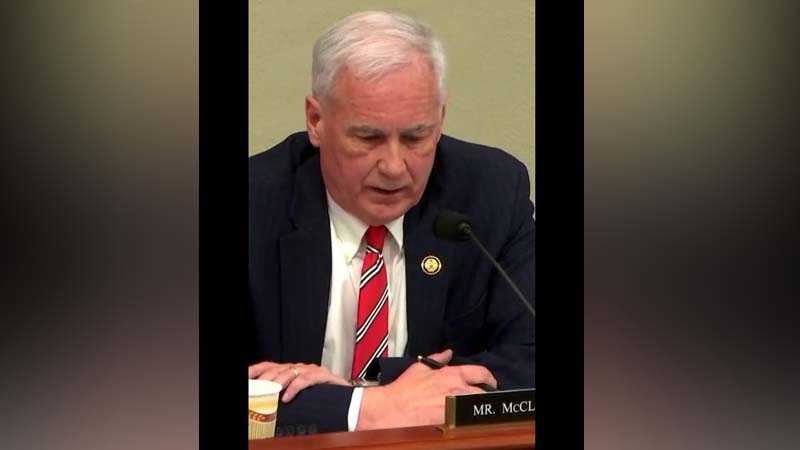
Zoe Lofgren, Tom McClintock and Brad Sherman were supposedly representing their colleagues to refer the Resolution H.Res. 166 to the Committee on Foreign Affairs.

Why the remaining representatives supporting the MEK were not present at this meeting is a good question to be asked. The answer to this question lies in the points that follow. Points that show that the resolution is arbitrary and based on false information and is even clearly authored by the MEK, as the financial sponsor of the whole scenario.

Where is the voice of the Iranian people?

Nowhere in the resolution is there a trace of statistics or documents about the type of government the Iranian people want or their level of approval for the MEK and Maryam Rajavi. This is despite the fact that according to the text of the resolution, the signatories have introduced the MEK as a subversive force and Maryam Rajavi’s Ten-Point plan as a model for the future government in Iran.
It goes without saying that if anyone wants to think logically and comprehensively about changing the government in Iran, in addition to polling the Iranian people, it is necessary to consider other opposition groups as well.

Woman, Resistance, Freedom?!

Even the most ignorant politicians know that the slogan “Woman, Resistance, Freedom” has never been a topic in Iranian society, and the removal of the word “life” from the overarching slogan “Woman, Life, Freedom” is solely a fabrication of the MEK, as a cult-like group that openly considers “life” to be the enemy of struggle.

The submitters are congressmen from a country that considers itself the Super Power of the world and sets tasks for regime change for another country and defines the type of government for it. However, they are too ignorant to have heard the slogan “Women, Life, Freedom”! How were they able to hear “Woman, Resistance, Freedom”?
“Woman, Resistance, Freedom” was only transmitted in the hashtags of the MEK’s virtual army on social networks from their Albanian base, in the remote village in North of Tirana, Manez.

Paid Advocacy

It is not strange that the submitters are not surprised that the fabricated slogan “Woman, Resistance, Freedom” is claimed to be the demand of the Iranian people while they have never heard it in the streets of Iran, because it is likely that many of those whose names are listed as submitters have not read the text of the resolution at all.

They did not read it and eventually did not object to the text. This shows their extreme ignorance. Nonetheless, the point is something else. This obvious contradiction of the resolution’s text with the reality in the world makes it clear that the donations of the MEK are so compelling that a congressman, without attending a hearing or reading the text of the resolution, would declare his support for an organization with a history of terrorism, extremism and cult-like violence.
Ultimately, American representatives should be asked whether they would accept a foreign force to declare what kind of government their country should have or who should govern it with what intentions?

In any case, this resolution is a politically signaling, not policy making, and according to the estimates on the Congress website, the probability of its approval is 13 percent. However, its wording suggests foreign approval of a specific political outcome – which has led to interventions that ignores the action and will of the Iranian people.

Mazda Parsi

March 15, 2025 0 comments
FacebookTwitterPinterestWhatsappTelegramSkypeEmail
Newer Posts
Older Posts

Recent Posts

  • A Comparative Analysis of Psychological Control Mechanisms in Jeffrey Epstein’s Cult and the MEK

    August 3, 2026
  • Operation Mersad: How Iran foiled Saddam’s final gambit 37 years ago

    August 1, 2026
  • Ideology Cannot Prevail over Human Dignity

    July 29, 2026
  • Is Rudy Giuliani so naïve to support MEK terrorists?

    July 27, 2026
  • National Pride of Iranians: Reject the Rajavis and their Patrons

    July 22, 2026
  • Facebook
  • Twitter
  • Instagram
  • Youtube

© 2003 - 2025 NEJAT Society . All Rights Reserved. NejatNGO.org


Back To Top
Nejat Society
  • Home
  • Articles
  • Media
    • Cartoons
    • NewsPics
    • Photo Gallery
    • Videos
  • Publications
    • Books
    • Nejat NewsLetter
    • Pars Brief
  • About Us
  • Contact us
  • Editions
    • عربي
    • فارسی
    • Shqip