Nejat Society
  • Home
  • Articles
  • Media
    • Cartoons
    • NewsPics
    • Photo Gallery
    • Videos
  • Publications
    • Books
    • Nejat NewsLetter
    • Pars Brief
  • About Us
  • Contact us
  • Editions
    • عربي
    • فارسی
    • Shqip
Nejat Society
Nejat Society
  • Home
  • Articles
  • Media
    • Cartoons
    • NewsPics
    • Photo Gallery
    • Videos
  • Publications
    • Books
    • Nejat NewsLetter
    • Pars Brief
  • About Us
  • Contact us
  • Editions
    • عربي
    • فارسی
    • Shqip
© 2003 - 2024 NEJAT Society. nejatngo.org
MEK members' transfer to Albania
Human Rights Abuse in the MEK

Raise Awareness about rights of MEK members on International Migrants’ Day

On International Migration Day, members of the Mujahedin-e Khalq (MEK) are deprived from their human rights as Iranian migrants in Europe. Their rights are actually violated by the group leaders rather than the host countries.

Each year, International Migrants’ Day is observed on 18 December. Designated by the United Nations General Assembly on 4 December 2000, in response to increasing migration around the world, the day aims to draw attention to migrants’ human rights and highlight their contribution to host societies.

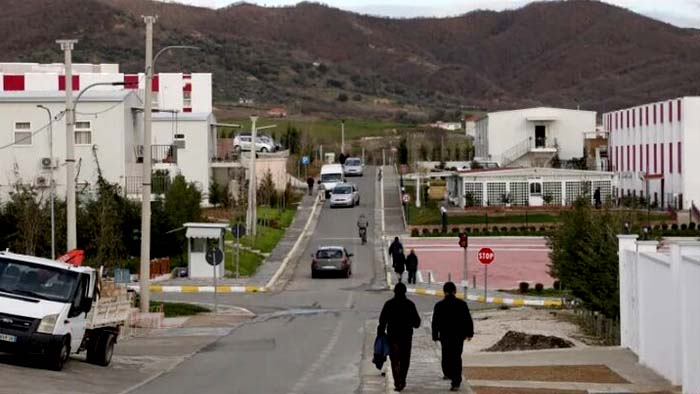
However, the UN and other international human rights bodies neglect the disastrous situation of over 2 thousand MEK members who are taken as hostages in the MEK headquarters in Manez, a village near Tirana, the capital of Albania. They have no legal status in Albania. They are not considered as refugees or asylum seekers or migrants. Their identity is only defined by their membership in the Cult of Massoud Rajavi (MEK).

It is important to understand that, MEK members residing under the isolating system of the Cult of Rajavi, should be entitled to have all their human rights protected and respected, regardless of the status they have in Albania. The International community as well as the Albanian government must protect all MEK members as migrants from violence, exploitation and forced labor.

According to the UN documents, On 4 December 2000, the UN General Assembly (UNGA) designated 18 December as International Migrants Day, taking into account the large and increasing number of migrants in the world. Through its resolution A/RES/55/93, the UNGA invited Member States and others to observe the Day through the dissemination of information on human rights and fundamental freedoms of migrants, the sharing of experiences, and the design of actions to ensure protection of migrants.

The UN claims that by supporting regular pathways for migration, they can enable opportunities for migrants, better protect their rights, and contribute to greater prosperity while hostages of the MEK can never think of future and prosperity. They see no regular pathway for leaving the mental and physical bars of the Cult of Rajavi. They will succeed to escape the group’s camp if they are lucky enough to accomplish their escape plan.

The rights of the MEK members are violated by the group leaders every day. They are subjected to forced celibacy, forced labor, forced clothing, forced hijab, gender segregation, mind manipulation, isolation from the outside world including their family and friends. They need urgent help from the outside world because it is quite difficult to break through all the chains that MEK leaders have tied around them.

The UN says, “Together, one step at a time, we can continue building a world where migration is safe, orderly, and beneficial – for everyone.” In order to achieve such a valuable objective, the UN officials must pay attention to the calls from the families of hostages of the MEK. They have been longing for a phone call or face to face visit with their loved ones who have been barred by the group leaders for decades.

Mazda Parsi

December 18, 2024 0 comments
FacebookTwitterPinterestWhatsappTelegramSkypeEmail
stop terrorism
Mujahedin Khalq 's Terrorism

The hashtag “MEK terrorists” is trending again

The Mujahedin-e Khalq (MEK) and Maryam Rajavi were once again the subject of Iranian anger and hatred at the top of Iran-related hashtags. Iranian users used the hashtag “MEK terrorists” tens of thousands of times within a few hours.
Following the fall of Bashar al-Assad’s regime in Syria, Massoud Rajavi, in a message of congratulating the “heroic people of Syria,” referred to the Syrian government’s opponents as “rebel vanguards” who came to power for “freedom, justice, and a democratic revolution.” The Syrian rebels, led by the Hayat Tahrir al-Sham (HTS) group, bear many similarities to the MEK.

Like once the MEK was, HTS is designated as a terrorist group by the United Nations Security Council and is on one of the European Union sanctions lists due to its links to Al Qaeda. The US and UK governments have also included the group on their lists of foreign terrorist organizations.

In his message of December 8, Massoud Rajavi, the leader of the MEK clearly declares that the Syrian rebels are counterparts of the MEK and their so-called resistance units in Iran, and promises the early overthrow of the Iranian government – a promise that has been repeated for nearly five decades.

These similarities have not gone unnoticed by the MEK’s warmongering American supporters in the Republican party and their media outlet Fox News. It speaks of the opportunity of the fall of Bashar al-Assad to force Iranian regime change.
The Fox News article mentions some US Republican senators who support the MEK, who we have previously seen on the list of speakers at MEK rallies. These senators consider Maryam Rajavi to be the counterpart of Mohammad al-Jolani and the National Council of Resistance of Iran to be the counterpart of Hayat Tahrir al-Sham for changing the Iranian government.

The Fox News article is the beginning of the story. A Twitter storm broke out when Fox News published the article’s title on its X social media account, along with a photo of Maryam Rajavi. The post was met with intense anger from Iranian users across the political spectrum, and eventually the hashtag #MEKTerrorists trended on X English and the hashtag “Maryam Rajavi ate shit” on X Persian. Some of the comments and replies to Fox New, on the most popular pages are noteworthy. These posts, reposts or replies are a few of the contents that contain #MEKterrorists:

Mohammad Reza Torabi, a former child soldier of the MEK:
Down with Fox News and a bunch of money-loving Republicans and anyone else who promotes the Mojahedin or Rajavi. The reality is that this old woman and her criminal husband, who occasionally issues announcements from his mouse hole and has become a homeless rooster, have long been considered dead to the Iranian people. Nothing can bring them back to life. Today is the best time to say once again #MaryamRajaviateshit.

Salome Seyednia, host of Iranian TV channel, Manoto:
Mujahedin-e Khalq (MEK) is a terrorist group that has no credibility or support in Iran! They are very despised and have no standing among the Iranian people! Don’t waste your time on them!

Tina Ghazimorad, editor-In-Chief at manoto TV Newsroom:
That Fox News is promoting the MEK, a terrorist sect rooted in Marxist-Islamic ideologies, is completely absurd and beyond comprehension. Not only does it discredit you, it also insults the memory of Americans who once died. Before glorifying the leader of a sect with blood on their hands, do your homework and check the historical facts. No matter how much money they spend to sell themselves as “freedom fighters,” or how skillfully they parrot what you want to hear, their history of terrorism and betrayal is undeniable.

Sarah For Trump, Iranian-American X user:
What the fuck is this shit?
The #MEKterrorists are a bunch of Islamist-Marxist, undemocratic as*holes who force women to wear hijabs in their fucking cult. Their crap ideology screws over the U.S, Israel, and the Iranian people hate their guts.

Sarah Raviani, Iranian American X user:
The MEK is a terrorist organization that chanted “Death to America” and celebrated the 1979 U.S. Embassy seizure in Tehran after Iran fell to Khomeini.

Ali Hamid, Iranian documentary filmmaker:
To clueless U.S. politicians:
The MEK, which you support and normalize, killed dozens of Americans, including these servicemen. If Iranian lives don’t matter to you, respect your own victims’ families. Shame.

MEK killed US personel newspaper

MEK killed US personel newspaper

Niyak Ghorbani, UK-based Iranian user:
Supporting the Mojahedin-e Khalq (MEK), (OIAC Iran) is akin to supporting the terrorist organisation Hamas 30 years from now—a group that has always been an enemy of Israel and the Jewish people. The MEK, allies of Saddam Hussein and Yasser Arafat, and responsible for the killing of thousands of Iranian soldiers and civilians, will have no place in a free Iran of the future. Instead, they will be brought to justice for their crimes against the Iranian people.

Saeed Ghasseminejad, Iranian economist:
MEK is a Marxist-Islamist cult with American blood on its hand.

Hillel Neuer International human rights lawyer, writer, Executive Director of United Nations Watch:
Because I occasionally appear on FoxNews, I need to inform them: this woman Maryam Rajavi and her Mojahedin-e-Khalq (MEK) are a cult. Not a credible voice at all.
Mazda Parsi

December 16, 2024 0 comments
FacebookTwitterPinterestWhatsappTelegramSkypeEmail
Aldo Solulari, media media manager
The cult of Rajavi

December 10, Day of Shame for Human Rights Violators

International Human Rights Day, December 10, should be a moment of pride for human society, but for many oppressed individuals and groups, this day is just another reminder of the injustices they suffer every day. For an organization like Mujahedin-e Khalq (MEK), which claims to fight for freedom and justice, the irony is bitter: they themselves are the violators of the rights of their members, keeping them in solitary confinement and denying them the most basic freedoms.

The True Face of Oppression

Inside the MEK camps, beyond the facade of the rhetoric of fighting tyranny, there is a dark reality. The organization’s members face an internal regime that violates every principle of human rights. They are kept in total isolation, deprived of contact with the outside world and, most importantly, with their families. In the name of discipline and dedication to the cause, these people are treated as property of the organization, not as human beings.
What is the difference between an authoritarian regime and an organization that imprisons the minds and bodies of its members? The answer is simple: none. The MEK, which claims to fight oppression, is itself a tool of oppression for those who constitute the flesh and blood of its organization.

Blatant Rights Violations

1. Total Isolation:
The MEK camps operate as open prisons. No member is allowed to leave without the approval of the leaders. This is a flagrant violation of the right to movement and self-determination, a right guaranteed by the Universal Declaration of Human Rights.
2. Indoctrination and Mind Control:
Members are subjected to a continuous process of indoctrination, where any critical thought is suppressed and replaced with blind obedience to the organization’s leaders. This is a form of mind control that violates the right to free thought.
3. Denial of Family Life:
One of the cruelest violent tactics of the MEK is the separation of members from their families. Numerous reports testify to parents not seeing their children for years and people being forced to deny family ties for the sake of the organization. This is a blatant violation of the right to family and human relations.
4. Inhuman Treatment and Fear:
Those who dare to criticize or demand their removal face threats, psychological pressure and, in some cases, physical violence. This is the height of hypocrisy for an organization that claims to fight for rights and freedoms.

A Call for Intervention

Organizations like the MEK should have no place in a world that claims to support human rights. Beyond their political rhetoric, they are systems that foster isolation and violence against their own members. The international community must stop turning a blind eye to these violations. If the world truly stands for human rights, it must intervene and help those who are held hostage by these organizations.
December 10 cannot be an international day unless every individual is free and their rights are guaranteed. The MEK are living proof of hypocrisy and rights violations, condemning hundreds of people to isolation and loss of their identity. This day should be a call for justice and an end to violations, wherever they occur. Silence in the face of these injustices is complicity with oppression.

Violence in the MEK Camps

These acts of violence are not random; they are structured and orchestrated to maintain control over members.
1. Physical Violence as a Means of Intimidation
Reports from former members point to numerous cases where individuals have been brutally beaten by camp guards or other members on the orders of the leaders. This violence is used as punishment for those who try to leave the organization, criticize the leaders, or do not blindly follow orders. Cases include beatings to the point of severe injuries and prolonged isolation in inhumane conditions.

2. Psychological Violence and Emotional Torture
In addition to physical violence, members are subjected to ongoing psychological violence. They are forced to participate in “self-criticism sessions,” where they are forced to admit fabricated guilt and face public humiliation. This is a form of torture that aims to break them spiritually and make them obedient to the leaders. Feelings of guilt and fear permeate the daily lives of these people, leaving them without hope for the future.

3. Denial of Medical Treatment
Physical and psychological violence is often accompanied by the denial of medical treatment for the injured. Members who face health problems as a result of the violence are left without medical assistance or treated minimally, as an additional form of punishment.

Aldo Sulollari, Media manager of Nejat Society Albania

December 11, 2024 0 comments
FacebookTwitterPinterestWhatsappTelegramSkypeEmail
Money Laundry
The cult of Rajavi

MEK’s complex fraud scheme involving children and social benefits

Former child soldiers of the Mujahedin-e Khalq (MEK) have recently brought up a pretty crucial issue about the MEK’s fraudulent techniques to raise funds through children’s social benefits in European and North American countries. However, this was not the first time that the MEK’s fraud was revealed. It had been already discovered and investigated by security bodies like the US Federal Bureau of Investigation (FBI) and the German Police in 2001.

Several MEK members were arrested and put under investigation at the time. Susan Ghajar Azdanloo, the sister of Maryam Ghajar Azdanloo (Rajavi) was one of those members of the MEK who were arrested or subjected to investigation in December 2001 under a joint FBI/ Cologne Police Department operation.

On November 29, 2004, FBI published a detailed summary of information learned during criminal investigation of the MEK that was at the time a designated foreign terrorist organization. According to the 2004 FBI document, presented to the US Department of Justice, a year after the French Police released Maryam Rajavi, “Los Angeles investigation had determined that the MEK is currently actively involved in planning and executing acts of terrorism. The planning takes place at MEK bases in Iraq and at the Auver Sur Oise location in Paris, France. Los Angeles has consensually recorded numerous telephone calls in which MEK leaders at this French location discuss specific acts of terrorism to include bombings. Joint investigation with the French DST and the German Cologne Police Department has revealed similar findings from French and German wire taps.”

Beginning with a brief history of the group’s criminal activities, the FBI reported that its investigation had determined that the MEK was very active in fund raising. This was done through a complicated international money laundering operation that uses accounts in Turkey, Germany, France, Belgium, Norway, Sweden, Jordan and the United Arab Emirates.
The testimonies of former child soldiers of the MEK such as Atefeh Sebdani, Amir Yaghmai, Ray Torabi who has several times spoke about their fundraising activities under the command of the MEK offices in Canada, US, Sweden and France, confirm FBI’s investigations.

However, the fraud to exploit social benefits of the MEK’s children in western countries was only investigated by the Cologne Police. The report tells of a scheme organized by MEK where the group used children with multiple identities to collect social benefits in Germany, then used the money to purchase large quantities of night vision goggles and GPS systems to improve accuracy of mortar attacks in Tehran.

There were over a hundred of the children of Mujahed parents who had been smuggled by the group agents to Cologne, Germany where they were kept in team houses. Amin Golmaryami, former child soldier of the MEK, and his brothers were among those children. The group used the social salary that the German government allocated to the children while a large number of these children were then smuggled back to Iraq to be recruited in the MEK’s army. The German journalist, Luisa Hommerich from De Ziet investigated the case in December 2021, in an interview with Amin Golmaryami.

Maryam Rajavi’s sister, arrested in the joint FBI/Cologne Police operation

The FBI report offers details about those MEK members who were involved in the group’s fraud scheme in Cologne:
Susan Azdanloo, MEK member. Arrested in December 2001 in Cologne Germany in a joint FBI/Cologne Police Department operation. Involved in a complex fraud scheme involving children and social benefits.

Mohammad Ebrahim Moshiri, MEK member. Current joint FBI/Cologne Police Department subject. Fugitive from December 2001 joint FBI/Cologne Police Department operation. Involved in a complex fraud scheme involving children and social benefits. Was the MEK procurement officer for military equipment. Joint investigation showed that MOSHIRI used money from this fraud scheme to purchase equipment including night vision in Cologne Germany and then shipped it to United Arab Emirates where it was sent to MEK bases in Iraq.

Sepid Majid Salem, MEK supporter/member. Arrested in Cologne Germany during the December 2001 joint FBI/Cologne Police Department operation. A U.S. citizen claimed no affiliation with the MEK even though he was arrested in one of their houses in Cologne. Claimed to be Virginia resident. Provided 4300 Evergreen Lane #302. Annandale, VA 22003, as his last address in the US.

Bita Mahmoudi, MEK member/supporter. Current joint FBI/Cologne Police Department subject. Was arrested in December 2001 in Cologne Germany in a joint FBI/ Cologne Police Department operation. Involved in a complex fraud scheme involving children and social benefits. Recently applied for citizenship in the U.S.

Mohammad Karami, former member of the MEK explains that in 1993 and 1994 a number of charity organizations, schools and orphanages were established by the MEK agents in some western countries. According to him, Susan Ghajar Azdanloo, the younger sister of Maryam Ghajar Azdanloo (Maryam Rajavi), was also on the board of directors of one of these associations and a school that was established in the name of orphaned children, and they received funding from the government for this school.

There were definitely many other MEK agents who were involved in similar fraud schemes to confiscate social benefits of MEK children in other western countries including Sweden where Atefeh Sebdani and her brothers and a large number of other children were settled under an MEK fostering system. After the release of Atefeh Sebdani’s autobiography, the Swedish human rights and child care bodies were criticized for being so inconsiderate about such cases.

Mazda Parsi

December 10, 2024 0 comments
FacebookTwitterPinterestWhatsappTelegramSkypeEmail
Human Rights
The cult of Rajavi

The International Human Rights Day and MEK victims

Tomorrow is the International Human Rights Day. A day to remind the world of each and every human being’s fundamental rights. International days are occasions to educate the public on issues of concern, to mobilize political will and resources to address global problems, and to celebrate and reinforce achievements of humanity.

Thus, tomorrow is an occasion for recognize the human rights of thousands of people who are involved with the oppressive cult-like system of the Mujahedin-e Khalq (MEK).

Based on the United Nations’s definition, Human Rights Day, annually around the world on 10 December, commemorates the anniversary of one of the world’s most groundbreaking global pledges: the Universal Declaration of Human Rights (UDHR). “This landmark document enshrines the inalienable rights that everyone is entitled to as a human being – regardless of race, color, religion, sex, language, political or other opinion, national or social origin, property, birth or other status.”

The UDHR was proclaimed by the United Nations General Assembly in Paris on 10 December 1948 and sets out, for the first time, fundamental human rights to be universally protected. This year’s theme is: Our Rights, Our Future, Right Now.

The UN explains this theme stating, “Human rights can empower individuals and communities to forge a better tomorrow. By embracing and trusting the full power of human rights as the path to the world we want, we can become more peaceful, equal and sustainable.”

A better tomorrow for victims of the MEK will not come unless the International human rights bodies respect their human rights as well as other humans. As the UN says this Human Rights Day should focus on how human rights are a pathway to solutions, playing a critical role as a preventative, protective and transformative force for good; the good of people whose rights have been violated by Massoud and Maryam Rajavi, leaders of the Rajavi’s cult of personality.

Victims of human rights violations of the MEK are categorized in the following groups:

-Members of the MEK who are isolated from the free world in a remote camp in Albania, deprived from any contact with the outside world, under a manipulative ruling system.

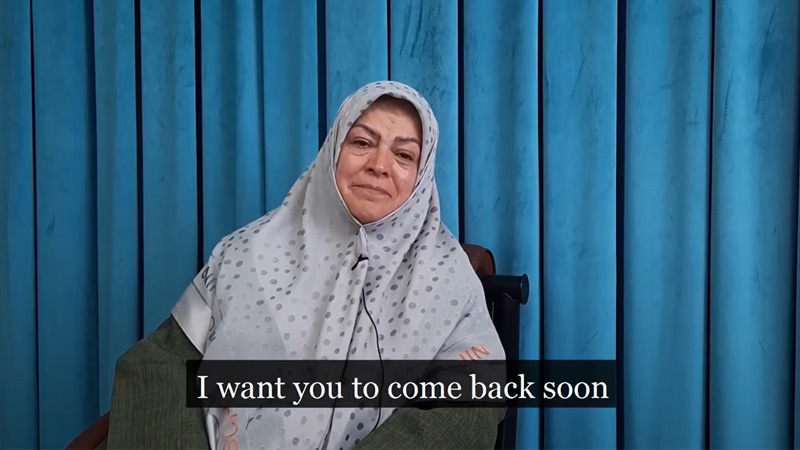
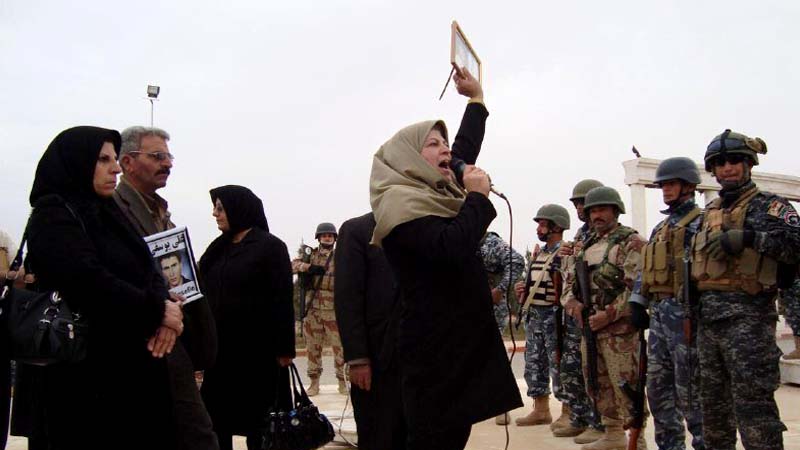
-MEK members’ families, especially mothers who have been languishing a long-life separation from their beloved children who have been taken like hostages in the MEK.

-Former MEK members who are still suffering the traumas of mental and physical torture inside the MEK. They should have been gone through a deradicalizing program before integration with free society.

-A thousand Children of Mujahed Parents who were once separated from their parents in Iraq, smuggled to Europe and North America, where they were raised in the MEK’s team houses in order to exploit their social benefits or were fostered by the MEK sympathizers who abused them in several cases. Most of these children have lost the track of their birth parents or are not allowed by the MEK to contact them.

-Former child soldiers of the MEK who are hundreds of those smuggled children. They were then smuggled back to Iraq in their teen ages and were recruited as child soldiers of the MEK’s army, the so-called National Liberation Army. Some of these child soldiers were killed in military operations and clashes. Some of then are still under the mind control system of the group.

-Survivors of the MEK’s terrorist acts who have been injured, paralyzed and/or have lost one or more family members in the terrorist operations of the MEK against civilians.

As the UN states, this year’s theme of Human Rights Day is a call to acknowledge the importance and relevance of human rights in our everyday lives. “We have an opportunity to change perceptions by speaking up against hate speech, correcting misinformation and countering disinformation.”

The leader of the MEK and the MEK-run media are actually propaganda machines that propagate hate speech, misinformation and disinformation. They suppress any voice that reveals their atrocities and even any voice that criticizes their attitudes. This is the time to mobilize action to reinvigorate a global movement for human rights of the MEK victims.

Mazda Parsi

December 9, 2024 0 comments
FacebookTwitterPinterestWhatsappTelegramSkypeEmail
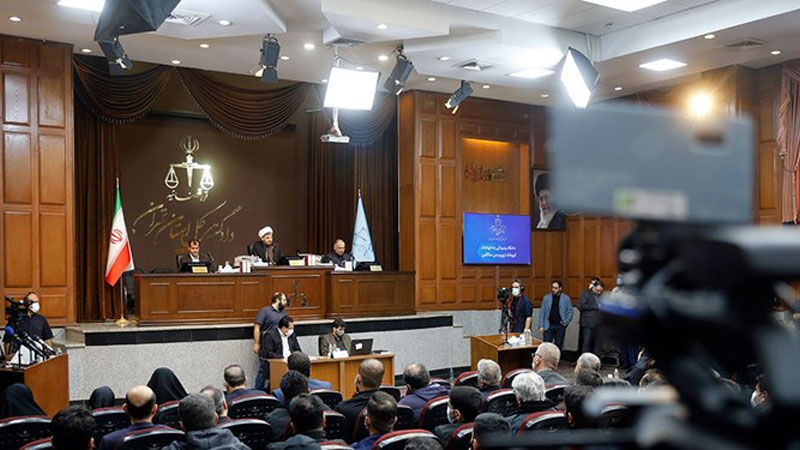
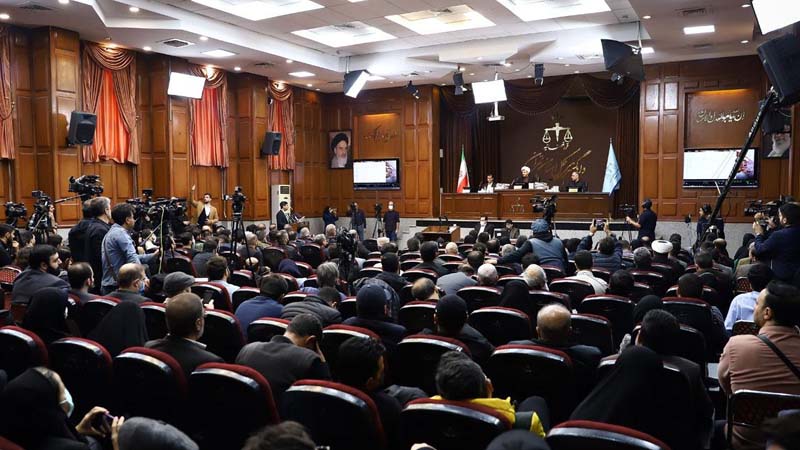
24th session of the trial court of the MEK held in Tehran
Iran

24th session of the trial court of the MEK held in Tehran

The 24th session of the trial court of 104 Mujahedin-e Khalq (MEK) members and the group as a legal entity was held in Tehran. The recent session was held at the 11th branch of the criminal court of Tehran province on Tuesday, December 3rd, 2024. The court was presided by Judge Dehqani.

Reassuring the witnesses and informants who show up, the Judge announced that all members based in Albania and other members of the group who wish to testify in this court can contact consulates and international institutions linked with the Islamic Republic of Iran, under the protection of Iranian Judiciary.

According to the judge, international organizations must ensure the safety of witnesses, that is, any person from Albania or its affiliated members who approach them, in accordance with the UN Charter and the laws approved after 1993.
The lawyer of the plaintiffs, Mollai presented certain facts and documents on the MEK’s terrorist operations against civilians. He said, “In addition to carrying out terrorist operations against the officials of the Islamic Republic of Iran, the group has murdered ordinary citizens, women and children as one of its main goals and in order to create fear and terror among the people.”

The lawyer referred to the torture and assassination of civilians such as workers, shoemakers, teachers and ordinary passers-by just because the group simply considered as to be religious. He spoke of Abbas Effat Ravesh, a shoe maker who was killed by the MEK agents only due to his appearance. He looked like to be a supporter of the Iranian government.

On August 8, 2018 at 10:00 PM, upon the order of the organization’s leader to kidnap Abbas Effat Ravesh, who was a shoemaker, the organization’s special operation team went to his. Since he was not present, they went to his workplace in Shemiran, Tehran. Disguised in the uniforms of Iranian Revolutionary guards, they took him. When they put him in a car, they tied his hands and eyes and took him to a team house where they subjected him to the most severe torture in order to get the information they wanted. When they did not achieve the desired result, after much torture, they killed him by injecting cyanide. They tied his hands and feet, put him in the trunk of a car, and took him to a predetermined location where they buried his body. They even did not know his name. The MEK agents just called him “shoe maker” in their confessions.

The lawyer cited from the confessions of two arrested MEK members who collaborated in the killing of Abbas and three members of revolutionary guards. Mehran Asdaghi was one of them. He was the military commander of the MEK terror teams in Tehran.

The lawyer read Mehran Asdaghi’s confessions: “Around evening, Mostafa Madan Pisheh shot Mohsen Mirjalili in the bathroom due to his shaking and we were forced to evacuate the house, so we decided to eliminate the guards and the shoemaker. We tied them to chairs, blindfolded them and stunned them with the same lead rods and then injected cyanide into their bodies, after which they started to snort. While they were still alive, we tied their bodies with ropes so that they could fit inside the trunk of the car.”

The plaintiffs’ lawyer told the court: “The MKO arrested the shoemaker simply because he had a religious face and they did not recognize him and only knew that he was a shoemaker.”

He continued, “When the shoemaker entered the house, he was tortured, and with the extensive torture that was inflicted on him, it became clear on the first day that he was unaware of everything and that what MEK commanders were saying was not true. Despite shoemaker’s begging that he did not know what you wanted from him, they continued torturing him because the people above had ordered it.”

The video of Mehran Asdaghi’s confessions at the time of his arrest was then shown in court.
Confessions of Khosrow Zandi, the person in charge of burying the body of the deceased, and the officials who gave the order was also presented in the court.

The lawyer stated that the type of action taken by the MEK in killing the Effat-Ravesh and several others such as Taleb Taheri, Mohsen Mirjalili, and Shahrokh Tahmasbi, which the organization has named “engineering operation”, is different from the criminal title of murder. This action has the following characteristics: 1- Killing people in the category of engineering operations by applying the most severe tortures such as burning with an iron and boiling water, peeling and severe beatings, and finally killing them with cyanide injections while they had signs of life. 2- These actions were not motivated by personal motives and were completely organized and systematic. 3- Attempting to kill people and using people trained in torture and murder. 4- Creating terror and intimidation with the most severe torture and assassination.
The Lawyer asked the court to investigate the role of each of the defendants in the killing of Effat Ravesh, considering their organizational position in the structure of MEK.

Then a former member of the MEK, who stayed unnamed took the stand as a witness. He introduced himself as saying:
“I live in Germany and was a member of the MEK from 1981 to 1991. I had a political motivation for joining the organization, and in 1981 I joined this organization with a political goal, and I worked with this group inside Iran until 1991. Many of my close friends had also joined this organization.

During this time, we suffered a lot and were forced to do forced labor, almost like slavery. Massoud Rajavi trampled on all our political, social, and family issues. He crossed every red line and then provided evidence and proof, saying that I was a new prophet. He first placed Maryam as the ideological leader and then in the position of president, but he always saw himself as an untouchable person.”

About the cult-like nature of the MEK the eye-witness explained that there is only one ideological leader who can be the president. “Of course, later, when I went to Iraq, I was faced with these trends of ideological revolution, organization, forced labor, and austerity,” he said. “I saw that these had nothing to do with Iranian society or politics, they were all my inventions. Every day he would put his forces in a tight spot and besieged so that they would do nothing but obey, praise, and submit. Every day he would elevate himself one level higher and higher.”

He was a victim of the MEK’s violence too. He said: “I remember in 1981, a woman named Fereshteh Yeganeh, who was a high-ranking official, challenged me and asked me why did you come here? I replied that I came to fight, and that one word caused me to be thrown in prison the next day. We had different prisons. If I had said, for example, that I came for brother [Massoud], I might have been forgiven.”

In fact, he was imprisoned once more in 1988 in Iraqi Kurdistan. “A prisoner who had no choice in public and could not defend himself,” he recalls. “No one could eat with him, mention his name, or look at him.”

Asked by the judge about his organizational position, he answered, “I worked mostly in the intelligence department and I did not have a position. In this department, there were various tasks such as wiretapping and overhearing telephone calls. It was the work of the press and publications, and evacuation, and it was mostly related to wiretapping.”
“There is fear on your face. Have you been threatened?”, the witness was asked by the lawyer

The witness said: “Yes, I have been threatened. I have said a lot about the organization. I was once a guest at the European Parliament in Belgium. Maryam Rajavi was there that day. Maryam Rajavi’s bodyguards attacked me and beat me, saying that this person was a terrorist and that the Islamic Republic of Iran had sent him. I hired a lawyer about this matter and filed a complaint, stating that my family was being held hostage by the organization.”

The judge asked: Are your wife and children still hostage?
The witness said: “Yes. They separated my wife and I without informing us and without a religious order. Germany did not investigate this complaint and the court was not held. We and our families are always under threat. They call anyone who opposed them a mercenary…I went to Germany and legally freed my child, but my wife is still in the MEK’s prison.”

According to the witness who showed up in the 24th session of the MEK’s trial, In 1985, in order to justify that so-called “ideological revolution” and his disastrous marriage with Maryam Qajar, Massoud Rajavi sent a group of forces to Iran to carry out assassinations.

The witness said: “The terror teams were trained in the MEK’s camp and entered Iran through Kurdistan or other routes.”
The judge asked: “Was the torture of people part of this training?”

This defected member of the organization stated: “I spoke to many people who had been tortured. In 1997, the organization imprisoned more than 500 of its members. Mr. Reza Gooran wrote a book about his torture in Norway. I read in this book that a number of members died under torture. According to the author of this book, Parviz Ahmadi and several others were killed under torture. The names of the torturers are also given in this book. Their reason for torturing the members was that these people might later become critics of the organization. They would keep these people in custody or persecute them.”
The next session of the court will be held on Tuesday, December 10th.

December 7, 2024 0 comments
FacebookTwitterPinterestWhatsappTelegramSkypeEmail
Nejat Newsletter No.119
Nejat Publications

Nejat Newsletter No.119

Inside This Issue:

– Documentary “Mother, Love, Separation” Qualifies for Los Angeles Film Festival LAF
The documentary “Mother, Love, Separation” directed by Aldo Sulollari, media director of Nejat Society Albania, was accepted into the Los Angeles Film Festival. This festival is one of the most prestigious and well-known film festivals in the United States.

– MEK; threat to fundamental human rights
The Mujahedin-e-Khalq (MEK) organization has often been involved in debates and criticisms regarding its actions, especially concerning human rights violations. This article aims to evaluate some of the most serious allegations against the group and explain why it is considered by many to be a threat to fundamental human rights.

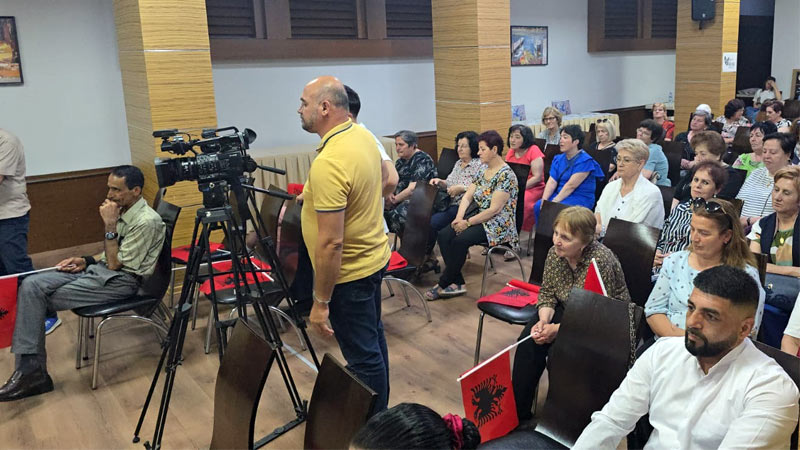
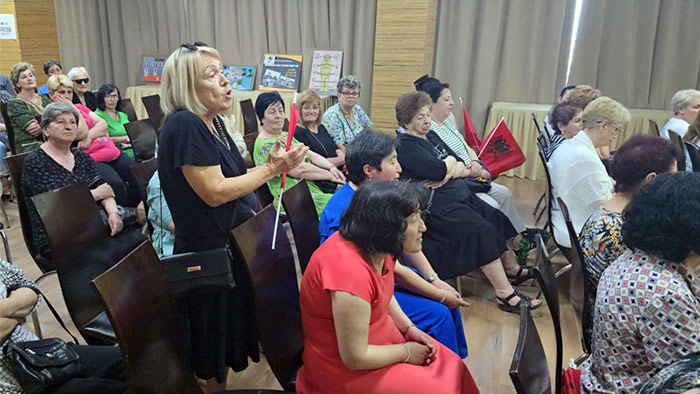
– “Mother, Love, Separation” was screened in Elbasan, Albania
The screening of the documentary “Mother, Love, Separation” was held in the conference hall of Hotel Skampa in Elbasan, Albania on Sunday, November 17, 2024.

– A call for awareness
The opening of the public screening of the documentary Mother, Love, Separation held yesterday, November 3rd, in the city of Shkodër. Aldo sullolari director of the 40-minute documentary made
a speech after the screening: Today we are gathered here to share a story, a story that feels the deep pain of mothers who face a pain that many of us cannot imagine.

– The Mujahedin Khalq Organization and violation of Human Rights
A Clear Picture of Terrorism and Psychological Oppression Against Innocent Individuals . At a time when the world is striving for progress toward a peaceful and sustainable future, some terrorist groups, which claim to fight for freedom and justice, continue to cause immeasurable harm. One such group is the People’s Mujahedin Organization of Iran (MEK), notorious for its use of violence, psychological manipulation, and blatant human rights violations.

To view the pdf file click here

December 3, 2024 0 comments
FacebookTwitterPinterestWhatsappTelegramSkypeEmail
Hamid Atabay
The cult of Rajavi

On the eve of Christmas, MEK hostages deprived of joy of life

On the eve of Christmas, former members of the Mujahedin-e Khalq who are currently residing in Europe speak of their past experience of living in the Cult of Rajavi during this time of the year.

Most ex-members of the group post their photos by the side of a Christmas tree on their accounts in the social media writing a caption of the restrictions they suffered when they were a member of the Cult of Rajavi.

In the destructive cult, celebrating, having party, hanging out with friends is forbidden. Residing in Albania, as European country, does not mean that MEK members can ever enjoy the New Year’s atmosphere.

Living in a remote camp, named Ashraf 3, which is guarded by security agents and monitored by CCTV cameras, has turned them into hostages who are punished on a daily basis because they have once been joined the MEK.

MEK hostages are deprived from any type of joy and happiness while New Year celebrations and Christmas are two of the most significant events of the year for Europeans. The festive atmosphere with its shining lights, colorful and musical celebration spreading across Western countries is a taboo for members of the Cult of Rajavi because it reminds them of life!

December 2, 2024 0 comments
FacebookTwitterPinterestWhatsappTelegramSkypeEmail
MEK child soldiers -Alavi's border camp
The cult of Rajavi

The MEK’s Use of Child Soldiers: A Human Rights Violation That Demands Accountability

The Mujahedin-e Khalq (MEK), often touted by its advocates as a legitimate opposition to Iran’s authoritarian regime, has faced mounting evidence of egregious human rights abuses, including the recruitment of child soldiers. While the MEK portrays itself as a democratic alternative to Tehran’s theocracy, survivor testimonies and investigative reports reveal practices that undermine this narrative. These allegations highlight the urgent need for international accountability and a reassessment of the support granted to this organization.

Testimonies from former MEK members expose a systematic effort to recruit and exploit children, particularly during the organization’s years at Camp Ashraf in Iraq. Survivors such as Amin Golmaryami and Amir Vafa Yaghmai recount being forcibly separated from their families as minors and subjected to ideological indoctrination designed to suppress individuality and enforce obedience. This psychological manipulation served as the foundation for coercing children into roles ranging from logistical support to direct participation in armed conflict.

The trauma endured by these individuals has left long-lasting scars, manifesting as post-traumatic stress disorder (PTSD), alienation, and severe difficulties in reintegrating into civilian life. Such exploitation of children not only contravenes basic human rights but also highlights the MEK’s disregard for the fundamental welfare of its members. These narratives dismantle the MEK’s carefully curated image as a pro-democracy movement, exposing it instead as a group willing to sacrifice vulnerable lives for its militant agenda.

The MEK has aggressively lobbied for recognition as a democratic force, securing backing from influential politicians in Europe and the United States. However, the organization’s history of authoritarian practices starkly contradicts its claims. Allegations of child soldier recruitment are emblematic of a broader pattern of coercive control, including the suppression of dissent within its ranks and the enforcement of absolute loyalty to its leadership.

The MEK’s leadership has denied these accusations, often dismissing whistleblowers as propagandists aligned with Tehran. Yet, the consistency of survivor accounts and corroborative investigations by credible outlets such as “Le Monde” paint a damning picture. For international supporters, these revelations necessitate a moral reckoning: continued support for the MEK risks enabling practices that violate international law and basic ethical principles.

The MEK’s recruitment of children places it in the company of notorious organizations such as the Lord’s Resistance Army (LRA) in Uganda and armed factions in conflict zones like Syria. These groups employ similar tactics—psychological manipulation, forced separation from families, and the use of fear and propaganda to secure loyalty.

However, the MEK’s centralized structure and political ambitions distinguish it. Unlike fragmented groups operating in lawless territories, the MEK’s leadership operates within a hierarchical system that oversees both militant activities and international lobbying efforts. This organization-wide complicity makes the MEK’s actions even more troubling, as they are not isolated incidents but part of a calculated strategy that implicates the group’s upper echelons.

Countries hosting or supporting the MEK bear significant responsibility for addressing these allegations. Albania, which has provided refuge to many MEK members, faces scrutiny for its role in sheltering an organization accused of grave human rights abuses. Under international law, including the Optional Protocol to the Convention on the Rights of the Child on the Involvement of Children in Armed Conflict (OPAC), states are obligated to prevent the recruitment of children and ensure accountability for perpetrators.

For nations like the United States and European countries that advocate for the MEK as a counterweight to Iran, the ethical stakes are high. Ignoring the group’s documented abuses undermines their credibility as defenders of human rights and could tarnish their foreign policy agendas. Supporting the MEK without demanding accountability risks complicity in its violations.

The voices of survivors must drive the global response to these allegations. Their testimonies provide invaluable insights into the MEK’s exploitative practices and call for an end to impunity. Truth commissions, reparations, and legal action against those responsible are necessary steps to ensure justice for victims and to deter similar abuses in the future.

Moreover, the international community must reassess its engagement with the MEK. Support for opposition groups cannot come at the expense of fundamental human rights. By holding the MEK accountable, the global community can send a clear message that the exploitation of children will not be tolerated, regardless of a group’s political alignment.

The MEK’s alleged use of child soldiers is a profound betrayal of the principles it claims to uphold. Survivor narratives expose the devastating human cost of the group’s actions, challenging its legitimacy as a pro-democracy force. For the international community, these revelations are a test of its commitment to universal human rights. Accountability for the MEK is not just a moral imperative—it is a necessary step to ensure that justice prevails over political expediency.

Pouia Tajali – Geopolitika.ru

November 30, 2024 0 comments
FacebookTwitterPinterestWhatsappTelegramSkypeEmail
MEK women
The cult of Rajavi

A look at the situation of the MEK women

On the occasion of the International Day for the Elimination of Violence against Women
November 25th is the International Day for the Elimination of Violence against Women. This day should remind us of the violence that has been inflicted on female members of the MEK for more than four decades. Violence that has been hidden under the cover of lavish titles of libertarian, freedom and democracy. By founding his destructive cult of personality through a process that he called the “ideological revolution,” Massoud Rajavi innovatively wrapped femicide in the MEK in an aura of holiness and spirituality.

According to the UN report, femicide – the most extreme form of violence against women and girls – remains prevalent worldwide, according to global estimates. The cycle of gender-based violence has progressed to the point where one woman is killed every ten minutes. The UN report continues by stating that in 2023, 85,000 women and girls were intentionally killed worldwide. 60 percent of these murders (51,100) were committed by a sexual partner or a family member. Data shows that 140 women and girls lose their lives every day at the hands of their partners or close relatives.

It is necessary to admit that the women of the MEK should also be considered in this category. Indeed, the person who subjected these women to violence is the “Supreme leader” of the organization, Massoud Rajavi, whom all women in the group should consider the closest person to them. These women are within the personal space of the leadership. They are the wives of the leader!

One might think that the word femicide is an exaggeration to describe Massoud Rajavi’s approach towards women, but if having a deep understanding of the conditions of women in his cult of personality, one will realize that in addition to the number of women who were killed and disappeared in Rajavi’s cult or committed suicide and self-immolation, many female members of the cult were killed psychologically and mentally.

The crucial situation of women in the MEK must be meticulously supervised because all violence that has occurred and continues to occur against women in various dimensions within inside the group has a flamboyant cover: the so-called pro-democracy, pro-freedom, and feministic attitude of Maryam Rajavi. Therefore, both the victims of the Cult of Rajavi’s violence and external observers have difficulty realizing the depth of the disaster.

Below is a list of the crimes committed by the Rajavi sect against women and the cover that the leaders of this sect have provided for them:
– Forced divorce and forced celibacy under the cover of “ideological revolution” or “Maryam’s revolution”. After Maryam Qajar Azdanloo’s divorced from her first husband, Mehdi Abrishamchi, she married Massoud Rajavi and became the leader’s confidant, and from then on, other women in the cult were also pressured to divorce their husbands. All women were ultimately supposed to only think of Massoud Rajavi as their husband.

–Separating children from their mothers under the guise of protecting their life. Separating children from their mothers was the next step after forced divorces, which was taken by Massoud Rajavi’s opportunism after the coalition forces invaded Iraq in the first Gulf War. Thousands of children were separated from their mothers forever and smuggled to third countries because of a war that lasted only two months. Many mothers lost track of their children forever.

– Sterilizing female members under the guise of “the ideal Summit.” The removal of women’s wombs was initially carried out under medical pretexts in Camp Ashraf Hospital, but over time, female members of the group’s Elite Council were encouraged to break all ties to anything other than “struggle” in order to reach the “ideal summit.”

-Sex work under the title of “Liberation Dance.” The Liberation Dance is the name of the sessions in which women from the upper echelons of the leadership, encouraged by Maryam Rajavi, strip naked in front of Massoud Rajavi, dance, and present themselves to him, thus “liberating” themselves from all other attachments!
-Sexual assault under the guise of “unification with the leader.” Women who were collectively married to Massoud Rajavi in liberation dance sessions under conditions created by various mind control tecatics (brainwashing) must now have sex with him. Maryam Rajavi calls this sexual rape “unification with the leader” and sends the woman chosen for each night to Massoud’s bedroom.

–Cult-like isolation under the title of “denial of individuality and gender.” Denial of individuality and gender is an approach that the women of the MEK are proud of and with which they define and admire their abnormal life behind the fences of the MEK base.

– Self-immolation as a “paying the price.” Self-immolation of members of the MEK following the arrest of Maryam Rajavi by the French police in 2003 is still considered a highly valued behavior within the MEK that other MEK members should emulate. Being willing to sacrifice your life for the struggle (to protest the arrest of your leader) is a “price” that all MEK members must be prepared to pay. Two women, Neda Hassani and Sedigheh Mojaveri, were killed due to of those ordered self-immolations.

Women of the MEK have systematically been victims of violence at the hands of Sister Maryam and Brother Massoud, and this attitude still continues in the MEK. On the International Day for the Elimination of Violence against Women, officials and activists in this field should be aware that violence is taking place behind the wall of the MEK’s camp in Albania. The violence that is not at all visible in Maryam Rajavi’s polished, colorful, and smiling face. A deeper look and investigation is needed to uncover the crimes of the Rajavis.

إBy Mazda Parsi

November 27, 2024 0 comments
FacebookTwitterPinterestWhatsappTelegramSkypeEmail
Newer Posts
Older Posts

Recent Posts

  • Nejat Society CEO: Rajavi wants killing of more Iranians

    January 28, 2026
  • Two MEK terror operatives arrested in Tehran

    January 26, 2026
  • Samira Shams, cruel MEK commander

    January 24, 2026
  • Nejat Newsletter No.132

    January 12, 2026
  • MEK’s sponsors must acknowledge Iranian rejection of the group

    January 12, 2026
  • Facebook
  • Twitter
  • Instagram
  • Youtube

© 2003 - 2025 NEJAT Society . All Rights Reserved. NejatNGO.org


Back To Top
Nejat Society
  • Home
  • Articles
  • Media
    • Cartoons
    • NewsPics
    • Photo Gallery
    • Videos
  • Publications
    • Books
    • Nejat NewsLetter
    • Pars Brief
  • About Us
  • Contact us
  • Editions
    • عربي
    • فارسی
    • Shqip