Nejat Society
  • Home
  • Articles
  • Media
    • Cartoons
    • NewsPics
    • Photo Gallery
    • Videos
  • Publications
    • Books
    • Nejat NewsLetter
    • Pars Brief
  • About Us
  • Contact us
  • Editions
    • عربي
    • فارسی
    • Shqip
Nejat Society
Nejat Society
  • Home
  • Articles
  • Media
    • Cartoons
    • NewsPics
    • Photo Gallery
    • Videos
  • Publications
    • Books
    • Nejat NewsLetter
    • Pars Brief
  • About Us
  • Contact us
  • Editions
    • عربي
    • فارسی
    • Shqip
© 2003 - 2024 NEJAT Society. nejatngo.org
Pompeo
USA

US restricts its support for Regime change in Iran: What happened?

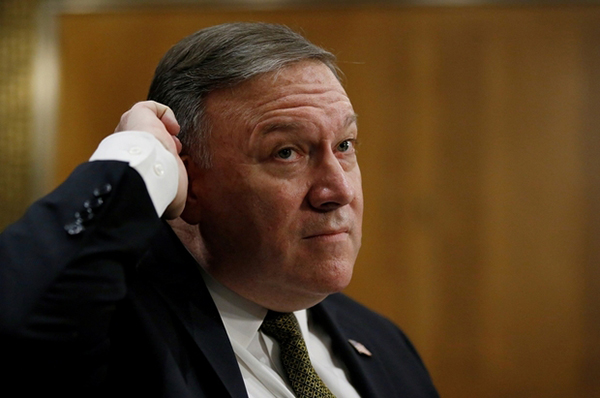
Mike Pompeo, a man who played an important role in General Soleimani’s assassination directed his diplomats to restrict their connections with forces that support a regime change in Iran. What changed in US policy towards Iran? What deal broke out between two arch-rivals?

An Iran hawk who advocated killing general Qasem Soleimani, US Secretary of State Mike Pompeo has ordered his diplomats to limit contacts with militant Iranian exile and opposition groups that support either regime change or greater rights for ethnic groups like Kurds and Arabs.
Coming on the back of the Soleimani killing, Mr. Pompeo’s directive appears to put an end to the Trump administration’s hinting that it covertly supports insurgent efforts to at the very least destabilize the Iranian government if not topple it.
A litmus test of the directive by Mr. Pompeo, known to have a close relationship with Donald J. Trump, is likely to be whether the president’s personal lawyer, Rudolph Giuliani, distances himself from the controversial National Council of Resistance of Iran (NCRI), an offshoot of the Mujahideen-e-Khalq, a group that was taken off the US Treasury’s list of designated terrorists several years ago.
Mr. Pompeo said that direct US government engagement with these groups could prove counterproductive to our policy goal of seeking a comprehensive deal with the Iranian regime that addresses its destabilizing behaviour.
Mr. Giuliani is a frequent, well-paid speaker at gatherings of the group that has built a significant network among Western political elites. The council and the Mujahideen openly call for regime change in Iran.
The Mujahideen were moved with US assistance from their exile base in Iraq to a reportedly Saudi-funded secretive facility in Albania.
A New Jersey-based lobbying firm hired by the NCRI, Rosemont Associates, reported last year in its filing as a foreign agent frequent email and telephone contact on behalf of its client with the US embassy in the Albanian capital of Tirana as well as Brian Hook, the US Special Representative for Iran, and Gabriel Noronha, an aide to Mr. Hook.
In his directive, Mr. Pompeo said that “direct US government engagement with these groups could prove counterproductive to our policy goal of seeking a comprehensive deal with the Iranian regime that addresses its destabilizing behavior.”

The secretary went on to say that Iranian opposition groups “try to engage US officials regularly to gain at least the appearance of tacit support and enhance their visibility and clout.”
Mr. Pompeo’s cable, while keeping a potential negotiated deal with Iran on the table, does not stop other US government agencies from covertly supporting the various groups, that also include Arab Struggle Movement for the Liberation of al-Ahwaz (AMLA), the Komala Party of Iranian Kurdistan, and the Kurdish Democratic Party of Iran (KDPI).

Iran, which has long believed that the United States, alongside Saudi Arabia and Israel, supported the Mujahideen as well as ethnic militants that intermittently launch attacks inside Iran, is likely to take a wait-and see-attitude towards Mr. Pompeo’s directive that could be seen as a signal that the Trump administration is not seeking regime change.
The timing of the directive is significant. Iran responded to the killing of Mr. Soleimani with carefully calibrated missile attacks on US facilities in Iraq in a bid to create an environment in which backchanneling potentially could steer the United States and Iran back to the negotiating table.
The appointment was followed by publication by a Riyadh-based think tank believed to be close to crown prince Mohammed bin Salman of a study for Saudi support for a low-level Baloch insurgency in Iran
While it was uncertain that one round of escalated tensions would do the trick, potential efforts were not helped by the death of Oman’s Sultan Qaboos bin Said al Said, a key interlocutor who has repeatedly helped resolve US-Iranian problems and initiated contacts that ultimately led to the 2015 international agreement that curbed Iran’s nuclear program.
In his directive, Mr. Pompeo, referring to Komala, acknowledged that “Iran’s regime appears to assess that the United States and/or Israel support this group of militant Kurds.”
Iranian perceptions were reinforced not only by calls for regime change by senior figures like Mr. Giuliani and Saudi prince Turki al-Faisal, a former head of the kingdom’s intelligence service and ex-ambassador to Britain and the United States, but also the appointment in 2018 of Steven Fagin as counsel general in Erbil in Iraqi Kurdistan.
Shortly before moving to Erbil, Mr. Fagin met In Washington as head of the State Department’s Office of Iranian Affairs, with Mustafa Hijri, leader of the KDPI as it stepped up its attacks in Iranian Kurdistan.
Iranian perceptions were further informed by the appointment of John Bolton, Mr. Trump’s since departed national security advisor and like Mr. Giuliani a frequent speaker at NCRI events, who publicly advocates support of ethnic insurgencies in Iran in a bid to change the regime.
As Mr. Trump’s first director of the Central Intelligence Agency, Mr. Pompeo named Michael D’Andrea, a hard-charging, chain-smoking covert operations officer, alternatively nicknamed the Dark Prince or Ayatollah Mike, whose track record includes overseeing the hunt for Osama Bin Laden, as head of the CIA’s Iran operations.
The appointment was followed by publication by a Riyadh-based think tank believed to be close to crown prince Mohammed bin Salman of a study for Saudi support for a low-level Baloch insurgency in Iran. Prince Mohammed vowed around the same time that “we will work so that the battle is for them in Iran, not in Saudi Arabia.”
Pakistani militants have claimed that Saudi Arabia had stepped up funding of militant madrassas or religious seminaries in the Pakistani province of Balochistan that allegedly serve as havens for anti-Iranian fighters.

The New York Times reported this week that aides to Prince Mohammed had in the past discussed with private businessmen the assassination of Mr. Soleimani, an architect of Iran’s regional network of proxies, and other Iranians as well as ways of sabotaging the country’s economy.
Mr. Pompeo’s directive is unlikely to persuade Iran that Washington has had a change of heart. Indeed, it hasn’t. Mr. Trump maintains his campaign of maximum pressure and this week imposed additional sanctions on Iran.
Nonetheless, potentially taking regime change off the table facilitates backchanneling that aims at getting the two nations to talk again.

Dr. James Dorsey –  Global Villagespace
Dr. James M. Dorsey is a senior fellow at the S. Rajaratnam School of International Studies, co-director of the University of Würzburg’s Institute for Fan Culture, and the author of The Turbulent World of Middle East Soccer blog. The views expressed in this article are the author’s own and do not necessarily reflect Global Village Space’s editorial policy.
January 16, 2020 0 comments
FacebookTwitterPinterestWhatsappTelegramSkypeEmail
The Trump Administration’s Iran Fiasco
Mujahedin Khalq; A proxy force

Trump Admin Walks Back Anti-MEK Memo

The State Department ordered employees days ago not to meet with an Iranian dissident outfit close to Rudy Giuliani and other Trump world figures. Now, the memo is being overridden.

At whiplash speed, the State Department is walking back an order barring American diplomats from meeting with controversial Iranian dissident groups—including one close with Trump World allies and previously designated as a terror group, the Mujahedeen-e-Khalq (MEK). The initial memo, greenlit by a career State Department employee, angered Congressional Iran hawks. And the Department’s move to change its guidance has drawn cheers from them.
The first memo, first reported by Bloomberg and reviewed by The Daily Beast, included sober warnings against meeting with the MEK, pointing to its terrorist past and saying most everyday Iranians have a low view of the group. The memo also warned about interactions with the Democratic Party of Iranian Kurdistan, highlighting its attacks on Iranian military targets; and directed diplomats to get permission from State Department headquarters before meeting with members of an Azeri separatist group. Secretary of State Mike Pompeo sent out the memo on January 7, and it cautioned that meetings with these groups could undermine U.S. efforts to reach a deal with Tehran. Joey Hood, a senior career State Department official, approved the memo, according to the document The Daily Beast reviewed.
But now, the memo is being overridden. The Daily Beast obtained a cable, sent to U.S. diplomats Sunday night, superseding the week-old directive.
“Posts should welcome opportunities to meet with and learn from members of the Iranian diaspora community,” said the cable, which explicitly noted it “supersedes” the January 7 missive. “After 40 years of repression and violence at the hands of the Ayatollahs, the Iranian people’s pride in their history has not diminished nor has their resolve to celebrate it in the face of the Islamic republic’s abuses.”
The cable went on to say that U.S. diplomats should consider hosting members of the diaspora for “Persian cultural events,” while noting that “not all Iranian opposition groups’ interests and objectives align with U.S. policy priorities.”
“While it is up to the Iranian people to determine the future course of their nation, the United States will continue to stand with them and echo their calls for justice and accountability,” the cable said.
While the new memo did not mention MEK or the other groups, it said diplomats should simply “use good judgement when receiving invitations or meeting with opposition groups” and should raise questions and concerns with senior State officials––an apparent revocation of the order that they only take such meetings with Foggy Bottom’s explicit approval. State Department spokespersons did not respond to multiple requests for comment on the cable.
Trump lawyer Rudy Giuliani—who the MEK hired to help it get off the U.S. list of foreign terrorist groups and who recently called the group “my MEK people”—welcomed the reversal. “[The MEK] is very supportive of a free…Iraq. It’s run by a great woman who is committed to ending suppression of women and in a non-nuclear Iran,” the president’s personal lawyer messaged The Daily Beast. “They were of great assistance to us during [the] Iraq invasion and are supported by a very non-partisan group of American former and present public officials.”
The MEK is close with several other hawkish Trumpworld figures, including retired Gen. Jack Keane and former National Security Adviser John Bolton. Former Attorney General Michael Mukasey, Giuliani’s longtime friend and former law partner, is a pro bono adviser to the group’s political wing.

“They’re undermining the president’s policy when nobody’s watching.”
— Hill staffer

The group has a controversial past. For, among other things, its alleged role in assassinating three U.S. Army officers and three more civilian contractors, the MEK found itself on the American government’s official list of foreign terrorist organizations. It’s also been accused of acting as a death squad for the late Iraqi dictator Saddam Hussein. A 2009 Rand Corporation paper described the MEK’s “near-religious devotion to [its leaders], public self-deprecation sessions, mandatory divorce, celibacy, enforced separation from family and friends, and gender segregation.” The group and its allies vehemently deny all these charges.

The fast-paced walk-back came after the initial State Department memo drew ire from Congressional Iran hawks. One noted that the memo went out to diplomats just days after a U.S. strike killed Soleimani, and as senior political officials at the State Department were presumably bracing for Tehran’s retaliation.
“It’s a pretty significant 180 for State,” said Christian Whiton, formerly a senior advisor to the Department under Presidents Trump and George W. Bush. “Even if it’s worded diplomatically, it’s not that common to have something issued and then rescinded almost immediately. And I think it just goes to show that the original statement was something done at a junior level that didn’t have support or buy-in from senior political officials.”
It was the second time in recent months that Hood, the career official who greenlit the memo, angered Hill hawks. In Congressional testimony on December 4, he had a tense exchange with Sen. Ted Cruz about funding for the Lebanese government and whether that money went to Hezbollah. A transcript of the hearing indicates that Hood laughed in response to a question from Cruz; the episode left raw nerves.
“They’re undermining the president’s policy when nobody’s watching,” said a Hill staffer for member pushing for a tougher policy toward Iran.
Others, meanwhile, pointed to the reversal as the latest struggle by the Trump administration to clearly explain its stance on conflict with Iran. A Congressional staffer working on Iran policy and who favored the reversal noted that it comes as the administration has sent mixed messages on the legal basis for the Soleimani strike and the number of U.S. embassies threatened by Iranian-allied Shiite militias.
“I think there’s a lot of fog of war-type messages that have come out,” said the staffer, who spoke anonymously to discuss the sensitive matter. “I think there’s still a lot of fog of war.”

The State Department reversal, as reflected in the cable, comes as Pompeo and other U.S. officials, including Defense Secretary Mark Esper, have struggled to publicly articulate the U.S.’ next steps after killing Soleimani and to reconcile their accounts of the intelligence that precipitated that strike.
For years, the Trump administration had maintained a campaign of “maximum pressure,” leveling crippling sanctions on Iran’s economy in an effort to re-open talks with Tehran on a nuclear deal. Since the Soleimani strike, Trump administration officials have struggled to define the administration’s Iran policy. Some have said the maximum pressure campaign always included a military option. Others say the U.S. has long communicated to the Iranians that if Tehran killed Americans, there would be military consequences.

“U.S. diplomats should not be meeting with MEK. They represent a dangerous cult. We should avoid all the mistakes of the Iraq war including being hoodwinked by purported diaspora opposition with no links at home.”
— former Obama administration official Jarret Blanc

Now, it seems, the State Department is shifting its thinking on how to approach Iran on a diplomatic level following the Soleimani strike. In the hours immediately following the assasination, U.S. officials, in an attempt to de-escalate, described the hit as a warning and insisted that America was still interested in working with Iran on conversations about the nuclear deal. The U.S. special representative for Iran Brian Hook appeared on BBC World, saying that killing Soleimani was designed to “advance the cause of peace.” Sunday’s cable, meanwhile, will cheer Iran hawks––and frustrate Obama administration alums.
“There are at least two problems with this reversal,” said Jarrett Blanc, a former Obama administration official who worked on Iran policy. “The first is that the policy is wrong. U.S. diplomats should not be meeting with MEK or its affiliates. They represent a dangerous cult. We should avoid all the mistakes of the Iraq war including being hoodwinked by purported diaspora opposition with no links at home. The second problem is that it reflects the total incompetence and chaos of this administration’s policy making —to send out an instruction and less than a week later countermand it. They just don’t know what they are doing.”
For years in the United States, lobbyists and advocates for the MEK have operated an aggressive, sustained, and successful campaign to have the group removed from the State Department’s terror list, a move that was finalized in the Obama era. The organization’s stateside backers also include Democratic figures such as retired Gen. Wesley Clark and Howard Dean, as well as attorneys Victoria Toensing and Joseph diGenova, two informal legal advisers to Trump.

Betsy Swan,Erin Banco,Asawin Suebsaeng, The Daily Beast

January 15, 2020 0 comments
FacebookTwitterPinterestWhatsappTelegramSkypeEmail
Nejat Publications

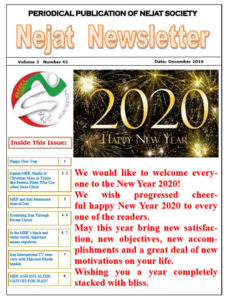
Nejat Newsletter No. 67

Inside This Issue:

– Happy New YearNejat Newsletter
– Iranian MEK Jihadis at Christmas Mass in Tirana like Pontius Pilate Who Crucified Jesus Christ
– MEK and fuel demonstrations in Iran
– Syranizing Iran Through Recent Unrest
– In the MEK’s black and white world, departure means expulsion
– Iran International TV interview with Massoud Khodabandeh
– MEK AND ISIS ALTERNATIVES FOR IRAN

To download the PDF file click here

January 14, 2020 0 comments
FacebookTwitterPinterestWhatsappTelegramSkypeEmail
MEK- Mujahedin khalq Organization
Mujahedin Khalq; A proxy force

Pompeo keeps MEK at arms length

An Iran hawk who advocated killing general Qassim Soleimani, US Secretary of State Mike Pompeo has ordered his diplomats to limit contacts with militant Iranian exile and opposition groups that support either regime change or greater rights for ethnic groups like Kurds and Arabs.
Coming on the back of the Soleimani killing, Mr. Pompeo’s directive appears to put an end to the Trump administration’s hinting that it covertly supports insurgent efforts to at the very least destabilize the Iranian government if not topple it.
A litmus test of the directive by Mr. Pompeo, known to have a close relationship with Donald J. Trump, is likely to be whether the president’s personal lawyer, Rudolph Giuliani, distances himself from the controversial National Council of Resistance of Iran (NCRI), an offshoot of the Mujahedeen-e-Khalq, a group that was taken off the US Treasury’s list of designated terrorists several years ago.
Mr. Giuliani is a frequent, well-paid speaker at gatherings of the group that has built a significant network among Western political elites. The council and the Mujahedeen openly call for regime change in Iran.
The Mujahedeen were moved with US assistance from their exile base in Iraq to a reportedly Saudi-funded secretive facility in Albania.
A New Jersey-based lobbying firm hired by the NCRI, Rosemont Associates, reported last year in its filing as a foreign agent frequent email and telephone contact on behalf of its client with the US embassy in the Albanian capital of Tirana as well as Brian Hook, the US Special Representative for Iran, and Gabriel Noronha, an aide to Mr. Hook.
In his directive, Mr. Pompeo said that “direct US government engagement with these groups could prove counterproductive to our policy goal of seeking a comprehensive deal with the Iranian regime that addresses its destabilizing behaviour.”
The secretary went on to say that Iranian opposition groups “try to engage US officials regularly to gain at least the appearance of tacit support and enhance their visibility and clout.”
Mr. Pompeo’s cable, while keeping a potential negotiated deal with Iran on the table, does not stop other US government agencies from covertly supporting the various groups, that also include Arab Struggle Movement for the Liberation of al-Ahwaz (AMLA), the Komala Party of Iranian Kurdistan, and the Kurdish Democratic Party of Iran (KDPI).
Iran, which has long believed that the United States, alongside Saudi Arabia and Israel, supported the Mujahedeen as well as ethnic militants that intermittently launch attacks inside Iran, is likely to take a wait-and see-attitude towards Mr. Pompeo’s directive that could be seen as a signal that the Trump administration is not seeking regime change.
The timing of the directive is significant. Iran responded to the killing of Mr. Soleimani with carefully calibrated missile attacks on US facilities in Iraq in a bid to create an environment in which backchanneling potentially could steer the United States and Iran back to the negotiating table.

While it was uncertain that one round of escalated tensions would do the trick, potential efforts were not helped by the death of Oman’s Sultan Qaboos bin Said al Said, a key interlocutor who has repeatedly helped resolve US-Iranian problems and initiated contacts that ultimately led to the 2015 international agreement that curbed Iran’s nuclear program.
In his directive, Mr. Pompeo, referring to Komala, acknowledged that “Iran’s regime appears to assess that the United States and/or Israel support this group of militant Kurds.”
Iranian perceptions were reinforced not only by calls for regime change by senior figures like Mr. Giuliani and Saudi prince Turki al-Faisal, a former head of the kingdom’s intelligence service and ex-ambassador to Britain and the United States, but also the appointment in 2018 of Steven Fagin as counsel general in Erbil in Iraqi Kurdistan.
Shortly before moving to Erbil, Mr. Fagin met In Washington as head of the State Department’s Office of Iranian Affairs, with Mustafa Hijri, leader of the KDPI as it stepped up its attacks in Iranian Kurdistan.
Iranian perceptions were further informed by the appointment of John Bolton, Mr. Trump’s since departed national security advisor and like Mr. Giuliani a frequent speaker at NCRI events, who publicly advocates support of ethnic insurgencies in Iran in a bid to change the regime.
As Mr. Trump’s first director of the Central Intelligence Agency, Mr. Pompeo named Michael D’Andrea, a hard-charging, chain-smoking covert operations officer, alternatively nicknamed the Dark Prince or Ayatollah Mike, whose track record includes overseeing the hunt for Osama Bin Laden, as head of the CIA’s Iran operations.
The appointment was followed by publication by a Riyadh-based think tank believed to be close to crown prince Mohammed bin Salman of a study for Saudi support for a low-level Baloch insurgency in Iran. Prince Mohammed vowed around the same time that “we will work so that the battle is for them in Iran, not in Saudi Arabia.”
Pakistani militants have claimed that Saudi Arabia had stepped up funding of militant madrassas or religious seminaries in the Pakistani province of Balochistan that allegedly serve as havens for anti-Iranian fighters.
The New York Times reported this week that aides to Prince Mohammed had in the past discussed with private businessmen the assassination of Mr. Soleimani, an architect of Iran’s regional network of proxies, and other Iranians as well as ways of sabotaging the country’s economy.
Mr. Pompeo’s directive is unlikely to persuade Iran that Washington has had a change of heart. Indeed, it hasn’t. Mr. Trump maintains his campaign of maximum pressure and this week imposed additional sanctions on Iran.
Nonetheless, potentially taking regime change off the table facilitates backchanneling that aims at getting the two nations to talk again.
Dr. James M. Dorsey is a senior fellow at Nanyang Technological University’s S. Rajaratnam School of International Studies, an adjunct senior research fellow at the National University of Singapore’s Middle East Institute and co-director of the University of Wuerzburg’s Institute of Fan Culture
James M. Dorsey, Euro-Asia Times,

January 13, 2020 0 comments
FacebookTwitterPinterestWhatsappTelegramSkypeEmail
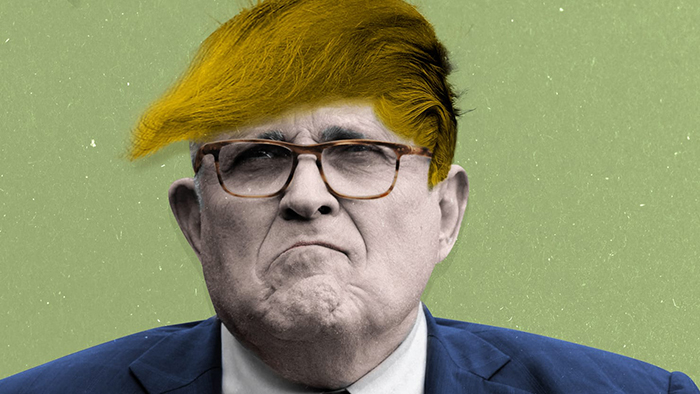
Rudy Giuliani
Mujahedin Khalq; A proxy force

MEK terrorists and mercenary advocates

It was the day of President Trump’s long awaited meeting with Ukrainian President Volodymyr Zelensky at the United Nations in New York City — Sept. 24, 2019.

Trump’s attorney Rudy Giuliani was there at the U.N., too, but he was talking about something else.

“I am for regime change,” Giuliani told a crowd. “Down with the tyrants in Iran. Down with the ayatollah and the mullahs and all the crooks.”

Giuliani added that he was speaking in his “individual capacity,” a line he has used to describe a near-decade of apparent advocacy on behalf of the Mujahideen-e Khalq (MeK), an Iranian dissident group alternately described as a cult, terrorists, or the world’s only fusion of Marxist-Leninist thought and Islamism.

But at a time when relations between the U.S. and Iran have worsened to the brink of war, Giuliani’s advocacy for a group that the U.S. government said last year could serve as a potential successor to the current regime in Tehran can be viewed in a new light.

The Trump Administration’s Iran Fiasco

The Daily Beast reported on Tuesday that Trump has asked Giuliani for advice about Iran since ordering the strike that killed Iranian commander Qasem Soleimani last week.

Throughout the Ukraine scandal for which President Trump currently faces an impeachment trial in the Senate, Giuliani spoke with the President about foreign policy and that country’s willingness to supply dirt. Most recently, Trump reportedly spoke with Giuliani immediately after the former New York City mayor returned from his December trip to Kyiv.

Giuliani’s history with MeK extends as far back as his ties to Ukraine, and has shaped much of the former U.S. Attorney for the Southern District of New York’s post-government, buck-raking career over the past decade.

The group launched a lobbying and public relations blitz in 2011, paying dozens of prominent Americans — ranging from Giuliani to Gen. Wesley Clark to former Secretary of Homeland Security Tom Ridge — to advocate for the State Department to remove MeK from its list of state-sponsored terrorist groups.

The State Department had added the group to its list of terrorist organizations in 1997, saying that it had been responsible for killing Americans in the past.

But the lobbying efforts paid off; the State Department removed MeK from the list in September 2012.

Most of the group’s high-profile mercenary advocates dropped off; Giuliani stayed on.

He has traveled to Paris for the MeK’s annual meeting multiple times since first going in 2012, and has remained a consistent advocate for the movement since.

The MeK opposed the nuclear deal concluded with Iran under the Obama administration in part because it views itself as a potential successor to the current Iranian regime; Giuliani called the agreement “catastrophic” at the time it was signed.

He appeared at another MeK event in Warsaw in February 2019, which occurred at the same time as Secretary of State Mike Pompeo and Vice President Mike Pence hosted an international summit in the Polish capital regarding U.S. foreign policy on Iran.

It is not known if Giuliani met with Pompeo or Pence while on that trip; his presence reportedly annoyed U.S. officials managing the summit.

In July, in response to a TPM article about an event he was headlining at the MeK’s compound in Albania, Giuliani tweeted that criticism of MeK was “the false propaganda of the Iranian #RegimeOfTerror.”

Giuliani, Lieberman Attend Iran Cult Event |Talking Points Memo. The author is just ignorantly repeating the false propaganda of the Iranian #RegimeOfTerror. M.Rajavi is supported by leaders all over the world.Keep watching my tweets and dismiss #FAKE NEWS https://t.co/m7O3YBYSRa

— Rudy Giuliani (@RudyGiuliani) July 13, 2019

“Utmost respect for Albania,” Giuliani was quoted as saying after the event, where he met with MeK’s leader Maryam Rajavi.

FARA filings show that Giuliani’s Sept. 24 rally in support of MeK was preceded by a meeting with lobbyists for the group on Sept. 23 and followed by a meeting with the same lobbyists on Sept. 25.

And as the potential for open conflict between the U.S. and Iran has continued to percolate, Giuliani has used the same language around Iran that he has used when speaking on behalf of his MeK backers.

The Ayatollahs’ 40 year #REGIMEOFTERROR is, and has been throughout, the biggest sponsor of terrorism in the world.

The Obama-Biden administration practiced appeasement.

The Dems want to return to appeasement. The only way to avoid war is to stand up to them.

— Rudy Giuliani (@RudyGiuliani) January 8, 2020

By Josh Kovensky, talkingpointsmemo
Josh Kovensky is an investigative reporter for Talking Points Memo, based in New York. He previously worked for the Kyiv Post in Ukraine, covering politics, business, and corruption there.

January 12, 2020 0 comments
FacebookTwitterPinterestWhatsappTelegramSkypeEmail
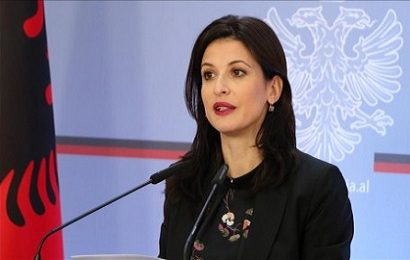
Minister of Justice in Albania - Etilda Gjonaj
Albania

Open letter to Minister of Justice of Albania, Ms Etilda Gjonaj

Dear Madame,
We heard the news of some prisoners being pardoned on New Year’s Eve, and we hoped for justice in the light of your kindness.
Security and progress in human societies will be realized with more love and forgiveness because God loves the kind.
It takes courage to show kindness and you have shown that you have that courage. We congratulate you and your government for this courage and wish you success in serving your country and its people.
Madame Justice Secretary,
I would like to draw your attention to a case that appears to violate justice in your country, and which violates the rights of an innocent person and surely you will agree.

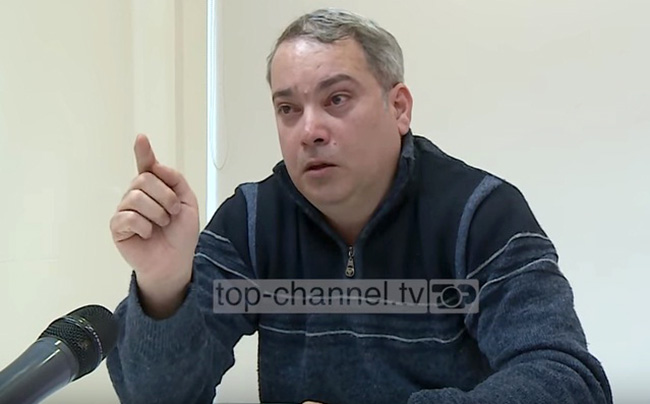
Ehsan Bidi

Last August, a friend of ours – Ehsan Bidi – was arrested and is being held in a closed camp in Mans. He has been denied access to a lawyer.
It should be noted that Ehsan Bidi has been in your country for six years already, has complied with all the rules and was given a ten-year residence permit by the government.
With his background, according to international laws and standards, he is recognised as a refugee. But unfortunately, he has been arrested and his human rights and asylum rights have been violated. He had chosen to remain in your country in the hope of finding a better and easier life because he believes he can have a good life in a law-abiding and civilized country, in line with international law, just like anyone else.
Madame Secretary, we look forward to seeing your courage in administering justice in this case. We urge you not to allow the violation of the rights of anyone who has sought refuge in your country and who has been bound by and has respected all the laws of the country since the time he arrived.
With the greatest respect
1- Mohammad Azim Mishmast
2- Hadi Sani Khani
3- Hassan Heyrani
4- Abdolrahman Mohammadian
5- Hassan Shahbaz
6- Ali Hajari
7- Ehsan Bidi
8- Gholam Mirzai
9- Malek bit Mashal
10- Moussa Damroudi
11- Gholamreza shekari
12- Parviz Heydarzade

January 12, 2020 0 comments
FacebookTwitterPinterestWhatsappTelegramSkypeEmail
The Trump Administration’s Iran Fiasco
Mujahedin Khalq; A proxy force

Trump Administration and the MEK terrorists

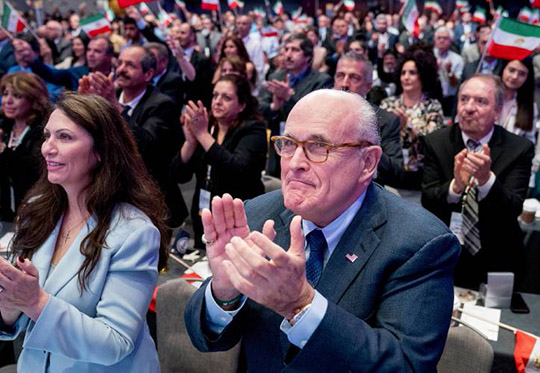
Former New York Mayor Rudolph Giuliani speaks in front of portraits of deceased members of the Iranian dissident group Mujahedeen-e-Khalq (MEK),

In the wake of the US assassination of Iranian commander Qassem Soleimani, an obscure group of Iranian dissidents once classified as a terrorist organisation by the US celebrated the news.

“In Tehran, Isfahan, Qom and Qaemshahr, among numerous other cities, MEK supporters were celebrating Soleimani’s death by throwing parties and handing out pastries,” the People’s Mujahideen of Iran tweeted, with pictures of jubilant supporters.

The MEK — officially the Mujahedeen-e-Khalq, or the People’s Mujahideen of Iran in English — has waged war against the Islamist regime in Iran since it seized power in 1979. Formerly based in Iraq, the group is believed to have killed thousands of Iranians in terror attacks.

In Tehran, Isfahan, Qom and Qaemshahr, among numerous other cities, MEK supporters were celebrating Soleimani’s death by throwing parties and handing out pastries.#Iranhttps://t.co/Xp7v6kDX07

— People’s Mojahedin Organization of Iran (PMOI/MEK) (@Mojahedineng) January 7, 2020

But far away from the battlefields of the Middle East, the MEK has also waged a campaign for influence in glossy functions at diplomatic events in western capitals, successfully cultivating powerful allies in western governments.

Among them are current and former officials in the top echelons of the Trump administration — including those who Trump regularly turns to advice on Iran, such as personal attorney, Rudy Giuliani.

Soleimani was “directly responsible for killing some of my MEK people,” Giuliani told The Daily Beast in an interview on Monday, making no attempt to disguise his closeness to the group.

“We don’t like him very much.”

And its not just Giuliani who has longstanding ties to the MEK.

In September, Secretary of State Mike Pompeo attended an event on the fringes of the United Nations assembly in New York alongside the MEK.

Hawkish national security adviser John Bolton, who departed the administration in September after reportedly pushing for Trump to launch strikes against Iran, also had links to the MEK. Bolton has attended the group’s conferences, and long served as its most powerful advocate in Washington DC.

Eli Clifton, an expert on US foreign policy at the Quincy Institute for Responsible Statecraft, told Business Insider that the MEK had long advocated the assassination of Iranian regime officials.

“The MEK clearly endorses the assassination of Iranian government officials and employees. In 2012, NBC News reported that the MEK was directly involved in the assassination of Iranian nuclear scientists,” Clifton wrote in an email Wednesday.

The MEK emerged in opposition to the then ruler of Iran, the Shah, in the late 1960s, inspired by a blend of Marxist ideology and Islamic theology.

When Islamist rivals seized control of the country after the Islamic Revolution in 1979, the MEK fled to neighboring Iraq, where it fought against Iran alongside then-president Saddam Hussein’s forces.

Defectors have claimed that the group seeks to brainwash members — forcing them to confess to sexual fantasies in bizarre public shaming rituals and to send away their children to be brought up by others. It has been described by several ex-members as a cult.

Several thousand MEK members live in a compound in Albania, where they reportedly spend their days on social media distributing anti-Iranian propaganda.

In Paris, where the MEK’s official headquarters is located, the group holds glitzy functions as it seeks to cultivate influential western officials. It has hired Iran hawks in Washington to speak at its events, paying them large speaking fees. It was eventually de-listed as a terror group by the US in 2012 following a long lobbying campaign.

Despite the rigid control it exerts over members, it has sought to portray itself as the only viable democratic alternative to the current Iranian regime.

“When the president’s personal attorney and former national security adviser have effectively endorsed the MEK as a legitimate opposition group and a viable government exile for Iran, it certainly raises serious questions about the extent to which the MEK is influencing the administration’s Iran policy,” Clifton told Business Insider.

The group’s activities in Europe have attracted the ire of Iran, with French officials in October 2018 accusing Iranian intelligence of being behind a plot to bomb a rally held by the MEK’s political arm in Paris. The rally was attended by Giuliani and Newt Gingrich, former House speaker and Trump ally.

And with the US now taking the hardline stance towards Iran it has long advocated, it will be likely seeking to consolidate its influence in Washington DC.

Tom Porter, Business Insider

January 11, 2020 0 comments
FacebookTwitterPinterestWhatsappTelegramSkypeEmail
Mujahedin Khalq Organization as a terrorist group

If Soleimani is a ‘terrorist’, when will the US de-list ISIL?

I remember when ISIL first burst into the global consciousness – with the fall of Mosul on June 4, 2014. I happened to be visiting my parents.

My mother rushed in and told me that terrorists in Toyotas had overrun Iraq’s second-largest city in a modern-day Mongol Horde.

I rolled my eyes.

I explained to her that, as usual, she was exaggerating. What she was describing was undoubtedly impossible, and I patiently explained why:

The West has satellites which are tracking everyone at every moment – surely they would see fleets of armed trucks speeding towards Iraq. Undoubtedly they would open fire, not only to get the human target practice they so adore but because – despite an alleged “withdrawal” at the end of 2011 – they had 30,000 American soldiers and contractors in Iraq to protect. Certainly they would have seen this mass army amassing before they ever left their barracks and notified somebody to do something, if the US didn’t want to fight them. Frankly, not even the US would unleash something which my Mom was describing.

Moms… so gullible and prone to worry, eh? They mean well, but I had no doubt I was totally in the right, and if my Mom wouldn’t or couldn’t understand… what can a son do but humor their mom?

It turned out that I was the gullible one and that my Mom was right. (As I get older I realize this happens more often than I would have previously imagined.)

I was gullible to believe that the US would not do all those things I told my mom they would not, but I was not totally stupid: The spectacularly swift rise of ISIL still cannot be properly explained by Washington.

But the current US president claimed to have the answer in August 2016 – Donald Trump said his predecessor Barack Obama was the “founder of ISIS”.

Certainly that resonated around the world and inside the US. 9/11 made widespread the knowledge that the US created the Taliban, who had come back to bite the hand that fed it. That September Obama returned US soldiers to Iraq, something the average American surely did not want.

Trump toned down his comments slightly, but Trump the campaigner had done what he repeatedly did and what immediately earned him the enmity of the US 1%, Deep State and Wall Street – he openly told truths about US neo-imperialism, which no US presidential candidate had ever even come close to suggesting. Combine this “Main Street” honesty with his similar “you can’t say that” truths against free markets/free trade, as well as the total corruption of the two US political parties, and that’s how you get a reality-TV star as president of the self-appointed “leader of the free world”.

The US returned to Iraq, but they continued to let ISIL run free. Today, the whole world knows that Iranian General Qassem Soleimani – appallingly assassinated by Trump – was the architect who led ISIL’s defeat.

The assassination on Iraqi soil of Iran’s Qassem Soleimani will produce many things, and global resentment and hatred for Washington is undoubtedly already one of them.

But the US has known of Iran’s leadership in the war on terror, and the West’s terrorist tolerance, for years. On June 5, 2015, top US news magazine Newsweek ran a story about Soleimani entitled “Iranian Military Mastermind Leading Battle to Recapture Tikrit from ISIS”.

And yet Washington’s propaganda line, being dutifully and unquestioningly repeated by countless US and Western “journalists” is that Soleimani was killed because he was a “terrorist”?

That is insulting on too many levels to list in this brief article.

But it’s not only the brave, incredibly missed martyr Soleimani – whom I described as “the Muslim Che Guevara”, because both were international anti-imperialist fighters and heroes slain by Washington – but all of Iran which fights ISIL.

The West knew this already, too: When it comes to foreign policy Newsweek never seriously deviates from the Washington & Wall Street propaganda lines – the notion is laughable – which is why they probably deeply regret their 2nd-most recent issue: on December 27, 2019, their very cover featured Supreme Leader Ayatollah Khamenei with the caption, “If Iran falls, ISIS rises again.”

Yes. Of course. The whole world knows this about Iran, about Soleimani and about the anti-terror ideals of the Iranian Islamic Revolution. The whole world knows the US and their allies do nothing to stop ISIS.

For decades Iran has been the only country which has sacrificed time, money and lives for foreigners in the international fight against US capitalist-imperialism. This is why the illegal, inhuman slaying of Soleimani must be dressed up as “anti-terrorism” by Washington.

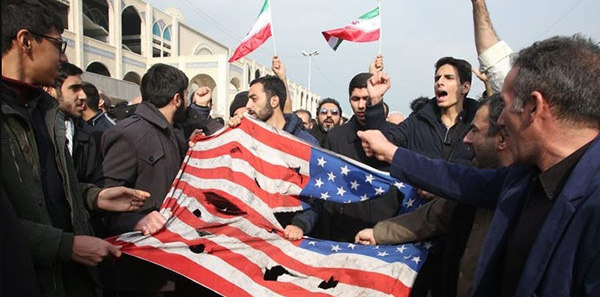
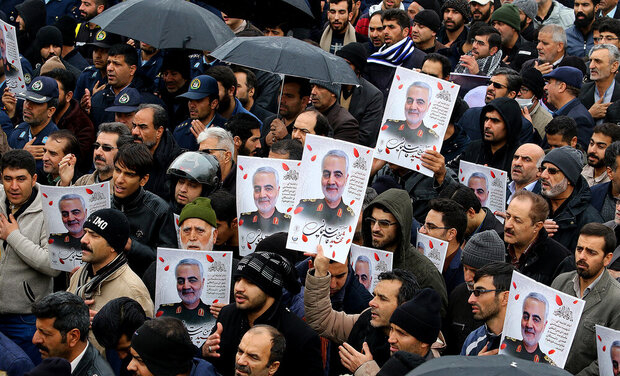
The huge turnout of Iranians for the funeral procession of Major General Qassem Soleimani belies US claims that Iranians were not “saddened” by the heinous act against the national hero.

I described how, ever since the WMD lie of 2003, US democracy has featured a “false-life syndrome”, where everyone is forced to publicly repeat lies about the machinations of the Pentagon. The Iraq War fundamentally changed US democracy by demanding that no one seriously question the official narrative – no matter how preposterous – something which did occur during their Vietnam War.

WMDs, Soleimani and the creation and support of ISIL – all lies from Washington. If the US did not support ISIL why did Soleimani have to be invited by the Iraqi government to fight them? Either the spectacularly-funded US military is even more rife with corruption than we already know, or they never planned to fight ISIL, but to aid them.

And who is aided more by the slaying of Soleimani than the ISIL terrorists?

That is the fundamental moral question, and this question goes beyond geopolitical strategy – at least to the average, normal person.

However, Western liberal, aristocratic, domestically-resented democracies cannot honestly answer. This is why Germany, France and the UK all publicly supported the assassination, in great shame to their own people.

If Washington assassinated Soleimani because he was a “terrorist”, then logically they should now de-list ISIL as a terrorist group. Why not just come clean, finally?

The entire world acknowledges that Soleimani fought terrorism, but if he must be rebranded as a “terrorist” in the West – in Orwellian fashion – then the time has come for the US and its allies to admit they are collaborating with ISIL. Fighting against ISIL makes one a “terrorist”, not fighting with them.

Why is that so hard to believe? The current US president said the same thing – are we both wild conspiracy theorists?

Hardly – we are simply two people who know just a bit of basic history. Hillary Clinton – who would have probably started a full-scale war with Iran by now – got the horrific, despised anti-Iran cult the MKO (MEK) de-listed even though they are still detestable terrorists and murderers. The US supported the Taliban. The US supports the neo-Nazi groups who led the coup in Ukraine, and who could easily be behind the latest example of the inhuman Western sabotage of airplanes in Iran – today’s terrible crash of a Ukraine International Airlines flight from Tehran.

Why not ISIL as well?

Above all, it would make it clear that Washington’s main enemy in the Muslim World is the continued success and support of the 1979 popular revolution in Iran, and the bad example it sets for their neo-imperial clients worldwide.

Trump claims he wants to fight ISIL, and even claims he is willing to work with Iran to do so, but then he assassinates the leader of the anti-ISIL fight and falsely brands him a “terrorist”?

The US assassination of Iranian General Qassem Soleimani underscored that President Trump is an “inexperienced, impulsive and perpetually aggrieved commander in chief,” according to an editorial in The New York Times.

Calling anti-terror hero Soleimani a “terrorist” is obviously a desperate way to falsely brand all of Iran as “terrorists”, but the world now knows the real truth better than ever. Washington, in their imperialist arrogance, believes that we do not.

Newsweek, Obama, the Clintons and Trump do not care for Iraq or about stopping ISIL, not like Soleimani and Iran.

No amount of Orwellian, mind-erasing doublespeak from Washington will ever change that, and no matter how much they aid ISIL by assassinating its enemies.

By Ramin Mazaheri
(The views expressed in this article do not necessarily reflect those of Press TV.)

January 11, 2020 0 comments
FacebookTwitterPinterestWhatsappTelegramSkypeEmail
weekly digest
Iran Interlink Weekly Digest

Iran Interlink Weekly Digest – 266

++ After the illegal assassination of general Qassem Soleimani, videos and audios in support of president Trump flooded Farsi social media. These all turned out to be fake. The only ones that were true were MEK outlets, which genuinely support Trump. Very quickly an audio emerged from Massoud Rajavi – presumed dead – as the only Iranian who officially and publicly supported Trump and endorsed the assassination. As usual in the audio he threatens the ex-members with death. But, his message and further statements by Maryam Rajavi say this assassination is not enough. ‘Now you have bombed the convoy in Iraq you should hit them and their places in Iran and Iraq and Syria’, scream the Rajavis. In the end Massoud and Maryam both ask the Americans to re-arm the MEK. Other MEK outlets ranted, using foul language against anyone who doesn’t praise Trump. Ironically that includes the poet laureate of Iran who says he feels sad they have killed Soleimani. All the MEK sites went on full on attack against Mahmoud Dolatabadi. ‘How dare you say you are sad; your hands are soaked in blood and etc’, they screamed. This ranting caused a serious backlash for Rajavi, especially after everything died down and Trump didn’t go to war with Iran. News from inside MEK says that members of the NCRI are really angry about Rajavi jumping on the bandwagon without thinking it through. One spoke to MEK supporters in London. They told him ‘we have a thousand questions after this. Not least is that we MEK are on our backs, Maryam Rajavi has been deported from EU to Albania, Massoud has not been seen for decades and the US government is saying nobody allowed to talk to you. Instead of working on this you are asking for arms in Albania. To do what? Where? How?’ Further questions spilled out: ‘Are we Iranian or not? If we are, didn’t we see the number of people who came out in support of Soleimani?’ The NCRI representative says that ‘we [in the NCRI] all say the same things, we also have the same questions, but nobody in MEK is answering. It is a self-inflicted wound. You didn’t have to do this. Even the US and Israel didn’t ask us to support the assassination like that. This is the madness of Maryam Rajavi.’ As for the audio being genuine or not. Most MEK supporters think not. Especially after it was pointed out that the voice is that of a 30-year-old man. Rajavi – if alive – is around 70. So, members don’t believe this is his voice. Javad Firouzmand from Arya Association in Paris put out a short note directed at Rajavi in which he reminds him he’s always been trying to jump on somebody’s bandwagon – Khomeini, Saddam, Pompeo. He ends it by saying ‘once again you smelled a barbeque and invited yourself to the feast. But you are mistaken, that is the smell of branding donkeys!’

In English:

++ Before the illegal assassination of general Soleimani, Iraqi militia leader Abu Mahdi al-Muhandis, and those accompanying them, news about the MEK focused on their failure to influence the fuel protests in Iran and their continued efforts to use social media to create fake news and pervert the narrative on Iran toward their regime change agenda. Post-Soleimani, it became clear that the MEK are totally isolated on this issue as the only Iranians who praised Trump and condemned Soleimani. Massoud Khodabandeh pointed out, in an article published by The Iranian and Responsible Statecraft, that “the blinkered aim of the Trump administration’s foreign policy to manufacture regime change against Iran by any means possible including all-out war has in fact resulted in the opposite result. Regime change is now in its coffin and the assassination of general Soleimani is the last nail hammered in.” And concluded that “the unwanted assassination of Soleimani will result in tectonic shifts in the world order. No matter how hard mainstream media in the West works to normalize America’s actions, security and military experts the world over will have their own ideas about what the future holds.”

++ The MEK is also mentioned in some articles as having a negative influence on US foreign policy, acting through proxies like Giuliani, Bolton and Mukaskey. This led to Pompeo ordering American officials not to talk with them according to Nick Wadhams in Bloomberg. “’Direct U.S. government engagement with these groups could prove counterproductive to our policy goal of seeking a comprehensive deal with the Iranian regime that addresses its destabilizing behavior,’ the cable said. Exiled Iranian opposition groups ‘try to engage U.S. officials regularly to gain at least the appearance of tacit support and enhance their visibility and clout.’ Cut Ties With MEK – Pompeo Ordered Officials.”
2020/01/10

January 11, 2020 0 comments
FacebookTwitterPinterestWhatsappTelegramSkypeEmail
: US assassination of Qassem Soleimani
Mujahedin Khalq; A proxy force

After Soleimani’s Assassination, There Will Be No Regime Change in Tehran

Anyone who believes that President Trump’s order to illegally assassinate Quds Force leader Qassem Soleimani, Iraqi militia leader Abu Mahdi al-Muhandis, and several more Iraqis, was an act of strength has not been properly paying attention. This is the latest in a series of stupid policy errors by this administration which have not only strengthened the hand of America’s enemies but have also now ensured that the rest of the world, with the exceptions of Israel and Saudi Arabia, now at best views the U.S. with mistrust, or at the very worst hate America more than any other country on earth. This is a remarkable achievement for a man who promised to end the “endless wars” and “drain the swamp.”

Trump started his presidency with the ambition of overturning the Obama administration’s achievements. However, he inherited a foreign policy already predicated on waging war and which was soon re-staffed and promoted by Republican warmongers. In this context, withdrawing unilaterally from the Iran nuclear deal might have appeared to be a strong-arm tactic to Trump, but to America’s allies in Europe it looked like a betrayal, and a slap in the face. Still, none were willing to come out on the side of Iran at that time. Even Russia and China were holding back at that stage. So, what were the steps in between which culminated in late December in an unprecedented four days of joint naval manoeuvres between Iran, China, and Russia in the Indian Ocean and Gulf of Oman? What happened to embolden this trio to flex military muscle in the Middle East?

A review of these steps reveals that the blinkered aim of the Trump administration’s foreign policy to manufacture regime change against Iran by any means possible including all-out war has in fact resulted in the opposite result. Regime change is now in its coffin and the assassination of Soleimani is the last nail hammered in.

Instead of promoting freedom and democracy in the Middle East, American interference is destroying every possibility of ordinary people rising up and demanding change from their own governments. In Syria, the people rose up against President Bashar al-Assad because of genuine grievances against that regime. The outcome of U.S. support for Sunni extremists in Syria has been a swing from people supporting the American aim of ousting Assad to rallying behind their own terrible government to save them from the spread of Islamic fundamentalism. With an irony that can be lost on no one, authoritarian Russia and the theocracy in Iran are now allies of Syria in that struggle.

In another reckless act of overturning Obama’s legacy, the new Trump administration halted Hillary Clinton’s plan to de-radicalise the Mojahedin-e Khalq (MEK) in Albania. Since then, American anti-Iran politicians have stuffed the MEK down the throats of the international community as the regime change opposition that will bring freedom and democracy to Iran. Since Iranians hate the MEK more than the current Islamic Republic, this has been a gift to the hard-liners in Iran. To quell every protest or demonstration since then, Iran’s security forces have only to claim that MEK are involved in inciting violence for the ordinary people to go home and announce their abhorrence of the MEK.

American actions are consolidating people around their own hated governments instead of helping them express their legitimate demands. Secretary of State Mike Pompeo’s response to the anti-government protests in Iran in November was to repeat false information published by the MEK about the death toll. When Pompeo retweets MEK propaganda it destroys any trust among Iranians that the U.S. has their interests in mind.

In another remarkable example of how Pompeo has frittered away American power and influence, just weeks ago, disgruntled Iraqi citizens were in the streets demonstrating against Iranian interference in their country. Instead of supporting them, Pompeo oversaw the U.S. bombing of Iraqi militia forces that were fighting against ISIS. The Iraqi people cannot take the U.S. side over this no matter how anti-Iran they are. If America had done nothing, said nothing, Iraqi people would still be in the street demonstrating against their own government. Instead, different Iraqis attacked the U.S. Embassy in Baghdad. Now, in a pivotal act of hubris, the illegal assassination of Soleimani and Iraqi militia leaders at an international airport not only allows Iran to describe the U.S. as a terrorist state, but has brought Iranians of every belief together to rally together to mourn a national hero, the man who saved Iran from ISIS.

But it would be a mistake to believe that the U.S.’s Middle East foreign policy mistakes only impacted that region. In 1981, France gifted the CIA some land to host the MEK outside Paris from where they could plan their armed resistance to the new regime. Although France did not use the MEK politically as America did, their presence was tolerated. Until, that is, MEK activities began to impact European security and democracy.

In 2017, John Bolton, just before he became Trump’s National Security Advisor, promised the MEK they would celebrate in Tehran before the 40th anniversary of the Iranian Revolution in February 2019. That did not happen, of course. But events subsequent to this promise certainly indicated there were already plans afoot to use the MEK to undermine European policy toward Iran. A bomb plot against the MEK in France was discovered by security forces in France and Belgium to have been a false-flag operation by the MEK used to blame and demonize Iran. After numerous acts of violence and confirmation that the MEK had funded Spain’s far-right Vox party in its EU election bid, several European countries, including Germany and the Netherlands as well as France and Belgium moved to expel MEK leaders, including leader Maryam Rajavi, to Albania.

In Albania, the MEK have caused multiple headaches for the government and the opposition there. The worst result of which has been the EU’s refusal to allow Albania to join the union. After kicking out the MEK, no European country would allow them to enter through the back door again.

Significantly, what these policy steps over time have revealed to America’s foes and her friends alike is that the U.S. cannot be trusted. The Trump administration has shown a reckless disregard for normal behavior in the international scene. It acts with callous cruelty and indifference against enemies and allies alike.

The unwanted assassination of Soleimani will result in tectonic shifts in the world order. No matter how hard mainstream media in the West works to normalize America’s actions, security and military experts the world over will have their own ideas about what the future holds.

Responsible Statecraft

January 9, 2020 0 comments
FacebookTwitterPinterestWhatsappTelegramSkypeEmail
Newer Posts
Older Posts

Recent Posts

  • MEK agents near schools in Tirana, Albania

    October 17, 2026
  • Expectations of human rights bodies regarding censorship within the MEK

    October 13, 2026
  • The Jamalis’ Plea for Help: Save Our Brother from the MEK!

    October 11, 2026
  • Testimonies of Participants in the MEK’s Staged Propaganda Stunt in Karaj

    October 7, 2026
  • Giuliani’s MEK ties have dogged him for years

    October 6, 2026
  • Facebook
  • Twitter
  • Instagram
  • Youtube

© 2003 - 2025 NEJAT Society . All Rights Reserved. NejatNGO.org


Back To Top
Nejat Society
  • Home
  • Articles
  • Media
    • Cartoons
    • NewsPics
    • Photo Gallery
    • Videos
  • Publications
    • Books
    • Nejat NewsLetter
    • Pars Brief
  • About Us
  • Contact us
  • Editions
    • عربي
    • فارسی
    • Shqip