Nejat Society
  • Home
  • Articles
  • Media
    • Cartoons
    • NewsPics
    • Photo Gallery
    • Videos
  • Publications
    • Books
    • Nejat NewsLetter
    • Pars Brief
  • About Us
  • Contact us
  • Editions
    • عربي
    • فارسی
    • Shqip
Nejat Society
Nejat Society
  • Home
  • Articles
  • Media
    • Cartoons
    • NewsPics
    • Photo Gallery
    • Videos
  • Publications
    • Books
    • Nejat NewsLetter
    • Pars Brief
  • About Us
  • Contact us
  • Editions
    • عربي
    • فارسی
    • Shqip
© 2003 - 2024 NEJAT Society. nejatngo.org
MKO formers in Tirana
Former members of the MEK

We are not terrorists!

Former MEK speak out: We are not terrorists, do not drive us out!

The Mojahedin members who deserted the camp in Manëz regret that they worked for Saddam Hussein and demand that they not be persecuted.

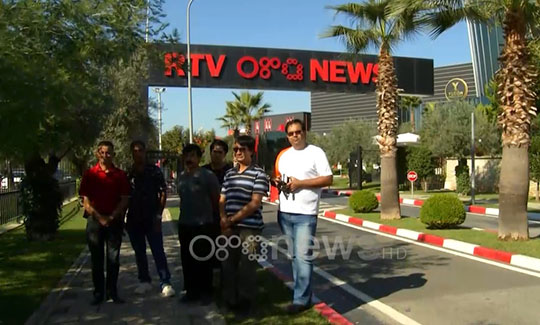
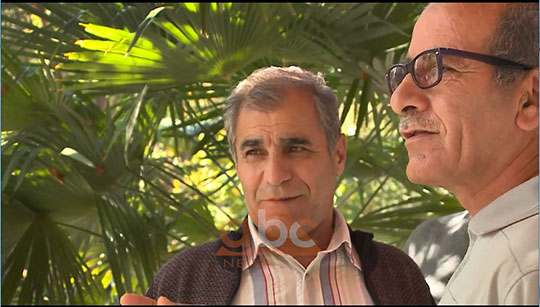
Defectors from the Mojahedin camp in Manëz, Durres, demand that they are not accused of being terrorists and agents of Iran. They admit they had been fighting for Saddam Hussein for years but have repented and now want to live away from the pressures and threats.

https://dlb.nejatngo.org/Media/Interview/Tirana_Defectors_Jazexhi.mp4

Mojahedin defector: It is not true that we are terrorists. We left this organization to live our lives as civilians. We no longer want to fight as jihadis. We seek to live freely, as this organization has made many mistakes in the past.

They ask the Albanian government not to expel them.

Mojahedin defector: I am here to tell the Albanian public and the government that we are not agents of Iran. I was part of Saddam Hussein’s regime and then fought alongside him, now I want to live as a free citizen.

About 4,000 Mojahedin live in the Manëz camp and it turns out that 400 people have left there, 40 of whom live in Tirana.
ORA News, Translated by Iran Interlink
October 28, 2019 0 comments
FacebookTwitterPinterestWhatsappTelegramSkypeEmail
MKO formers in Tirana
Mujahedin Khalq Organization's Propaganda System

Iranians labelled by MEK: We are not agents, we live by Albanian laws

Former MEK in Albania Expose MEK Stupid Lies

On 23 October, the Albanian Chief of Police exposed himself to ridicule by reading out badly a prepared statement written by the MEK disseminating fake news. The statement claimed that a terrorist cell run by an individual in Iran, helped by several named individuals involved in organised crime and a MEK associate who lives in Austria and whose mother is trapped in the MEK camp in Manëz, Durres, were intent on plotting to kill the Mojahedin in Albania in March 2018. This is what the Police Chief read out loud. No evidence was produced.

To counter the backlash, the MEK sent one of their veteran spokespersons to Albania in a bid to exert some damage limitation. However, the MEK only managed to make things worse by publicly and randomly accused some former MEK members who, having rejected the group, now live peaceful and law abiding lives in the capital Tirana, of being “agents of the Iranian regime”. The MEK appear to have forgotten that they are embroiled in a court case over exactly this stupid accusation. Albanian journalist Gjergji Thanasi has sued MEK member Behzad Saffari for defamation after Saffari several times made public accusations that Thanasi is an “agent of the Iranian regime”. Putting aside the question ‘what does that actually mean and who actually cares’, we can see there is a clear pattern here. The MEK defends itself by spuriously and falsely attacking others.
In response, a group of former MEK members in Tirana visited the Interior Ministry to denounce the MEK and its fake news and fake labels.[Iran-Interlink comment]

https://dlb.nejatngo.org/Media/Interview/Tirana_Defectors_Jazexhi.mp4

Former members of MEK , the Iranian opposition in Albania, who broke away from the organization, told ABC News on Friday that they live in Albania with residence permits and work permits issued by the Interior Ministry and respect the laws of the country. They consider their former comrades-in-arms to be terrorists and said they were witnesses of the massacres they committed.

Representatives of the Iranian opposition in Albania said on Thursday that other persons, former MEK members, are also in Albania, who, according to them, are ‘agents of the regime’ and should be arrested and expelled from Albania. Ali Safavi, a member of the National Council of Resistance of Iran, told ABC News that Gholam Zadeh Shekari, Hassan Hayrani (Hajrani), Rahman Mohammadi are in Albania, but he doesn’t know where they live.

The aforementioned persons, former MEK members who left the organization, told ABC News on Friday that they live in Albania with residence permits and work permits issued by the Interior Ministry and that they respect the laws of the country.

FULL INTERVIEW

ABC News: Can you tell me your name?

My name is Abdurrahman Mohammadian and I am a former member of the Mojahedin. I separated from this organization two or three years ago and I now live my life in Tirana.

ABC News: What about your friends?

My friends also left the organization and now live their lives as individuals. We do not want anything to do with this organization because we do not see anything in this organization. We left and now we don’t want to know anything about this organization. This is not a good, humanitarian organization, but a terrorist organization. As you know, the name of this organization was blacklisted, on the American terrorism list, it was on the UN blacklist, on the UK blacklist, and on the Canadian blacklist. It was listed as terrorist and has committed acts of terrorism in Iran as a terrorist organization. This is a terrorist organization and we know all about it; this organization did wrong against the Iranian people, they killed a judge in Iraq, Iraqi judges, committed massacres, we saw them, and we are witnesses to that. This organization is afraid that we can talk about these.

ABC News: Are you affiliated with the Iranian government?

No, we do not support anyone, no party, we live our personal lives and we do not want any problems with anyone. But this organization does not want us in this country because we live as free people. They do not want us to live here because other people within the organization see us living as free people and maybe want to come out too. So, they put pressure on us to leave this place because our freedom here is not good for them.

ABC News: Why did you leave MEK?

Because this organization is not good. We used to believe it was a good organization for the Iranian people, but we found out during the years the bad things they did against the Iranian people. We left and also because the pressure on relations in this organization is not good…

ABC News: Do you have permission from the Albanian government to live outside the camp?

Yes, we have permits and every year we renew them and…

ABC News: Who gave the permission?

The interior ministry, the interior ministry gave us work and residence permits. We are legal, we live legally in Tirana, in this country, we have not done anything against the law, we accept the laws in this country, and we live our own personal lives as individuals.

ABC News , Translated by Iran interlink

October 28, 2019 0 comments
FacebookTwitterPinterestWhatsappTelegramSkypeEmail
OLSI_JAZEXHI_Albania
Mujahedin Khalq Organization's Propaganda System

Albanians React to MEK Fake News – State Police Fallen Prey

“Terrorist cell in Tirana”: Thanasi: Veliu read a prepared statement – Jazexhi: MEK seeks to produce ‘fake news’

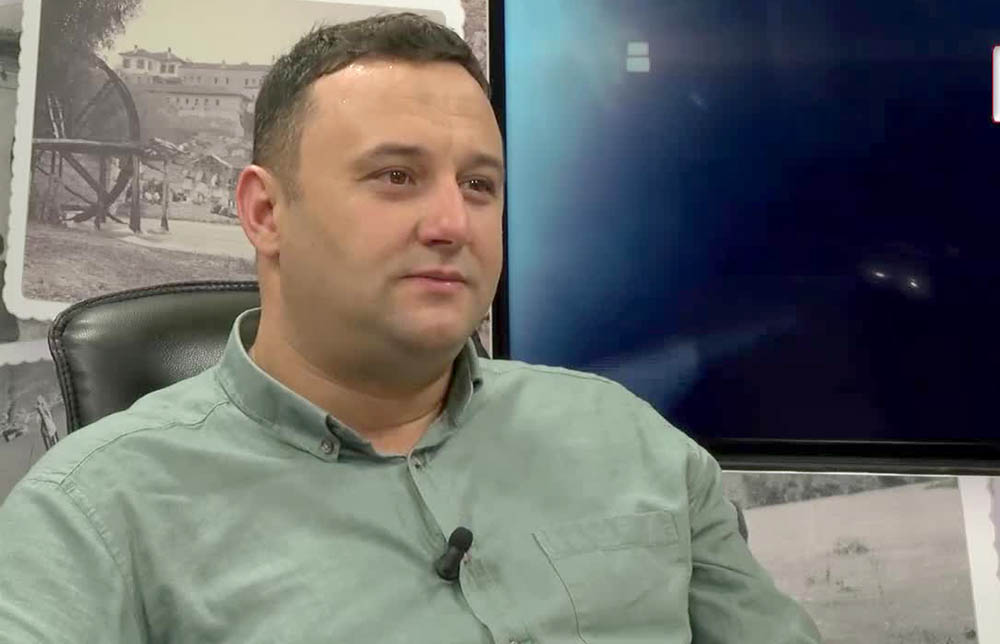
In a statement to the media, State Police Director Ardi Veliu revealed that a terrorist cell in Albania has been destroyed, aimed at carrying out attacks on MEK members in Albania. It said that the cell was headed by a resident of Iran and was intended to hit the refugee Mojahedin group in our country. Invited to Fax News, to talk about this police information are Gjergj Thanasi investigative journalist and Olsi Jazexhi historian.
Thanasi stated that Police Director Ardi Veliu simply read a statement, with some minor errors, but that it was not his creation.
“It seems to me that the director read the statement with very few mistakes; he made some, but this is a success for him. He didn’t produce it. He read it and there are many inaccurate statements in it. One of these terrorists is an Austrian citizen – is he in prison, in custody, under coercion? This citizen of our allied country has not been detained in Austria. These people came to Albania. The statement refers to a ‘terrorist act’ on Norouz Day in 2018. That’s hilarious. At that time the state police arrested two Iranian nationals suspected of involvement in terrorist activities. Two Iranian ‘terrorists’?! They had come with regular visas, free of charge, after being invited in writing by one of the leaders of the religious Bektashi sect in Albania. Now, is Baba Mondi being linked with terrorists?! So, we have a lie about a ‘terrorist act’ on March 22, 2018. It’s a lie. If the two terrorists were arrested why were they allowed to leave Rinas. Terrorism is a big thing for Albania – they were detained, then the matter was dismissed! Terrorism is one of the criminal offenses pursued by SHISH. MEK is unreliable as a source of information. They should be punished. Woe betide anyone who uses MEK as a source”, said Thanasi.
Meanwhile, historian Olsi Jazexhi declared that the MEK organization deals in espionage, adding that MEK creates fake news.
Jazexhi: The MEK deals in espionage and attacks by creating fake news against the Iranian state. The MEK should be punished for this activity, but the law does not work here. The MEK was used to attack the American embassy. This police statement was unprofessional. Journalists were not allowed to ask questions. It’s just fake news to be picked up by the media.
The MEK did not react. Now it will use Veliu’s news which means the heroic Albanian police have attacked the terrorists’ attack on us. The script was prepared for Ardi to read. It’s about giving a story to the international media. To help Europe and the US promote war in the Middle East and start fighting against Iran.
The MEK has produced a fake news story about the capture of two Iranians who had rigged up a car that was about to explode. This was fake news. But in the world outside Albania it was received as real news. They also interviewed Pandi Majkon.

faxweb.al, Translated by Iran Interlink
–

Olsi Jazexhi: Unknown side of terrorists seeking to attack Albania

State Police Director Ardi Veliu announced at a press conference that a terrorist cell led by a resident of Iran had been prevented from carrying out attacks in Albania against the Mojahedin group sheltered in our country, the MEK, opposition in exile to the Iranian regime.
But historian Ols Jazexhi says we are dealing with Fake News produced in the Mojahedin headquarters in Tirana, to which the Interior Minister Lleshaj Sander, the State Police and the anti-terror unit have fallen prey.
According to Jazexhi, the police simply read the statement given by the Mojahedin, adding that one of the Austrian nationals accused of terrorism, Erwin Aram, had come to Tirana to rescue his mother from their camp but had failed.

Albanian Gazette , Translated by Iran Interlink
October 26, 2019 0 comments
FacebookTwitterPinterestWhatsappTelegramSkypeEmail
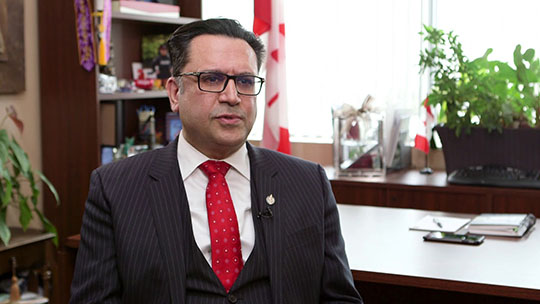
Majid Jowhari of Iranian Canadian Congress
Missions of Nejat SocietyMujahedin Khalq; A proxy force

The MEK-made Nasty environment

Liberal in Richmond Hill faces smear campaign in bid for re-election

Liberal MP Majid Jowhari is being fiercely targeted by online activists, trolls, and angry Liberal members in his own riding. What’s behind the hate?

Angry protesters showed up multiple times at Liberal MP Majid Jowhari’s Richmond Hill constituency office last week, holding signs plastered with his picture that read, “Shame on You. You will not Re-elected” and “NO to Lobbyist of Islamic Terrorist Regime in Iran.”

Meanwhile, local residents received cryptic emails from a former Liberal politician, Reza Moridi, saying he and three other former Liberals are “unable” to vote for Jowhari. The email offered no explanation for the statement.

Still other voters that had placed Jowhari campaign signs in front of their homes reported finding papers dropped on their lawn or placed on car windshields. The documents, obtained by Ricochet, are titled “A Better Introduction to Mr Jowhari’s Family” and slander his wife, mother and brothers, suggesting they are connected to international drug business and other criminal activities.

Majid Jowhari of Iranian Canadian Congress

ICC Condemns Foreign-Linked Smear Campaign Against Richmond Hill MP

And on Thursday, a highly followed but fake Twitter account associated with the Mujahideen-e-Khalq (MEK), a cult-like group from Iran that has a history of engaging with Canadian politicians, added to an ongoing online smear campaign against Jowhari by tweeting a long thread urging Canadians to unseat him.

Sources close to the Jowhari family and campaign told Ricochet it’s been a “horrible” time for the family and that they often feel unsafe.

“They [his critics] have painted him as the complete opposite of everything he stands for. It’s not even remotely close to who he is,” said one source who asked not to be identified due to fear of being targeted themselves.

“It’s all sophisticated and interrelated,” they added. “I’ve had to contact police before. People don’t understand that fake news can actually kill you.”

Jowhari’s most vocal offline critic, Reza Moridi, is a former Liberal MPP for Richmond Hill and former Ontario minister of research, innovation and science. He denies there’s a smear campaign against Jowhari. “It’s not an attack or targeting,” Moridi told Ricochet last Friday, in reference to the cryptic email he had sent to local residents on Oct. 9. “It’s a reverse endorsement, that’s all.”

The email sent to local residents included photos of Moridi and three others: Bryon Wilfert, former Liberal MP for Richmond Hill; Sarkis Assadourian, former Liberal MP for Brampton Centre; and Richard Rupp, former president of the Richmond Hill Federal Liberal Association. Above the photos, a single line read: “As concerned Richmond Hill Liberals we regret that on October 21, we are unable to vote for Majid Jowhari, the Liberal Candidate in Richmond Hill.”

When asked why he decided to send the email to voters, particularly without an explanation of why he and the others were “unable” to vote for Jowhari, Moridi said, “These are Liberal MPs and also two former Liberal riding presidents. We came to the conclusion that we cannot support him. People can make their own decisions.

“We reviewed media reports over the past four years and also records of the candidate. I’m sure every voter is doing their own research of the candidates. We’re just saying we did that research and came to that conclusion. Coming to that decision is not difficult.”

In response, Jowhari’s office posted a response on his Facebook page the next day: “This communication represents the worst type of campaign tactics – a non-specific note from a group who do not have the courage of their convictions to say what party and policies they do support but are prepared to say only what they don’t support without providing any rationale or substantiation.”

But voters were met with another shock a few days later when the Shahrvand, a Farsi-language newspaper, came out with Moridi’s photo splashed on the front page, along with a proclamation of his support for Richmond Hill’s Conservative candidate, Costas Menegakis. The idea that a former Liberal leader was overtly canvassing for voters in his riding to vote blue sparked coverage in conservative outlets The Toronto Sun and Rebel Media.

Soon after, 100 Liberal members and supporters sent a letter addressed to the Ontario Liberal Party requesting that the party leadership publicly reject Moridi’s endorsement. Former Ontario premier and current MPP Kathleen Wynne put out a statement on Moridi’s decision to endorse a Conservative candidate in Richmond Hill. “As you know, Reza Moridi has been a trusted colleague of mine for a number of years,” she wrote. “Having said that, Reza is no longer a member of the provincial legislature nor does he speak for the Liberal Party.”

Jowhari’s office declined to comment for this story, saying they wanted to stay focused on his campaign and local residents. “We are not focused on the negative voices that are out there in the wilderness,” Jowhari’s campaign manager Michele Bussieres told Ricochet.
Canada-Iran ties

The long-term rift between the two Iranian politicians stems from their ideas around Canada-Iran relations, with Jowhari advocating for a normalization in ties, while Moridi argues Iran should be kept at a distance. Moridi and other critics interpret Jowhari’s position as support and endorsement for the theocratic regime.

When questioned by reporters last week, Jowhari said the accusations of his support for Tehran have no foundation. “Our government promised in 2015 that we will keep the dialogue open. … We will establish a relationship with our eyes wide open and step by step,” he said. “That hasn’t changed. We want to make sure that we encourage diplomacy based on a proven and deliberate track record from both sides, especially on the Iranian side.

“Dialogue also doesn’t mean appeasement,” he added. “When you talk and sit at a table, you can exchange ideas, whether it’s on the issue of human rights, whether it’s freedom of press or women. We need to sit at the table…. You cannot have a dialogue behind closed doors.”

But some residents don’t believe him. Salman Sima, a former political prisoner in Iran, is one of Jowhari’s most vociferous critics on Twitter, having previously called him a foreign agent and a representative for Ayatollah Khamenei in the Canadian Parliament. Sima stands accused of starting a smear campaign against Saman Tabasinejad, an Iranian-Canadian NDP candidate in Ontario’s last provincial elections, calling her the granddaughter of a major cleric in Iran. Tabasinejad later debunked this rumour on Twitter.

Sima joined several other critics protesting when Prime Minister Justin Trudeau visited a Richmond Hill coffee shop on Oct. 13.

“We believe that Mr Jowhari doesn’t follow Liberal and Canadian values, including respecting human rights, respecting women’s rights and respecting LGBT rights,” he told Ricochet. “Why? Because we know and I believe that he is supporting one of the most misogynistic regimes in the world — the Islamic regime in Iran.”

Sima said the staged protests were non-partisan and unlinked to any political Iranian opposition groups, including MEK.

“I write lots of things criticizing some opposition groups, including MEK,” he said, adding he knew many residents who voted for the NDP and Liberal their whole lives but were strongly opposed to Jowhari. “Linking the protests against Majid Jowhari to MEK or any political parties is not fair because I know that lots of people come from lots of different ideas and backgrounds.”
“They are using the same tactics that the Iranian regime is using”

https://dlb.nejatngo.org/Media/Report/RT_Alavi_MEK.mp4

Regardless, it’s clear Jowhari is being watched. On Thursday, the “Heshmat Alavi” Twitter account tweeted a 17-post thread “shedding light on Jowhari being a Tehran apologist/lobbyist.” An investigation by The Intercept last June found the account was created by MEK, which is supported by Washington.

Also that week, Hassan Dai, an editor at the Iranian-American Forum website, urged Richmond Hill residents to vote against Jowhari in a tweet to his 11,000 followers.

Messages sent by Ricochet to both accounts on Oct. 17 requesting an interview and proof of the accusations levelled against Jowhari were not responded to by publication date.

‘Nasty environment’

Meanwhile, Iranian supporters of Jowhari’s campaign say they are particularly incensed over accusations that Jowhari and the Liberal Party are stooges of the government in Iran.

“They are using the same tactics that the Iranian regime is using — they’re claiming they’re against that but they’re doing the same thing here,” said a supporter of Jowhari’s campaign who did not want to be named out of safety concerns.

“They’re using all the resources they have to accuse and lie … they put our pictures up on Facebook and label us. This has led to a really nasty environment. We didn’t come here to be accused of being a lobby for another country or government. We came here to be contributing members of a democratic society.”

For her, the fight to keep a government in power who is open to dialogue with Iran is personal. “I have a friend who has cancer and no access to medications because of the sanctions. When Moridi ran a long time ago, I was one of his big supporters. We donated and helped, and I was so proud that an Iranian had come to power and could speak for us. But then he started to support sanctions on Iran.”

She pauses. “This is my country. But I can’t love Canada if I can’t love the country I come from. I have my best wishes for the people in Canada and I have the same wishes for the people in Iran.”

Ricochet.media

October 26, 2019 0 comments
FacebookTwitterPinterestWhatsappTelegramSkypeEmail
MEK’s troll farm in Albania
Mujahedin Khalq Organization's Propaganda System

MEK and Fake News

The cabinet plans to combat fake news were presented in silence on Friday. A missed opportunity, thinks political editor David van der Wilde. “The Netherlands should be more concerned about it.”

Fighting fake news; on her arrival, Deputy Prime Minister Kajsa Ollongren saw it as one of her most important tasks. Substantial criticism immediately followed. The Minister of the Interior was called paranoid or declared to be Big Brother. And then it remained silent for months. Apart from an information campaign, fake news seemed to have disappeared from the agenda. Until this Friday.

heshmat alavi

The Politics and Social Media manipulation study was presented on the first day of the recess. On behalf of the minister, two UvA scientists looked into the state of digital debate. The conclusion? Not fake news but pulp, propaganda and fake followers cause the problems on the Dutch web.

With the relative silence and the noiseless report during the recess, the subject seems to be obscured. Tendentious sites such as DDS and GeenStijl crow victory and sceptics see their equal confirmed: That whole fake news story itself is completely fake. A special conclusion. Because whoever takes the trouble to read the research or to study the subject at all, sees something else.

Getting worse

The researchers do have concerns about what they call ‘junk news’. The foreign culprits are not extremely active, but there are problems nationally. There is a warning for politicians and opinion makers with joke followers and it is found that it makes it easier for right-wing conspiracy theories to reach the mainstream.

Researcher Richard Rogers explains to me that pulp and hyperpartite ‘news’ is being shared more and more easily, particularly during elections. Something that, according to Rogers, ‘only gets worse’. He also points to the fact that, although social media companies remove fake news, they are very closed.

For example, it is not disclosed which accounts are blocked or deleted by the companies or removed or why. That makes it difficult for researchers and journalists to see and report abuses. That does not really help in an open and democratic debate.

Influence brigades

Yet that is only part of the threat. Last year I went into the world of digital influence for De Nieuws BV for a few months. What I found was a world of digital armies and state influence. That reality is seen not only by security services and politicians. Numerous studies, dashboards and publications show that the problem exists.

For example, a 2017 study by Cambridge University already noticed that at least 29 countries with their own digital influence brigades are active worldwide. In addition to Russia and Iran, for example, allies are also involved in this. Germany has the ‘Cyberkommando des Bundeswehr’ on the digital front line and the British are deploying their 77th Brigade on Facebook.

Whether the Netherlands itself plays an active role in influencing, I have unfortunately not been able to find out or disprove. We do know through articles in NRC, Green Amsterdam and the New York Times that we have been the target of Russian influence operations. Fortunately, no attempts were made in the last few elections.

A good example of this is the story of the MEK. An Iranian Mojahedin cult with its own troll bunker in Albania. The group even managed to come up with its own writer in addition to the propaganda tweets: Heshmet Alavi . A ‘writer’ who managed to publish his stories on The Daily Caller, The Diplomat and Forbes and thus even influence Trump’s policies.

The Mojahedin Khalq (MEK) troll bunker

A good example of this is the story of the MEK. An Iranian Mojahedin cult with its own troll bunker in Albania. The group even managed to come up with its own writer in addition to the propaganda tweets: Heshmet Alavi . A ‘writer’ who managed to publish his stories on The Daily Caller, The Diplomat and Forbes and thus even influence Trump’s policies.

There are countless fascinating stories. These range from American useful idiots in the Mueller report, sent by Russian trolls with pocket money to demonstrate theatrically, to the “my tweet is right” by Marjolein Faber.

So, influencing you and me with false messages and propaganda pulp is not a fairy tale. That we have seen no evidence of foreign influence in the last few elections is good news. But it does not mean that the threat has disappeared. The Netherlands should therefore be more worried. A little more spotlight on this report would not have been out of place.
David van der Wilde, NPO Radio, Translated by Iran Interlink

David van der Wilde is a political editor for De Nieuws BV

October 24, 2019 0 comments
FacebookTwitterPinterestWhatsappTelegramSkypeEmail
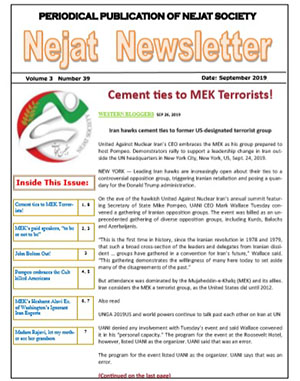
Nejat Newsletter
Nejat Publications

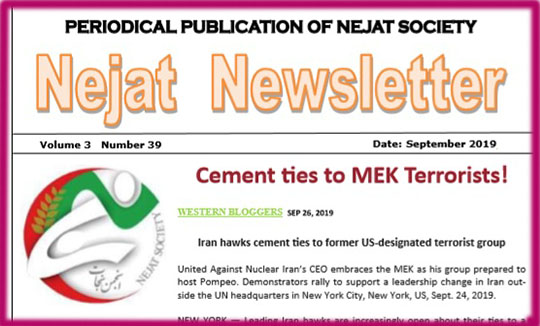
Nejat Newsletter No.65

Inside This Issue:

Nejat News Letter

  • Cement ties to MEK Terrorists!
  • Madam Rajavi, let my mother see her grandson
  • MEK’s paid speakers, “to be or not to be”
  • Pompeo embraces the Cult killed Americans
  • MEK’s Heshamt Alavi Ex. of Washington’s Ignorant Iran Experts
  • John Bolton Out!

To download the PDF file click here

October 22, 2019 0 comments
FacebookTwitterPinterestWhatsappTelegramSkypeEmail
Iran's ambassador to London - Hamid Baeidinejad
Iran

MEK members new weapon in Albania

MKO terrorists trying to manipulate public opinion

Iran’s ambassador to London slammed the Albania-based Mujahedin-e-Khalq (MEK/MKO) terrorist group for its efforts to manipulate the public opinion by the fake news.

Iran's ambassador to London - Hamid Baeidinejad

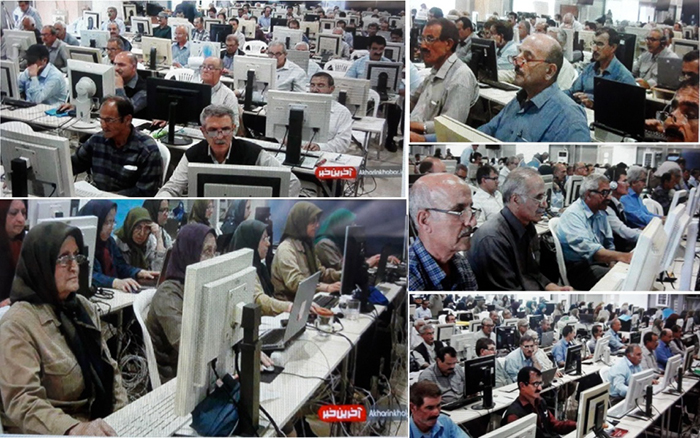
In a Twitter message on Sunday, Hamid Baeidinejad posted an image of a group of MKO members in a big computer lab and wrote, “The MKO members in Ashraf camp, Albania, have been trying to use a new type of weapon [against Iran].”
“Their weapon includes the supercomputers by which they are trying to spread lies and fake news to poison the public opinion,” he added.
The MKO, which is currently acting as a proxy against Tehran, fled Iran in 1986 for Iraq and was given a camp by former Iraqi President Saddam Hussein. It fought on the side of Saddam in the Iraqi imposed war on Iran during which the former Iraqi dictator used chemical weapons against Iranian civilians on a massive scale. The notorious group is also responsible for killing more than 17,000 Iranians in different acts of terrorism, including bombings in public places and targeted killings.
It was listed as a terrorist organization by the US and European Union in 1997 and 2002 respectively, but as more efforts got directed to vilify Iran, the MKO got delisted by the EU on January 26, 2009 and by the US on September 28, 2012.
After Washington formally removed the MKO from its list of terror organizations, the group became able to have its assets under the US jurisdiction unfrozen and do business with the American entities.

October 22, 2019 0 comments
FacebookTwitterPinterestWhatsappTelegramSkypeEmail
Majid Jowhari of Iranian Canadian Congress
Mujahedin Khalq as an Opposition Group

A smear campaign linked to MEK revealed

ICC Condemns Foreign-Linked Smear Campaign Against Richmond Hill MP

The Iranian Canadian Congress (ICC) has received multiple reports over the past few days about a smear campaign linked to Mujahedin-e-Khalq (MEK) against Iranian-Canadian MP and Richmond Hill candidate Majid Jowhari.
MEK is an extremist Iranian opposition group that was listed in Canada as a terrorist entity as late as 2012. According to multiple reports the organization has dubious sources of funding and links to Saudi Arabia.

Majid Jowhari of Iranian Canadian Congress

On social media, fake accounts associated with MEK have distributed false information about Mr. Jowhari. Seemingly, the only reason behind the targeting of Mr. Jowhari by the MEK is that, aligned with PM Trudeau’s promise in 2015 to re-engage with Iran and reopen the embassies, Mr. Jowhari supported this promise as well and presented the views of his constituents to the Canadian government. Time and again we have also witnessed that the majority of Canadian-Iranians also support diplomacy and peace with Iran and are against policies of sanctions and war.
The ICC is extremely concerned about the MEK-linked smear campaign against a Canadian citizen running for public office. We are monitoring the situation carefully and will communicate our concerns with Canadian officials.
We once again encourage all members of the Iranian-Canadian community to participate in the federal elections on October 21st and vote for the party or candidates who represent their views.
iccongress.ca

October 21, 2019 0 comments
FacebookTwitterPinterestWhatsappTelegramSkypeEmail
Mujahedin Khalq as an Opposition Group

MEK and War Agenda in Trump Admin

Trying to Exploit Iran’s Diverse Ethnic Population to Advance a War Agenda

On September 25, during the annual meeting of the United Nations General Assembly, United Against Nuclear Iran (UANI)—a pro-Israel, anti-Iran lobby group—held a “summit” in New York that was attended by, among others, Secretary of State Mike Pompeo, Israeli ambassador to the U.S. Ron Dermer, and Sigal Mandelker, the outgoing Under Secretary of Treasury for Terrorism and Financial Intelligence, as well as diplomats from Bahrain and Saudi Arabia. As usual, tough rhetoric was uttered by all the speakers, and threats were made.

The day before the summit, another meeting was held that had allegedly been organized by Mark Wallace, the CEO of UANI, although it is widely believed that UANI was behind the meeting. The participants in the meeting were supposedly representatives of various Iranian opposition groups in exile, as well as ethnic secessionist groups. The meeting was, however, dominated by the Mojahedin-e-Khalq (MEK), a group that until 2011 was listed by the U.S. State Department as a terrorist organization and is despised by all Iranians due to its alliance with the regime of Saddam Hussein during the Iran-Iraq War and other acts viewed by virtually all Iranians as treason. Also present were the National Council of Resistance of Iran, MEK’s political arm, and the Organization of Iranian American Communities, another MEK front group. A fourth group, the U.S. Foundation for Liberty and Human Rights, appears to be linked with MEK, as the content of its website uses the same rhetoric as the MEK. Representatives of six ethnic groups also attended the meeting, none of which has any significant support inside Iran as best one can tell.

One of the groups participating in the gathering was the Arab Struggle Movement for the Liberation of Ahwaz (ASMLA). Ahwaz, or Ahvaz, is the provincial capital of Khuzestan, the oil-rich province in southwestern Iran near the border with Iraq. ASMLA claims to represent the minority Iranian Arabs in Khuzestan who are supposedly suppressed by Tehran. The group, founded in 1999, has carried out several terrorist attacks in Iran over the past fifteen years, including in January 2006, in May 2015, in June 2016, in January 2017, and in October 2018.

“This is the first time in history, since the Iranian revolution in 1978 and 1979, that such a broad cross-section of the leaders and delegates from Iranian dissident … groups have gathered in a convention for Iran’s future.” Wallace boasted despite the fact that those same “leaders” are either little known or are virtually universally despised in Iran.

This is not the first time that the U.S. far right has tried to exploit Iran’s diverse ethnic population in order to stir trouble in the country and advance its anti-Iran agenda. In fact, this practice has a long history that goes back to practically the 1979 revolution and the hostage crisis of 1979-1981. Since April 1980, when Washington cut diplomatic relations with Iran, successive U.S. administrations and the U.S. far right have seen exploiting ethnic grievances in Iran as a key route toward destabilizing the country.

The Clinton administration imposed a package of sanctions against Iran in 1996 that the Bush administration renewed in 2001 and again, indefinitely, in 2006. After preventing the European trio of Britain, France, and Germany from reaching an agreement with Iran over its nuclear program in summer of 2005, the Bush administration launched its efforts to exploit Iran’s ethnic minorities and the dissident groups that supposedly represent them, in order to either break up Iran into multiple weak states, or, at the very least, to stir up trouble and destabilize the country.

That strategy has a long history in the Middle East. Washington, for example—acting at the behest of the Shah of Iran—backed a Kurdish insurgency in Iraq until 1975. It has been best exemplified in the ways in which Israel has applied it to some of its Arab neighbors. In February 1982, three months before Israel invaded Lebanon in support of the Christian Falange militia, the Likud strategist Oded Yinon published an article [in Hebrew, whose translation was published by Israel Shahak, the Israeli academic and civil-rights advocate] in which he called on Israel’s leadership to adopt a policy of fragmenting the Arab world into a mosaic of ethnic and confessional groupings. “Every kind of inter-Arab confrontation would prove to be advantageous to Israel,” he argued, urging that Israel must reconfigure its geo-political environment through the Balkanization of the surrounding Arab states into smaller and weaker states.

Building on Yinon’s analysis ten years later, neoconservative historian Bernard Lewis—who would become a key informal adviser to Vice President Dick Cheney in the run-up and immediate aftermath of the U.S. invasion of Iraq—wrote in an essay in the journal Foreign Affairs:

Another possibility, which could even be precipitated by [Islamic] fundamentalism, is what as of late has become fashionable to call ‘Lebanonization.’ Most of the states of the Middle East – Egypt is an obvious exception – are of recent and artificial construction and are vulnerable to such a process. If the central power is sufficiently weakened, there is no real civil society to hold the polity together, no real sense of common national identity or overriding allegiance to the nation-state. The state then disintegrates – as happened in Lebanon – into a chaos of squabbling, feuding, fighting sects, tribes, regions and parties. If things go badly and central governments falter and collapse, the same could happen, not only in the countries of the existing Middle East, but also in the newly independent Soviet republics…

In their infamous “A Clean Break: A New Strategy for Securing the Realm,” the policy document written in 1996 for Benjamin Netanyahu, the then-newly elected Prime Minister of Israel, Richard Perle et al. suggested that Israel should “work closely with Turkey and Jordan to contain, destabilize, and roll-back some of its most dangerous threats [meaning Iran and Iraq].” David Wurmser, one of the authors of the same report who served on Cheney’s national security staff from 2003 to 2007, went further, writing in a lengthier report that Syria and Iraq could easily fragment into separate ethno-sectarian segments, “a development that would enhance the security of Israel and the West.”

These ideas were clearly picked up by the Bush administration and later applied to Iran. “In the past six months, Israel and the United States have also been working together in support of a Kurdish resistance group known as the Party for Free Life in Kurdistan [known as PJAK or PEJAK],” Seymour Hersh reported in November 2006. “The group has been conducting clandestine cross-border forays into Iran, I was told by a government consultant with close ties to the Pentagon civilian leadership, as `part of an effort to explore alternative means of applying pressure on Iran.’”

In February 2007, the Telegraph of London reported that:

CIA officials are understood to be helping opposition militias among the numerous ethnic minority groups clustered in Iran’s border regions. In the past year there has been a wave of unrest in ethnic minority border areas of Iran, with bombing and assassination campaigns against soldiers and government officials… Funding for their separatist causes comes directly from the CIA’s classified budget but is now ‘no great secret,’ according to one former high-ranking CIA official in Washington.

In the same month, Cheney himself traveled to Pakistan and met with its then-president, General Pervez Musharraf. Pakistani government sources said at the time that the secret campaign against Iran by Jundullah was on the agenda when the two met. Jundallah was a Baluch terrorist group that for years staged terrorist attacks in Iran from its bases in Pakistan. In an interview later that month, Cheney referred to the Jundallah terrorists as “guerrillas” in an apparent effort to lend them legitimacy.

In April 2007, ABC News reported that, according to Pakistani and U.S. intelligence officials, Jundallah had been secretly encouraged and advised by U.S. officials since 2005.

In an interview with National Public Radio in June 2008, Hersh explained how the Bush Administration’s policy of “my enemy’s enemy is my friend” led it to support Jundallah and MEK. The next month, Hersh quoted Robert Baer, a former CIA clandestine officer who had worked for nearly two decades in South Asia and the Middle East, as saying, “The Baluchis [a small ethnic minority group residing in Iran’s and Pakistan’s provinces of Baluchistan] are Sunni fundamentalists who hate the regime in Tehran, but you can also describe them as Al Qaeda. These are guys who cut off the heads of nonbelievers—in this case, it’s Shiite Iranians. The irony is that we’re once again working with Sunni fundamentalists, just as we did in Afghanistan in the nineteen-eighties.” Baer repeated those assertions in the fall of 2008 at a symposium co-organized by this author on U.S.-Iran relations at the University of Southern California.

In the same article, Hersh also stated that the MEK received arms and intelligence, directly or indirectly, from the U.S., and that PJAK, “which has also been reported to be covertly supported by the United States,” operated against Iran from bases in northern Iraq for at least three years. PJAK used Iraqi Kurdistan as its base to carry out multiple raids into Iran that killed many civilians, as well as soldiers and policemen. At the time, the Bush administration denied helping PJAK, despite the fact that the group’s chief, Rahman Haj-Ahmadi, had traveled to Washington around the same time, reportedly to gain financial and military support for his militia. In 2009, the Obama administration declared PJAK a terrorist organization.

PJAK is still active in the border area between Iran, Turkey, and Iraq. When in December of 2017 there were scattered demonstrations in several Iranian cities against the terrible state of the Iranian economy, PJAK issued a statement asking people to rise up. It carried out terrorist attacks inside Iran on 27 July 2019 that killed and injured scores of people.

In December 2009, Selig Harrison reported in the New York Times that the Bush administration had provided support to Jundallah, as well some Kurdish groups operating in western Iran. According to his report, that assistance was sent through Pakistan’s Inter-Services Intelligence agency, while the Kurdish groups received their support through Israel’s Mossad.

The Bush administration was not the only one that was trying to exploit the dissatisfaction of some of Iran’s ethnic groups to destabilize the country. Israel and Saudi Arabia were also participants. In January 2012, Mark Perry reported how Mossad agents, using U.S. passports and posing as CIA agents, tried to recruit members of Jundallah to fight their covert war against Iran.

Jundallah’s leader, Abdolmajid Rigi, was captured by Iran’s security forces and executed in June 2010. The Obama administration put Jundallah on the terrorist list in November 2010. The group then split into Pakistani and Iranian branches. The former attacks Shiites in Pakistan, while the Iranian branch, known as Jaish ul-Adl, continues to carry out terrorist attacks and kidnappings in Sistan and Baluchistan province in southeastern Iran, near the border with Pakistan. It is widely believed in Iran that Jaish ul-Adl is supported by Saudi Arabia and United Arab Emirates.

The Kurds and Baluchis are not the only ethnic groups that the Bush administration and its allies tried to exploit. In a July 2008 article, Hersh also mentioned possible U.S. support for separatists in Khuzestan province. As already pointed out, over the past 15 years, Iranian-Arab separatists have carried out bombing and terrorist attacks in Khuzestan, the latest of which took place in October 2018, when they attacked during a military parade. An armed group, Ahvaziya, claimed responsibility for the attacks. Ahvaziya is part of the ASMLA group that participated in the Washington meeting of Iranian separatist groups.

Iran has accused Saudi Arabia of funding, arming and training the group. After the attacks, Abdulkhalegh Abdulla, a former adviser to the Crown Prince of Abu Dhabi, wrote in a tweet that the attack was not terrorism because it was against Iran’s military, and that the attacks were part of what Mohammad bin Salman, the crown prince and de facto ruler of Saudi Arabia, had threatened in May 2017, namely, that Saudi Arabia is “not waiting until there becomes a battle in Saudi Arabia,” and so it “will work so that it becomes a battle for them in Iran.” His tweet created deep anger in Iran.

As the author recently reported, the Trump administration has decided to continue what the Bush administration began. Before he was appointed as Trump’s national security adviser, in his “manifesto” for getting the U.S. out of the nuclear agreement with Iran, John Bolton advocated U.S. support “for Kurdish national aspirations, including Kurds in Iran” and providing “assistance to Balochis, Khuzestan Arabs, Kurds, and others…” After his appointment, Bolton, Secretary of State Mike Pompeo, and Brian Hook—who is the State Department’s Special Representative for Iran and directs its “Iran Action Group”—met with some of the leaders of Iran’s Kurdish groups. Last June, Abdullah Mohtadi and Mustafa Hijri—who lead, respectively, the Iranian Communist Kurdish group Komala and the Kurdistan Democratic Party of Iran [KDPI]—travelled to Washington, with Mohtadi reportedly meeting with Pompeo and Hijri meeting with State Department officials. Komala’s office in Washington has registered with the Justice Department as a lobbying group to “establish solid and durable relations” with the Trump administration.

Both groups have carried out terrorist attacks inside Iran, and, under the guise of calling for a federal system, both have separatist tendencies. The separatist nature of the KDPI became clear when, back in 2012, Hijri asked the U.S. to declare Iran’s Kurdistan province a “no-fly zone,” so that his forces could attack government forces freely and eventually secede from Iran. Hijri has also called for “regime change” in Iran, and has declared the Islamic Republic “a common enemy” of the Kurds and Israel, asking the Jewish state for support.

The attempt by UANI, a group that reportedly receives a lot of its funding from Saudi Arabia and the United Arab Emirates, to provoke ethnic strife in Iran may well lead to more bloodshed, but it will likely ultimately fail. Iranians of diverse backgrounds have lived together side-by-side and have preserved their nation for thousands of years. Iran’s true opposition inside the country—the reformists, religious-nationalists, secular leftists, labor groups, human rights activists, and others—and its supporters in the diaspora reject discrimination against minorities, ethnic tensions, economic sanctions, military threats, and foreign intervention. In the democratic Iran that the true opposition will eventually achieve, all Iranians, regardless of their ethnicity, religion, or gender, will be equal.

Muhammad Sahimi is a Professor at the University of Southern California in Los Angeles.

October 21, 2019 0 comments
FacebookTwitterPinterestWhatsappTelegramSkypeEmail
weekly digest
Iran Interlink Weekly Digest

Iran Interlink Weekly Digest – 262

++ There have been several pieces in Farsi about the Giuliani affair and how after already losing John Bolton the MEK are now in a panic over losing Giuliani too.

++ An article answers Maryam Rajavi’s statement declaring that she is against the Turkish actions in Syria and is supporting the Kurds. This article points out that Rajavi killed more Kurds than anyone. That’s the reason the Kurdish council boycotted the UANI session in New York when you were invited. Other commentary points out that Rajavi enters into everything like a mosquito, except the real issues she needs to answer for and which she hasn’t answered for three decades – the families, supporting Saddam, internal abuses, etc. Every now and then the MEK make it clear they are proud mercenaries for any issue, but then they also claim all they are about is rescuing Iran. This is why even while talking about the Turkish actions in Syria, the MEK’s announcement is announcement is 80% swearing against Iran as though Iran is responsible for this.

++ Another example of this mercenary approach is that MEK appear to believe some executions are good executions while some executions are bad. One article in particular lists all the executions committed by the MEK themselves; from killing Americans in Iran, the executions of Kurds in Iraq, right up to recent executions in Albania like Malik Sharai. It notes that the MEK was silent about all the executions by Saddam. And how in all the past four decades they have not dared to mention the barbaric executions in Saudi Arabia. As if those are OK.

In English:

++ City News, Albania reported that journalist Gjergji Thanasi has sued MEK enforcer Behzad Saffari Dehkord for defamation. Saffari has several times labelled Thanasi ‘an agent of the Iranian regime’ – the standard epithet applied to all of MEK’s critics. But perhaps when your terrorist cult has been foisted on a small, struggling country and is intolerable to every citizen except those paid by the MEK or the US, such behaviour needs to be brought to book. The MEK sent one of Albania’s highest paid lawyers to the first hearing, but Saffari will be obliged to attend the next hearing in person.

++ Mazda Parsi, Nejat Bloggers, refers to the book ‘Gullible Superpower: U.S. Support For Bogus Foreign Democratic Movements’ by Ted Carpenter of the Cato Institute and reviews the chapter on the MEK. Parsi says that advocacy for the MEK is not limited to the U.S. and Israel but includes Saudi Arabia and now Albania. According to Reza Alghurabi of the Herald Tribune, Albania’s support was bought by the U.S. which paid $25m to the government and $20m to the UNHCR. The MEK has also generously paid “hefty sums of money for a ten-minute speech on behalf of the group”. Such payments have corrupted Albania’s approach to Iran. “In exchange the Albanian authorities serve them with hostile acts towards Iran”, says Parsi. However, no matter how much the MEK’s advocates try to pretend that the Iranian people do not loathe the MEK, this is an established fact.

++ A piece in the Tehran Times reviews the work of Iranian filmmaker Mohammad-Hossein Mahdavian. Mahdavian has made two films about the MEK’s history in Iran, Trace of Blood and The Midday Event. “The stories of “The Midday Event” and “Trace of Blood” were set in the 1980s when Mahdavian and Ebrahim Amini, with whom he co-wrote the screenplays for the films, were only children. However, in an interview with Mahdavian, veteran critic Hushang Golmakani, who works for the Persian monthly Film, called the details of the sets and dialogues of “Trace of Blood” perfect. ‘The film has the potential to be biased, but it has maintained its balance. The film has very good dialogues and perfect ending’, Golmakani noted. It appears that a perfect filmmaker who is genuinely skilled in transforming real political narratives into films has emerged.”

++ MEK advocate Rudi Giuliani was in the spotlight this week with several articles mentioning the MEK as one of many foreign groups who have paid him handsomely for his advocacy. In relation to the MEK, Politico reported that “Giuliani has claimed he’s only working ‘as a private citizen—thank God I can still do that’.” NBC News ran a lengthy detailed examination of Giuliani and other high-profile figures who have been happy to shill for the MEK over many years without registering as lobbyists for a foreign group. This may or may not be the beginning of Giuliani’s downfall. But it certainly is another nail in the coffin of the MEK.

++ Muhammad Sahimi in Lobelog describes UANI sponsored gatherings of so-called Iranian opposition groups as the U.S. far right’s efforts “ to exploit Iran’s diverse ethnic population in order to stir trouble in the country and advance its anti-Iran agenda”. Sahimi details the background of these groups and concludes: “The attempt by UANI, a group that reportedly receives a lot of its funding from Saudi Arabia and the United Arab Emirates, to provoke ethnic strife in Iran may well lead to more bloodshed, but it will likely ultimately fail. Iranians of diverse backgrounds have lived together side-by-side and have preserved their nation for thousands of years. Iran’s true opposition inside the country—the reformists, religious-nationalists, secular leftists, labor groups, human rights activists, and others—and its supporters in the diaspora reject discrimination against minorities, ethnic tensions, economic sanctions, military threats, and foreign intervention. In the democratic Iran that the true opposition will eventually achieve, all Iranians, regardless of their ethnicity, religion, or gender, will be equal.”
October 18, 2019

October 21, 2019 0 comments
FacebookTwitterPinterestWhatsappTelegramSkypeEmail
Newer Posts
Older Posts

Recent Posts

  • MEK agents near schools in Tirana, Albania

    October 17, 2026
  • Expectations of human rights bodies regarding censorship within the MEK

    October 13, 2026
  • The Jamalis’ Plea for Help: Save Our Brother from the MEK!

    October 11, 2026
  • Testimonies of Participants in the MEK’s Staged Propaganda Stunt in Karaj

    October 7, 2026
  • Giuliani’s MEK ties have dogged him for years

    October 6, 2026
  • Facebook
  • Twitter
  • Instagram
  • Youtube

© 2003 - 2025 NEJAT Society . All Rights Reserved. NejatNGO.org


Back To Top
Nejat Society
  • Home
  • Articles
  • Media
    • Cartoons
    • NewsPics
    • Photo Gallery
    • Videos
  • Publications
    • Books
    • Nejat NewsLetter
    • Pars Brief
  • About Us
  • Contact us
  • Editions
    • عربي
    • فارسی
    • Shqip