Nejat Society
  • Home
  • Articles
  • Media
    • Cartoons
    • NewsPics
    • Photo Gallery
    • Videos
  • Publications
    • Books
    • Nejat NewsLetter
    • Pars Brief
  • About Us
  • Contact us
  • Editions
    • عربي
    • فارسی
    • Shqip
Nejat Society
Nejat Society
  • Home
  • Articles
  • Media
    • Cartoons
    • NewsPics
    • Photo Gallery
    • Videos
  • Publications
    • Books
    • Nejat NewsLetter
    • Pars Brief
  • About Us
  • Contact us
  • Editions
    • عربي
    • فارسی
    • Shqip
© 2003 - 2024 NEJAT Society. nejatngo.org
the Trace of Blood
Mujahedin Khalq as an Opposition Group

Trace of Blood

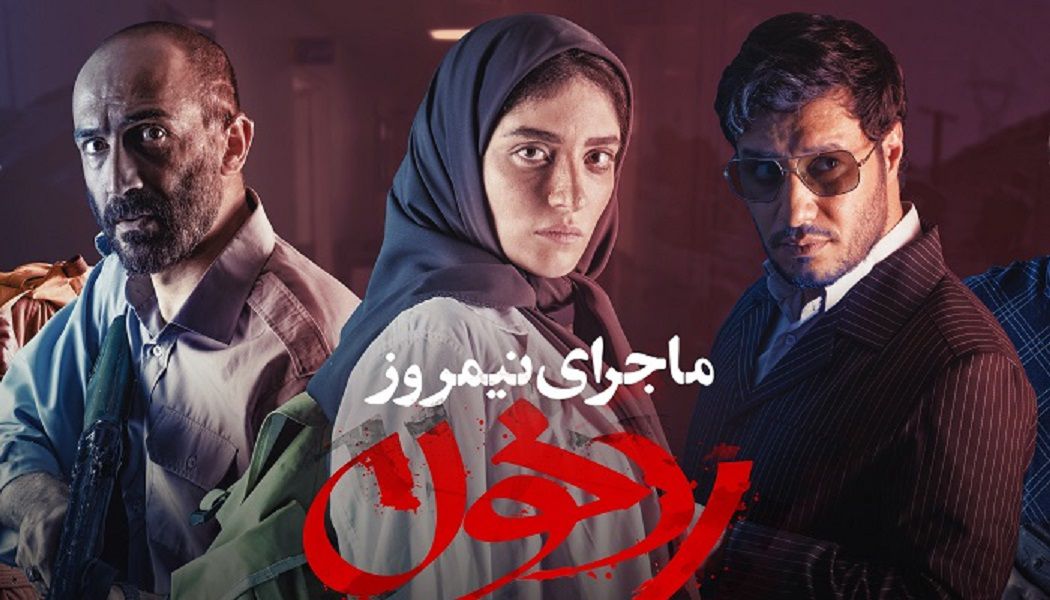
A Film About MEK History

Filmmaker emerges to bring dramas from Iran political history to life

“I was born during the war, which had lasted for so long that I thought that it would be forever and would never end. When I heard people talking about the frontline I imagined it was a geographical location like a sea or a forest near the borderlines of each country where the war took place. We were in our childhood, experiencing a certain way of life. We chanted slogans in the schools and talked about certain issues and heard about subjects from the media that deeply influenced our hearts and minds. Today, the experiences of those years caused me to be interested in returning to those years with new feelings and perceptions, which come from awareness, and I want to recollect the memories of those years again.”
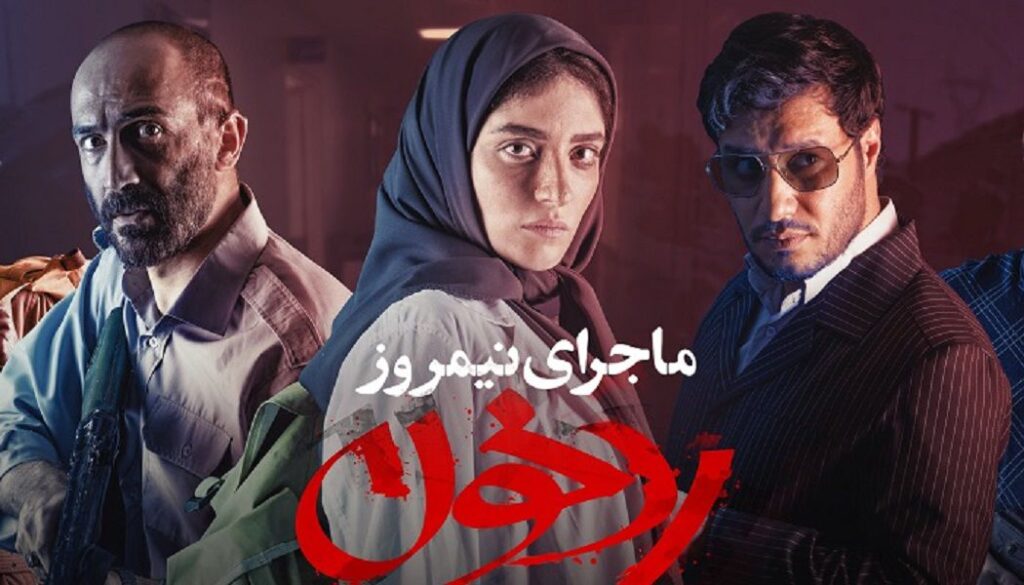
Mohammad-Hossein Mahdavian made the remarks during the Fajr Film Festival in Tehran in February after the premiere of his latest political thriller, “Trace of Blood”, which is currently on screen at Iranian theaters.

Perhaps nobody imagined that a filmmaker of political thrillers was being born in the new wave of Iranian cinema in 2016 when Mahdavian made his debut feature “Standing in the Dust” at 34.

The film recounted the life story of Ahmad Motevasselian, an IRGC commander who was kidnapped by the Zionist regime in 1982 in Lebanon.

The choice of subject matter was viewed by critics as an easy and clever way for the newcomer to obtain approval for the film from Iranian cultural officials.

At the time, the film was produced at the Owj Arts and Media Organization, a Tehran-based institution that produces revolutionary works in art and cinema. Nowadays, the projects that the organization supports no longer face burdensome bureaucratic hurdles imposed by the state.

“‘Standing in the Dust’ was the most customized movie I have ever made, and was my most popular film and also received critics acclaim,” Mahdavian told the Persian daily Sharq after the premiere of “Trace of Blood”.

“‘Lottery’ was my most independently produced film, but it failed to satisfy the critics,” he added.

A year later, Mahdavian’s second movie, “The Midday Event” on the terrorist activities of the Mojahedin-e-Khalq Organization (MKO) in Iran in the 1980s, demonstrated his passion for factual political stories taken from modern Iranian history.

In this film, the new government, after toppling the Shah in 1979, assembles a security group to fight against MKO’s terrorist attacks in 1982.

His third film, “Lottery” about trafficking Iranian women to the United Arab Emirates was viewed as regressive by critics.

“I have the courage to make a film and accept the negative reviews. But what urges me to continue on this path is the people for whom I make the films,” he noted.

“Trace of Blood”, also known as “Blood Trap”, is a sequel to “The Midday Event”. In this film, Iranian security forces come together in 1988 to trace the MKO’s undercover agents, which had penetrated the security forces in 1982. They also want to foil Operation Eternal Light, which the MKO carried out against Iran with the full support of the Iraqi dictator, Saddam.

The stories of “The Midday Event” and “Trace of Blood” were set in the 1980s when Mahdavian and Ebrahim Amini, with whom he co-wrote the screenplays for the films, were only children.

However, in an interview with Mahdavian, veteran critic Hushang Golmakani, who works for the Persian monthly Film, called the details of the sets and dialogues of “Trace of Blood” perfect.

“The film has the potential to be biased, but it has maintained its balance. The film has very good dialogues and perfect ending,” Golmakani noted.

It appears that a perfect filmmaker who is genuinely skilled in transforming real political narratives into films has emerged. However, he wants to try his hand at other genres.

“There is no time to lose; life is too short and I haven’t made a lot of films. Certainly, I will try other genres—I don’t know when—but I want to try something different,” he said.

“If I find a different story appropriate enough to be turned into a film, of course I will make it. Once, I even wanted to make a film for children, because whenever we intend to take our children to the cinema, we can’t find films entertaining enough for children,” he added.

The social theme of the story in “Lottery” from his short but brilliant career reflected a shift. Centering on topics such as sex trafficking rings in Iran is a bit much for this cinema. His camera should be focused on major stories such as the Iran hostage crisis in 1979, which has been distorted by numerous biased movies from Iranian and foreign filmmakers, including Ben Affleck’s 2012 movie “Argo”.

Mahdavian seems to go his own way in filmmaking. He is clever enough to avoid joining specific currents, which tend to categorize everything by the rules of politics. His avoidance of these trends should help prevent him from being tagged as a governmental filmmaker.
By Seyyed Mostafa Mousavi Sabet
October 21, 2019 0 comments
FacebookTwitterPinterestWhatsappTelegramSkypeEmail
Rajavi_Giuliani
Mujahedin Khalq; A proxy force

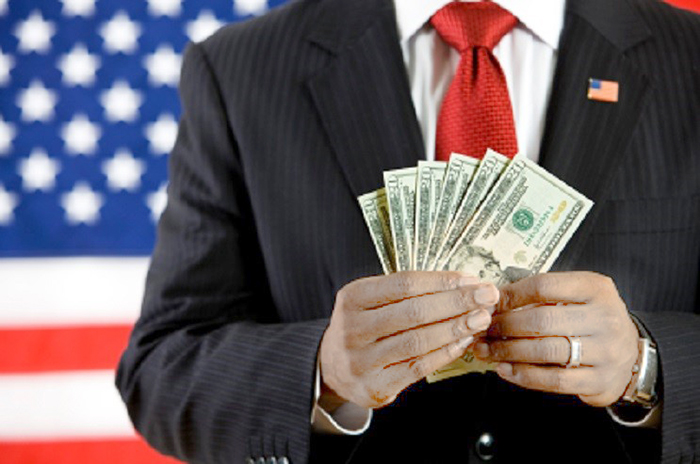
Paid speeches, MEK Terrorists, Legal woes

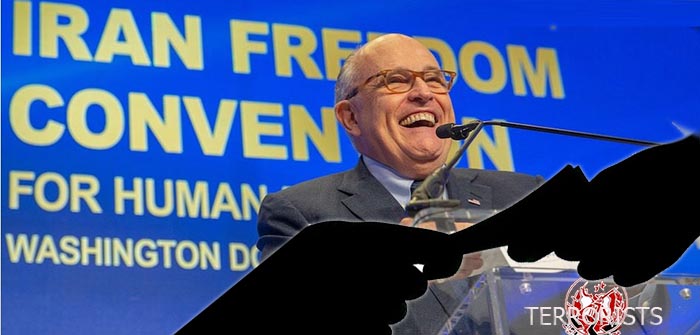
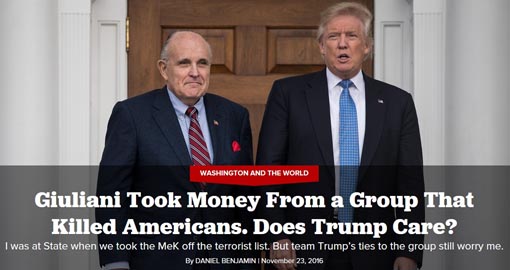
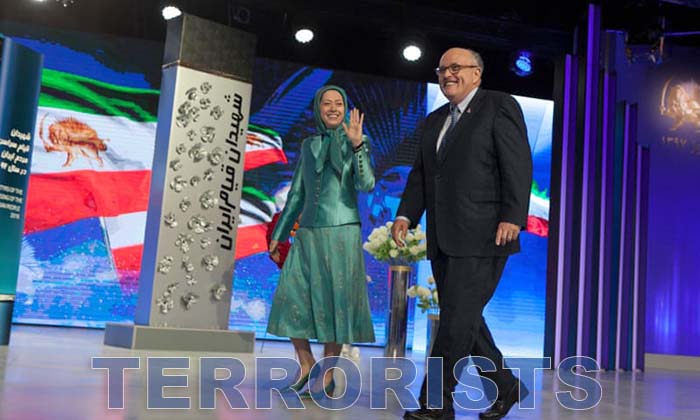
Giuliani’s work for Iranian group with bloody past could lead to more legal woes

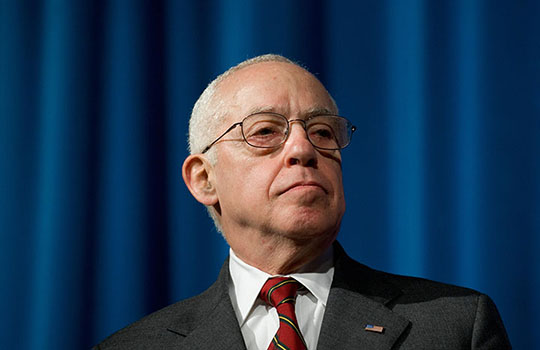
Giuliani ally Michael Mukasey’s move to register as a lobbyist for an Iranian dissident group may spur the DOJ to investigate, experts say.

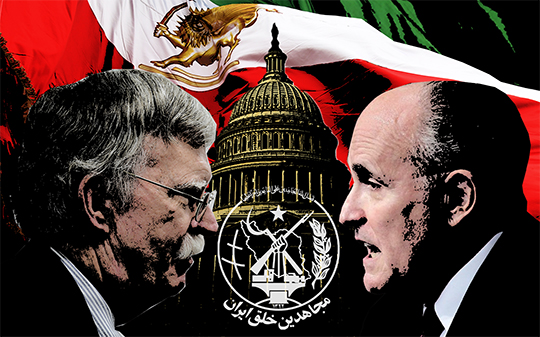
In the spring of 2017, former U.S. attorney general Michael Mukasey met with representatives of the Iranian dissident group Mujahedeen e-Khalq (MEK), a State Department-designated foreign terrorist organization until 2012.

Mukasey wasn’t alone. Joining him at the meeting was another high-profile American political figure: Rudy Giuliani.

For nearly a decade, the former law partners have pushed the agenda of the MEK, giving paid speeches and writing newspaper op-eds expressing support for a group linked to the deaths of six Americans in the 1970s.

But it wasn’t until late last month that Mukasey registered as a foreign agent lobbying pro bono for MEK’s political arm. Giuliani still hasn’t, raising the possibility that the Justice Department could target him in an illegal lobbying probe, experts say.

“This is the kind of scenario that very commonly leads them to launch an investigation,” said Josh Rosenstein, a Washington-based lawyer who advises clients on compliance with federal lobbying laws.

If Giuliani and Mukasey were”working together or in parallel,”Rosenstein added,”then it’s a huge problem for Giuliani.”

Mukasey’s move to register as a lobbyist for the MEK’s political affiliate comes as Giuliani, the former New York City mayor-turned-personal lawyer to President Donald Trump, is facing growing legal peril connected to his international business activities.

Rudy Giuliani

Giuliani’s overseas dealings, primarily in Ukraine, are under fresh scrutiny after two of his associates were charged last week in a scheme to funnel foreign money to U.S. politicians.

The New York Times has reported that Giuliani’s business dealings are under federal investigation and prosecutors may be looking at his exposure for failing to file as a foreign agent.

Legal experts say Giuliani’s work on behalf of the MEK and its political arm, the National Council of Resistance of Iran, also raises questions about whether he may have run afoul of the Foreign Agents Registration Act, or FARA. The law requires American citizens to disclose to the Justice Department any lobbying or public relations work on behalf of a foreign entity, regardless of whether they’re paid for the representation.

A review of the group’s government filings shows that Giuliani met with MEK officials at least once every year since 2014. A range of issues were discussed, including “Iran’s nuclear weapons as well as Iran’s terrorism in the region, including Iraq and Syria” in 2014, the plight of Iranian dissidents living in Iraq in 2015, and the protests in Iran in 2018.
During that period, he has appeared at MEK-related events in Poland, Albania, Paris and Washington. FARA experts say Giuliani’s speech in Washington in May 2018 and U.S.-based writings in support of the group are particularly problematic.

“This certainly walks like a FARA issue and talks like a FARA issue,” said Matthew Sanderson, a defense lawyer who specializes in foreign lobbying cases.

He said the Justice Department will likely try to “develop facts to determine whether these efforts to influence public opinion in the U.S. were at the request or direction of MEK, a foreign interest.”

“This is a particularly unusual situation because Mr. Giuliani was acting as the president’s counsel, all while acting in ways that suggest he was simultaneously representing certain foreign interests,” Sanderson said.

In an interview with NBC News, Giuliani said he has no reason to register as a foreign agent because, unlike Mukasey, he’s not planning to speak to U.S. government officials about the MEK.

“I’m not doing what he’s doing,”Giuliani said.”He’s not registering for any previous activity. He’s registering because he’s asking for a specific meeting with the government.”

Giuliani would not elaborate on the reason for the meeting. Mukasey declined comment.

Representatives for the group’s political arm did not return requests for comment.

Formed in the 1960s as a Marxist-Islamist movement, the MEK has a bloody history.

The group, whose name translates as “People’s Holy Warriors of Iran,” is accused of killing six Americans before the 1979 Iranian revolution and assassinating Iranian diplomats in the subsequent years.

A longtime ally of the Iraqi dictator Saddam Hussein, the MEK was placed on the State Department’s terror blacklist in 1997. The group enlisted an A-list cast of former American political and law enforcement leaders as part of its effort to remove itself from the terrorist list and enhance its reputation in the West.

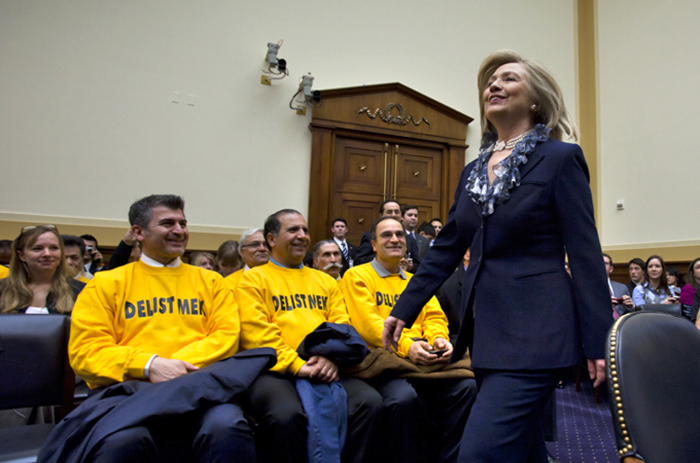
The strategy worked. In 2012, Secretary of State Hillary Clinton announced a decision to remove the group from the list.

Daniel Benjamin, a State Department counterterrorism coordinator from 2009 to 2012, has focused extensively on the network of American politicians who have been paid by MEK, including Giuliani and Mukasey.

“I found it pretty distasteful that they were shilling for this group even if it was delisted,” said Benjamin, now a professor at Dartmouth College. “This is a group that has American blood on its hands, and it’s never owned up to that.”

Benjamin said the group has long attracted anti-Iran hard-liners who recruit like-minded peers.

“Look at those who have gone on their gravy train and then go to their events and say MEK is going to bring democracy and peace to Iran,” Benjamin said. “Basically these guys bring aboard their pals. Especially among the hardest line anti-Iran folks, this is the place to go. Though plenty of people become much more hard line once their pockets are filled with MEK money.”

“The big question,” Benjamin added,”is where does all this money come from?”

Karim Sadjadpour, an Iran expert with the Carnegie Endowment for International Peace, described the organization as a fringe group with mysterious benefactors that garners scant support in its home country.

“Their population in Iran hovers between negligible and nill,” Sadjadpour said.
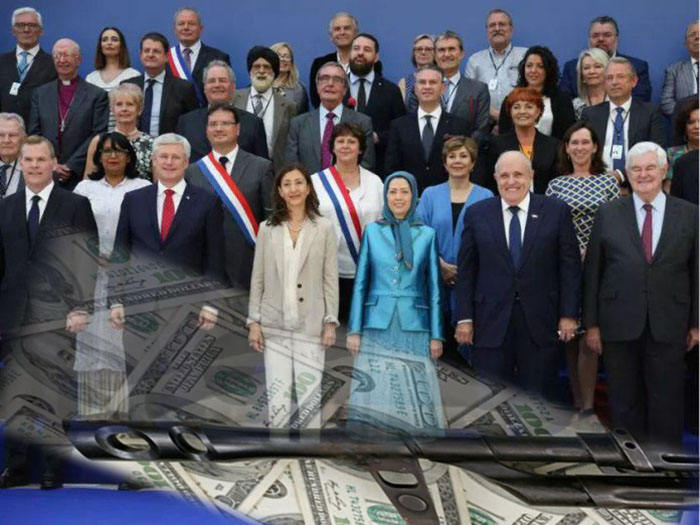
Still, the MEK’s roster of supporters includes an array of prominent Americans: former FBI Director Louis Freeh; former Democratic governors and presidential candidates Howard Dean and Bill Richardson; Trump’s former national security adviser John Bolton; and former Obama national security adviser James L. Jones.

In speeches and media interviews, Giuliani and the others have insisted the MEK is now a democratic-minded opposition group committed to overturning the mullah-led government in Tehran. They say their support for the group is also based on humanitarian motives — to ensure the safety of the Iranian dissidents living in Iraq who face the threat of attacks.

Giuliani’s MEK advocacy dates to at least 2010. In December of that year, he and Mukasey were among a group of prominent Republicans who traveled to a rally in Paris where they called on the Obama administration to remove MEK from the U.S. list of foreign terrorist organizations.

“For your organization to be described as a terrorist organization is just really a disgrace,” Giuliani declared before a crowd of Iranian exiles, according to an article in The Washington Post.

Mukasey urged the White House to offer “all possible technical and covert support to those fighting to end oppression in Iran.”

“What it has done and what it is doing is nothing less than an embarrassment,” he told the crowd, according to The Post.

The following year, Giuliani and Mukasey co-wrote an op-ed in the National Review with two other MEK supporters defending the organization.

In the 2011 piece, headlined “MEK is not a terrorist group,”Giuliani and the others argued against suggestions that the authors were providing material support to a terror group. The MEK has”provided valuable intelligence to the United States to Iranian nuclear plans,”they wrote.

In his FARA filing, dated Sept. 26, Mukasey wrote that he’s not being compensated for his MEK advocacy.

“The registrant has agreed to communicate with executive branch and legislative officials in the United States government on behalf of the foreign principal and its members on an unpaid basis,”the filing says.”However, the foreign principal will reimburse the registrant for direct expenses such as filing costs and travel.”

The filing lists Sept. 20, 2019, as the date of the agreement with MEK.

Sanderson, the defense lawyer who focuses on government lobbying, said the listing of that date could pose problems for Mukasey if he started doing lobbying work for MEK before then.

“Filing a late registration, especially if you’re not accurate in your description, could result in charges,”Sanderson said.

But Sanderson added that filing late is still better than not filing at all.”If you approach the government and proactively say, ‘I’m registering,’ even if it’s late, you’re in a much better position than if the government comes to your door.”

Giuliani would not say how much the group pays him for his appearances. He said there’s no reason why the Justice Department would target him for activities that dozens of other former U.S. politicians and military figures are participating in.

“If I have to register, so do three former heads of the joint chiefs of staff and eight very prominent Democrats and eight very prominent Republicans,”Giuliani said.

In an interview with NBC News’ Andrea Mitchell in Poland this past February, Giuliani said he worked to get the MEK off the terror list because”there was no evidence of any kind of terrorist activity for over 20 years, if any, and they were basically revolutionaries who overthrew the shah.”

“They believe in democracy, in human rights, rights of women,”said Giuliani, who was appearing at an MEK event.

In the interview, he also defending advocating for the MEK while also working as the president’s personal lawyer.

“I’m a private lawyer, so private lawyers have private clients,”Giuliani said.”This has been a client of mine for years. Maybe if I was taking a new position. Maybe if i was taking a bold new different position. I’m just repeating what I said 11 years ago, 10 years ago.”

Mukasey told The New York Times in 2011 that he had been paid his standard speaking fee — $15,000 to $20,000, according to the Web site of his speakers’ agency — to deliver talks at MEK-related events.

He insisted that his decision to advocate on behalf of the group was not driven by money.”There’s no way I would compromise my standing by expressing views I don’t believe in,”Mukasey told The Times.

Federal prosecutors have brought few FARA cases over the years. But the law garnered renewed attention during the special counsel’s investigation into Russian election interference.

Two Trump associates, Paul Manafort and Rick Gates, were charged with failing to register as foreign agents.

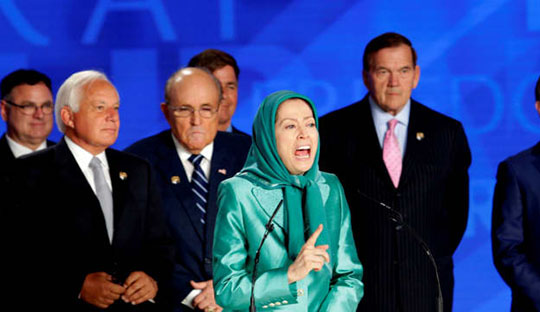
Giuliani’s contacts with the MEK extended into this past summer. In July, he traveled to Albania to meet with the group’s president, Maryam Rajavi.

An article from the MEK’s official website said Giuliani”emphasized that America stands on the side of the Iranian people and supports their struggle for freedom.”
By Julia Ainsley, Andrew W. Lehren and Rich Schapiro – nbcnews.com

October 20, 2019 0 comments
FacebookTwitterPinterestWhatsappTelegramSkypeEmail
Maryam Rajavi
Mujahedin Khalq Organization's Propaganda System

Maryam Rajavi mirrors Chalabi

Ahmad Chalabi, the Iraqi politician who died in 2015, is widely known for pushing for the U.S. invasion of Iraq. From exile he helped provide the manufactured excuses needed by the United States for the invasion in 2003 but was eventually denied any share in power after the fall of Saddam Hussein.
Chalabi was perhaps the Iraqi most closely associated with President George W. Bush’s decision to go to war. He cultivated close ties with journalists in Washington and London, American lawmakers, the neoconservative advisers who helped shape Bush’s foreign policy, and a wide network of Iraqi exiles, many of whom were paid for fabricating and distributing intelligence against Saddam Hussein’s government.
It was later revealed that his group, the Iraqi National Congress, received more than $100 million from the C.I.A. and other agencies between its foundation in 1992 and the start of the war. He cultivated friendships with a circle of hawkish republicans – Dick Cheney, Douglas J. Feith, William J. Luti, Richard N. Perle and Paul D. Wolfowitz – who were central in the United States’ march to war.
Chalabi was used by the American warmongers to ‘sell’ the claim that Saddam Hussein possessed weapons of mass destruction and that he had refused to fully cooperate with United Nations weapons inspections as an excuse to launch war against the country.
But the case for the war was predicated on flawed intelligence, and a 2006 report by the Senate Intelligence Committee concluded that “false information” from sources affiliated with the “Iraqi National Congress” was used to support key intelligence community assessment on Iraq and was widely distributed in intelligence products prior to war.
Did Chalabi push the U.S. into the war or was he rather used by advocates of war to produce excuses and announce false intelligence? It was later proved that Chalabi was truly the loudspeaker of the White House warmongers whenever they were not able to directly show their faces. They needed a so-called opposition group to do the job for them or at least to pull the trigger.
Now the Iranian Maryam Rajavi, leader of the Mojahedin-e Khalq Organization (MEK, MKO, NCR, NLA, Rajavi Cult) is playing (and has played for a long time) the same role as the Iraqi Ahmad Chalabi, this time in relation to Iran.
On Monday September 30, 2019 in Washington, the group, which has close ties with the warmongers of the White House, announced baseless details blaming the missile drone attack against Saudi oil facilities on Iran. Without any evidence, the MEK claimed that the decision for the attack was taken by the Supreme National Security Council, presided over by President Rouhani and with the presence of Foreign Minister Zarif.
This echoes the small task the MEK was previously given to promote the manufactured nuclear crisis against Iran. In August 2002, Alireza Jafarzadeh, the representative of the National Council of Resistance (a front organization for the MEK) to the U.S., appeared in a press conference in Washington and issued some nuclear intelligence against Iran. This was later proven to have been handed over to the MEK by Israeli Intelligence. This was being done while the group was listed as a terrorist entity by the U.S. State Department. The Americans only needed an Iranian opposition group to start the crisis, it wasn’t fussy about which one.
The MEK is a highly controversial group. It was responsible for killing several Americans in Iran during the 1970s. In 1992 its members attempted a violet attack on Iran’s U.N. delegation in New York. In 2012 it was removed from the U.S. State Department’s list of foreign terrorist organizations after an intense lobbying campaign that included paying retired U.S. government officials and leaders. Its supporters in the White House say the MEK has been an essential conduit for sensitive information about Iran’s nuclear program.
MEK members in Iraq were largely disarmed after the 2003 American invasion. The group had been granted protection by Saddam Hussein before the invasion and by the US army after the invasion and lived at Camp Ashraf for two decades. After the U.S. troop withdrawal in 2009, many group members moved in 2012 from Camp Ashraf to Camp Liberty, an abandoned U.S. military base. They have been now granted a remote and isolated base in Albania under the Trump Administration where the leaders have reconstructed their cultic internal relations and are doing their job in exactly the same way as performed by Ahmad Chalabi – the manufacture of excuses and false narratives to pave the way for war.
The MEK’s well financed meetings in Paris and now Albania are used as a platform for American politicians to announce their policy of regime change in Iran and the imposition of ‘maximum pressure’ sanctions. It is the only so-called opposition group which fully and unequivocally supports this policy to push the U.S. into war with Iran.
The Trump administration is conflicted about Iran. Even as the warmongers in the White House push for war there are others who are beginning to pull back. The MEK played its role in promoting accusations about Iran’s involvement in the Saudi missile attack. But this time, unlike Chalabi’s accusations, neither politicians nor media have given credence to Maryam Rajavi’s claims. It could well be that history lessons have been learned.
Ebrahim Khodabandeh

October 14, 2019 0 comments
FacebookTwitterPinterestWhatsappTelegramSkypeEmail
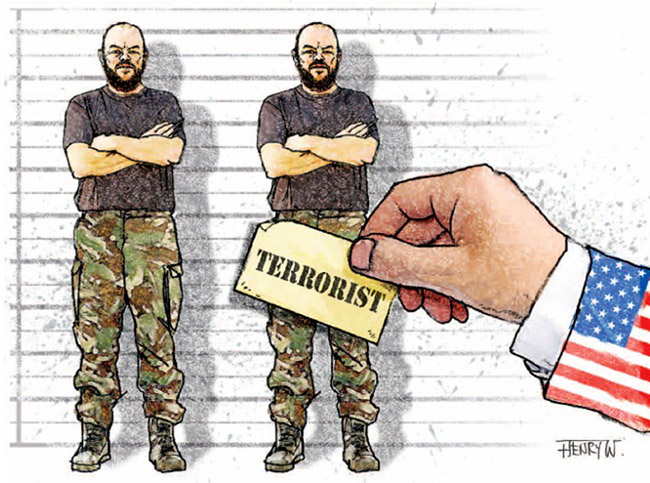
USA double standards on terrorists
Mujahedin Khalq Organization as a terrorist group

Democratic cover for terrorist proxies like MEK

Back in 1981, a 3-year-old girl Zahra Nourbakhsh, was on a bus together with her family, when it was set on fire by the agents of the Mujahedin Khalq Organization (the MKO, MEK, PMOI, Cult of Rajavi) in Shiraz, Iran. In that traumatic incident, she was severely injured and her two-year-old sister was killed. [1]
This was one of the many terrorist attacks of the MEK against Iranian civilians and authorities. However, Advocacy for violent groups such as the MEK, as a tool to run the agenda of superpowers, is not a taboo. Ted Carpenter, vice president for defense and foreign policy studies at the Cato Institute in Washington, D.C, analyzes this phenomenon in his book “Gullible Superpower: U.S. Support For Bogus Foreign Democratic Movements”.
In his book Carpenter focuses on ten separate case studies of times the United States gave “democratic” cover to movements that were far from deserving. These include the Islamic fundamentalist Mujahideen in Afghanistan, Nicaraguan and Salvadoran death squads, the authoritarian Jonas Savimbi of Angola, the organ-trafficking Kosovo Liberation Army, Ahmed Chalabi’s National Iraqi Congress, and the People’s Mujahedin of Iran. [2]
“Gullible Superpowers has an excellent chapter on the Iranian group Mujahideen-e-Khalq (MEK),” writes James Bovard of the American Conservative. “That organization sprang up in the 1960s and proceeded to kill Americans in the 1970s and large numbers of Iranians in subsequent decades. NBC News reported in early 2012 that MEK had carried out killings of Iranian nuclear scientists and that it was “financed, trained and armed by Israel’s secret service.” [3]
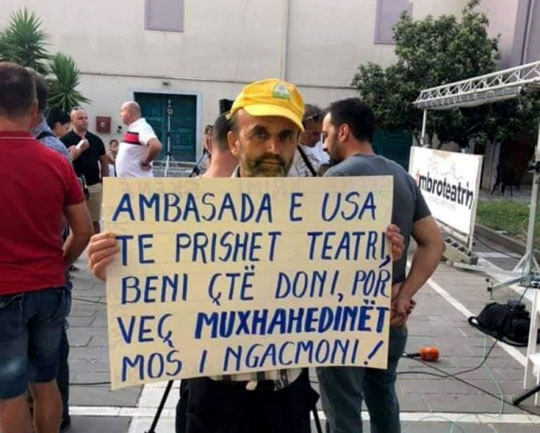
Advocacy for the MEK as the enemy of their enemy is not limited to the US and Israel. The group is also embraced by the regional rival of Iran, Saudi Arabia. However, Albanian government should also be added to the list of MEK’s friends although it has never been involved in serious political engagements or arguments with Iranian government. Actually, the motivation of Albanian authorities to receive the MEK is based on money. It was chosen as a safe haven for the group because the US wanted so.
Reza Alghurabi of the American Herald Tribune writes, “Under pressure from the Iraqi government and the country’s civil activists who demanded the expulsion of the MEK from Iraq, the U.S. government was forced to choose Albania, which was suffering from extremely weak economic conditions, as the final destination of the terrorist group.” [4]
Alghurabi explains how the US government “was forced to choose” Albania: “The Americans lured the Albanian officials into hosting the MEK by donating a $25 million package which was offered to Albania under the pretext of promoting reforms in the country. Furthermore, another $20 million was donated to the UN refugee agency by the U.S. to help resettle the MEK in Albania.” [5]
Nevertheless, this is not the only financial resource that Albania enjoys by the side of the MEK. The MEK is notoriously known for its lavish payments to its sponsors. Speakers at the MEK events are usually paid hefty sums of money for a ten-minute speech on behalf of the group. So, it is quiet natural for the MEK to fund the Albanian government and its authorities. In exchange the Albanian authorities serve them with hostile acts towards Iran.
“Edi Rama’s UN speech on September 27, 2019 in which he denounced Iran and praised the MEK, has raised speculations that the terrorist group influences Albanian officials,” Alghurabi writes. “In addition, Ilir Meta, another member of Albania’s socialist party and the Albanian president, had also visited MEK’s headquarters in Manze earlier and met with the group’s leader Maryam Rajavi.” [65]
Double standards on terrorism point to an awkward attitude among politicians in the US, Israel, Saudi Arabia and Albania. As far as a terrorist group is beneficial, it can be considered as democratic. “MEK apologists continue to portray the group as idealistic freedom fighters devoted to democracy,” James Bovard states. “A simple online search shows that the Farsi translation of the group’s name is “holy warriors of the people.” But as long as the MEK serves the purposes of the Saudi and Israeli governments and their American string-pullers, there will be plenty of Washingtonians who pretend that the Iranian people do not loathe MEK.” [7]
They can pretend anything they are willing too but the absolute truth is that the MEK is loathed by the Iranian people.
Mazda Parsi

Sources:
[1] https://www.nejatngo.org/en/posts/6767
[2] Carpenter, Ted Galen, Gullible Superpower: U.S. Support For Bogus Foreign Democratic Movements, Cato Institute, February 19th , 2019.
[3] Bovard, James, Idiocy or Perfidy? How We Get Hooked on Foreign Democracy Crusades, the American Conservative, October 2nd , 2019.
[4] Alghurabi, Reza, Why Did Saudis Decide to Expand Their Relations with Albania?, American Herald Tribune, October 6th, 2019.
[5] ibid
[6] ibid
[7] Bovard, James, Idiocy or Perfidy? How We Get Hooked on Foreign Democracy Crusades, the American Conservative, October 2nd , 2019.

October 12, 2019 0 comments
FacebookTwitterPinterestWhatsappTelegramSkypeEmail
Jebelli and Husseinejad at EUP
Albania

I can buy Albanian President for a thousand dollars; Maryam Rajavi

Open letter by former MEK member, Reza Sadeghi Jaballi to Albanian President Ilir Meta
My name is Reza Sadeghi Jaballi. I am a former member of the MEK and a human rights activist living in Brussels. On June 1981, I was shot and later arrested by the Iranian security services and spent five years in prison in Iran including of two years in solitary confinement. Once freed, I left Iran and worked in the MEK’s financial section in Canada and the United States. I also spent many years in the MEK’s military garrison Camp Ashraf in Iraq.
Recently you visited the MEK Camp in Tirana. As a former member, I would like to bring to your attention that the latest EU-Western Balkans Ministerial Forum on Justice and Home Affairs, held in Tirana in October 2018, recognized that terrorism and radicalization remain a common challenge for the European Union and the Western Balkan region.
The ministers representing the European Union, signed the Joint Action Plan on Counter Terrorism for the Western Balkans. It calls on Western Balkan partners and the European Union to take ambitious action in order to reach their counter-terrorism objectives. Ministers discussed their common challenges in responding to the security threat posed by violent extremism and agreed to work together to address its root causes and to build resilient and cohesive societies.
Considering the MEK’s past forty years record of assassinations and terrorist activities in Iran, Iraq and Europe, as a former member I must emphasize that the MEK presence in Tirana is and will be one of the greatest threats to your country as well as the European Union and also one of the main obstacles for Albania’s accession to the European Union.
Dear Mr President,
You have just met with Maryam Rajavi who is considered by Iranians to be one of the worst and most violent mafia-like terrorist cult leaders in Iran’s recent history.
Several incidents between members of the MEK and local communities in Albania reveal the pernicious danger of their secret activities.
Channel 4, a highly reputable British television news channel, recently travelled to Albania to find out about the daily life of the MEK members. The film crew was greeted by hostile private security forces outside the fortified camp at Manëz. Camp members physically attacked the Channel 4 camera crew (Shqiptarja.com, August 19). It was an unprecedented event that raised many questions about the activities at and inside the camp (Lapsi.al, August 19).
The event was widely reported by local media, which was also able to obtain a threat assessment on the group by Albania’s Intelligence Agency.
A prominent Iraqi politician described the Mojahedin-e Khalq Organization (MEK, also known as MKO, NCRI or PMOI) as a big cancerous tumor that Iraq had been afflicted with.
Olsi Jazexhi, an Albanian writer says “We are supposed to be living in a free and democratic country. But the MEK have built a state within a state that implements its own laws”.
Olsi Jazexhi : MEK Helping Albania Slide Toward AuthoritarianismOlsi Jazexhi : MEK Helping Albania Slide Toward Authoritarianism
MEP Ana Gomes speaking during the debate on Iran’s nuclear deal indicated “we must not turn a blind eye to the provocative activities of sects such as the MEK (Mojahedin-e Khalq), which act within this Parliament, and which last week even physically assaulted an opponent just outside the Parliament. This criminal act happened when the MEK leader Maryam Rajavi was in the Parliament. I demand from President Tajani the expulsion of MEK agents who work on EP premises. This is also a security matter for all of us”.
Martin Kobler, as head of UNAMI, tried to work out a solution in Iraq, but was “miserably” attacked by the MEK. He indicated “he could not get access to the members to find out what they wanted as individuals. The MEK would not allow the normal interviews that the UNHCR conduct”.
MEK behavior in Albania is like a mafia – breaking laws, blackmailing, paying people off, beating people, threatening defectors, accusing anyone who questions them of being an Iranian agent, controlling their members in the camp through Stalinist totalitarian methodology and not allowing members to call or visit their families.
In 2003, French anti-terrorism officers raided a dozen locations northwest of Paris in Auvers-sur-Oise, the MEK headquarters, at a time the MEK was classified as a terrorist organization by the United States, the European Union and Iran (1997-2012), and initially detained 165 people including the MEK leader Maryam Rajavi who immediately ordered a few members to burn themselves in protest in the streets of Europe. The attempts at self-immolation to protest against the arrest of Rajavi are proof of a fanaticism and terrorist group that does not respect our laws and our values.
Farid_Totounchi_Mahoutchi_MEK_Iraq_AlbaniaFarid Totounchi (Real name: Mahoutchi) Commander of Saddam’s Private army forcing Somayeh Mohammadi to do a “Forced confession” session in Terror camp in Albania
Dear President Meta,
The MEK was listed as a terrorist organization for a reason. It has carried out decades of brutal terrorist attacks, assassinations, and espionage against Iran’s government and its people (according to Rajavi’s own statement, the MEK killed more than 12000 people from 1981 to 1983), as well as targeting Americans including the attempted kidnapping of US Ambassador Douglas MacArthur II, the attempted assassination of USAF Brigadier General Harold Price, the successful assassination of Lieutenant Colonel Louis Lee Hawkins, the double assassinations of Colonel Paul Shaffer and Lieutenant Colonel Jack Turner, and the successful ambush and killing of American Rockwell International employees William Cottrell, Donald Smith, and Robert Krongard.
According to Ms Ebi Spahiu, the MEK presence in Albania – which continues to struggle with endemic corruption and organized crime and the emergence of religious radicalization as a regional security threat and potential sectarian rifts – may add to the list of challenges facing Albania’s political landscape.
In 2013 Maryam Rajavi said, we are going to Albania because it is a corrupt country and we will own this country in a short period of time, we have money and instead of paying few hundred thousand dollars to buy a western politician, there we can buy their president with one thousand dollars.
This is the true face of Maryam Rajavi.
Respectfully,
Reza Jaballi – Brussels

October 9, 2019 0 comments
FacebookTwitterPinterestWhatsappTelegramSkypeEmail
Albania

Advocacy for MEK, complicate Albania’s EU integration process

Why Did Saudis Decide to Expand Their Relations with Albania?

Although the presence of Islam in the Balkans dates back about eight hundred years ago to the 12th century, Takfiris’ existence in this region is rather a new phenomenon. It relates to the early 90s and the midst of the Bosnian War with the presence of the so-called Afghan Arabs. By the end of the Bosnian War, these Afghan Arabs gained Bosnian citizenship, and Wahhabism, as the central ideology of Takfirism, was promoted in the region by Saudi Arabia.

In recent days, the Saudi and Albanian media have announced the signing of a trade agreement between Saudi Arabia and Albania to develop economic relations. Head of the Saudi delegation, Ahmed al-Khumashi, said about good relations and shared interests between the two countries had and called for the development of economic and investment relations.

In February, Albanian Prime Minister Edi Rama had traveled to Saudi Arabia to meet with Saudi King and sign two agreements and a memorandum of cooperation in the fields of tourism and aviation.

Looking at the history of Riyadh-Tirana relations, one can find that association between the two countries is not a matter of history and dates back to recent years. As there is no significant book nor article on the relations between the two countries and the “Albanian-Saudi relation,” entry is only in Arabic. Interestingly, the content of the mentioned entry is just about the statistical comparison between the two countries is in terms of population, economics, and international organizations in which both countries are members, and there is not the slightest mention of the history of relationships.

There is a serious question that must be asked: why and how the Saudis decided to expand their relations with Albania? Especially with regard that the first and last period which Saudis seriously appeared in the region dates back to the immigration of Saudi and Arab citizens after the end of the Afghanistan war. At the same time, Saudis began a movement to build mosques and Islamic centers in the Balkans in different parts of the Balkans, especially Bosnia and Herzegovina, and many of these immigrants married Muslim and indigenous girls in the region.

In addition, trained Arab Salafi troops, who were bin Laden’s loyalists, gathered in the Balkans in 1993 under cover of the Bosnian War to establish a terrorist network inside European territory based in the Balkans.

By the end of the Bosnian War, major cities in the Balkans had become the center of Salafist extremists; for example, the Novi Pazar town in Sanjak area in Southern Serbia has become a core for Islamic fundamentalism, linked with Al-Qaeda cells. Novi Pazar was the focus of the Islamist attempt to build a land bridge from Albania and Kosovo to Bosnia.

Two decades after the presence of Arab extremists and the Saudi mosque-building movement in the region, which has been associated with the promotion of extremist Wahhabi thoughts, its effects became clear; when thousands of violent militias were deployed to Iraq and Syria to fight alongside the so-called Islamic State of Iraq and al-Sham (ISIS).

Along with ISIS’s seizing power in Iraq and Syria, Albanian citizens were surprised by the large volume of travel by some citizens of this country to the Middle East. Former Albanian Foreign Minister Detmir Bushati had initially said that about 300 Albanian citizens had left this country to join ISIS. In addition, some Imams in Albania used to support ISIS in their speeches.

Interestingly, the ISIS recruitment among Albanians was not limited to Albanian citizens, but it also included Albanians living in Western Europe, especially Germany and Switzerland. An issue that demonstrates to what extent is Albania influenced by imported ideas and how much is it capable of attracting such violent militia.

Furthermore, Albania’s poor economic conditions and its strategic position in Southeast Europe and the Balkans, as well as the corruption between its officials, have attracted the attention of some international actors to this country.

Under pressure from the Iraqi government and the country’s civil activists who demanded the expulsion of the MEK from Iraq, the U.S. government was forced to choose Albania, which was suffering from extremely weak economic conditions, as the final destination of the terrorist group. MEK’s history is so dark that no country was willing to take the group in as a whole. The Americans lured the Albanian officials into hosting the MEK by donating a $25 million package which was offered to Albania under the pretext of promoting reforms in the country. Furthermore, another $20 million was donated to the UN refugee agency by the U.S. to help resettle the MEK in Albania.

The MEK which had pledged to refrain from conducting any political activities against Iran in exchange for the group’s resettlement in Albania soon forgot its pledge and started massive constructions in its headquarters near Tirana where the group’s meetings with Albanian and European political figures were held later with an aim to hurt Tehran’s interests.

Albania has now turned from a fringe country to an important one for many actors. To the MEK, Albania is home to the majority of its members, to Iran, Albania is the host of its most significant opposition group, and to the U.S., it is an obedient state which has done something no other country would do; accepting a terrorist group on its soil at the request of the United States. Israel too, has fixed an eye on Albania since it would not be wise to turn a blind eye on an Iran opposition group with 2500 members enjoying notable military and security skills.

Saudi Arabia is another country with interests in Albania. Saudi relationships with the MEK became public when Prince Turki Al-Faisal, former chief of Saudi Arabai’s intelligence agency, praised the group after participating in MEK’s annual gatherings in 2016 and 2017 in Paris.

It could be argued now that after MEK’s relocation to Albania, the tiny Balkan country has turned into a playground for the confrontation of Iran and its rivals. But Iran could not endure much in this game as Tirana expelled its Ambassador and another one of Iran’s diplomats in December 2018 following a seemingly covert meddling from some rival countries or even the MEK itself.

The Iranian foreign ministry spokesman later announced the U.S., Israel and some anti-Iran terrorist groups were behind Albania’s expulsion of the Iranian Ambassador.

Edi Rama’s UN speech on December 27, 2019 in which he denounced Iran and praised the MEK, has raised speculations that the terrorist group influences Albanian officials. In addition, Ilir Meta, another member of Albania’s socialist party and the Albanian president, had also visited MEK’s headquarters in Manze earlier and met with the group’s leader Maryam Rajavi.

Obviously, the relatively peaceful Albania has now become a scene in which the Americans, Israelis and Saudis are acting. What they all share is their hostility with Iran and their tool in Albania is the MEK.

What the Albanian authorities do not consider in expanding their relations with Saudi Arabia, is that the Saudis do not hesitate to promote and spread their extremist ideology of Wahhabism among their new friends. Reports published by the Muslim World League, Riyadh’s principal tool in promoting fundamentalism globally, about its promotional activities in various regions around the world, distribution of religious books, and construction of Islamic centers and mosques, must be considered as a warning to the Albanians regarding promotion of Wahhabi extremism in their country.

Furthermore, the advocacy of Albanian authorities for the MEK, a group listed by the U.S. and the European Union for years as a terrorist group, could complicate Albania’s EU integration process.

Concerned about becoming accused of having ties with a terrorist group that has committed various crimes, including money laundering and fraud in the past, top Western officials still refuse to attend MEK events. But the Albanian officials have yet to understand how their ties with a terrorist group could hurt their public figure.

Finally, Tirana must be very alert in its dealings with the Saudis if it does not want to become a focal point for extremist ideas in the Balkans and Europe and a corridor for extremists to cross the continent. Perhaps the best option for this country is not being involved in the actors’ game.

BY Reza Alghurabi, ahtribune

October 7, 2019 0 comments
FacebookTwitterPinterestWhatsappTelegramSkypeEmail
Money talks - paid advocacy
Mujahedin Khalq; A proxy force

Who funded MEK-UANI Conference?

Email series suggests UAE and Saudi Arabia funded anti-Iran US lobby
October 03, 2019

A report by The Tehran Times states evidence has emerged suggesting that the governments of Saudi Arabia and the United Arab Emirates (UAE) are involved in financing an anti-Iranian US lobby.
READ MORE: Thousands of JKLF marchers head towards LoC

Speaking last week at United Against Nuclear Iran’s (UANI) annual conference, US Secretary of State Mike Pompeo announced the administration was expanding its pressure campaign, targeting Chinese entities believed to be transporting Iranian oil. “[W]e’re telling China and all nations, know that we will sanction every violation of sanctionable activity,” said Pompeo.

Although it was previously unclear who was behind UANI, LobeLog, a website operating out of ETH Zurich in Switzerland, has leaked a series of emails that suggest the”non-governmental”anti-Iran group may not be as non-governmental at all.

In the conference where Pompeo made his tirade against Iran, in attendance included Bahraini Ambassador to the U.S. Sheikh Abdullah bin Rashed bin Abdullah Al Khalifa, Saudi Minister of State for Arabian Gulf Affairs Thamer al-Sahban, Israeli Ambassador to the U.S. Ron Dermer, U.S. Ambassador to Germany Richard Grenell, and U.S. Under Secretary of the Treasury for Terrorism and Financial Intelligence Sigal Mandelker. UAE Ambassador to the U.S. Yousef Al Otaiba was also visible in the audience. Billionaire Thomas Kaplan, who was shown to be a major funder of UANI in 2013, was also in attendance.

The emails show the anti-Iran group members attempting to connect US foreign policymakers with members of the royal families of both the United Arab Emirates and Saudi Arabia . According to documents, 35$ million were channeled into projects that sought to increase anti-Iran and anti-Qatar advocacy pressures. The hefty capital available for the group suggests that it is an influential lobby in determining US foreign policy.

UANI has also hosted conferences involving an Iranian opposition listed as”terrorist”by both Iran and the United States, the Mojahedin-e-Khalq (MEK). The Tehran Times highlights that this fact was barely pursued by US authorities, which otherwise would have harsh consequences for non-governmental organisations affiliated with terrorist organisations. This is said to be indicative of both the power of the UANI, and the dangerous nature of it as a lobbying force.
Nation.com.pk

October 7, 2019 0 comments
FacebookTwitterPinterestWhatsappTelegramSkypeEmail
Mansur Nazari - MKO defector
Albania

Ex MEK Member warns Albanian Government

A note to the representatives of the Government of Albania

Ladies and Gentlemen of the Government of Albania

I am Mansour Nazari. I have spent over twenty years in the Mojahedin Khalq Organization but I have now left the organization. I have a great deal of experience in this organization. Why am I saying this? Because what the MEK leaders are telling you is different from anything in the real world.
A few days ago, Mr. Ilir Meta, President of Albania, went to the MEK base and met with Maryam Rajavi, leader of the MEK. But she just told him lies. Why she is afraid to tell the truth?
The MEK has never been a popular group or had much support among Iranians. If they did, they would not try to hide their history in Iran and Iraq. The MEK is a cult and a destructive one at that, and it is run like a mafia gang. The fugitive leader of the Mojahedin Khalq Organisation (Rajavi Cult) Massoud Rajavi has been in hiding for the last 15 years. We ex-members can tell you why he is hiding. But you can ask Maryam Rajavi directly yourselves. Ask her about the prisons in Camp Ashraf in Iraq. Ask her how many prisoners they kept at any one time. Ask how many were tortured, how many died. Ask how many Iranian civilians and passers-by have been killed due to their blind and indiscriminate terrorist bombings and terrorism. The questions can go on and on.
President Ilir Meta has been to visit and lobby for Maryam Rajavi in the MEK terror HQ near Tirana. At the same time, no mother, father or family members are allowed to visit their loved ones there or even have a telephone conversation with them. Is this not a tragedy? What are the MEK leaders afraid of? Why would they be afraid of the families of their members? What are they hiding? Ask yourselves. Millions of Iranians live abroad but only a few tens of them would want anything to do with them. Is this not a dangerous sign to take notice of?
I urge you. Next time they invite you. Next time you have any opportunity. Ask Maryam Rajavi what are the “weekly ablutions” [compulsory confession sessions] she has invented to suppress the victims in the camp? Why don’t the victims and hostages in the camp have the right to contact their family? Is Camp Ashraf a prison? And if not, why there is no access to it?
And as an Iranian (or for that matter of any nationality) I can tell you this: remember that the MEK has betrayed and is betraying their own country and their own people, their own members, their own masters and benefactors over and over again. Be careful, they can betray you as well.
Yours Sincerely,
Mansour Nazari
End

October 7, 2019 0 comments
FacebookTwitterPinterestWhatsappTelegramSkypeEmail
Mujahedin Khalq; A proxy force

Advocating on behalf of MEK terrorists, Idiocy or Perfidy?

Idiocy or Perfidy? How We Get Hooked on Foreign Democracy Crusades

Ted Carpenter’s new book raises important questions about who is wagging who.

Gullible Superpower: U.S. Support For Bogus Foreign Democratic Movements by Ted Galen Carpenter, 2019, Cato Institute, 300 pages
For the past 20 years, U.S. foreign policy has been marked by constant lies and unjustified killings, from the 1999 bombing of Serbia and the 2003 invasion of Iraq to Libyan regime change in 2011 and our role in the bloody Syrian war since 2012. What explains this unbroken record of deadly folly?
According to Ted Carpenter, author of the new book Gullible Superpower, Washington policymakers have been deceived by foreign con men who claim to adore freedom and democracy. Carpenter has a far more sagacious foreign policy record over the past 30 years than either the White House or the Washington Post editorial page. His latest work captures, in his own words, “the lengthy, depressing record of U.S. support for bogus freedom fighters and democratic activists.”
Gullible Superpower walks readers through almost 40 years of pro-democracy shams. From Jonas Savimbi’s ludicrous authoritarian pro-freedom movement in Angola to the murderous Kosovo Liberation Army to the boundless rascality of Ahmed Chalabi, Carpenter recounts how the U.S. government bankrolled and supported one fraud after another. He also details how it intervened in Ukraine’s internal affairs, choosing to back the side with neo-Nazi elements in order to topple an elected pro-Russian government. (At least it worked out well for Joe Biden’s son.)
Gullible Superpower swats at some of the biggest connivers of our times. For example, Senator Joe Lieberman claimed that “fighting for the Kosovo Liberation Army is fighting for human rights and American values.” Lieberman did not rescind his endorsement after the former KLA leaders were linked to a scandal involving body snatching and selling human organs. John McCain was canonized as a saint after he died last year, despite or perhaps because of his endless mania for bombing foreign nations. In 2013, Mother Jones tabulated 13 different countries that McCain wanted to bomb, invade, or destabilize.
Carpenter’s book is a blunt call for realism in U.S. foreign policy. But the deck is increasingly stacked against clear assessments of American interests abroad in part because of deluges of foreign funding for Washington advocacy. Oppressive regimes are buying better reputations as think tanks become “a muscular arm of foreign governments’ lobbying in Washington,” the New York Times reported in 2014. The Brookings Institution received a windfall from the government of Qatar to set up a research institute that would devote itself to “reflecting the bright image of Qatar in the international media, especially the American ones”—at least according to the Qatari government. The Atlantic Council, another prominent D.C. think tank, has pocketed cash from Saudi Arabia, Bahrain, the United Arab Emirates, and NATO. Facebook hired the Atlantic Council to help them decide which “extremist” or “hate” speech it should suppress (though it has thus far eschewed attaching an “Arab Dictator-Approved Censorship” label to such deletions).

Considering the perennial foreign debacles, the question arises: are U.S. policymakers fools, liars, or both? Carpenter’s tone in this book and in his articles over the decades has always been civil. Politeness is a virtue when dealing with reasonable people. However, politeness is only a mixed blessing when chronicling the perfidy of scoundrels.

Gullible Superpowers has an excellent chapter on the Iranian group Mujahideen-e-Khalq (MEK). That organization sprang up in the 1960s and proceeded to kill Americans in the 1970s and large numbers of Iranians in subsequent decades. NBC News reported in early 2012 that MEK had carried out killings of Iranian nuclear scientists and that it was “financed, trained and armed by Israel’s secret service.”

That was the same period during which a stampede of Washington hustlers took huge payoffs to publicly champion de-listing the MEK as a terrorist organization. As Trita Parsi noted in the New York Review of Books, MEK “rented office space in Washington, held fundraisers with lawmakers, or offered US officials speaking fees to appear at their gatherings. But the MEK did this openly for years, despite being on the US government’s terrorist list.”

Federal law prohibited taking money from or advocating on behalf of any designated terrorist group. Yet a 2011 Huffington Post headline reported, “Former U.S. Officials Make Millions Advocating For Terrorist Organization.” That didn’t seem to matter much to former FBI boss Louis Freeh, former CIA boss Porter Goss, co-chair of the 9/11 Commission Lee Hamilton, former attorney general Michael B. Mukasey, and former homeland security secretary Tom Ridge, who were pocketing $30,000 or more for brief speeches to pro-MEK events.

https://dlb.nejatngo.org/Media/Documentary/Populist_Marxist_Cult.mp4

Glenn Greenwald rightly scoffed that the advocacy “reveals the impunity with which political elites commit the most egregious crimes, as well as the special privileges to which they explicitly believe they—and they alone—are entitled.”
The Obama administration was swayed to cancel the MEK’s terrorist designation in 2012 and Trump administration officials are babbling about MEK’s possible role in ruling Iran after the current government is toppled. MEK apologists continue to portray the group as idealistic freedom fighters devoted to democracy. A simple online search shows that the Farsi translation of the group’s name is “holy warriors of the people.” But as long as the MEK serves the purposes of the Saudi and Israeli governments and their American string-pullers, there will be plenty of Washingtonians who pretend that the Iranian people do not loathe MEK.
Foreign policy experts have become Washington’s preeminent con men. This is a playing field that will likely always be slanted against opponents of foolhardy interventions like Ted Carpenter. Vigorous criticism of foreign policy follies will always be needed. But don’t forget the ridicule.

By James Bovard
James Bovard is the author of Lost Rights, Attention Deficit Democracy, and Public Policy Hooligan. He is also a USA Today columnist. Follow him on Twitter @JimBovard.

October 6, 2019 0 comments
FacebookTwitterPinterestWhatsappTelegramSkypeEmail
Mujahedin Khalq; A proxy force

Advocate on behalf of two cults

Reports on China ‘organ harvesting’ derive from front groups of far-right cult Falun Gong
A wave of corporate media reports on Chinese organ harvesting rely without acknowledgement on front groups connected to the far-right Falun Gong cult, whose followers believe “Trump was sent by heaven to destroy the Communist Party.”
Western corporate media outlets have gone wild with claims that the Chinese state is “harvesting” the organs of ethnic minorities and political opposition figures. But an investigation by The Grayzone has found that these allegations originate from front groups run by the far-right opposition cult Falun Gong.
Falun Gong, whose devotees can often be seen clad in yellow and performing coordinated qi gong routines in crowded city centers, runs an ultra-conservative, staunchly pro-Donald Trump media network that has been compared to Alex Jones’ Infowars.

Hillary Clinton

According to a former member of the fringe religious group, Falun Gong believes that an apocalyptic judgement day is soon approaching and “that Trump was sent by heaven to destroy the [Chinese] Communist Party.”
In order to understand, then, how heavily politicized rumors from an obscure far-right cult found their way into the headlines, it is essential to trace the roots of the story through an elaborate network of front groups.
In June 2019, a London-based organization called the China Tribunal published a report claiming that the Chinese government has been systematically executing and harvesting the organs of members of Falun Gong, a leading force of opposition to Beijing in the diaspora.
The China Tribunal describes itself as an “independent tribunal into forced organ harvesting from prisoners of conscience in China.” Most Western journalists took the organization at its word.
Up to and after it published the report, the China Tribunal received scattered coverage from various mainstream media outlets, including the Wall Street Journal, Forbes, and The Guardian. In September, the coverage ramped up considerably after the China Tribunal presented its case to the UN Human Rights Council, with major outlets like The Independent and Reuters joining in.
One thing all this reporting has in common is that it assumes the China Tribunal is truly “independent.” On its website, the China Tribunal says that it was “initiated by the International Coalition to End Transplant Abuse in China (ETAC), an international not for profit organisation, with headquarters in Australia and National Committees in the UK, USA, Canada, New Zealand and Australia.”

So what is ETAC, really?
On ETAC’s website, one finds a “management” page with a list of people, devoid of any information except their names, photographs, and positions in the organization. The executive director and co-founder is Susie Hughes; Margo MacVicar is named as the New Zealand national manager; Rebecca James is the UK national manager for outreach, and so on.
Where do these figures come from, and what brought them together? The website has no bios. But follow the names, and it soon becomes apparent that there is another connection apart from ETAC — the Epoch Times.
A far-right anti-China propaganda network run by a cult
The Epoch Times, which uses the slogan “Truth and Tradition,” has marketed itself as just another conservative, pro-Trump media outlet.
But NBC News published a major exposé in August revealing it to be the media arm of the opposition cult Falun Gong. The report details the bizarre workings of the Falun Gong organization, showing how the Epoch Times is carving a place for itself in American right-wing media.
NBC News found that the Falun Gong website spent more than $1.5 million on roughly 11,000 pro-Trump advertisements on Facebook in just six months, “more than any organization outside of the Trump campaign itself, and more than most Democratic presidential candidates have spent on their own campaigns.”
And while the NBC reporters, Brandy Zadrozny and Ben Collins, cautiously refer to Falun Gong as a “spiritual community,” the behavior they document very easily fits into the popular definition of “cult.” (It’s okay, Zadrozny and Collins, you can say it — say it with me: “Falun Gong is a cult.” Now doesn’t that feel better?)
A quick look at Falun Gong’s official emblem, posted on its website, should raise some eyebrows: it features an ancient swastika symbol. Falun Gong reassures skeptics on the web page, “Some people say: ‘This symbol looks like Hitler’s stuff.’ Let me tell you that this symbol itself does not connote any concepts of class.”
So where do the ETAC managers fit in with Falun Gong? Susie Hughes has photographer credits on several Epoch Times articles (her name seems to have been scrubbed, the photos merely credited to “The Epoch Times,” but the credit still shows up on Google searches at the time of writing). Margo MacVicar has numerous articles gushing about Shen Yun, Falun Gong’s traveling dance show. Rebecca “Becky” James shows up organizing a Falun Gong art exhibition in Bristol and sharing vegan drink recipes.
ETAC’s UK national manager for initiatives, Andy Moody, is credited by Epoch Times as a reporter for its sibling NTD, or New Tang Dynasty Television, Falun Gong’s TV arm. (Concerned Canadians have noted that the cult’s propaganda network has received millions of their tax dollars worth of disproportionate funding.)
ETAC’s UK communications coordinator Victoria Ledwidge appears in another Epoch Times article, coming to greet Shen Yun performers in London and, of course, acclaiming the “amazing” performance.
As one goes down the list of ETAC management, these Falun Gong connections spring up for almost everyone. ETAC is very clearly a Falun Gong front group.
Neither ETAC nor China Tribunal discloses these connections, but it hardly takes an intrepid investigative journalist to find them. So why was this level of basic research a step too far for, say, Owen Bowcott at the Guardian, who does little more than transmit ETAC’s talking points?

In fact, Falun Gong itself is actively spreading this “organ harvesting” rumor in major North American cities. The Grayzone’s Ben Norton saw some of the cult’s activists standing in central Toronto next to a giant banner titled “Stop Forced Live Organ Harvesting in China.”
They handed out pamphlets to passers-by declaring that the “Chinese Communist Regime Is Slaughtering Innocents” (using a painting as supposed evidence), while preaching about the “great health benefits” of Falun Gong.
The far-right cult is clearly using these rumors to proselytize and recruit new supporters.

‘Research’ overseen by a cult that sidelines real doctors
Turning to the China Tribunal’s report itself, it is apparent that, despite the authors’ claim to “have maintained distance and separation from ETAC in order to ensure their independence,” they rely heavily on information curated for them by ETAC.
The introduction, after describing ETAC as “a not-for-profit coalition of lawyers, medical professionals and others”, goes on to state that “ETAC’s main interest has been the alleged suffering of practitioners of ‘Falun Gong’, a group performing meditative exercises and pursuing Truthfulness, Compassion, and Forbearance, but regarded by the People’s Republic of China (PRC) since 1999 as an ‘anti-humanitarian, anti-society and anti-science cult’.”
It is understandable that critics might hesitate to take the PRC’s characterization of Falun Gong at face value. But it is easy to make a fair evaluation of the group’s true character simply by perusing their own publications, where one will learn, for instance, that modern science was invented by aliens as part of a scheme to take over human bodies; or that feminism, environmentalism, and homosexuality are part of Satan’s plan to make us into communists; or that race-mixing severs our connection to the gods.
What Falun Gong means exactly when it preaches the timeless values of “truthfulness, compassion, and forbearance” is beyond this article’s scope. I leave it to the reader to judge how the above doctrines correspond to them.
The report summary goes on to state: “Evidence was submitted by ETAC for the first hearing, amplified by further evidence following the first and second evidence hearings.” So despite framing their investigation as separate and independent of ETAC, the authors admit that they began with evidence fed to them by ETAC.
Their reliance on ETAC is further highlighted later when several doctors are named who expressed skepticism about the Falun Gong organ harvesting narrative. These doctors are listed as “doctors speaking favourably of the PRC.”
The report then states:
“All of these doctors were invited by the Tribunal to participate in the Tribunal’s proceedings. Their participation would have greatly assisted the Tribunal in its work; they all declined the invitations. Further, although each did contribute in person to a recent report by an Australian Government Committee their contributions have been subject to review by ETAC that reveals that they produced no hard evidence to support what they said and could be criticised for their methodology or their experience in transplant surgery.”

In other words, the China Tribunal didn’t see any need to consider their testimony, because ETAC had already looked at it and declared it to be bogus.
One of these doctors, Francis Delmonico, was contacted by the science journal Nature for its article on the China Tribunal’s report — a rare case of a dissenting opinion being registered, however grudgingly.
Delmonico was asked specifically for his opinion on a research paper cited by the China Tribunal, which was published on the scientific archive, SocArXiv, by Matthew Robinson – a research fellow of the famously impartial Victims of Communism Memorial Foundation:
“But Francis Delmonico, a surgeon at Massachusetts General Hospital in Boston, says that although there is evidence that organs were taken from prisoners in the past — which he condemns — he is not convinced by the SocArXiv evidence because it is not direct. Delmonico is chair of the World Health Organization’s Task Force on Donation and Transplantation of Human Organs and Tissues and has been supporting organ-donation reform in China for more than a decade, although he made his comments to Nature in a personal capacity.”
Lobbyists for an anti-Iran cult go to bat for an anti-China one
The China Tribunal’s report is not the first alleging that the Chinese government is murdering Falun Gong prisoners en masse to harvest their organs. It relies heavily on an earlier document, known as the Kilgour-Matas report, which was initially released in 2006 and updated several times since then, with the title “Bloody Harvest.”
This previous report was commissioned by the Coalition to Investigate the Persecution of Falun Gong in China. Unlike ETAC, CIPFG plainly states that it is a Falun Gong organization.
More interesting connections arise when probing the backgrounds of the co-authors of the report, David Kilgour and David Matas.
David Matas is the senior legal counsel for B’nai Brith Canada, a right-wing pro-Israel lobby that works hard to tar any critique of the occupation of Palestine as anti-semitism. He was also a member of the Canadian government’s now-defunct Rights and Democracy board, in which capacity he lobbied on behalf of the Iranian opposition cult Mojahedin-e Khalq (MEK), as part of an effort to remove the MEK from the Canadian and US lists of terrorist organizations — an effort that was eventually successful.
The Rights and Democracy board’s chairman, Aurel Braun, was also a strident MEK advocate, who promoted the cult as a replacement for Iran’s present government. Rights and Democracy eventually dissolved due in part to Braun’s and Matas’ relentless attacks on another board member for supposed contacts with Hezbollah and Hamas.

The MEK emerged in 1960s Iran, promoting a strange mixture of Marxism and Shia Islam, and supported the 1979 Revolution until the Mullahs turned against it. MeK leadership then fled to Europe, from which they launched a series of terrorist bombings. They simultaneously maintained a presence in Iraq, where they enjoyed Saddam Hussein’s patronage, massacred Kurds on his behalf, and even fought with his troops against their own country.

The MEK promote themselves, to anyone who will listen, as the Iranian opposition and the best democratic alternative to the present government — and politicians and think tanks seeking regime change in Iran readily indulge them, despite wide reports of their cult-like behavior.
In August 2019 Canada’s National Observer published a report about Canadian politicians who love the MEK. Prominently featured in the article is the other co-author of “Bloody Harvest,” David Kilgour, a former MP who is co-chair for “Canadian Friends of a Democratic Iran” and has been doing PR for the MEK for years.

So both authors of “Bloody Harvest” advocate on behalf of, not one, but two cults that also happen to be darlings of regime-change enthusiasts in and around Western governments. (The latest edition of “Bloody Harvest” includes a third co-author, Ethan Gutmann, who, notably, has been affiliated with the Gulf monarchy-funded Brookings Institution and the neoconservative Foundation for Defense of Democracies.)
How does one unwind from all this hard shill work? David Kilgour makes a point of seeing Shen Yun’s dance performances year after year and effusing about it again and again and again to the Epoch Times.
A few reporters notice Falun Gong’s seamy side
In March, Jia Tolentino published her impressions of Shen Yun in the New Yorker. Like the aforementioned NBC piece on the Epoch Times, Tolentino ‘s article shows that more and more people are noticing that there is something very odd about Falun Gong.
From the “baroque and surreal” Shen Yun dance-propaganda show, which bills itself as a last bastion of genuine Chinese culture, she moves to consider some other very troubling aspects of the Falun Gong organization, such as their penchant for resisting journalistic inquiry and harassing critics.
Tolentino also mentions a 2017 Washington Post investigation by Simon Denyer, which, while hardly a pro-PRC puff piece, casts serious doubt on the claims of the Kilgour-Matas report on organ harvesting.
Denyer may be the only journalist in the mainstream US press who conducted an independent investigation on organ harvesting in China and seriously questions Falun Gong’s organ harvesting narrative. Naturally, Ethan Gutmann felt compelled to run a rebuttal to Denyer’s report on ETAC’s website — and one can only imagine the kinds of emails and phone calls Denyer has been getting since he dared to publish that piece.
For most of the Western corporate media, the “Bloody Harvest” horror story is too ghoulishly titillating to subject to serious scrutiny, especially when the “Yellow Peril”-style villain is an increasingly powerful state threatening the old hegemonies.
Additional reporting by The Grayzone’s Ben Norton
Ryan McCarthy, thegrayzone.com
Ryan McCarthy is a US-based writer and activist

October 5, 2019 0 comments
FacebookTwitterPinterestWhatsappTelegramSkypeEmail
Newer Posts
Older Posts

Recent Posts

  • MEK agents near schools in Tirana, Albania

    October 17, 2026
  • Expectations of human rights bodies regarding censorship within the MEK

    October 13, 2026
  • The Jamalis’ Plea for Help: Save Our Brother from the MEK!

    October 11, 2026
  • Testimonies of Participants in the MEK’s Staged Propaganda Stunt in Karaj

    October 7, 2026
  • Giuliani’s MEK ties have dogged him for years

    October 6, 2026
  • Facebook
  • Twitter
  • Instagram
  • Youtube

© 2003 - 2025 NEJAT Society . All Rights Reserved. NejatNGO.org


Back To Top
Nejat Society
  • Home
  • Articles
  • Media
    • Cartoons
    • NewsPics
    • Photo Gallery
    • Videos
  • Publications
    • Books
    • Nejat NewsLetter
    • Pars Brief
  • About Us
  • Contact us
  • Editions
    • عربي
    • فارسی
    • Shqip