WHO is the Marxist, Jihadist Cult That Is Fooling MAGA On Iran Policy?
You are watching a compilation of videos about the MEK, a Marxist,Jihadist cult supported by politicians across the political spectrum , Democrats and Republicans.
Democrats like Jefferey Epstein associate Bill Richardson and Sen. Joe Liberman support the MEK.
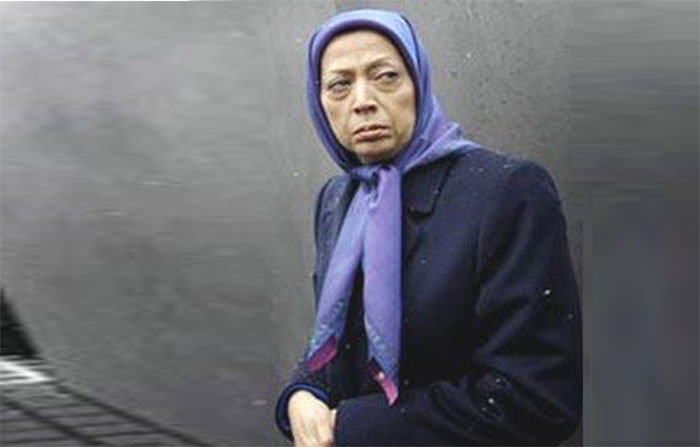
++ MEK former Ghorban Ali Hossein Nejad – an Arabic speaker and former translator for Massoud Rajavi – writes that he has specific news concerning the death of Massoud Rajavi. His Arab sources have confirmed that after disappearing in 2003, Massoud Rajavi was transferred to Saudi Arabia, but once he reached there he died. That’s why Prince Turki announced his death. Hossein Nejad expands on this news to say that although MEK accept he is dead by placing his picture among their martyrs, as a cult, the leaders don’t want to announce his death to the rank and file members. In response to this news, some Farsi and Arabic outlets have written biographies of Rajavi detailing what he did until he died.
++ Commentators’ reactions to the MEK’s anniversary celebration of the founders of the MEK say ‘how ridiculous it is to attach yourselves to the founders as they have nothing to do with what you are now. You are now mercenary force for Israel, Saudi and the US. The reason you can’t move beyond your own past is to do with internal problems not for commemorative reasons. Not a single thing you say has any correspondence with the past.’ Javad Firouzmand from Arya Association in Paris has broadcast an in-depth video which starts with the original ideology of the MEK and shows how year after year Rajavi changed it to suit his agenda, until it became what it is now, the false front of a mercenary force. According to Firouzmand this path charts how MEK’s obedience to orders from foreign sponsors compelled them to change.
++ Reactions to John Bolton’s removal have continued. One thread of news concerns the MEK hosting the President of Albania in Camp Ashraf 3 in Albania. This attracted little interest in spite of their over publicising it on their sites. This is because the President of Albania is essentially a nobody – the leader of the opposition with no powers. It was clear to observers that he had been tasked by the CIA to visit the camp to help change the mood inside among the members. The members are demoralised and want to leave. The people inside Camp Ashraf say they are forced to stay regardless of Bolton or not because they have no alternatives. They admit they are slaves.
In English:
++ Media mentions of the MEK mostly associate the group with the Trump administration’s extremist stance toward Iran. That is, the MEK constantly talk about regime change; which makes them ‘flavor of the month’ for all regime change pundits in the US, Saudi Arabia, Israel and the UK. Their presence in the Balkans is linked to Daesh and a possible war against Iran, which would result in the crowning of Maryam Rajavi as the country’s leader. This could be a miscalculation apparently. Nobody seems to know since America has no real expertise on Iran at all.
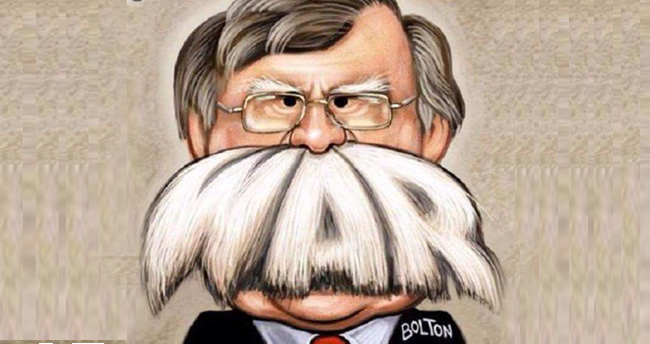
The MEK is said to have the ear of the White House. So, it was a devastating blow to Maryam Rajavi when her buddy John Bolton was removed from his position as national security advisor. She need not have worried since Mike Pompeo was happy to gather up the reins of mission impossible ‘maximum pressure’.
Now that the US and Iran are back to the brink of war Rajavi might feel she can breathe easy again. Not so fast. The disintegration of her political cult will come from within. The MEK in Albania are on the verge of mutiny. All those lies have come back to haunt. After all, didn’t John Bolton promise they would be celebrating in Tehran by April this year.
September 20, 2019
Ignorant Iran ‘experts’ just the beginning of Washington’s foreign policy troubles
An explosive essay calling out the lack of legitimate expertise about Iran ought to be a wake-up call for the US foreign policy field. Yet the same problem also affects Washington’s analysis of Russia, China and many other places.
Imagine a field of study in which less than a third of the experts had related doctorates, half of them could not read, speak or write the language required, and just as many have never set foot inside the relevant country. Preposterous, you might say – yet scientific observation has shown that this is precisely what the US expertise on Iran looks like, according to an essay by political anthropologist Negar Razavi, recently published in the journal Jadaliyya.
Yes precisely @nargesbajoghli. This is a good opportunity for DC folks who took offense at my @jadaliyya piece on #Iran expertise to do what experts **SHOULD** be doing: Raise questions publicly abt evidence/agenda behind this problematic trope/repeatedly disproven claim. https://t.co/9AixPnIaLP
— Negar Razavi (@razaraz) September 14, 2019
Razavi describes the think-tank culture of DC as “a wider system of knowledge production in Washington – one which has consistently rewarded ungrounded, ideologically driven assessments of the Islamic Republic at the expense of qualified, in-depth, and evidence-based analysis.”
This is her conclusion after two years of “ethnographic fieldwork” in the US capital, attending hundreds of events, following the writings and presentations of think-tank experts, and interviewing over 180 people between 2014 and 2016. In other words, this was a serious academic study.
This culture of “expert impunity” when it comes to Iran has combined with historical and contemporary US grievances against Tehran to produce the current policy of confrontation, in which allegations are treated as unquestioned facts while any nuanced assessments are dismissed as the work of “regime apologists,” according to Razavi.
Your occasional reminder that a couple of years ago @CNN had a contracted Russia analyst who, by all accounts, has never been to Russia and can’t speak any Russian. https://t.co/tH2eFIjAbX
— Bryan MacDonald (@27khv) September 16, 2019
If this sounds familiar, that’s because the problem is not limited to Iran. Though Razavi focused exclusively on the state of Iran expertise, her assessment applies in equal measure to the self-styled experts on Venezuela, or Russia, or China, or the Balkans…
The examples are legion. Razavi herself mentions (though not by name) “Heshmat Alavi,” a supposed expert on Iran who recently turned out to be a construct – an online persona operated by the Iranian exile group Mojahedin-e Khalq (MEK). This is an outfit that seeks regime change in Tehran, and has been endorsed by former National Security Advisor John Bolton and President Donald Trump’s personal lawyer Rudy Giuliani.
Gordon Chang, who predicted the “coming collapse of China” in a 2001 book, has been embraced by CNN and Fox News alike as an expert on Beijing – despite the obvious failure of his prediction to actually materialize. Likewise, Swedish economic Anders Aslund has heralded the demise of Russia since 2000 – and cashed in his “expertise” with the Atlantic Council and the governments of Ukraine, Kyrgyzstan and the Baltic states.
Also on rt.com Russia ‘expert’ says Ukraine economy doing great, citing mail-order bride blog
Then there was the never-ending parade of “Russia experts” on cable news shows helping cultivate and propagate the hoax of President Donad Trump’s “Russian collusion” over the past three years, only to see the Mueller Report conclusively quash their fabrications. Have there been apologies? Of course not. As Razavi points out, being an “expert” in DC means never having to admit wrongdoing.
Her essay reveals how actual experts and scholars – who warned against things like the 2003 invasion of Iraq or ‘Russiagate’ – have been been sidelined or smeared time and again, while the think-tank factories churned out false expertise on cable channels and social media. Their takes would then find their way into official papers at the State Department and the Pentagon, morphing along the way into facts that “everybody knows” and no one is allowed to question.
The result of this unholy alliance of tanks and think-tanks has been decades of mis-shapen US foreign policy, with arguably disastrous results – from trillions in squandered treasure to millions of deaths around the world.
Nebojsa Malic, senior writer at RT
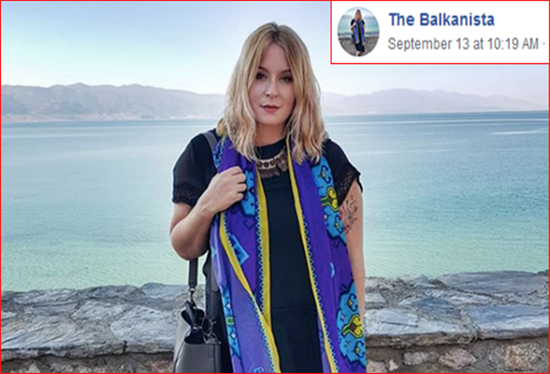
The People’s Mujahedin of Iran- a ‘controversial’ political-militant organisation have ended up living in a compound just miles from Tirana, Albania. One day I was invited to attend a “human rights conference” there. Not knowing much about them and as a curious journalist, I accepted and set off, not having any idea of what to expect.
Located around 30 minutes drive from Tirana, the MEK compound is on the outskirts of the village of Manza. Rumour has it that the locals are not overly happy about their presence there, but the fact that the compound provides work for a number of them is enough to keep them at bay.
At the entrance to the camp was a carpark where a number of private guards with automatic weapons stood around chainsmoking with their guns slung over their shoulders. Two large gold-coloured lions flanked the gateway where a couple of MEK members sit, stopping anyone that tries to enter.
As the minibus pulled into the entrance, the private guards in their brown uniforms approached the vehicle with mirrors on the end of long metal poles. They spoke with the driver before using the mirrors to check the underneath of the vehicle for, what I assume, was bombs or similar devices. After getting the all-clear, we passed through the gate and disembarked in a small car park.
Ahead of us was along a road that disappeared over the top of the hillside. Iranian flags lined the route and a large, stone archway sat in the middle of the road with an even bigger flag hanging from it. To the right of the arch was a small tent where a different private security firm had set up scanners, metal detectors, and a station for searching everyone that wished to enter, Segregated into male and female stations, our bags were searched, we were patted down and scanned, and also made to pass through a scanner.
The security guard confiscated my lipstick, face powder, cigarettes, and lighter and put them in a plastic bag, advising me I could collect them afterwards. They tried to confiscate my mobile phone as well, but I argued that having a one-month-old daughter at home, I needed to be contactable. A male MEK member was called over and after pleading my case, I was allowed to take my phone inside on the condition I switched off the internet (I didn’t).
It was at this point that I began to feel nervous. The level of security was incredibly high, the searches were more thorough than at an airport, and I was concerned at the attempt to take my phone, as well as the temporary confiscation of something so seemingly harmless as a lipstick.
As I looked around, I also noticed the dress code that applied to everyone except the staff of the two separate private security firms.
I was greeted by a number of smiling, incredibly friendly women that shook my hand, kissed my cheeks and thanked me for attending. The majority of them were dressed in navy blue suits with burgundy hijabs, with no makeup and modest shoes. I noticed a small number of women who appeared to be much older than the others and assuming positions of more responsibility, wearing head to toe olive green- a suit with a matching hijab. The men were dressed in suits with shirts and no tie- they all seemed to have moustaches. Not one person was under 50 years old.
From the security checkpoint, we were herded into minibusses dependent on nationality and who invited us, and we started our descent into the “city”.
As we passed over the top of the hill, rows and rows of white, single-story cabins appeared below us. Each road we took had its own street name and each row of housing was complete with plants and flowers planted outside and even bicycles propped up, ready for use. The place was immaculate- little box houses on pristine streets and a small artificial river running through the centre. On what appears to be the main boulevard, Iranian flags lined the way, with a large memorial to those MEK members who lost their lives at one end, and what appears to be a sort of city centre at the other.
We pulled off the main boulevard and disembarked outside what looked like a large aircraft hangar. Guarding several entrances were more private security guards and more men with moustaches. As we file into the building, I had no idea what was waiting for me inside.
The room was vast- similar to an industrial warehouse in size and dimensions. Inside were perhaps 3000 people in seats stretching as far as the eye coul see. To the left of me was a stage, cordoned off and supervised by security guards. This stage was kitted out with an expensive-looking set including large screens with graphics of video footage of the MEK struggle interspersed with images of their leader Maryam Rajavi and the Iranian flag. A podium stood on the stage, next to a flagpole and flag, and in front of the words “FREE IRAN”.
Upbeat and patriotic sounding music pumped from the speakers and filled the room, drowning out the sound of delegates as they make their way to their seats. In the centre of the room were two columns of seating, male MEK members on one side, female MEK members on the other, completely segregated and each in their strict dress code, including hijabs for women. Again, no one was under the age of 50.
On the far right hand and left hand sides of these seating zones, sat the international delegates, segregated by nationality. Everyone was handed a headset and told to tune in to a particular frequency that would pick up the translations coming live from a line of translation booths on the right hand side of the room.
At the front of the room, the VIPs were sat in rows with tables in front of them, displaying the name and country of each delegate. I noticed the US, UK, France, Germany, and Saudi Arabia were all represented by between one and five individuals. They included politicians, ex-politicians and ex-security and military personnel. I was told that there were representatives from 47 countries present.
Large booms swung over head, each with a camera attached to it filming the crowd from a variety of angles. This was an expensive set up, reminiscent of a large scale TV studio.
The number of people in the room was quite staggering and to see the rows of people seated at the far end, I had to squint. Asides from the thousands that were seated, there were perhaps a hundred uniformed and hijabi wearing women scuttling around, seating people and handing out headsets. They were under the direction of a few men in suits and were amongst over 100 security guards.
As I waited to be seated, the chanting started and thousands of Iranian flags started being waved enthusiastically as the crowd got to their feet. The chanting and flag waving occured for several minutes, before they sat back down again- a pattern that repeated countless times throughout the event.
On my own at this point, I enquired as to where I should sit. Confusion ensues as I explain that I am English yet living in Albania and I was told to wait whilst they discussed what to do with me.
I was then approached by an older male MEK member holding a walkie-talkie who asked me who I was and what I was doing. I explained again and made the mistake of saying I am a journalist whilst flashing my press card. At this point, he became angry and said, “who the hell told you to be here?” I replied that I had been invited and that some of the ladies had told me to wait here whilst they decided where to seat me. He replied angrily “these ladies know nothing, I am in charge here”.
At this point, I became unhappy at being shouted at and I asked him to lower his voice and not to treat a guest in this manner. He walked off and eventually I was seated by a woman in a hijab, in the section for Albanians.
It was then, as I looked around I noticed that there were no other journalists present as I could not see any TV crews, no other people with press cards, no journalists I recognised, and I realised I hadn’t seen any media vans or cars in the car park. There was only the expensive video cameras and a couple of photographers who I believed were MEK members.
Then the show began.
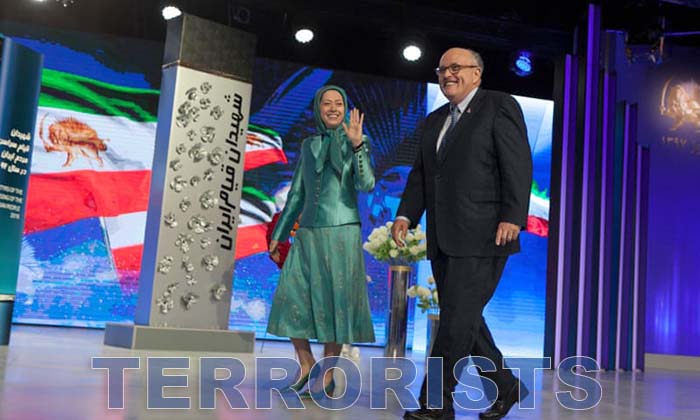
MEK leader, Maryam Rajavi took to the stage amidst triumphant music, glitter cannons spitting out gold confetti into the audience, and the euphoric chants, flag-waving, and fist-pumping in perfect synchronicity of the uniformed, segregated, Iranian audience members.
Dressed in turquoise silk with a matching hijab, Rajavi smiled as she spoke, pausing only to enjoy the chanting and adoration from her followers. She captivated the crowd as she spoke of women’s rights, gender equality, democracy, human rights, and an end to the mullahs and ayatollah. To see the way that the crowd reacted to her was really something fascinating- they hung on every world, and jumped to their feet many times to chant and wave their flags ecstatically.
Following Rajavi’s rousing speech, other speakers took to the floor. They included Trump’s lawyer and ex- Mayor of New York, Rudy Giuliani (who has attended 11 such conferences, reportedly for a hefty fee) , former Democratic senator Joe Lieberman, Columbian presidential candidate Ingrid Betancourt, former US Marine Corps Commander General James Conway, Lincoln Bloomfield, and British MP Matthew Offord.
They referred to “the regime of terror”, the “murderers in Tehran”, and called for the immediate overthrow of the current Iranian government. MEK were called “freedom fighters” and hailed as the only solution to the current situation in Iran.
Guiliani also said that “European governments must stop supporting regimes that fund terrorism” calling for and end to any trade with Iran, stating that it funds “mass murderers”.
He also commented on the way that the compound had sprung up in just two years adding “if we tried to do this in New York, it would take 15 years and launch 14 corruption investigations.”
Addressing the allegations that MEK is a cult, he stated “maybe [these people] they forgot about honour and decency, human rights. This is a decent organisaton. A group we can support.”
Each speech was broken up by periods of coordinated chanting and flag-waving with each outburst as frenetic and enthusiastic as the one before.
I sat there for around two or three hours, not really sure what was going on or what the purpose of the event was. Feeling a little on edge, I got up from my seat and made my way to the exit. As I walked towards where I had disembarked the minibus, the woman who invited me called my name and came running over to me and presented me with a box of sweets and fruit. She asked me who I worked for and what I wrote (which was odd because I had never told her) and invited me to come back to the compound another time to discuss their work more.
I said my goodbyes and headed back to the entrance, passed the armed guards and moustachioed MEK members, and went back to Tirana.
Over the next few days, my contact and I exchanged a few messages where I said I would be interested in “one day” returning to find out more. She then proceeded to call me around 15 times, even when I told her I was not available ( I didn’t answer) and even from different phone numbers. I then politely but firmly declined any invitations and that was the last I heard from my friend at MEK.
Alice Taylor, The Balkanista,
Bolton was a wrong choice by the impulsive president
Donald Trump trumped his national security advisor John Bolton on Tuesday via a Twitter, saying he had”strongly disagreed”with many of Bolton’s positions.
Naming Bolton as national security advisor was in sharp contrast to Trump’s campaign promises including his criticism of “unending wars” that Republican President George W. Bush and his close team, Bolton included, had started in Afghanistan and Iraq.
After firing him, Trump admitted Bolton made a number of “big mistakes”, including pushing for the U.S. invasion of Iraq in 2003.
Trump has turned his administration into a trial and error system. Analysts say Trump’s decisions are based on his impulses and that he has no strategy.
It was quite clear that Bolton was a wrong choice for the important post of national security advisor. Even moderate Republican politicians did not approve of Bolton’s ultra-hawkish tendencies.
He is a hard-hearted person. He has shown no remorse for the disastrous Iraq war.
Not being affected by the tragedy of the Iraq war, he advocated for war against North Korea, Iran, Syria and Venezuela.
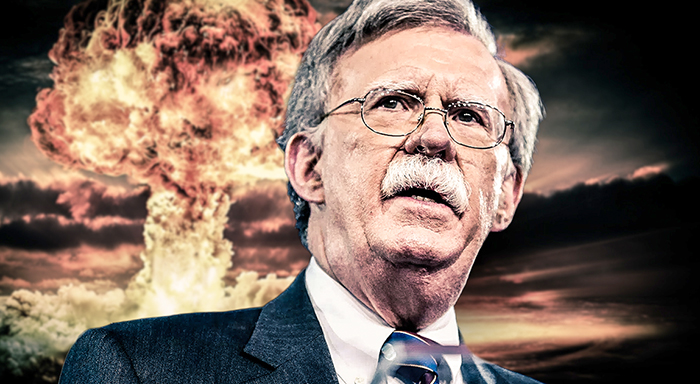
Bolton’s thirst for war against Iran was so high that he favored Mojahdin Khalq Organization (MKO/MEK) – a cult group that some analysts have likened to Cambodia’s Khmer Rouge – as a replacement for the Islamic Republic system.
Trump’s administration is fraught with repeated mistakes. Trump knew beforehand that Bolton had pushed for the Iraq war and that he was paid by the MEK, which was on the State Department terrorist list until 2012.
Also, in March 2015, while Iran and the 5+1 group (the five permanent members of the UN Security Council plus Germany) were busy negotiating a deal over Iran’s nuclear program, he wrote an editorial in the New York Times suggesting strikes on Iran’s nuclear sites.
Trump himself was a fierce critic of the 2015 nuclear deal. But, he ditched the deal in May 2018, just one month after naming Bolton for the senior post.
Though Bolton is not the only culprit for all the chaos haunting the Trump administration, he added new problems to the old ones. To the detriment of Europe, he triggered a new arms race with Russia by encouraging the Trump administration to abandon the Cold War-era INF Treaty, sabotaged dialogue between Washington and Pyongyang, and disgraced the U.S. for his unsuccessful push for the ouster of the Venezuelan government.
Writing in the National Interest on September 10, Paul Pillar, author of Why America Misunderstands the World, says, “Bolton’s wrecking career began as an undersecretary in the George W. Bush administration, when Bolton boasted of his role in killing the earlier Agreed Framework dealing with the North Korean nuclear program.”
Pillar also says, “In each of his positions in government, Bolton has made the world a more conflictual place and the United States a more isolated and despised country.”
Now, Bolton has been sacked or forced to resign but the U.S. is left with a number of emerging problems: Iran is reducing its commitments under the nuclear deal, or the JCPOA, to an extent that may lead to its demise, Washington’s allies in Europe and Asia have largely lost their trust America and now see Washington as a part of the problem rather than part of the solution.
NORTH CAROLINA – It’s obvious Donald Trump, who touts himself as a superb “dealmaker”, has not made any important deals yet as President. In fact, he’s done little but tear up extant deals, and the most notable one he destroyed was the JCPOA. But at the same time, Trump literally likes talking to other leaders, and some other leaders have responded to him saying they actually thought he was almost charming and reasonably well spoken. One would like to imagine this is the case, because Trump made a lot more sense when he was on the campaign trail back in 2016 than he has in the past two years. Why the change, because now, very few people like Trump, and his reelection is in doubt?
Well, Trump literally had no idea whom to appoint to help him once in office. He wound up appointing people (Bolton, Pompeo, even Pence) opposed to many aspects of his original, campaign agenda, and above all, he appointed some of the worst people imaginable to soothe U.S. relations and establish fundamentally peaceful relations with other countries like Russia, China, Iran and some others in the Middle East, except for Israel (which has been totally rewarded by the U.S. alone for nothing good). The Neocons have long been particularly aggressive. With Bolton fired this week, and some saner names being suggested as a replacement, one can only hope that Trump is beginning to realize that if he wants to MAGA, it will be impossible if he caters to Neocon madness. Under the spell of these American traitors, who are mostly Zionist in orientation, Trump hit Iran with the worst economic sanctions ever imposed on anyone short of outright military attack. And the thinking was that Iran would do the bidding of Pompeo and Bolton, which was way off the mark, and even farther off the mark succumb to the overthrow of the Islamic Republic in favor of the MEK, which is a whacko terrorist organization.
But more importantly, with the U.S. meddling in Hong Kong and with the tariff war underway between the U.S. and China, China’s President Xi no longer trusts Trump and seems to have concluded that trying to make a deal with the U.S. is a fruitless undertaking and that China might be better off just going its own way and doing deals itself with better partners. Such as Iran.
China has said it will invest $400 billion in Iran’s oil infrastructure and other industry. (Iran is, after all, the keystone country in China’s Belt and Road initiative given its size and location between East and West Asia. This scheme by China for Iran gives Iran the option of even continuing its current foreign policies in the Middle East.
Could it be that Trump realizes the opportunity costs the U.S. has borne with the Mideast policies it has maintained over the past three years? This may be too much to ask of Trump, such realization, but it’s not hard to imagine the benefits of a slowly warming relationship between the U.S. and Iran had the U.S. stuck to the JCPOA. (This writer argued with an editor at a major U.S. newspaper for the “normalization” of U.S. relations with BOTH Israel at one extreme and Iran at the other back in 2013, but the ideas were rejected and the editor refused to publish them. The editor had Neocon pals like Bill Kristol, a Zionist.) With normalization, the U.S. certainly would have gotten the lion’s share of scores of commercial deals with Iran, and China would not likely be preparing to make Iran a strategic partner.
Iran, for example, would likely have bought hundreds of Western-made aircraft from Boeing and Airbus, for one thing. The facts are that Natanyahu and the Jewish lobbies in the U.S., aiming to dominate naïve Trump as they did other Presidents, are ultimately to blame for what may be one of the biggest, commercial economic errors the U.S. has made since World War 2: pushing most of Asia and Russia together into a virtually united bloc that ultimately will declare a big “sayonara” to the unreliable, untrustworthy U.S.-led West.
Now, with Bolton out, it is possible that President Rouhani may have second thoughts about rejecting any talks with Trump at the UN General Assembly later this month. The question may be (in some jest) that if “Bibi” Natanyahu loses the election in Israel, whether Trump will do something even crazier than appointing Bolton in the first place in 2018 and appoint “Bibi” or someone like him to replace Bolton.
By Martin Love,
Minister: Failure of Anti-Iran Hardliners Marked by Bolton’s Dismissal
Iranian Minister of Interior Abdolreza Rahmani Fazli said on Sunday that US President Donald Trump’s dismissal of his National Security Advisor John Bolton marked the defeat of anti-Iran hardliners in pursuing their hawkish agenda against Tehran.
In a meeting in the Northeastern Iranian city of Mashhad today, Rahmani Fazli said that Bolton’s sacking by Trump showed that the hardliners in the US failed to push forward their policies against Iran.
He added that despite the fact that all the US sanctions against Iran were observed by the European signatories to the nuclear deal of 2015, officially known as the Joint Comprehensive Plan of Action (JCPOA), Iran’s political, security and foreign policy conditions are satisfactory compared to that of six months ago or a year ago.
After the Iran nuclear deal, it became evident to the world that Iran signed an agreement with the world powers and remained committed to its undertakings whereas the US violated its commitments and withdrew from the JCPOA, Rahmani Fazli said.
He said that the enemies thought that the pressure on Iran would trigger public unrest across the country so that they said the Islamic Republic would not last to celebrate the 40th anniversary of the Islamic Revolution in February 2019.
Public protests have reduced by 40% in the first five months of the current local calendar year compared to the preceding year, the minister said.
The country’s trade balance has improved, the inflation rate has reduced and the country has become capable of creating more jobs, he said, adding that all these indicate Iran’s accomplishment in the new planning.
If Iran moves in the same way, it will achieve sustainable growth, the minister said.
On Wednesday, Secretary of Iran’s Supreme National Security Council (SNSC) Ali Shamkhani underlined that the US president’s decision to fire Bolton indicated Washington’s political and moral failure against the Iranian nation.
Shamkhani said that changes in the positions and posts of officials at the White House would not change the perception of the Islamic Republic about the origins and nature of the US policies and measures.
He noted that the historic and deep-rooted hostility of the US government against the Iranian nation is beyond the role played by certain officials. As both Obama and Trump that were apparently different governments pursued the similar policy of sanctions against the Iranian nation.
Shamkhani added that Bolton was a salaried and devoted agent of the Mojahedin-e Khalq Organization (MKO, also known as the MEK, PMOI and NCRI) terrorist group in the White House, and his ouster as White House National Security Adviser should certainly be considered as the US political and moral bankruptcy vis-à-vis the Iranian nation.
He said that the promise he made based on his stupidity and the illusion that the Islamic Revolution would not reach the age of forty was recorded in his political career and the US government as a document of blind biasedness.
Shamkhani went on to say that Bolton’s humiliating expulsion from the White House not only led him to the dustbin of history, but also made MKO’s plot to fail against the Iranian nation.
Head of SNSC reiterated that enemies of the Iranian nation should not forget that the unprecedented expansion of the Islamic Republic of Iran’s regional power and downing of the modern American UAVs in the Persian Gulf have occurred when Bolton was attacking and threating Iran, indicating that Tehran’s strategic policies are not affected by the hostile approaches of people like Bolton.
He said that firing or appointment of officials within the US administration had no effect on changing Iran’s view of Washington’s hostile intentions, and the criterion for the Islamic Republic to evaluate its real policy and performance is their adherence to international obligations and the removal of cruel and illegal sanctions against the Iranian people.
He added that the use of iron hand in a velvet glove has lost its function for many years, and today’s situation in Iran, which is the result of a continued”active resistance strategy”, shows that the American will can no longer overshadow the interests of the Iranian nation.
US President Donald Trump abruptly announced in a tweet Tuesday that he had asked Bolton to resign, noting that he”strongly disagreed with many”of Bolton’s suggestions”as did others in the administration.”
“I thank John very much for his service. I will be naming a new National Security Advisor next week,”Trump wrote.
The tweet came just one hour after the White House press office said Bolton was scheduled to appear at a press briefing alongside Secretary of State Mike Pompeo and Treasury Secretary Steve Mnuchin.
Documents last year said that Bolton received $40,000 to participate and address the audience in a gathering of the MKO terrorist group in Paris in July 2017.
According to documents released by al-Monitor news website, the US Public Financial Disclosure Report in January 2018 for Bolton indicated that he had received $40,000 from the MKO as speaking fee in Paris gathering.
The MKO is listed as a terrorist organization by much of the international community. Its members fled Iran in 1986 for Iraq, where they received support from then dictator Saddam Hussein.
The notorious outfit has carried out numerous attacks against Iranian civilians and government officials for several decades.
In 2012, the US State Department removed the MKO from its list of designated terrorist organizations under intense lobbying by groups associated to Saudi Arabia and other regimes adversarial to Iran.
A few years ago, MKO members were relocated from their Camp Ashraf in Iraq’s Diyala Province to Camp Hurriyet (Camp Liberty), a former US military base in Baghdad, and were later sent to Albania.
Those members, who have managed to escape, have revealed MKO’s scandalous means of access to money, almost exclusively coming from Saudi Arabia.
The MKO terrorist group specified the targets as Major General Qassem Soleimani, who commands the Quds Force of the Islamic Revolution Guards Corps (IRGC), and Iranian Judiciary Chief Seyed Ebrahim Rayeesi.
The terrorist organization said it would “welcome” their assassination, adding that it desired for the ranking officials to “join” Asadollah Lajevardi, Tehran’s former chief prosecutor, and Ali Sayyad-Shirazi, a former commander of the Iranian Army’s Ground Forces during Iraq’s 1980-88 war against Iran.
Earlier in June, a leaked audio of a phone conversation between two members of MKO, revealed Saudi Arabia has colluded with the MKO elements to frame Iran for the recent tanker attacks in the Persian Gulf.
In the audio Shahram Fakhteh, an official member and the person in charge of MKO’s cyber operations, is heard talking with a US-based MKO sympathizer named Daei-ul-Eslam in Persian, IFP news reported.
In this conversation, the two elements discuss the MKO’s efforts to introduce Iran as the culprit behind the recent tanker attacks in the Persian Gulf, and how the Saudis contacted them to pursue the issue.
“In the past week we did our best to blame the [Iranian] regime for the (oil tanker) blasts. Saudis have called Sister Maryam (Rajavi)’s office to follow up on the results, [to get] a conclusion of what has been done, and the possible consequences,” Fakhteh is heard saying.
“I guess this can have different consequences. It can send the case to the UN Security Council or even result in military intervention. It can have any consequence,” Daei-ul-Eslam says.
Attacks on two commercial oil tankers in the Gulf of Oman on June 13, and an earlier attack on four oil tankers off the UAE’s Fujairah port on May 12, have escalated tensions in the Middle East and raised the prospect of a military confrontation between Iran and the United States.
The US, Saudi Arabia, and the UAE have rushed to blame Iran for the incidents, with the US military releasing a grainy video it claimed shows Iranian forces in a patrol boat removing an unexploded mine from the side of a Japanese-owned tanker which caught fire earlier this month.
It later released some images of the purported Iranian operation after the video was seriously challenged by experts and Washington’s own allies.
The MKO which is said to be a cult which turns humans into obedient robots, turned against Iran after the 1979 Revolution and has carried out several terrorist attacks killing senior officials in Iran; yet the West which says cultism is wrong and claims to be against terrorism, supports this terrorist group officially.
After the Islamic Revolution in 1979, the MKO began its enmity against Iran by killings and terrorist activities.
The ouster of John Bolton was the most important news over last few days in the US and perhaps in international arena; a hard-line politician who repeatedly was beating the drum of war and demanded the collapse of US opposing governments, was fired by Trump on Monday night.
A hard-line American right-wing politician, John Bolton witnessed an end in his career in Trump presidency. The post of national security adviser was the most important and perhaps most influential post of Bolton in his career; a position he took after April 5, 2018 HM McMaster lost. Of course, when Donald Trump took office, John Bolton was nominated as one of the potential candidates for the State Department, but that position didn’t reach Bolton and he became a national security adviser after a year.
Bolton’s father was a firefighter and his mother was a housewife. After studying law at Yale University, he entered politics. From his student years, he had a strong right-wing tendency, advocating for the Vietnam War and opposing the law on citizenship and the elimination of discrimination against blacks.
Bolton served as US ambassador to the United Nations from August 2005 to December 2006. George W. Bush had appointed him without a vote of confidence in Congress during its recess. However, Bolton resigned in December, because he certainly could not get a vote of confidence in the Democratic-controlled US Senate. During his time at the United Nations, he repeatedly attacked all of its structures and staff, including the UN Secretary-General.
Bolton is a senior fellow at the American Enterprise Institute and an expert on Fox News. He has also worked with many conservative think tanks such as the National Arms Association, a project for the New American Century, the Jewish National Security Foundation.
Bolton is a full-fledged warmonger. He advocates regime change in North Korea, was a supporter of the Iraq war and continues to defend his decision. He advocates regime change in Syria and Libya. Prior to the Trump administration, he had called for an end to the JCPOA and repeatedly called for bombing of Iran. Bolton is a supporter of the terrorist Mujahedin Khalq Organization (MKO). In general, he is in favor of using military force to advance the US goals, and says any country that opposes the US should be suppressed only by military attack.
Bolton has a well-known article on Iran that was published in the New York Times in 2015, and wrote his comments on Iran in detail with title of”To Stop Iran’s Bomb, Bomb Iran”. Bolton’s article said, in his opinion, an Iranian nuclear bomb would trigger an arms race in the Middle East, and countries such as Turkey, Saudi Arabia and Egypt would be forced to seek these kinds of weapons.
Bolton and US Secretary of State Mike Pompeo are widely rumored to have been deeply hostile to each other, according to CNN in Bolton’s final days these old tensions have become a full-fledged hostility. CNN wrote that Bolton is eyeing the State Department post.
Bolton’s hot summer
Bolton welcomed Donald Trump’s hostile rhetoric against Iran at a meeting of the MKO terrorist group in Paris in July 2017, saying that the outcome of the current Trump administration’s decision must be the review of its policies toward Iran that it cannot celebrate its 40th anniversary. He added that Iran will have a hot summer after the US sanctions are returned.
During Bolton’s tenure as Trump’s national security adviser, he made great efforts to fuel tensions between Iran and the United States. In his latest response in the eve of the UN General Assembly in an attempt to create a negative atmosphere against Iran, he accused Iran of lying and wrote in a Twitter message that now that two weeks are left to the UN General Assembly, be sure Iran is intensely busy with deceiving. Iran denied that Adrian Darya was going to Syria, then confirmed today that its oil had been discharged.
In June this year, Bolton attributed the Fujairah blasts to the Islamic Republic, which damaged four tankers, claiming that the blasts were caused by landmines that were almost certainly Iranian.
In July this year, after Iran shot down an American drone over the waters of the Oman Sea, US President Donald Trump said that in response to the drone downing, he initially ordered the attack on three targets in Iran, but canceled it ten minutes before the attacks because of the possibility of 150 deaths. In response, Bolton warned Iran not to confuse the US prudence with its weakness.
At the same time, the Wall Street Journal reported on Trump’s widespread disagreement with his national security team over their plans to attack Iran, with John Bolton leading the officials in charge of designing war plans. The Wall Street Journal wrote that Trump said in a private conversation that these guys want to get us into a war, and it’s disgusting. We don’t need more wars.
In February 2018, Connecticut Democrat Sen. Chris Murphy, in reaction to John Bolton’s statement that Iran was seeking a nuclear weapon, said Bolton was preparing the ground for war with Iran. Murphy wrote on Twitter that Bolton says Iran is seeking nuclear weapons. This is clearly not true. Intelligence agencies (US) have said the opposite and he knows. He sets the stage for war and we all need to be vigilant.
In a January 2018, Wall Street Journal reported that senior Pentagon officials expressed deep concern that Trump’s national security adviser, John Bolton, is creating a tension with Iran. That is when Trump ordered US troops out of the Middle East.
Zarif and Bolton at United Nations
Our Foreign Minister, Mohammad Javad Zarif, who worked with John Bolton at the United Nations in 1995 and 1996, is well aware of his views and sentiments. The FM nominated Bolton as a member of the Team B in May and warned Donald Trump that the group is planning to drag the US into war with Iran.
Zarif repeatedly referred to the team’s planning and goals in his interviews and tweets. As far as Trump responded to his Twitter account and wrote that there are various opinions [on Iran] and I will make the final decision. All aspects, views and policies will be considered. I am confident that Iran will soon seek negotiations.
Some analysts now believe that after firing Bolton, the US policies on Iran will be balanced, as the most important Trump-Bolton dispute was over Iran. Bolton’s split came at a time when Trump was eager to meet with leaders of countries that, in Bolton’s view, were sworn enemies of America.
Rand Paul, a Republican senator who recently met with Zarif, called John Bolton Secretary of War and expressed his happiness with Bolton’s ouster and told Fox News that he thinks Bolton’s departure from the White House a big part of the shadow of war on the world has gone away … His naive view was that”we must bring governments that we think are democratic by changing regimes everywhere”.
Bloomberg wrote that Trump initially supported maximum pressure on Iran, but he recently came up with softer diplomacy and reduced his government’s initial 12 terms of sanctions against Iran to three at the Group of Seven meeting in France, and in France, he spoke openly and repeatedly about the negotiations.
Bolton’s departure may pave the way for Trump’s dream of a meeting between US and Iranian leaders. But with the ousting of the White House National Security Adviser, the chances of a catastrophic new Middle East war are dramatically reduced.
‘I Rule the White House’: Will Bolton’s ouster help Trump facilitate US-Iran negotiations?
Most analysts agree that Donald Trump’s main motivation for dismissing his National Security Advisor, John Bolton, was that Bolton had been giving off the impression that he was the real decision-maker in the White House, while the president was merely a talking puppet.
Looking at Trump’s career, even before coming into office, it is clear that he is a man who cannot tolerate being subordinated to anyone. Trump sees himself as a leader who gives orders and expects his employees to execute them like soldiers.
The only thing Trump wants to hear from his underlings is “Yes, Sir.”
I informed John Bolton last night that his services are no longer needed at the White House. I disagreed strongly with many of his suggestions, as did others in the Administration, and therefore….
— Donald J. Trump (@realDonaldTrump) 10 сентября 2019 г.
A few articles published after Bolton’s ouster have suggested that the disagreement centered around the question of easing sanctions against Iran in order to facilitate a meeting between Trump and Hassan Rouhani, the president of the Islamic Republic.
A few weeks earlier, Trump was at the G7 meeting in France when Mr. Mohammad Javad Zarif, the foreign minister of Iran, suddenly arrived at the request of French President Emmanuelle Macron. He met with both Macron and French Foreign Minister Jean Yves Laudrian in Biarritz while Trump had dinner with the other G7 leaders.
Question: “The allies were saying it was disrespectful for Macron to invite Zarif, disrespectful to the U.S. You don’t feel that way?”
President Trump: “No. No. He asked my approval.” #G7 pic.twitter.com/Yo7tzJwdYu
— The Hill (@thehill) 26 августа 2019 г.
The next day, less than 12 hours after Zarif met with the French leaders, President Rouhani said that he is ready to sit and talk to “anyone” if it is in the interests of the Iranian people and could help solve their ongoing problems.
As someone who has been affiliated with the Iranian policy for decades, I can assure you that President Rouhani is not a person prone to slips of the tongue: he is a veteran politician and carefully chooses every word he says.
Given the current tense political situation in Iran, these words would be political suicide for most politicians, especially if this “anyone” includes Trump, a person who has not been shy about insulting Iran and its leadership, and the main culprit behind the cancellation of the JCPOA. Trump has also implemented heavy sanctions against the Iranian people during his time as commander-in-chief.
We should, therefore, presume that there is something else happening in the background. While only the future can tell us for sure, some analysts believe an agreement was reached wherein Rouhani would announce that he is ready to meet Trump if Trump agreed to allow restore exemptions for the 8 countries buying Iranian oil, and allow the European INSTEX program to kick off with an initial €15 billion investment.
However, as it turned out, Trump wasn’t ready to make any such statement, despite that it was all but expected during the news conference he held alongside Macron. It is likely, however, that the 12 hours which separated Rouhani’s speech and the news conference were packed with calls from Benjamin Netanyahu, John Bolton and the other members of the so-called “B4” (Benjamin Netanyahu, John Bolton, Mohammad Bin Salman and Mohammad Bin Zayed).
Some analysts have suggested that Trump was threatened by someone privy to information that could get him disqualified in the 2020 presidential race.
If we link this to the report published by Politico which claims to have found Israeli spy-instruments around the white house and other places in Washington, it is probable that Trump and his family and/or staff were spied on, perhaps even with Bolton’s permission.
Israel reportedly planted tiny devices around D.C. to spy on Donald Trump’s cellphone, but the White House hasn’t condemned the surveillance https://t.co/jLuT2k9aKV
— The Daily Beast (@thedailybeast) 12 сентября 2019 г.
However, there are also reports that news emerged over the past couple of weeks claiming that Bolton had been hiding information from Trump regarding the peace talks in Afghanistan, and telling others that Trump couldn’t be trusted with it.
Some believe that Mr. Zalmai Khalil Zad, the American envoy to the Afghan peace negotiations, was coordinating the talks with Bolton and keeping a low profile around Trump.
Well, there are dozens of possible reasons for Trump to have dismissed his advisor, Bolton’s removal is a sigh of relief for the majority of the world, and especially the Iranians.
Bolton was a war-hawk who helped drag the US into the Afghan and Iraq wars. Even though he knew that another war could cost Trump the election, he was heavily in favor of initiating conflict with Iran.
Bolton saw himself as protected by powerful lobbies within the US and therefore didn’t care if Trump was re-elected.
Experts doubt Trump’s explanation for canceling the Taliban meeting. I suspect the real reason is a combination of: 1. Pres. Ghani refused to participate; 2. John Bolton exploded; 3. Trump came to see that hobnobbing with the Taliban would be bad politics https://t.co/dywBzrGQdm
— Nicholas Kristof (@NickKristof) 8 сентября 2019 г.
Bolton participated in many Mojahedin-e Khalq Organization meetings and received more than $180,000 for a speech where he promised the members of this group (which is considered a terrorist organization in Iran and many other countries around the world) they would celebrate Nowruz (the Iranian New Year) together in Tehran.
While the Iranians don’t expect that Trump will choose someone much better than Bolton as far as enmity against Iran goes, Bolton’s dismissal is nonetheless one major enemy out of the picture.
One group that is no doubt devastated by Bolton’s departure is the MEK — the Iranian exile group that wants regime change in Tehran, by force if necessary, and has paid Bolton & Rudy Giuliani to make speeches. See this NYT video by @ntabrizy. https://t.co/wQkQwqqzOL
— Edward Wong (@ewong) 10 сентября 2019 г.
While the B4 group has now become the B3, the forces who were backing Bolton are still in power, and the American administration is still stuffed by pro-war neocons and enemies of Iran.
WILL BOLTON’S DISMISSAL EFFECT IRANIAN-US RELATIONS?
Some believe that Trump dismissed Bolton because he wanted to negotiate with Iran on his own terms, and knew Bolton would attempt to sabotage his efforts. There have been reports that Trump and Rouhani shook hands in the UN lobby.
Again, it is impossible to say with 100% certainty what motivated Trump’s decision, but this version of events is perhaps the most probable.
It is important to note, however, that Iran cannot be compared to North Korea (or any other country in the world), and that the Iranian president is not Kim Jong Un. He cannot force his will and make top-down decisions for the entire country. There are certain domestic challenges the Iranian president faces which he cannot overcome on his own.
The most important challenge he faces is the strong anti-American sentiment among Iran’s politicians and population.
Any analyst can tell you that the P5+1 talks with Iran were mainly talks between Iran and the US and that the Iranian and American foreign ministers have talked together in private for many hours. It is difficult to believe that Javad Zarif and John Kerry sat for 17 hours behind closed doors just to discuss the politics of 3.67% Uranium enrichment.
This meeting was also very likely the start of the JCPOA and included promises that, if the cooperation was successful, the two countries would be able to move forward.
After all, no-one can deny that the attack against ISIS in the Iraqi city of Mosul was undertaken by Iranian ground troops and the US air force. Ask anyone with military experience whether or not such an attack could have been carried out without direct coordination.
The Iranian foreign minister did not sit with John Kerry merely because he was a representative of ex-president Barack Obama: he sat with the acting foreign minister of the US, and the JCPOA was later signed by the US administration.
The Iranian people believe that their country has already negotiated with the Americans and that a deal has already been reached, and that the issue is that that the Americans won’t abide by their agreement. What guarantee is there that if the Iranians sit down and renegotiate, the Americans won’t simply renege on the agreement yet again?
#Trump removes MEK terrorists’ BFF John Bolton pic.twitter.com/NSPxc7UeHI
— Tasnim News Agency (@Tasnimnews_EN) 11 сентября 2019 г.
Although the administration is promising to get congressional approval, this is little more than a promise: Trump has proven that when it comes to negotiating with Washington, there are no guarantees.
In this situation, no Iranian politician will be ready to endanger his political future by entering into, or even advocating for, public talks with Americans, especially given that we are nearing the next Iranian parliamentary elections. Pushing for talks without any guarantees could lead to the fall of an entire political wing in the country.
The only choice Iranian politicians have is to refuse to accept any such meeting until after some sanctions have already been removed; something concrete to show them that American policy toward Iran is capable of changing.
On the other side, the Americans believe that the only way they can bring Iran to the negotiating table is through pressure and sanctions and that if they ease the pressure, the Iranians will never budge, and Trump’s policy will be seen as a failure.
The debate right now is not even about whether or not talks will take place: it is about how to restore trust between the two countries. The keys to the negotiation-room door were stuck as a result of the administration’s refusal to compromise on sanctions, a position which was unwavering predominantly thanks to John Bolton.
With Bolton finally gone, the question is now whether or not the Europeans will be able to get the keys out.
Emad Abshenass- uwidata.com
Inside This Issue:
- MEK THE END OF THE PATH DOCUMENTARY -1
- MKO Serves White House Orders
- News from Albania
- When I was in a dark room…
- MEK has been a U.S. tool against Iran
- Zarif’s visit to Europe
- John Limbert on Iran and the U.S. policy of maximum pressure