Nejat Society
  • Home
  • Articles
  • Media
    • Cartoons
    • NewsPics
    • Photo Gallery
    • Videos
  • Publications
    • Books
    • Nejat NewsLetter
    • Pars Brief
  • About Us
  • Contact us
  • Editions
    • عربي
    • فارسی
    • Shqip
Nejat Society
Nejat Society
  • Home
  • Articles
  • Media
    • Cartoons
    • NewsPics
    • Photo Gallery
    • Videos
  • Publications
    • Books
    • Nejat NewsLetter
    • Pars Brief
  • About Us
  • Contact us
  • Editions
    • عربي
    • فارسی
    • Shqip
© 2003 - 2024 NEJAT Society. nejatngo.org
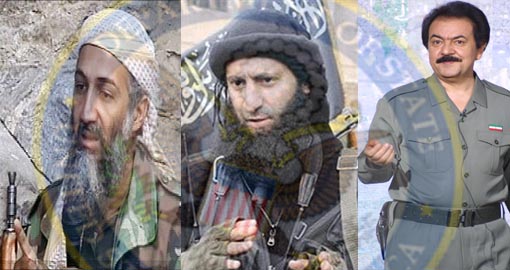
USA terrorist allies - Rajavi - Al Qaida
Mujahedin Khalq; A proxy force

Employing terrorists, AL Qaeda, ISIS or MEK

For the past decades, the Middle East has been a fertile ground for proxy wars. However, Iran has almost always been a secure land in the heart of this chaotic region despite the fact that several dissident and separatist groups oppose the Iranian government. The Mujahedin Khalq Organization (the MKO/ MEK/ PMOI/ Cult of Rajavi) is one of these dissident groups with a long background of terrorist acts against Iranian nation.

The Group was once in the safe haven donated to them by Saddam Hussein who funded and supported them against Iran for about two decades. After the fall of Saddam, the MEK turned into the proxy force for the West, particularly the US and Israel, although it was listed as a”foreign terrorist organization by the US State Department until 2012.

The group is widely despised by the Iranians due to its violent history and its alliance with the fighting enemy of Iran Saddam Hussein. Jonathan Broder of Newsweek presents the most recent account on the MEK’s past and present.”Many independent scholars say the MEK’s alliance with Saddam in that long and bloody war turned the group into traitors in the eyes of most Iranians,”he writes.”In the 1990s, the Rajavis instituted a number of cult-like measures to prevent defections. According to a 2005 Human Rights Watch report based on interviews with several defectors, members were required, among other things, to divorce their spouses and send their children abroad for adoption, lest family obligations divert their attention from the struggle against the Islamic Republic.”[1]

Some suggest that the MEK was delisted by the then Secretary of State Hillary Clinton to”pave the way for the evacuation of Camp Ashraf’s MEK members to Albania”. [2]

Border doubts the assertion asking”But had anything really changed?”. He finds the answer in what Daniel Benjamin, the State Department coordinator for counterterrorism at the time, told Newsweek. According to Benjamin, the delisting was done”at the discretion of the secretary out of humanitarian concern because no country would take them otherwise, and not because of any changed thinking within the MEK.”[3]

Richard Black a Republican member of the Virginia State Senate clarifies the case of the MEK in Iran compared with the most notorious proxy forces in the region including ISIS and Al Qaeda. Asked about the possibility that the MEK openly takes in Iran the place that ISIS has had in Syria, giving way to a bloodbath in the Islamic Republic as well.”That is a distinct possibility,”he answered.”However, Iran is a cohesive, unified nation. Despite their internal political disagreements, Iranians are patriotic and even its dissidents are generally unwilling to undermine the unity of the nation. For that reason, I do not believe the MEK will find fertile ground to grow like ISIS did in the deserts of Iraq and Syria.”[4]

“Nevertheless, the West has decided to employ MEK-led terrorists to overthrow the duly-elected government of Iran,”he continued.”The Ashraf-3 base has just opened in Albania. Its purpose is to coordinate terrorist training, logistics and military action against Iran. The Ashraf-3 facility will be used to plan the infiltration and destabilization of Iran. It may use both MEK terrorists and battle-hardened ISIS and al Qaeda troops who are moved there from Iraq and Syria. The massive Ashraf-3 base is a complete city. It has parks, shopping centers, conference centers, and a luxury hotel. The heavily-guarded facility will be home to 3,000 MEK terrorists and families. If MEK succeeds in toppling Iran, Maryam Rajavi has already been designated as its first interim president. The United States designated the MEK as a terrorist organization in 1997. However, the push to overthrow seven Middle Eastern countries (including Iran) began to move forward rapidly in 2011 with the invasion of Libya. MEK was removed for the list of terrorist organizations in 2012 in order to bring about a violent regime change in Iran.”[5]
Senator Black believes that employing what he calls”terror weapon”– terrorist groups like MEK and Al Qaeda—has not been fruitful for the West.”The CIA fielded a quarter-million-man army of terrorists against the Soviet Union in Afghanistan, he said.”Saudi Arabia built a vast system of madrassas to indoctrinate youth in Wahabism, a remarkably murderous version of Islam. Although CIA’s jihadists did defeat the Soviets, they also gave birth to al Qaeda, which attacked the U.S. on 9-11 and went on to spread terror across the globe. Every time the West and its Gulf State allies use terrorists to overthrow governments, the results are disastrous.”[6]

The US-Israel alliance must know that proxy forces may run their ambitions in certain divided communities with its entire disasrous results but the MEK will not thrive to achieve its anti-national goals in Iran. The MEK is the one that is so hated by Iranian public opinion that it can never accomplish their regime change agenda in Iran, even if it launches the most violent acts of terror – as it has an extensive experience in them.

Mazda Parsi

References:

[1] Broder, Jonathan, Iran’s Opposition Groups are Preparing for the Regime’s Collapse. Is Anyone Ready?, Newsweek Magazine, August 27th, 2019.
[2] ibid
[3] ibid
[4] Ceoldo, Costantino, Richard Black speaks about Syria (and not only), Opinion.com, August 25th, 2019.
[5] ibid
[6] ibid

September 15, 2019 0 comments
FacebookTwitterPinterestWhatsappTelegramSkypeEmail
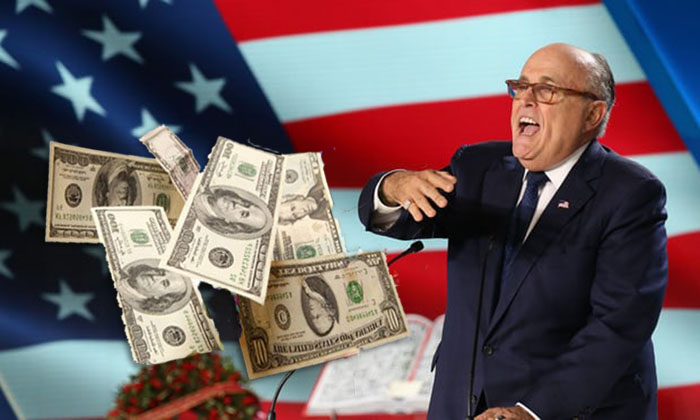
Rudy Giuliani attended the MEK rally in Italy
Mujahedin Khalq; A proxy force

Where in the world is Rudy Giuliani?

With news that three House Committees are investigating the Trump attorney’s efforts to pressure the Ukrainian government to look for dirt on Joe Biden, it’s a question worth asking.

While serving as President Trump’s personal lawyer, the former New York City mayor has traveled abroad to meet with Ukrainian officials. But he’s also traveled to Europe and the Middle East to carry out unrelated consulting work and attend speaking engagements.

Rudy Giuliani

TPM has gathered reporting on Giuliani’s foreign adventures since taking office, consolidating them in one map that reveals the extent of his global peddling.
Armenia

He traveled to the capital of Yerevan in October 2018 for a pro-Russian conference there, telling reporters he was not attending in his “capacity as a private lawyer to President Trump.”

Ukraine

Giuliani has traveled to Ukraine multiple times over the past decade. But it was a November 2017 trip to the city of Kharkiv that raised eyebrows, in part because of the person who invited him: Russian-Ukrainian developer Pavel Fuchs, who negotiated with Trump in the 2000s to build a Trump Tower Moscow. Giuliani has said the trip was for security consulting for the city of Kharkiv.

Giuliani also planned a trip in May 2019 to dig up dirt on presidential candidate Joe Biden, but he canned that effort amid public outcry.

Most recently, his antics — which included an August meeting in Spain with a foreign policy adviser to the Ukrainian President — have caught the attention of the House Intelligence, Foreign Affairs, and Oversight Committees, which sent letters to the White House and State Department to investigate Giuliani’s work “outside legitimate law enforcement and diplomatic channels.”

Turkey

Giuliani’s 2017 sojourn to Turkey has been largely forgotten amid a torrent of other scandals, but, in some ways, it set the tone for what was to come. The trip centered around a Turkish gold trader charged with conspiring to evade U.S. sanctions on Iran. Hired as a representative of the trader, Giuliani traveled to Turkey to meet with President Tayyip Recep Erdogan and with U.S. officials “to discuss a possible disposition” of the case, which reportedly would have seen the prosecution ending in a prisoner swap.

The judge in the case told Courthouse News that “had Rudy succeeded, he and [Presidents Trump and Erdogan] would have helped very significantly the country of Iran.”

Bahrain

Giuliani met with the King of Bahrain in the peninsular gulf state in December 2018 where, according to the country’s state news agency, “topics of joint interests” were discussed. In May, Giuliani’s security firm signed a consulting contract with Bahrain.

Qatar

Relatively little is known about Giuliani’s work for Qatar. He has said that he worked for the Qataris on an investigation and, according to Reuters, traveled to Doha in April 2017, weeks before agreeing to work pro bono as President Trump’s personal attorney. Some Giuliani associates, including former Attorney General Michael Mukasey, have been hired by the gulf state to “solicit the help of U.S. government officials” in resolving its dispute with Saudi Arabia.

Israel

Giuliani has traveled to Israel multiple times during the Trump Administration, including a June 2018 voyage that led him to bust some dance moves in Jerusalem. That was part of a trip that saw him speak at a conference where he trashed both the Mueller investigation and Stormy Daniels. Giuliani also rang the opening bell at the Tel Aviv stock exchange during a June 2017 visit that was connected to his former law firm Greenberg Traurig.

Albania

The Balkan republic plays host to the Mujahedin el-Khalq, a bizarre Iranian exile group that has faced accusations of being a cult. Giuliani traveled there in July 2019 with Joe Lieberman to a conference at the socialist-Islamic group’s recently built Ashraf 3 compound. He also traveled there in March 2018 for the Iranian New Year celebration of Nowruz. MEK is reportedly no longer ruled out in Trump Administration planning as a potential successor to the current Iranian regime.

France

At another June 2018 MEK rally in Paris, Giuliani called for the overthrow of Iran’s government. Thought it is known that the Trump attorney accepts speaking fees for his MEK work, the exact amount remains unclear.

Poland

Giuliani’s trip to Poland in February 2019 was another MEK-sponsored appearance, at a Warsaw conference that occurred at the same time that Secretary of State Mike Pompeo and Vice President Mike Pence were in the country for a summit on the Middle East. Giuliani did not restrict his dealings in Warsaw to MEK: he met on the side with a Ukrainian prosecutor who later offered him dirt on the Biden family.

Author Headshot
Josh Kovensky is an investigative reporter for Talking Points Memo, based in New York. He previously worked for the Kyiv Post in Ukraine, covering politics, business, and corruption there.

By Josh Kovensky, talkingpointsmemo

September 14, 2019 0 comments
FacebookTwitterPinterestWhatsappTelegramSkypeEmail
US Warmonger Hawks
USA

Bolton bolts and Iran war fever suddenly drops

The price of oil fell by 2.2% just minutes after news spread that US National Security Advisor John Bolton was out of a job. In an instant, the prospect of a catastrophic war in the Middle East seemed to recede dramatically.
Bolton is famously the man who never met a war he didn’t like (except Vietnam, which he avoided). And conflict with Iran was the war he seemed to like most.

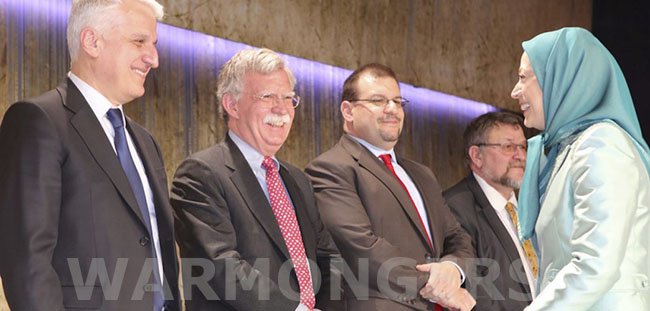
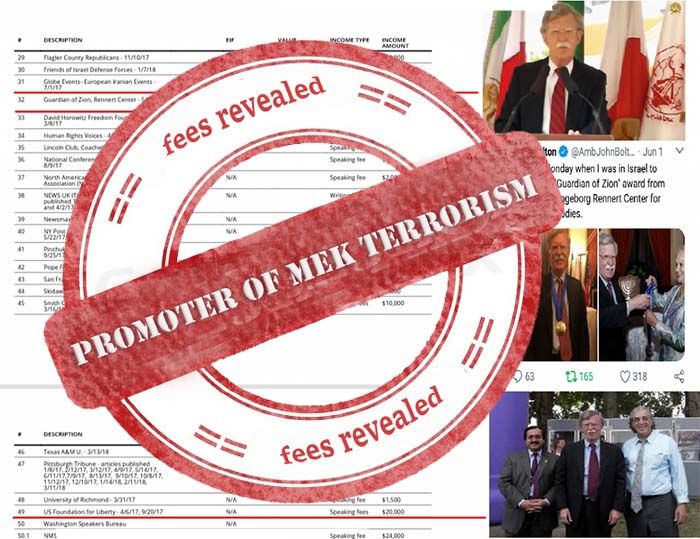
In 2015, he penned an editorial in the New York Times entitled”To Stop Iran’s Bomb, Bomb Iran.”He was a regular (paid) speaker at the annual meetings of Mujahedin-e-Khalq (MEK), an Iranian exile group which for years was hosted by Saddam Hussain, and which until 2012 was on the US State Department’s terrorist list.

At his most recent appearance at a MEK meeting, in 2018, Bolton declared:”The behavior and the objectives of the [Iranian] regime are not going to change and, therefore, the only solution is to change the regime itself.”

He has previously advocated for regime change in Venezuela, Iraq, North Korea, Libya and Syria, to name a few.
Bolton was, mostly via his perch at Fox News, one of the most vocal critics of the 2015 Iran nuclear deal. He assumed the position of National Security Advisor in April 2018 and, a month later, the US unilaterally pulled out of the agreement.
With Bolton gone, the mantle of Iran hawk now passes to Secretary of State Mike Pompeo. But, unlike Bolton, Pompeo seems to have prioritized his relationship with President Trump.
A recent profile of Pompeo in The New Yorker included a quote from a former senior White House official describing the Secretary of State as”among the most sycophantic and obsequious people around Trump.”A former US ambassador told the article’s author that Pompeo is”like a heat-seeking missile for Trump’s ass.”
The departure of Bolton may change the style of Trump’s position on Iran, but perhaps not the substance.
Washington’s policy of”maximum pressure”is designed, according to Pompeo, to change Tehran’s behavior. But going by the severity of the sanctions, they appear designed to bring Iran to its knees.
“We’ve now made Iran’s economy a shambles,”Pompeo boasted to ABC’s George Stephanopoulos Sunday, describing the effect of US sanctions.”We think their economy could shrink as much as 10 or 12% in the year ahead.”

Just two days later — a few hours after Bolton’s departure — Pompeo said Trump could meet with Iranian President Hassan Rouhani”with no preconditions.”
With Bolton out of the way, such a meeting can now go ahead without much resistance within the Trump White House.
It’s not clear, however, what might come out of a Trump-Rouhani meeting. If we look at the example of North Korea, while the nature of the relationship between Trump and Kim Jong Un may have changed — the leaders now exchange”love letters”instead of insults — the underlying issues, such as North Korea’s nuclear program, international sanctions, and so on, remain unchanged.
Without sanctions relief, or the promise of it, the Iranians are unlikely to play like Kim.
Also mitigating against a dramatic shift in US-Iran policy is Israeli Prime Minister Benjamin Netanyahu, who has lobbied successive American administrations to take a harder stand on Tehran.

Trump has been more than willing to grant Netanyahu almost all his wishes. He has recognized Jerusalem as Israel’s capital and moved the US embassy there, cold-shouldered and cut funding to the Palestinian Authority and to the UN agency for Palestinian refugees, and closed down the Palestinian diplomatic mission to Washington.
After months of bellicose rhetoric on Iran, this summer Trump began to change his tune. Rather than bomb Iran, he began to toy with the idea of talking with it.
So has Trump gone cold on confronting Iran? The 2020 elections loom large and the prospect of war with Iran combined with the real possibility of an economic downtown in the US could spell disaster for the President.
Never big on loyalty, Trump dumped Bolton unceremoniously. The loudest voice for confrontation with Iran has now been banished to the wilderness, or perhaps to Fox News, from whence he came.
While it’s always dangerous to try to predict Trump’s actions, there is now a real prospect of a slight improvement in the long and unhappy relationship between the US and Iran.

Trump is not known for his deep understanding of the complexities of the Middle East, or for a thoughtful approach to the delicate affairs of state.
Nor has he ever expressed much interest or sympathy for those who live here. But perhaps by design or — more likely — by happy coincidence, by dumping Bolton, President Trump may have made war less likely.

Analysis by Ben Wedeman, CNN Senior International Correspondent

September 12, 2019 0 comments
FacebookTwitterPinterestWhatsappTelegramSkypeEmail
USA

MEK loses its ally in the White House

Bolton’s departure will fundamentally alter Trump’s Iran policy
Whether national security adviser John Bolton was fired by President Trump or he quit is irrelevant. The change in foreign policy leadership will have a profound impact on how this administration’s Iran policy is shaped and implemented.

While it’s fair to call both Bolton and Secretary of State Mike Pompeo hawkish on Iran, their posturing on best practices for dealing with Tehran have always differed.

Bolton favored the ever-present threat of military action against the Islamic republic and has often openly advocated for it, including the episode in June when Trump approved military strikes in response to the downing of a U.S. drone, which he abruptly aborted when he learned the projected casualties.

Bolton, though, thought the attacks should proceed as planned. For decades he has been consistent in his contempt for the leaders in Iran — and other longtime adversaries — and not shy about the need to spill innocent blood sometimes to reach what he perceived to be U.S. strategic goals.
The Iraqi people now have
lead responsibility
The State Department is about to capitulate to the Taliban, al-Qaeda’s longtime ally, in order to withdraw U.S. forces from Afghanistan, argues Rep. Liz Cheney. (Video: Joy Sharon Yi, Danielle Kunitz/Photo: Rafiq Maqbool/AP Photo and Jabin Botsford/The Washington Post)

His absence also means that the Mujahideen-e Khalq (MEK), a reviled Iranian opposition group that long lived on the State Department’s list of foreign terrorist groups, no longer has a powerful ally in the White House.

The now former national security adviser and U.S. to the United Nations was one of dozens of U.S. politicians, including Rudolph W. Giuliani, to accept large speaking fees in exchange for publicly advocating the organization as a viable replacement for the Islamic republic.

The MEK can claim no popular support, and among Iranians of nearly all political orientations, inside the country and in the diaspora, it was Bolton’s paid alliance with the cultlike group that made him such an odious character.

With the MEK suddenly nowhere in the conversation, ordinary Iranians who would prefer to see their government negotiate its way out of the sanctions that currently have a stranglehold on the country’s economy will be more inclined than ever to support such a process with U.S. leaders.

And those millions of Iranians who prefer a regime change can be more confident now that the United States has no serious plans to install the hated group if the Islamic republic were ever toppled.

Either way, when it comes to Iran, the Trump administration’s hands are no longer tied by Bolton, an ideologue who views diplomacy as a weakness rather than a tool.

The shake-up creates the first real opportunity for Trump to pursue a policy of engaging Iran, which both he and Pompeo have publicly advocated for since this administration’s decision to exit the 2015 nuclear accord with the Islamic republic.

Bolton assumed duties as the national security adviser in April 2018, a month before Trump pulled out of the deal. Although Trump threatened to do so long before he took office, the timing probably pleased Bolton, as he loved to be seen as tough on Iran.

It was yet another reason Bolton’s mere presence in the administration — and at such a high level — made talks between the Trump administration and Tehran all but impossible.

Trump and Pompeo must now make a clear choice and stick with it: actively pursue a new deal with Iran’s leadership as Trump has promised to do since he was a candidate, or continue with the disingenuous charade that is their “maximum pressure” campaign, a policy that has only had the discernible effect of making the lives of average Iranians more miserable.

Trump and Pompeo have time and again put the possibility of new talks, without preconditions, on the table. Now they can prove it. Bolton’s departure, two weeks before the annual United Nations General Assembly session, puts the ball squarely in Tehran’s court.

If President Hassan Rouhani and his foreign minister, Mohammad Javad Zarif, refuse the offer to meet with their U.S. counterparts while in New York, it is they who will suddenly appear to be the unreasonable party.

The only thing that can be said for Bolton’s position on Iran was that it was clear, but he was a liability from the moment he joined this administration. The ways in which his ouster might change the direction of Trump’s Iran policy will prove it.
By Jason Rezaian

September 11, 2019 0 comments
FacebookTwitterPinterestWhatsappTelegramSkypeEmail
Mujahedin Khalq Organization as a terrorist group

Mujahedin-e Khalq assassinated US officers

Identifying the Experts of Secret Mission
In the midst of the attacks that SAVAK brought to Marxist armed groups in the spring and summer of 1976, including the active elements of the MKO, they got killed or arrested, the MKO’s leadership decided to take a dramatic and effective military action.

Assassination of Three American Advisers  

The analysis of the leaders of the organization was based on the fact that after the deadly attacks to the MKO, and the Fadaian1, they had to – in the first place – express their effective existence, and, secondly, – put the Pahlavi regime in a complex array of armed movements .

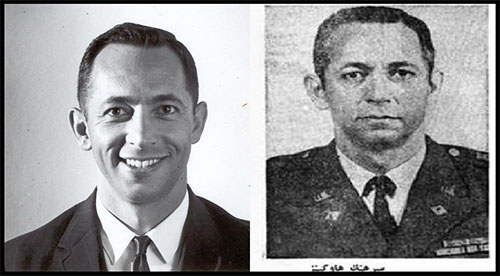
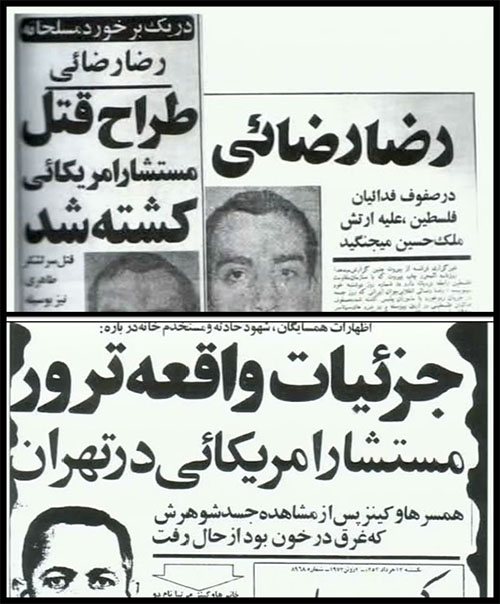
Along with this matter, at last, the assassination of three American advisers in Iran was designed and carried out by Mojahedin. These advisers were experts in the field of electronic equipment that led the installation and operation of complex eavesdropping systems in the form of a series of designs in ((Kabkan)), that is located on the border between Iran and the Soviet Union. According to the available information, the basic information about these three spies was most likely transmitted to the Mojahedin by the Soviet government2.

The Process of Assassinations

During the identification operations to carry out assassinations, the exact route of the car movement got identified. According to information obtained from the operational units of the organization, they traversed Tehranpars (the intersection of Damavand Avenue, known as the Tehran-Pars three ways) every morning between 7:00 and 7:20 minutes, and near the intersection of Narmak thirty meters, passing from Khayyam avenue (one of the neighboring streets of Vosuq Square). Therefore, it was decided that the MKO’s operational layout be arranged in this area and at a specific point on Khayyam Street.

According to the plan, a Volkswagen truck was used for traffic jams and one more car to escape. Additionally, the weapons gathered in compare with the individuals presented on the operation. This terrorist operation is described by Abedini as follows:

“Operation Day”, [1976/08/28] all work was done in accordance with the schedule. The driver of the motorcycle and the person who was with him were marked with a positive signal. The team got ready. Attack layout was done. The car was turned by the driver who should make the traffic, a few moments later the car carrying the advisors appeared on the street, and the driver stopped the car. The driver of the advisers felt that something is going on and turned the steering wheel to his right, but because of the narrow street he couldn’t do anything and the way got closed.

Commander surrendered the driver and made him to put his head under the dashboard then the machine gunner shot the bullets toward Americans. The front man (Robert Krongard) committed to run away after being hit, he came out of the car and went toward the side walk but machine gunner followed him and while he fell into the gutter, finished him. Meanwhile the driver who should make traffic, should get out and support the machine gunners and should stand beside them while machine gunner can dead shot the two Americans behind, and again give the machinegun to the traffic driver and ran toward the scape car. This part of the operation, that was the main part, was done completely (except two parts) and car moved in the identified way. After a distance one of the members got out and removed the fake car number and again continued to move. After a while two members got out and the driver went to Khorasan square with scape car, while the bags of the advisors were also in the car. He put the scape car in one of the alleys of Khorasan square and transferred the equipment to another car, which had already been put there, and move the new car to the base, where the equipment had to be taken there. And in this way the operation ended.3”

Members of the operation team of assassination of three advisors are:

Hosein SiyahKolah (Kazem) the commander of the operation;
Mehdi Fathi (Vahid) deputy commander and in fact executive commander of the scene of operation; (the first machine gunner)
Mohsen Tarighat (Mahmoud) the second machine gunner
Ghasem Abedini (Asgar)traffic driver and driver of scape car
Shahram Mohammadian Bajgiran (Javad) motor driver and marker
Gholamhosein Sahebekhtiari (shamsollah-Asghar) the motor cyclist and marker4

From the very next day, the details and descriptions of this assassination, with more details of the victims (with an emphasis on their military identity), were published in newspapers and it was announced that the American bodies were transferred to California.5
Quality of operation

One of the differences between this assassination and other terror operations of the Mujahedin organization was that it was used handy machineguns for killing the targets this time. Other assassinations – generally – were carried with pistols, and the reason was clear: having large machineguns was in contradiction with the security and destroys the security of the team. But in this particular case, the use of Kalashnikov’s machinegun was on the agenda. Typically, machineguns were used to defend team houses, but Fadaian guerrillas used it in operations, but smaller and lighter ones, such as the ((Shi)) machine gun, which made by France.

SAVAK review results

One of SAVAK’s first reports about the assassination of three advisors of IBEX was as follows:

“As mentioned before, on the 7 o’clock of 1976/08/28, 6 members of the Mojahedin-e-Khalq group (Islamic Marxist) blocked the way with a Volkswagen of the three American citizens residing in Tehran with the name of ((Robert Krongard, William Cotrell and Donald Smith)) that cooperating with Iran Imperial Air Force while transferring to their work place and killed three of them with machinegun and pistol and left their car and ran from the crime scene. Investigation done regarding the terror of three mentioned advisors shows that the executive members of this terror had enough intelligence of their status and jobs. With the regard that the parts that military and nonmilitary American advisors were doing their services were always on special interest of members of intelligence services of Soviet Union and mentioned three advisors were working in a sector that has high sensitivity, this is concluded that the mentioned information and identification have done by members of the Soviet Union intelligence service.6”

Source: MKO organization: Founding till the end (1965-2005), Second volume, In an effort by a team of researchers, the Institute of Political Studies and Research publication

September 8, 2019 0 comments
FacebookTwitterPinterestWhatsappTelegramSkypeEmail
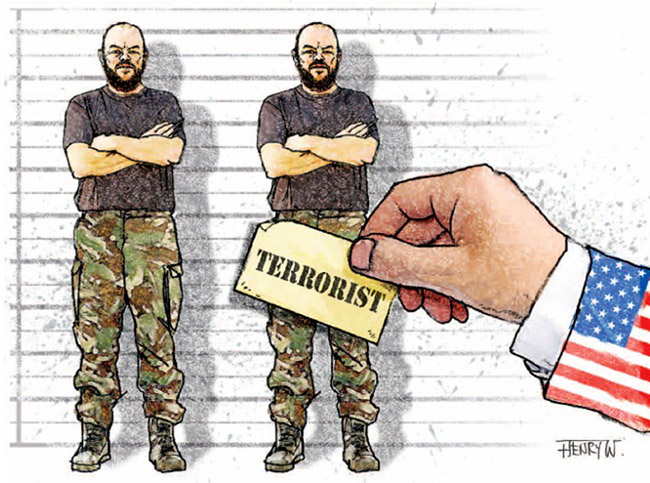
USA double standards on terrorists
Mujahedin Khalq; A proxy force

US government supports Iranian terrorist group

The MEK was founded in 1965 and it has the unusual distinction of taking action to overthrow both the former government of the shah of Iran and the Islamic Republic of Iran by relying on terrorist actions. In the early 1970s, the MEK embarked on a program of assassinating Iranian officials and U.S. personnel in Iran.

The Iranian Revolution of 1979 saw the MEK’s program of bombings and shootings increase in intensity. The MEK is led by the husband-wife team of Massoud and Maryam Rajavi, who opponents and ex-members of the MEK describe as leaders of what has become known as the “Rajavi Cult.” The Rajavis abhor criticism and have been known to silence former MEK members-turned-critics by having them constantly harassed or worse, assassinated. There were nine assassinations between 1970-79).

After the United States ousted Saddam Hussein in the 2003 invasion and occupation of Iraq, the MEK forces were confined to U.S.-protected compounds in Iraq, the most prominent being Camp Ashraf, the former U.S. military’s Camp Liberty. The new Iraqi government demanded the MEK forces leave Iraq. Acceding to Iraqi demands, the United States relocated 3,000 MEK members to the Manez base in Albania, which the MEK calls “Ashraf 3.”

The MEK, which reportedly receives support from Israel’s Mossad, is said to be involved in money laundering and sex trafficking through the intensive use of cryptocurrencies like Bitcoin.

Not surprisingly, MEK forces joined with ISIL forces in battling against Syrian and Iraqi government forces. The MEK saw ISIL as a natural ally in fighting pro-Iranian governments in Baghdad and Damascus. It was well-known to Western intelligence agencies that the MEK and ISIL had established an alliance, but, nevertheless, the Barack Obama administration removed the MEK from the U.S. State Department’s terrorist list in 2012. From 1997 to 2012, the United States officially designated the MEK as a foreign terrorist organization.

After ISIL forces were routed in Syria and Iraq, the United States pressured Albania to allow the Islamist terrorists to join their MEK allies in Albania. ISIL terrorists and their families have reportedly been housed in buildings in Tirana that were formerly occupied by MEK members prior to their transfer to the Manez base. From their Albanian base, MEK operatives have easily entered Kosovo, the location of another major NATO military base at Camp Bondsteel, near Ferizaj in eastern Kosovo.

MEK terrorists, allied with sympathizers in Albania and Kosovo, have targeted Shi’a and Sufi Islamic institutions. It is also believed by some Albanian journalists, who have been intimidated by the Albanian government and MEK, that Ashraf 3 and Camp Bondsteel are being used to train MEK and other Middle Eastern mercenaries for a war against Iran to effect a NATO-led regime change operation.

The MEK enjoys widespread support in the Trump White House, as well as in the U.S. Congress. One of the MEK’s biggest boosters is Trump’s National Security Adviser John Bolton. On April 1, 2017, Bolton addressed an MEK Nowruz (Persian New Year) conference in Albania and declared that the MEK would be celebrating taking power in Tehran before 2019.

The MEK is represented in Washington by the law firm of Joseph diGenova and his wife, Victoria Toensing. DiGenova almost became Trump’s personal attorney. However, diGenova took his name out of consideration due to conflicts of interest and Giuliani accepted the job.

The Trump administration’s neocons, notably Bolton and Giuliani, are hell-bent on regime change in Iran. They are ramping up their terrorist army in the Balkans for such a future war. Politics makes for strange bedfellows.

By Cyrus Shamloo,wilsontimes.com

September 7, 2019 0 comments
FacebookTwitterPinterestWhatsappTelegramSkypeEmail
some one is absent here
The cult of Rajavi

Someone is absent here

In this documentary Mr.Bashiri narrates the story of his life and how he lost his wife…
My name is Alireza Bashiri. I was born in Ahwaz. I am 52. I live in Sweden with my daughter and her son.

https://dlb.nejatngo.org/Media/Documentary/PressTV_Someone_Absent_Here.mp4

After marriage, I told my wife that I’d like to go abroad and live in another country
My wife was just 17 and myself around 22 or 23. I didn’t have that much experience. We decided to go to Europe from Turkey. We went from Turkey to Germany. We sought asylum.
We spent around 2 years in a refugee camp.
The MKO members were very active there …

September 5, 2019 0 comments
FacebookTwitterPinterestWhatsappTelegramSkypeEmail
weekly digest
Iran Interlink Weekly Digest

Iran Interlink Weekly Digest – 260

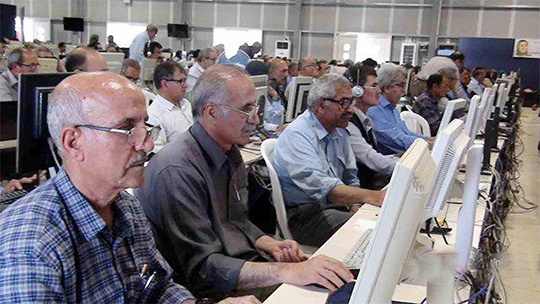
++ In Albania, a source inside MEK has informed Iran-Interlink that alongside the click farm work Rajavi has ordered some members to discover who leaked the incriminating photographs which we wrote about in Lobelog last week to the Iranian media. The way this is being done is through telephone calls. They change the way they speak so they can pass as officials in Iran who are ringing to congratulate reporters for their work and then ask who sent the photos. Technically, MEK uses double phone calls which divert between themselves, so they appear to be coming from inside Iran. Sometimes they use Iranian mobiles so although the call goes to Albania, it shows up as Iran. This work is not new for MEK. After they arrived in Paris in 1981 over 200 landlines were set up to make calls into Iran to conduct their terrorist campaigns from France. MEK have sold their expertise in this kind of undercover work to Saddam Hussein, the CIA, MOSSAD, etc.

++ Last week the MEK launched an all-out online attack against Zarif’s visit to Europe. During a demonstration in Sweden they attacked the police, and some of them were arrested. In Paris, the MEK were forced to gate-crash another Iranian group’s demonstration since they are banned from holding their own. The police were not happy about this misuse of the protest. Interestingly, in spite of this effort to be seen, the success of Zarif’s visit and his subsequent return to the fringes of the G7 had a bad backlash inside MEK as the members became demoralised and deflated again. They are questioning ‘what are we doing, it’s not about helping Iran, we have just become an anti-Iran force’. To counter this mood, Rajavi has ordered the leading members to talk about the MEK’s martyrs, to remind the rank and file that they died for ‘the cause’, particularly glorifying those who burned themselves in 2003. Unfortunately for Rajavi, this caused even more of a backlash and made matters worse because members don’t buy these narratives anymore. External to the MEK, critics write in Farsi about what happened. They point out that instead of the MEK affecting Zarif and his work. Iran’s top diplomat performed his job well and the result was that the MEK became wobbly and ended up fighting each other. Some say that the way Rajavi thinks diplomacy works is the diplomacy of slavery; that the MEK are slaves to the Saudis and to the U.S. etc. Inside the MEK they are waking up to this. Others say that contrary to what Rajavi says, that these martyrs burned themselves for love, no, they were slaves who died because you ordered it. You killed them. And now, gone are the days of keeping people in MEK with false narratives.

In English:

++ Costantino Ceoldo, Pravda, interviewed Richard Black of the Virginia State senate – the only Western politician to have spoken openly in defense of Syria and its people. Asked about the role of the MEK, Black said that because Iran is a patriotic, cohesive and unified nation, there was little chance of the MEK growing like ISIS. But Western support for MEK-led regime change would be problematic. Using terrorists against Western enemies has not produced good results. Indeed, the damage to the German and Scandinavian countries due to these disasters may cause permanent damage. The MEK’s role could be to continue its covert intelligence activities at the behest of the U.S. such as the tanker attacks earlier this summer.

++ Ebrahim Khodabandeh’s blog piece ‘How has the MEK resisted disintegration’ explains that the MEK has only survived this long because of the support of the Republicans in America over the past two decades. In particular, the Trump administration, which intervened directly to enable the MEK to build what is a de facto extra-territorial enclave in Albania.

++ A lengthy analysis by Jonathan Broder in Newsweek magazine examines the state of Iran’s opposition groups as political pundits variously predict the chances of war or regime change in Iran as the Trump administration sends out mixed messages on an almost daily basis. Iran, he acknowledges, is weakened by American sanctions, but by no means bowed. Broder’s take on the MEK’s ability to take advantage of such turmoil is not flattering. Realistically, the MEK is a bad group with a bad history. To paraphrase, it is paid to exist and yet only exists by paying for support from a roll call of shills drawn from the dregs of American politics. They have no support inside Iran and cannot work with any other opposition groups.

++ A Washington Post piece by Adam Taylor highlights the dilemma of the MEK. It is dependent on American political will. So, the Trump administration’s prevarication – is regime change a thing or is it not – is particularly problematic for the group. President Trump wants to meet with Iran (anyone). That would spell disaster. The MEK can only exist in war and chaos. Diplomacy is an anathema to Rajavi.

++ Iranian media reported President Rouhani declaring the unity of the country. Parliament Speaker Ali Larijani talked about the intelligence cooperation between Iran and Iraq. Both mentioned the MEK as the enemy of Iran and a potential danger imposed by the West.

++ A socialist perspective on Iran and the U.S. approach by Mazda Majidi in Liberation News, takes the view that Iran is not collapsing and that Trump’s desire to meet with the Iranians is a bitter disappointment for Maryam Rajavi who feeds off war and destruction and bloodshed.
August 30, 2019

September 3, 2019 0 comments
FacebookTwitterPinterestWhatsappTelegramSkypeEmail
Massoud Rajavi
Massoud Rajavi

MEK leaders want Rajavi’s soul to dominate their troll factory

The rise of rulers with absolute power in Europe and Asia led to World War II. The totalitarian systems of Stalin, Hitler, Mao, Pol Pot and other relied largely on mass terror and indoctrination. Although today we live in a more democratic world with less ideological systems to rule people, there are still cult-like groups that are ruled by dictators. Cults of personalities such as the Mujahedin Khalq Organization (the MKO/ MEK/ PMOI) use considerable violence to intimidate dissidents inside the cult.

In a totalitarian system like the one in the MEK, individuals have no rights, and the leaders suppress all opposition. However, the MEK tries to stimulate democracy using it as a tool to legitimize authority, consolidate power, and repress its members. The self-assigned president of the group Maryam Rajavi is called”president elect”to suggest that she was elected by the group’s parliament in exile, the so-called National Council of Resistance (NCRI). Actually, NCRI is 98 percent consisted of MEK members, no other fractions of Iranian political spectrum is included. She was indeed elected by Massoud Rajavi and other members had no way but agreeing with his decision.

Maryam Rajavi in her turn makes efforts to take the gesture of a democratic leader. Her”ten point plan”for the future of Iran is a representation of her alleged pro-democratic aspirations but none of the ten points of that secular democratic plan are practiced inside the group’s headquarters Ashraf 3 in Albania as a token community of Iranians.

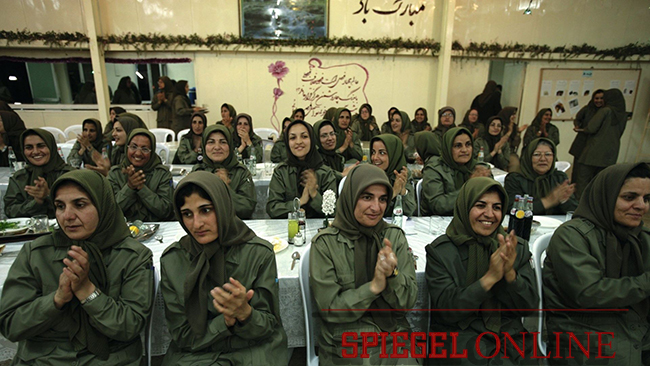
Members in camp Ashraf 3 are not allowed to ask for their most basic rights. They are not allowed to have any contact with the outside world. They are victims of forced celibacy, forced labor, sleep deprivation in a coercive system that requires them self-criticism and peer pressure. They can never ask about the controversies they are faced with in the cult.

Indeed, the most controversial question in members’ minds might be about the whereabouts of Massoud Rajavi who disappeared in 2003 after the US invasion to Iraq and the eventual collapse of Saddam Hussein, Rajavi’s long-time financial and military sponsor in his struggle against Iran. But, no one dares to ask such a question. Even after the Saudi prince Turki Faisal announced Massoud’s death in the group’s gathering in 2016, the MEK leaders did not approve or deny the announcement.

“However, this absence has been so prolonged that it has led members to criticize and even flee the group.”Suggests Ali Alghurabi of the MNA.”Fear of the group’s collapse has forced Maryam Rajavi to repeatedly move from her Paris headquarters to Tirana to lecture to members in order to show that the situation is under control.”

Alghurabi who is an Arab journalist based in Iran, assumes that the MEK’s stance about the death of Massoud Rajavi is like a game to keep members in limbo.”It seems that measures such as former Saudi intelligence chief Turki al-Faisal’s statements among members of the cult a few years ago in which he had called Masoud Rajavi dead or putting Masoud’s image among Iran’s deceased historical leaders, and, at the same time, denying his death by the cult’s ringleaders by occasionally broadcasting Masoud’s voice messages are the cult’s game to confuse members and even Iranian officials about the status of the group’s leader,”he argues.”The goals of this game are preventing the members’ exit as well as blinding Iranians’ desire to prosecute or exterminate Rajavi.”

ALghurabi correctly asserts that the MEK’s declining system will no more succeed to maintain Massoud Rajavi’s authoritarian soul over members.”It seems that under the current circumstances, whether Massoud is alive or not will have little effect on the group’s situation,”he states.”The MEK continues to be viewed as a notorious group with a bad record among Iranian people and the Iranian opposition groups; A group which had been on the list of terrorist organizations in the US and the EU, with no credible social base in Iran, dozens of its members fled its camps since 2014 when the group was relocated to Albania, the average age of its members on the rise, and many of them already too old. It is even feared that because of its relocation to Albania, the MEK could be considered a serious obstacle to Albania’s EU accession negotiations and the group’s presence in Albania could turn into a challenge for the Balkan country.”

“So whether or not the elderly leader of this cult is alive, when the MEK is facing a lot of challenges, may not matter much,”Alghurabi determines. The collapse of the world’s most powerful dictators like Hitler, Stalin, Saddam and Ghaddafi is the proof. Maryam Rajavi’s hard work to trigger her troll farm in Albania makes no sense when members hardly believe in the group’s cause seeking an opportunity to escape the cult.

Mazda Parsi

September 3, 2019 0 comments
FacebookTwitterPinterestWhatsappTelegramSkypeEmail
The End of the Path
The cult of Rajavi

The End of the Path documentary- Part1

The documentary “The End of the Path” is a first-hand account of suffering families whose loved ones have been misled by a destructive cult called the Mujahedin-e Khalq Organization (the MKO/ MEK/ PMOI/ the Cult of Rajavi). The victims are still taken as hostages by the cult leaders consequently living under a modern slavery.

Download the Video
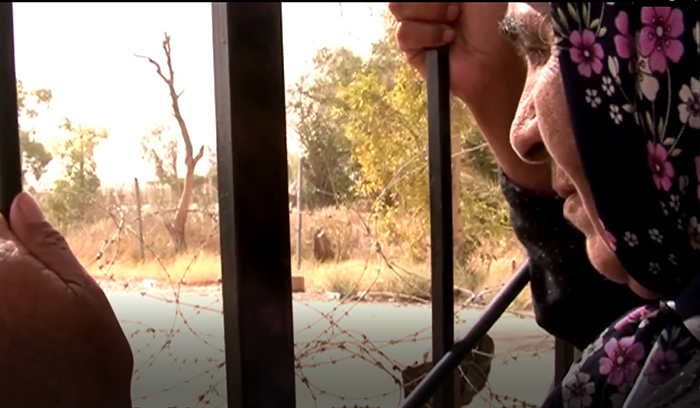
The three-part documentary was produced while the MEK’s relocation from Iraq to Albania was being accomplished. After the relocation a number of families together with certain former members of the group visited the ruins of Camp Ashraf.
The documentary include these parts: The Ruins of Ashraf, Survivors, and Camp Liberty.
The documentary serves to inform and awaken public opinion on the sufferings of those who are imprisoned inside the destructive mind control cult, the MEK as a group with no popular base in Iran. Today, the group’s treatment against its members is primarily a human rights issue.
In this regard, the mission of Nejat Society is to expose the true nature of the leaders of the cult. We urge all international humanitarian bodies to help us in our efforts to release the victims of the Cult of Rajavi.
By the Media Group of Nejat Society

September 2, 2019 0 comments
FacebookTwitterPinterestWhatsappTelegramSkypeEmail
Newer Posts
Older Posts

Recent Posts

  • MEK agents near schools in Tirana, Albania

    October 17, 2026
  • Expectations of human rights bodies regarding censorship within the MEK

    October 13, 2026
  • The Jamalis’ Plea for Help: Save Our Brother from the MEK!

    October 11, 2026
  • Testimonies of Participants in the MEK’s Staged Propaganda Stunt in Karaj

    October 7, 2026
  • Giuliani’s MEK ties have dogged him for years

    October 6, 2026
  • Facebook
  • Twitter
  • Instagram
  • Youtube

© 2003 - 2025 NEJAT Society . All Rights Reserved. NejatNGO.org


Back To Top
Nejat Society
  • Home
  • Articles
  • Media
    • Cartoons
    • NewsPics
    • Photo Gallery
    • Videos
  • Publications
    • Books
    • Nejat NewsLetter
    • Pars Brief
  • About Us
  • Contact us
  • Editions
    • عربي
    • فارسی
    • Shqip