Nejat Society
  • Home
  • Articles
  • Media
    • Cartoons
    • NewsPics
    • Photo Gallery
    • Videos
  • Publications
    • Books
    • Nejat NewsLetter
    • Pars Brief
  • About Us
  • Contact us
  • Editions
    • عربي
    • فارسی
    • Shqip
Nejat Society
Nejat Society
  • Home
  • Articles
  • Media
    • Cartoons
    • NewsPics
    • Photo Gallery
    • Videos
  • Publications
    • Books
    • Nejat NewsLetter
    • Pars Brief
  • About Us
  • Contact us
  • Editions
    • عربي
    • فارسی
    • Shqip
© 2003 - 2024 NEJAT Society. nejatngo.org
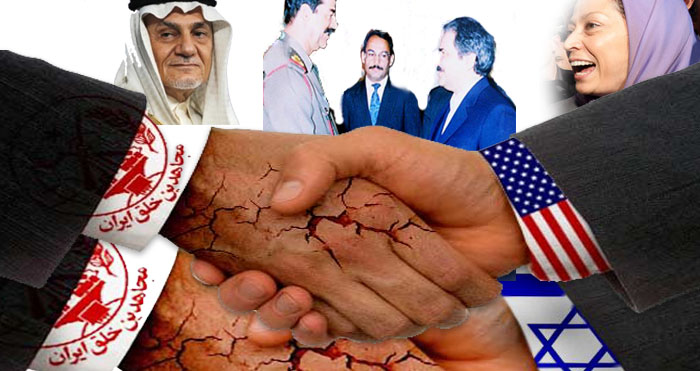
MEK mercenaries
Mujahedin Khalq; A proxy force

MEK the most hated in Iran’s history

When I was young, I remember how much the communist ‘Tudeh’ party was hated by Iranians. Not just because they were communist and did not believe in Islam, but mostly because they did not care for Iran’s national interests. They were so-called Internationalists and believed all socialist revolutions must be led by the former Soviet Union.
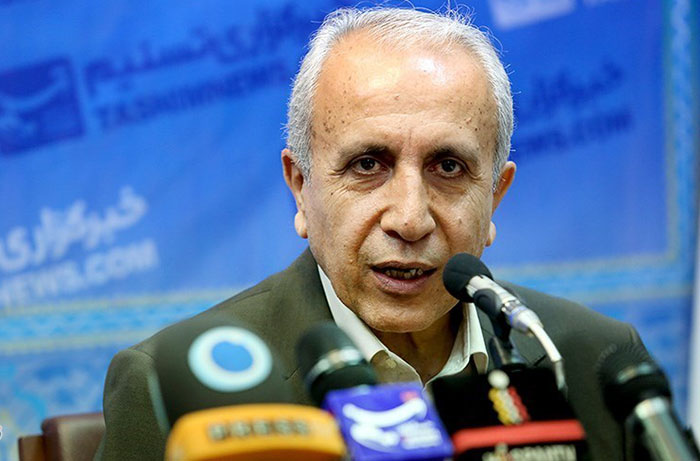
Ebrahim Khodabandeh

Since I left the Mojahedin-e Khalq Organization (MEK, MKO, Rajavi terrorist cult) and came back to Iran in 2003, I have realized that this cult is now much more hated by Iranians than the Tudeh Party, and these Iranians include every opposition to the Islamic Republic inside and outside the country. The MEK assassinated thousands of innocent people, they cooperated with the attacking enemy Saddam Hussein against the defenders of the borders, and far more than the Tudeh Party do not believe in Iran’s national security and interests.

Recently, in an interview with the American Fox News, the Iranian reformist foreign minister Mohammad Javad Zarif described a ‘B-Team’ pushing the US towards “disaster” by clashing with Iran, and the MEK typically is trying by every possible means to jump on this bandwagon with the hope of gaining something for its cultic goals.
But a loser is always a loser. No matter what the future of Iran might be, the MEK certainly will have no place in Iran’s political and social scene since the cult is the most hated in Iran’s history.

May 14, 2019 0 comments
FacebookTwitterPinterestWhatsappTelegramSkypeEmail
Mujahedin Khalq; A proxy force

France holds MEK Mujahedin-e Khalq terrorists

“There Is No Room for Wishful Thinking in International Relations” – Prof
Alexander Azadgan,

On Wednesday, Iran announced its decision to partially discontinue its 2015 nuclear commitments a year after the US unilaterally left the accord. Tehran also threatened to enrich its uranium stockpile closer to weapons-grade levels in 60 days if world powers fail to negotiate new terms for the JCPOA.
Sputnik has discussed the latest developments of the JCPOA with Alexander Azadgan, professor of international policitical economy, a senior geopolitical analyst and Editor-at-Large with UWI (United World International).
Sputnik: Iranian state TV announced on Wednesday that the Islamic Republic would be suspending several commitments within the nuclear deal, adding that Iran is not exiting the agreement. What does this mean for the deal?
Alexander Azadgan: The deal for all means and purposes was really finished and over and done with when Mr. Trump reneged and got the United States out of it. What was left was a hodgepodge of European nations, [faithful] states to Washington. And of course, you have China and Russia on the other hand. Let’s go back and just briefly look at the sacrifices that Iran made in this deal, the Joint Comprehensive Plan of Action. In July of 2015, Iran had almost 20,000 centrifuges. Under this JCPOA it was limited to 5,060. And this 5,060 are old and outdated centrifuges. Iran’s uranium stockpile was reduced by 98 percent, 300 kilograms only, from 10 tonnes or 10,000 kilograms. And according to the JCPOA, this figure cannot be exceeded; the 300 kilograms cannot be exceeded until 2031. It must also keep the stockpile’s level of enrichment at only 3.67 percent, low enrichment uranium which has a 3 to 4 percent concentration of Uranium-235. And that cannot be used to fuel the nuclear power plants; the weapons-grade uranium is 90 percent enriched. So basically they are telling the Iranians that you cannot even power your nuclear power plant in Bushehr, which was built by the Russians for Iran.
During this entire time, the International Atomic Energy Agency, IAEA Director General Yukiya Amano has time after time verified and confirmed to the global community, the international community that Iran abided by all its commitments, in 13 consecutive reports, as a matter of fact. And the IAEA is the only legitimate body for nuclear regulations and inspections, not the US, not Germany, not France, and certainly not the UK.
Sputnik: So, let me get back to the European countries for a while. In your opinion, what agreements would satisfy Iran and prevent a further escalation of the situation?
Alexander Azadgan: After Rouhani got into power, he went to Italy and he went to France. He signed tens of billions dollars of lucrative contracts with the French; they have reneged from all of them. The (deal with) Renault, a strong car company, they reneged out of that. Total, the huge French oil company, reneged out of developing the Iranians’ South Pars natural gas field. They have reneged from everything. So JCPOA has been nothing but just a name, there is no substance to it. And the Europeans are just buying time. They couldn’t even implement their so-called Special [Purpose] Vehicle to bypass Washington’s draconian financial sanctions. They haven’t done a thing, and this was one of the easiest forecasts that my colleagues and I did. The Europeans always, their ships always, cast to the same direction as Washington. Nothing is going to disrupt the transatlantic alliance unless Germany shows more interest in [taking steps] closer to Russia. And we are already seeing that development happen.
Sputnik: You have already mentioned that about France. France has said that there is nothing worse than Iran’s exit from the deal and that the EU wants to keep the deal alive. What steps can we expect from Europe?
Alexander Azadgan: Nothing. We can expect nothing from Europe. And if anything, Europe is going to escalate their rhetoric as France has done during the past couple of days with Iran.

Let’s be frank here, France holds one of the worst terrorist groups in modern times. They are called MKO or MEK (Mujahedin-e Khalq Organization). They are based in Paris; they are an anti-Iran terrorist group who have been known to kill American citizens in the 1960s and 1970s in Iran. France has hosted them and to me, it is appalling that Iran is not raising this question during their negotiations.

One of the things that are very suspicious to the Iranian people at least in the wording of the JCPOA — some phrases –they call it the ‘spirit’ of the JCPOA. I think many of us believe that when they refer to the ‘spirit’ of the JCPOA, they are referring to Iran basically ending its revolution as it is: Iran no longer defending the Palestinian people; Iran no longer playing a real leadership role as it has been playing in defeating the terrorist in Iraq and in Syria. For all means and purposes, just sit back and join the trend of globalisation and become another client state for Washington in the region.
Washington is engaging in economic terrorism and it has taken a toll on the Iranians. And you know, that is how they are trying to foment regime change in Iran. There may not be a war, we are not forecasting a war, but they are going to economically crumble Iran and they are going to expect that. When that happens, the Iranian people will rise and have a regime change, very much similar to what is happening in Venezuela right now.
This is why the Venezuelan case is absolutely crucial. They just pick somebody to become the next president; Washington picks somebody to be the next president. They’ve actually declared him the president. If this precedent is set, the entire world, the entire non-aligned movement world is going to be in danger, because they are going to do the same thing in Iran. They are going to pick some lackey over there, some liberal lackey, they are going to announce: “He is the president”. And they are going to try to foment in Iran, as they did in 2009.
Sputnik: Is it possible to influence the USA to restart the negotiations?
Alexander Azadgan: It depends on who gets into power. The Democrats have openly said if they are back in power in 2020, they would want to rejoin the JCPOA. But I don’t think that the Iranian people and the Iranian militia would ever trust Washington again. How could you have international treaties, how could you be part of a multilateral treaty and then another administration comes in and within a few days does away with 20 years of negotiations between Iran and P5+1, right? And Mr. Obama was on record that “if Iran reneges, we know exactly where the crucial sites are so we can bomb them.” Mr. Kerry and Mr. Obama are on record, we can watch these videos on YouTube.
So there was never good faith. And restart what? How can Iran ever trust anybody? Iran is looking around, Iran saw how Trump was wooing the Korean leader. And we saw what happened with that. I mean it is absolutely ridiculous. There is no credibility left in Washington. International law, a big chunk of international law, and international relations per se rely on credibility, on trustability. Washington doesn’t have any of that left. And it is not just the JCPOA they are coming out of. They came out of the Paris Climate Accord and all sorts of other treaties that this man is trying to bring us out of.
Sputnik: What reaction can we expect from the US if the deal between the European countries and Iran is successful?
Alexander Azadgan: The second part of this question, “if the deal between the European countries and Iran is successful”, it is not, it hasn’t been. The UK’s political attitude, populism, is bringing it closer to Washington, which is 3,000 miles away instead of Europe, which is 30 miles away. In France, you have someone – you see what is going on in France with the trend of Mr. Emmanuel Macron. He has that Napoleonic tendency and arrogance. We have known for a long time about Israel’s tremendous influence within French politics. We look at Germany as a neutral power in this case, but they are going to stick with the European Union foreign policy apparatus. Mrs. Mogherini has been constructive in her rhetoric but nothing has come as a result of that rhetoric: nothing but cheap words, no abiding by contracts.
[Many are thinking] that Mr. Trump is surrounded by lunatics. But I think that another mistake, a miscalculation of the liberals in Iran is thinking they can drive a wedge between Mr. Trump and his closest advisors around him. This is another miscalculation that the liberals in Iran are making. Mr Trump cannot do anything right now. It is my personal belief that the neocon (associates) of Mr. Trump are blackmailing him in every which way. If he doesn’t go with war-expanding policies around the world, they are going to reveal even more information about him. And we all know Mr. Trump has quite a lot of skeletons in his closet, many of them of his own making. So he is stuck in this position.
I don’t think he can act independently in this situation. Well, I think the Iranian liberals that are still in power for the next two years I think are miscalculating once again, thinking they can separate Mr. Trump and they can influence the US to restart a negotiation. I don’t think that’s a possibility, I think it’s wishful thinking. And in international relations, there is no room for wishful thinking.

Sputnik International, 
*The views and opinion expressed by the speaker do not necessarily reflect those of Sputnik.

May 13, 2019 0 comments
FacebookTwitterPinterestWhatsappTelegramSkypeEmail
Mujahedin Khalq; A proxy force

Spain’s Far-right Vox Received Almost $1M from ‘Marxist-Islamist’ Iranian Exiles: Report

It is unlikely that Vox’s hyper-nationalist voters know that their party scored a significant presence in Spain’s parliament mostly thanks to Zionists, Islamists and foreigners.
With the April 28 general elections in Spain over, the far-right party Vox gained about 10 percent of parliamentary seats, marking the far-right’s rising comeback into politics four decades after Francisco Franco’s dictatorship. While a less alarmist reading would say that the far-right was always there, hidden in the conservative People’s Party (PP), the fact that they are out in the open strengthens Europe’s wave of far-right xenophobic and anti-European advance.
The party appealed to voters in one of Spain’s most contested elections since its return to democracy, mostly basing its arguments against leftists politics, social liberals, migrants, charged mainly with an Islamophobic narrative. Emphasizing the return of a long lost Spain and pushing to fight what they refer to as an “Islamist invasion,” which is the “enemy of Europe.” One could summarize it as an Iberian version of “Make Spain Great Again.”
Yet while this definitely appealed to almost two million voters, many are unaware of where their party’s initial funding came from. Back in January 2019, an investigation made by the newspaper El Pais revealed, through leaked documents, that almost one million euros – approximately 80 percent of its 2014 campaign funding – donated to Vox between its founding in December 2013 and the European Parliament elections in May 2014 came via the National Council of Resistance of Iran (NCRI), a self-declared “Marxist” organization and an Islamist group made up of Iranian exiles.
However, this is where things get complicated. The NCRI is based in France and was founded in 1981 by Massoud Rajavi and Abolhassan Banisadr, nowadays its president-elect is Maryam Rajavi (Massoud’s wife). The Rajavis are also the leaders of the Mojahedin-e-Khalq (MEK). A reason for many to believe that the NCRI is just a front for the MEK, which over the past few decades has managed to create a complicated web of anti-Iranian, pro-Israel and right-wing government support from all over the world.
To understand MEK, it’s necessary to review the 1953 U.S. and British-backed coup which ousted democratically elected prime minister of Iran Mohammad Mosaddegh and instituted a monarchical dictatorship led by Shah Mohammad Reza Pahlavi.
The oppression carried out by the Pahlavi royal family led to the creation of many radical groups, one which was MEK, whose ideology combined Marxism and Islamism. Its original anti-west, especially anti-U.S. sentiment pushed for the killing of six U.S citizens in Iran in the 1970s. While in 1979, they enthusiastically cheered the seizure of the U.S. embassy in Tehran. After the Iranian Revolution, its young leaders, including Rajavi, pushed for endorsement from the Ayatollah Ruhollah Khomeini, but were denied.
So Rajavi, allied with the winner of the country’s first presidential election, Abolhassan Banisadr, who was not an ally of Khomeini, either. Soon Banisadr and MEK became some of Khomeini’s main opposition figures and had fled to Iraq and later to France.

In the neighboring country, MEK allied with Sadam Hussein to rage war against Iran. In a RAND report, allegations of the group’s complicity with Saddam are corroborated by press reports that quote Maryam Rajavi encouraging MEK members to “take the Kurds under your tanks, and save your bullets for the Iranian Revolutionary Guards.”

The organization was deemed a terrorist organization by the U.S. and European Union for the better part of the 1990s, but things changed after the U.S. invasion to Iraq in 2003. This is when the U.S. neoconservative strategist leading the Department of State and the intelligence agencies saw MEK as an asset rather than a liability. Put simply in words they applied the dictum of “the enemy of my enemy is my friend.”

The U.S.’s dismissal of past crimes reinvigorated MEK’s intense lobbying campaign to have itself removed from terrorist lists in the U.S. and the European Union. MEK, which by the beginning of the 21 century had morphed into a cult-like group according to many testimonies from dissidents, moved from Camp Ashraf to the U.S-created Camp Liberty outside of Baghdad. And that’s when things rapidly changed.

According to the Guardian, between 2007 and 2012, a number of Iranian nuclear scientists were attacked. In 2012, NBC News, citing two unnamed U.S. officials, reported that the attacks were planned by Israel’s Mossad and executed by MEK operatives inside Iran. By 2009 and 2012, the EU and the U.S. respectively took it out of its terrorist organizations list.
Soon after it gained support from U.S. politicians like Rudy Giuliani and current National Security Advisor John Bolton, who now call MEK a legitimate opposition to the current Iranian government. As the U.S. neocon forefathers did before, MEK shed its “Marxism.” After the U.S.’s official withdrawal from Iraq, they built MEK a safe have in Albania, near Tirana, where the trail of money can be followed once again.

Hassan Heyrani, a former member of MEK’s political department who defected in 2018, and handled parts of the organization’s finances in Iraq, when asked by Foreign Policy where he thought the money for MEK came from, he answered: “Saudi Arabia. Without a doubt.” For another former MEK member, Saadalah Saafi, the organization’s money definitely comes from wealthy Arab states that oppose Iran’s government.

“Mojahedin [MEK] are the tool, not the funders. They aren’t that big. They facilitate,” Massoud Khodabandeh, who once served in the MEK’s security department told Foreign Policy. “You look at it and say, ‘Oh, Mojahedin are funding [Vox].’ No, they are not. The ones that are funding that party are funding Mojahedin as well.”
Meanwhile, Danny Yatom, the former head of the Mossad, told the Jersulamen Post that Israel can implement some of its anti-Iran plans through MEK if a war were to break out. Saudi Arabia’s state-run television channels have given friendly coverage to the MEK, and Prince Turki al-Faisal, Saudi Arabia’s former intelligence chief, even appeared in July 2016 at a MEK rally in Paris.
With Israel and Saudi Arabia backing MEK, the question of why a far-right movement would take money from an Islamist organization clears up a bit. Israel’s support of European far-right parties has been public. In 2010, a sizeable delegation arrived in Tel Aviv, consisting of some 30 leaders of the European Alliance for Freedom, gathering leaders such as Geert Wilders of the Netherlands, Philip Dewinter from Belgium and Jorg Haider’s successor, Heinz-Christian Strache, from Austria.
Yet for the U.S., Israel, and Saudi Arabia, MEK represents an anti-Iranian voice that they so desperately need, and that on the surface didn’t come from them directly. It is unlikely that Vox’s hyper-nationalist voters know that their party scored a significant presence in Spain’s parliament mostly thanks to Zionists, Islamists and foreigners.
Telesurenglish.net

May 12, 2019 0 comments
FacebookTwitterPinterestWhatsappTelegramSkypeEmail
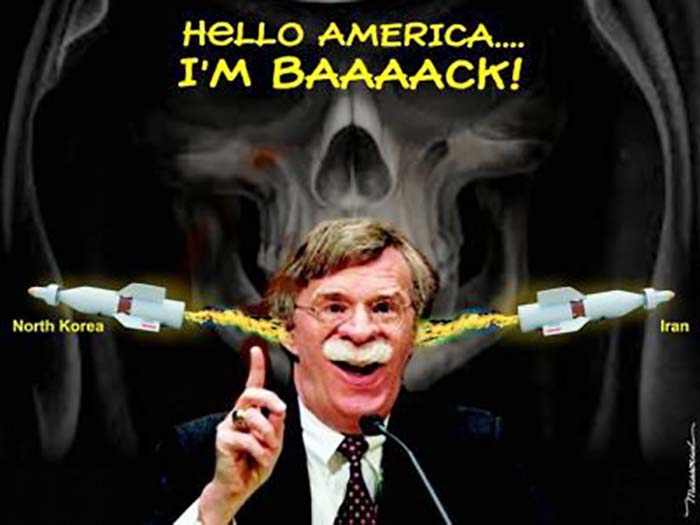
Jhon Bolton - warmonger - terrorist lobbist
Mujahedin Khalq; A proxy force

John Bolton has his own proxy force in MEK

Trump Is Getting Dangerously Close to War With Iran

The administration has drawn a dubious red line that could be easily crossed.
The United States is hurtling toward a conflict with Iran, and it’s not clear that President Donald Trump has an exit strategy.
In the year since he dumped the Obama administration’s prized nuclear agreement, Trump has pursued a policy of “maximum pressure” toward Iran with a series of increasingly bellicose moves. Last month, he designated the Islamic Revolutionary Guard Corps, an elite military group with vast economic influence in the region, a foreign terrorist organization. Weeks later, he bannedthe purchase of Iranian oil, in a blow to eight countries—including allies like Japan and South Korea—that had previously relied on US waivers to accept it.
Those actions were just a prelude to this week, during which Trump sanctioned another key Iranian export, industrial metals, and deployed an aircraft carrier to the Middle East two weeks earlier than planned in response to intelligence that Iran was targeting US troops in Syria and Iraq. “The United States is not seeking war with the Iranian regime,” national security adviser John Bolton said in a statement announcing the move, “but we are fully prepared to respond to any attack, whether by proxy, the Islamic Revolutionary Guard Corps, or regular Iranian forces.”
The statement hinted at “a number of troubling and escalatory indications and warnings” from Tehran, but the nature of this intelligence remains unclear. The Daily Beast reported Tuesday that “the administration blew it out of proportion, characterizing the threat as more significant than it actually was.” Israel, purportedly the source of the intelligence, acknowledged as much to Axios. “It is still unclear to us what the Iranians are trying to do and how they are planning to do it,” an Israeli official told the outlet.
More concerning is the role played in all of this by Bolton, who earned a reputation in the George W. Bush administration for exaggerating global threats by cherry-picking intelligence. Interagency meetings, which used to be a regular feature of the National Security Council, have all but disappeared during his tenure. The lack of a permanent secretary of defense—and the presence of an acting one with zero foreign policy experience—have increased the influence of Bolton and Secretary of State Mike Pompeo, both of whom have expressed strong anti-Iran sentiments. (On Thursday, Trump announced his intention to nominate Patrick Shanahan, the acting Defense secretary, for the permanent job.)

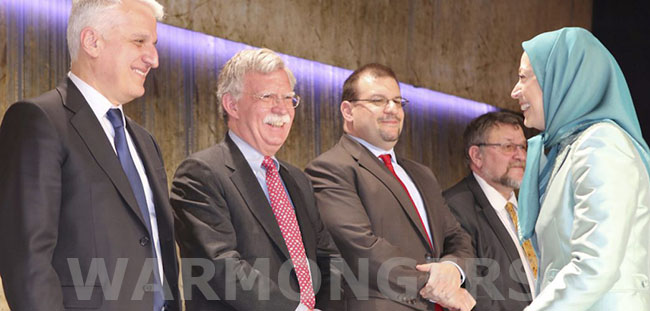
Bolton once argued for a preemptive military strike to wipe out Iran’s nuclear program and received $40,000 in 2016 to speak before the Mujahideen-e-Khalq, a radical anti-regime organization formerly designated as a terrorist group by the United States. “The regime in Tehran needs to be overthrown at the earliest opportunity!” he told attendees at one MEK event, according to The New Yorker. Pompeo considers Iran “the world’s largest state sponsor of terrorism” and has made the questionable claim that the regime, which espouses a brutal form of Shiite Islam, has ties to al-Qaeda, the Sunni terrorist group that despises Iran.

Pompeo and Bolton see Iran’s fingerprints everywhere. That’s why the red line laid out in Bolton’s statement is so frightening to national security experts familiar with these men’s views. “The fact that those actions take place, if they do, by some third-party proxy, whether that’s a Shia militia group or the Houthis or Hezbollah, we will hold the Iranians—Iranian leadership—directly accountable for that,” Pompeo told reporters while traveling to Finland this week. The groups he identified often come into conflict with Saudi Arabia and Israel, the United States’ two strongest allies in the region. Whether their encounters qualify as a proxy attack on American interests is for presumably Trump and his advisers to decide.
“We’re closer to war with Iran now than we’ve been at any time since the summer of 2010,” says Joe Cirincione, the president of the Ploughshares Fund, a global security foundation. “Any spark in the region could set off this fire.”
On Wednesday, Iranian President Hassan Rouhani announced the country’s partial withdrawal from the nuclear deal unless its signatories arrived at a new compromise within 60 days. The move left Europe in an awkward position, stuck between letting the 2015 agreement collapse and incurring the wrath of Trump’s sanctions.
“I don’t think that the pressure is designed to bring the US to the negotiating table,” says Emma Ashford, who studies the Middle East and international security at the libertarian Cato Institute. “It’s designed to work around the US in a situation where the Iranian leadership doesn’t perceive any ability of working with the US.”
If Trump’s evolution on North Korea is any clue, he is not averse to abandoning “fire and fury” in pursuit of a breakthrough with a hostile regime. Once dictator Kim Jong Un agreed to meet with him last year in Singapore, Trump went from mocking him as “Little Rocket Man” to praising him as “very talented.” He’s laid the groundwork for a similar about-face with Rouhani. After threatening his Iranian counterpart with consequences “THE LIKES OF WHICH FEW THROUGHOUT HISTORY HAVE EVER SUFFERED BEFORE” on Twitter, Trump invited him to meet eight times—Rouhani says he rejected every invitation—and called him, in another tweet, “an absolutely lovely man.”
The flexibility Trump so prizes in his negotiating style was missing in Hanoi, when the second Kim-Trump confab failed after the United States refused to grant partial sanctions relief in return for incremental action from North Korea. It would presumably be missing in any conversation with Iran, too. The moderate, incremental option went out the window when Trump abandoned the 2015 nuclear deal. The foundation of Trump’s rejection of that deal was the belief it didn’t go far enough.
Brian Hook, the US special representative to Iran, hinted at the Americans’ intransigent position during his remarks on Wednesday at the Center for Strategic and International Studies, a defense think tank in Washington, DC. He wouldn’t say whether there were any preconditions to talks with Tehran, but hanging over any future negotiation would inevitably be the 12 requirements Pompeo outlined last year as a framework for another American deal with Iran. No reasonable observer expects Iran to accede to all these demands, but Hook left no moderate options on the table. “We don’t want to give Iran veto power over our national security,” he said.
That’s a noble goal, but any deal is incumbent on Iranian involvement, and it’s not clear how Iran could expect its American interlocutors to be negotiating in good faith. “They want Iran to be like Japan at the end of World War II,” Cirincione says. “It’s the codification of regime change.” Pompeo privately denies this. In a closed-door meeting last month with Iranian-American leaders, he reportedly said the United States is “not going to do a military exercise inside Iran” to spur regime change, according to Axios. Bolton has struck a far harsher tone. In February, he filmed a menacing video on Twitter to mark the 40th anniversary of the Iranian Revolution. “For all your boasts, for all your threats to the life of the American president, you are responsible for terrorizing your own people,” he told Supreme Leader Ali Khamenei. “I don’t think you’ll have many more anniversaries to enjoy.”

Dan Spinelli, Mother Jones,

May 11, 2019 0 comments
FacebookTwitterPinterestWhatsappTelegramSkypeEmail
Nejat Publications

Nejat NewsLetter No.61

Inside This Issue:

  • MEK: ‘the Iranian ISIS’
  • IRANIAN “KHALQ” FOR MEK, POMPEO AND BOLTON
  • News in Brief
  • MARYAM RAJAVI’S LIES FLOOD THE INTERNET WHILE IRANIANS
  • THE CASE OF MEK OPERATIVE KOLAHI’S MURDER DIDN’T NEED
  • POMPEO OPPOSES MILITARY INTERVENTION, REJECTS MEK
  • MEK IN ALBANIA – INSIDE VIEW

To download the PDF file click here

May 9, 2019 0 comments
FacebookTwitterPinterestWhatsappTelegramSkypeEmail
MEK; Israel mercenaries
Mujahedin Khalq; A proxy force

US acted on vague Mossad tip-off when it sent strike group to Middle East – report

Mossad MEK Iran tip-off not trustworthy
A US aircraft carrier group and bomber task force were deployed to the Middle East after a tip-off on a “credible threat” from Iran, which came, conveniently vague and timely, from Israeli spy agency Mossad, it has been reported.

At an April 15 meeting in Washington, Israeli National Security Council chief Meir Ben-Shabbat passed along a warning to US National Security Advisor John Bolton, senior Israeli officials told Axios. The information Bolton received was left vague: the attack could hit a US target in the Persian Gulf, or maybe Saudi Arabia, or maybe the UAE.

“It is still unclear to us what the Iranians are trying to do and how they are planning to do it,” one of the senior officials said, but added it was “clear” that an unspecified event would take place sometime in the future, which would have unstated consequences.

The Axios report was corroborated by a separate report from Israel’s channel 13 journalist Barak Ravid, who claimed that Israel had handed over information to the US about an alleged Iranian plot to target US interests in the Gulf.

However elusive the bait, Washington eagerly dashed to bite, deploying the USS ‘Abraham Lincoln’ carrier strike group and a bomber task force to the Middle East, in a maneuver that just happens to play right into Israel’s hands.

Under the Trump administration, the US has been parroting Israel’s hardline policies towards Iran, the Jewish state’s regional archrival, first withdrawing from the landmark 2015 nuclear deal and then hitting Tehran with fresh rounds of sanctions. Last month, Washington went as far as to formally designate the Iranian Revolutionary Guard Corps (IRGC) a “terrorist organization.” Israeli PM Benjamin Netanyahu laid bare his relationship with US President Donald Trump, saying the terrorist listing was done at Netanyahu’s “request.”

Acting Secretary of Defense Patrick Shanahan did not specify from where he received the valuable intelligence, tweeting only that the deployment of the strike group “represents a prudent repositioning of assets in response to indications of a credible threat by Iranian regime forces.”

The Mossad doesn’t have the most trustworthy record when it comes to intelligence on Iran. It was likely the Mossad who, in 2004, passed fabricated documents to Iranian opposition group the Mujahedin-e-Khalq (MEK) which falsely portrayed Iran’s civilian nuclear energy program.

May 8, 2019 0 comments
FacebookTwitterPinterestWhatsappTelegramSkypeEmail
Mujahedin Khalq; A proxy force

Trump doesn’t want a war with Iran — but he might get one anyway

Today’s political climate in the United States is different from the pre-Iraq war era — but the ambitions of some of the people in Congress are the same

The chances of war between Iran and the United States have just increased again. A small mistake from either side could now lead to dangerous results — and easily escalate into a disaster for both sides, as well as the entire Middle East.
US National Security Advisor John Bolton announced that the US is deploying the USS Abraham Lincoln Carrier Strike Group and a bomber task force to the Middle East in response to”troubling and escalatory indications and warnings”from Iran yesterday.
It is no secret that Bolton wants a war with Iran aimed at changing the country’s government. In March 2015, at the height of nuclear negotiations between Iran and the Obama administration, Bolton wrote an op-ed titled “To stop Iran’s bomb, bomb Iran” in the New York Times, where he suggested the United States or Israel should attack Iran’s nuclear infrastructure. He also added that military attacks should be combined with “vigorous American support for Iran’s opposition, aimed at regime change in Tehran.”

Similarly, in 2017, at the gathering of Iranian opposition group Mujahedeen-e Khalq or MEK, Bolton said the policy of the United States should be “the overthrow of the mullahs’ regime in Tehran.”

John Bolton was one of the main architects of the 2003 invasion of Iraq by George W Bush. And today he seems to be playing a similar tune about Iran.
However, President Trump does not want another war in the Middle East. He constantly criticized his Republican and Democratic predecessors for waging costly conflicts in the region, and ran an election campaign on the promise of ending those wars and avoiding new ones.
Trump does not seem to have an obsession with regime change in Iran, either. What he really wanted was to tear up the Obama-era nuclear deal and negotiate a “better” deal (or perhaps just a new deal with his name on it, as some critics have suggested). But the current foreign policy team that surrounds the president may well push the president toward war anyway.
White House national security adviser John Bolton: ‘Iran is a rogue regime. It has been a threat throughout the Middle East.’
It is important to note that today’s political climate in the United States is different from the pre-Iraq war era. The Iraq war happened in the aftermath of the September 11th attacks, when the American public was outraged and ready to take out all enemies. It was not hard to sell a war, even one partially built on misinformation about Saddam Hussein’s weapons of mass destruction.
That has all changed over the past decade. Today, Americans are tired of years of wars in the region, with thousands of casualties and billions of their tax dollars spent. Although hawks still hold some positions of power in the US administration and in Congress, their long-time war agendas do not hold much support. Media organizations and journalists have also learned a lesson from the Iraq war: that not all information and intelligence from the administration can be taken at face value, and should be treated with caution.
Another difference today is that Europe would be unlikely to follow the US Into a war. An important reason for that is the existence of the Iran nuclear deal. Although the United States has unilaterally exited the deal, Iran and America’s European allies have stuck to the deal until today and the agreement has survived. The deal provides a mechanism for systemic diplomacy and regular contacts between Iran and European powers, and makes it difficult for the United States to get Europe on board with a military attack on Iran. This is, of course, unless something extraordinary happens in the region or in Europe that changes attitudes. German MP Stefan Liebich told me today that he isn’t supportive of American “threats” towards Iran and that “we have asked our government to reject any possible requirement of the German Armed Forces as a part of this adventure.”
It is clear that even John Bolton knows that it is not easy to sell a full-on war with Iran to the American public today. But it’s also clear that he would be quick to strike in the case of any “accident” which occurs, thus plunging the US into conflict with its Middle Eastern counterpart — a conflict that would be much worse than the Iraq war and a disaster for both the Iranian and the American people.
The people of Iran are extremely dissatisfied with the leadership of their country. The economy is on a constant downfall, Iran’s regional adventures in the Middle East have isolated the country from the West, and now saber-rattling with Washington has increased the threat of war. But despite all their grievances with their government, the Iranian people are also afraid of conflict and don’t want their country to end up like their war-torn neighbors Iraq and Afghanistan, much less to see civil wars like the ones in Syria or Libya. American hawks should bear the interests of everyday Iranians in mind as they attempt to further their agendas.

Negar Mortazavi ,New York, independent.co.uk

May 8, 2019 0 comments
FacebookTwitterPinterestWhatsappTelegramSkypeEmail
Mujahedin Khalq; A proxy force

MEK Iran and John Bolton regime change Noises

In an unusual statement for a national security adviser to make, John Bolton announced on Sunday night that an aircraft carrier strike group is being deployed as a warning to Iran:

In response to a number of troubling and escalatory indications and warnings, the United States is deploying the USS Abraham Lincoln Carrier Strike Group and a bomber task force to the U.S. Central Command region to send a clear and unmistakable message to the Iranian regime that any attack on United States interests or on those of our allies will be met with unrelenting force. The United States is not seeking war with the Iranian regime, but we are fully prepared to respond to any attack, whether by proxy, the Islamic Revolutionary Guard Corps, or regular Iranian forces.

This all sounds pretty alarming, but a couple of facts are worth keeping in mind. First, the White House probably did not actually decide to do this over the weekend. The Abraham Lincoln Carrier Strike Group had already left in early April on what the Navy press release called a “regularly scheduled deployment.” As Rand Corp. analyst Becca Wasser tweets, “chances are this deployment has been long-planned. [White House] message is piggybacking on planned ops to make a point.” (Hopefully the ships are at least headed in the right direction this time.)

Second, it’s not clear what “troubling and escalatory indications” Bolton is referring to. According to the New York Times, citing an American military official, “as of late Friday, military analysts were not tracking any new, imminent or clearly defined Iranian or Iranian-backed threats against Americans in Iraq or the region.”

Update, May 6, 2019: U.S. Officials are now saying, according to CNN, that the move was ordered in response to “serious and credible” intelligence suggesting a threat to U.S. forces in Syria, Iraq, and at sea from Iranian forces and proxies.

So, there’s no sign that anything actually “happened” over the weekend. Iran didn’t do anything out of the ordinary, that we know of, and neither did the United States. But the escalating rhetoric could still be worrisome.

Bolton’s latest rhetorical volley follows a series of moves by the Trump administration to dial up the pressure on Tehran, including designating the regime’s Revolutionary Guard Corps as a terrorist organization and ending sanctions waivers for countries importing Iranian oil.

Iran’s foreign minister, Javad Zarif, warned of unspecified “consequences” in response.

Iranian officials have suggested several times in recent weeks that they could retaliate by shutting down the Strait of Hormuz, the crucial waterway through which 20 percent of the world’s oil flows, a move that would cause an immediate spike in global oil prices and significantly raise the risk of armed conflict. Iran has threatened to do this several times over the years and has never followed through, but the latest signals from Tehran may have been what prompted Bolton’s missive.

There have also been reports that Iran could announce later this week that it is withdrawing from at least some of its commitments under the 2015 nuclear deal. This week will mark one year since the U.S. withdrew from the deal.

Bolton, who has given paid speeches to the controversial Iranian opposition group M.E.K., has long advocated regime change in Iran. As Dexter Filkins’ recent New Yorker profile of the national security adviser explained, President Donald Trump, a skeptic about military intervention, may be less enthusiastic about that strategy. (As one source told Filkins, “Bolton’s worst nightmare is that Khamenei will write Trump a letter saying, ‘Why don’t we get together and talk?’ Because he knows that Trump would jump at that opportunity.”)

Iran’s Zarif surmised this in a recent interview, describing Bolton, Israeli Prime Minister Benjamin Netanyahu, Saudi Arabia’s Crown Prince Mohammed bin Salman, and Abu Dhabi Crown Prince Mohammed bin Zayed as the “B team” who were looking to provoke Iran into doing something that could provide a pretext for military action, as opposed to Trump, who wanted to pressure Iran into negotiation.

While Trump has often seemed less preoccupied with Iran than some of his advisers have, he clearly sees a hard line as politically advantageous and has been letting Bolton—as well as Secretary of State Mike Pompeo—set the aggressive tone. We may see the consequences very soon.

Joshua Keating, The Slate

May 8, 2019 0 comments
FacebookTwitterPinterestWhatsappTelegramSkypeEmail
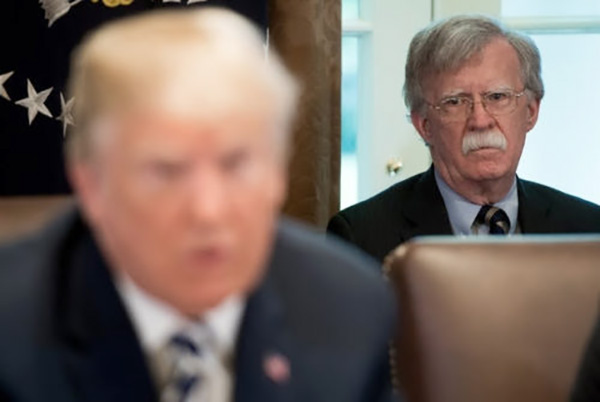
Bolton and Rajavi
Missions of Nejat SocietyMujahedin Khalq; A proxy force

Iranian MEK pay John Bolton, Rudy Giuliani; NBC’s Engel

NBC’s Engel Accuses U.S. of Trying to ‘Provoke’ War With Iran

Appearing on MSNBC Monday morning, NBC’s chief foreign correspondent Richard Engel repeatedly accused the Trump administration of trying to “provoke” Iran into some sort of conflict by sending an aircraft carrier group to the region. He and anchors for the liberal cable channel portrayed the U.S. as a bully getting in Iran’s face.
During the 9:00 a.m. ET hour, Engel told host Stephanie Ruhle: “Well, if you look at the political chess board, right? I think what you’re seeing here with this aircraft carrier is just one piece, and it’s quite a troubling picture when you look at it as a whole.” Ruhle urged him on: “Paint it.” Engel continued: “It seems like this administration is trying to paint Iran into a corner, maybe even provoke some sort of conflict with Iran.”
The reporter argued that the U.S. ship deployment was “a very provocative action” and “very threatening” to Iran. Ruhle interjected: “Isn’t that like me going one inch away from your face going, ‘Hit me. Come on, hit me’?” Engel agreed with her school-yard characterization: “More or less, yes.” He reiterated her comments: “…it’s putting your face one inch from Iran and saying, ‘I’m doing this so that if don’t hit me – or if you hit me, I can hit you right back.’”
Referring to increased U.S. economic sanctions against Iran, Engel worried: “You’ve just taken Iran’s ability to earn a living, support itself, by tightening these sanctions.”
Wrapping up the discussion, Ruhle fretted: “On a one to ten scale, you being someone who has covered the Middle East for years, how concerned are you about the recent actions from our administration towards Iran, in terms of creating real conflict?” Engel replied by suggesting Trump would start a war for political benefit ahead of the 2020 election:
I think probably about a five at this stage. There’s a lot of time between now and the next elections, so just under two years we’re looking at. That’s enough time. That’s enough time to find some sort of provocation, go onto a conflict footing, which may have an impact on the political conversation in this country….it’s a troubling picture. I’d put it at a five, but we’ll see.
Appearing again in the 11:00 a.m. ET hour, Engel warned: “So then why is this aircraft group going there? Is it to deal with a specific threat?…Or is it for some other reason? Potentially to provoke Iran.” Fill-in host Yasmin Vossoughian eagerly seized on his comments: “Let’s go with that, let’s go with what you just brought up….this idea that this could be a provocation to provoke Iran, to have Iran walk in – sort of walk into a conflict.”
Engel began noting that Iranians were already seeing it that way, prompting Vossoughian to jump in: “That’s how they’re spinning it.” Engel objected to the term “spinning”: “They are perceiving it, I don’t know if they’re spinning it.” He then proclaimed:
…they think this is a trap that is being set for them. And they are not taking the bait….what they think is happening is that the United States is trying to pick some sort of fight, and is doing a provocative action, floating this flotilla right near Iran with the hopes, according to the Iranian interpretation, that it will incense them and start some kind of shooting conflict.
When the U.S. takes action against one of its enemies, and the world’s leading state sponsor of terrorism, the media still find a way to make Iran look like the victim.

Here is a full transcript of the May 6 exchange with Ruhle:

9:12 AM ET
STEPHANIE RUHLE: Now we need to head overseas. The U.S. sending an aircraft carrier, warships, and fighter jets to the Middle East as a, quote, “unmistakable message to Iran’s regime.” But so far the White House is not saying exactly what prompted the move. Here’s Secretary of State Mike Pompeo talking about it overnight on a flight to Finland.
MIKE POMPEO: It’s something we’ve been working on for a little while. It is absolutely the case that we’ve seen escalatory actions from the Iranians and it is equally the case we will hold the Iranians accountable for attacks on American interests.
RUHLE: Richard Engel, NBC’s chief foreign correspondent, my lucky day, joins me here in New York. Richard, I’m so glad you’re here because this means a lot. What exactly is the White House doing?
RICHARD ENGEL: Well, if you look at the political chess board, right? I think what you’re seeing here with this aircraft carrier is just one piece, and it’s quite a troubling picture when you look at it as a whole.
RUHLE: Paint it.
ENGEL: It seems like this administration is trying to paint Iran into a corner, maybe even provoke some sort of conflict with Iran. So take it one piece at a time. So you’re seeing this aircraft carrier floating near Iran. That’s a very provocative action. If you’re in Iran, that’s a very threatening thing. Then, why –
RUHLE: Isn’t that like me going one inch away from your face going, “Hit me. Come on, hit me”?
ENGEL: More or less, yes. And then, the reason the White House is saying it, and anonymous defense officials, is that they say this is to prevent Iran from carrying out an attack. So to go back to your analogy, it’s putting your face one inch from Iran and saying, “I’m doing this so that if don’t hit me – or if you hit me, I can hit you right back.”
Then look at another piece on the chess board. The U.S. just increased sanctions on Iran, tightened sanctions on Iran, denying Iran to really sell its oil around the world, threatening Turkey, India, China with sanctions if they do any business with Iran. So you’re floating this aircraft carrier in front with the threat that, “Should anything happen to American interests in the region, we’re gonna whack you.” You’ve just taken Iran’s ability to earn a living, support itself, by tightening these sanctions. Even though the rest of the world says that Iran is complying with the old nuclear deal.
Then another chess piece. Look at the timing. This come right after the Israeli Prime Minister Netanyahu got reelected by the skin of his teeth. And the Saudis would like this and the Saudis are very close to the Trump administration. Bolton is an Iran hawk, who was giving speeches for the MEK –
RUHLE: Okay, stay on this for a moment. Help me understand John Bolton as he relates to Iran.
ENGEL: So there are several Iran hawks, people in this administration who have for years been speaking about, been advocating for a hard line against Iran, if not direct violence against Iran and regime change in Iran. Rudy Giuliani has been one of them. John Bolton has been another. And they have spoken at gatherings sponsored by the MEK. The MEK used to be a terrorist organization, it was taken off the terrorist list. Iran certainly considers it a terrorist organization. And you go to these speeches, generally the MEK gives you money to appear at these speeches, and you talk about regime change in Iran. And Bolton and Rudy Giuliani have both been deeply tied into the MEK, and both have said that they don’t – have not disclosed how much they’ve ever taken in financial remunerations from the group.
RUHLE: On a one to ten scale, you being someone who has covered the Middle East for years, how concerned are you about the recent actions from our administration towards Iran, in terms of creating real conflict?
ENGEL: I think probably about a five at this stage. There’s a lot of time between now and the next elections, so just under two years we’re looking at. That’s enough time. That’s enough time to find some sort of provocation, go onto a conflict footing, which may have an impact on the political conversation in this country. But if you look at this administration, which is so close to President Trump personally, so close to Israel, so close to Saudi Arabia, Bolton and others in the inner circle, this warship going there, tightening sanctions on Iran even though the rest of the region – the rest of the world said Iran didn’t do it, it’s a troubling picture. I’d put it at a five, but we’ll see.
RUHLE: Putting it at a five, a troubling picture. Again, we’re so fortunate that the expert is here, Richard Engel.

Newsbusters.org

May 8, 2019 0 comments
FacebookTwitterPinterestWhatsappTelegramSkypeEmail
Mujahedin Khalq Organization's Propaganda System

Testimonies of a girl running many “Resistance Units” at the same time!

Shiva is a 37 year-old-girl, single and living with her mother. She is artistic. She writes poetries and paints. Opening her tweeter account, ten months ago, she started publishing her poems on tweeter. Some of the poetries were political criticizing the government. This was an opportunity for agents of the Mujahedin Khalq Organization (the MKO/MEK/ PMOI/ Cult of Rajavi) to recruit her.

MEK's fake resistance units

The first time that an MKO agent messaged her she was frightened. “I won’t work with you “, she told the female recruiter. But, the trolls did not stop brainwashing her. Two other agents, Sohrab and Forough kept on their manipulation plan to convince Shiva to work for them.

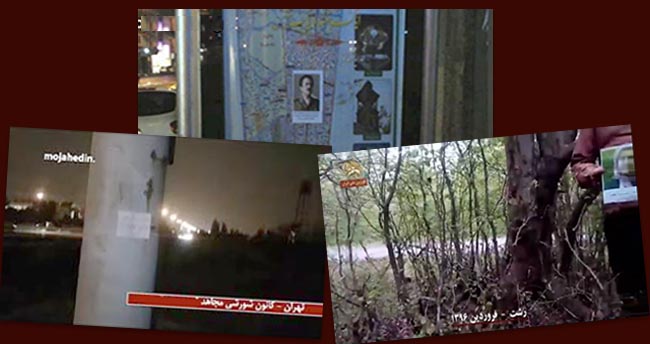
Ultimately, she was coerced to play the role of several “Resistance Units”. “I was told to print the pictures of the group leaders and hang them in different places, on various occasions and then take photos or film,” Shiva told Fars News Agency. “The photos and the locations should not be repetitive. Actually, I was acting as different resistance units. Forough wanted me to show that the Cult of Rajavi has a lot of supporters in Iran. So, I had to use different slogans, different pics, and different handwritings as if there are different resistance units.”

Eventually, Forough asked Shiva to establish a real resistance unit at least with two people. “I asked my cousins to help me take photos of the so-called resistance unit but they just made fun of me,” Shiva recalled. “I was sure that nobody in my family and friends would cooperate with me. I told it to forough. Yet, she made more bizarre suggestions. For example, she told me to give Rajavi’s pictures to the children in the neighborhood and then take photos while they cover their faces with the pictures. “
But, Shiva found it immoral. “Those children had no idea of whose picture they were. The organization wanted me to abuse them,” she said.
Shiva was arrested after eight months. “Gradually they were coercing me to do more difficult missions,” she said. “Recently they regularly told me to find some people to do more important missions together for example firing a military station.”
“I am really sorry for doing those jobs,” Shiva says.

May 7, 2019 0 comments
FacebookTwitterPinterestWhatsappTelegramSkypeEmail
Newer Posts
Older Posts

Recent Posts

  • MEK agents near schools in Tirana, Albania

    October 17, 2026
  • Expectations of human rights bodies regarding censorship within the MEK

    October 13, 2026
  • The Jamalis’ Plea for Help: Save Our Brother from the MEK!

    October 11, 2026
  • Testimonies of Participants in the MEK’s Staged Propaganda Stunt in Karaj

    October 7, 2026
  • Giuliani’s MEK ties have dogged him for years

    October 6, 2026
  • Facebook
  • Twitter
  • Instagram
  • Youtube

© 2003 - 2025 NEJAT Society . All Rights Reserved. NejatNGO.org


Back To Top
Nejat Society
  • Home
  • Articles
  • Media
    • Cartoons
    • NewsPics
    • Photo Gallery
    • Videos
  • Publications
    • Books
    • Nejat NewsLetter
    • Pars Brief
  • About Us
  • Contact us
  • Editions
    • عربي
    • فارسی
    • Shqip