Nejat Society
  • Home
  • Articles
  • Media
    • Cartoons
    • NewsPics
    • Photo Gallery
    • Videos
  • Publications
    • Books
    • Nejat NewsLetter
    • Pars Brief
  • About Us
  • Contact us
  • Editions
    • عربي
    • فارسی
    • Shqip
Nejat Society
Nejat Society
  • Home
  • Articles
  • Media
    • Cartoons
    • NewsPics
    • Photo Gallery
    • Videos
  • Publications
    • Books
    • Nejat NewsLetter
    • Pars Brief
  • About Us
  • Contact us
  • Editions
    • عربي
    • فارسی
    • Shqip
© 2003 - 2024 NEJAT Society. nejatngo.org
Mohammad Hemadi
The cult of Rajavi

Mohammad Hemadi, victim of inequality and discrimination in the MEK

Mohammad Hemadi was 24 years old wen he joined the Mujahedn-e Khalq (MEK) in Iraq. As a politically motivated young Iranian, he had decided to join the group in order to fight the Iranian government but the MEK leaders did not believe him. They kept him in the reception unit of their headquarters in Iraq for almost 5 years.

The MEK commanders even delivered him to Iraqi intelligence department where he was imprisoned and tortured for 2 years. In 2000, finally the MEK accepted Mahammad as an organizational member. They never apologized for what he had endured under the unproved accusation of being an Iranian spy.

Mohammad was a member of the MEK for 17 years. In 2012 when he left Camp Ashraf he was already very sick. “Despite the fact that my brother has been suffering from this disease for nearly 2 years, the leaders of the terrorist Cult of Rajavi not only refused to take any action to treat him, but by accusing him of malingering, they subjected him to the most severe anti-human forced labor in the cult,” Hassan Hemadi told Nejat Society after Mommad died.

Mohammad Hemadi died only ten days after he returned to his home town Ahvaz, Iran. In previous years, his brother had gone to Camp Ashraf to visit him but the MEK leaders did not allow them to visit. Hassan found a chance to pass a letter to his brother through the fences. Eventually, the MEK commanders had forced Mohammad to show up in the group’s TV channel to speak against his family.

Hassan said that in the first contact he had with his brother Mohammad after leaving the organization, Mohammad had announced that his interview with the MEK’s TV against his family was done under the pressure of the group leaders.
After leaving the cult, in the first phone calls, Hassan felt that Mohammad was having trouble saying words. “I was upset about this issue, he said that he had been suffering from severe headaches for a long time in the MEK, but they had only taken him to their clinic at Camp Ashraf!”, he recounts.

They took x-ray of his head but never told him what the cause was! “I even asked them to send me outside of Ashraf for treatment but they did not accept,” Mohammad told his brother. “Only if a high-ranking official fell ill, they would send him outside of Ashraf for treatment. When your letter reached me and you told me about outer space, I made up my mind to run away, I found a good excuse and went to the authorities and said that now that you are not sending me outside for treatment, I want to pursue my treatment myself. They finally let me go.”

With the help of a friend Mohammad moved to Turkey but his health conditions were so bad that he could not live alone. His friend called Hassan and asked him to come over. Hassan went to Turkey immediately and brought Mohammad home.
“He was not even able to eat or sit on his bed alone,” Hassan said. “Without informing the Red Cross or even the Iranian government, I brought him to Iran. We immediately took him to a specialist doctor for treatment. Nothing could be done because his brain tumor had progressed too much. The doctor told us to just take him home to rest. Unfortunately, he didn’t last more than 10 days and passed away.”

Mohammad Hemadi was a member of the Cult of Rajavi for 17 years. He lost his youth and physical health inside the cult.

After he left the group, he declared his separation from the MEK in a letter. The following is the ending part of his letter, translated to English:
“Considering the atrocities that the organization did to me and denied me the least treatment and left me alone, and with the deceptions and tricks that this evil cult brought on the youth of Iran, it was time that I admit the mistake I made for 17 years. I declare my separation from the dirty and treacherous cult.”

October 12, 2024 0 comments
FacebookTwitterPinterestWhatsappTelegramSkypeEmail
Iraj Salehi
Former members of the MEK

Former member of the MEK testify in the court

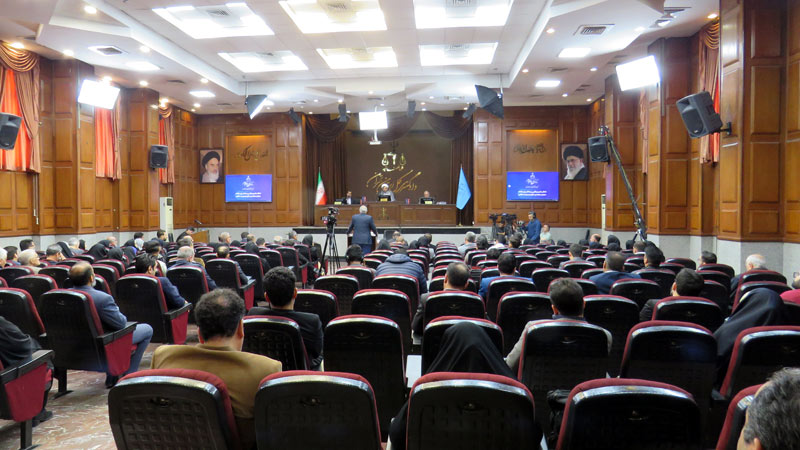
The 20th session of the trial court of 104 Mujahedin-e Khalq (MEK) members and the group as a legal entity was held in Tehran. The recent session was held at the 11th branch of the criminal court of Tehran province on Tuesday, September 1st, 2024. The court was presided by Judge Dehqani.

The court was attended by the lawyers of the plaintiffs, the family of the victims, the lawyers of the defendants the prosecutor’s representative and survivors of the group’s terrorist acts and former members of the group. Iraj Salehi, former member of the MEK took the stand as the eye-witness of the group’s crimes.

At the age of 13, Salehi joined the MEK under the influence of the slogans of the organization. “The organization used to chant that it was looking for freedom and equality of men and women, justice and the freedom of Palestine,” he said. “I had activities in high school and in 1986 I went to Iraq from Turkey and I was there for 20 years. Over time, I realized that the organization was doing something in practice that was contrary to my thoughts and its slogans, but because it was a cult-like system, I was not allowed to leave.”

According to Salehi, after the fall Saddam Hussein, the power of the organization decreased, so he could manage to leave the group along with hundreds of other members. “Inside the MEK, we had no contact with the outside world and we had no information,” he told the court. “There was only one TV in the halls that broadcast their own programs. They had instilled that Iran is a village and if went go to Iran we would be executed, that’s why I wanted to go abroad, but my mother got sick and I returned Iran.”

Elahe Piruzfar, the lawyer of the defendants, appeared on the stand and asked Iraj Salehi some questions.
Piruzfar asked: You said that Massoud Rajavi implicitly accepted the party’s explosion.
“I heard from Massoud Rajavi that we killed 72 but 120 people,” Salehi said.

Piruzfar asked: You talked about the hijacking of the organization’s plane. How many do you know of?
“I know of a case where the plane was taken to France,” the defectors of the group said.
The judge noted: At the moment there should be questions about the bombing of the Islamic Republic Party.

Piruzfar said: Ms. Roqia Malek Mohammadi was an important member of the leadership staff for several years.
“She has been in charge of operations since almost 1972,” Salehi said. “Everyone in our unit knew that Ms. Malek Mohammadi was responsible for irregular operations.”
The judge asked the witness: “Did you hear from this lady that they carried out the party bombing operation?”

“Yes, we went to the border as a security force, they gave us Iraqi uniforms,” Salehi said. Female members did not come to the border to avoid being identified. Malek Mohammadi then went to the foreign relations department and was in contact with the Iraqis.

Piruzfar asked who worked in the media field.

“There were Zahra Marikhi and several others,” Salehi said.

Piruzfar asked: Who was the main decision-maker in the leadership?
“They once had a political office,” Salehi said. “In 1964, Massoud Rajavi dissolved the political office and said that all decisions were with me. Then the Executive Board was created. The executive board was dissolved again and the leadership council was established.”

Salehi, the former member of the organization, said: “In the 70s, we had operations called irregular operations and a series of operations called mortars. They used trained forces and the newly arrived ones and those who were likely to flee in the operations. In one case, two of the people who had fired mortars in Iran were given medals and honored in a camp called Taghizadegan. That happened in the 80s.”

The Judge: Do you know anyone from the officials of that headquarters?
Salehi answered: “Not all of them; But one of our officials was Zhila Deihim. I also remember Fazeh Hesari. These people used to select people and take them to another place for military training. They were taught how to work with weapons and how to install weapons and familiarize themselves with the conditions of Iran and their place of residence. Because the members of the MEK have been away from normal living conditions for years and had forgotten even normal tasks such as buying and selling, these people were taken to the city of Baghdad to have a little contact with normal life and social environment so that they would not be exposed during the operation.”

The Judge: Do you know what actions the central headquarters took against Iranian individuals or institutions?
Salehi said: “These actions were many and in some cases they gave notices about them as if this headquarters was present inside Iran, while this headquarters was present in Ashraf Camp and was carrying out its work in coordination with Iraqi intelligence and from the border areas. The terrorist forces were entering the territory of Iran.”

The Judge: Did you see that the members of the central headquarters honored the terrorists for carrying out the operation?
Salehi answered: “Yes, they honored two people for throwing mortars against the Iranian Ministry of Information. A woman who was the head of our headquarters, with the nickname Afsaneh, had operated in Khuzestan, and the MEK announced in their announcement that they hit a military center. One of our friends in that center used to mock: a few bullets were fired without a target. Also, operations were carried out in Ahvaz and Abadan. The details of this attack were not explained, but it was said in the announcement that military centers were attacked.”

Iraj Salehi continued saying: The attitude of the MEK was that whoever was released from prison had definitely betrayed and they repeated this issue many times in the meeting. Some people were introduced to foreign journalists as witnesses of torture in Iranian prisons. The fact is that Rajavi was looking for bloodshed and for him there was no difference between friends and enemies. On the one hand, he wanted to assassinate Iranian forces, and on the other hand, he wanted to show that Iran executes members of the Mujahideen. Many of the people that Rajavi had announced that they were executed in the executions of the 1360s in Iran were those who were killed in military operations of the group or even died due to illness.”

Judge: Do you know any people of the MEK people who have disappeared?

Salehi said: “A person named Saeed, an officer of the group’s intelligence department, went to the southern borders of Iran in Khuzestan province with the team for identification in 1993. When the team returned, they said that Saeed had drowned. There were many of these cases, for example, a person who had normal physical health was once said to have died.”

The judge: Did Masoud Rajavi have a special doctor?
“Yes, I don’t remember his name”, he said. “They told all of us in 2001 that we do not have a sick mujahid.”

Judge: Did you see anyone sick among the members? Did you see a sick person?

The former member of the organization said: “One person was from Khuzestan and he was a perdon with high technical skills and a high-ranking member of the group. He was healthy, one day I was informed that he had a stroke and died.”
Judge: Do you know the number of people in the organization during these years?

He replied: “I don’t know this, but 6 thousand people participated in Mersad operation. The Americans announced that there are 4,500 people, and nearly 2,200 to 2,200 of them left the organization, and some of them were killed due to illness and conflicts that Rajavi deliberately caused, and I don’t think they are now more than 2,000 people.”

Mentioning an example, Salehi said: Maryam Rajavi used to teach us that if they told you that you ruined something, even if you didn’t, you have to prove that it was your work. Or, for example, Masoud Rajavi used to say in the eighth year, we brought you a gift, we have a meeting on Fridays, come and discuss the sexual issues you see in your mind or in your dreams. They tried their best to crush the character of their members. No one was valuable to them.

Judge: How many years have you been a member of the organization?

Salehi said: 20 years.

tria

Salehi stated that in the operation of Mersad, the organization was defeated and had no connection with the outside world. After that, they themselves said that they took 2,000 prisoners of war from Saddam Hussein. After the ceasefire was announced, a thousand people left in one day. After Mersad, which had many casualties, there was not much recruitment of the organization. At that time, they used to recruit people from the borders of Iran and told them that you have to work for 2 years in order to get you a German visa and money. When these people came, they told them that you joined the liberation army and that there is no marriage; divorce is forbidden.

Salehi said, “One of them said, I don’t accept you, they took him to the cemetery, they showed him a grave, they said what is your name, He told them a name, then they said, what is your real name? He said that I came with a pseudonym, they said that if we throw you in this grave and bury you, no one will know that you were here.”

With these methods, they kept forces inside the group. They brought a person named Abdullah Afghani, who was not Iranian at all. They also brought Pakistani people and changed their documents, and later when America wanted to return these people to their country, they faced many problems. Even after the fall of Saddam, if there was any recruitment, it has been very few.

October 9, 2024 0 comments
FacebookTwitterPinterestWhatsappTelegramSkypeEmail
Goli Eskardi
Former members of the MEK

Testimonies of MEK ex-member in the 20th session of court hearing

The 20th session of the trial court of 104 Mujahedin-e Khalq (MEK) members and the group as a legal entity was held in Tehran. The recent session was held at the 11th branch of the criminal court of Tehran province on Tuesday, September 1st, 2024. The court was presided by Judge Dehqani.

The court was attended by the lawyers of the plaintiffs, the family of the victims, the lawyers of the defendants the prosecutor’s representative and survivors of the group’s terrorist acts and former members of the group. Mohammad Reza Goli Eskardi and Iraj Salehi, two former members of the MEK took the stand as eye-witnesses of the group’s crimes.

Eskardi served the MEK for 23 years. In the early days of 1988, he left Iran for Turkey, and was recruited by the organization from there. In Turkey, he worked in the bases of the MEK for a while, and then he was sent to Iraq.

He stayed in the group’s Camp Ashraf, Iraq until 2011 when he escaped the camp. His family went to Baghdad to visit him. They helped him return home after so many years of separation. “Contact with family was forbidden in Camp Ashraf,” he told the court. “With the encouragement and support of my family, I returned to Iran. It has been 10 years since I returned to Iran, started a family and started a new life.”

“I did not have a fixed position in the organization” he explained about the years of serving the MEK. “They used to change my organizational position from time to time.”

Asked about his involvement in the MEK’s cross border operation against Iran called “Forough Javidan”, Eskardi said, “When they organized us there and we entered the arena, I realized that what they are doing has no other result than suicide; Because they had mobilized everyone and wanted to send everyone to Tehran and we were like a target in front of the Iranian army. I handed over the wounded ones to the Iraqi officials to take them to Baghdad, I also went with them and never returned.”

He continued, “On the same day that I appeared in the battle, I witnessed that they had brought people from different countries, these people did not know how to use weapons at all, Rajavi intentionally brought these people to the battlefield to kill them. A group of them were POWs from Saddam’s prisons. These people had no motivation, they were not an organizational force, and they did not know the organization.”

Stating that he was on the scene during the Pearl operation, the MEK’s operation to aid Saddam Hussein’s army to suppress Iraqi Kurds, the witness said, “When we went to hide in the mountains, they told us that the Iranian troops were going to come and surround Camp Ashraf and so we have to defend ourselves. But after the battle broke out, I realized that the people on the other side of the conflict were not Iranians, they were Iraqi Kurds and nomads who had been killed them with cannons and tanks. Rajavi had no motive other than to kill innocents.”

Asked about the explosion of the office of the Islamic Republic Party by the judge, Eskardi said, “I just have some have general information about this. In the meetings held by Rajavi, I remember him boasting about the actions of July 27th explosion. Several times in the meetings, I saw him boasting about himself and calling it ‘the anger of the people’. He said that the bombing on July 27th was our (MEK’s) work, he did not say mention any name. He said that with this action, we were able to ruin the future of the Islamic Republic. Regarding the terrorist attacks they committed, they simply said that we did it.”

Escardi kept on saying, “These people [the MEK] did not show mercy to anyone and even assassinated businessmen and ordinary people. Before anyone took up arms, the organization had planned terrorist actions to get involved with the Islamic Republic of Iran.

The judge told him, “You must have a document for your conversations. What was the structure of the organization and who usually knew about the missions?”

The witness answered, “high-ranking commanders such as Mhvash Sepehri; This person was very violent and humiliated people in meetings. Inside the group, nothing was done without the permission of Masoud and Maryam Rajavi.”

The judge asked Eskardi if Maryam Rajavi knew about the explosion of the Islamic Republic Party office?
Eskardi replied, “At that time, Maryam Rajavi did not have a high position and was only a member, and I don’t think she knew, but the people who were political members of the organization, such as Abbas Davari, Mehdi Abrishamchi, and Siavash, were aware and they consulted each other to do whatever they wanted to do.”

To answer the questions of the plaintiffs’ lawyer, Eskardi explained the organization structure of the MEK, “The leadership council was at the top and the commanders were under the leadership council.”

The judge asked, “Did the leadership council know about the explosion of the party?”

Eskardi answered, “The leadership council selected people who were supposed to carry out the operation. They were sent to quarantine for training so that no one would know about the operation. The members of the organization were not allowed to watch television, but the people who were selected for the operation were allowed to watch television to get to know the atmosphere of the society. They received military training, and a few people accompanied them to the border.”

Mohammadi, the lawyer asked him, “When was the last time you saw Masoud Rajavi?”

Eskardi stated that Massoud Rajavi used to hold public meetings before 2003. “After that, he did not appear again and the audio file of his speeches were played in the meetings, which continued until 2013,” he said.

Eskardi did not receive anything during his 23 years serving the MEK. “It was just forced labor,” he said.

October 8, 2024 0 comments
FacebookTwitterPinterestWhatsappTelegramSkypeEmail
Nejat Newsletter no.117
Nejat Publications

Nejat Newsletter No.117

Inside this Issue:

Unmasking MEK terror
MEK TRIAL IN TEHRAN REVEALS MAGNITUDE OF TERRORIST CRIMES

When Massoud Rajavi ordered “No Exit” in 1994
The “no exit policy” was started by the group’s disappeared leader, Massoud Rajavi in 1994. Iraj Salehi, former member of the MKO explains Rajavi’s no exit policy to keep members in his cult of personality for a lifetime. The policy is still implemented in the Cult of Rajavi.

The tragedy of Sharifi brothers, traumatized by the MEK
Zahra Sharifi, the grieving sister of two victims of Mujahedin-e Khalq (MEK), complains to the leaders of the group narrating the tragic story of her two brothers, Hassan and Esmail who were caught in the trap of MEK.

Albanian Police has bad news for the MEK high-ranking members
The Albanian news outlet, abcnews, reported that an internationally wanted Iranian man was arrested in the border in order to be extradited to Iran.

MEK hostages’ mother pens letter to Mai Sato
I plea you to hear our voices as elderly, suffered mothers of MEK members. We have been wronged a lot, if we are among the same people for whom you are responsible for human rights, please help us too,

OPEN LETTER TO JAVAID REHMAN
These former members, who mostly live outside Iran, informed Javaid Rehman of important points that not only the former UN Special Rapporteur needs to know, but also anyone who may be involved with the MEK in any way.

To view the pdf file click here

October 8, 2024 0 comments
FacebookTwitterPinterestWhatsappTelegramSkypeEmail
Prime Minister Edi Rama in the ceremony of Jews in New York
Mujahedin Khalq Organization's Propaganda System

Responses to Edi Rama’s comments in a gathering in New York

According to the news reflected in the Albanian media, Prime Minister Edi Rama, who attended the United Nations General Assembly meeting in New York, was invited by a number of Jewish organizations to a ceremony honoring Albania for the country’s aid to the Jews during the Second World War. He participated and gave a speech and answered the questions of the audience.
In response to a question regarding the rumor of the extradition of members of the Mojahedin-e Khalq Organization (MEK, MKO) to Iran based on the request of a court investigating the crimes of the leaders of the MEK in Tehran, and also the start of cooperation between Interpol of Tehran and Interpol of Tirana, he stated that:
“Tehran must understand that we cannot hand over any of them (members of the MEK), but they (the heads of the MEK) must know that they cannot use Albania as a political platform against Iran.”
This part of Edi Rama’s speech regarding the Rajavi Cult, i.e. firstly they will not be handed over to Iran for humanitarian reasons and secondly, they are not allowed to do any political activities in the Albanian soil was highlighted in the Albanian media.

The reaction of the MEK:

However, the MEK, in widely reflecting this news, only addressed the first part of it, i.e. non-extradition, but did not mention the second part of the statement, i.e. not allowing political activity. This lack of honesty on the part of the MEK and a few Farsi-language media in reflecting the news is not new, but anyway, some people have concluded that only the first part of Edi Rama’s speech was serious and the second part was not taken so seriously, and it was considered as mostly mentioning to cover up the unlawful image of the statement of the first part.

The reaction of the media director of the Albanian Nejat Society

The Media Director of the Albanian Nejat Society, Mr. Aldo Sulollari, reacted in this regard in the cyberspace as follows:
Friends and well-wishers of the Albanian Nejat Society.

Today, as a response to the Prime Minister of the country, Edi Rama, I am including a reaction.
In a rally in United States, Rama stated that the MEK had trusted the support of Albania and therefore, for humanitarian reasons, he did not want to return them to Iran.
In addition, Prime Minister Rama said that the MEK should not use their position here (Albania) politically by using various means to enmity their country.

Albania has welcomed them (MEK) with the status of asylum for humanitarian reasons and has responded to them with altruism and with the greatest kindness by opening its doors over to them for many years.

The members of the MEK are not dangerous people, but they are individuals who have been misused to serve the goals and interests of their leaders and are called as the opposition of Iran.
The members of this Iranian opposition left their country, which, according to them, prevented their freedom.

But these members are not really free at the moment and have been taken hostage by the leaders of the MEK and they are not allowed to be free and communicate with their families.

The members of this Iranian opposition left their country because they thought that they would not be oppressed by having secular laws, but in the system of the MEK, they implement oppressive laws with more intensity, even separating couples and conjugal families. They force the spouses to divorce and call each other brother and sister.
In addition to continuing to betray their country, the leaders of the MEK want to create a conflict between their country and European countries by adopting treacherous policies.
MEK members have become slaves who do nothing but damage the integrity of their country based on slander and ordinary games.

In none of the written points in the regulations related to a person’s membership in the MEK, they were not aware that they would be the tools of a false opposition that was caught by the deceptions that the MEK do with brainwashing.

The leaders tell the members that if they leave the camp, they will face serious problems or be imprisoned, and therefore they are not allowed to leave the camp unless accompanied by a guard who is careful that they do not see the real life in Albania.

Those Iranians who have been deceived and are apparently acting like brave people on their keyboards with a stream of slander and abuse, are the same ones who apologize to us when they leave the camp and ask us to support them so that they can go and live freely.

The Nejat Society does not do anything great except that it fulfills its duty to integrate them in the Albanian society and integrate them from the social, artistic, and professional dimensions to supporting the creation of a family and most importantly institutional support for them.
Anyway, I am openly saying that the Albanian institutions have supported the Nejat Society by doing a great job to ensure a peaceful and safe social life for the ex-members.
I thank Prime Minister Rama for the humanitarianism he shows towards the camp residents and I also request him to inspect the human rights of the members living in that camp.

The reaction of the CEO of Najat Society

Following the reaction of the media director of the Albanian Nejat Society, the CEO of the Nejat Society, Ebrahim Khodabandeh, stated answering the questions raised in this regard:
First of all, on behalf of the expectant families, I would like to thank the humanitarian positions of Mr. Edi Rama, the Prime Minister of Albania, and I hope that this humanitarianism will include the situation of the captive members inside the isolated and remote camp of the Rajavi Cult, whose human rights are violated daily by the leaders, and I hope that the government, by exercising its sovereignty over this part of the Albanian territory, guarantee the compliance of the basic human rights of these people.

According to the Prime Minister of Albania, the MEK have apparently settled in a refugee camp for humanitarian reasons, but the Albanian government does not have the slightest control over this refugee camp, which is located on the territory of Albania, unlike other refugee camps, and they have practically formed an independent government inside Albania, which, even according to the news of the Albanian media, have repeatedly violated the laws of this country and are considered a threat to the national security.

Secondly, the fact that the supplementary part of the statements of the Prime Minister of Albania was not taken seriously by the MEK may not be without reason. However, they have continued to target the psychological security of the Iranian nation with tools such as the Sima-ye Azadi TV channel and the cyber army. The intelligence, security and military departments of this organization are still based and active in Albania and in a place outside the control of the government of this country, and they use the Internet in Albania to guide what they call rebel centers. The government internet systems inside Iran have been hacked many times by the MEK according to their statements, and the Albanian government is definitely responsible for these hostile actions against the country and the people of Iran from its own soil.

Therefore, as my dear colleague Mr. Sulollari stated, as far as the wishes of the suffering families are concerned; while appreciating the humanitarian intentions of the Prime Minister of Albania, his government is requested to have more control over the internal relations of the MEK camp, where they have and apply their own rule and laws.

Nejat Society – Central Office

October 7, 2024 0 comments
FacebookTwitterPinterestWhatsappTelegramSkypeEmail
Iranian judiciary's notice to MEK members
Iran

End of the immunity: Holding MEK leaders accountable for crimes against humanity

For many years, international appeasers have sheltered terrorists of the Mujahedin-e Khalq (MEK) in their countries. Maryam Rajavi is among those who travel freely in some European countries, although the trial of 104 of Rajavi’s leaders and the MEK as an entity is ongoing in Tehran International Court. The MEK terrorists still have free hand in traveling in Europe. Although Maryam Rajavi cannot travel freely and because of these restrictions, she often participates in these so-called online conferences, but this also raises many questions.

The upcoming verdicts of the Tehran Court for 104 of the leaders of the group can provide a way to extradite the criminals and reduce the legal loopholes. Issuing international arrest warrants from the point of view of international law will close the way to the terrorist crimes of the MEK and will oblige the host countries to surrender to the extradition of the criminals of the group.

No matter how much million-dollar paid politicians try to purify the bloody face of Rajavi, they don’t know that they are dishonoring themselves the most. Most political figures and human rights activists believe that the leaders of this deadly and dangerous group take the gesture of human rights advocates, and instead of being accused and held accountable, they deceive people like Javaid Rehman to consider the MEK terrorist cult as an oppressed entity.

Court is the only path that will force the governments hosting terrorists to put aside political games and be accountable. The headquarters of the MEK in Albania is the place the Cult of Rajavi oppresses its own members on a daily basis. If anyone claims that the group is oppressed, just by staying in this place for two days and checking the conditions of its isolated members, they can easily come to the conclusion that the headquarters is a detention center, a prison for the elderly. The high fences there and the guards barricading the entrance doors, all indicate the compulsion to stay and an absolutely forced stay.

We, the MEK former members, ask the so-called human rights activists and supporters of the group, to visit this detention center of MEK members in the village of Manz, Albania. We ask them to visit the quarantines and the prisons inside the camp, interview with each and every member of the group, in a free atmosphere. Then, they will find out that everyone stays there by force. Due to the MEK’s cult-like doctrine, they cannot imagine a free life outside the mental and physical made by the Rajavis.

The Human rights are severely violated in every second in the MEK headquarters. Family contact, which is as easy as a phone call between the members and their families is prohibited by the group leaders. The most basic human rights are not respected in the Cult of Rajavi. Only certain people, including the 104 accused ones who are in the list of the MEK’s trial court, can travel freely. The rest are all imprisoned and do not have the right to voluntarily and freely move to normal society.

Now we are getting close to issuance of the verdicts of the court for the leaders of the MEK, international arrest warrants are coming soon, and it is not far that each and every criminal terrorist of the Cult of Rajavi will be extradited by the host country and summoned to a competent court. That will be the day when crimes of the MEK leaders for over 4 decades will be exposed. They will be brought to justice and their cult structure will be collapsed.

October 6, 2024 0 comments
FacebookTwitterPinterestWhatsappTelegramSkypeEmail
Iran Revolution
Mujahedin Khalq Organization

The Mujahideen-e Khalq: From Revolutionaries to Terrorists

On Mehr 5, 1360 (September 27, 1981), Tehran experienced one of the most devastating and organized terrorist acts in its modern history. This calculated attack was orchestrated by the Mujahideen-e Khalq (MEK), a militant group that once claimed to fight for the freedom of the Iranian people but had turned its back on the very principles it proclaimed to uphold. The incident was marked by chaos, bloodshed, and violence, as the MEK armed forces executed a coordinated assault in the heart of Iran’s capital, wreaking havoc across several key areas of the city, including the streets of Taleghani, Vali Asr, Jumhuri, and around Hafez Bridge.

This article delves deep into the terrorist attack of Mehr 5, 1360, the implications of this act of violence, and the broader political and historical context surrounding it. By analyzing the causes, the nature of the attack, and its aftermath, we will uncover how this tragic event shaped the Iranian political landscape and revealed the true face of the MEK’s terror-driven agenda.

The Mujahideen-e Khalq Organization (MEK) was initially established in the 1960s as a Marxist-Islamist opposition group against the Pahlavi regime, aiming to overthrow the Shah of Iran. During the Iranian Revolution of 1979, the MEK was part of the broader revolutionary movement that played a significant role in the ousting of the Shah. However, despite their initial alignment with the revolutionaries, the group quickly became disillusioned with the direction the new Islamic Republic of Iran was taking under the leadership of Ayatollah Khomeini

The Mojahedin-e Khalq (MEK), also known as the People’s Mujahedin of Iran, is an organization that has been involved in various activities in Iran since its founding in the 1960s. Originally formed as an Islamic and leftist group opposing the Shah’s regime, the MEK has since taken on multiple roles, including that of a dissident group and a designated terrorist organization by some countries, especially in the United States and Iran. In examining the MEK’s activities, it becomes clear that their operations are characterized by a series of political, militant, and terrorist actions aimed at destabilizing the Iranian government.

Initially, the MEK was involved in various protests against the Shah and sought an eclectic ideology that blended Marxist and Islamic principles. After the Islamic Revolution in 1979, the group initially welcomed the political changes but quickly found itself at odds with the new regime led by Ayatollah Khomeini. This shift led to a violent suppression of the MEK, resulting in thousands of their members being arrested, imprisoned, or executed. In response, the MEK adopted a more militant stance and conducted attacks against government officials and security forces.

Throughout the 1980s, the MEK intensified its militant activities, including acts of terrorism within Iran. The group was responsible for numerous assassinations targeting Iranian officials, marking a significant chapter in the narrative of violence associated with dissident movements in the region. The MEK’s strategic decision to resort to violence stemmed from the perception that peaceful protest would not yield any results under a repressive regime. As a result, their operations became increasingly radicalized, culminating in a series of high-profile attacks.

The MEK’s most notorious operation in the 1980s was Operation Eternal Light in 1988, which aimed to overthrow the Iranian government. This operation was disastrous for the MEK, leading to significant casualties and a loss of military capability. Following that operation, the group regrouped and moved its base to Iraq, where it received support from Saddam Hussein’s regime. This relocation marked a turning point in the MEK’s history, as it became a tool of the Iraqi government against Iran during the Iran-Iraq War.

By stationing itself in Iraq, the MEK operated in a state of limbo, engaged in military operations against Iran while simultaneously enduring internal struggles regarding its ideological direction and leadership. The MEK established a quasi-military structure in Iraq, enabling it to launch cross-border attacks into Iran. This military aspect solidified its reputation as a terrorist organization among government officials in Iran, who accused it of receiving foreign backing for its activities.
As the international landscape evolved, the MEK found itself increasingly isolated. Although it had once enjoyed some support from Western nations during the Cold War as a counterforce to the Islamic Republic, post-9/11 geopolitics shifted dramatically against groups that were perceived as terrorist organizations. The MEK’s operatives were involved in assassinations and bombings, reinforcing their designation as a terrorist group by Iran and partly contributing to their complex relationship with nations like the United States and European countries.

The MEK’s most notorious operation in the 1980s was Operation Eternal Light in 1988, which aimed to overthrow the Iranian government. This operation was disastrous for the MEK, leading to significant casualties and a loss of military capability. Following that operation, the group regrouped and moved its base to Iraq, where it received support from Saddam Hussein’s regime. This relocation marked a turning point in the MEK’s history, as it became a tool of the Iraqi government against Iran during the Iran-Iraq War.

The U.S. State Department designated the MEK as a terrorist organization in 1997, a label that significantly impacted its ability to operate internationally. However, the designation did not stop the MEK from engaging in various forms of activism, including lobbying and public relations efforts aimed at rehabilitating its image. The group claimed to pursue a peaceful transition to democracy in Iran while simultaneously continuing its militant agenda. Over the years, various high-profile politicians and former officials have endorsed the MEK, creating a controversial discourse surrounding its place in Iranian opposition politics.

The MEK has also been implicated in numerous human rights violations and was often criticized for its authoritarian internal governance. Reports have highlighted the cult-like nature of its structures, with strict regulations governing members’ lives and loyalty to the organization’s leadership, particularly to its founder, Massoud Rajavi. The group’s insistence on loyalty above all else effectively stifled dissent within its ranks, further breeding a toxic environment that has led to accusations of brainwashing and coercion.

In recent years, the MEK has sought to reestablish itself as a legitimate opposition force against the Iranian regime. It has aimed to attract a younger demographic within Iran by highlighting its historical opposition to the regime and presenting itself as a pro-democracy alternative. The organization has utilized social media and modern communication platforms to disseminate its message, trying to present a more palatable image to both the Iranian people and the international community.

Despite its efforts to rehabilitate its image, the MEK remains controversial. Many in Iran view it with disdain, largely due to its history of collaboration with Saddam Hussein and its designation as a terrorist organization. Furthermore, the group’s actions have often been perceived as serving foreign interests rather than the genuine aspirations of the Iranian population. This perception complicates its position and raises questions about its legitimacy as a resistance movement.

The MEK’s funding and resource acquisition strategies have also raised eyebrows. It has been reported that the group has relied on donations from sympathizers, affluent expatriates, and even some foreign governments. However, its reliance on external support has led to allegations that it operates more as a mercenary force than a dedicated political movement, undermining its claims of being a unifying force for democratic change in Iran.

As the Iranian regime continues to face challenges, including widespread discontent among the populace over economic and social issues, the MEK’s activities are likely to be scrutinized more closely. The group may attempt to exploit any civil unrest as an opportunity to reassert itself. However, its long history of violence and terrorism makes it a contentious figure in any discourse about Iranian political change.

The situation is further complicated by geopolitical factors, including tensions between Iran and the United States, as well as regional challenges. As long as these tensions persist, the MEK may continue to position itself as a viable option for external intervention, but it risks remaining a marginal player due to its controversial legacy and the heavy baggage of its past.

In summary, the narrative surrounding the MEK is complex and multifaceted. Its evolution from a revolutionary movement to a designated terrorist organization illustrates the shifting dynamics of Iranian politics and the unresolved tensions that persist within the country. The MEK’s historical context and its current activities can serve as a lens through which one can understand broader themes of dissent, authoritarianism, and the quest for identity in contemporary Iran.

Ultimately, the question remains whether the MEK can successfully transition from its legacy of violence to a platform for meaningful political change. Developing a strategy rooted in grassroots support and an understanding of the socio-political landscape in Iran may provide the group with a chance to redefine its role. However, as history has shown, transforming a reputation built on decades of violence into one of solidarity and democracy will be a monumental challenge for the organization

By Rayanworld.com

October 5, 2024 0 comments
FacebookTwitterPinterestWhatsappTelegramSkypeEmail
Massoud Khodabandeh
Massoud Rajavi

Revealed in court | Massoud Rajavi’s Blood Bank

Massoud Khodabandeh, a former member of the Mujahedin-e Khalq (MEK) was an official of Masoud Rajavi’s protection team before he left the group. As a witness, he addressed the 19th session of the court hearing the accusations of the leaders of MEK, clarifying the internal relations of the group and the approach of Masoud Rajavi as its leader.
Khodabandeh, who was relatively close to Masoud Rajavi, says: “One of the problems I had with Rajavi was that he used to give a lot of orders without any knowledge. One of these cases was his involvement in the operations.”

This former member of the MEK, who was present on-line at the court session in full compliance with the legal formalities, stated that the trained operations department of the Iraqi Intelligence also knew this about Rajavi. Khodabandeh continues: “Rajavi used to add something to the process that made everything fail and no one dared to say anything. Rajavi actually used to act in a way that not only the operation was not carried out but also the operator himself would be killed.”
“Rajavi wanted to fill his blood bank in this way,” Khodabande stated. “It means that the blood of people should be shed and the rest should stay and continue to fight for those who were killed.”

Based on Khodabande’s testimonies, Massoud Rajavi defined his “blood bank” like this:
“Dogs and cats also die; The person whose blood comes to this bank is important and stays; I am the banker of the blood; these bloods are collected; I take it on the table in the scene of politics and use it; What difference does it make if your blood doesn’t come to this bank? the blood of cats and dogs is shed too.”

Mizan News Agency – Translated by Nejat Society

October 2, 2024 0 comments
FacebookTwitterPinterestWhatsappTelegramSkypeEmail
MEK- Mujahedin khalq Organization
Mujahedin Khalq Organization as a terrorist group

MEK, the tribune of Jaish al-Adl separatist terrorists

As the Mujahedin-e Khalq (MEK) have always sought their survival in the midst of divisions and enmities, the Jaish al-Adl terrorist group is one of the sources that provides good opportunities to the them. The media of the People’s MEK show such enthusiasm in reflecting the violent acts of Jaish al-Adl separatists, as if a branch of their organization succeeded in killing Iranians.

While Jaish al-Adl – which is the branch of Jundallah after the arrest and execution of Abdul Malik Rigi – is on the list of terrorist groups of the US Department of State and on the sanctions list of the Department of Treasury of this country, extensive reports of the terrorist attacks of Jaish al-Adl in Iran and the publication of its announcements and statements by the MEK show that the Cult of Rajavi is not only not worried about the territorial integrity of Iran, but is happy and excited about the terrorist attacks of Jaish al-Adl. The MEK does not hesitate to express its admiration and encouragement for Jaish al_Adl extremists.

During the ” Woman Life Freedom ” movement, the media of the MEK reported more about Zahedan than any other place in Iran. According to the claims of the MEK media, it seems that during the movement, the deceived agents known as “resistance units” are more active in those areas.

The support of the Baluch separatists for the MEK seems to be reasonable, because the MEK has no public support among Iranian protesters due to its terrorist records, its belief in compulsory hijab and its undemocratic approaches, and even brazenly changed the whole slogan of the movement with its anti-life attitudes to “Women Resistance Freedom”. Thus, the Cult of Rajavi can have base among separatist terrorists and religious extremists more than any other group.

In addition, the MEK’s brilliant history in cooperating with the enemy at war against its own nation, is very effective in this strategic closeness of the MEK with the Jaish al-Adl terrorists. The MEK, as a formerly terrorist designated organization that was on the list of terrorist groups in the European Union and the United States and had a clear and documented cooperation with Saddam Hussein’s government in the Iran-Iraq war and in suppressing the protests of Iraqi Shiites and Kurds and as a known operational arm of Israel in the assassination of the Iranian scientists and authorities, can be an appropriate option for complicity with any jihadist and separatist force.

October 2, 2024 0 comments
FacebookTwitterPinterestWhatsappTelegramSkypeEmail
Trial of MEK leaders
Mujahedin Khalq Organization as a terrorist group

MEK’s trial according to the International Law

Terrorism is one of the crimes that has attracted the attention of the international community and international documents. There have been numerous treaties, resolutions and judicial decisions to prevent and prosecute the perpetrators of this crime. According to the principles of international law, crimes against humanity and war crimes are crimes that are beyond the scope of time. The mujahedin-e Khalq (MEK (can be tried for committing such crimes from the beginning until now.

Yaser Ziayee, an expert on International Law appeared in the nineteenth session of the trial court of the MEK as a legal entity and its 104 high-ranking members. He explained that the material elements of the crime of terrorism, agreed upon by the international community can be extracted inductively; which is as follows:
1- Threatening or acting against the life, property or freedom of private and public persons, which public persons can also be government institutions and places,
2- with the aim of terrorizing a specific population, among the public or the government,
3- with the purpose of performing or refraining from a certain act by the government or the public,
4- with the purpose of seriously disrupting public order and
5- with the purpose of stopping the public service of the person who was assassinated or rioted.

The Professor of International Law stated: In the comprehensive definition, it can be stated that terrorism means threats or acts of violence against the life, property or freedom of private and public persons with the aim of terrorizing the people or with the aim of performing or refraining from a certain act on the part of The government is either with the aim of disrupting public order or with the aim of stopping public service and rebellion; In this definition, three general components of terrorism are emphasized.

UN member states and anti-terrorism treaties

Explaining the three key components, he said: The first component is the threat or act of violence, the second component is against the civilian population, and the third component is for political purposes, which can be public order or putting pressure on the government.

There are obligations for member states of anti-terrorism treaties, and there are also many commitments for all member states of the Security Council, and according to Article 25 of the United Nations Charter, all countries are required to comply with these commitments.

The expert on International law notified that there are 102 resolutions of the General Assembly to fight terrorism and 81 resolutions of the Security Council, among them the commitment of governments to judicial investigation of terrorist acts, control of borders in the fight against terrorism, rapid exchange of information to control terrorism, cooperation with competent institutions to prevent terrorism, prohibiting the transfer of weapons to terrorists, prohibiting the passage or entry of terrorists into the country, trying to identify and track terrorists, prohibiting the provision of internet services, committing to judicial proceedings against the financiers of terrorists and bringing the perpetrators of terrorism to justice.
“Governments that have not fulfilled their commitments to the international treaties and Security Council’s resolutions have committed violations of international obligations,” he concluded.

Extradite or prosecute!

Hosting terrorists, the international responsibility of the individual, group, and government has legal consequences, which include compensation for punishments; Reparation through legitimate defense and countermeasures such as sanctions that are carried out at the level of the executive branch and punishment that is possible at the level of the judicial branch. As with judicial assistance treaties, it is possible to extradite criminals and it is mandatory for governments; Some counter-terrorism treaties include the principle of “prosecute” or “extradite” and we must cooperate in this regard as well.
In law, the principle of aut dedere aut judicare (Latin for “either extradite or prosecute”) refers to the legal obligation of states under public international law to prosecute persons who commit serious international crimes where no other state has requested extradition.

The Professor of International Law continued to talk about the political nature of the crime by stating that one of the bases for returning criminals to the country they committed the crime in, is the political nature of the crime. Ratification of 13 international conventions indicates the importance of this issue.

About the legality of crime and punishment, he said, “There is a rule of law governing the time of the act, however, terrorism is one of the oldest crimes and the first convention to combat terrorism dates back to 1937; In addition, the Nuremberg Tribunal pointed out that some crimes are so heinous that every waking conscience dictates its conviction.”
Thanks to its hefty financial resources, the MEK has a network of offices in several western countries. However, Albania and France are the two main countries that host MEK members, especially the 104 people who are the defendants of the court in Tehran. The whereabouts of the main accused of the court, Massoud Rajavi, is not known. He has been disappeared since 2003.

September 29, 2024 0 comments
FacebookTwitterPinterestWhatsappTelegramSkypeEmail
Newer Posts
Older Posts

Recent Posts

  • A Criterion for Proving the Violent Nature of the MEK

    December 31, 2025
  • Rebranding, too Difficult for the MEK

    December 27, 2025
  • The black box of the torture camps of the MEK

    December 24, 2025
  • Pregnancy was taboo in the MEK

    December 22, 2025
  • MEPs who lack awareness about the MEK’s nature

    December 20, 2025
  • Facebook
  • Twitter
  • Instagram
  • Youtube

© 2003 - 2025 NEJAT Society . All Rights Reserved. NejatNGO.org


Back To Top
Nejat Society
  • Home
  • Articles
  • Media
    • Cartoons
    • NewsPics
    • Photo Gallery
    • Videos
  • Publications
    • Books
    • Nejat NewsLetter
    • Pars Brief
  • About Us
  • Contact us
  • Editions
    • عربي
    • فارسی
    • Shqip