Nejat Society
  • Home
  • Articles
  • Media
    • Cartoons
    • NewsPics
    • Photo Gallery
    • Videos
  • Publications
    • Books
    • Nejat NewsLetter
    • Pars Brief
  • About Us
  • Contact us
  • Editions
    • عربي
    • فارسی
    • Shqip
Nejat Society
Nejat Society
  • Home
  • Articles
  • Media
    • Cartoons
    • NewsPics
    • Photo Gallery
    • Videos
  • Publications
    • Books
    • Nejat NewsLetter
    • Pars Brief
  • About Us
  • Contact us
  • Editions
    • عربي
    • فارسی
    • Shqip
© 2003 - 2024 NEJAT Society. nejatngo.org
PressTV
Iran

Unmasking MEK terror

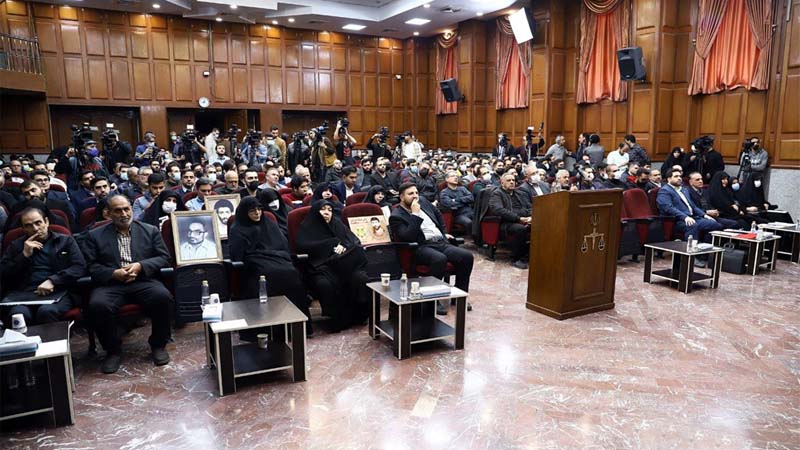
An Iranian court has convened for the 19th session of the trial of 104 members of the Mujahedin-e Khalq Organization (MKO). This terrorist group is responsible for the deaths of over 17,000 Iranians during the 1980s and now operates from exile with Western support.

https://dlb.nejatngo.org/Media/Report/PressTV/Presstv-MEK-Trial-20240924.mp4

By Gisoo Misha Ahmadi

September 25, 2024 0 comments
FacebookTwitterPinterestWhatsappTelegramSkypeEmail
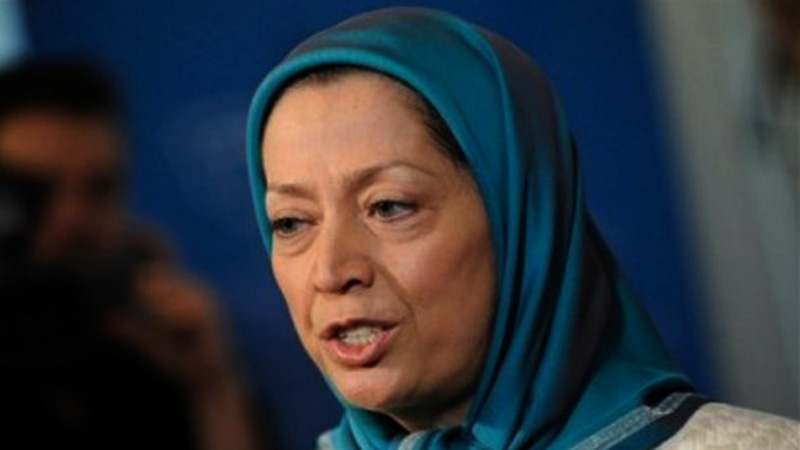
Massoud Rajavi
The cult of Rajavi

When Massoud Rajavi ordered “No Exit” in 1994

In March 2005, the Human Rights Watch published the investigative report on the Mujahedin-e Khalq (MEK/ MKO), titled “No exit: human rights abuses inside the MKO camps”. No exit was the title of the report, but the content revealed a very small part of the human rights violations that take place inside the MEK on a daily basis.

The “no exit policy” was started by the group’s disappeared leader, Massoud Rajavi in 1994. Iraj Salehi, former member of the MEK explains Rajavi’s no exit policy to keep members in his cult of personality for a lifetime. The policy is still implemented in the Cult of Rajavi.

“Divorce Revolution” had been set off by Massoud Rajavi a few years earlier, after he forced members to divorce their spouses. He had appointed his third wife, Maryam Rajavi as the “president elect” and formed his cult hierarchy to maintain control over members. However, in 1994 he completely closed the exit doors of the group.
Iraj Salehi writes:
In the middle of 1994, Massoud Rajavi removed all the curtains and revealed his true face to the members. On that day, the commanders gathered the lower ranks and read Rajavi’s new organizational order to them. In this order, Rajavi had said, “from now on, no one can send him a request for departure and he or she must give it to his direct commander”. In fact, with this trick, Rajavi wanted to stop members from asking for separation, because he knew that with the atmosphere he had created, there would be a few people who dare to be accused of being traitors among their peers.

Over time, this decree went to the point where no one could write a request to leave the group. Actually, it was forbidden to leave the organization. Thus, this order is known as the “no exit” order among MEK members. When I joined the MEK, we were told that the entry door of the organization does not open easily, but the exit door is always open. But what was implemented in practice was that from 1994 the exit doors of the organization were completely closed and after that all of the people in the MEK camps were under invisible or visible control. They were kept in the cult by pressure, force and tricks. As time went on, the internal relations of the MEK became more and more bounded and the pressure on the members increased.

The communication between the members and their families was also cut off, we did not have a phone to call our families. Only in special circumstances, certain people were allowed to make phone calls, which was for work or to advertise on behalf of the cult. If the person who was in the cult had relatives in Europe or America, and if the relatives went to the MEK’s centers in those countries ask for contacting their child in the group’s camp, they would be allowed to make a phone call. This was the case for families who were sure of their children’s presence in the MEK’s camp in Iraq, and the officials of the group knew that they were aware of this matter, otherwise, the families of the members would refer to the offices of the MEK in Europe and America but they officials would tell them that they do not know such a person and have no information about him or her.

Inside the Cult of Rajavi, when someone was allowed to make a phone call, they would take him to a place that was not public and was frequented by certain people, and the rest were not aware of the existence of the phone in that place. When calling, at least one person must be present next to the person calling. The members did not have the right to dial, they had to give the number to the woman who was sitting next to the phone, she dialed the number. The person who went to that place to call his or her family had to talk to the family in presence of the woman and the other superior member. And there was no such thing as privacy.

As the conditions were getting worse day by day, and after that, the MEK members faced the following consequences in their daily life:
– Imprisonment and torture of hundreds of members, which led to the murder of several of them in prison

– Compulsory writing of daily self-criticism reports

– Establishing restrictions and prohibitions that were increased gradually.

– Launching various meetings for the purpose of inquisition and control of members on a daily, weekly and rotating basis

– The complete disconnection of the members of the group with the outside world through ban of phone calls, lack of access to means of communication, lack of permission to travel outside, etc.

– Increasing the pressure on members to control them more by adding fences and physical restrictions

– Forbidding communication and friendship between members inside the group by enforcing the law “forbidden meeting – meeting is a branch of the IRGC”

– Neglecting and ignoring the diseases of the members and forcing the sick members to do daily labor and participate in the brainwashing meetings

– Continuous forced labor by members

– Filling the members’ daily scheduel so that they don’t have time to think

– Enraged the members and created enmity between them by forcing them to spy, write reports and take positions against each other.

– Complete gender segregation to the extent that women and men were not allowed to use gas stations at the same time.

– Attempting to escape and commit suicide by members to get rid of continuous pressure

– The Increase in suspicious and sudden deaths

– The dominance of fights and debates in the relations of the MEK instead of friendship and brotherhood

– Appreciation of flattery; flattery for the Rajavis and female commanders

– Suppression of those who criticize

– There is a lot of difference and discrimination between the conditions and facilities that Rajavi and some female commanders enjoyed with the rest of the forces.

– Sustained stress and worry in mind of members in fear of being subjected to organizational attacks (the person whose turn was to read the self-criticism report in the meeting or the person about whom the meeting was held was called a subject)

– The prevalence of bad mouthing and obscenity and even physical assualts in meetings and in some cases spitting in face of the one was the subject of the meeting.

– Taking everything from members and turning them into robots

– Since then, Rajavi forced members to write and sign letters of commitment two or more times a year.

Prefaced and Translated Mazda Parsi

September 23, 2024 0 comments
FacebookTwitterPinterestWhatsappTelegramSkypeEmail
Hassan and Esmail Sharifi- MEK victims
The cult of Rajavi

The tragedy of Sharifi brothers, traumatized by the MEK

Zahra Sharifi, the grieving sister of two victims of Mujahedin-e Khalq (MEK), complains to the leaders of the group narrating the tragic story of her two brothers, Hassan and Esmail who were caught in the trap of MEK
The Sharifi family is one of the families that fell victim to Rajavi’s ambitions and received a fatal blow from the MEK’s destructive cult-like system.

Hassan and Ismail Sharifi, normal men at a young age, while they were married in prosperity and comfort and lived with their wives, parents and their only sister, in 1997, they set out to emigrate to Europe with the aim of doing business and earning a higher income. They did not know that all their wealth, youth and mental and physical would be lost in that path.

Zahra Sharifi and her husband - sister of two MEK victims

Zahra Sharifi – sister of two MEK victims

These two brothers, like thousands of other innocent youths, were caught in the trap of the MEK recruiters in western countries. One after 4 years and the other after 6 years, returned home, but they were left by the MEK with a devastated and injured soul and body! When Hassan returned in 2003, all his body has been burned. There were several scars left by the MEK torturers.

During his sons’ absence, the father of the family had passed away. The mother and the sister were still waiting for their loved ones. The Cult of Rajavi kicked out Hassan who now suffered mental problems. He was taken to the border of Iran and Iraq and left there by the MEK agents. With the help of the border guards, Hassan reached his city in Gilan, northern Iran.

He managed to find his home and join his family. The cult-like pressures and vicious ruling of the MEK had made him crazy. He did not turn normal anymore and finally his family had to admit that he should be hospitalized in the psychiatric ward.
Two years later, Esmail was left by the MEK at the border in the same way and returned home. The pressures by the Cult of Rajavi had pushed him to the point of extreme depression. His family supported him to find a job and make money, but finally he couldn’t bear it and committed suicide.

Zahra Sharifi, their only sister, who bears the heavy sorrow of the tragedy of her two brothers, chokes up while recounting. She says, “I am complaining with all my might against Rajavi and I will stand until the end because my two brothers and my family are victims of Rajavi and we are still suffering. We are still paying the price.”

September 17, 2024 0 comments
FacebookTwitterPinterestWhatsappTelegramSkypeEmail
Albania Police
Albania

Albanian Police has bad news for the MEK high-ranking members

The Albanian news outlet, abcnews, reported that an internationally wanted Iranian man was arrested in the border in order to be extradited to Iran.
According to the announcement of Albanian police, an Iranian citizen who is wanted internationally was arrested at the entrance of RSH (Republic of Albania) in Kakavije in the Gjirokastër County, southern Albania. Mehran Kamalpour, 52 years old, born in Iran and a resident of Denmark, has been sentenced to 2 years imprisonment for the criminal offense of “Forgery of documents” by the Iranian judiciary.

The police announcement has an important point for the Mujahedin-Khalq (MEK) to state:
As a result of the intensification of controls and the exchange of information between Interpol Tehran and Interpol Tirana, the Border Police caught at the entrance of RSH, the Iranian citizen declared internationally wanted: Mehran Kamalpour, 52 years old, born in Iran and resident in Denmark. Following the procedural actions, the Section for the Investigation of Economic and Financial Crimes of DVP Gjirokastër arrested with the purpose of extradition to Iran, the citizen M. K., whom the Court of Tehran has sentenced to 2 years in prison, for the criminal offense of “Forgery of documents”.

Regarding the MEK who are Iranians living in Albania, it is worth to know that Mehran Kamalpour is an Iranian citizen prosecuted by a court in Iran for a criminal case. Currently, the criminal case against 104 high-ranking members of the MEK, with thousands of plaintiffs, under various criminal charges including forgery of confidential documents, is ongoing in the 11th branch of the Criminal Court No. 1 in Tehran.

The recent incident in the Albanian border means that in case of issuing a final verdict and according to the laws of extradition of criminals between countries, the criminal convicts will be easily arrested and returned to the original place the verdict is issued, i.e. Iran, with the intervention of the Interpol police.

The news of the arrest of an Iranian citizen on criminal charges of forging documents by the Kakavje police at the entrance of the Republic of Albania with the approach of extradition following the tightening of controls and the exchange of information between Interpol in Tehran and Interpol in Tirana will be bad news for the leaders of the MEK based in Albania.

The determination for cooperation with Iranian Police can be noticed in the announcement of the Albanian police. Low-ranking members trapped in the MEK’s camp in Durres province of Albania should try not to get involved in the issues of the group leaders. They should choose the option of leaving the isolated and barred camp of the Cult of Rajavi as soon as possible.

Mazda Parsi

September 16, 2024 0 comments
FacebookTwitterPinterestWhatsappTelegramSkypeEmail
trial of MEK leaders
Iran

The 17th trial session for the MEK’s terrorism case was held

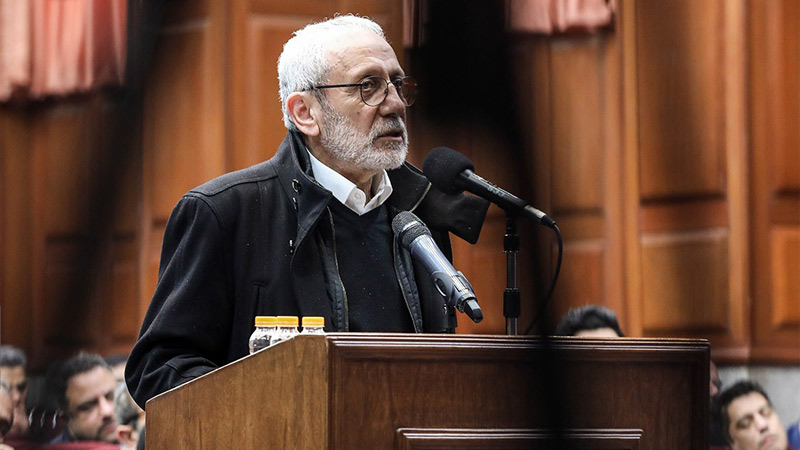
The 16th trial session of the hearing on crimes of members of the Mujahedin-e Khalq (MEK) was held in Tehran. The session was held at the 11th branch of the criminal court of Tehran province on Tuesday, September 10th. The court brings 104 members of the MEK as well as the group as a legal entity to justice in absentia. The court was presided by Judge Dehqani.

Judge Dehqani told, “The Iranian nation is considered as one of the biggest victims of terrorism, and long before the September 11 incident in the United States, we tried to push the global public opinion and the United Nations towards the fight against terrorism.”

According to the preface of Resolution No. 1617 issued in 2005, all members of the United Nations are required to generally fulfill the requirements contained in Resolution 1373. Based on the resolution UN state members should limit and trace the financial resources of terrorist groups. The judge stated, “Today, the Islamic Republic of Iran, with its legal laws, deals with charges of terrorist acts, including hijacking, burning children, killing women, children, civilians and ordinary people with various explosions and intimidating people.”

Addressing the UN Secretary General, judge Dehqani said: “Today in Tehran, an indictment was sent to one of the criminal branches of the court based on that 104 defendants are being investigated for terrorist charges, which are considered terrorist acts and crimes against humanity according to all legal rules. The expectation of the people of Iran is that the United Nations and the Secretary General and its affiliated members and its reporters are not involved with the accused.”
Amir Molai Balestani, the lawyer of the plaintiffs, submitted a bill to the court in accordance with Article 107 of the Criminal Procedure Law regarding the provision of a criminal demand in order to compensate for the losses caused by the crime.

The president of the court, after consulting with the court advisors, while agreeing the demand requested by the plaintiffs’ lawyer, ordered to seize and identify the property related to the accused of this case in line with Article 107 of the Criminal Procedure Law. “The property of the defendants should be seized,” he ordered.

The defendants’ lawyer asked two family members of victims of the terrorist operation of the MEK against the office of the Islamic Republic Party that killed more than 70 people in June 28th, 1981, to take the stand.

Tayebeh Musavi whose father Kazem Musavi was killed in that terrorist attack told the judge, “My father was the representative of the Imam, the deputy of the Ministry of Education and a teacher, and he was not a military man. He was just one of those who participated in the weekly meetings of the party.”

As the representative of her family, Tayebeh Musavi said, “The court for the June 28th incident took place very late and more than 40 years have passed since this incident. The judicial system should have brought the terrorists to justice long, because in that terror attack, the central officials of the government were targeted. The hall where the explosion took place was not just a hall, but a country, and the heads of a country were there. If something like this happened in another country and one or two of the leaders of that country were assassinated, it would definitely be considered a big incident and it would be dealt with in a special way.”

The lawyer of the plaintiffs, Amir Melai Balestani, stated that regarding the explosion of the party office, some witnessed showed up in the court. He asked the judge to let them appear on the stand. According to Article 330 of the Criminal Procedure Law, the sides of the case had already been notified of the hearing of witness testimony.

The names of some witnesses have been previously defined for this session. The court asked the first witness to take the stand and to take the oath and legal measures to testify. The lawyer invited Abdollah Khalili to give his testimony.
At the time of the incident, Khalili was in charge of the party’s camps and a clerk of the party’s identification department. He explained about the unit called identification in the party. They used to collect information for the security check of those wanted to join the in the party. Kolahi was one of the people they inquired about.

Mohammadreza Kolahi, who worked as an experimental audio equipment technician in the Islamic Republic Party, is accused of taking the bomb with him to the party’s headquarters. For this reason, he was identified as the operator of the explosion. Before the bomb exploded in the party’s headquarters, he quickly got on his motorcycle and ran away under the pretext of buying ice cream for the audience.

“While investigating the people who did not work in the central office we came across the name of Kolahi, all the information ended up in a dead end,” Khalili told the court. “As far as I can remember, he had only one single sheet in his file, which contained his registration details, that he was a student of the University of Science and Technology. The address that was written in that form was the address where his parents lived and there was nothing else like the names of friends and acquaintances and even his identity in the form. The sensitivity that arose on him was due to the importance of the meeting that was being held, because he had the names and contact numbers of all the people who were invited to that meeting.”

Khalili continued testifying about the terrorist attack on the office of the Islamic Republic Party. “Usually, the box of pamphlets was at the end of the entrance of the hall, where it was placed on the chair,” he said. “When I went, I noticed that the box was not there, it was on the table where Ayatollah Beheshti (the party president0 and his secretary were sitting, and I wondered why it was here? It had also taken the front view. When I came out and looked for Kolahi to ask why he left the carton there, they said he went out to buy ice cream. I told a friend to quickly look for him, but he came back and said no.” The hall was exploded a few minutes later.

Further, the judge addressed the representative of the prosecutor and the lawyers of plaintiffs and defendants to ask Abdullah Khalili the questions they might have.

The representative of the prosecutor told the court about the extent of the influence of members of the MEK in government bodies and organizations and parties. “They did most of the work of espionage and gathering information and did not reveal their identity,” he said. “They collected information to assassinate people and later they gave this information to the Baath Party; They had military and logistical cooperation to target the Iranian people and authorities with the Baath party. In the 1980s and 1990s, these goals changed and their more infiltration led to reveal Iran’s nuclear program and provide false information about the alleged nuclear bomb to Western countries. The United States published a report in 2004, then the MEK admitted that they had provided Western countries with this misinformation, to get off the list of terrorist groups. This was in line with their deceitful nature.

The prosecutor’s representative stated, “In June 22nd, 1981, the MEK showed their violent nature. Their first act of terrorism, which they later acknowledged in their meetings with the Baath Party, was the explosion of the Islamic Republic Party building. Before that, there was no talk of influence.”

The judge clarified it to Khalili that the question of the prosecutor’s representative that if he found it possible that Kolahi could be the agent of the MEK. Khalili stated: “In the case of Kolahi, whether from the beginning or the end, we did not think that he would want to do something of this magnitude and be a member of the MEK. Our understanding of his actions and behavior was not enough for someone to entrust such a responsibility to him.”

He continued, “He also had double behavior and had two personalities; Sometimes he made very low-level jokes and did things that were not worthy of an office person, but he was so humble and polite in dealing with party officials that anyone who put these two behaviors together would be suspicious of him. As an influencer, we did not doubt him to this extent and we only knew that this person was not up to the level of his position.”

The prosecutor’s representative asked, “What is your estimate as a person present in the meeting and someone who was responsible at that time? How do you think these explosives entered the hall? Was the box you saw there embedded in it or was it in some other way?”

Khalili said, “No, because we had checked the hall before the meeting and delivered the hall closed, no one but us had opened the door of the hall. There were no explosives before the inspections and other than what Khalee was carrying. It was not inside the hall.”

The prosecutor’s representative addressed the court, “The validation of witnesses’ statements will be done in court, but Mr. Khalili’s statements are consistent with the expert report on the explosion of the party building, and it is mentioned in this report that the amount of explosive was measured very accurately. In the scene, it was observed that the entire roof collapsed and people were killed due to the attack.”

Mohammad Taqi Zardoost was the next witness who took the stand and took an oath. Mohammad Taqi Zardoost said, “There were documents in Kolahi’s personnel file that showed Kolahi’s affiliation with the MEK. In the case, I saw that my brother wrote a letter to Ayatollah Beheshti that Kolahi cooperated with the MEK when he was a student, asking why was Kolahi active in the party. Beheshti signed the letter and referred it to Javadmaleki who was in charge of party organization. Maliki reads this report and unfortunately writes that Kolahi has been accepted into the party due to the work entrusted to him and his activities in the revolutionary issues. My brother had verbally raised the issue of Kolahi to Ayatollah Beheshti too.”

The next session of the court will be held in the morning on September 17th.

September 11, 2024 0 comments
FacebookTwitterPinterestWhatsappTelegramSkypeEmail
Javaed Rehman - Former UN rapporteur for Iran
Former members of the MEK

Open letter of the MEK defectors to Javaid Rehman

The open letter of a group of former members of the Mujahedin-e Khalq Organization to Javaid Rehman, the former special rapporteur of the United Nations on Iran affairs, was published in Kehan London on Saturday, 14 September 2024. These defectors, who mostly live outside Iran, informed Javaid Rehman of important points that not only the former UN Special Rapporteur needs to know, but also anyone who may be involved with the MEK in any way.

These former members of the MEK, who are opposed to the group they left, are also opponents of the Iranian government and in the aforementioned letter, they strongly criticize Javaid Rehman because he went to the group’s headquarters in Paris visiting the group’s leader, Maryam Rajavi. He addressed her as “President Elect”, the title used by the MEK to refer to the self-appointed Maryam Rajavi

In their letter, the signatories emphasize on the importance and sensitivity of the issue and share their concerns based on their objective experiences regarding the MEK with Rehman. They express their concerns on the following two axes:

– First, we are afraid that the Mujahedin Organization would abuse your efforts and positive reputation in fighting for human rights just to pursue its own political goals.

– Second, we are concern that your association with the Mujahedin Organization could damage your reputation and, consequently, your entire efforts to fight for human rights relating to Iran. Obviously, we would like to avoid such a scenario at any cost.

In the beginning of the letter, former members of MEK state that the affiliation of a part of those executed in Iran to the MEK cannot in any way be a justification for Javaid Rehman’s cooperation with the group. To prove this, the signatories of the letter, along with rejecting Maryam Rajavi’s claim about the establishment of a “democratic republic” government in Iran, provide testimonies about the most undemocratic behavior of the Cult of Rajavi:

Dear Mr. Rahman,
Based on our personal experiences and documented observations, we recognize the Mujahidin organization as a criminal organization with a mafia structure. We believe that any communication or cooperation with this organization cannot be justified, even though some of the executed prisoners belong to it. Many of us could have been executed or killed like numerous others who were tortured during the operations of this organization. The struggles for fact-finding and human rights in Iran should not lead to collaboration or cooperation with the Mujahedin organization.

In her speech at the same meeting where you were present, Maryam Rajavi said: “We are standing up for an Iran without torture, repression, and free from oppression and inequality, for a democratic republic based on the separation of religion and state, with an independent judicial system based on the principle of acquittal, the right to defense, the right to a public trial and the complete independence of judges and the abolition of the Sharia laws.”

That allegation was a blatant lie. Many of us have experienced arrest, forced interrogation, prison and torture, all without any trial, lawyer or simply respect for basic principles of human rights such as the “principle of innocence” within this organization. Some of those people have been killed under torture, including Gurban Ali Torabi, who was one of the political prisoners in the 80s.

In her speech, Mrs. Rajavi also claimed that “We are proud to be freedom and human rights fighters.” This is another great deception. This organization is opposed to freedom of expression. Some of those who separated from this organization have faced life threats by this organization, simply because of publishing their experiences and hidden facts about the organization.

Dear Mr. Rahman,
We briefly draw your attention to some serious and documented accusations against the Mujahedin organization and its leadership, which show that this organization is not democratic, does not believe in freedom, and operates with a mob and repressive structure. Accusations such as:

– Brainwashing of members through long meetings called “ideological revolution”, promoting individuation and sainthood of Masoud and Maryam Rajavi.

– Forcing married men and women in the 1990s to “ideological divorce” through mental-emotional pressures and followed by gender-based segregation of men and women.

– Forcing members to write self-reports about their sexual thoughts and dreams through psychological/emotional pressures. Forcing members to confess against themselves regarding these issues in small or large groups (tens or hundreds) of members. Inciting the members in these meetings, in the presence of Masoud and Maryam Rajavi, to verbally attack or throw spit, insult, accuse, and in some cases physically attack the “subject” meaning the person who has submitted a report against themselves. Since the end of the 90s, this systematic procedure has been continuously going on.

– Separating about 700 children from their families within the Mujahedin organization in Iraq in the early 1990s. Sending those children to different countries in Europe and North America, which in practice, led to disintegration of the family institution. Eventually, this act caused severe emotional trauma to those children, the consequences of which continue even now well into their adulthood.

– Recollecting some of the same children at the age of 14 or 15 to Camp Ashraf in Iraq, the main headquarters of the Mujahedin Organization, and forcibly recruiting those children as child-soldiers. In many cases, this was done by deceiving the children, falsely promising them to meet their parents and return to the country where they lived.

– Some of those children and ex-soldiers who have disclosed their experiences in interviews with European newspapers or appeared in a documentary film in Sweden, have been heavily subjected to character assassination and accusations by the Mujahedin organization. In response, a group of Iranian political-social-cultural activists, with different political tendencies in different countries protested these actions of the Mujahedin Organization in a statement (link provided below) .

– Imprisonment and physical-psychological torture of disaffected members within the Mujahedin Organization, and baseless accusations against them. Launching psychological warfare, accusations and character assassination against those dissidents who separated from MEK or the National Council of Resistance, and those who publicly spoke about their experience within the Mujahedin organization or published articles after the separation. This accusation includes even those who have interviewed with a non-Iranian media against MEK.

– Removing the uterus of numerous women within MEK without their consent and sometimes without informing them. Fereshteh Hedayati, one of the women separated from MEK, who had been a member of this organization for 32 years, addresses this issue, revealing that she herself was one of the victims who underwent a surgery for removing the uterus without any medical diagnosis or relevant reasons. She mentions about 120 other cases that she is aware of.

– Recruiting Iranians living in Iran as well as Iranians living in Turkey, Pakistan, and the Arab countries of the Persian Gulf, transferring them to Iraq, and preventing them from leaving the organization and from Iraq during the time when the Mujahedin organization was based in Iraq. These people were deceived and transported to Iraq using mob tactics and human trafficking.

– Lack of transparency and accountability of the leadership of the Mujahedin Organization. Independent journalists are not able to meet and talk with members of this organization. Even the leadership of this organization refuses to talk to independent journalists.

Dear Mr. Rahman,
We are willing to share our experiences with you in person or through online means and to answer all your questions with accuracy and honesty. Some of us have published articles and books in Persian about our experiences with this organization, which are accessible on different websites. At the end of this letter, you can find the links that show a very slight amount of the multitude of available information relating to our claims.

In conclusion, we reiterate our concern regarding your human rights efforts which can be politically exploited and abused by the Mujahedin Organization. We hope that your independent and valuable efforts regarding human rights will continue and successfully come to a significant conclusion.

The signatories of the open letter to Javaid Rehman are the following defectors who live in different parts of Europe and have criticized the Cult of Rajavi in recent years:

Azimi, Jama – UK, Banki, Atefe – Norway, Dehghan, Gholamreza – UK, Ebrahim Pour, Hamid-Reza – Germany, Gooran, Reza – Norway, Habashi, Manijeh – USA, Hejazi, Bina – UK, Heidari, Nariman – Sweden, Hidarnejad, Hanif – Germany, Hosseinnejad, Zeinab – France, Nabibakhsh, Tahereh – Denmark, Naderi, Siamak – Germany, Najafi – Australia, Nematullahi Haghighi, Amir – Canada, Pourahmad, Mostafa – Netherlands, Shahi Azar, Adel – Germany, Taee Semiromi, Jaber- Germany, Vatanparast, Esmat – Sweden, Yaghmai, Amir – Sweden, Zargar, Mojtaba – Germany

September 11, 2024 0 comments
FacebookTwitterPinterestWhatsappTelegramSkypeEmail
Maryam and Massoud Rajavi
Former members of the MEK

Don’t let the MEK leaders deceive you

A letter from the liberated members of the central province to Mae Sato

Mrs. May Sato, the respected UN rapporteur on human rights of Iran
Congratulations to you on your new responsibility, we hope you will be successful in your new activity.

We are a number of people who have separated from the People’s Mojahedin Organization. The MEK had kept us captive for years and deprived us of any freedom.

We were not allowed to contact our families. We were not allowed to communicate with the outside world. We were constantly humiliated and oppressed. We were not allowed to leave their camp.

We finally managed to get out of the MEK camp, or better to say escape, when the American forces were based in Iraq after the overthrow of Saddam Hussein.
The MEK still has kept a large number of Iranians like us in captivity. We declared this issue to Mr. Javaid Rehman several times through letters, however, he did pay no attention!

Unfortunately, recently we saw that Mr. Javaid Rehman appeared among the MEK without paying attention to our testimonies.

Ms. Mai Sato,
We request you not to be deceived by the leaders of the Mojahedin organization. Their slogans about freedom and human rights are not true at all. Our bitter experiences of our years of presence in this organizations differs completely from the leaders’ claims
We are ready to provide you with our objective evidence.

Sincerely,
A number of MEK former members

Arak-Markazi-Iran
1- Fazel Farhadi
2- Taha Hosseini
3- Hassan Zarjini
4- Fawad Basri

September 10, 2024 0 comments
FacebookTwitterPinterestWhatsappTelegramSkypeEmail
MEK declining
Former members of the MEK

MEK ex-members share concerns with the new UN rights rapporteur

Mrs. Mai Sato, special reporter on human rights in Iran

While congratulating your selection as the special rapporteur on human rights in Iran and wishing you success, we are a group of members separated from the Mujahedin-e Khalq (MEK) who were members of the organization; some of us were members of the organization for more than three decades. Regarding your efforts in the field of truth-finding and follow-up of human rights deficiencies, we found it necessary to inform your Excellency of our concerns, which are based on our first-hand experiences of inside the MEK.

1- We consider it necessary to inform you about the political goals of the MEK in the field of human rights. During the term of Mr. Javaid Rehman, the leaders of the organization tried to serve their own goals by presenting false reports so they harmed his efforts and credibility in truth-finding about human rights

2- Based on our personal experiences and first-hand observations, we consider the MEK as a completely undemocratic movement with a cult-like structure. We believe that any cooperation with this organization cannot be defensible even by claiming that part of the prisoners who belong to them. Because many of us, like many other former members of the MEK have been executed or tortured by the group itself.

3-Actions for truth finding on human rights in Iran should not be led through the channel of cooperation with the MEK which is a formerly terrorist designated entity with a violent background. In her recent speech before the former reporter, Maryam Rajavi, the MEK leader said, “We advocate for a democratic republic founded on the separation of religion and state, with an independent judiciary adhering to principles such as the presumption of innocence, the right to defense, the right to a public trial, the complete independence of judges.”

This claim is nothing but a lie. As former members of the MEK, we are victims of torture and imprisonment in the religious extremist cult of Rajavi. In the MEK, we were sentenced to torture, imprisonment and death without the right to defense, the right to a public trial. Event after leaving the MEK, a number of MEK defectors have faced life threats by the side of the MEK simply because of the publication of their testimonies on the facts from inside the MEK.

Mrs. Sato
We find it necessary to briefly mention some serious and documented crimes of the MEK and its leadership, which proves that the organization is not democratic and does not believe in the principles of freedom.

The MEK has a completely cult-like and repressive structure. They brainwash members through long meetings called Ideological Revolution, coercing them to worship Massoud and Maryam Rajavi. They have forced couple members to divorce. Celibacy is mandatory in the MEK. Gender segregation of is strictly observed by the leaders. In their manipulative system, they force members to write reports about their most inner thoughts or dreams and sexual dreams in order to read the reports before their peers. Peers should attack each other in the meetings, including the meetings of Masoud and Maryam. They are due to verbally attack, spit in the face and insult and accuse the person who is tried in the meeting, and in some cases they physically assault the one who is accused for not being ideological enough.

4-Separation of more that 800 children from their parents who were in the MEK camps in Iraq during the 1990s and smuggling them to some Western countries without the inner satisfaction of them and their parents. This separation left children with severe emotional blows and traumas. Several of these children were then recruited as child soldiers by the MEK. Some of them participated in military operations during the MEK’s presence in Iraq and were killed.

5- Imprisonment, physical, mental and psychological torture of dissident members inside the MEK, under baseless accusations. Launching psychological warfare and character assassination against defectors of the MEK. Taking out women’s wombs without any medical reason to justify it. Disconnection of members’ communication with their families. Lack of freedom of speech. Deprivation of access to the outside world and of free use of the Internet and other media communication facilities.
We are ready to share our experiences with you in person or online and to answer your questions carefully and honestly. In the end, while wishing you success in your valuable and independent efforts for human rights, we reiterate our concern.

With respect, a group of former members of the MEK from Khuzestan, Iran

September 10, 2024 0 comments
FacebookTwitterPinterestWhatsappTelegramSkypeEmail
Hamael Ghanizadeh - Mother of three MEK hostages
Mujahedin Khalq Organization members' families

MEK hostages’ mother pens letter to Mai Sato

Dr. Mai Sato

Special Rapporteur on the human rights situation in the Islamic Republic of Iran
With regards.
I am Hamael Ghanizadeh, the mother of Mehri, Nahid and Mahmoud Saadat, who are living in the closed camp of Mujahedin-e Khalq Organization (MEK) in Albania and without any right to have contact with the outside world and with their family.

I plea you to hear our voices as elderly, suffered mothers of MEK members. We have been wronged a lot, if we are among the same people for whom you are responsible for human rights, please help us too, we have souls, we also have hearts, we are the most aggrieved of all, we are waiting for our loved ones’ visit for a long time.

You are a human being, feel a little sorry for us mothers who have been exiled and suffering and suffered mental torture. Come, we have souls, we also have hearts, we are the most afflicted of all, we have been blind for several years.
Please care about our sufferings. Why shouldn’t we be able to visit our loved ones? What is our sin? Our only sin is to be mothers of MEK members!

Ms. Mai Sato, you might be a mother yourself, do you tolerate such a situation? As a mother, how much can you tolerate not seeing your children? 1 year? two years ?10 years? 40 years??

I haven’t met my three children for more than 37 years, I don’t know how to talk about my request, my sufferings and my grieves. now, I am an aging, ailed mother who needs your help. I can’t bear this suffering anymore.

Respected authority, I want you to help me and other mothers of MEK members.
where else in the world would a mother be deprived of seeing her children for such a long time!
many years? Were our children killed? Are they prisoners? Doomed not to meet? What is the sin of our children? Have they killed someone? Are they prisoners of MEK leader?

Ms. Maryam Rajavi considers the Islamic Republic as enemy, however prisoners of IR allowed to visit their families weekly and, in some cases, gives them time off. The MEK claims to be Human Rights advocate but it does not allow its members to visit their mothers or even have a short telephone call. They even are not allowed to write letter to their mothers.

Please accelerate my visit with my children at the MEK Albania’s camp. Please let me have a meeting with you to recount my experiences with this organization. I am looking forward for your action as a human right activist.
We, mothers of MEK members plea you to help us with our visit with our children.

Sincerely,
Hamael Ghanizadeh, mother of three MEK hostages at Manze Camp, Albania.
Iran – Tabriz

September 9, 2024 0 comments
FacebookTwitterPinterestWhatsappTelegramSkypeEmail
Mai Sato
Mujahedin Khalq Organization members' families

Additional signatures of the families on the letter to Mai Sato

Last week a letter signed by some of the families of the members of the MEK camp in Albania, as far as they were available, was sent to Mai Sato, the Special Rapporteur on Human Rights regarding the Islamic Republic of Iran. This included a total of 280 signatures from 10 provinces.
This week, 79 families from 4 other provinces managed to sign this letter, which brought the total number of signatures to 359, which was sent to Dr. Mai Sato in a supplementary letter. Many more families are signing this letter in different cities and provinces now.

The names of the families who signed the letter this week addressed to Mae Sato are:

Additional signatures of the families on the letter to Mai Sato

Additional signatures of the families on the letter to Mai Sato

Additional signatures of the families on the letter to Mai Sato

September 8, 2024 0 comments
FacebookTwitterPinterestWhatsappTelegramSkypeEmail
Newer Posts
Older Posts

Recent Posts

  • A Criterion for Proving the Violent Nature of the MEK

    December 31, 2025
  • Rebranding, too Difficult for the MEK

    December 27, 2025
  • The black box of the torture camps of the MEK

    December 24, 2025
  • Pregnancy was taboo in the MEK

    December 22, 2025
  • MEPs who lack awareness about the MEK’s nature

    December 20, 2025
  • Facebook
  • Twitter
  • Instagram
  • Youtube

© 2003 - 2025 NEJAT Society . All Rights Reserved. NejatNGO.org


Back To Top
Nejat Society
  • Home
  • Articles
  • Media
    • Cartoons
    • NewsPics
    • Photo Gallery
    • Videos
  • Publications
    • Books
    • Nejat NewsLetter
    • Pars Brief
  • About Us
  • Contact us
  • Editions
    • عربي
    • فارسی
    • Shqip