Nejat Society
  • Home
  • Articles
  • Media
    • Cartoons
    • NewsPics
    • Photo Gallery
    • Videos
  • Publications
    • Books
    • Nejat NewsLetter
    • Pars Brief
  • About Us
  • Contact us
  • Editions
    • عربي
    • فارسی
    • Shqip
Nejat Society
Nejat Society
  • Home
  • Articles
  • Media
    • Cartoons
    • NewsPics
    • Photo Gallery
    • Videos
  • Publications
    • Books
    • Nejat NewsLetter
    • Pars Brief
  • About Us
  • Contact us
  • Editions
    • عربي
    • فارسی
    • Shqip
© 2003 - 2024 NEJAT Society. nejatngo.org
Rudy Giuliani
Mujahedin Khalq; A proxy force

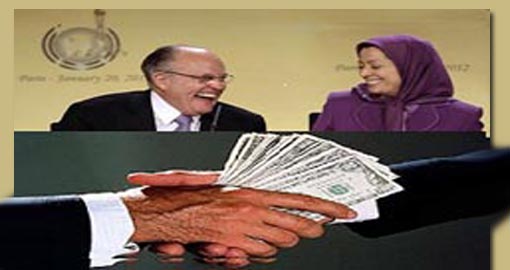
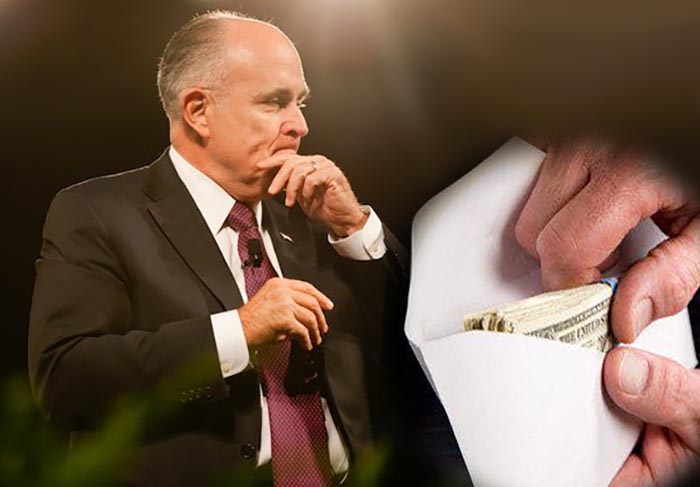
The MeK has paid Giuliani handsomely for years

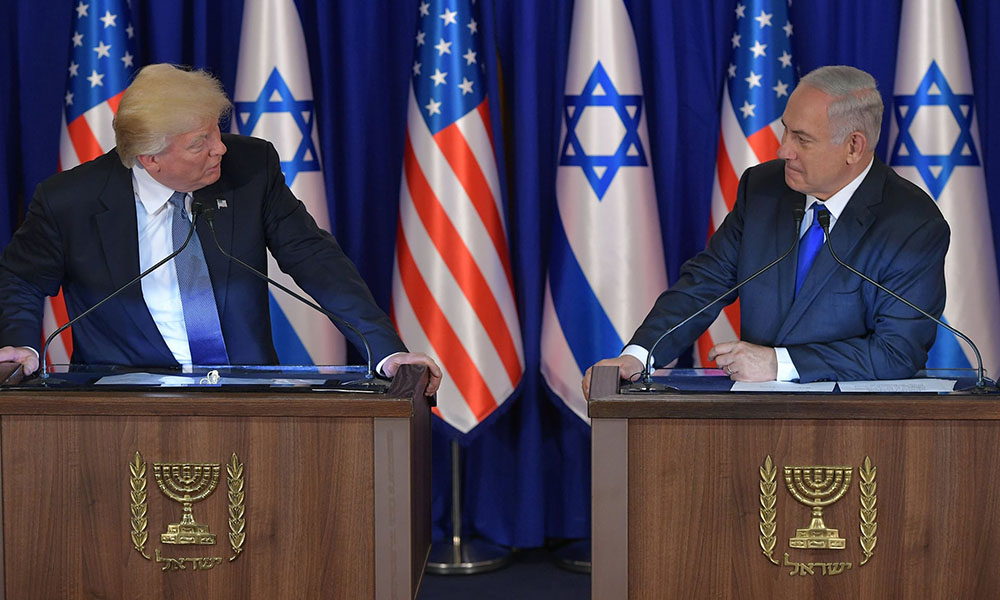
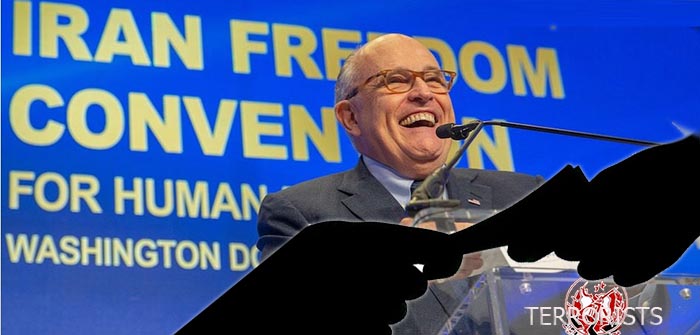
Rudolph W. Giuliani, a Republican Party grandee and President Trump’s newly appointed lawyer, made a telling remark over the weekend. At a gathering organized by a group of activists opposed to Iran’s government, the former New York mayor seemed to suggest that the nuclear deal with Iran was doomed and that the Trump administration anticipated yet more havoc in the Middle East.

“We have a president who is tough,”Giuliani said on Saturday.”We have a president who is as committed to regime change as we are.”Confronting Iran, he added, is”more important than an Israeli-Palestinian deal.”

Since coming to power, Trump has blasted the agreement forged in 2015 between Iran and world powers. He repeatedly lambastes the Obama-era pact as a shameful concession to a rogue state and looks poised to violate its terms by reimposing certain sanctions on Iran later this week. He also apes the views of Washington’s neoconservatives and right-wing Israeli Prime Minister Benjamin Netanyahu, casting the Islamic Republic as the greatest menace facing the Middle East.

But if regime change is on the agenda, Trump has been far more circumspect about how it would happen. Dethroning the mullahs would likely involve waging war against Iran, a prospect at odds with his own stated desire to withdraw from Syria and disentangle the United States from a generation of costly conflicts in the Middle East. Trump tweeted his solidarity when Iranians took to the streets in protests earlier this year, but that has been the extent of his tangible support.

But the more traditional hawks in Trump’s inner circle have no such ambivalence. Newly installed Secretary of State Mike Pompeo has advocated regime change and a bombing campaign of the country, as has the new national security adviser, John Bolton.

Bolton, Giuliani and a host of Washington politicos from both parties have supported — and likely taken money from — front groups directly related to the Mujahideen-e-Khalq (MEK), an Iranian resistance group that operates in exile. Its agents have been implicated in the deaths of Americans and thousands of Iranians, many stemming from its coordination with Iraqi dictator Saddam Hussein in the 1980s amid the war between Baghdad and Tehran.

The MEK was once listed as a terrorist group by the State Department — which also views it as a”cult”— before a sustained lobbying campaign saw its designation changed in 2012. It was behind the event at which Giuliani spoke this weekend, marking yet another episode in his long, cozy relationship with the organization.

“The MeK has paid Giuliani handsomely for years—$20,000 or more, and possibly a lot more—for brief appearances before the group and for lobbying to have it removed from the State Department’s list of Foreign Terrorist Organizations (FTO), which occurred in 2012,”noted Politico.

Jason Rezaian, The Washington Post’s former Tehran correspondent who was detained unjustly by the Iranian regime for a year and a half, points to the widespread contempt for the MEK among ordinary Iranians, who view the organization as a craven, treacherous outfit.

“In the seven years I lived in Iran, many people expressed criticism of the ruling establishment — at great potential risk to themselves,”noted Rezaian.”In all that time, though, I never met a person who thought the MEK should, or could, present a viable alternative.”

Nevertheless, its American allies are now in a commanding position. And in the event of the nuclear deal’s collapse, they may seek to further their ultimate goal of toppling the Islamic Republic.

“To those who claim that the nuclear deal isn’t working, regime change remains the only solution,”wrote Rezaian.”For the MEK, and Bolton, if his words are to be taken at face value, the only path to that could be war. The group has long been prepared to do whatever it takes to see that happen, including presenting fake intelligence about Iran’s nuclear program.”

The Trump camp itself also appears open to the dark arts. Over the weekend, the Guardian alleged that aides linked to Trump recently employed an Israeli intelligence firm to wage a”dirty ops”campaign against Obama administration officials involved in brokering the nuclear deal.”The idea was that people acting for Trump would discredit those who were pivotal in selling the deal, making it easier to pull out of it,”a source told the British newspaper. It remains unclear what became of the research the company conducted.

Trump’s moves against the Iran deal are chiefly motivated by his desire to unwind Obama’s legacy and play to his political base at home. His lieutenants, though, seem ideologically invested in breaking the deal apart, even as a host of domestic critics and European allies urges them to reconsider. Even in Israel, many prominent figures in the country’s security establishment have come out in defense of the agreement, arguing that its demise may play into Tehran’s hands.

“An American announcement that it’s withdrawing from the agreement would let Iran drive a wedge between the world powers and gradually loosen international oversight over its nuclear program,”retired Israeli general Amos Gilad told Haaretz.”If the Americans abandon the agreement, they have to prepare for alternatives, and I don’t see this being done.”

Giuliani’s regime-change comments over the weekend marked the bluntest articulation yet by a Trump aide of a potential”alternative.”That has many others justifiably worried.

“I’m hopeful that one day the Iranian people will find a way to get rid of the Islamic Republic, but I am skeptical about America’s ability to accelerate such a development without unintended consequences, and worried that some of what the hawks propose could make things worse,”wrote Philip Gordon, a former official in the Obama administration.”The Iran nuclear deal is far from ideal, as I and others have always acknowledged, but we live in a messy, complicated world, and sometimes the best actually is the enemy of the good.”

by Ishaan Tharoor

Ishaan Tharoor writes about foreign affairs for The Washington Post. He previously was a senior editor and correspondent at Time magazine, based first in Hong Kong and later in New York.

Follow @ishaantharoor


May 7, 2018 0 comments
FacebookTwitterPinterestWhatsappTelegramSkypeEmail
Rudy Giuliani
Mujahedin Khalq; A proxy force

Rudy Went to Albania to Hang Out with A Iran Regime Change Cult

Mujahideen-e Khalq (MEK) is a notorious cult-like group of Iranian exiles which appears to have close to literally zero support inside Iran but has for years cultivated significant ties to DC Iran “regime change” advocates as well as a bipartisan list of shills willing to take their money (of which they have quite a lot).

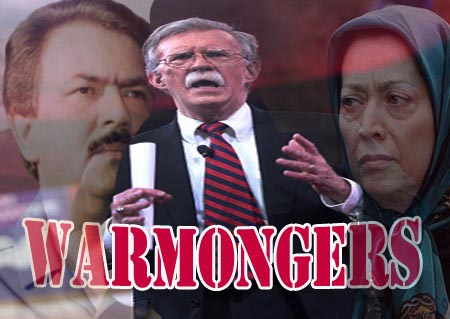
It’s an odd group which mixes Islam, Marxism and neocon-inflected DC Pay-to-Play values into a bizarre amalgam run by current cult leader Maryam Rajavi. Until just a few years ago the US State Department listed them as a terrorist organization. They appear to be mainly out of the terrorism business now. But they’re still a treacherous and dangerous group. With all this you’ll be glad to learn that one of their biggest backers is none other than Trump National Security Advisor John Bolton. And perhaps they’re most high profile and ardent supporter (and recipient of their cash) is Rudy Giuliani.

I just found out this afternoon that back in March of this year Rudy traveled to Tirana, Albania to headline a major MEK event. Here you can see him with Rajavi in a North Korea-like pose at the event in Tirana.

Needless to say, Rudy’s close ties to President Trump were played up aggressively.

Here’s Rudy at the Tirana event leading a “regime change” chant after promising the group that John Bolton remains loyal to them and that “you need to be in charge in [Iran].” It’s nuts.

Did Rudy get paid for this speech, like he has in other cases? How much?

By Josh Marshall , talkingpointsmemo.com

May 6, 2018 0 comments
FacebookTwitterPinterestWhatsappTelegramSkypeEmail
Mujahedin Khalq; A proxy force

The Latest Act in Israel’s Iran Nuclear Disinformation Campaign

Israeli Prime Minister Benjamin Netanyahu’s claim in his theatrical 20-minute presentation of an Israeli physical seizure of Iran’s “atomic archive” in Tehran would certainly have been the “great intelligence achievement” he boasted if it had actually happened. But the claim does not hold up under careful scrutiny, and his assertion that Israel now possesses a vast documentary record of a covert Iranian nuclear weapons program is certainly fraudulent.

Netanyahu’s tale of an Israeli intelligence raid right in Tehran that carted off 55,000 paper files and another 55,000 CDs from a “highly secret location” requires that we accept a proposition that is absurd on its face: that Iranian policymakers decided to store their most sensitive military secrets in a small tin-roofed hut with nothing to protect it from heat (thus almost certainly ensuring loss of data on CDs within a few years) and no sign of any security, based on the satellite image shown in the slide show. (As Steve Simon observed in The New York Times the door did not even appear to have a lock on it.)

The laughable explanation suggested by Israeli officials to The Daily Telegraph– that the Iranian government was afraid the files might be found by international inspectors if they remained at “major bases” — merely reveals the utter contempt that Netanyahu has for Western governments and news media. Even if Iran were pursuing nuclear weapons secretly, their files on the subject would be kept at the Ministry of Defense, not at military bases. And of course the alleged but wholly implausible move to an implausible new location came just as Netanyahu needed a dramatic new story to galvanize Trump to resist the European allies’ strong insistence on preserving the Joint Comprehensive Plan of Act (JCPOA) nuclear deal with Iran.

In fact, there is no massive treasure trove of secret files about an Iran “Manhattan Project.” The shelves of black binders and CDs that Netanyahu revealed with such a dramatic flourish date back to 2003 (after which a U.S. National Intelligence Estimate (NIE) said Iran had abandoned any nuclear weapons program) and became nothing more than stage props like the cartoon bomb that Netanyahu used at the United Nations in 2012.

Disinformation Campaign

Netanyahu’s claim about how Israel acquired this “atomic archive” is only the latest manifestation of a long-term disinformation campaign that the Israeli government began to work on in 2002-03. The documents to which Netanyahu referred in the presentation were introduced to the news media and the International Atomic Energy Agency (IAEA) beginning in 2005 as coming originally from a secret Iranian nuclear weapons research program. For many years US news media have accepted those documents as authentic. But despite the solid media united front behind that narrative, we now know with certainty that those earlier documents were fabrications and that they were created by Israel’s Mossad.

That evidence of fraud begins with the alleged origins of the entire collection of documents. Senior intelligence officials in the George W. Bush administration had told reporters that the documents came from “a stolen Iranian laptop computer”, as The New York Times reported in November 2005. The Times quoted unnamed intelligence officials as insisting that the documents had not come from an Iranian resistance group, which would cast serious doubt on their reliability.

But it turned that the assurances from those intelligence officials were part of an official dissimulation. The first reliable account of the documents’ path to the United States came only in 2013, when former senior German foreign office official Karsten Voigt, who retired from his longtime position as coordinator of German-North American cooperation, spoke with this writer on the record.

Voigt recalled how senior officials of the German foreign intelligence agency, the Bundesnachtrendeinst or BND, had explained to him in November 2004 that they were familiar with the documents on the alleged Iran nuclear weapons program, because a sometime source – but not an actual intelligence agent – had provided them earlier that year. Furthermore, the BND officials explained that they had viewed the source as “doubtful,” he recalled, because the source had belonged to the Mujahideen-E Khalq, the armed Iranian opposition group that had fought Iran on behalf of Iraq during the eight year war.

BND officials were concerned that the Bush administration had begun citing those documents as evidence against Iran, because of their experience with “Curveball” – the Iraqi engineer in Germany who had told stories of Iraqi mobile bioweapons labs that had turned to be false. As a result of that meeting with BND officials, Voigt had given an interview to TheWall Street Journal in which he had contradicted the assurance of the unnamed US intelligence officials to the Times and warned that the Bush administration should not base its policy on the documents it was beginning to cite as evidence of an Iranian nuclear weapons program, because they had indeed come from “an Iranian dissident group.”

Using the MEK

The Bush administration’s desire to steer press coverage of the supposedly internal Iranian documents away from the MEK is understandable: the truth about the MEK role would immediately lead to Israel, because it was well known, that Israel’s intelligence agency Mossad had used the MEK to make public information that the Israelis did not want attributed to itself – including the precise location of Iran’s Natanz enrichment facility. As Israeli journalists Yossi Melman and Meir Javadanfar observed in their 2007 book on the Iran nuclear program, based on U.S., British and Israeli officials, “Information is ‘filtered’ to the IAEA via Iranian opposition groups, especially the National Resistance Council of Iran.”

Mossad used the MEK repeatedly in the 1990s and the early 2000’s to get the IAEA to inspect any site the Israelis suspected might possibly be nuclear-related, earning their Iranian clients a very poor reputation at the IAEA. No one familiar with the record of the MEK could have believed that it was capable of creating the detailed documents that were passed to the German government. That required an organization with the expertise in nuclear weapons and experience in fabricating documents – both of which Israel’s Mossad had in abundance.

Bush administration officials had highlighted a set of 18 schematic drawings of the Shahab-3 missile’s reentry vehicle or nosecone of the missile in each of which there was a round shape representing a nuclear weapon. Those drawings were described to foreign governments and the International Atomic Energy Agency as 18 different attempts to integrate a nuclear weapon into the Shahab-3.

Netanyahu gave the public its first glimpse of one of those drawings Monday when he pointed to it triumphantly as visually striking evidence of Iranian nuclear perfidy. But that schematic drawing had a fundamental flaw that proved that it and others in the set could not have been genuine: it showed the “dunce cap” shaped reentry vehicle design of the original Shahab-3 missile that had been tested from 1998 to 2000. That was the shape that intelligence analysts outside Iran had assumed in 2002 and 2003 Iran would continue to use in its ballistic missile.

New Nose Cone

It is now well established, however, that Iran had begun redesigning the Shahab-3 missile with a conical reentry vehicle or nosecone as early as 2000 and replaced it with a completely different design that had a “triconic” or “baby bottle” shape. It made it a missile with very different flight capabilities and was ultimately called the Ghadr-1. Michael Elleman, the world’s leading expert on Iranian ballistic missiles, documented the redesign of the missile in his path-breaking 2010 study of Iran’s missile program.

Iran kept its newly-designed missile with the baby bottle reentry vehicle secret from the outside world until its first test in mid-2004. Elleman concluded that Iran was deliberately misleading the rest of the world – and especially the Israelis, who represented the most immediate threat of attack on Iran – to believe that the old model was the missile of the future while already shifting its planning to the new design, which would bring all of Israel within reach for the first time.

The authors of the drawings that Netanyahu displayed on the screen were thus in the dark about the change in the Iranian design. The earliest date of a document on the redesign of the reentry vehicle in the collection obtained by US intelligence was August 28, 2002 – about two years after the actual redesign had begun. That major error indicates unmistakably that the schematic drawings showing a nuclear weapon in a Shahab-3 reentry vehicle – what Netanyahu called “integrated warhead design” were fabrications.

Netanyahu’s slide show highlighted a series of alleged revelations that he said came from the newly acquired “atomic archive” concerning the so-called “Amad Plan” and the continuation of the activities of the Iranian who was said to have led that covert nuclear weapons project. But the single pages of Farsi language documents he flashed on the screen were also clearly from the same cache of documents that we now know came from the MEK-Israeli combination. Those documents were never authenticated, and IAEA Director-General Mohamed ElBaradei, who was skeptical of their authenticity, had insisted that without such authentication, he could not accuse Iran of having a nuclear weapons program.

More Fraud

There are other indications of fraud in that collection of documents as well. A second element of the supposed covert arms program given the name “Amad Plan” was a “process flow chart” of a bench-scale system for converting uranium ore for enrichment. It had the code name “Project 5.13”, according to a briefing by the IAEA Deputy Director Olli Heinonen, and was part of a larger so-called “Project 5”, according to an official IAEA report. Another sub-project under that rubric was “Project 5.15”, which involved ore processing at the Gchine Mine.” Both sub-projects were said to be carried out by a consulting firm named Kimia Maadan.

But documents that Iran later provided to the IAEA proved that, in fact, “Project 5.15” did exist, but was a civilian project of the Atomic Energy Organization of Iran, not part of a covert nuclear weapons program, and that the decision had been made in August 1999 – two years before the beginning of the alleged “Amad Plan” was said to have begun.

The role of Kimia Maadan in both sub-projects explains why an ore processing project would be included in the supposed secret nuclear weapons program. One of the very few documents included in the cache that could actually be verified as authentic was a letter from Kimia Maadan on another subject, which suggests that the authors of the documents were building the collection around a few documents that could be authenticated.

Netanyahu also lingered over Iran’s denial that it had done any work on “MPI” or (“Multi-Point Initiation”) technology “in hemispheric geometry”. He asserted that “the files” showed Iran had done “extensive work” or “MPI” experiments. He did not elaborate on the point. But Israel did discover the alleged evidence of such experiments in a tin-roofed shack in Tehran. The issue of whether Iran had done such experiments was a central issue in the IAEA’s inquiry after 2008. The agency described it in a September 2008 report, which purported to be about Iran’s “experimentation in connection with symmetrical initiation of a hemispherical high explosive charge suitable for an implosion type nuclear device.”

No Official Seals

The IAEA refused to reveal which member country had provided the document to the IAEA. But former Director-General ElBaradei revealed in his memoirs that Israel had passed a series of documents to the Agency in order to establish the case that Iran had continued its nuclear weapons experiments until “at least 2007.” ElBaradei was referring to convenient timing of the report’s appearance within a few months of the US NIE of November 2007 concluding that Iran had ended its nuclear weapons-related research in 2003.

Netanyahu pointed to a series of documents on the screen as well a number of drawings, photographs and technical figures, and even a grainy old black and white film, as evidence of Iran’s nuclear weapons work. But absolutely nothing about them provides an evidentiary link to the Iranian government. As Tariq Rauf, who was head of the IAEA’s Verification and Security Policy Coordination Office from 2002 to 2012, noted in an e-mail, none of the pages of text on the screen show official seals or marks that would identify them as actual Iranian government documents. The purported Iranian documents given to the IAEA in 2005 similarly lacked such official markings, as an IAEA official conceded to me in 2008.

Netanyahu’s slide show revealed more than just his over-the-top style of persuasion on the subject of Iran. It provided further evidence that the claims that had successfully swayed the US and Israeli allies to join in punishing Iran for having had a nuclear weapons program were based on fabricated documents that originated in the state that had the strongest motive to make that case – Israel.

Gareth Porter, an investigative historian and journalist specializing in US national security policy, received the UK-based Gellhorn Prize for journalism for 2011 for articles on the U.S. war in Afghanistan. His new book is Manufactured Crisis: the Untold Story of the Iran Nuclear Scare. He can be contacted at porter.gareth50@gmail.com. Reprinted from Consortium News with the author’s permission.

by Gareth Porter

May 6, 2018 0 comments
FacebookTwitterPinterestWhatsappTelegramSkypeEmail
Asqar Kamyab Dad
Mujahedin Khalq Organization members' families

I’m counting down the minutes, till my son’s return

Mr. Asghar Mohammadi Kamyab was a 18- year old soldier at Iran-Iraq war fighting the invading forces and defending his countries’ soil. In 1986 he was captured by the Mujahedin-e Khalq forces.

Since then Asghar’s family succeeded to visit him just once in 2002 under the severe control of the MKO elements. Asghar’s mother says:” I couldn’t talk to my dear son alone, still his eyes revealed everything. He was full of anxiety, hopelessness and distress… . Though I could understand my son’s feelings, I could do nothing… ”

In July 2017, the Kamyab family went to the MKO Camps once more to visit Asghar or at least get a news of him. However the cult leaders did not let them meet.

Asghar’s father says:” I’m counting down the minutes, till my son’s return “

May 3, 2018 0 comments
FacebookTwitterPinterestWhatsappTelegramSkypeEmail
Azim Alizadeh family - the mko cult hostage
Mujahedin Khalq Organization members' families

My brother is denied the right to live freely

Mr. Azim Alizadeh Rad was a prisoner of Iran-Iraq war when the Mujahedin-e Khalq deceived him into joining the group.

Azim Alizadeh family - the mko cult hostage

His suffering mother attended the Nejat Society office of Gilan branch along with her other son, Kazem. The aging mother says:” … despite our efforts and several travels to Iraq, Camps Ashraf and liberty, we couldn’t meet our dear Azim. We were harassed and offended by the cult elements. Albania differs from Iraq however. Albania is a European country. How does it come that we cannot visit our dear ones in that country?!I am sure that some deals are done behind the scene…”

Azim Alizadeh family - the MKO cult hostage

Mr. Kazem Alizadeh rad says:” my brother was a soldier… he has been denied the right to live a real life for more than thirty years..”

May 1, 2018 0 comments
FacebookTwitterPinterestWhatsappTelegramSkypeEmail
torture
Albania

Albania! Be careful of torture and abuse in the MKO camps

When in May2005, the Human Rights Watch published the NO Exit report on the human rights abuses committed by the Mojahedin Khalq Organization (MKO/MEK/ PMOI/ the Cult of Rajavi), the group’s propaganda made efforts to deny the facts that were testified based on numerous testimonies by former members of the group. The HRW responded to the allegations of the group’s propaganda and its paid supporters in a detailed report in February 2006.

MEK Camp in Albania

The report revealed cases of human rights abuses inside the MKO’s military camps in Iraq from 1991 to February 2003, prior to the fall of their former landlord Saddam Hussein .One of the most horrific cases of imprisonment and torture in Camp Ashraf was Parviz Ahmadi who died due to severe beating and torture.

The death of Parviz is meticulously explained in the newly published book by Mohsen Zaal, titled “the Organization of Massoud” based on the testimonies of former members of the MKO:

“In another case, Parviz Ahmadi is picked up by Asadullah Mosana’s Jeep after he comes back from a dentist’s office in Baghdad. Under the pretext that the female commander Batul Rajaiee has summoned him, he is taken to prison. He is interrogated at the very night and is thrown in the cell after a few hours with torn clothes, swollen face and beaten body. He is being severely tortured even in the corridor to the cell where some of the men who are under his command are imprisoned too.

“He is faced with people who were once under his command and now he is beaten and accused of spying before their eyes. This is a disaster for him; he cries all night long. In the morning, one of the men of his unit tries to sympathize with him offer sympathy to him. This is a very unique rare moment in the organization. Two comrades get close to each other and make a personal and humane relationship rather than organizational relations which is dominated by cold regulations and duties.[…]

“Parviz accepts the cigarettes his cellmates offers him although he is not a smoker. Speaking sadly he tells them that he is accused of being the agent of the Iranian Intelligence Ministry to assassinate the Ideological leader [Massoud Rajavi]. However, some of the prisoners guess that this is a test to select operatives for the next cross border operation teams. Some others think that this is an ideological test to evaluate member’s loyalty to the organization and the leader.

“The next day Parvis is taken by Mokhtar and Nariman for interrogation an hour before Iftar [the meal after sunset in Ramadan fast] and is thrown back to the cell hours after midnight at Sahar [the meal before sunrise in Ramadan]. His catastrophic condition shocks his cellmates. He is just identifiable by his clothes. His face is awfully swollen and bruised, his nose and ears are broken and bloody. He cannot breathe by his nose. He cannot open his swollen injured eyes. Fingers are broken, hands are bruised up to elbows. His pants are torn. Legs are wounded and completely bruised. The cellmates try to help him to breathe better. They ask Mokhtar to give them some warm water but he refuses saying that “this mercenary is showing off. He is OK”. Then he closes the window of the cell and leaves. Parviz gets a seizure and passes away in the arms of one of his comrades before the tearing eyes of his cellmates. They call to Mokhtar. He takes Parviz’s dead body to the corridor indifferently. After a while Mokhtar gets back and tells Parviz’s cellmates,” Save Parviz’ meal. He will get back”. But Parviz never gets back to the cell and is not seen in the group anymore. (Jamali/ 6)

“After the death of Parviz, Massoud Rajavi brings up his case in a meeting. Admiring him, Massoud calls Parviz a martyr. He claims that Parviz has been killed in a clash with Iranian forces in Kermanshah. He even gives some details on the location and the way he was killed. (Mesdaghi/ 92/136)”

According to the writer of “the Organization of Massoud”, imprisonment and eventually torture and assassination of the rank and file increased after the dissension was on the rise in the group. During the 1990s a large number of members had started challenging the group’s attitudes. So a large number of members were arrested by the authorities of the group under the charge of being the agents of the Iranian government. The estimated number of detainees mounts from 250 to 800 people. The number is not clear because imprisonments were secret until the fall of Saddam Hussein.

That situation is very similar to the conditions ruling inside the group in Albania now. There are a large number of dissident members who seek to leave the group but they are intimidated by the group leaders who use any tools to keep members in the Cult of Rajavi.

The Albanian government and the UNHCR authorities should be watchful about what is going on inside the MKO. Human rights violations are committed in the destructive cults on the daily basis. The MKO is actually proved to be a destructive cult and documented facts about various cases of human rights abuses including the HRW report are quiet accessible to everyone.

By Mazda Parsi

April 29, 2018 0 comments
FacebookTwitterPinterestWhatsappTelegramSkypeEmail
The MKO leaders keep on intimidating the defectors of their cult
Missions of Nejat Society

The MKO leaders keep on intimidating the defectors of their cult

The authorities of the Mujahedin Khalq Organization (the MKO, MEK, the PMOI, the Cult of Rajavi) intimidate those who left the group in Tirana.

The MKO leaders keep on intimidating the defectors of their cult

The MKO authorities have bought some van cars in order to patrol in the locations where the defectors live in Tirana, one of the defectors of the group stated in a post on Sahar Family Foundation.

According to the report, one of the insiders of the group asserts that each van has certain passengers who leave the group’s camp in the morning and get back at night on a regular schedule.

Defectors who see the vans in their neighborhood are concerned about their lives. They guess that the suspected passengers of the vans seek to pursue the defectors getting information about their activities.

These survivors of the cult of Rajavi have the evidences of the group’s pervious violent acts against the defectors. The group’s agents had attacked them abusing them verbally and physically.

The writer of the post on SFF asks the Albanian government and the UNHCR to supervise the MKO preventing it from intimidating its former members.

April 28, 2018 0 comments
FacebookTwitterPinterestWhatsappTelegramSkypeEmail
Gareth Porter, the investigative journalist
Mujahedin Khalq; A proxy force

Is Iran really a nuclear threat?

“Iran is moving ‘very quickly’ towards production of a nuclear bomb and could have a weapon within two years,”the United Press International reported.

The quote was published in a 1984 article headlined”‘Ayatollah’ bomb in production for Iran”but it might as well have been published today.

Gareth Porter, the investigative journalist

For more than three decades Western politicians and the press have been claiming that Iran is a nuclear threat.

Israeli leaders Benjamin Netanyahu and Shimon Peres echoed this claim numerous times in the 1990s, warning that Iran would build an atomic bomb by the next decade.

In the fall of 2012, Netanyahu declared at the United Nations General Assembly meeting – with his infamous bomb cartoon – that Iran would be able to build a nuclear weapon by June 2013.

The following October, former US President Barack Obama followed with a new deadline – that Iran is a year away from making a nuclear bomb.

Israeli Prime Minister Benjamin Netanyahu points to a cartoon bomb representing Iran’s nuclear programme at the UN General Assembly in September 2012 [Lucas Jackson/Reuters]

Most recently, the press reported earlier this month that Yossi Cohen, head of Israel’s Mossad intelligence agency, stated he is”100 percent certain”that Iran is seeking to build a nuclear weapon.

And yet, the International Atomic Energy Agency (IAEA) has released eight statements over the years confirming that Tehran has been meeting its nuclear commitments fully.

In July 2015, a landmark nuclear deal known as the Joint Comprehensive Plan of Action (JCPOA) was reached between Iran and the P5+1 countries: China, France, Russia, the UK, the US plus Germany, in which Iran agreed to reduce its enrichment of uranium, curbing its nuclear programme and ending decades of sanctions on the country.

While Iran has proved to be following its commitments, US President Donald Trump has found a new threat – Iran’s ballistic missile programme – and has threatened to scrap the nuclear agreement, which he has called the”worst deal ever”.

So how much of a nuclear threat is Iran?

Al Jazeera spoke with Gareth Porter, a historian, investigative journalist and author of Manufactured Crisis: The Untold Story of the Iran Nuclear Scare, with more than a decade of research into the topic, to learn more.

Al Jazeera: We heard yet another claim earlier this month, this time from the chief of Mossad, that Iran is planning to build a nuclear bomb. You’ve uncovered a wealth of evidence that proves Iran is not a threat. What are some of the most important pieces of evidence?

Gareth Porter: I think the most important set of documentary evidence is the so-called”laptop”documents. Those were documents that were supposedly [smuggled out] from a covert Iranian nuclear weapons research programme in the early 2000s, but I was able to show in my book that these documents were in fact passed on to Western intelligence by the Mujahedeen-e-Khalq (MEK), who of course were sworn enemies of the regime.

They were considered a terrorist organisation for many years, and most importantly the MEK was working hand in glove with Israel’s Mossad during the period when these documents surfaced.

The Israelis had both the motive and the opportunity to manufacture these documents that Mossad had created, a special programme to circulate”information”about the Iranian nuclear programme to other governments and the news media of the world in 2003. That was just when these documents would have been produced.

There are multiple indications that these documents are forgeries – the most important of which are the drawings of what is alleged to be in the documents, a series of efforts to make a nuclear weapon with the Iranian Shahab 3 missile.

These drawings actually show the wrong missile warhead. It’s a missile warhead that the Iranians are known now to have abandoned by the time these drawings were supposedly brought into existence. It is the most important giveaway that these documents were not genuine; they were fake.

Al Jazeera: You have previously said that to understand Iranian policy towards nuclear weapons, one should refer to the historical episode of its war with Iraq from 1980-1988. What can you tell us about that?

Porter: If you go back to the Iran-Iraq war, what was happening for eight years was that Iraq’s armed forces were hitting both military and civilian targets in Iran with chemical weapons, which caused as many as – if I remember the figure – 110,000 serious injuries and tens of thousands of deaths to Iranians because of the chemicals dropped on them by the Iraqis.

The IRGC (Iranian Revolutionary Guard Corps) – in charge of Iran’s defences against the Iraqi attack – wanted Ayatollah Khomeini to agree to go ahead with not just chemical and biological weapons but nuclear weapons, to have programmes to prepare the capability at least to retaliate, in order to try to deter at the very least the attacks of weapons of mass destruction by Iraq.

There were those early in the war and late in the war… who hoped that Khomeini would change his mind; and the reason that he gave in both cases is quite simple – he said Iran cannot possess or use any weapons of mass destruction because it is illegal, illicit under Islam.

He was the person in charge of the interpretation of what Islam meant for policies and laws of the Islamic Republic of Iran. This is an extremely important and supremely convincing argument for the seriousness of the Iranian refusal to have a nuclear weapons programme… There’s no real evidence to the contrary that suggests that Iran ever had a real nuclear weapons research programme.

Al Jazeera: We’ve seen over the years that Iran has acted cooperatively regarding its nuclear programme. However, in the end, there’s always a new accusation that comes up.

This time the US and allies are concerned with Iran’s ballistic missile programme. Why are they focused on Iran’s programme when other countries have ballistic missile programmes as well? Have we seen any credible evidence that proves that Iran is a threat that should be carefully watched?

Porter: It’s absolutely clear that Iran has simply used ballistic missiles as a deterrent far more than any other state in the Middle East because they do not have an air force. They do not have fighter jets or fighter-bombers that could deliver any conventional weapons as a retaliation for an attack on Iran. And that has been the case since the Islamic Republic of Iran was established in 1979.

The other major players in the Middle East, including Israel and Saudi Arabia, both have ballistic missiles that are capable of hitting Iran. This is very clearly a matter of self-defence in terms of deterrence for Iran. And I think the reason for the United States taking a position that it has, has nothing to do with the reality of the situation; this is pure politics – both international and domestic that have governed the position of US government – not just under Trump but under George W Bush and Obama as well.

Al Jazeera: Some say Iran is a threat because its leaders have allegedly stated their aim is to destroy Israel. How credible are these claims?

Porter: The Iranians have never threatened an aggressive attack on Israel. What they have said is that Israel should cease to exist as a state in which only Jews have full rights, just as South Africa had to cease to exist as a state for whites. It is the same position taken by supporters of Palestinian rights around the world.

This interview has been edited for length.

by Mersiha Gadzo,

April 25, 2018 0 comments
FacebookTwitterPinterestWhatsappTelegramSkypeEmail
Mujahedin Khalq Organization members' families

MKO Cult leaders didn’t allow the aging mother to visit her son

Ms. Soghra Azadi’s son is captivated by the Muajahedin-e Khalq Organization for many years. Her son ; Amir Parvizi lives behind the bars of the MKO Cult base in Tirana, Albania.

Before the MKO members’ moving to Albania,the ailing, aged mother traveled to Iraq and behind the gates of Camp Liberty in order to visit her dear son. However the cult leaders didn’t allow her to visit Parviz.

April 24, 2018 0 comments
FacebookTwitterPinterestWhatsappTelegramSkypeEmail
Olsi Jazexhi
Albania

Dr. Olsi Jazexhi: Americans have brought 3000 Mojahedin Khalq Jihadis to Albania

https://dld.nejatngo.org/Media/Interview/Vasko-Eftov-MEK-Albania.mp4

Vo Centar with Vasko Eftov, Nedela (22.04.2018) at 21: 45h on Alfa TV

Since February 2016, the Americans have brought around 3000 Iranian Jihadis. This is an Army. The Americans approached Macedonia to take them and Macedonia refused. Americans contacted Romania, but Romania refused. The only country who is ready to remove his pants in front of Americans is Albania. And the Albanians removed their pants.

So we have 3000 Iranian Mojahedin Khalq (aka Maryam Rajavi cult or MEK, NCRI, MKO, Saddam’s private army …). They now have two military camps in Albania. One of them is in Tirana and the other one is in Durres. The one in Durres is 32 hectares.

—

Wikipedia:

Vasko Eftov is a freelancer journalist from Macedonia. He is editor and host of the political tv program Vo Centar.

Vasko Eftov started to work as a Journalist at the macedonian newspaper Vecer.[1] His first TV show was called Revers and it started to air in 1996, in March 1999 he had an offer from Sitel which he accepted and renamed the show to Vo Centar (English: In Center).[2] The show was aired on Kanal 5 and Alfa. The show was aired and later cancelled from Alsat-M on March 23, 2015 from the Chief editor Muhamed Zakiri.[3] It continued to be aired on Kanal 5.[4] In his job so far he has interviewed: Kiro Gligorov, Branko Crvenkovski, Ljubčo Georgievski, Srgjan Kerim, Stojan Andov, Vlado Bučkovski, Pande Petrovski, Adem Demaci, Ljube Boskovski, Ljubomir Frčkoski, Petre Roman, Zhelyu Zhelev, Bojko Borisov, Miroslav Lazanski, Momir Bulatovic, Vuk Draskovic, Kristijan Golubović, Pieter Feith, Christopher Hill, Jamie Shea, Peter Carington, Alois Mock, Klaus Kinkel, David Owen, Miroslav Lazanski and many others.

Vasko Eftov, In Center,

April 23, 2018 0 comments
FacebookTwitterPinterestWhatsappTelegramSkypeEmail
Newer Posts
Older Posts

Recent Posts

  • Fourteen years after US delisting, MKO terror cult’s political rebranding collides with its violent legacy

    September 30, 2026
  • How Did Maryam Rajavi Become All-Powerful in the MEK?

    September 29, 2026
  • Soraya Abdollahi’s Letter to International Human Rights Bodies

    September 28, 2026
  • How Did Maryam Rajavi Become All-Powerful in the MEK?

    September 27, 2026
  • Yazdan Teimorian’s Family:  We Are so Heart-Broken!

    September 23, 2026
  • Facebook
  • Twitter
  • Instagram
  • Youtube

© 2003 - 2025 NEJAT Society . All Rights Reserved. NejatNGO.org


Back To Top
Nejat Society
  • Home
  • Articles
  • Media
    • Cartoons
    • NewsPics
    • Photo Gallery
    • Videos
  • Publications
    • Books
    • Nejat NewsLetter
    • Pars Brief
  • About Us
  • Contact us
  • Editions
    • عربي
    • فارسی
    • Shqip