Nejat Society
  • Home
  • Articles
  • Media
    • Cartoons
    • NewsPics
    • Photo Gallery
    • Videos
  • Publications
    • Books
    • Nejat NewsLetter
    • Pars Brief
  • About Us
  • Contact us
  • Editions
    • عربي
    • فارسی
    • Shqip
Nejat Society
Nejat Society
  • Home
  • Articles
  • Media
    • Cartoons
    • NewsPics
    • Photo Gallery
    • Videos
  • Publications
    • Books
    • Nejat NewsLetter
    • Pars Brief
  • About Us
  • Contact us
  • Editions
    • عربي
    • فارسی
    • Shqip
© 2003 - 2024 NEJAT Society. nejatngo.org
Albania

Nejat Society letter to Albanian Foreign minister

Dear Mr. Ditmir Bushati Albanian Foreign minister,

We are a group of suffering parents. Our beloved children have been taken as hostages by the terrorist Mujahedin Khalq Organization (the MKO/ MEK/ PMOI/ the Cult of Rajavi) for years. When the MKO was located in Iraq, in order to visit our loved ones we traveled to Iraq several times although most of us were elderlies with too much health problems. We asked the MKO leaders to allow us to visit our children but they reacted in violence verbally abusing us and throwing rocks at us; some parents and siblings of the MKO hostages were consequently injured.

His Excellency,

The terrorist Mujahedin Khalq Organization has been relocated in Albania since a year and a half ago but we have not been allowed to contact our children yet. Our loved children are kept in a brainwashing isolated atmosphere where family affections are forbidden. They are kept under a modern slavery system. The MKO has ruined the best years of their life. We are truly concerned about the conditions of our children.

Your Cooperation and understanding to pave the way for us to visit our children in Albania will be greatly appreciated.

Sincerely Yours

Parents from Nejat Society Markazi branch

February 7, 2018 0 comments
FacebookTwitterPinterestWhatsappTelegramSkypeEmail
MEK in Albania
Missions of Nejat Society

The Mojahedin who are based in Albania

The main base of the Iranian opposition group Mojahedin e-Khalq (MEK), an organization branded as terrorist by Iran and Iraq, is reported to be in Albania where it is building a training camp near Durres.

Previously the MEK had also been blacklisted by the European Union, Great Britain, USA and Canada, and then delisted between 2008 and 2012. The organization was born in 1963 in Iran with the aim of opposing foreign influences in the country and to fight the Shah’s regime. In 1979 the MEK participated in the Revolution led by Khomeini but its populist ideology – a crossroads of Marxism, feminism and Islamism – clashed with that of the Ayatollahs and was banned.

Here’s what’s really going on with Iran

In 1981, the MEK moved to Paris where it established its headquarters and five years later moved to Camp Ashraf, north of Baghdad, from where it supported Saddam Hussein’s war against Iran. The camp continued to play a leading role in the political and diplomatic activity against the regime in Tehran and also received support from various international political figures including former mayor of New York Rudolph Giuliani, the American ambassador to the UN, John Bolton and Emma Bonino as vice-president of the Senate, in June 2012.

The leaders of the organization are spouses Massoud and Maryam Rajavi; Massoud has not appeared in public since 2003, since the protection given to him by Saddam Hussein was lost and he lives today in a secret location for fear of attacks by Tehran.

The dispute

According to Tehran the MEK is a “terrorist organization” based on the “cult of personality of its leaders” as well as being “directors and perpetrators of attacks and acts of political violence”. For the United States it is “the main opposition force promoting democracy and secularism in Iran”. This is clearly expressed in a New York Times article of 21 September 2012 which explains how the then Secretary of State, Hillary Clinton, decided to “clear” the MEK by removing it from the black list of terrorist organizations in the State Department.

The New York Times noted that several members of Congress had become staunch supporters of the movement that, although once Marxist-Islamist, had changed its mind by transforming its struggle and becoming the main organized movement against the Iranian theocracy.

According to the New York newspaper, among the MEK’s supporters are R. James Woolsey and Porter J. Goss, former directors of the CIA; Louis J. Freeh, former director of the FBI; Tom Ridge, former Secretary of Homeland Security under President George W. Bush; Attorney General Michael B. Mukasey and national security advisor, General James L. Jones, operating under the Obama administration.

The transfer of the MEK from Iraq to Albania

In 2003, the US Army took control of Camp Ashraf, disarming the MEK militia and transferring them to Camp Liberty, near Baghdad airport. The then Iraqi government, in mainly Shiite hands, maintained close ties with Tehran and the members of the MEK felt threatened following the fall of Saddam Hussein’s regime. It was therefore essential to find a new location for the approximately 3,500 anti-Ayatollah militiamen.

The New York Times analysed Clinton’s decision as partially linked to the closure of Camp Ashraf: to transfer the Mojahedin, it was necessary to remove them from the terrorism blacklist. So, it was planned to relocate them far from the long reach of Iranian agents; it was only necessary to find a country willing to welcome them, obviously with all the related risks.

On 8 January, the online newspaper ‘BalkansPost’ published an article by Anne Khodabandeh, an expert in de-radicalization who has repeatedly criticized the MEK, having been part of it in the past. On the same day Khodabandeh also released an interview with Sputnik where she described the details of her negative experience in the MEK.

The article reported the transfer of the entire MEK to Albania: it is here therefore that the US administration decided to transfer its anti-Tehran allies, with the full support of the Rama government.

The transfer would take place at the end of 2016 – referred to as a “humanitarian intervention” – under the supervision of the UNHCR and with funding of at least twenty million dollars. In addition, it was announced that Albania would soon be home to widows and orphans of ISIS jihadists killed in battle. The agreement was formalised in 2013 between the Albanian executive and the Obama administration.

The MEK presence in Albania

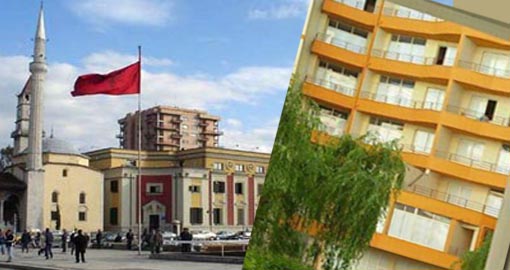
Despite the relatively low profile maintained by the MEK in Albania, its presence has not passed unnoticed both inside the buildings of a former private university in Tirana and in an actual fort in Manez, a small municipality a few kilometers away from Durazzo, which is still under construction. This was discovered by the investigative journalist Gjergj Thanasi, who revealed his findings in the Eyes of War.

How did you notice the growing presence of the MEK in Durres, but especially the Manez fort?

Thanasi: “The Council for Territorial Regulations (Keshilli i Rregullimit te Territorit) is responsible for issuing permits for the construction of public works and private buildings (factories, hotels, schools, roads, etc.). The Council had published a list of permits issued for a series of works and among them there was one for an NGO called F.A.R.A. The permit was dated 16 October 2017 and indicated authorization for “a residential complex and services for the Iranian community in Albania”. At that point I investigated this F.A.R.A which, strangely and contrary to Albanian law, was not registered with the Tax Office and did not even have a VAT number, which is prohibited in Albania.

“I then continued the investigation at the town planning office of the town of Durres (which I know very well having lived here for 52 years). There they showed me a written request from F.A.R.A. in which permission was requested for the development of a construction site (fence, water connections, electricity, containers, etc.) and it emerged that the Council had not issued any permit. The letter of request did not have a header, there was no address or telephone number.

“At this point I went to Manez (in the first week of November 2017) to see what was happening and found myself in front of a finished fence, an already installed electricity grid, and some trenches already under construction for the water network. There was also a container with offices inside the fence. Around the site there were also three guards and officers in the uniform of the State Police.”

How long has the MEK been present in Albania and how has this presence developed?

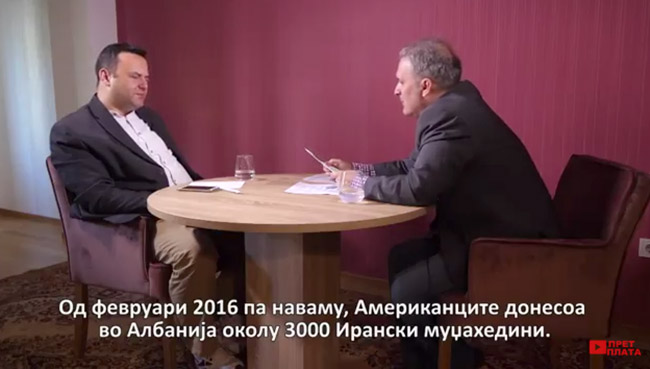
“The first 14 Mojahedin arrived from Iraq to Tirana on May 14, 2013 and were part of a group of 210 people transferred here shortly thereafter. In March 2016, after a visit to Albania by former Secretary of State John Kerry, the Rama government informed the country that we were going to host 2000 Mojahedin. In theory, a part were supposed to have been hosted in Romania but they all came here to Albania – as many as 3500. Almost all of them were housed in a former university building in a district of Tirana, while the leaders were in neighboring houses”.

Why were they transferred to Albania?

“Albania was chosen because no other country would take them, not even the Nauru island or the Kiribati islands. The US made them transfer to Albania because the Shiite militias in Iraq were ready to massacre them on the orders of Tehran.”

Conclusion

The presence of the MEK in Albania does nothing but further aggravate the delicate situation in the Balkans where other jihadist and Islamist groups are already present in force. It seems that the western Balkans area is becoming a logistics and transit zone in support of war policies in the Middle East. Above all, it is essential to bear in mind that for at least a decade in countries like Albania, Kosovo, Bosnia and Macedonia, there has been a Sunni/Salafist Islamist infiltration that is influencing young and old, many of them in difficult socio-economic conditions. It is no coincidence that more than a thousand foreign fighters have left the Balkans to enlist in the ranks of the jihadists in Syria since 2011. This is the greatest mobilization of Balkan Muslims to go and fight an external war in the history of the region. Many of these jihadists are now returning to their countries of origin, with all the associated risks.

Then there is a significant flow of funding, from countries and NGOs of the Gulf, to cultural centers and mosques that spread the Wahhabi and Salafist ideology. Bosnia, in particular, is suffering heavily from this infiltration.

The spread of radical Islamist ideology is also influencing the Balkan diaspora in Europe, as has been demonstrated by the latest arrests and the latest expulsions from Italian territory.

The settlement of the MEK in Albania is interesting because the organization shares with the Wahhabi and Salafi groups the fight against Shiite enemies (primarily Iran) and against the Shia axis that crosses Iraq and Syria from Tehran to reach Hezbollah in Lebanon; the axis, supported by Moscow, that emerged victorious from the Syrian-Iraqi conflict. The MEK’s presence beyond the Adriatic risks, however, increasing destabilization in an area already characterized by strong ethnic-religious tensions, and difficult political and socio-economic conditions.

Giovanni Glacalone, Giornalem, Italy, Translated by Iran Interlink

February 7, 2018 0 comments
FacebookTwitterPinterestWhatsappTelegramSkypeEmail
Mujahedin Khalq Organization members' families

We cannot withstand being far apart from you

Mr. Mahmoud Fadaei is behind the bars of the Rajavis’ cult for long years. Being far apart and unaware of their beloved, Mahmoud’s family suffer a lot.

Mr. Fadaei has 4 sisters: Bibi jan,Tahere,Mamlekat and Ehteram. They wrote a letter to their dear brother and published it on the Nejatngo website wishing their brother might access the internet and read their letter.

February 6, 2018 0 comments
FacebookTwitterPinterestWhatsappTelegramSkypeEmail
Mujahedin-e-khalq Organization Members

Who was Ashraf Rabiei?

Ashraf Rabiei is an iconic figure in the history of the Mujahedin Khalq Organization (the MKO/ MEK/ PMOI/ Cult of Rajavi). She was Massoud Rajavi’s first wife whose name later became the symbolic name of the MKO’s main headquarters in Iraq, “Camp Ashraf”. The group’s propaganda still uses the term “Ashrafneshan” to glorify its members as “unique fighters”.

Born in 1952 in a politically active family, Ashraf Rabiei was grown up in Tehran. Her brother was a member of the leading council of the early Mujahedin Khalq establishment.

Ashraf was a university student when she joined the MKO in 1972. She was arrested several times by the Shah’s Intelligence Agency (SAVAK) during her organizational activities before the Iranian Revolution in 1979.

She married Akbar Nabavi a religious high-ranking member of the group in the early years of her membership in the MKO. Nabavi killed himself with cyanide capsule in a clash with shah’s security forces in 1976. Meanwhile Ashraf was injured in the explosion of a hand-made bomb that she was making in their safe house; she was then arrested for the third time.

Meeting Massoud Rajavi in Evin

A mysterious visit with Massoud Rajavi in Evin prison turned Ashraf into an ardent promoter of Massoud. Since the alleged visit, Ashraf began promoting Rajavi’s rhetoric as the only leader of the MKO. They got married in 1980.

After the Iranian revolution, Ashraf Rabiei together with some other female members of the group including Maryam Qajar Azdanlou (Maryam Rajavi –the current leader of the group) actively worked for recruiting female students.

In 1980, Ashraf Rabeie was in the list of candidates of the MKO for the Iranian Parliament elections but she was not elected by people as well as other candidates of the group.

By the beginning of the MKO’s armed struggle against the Islamic Republic in June 1980, the clashes between the Iranian newly established government and the MKO fighters broke out. Two months later, Massoud Rajavi fled Iran for France and left Ashraf and their one-year-old son Mostafa in Iran.

After the departure of Rajavi, Mousa Khiabani became the commander of the MKO in Iran in violent operations. He and Ashraf were in the same team house when the Iranian security forces attacked the house on February 8th, 1982. Ashraf and Mousa and eighteen other MKO members were killed in the clash.

Her son, Mostafa survived the battle and was then yielded to to his grandparents by the security guards. Mostafa is reportedly living in Albania now.

Ashraf Rabiei ; Massoud Rajavi's first wife

February 5, 2018 0 comments
FacebookTwitterPinterestWhatsappTelegramSkypeEmail
Mujahedin-e-khalq Organization Members

Siamak Naderi; defector or MKO agent

A man called Siamak Naderi left the MEK in Tirana and quickly moved to Germany where, for the past few weeks, he had been given coverage in paid TV and other media outlets in which he established himself as an ex-member.

Even when he came out of the MEK some ex-members in Albania were suspicious – he had too much money and too much backing.

Now he’s turned around to repeat the things Rajavi says but this time in the guise of an ex-member. Last week he published a list of four hundred names in his new top-notch website claiming they are the names of people who have been tortured by Rajavi in Camp Ashraf.

When examined more closely it is clear this has been done to muddy the waters. Iran Interlink has been contacted by over 30 people saying their name is on this list, but they have not been tortured by the MEK. Looking at the names it is clear that Naderi has listed those who talk against the MEK as torturers, while others, who don’t speak out, are listed as victims.

A lot of FB posts and articles have been published exposing the lie behind Naderi’s claim. One, for example, showed that he was in prison in Iran at the time he was accused of torturing others in Camp Ashraf. Everyone says Rajavi will get nowhere by doing this since nobody believes these lies anymore. A couple of people wrote about Naderi, saying they had seen him in the MEK prison working for the MEK himself.

His picture – apparently while he was not out of the MEK – lying on beach sunbathing was published. He was clearly granted a particular lifestyle by Rajavi in exchange for working for them.

February 5, 2018 0 comments
FacebookTwitterPinterestWhatsappTelegramSkypeEmail
Iran Interlink Weekly Digest

Iran Interlink Weekly Digest – 220

++ Last week Maryam Rajavi visited Strasbourg along with several of her hired lobbyist MPs, claiming to be supporting the protesters in Iran and asking the EU to put pressure on Iran. Ironically one her lobbyists let slip that this visit had been planned from before the demonstrations – the room was pre-booked. After MEP Ana Gomes’ speech to parliament in December 2017, Rajavi is not able to appear in Brussels and her lobbyists have had to take her to Strasbourg instead. In Farsi there have been various writings related to her demands for prisoner release. Saber in Tabriz points out that the number of prisoners arrested in the demonstrations is not a fraction of the number of prisoners Rajavi is currently keeping in Ashraf Three camp in Albania. Another, Zahra Mirbagheri, points out that friend and foe everywhere are talking about the women who remove their headscarves and it has become a hot potato – the Americans are supporting them. But Maryam Rajavi kept silent over this issue as though it isn’t happening. Is this because she hasn’t had the go-ahead from the Saudis? Narges Beheshti had an interview with Faragh Association in Iran (a group for families). She addresses Maryam Rajavi saying, ‘as much as you talk about the protests I know this much, you have killed one of my brothers and imprisoned another. I can tell you that the son of my murdered brother, who is now an adult, has joined with me and we will not rest until you are brought to justice. Shame on the MPs who support you on the back of my brother!’

++ Malek Mashal left the MEK last week. In an interview with Sahar Family Foundation, he explained that he was able to escape because now that the UNHCR has agreed to support them individually he knew he was able to survive without MEK money. He confirmed that there are others who will leave soon for the same reason and he is in contact with them. He said he believes this is the end of Rajavi, because if a person can live outside the MEK, why would they want to continue living in there.

++ A man called Siamak Naderi left the MEK in Tirana and quickly moved to Germany where, for the past few weeks, he had been given coverage in paid TV and other media outlets in which he established himself as an ex-member. Even when he came out of the MEK some ex-members in Albania were suspicious – he had too much money and too much backing. Now he’s turned around to repeat the things Rajavi says but this time in the guise of an ex-member. Last week he published a list of four hundred names in his new top-notch website claiming they are the names of people who have been tortured by Rajavi in Camp Ashraf. When examined more closely it is clear this has been done to muddy the waters. Iran Interlink has been contacted by over 30 people saying their name is on this list, but they have not been tortured by the MEK. Looking at the names it is clear that Naderi has listed those who talk against the MEK as torturers, while others, who don’t speak out, are listed as victims. A lot of FB posts and articles have been published exposing the lie behind Naderi’s claim. One, for example, showed that he was in prison in Iran at the time he was accused of torturing others in Camp Ashraf. Everyone says Rajavi will get nowhere by doing this since nobody believes these lies anymore. A couple of people wrote about Naderi, saying they had seen him in the MEK prison working for the MEK himself. His picture – apparently while he was not out of the MEK – lying on beach sunbathing was published. He was clearly granted a particular lifestyle by Rajavi in exchange for working for them.

In English:

++ Jim Carey has written an analysis of the MEK for Mint Press News titled ‘The MEK: From Revolutionary Group to Imperialist Asset – The MEK’s violent past makes it clear why its only remaining friends are those who seek regime change in Iran at any cost.’ Carey says instead of focusing on the protests in Iran, Western audiences are being shown MEK demonstrations in Europe and told they are an anti-regime force. He gives a brief history of the MEK as an anti-Imperialist group and mercenary force for Saddam Hussein before showing how the MEK became a tool “of every anti-Iranian entity seeking to topple the government in Tehran, including Israel, which regularly coordinates with the MEK and uses the organization as a sort of intelligence launderer to release information to the public without crediting them for it.” The article concludes: “While the much of the media may be focusing on peaceful gatherings of the MEK in countries like France, the Iranian government claims several cells of the organization have been found preparing to incite violence in the country. It is important not to be misled by false profiles of MEK demonstrations as regular Iranians vying for change, but to keep in mind that the group is a terror organization and is almost universally despised in the country it claims to wish to ‘liberate’.”

++ Jo Lo in Middle East Eye exposes Rajavi’s lobbyist MPs as ‘UK MPs attended rally for Iranian group whose leader is still banned by London’. “Speaking to MEE, Iranian analyst Mahan Abedin said: ‘If UK parliamentarians are supporting them with a view to pushing for change inside Iran or supporting the protesters then this may not be the right way to go about it because this group has no traction. It’s universally reviled. One reason it’s so reviled is because memories are very long. They were blatantly fighting on the Iraqi side in the Iran-Iraq war’.”

February 02, 2018

February 4, 2018 0 comments
FacebookTwitterPinterestWhatsappTelegramSkypeEmail
Members of the MEK

Who was Mousa Khiabani?

Mousa Nasir Oghli Khiabani aliases Musa Khiabani was a veteran member of the Mujahedin-e Khalq Organization and among the central committee of the organization in 1970s. After the revolution Musa was the second most important leader of the MKO after Massoud Rajavi.

Mousa Khiabani

Ervand Abrahamian in his book “Radical Islam; the Iranian Mojahedin” pens:”

The revived Mojahedin was under the firm control of Masud Rajavi and his hand-picked entourage, most of whom had been in his commune in Qasr Prison. Musa Khiabani, Rajavi’s right-hand man, had been among the sixty-nine tried in 1972. Even then, despite his young age, he had been considered important enough to warrant a life sentence. The son of a humble and devout shopkeeper on the Tabriz bazaar, Khiabani frequently participated in the Moharram flagellation ceremonies. Graduating from the local high school, he won a state scholarship to study physics in Tehran University where he joined the Mojahedin and volunteered to go to Lebanon for guerilla training. En route, he and his colleagues were intercepted in Dubai; it was this that prompted the famous 1971 plane hijacking. One of the very last of the shah’s prisoners to be released, Khiabani wasted no time in returning to Tabriz to rebuild the Mojahedin. Until his death in February 1982, Khiabani and Rajavi acted as the organization’s main spokesmen, and consequently outsiders tended to view the two as equals; but insiders knew Rajavi to be pre-eminent.”

Mousa Khiabani

Musa Khiabani killed along with Ashraf Rabiei and 20 other members of the organization in an attack to their team house on February 8, 1982.

February 4, 2018 0 comments
FacebookTwitterPinterestWhatsappTelegramSkypeEmail
Mujahedin Khalq; A proxy force

UK MPs attended rally for Iranian group whose leader is still banned by London

The group was delisted as terrorist organisation in 2008 – but some analysts say it still operates as a cult

Several UK MPs attended a rally in Paris organised by a controversial group which was listed a terrorist organisation by the UK government until 2008, according to parliamentary data just released.

The National Council for Resistance of Iran (NCRI) is widely considered to be an alias for the Mojahedin-e Khalq (MEK) – otherwise known as the People’s Mojahedin Organisation of Iran (PMOI).

MEK/PMOI is described as a cult by some experts and former members while its leader, Maryam Rajavi, is still banned from entering the UK. The NCRI says that MEK falls under its umbrella.

Since it was founded in the 1960s, the group has gone from Islamic-Marxism to ally of Saddam Hussein to its current incarnation, attempting to position itself as the Iranian government-in-waiting.

Conservative MPs David Amess, Bob Blackman, Theresa Villiers, Matthew Offordand Labour MP Toby Perkins were among the UK delegation at the NCRI’s Free Iran rally in Paris on 1 July, where the NCRI is based in exile from Iran.

Speaking to MEE, Iranian analyst Mahan Abedin said: “If UK parliamentarians are supporting them with a view to pushing for change inside Iran or supporting the protesters then this may not be the right way to go about it because this group has no traction. It’s universally reviled.

“One reason it’s so reviled is because memories are very long. They were blatantly fighting on the Iraqi side in the Iran-Iraq war.”

The NCRI paid Perkins’ $1,112 in expenses to cover his travel, accommodation and meals, while attending the rally, according to the Parliamentary register of MPs’ financial interests. MPs Blackman and Amess were paid to attend by the Welle Association for Human Rights and Democracy, a Zurich-based organisation which campaigns for human rights in Iran, and the others appear to have paid for themselves.

The Paris rally featured speeches from politicians from around the world, including Villiers and Amess, who spoke of the need for human rights and democracy in Iran and their support for Rajavi.

According to video from the rally, Amess said: “The Iranian resistance is expanding its activities inside the country. Internationally, it has emerged as the only democratic alternative to the theocratic regime. So ladies and gentlemen, today we do not want to talk about condemnation of the mullahs’ crimes.

“We want to talk about regime change which is at long last within our grasp. We want to talk about a future Iran with Maryam Rajavi’s 10-point plan.” This 10-point plan is Rajavi’s a blueprint for a secular, liberal democracy in Iran.

Video from the event shows Rajavi entering the venue, followed by a dozen children dressed all in white, as the crowd and assembled politicians rise to their feet and applaud her.

“The ruling regime is in disarray and paralysed as never before,” Rajavi told the crowd, “Iranian society is simmering with discontent and the international community is finally getting closer to the reality that appeasing the theocracy is misguided.” Members of MEK also watched via satellite from the group’s camp in Albania.

How MEK evolved

The MEK began in the 1960s as an Islamic-Marxist group of militants who took up armed struggle, first against the Shah and his US supporters, and then against the post-revolution Iranian state. The US State Department holds the MEK responsible for killing six Americans – three military officers and three security contractors – in the 1970s.

During the Iran-Iraq war from 1980-1988, the MEK sided with Saddam Hussein and its militants launched an attack on Iran and helped provide intelligence on military targets within Iran.

The group is also alleged to have helped violently suppress Kurdish and Shia uprisings in Iraq, which it denies. In return for its support, the Iraqi ruler allowed the MEK to run a military camp near the Iranian border called Camp Ashraf.

According to a 2005 Human Rights Watch report, after the Iran-Iraq war failed to overthrow the Iranian regime, many MEK fighters grew disillusioned.

The MEK’s leaders, Massoud Rajavi and his wife Maryam Rajavi, then began to enforce punishments for dissent which have led to accusations from former members that the MEK has become a cult.

In its report, Human Rights Watch said that all MEK members were forced to divorce, although Massoud and Maryam Rajavi remained married, and that any dissenters were imprisoned and tortured inside Camp Ashraf.

Masoud Banisadr was the MEK/NCRI’s public relations chief until 1996, when he left the group. Speaking in 2009, he said that the organisation he joined during the 1970s “soon changed into a terrorist organisation and then a destructive cult”.

According to former members, two dissenters were killed while being interrogated, HRW reported.

In 1992, the MEK raided several Iranian government embassies in the West. In 1997, the US listed the MEK as a terrorist organisation and in 2001, the UK followed suit under pressure from the Iranian government, according to then-home secretary Jack Straw.

When Iraq was invaded in 2003, the MEK was disarmed as part of a ceasefire deal with the US forces. Its camps in Iraq were gradually and violently shut by the new Iraqi government, with the remaining residents from Camp Ashraf and Camp Liberty moving to a new camp in Albania in 2016.

Group tries to rebrand

Since the US invasion, MEK has distanced itself from its alliance with Saddam Hussein and rebranded itself as an Iranian government-in-waiting which supports freedom, democracy and secularism.

This has led the UK, US and EU to take it off their lists of terrorist organisations, although the UK’s last Labour government only did so after a court decision.

On the other side of the Iranian political scene, and just one month after the rally, Conservative MP Richard Bacon attended Hassan Rouhani’s inauguration and met with Iranian parliamentarians. The $1,208 cost of his trip was paid for by the Iranian government.

When asked to comment on his attendance at the rally in Paris, Perkins said that the information about “the arrangements for the trip are incorrect” but would not elaborate on this further. The parliamentary record states that he received funds from the NCRI and that the purpose of visit was “attending a conference on human rights”.

Jo Lo, Middle East Eye,

February 3, 2018 0 comments
FacebookTwitterPinterestWhatsappTelegramSkypeEmail
MEK women
Mujahedin Khalq; A proxy force

The MEK: From Revolutionary Group to Imperialist Asset

The MEK’s violent past makes it clear why its only remaining friends are those who seek regime change in Iran at any cost.

TEHRAN, IRAN (Analysis) — With the recent protests across Iran, some people are, for the first time, being exposed to a fringe group of Iranian exiles known as the Mujahideen-e-Khalq, or MEK, and their political front group, The National Council of Resistance of Iran (NCRI).

While audiences of Western media may be seeing the group, they aren’t actually being provided the proper context of who the MEK and NCRI are. Instead, MEK protests are being shown across Western media as “anti-regime” protests representative of the general mood of Iranians. The problem with these protests — which have been highlighted by outlets like Fox, Salon, and Vox — is that they aren’t actually taking place in Iran.

Instead of highlighting the concerns of the legitimate protests in Iran, multiple news outlets instead showed protests in cities like Paris, where the NCRI is based. MEK protests were highlighted due to their demand for the fall of the revolutionary government in Tehran, an agenda very different from that of the protesters in Iran.

But who exactly are the MEK and NCRI? How did this group — which claims to be based on a strange, malleable blend of Shia Islam and Marxism, and was listed as a terrorist organization by the U.S. until 2012 — become a close ally of the U.S. foreign policy establishment as a tool for applying pressure to Iran? To better understand how the MEK, which is almost universally rejected by the Iranian people, found itself in bed with nations like Israel and the U.S., it is worth examining MEK’s full history.

MEK’s origins in pre-revolution Iran

The MEK was founded in 1965 by six members who splintered from the Freedom Movement of Iran, a moderate party based in the politics of former Iranian Prime Minister Mohammad Mosaddegh. The MEK founders were followers of a Shia leftist thinker, Ali Shariati. The group split from the Freedom Movement due to that party’s moderate approach in challenging the government of the Shah.

Col. Jack Turner and Col. Paul Shaffer, victims of Mujaheddin-e-Khalq terror campaign/

When the MEK was founded it was accepted as a part of the larger anti-Shah revolutionary coalition (which easily integrated Marxist and liberal movements as long as they opposed the government) and, much like other factions of the revolution, the MEK also opposed Western interests in Iran. In the years leading up to the revolution, the MEK was so committed to waging war on U.S. interests that it attempted a kidnapping of U.S. Ambassador Douglas MacArthur II and an assassination of U.S. Air Force Brigadier General Harold Price. The MEK also carried out a host of bombings in Iran, many of which targeted U.S. citizens and assets (although the MEK now blames all these attacks on a splinter group, Peykar).

The MEK continued to work alongside Iran’s Islamic revolutionaries through the fall of the Shah, even claiming to have played a role in exposing the anti-Ayatollah Nojeh coup in 1980. The group attempted to field presidential candidates in 1980, although they were declared ineligible for office by Ayatollah Ruhollah Khomeini due to the organization’s beliefs that ran counter to the Islamic revolution. These events soon led to tension between the MEK and the government of the Islamic Republic, resulting in mutual hostility between the MEK and Hezbollah of Iran, a non-government militia that wasn’t directed by the revolutionary government, nevertheless, these conflicts and the mutual hostility which followed, eventually led to MEK terror attacks on government targets in Iran.

At that time, the revolutionary government in Iran had high levels of popular support, which made the MEK’s activities unacceptable to wide swaths of the population. Predictably, this led to the outlawing of MEK and the exile of its leadership, who ended up in France.

MEK in exile: from revolutionary to reactionary

After its terror campaign against the revolutionary government failed, the MEK was forced to flee to France, where it remained for several years. The MEK was then forced to leave France in 1986, as part of an agreement between Tehran and Paris to return French hostages in exchange for banning the MEK.

At this point, there were few safe havens for the MEK available except for the one country that was engaged in a direct war against the government of Iran: Saddam Hussein’s Iraq. Despite accurately calling Saddam an aggressor while the group was still in Iran, the MEK now joined the Iraqi government in opposing Iran and formed the National Liberation Army of Iran (NLA) in Baghdad.

The NLA was even more aggressive than the Iraqi army in its incursions into Iranian territory, going so far to assault and destroy Iranian villages during a ceasefire period brokered by the United Nations (UN). It was at this point that the MEK and its partner organizations officially became extensions of Iraqi policy and by extension, the CIA, which backed Saddam against Iran. These changes also led to the MEK improving relations with Israel in exchange for funding as well as intelligence on Tehran which was gathered by the Mossad, Israel’s intelligence arm.

At this juncture, the MEK’s ideology began to stray even further from that of the majority of Iranians (or anyone), and the group essentially evolved into a cult. The group began following the word of its leader Massoud Rajavi, enforcing rules such as making older women divorce their husbands and requiring celibacy for young women. The MEK also separated from its commitment to Marxism, instead adopting beliefs includingopening relations with the West, capitalism, and religious freedom.

The MEK continued to coordinate terror attacks on Iran from Iraq after the Iran-Iraq war up until 2003, when it allied with Iraqi forces in the short campaign to resist the U.S. invasion. The MEK surrendered alongside Iraqi troops, however, unlike Iraqi army units, MEK fighters were given a ‘special status’ designation as civilians by U.S. Secretary of Defense Donald Rumsfeld due to their opposition to Tehran — a controversial move even among right-wing think tanks like the Rand Corporation. This status allowed MEK fighters special protections in American custody, such as their captors’ abiding by the Geneva Conventions at a time when the U.S. torture program was gaining notoriety.

The MEK’s time in Iraq cemented the organization’s unpopularity in Iran. While the Iranian people protest against the government over legitimate grievances, such as economic reform, much like other anti-imperialist powers such as North Korea, Iran remembers the past — and Iranian citizens (no matter how they feel about the current government) overwhelmingly reject involvement by the U.S. in Iran’s internal affairs.

No friends but imperialists

The MEK’s sordid past makes it clear why its only remaining friends are Western nations and their allies who seek regime change in Tehran. The group was happy to play the role and abet the cause in exchange for protection and resources.

The MEK soon became a tool of every anti-Iranian entity seeking to topple the government in Tehran, including Israel, which regularly coordinates with the MEK and uses the organization as a sort of intelligence launderer to release information to the public without crediting them for it. The most notable instance of this relationship was the dissemination of information by the MEK claiming to prove Iran was developing nuclear weapons technology. While these allegations proved untrue, what made them even more nefarious was that the information was allegedly given to the MEK by the Mossad.

The MEK is also suspected to be behind the assassinations of Iranian civilian nuclear scientists, which they were trained to carry out by the Mossad, during a period in which the group was sheltered in the U.S. military’s Camp Ashraf in Iraq and allegedly allowed to continue carrying out covert terrorist activities in Iran.

The MEK has continued to aid other Israeli projects as well. In Syria, the MEK released ‘intelligence’ on the fight for Aleppo and other conflict zones within the country. The group, which was formerly condemned by U.S. politicians on both sides of the aisle, suddenly became a  darling of the neoconservative establishment, meeting with everyone from Newt Gingrich to Rudy Giuliani, and welcoming a Senate delegation that traveled to meet the group’s members living in Albania.

MEK in latest protests

While the MEK remains unpopular in Iran, the group still holds value to the U.S. It provides both an image of “Iranians against the regime” as well as a conduit to publish false intelligence demonizing Iran. The initial protests in Iran were started by citizens with legitimate grievances about the rising cost of essential consumer goods and the slow pace of economic reform, yet even those who oppose the government are likely to come from the large portion of Iranian citizens who harbor anti-American sentiment.

While the much of the media may be focusing on peaceful gatherings of the MEK in countries like France, the Iranian government claims several cells of the organization have been found preparing to incite violence in the country. It is important not to be misled by false profiles of MEK demonstrations as regular Iranians vying for change, but to keep in mind that the group is a terror organization and is almost universally despised in the country it claims to wish to “liberate.”

James Carey is journalist and editor at Geopolitics Alert. He specializes in the Middle East and Asian affairs.

Stories published in our Daily Digests section are chosen based on the interest of our readers. They are republished from a number of sources, and are not produced by MintPress News. The views expressed in these articles are the author’s own and do not necessarily reflect MintPress News editorial policy.

Jim Carey, Mint Press News,

February 1, 2018 0 comments
FacebookTwitterPinterestWhatsappTelegramSkypeEmail
The cult of Rajavi

Cult expert: destructive cult of Rajavi in dynamics and structure

By the definition proposed in Wikipedia,”Destructive cult”generally refers to groups whose members have, through deliberate action, physically injured or killed other members of their own group or other people. Leading cult expert, Rick Alan Ross considers certain characteristics for destructive cults. He is an American deprogrammer, founder and executive director of the nonprofit Cult Education Institute.

 In a last year interview with Rick Ross, he asserts that the “MEK fits well into definition of cult”.  He believes the lack of transparency and accountability makes the leaders of the Mujahedin Khalq (the MKO/ MEK/ PMOI/ the Cult of Rajavi) almost undefeatable in their shameful acts of sexual exploitation of members; in such cults, he contend, “the personality of the member is dissolved to a greater entity, i.e., the collective spirit which is imbued by the Big Brother mentality who control their thought and action.” [1]

Based on Rick Ross’s website and his book”Cults Inside Out”in the chapter”Defining a Destructive Cult”,  though there is a great deal of variation among cults, certain common themes are present in destructive cult groups.

Common characteristics of destructive cult:

Mind Control (undue Influence): Manipulation by use of coercive persuasion or behavior modification techniques without informed consent.

Charismatic Leadership: Claiming divinity or special knowledge and demanding un-questioning obedience with power and privilege. Leadership may consist of one individual or a small core of leaders.

Deception: Recruiting and fundraising with hidden objectives and without full disclosure of the use of mind controlling techniques; and the use of “front groups.”

Exclusivity: Secretiveness or vagueness by followers regarding activities and beliefs.

Alienation: Separation from family, friends and society, including a change in values and substitution of the cult as the new “family;” evidence of the subtle or abrupt personality changes.

Exploitation: Can be financial, physical, or psychological; pressure to give money, to spend a great deal on courses or give excessively to special projects and to engage in inappropriate sexual activities, even child abuse.

Totalitarian Worldview (we/they syndrome): Effecting dependence, promoting goals of the group over the individual and approving unethical behavior while claiming goodness. [2]

“In my opinion, the MEK fits well within the three core criteria often used to define a destructive cult based upon the structure, dynamics and behavior of the group,” Rick Ross states. “MEK also uses thought reform and coercive persuasion to gain undue influence over its members.” [3]

What are “mind control” techniques?

Rick Ross website presents certain mind control techniques:

Group Pressure and “Love Bombing” discourages doubts and reinforces the need to belong through use of child-like games, singing, hugging, touching, or flattery.

Isolation/Separation creates inability or lack of desire to verify information provided by the group with reality.

Thought-Stopping Techniques introduce recruit to meditating, chanting, and repetitious activities which, when used excessively induce a state of high suggestibility.

Fear and Guilt induced by eliciting confession to produce intimacy and to reveal fears and secrets, to create emotional vulnerability by over and covert threats, as well as alternation of punishment and reward.

Sleep Deprivation encouraged under the guise of spiritual exercises, necessary training, or urgent projects.

Inadequate Nutrition sometimes disguised as special diet to improve heath or advance spirituality, or as rituals requiring fasting.

Sensory Overload forces acceptance of complex new doctrine, goals, and definitions to replace old values by expecting recruit to assimilate masses of information quickly with little opportunity for critical examination.

“Whatever the rules are within MEK is not the point,” Rick Ross says. “What is relevant is that the Rajavis can make new rules, change rules and do whatever they want. Their rules are typically used to manipulate and control their followers. They like what they control and don’t like what they don’t control. The Rajavis then use that undue influence to exploit and manipulate MEK members for their own benefit and financial gain.” [4]

According to Rick Ross, “Rajavi and his wife are the defining role of authoritarian charismatic leadership that has become the focus, defining element and driving force of MEK. There are no checks and balances to their power, meaningful accountability or transparency.” [5]

Sources:

[1]Habilian, MEK fits well within the criteria used to define a cult, February 07, 2017

[2] https://www.culteducation.com/

[3] Habilian, MEK fits well within the criteria used to define a cult, February 07, 2017

[4] ibid

[5] ibid

January 31, 2018 0 comments
FacebookTwitterPinterestWhatsappTelegramSkypeEmail
Newer Posts
Older Posts

Recent Posts

  • The black box of the torture camps of the MEK

    December 24, 2025
  • Pregnancy was taboo in the MEK

    December 22, 2025
  • MEPs who lack awareness about the MEK’s nature

    December 20, 2025
  • Why did Massoud Rajavi enforce divorces in the MEK?

    December 15, 2025
  • Massoud Rajavi and widespread sexual abuse of female members

    December 10, 2025
  • Facebook
  • Twitter
  • Instagram
  • Youtube

© 2003 - 2025 NEJAT Society . All Rights Reserved. NejatNGO.org


Back To Top
Nejat Society
  • Home
  • Articles
  • Media
    • Cartoons
    • NewsPics
    • Photo Gallery
    • Videos
  • Publications
    • Books
    • Nejat NewsLetter
    • Pars Brief
  • About Us
  • Contact us
  • Editions
    • عربي
    • فارسی
    • Shqip