Nejat Society
  • Home
  • Articles
  • Media
    • Cartoons
    • NewsPics
    • Photo Gallery
    • Videos
  • Publications
    • Books
    • Nejat NewsLetter
    • Pars Brief
  • About Us
  • Contact us
  • Editions
    • عربي
    • فارسی
    • Shqip
Nejat Society
Nejat Society
  • Home
  • Articles
  • Media
    • Cartoons
    • NewsPics
    • Photo Gallery
    • Videos
  • Publications
    • Books
    • Nejat NewsLetter
    • Pars Brief
  • About Us
  • Contact us
  • Editions
    • عربي
    • فارسی
    • Shqip
© 2003 - 2024 NEJAT Society. nejatngo.org
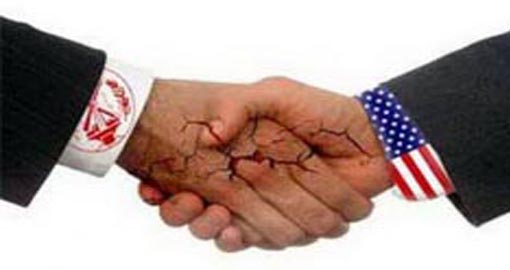
Rajavi and Arafat
Massoud Rajavi

Rajavi greets Yasser Arafat in Tehran

Yasser Arafat receives the Herald of the MKO by its leader Massoud Rajavi.

[In September 1981, political adviser to Yasser Arafat and former PLO representative in Tehran called at the secluded house outside Paris that former Iranian President Abolhassan Bani-Sadr was sharing with Massoud Rajavi, leader of the Mujahideen-e Khalq guerrillas.  Hani Hassan was quickly escorted past the swarm of newsmen and police at the villa’s gate and brought to Rajavi. Mujahideen sources interpreted Mr. Hassan’s surprise visit — and his invitation for Rajavi to meet with Yasser Arafat sometime soon in Beirut, Christian Science monitor reported at the time.]

October 4, 2017 0 comments
FacebookTwitterPinterestWhatsappTelegramSkypeEmail
Trump and Netanyahu
Mujahedin Khalq; A proxy force

Trump to meet his match in Netanyahu

On Monday 18 September 2017, The Guardian writes that Secretary of state Rex Tillerson and national security adviser HR McMaster both indicated the US is open to negotiations on staying in the accord.

Trump and Netanyahu’s antipathy to the multilateral deal agreed in Vienna two years ago binds them together, even as it sets them apart from the overwhelming majority of other world leaders attending the annual UN summit.

Western allies in Europe – most notably the UK, France and Germany, co-signatories of the 2015 deal – remain committed to the agreement and have signalled they are willing to disagree sharply and openly with Trump on the issue.

Nikki Haley, the US ambassador to the UN who made herself the principal channel for the president’s critique of the deal, has been a lonely voice against it on the security council.

The stance taken by Netanyahu and Trump has also set them apart from their most senior national security advisers.

On a visit to Buenos Aires on Tuesday, the Israeli prime minister declared: “Our position is straightforward. This is a bad deal. Either fix it – or cancel it.” Netanyahu is supported in that position by his defence minister, Avigdor Lieberman, and the US ambassador in Washington, Ron Dermer. But he is reportedly not backed by the Israeli defence and intelligence establishment, which believes Iran is abiding by the agreement and its strict limits on nuclear activities and stockpiles of fissile material.

Getting Trump to do his bidding on Iran helps Netanyahu to present a domestic political image of being a winner.

“In line with Netanyahu’s perception of what serves Israel, his interest is in maintaining a strong American presence in the region including militarily and in a maximally adversarial US-Iran relationship,” said Levy, head of the US Middle East Project. “Getting Trump to do his bidding on Iran also helps Netanyahu to present a domestic political image of being a winner.”

Trump has signalled his intention to withdraw certification of the Iran deal in a report the state department is due to submit to Congress by 15 October. Although that would not lead directly to the end of the agreement, it would open the door to new US sanctions which would represent a violation of the deal and trigger its unravelling.

Such a move is known to be opposed by both the secretaries of defense and state, James Mattis and Rex Tillerson. Both are generally hawkish on Iran but argue that the US should not provoke a new crisis – and possibly a nuclear arms race – in the Middle East in the midst of a tense nuclear and missile stand-off with North Korea.

The regional and global threat represented by Pyongyang’s rapidly accelerating nuclear weapons programme will be another theme of Trump’s first address to the UN. His administration has repeatedly threatened that it is ready to resort to military action if UN sanctions do not curb Iran’s missile and nuclear tests.

If Trump’s vow to bail out of the Paris agreement is dropped it could redouble his resolve to dump the Iran nuclear deal, another Obama legacy. One of his avenues of attack, already outlined by Haley, will be to argue that the UN nuclear watchdog, the International Atomic Energy Agency (IAEA), is not being assertive enough in inspections of suspect military sites in Iran.

The push for military base inspections, with its echoes of contentious UN meetings in the run-up to the 2003 Iraq invasion, is likely to meet stiff resistance in the security council. Even those capitals which might agree that the IAEA could be more assertive, point to the certain and tangible benefits of the Vienna deal, which has reduced the Iranian stockpile of low-enriched uranium by nearly 99%.

The Israeli prime minister has echoed the US president’s view that there will be ‘no daylight’ between them on issues such as settlements and the Iran deal.

Trita Parsi, the head of the National Iranian American Council, which advocates diplomacy and engagement with Tehran, says Trump is swayed by Netanyahu and the Saudi leadership, who oppose the nuclear deal, not primarily for nuclear-related reasons but because of the recognition it gives Iran’s role as a regional power-broker.

“The perspective of those who didn’t like this deal, is that, at the end of the day, this deal is not just about the Iranian nuclear issue,” Parsi, the author of a book on the deal, Losing an Enemy: Obama, Iran and the Triumph of Diplomacy. “The most important thing is that beyond that, it ended three decades of American policy of containing Iran. It accepted than Iran is a major power in the region.”

Since making Riyadh the destination of his first foreign trip as president, Trump has stuck closely to Saudi side on its disputes with Iran and Qatar, to a degree that has frequently baffled some of his own advisers.

The president’s circle also includes several prominent US lobbyists for a violent Iranian opposition group, Mujahideen e-Khalq (MeK), including Rudy Giuliani, John Bolton and Elaine Chao, Trump’s transportation secretary.

 “President Trump himself appears motivated to oppose reflexively nearly all of President Obama’s major agreements,” Nicholas Burns, a former undersecretary of state for political affairs. “That is a major mistake in judgement on his part.”

The desire to obliterate Obama’s mark on history may be something else that Trump and Netanyahu share. The Israeli leader had an acrimonious relationship with Obama, who successfully fended off Netanyahu’s bid to derail the Iran deal in the US Congress two years ago.

“What Netanyahu and Trump have in common, among other things, is their inability to accept criticism, their tendency to turn critics into enemies and their fervent wish to wipe the smile off what they see as Obama’s condescending face,” Israeli commentator Chemi Shalev, wrote in Haaretz on Sunday.

“This is the backdrop to the meeting in New York on Monday between Trump and Netanyahu, the two senior members of the Obama Victims Club, who are both seeking payback by trying to erase his signature foreign policy achievement.”

Persia digest

October 3, 2017 0 comments
FacebookTwitterPinterestWhatsappTelegramSkypeEmail
Massoud Rajavi

Massoud Rajavi met Ayatollah Khomeini

Massoud Rajavi leader of the Mujahedin-e Khalq group (R) and Mussa Khiabani with Ayatollah Khomeini in the months after the Iranian revolution.

October 3, 2017 0 comments
FacebookTwitterPinterestWhatsappTelegramSkypeEmail
Massoud Rajavi

Rajavi escaped Iran

On 29th July 1981 Rajavi and Bani Sadr escape to Paris. They [in disguise] were driven to a Tehran military base and got on board of a hijacked Iranian air force 707 jet tanker around 10 at night. Rajavi and Banisadr together established the National Council of Resistance of Iran. The NCRI had 12 members including the Mojahedin. However Rajavi claimed to be the head of National Council or Resistance and not the representative of Mojahedin. Rajavi appointed another representative for Mojahedin.


October 3, 2017 0 comments
FacebookTwitterPinterestWhatsappTelegramSkypeEmail
Iran Interlink Weekly Digest

Iran Interlink Weekly Digest – 205

++ This week several more MEK members have separated from the cult and taken up residence in what is referred to as the ‘hotel’. The residents – around 240 – in this block are still paid for by the MEK, so are not completely independent of the group. In August, the MEK said they would no longer pay for these disaffected members. After a petition to the UNHCR and international pressure, the MEK was forced to back down and resume payments. This situation arose because the MEK members were brought to Albania under the terms of an agreement struck between the UN, the Americans and the MEK under which the MEK is responsible for the financial upkeep of its members; although money is provided by the UNHCR because the members have been granted UN refugee status. This week the MEK has again started to use the payments as leverage against the separated members. They are being told that if they do not sign an agreement not to speak with their families they will not receive their refugee allowance.

++ The MEK have announced a message by Massoud Rajavi in which he begs the members not to leave for the next five or six months. He promises that by then they will “definitely topple the regime”. Derisory reactions to this news remind us that Rajavi has said this for 35 years. “He is not a lucky person anyway, so this will be just another unlucky failure for him”, says one commentator. Others ask, “how on earth did you come up with five months to overthrow the regime from Albania?” One comment says “When Rajavi talks even a cooked chicken dies of laughter!”

++ In Albania, ex-members who have completely left the group – around 250 and increasing weekly – are busy writing their memories and experiences of the group and sending them to various Farsi websites to be published. It appears that when they do come out they start talking and they have a lot to say about their lives.

++ Mehdi Khoshhal has published an article titled ‘Censorship’. He explains that while Rajavi usually talks about everything under the sun on the MEK websites, about the election in Germany they said nothing. Khoshhal likens this to the sudden silences that would befall the group when under the patronage of Saddam Hussein. Unless Saddam gave permission or fed them a line, the MEK couldn’t say anything. This current self-censorship is linked to the Saudis. Now the Saudis tell the MEK what to do and say. All the MEK can do for themselves now is to bark at the ex-members.

In English:

++ Julian Borger in The Guardian reports after Donald Trump’s speech to the UN General Assembly. Borger says that in agreeing to defeat the Iran nuclear deal, Trump and Netanyahu are “bound by their mutual loathing of Obama’s foreign policy deal, even as it sets them apart from other world leaders at the UN general assembly. The article includes Saudi Arabia in this scheme. “Since making Riyadh the destination of his first foreign trip as president, Trump has stuck closely to Saudi side on its disputes with Iran and Qatar, to a degree that has frequently baffled some of his own advisers.

“The president’s circle also includes several prominent US lobbyists for a violent Iranian opposition group, Mujahideen e-Khalq (MeK), including Rudy Giuliani, John Bolton and Elaine Chao, Trump’s transportation secretary.

“Another driving motive appears to be a desire to undo as much of Obama’s presidential legacy as possible, at home and abroad.

“‘President Trump himself appears motivated to oppose reflexively nearly all of President Obama’s major agreements,’ Nicholas Burns, a former undersecretary of state for political affairs. ‘That is a major mistake in judgement on his part.’”

++ An article by Nejat Society says that the MEK is deluded if it believes that the people of Iran want regime change. The US involvement in the regime change agenda against Iran is both overt and covert. Support for the MEK is an indication that regime change must be brought about through violence. But the MEK claims “’Let’s wholeheartedly accept that a foreign military intervention is not the answer for Iran. It is the chants inside not the weapons outside that will make change happen’.

“What is ‘the chant inside’ that Ali Safavi is boastful about? Whether they are for the Islamic Republic or against it, Iranians do share one main idea about the MKO: They hate the MKO. Just one example of the demonstration of such hatred was the tweeter trend on the occasion of the group’s gathering in Paris a few months ago. Iranians contributed to #IranHatesMEK to debate those brainwashed or/and bribed authorities who had attended the event.

“The MKO’s claim of representing the Iranian public opinion is so unrealistic that one may suggest that the group is not living on this planet. Is Ali Safavi so unaware of the aspirations of the Iranian public or is he just making efforts to run the group’s propaganda?”

September 29, 2017

October 2, 2017 0 comments
FacebookTwitterPinterestWhatsappTelegramSkypeEmail
Habilian Foundation

Female victims of terrorism offer recommendations at UN Human Rights Council

The women victims of terrorism called for strengthening international cooperation to reduce the problems of women affected by terrorism in the world in the 36th session of the UN Human Rights Council in Geneva, Switzerland.

Representatives of the Association for Defending Victims of Terrorism attended the 36th session of the United Nations Human Rights Council under the motto”Empowering Women Victims of Terrorism as a Necessity for the Future of Human Beings”, and offered recommendations to UN mandate holders, representatives of states, human rights activists, and other NGOs.

The Association proposed some projects to the UN mandate holders to strengthen the role of the UN in protecting women affected by terrorism and emphasized the implementation of such proposals which were welcomed by the UN officials.

ADVT delegate held a side-event on”Empowering Women Victims of Terrorism”attended by experts from Spain, Britain, Cameroon and Iran. They analyzed and explained the situation of women affected by terrorism in the world and offered solutions.

“International law is still incomplete when it comes to protecting these women. During war times, the protection granted by the Geneva Conventions isn’t enough. Besides, terrorism is becoming more complex, so the international community should have a more dynamic approach to women’s protection from terrorism,”one of the law professors said.

One of the prominent and impressive points raised at this side-event was the testimonies delivered by women victims of terrorism. One of the victims was Ms. Manijeh Safiyari who explained how she was affected by a terrorist act.

“I was a 17 year-old girl when I lost my right leg from up the knee in a bomb explosion by Mujahedin-e Khalq Organization in Tehran Bazaar. My mother who was with me was injured and is now disabled. At that age, while I had only one leg, I did my best to keep myself and my family calm and avoid isolation. I continued to study, started college and obtained a bachelor’s degree, and now I drive with the left foot and go swimming. I also participated in sports events in the fields of discus throw, weightlifting, archery and shooting with a pistol, and at last, I joined the darts tournament, and in all of these fields I received a national title and a lot of medals,”she said.

The session is now being held from 11 to 29 September for three weeks.

October 2, 2017 0 comments
FacebookTwitterPinterestWhatsappTelegramSkypeEmail
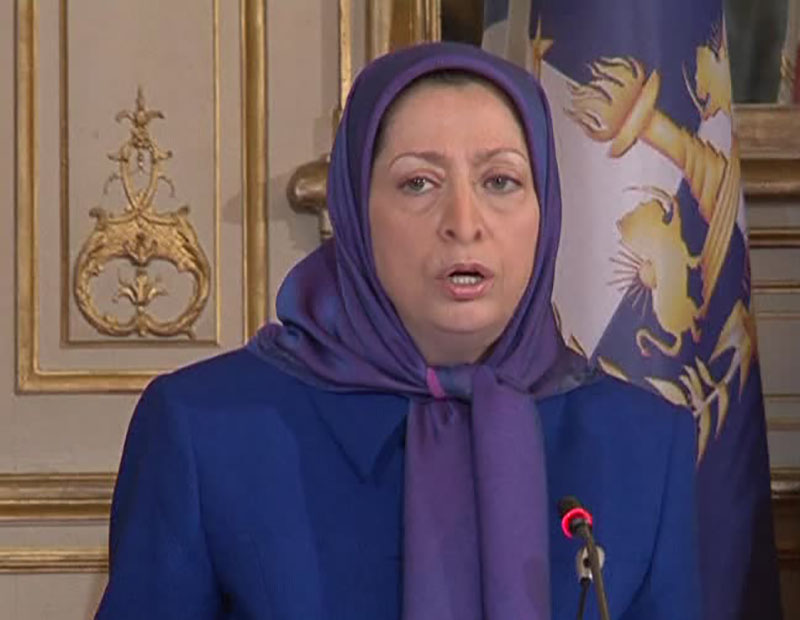
Maryam Rajavi
Maryam Rajavi

Who is Maryam Rajavi?

Born in December 1953, Tehran, Maryam Qajar Azodanlu (later called Rajavi) was raised in a middle-class family. She joined the Mujahedin Khalq Organization (the MKO/MEK/PMOI/the Cult of Rajavi) after her older sister was killed by the secret Police of the Shah.

Maryam Qajar Azodanlu served as an organizer of the anti-Shah student movement in Sharif University of Tehran –where she was studying Metallurgy– in the 1970s. She then became an official of the social section of the MKO, where she served until 1981. After the Iranian Revolution, Maryam was a parliamentary candidate in 1980 but she was not elected by the people.

Married to Mehdi Abrishamchi , one of the high-ranking members of the group, she had a baby girl when they fled Iran to join Massoud Rajavi in France.

In France, Maryam became the administrator of Massoud’s office. The close relationship between Maryam and Massoud in the office led to their dramatic marriage in 1985 immediately after she her divorce from Medi Abrishamchi. The marriage was celebrated as an ideological revolution in the history of the group. Maryam Rajavi was named the co-leader of the MKO.

1985, she became Joint-Leader of the PMOI and served in that capacity until 1989 when she became the Secretary General. The marriage signaled a turning point that changed the MKO from an armed political organization to the Cult of Rajavi.

Since then Maryam Rajavi was announces as the role model for all members of the group to leave their own family life and have Massoud in their minds as their only love. Maryam was a tool for Massoud to impose his cult-like practices such as forced divorce, mandatory celibacy and a large number of other violation of human rights against the rank and file in Iraq.

Maryam Rajavi was then selected as the so-called President elect of the NCR, for the transitional government after the so-called overthrow of the Islamic Republic. She is still enduring the title!

After the American invasion to Iraq, Maryam fled to France. Her headquarter in Auver sur d’oise in the suburb of Paris was raided by the French Police in June 2003. She was placed under arrest together with 160 of the group members and the assets of the MKO were frozen by the French judiciary. The Police seized millions of dollars from the group’s headquarters. The group was accused of preparing to commit or finance acts of terrorism and money laundering.

A dozen of brainwashed supporters of the Cult of Rajavi set themselves on fire to protest the arrest of Maryam. Two women were killed eventually. French Police released the cult leader to stop the horrible scenes of self-immolations in European capitals.

Maryam was the first assistant of her disappeared husband Massoud in his quest for sexual abuse of female members of their cult. She was charged with the responsibility of mental preparation of members of the group’s so-called Elite Council to get naked in front Massoud and consequently get in bed with him.

In July 2010, the Supreme Iraqi Criminal Tribunal issued an arrest warrant for 39 MEK members, including Rajavi, for crimes against humanity committed while suppressing the 1991 uprisings in Iraq. According to the testimonies by former members of the group. Maryam told the MKO forces “Take the Kurds under your tanks, save the bullets for the Iranian soldiers.”

Also Read:

Maryam Rajavi’s background and experience

October 1, 2017 0 comments
FacebookTwitterPinterestWhatsappTelegramSkypeEmail
Mujahedin Khalq; A proxy force

Deconstructing Neoconservatives’ Manifesto for War With Iran

Ever since Donald Trump entered the presidential campaign of 2016, he has been attacking the July 2015 agreement that Iran signed with P5+1 – the five permanent members of the United Nations Security Council plus Germany – officially known as the Joint Comprehensive Plan of Action (JCPOA). Calling it”a horrible agreement;””the stupidest deal of all time,”and”the worst deal ever,”the President has been trying to find an excuse to take the United States out of the agreement. Finding such an excuse has not, however, been easy because the International Atomic Energy Agency (IAEA) has continuously certified that Iran has abided by its obligations under the JCPOA, the most recent of which was announced on 31 August.

In search of an excuse for leaving the JCPOA, the Trump administration dispatched Nikki R. Haley, US Ambassador to the United Nations, Vienna, Austria, in order to convince the IAEA to demand inspecting Iran’s military sites. But, Yukiya Amano, Director-General of the IAEA, vigorously defended his agency’s work in Iran, declaring that,”The nuclear-related commitments undertaken by Iran under [the JCPOA] are being implemented. The verification regime in Iran is the most robust regime which currently exists. We have increased the inspection days in Iran, we have increased inspector numbers … and the number of images [taken from Iran’s nuclear sites] has increased. From a verification point of view, it is a clear and significant gain.”Haley then delivered a speech at the American Enterprise Institute (AEI), the same”think thank”that played a leading role in deceiving the American people to support the illegal invasion of Iraq, in which she laid out the Administration’s”arguments”for leaving the nuclear agreement. The speech, which was reminiscent of the arguments before invasion of Iraq in 2003, was replete with lies, exaggerations and innuendoes and outside the neoconservatives and Israel lobby convinced no one. Then, on 19 September the President went on ranting at the UN, calling the JCPOA”embarrassing”to the United States, and threatening to scuttle it.

But, the most comprehensive plan of action for leaving the JCPOA and eventually going to war with Iran was proposed by John Bolton, former US ambassador to the UN and Assistant Secretary of State during the first term of President George W. Bush. For years Bolton has been advocating bombing Iran’s nuclear facilities, either by Israel, the US, or both. He is also a lobbyist for Mujahedin-e Khalgh Organization (MEK, also known as MOK), an Iranian opposition group that for years was listed by the State Department as a terrorist organization, and is universally despised by the Iranian people for its collaboration with the regime of Saddam Hussein during Iran-Iraq war, and working with Israel to assassinate Iranian nuclear scientists. Bolton also has very cozy relations with anti-Muslim hate groups, which only goes to show the depth of the man’s mental state.

Bolton’s comprehensive plan of aggression (BCPOA) against Iran is built upon lies, exaggeration, warmongering, and twisting the truth. Let us consider the essence of his”arguments”one by one:

BCPOA: we must explain the grave threat to the US and our allies, particularly Israel.

What is the threat? Iran’s path to making nuclear bomb – if it ever wanted to, for which there was no evidence – has been blocked. Iran gave up over 13,000 of its centrifuges that were enriching uranium; it stopped enriching uranium at 19.75 percent altogether; it demolished its under-construction heavy water nuclear reactor in Arak; it put its heavy water plant under the IAEA supervision and inspection (even though it did not have to); it converted its uranium enrichment facility in Fordo, which had been built under a mountain and could not be bombed, to a research facility; it shipped out its 10 tons of enriched uranium, and it signed and implemented the Additional Protocol that has granted the IAEA access to any site in Iran that it deems necessary to inspect. Iran’s air force belongs to museums. Iran’s army is equipped with the 1970s and 1980s armaments, and this is while the US and its allies have sold hundreds of billions of dollars worth of weapons to Israel, Saudi Arabia, and the Arab nations of the Persian Gulf.

BCPOA: The JCPOA’s vague and ambiguous wording; its manifest imbalance in Iran’s direction; Iran’s significant violations and its continued, indeed, increasingly, unacceptable conduct at the strategic level internationally….. We can bolster the case for abrogation by providing new, declassified information on Iran’s unacceptable behavior around the world.

What is the imbalance? What has Iran gained in return for all of its aforementioned practical concessions? Congress has imposed new sanctions on Iran. The Trump administration has been actively discouraging the European Union from doing business with Iran, and the Treasury Department has been dragging its feet for issuing new license for US corporations to enter Iran market. All of these represent actual violations of US obligations toward the JCPOA. Major European banks are still reluctant to get involved with Iranian banks, and over two years after signing of the agreement, Iran has attracted only a small amount of foreign investment, much less than what the Rouhani administration had hoped for.

What are the ambiguous wordings of the JCPOA? The 159 page document covers every aspect of Iran’s nuclear program. Every word, every letter, and every comma in it was negotiated with much intensity. It is Bolton’s own claim that is vague and imprecise.

What are Iran’s”significant violations”? The IAEA has certified continuously Iran has abided by its obligations. Iran twice exceeded its limit on heavy water, but after the IAEA pointed them out, it quickly rectified the problem. Note also that, in the absence of a heavy water nuclear reactor, heavy water has no use. Once again, Bolton has resorted to exaggeration, at best, and outright lie, at worst.

And, what are Iran’s”increasingly, unacceptable conduct at the strategic level internationally”? Bolton is silent, but he is presumably referring to Iran’s intervention in Iraq and Syria, and its alleged support of the Houthis in Yemen. It was the Iraqi government that asked Iran for help after Daesh (also known as the ISIS and ISIL) suddenly took over large part of its territory in June 2014. Moreover, the Shiite-led government in Baghdad came to power after US invasion of that nation. If it were not for Iran’s help, Baghdad would have fallen to Daesh in 2014. Iran (and Russia) should not have intervened in Syria, but after Saudi Arabia, United Arab Emirates, Qatar, and Turkey, not to mention the United States, first intervened in Syria, as acknowledged by Joe Biden in his speech at Harvard University, and by Hillary Clinton in her 17 August 2014 e-mail to her confidante John Podesta, who could blame Iran? Never mind that Iran and Syria have a mutual defense treaty. As for Yemen, all objective experts and analysts believe that Iran has not given any large-scale aid to the Houthis (it could not, anyway, given that Yemen has been blockaded by Saudi Arabia, the US, and their allies); that before Saudi Arabia began its war crimes in Yemen, Iran was not really interested in their small and poor nation, and that the Houthis are not Iran’s”puppets.”

BCPOA: unlike the JCPOA, the provisions of which shield Iran’s ongoing efforts to develop deliverable nuclear weapons.

What”ongoing efforts to develop deliverable nuclear weapons?”This is an outrageous lie, given the aforementioned concessions by Iran, and the fact that even hardliners, such as Defense Secretary James Mattis, support JCPOA. Bolton is willing to fabricate any lie in order to make his point.

BCPOA: The Administration’s explanation in a”white paper”should stress the many dangerous concessions made to reach this deal, such as allowing Iran to continue to enrich uranium; allowing Iran to operate a heavy-water reactor; and allowing Iran to operate and develop advanced centrifuges while the JCPOA is in effect.

These are, once again, lies. Iran only had one heavy-water reactor under construction, but after signing JCPOA, it destroyed it. Iran can enrich uranium only at very low levels, 3-5 percent, which cannot be used for any bomb making activities. Iran is not allowed to operate its advanced centrifuges, but can only carry out limited research on their further developments.

BCPOA: Utterly inadequate verification and enforcement mechanisms and Iran’s refusal to allow inspections of military sites also provide important reasons for the Administration’s decision.

It is not clear what type of inspection regime Bolton considers as”adequate.”Apparently, he wants to prove a negative, which means that every inch of Iran’s territory must be inspected. I suppose Bolton, who has no expertise or experience with inspecting a nuclear program, and is simply a lying propagandist for the US neocons, believes that he knows better than the IAEA to inspect Iran’s nuclear program.

Bolton’s reference to military sites is pure nonsense and hyperbole. The Additional Protocol stipulates that the IAEA can request access to such sites in order to resolve questions about undeclared nuclear materials and activities. However, the IAEA can only do so if it has credible evidence, which is currently nonexistent, and even then it is allowed only to carry out”location-specific environmental sampling”at or near the suspected sites. What Bolton wants is scrapping all international agreements, so that his thirst for war can be satisfied.

The JCPOA also has provisions regarding this issue. Section Q of Annex 1 of the JCPOA stipulates that if the IAEA has concerns regarding undeclared nuclear materials or”activities inconsistent with the JCPOA”at undeclared sites, it can request access to such a site. Section T of the same Annex contains commitments regarding various activities relevant to developing a nuclear warhead. Thus, the IAEA can, in principle, demand access to any site where it suspects such activities may be going on. But, the demand for access must be based on credible evidence. The Trump administration has no such evidence, but Bolton and the Administration want to push for visits to military sites, not because there is any evidence justifying the demand, but rather to have Iran rightfully reject it, so that they can claim that Iran has”violated”its obligation, or that it has something to hide. The goal is to justify creating a new”reality,”as Bolton puts it, akin to what George W. Bush administration tried to do by creating its own nonexistent”reality.”

In his demand for inspecting Iran’s military sites, Bolton is supported by the usual suspects; the so-called experts, such as David Albright and his non-jihadi ISIS that has, nevertheless, been waging a jihad against Iran and its peaceful nuclear program. Albright, the expert of”last resort”for the neocons such as Bolton, together with his usual gang, issued a statement demanding the revival of an old issue that was resolved with the JCPOA, namely, visiting the Parchin site 35 km southeast of Tehran that has been producing conventional ammunition for Iran since 1930s.

After all of his lies, exaggerations, and fabricated stories, Bolton begins his BCPOA for abrogating the JCPOA. This part of his proposal is sheer fantasy. It is as if the world has forgotten about his lies and those of other neocons about Iraq’s nonexistent weapons of mass destruction. It is as if the world does not know that Bolton and his neocon comrades are ultimately responsible for the bloodshed and destruction in the Middle East, North Africa and Afghanistan that have been going on for over 16 years. His suggestions include explaining”why the deal is harmful to US national interests.”Never mind the interest of the rest of the world, the JCPOA is in true national interests of the US

In his fantasy world Bolton also believes that the US can fool the rest of the world. He states that if the US abrogates the JCPOA,”Iran is not likely to seek further negotiations once the JCPOA is abrogated, but the Administration may wish to consider rhetorically leaving that possibility open in order to demonstrate Iran’s actual underlying intention to develop deliverable nuclear weapons, an intention that has never flagged.”So, not only does Bolton, in his utter imbecility, believe that”rhetoric”alone would do the”trick;”he also wants to use it to demonstrate Iran’s intention to develop”deliverable nuclear weapons.”How the two are connected is beyond my comprehension.

As usual, Bolton also demonstrates his hatred of the UN and international treaties that has always been part of his thinking in fantasy land. As part of his fantasy proposal Bolton demands that”unilateral US sanctions should be imposed outside the framework of Security Council Resolution 2231 so that Iran’s defenders cannot water them down.”So, surprisingly, Bolton actually recognizes that Iran does have its own defenders, which goes against all of his rhetoric regarding building an international coalition against Iran. Over the past several days, France’s President Emmanuel Macron and British Prime Minister Theresa May, as well as Federica Mogherini, the European Union foreign policy chief, made it clear to President Trump that they vigorously support the JCPOA.

Bolton’s plan is also crude and cruel. He demands ending”all visas for Iranians, including so called”scholarly,”student, sports, or other exchanges.”As Hillary Clinton and Joe Biden admitted, it is Saudi Arabia, Qatar and other Sunni Arab states of the Middle East that supported Daesh and other terrorist groups. Saudi Arabia citizens make up the second largest group among the Daesh terrorists; they constituted 40-45 percent of all foreign fighters that went to Iraq to fight with the U.S. forces after Iraq was occupied, and they are more likely than citizens of any other Muslim country to join the terrorist groups. 15 out of 19 terrorists that were responsible for the terrorist attacks of 11 September 2001 were Saudi citizens, and yet it is the Iranian people that should be punished.

Why do Bolton and the neoconservatives hate Iran so unabashedly? They have made it clear that they believe the US should rule the world. They disguise this wish under the term”US leadership.”To them, international treaties and organizations are useful only to the extent that they protect and advance what they consider as the US interests, which are almost never the true national interests of the United States. Bolton and the neoconservative have never seen a war that they have not liked it. They see Iran not as a threat to the national security of the United States – which Iran is not – but as an impediment to US imperial ambitions for completely dominating the Middle East and its natural resources. This, and only this, is the reason for the neoconservatives constantly trying to provoke a war with Iran.

Muhammad Sahimi is a professor at the University of Southern California in Los Angeles. For the past two decades he has published extensively on Iran’s political developments and its nuclear program. He was a founding lead political analyst for the website PBS/Frontline: Tehran Bureau, and has also published extensively in major websites and print media. He is also the editor and publisher of Iran News and Middle East Reports and produces a weekly commentary for broadcasting that can be watched at http://www.ifttv.com/muhammad-sahimi.

by Muhammad Sahimi ,   

September 27, 2017 0 comments
FacebookTwitterPinterestWhatsappTelegramSkypeEmail
Mujahedin Khalq Organization members' families

Nejat members met the MKO hostage mother

Nejat Society members met the suffering, aged mother of Habibollah Qasemi . Habibollah is taken hostage by the Mujahedin-e Khalq Cult for many years.

The Nejat Society members showed the waiting mother, some new photos of Habibollah. Her eyes welled up with tears looking at her dear son’s photo.

September 26, 2017 0 comments
FacebookTwitterPinterestWhatsappTelegramSkypeEmail
MEK after Trump
Mujahedin Khalq; A proxy force

Don’t Let Trump Loose on Iran

Earlier this summer, the U.S. State Department released a long-anticipated retrospective volume of documents detailing the CIA-engineered coup that ousted Iran’s celebrated Prime Minister Mohammad Mossadegh in 1953. The latest collection of memos and diplomatic cables chronicle “the use of covert operations by the Truman and Eisenhower administrations” to overthrow the popular prime minister — who successfully nationalized British oil assets in Iran — and restore the rule of a Western-friendly autocrat on the peacock throne in Tehran.

Nearly 65 years later, as historians and academics begin to sift through the updated records, the allure of regime change in Iran has not strayed far from the White House. Most recently, it has been reinvigorated by Donald Trump’s presidency.

Undermining the nuclear deal

President Donald Trump’s stated policy toward Iran has long been ambiguous and subject to platitudes and sudden shifts. On the 2015 nuclear agreement between Iran and six world powers — U.S., Russia, China, Britain, France and Germany — Trump initially told Fox News that as a businessman, he likes “to honor deals,” but within months declared that his “number-one priority” would be to dismantle the “disastrous deal” with Tehran. Since his inauguration, Trump’s opposition to the accord — which prevents Iran from obtaining a nuclear weapon in exchange for its reintegration into the global economy — has become a cornerstone of his time in office. But lost amid all the charged rhetoric, Trump has now twice certified Iran’s compliance with the agreement, just as the International Atomic Energy Agency (IAEA) regularly has since the deal was implemented last year (most recently here). On the whole, while the Trump administration moved to put Iran’s government “on notice” shortly after taking office, the White House has since articulated little in the way of policy.

This lack of a comprehensive strategy is reportedly wreaking havoc within the administration. According to numerous news reports, Trump was reluctant to recertify Iran’s compliance with the nuclear accord in July despite the counsel of his senior advisers. “He had a bit of a meltdown,” one official said of Trump, when the president was forced to extend the deal for lack of a way out. Soon after, in an interview with The Wall Street Journal, Trump suggested that his administration was prepared to not recertify Iran’s compliance again in September. Instead, according to Foreign Policy magazine, the president has entrusted a unit of aides with conjuring up a case for America’s withdrawal from the agreement.

As demonstrated by his departure from the Paris climate accord, rails against trade deals like the North American Free Trade Agreement and the Trans-Pacific Partnership, and defunding of U.N. programs, Trump has disavowed the multilateral approach to addressing pressing international issues. In 2013, at the outset of the nuclear negotiations, President Barack Obama famously acknowledged “America’s role in overthrowing the Iranian government during the Cold War,” and sought to allay enduring fears by stating that his administration was “not seeking regime change” in Tehran. In 2015, after nearly two years of dogged diplomacy between several world powers and Iran, many viewed the announcement of the nuclear accord as an opportunity to begin a new chapter of relations between Tehran and many Western countries. But by repeatedly undermining the deal, akin to his campaign against the Affordable Care Act, a recalcitrant Trump is threatening to undo years of progress toward normalizing relations with Iran’s government. Such a move would signal a significant shift in policy toward Tehran, one that critics argue is geared toward confrontation and ultimately regime change.

Pressuring Tehran

As a citizen and then a candidate for office, Trump decried America’s historical role in overthrowing foreign governments and promoting democracy abroad. He routinely criticized the disastrous 2003 invasion of Iraq, and in July, he shuttered a CIA program to arm and train anti-regime forces in Syria. In December, shortly after being elected president, Trump declared that his administration would “pursue a new foreign policy that finally learns from the mistakes of the past. We will stop looking to topple regimes and overthrow governments.”

This has not been the case, however, when it comes to Tehran. Just days after Iran’s presidential elections in May, when nearly three-quarters of the electorate turned out to vote, Trump flew to Riyadh, Saudi Arabia, to instead call for Tehran’s isolation. In June, Secretary of State Rex Tillerson testified that the administration would look to support “elements inside of Iran that would lead to a peaceful transition of that government.” That month, The New York Times reported that the CIA had assigned a new head of the agency’s Iran desk, signaling “a more muscular approach to covert operations” like the one that deposed Mossadegh. To top it off, important figures in the Trump campaign, including Rudy Giuliani, Newt Gingrich and John Bolton, who have all reportedly vied for positions in the White House, have been parroting the agenda of the Mujahedeen-e-Khalq (MEK), a traitorous and illegitimate cult dedicated to overthrowing the government in Iran.

To be clear, none of this is taking place in a vacuum. Forces backed by both sides continue to battle in violent proxy wars across the Middle East. In recent months, there have been several skirmishes involving the American and Iranian navies in the Persian Gulf. Additionally, the Republican-dominated Congress in Washington has been particularly receptive to Trump’s aggressive posturing toward Iran, and voted last month to authorize additional sanctions on Tehran. Iran declared the sanctions a breach of the nuclear agreement and responded by test-firing a rocket into space.

This ongoing scenario of retaliatory measures could quickly escalate into a serious confrontation, particularly in the absence of a bilateral channel of talks established as a result of intense nuclear diplomacy. Various reports suggest that the White House is looking to provoke Tehran into withdrawing from the deal, perhaps by demanding access to sensitive military sites that Iran would almost certainly reject. By jeopardizing the nuclear deal, reinstating sanctions and rejecting diplomacy, Amir Handjani of the Atlantic Council contends that Trump “could force the Iranian leadership to believe that nuclear weapons are essential for their survival.”

One-man show

Unlike the early 1950s, however, when British interests aligned with Washington’s to make the coup of Mossadegh a reality, America is now alone is considering an alternative to Iran’s current government. The prevailing view among European leaders is that the nuclear accord offers an inclusive model of engagement that could further promote dialogue and help stabilize conflicts in the region. Britain, France, Germany, Italy and Russia have all heavily invested in Iran since last year, and in recent weeks, French President Emmanuel Macron has emerged as a key defender of the agreement. Earlier in August, Federica Mogherini, the EU’s foreign policy chief, attended the inauguration of Iranian President Hassan Rouhani in Tehran, where the incumbent called for the “mother of all negotiations, not the mother of all bombs.” Mogherini has long sought to safeguard the agreement from Trump’s onslaught. “There should be no doubt that the EU stands firmly by the deal, which is a multilateral endeavor,” she wrote in The Guardian this year, but it remains unclear exactly how far European leaders are willing to go to ensure the deal’s survival.

Even in Washington, where anti-Iran sentiments run high, the memories of the invasion of Iraq remain particularly potent. As two experts on regime change recently explain in the Washington Post, “the United States’ troubles in Afghanistan, Iraq and Syria are typical. Regime change often backfires. It does not improve relations. And it triggers civil wars that can draw the intervening nations into costly quagmires,” as illustrated by Trump’s recent decision to increase the U.S. military’s presence in Afghanistan.

Still, the president’s readiness to withdraw from the nuclear agreement has not wavered amid consultations with Washington’s military brass and key foreign policy advisers. Earlier in August, David S. Cohen, a former deputy director of the CIA, warned that despite “the aftermath of the episode regarding weapons of mass destruction in Iraq,” the White House may again attempt to politicize intelligence reports to support its belligerent policy toward Tehran. “If it’s politicized, that credibility and reliability is undermined,” he told CNN last week.

Ali Vaez, a senior analyst at the International Crisis Group, recently wrote in The New York Times that a decision by the Trump administration to “escalate regional tensions, deepen sectarian rifts, undermine the nuclear agreement, pursue regime change and eschew all diplomatic engagement would be a hazardous affair,” and risks “breeding another generation of enemies” in Iran.

In Trump’s provocative statements, many Iranians cannot help but recall 1953, when the U.S. and Britain moved to quell Iran’s budding democratic movement and laid the groundwork for revolution in 1979. As the White House prepares for a confrontation with Tehran, the international community would do well to look back to the lead up to the 2003 invasion of Iraq, and restrain the Trump administration from igniting another futile conflict in the Middle East.

Sam Khanlari, theislamicmonthly, 

September 26, 2017 0 comments
FacebookTwitterPinterestWhatsappTelegramSkypeEmail
Newer Posts
Older Posts

Recent Posts

  • The black box of the torture camps of the MEK

    December 24, 2025
  • Pregnancy was taboo in the MEK

    December 22, 2025
  • MEPs who lack awareness about the MEK’s nature

    December 20, 2025
  • Why did Massoud Rajavi enforce divorces in the MEK?

    December 15, 2025
  • Massoud Rajavi and widespread sexual abuse of female members

    December 10, 2025
  • Facebook
  • Twitter
  • Instagram
  • Youtube

© 2003 - 2025 NEJAT Society . All Rights Reserved. NejatNGO.org


Back To Top
Nejat Society
  • Home
  • Articles
  • Media
    • Cartoons
    • NewsPics
    • Photo Gallery
    • Videos
  • Publications
    • Books
    • Nejat NewsLetter
    • Pars Brief
  • About Us
  • Contact us
  • Editions
    • عربي
    • فارسی
    • Shqip