Nejat Society
  • Home
  • Articles
  • Media
    • Cartoons
    • NewsPics
    • Photo Gallery
    • Videos
  • Publications
    • Books
    • Nejat NewsLetter
    • Pars Brief
  • About Us
  • Contact us
  • Editions
    • عربي
    • فارسی
    • Shqip
Nejat Society
Nejat Society
  • Home
  • Articles
  • Media
    • Cartoons
    • NewsPics
    • Photo Gallery
    • Videos
  • Publications
    • Books
    • Nejat NewsLetter
    • Pars Brief
  • About Us
  • Contact us
  • Editions
    • عربي
    • فارسی
    • Shqip
© 2003 - 2024 NEJAT Society. nejatngo.org
Morteza Balali
Mujahedin Khalq Organization members' families

The MKO cult hostages will be released in near future

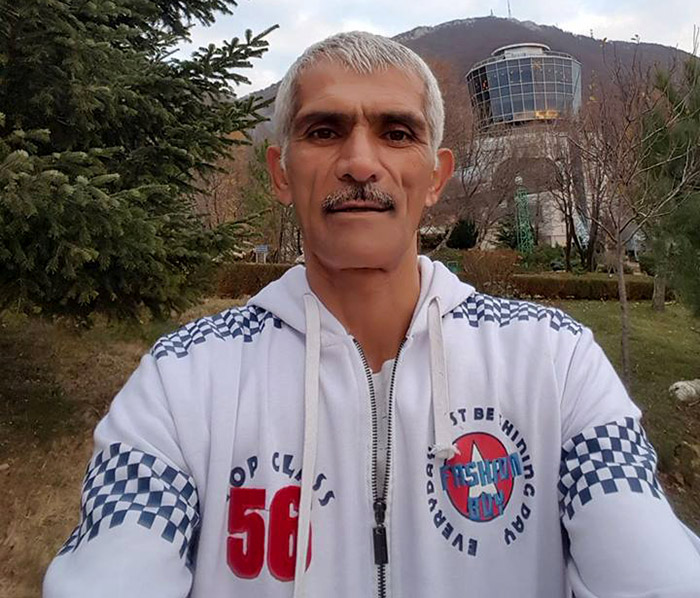
Mr. Balali whose brother ; Reza is taken hostage by the cult of Mujahedin-e Khalq visited the Nejat Society members of Markazi Province branch.

Hearing about the MKO members’ movement to an isolated camp near Tirana- Ashraf 3 ; Mr. Balali said that the MKO Cult leaders brainwash members and make hollow promises. He also said:” The Rajavi Cult is declining.. I am sure that the cult hostages will be released in near future ..”
December 26, 2017 0 comments
FacebookTwitterPinterestWhatsappTelegramSkypeEmail
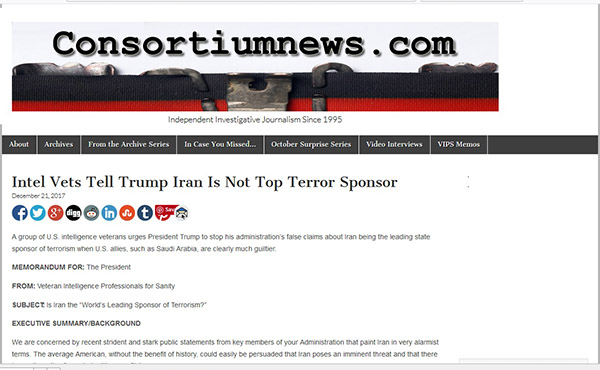
Consortium News Website
Mujahedin Khalq; A proxy force

Intel Vets Tell Trump Iran Is Not Top Terror Sponsor

A group of U.S. intelligence veterans urges President Trump to stop his administration’s false claims about Iran being the leading state sponsor of terrorism when U.S. allies, such as Saudi Arabia, are clearly much guiltier.

MEMORANDUM FOR: The President

FROM: Veteran Intelligence Professionals for Sanity

SUBJECT: Is Iran the “Worl6d’s Leading Sponsor of Terrorism?”

EXECUTIVE SUMMARY/BACKGROUND

We are concerned by recent strident and stark public statements from key members of your Administration that paint Iran in very alarmist terms. The average American, without the benefit of history, could easily be persuaded that Iran poses an imminent threat and that there is no alternative for us but military conflict.

President Donald Trump addresses the nation about his Iran policy on Oct. 13, 2017. (Screenshot from Whitehouse.gov)

We find this uncomfortably familiar territory. Ten years ago former President George W. Bush was contemplating a war with Iran when, in November of 2007, intelligence analysts issued a formal National Intelligence Estimate (NIE) debunking the prevailing conventional wisdom; namely, that Iran was on the verge of getting a nuclear weapon.  The NIE concluded that Iran had stopped working on a nuclear weapon in 2003.

Recalling this moment in his memoir, Decision Points, President Bush noted that the NIE’s “eye-popping” intelligence findings stayed his hand.  He added this rhetorical question: “How could I possibly explain using the military to destroy the nuclear facilities of a country the intelligence community said had no active nuclear weapons program?”

We believe that you are facing a similar situation today. But instead of an inaccurate claim that Iran has nuclear weapons, the new canard to justify war with Iran is the claim that Iran remains the “world’s leading state sponsor of terrorism.” This is incorrect, as we explain below.

* * *

One of the recurring big bipartisan lies being pushed on the public with the enthusiastic help of a largely pliant media is that Iran is the prime sponsor of terrorism in the world today.

In the recent presentation of your administration’s National Security Strategy for 2018, the point is made that:

“Iran, the world’s leading state sponsor of terrorism, has taken advantage of instability to expand its influence through partners and proxies, weapon proliferation, and funding. . . . Iran continues to perpetuate the cycle of violence in the region, causing grievous harm to civilian populations.”

Those sentiments are echoed by several other countries of the Middle East. Saudi Arabia’s Foreign Minister, Adel al-Jubeir, for example, declared in October 2015 that: Iran “is the biggest sponsor of terrorism in the world, and it is working on destabilizing the region.”

The Saudi foreign minister conveniently declined to mention that 15 of the 19 terrorists who hijacked planes and attacked America on 11 September 2001 were Saudis, not Iranians.  And, while Iran was an active promoter of terrorism two decades ago, it is no longer in the forefront of global terrorism. Ironically, that dubious distinction now goes to Iran’s accusers — first and foremost, Saudi Arabia.

The depiction of Iran as “the world’s leading state sponsor of terrorism” is not supported by the facts. While Iran is guilty of having used terrorism as a national policy tool, the Iran of 2017 is not the Iran of 1981. In the early days of the Islamic Republic, Iranian operatives routinely carried out car bombings, kidnappings and assassinations of dissidents and of American citizens. That has not been the case for many years. Despite frequent claims by U.S. officials that Iran is engaged in terrorism, we simply note that the incidents recorded annually in the U.S. Department of State’s Patterns of Global Terrorism rarely identifies a terrorist incident as an act by or on behalf of Iran.

Iran’s relationship with Hezbollah also has evolved radically. In the early years of the Islamic Republic, Hezbollah was often a proxy and sub-contractor for Iran. But during the last 20 years Hezbollah has become an entity and political force in its own right. It fought Israel to a standstill in 2006 in southern Lebanon, which was a watershed moment in establishing Hezbollah’s transformation into a conventional army. In the intervening years, Hezbollah, which is now part of the Lebanese government, also has turned away from the radical, religious driven violence that is the hallmark of the Sunni extremists, like ISIS.

Iran’s Asymmetrical Response

After Iran fell under the rule of the Ayatollah in 1979 terrorism, its role in high profile terrorist attacks, such as the taking of U.S. hostages and the bombings of the U.S. Embassy and the Marine barracks in Lebanon, fed understandable U.S. animosity towards Iran.  But Iran’s actions were not driven primarily by blind hatred or radical religious views.  For Iran terrorism was a way to punch back against more powerful foes, principally the United States, which was providing military and intelligence support to Iran’s neighbor and enemy, Iraq.

Portrait of the late Ruhollah Khomeini by Mohammad Sayyid

The Iranians were also pragmatic and had direct dealings with Israel. During the early days of the Iranian revolution the Mullahs, despite publicly denouncing Israel, happily accepted secret military support from the Israelis. Israel was equally pragmatic. The Israeli leaders ignored the Mullahs and gave the support as a means of helping counter the threat posed by Iraqi President Saddam Hussein. A classic case of the enemy of my enemy is my friend.

The public image of Iran as a hotbed of fanatical terrorists has been usurped since the August 1998 bombings of the U.S. Embassies in east Africa by Al Qaeda and other radical Sunni entities. The U.S. Government’s own list of terrorist attacks since 2001 shows a dramatic drop in the violence carried out by Iran and an accompanying surge in horrific acts by radical Sunni Muslims who are not aligned with Iran.  The latest edition of the Global Terrorism Index, a project of the U.S. Department of Homeland Security, shows that four groups accounted for 74 percent of all fatalities from terrorism in 2015 — Boko Haram, Al-Qaeda, the Taliban and ISIS.

Thirteen of the 14 Muslim Groups identified by the U.S. intelligence community as actively hostile to the US are Sunni, not Shia, and are not supported by Iran:

– ISIS (Sunni)

– The Al-Nusra Front (Sunni)

– Al-Qa’ida Central (Sunni)

– Al-Qa’ida in Magheb (Sunni)

– Al-Qa’ida in Arabian Peninsula (Sunni)

– Boku Haram (Sunni)

– Al-Shabbab (Sunni)

– Khorassan Group (Sunni)

– Society of the Muslim Brothers (Sunni)

– Sayyaf Group in the Philippines (Sunni)

– Taliban in Pakistan and Afghanistan (Sunni)

– Lashgar i Taiba (Sunni)

– Jemaa Islamiya (Sunni)

– Houthis (Shia)

The last major terrorist attack causing casualties that is linked to Iran was the July 2012 bombing of a bus with Israeli tourists in Bulgaria. That departure from Iran’s more recent policy on terrorism was retaliation for what Iran perceived to be Israel’s role in assassinating five Iranian scientists involved with Iran’s Nuclear program, between January 2010 and January 2012 (the dates and names of those attacked are appended).

One can easily imagine the outrage and lust for revenge that would sweep the U.S., if Americans believed a foreign country sent operatives into the United States who in turn murdered engineers and scientists working on sensitive U.S. defense projects.

Special Operations

There have been other terrorist attacks inside Iran bearing the handprint of support from the United States. Author Sean Naylor, Relentless Strike, which details the history of operations carried out by U.S. Joint Special Operations Command (JSOC) over the past 30 years, sheds light on this uncomfortable truth:

The late Al-Qaeda leader Osama bin Laden.

“JSOC personnel also worked with the Mujahideen-e-Khalq (MEK), a militant Iranian exile group that had based itself in Iraq after falling afoul of the ayatollahs’ regime in Tehran. The State Department had placed the MEK on its list of designated terrorist organizations, but that didn’t stop JSOC from taking an attitude of “the enemy of my enemy is my friend” toward the group. “They were a group of folks that could transit the border, and they were willing to help us out on what we wanted to do with Iran,” said a special operations officer.”

The MEK were classified as a terrorist group, until the United States decided that as long as the MEK would help kill Iranians rather than Americans, that they were no longer terrorists. The MEK’s history of terrorism is quite clear. Among more than a dozen examples over the last four decades these four are illustrative:

–  During the 1970s, the MEK killed U.S. military personnel and U.S. civilians working on defense projects in Tehran and supported the takeover in 1979 of the U.S. Embassy in Tehran.

–  In 1981, the MEK detonated bombs in the head office of the Islamic Republic Party and the Premier’s office, killing some 70 high-ranking Iranian officials, including Iran’s President, Premier, and Chief Justice.

–  In April 1992, the MEK conducted near-simultaneous attacks on Iranian embassies and installations in 13 countries, demonstrating the group’s ability to mount large-scale operations overseas.

– In April 1999, the MEK targeted key military officers and assassinated the deputy chief of the Iranian Armed Forces General Staff.

Despite this history, a bipartisan parade of prominent U.S. political and military leaders has lobbied on behalf of MEK and has been well compensated in return.

Benighted Policy So Far

In the ultimate ironic turn, the U.S.-led 2003 war in Iraq played a critical role in Iran’s resurgence as a regional power. Saddam Hussein was replaced by Shia muslims who had received sanctuary in Iran for many years and Baathist institutions, including the Army, were taken over by Iraqis sympathetic to Tehran.

Iran has come out ahead in Iraq and, with the 2015 nuclear agreement in place, Iran’s commercial and other ties have improved with key NATO allies and the other major world players—Russia and China in particular.

Official pronouncements on critical national security matters need to be based on facts. Hyperbole in describing Iran’s terrorist activities can be counterproductive. For this reason, we call attention to Ambassador Nikki Haley’s recent statement that it is hard to find a “terrorist group in the Middle East that does not have Iran’s fingerprints all over it.” The truth is quite different. The majority of terrorist groups in the region are neither creatures nor puppets of Iran. ISIS, Al-Qaeda and Al-Nusra are three of the more prominent that come to mind.

You have presented yourself as someone willing to speak hard truths in the face of establishment pressure and not to accept the status quo. You spoke out during the campaign against the 2003 U.S. invasion of Iraq as a historic mistake of epic proportions. You also correctly captured the mood of many Americans fatigued from constant war in far away lands. Yet the torrent of warnings from Washington about the dangers supposedly posed by Iran and the need to confront them are being widely perceived as steps toward reversing your pledge not to get embroiled in new wars.

We encourage you to reflect on the warning we raised with President George W. Bush almost 15 years ago, at a similar historic juncture:

“after watching Secretary Powell today, we are convinced that you would be well served if you widened the discussion … beyond the circle of those advisers clearly bent on a war for which we see no compelling reason and from which we believe the unintended consequences are likely to be catastrophic.”

Iran’s President Hassan Rouhani celebrates the completion of an interim deal on Iran’s nuclear program on Nov. 24, 2013, by kissing the head of the daughter of an assassinated Iranian nuclear engineer. (Iranian government photo)

APPENDIX

LIST OF IRANIAN SCIENTISTS ASSASSINATED IN IRAN

January 12, 2010: Masoud Alimohammadi, Iranian Physicist:

Killed by a car bomb.  The perpetrator reportedly confessed to having been recruited by Israeli intelligence to carry out the assassination.

November 29, 2010: Majid Shahriari, Iranian nuclear scientist:

Killed by a car bomb.  According to German media, Israel was the sponsor.

November 29, 2010: Assassination attempt on Fereydoon Abbasi Iranian nuclear scientist:

Wounded by a car bomb.

July 23, 2011: Darioush Rezaeinejad, Iranian electrical engineer, unclear scientist

Killed by unknown gunmen on motorcycle.  Specialist on high-voltage switches — a key component of nuclear warheads.  Assassinated by Israeli intelligence, according to the German press.

January 11, 2012: Mostafa Ahmadi-Roshan, Iranian nuclear scientist

Killed at Natanz uranium enrichment facility by a magnetic bomb of the same kind used in earlier assassinations of Iranian scientists.

________________________

Signed:

Richard Beske, CIA, Operations Officer (ret.)

William Binney, former NSA Technical Director for World Geopolitical & Military Analysis; Co-founder of NSA’s Signals Intelligence Automation Research Center


Marshall Carter-Tripp, Foreign Service Officer (ret.) and Division Director, State Department Bureau of Intelligence and Research

Bogdan Dzakovic, Former Team Leader of Federal Air Marshals and Red Team, FAA Security, (ret.) (associate VIPS)

Philip Giraldi, CIA, Operations Officer (ret.)

Larry C. Johnson, former CIA and State Department Counter Terrorism officer

Michael S. Kearns, Captain, USAF (Ret.); ex-Master SERE Instructor for Strategic Reconnaissance Operations (NSA/DIA) and Special Mission Units (JSOC)

John Kiriakou, Former CIA Counterterrorism Officer and former senior investigator, Senate Foreign Relations Committee

Karen Kwiatkowski, former Lt. Col., US Air Force (ret.), at Office of Secretary of Defense watching the manufacture of lies on Iraq, 2001-2003

Edward Loomis, NSA, Cryptologic Computer Scientist (ret.)

David MacMichael, National Intelligence Council (ret.)

Ray McGovern, former US Army infantry/intelligence officer & CIA analyst (ret.)

Elizabeth Murray, Deputy National Intelligence Officer for Near East, CIA and National Intelligence Council (ret.)

Torin Nelson, former Intelligence Officer/Interrogator (GG-12) HQ, Department of the Army

Todd E. Pierce, MAJ, US Army Judge Advocate (ret.)

Coleen Rowley, FBI Special Agent and former Minneapolis Division Legal Counsel (ret.)

Greg Thielmann — Former director of the Strategic, Proliferation, and Military Affairs Office of the State Department’s intelligence bureau (INR) and former senior staffer on the Senate Intelligence Committee

Kirk Wiebe — former Senior Analyst, SIGINT Automation Research Center, NSA

Lawrence Wilkerson, Colonel (USA, ret.), Distinguished Visiting Professor, College of William and Mary (associate VIPS)

Sarah G. Wilton, CDR, USNR, (Retired)/DIA, (Retired)

Robert Wing — former Foreign Service Officer (associate VIPS)

Ann Wright, Col., US Army (ret.); Foreign Service Officer (who resigned in opposition to the war on Iraq)

December 25, 2017 0 comments
FacebookTwitterPinterestWhatsappTelegramSkypeEmail
EUP
Mujahedin Khalq as an Opposition Group

Violence by MKO fanatics in European parliament!

Scenes of attacking people, beating and kicking them are regular scenes played by the agents of the Mujahedin Khalq Organization (the MKO/ MEK/ the Cult of Rajavi) in European cities. Paris and Brussels have witnessed most of these scenes. Beating former members who are exposing the true nature of the group in the European Parliament of French Assembly.

Mehdi Khoshal

Moreover, the scenes of self-immolations committed by the MKO members in June 2003 are perhaps the most tragic ones that ended with the death of two female sympathizers of the group, Neda Hassani and Sediqeh Mohajeri.

The MKO was classified as a terrorist organization by the EU until 2009 and by the United States until 2012. It was delisted based on the allegation that it has not committed terrorist acts since 2002. Indeed, the group has not claimed any terrorist acts since that time but potential use of violence has been always in the essence of the group. Using cold weapons against defectors and beating them in public places under the pretext that they are agents of the Islamic Republic has been a very normal reaction of the MKO operatives against former members.

However, the recent violent act by the MKO took place in the European parliament while the group’s leader Maryam Rajavi was present in the scene. The attack was also iconic because it was soon broadcast in the social media and denounced by the European parliament member, Ana Gomes. Ms. Gomes addressed the parliament President, Antonio Tajani asking for prohibition of the MKO leader and agents from entering the EP :

“Mr President, I give full support for High Representative Mogherini’s efforts in implementing the nuclear agreement with Iran, which is strategic for the EU and global security.

“The EU should encourage Iran to play a responsible role in its region and beyond, in contrast with the Wahhabism fuelling terrorism and escalation by Saudi Arabian proxies. But the EU should also demand that Iran stops supporting the military butcher Assad in Syria.

“The EU cannot also be silent about human rights concerns in Iran, but to be credible and effective it must not turn a blind eye to the provocative activities of sects such as the MEK (Mojahedin-e Khalq), which act within this Parliament, and last week even physically assaulted an opponent just outside the Parliament. This criminal act happened when the MEK leader Maryam Rajavi was in the Parliament. I demand from President Tajani the expulsion of MEK agents who work on EP premises. This is also a security matter for all of us.”

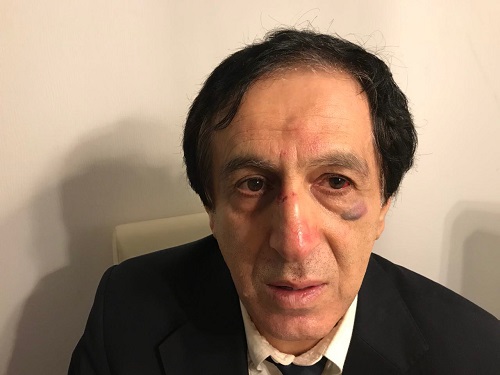
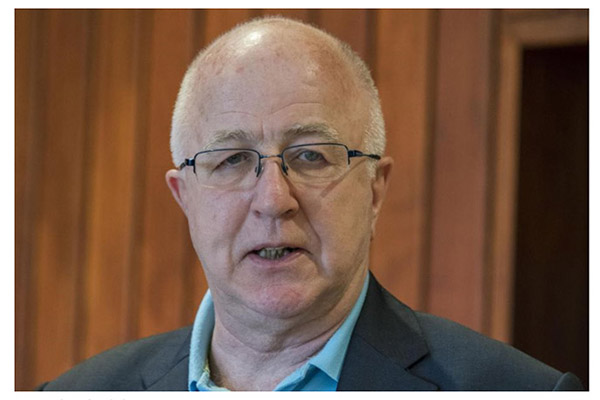
Mehdi Khoshhal, a former member of the MKO was the one who was severely attacked by the MKO agents on December 12 in the EP building. The attack has a high-profile eyewitness.  Former Labour MP of Britain Denis MacShane tweeted on Wednesday December 6th:

“Outside European Parliament thugs from People’s Mujahedin of Iran violently attacking elderly man, hitting with sticks, kicks etc. I told them to stop it, so they started attacking me with sticks, fists etc. And we weren’t even discussing Brexit!”

This indicates how shamelessly the agents of the MKO traffic in the EU parliament spreading violence despite all democratic gestures they take in their lobbies. Eldar Mamedov explains the technics the MKO operatives use to manipulate members of the EU Parliament. Mamedov is a political adviser for the social-democrats in the Foreign Affairs Committee of the European Parliament (EP) and is in charge of the delegation for inter-parliamentary relations between the EP and Iran.

“On the operational level, the MEK is extremely persistent and aggressive,” he writes. “MEK lobbyists maintain a constant presence in the coffee bars of EP buildings in Brussels and Strasbourg, or in front of the plenary room in Strasbourg. These are strategic locations from which to bombard MEPs and their staffers with requests to support the MEK.”

“Sometimes, however, they overdo it – one MEP recounted to me about how she had to scream at an MEK activist until they exited the elevator she was using to get to her office,” Mamedov states. “Even MEPs’ offices are targets: the MEK lobbyists have no qualms about entering them uninvited and distributing flyers against alleged “Islamo-fascist tyranny” in Tehran.”

The authorities of the European parliament should be wise to be wary about associating with any person or group that attempts to minimize the violent acts of a group so murderous and fanatical that even might endanger the health of the MEPs.

Mazda parsi

December 25, 2017 0 comments
FacebookTwitterPinterestWhatsappTelegramSkypeEmail
Missions of Nejat Society

Why has France become a safe haven for extremism in Europe?

Casting blame on those responsible for the rise of the Islamic State in various parts of the Middle East and its disconcerting extension into other parts of the world is a futile exercise. The fact that the Islamic State has developed a global sphere of influence and is able to spread instability unimpeded necessitates detailed investigation, but it is important to note that the current state of affairs is the result of the faults, shortcomings, and negligent decision-making of many actors. What matters now is that the Islamic State is making advances on multiple fronts and the international community is barely committed and insufficiently united to be able to tackle its unchecked growth.

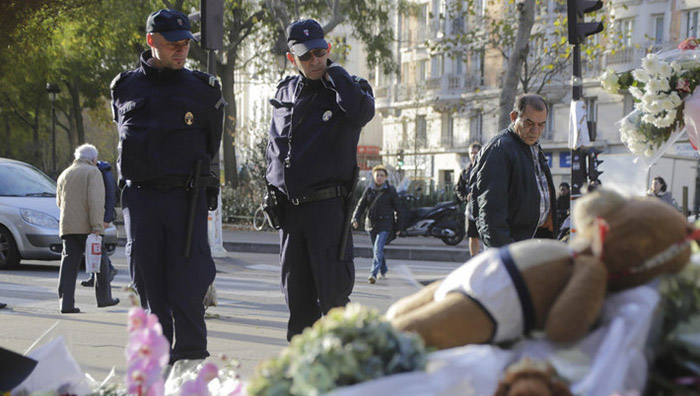
France Paris - Terrorist Attacks - ISIS

In 2017, the Islamic State has been implicated in attacks in Baghdad, Istanbul, Kabul, Westminster, Manchester, Melbourne, Jakarta, Minya, London, and even Tehran, and the perpetrators have mostly been able to avoid consequences after boldly claiming responsibility, except in the cases where they were shot dead by law enforcement officials.

What’s more, some European countries—especially those where the far right is rising, such as France—have become havens for such groups.

The Growth of the Far Right and Islamophobia

The French version of secularism—laïcité—is believed to have come into being in 1871. Part of what makes laïcité unique is the persistence of French authorities in turning their version of “secularism” into a state religion, leaving no room for criticism. Some prominent commentators and journalists, including the University of Houston’s Robert Zaretsky, have argued that French secularism has made the country a fundamentalist republic, which opens the door for such tragedies as the Charlie Hebdo shooting.

But following the establishment of the Third French Republic and state secularism, the country started to sing the hymn of exceptionalism. The concoction of its distinctive version of secularism has also resulted in an exclusionary approach to minorities and faith groups, paving the way for the rise of Islamophobia, xenophobia, and other forms of racial and religious hatred. As a result, it’s not surprising that groups such as the Islamic State have found France a fertile ground to expand their activities. Several scholars have voiced concerns that the French integration model for minorities has hit a disappointing stalemate.

Moreover, France doesn’t seem to be strictly concerned about cracking down on groups which by some standards are “extremist” and alternatively viewed as legitimate opposition groups.

A notorious example of one such group is the militant cult in exile, People’s Mujahedin of Iran, alternatively referred to as PMOI or MKO. Founded in 1965, it boasts of being an alternative to the current political establishment in Iran, or a shadow government. Part of the early days of the Islamic Revolution in 1979, it contributed to the Iranian people’s ideals of freedom, self-determination, and right to decide their future. But as the chaos of the early 1970s subsided, MKO became progressively disenfranchised as its senior figures were denied leadership positions in the new government. The group failed four times to gain seats in parliament, the Assembly of Experts, and Sa’adabad Palace.

Shortly afterward, the group began to resort to violence to achieve its goal of eliminating the government in Tehran quickly and efficiently. MKO was designated as a foreign terrorist organization by the governments of the United States, United Kingdom, and Canada, as well as by the European Union. But between 1981 and 1986 and since 2003, MKO has been sheltered in Paris, and the majority of its rallies and demonstrations take place in French cities, attended by thousands of people. There’s no official relationship between France and MKO, but given their ultra-right worldview and their overtly anti-Iranian attitudes, France currently seems to be the safest place to host MKO. The “Republican” administrations of France, who don’t shy away from showing their reluctance to improving bilateral relations with Iran find the Mojahedin-e-Khalq Organization a leverage of authority over Tehran and also see no harm in letting the proxy group continue operating in disguise and publicly. Although advocacy for “regime change” in Iran dates back to the early years of the Islamic Revolution in 1979, MKO still sticks to this mentality and France finds it of some value to allow MKO’s existence. However, the most remarkable development is that in January 2009, MKO was delisted as a foreign terrorist organization by the European Union shortly after being delisted by the United Kingdom in 2008. This means although they don’t have official status, they’re not considered a “harmful” or violent group anymore. As things stand now, in the view of the high-ranking EU authorities, MKO is a “dissident” group in exile, whereas in the eyes of millions of Iranians, it’s a cult responsible for the assassination of politicians and mass murders starting in early 1970s until their bombing of the UN compound in Iraq in 2009, prompting UN withdrawal from the country.

The Islamic State, too, has strong ties to France. According to the Global Terrorism Index 2015 released by the Institute For Economics and Peace, around 2,000 French fighters have joined its ranks. France has been a frequent target of major Islamic State attacks since 2014.

France’s Response

Moreover, the French authorities’ failure to cooperate effectively with non-hostile, non-aligned governments has presented a misleading image of the country’s ability to work with those international partners with which it may not have shared interests. When Iranian President Hassan Rouhani paid an official visit to France in February 2016—the first head of Iranian government in 16 years to travel to Paris—Elysée Palace called off a dinner ceremony for the dignitaries of the two governments after Rouhani requested that a halal meal be served at the banquet and alcoholic beverages be taken off the dinner table. The small disagreement overshadowed the media coverage of President Rouhani’s first “charm offensive” in Europe.

One trend is clear: France insists on promoting and upholding its exclusive version of secularism. The inflexibility and ultra-nationalism in the policies of the far-right politicians and parties in France, especially those of the National Front and Marine Le Pen, are reminiscent of the former Iranian President Mahmoud Ahmadinejad’s radical religious viewpoints and ultra-nationalism. Ahmadinejad’s actions prompted the immigration of thousands of people of faith, and either intentionally or inadvertently stigmatized the nation’s constitutionally recognized religious minorities.

The French system doesn’t seem to have frameworks that enable harsh and unconditional crackdown on extremists. The Islamic State has found France a safe haven to plan and carry out attacks without facing consequences. The most notable difference lies in the way French criminal law works. It’s a common and well-known trend that French authorities raid restaurants, bookstores and take other actions to disrupt alleged extremists but don’t take serious steps when they urgently need to stifle the rise of extremism, Islamophobia and bust the real terrorist cults that undermine the security and peace of their borders and disrupt international peace and security. I can refer to it as the French double standards on tackling terrorism and violent extremism. Moreover, France has a history of violence in its encounters with the Middle East and North Africa and an exclusionary attitude toward its Muslim population—fueled by the inflammatory, anti-Muslim rhetoric of its leaders. And the Time magazine once asserted that France’s prisons have become a recruiting ground for extremists, which is a viable assertion.

When France wields its state secularism in such a way that faith minorities feel regularly excluded and snubbed, it’s no surprise that extremist cults like the Islamic State feel empowered.

Kourosh Ziabari, Contributor

MA International Multimedia Journalism student, University of Kent, FCO Chevening Scholar Iran 2016/17

December 24, 2017 0 comments
FacebookTwitterPinterestWhatsappTelegramSkypeEmail
Iran Interlink Weekly Digest

Iran Interlink Weekly Digest – 214

++ Former MEK in Albania who still have contact with current members report that the announcement by President Trump concerning the US embassy and Jerusalem caused a wave of doubt and anger among members at every level of the MEK. They (who still believe the MEK follows an anti-Imperialist ideology) asked ‘Why does the MEK not take a position on this issue which is close to our hearts?’ (Prior to the 1979 Revolution, the MEK trained with the PLO in Jordan.) They pointed out that even Saudi Arabia, MEK paymasters, have condemned Trump’s announcement. In response, a letter has been written in Farsi (not Arabic or English) and signed by MEK veteran Mohammad Mohaddessin as the ‘NCRI foreign minister’ addressed to Azzam al-Ahmad, advisor to President Mahmoud Abbas. The letter offers grovelling support for Palestinians, saying ‘we believe Trump is wrong and we believe Jerusalem is the capital of Palestine’. The reaction in Albania, however, is that the fact this letter is only in Farsi and published only in the MEK’s newspaper (read by the MEK in Albania) most certainly means that it was never sent and is for ‘internal consumption only.

In English:

++ Massoud Khodabandeh wrote a short opinion piece in Huffington Post saying that the European Union has claimed the moral high ground in relations with Iran, replacing America as the lead negotiating partner. The EU leads on human rights advocacy (the US, Russia and China have the death penalty), honest negotiating stance and tackling issues like terrorism, says Khodabandeh. MEP Ana Gomes, the article reports, called for the MEK to be banned from the EU parliament as a security risk and as a signal that the EU has distanced itself from terrorism in all its forms.

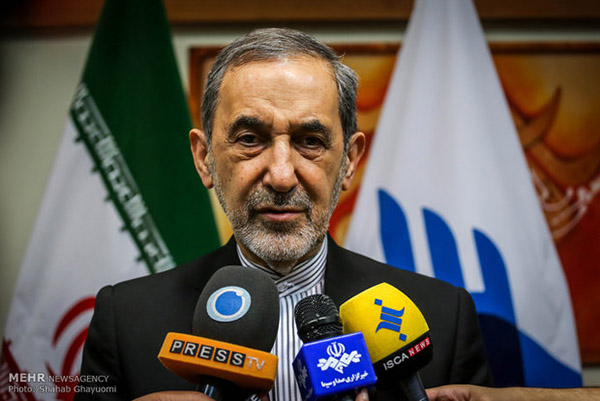
++ Iran’s Mehr News reports that Ali Akbar Velayati (aide to the Supreme Leader on International Affairs) has denounced France for “acting as the naïve followers of the US” and says it must act differently in order to save its international reputation. “France, from the beginning of the Islamic Revolution till today, has shown very little honesty,” he said touching upon the French government permitting MKO members to convene in France.

++ A short Diary piece in the London Evening Standard revealed that a former Labour MP and writer had come to the rescue of Mehdi Khoshal on 6th December when MEK thugs began to beat him and his friends just outside the parliament entrance. But when Denis MacShane intervened he too was attacked by Maryam Rajavi’s thugs. (She was inside the building at the time, these were apparently her security agents.) “Outside European Parliament thugs from People’s Mujahedin of Iran violently attacking elderly man, hitting with sticks, kicks etc,” he tweeted yesterday. “I told them to stop it, so they started attacking me with sticks, fists etc. And we weren’t even discussing Brexit!” Back in London, “MacShane is carrying on with his daily business, even if he was a little surprised that his pompous wading had little effect on the outcome. ‘At least I gave the first victim a chance to run away,’ he said. ‘Don’t think I have been attacked by Mujahedin before!’”

++ Nejat Bloggers has translated parts of a piece written by newly escaped MEK member Manuchehr Abdi in Albania. He explains what the MEK call ‘Ablution in the Moment’. Abdi says MEK are never allowed outside their bases in Albania alone. They are guarded and monitored at all times by a minder, the unit leader. “Beside this we were stopped every 50 meters and forced to describe our feelings about seeing the environment, people and everything else which might deviate our mind from the group objectives. These brainwashing sessions which are held in the streets are called “ablution in the moment”.

++ As a writer and poet, Mehdi Khoshal took a moment to write a thank-you note to the former Labour MP Denis MacShane who had also taken a beating after trying to stop a vicious attack by MEK thugs outside the EU parliament. He urges MacShane to “separate the experience of encountering the Mojahedin Khalq (Rajavi cult) with the normal behaviour of Iranian people who are certainly a peace-loving nation.”

December 22, 2017

December 23, 2017 0 comments
FacebookTwitterPinterestWhatsappTelegramSkypeEmail
Nejat Families
Mujahedin Khalq Organization members' families

Nejat Society meeting in Mazandaran

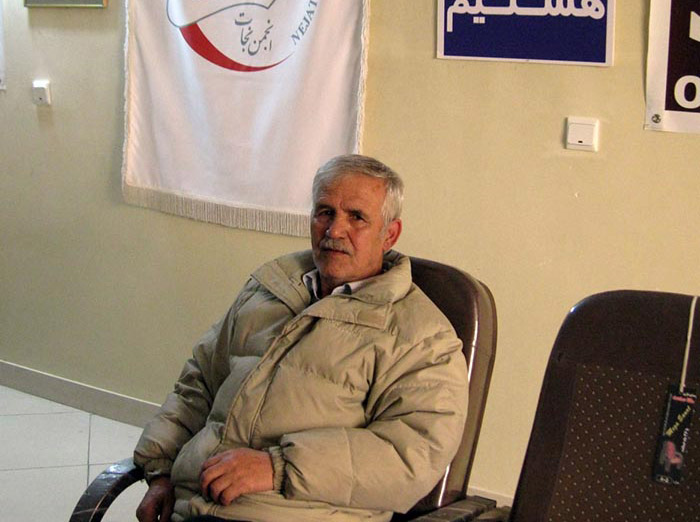
Nejat Society families of Mazandaran branch gathered together at the Nejat office on December 21st. The news of MKO members’ relocation to a remote Camp near Tirana called Ashraf three, worried the families. The families condemned this MKO leaders’ anti-human movement.

Moving to Albania, increased the rate of defection from the MKO terror cult. To prevent members from detaching the group, the MKO leaders intensified the brainwashing practices, besides they tried to distance members from the free world and isolate members completely. The leaders of the group force members to sign a document of commitment to life-long and irrevocable membership. The rank and file situation at Ashraf 3 Camp of Tirana can be even worse than that of Ashraf Camp of Iraq.

The families agreed that they shouldn’t be disappointed despite the deteriorating conditions of members in Albania. They wont let the cult to separate their beloved family members from the family afections.

December 23, 2017 0 comments
FacebookTwitterPinterestWhatsappTelegramSkypeEmail
Former members of the MEK

Thanking Denis MacShane, Writer and Former MP

Dear Denis MacShane,

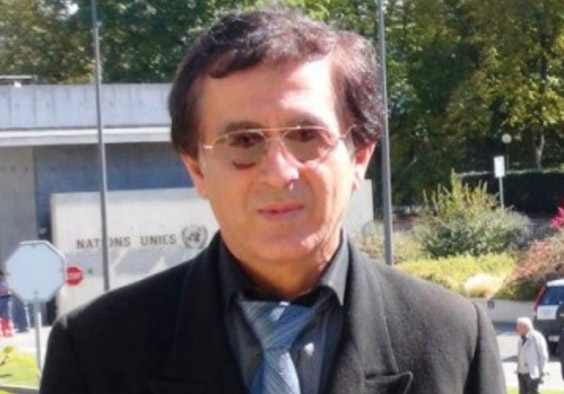
I am Mehdi Khoshal, a resident of Germany. I would like to thank you for your humanitarian intervention and say sorry if you also received any injuries due to your attempt to rescue me. I would like to start my letter with a line from the famous Iranian poet Sadi:

Human beings are members of a whole,

In creation of one essence and soul.

If one member is afflicted with pain,

Other members uneasy will remain.

Mehdi Khoshal

I am the person who, on Wednesday sixth of December, was an invited guest to a Seminar in the European Parliament in Brussels about refugees. After the seminar, when I left by the main door of the European Parliament I was attacked by the Mojahedin Khalq thugs. At the same time something extraordinary happened. It is extraordinary when an Iranian is being targeted by terrorists in front of the buildings of the European Parliament and at that exact moment a writer and former British MP is present and tries to help but unfortunately, he himself is now at the receiving end of beatings and attacks by these terrorists.

Dear friend, who I have not seen and did not give any attention to on that evening while being beaten, I am also a writer in my own right. But my past experience and the problems involving my country have brought me to write about cults and terrorism over the past 25 years. I also, as have your good self, been targeted and faced life threatening attacks while trying to help others. Considering the helping hand you extended to an Iranian under attack and considering that you have paid a price by being attacked by the same perpetrators, I urge you to separate the experience of encountering the Mojahedin Khalq (Rajavi cult) with the normal behaviour of Iranian people who are certainly a peace-loving nation.

Finally, I would like to wish you good health and for the people of Europe friendship and peace.

Yours kindly,

Mehdi Khoshal

Germany, December 20, 2017

Mehdi Khoshal, Iran Fanouse, Germany

December 21, 2017 0 comments
FacebookTwitterPinterestWhatsappTelegramSkypeEmail
Iran

Iran: France should stop harbouring Terrorist Mojahedin Khalq 

Iranian Leader’s Aide, Ali Akbar Velayati, says that some Europeans are trying to deceive because sometimes they repeat what US President Trump says.“We can’t understand that the woman who is representing US at UN is an international affairs expert or missiles expert. And then she shows something and makes some claims that Iranians have done something. These are just claims,” said Ali Akbar Velayati, the Aide to Iranian Leader on International Affairs.

He made the remarks on Sunday at an event in Islamic Azad University.

“This person does not have the minimum required knowledge and information in this field and even is not courteous enough and just says baseless and groundless things,” reiterated the Iranian former foreign minister.

“Experts see this woman’s words in disdain,” added the official. “Iran, in no ways, has given any missile to Yemen,” asserted Mr. Velayati.

“France, from the beginning of the Islamic Revolution till today, has shown very little honesty,” he said touching upon the French government permitting MKO members to convene in France.

The organization has claimed the responsibility for thousands of terrorist operations which have claimed the lives of hundreds of thousands of Iranian civilians in blind terrors.

“They are using a group of mercenaries as MKO members who have betrayed their own country in France is an old weapon of no use anymore,” he condemned the organizers of the convention who are trying to exert pressure on the Islamic Republic of Iran taking advantage of a group of political asylum seekers.

“If France is after international reputation, they should stop acting as the naïve followers of US,” he advised French officials. “France is Trump’s puppet in Europe,” he added accusing the French government to be obeying what the Americans order them to do in Europe.

“Niether Saudi Arabia, nor the Zionist regime are capable to do anything against Iran,” he underlined.

“Since the establishment of the Israeli regime, Saudi Arabia has had secret relations with the Zionists and now these relations have been disclosed and it shows the full desperation of Saudis who think they can do something relying on the Zionists,” affirmed the Iranian official.

“If the Zionist knew what to do, they would have stopped their own citizens escaping the settlements and would have made walls preventing the Palestinians to enter their settlements,” he added.

December 20, 2017 0 comments
FacebookTwitterPinterestWhatsappTelegramSkypeEmail
The cult of Rajavi

Denis MacShane attacked by Mojahedin Khalq outside EU Parliament

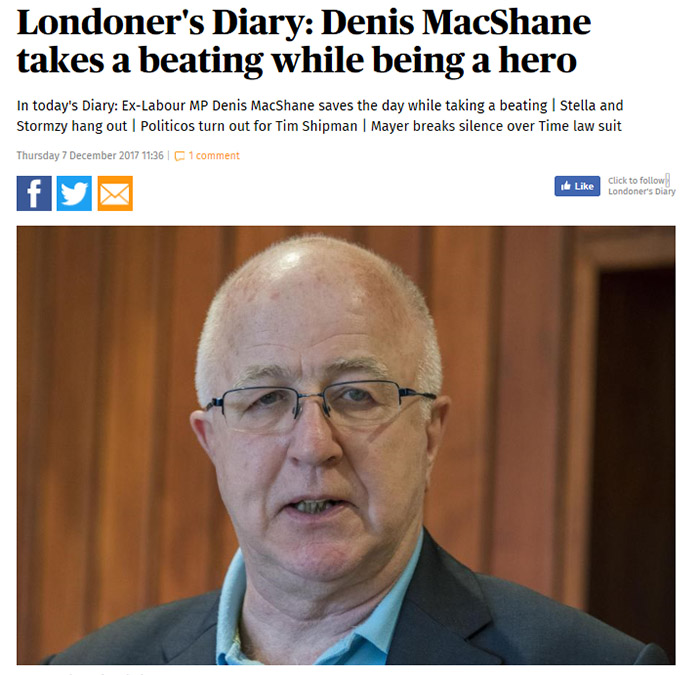
In today’s Diary: Ex-Labour MP Denis MacShane saves the day while taking a beating

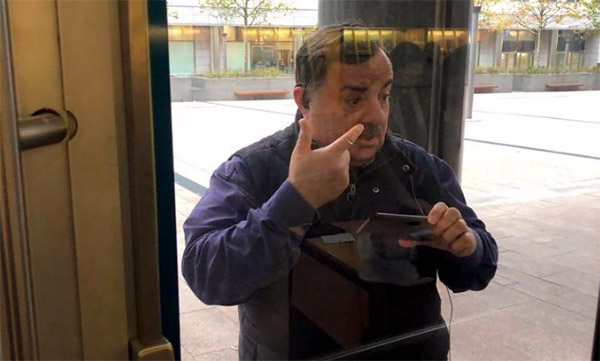
DON’T mess with Denis MacShane! The former Labour MP, author and Good Samaritan is in Brussels, and says that he stepped in to help a man in a street attack yesterday, only to get a beating himself.

“Outside European Parliament thugs from People’s Mujahedin of Iran violently attacking elderly man, hitting with sticks, kicks etc,” he tweeted yesterday. “I told them to stop it, so they started attacking me with sticks, fists etc. And we weren’t even discussing Brexit!”

MacShane, pictured, a former minister for Europe, has been spending a fair amount of time in Brussels, observing and commenting on the Brexit negotiations — he claims to be the man who coined the B-word in the first place, and has written two books on the subject.

So is he OK? The Londoner inquired. “Fine,” MacShane replied. “Just [a] weird flash attack by nutters. No cops in sight.  I tried to stop it — wading in pompously, shouting out loud — but all that happened was they attacked me.”

The European Parliament, in the Leopold Quarter in Brussels,  should in theory be well policed, or at least have some security guards keeping an eye on things. The People’s Mujahedin of Iran is a political organisation which is calling for the overthrow of the Iranian regime.

MacShane is carrying on with his daily business, even if he was a little surprised that his pompous wading had little effect on the outcome. “At least I gave the first victim a chance to run away,” he said. “Don’t think I have been attacked by Mujahedin before!”

(…)

Evening Standard, London

December 20, 2017 0 comments
FacebookTwitterPinterestWhatsappTelegramSkypeEmail
Manuchehr Abdi
Albania

What is “Ablution in the moment” session in Tirana?!

Manuchehr Abdi is a newly defected member of the Mujahedin-e Khalq cult. He spent 14 years in the cult of Rajavis. He is now 55 years old.

Manuchehr Abdi

” When I was in Tehran I wanted to immigrate to abroad. My friends told me about the MKO. They said that the organization was in Iraq and would help me go to Europe. Once I joined the MKO in Iraq, I had no way out any more”, Abdi says in an interview with the Sahar Family Foundation.

In Albania he managed to contact his family by the help of some former members, however the cult authorities got to know and punished him,” I was suppressed because according to the MKO rules, contacting your family is a crime..”

Fortunately he managed to liberate himself from the cult barriers. He now lives a free life in Albania.

Abdi says:” In Albania the cult condition is so fragile .Members are under severe mental pressure and most of them take anxiety drugs and high doses of nerve calming tablets. Members have to work up to midnight in addition to participating different brainwashing sessions.

Asking about the group’s plan in Albania and the members’ fortune was taboo and nobody replied us.

It was forbidden to go out of the camps lonely. We had to go out in accompany with the person who was responsible of our unit. Beside this we were stopped every 50 meters and forced to describe our feelings about seeing the environment, people and everything else which might deviate our mind from the group objectives. This brainwashing sessions which are held beside the streets are called “ablution in the moment”.

To escape such pressures, some members preferred not to take step out of the cult Camps.


December 19, 2017 0 comments
FacebookTwitterPinterestWhatsappTelegramSkypeEmail
Newer Posts
Older Posts

Recent Posts

  • Fourteen years after US delisting, MKO terror cult’s political rebranding collides with its violent legacy

    September 30, 2026
  • How Did Maryam Rajavi Become All-Powerful in the MEK?

    September 29, 2026
  • Soraya Abdollahi’s Letter to International Human Rights Bodies

    September 28, 2026
  • How Did Maryam Rajavi Become All-Powerful in the MEK?

    September 27, 2026
  • Yazdan Teimorian’s Family:  We Are so Heart-Broken!

    September 23, 2026
  • Facebook
  • Twitter
  • Instagram
  • Youtube

© 2003 - 2025 NEJAT Society . All Rights Reserved. NejatNGO.org


Back To Top
Nejat Society
  • Home
  • Articles
  • Media
    • Cartoons
    • NewsPics
    • Photo Gallery
    • Videos
  • Publications
    • Books
    • Nejat NewsLetter
    • Pars Brief
  • About Us
  • Contact us
  • Editions
    • عربي
    • فارسی
    • Shqip