Nejat Society
  • Home
  • Articles
  • Media
    • Cartoons
    • NewsPics
    • Photo Gallery
    • Videos
  • Publications
    • Books
    • Nejat NewsLetter
    • Pars Brief
  • About Us
  • Contact us
  • Editions
    • عربي
    • فارسی
    • Shqip
Nejat Society
Nejat Society
  • Home
  • Articles
  • Media
    • Cartoons
    • NewsPics
    • Photo Gallery
    • Videos
  • Publications
    • Books
    • Nejat NewsLetter
    • Pars Brief
  • About Us
  • Contact us
  • Editions
    • عربي
    • فارسی
    • Shqip
© 2003 - 2024 NEJAT Society. nejatngo.org
Mujahedin Khalq Organization as a terrorist group

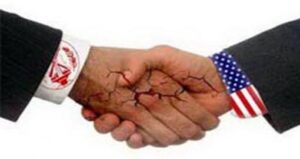
Iran: McCain’s Meeting with MKO Leaders Indicates US Continued Support for Terrorist Groups

The Iranian foreign ministry rapped Republican Senator John McCain for his meeting with the ringleaders of Mojahedin-e Khalq Organization (MKO, also known as the MEK, PMOI and NCRI) in Albania, saying the move signified Washington’s continued support for the terrorist groups.

“Such contacts are nothing new and certain US officials have shown that they have failed to learn a thing from the history of the recent decades and rather attempted to further spread terrorism in the region through their measures,” Foreign Ministry Spokesman Bahram Qassemi told reporters in his weekly press conference in Tehran on Monday.

“This meeting showed that despite changes in the US administration, their policies to nurture terrorism still continue and the US administration will certainly pay its costs in the future,” he added, implying that Washington’s support for terrorism will backfire.

The MKO, founded in the 1960s, blended elements of Islamism and Stalinism and participated in the overthrow of the US-backed Shah of Iran in 1979. Ahead of the revolution, the MKO conducted attacks and assassinations against both Iranian and western targets.

The group started assassination of the citizens and officials after the revolution in a bid to take control of the newly-established Islamic Republic. It killed several of Iran’s new leaders in the early years after the revolution, including the then President, Mohammad Ali Rajayee, Prime Minister, Mohammad Javad Bahonar and the Judiciary Chief, Mohammad Hossein Beheshti who were killed in bomb attacks by the MKO members in 1981.

The group fled to Iraq in 1986, where it was protected by Saddam Hussein and where it helped the Iraqi dictator suppress Shiite and Kurd uprisings in the country.

The terrorist group joined Saddam’s army during the Iraqi imposed war on Iran (1980-1988) and helped Saddam and killed thousands of Iranian civilians and soldiers during the US-backed Iraqi imposed war on Iran.

Since the 2003 US invasion of Iraq, the group, which now adheres to a pro-free-market philosophy, has been strongly backed by neo-conservatives in the United States, who argued for the MKO to be taken off the US terror list.

The US formally removed the MKO from its list of terror organizations in September 2012, one week after Secretary of State Hillary Clinton sent the US Congress a classified communication about the move. The decision made by Clinton enabled the group to have its assets under the US jurisdiction unfrozen and do business with the American entities, the State Department said in a statement at the time.

In September 2012, the last groups of the MKO terrorists left Camp Ashraf, their main training center in Iraq’s Diyala province. They have been transferred to Camp Liberty. Hundreds of the MKO terrorists have now been sent to Europe, where their names were taken off the blacklist even two years before the US.

The MKO has assassinated over 12,000 Iranians in the last 4 decades. The terrorist group had even killed large numbers of Americans and Europeans in several terror attacks before the 1979 Islamic Revolution.

Some 17,000 Iranians have lost their lives in terror attacks in the 35 years after the Revolution.

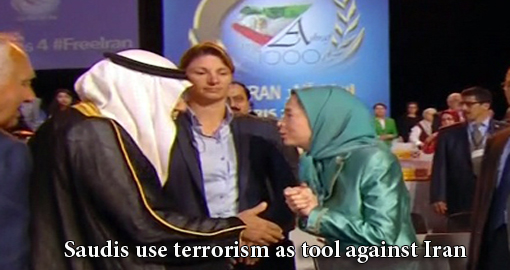
Rumors were confirmed last September about the death of MKO ringleader, Massoud Rajavi, as a former top Saudi intelligence official disclosed in a gaffe during an address to his followers.

Rajavi’s death was revealed after Turki al-Faisal who was attending the MKO annual gathering in Paris made a gaffe and spoke of the terrorist group’s ringleader as the “late Rajavi” twice.

Faced with Faisal’s surprising gaffe, Rajavi’s wife, Maryam, changed her happy face with a complaining gesture and cued the interpreter to be watchful of translation words and exclude the gaffe from the Persian translation

  islamicinvitationturkey.com

April 19, 2017 0 comments
FacebookTwitterPinterestWhatsappTelegramSkypeEmail
Albania

Iranian spokesman slams the US over Mc Cain’s public support for the MKO

Iran: US should pay for spreading terror in region

Iran has censured the United States’ role in spreading terror in the Middle East region, saying Washington should pay for its wrongdoings.

Speaking at a news briefing on Monday, Foreign Ministry Spokesman Bahram Qassemi said US officials have shown in recent decades that they have not learned from their previous experiences and have consistently contributed to the escalation of terrorism in the region through their wrongful policies and indecent behavior.

Qassemi said that Washington’s policy continued under the new administration. “This is a mistake, which the US government should pay for like its other mistakes,” the official asserted.

As a case in point, he cited Republican US Senator John McCain’s meeting with the head of the terrorist anti-Iran Mujahedin-e Khalq Organization (MKO), Maryam Rajavi, in the Albanian capital Tirana on Friday.

The MKO has carried out numerous terrorist attacks against Iranian civilians and government officials over the past three decades. Out of the nearly 17,000 Iranians killed in terrorist assaults since the victory of the 1979 Islamic Revolution, about 12,000 have fallen victim to MKO’s acts of terror.

The meeting, which also featured some other members of the notorious group, saw the senator praising Rajavi by saying, “You have stood up, fought, and sacrificed for freedom, for the right to live free, for the right to determine your future.”

“This contact serves the same purpose (of terror expansion). These types of contacts are nothing new,” Qassemi analyzed.

April 19, 2017 0 comments
FacebookTwitterPinterestWhatsappTelegramSkypeEmail
Duplicity of the MEK nature

Michael Rubin: John McCain embrace the enemy of the Iranian people

Regarding Senator McCain’s meeting with the leader of the Mujahedin Khalq Organization (the MKO), the American prominent journalist Michael Rubin posted an article on AEIdeas denouncing the senator’s “disappointing” act to support the group. Rubin is disappointed with the press release of the MKO propaganda on McCain’s visit of their Tirana base because he is he had regarded McCain as “by any standard, a great and principled American”.

In his article titled “What is John McCain thinking?”, Michael Rubin asks the senator some crucial questions:

“But, if the Chairman of the Armed Services Committee chooses to signal his support for the group, what’s the big deal? After all doesn’t the Mujahedin al-Khalq oppose the Islamic Republic of Iran? Enemy of my enemy etc? Unfortunately, not really. “

Then he presents a brief history on the MKO to prove the group’s untrustworthiness:

“Consider the Mujahedin al-Khalq’s history: It began as a reaction to the growth of Western liberal thought in Iran, embraced anti-American terrorism in the 1970s, and became a significant backer to the Islamic Revolution in Iran before revolutionary leader Ayatollah Khomeini ordered them purged. The Mujahedin responded with terrorism directed not just at the Islamic Republic’s top officials, but at the population at large. At its peak in July 1982, the group assassinated, on average, three regime officials per day. The straw that broke the camel’s back in Iranian public perception was that they sided with Saddam Hussein during the Iran-Iraq War. In effect, they became to ordinary Iranians what John Walker Lindh, the American Taliban, became to the American public.”

Rubin who has an experience of spending seven months in Iran while working on his doctoral dissertation testifies that the MKO enjoys no support among the Iranian public. This American scholar who is a tough critic of the Islamic Republic government does not ignore the hatred that the Iranian people feel towards the MKO. He explains the MKO’s hypocrisy to hide its cult-like nature under the rhetoric of democracy:

“After Operation Iraqi Freedom in 2003, the leadership of the organization changed its tune. Whereas once they had embraced Marxism, Islamism, and then during their Iraqi exile, Baathism, they suddenly reinvented themselves rhetorically as democrats. The problem is that they still operate, if not as terrorists, as a totalitarian cult. Masoud and Maryam Rajavi can even tell members who to marry and divorce. Whereas McCain and other U.S. officials were right to condemn the massacre of the Mujahedin all-Khalq by Iranian forces and their Iraqi proxy militias, this does not mean that the group needs to be tolerated or embraced in any way, shape, or form.”

Although Rubin admits his animosity towards the Iranian government, he warns his favorite senator: “McCain has embraced the enemy of our enemy in the Tehran regime, but he has also embraced the enemy of the Iranian people.”

April 19, 2017 0 comments
FacebookTwitterPinterestWhatsappTelegramSkypeEmail
Mujahedin Khalq; A proxy force

Should we be afraid of Senator McCain meeting with the Mojahedin Khalq in Albania?

The belligerent US Senator John McCain’s visits in Kosovo and Albania are portrayed with positive colour by Albanian and Kosovan media. McCain despite his record as a warmonger and aggressor is treated as a person who will bring peace and democracy to the world. Since Albanian and Kosovan civil society is dead, McCain has not met with protests and demonstrations as he would have expected in Europe and throughout the West. And the media, which is controlled by owners who deal in drugs or are connected to power, have only spoken with positive tones about the visit.

However, during his visit to Tirana Senator McCain lost no time in having a special meeting with the 3500 Iranian jihadists which the Rama government housed in Albania. At a time when the law enforcement authorities of Albania and Kosovo, in order to ensure security for McCain’s visit, frightened the public with hysterical news that there would be terrorist attacks, and Kosovo arrested a Wahhabi psychopath for a song that he had made, all the media and police panic surrounding the visit was apparently something of a cover to hide the true reason for McCain’s visit to Albania.

He met with Iranian jihadists and their leader Maryam Rajavi. In the conditions that are running our world today in which the Americans are in open conflict with China, Korea, Russia, Syria, Turkey and Iran and the Third World War is expected to start at any moment, McCain’s visit to the Iranian jihadist camp was apparently intended to instruct the Iranian jihadis for their next fight.

Maryam Rajavi, while she Tweeted photos of the meeting between her jihadists with McCain, openly declares that her group is mobilized for war. But where will the cast of the Rajavi group be fighting? In Russia, Syria, Korea, China or Iran?

According to the Albanian civil code, Maryam Rajavi, should be arrested and punished for these statements in the same way that the Albanian Imams Genci Balla and Bujar Hysa were arrested and sentenced before. But in Albania Albanian jihadists are imprisoned, while Iranian jihadis are privileged to do jihad at the behest of John McCain.

Gazeta Impakt, Tirana Albania, Translated by Iran Interlink

April 18, 2017 0 comments
FacebookTwitterPinterestWhatsappTelegramSkypeEmail
Mujahedin Khalq; A proxy force

McCain hails head of anti-Iran terrorist group, MKO

US Senator John McCain met the head of the terrorist Mujahedin-e Khalq Organization (MKO), Maryam Rajavi, in the Albanian capital of Tirana on April 14, 2017.

Republican US Senator John McCain has praised the head of the terrorist Mujahedin-e Khalq Organization (MKO), Maryam Rajavi, in a meeting in the Albanian capital, Tirana.

McCain, who is on an official visit to Balkan states, met Rajavi and some other members of the notorious MKO group in Tirana on Friday.

He congratulated the terrorist group’s “successful transfer” from Iraq and praised its members for what he described as “sacrifice.”

“There is no doubt that people in this room have suffered not only themselves, but in the loss of their loved ones,” he said.

“You have stood up, fought, and sacrificed for freedom, for the right to live free, for the right to determine your future,” he added.

The MKO has carried out numerous terrorist attacks against Iranian civilians and government officials over the past three decades.

Out of the nearly 17,000 Iranians killed in terrorist assaults since the victory of Iran’s 1979 Islamic Revolution, about 12,000 have fallen victim to MKO’s acts of terror.

Massoud Rajavi (L), Maryam Rajavi’s husband and the former ringleader of the anti-Iran terrorist group, Mujahedin-e Khalq Organization (MKO), meeting with the executed Iraqi dictator Saddam Hussein. (File photo)

In 1986, the terrorist group’s members fled Iran for Iraq, where they received support from the then Iraqi dictator, Saddam Hussein, and set up Camp Ashraf, now known as Camp New Iraq, in Diyala Province near the Iranian border.

The terrorist group also sided with the former Iraqi dictator, Saddam Hussein, during Iraq’s eight-year imposed war against Iran in the 1980s. The terrorist group also helped Saddam in his brutal crackdown on his opponents.

A file photo of, Massoud Rajavi (L), Maryam Rajavi’s husband and the former ringleader of the anti-Iran terrorist group, Mujahedin-e Khalq Organization (MKO), shaking hands with the executed Iraqi dictator Saddam Hussein. (File photo)

In December 2011, the UN and Baghdad agreed to relocate some 3,000 MKO members from Camp Ashraf to Camp Hurriyet. The last group of the MKO terrorists was evicted in September 2013 and relocated to Camp Hurriyet to await transfer to third countries.

April 17, 2017 0 comments
FacebookTwitterPinterestWhatsappTelegramSkypeEmail
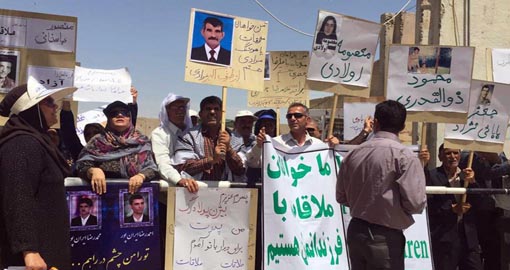
Mujahedin Khalq Organization members' families

Parents met their child in Albania, defect the MKO Cult

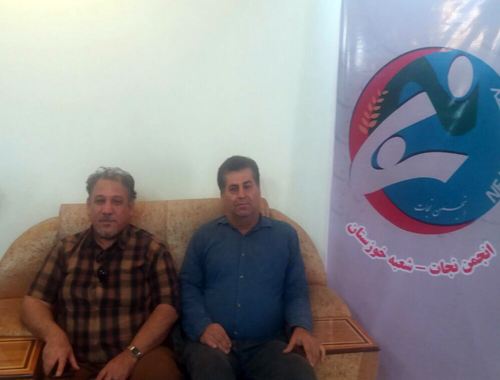
Haqiqat family at the Nejat society office of Gilan Branch

In 1980s after the Mujahedin-e Khalq forced to leave the country after its failed armed struggle. The groups’ leader called supporters to leave Iran to Iraq .Among the group’s supporters where couples who left Iran with their children.

Among these couples were Ameneh Haqiqat and Akbar Rabiei who joined the MKO group in mid 1980s along with their young child. They joined the group to make a better life. However as soon as they entered the MKO camps they understood that Mujahedin Khalq is a destructive cult rather than a political organization.  

In 1990s during the Gulf war, the cult used it as a good pretext to separate parents and children – In MEK after forced divorces of couples, ties between parents and their children was exactly the main worry of Rajavi (The MEK leader), as although couples were separated, still through their children and their ‘Thursday gatherings’ they were able to connect to each other – so as their child was also separated and sent to MKO Camps at Europe along with other children.

Ms. Haqiqat’s brother says:” my head whistled when I hear that the ‘family’ is disintegrated within this horrible cult. My head whistled when I heard that my little niece left far from parental love…”

Mr. Haqiqat also gave the good news of his brother’s defection from the Mujahedin-e Khalq cult:” after my dear niece met his parents in Albania, his parents decided to leave the cult. They will abandon the MKO cult and leave Albania in near future, if God wills..”

April 16, 2017 0 comments
FacebookTwitterPinterestWhatsappTelegramSkypeEmail
Iran Interlink Weekly Digest

Iran-Interlink Weekly Digest – 186

++ This week marked the anniversary of the death of General Sayad Shirazi – a war hero during the  Iran-Iraq war. Saddam Hussein ordered the MEK to assassinate Shirazi for a specific amount of money which was then paid to Massoud Rajavi. At the time of his assassination Shirazi was retired and living as an ordinary citizen without any security. The head of the terror team, Zohreh Ghaemi, was later deliberately left in Camp Ashraf without protection by Rajavi to be killed by Iraqi tribes. Former MEK Struan Stevenson then wrote a book for the MEK praising her terrorist activities. Every year at this time Iran broadcasts programmes about Shirazi the war hero to remind people how the MEK betrayed their country and about the crimes of Saddam Hussein.

++ This week Farsi commentators reacted with disdain to Rajavi’s hysterical reporting of Trump’s bombing of Syria. According to these writings Rajavi has become more extreme than the Syrian opposition itself. Rajavi says the American reaction was insufficient, there should be more bombing of Syria and that the ultimate aim should be to bomb Iran. Commentators decried the dirty and treacherous MEK for claiming to be Iranian.

++ Several reports mentioned that more and more members have left the MEK during this week.

++ Alameh Hosseini, of Lebanese origin, has acted as an MEK lobbyist in Iraq. Recently he published a complaint against the MEK alleging that they have not paid him for his services. The MEK response was to quietly remove all his writings from their websites. Iraqis who know the MEK commented that Hosseini is not alone in his troubles with the MEK. The MEK has decided it no longer needs its Iraqi or Arab lobbyists as much since the Arabic lobbying is now done directly by Saudi Arabia. Instead, since moving to Albania, the MEK has shifted more of its budget to its western lobbying efforts and therefore has not paid for the work done by Iraqi and Lebanese lobbyists like Hosseini. He has not been as patient or trusting as others and has complained publicly. Others have complained directly to the Saudis.

In English:

++ Nejat Society reported that the Iranpour family celebrated the birthday of their family member Ahmadreza who is still held hostage by the MEK cult. Ahmadreza and his brother Mohammadreza Iranpour, travelled to Turkey in 2002 attempting to reach Europe to make a better life. They were deceived by the MEK and taken to Camp Ashraf. Their family were without news until 2004 when they managed to meet with them accompanied by 20 MEK minders. Since then the Iranpour family members travelled to Iraq several times but were denied further meetings with the brothers. They have now been transferred to Albania but the family refuse to give up their efforts to free them from the cult.

++ Tony Cartalucci in New Eastern Outlook examines the terrorist attack on St. Petersburg’s metro system, saying that “Western analysts are also attempting to cement a narrative that downplays the significance of the attacks and instead attempts to leverage them politically against Moscow.” Cartalucci identifies “US-European support for foreign-funded organizations posing as ‘nongovernmental organizations’ (NGOs) running parallel efforts with terrorist organizations undermining Moscow’s control over Chechnya…” The article mentions US support for the MEK as an example of such sponsorship. “As per US policymakers’ own documented machinations – such as the 2009 Brookings Institution report, “Which Path to Persia?: Options for a New American Strategy Toward Iran” (PDF) – a militant component is prescribed as absolutely essential for the success of any street movement Washington manages to stir up against targeted states.”

++ Mazda Parsi in Nejat Bloggers exposes the double standards of the MEK who cheered the Trump administration’s retaliatory bombing in Syria in response to an alleged chemical gas attack. Parsi reminds us that when Saddam Hussein used chemical weapons against his Kurdish populations the MEK not only failed to condemn the dictator but supported his agenda to crush Kurdish resistance. Parsi also points out that the MEK are quick to condemn the massacre of children in Syria but remain silent about the starvation of Yemeni children.

++ In the lead up to the presidential election in Iran Reza Pahlavi had an interview with Jon Gambrell in AP. Pahlavi expressed his interest in liberating Iran with a peaceful revolution which he envisages could start with “labor unions starting a nationwide strike”. Heedless of the actual power structures in Iran, Pahlavi continued “members of the hard-line Revolutionary Guard, a paramilitary organization established to protect the clerical system, would be assured they wouldn’t be ‘all hung and shot’.” While admitting that he had yet to meet with the Trump administration despite his letters, Pahlavi dismissed the MEK: “Another Iranian exile group, the Mujahedeen-e-Khalq, previously paid a member of Trump’s Cabinet $50,000 for giving a speech. However, the MEK’s siding with Iraqi dictator Saddam Hussein during the Iran-Iraq war in the 1980s and its killing of Americans before the revolution, which the group now denies, makes it an unsuitable partner, Pahlavi said. ‘It’s pretty much a cult-type structure’, he said.”

April 14, 2017

April 15, 2017 0 comments
FacebookTwitterPinterestWhatsappTelegramSkypeEmail
The cult of Rajavi

Crown prince Reza Pahlavi: Mojahedin Khalq, a cult-type structure

Iran’s long-exiled prince wants a revolution in age of Trump

Reza Pahlavi, the son of the last shah to rule before the 1979 Islamic Revolution, has seen his profile rise in recent months following the election of U.S. President Donald Trump, who promises a harder line against the Shiite power.

Pahlavi’s calls for replacing clerical rule with a parliamentary monarchy, enshrining human rights and modernizing its state-run economy could prove palatable to both the West and Iran’s Sunni Gulf neighbors, who remain suspicious of Iran’s intentions amid its involvement in the wars in Iraq, Syria and Yemen.

But the Mideast is replete with cautionary tales about Western governments putting their faith in exiles long estranged from their homelands. Whether Pahlavi can galvanize nostalgia for the age of the Peacock Throne remains unseen.

“This regime is simply irreformable because the nature of it, its DNA, is such that it cannot,” Pahlavi told The Associated Press. “People have given up with the idea of reform and they think there has to be fundamental change. Now, how this change can occur is the big question.”

Pahlavi left Iran at age 17 for military flight school in the U.S., just before his cancer-stricken father Mohammad Reza Pahlavi abandoned the throne for exile. The revolution followed, with the creation of the Islamic Republic, the takeover of the U.S. Embassy in Tehran and the sweeping away of the last vestiges of the American-backed monarchy.

Yet the Pahlavis and the age of the monarchy have retained their mystique in Iran, even as the majority of its 80 million people weren’t alive to experience it. Television period pieces have focused on their rule, including the recent state TV series “The Enigma of the Shah,” the most expensive series ever produced to air in the country. While incorporating romances or mobsters into the tales, all uniformly criticize the royal court.

But Pahlavi, 56, insists young Iranians increasingly look toward Iran’s past. He pointed to recent demonstrations at the tomb of the pre-Islamic King Cyrus the Great, which have been claimed by a variety of anti-government forces as a sign of unrest. Under his father’s secular and pro-Western rule, Iran experienced a rapid modernization program financed by oil revenues.

“If you look at the legacy that was left behind by both my father and my grandfather … it contrasts with this archaic, sort of backward, religiously rooted radical system that has been extremely repressive,” Pahlavi said.

Since the U.S. election, Pahlavi has given a growing number of media interviews, including with Breitbart, the far-right website once run by Trump’s chief strategist, Steve Bannon. Pahlavi also has sent letters to the Trump administration.

Gauging national sentiment toward restoring the monarchy in Iran is impossible, especially after the crackdown that followed the country’s disputed 2009 election. Iranian state media routinely refer to the Pahlavi monarchy as “despotic,” but there has been some reassessing of history in other quarters.

A book published last year, “The Fall of Heaven: The Pahlavis and the Last Days of Imperial Iran,” offered a revisionist view of the shah. While acknowledging the abuses of his feared SAVAK intelligence service and the corruption surrounding his rule, the book portrays him as a fatalist in an era of disappearing Mideast monarchies.

“The regime has repressed discussion of the Pahlavis for so long that it has had the opposite effect of making young Iranians inside the country curious about what they don’t know,” said historian Andrew Scott Cooper, the book’s author. “There’s an interesting generational divide going on here to where young Iranians are saying to their parents and grandparents, the same people who marched against the shah and Pahlavis, ‘Why did you get rid of that system and put this one in place?’”

He added: “The family name still retains a lot of magic, more than ever today among Iranians. How that translates practically into support for Reza as a credible alternative leader, I just don’t know.”

Asked how his envisioned peaceful revolution could play out in Iran, Pahlavi said it would need to begin with labor unions starting a nationwide strike. He said members of the hard-line Revolutionary Guard, a paramilitary organization established to protect the clerical system, would be assured they wouldn’t be “all hung and shot.”

Most importantly, he said Western governments need to keep their distance and not threaten military action.

That’s an exceedingly optimistic vision, especially considering the amount of power the Guard and other hard-liners wield in Iran’s economy. It also largely ignores the concerns many in Iran have about Western meddling. Pahlavi’s father took power following a 1953 coup engineered by Britain and the U.S.

Pahlavi, who still resides in the U.S., said he hasn’t had any “side occupation” since 1979, and has received financial support from his family and “many Iranians who have supported the cause.”

“My focus right now is on liberating Iran, and I will find any means that I can, without compromising the national interests and independence, with anyone who is willing to give us a hand, whether it is the U.S. or the Saudis or the Israelis or whomever it is,” he said.

Pahlavi said he had yet to meet with the Trump administration despite his letters. Another Iranian exile group, the Mujahedeen-e-Khalq, previously paid a member of Trump’s Cabinet $50,000 for giving a speech . However, the MEK’s siding with Iraqi dictator Saddam Hussein during the Iran-Iraq war in the 1980s and its killing of Americans before the revolution, which the group now denies, makes it an unsuitable partner, Pahlavi said.

“It’s pretty much a cult-type structure,” he said.

For now, Pahlavi said he looks forward to meeting with Trump and his administration. But he pins his hopes on Iran’s sense of history, something Cooper also acknowledged.

“For many Iranians, the revolution is unfinished business,” the author said.

By Jon Gambrell,

April 15, 2017 0 comments
FacebookTwitterPinterestWhatsappTelegramSkypeEmail
Mujahedin Khalq Organization's Propaganda System

The MKO cheers Trump’s Syrian missile attack

Following last week’s chemical attack in Syria and President Donald Trump’s retaliating missile strike, the Mujahedin Khalq Organization ( the MKO) could not conceal its pleasure to see the United States’ involvement in the Syrian battle.

There are allegations among bloggers and political leaders that the toxic gas attack on April4 in Khan Sheikhoun, Idlib was a “false flag” operation designated to trigger American involvement in the country’s civil war. However, supposing that Assad has attacked his own people with chemical weapons, the MKO leaders should be asked some essential questions.

 About three decades ago, Saddam Hussein – the then military and financial sponsor of the MKO- attacked his own people in Kurdish areas in the North of Iraq and the people in the Western town of Iran, Sardasht. While those chemical attacks at the time, were much more catastrophic than the one in Khan Sheikhan, the MKO not only didn’t condemn Saddam Hussein for the chemical attacks against civilians but also it cooperated with him to suppress more Kurds as well as Shiite uprisings.

Double standards of the MKO leaders is clearly demonstrated in their biased position taking about Syrian civil war while the Iranian foreign Ministry condemned “any use of chemical weapons, regardless of who has used it or who are the victims “ immediately after the incidents on April 5th, according to the Reuters.

Definitely, hypocrisy has always been an iconic feature of the MKO cult. The massacre of children in Idlib and previously in Halab is a matter of focus in the MKO propaganda while the starving and massacred children of Yemen has never been broadcasted in the group’s propaganda media. Humanity is not an issue for the MKO opportunists, they just turn into human rights advocates whenever they find it beneficial for their own propaganda.

In case of Syria the MKO supports Trump’s missile attacks because it is highly motivated by its anti-Iran paid – sponsors at the Trump’s administration – such as John Bolton and Rudy Giuliani and etc.

In contrast, the case of Yemeni children is not a matter of importance for the MKO because they are victims of Saudi Arabian aircrafts! In fact, after the collapse of Iraqi dictator Saddam Hussein, Saudi Arabia has been the top financial sponsor of the MKO in the region. Moreover, as the Saudi prince Turki Al- Faisal declared in the group’s propaganda show, Saudis also want the overthrow of the Iranian government.

Chemical attacks on civilians in Khan Sheikhun provided a pretext for the enemies of Iran as well as Syria, instead of being a warning mark for all sides of the battle to end up the war.

By Mazda Parsi

April 13, 2017 0 comments
FacebookTwitterPinterestWhatsappTelegramSkypeEmail
Former members of the MEK

Pictorial- Former members discuss the MKO tricks to prevent defections

Mujahedin-e Khalq Cult ex-members gathered together to discuss the Cult leader’s tricks to force members stay with the group. They talked over Maryam Rajavi’s travel from France to Albania, the Cult’s efforts to amuse members with different celebrations, meetings, …

The meeting held in Paris.

Mr. Ghorbanali Hosseinenjad, Mr. Issa Azade, Mr. Mohammad Razzaghi and Mr. Mansour Nazari participated the meeting.

The video file of the meeting published on defectors’ websites.

Former members discuss the MKO tricks to prevent defections

April 10, 2017 0 comments
FacebookTwitterPinterestWhatsappTelegramSkypeEmail
Newer Posts
Older Posts

Recent Posts

  • Rebranding, too Difficult for the MEK

    December 27, 2025
  • The black box of the torture camps of the MEK

    December 24, 2025
  • Pregnancy was taboo in the MEK

    December 22, 2025
  • MEPs who lack awareness about the MEK’s nature

    December 20, 2025
  • Why did Massoud Rajavi enforce divorces in the MEK?

    December 15, 2025
  • Facebook
  • Twitter
  • Instagram
  • Youtube

© 2003 - 2025 NEJAT Society . All Rights Reserved. NejatNGO.org


Back To Top
Nejat Society
  • Home
  • Articles
  • Media
    • Cartoons
    • NewsPics
    • Photo Gallery
    • Videos
  • Publications
    • Books
    • Nejat NewsLetter
    • Pars Brief
  • About Us
  • Contact us
  • Editions
    • عربي
    • فارسی
    • Shqip