Nejat Society
  • Home
  • Articles
  • Media
    • Cartoons
    • NewsPics
    • Photo Gallery
    • Videos
  • Publications
    • Books
    • Nejat NewsLetter
    • Pars Brief
  • About Us
  • Contact us
  • Editions
    • عربي
    • فارسی
    • Shqip
Nejat Society
Nejat Society
  • Home
  • Articles
  • Media
    • Cartoons
    • NewsPics
    • Photo Gallery
    • Videos
  • Publications
    • Books
    • Nejat NewsLetter
    • Pars Brief
  • About Us
  • Contact us
  • Editions
    • عربي
    • فارسی
    • Shqip
© 2003 - 2024 NEJAT Society. nejatngo.org
Mujahedin Khalq; A proxy force

Fallout from Iran attacks spells trouble to come in wider Middle East

A week after Donald Trump stirred up tensions in the Middle East with his visit to Saudi Arabia, and just after Qatar was ostracised by several other countries for its supposed links to terrorism, a brace of terror attacks in Iran have turned up the heat even further.
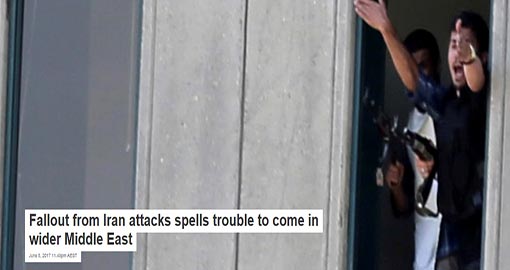
In Tehran on June 7, four men attacked one of the gates of the Iranian parliament building. After opening fire on a guard, they entered the lobbies and shot a number of visitors and staff. After several hours and exchanges of gunfire, they were killed by Iranian special forces. At the same time, several attackers fired on visitors at the Mausoleum of Ayatollah Khomeini, founder of the Islamic Republic. All in all, the two events left at least 17 dead and more than 43 injured.

Iran’s Supreme Leader dismissed the attacks as “fireworks … too small to affect the will of the Iranian nation and its officials”. Sure enough, the display of unity inside Iran was immediate and powerful, with social media booming with expressions of solidarity and defiance of terror (#درکنار همیم)

We Stand Together

artwork by: @_AMiRATHAN_ #PrayForTehran #PrayForIran #wearetogether#همه_با_هميم #درکنارهمیم pic.twitter.com/E8wKTgLXdF

— ehsan (@eh_asgari) June 7, 2017

We are Together

ALWAYS AND FOREVER #IRAN#درکنارهمیم #در_کنار_همیم pic.twitter.com/VDUlNlktxQ

— خون آشامِ صورتی ⚜ (@nilooffar) June 7, 2017

The so-called Islamic State (IS) soon claimed responsibility for the attack, reiterating that “in the holy month of Ramadan the reward of killing misbelievers” – that is, the Shia Muslims who constitute the majority of Iran’s population – “is multiplied”.

If the claim of responsibility is to be believed, this isn’t the first time IS has invited its followers to exterminate Shia populations, or attacked them. In recent months, it has attacked a Shia neighbourhood in Baghdad, Iraqi Shia pilgrims near Damascus, and a 12th-century Shia mosque in Herat in Afghanistan. It also left a bomb near Shia stronghold al-Dahiyeh in south Beirut, which was found and dismantled.

The day after the attack, Iranian authorities announced that the terrorists were allegedly connected to Wahabi cells operating under the IS network in Mousul and Raqqa, and that they followed Abu Ayesheh, a high-ranking commander of IS, who had tried in August 2016 to carry out terror attacks in Iran’s religious cities. If this account is accurate, these were therefore IS’s first successful attacks in Iran proper.

That said, the attack was also sophisticated enough that it might have been beyond IS’s abilities inside Iran – and according to Iran’s own Ministry of Intelligence, the attackers were themselves Iranians. Given that IS doesn’t have a popular base inside Iran, this might point to the tactical support of the exiled revolutionary group

A stamp commemorating the victims of the MEK’s 1981 bombing.

MEK or the Baluchi separatist group Jundullah.

Mojahedin-e Khalq (MEK) is an Iranian terrorist group dedicated to violently overthrowing Iran’s government and which had been expelled from the country since the early 1980s. The Obama administration removed it from the US’s list of terror groups after an intense lobbying campaign in Washington DC, but its involvement in violence is well-known in Iran. In 1981, it was blamed for planting a powerful bomb in the headquarters of the ruling Islamic Republic Party, killing dozens of leading state officials.

Then there’s the Jundullah group, a violent separatist organisation that’s previously received the backing of both Saudi Arabia and the US in the hope of undermining Iran’s domestic security and stability. In 2009, it killed 42 Revolutionary Guards, including a top general, with an explosive device in a mosque in Baluchistan.

Wedge issue

As with many terror attacks, the timing of these incidents is particularly relevant. The Revolutionary Guards’ statement after the attacks overtly connected them with Donald Trump’s visit to the Middle East, during which the US president met with his Saudi and Israeli counterparts and decried Iran for supposedly sponsoring terrorism and extremism – basically putting the country back in the George W. Bush-era “Axis of Evil” hall of shame.

This view has gained currency among several Arab countries since Trump’s election. Only a month ago, the Saudi crown prince, while ruling out any possible dialogue with Tehran, stated that the struggle for regional influence will “take place inside Iran”, implying that regime change and support for armed resistance inside Iran were cards on the table.

When the latest attacks struck, the world’s major players found themselves on two sides. The UN Secretary General, Antonio Guterres, condemned the attack and invited everyone to join forces to fight terrorism; the EU High Representative for Foreign Affairs, Federica Mogherini, expressed solidarity with her Iranian counterpart, Mohammad Javad Zarif, and heads of state from all corners sent missives of condolence and support. Similarly, France, Italy, Germany as well as most of the countries in the Global South expressed their condolences to the Iranian authorities. The UK’s Theresa May remained silent, a sign that indicates alignment with the US-Saudi front.

In fact, the Saudi foreign minister declined to address Iran directly, while the Trump White House’s statement was predictably both pointed and tactless: “States that sponsor terrorism risk falling to the evil they promote.” Zarif, for his part, called the statement “repugnant” and claimed it was mounted by IS terrorists with US backing.

The rifts on display here are growing. On the one hand, as Iran-backed military efforts help drive IS back in Iraq and Syria, Tehran is starting to look like a logical strategic partner for the EU in its efforts against radical Islamist terrorism. But on the other hand, this is precisely the sort of cooperation that the US, Israel and Saudi Arabia are keen to curtail.

These hawkish powers look set to keep up sanctions on banking, threaten retaliation against companies willing to invest in Iran, invest in propaganda and intense lobbying, and may yet mount military operations, covert or otherwise.

Trump’s trip to Saudi Arabia yielded a proposed but unconfirmed arms deal that the president announced would amount to more than US$110 billion. Whether or not that’s true is highly disputed, but as a statement of intent, it clearly signals where Trump’s sympathies lie as far as the Middle East’s major powers are concerned.

Hence, Tehran finds itself part of the web of terror attacks that had already touched upon London, Manchester, Paris, Kabul and many other cities. But the stakes at play here risk leading to a regional confrontation with dangerous international underpinnings.

Maziyar Ghiabi, The Conversation,

Maziyar Ghiabi,Doctor in Politics at University of Oxford and Visiting Fellow at the American University of Beirut, University of Oxford
June 10, 2017 0 comments
FacebookTwitterPinterestWhatsappTelegramSkypeEmail
Mujahedin Khalq; A proxy force

Revolutionary Guards blame Saudi Arabia for Tehran terror attack

Military force ratchets up tensions with Riyadh after 12 killed in Iran’s capital

Iran’s Revolutionary Guards ratcheted up the tensions with Saudi Arabia as it accused Tehran’s regional rival of involvement in Wednesday’s double terrorist attack in the capital, which left at least 13 people dead and wounded more than 50.

Gunmen and suicide bombers launched simultaneous attacks on the parliament building in Tehran and the nearby shrine of Ayatollah Ruhollah Khomeini, the Islamic Republic’s founder.

The attacks were claimed by Isis, in what would be the jihadi group’s first significant strike in the Islamic Republic. However a statement from the Revolutionary Guards linked the “brutal attack” to Donald Trump’s visit last month to Riyadh, where the US president singled out Iran for fuelling “the fires of sectarian conflict and terror”.

“This terrorist act took place a week after a joint meeting between the US president and head of a reactionary regional country [Saudi Arabia] which has been a constant supporter of terrorism,” the statement said. “The fact Isis claimed responsibility proves that they [Saudi Arabia] were involved in the brutal attack.”

Speaking in Berlin, Adel Al-Jubeir, Saudi Arabia’s foreign minister, denied the accusation of involvement and said there was no evidence that his country was involved. “We condemn terrorist attacks anywhere they occur and we condemn the killing of the innocent anywhere it occurs,” Mr al-Jubeir was quoted by Reuters as saying.

Hassan Rouhani, Iran’s president, condemned the attacks, without laying the blame at the feet of Saudi Arabia. However, the accusation from the powerful Revolutionary Guards will stoke the increasingly bitter enmity between Tehran and Riyadh, which are involved in proxy wars from Syria to Yemen.

Iran’s foreign minister, Mohammad Javad Zarif, tweeted, “Terror-sponsoring despots threaten to bring the fight to our homeland. Proxies attack what their masters despise most: the seat of democracy.”

Mr Zarif seemed to be pointing at a comment last month by the Saudi deputy crown prince Mohammed bin Salman that any struggle for influence between Riyadh and Tehran would take place “inside Iran, not in Saudi Arabia”.

“We know that the aim of the Iranian regime is to reach the focal point of Muslims [Mecca] and we will not wait until the fight is inside Saudi Arabia and we will work so that the battle is on their side, inside Iran, not in Saudi Arabia,” Prince Mohammed said in a television interview.

The attacks also come at a sensitive moment in the Gulf, where a new rift opened this week pitting Qatar, with whom Tehran has ties, against Saudi Arabia, the United Arab Emirates, Egypt and Bahrain. The quartet on Monday severed diplomatic ties with Qatar and accused Doha of supporting terrorism.

Hamid-Reza Taraghi, a senior politician close to Tehran’s hardliners, blamed a combination of Saudi Arabia, the US, Isis and the exiled opposition group MEK for Wednesday’s attacks. “Saudi Arabia is definitely playing the leading role in these incidents, considering that its foreign ministry threatened Iran two to three days ago,” he said, referring to a call by Riyadh for Iran to be punished for supporting terrorism. He provided no evidence to support his claims.

His view was echoed by others, though they did not provide evidence either. “The fact that these two attacks took place . . . after that [Riyadh] meeting means that both the US and the Saudi regime have ordered their proxies to embark on that act,” Brigadier-General Hossein Nejat of the Revolutionary Guards told a local news agency.

Mohsen Rezaei, a former Revolutionary Guards commander, warned terrorists to expect a “tough and unforgettable” response from Iran.

Mr Trump’s administration is viewed as much more hawkish on Iran than the previous government of Barack Obama. Tehran has long accused Saudi Arabia of supporting Isis.

The assault began at 10.30am local time when three gunmen (earlier reports had said four) in women’s clothing walked into the building and began shooting. One detonated an explosive vest. All the attackers were killed after a stand-off lasting several hours, Iran’s interior ministry said.

Two further gunmen also opened fire at the Ayatollah Khomeini shrine in the Iranian capital. One was reported to have killed himself by detonating an explosive vest. Another was shot dead. Based on a video released by Isis, the attackers spoke Arabic. Brigadier-General Nejat said the nationality of the attackers was not yet clear, but an Iranian official told state television on Wednesday night that they were Iranian.

At least 13 people were killed in the two attacks, Pir-Hossein Kolivand, head of Iran’s emergency department, was quoted as saying by the official Irna news agency on Thursday.

Isis on Wednesday vowed further attacks on Iran, saying “Persia should know that the state of the caliphate will not miss an opportunity for an onslaught against them”.

Iranian officials said security forces remained on high alert.

Terrorist attacks are rare in Iran, which keeps a tight grip on domestic security. The country has largely been spared from militant attacks despite its heavy support of Shia militias in Syria and Iraq, which has increased sympathies among some of those countries’ Sunni populations for radical groups such as Isis.

If Iran steps up its fight against Isis in the wake of Wednesday’s attack, the situation in the region could become even more volatile, analysts say. Charlie Winter, senior research fellow at the International Centre for the Study of Radicalisation at King’s College London, said the attack could boost Isis’s flagging morale and intensify pressure on Tehran to step up its involvement in Syria against the jihadis. “If this happens, a more intense ‘Sunni war against Shia Islam’ will pour petrol on Isis’s ideological fire,” he said.

Security analysts outside of Iran have long argued that it has not been attacked because it tolerated the presence of al-Qaeda and the movement of communications and finances through the country. But for Isis, which is not reliant on foreign financing, Iran has long been a target.

Members of Iranian forces during attack on the Iranian parliament in central Tehran © Reuters

While it is difficult to gauge the extent of an Isis presence in Iran, the group has long sought to attract people from Iran’s Sunni minority. Last March, it released a 36-minute video in Persian, vowing to conquer Iran. In the video, militants used photographs of Iranian leaders for target practice, including Qassem Soleimani, commander of the Revolutionary Guards’ elite Quds force.

The Financial Times Limited 2017. All rights reserved. You may share using our article tools. Please don’t cut articles from FT.com and redistribute by email or post to the web.

by: Monavar Khalaj in Tehran and Erika Solomon in Beirut

June 10, 2017 0 comments
FacebookTwitterPinterestWhatsappTelegramSkypeEmail
Mujahedin Khalq Organization members' families

My Son will Come Back

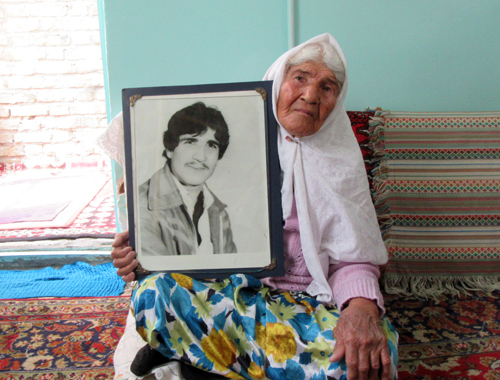
Ms. Shahi is the suffering mother of Abbas Shahi. Abbas is taken hostage by the Mujahedin-e Khalq now for years.

The aged mother says:” we raised our children with difficulty and adversity. Rajavi deceived them. Rajavi will have no good future. I am sure that my dear son will come back to me …”

Abbas’s  brother said:” we will do our utmost efforts to release my brother from this terrorist cult. Rajavi has no place in Iran. ..”

My son will come back

June 8, 2017 0 comments
FacebookTwitterPinterestWhatsappTelegramSkypeEmail
UN

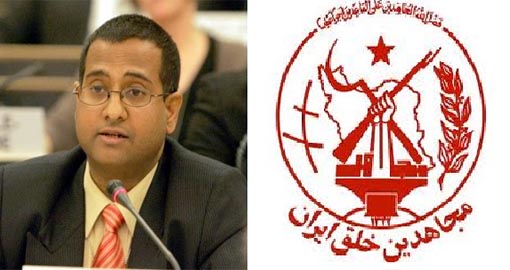
Open letter of “Azadi Associaition”, the survivors in Albania to Dr. Ahmed Shaheed

With respect,

We have been informed that you have travelled to Albania intending to meet with Maryam Rajavi the wife of Massoud Rajavi, leader of the Mojahedin Khalq Organisation (aka MEK, NCRI). We have also discovered that, in an interview with Albanian media and to the question of the reporter about your views about the Mojahedin Khalq (Rajavi cult), you have responded: “I have not yet met them [MEK] but I have heard they don’t have any problems in Albania”.
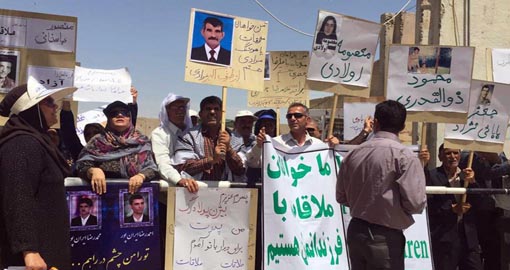
Dear Dr Shaheed,

We are a group of ex-members of the MEK in Albania who are residing in Tirana. We have all sorts of problems caused by the group. We are amazed that a person like you has not heard about all these problems here.

How can you accept that a political refugee in Albania instead of receiving his/her benefits (housing, payment, medical care, etc.) from the UNHCR and the local authorities and national government of Albania, is forced to get it as a hand-out from the leadership of the Mojahedin Khalq Organisation? And how is it not obvious to you that the MEK uses this arrangement to take all sorts of advantages whether political, social, personal and even extending it to the misuse of our families?

Why don’t you and the UNHCR arrange a situation so that the ex-members and members alike could receive their benefits directly from the UNHCR according to the UN’s own clear laws? Don’t you think that the refusal of the UNHCR office in Tirana to apply the UN laws and the help it gives to the MEK to put pressure on the ex-members and members alike is a breach of UN laws pertaining to refugees and their fundamental human rights?

Don’t you think it would be better that you, instead of only arranging to meet with Maryam Rajavi, would also perhaps visit a few of the ex-members trapped in Tirana? Or even visit a few members inside the Mojahedin Khalq and have private conversations with them without the presence of MEK minders?

Dr Shaheed,

Unfortunately, Iran over the past years has been the main beneficiary of your clandestine and deeply suspicious and corrupt relationship with the Mojahedin Khalq Organisation and its criminal leaders. And unfortunately you alongside the MEK have been the biggest obstacle in pushing forward the issue of human rights in Iran.

Your honor, are you aware of the violation of Human Rights in this Cult like Organization?

Amongst them:

-Prevention of the members from outside world even their children and families.

-Military use of the children.

-Suppression of the dissident members, imprisonment, torture, and killing them at the time of Sadam Hossein the late Iraqi dictator.

-Force divorcing the members from their spouse and separating the children from their parents.

-Running systematic mind manipulation and inquisition sessions, against the members.

Your honor

At the end we would like to express our gratitude and appreciation to your honor and thank you again for all your humanitarian activities.

With best regards

“Azadi Associaition”, the survivors in Albania

Cc:

– UN Secretary General

– Mr Filippo Grandi, UN High Commissioner for Refugees

– Ministers of Affairs of the EU

– Relevant MEPs

Iran Azadi,

June 6, 2017 0 comments
FacebookTwitterPinterestWhatsappTelegramSkypeEmail
France

Open letter to the Honorable Gerard Collomb, French Interior Minister

Dear Honorable Minister,

My name is Reza Jebelli. I am a former member of Rajavi cult, who had been for most of my life in captivity both physically and mentally in Iraq in Ashraf Garrison for many years.

I have learned through my friends that Maryam Rajavi is scheduled on July first to celebrate the anniversary of armed conflict, terror and killing people, to overthrow Iranian government and to establish an Islamic caliphate in Iran.

Dear Minister,

At the time that terrorism and the ideology of hatred have targeted our innocent children in Europe, I would like to bring your urgent attention to the history of Rajaiv’s cult and terrorism so you would be able to see that Rajavi was the creator of such operations 36 years ago in different cities in Iran.

Rajavi started the killing of innocent children precisely like ISIS with seven suicide bombing in the public places but only 36 years ago. As a former member of this cult, I will assure you that cowardly terrorist operations, such as the killing of children in Manchester Concert by Isis has been exactly copied from Rajavi’s operations and those operations inspired ISIS to do the same suicide attacks decade later, and today they are everywhere, including Europe.

These refugees are mostly undocumented and are therefore not allowed to travel due to the threat of ISIS agents among them, but the cult falsely tells them that this trip will be authorized by the authorities. In this respect, the relevant specifications and documents were delivered to the Belgian authorities.

Your Excellency,

While Isis is carrying out terrorist operations throughout Europe and looking for ways to travel between cities and countries in Europe, I would like urgently to draw your attention to the possibility of using this opportunity to travel easily to France.

As a European citizen, it is my duty to warn against this threat and I hope that you and your new government take a firm stance against this terrorist and once for all say a big NO to terrorism especially to Rajavi.

Given my years of experience, all the terrorist groups follow closely and precisely the traces of their ideological brothers in other groups and this method of smuggling would certainly be monitored by ISIS.

Policy of appeasing the terrorist will make them grow bigger, faster and more and more powerful.

Sincerely,

Reza Jebelli

Brussels

3/6/2017

Transcript to:

President office

Department of Justice

President of National Assembly

Reza  Jebelli, “Payvand Rahahee” Association,

June 6, 2017 0 comments
FacebookTwitterPinterestWhatsappTelegramSkypeEmail
Albania

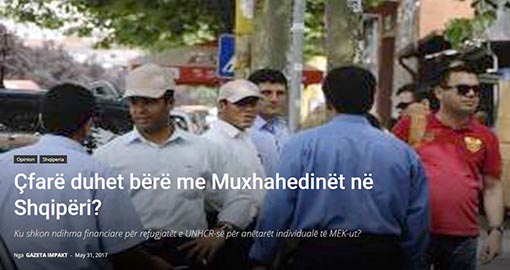
Albanian paper covered the article of Sahar website

The latest article written and published by the Sahar Family Foundation titled

‘For the attention of former MEK members in Albania: What is to be done? Where does the UNHCR refugee allowance of individual MEK members go?’

was fully translated and published in the Albanian paper GAZETA IMPAKT under the title of

‘Çfarë duhet bërë me Muxhahedinët në Shqipëri? Ku shkon ndihma financiare për refugjatët e UNHCR-së për anëtarët individualë të “MEK-ut?’

A link to the above mentioned coverage can be reached below:

Çfarë duhet bërë me Muxhahedinët në Shqipëri?[http://gazetaimpakt.com/cfare-duhet-bere-muxhahedinet-ne-shqiperi/ ]

The original English text is shown in the link below:

What is to be done?

June 6, 2017 0 comments
FacebookTwitterPinterestWhatsappTelegramSkypeEmail
Mujahedin Khalq Organization members' families

Open letter of the MEK members’ families to American lobbies of the group

John McCain, member of the US Senate;

John Bolton, former US Ambassador to the UN;

Robert Torricelli, former member of the US Senate;

We learned that you, prominent US politicians, have been invited by Maryam Rajavi to participate in the Mojahedin-e Khalq’s gatherings in Tirana, Albania on different occasions.

But we, the suffering families of the members of the MEK in Albania, are deprived of any contact with our loved ones. You are supporting an organization whose members do not have the right to any contact with the outside world, in particular their families.

The MEK is a destructive mind control cult which utilizes mind manipulation techniques to control its followers, and like any other cult, is strongly against any family relations. Behind the apparent democratic face of the cult, there is a notorious thought control system which denies the most basic human rights to members.

We urge you to ask the organization that you support to allow its members to benefit from the minimum right of contact with their families, many of whom have had no news from their loved ones for more than 30 years.

Families of the MEK members in Albania

June, 1st 2017

June 3, 2017 0 comments
FacebookTwitterPinterestWhatsappTelegramSkypeEmail
Albania

Turning Albania to a centre for ISIS/Mojahedin Khalq

Jihad 2.0: the Making of the Next Nightmare

You are about to enter the ultimate minefield.

Let’s start with 28 EU leaders discussing the Western Balkans at a recent summit and blaming – what else – “Russian aggression” in the EU’s backyard.

Cue to a Montenegro prosecutor raging that “Russian state bodies” staged a coup attempt during the October 2016 elections to stop the country from joining NATO.

And cue to President of the European Commission Jean-Claude Juncker warning that Donald Trump’s anti-EU rhetoric could lead to war in the Balkans. Juncker, condescending as ever, maintains that, “If we leave them to themselves — Bosnia and Herzegovina, Republika Srpska, Macedonia, Albania, all of these countries — we will have a war again.”

The Balkans may be about to explode – all over again. Yet with a twist; unlike 1999, NATO won’t get away with bombing a defenseless Belgrade for 78 days. A new generation of Russian missiles would easily prevent it.

The 1999 tragedy in the Balkans was essentially stirred up by fake massacres in Kosovo set up by the BND – German intelligence — using local Albanians and BND agent provocateurs, who shot both sides to stir up a war and break up Yugoslavia.

All Eyes on Albania

What’s evolving at the current geopolitical juncture is even murkier.

The usual suspects do what they usually do; blame Russia, and damn any evidence.

So let a knowledgeable insider, Dr. Olsi Jazexhi, director of the Free Media Institute in Tirana, Albania, be our guide.

As Dr. Jazexhi explains, “after Brennan left Edi Rama, Prime Minister of Albania, a close friend of George Soros, gathered all Albanian political parties in Macedonia and ordered them to support  Zoran Zaev against Nikola Gruevski. Gruevski is seen as filo-Russian and anti-NATO, while Zaev is a lapdog of Soros. As a result, Gruevski was boycotted by Albanians and Zaev had their support to form a government. The promise of Zaev to Albanians is that Macedonia will adapt Albanian as an official language and create a third (half) Albanian state in the Balkans. Macedonians are resisting, but Tirana and Edi Rama are orchestrating Albanian political parties against Gruevski. The end game is to make Macedonia a NATO member.”

Jazexhi also details how, “in Albania, we have two major terrorist organizations being protected by the Americans and the Europeans.”

The first is what Ankara describes as the Fetullah Gulen Terror organization (FETO), allegedly instrumentalized by German intelligence; “Turkey is protesting why Albania hosts the FETO group but the Americans host them against Erdogan.”

The second is Mojahedin-e Khalq (MKO), which fights against Tehran; “Albania is being turned into the center of MKO. John Bolton was recently in Tirana, with other international supporters of MKO, and they are attacking Iran and calling for regime change.”

The MKO’s wacky Marjam Rajavi has also visited Tirana, developing plans to “topple the Ayatollahs” in Iran.

The key issue, as Jazexhi emphasizes, is that “after turning the Balkans into a recruiting center for ISIS/Daesh during the Syria war, now the Americans are turning Albania into a jihad 2.0 state.”

Meanwhile, the European Union and the Americans, who want to de-radicalize the Wahhabi Muslims of Europe, keep mum about the Iranian jihadis.”

The “Invisible” Enemy

But then there is the “invisible” enemy that really matters.

In late March, Serbian President Tomislav Nikolic went to Beijing in his last official visit before the April 2 elections. Chinese President Xi Jinping stressed that economic cooperation with Serbia – and the Balkans at large – is a priority for China.

No question. In 2014, Beijing created a fund that will invest 10 billion euros in Central and Eastern Europe. Last year, China Everbright bought Tirana’s airport in Albania. China Exim Bank is financing highway construction in both Macedonia and Montenegro.

In Serbia, China Road and Bridge Corporation built the 170 million euro Pupin bridge over the Danube in Belgrade – a.k.a. the “Sino-Serbian Friendship Bridge”, inaugurated in 2014 and 85% financed by a China Exim Bank loan.

And the cherry in the (infrastructure development) cake is the 350 km, $2.89 billion high-speed rail line between Athens and Budapest, via Macedonia and Belgrade.

The EU has set off alarm bells on the flagship $1.8 billion Budapest-Belgrade stretch, investigating whether the Hungarian section violated strict EU laws according to which public tenders are a must for large transportation projects.

Inbuilt is the proverbial Western haughtiness, ruling that the Chinese could not possibly be capable of building high-speed rail infrastructure as well if not better – and for a lower cost – than in Europe.

Budapest-Belgrade happens to be the crucial stretch of the Land Sea Express Route that Beijing pledged to build, way back in 2014, with Hungary, Serbia and Macedonia. That’s the crux of the Southeastern Europe node of the New Silk Roads, now Belt and Road Initiative (BRI); a trade corridor between the container port of Pireus, in the Mediterranean – co-owned by China Ocean Shipping Company since 2010 – all the way to Central Europe.

NATO’s official spin is that it must be planted in the Balkans to fight the “threat of terrorism.” According to NATO Secretary General Jens Stoltenberg, “I recently visited Bosnia Herzegovina and Kosovo, and I’m encouraged to see how focused they are on countering the threat of foreign fighters.”

Jihad 2.0 may be directed against Slavs in Macedonia, against Iran and against Turkey. Not to mention against the Russian underbelly. The invisible angle is that they can always be deployed to jeopardize China’s drive to integrate southeast Europe as a key node of the New Silk Roads.  

The views expressed in this article are solely those of the author and do not necessarily reflect the official position of Sputnik.

Pepe Escobar, Sputnik news,

June 3, 2017 0 comments
FacebookTwitterPinterestWhatsappTelegramSkypeEmail
Europe

Debate in the European Parliament ‘What is to be done about the Iranian Mojahedin Khalq (MEK)?’

A meeting in the European Parliament on 30 May discussed the problems associated with the Mojahedin Khalq Organisation (MEK) both inside the Parliament and across Europe and the wider world.

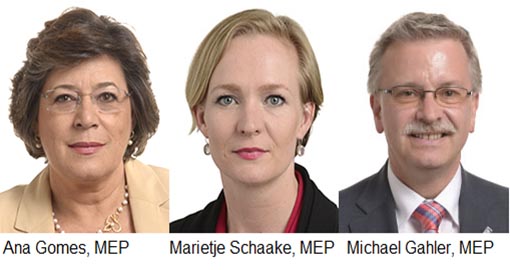
The meeting, which was attended by MEPs, researchers and analysts along with representatives of agencies outside the parliament such as security personnel, was organised by Ana Gomes, SND (Portugal) and seconded by Marietje Schaake, ALDE (Netherlands) and Michael Gahler, Christian Democrats (Germany).

All three have a clear record as outspoken critics of Iran’s human rights record and are concerned about the impact of MEK activity on this issue.

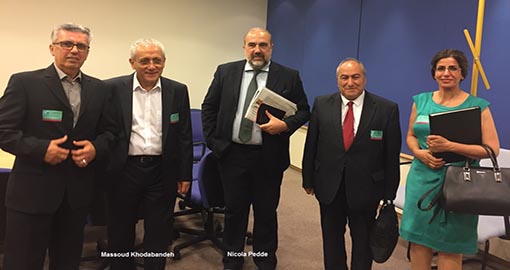
Two expert speakers were invited to address the meeting: Nicola Pedde, Director Institute for Global Studies, Italy and Massoud Khodabandeh, Director Middle East Strategy Consultants, UK.

Since all the participants have seen first-hand that the MEK spends enormous amounts of money for publicity and lobbying, the first issue to be discussed was ‘who funds the MEK and what is their agenda?’ It soon became apparent that the MEPs are fully aware that the MEK has never existed as an independent group and has benefitted over three decades from funding streams from specific circles which are trying to engineer regime change in the Middle East. The question then became whether these sponsors understand that the cost benefit of supporting the MEK is not giving positive returns but in fact has a negative result for them in their regime change agendas.

Further discussion by representatives revealed that the MEK has been shunned by almost every Parliament across Europe.

In spite of this, MEK members can still gain access to the European Parliament because it is an open institution. The problem this presents is the bullying tactics used by the MEK to intimidate MEPs and their staff. Several delegates at the meeting gave first-hand evidence of this. One MEP said that within ten minutes of taking one particular stance he was bombarded by mass emails some of which contained swearing and threats. Delegates agreed that this is incompatible with the fundamental principles of any Parliament in which representatives must be able to speak and act free from any pressure or intimidation.

Nicola Pedde described to delegates his work in the Italian Parliament where MPs are persuaded to sign petitions by bogus human rights campaigners. Pedde said that when he asked, many of the signatories were unaware that the MEK was behind the petition and didn’t realise that various sentences or paragraphs were added afterwards to give support for Maryam Rajavi and her agenda. Pedde said some MPs were even strongly against the MEK and were very angry about being deceived in this way. They had thought they were condemning human rights abuses in Iran, but their names were then misused to depict them as supporters of terrorists in Albania.

The discussion moved on to the problem of accepting the MEK as advocates of human rights for Iran. Ana Gomes said that when Iranian Nobel Human Rights Prize winner Shirin Ebadi visited the European Parliament, she was unequivocal in saying that the MEK do not have the right to be described as human rights activists. Quite the opposite, they are abusers themselves, she said. Massoud Khodabandeh reminded delegates that in a recent interview with AP, Reza Pahlavi – who wants to restore the monarchy to Iran – dismissed the MEK as a cult. In addition, every Iranian opposition group from the Greens to the Nationalists has rejected the MEK as human rights advocates and as a political entity.

More concerning for delegates is that the government of Iran is quick to use the MEK’s advocacy for human rights as a means to dismiss the issue, pointing out that the terrorist group murdered thousands of Iranian citizens and still commits human rights abuse against its own members. Massoud Khodabandeh gave an example from the UK House of Lords in which Haleh Afshar – a prominent Iranian feminist and academic who now sits in the House as Baroness Afshar – hosted a parliamentary debate about human rights in Iran. The challenging discussion, with valuable contributions from several informed members, was completely undermined by one of the MEK’s supporters who asserted that only Maryam Rajavi and her group could bring freedom and human rights to Iran. The government of Iran cannot be expected to even respond to such a debate said Khodabandeh.

Nicola Pedde made an interesting comment when he said that the MEK cannot be considered as a viable force because, as a result of its cultish behaviour, the MEK do not have a second generation. They have effectively killed themselves, he told delegates, because marriage and family are banned for all members.

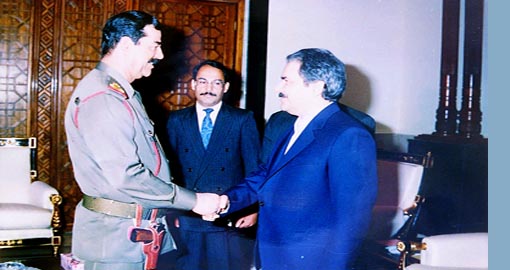
The third issue to be discussed was the MEK presence in Albania. Delegates heard how the MEK had been forced to leave Iraq and how the Americans arranged for the UN to be able to transfer them to Albania. The government of Iraq was relieved to be rid of three thousand MEK who had been part of Saddam Hussein’s repressive forces, but the problem has now simply been moved to Albania. The Americans promised help to de-radicalise the MEK members. But, as Massoud Khodabandeh pointed out, this did not happen and the group was allowed to re-group as a terrorist cult and treat its members as modern slaves.

Delegates discussed Albania’s candidature to join the European Union in light of this situation and agreed that this is not just incompatible but that having trained terrorists on the doorstep of Europe is already a security threat to Europe. Delegates stressed that European security services need to take this threat seriously from now.

Reports also described the human rights abuses inflicted on MEK members by their own leaders. They are living in conditions of modern slavery because the UNHCR is acting illegally by paying refugee allowances to the organisation instead of to the individual members. This means members are forced into dependency on the group and cannot leave. Members are also prevented from contacting their families or even other former members so they do not have any recourse to external help or support.

As the two speakers gave their expert analysis throughout the meeting, they also offered suggestions for solutions. Khodabandeh urged delegates to put pressure on the Albanian authorities and the UNHCR to resolve the hostage condition of MEK members in Albania.

Pedde said MEPs should be briefed about the danger of supporting human rights through using groups like the MEK.

At the end the meeting was also opened to the audience for discussion. Former MEK members, Ali Akbar Rastgou, Batoul Soltani, Reza Sadeghi and Ghorban Ali Hossein Nejad were able to join the discussion at this time.

In conclusion delegates discussed various solutions which are open to them. It was important, they said, to find ways to tackle these problems because parliament cannot be held hostage to bullies. A package of activities was agreed in order to curtail the MEK’s deceptive and intimidating activities in Parliament. Other solutions to the wider problems were also agreed and will be put in place throughout the rest of the year.

June 3, 2017 0 comments
FacebookTwitterPinterestWhatsappTelegramSkypeEmail
Mujahedin Khalq; A proxy force

US Media & The Terrorists Who Cried Wolf

Right-wing, anti-Iranian figures and media in the United States have begun circulating claims that Iran had violated the JCPOA that resulted from the P5+1 nuclear negotiations, and indeed has a nuclear weapons program. Various pro-Israeli and anti-Iranian voices in the US echoed this claim. Mark Toner was even asked about the allegations during a press briefing in April. The source for this allegation was the National Council of Resistance of Iran, a front group for the Mujahadeen E-Khalq (People’s Holy Warriors). Putting aside the group’s shady history, terrorism, and bizarre cultish practices, the claims should have immediately been discredited. Why? These exact same forces were caught lying back in 2015, with similar claims. In 2015, as the nuclear negotiations were nearing their completion, the NCIR published photos of a safe, claiming it was in Iran and contained materials related to a secret nuclear weapons program. The photo the NCIR released was proven to have been taken from a French website selling safes. The group was caught in an obvious lie.
________________________________________

Iran’s nuclear energy program has never been proven to have any military uses. The International Atomic Energy Agency has watched over all of Iran’s nuclear activities, and following the negotiations in 2015, almost all of the peaceful nuclear energy program has been shut down.

________________________________________

A Bizarre “Islamo-Marxist” Terrorist Cult

The 2015 photo flub was not the first time the MEK has been caught lying about Iran. Over the last ten years they have continued to make claims that they have proof of an Iranian nuclear weapons program. None of their claims have ever been verified. MEK did, however, cooperate with Israel’s Mossad to assassinate peaceful nuclear scientists teaching at Iranian Universities. Who is the source of all these fraudulent claims that continue to be treated with credibility in the US media? So, who is the MEK?The Mujahadeen E-Khalq is a religious/political cult formed in Iran during the 1970s. At the time Iran was led by a US backed dictator, the Shah. While various groups organized resistance to the Shah in the form of guerrilla warfare, strikes, and protests, the MEK conducted adventurist acts of violence and terrorism. In addition to Iranians, Americans were also victims of MEK’s terrorism prior to the Iranian revolution of 1979.

________________________________________

The Mujahadeen E-Khalq calls its belief system “Islamo-Marxism.” The founder, Masoud Rajavi, claims to be a prophet brought to earth by God in order to usher in some kind of Islamic Communist revolution.  MEK’s beliefs could almost be described as an Islamic version of Reverend Jim Jones “People’s Temple,” which reached its peak during the same time period. Like Rajavi, Jones also claimed to be some kind of prophet who could spiritually combine the world’s religions with soviet-style Marxism in order to foment global revolution. Also like the People’s Temple, many people have died as a result of Rajavi’s fanatical and violent organization.

________________________________________

A History of Terrorism & War Crimes

After Iran’s 1979 Islamic Revolution, the MEK (also called People’s Mujaheddin) briefly aligned with [Ayatollah] Khomeini, hoping they could influence the Iranian revolution from within. After one of their allied clerics was deposed, the MEK launched a bombing campaign against the Islamic Republic. In 1981, the MEK bombed a meeting of Iran’s Islamic Republican Party, killing 72 people.

During the Iraq-Iran war, Saddam Hussein began funding and arming the MEK. The MEK formed an armed body called the Iranian National Liberation Army. In 1988, MEK fighters were airdropped into Iran by Iraqi aircraft. Its members proceeded to raze villages, slaughtering, men, women, and children, before ultimately being defeated by the Iranian military. It is estimated that tens of thousands of civilians were killed by MEK fighters during the Iraq-Iran war.

_______________________________________

After the war, MEK set-up shop in Iraq, being coddled by Saddam Hussein’s government. Hussein used the MEK as shock troops to suppress the Kurds and other uprisings against him during the 1990s.

MEK is now headquartered in France, with Maryam Rajavi, the wife of the cult’s founder, claiming to be Iran’s President in exile. During the 1990s, the cult ordered all members to divorce their spouses, as marriage was considered a distraction from achieving the cult’s goal of toppling the Iranian government. MEK’s base of operation, Camp Ashraf in Iraq, has been operated as a kind of mini-police state. According to Human Rights Watch, within Camp Ashraf, the death penalty and torture is frequently used against residents. Reports described individuals being dragged by ropes around their necks, among other routine atrocities.

________________________________________

The Spirit of the Agreement

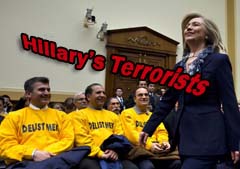
 Throughout his presidency, the Tea Party and Republicans frequently accused Barack Obama of being a “Muslim” and a “Communist.” Ironically, however, the Mujahadeen E-Khalq is a favored group of the Republican Party, despite being self-described as “Islamo-Marxists.”With the support of Hillary Clinton, the MEK was removed from the list of designated foreign terrorist organization in 2012 by the US State Department. The decision was based on claims that MEK had “renounced violence.” However, at the very time the process of delisting was in the works, MEK assassinated Iranian Nuclear Scientists.The fact that the group was caught intentionally using a fake photograph against Iran in 2015, in addition to all of its terrorism and war crimes, should discredit its recent statements about Iran in the US media. However, despite their previous lies and horrendous record, certain US media outfits remain so biased and hostile to Iran, that they still repeat their claims.

While no evidence exists that Iran has violated the JCPOA, Donald Trump recently stated to the press that Iran had violated “the spirit of the agreement.” How does one define “the spirit?” Will Iran be punished for such a subjective crime, despite fulfilling all of its written obligations?  Only time will tell.

Grean Villepost.com

June 1, 2017 0 comments
FacebookTwitterPinterestWhatsappTelegramSkypeEmail
Newer Posts
Older Posts

Recent Posts

  • Why Mike Pompeo’s Embrace of the MEK Ignores Its Lack of Popular Base

    October 3, 2026
  • Fourteen years after US delisting, MKO terror cult’s political rebranding collides with its violent legacy

    September 30, 2026
  • How Did Maryam Rajavi Become All-Powerful in the MEK?

    September 29, 2026
  • Soraya Abdollahi’s Letter to International Human Rights Bodies

    September 28, 2026
  • How Did Maryam Rajavi Become All-Powerful in the MEK?

    September 27, 2026
  • Facebook
  • Twitter
  • Instagram
  • Youtube

© 2003 - 2025 NEJAT Society . All Rights Reserved. NejatNGO.org


Back To Top
Nejat Society
  • Home
  • Articles
  • Media
    • Cartoons
    • NewsPics
    • Photo Gallery
    • Videos
  • Publications
    • Books
    • Nejat NewsLetter
    • Pars Brief
  • About Us
  • Contact us
  • Editions
    • عربي
    • فارسی
    • Shqip