Nejat Society
  • Home
  • Articles
  • Media
    • Cartoons
    • NewsPics
    • Photo Gallery
    • Videos
  • Publications
    • Books
    • Nejat NewsLetter
    • Pars Brief
  • About Us
  • Contact us
  • Editions
    • عربي
    • فارسی
    • Shqip
Nejat Society
Nejat Society
  • Home
  • Articles
  • Media
    • Cartoons
    • NewsPics
    • Photo Gallery
    • Videos
  • Publications
    • Books
    • Nejat NewsLetter
    • Pars Brief
  • About Us
  • Contact us
  • Editions
    • عربي
    • فارسی
    • Shqip
© 2003 - 2024 NEJAT Society. nejatngo.org
Iran

Next ballistic missile to be named ‘Dezful’: IRGC

 IRGC aerospace commander says next ballistic missile will be named after city of Dezful to mark its resistance during 8 years of Holy Defense.Gen. Amir Ali Hajizadeh, the Commander of IRGC Aerospace Force, who was addressing a gathering in city of Dezful, hailed the resistance of people of the city during Saddam’s war against Iran.

He pointed to the achievements of Iran in aerospace industry, particularly missiles and drones, to be in highest levels of the industry and its self-sufficiency in air defense, electronic warfare, radars, etc. “today, whole materials for missiles, from its body to fuel and other parts are made domestically by Iranian experts,” he emphasized.

Gen. Hajizadeh described that if enemies demand Iran to stop its missile program is because they know that this capability turns Iran into a power. “Security of our people is redline for both Army and IRGC and we continue to increase our missile power,” he said and continued to remind that “we never forget the United States supported Saddam’s Baath regime in its war against Iran, shut down our passenger flight, backed MKO, created ISIL and fueled war in Syria, Iraq and Yemen.”

He vowed that Armed Forces will never allow bittering events like Iraq war would occur again and stressed that expansion of missile and defense programs will continue in the future. “In future, the first ground to ground ballistic missile created will be named ‘Dezful’ after the city.”

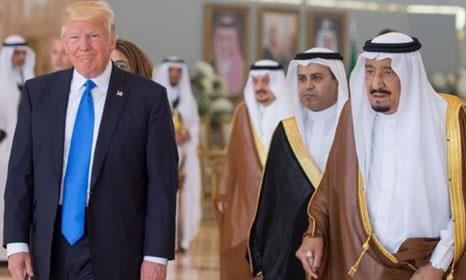
He also noted recent arms deal between the US and Saudi Arabia and emphasized that it was of no concern for Iran as “we are sure in future the same weapons will be sued against the Zionist regime.”

May 27, 2017 0 comments
FacebookTwitterPinterestWhatsappTelegramSkypeEmail
Iran Interlink Weekly Digest

Iran Interlink Weekly Digest – 191

++ The MEK’s reaction to Iran’s presidential election has elicited comments from many and various quarters. The common theme, however, is ‘You don’t know what “election” means and your benefactors, whether Saddam or Saudi Arabia, don’t know what a ballot box is either’. When Maryam Rajavi sent a ‘special’ message to heads of Arab countries gathering with Trump in Riadh, commentators said ‘as if they hadn’t suffered enough humiliation and degradation by having to attend the gathering, the last thing they needed was a message from you’. In an article for Iran Interlink, Saber from Tabriz wrote to express how cringe-worthy her message is. He concludes ‘no wonder that in a world where, as they say in Farsi, they have tied up the stone and set the dog free, Iran has every right to defend itself’. Fanous has written an analysis of the situation of the Saudis as the new benefactors of MEK (as they have been for three decades, nothing new there, and as the Saudis are benefactors for Daesh). Neither the Saudis nor the MEK will do as they are told, or asked to do – they always bite the hand that feeds them. Zarif is right, Trump has been there to milk the cow, the problem with these kind of cows is that they kick you in the face as well.

In English:

++ An article by Behnam Gharagozli, Jon Roozenbeek and Adrià Salvador Palau in The New Arab (Rouhani’s landslide quells risk of escalation, despite Trump’s hostility – High voter turnout was key to Rouhani’s victory), asserts that “The high turnout also serves to consolidate the Islamic Republic against dissident exile groups. The Iranian general public has overwhelmingly ignored calls for regime change and a boycott of the presidential elections such as the Reza Pahlavi (son of the last Shah of Iran), and Mujahedin-e Khalq (MEK), also known as the National Council of Resistance in Iran (NCRI).

“Having backed Saddam Hussein against Iran during the Iran-Iraq war in the 1980s, their support for human rights violations and their cultish activity has cost MEK enormous legitimacy and popularity both in Iran and in the expat community.”

++ Nejat Society held a meeting in Sistan & Baluchestan to discuss the cultic features of the MEK as well as its background of terrorism and treason. Ebrahim Khodabandeh and Ms. Mirbagheri, two former members of the MEK cult, addressed the audience. Comparing the MEK and Daesh, Khodabandeh said the group’s natures are alike. He identified ”exploiting Islam, the use of violence and using Turkey as a transit route” as similarities between the two terrorist cults.

++ Nejat Society reported that Raoof Faramarrzi had, after 29 years, managed to escape the MEK in Albania and has since repatriated to Iran where he is now happily reunited with his family. The Faramarzi family was in contact with Nejat Society and did their utmost to free their beloved son. In Albania, they were finally able to make contact with Faramarz and ensured him of their everlasting love towards him. The Faramarzi family efforts paid off and he liberated himself from the physical and mental barriers of the cult.

May 26, 2017

May 27, 2017 0 comments
FacebookTwitterPinterestWhatsappTelegramSkypeEmail
Former members of the MEK

Recently defected member talks about the Cult members’ situatiin in Albania

Abbas Mohammadpour recently returned to Iran from Albania. He had been with the MEK for two decades and was in Tirana for over a year. In Iran, he has been meeting families in Khuzestan province and other places. He talked about what is happening inside the MEK and for the ex-members in Tirana. Members have no access to information and are under a huge amount of pressure from the MEK. Alongside that, reports from Sahar Family Foundation and ex-members in Tirana reveal that the MEK has increased pressure on members and ex-members by saying the MEK has the patronage of the CIA and Pentagon and they are free to do what they like. When one ex-member asked, ‘why don’t you give me the UNHCR money that I’m entitled to?’ The MEK replied ‘this is Albania, you are not entitled to anything unless we or the CIA say so. That includes your breathing as well.’

Recently defected member talks about the Cult members' situatiin in Albania

May 25, 2017 0 comments
FacebookTwitterPinterestWhatsappTelegramSkypeEmail
Former members of the MEK

Mr. Faramarzi separated the MEK Cult in Albania and joined his family

Mr. Raoof Faramarrzi was deceived by the Mujahedin-e Khalq in to joining the group. He was taken hostage for more than 29 years.

He was transferred to Tirana along with other MKO members. Faramarzi family was in contact with Nejat Society and did their utmost efforts to free their beloved son. In Albania they finally could make contact with Faramarz and ensured him of their everlasting love towards him. Faramarzi family efforts paid off and he could liberate himself from the physical and mental barriers of the cult. He then repatriated to his homeland and joined his family.  

May 24, 2017 0 comments
FacebookTwitterPinterestWhatsappTelegramSkypeEmail
Missions of Nejat Society

Nejat Society holds meeting in Sistan & Baluchestan

The meeting held on discourse analysis of the cult of Mujahedin-e Kahlq (MEK/MKO).

The meeting was held with the cooperation of Sistan & Bluchstan[province] Nejatngo branch and the City’s University on May 9th and 10th.

 The cultic features of the group as well as its background of terrorism and treason discussed in the meetings.

Mr. Khodabande and Ms. Mirbagheri; two former members of the MKO Cult addresed the audiences.

Comparing the terrorist groups of MKO and Daesh, Mr. Khodabandeh said the group’s nature are alike. The former member of the MKO Cult also mentioned:” exploiting Islam, the use of violence and using Turkey as a transit route” as other similarities between the two terrorist cults.

Ebrahim Khodabandeh also referred to his arrest in 2003. He was arrested by the Syrian officials, in 2003 while carrying 2 million dollars in cash. He was serving for the international relations committee of the MKO. After his arrest in Syria he was submitted to the Iranian government. In Iran, he was imprisoned in Evin prison where he began studying about cults. Khodabandeh has so far published articles and translated books and articles on the threat of destructive cults, particularly the MKO.

May 23, 2017 0 comments
FacebookTwitterPinterestWhatsappTelegramSkypeEmail
Mujahedin Khalq Organization members' families

Ms. Masumeh Dehghan pens letter to her enslaved son; Mohammad Zare’

Mohammad is taken hostage by the Mujahedin-e Khalq Cult now for long years. He has had no contact with his family during all these years. Though she knows that members of the MKO Cult has no access to the internet , the aged mother wrote letter to Mohammad and published it on the Nejat Society website hoping it may be seen by her dear son .

Hello my dear son,

My Dear Mohammad, I am spending my last days of life and my only wish is to see you.

Ms. Masumeh Dehghan pens letter to her enslaved son; Mohammad Zare’

May 21, 2017 0 comments
FacebookTwitterPinterestWhatsappTelegramSkypeEmail
The cult of Rajavi

Albania’s Anti-Trafficking Coordinator Elona Gjebrea praises Maryam Rajavi for keeping modern slaves in Tirana

As democratic elections go, Albania’s upcoming parliamentary elections are as bad as it gets. Protests and turmoil have characterised the leadup to the June election. The official opposition is continuing a three-month boycott of parliament and is threatening to boycott the election itself. The protest is rooted in accusations of corruption and bias in the government of Prime Minister Edi Rama.

Elona Gjebrea at the March 2017 Mojahedin Khalq rally in Tirana, Albania with Maryam Rajavi

Ongoing and apparently unsolvable problems with the narco-trade and drug cartels, arms smuggling and people trafficking, add fuel to the corruption charges. Politicians from all sides appear unable to either successfully expose these crimes or escape accusations of collusion with them.

One example of the complexity of Albania’s difficulties can be found by examining the activities of Albania’s deputy Anti-Trafficking Coordinator, Dr Elona Gjebrea, who is also the Deputy Minister of the Interior. In March 2017, Gjebrea attended a Conference held by the Welsh Government and the UK Crown Prosecution Service which focused on the problem of Albanian slavery victims in the UK. More victims of modern slavery from Albania end up in the UK than from any other country – 17% of all UK cases. The introduction of the Modern Slavery Act in 2015 in the UK has greatly enabled anti-slavery groups and campaigners in confronting this problem.

In Albania, Elona Gjebrea also has close ties to the United States on the issue of people trafficking and slavery. The US embassy in Tirana, Albania acknowledged the State Department’s annual Trafficking in Persons report in June 2016 by saying, “The United States appreciates the close cooperation with the Government of Albania, civil society and especially National Anti-Trafficking Coordinator Elona Gjebrea on our shared goal of combatting the global phenomenon of Human Trafficking.”

In December 2016, the United States allocated an additional $3m funding to support Albania’s “criminal justice system in the fight against organized crime and corruption”. Deputy Interior Minister Gjebrea welcomed the agreement and the resources.

So far, so good. Albania is apparently taking a strong stance against modern slavery and the US backs these efforts. But there is another side to this story. On January 16, 2017 Gjebrea, along with some other Albanian personalities, attended a clandestine music concert in Tirana hosted by the Iranian exile Mojahedin Khalq organisation (MEK) which is now based in Albania. Gjebrea claimed the Albanian people were in “solidarity with the Mojahedin”. Then, in March, she attended the MEK’s New Year rally with 3,000 of its members and leader Maryam Rajavi. She again heaped praise on the MEK and its leader.

Gjebrea’s open support for the group is shocking for several reasons. Not least because the MEK is a highly controversial group with a violent background. The entire MEK was forcefully transferred from Iraq to Albania by the Americans to satisfy Iraqi demands to rid their country of the final remnants of the Saddam Hussein regime. Even up until 2016 the MEK were linked to insurgents like Al Qaida in Iraq and Daesh. America paid several million dollars to Albania’s government and promised help to de-radicalise the terrorists.

This did not happen. Instead of de-radicalisation, the organisational structure which had operated in Iraq for three decades was allowed to continue in Albania. The 3,000 MEK members were consolidated and isolated behind closed doors and shuttered windows in dedicated apartment blocks. This led to speculation about the future of the group. In rallies, such as the one Gjebrea attended, the MEK continues with its promise of regime change in Iran – which in the past the MEK has pursued through violence and terrorism. When John Bolton or Senator John McCain lobby for the MEK it is clear they are following an anti-Iran political agenda. But does Gjebrea share that agenda toward Iran? Does Albania? Politicians from both government and opposition would benefit from a more informed and thoughtful approach if they are not to antagonise Iran as a potential trading partner for their country.

But the really shocking aspect of Gjebrea’s support for the MEK can only be based either in ignorance or as a result of corruption. It is well known that the MEK operates as a mind control cult. It is organised as a totalitarian system headed by an authoritarian leader who demands total unquestioning obedience from every member at every level. The group operates outside legal, moral or cultural norms. One of the defining characteristics of this cultic state – long exposed by expert analysis of the evidence– is that the members are held in a state of modern slavery. They endure forced labour and forced military service. In a sense, they are modern day Gladiators, fighting not for the ancient Romans but for their modern masters, those who pay for the MEK as mercenaries.

Let us remind ourselves that Elona Gjebrea is Albania’s deputy anti-trafficking coordinator. Her role is to prevent slavery and trafficking. How then does she explain her support for modern slavery in Albania itself? When she praises Maryam Rajavi is she sincerely unaware that the cheering, flag waving, applauding audience are actually slaves who have no choice but to obey Rajavi’s dictates? Is she genuinely unaware that MEK members who have worked for decades without pay are still denied their individual UNHCR refugee allowance in Albania because it is paid directly to the MEK leader? Maryam Rajavi is no other than a slave gang-master.

Maryam Rajavi and her flag waving slaves in Tirana, Albania

Gjebrea is only one of several high-profile personalities who have recently succumbed to the persuasive lure of the MEK. But what huge irony that in her role at the Interior Ministry, she has not only failed to ensure that MEK members are de-radicalised and returned to normal life, she has endorsed and encouraged the continuation of their slavery in her own country. When such a shocking situation so openly exists, it is not hard to see why the parliamentary elections are so fraught with anger and disaffection. For a country so beholden to America for help and support, it is a shame better guidance cannot be proffered to get Albania’s democracy back on track.

Massoud Khodabandeh Director at Middle East Strategy Consultants.

Co-authored by Anne Khodabandeh

May 20, 2017 0 comments
FacebookTwitterPinterestWhatsappTelegramSkypeEmail
Iran Interlink Weekly Digest

Iran Interlink Weekly Digest – 190

++ In the lead up to Iran’s presidential election this week the MEK tried everything possible to ask people not to vote. In response, several writers remind us what elections have meant for the MEK and for their last benefactor Saddam Hussein and for their new one in Saudi Arabia, King Salman. One writer says “I remember the last time I saw an election in the MEK. Massoud Rajavi came in, raised the hand of Maryam and said ‘you don’t get me now, you have to get to me through Maryam. Now she is your ideological leader and I am above that.’ Then he asked, ‘who agrees?’ And while I was wondering ‘what the hell is going on’ my group leader poked me in the ribs and showed me that everyone’s hand was up and said ‘what’s the matter with you, do you have a death wish’. As far as Saddam’s elections are concerned, 98% or more voted for him every time. And Salman is of course of king, there is no need to talk about them.”

++ Abbas Mohammadpour recently returned to Iran from Albania. He had been with the MEK for two decades and was in Tirana for over a year. In Iran, he has been meeting families in Khuzestan province and other places. He talked about what is happening inside the MEK and for the ex-members in Tirana. Members have no access to information and are under a huge amount of pressure from the MEK. Alongside that, reports from Sahar Family Foundation and ex-members in Tirana reveal that the MEK has increased pressure on members and ex-members by saying the MEK has the patronage of the CIA and Pentagon and they are free to do what they like. When one ex-member asked, ‘why don’t you give me the UNHCR money that I’m entitled to?’ The MEK replied ‘this is Albania, you are not entitled to anything unless we or the CIA say so. That includes your breathing as well.’

In English:

++ An article by Massoud and Anne Khodabandeh in the Huffington Post ‘Albaina’s Anti-Trafficking Coordinator Elona Gjebrea praises Maryam Rajavi for keeping modern slaves in Tirana’, says Gjebrea’s support for the MEK can only be because of ignorance or corruption. While she travels to the UK and US to denounce modern slavery, back home in Albania she shows no compunction in supporting Maryam Rajavi in spite of it being public knowledge that the members are living in a state of modern slavery. While John Bolton and John McCain support the MEK for their own political agendas, the article questions what Gjebrea’s agenda could be as a representative of the government of Albania.

++ Trend reported that Iran had prevented a terrorist attack “by what the country’s Ministry of Intelligence has called ‘an anti-revolution group… whose hand is stained with the blood of thousands of people,’ a possible reference to the People’s Mujahedin group, known as MKO. Through painstaking planning and operations, the intelligence forces managed to preclude the attack and confiscate explosives of various types and other equipment, IRNA news agency reported May 13. The news comes only six days before Iran holds a round of presidential elections on May 19.”

++ In an interview with Balkans Post, former US Army officer Joachim Hagopian said US Senator John McCain is using MEK, a terrorist cult, as his proxy war ally in the US covert war against the current Islamic Republic of Iran government.

++ M. Reza Behnam examines ‘The anti-Iran bias’ in an article which questions why the US ‘continues to mischaracterize the Middle Eastern country as a terrorist nation’.

“Iran has been fighting terrorism since 9-11. Its national security depends on stable borders and a stable region. To that end, it is fighting in Syria and aiding the Iraqi government to recapture territories held by the Islamic State. Iranians know all too well the egregious effects of terrorism. For decades, U.S. and Israeli intelligence agencies have covertly financed, equipped and trained opposition groups that have fomented and carried out terrorist attacks inside Iran. Thousands of civilians and political figures, including Supreme Leader Ayatollah Khamenei, have suffered injury at the hands of terrorists. U.S. intelligence agencies have supported the acts of violence committed by the Mujahedin-e Khalq — listed by the State Department as a terrorist group (now delisted) that advocates the overthrow of the Islamic Republic, as well as the Baluchi militant Salafi group Jundullah. An Iranian ethnic minority, Jundullah is a Sunni group aligned with the thinking of al-Qaeda.

“Terrorism is a cudgel used to engender fear. And fear, grounded in erroneous information, can result in destructive government policies, and in the worst case, war. This is especially true of the U.S.-Iran relationship. After almost four decades, Iran and the Middle East have substantially changed, while American policy has not. Iran’s evolving and nuanced political system does not fit into Washington’s outdated, hegemonic good guy-bad guy worldview.”

May 19, 2017

May 20, 2017 0 comments
FacebookTwitterPinterestWhatsappTelegramSkypeEmail
Iran

Iran nips terrorist attack in the bud

Iran has laid flat a terrorist attack by what the country’s Ministry of Intelligence has called “an anti-revolution group… whose hand is stained with the blood of thousands of people,” a possible reference to the People’s Mujahedin group, known as MKO.

Through painstaking planning and operations, the intelligence forces managed to preclude the attack and confiscate explosives of various types and other equipment, IRNA news agency reported May 13.

The news comes only six days before Iran holds a round of presidential elections on May 19.

By Mehdi Sepahvand,

May 18, 2017 0 comments
FacebookTwitterPinterestWhatsappTelegramSkypeEmail
Mujahedin Khalq; A proxy force

The anti-Iran bias

The U.S. continues to mischaracterize the Middle Eastern country as a terrorist nation

Some ideas take on a character akin to sacred texts whose validity is rarely questioned. One such belief is that the Islamic Republic of Iran is the biggest threat to the Middle East and the United States. The threat narrative has become required foreign policy catechism in Washington, D.C.

Menacing stereotypes and bellicose rhetoric are the standards by which Iran has come to be judged. It has continually been in the crosshairs of American administrations since the Iranian Revolution of 1979. The process by which a country is determined to be a terrorist state is highly subjective and politicized. The United States has assumed the singular role of ­terrorism arbiter.

After only weeks in office, the Trump administration “officially put Iran on notice” for a ballistic missile test, and imposed new sanctions.

It was only a matter of time before the Trump administration would resurrect the “Iran the terrorist state” mantra to deflect attention from its internal chaos.

The unpredictability of the Trump White House and volatility of the Middle East make it vital to understand the nature of Washington’s anti-Iran bias, how and why Iran has come to be cast as an international sponsor of terrorism and, most importantly, examine why the characterization is false.

The 1979 revolution and the ­overthrow of the shah freed the ­country from its obsequious relationship to Washington. Iran’s regional influence spread not in terms of ­conquered territory; instead, its ­revolutionary ideology gave voice to Shi’ites living in oppressive Sunni majority-ruled countries.

The Islamic Republic presented a dilemma for Washington, accustomed to dealing with the ruling families and autocrats of the Middle East. To curtail the revolution’s influence, Washington manufactured a narrative depicting Iran’s leaders as irrational religious fanatics in charge of a dangerous state that acted contrary to traditional state behavior. America’s attitude was hardened with the takeover of the U.S. embassy in 1979, shaping the negative lens through which Iran’s policies and actions would be viewed thereafter.

The trauma inflicted by the Iran-Iraq War (1980-88) deepened Iran’s distrust of Washington. From Tehran’s perspective, America’s support for Saddam Hussein’s aggression was Washington’s attempt to restore the monarchy and to destabilize the government. The post-revolution 1980s were filled with uncertainties and excesses as Tehran struggled to survive its war with Iraq — a war largely subsidized by Saudi Arabia and supported by the United States.

In the 1990s, Iran’s foreign policy shifted toward integrating into the international community and shedding its hard-line image. Tehran attempted to develop closer relations with Saudi Arabia and build constructive ties to the West. Although Iran opposed the 2001 U.S. attack on Afghanistan, the goal of fighting terrorism and toppling the Taliban regime — driven from power in November 2001 — united the two countries in perhaps the most constructive period of U.S.-Iranian diplomacy.

At a December 2001, meeting in Bonn, Germany, Secretary of State Colin Powell credited Iran with being particularly helpful in establishing an interim Afghan government following the American invasion. It was Javad Zarif, then Iran’s U.N. ambassador and current foreign minister, who mediated a compromise over the composition of Afghanistan’s post-Taliban government, ultimately leading to an agreement. And it was Iran that insisted that the agreement include a commitment to hold democratic elections in Afghanistan.

A burst of diplomatic talks between Iranian and American officials took place from 2001 through May 2003. Topics included cooperative activities against their mutual enemies: Saddam, the Taliban and al-Qaeda. Meetings resumed even after President George W. Bush listed Iran among the “axis of evil” countries in his 2002 State of the Union address.

Tehran’s final attempt to normalize relations came in May of 2003, in what became known as the “grand bargain.” Calling for broad dialogue “in mutual respect,” Iran suggested that everything was on the table, including full cooperation on Iran’s nuclear program, ending material support to Palestinian opposition groups and assistance in helping stabilize Iraq.

Convinced that the Iranian government was on the brink of collapse, and emboldened by perceived victory in Iraq in March of 2003, Bush administration officials belittled the initiative. The administration’s imperious posture and failure to build on Iran’s cooperation in Afghanistan led senior officials in Tehran to conclude that Washington’s goal was regime change.

Bush strategists had another objective in ousting Saddam — to isolate and increase the military and political pressure on Iran, and to a lesser extent on Syrian President Bashar al-Assad’s government. Repeated often by administration officials was the refrain, “Today Baghdad, tomorrow Damascus, and then on to Tehran.”

To curb Tehran’s growing influence in Iraq after the 2003 invasion, Bush launched an unprecedented financial war against Iran. A list of strategies developed in 2006 by Stuart Levy — the first undersecretary for terrorism and financial intelligence at the Treasury Department — were implemented to drive Iran out of the global economy.

Where Washington sees terrorism, the Iranian government sees itself combating a power structure in the Middle East that benefits the United States, Israel and Sunni Arab regimes.

Congress defines an international sponsor of terrorism as a country whose government supports acts of international terrorism. Tehran does not support “international” terrorism, but it does provide material support to regional movements that it calls the oppressed, whose battle is directed toward the state of Israel — Hezbollah, Hamas, Palestinian Islamic Jihad and the Popular Front for the Liberation of Palestine. These groups have used violence against Israel to end the brutal occupation of their land.

Tehran regards as legitimate its support for national liberation movements that fight against Israeli occupation and aggression, insisting it is not terrorism. Iran’s leaders believe that Israel’s long-term goal is to weaken the Islamic world, eliminating all resistance, in order to carry out its expansionist designs.

Interestingly, the Arab media have accused Washington of sponsoring terrorism because of its support for Israel.

The Israeli government has relentlessly pushed the perception that Iran, specifically a nuclear-armed Iran, is the greatest threat to peace and stability in the region and world, and has successfully sold this provocative idea in the United States. Senior Israeli security officials have refuted the assertion that an Iranian nuclear weapon would threaten Israel. Their claims are poignant, considering the fact that Israel enjoys a huge military and technical advantage in the region, and possesses an arsenal capable of deterring any nuclear aggression.

Prime Minister Benjamin Netanyahu’s motives for vilifying Iran are many, but primarily it serves to distract international attention as Israel continues settlement expansion in the occupied West Bank, Jerusalem and the Syrian Golan Heights.

Saudi Arabia, like Israel, is doing everything in its power to make sure the United States remains engaged in the Middle East. Riyadh relies on Washington to do its heavy lifting, and anti-Iran propaganda helps in its campaign. Saudi rulers believe that the Assad government is pivotal to Iranian influence in the region, and have been encouraging Washington to get rid of him for years. They were buoyed by Trump’s recent missile attack on Syria as a sign that Washington is pivoting away from Obama’s policy of rapprochement with Iran, and renewing its ties to the kingdom.

The intense focus on Iran as a menace does not correspond to its capabilities, intent or danger. A 2017 Congressional Research Service report stated that Iran’s national security policy involves protecting itself from American or others’ efforts to intimidate or change the regime. According to the 2014 U.S. Defense Department Annual Review of Iran, “Iran’s military doctrine is defensive. It is designed to deter an attack… .”

Forty-five U.S. military bases encircle Iran, with over 125,000 troops in close proximity. The Congressional Research Service asserted that Tehran allocates about 3 percent of GDP to military spending, far less than what its Persian Gulf neighbors spend.

Iran’s nuclear program has cultivated scientific innovation and national pride. It required pragmatic leadership to accept the constraints of the Joint Comprehensive Plan of Action. The agreement subjects Iran to greater restrictions and more intrusive monitoring than any state with nuclear programs, while its neighbors possess unlimited nuclear programs and, in the case of Pakistan and Israel, nuclear weapons.

Intelligence agencies and the International Atomic Energy Agency agree that Iran has not been attempting to develop nuclear weapons. According to the IAEA and the U.S. State Department, Iran has been fulfilling its obligations under the JCPOA.

Toughness on Iran has become a litmus test for American politicians to demonstrate their support for Israel. Congress overwhelmingly passed a 10-year extension of the Iran Sanctions Act, which was set to expire on Dec. 31, 2016. The renewal makes it easier for the Trump administration to reimpose sanctions that Obama lifted under the JCPOA.

Unlike other countries in the Middle East that have integrated missiles into their conventional armed forces, Iran has been singled out for the same behavior. Iran’s recent missile test did not violate the JCPOA. It has no long-range missiles, no nuclear warheads for its missiles, and has not threatened their use. Without nuclear weapons, missiles are of negligible importance. Unlike the Saudis and Israelis, Iran does not have a large, modern air force.

A Feb. 26, 2015, report by the director of national intelligence, titled “Worldwide Threat Assessment of the U.S. Intelligence Communities,” stated that Iran is not the chief sponsor of terrorism, and removed Iran and Hezbollah from its list of terrorism threats. The report asserted Tehran’s intentions are to “dampen sectarianism, build responsive partners and de-escalate tensions with Saudi Arabia … and combat Sunni extremists, including the Islamic State.”

Yet there are countless examples of aggression against Iran.

The Saudi government has sought for decades to motivate Sunnis to fear and resist Iran. To that end, it has spent billions on a campaign to expand Salafism (an ultra-conservative, austere form of Islam) as a major counterforce in the Muslim world.

In 2007, Congress agreed to a Bush administration request of $400 million to escalate covert operations to destabilize Iran’s government, with regime change the ultimate goal. The funding request came at the same time that a National Intelligence Estimate — the collective work of America’s 16 spy agencies — concluded that Iran had ceased its efforts to develop nuclear weapons in 2003.

Both the Bush and Obama administrations employed some of the most draconian financial methods ever used against a state, including crippling sanctions on Iran’s entire banking, transportation and energy sectors.

The first known use of cyber warfare against a sovereign state was launched against Iran by the United States and Israel in 2009. The Stuxnet virus crippled Iranian centrifuges used to produce nuclear fuel.

Beginning in 2008, four of Iran’s nuclear scientists were assassinated on the streets of Tehran; the evidence pointed to Israeli agents. In 2011, a military arms depot was blown up, killing 17 people. The incident was similar to a blast in October 2010 at an Iranian Revolutionary Guard Corps missile base in Khorrambad. Both acts of sabotage were attributed to Israel.

American organizations such as the jingoistic United Against a Nuclear Iran, chaired by former Sen. Joseph Lieberman, D-Conn., have called for attacks on Iranian ships in the Persian Gulf and on Iranian military forces fighting the Islamic State in Syria.

These acts of aggression are justified in Washington and elsewhere by the standard rhetoric of the Iranian terrorism myth, but there is scant intelligence to support the claim. In a 2011 poll conducted in 12 Arab countries by The Arab Center for Research and Policy Studies (based on face-to-face interviews of 16,731 individuals), 73 percent of those surveyed saw Israel and the United States as the most threatening countries, with 5 percent seeing Iran as such.

Most U.S. officials quietly acknowledge that Saudi Arabia and the Sunni-ruled Gulf monarchies are the major supporters of al-Qaeda and the Islamic State, not Shi’ite Iran. Vice President Joseph Biden concluded just that during a foreign policy speech at Harvard in October of 2014. A recently released classified State Department cable dated Dec. 30, 2009, stated, “…donors in Saudi Arabia constitute the most significant source of funding to Sunni terrorist groups worldwide.”

It is Iran that is helping to fight the Islamic State in Iraq. Its offensive in the Syrian war was at the request of the country’s sovereign government. Iran lives in the neighborhood and relies on regional allies, such as Hezbollah in Lebanon and Assad in Syria, to bolster its security if attacked. Syria was the only country to support Iran during the Iraq war. Tehran is keenly aware that the outcome of the Syrian war may have major consequences for the region’s Shi’ites, and could reshape the Middle East.

Saudi Arabia and Israel have made Iran their major regional adversary, and to that end have built a formidable alliance. Syria has become the theater for competing regional interests. Both the Saudis and Israelis are aiding al-Qaeda-affiliated forces in Syria. Washington has partnered with Saudi Arabia in the war to achieve its long-established goal of regime change, while Riyadh seeks to end what the Saudis see as the power emerging from the Shi’ite Crescent — Iran, Iraq, Lebanon and Syria.

Israel, for example, has been pressuring the United States and Russia to restrict and ultimately expel Iranian-backed militias from Syria, and has continued to attack pro-Iranian forces in southern Syria. From Israel’s perspective, Syria — ally of Iran and supporter of Hezbollah — has been one of the few remaining Arab states capable of standing in the way of its regional ambitions. Israel would like to see Syria fractured into small, sectarian enclaves, so weakened as to be no threat.

Israel has partnered with al-Qaeda’s franchise in Syria, Jabhat al-Nusra (also called the al-Nusra Front). Al-Nusra’s goal, like the Islamic State, is to overthrow Assad’s secular government and establish a radical Salafist regime. United Nations observers have documented the delivery of material aid and ongoing coordination between Israeli military personnel and al-Nusra armed groups. Al-Nusra terrorists are being cared for in Israeli hospitals.

By supporting al-Nusra, Israel has effectively sided with America’s enemy and has, therefore, emerged as a state sponsor of terrorism.

In the wake of the 9-11 attacks, President Bush, in his Sept. 20, 2001, speech to Congress declared, “Every nation now has a decision to make. Either you are with us, or you are with the terrorists… . From this day forward, any nation that continues to harbor or support terrorism will be regarded by the United States as a hostile regime.”

Iran has been fighting terrorism since 9-11. Its national security depends on stable borders and a stable region. To that end, it is fighting in Syria and aiding the Iraqi government to recapture territories held by the Islamic State. Iranians know all too well the egregious effects of terrorism. For decades, U.S. and Israeli intelligence agencies have covertly financed, equipped and trained opposition groups that have fomented and carried out terrorist attacks inside Iran. Thousands of civilians and political figures, including Supreme Leader Ayatollah Khamenei, have suffered injury at the hands of terrorists. U.S. intelligence agencies have supported the acts of violence committed by the Mujahedin-e Khalq — listed by the State Department as a terrorist group (now delisted) that advocates the overthrow of the Islamic Republic, as well as the Baluchi militant Salafi group Jundullah. An Iranian ethnic minority, Jundullah is a Sunni group aligned with the thinking of al-Qaeda.

Terrorism is a cudgel used to engender fear. And fear, grounded in erroneous information, can result in destructive government policies, and in the worst case, war. This is especially true of the U.S.-Iran relationship. After almost four decades, Iran and the Middle East have substantially changed, while American policy has not. Iran’s evolving and nuanced political system does not fit into Washington’s outdated, hegemonic good guy-bad guy worldview.

American, Israeli and Saudi regional objectives depend on the existence of an enemy; and to that aim, Iran’s terrorism designation has proven a potent rhetorical weapon. Washington’s hardline rhetoric and policies toward Iran merely strengthens the power of the country’s hardliners.

Given the circumstances, Tehran will continue its defensive, cautious strategy — cooperating with the West on issues such as the fight against the Islamic State, while asserting what it sees as its historical role in the region.

M. Reza Behnam, Ph.D., of ­Eugene is a political scientist specializing in the governments and politics of the Middle East, and American foreign policy in the region.

Register guard,

May 17, 2017 0 comments
FacebookTwitterPinterestWhatsappTelegramSkypeEmail
Newer Posts
Older Posts

Recent Posts

  • The Rhetorical Style and Polemical Language of the MEK

    July 15, 2026
  • Death of Lindsey Graham, notorious hardliner against Iran

    July 13, 2026
  • Nejat Society Albania’s 2026 Peace Delegation

    July 11, 2026
  • When Reality Does not Fit the MEK’s Narrative

    July 11, 2026
  • From Baghdad to Washington: How the MEK Aligns with Corrupt Global Politicians

    July 4, 2026
  • Facebook
  • Twitter
  • Instagram
  • Youtube

© 2003 - 2025 NEJAT Society . All Rights Reserved. NejatNGO.org


Back To Top
Nejat Society
  • Home
  • Articles
  • Media
    • Cartoons
    • NewsPics
    • Photo Gallery
    • Videos
  • Publications
    • Books
    • Nejat NewsLetter
    • Pars Brief
  • About Us
  • Contact us
  • Editions
    • عربي
    • فارسی
    • Shqip