Nejat Society
  • Home
  • Articles
  • Media
    • Cartoons
    • NewsPics
    • Photo Gallery
    • Videos
  • Publications
    • Books
    • Nejat NewsLetter
    • Pars Brief
  • About Us
  • Contact us
  • Editions
    • عربي
    • فارسی
    • Shqip
Nejat Society
Nejat Society
  • Home
  • Articles
  • Media
    • Cartoons
    • NewsPics
    • Photo Gallery
    • Videos
  • Publications
    • Books
    • Nejat NewsLetter
    • Pars Brief
  • About Us
  • Contact us
  • Editions
    • عربي
    • فارسی
    • Shqip
© 2003 - 2024 NEJAT Society. nejatngo.org
Manihej Safi Yari - Victim of MEK terrorism
Mujahedin Khalq Organization as a terrorist group

Terror victims not losing hope despite hardships

The ongoing trial for 104 members of the notorious terrorist group, the Mujahedin Khalq Organization (MEK), has brought joy to the families and survivors of terrorism in Iran, including Manijeh.

The long-term follow-up of these survivors finally came to fruition and now their complaints will be inquired after several decades.

On the occasion of the International Day of Remembrance of and Tribute to the Victims of Terrorism, a day dedicated to honoring and supporting terror victims, we published the story of Manijeh Safi Yari, an Iranian terror victim who was seriously wounded during a terrorist attack carried out by the MKO in 1985.

This piece was formerly produced by Jamaran News in Persian, which was translated by Habilian Association to English for the first time. Her sorrowful story reads as follows:

She was 17, brimming with the youthful exuberance and hope that comes with adolescence. She envisioned a bright future for herself, one filled with higher education, athletic achievements, motherhood, and more. But then, the bomb exploded, aiming to shatter her dreams. Undeterred, she rose, held her head high, and declared to the bombers, “If you have come to wage war against my will, I will defeat you. I am an Iranian Muslim, and you are a terrorist.”

Around 8:30 am on May 12, 1985, a deafening explosion shook Naser Khosrow and the surrounding streets in Tehran, leaving everyone stunned. The cause of the blast was initially unknown, but its bitterness still lingers in the memories of the area’s long-time residents and shopkeepers, many of whom have likely passed away.

A TNT bomb planted in a vehicle detonated, engulfing a two-story building, a garment factory, 15 cars, and 25 shops in flames. The human tragedy that ensued was immeasurable. Ordinary people, out shopping, working to earn a living, or simply going about their day, were either killed or left permanently disabled. This was, and remains, the logic of those who claim to fight for the people while turning their guns on them.

Nine people were martyred, and 45 were injured in the explosion – a victory in the eyes of the Mujahedin Khalq Organization (aka MEK, MKO, PMOI). That same evening, as if celebrating a triumph, they claimed responsibility for the bombing. One of those who was present that day, a 17-year-old girl on her first trip to Tehran’s bazaar with her mother, was Manijeh Safi Yari. The following is based on a heartfelt conversation with her.

We finally managed to coordinate our schedules and formed a team of three: a journalist, a photographer, and a videographer. As we entered the home of Ms. Manijeh Safi Yari and her family, it felt as if all their warmth and enthusiasm had been poured into their words, making us feel like part of their extended family. Their welcome was warm and heartfelt. Ms. Safi Yari, leaning on a crutch, joined us in the living room and settled on the sofa. A gentle smile played on her lips. The old saying about how things work out in the end seemed particularly apt in this case.

Despite all the hardships, this couple fit together like pieces of a puzzle. It seemed as if God had created them for each other to find peace together. Due to Ms. Safi Yari’s injuries, the couple was unable to fulfill their dream of parenthood. However, their faith helped them navigate this challenge. There was no need for small talk or introductions. The family was so adept at sharing their story that questions came naturally, and Ms. Safi Yari answered them with a heartfelt openness.

On a spring day in 1985, a mother and her 17-year-old daughter had set out to experience Tehran’s bustling bazaar for the first time. As Manijeh was taking in her surroundings, a massive explosion threw her off her feet. She recounts believing she had been hit by a truck, only to realize it was an explosion.

Blood gushed from her leg, staining the ground, but Manijeh’s immediate concern was for her mother. Her mother was also injured, bleeding profusely from multiple wounds. A thick cloud of smoke and fire engulfed the area. With a voice strained from the shock, Manijeh repeatedly cried out, “What happened? What happened?” As she regained her senses, she realized her right leg was severely injured, barely attached by a thin strip of skin. Yet, her primary worry was for her mother. She felt like a lost child, separated from her mother in a crowded market. Moments later, her mother, covered in wounds, found and embraced her. Manijeh’s hands became stained with her mother’s blood, and she feared her mother had been shot in the heart. Panic seized her.

A vehicle arrived to take them away, and amid the chaos of fire and smoke, they were loaded onto the back of a pickup truck. Manijeh and several others were placed on the truck. Her mother would occasionally regain consciousness, but Manijeh remained alert, observing her surroundings. They arrived at Sina Hospital, and as the back of the truck was opened, a river of blood flowed out. Despite her injuries, Manijeh remained strong. Mother and daughter were separated, with Manijeh staying at Sina while her mother was taken to Imam Khomeini Hospital.

The country was at war, and modern medical facilities were scarce. Manijeh was taken to the operating room. The shock of the explosion had delayed the onset of anesthesia. After the fourth attempt, the anesthetic still had no effect on her. The doctor could wait no longer and had to begin the surgery. To distract her, he asked irrelevant questions like, “What did you have for breakfast?” Manijeh was losing patience and begged the doctor to amputate her leg. But the experienced doctor refused, insisting that they needed to save her leg and perform a graft. The surgery was completed, but Manijeh looked as if she had taken a sleeping pill.

Finally, Manijeh’s energy reserves were depleted, and she fell into a deep sleep. When she awoke around midnight, she was surrounded by concerned family members who had come to offer their support. A few days passed, and as soon as she was able, Manijeh visited the other injured patients. Sadly, some of them had succumbed to their injuries.

A week passed, and the doctor concluded that the leg would have to be amputated. Manijeh, a 17-year-old who had excelled in both track and basketball, couldn’t comprehend the idea of losing her leg. She had no idea what a prosthetic leg was and couldn’t bear the thought of spending the rest of her life without one.

She had big dreams: attending university, continuing her education, getting married, having children. But these dreams, or at least parts of them, felt like a crumbling wall. As she contemplated the full extent of the tragedy, her anger boiled over. She was furious at those who claimed to be Muslims yet had committed such a heinous act. She demanded that the doctor leave the room, insisting that she would not allow her leg to be amputated. Tears had flowed so freely that she felt emotionally drained, pushing even her parents away. In those moments, she craved solitude. She began to envision a future where she would navigate life with one leg, study, fall in love, become a mother, and raise a daughter. Although some aspects of that future would later prove to be unattainable, Manijeh learned to rely on faith. It was not just a matter of words but a deep-rooted belief that guided her actions.

An hour later, Manijeh found peace in the comfort of her home. She asked her aunt to braid her hair and called the doctor. She was ready to embrace a life with a prosthetic leg. At seventeen, Manijeh was beginning to truly understand the meaning of trust and reliance on a higher power just like those combatants in the war who had shown resilience amidst the blood and fire at such a young age.

Manijeh had made her decision. She would continue her life under the umbrella of faith. She studied and attended university. She connected with the families of other terror victims, and when an association for supporting victims of terrorism was formed, Manijeh became the representative for child victims. In international forums, anyone under eighteen is considered a child. Each time she participated in these gatherings; her story remained the same. As a final statement of protest, she would say, “The only thing not being respected here is human rights.”

Political maneuvering in international forums is evident even when discussing victims of terrorism. Safi Yari shared her experience in France, saying, “In international gatherings, I proposed that psychological counseling sessions be held for these victims, because terrorism doesn’t discriminate between Iran and France.”

“The frail old people who once formed the MEK terrorist group, now easily form panels in these gatherings and defend themselves, claiming they have done nothing wrong, or if they have, it was completely justified. Can this really be called defending human rights? Do we all have to hit our heads against a stone, like Albania, to come to our senses?”

Ms. Safi Yari says, “After 42 years, we have finally been able to file a lawsuit against the perpetrators of the Haft-e Tir bombing at the International Court of Justice, but it has not yet been successful.”

Her wish is that the pleas for justice of the young children martyred at Bahrami Hospital as a result of Baathist regime’s bombing, the old and young who were killed in street assassinations, and others will one day be heard. She hopes to see the MKO discredited and that no country will provide them with refuge. She dreams of European and American countries having the courage to label them as terrorists.

August 27, 2024 0 comments
FacebookTwitterPinterestWhatsappTelegramSkypeEmail
Maryam Rajavi
The cult of Rajavi

North Korea and the MEK ban pets

When the media announced a few months ago that the leader of North Korea had banned the ownership of pets, no one knew that Massoud and Maryam Rajavi had implemented this type of ban in their cult of personality, Mujahedin-e Khalq (MEK) decades ago.

The prohibition of the most trivial everyday concepts in dictatorial systems is proclaimed with various justifications. For example, the dictator of North Korea, Kim Jong Un, has called keeping a pet dog as a capitalist or bourgeois behavior and against the socialist lifestyle. North Korea’s government is accusing people with pet dogs of committing “non-socialist behavior”.

But in the Cult of Rajavi, these restrictions are imposed on the members with other justifications. Mohammad Reza Torabi, a former child soldier of the MEK, while reminiscing about rescuing his neighbor’s cat in Berlin, Germany, writes about the hostile relationship of the MEK leaders with animals:
“In Ashraf, there were many dogs and cats in the camp, but the MEK did not allow us to feed them and pay attention them. It was forbidden. That is, the MEK do not even allow their members to establish emotional relationships with animals, let alone humans. This way, they killed people’s emotion. From time to time, they started hunting dogs at Camp Ashraf and killed dogs with Kalashnikovs.”

As usual, Mohammad Reza’s post on his X account, attracts the audience’s attention, and a few other former child soldiers of the MEK also share similar feedback for him in the comments. Their memories show the extent of suffocation ruling the MEK, which is much more than what is ruling the notorious North Korean dictatorship.

The former child soldier, who is active in the X social network under the pseudonym Aylin Moghadam, has a memory to confirm Mohammad Reza’s testimonies:
“”It was exactly like that, Maryam Hamed fed a cat and her kittens several times, they called her in the meeting and said that you have no right to feed the cats, because you are satisfying yourself, you have no right to go to the cats anymore.”

How can paying attention and love for an animal become a source of oppression in the brainwashing meetings of the Cult of Rajavi? This is a masterpiece that throughout history has only been done by destructive cults, and the MEK is one of its most professional examples. As Torabi rightly says: “Mujahedin systematically dehumanize.”

Azadeh Masum wrote about how she cared about the cats of around the MEK’s headquarters, Auver Sur d’Oise, France. What caused her to receive a strange warning from her superiors while living in France, in the cradle of civilization and democracy:
“It reminded me of my memories… I came out of the organization 3 months later and endured the nonsense meetings that Azer Jamshidi hold for me for 3 more months in order to have the opportunity to find a home and a family for the 17 kittens who were in Auver or sister’s shelter [female members’ dormitory], and they I was constantly criticized for my handling of these cats and their constant warning was that I should not play with them, otherwise the brothers [male members] will be “in trouble” with “moment”. Would you like to explain to others the meaning of “moment” some time?”

“Being in trouble with a moment” in the literature of the MEK means having sexual thoughts in one’s mind. The “moment” means the moment when a person thinks about the opposite sex or sexual issues. How taking care of a number of kittens creates? The argument of such issues can only be found in the MEK’s ruling
“The anti-socialist behavior of keeping a dog” or “satisfying an emotional need by feeding cats” or “sexual stimulation of male members by taking care of cats” all come from dictatorships, the ruling systems that require their community to conform to only one lifestyle and reject any other lifestyle with irrational arguments.

August 24, 2024 0 comments
FacebookTwitterPinterestWhatsappTelegramSkypeEmail
Terrorism
Iran

Iran to Hold Gathering to Honor Terror Victims

Tehran will host a gathering on August 21st to commemorate the victims of terrorism in Iran, coinciding with the International Day of Remembrance of and Tribute to the Victims of Terrorism. The event will bring together those affected by terrorism and human rights advocates.

According to Habilian, this joint initiative by High Council for Human Rights of Islamic Republic of Iran and Habilian will feature the participation of officials from the High Council for Human Rights and the Ministry of Foreign Affairs, as well as a representative from the United Nations in Tehran, the international body tasked with commemorating this day.

The United Nations General Assembly designated August 21st as the International Day of Remembrance of and Tribute to the Victims of Terrorism in 2017 to honor and support victims and survivors of terrorism worldwide.

August 21, 2024 0 comments
FacebookTwitterPinterestWhatsappTelegramSkypeEmail
MEK child soldiers -Alavi's border camp
The cult of Rajavi

Child soldiers speak of their nightmares years after leaving the MEK

Last week, some former child soldiers of the Mujahedin-e Khalq (MEK) spoke about their nightmares, which still torment them years after leaving the group. The pain that seems to be common to all the traumatized children of the MEK. Some have been able to recover from these sufferings, and some still have nightmares or at least remember them.
Mohammad Reza Torabi, a former child soldier of the MEK, shared this on his X account on August 14, 2024:
“I used to have nightmares of Mujahidin two or three nights a week. Of course, not only me, but all the children who escaped from this cult have these dreams. All our dreams are similar. I open my eyes and with the mentality I have now, I am again in the Mujahidin. I tell myself no! It is not possible, I ran away and I was outside, how did I come back to this hell again? I try to escape and get out and find a way out, but the Mujahedin and Rajavi officials don’t let me stand in front of them. They tell me that it is here and there is no way out. I wake up and my heart is pounding on my chest and I am afraid. Then I slowly come to my senses and realize that it was just a dream.”

Definition and causes of nightmare

Nightmares, like dreams, are the product of our brains, and their terrifying vision originates from inside us. Nightmares should not be confused with bad or unpleasant drteams. Nightmares are actually long, vivid and frightening dreams that usually threaten our survival, physical integrity, safety or self-esteem and fill us with fear. They can also cause intense feelings of fear, anger, sadness, confusion, and even disgust.
Some researchers call nightmares “repetition of threats”. The meaning of this term is that most people repeat the threats they have faced in real life in their nightmares. This is why most people remember the images and content of their dreams well when they wake up from nightmares. According to the Diagnostic and Statistical Manual of Mental Disorders (DSM; latest edition: DSM-5-TR, published in March 2022), the causes of nightmares are as follows:
– Anxiety and stress
– Trauma (physical or mental impact) or distressing events such as the death of a loved one
-Disordered sleep, lack of sleep, fatigue from long-term air flights, illness and fever
– Side effects of a specific drug or treatment
– Medicines or drug withdrawal such as sleeping pills
– Drinking or quitting alcohol
– Breathing disorders during sleep such as sleep apnea
-Sleep disorders such as narcolepsy or sleep anxiety disorder
-Eating shortly before bedtime

The causes of nightmares of the MEK child soldiers

According to the large number of memories, documents and evidence about the prevailing atmosphere within the Cult of Rajavi, it seems that at least the first three are the most true causes of nightmares regarding the child soldiers of the MEK. Of course, as he says, Mohammadreza has gotten rid of this suffering due to the beautiful life he has built for himself outside the cult. He attributes the end of his nightmares to the birth of his young son Ryan:

“But since Ryan Azadi was born, those nightmares have ended. I don’t know what the mechanism is, but what a blessing. These days, I am very proud of myself for having the courage to escape from that hell. Life is beautiful.”
But another child soldier of the MEK, who is active on the X social network with the username Aylin Moghadam, said in the comments to Mohammad Reza’s post about his endless recurring nightmares:

“I also have nightmares almost every night, they hold meetings for me, previously by Masoud Rajavi, now Maryam Rajavi has entered the scene, with her scary face looking at me with anger, and in my dream, I say ‘why am I here while I had gone out, how did I come back?’ and I scream asking for help Everywhere I go there is barbed wire…
“Another recurring nightmare of mine is that they forcefully tell me to get on a tank and fight. In my dream, I say that I don’t want to fight anymore. I’m tired. I don’t want to ride an armored car. They say that no one asked you if you want to get on and… I wake up crying again.

“In my dream, I don’t have anything, they have thrown away all my things, they force me to wear boots and tell me that you have to clean this whole desert of grass and… they regularly hold meetings for me and yell at me, I wake up with tears still on my face and after that most of the time I can’t sleep anymore I don’t know how long I’m going to have nightmares.”
Even reading Aylin’s nightmares is heart-breaking, let alone knowing that Aylin and people like him and Mohammad Reza experienced these fears in the MEK camps. Being isolated in the deserts of Iraq, participating in self-criticism and inquisition meetings for long hours, forced participation in military operations and conflicts, are all real and tangible experiences for the child soldiers of the MEK.

Aylin, who doesn’t want his real identity to be revealed and seems to be still trapped in the atmosphere of terror created by the MEK leaders, has a lot to say, but he avoids revealing:
“Unfortunately, I avoid saying many things for some reasons, because the MEK agents are very much looking for who I am, and I want them to fail.”

Only from the content of his nightmares one can understand what fear and anxiety, trauma, sleep disorder and excessive fatigue caused by the MEK system have done to the soul and spirit of this former child soldier.

Is there a remedy for the suffering of the children of the MEK?

Although Azadeh Masoum has left the MEK some years ago, got married and become a mother, the birth of her child has not stopped her from having nightmares, but her deep motherly love and concern for her daughter has affected her nightmares as well. She writes to Mohammad Reza in comments:
“Unfortunately, I still see them, I even dreamed once that my daughter was with me and she was taken from me and given to another sister in an “organizational ranking change”. I was going crazy, when I woke up, I felt very bad.”

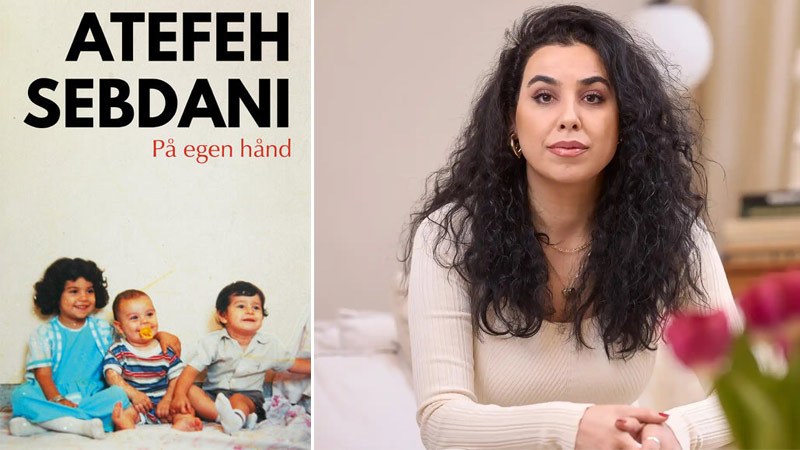
A few days later, impressed by the traumatic experiences of the MEK child soldiers, the author came across a post on the Facebook account of Atefeh Sabdani. Although Sabdani has no experience as a child soldier, she has experienced terrible traumas as a child of the MEK. She is now a 38-year-old mother of three children. The experience of a bad dream that her five-year-old daughter had the night before prompted her to write about it on August 16th, 2024.

The scream of the little girl woke her up and she rushed to her room to comfort her. She hugged her and soothed her by saying, “mommy is here”. The child calmed down, but Atefeh was thrown to her childhood, orphaned by the MEK, separated from her mom, left with feelings of helplessness and lack of security, and the experience of sexual assault by her foster father, who was a supporter of the MEK, and he had taken Atefeh and her two brothers and two other children under his custody in order to receive the social aids that the Swedish government pays children.

It is in the midst of night and Atefeh Sabdani, a successful Swedish citizen, influencer and author of a best-selling autobiography, is suffering from anxiety and shortness of breath from recalling bitter childhood memories. She had nightmares from the age of 5 to the age of 10 and 15 with no one to soothe her, she is still not completely healed from her traumas. She writes about this:

“Although I am actually 38 years old. And no matter how much I have walked through the path of healing and distanced myself more and more from my past, it still sneaks up on me. At night, as if to remind me of who I am and where I came from. Don’t forget. My five-year-old daughter sleeps peacefully. Now, I have to comfort myself.”

Mazda Parsi

August 19, 2024 0 comments
FacebookTwitterPinterestWhatsappTelegramSkypeEmail
Sulollari family
Missions of Nejat Society

Nejat Society congratulats Mr. Aldo Sulollari and his honorable wife

It was with great pleasure and happiness that we were informed that the daughter of Mr. Aldo Sulollari, the media director of the Albanian Nejat Society, and his active and beloved wife, Brikla, was born this morning.

We congratulate the blest birth of the second child of this family, who is a part of the great Nejat family, on behalf of all the families and members of the Nejat Society, and we wish the newborn a long and honored life with God’s blessing.

It is also necessary to appreciate the unquestionable efforts of the very young couple, Mr. and Mrs. Sulollari, in order to advance the goals of the Nejat Society in Albania.

August 18, 2024 0 comments
FacebookTwitterPinterestWhatsappTelegramSkypeEmail
Ebrahim Khodabandeh
Mujahedin Khalq Organization as a terrorist group

The CEO of Nejat Society in the 16th court session of MEK trial

Ebrahim Khodabandeh, a former member of the Muahedin-e Khalq (MEK) and the director of Nejat Society, attended the 16th hearing of the accusations of the leaders of the MEK and the group as a legal entity.

Ebrahim Khodabandeh, as a former official of the MEK’s international relations in different countries, took the stand at the court and stated: I was a member of the MEK in the international relations department for 23 years and I have been active in the MEK’s affairs in more than 20 countries.

Khodabandeh further stated that a public meeting was held at the beginning of Massoud Rajavi’s presence in Iraq. “In this meeting, the office of the Islamic Republic Party was discussed and Masoud Rajavi declared that the explosion of the building was an explosion out of the anger of the people! But what did he mean by people? This explosion was the anger of the Mujahedin-e Khalq.” (Khalq means people in Persian.)

He added: “Rajavi announced for the first time in Iraq that the explosion of the office of the Islamic Republic Party was the work of the MEK. In this meeting, Rajavi was proud of the bombing of the office of the Islamic Republic Party.”

Referring to the reasons for the assassination of Ayatollah Beheshti, Khodabandeh clarified that Rajavi believed that Ayatollah Beheshti should be assassinated due to his mastery in international relations, his expertise in English language and his important role in the spread of the Islamic Revolution.According to Nejat Society’s CEO Rajavi used to say that Ayatollah Khomeini is the present and Ayatollah Beheshti is the future of the Islamic Republic and we must destroy the future.
About the cult-like nature of the MEK, Khodabandeh said, “According to Maryam Rajavi, the Mujahid Khalq is someone who firstly knows Masoud’s wishes and secondly, acts on Masoud’s wishes.”

On relations of the MEK and the United States who was once considered as the Imperialist enemy of the group, Khodabandeh addressed the audience in the court, “American Senator John McCain was giving a speech at the MEK’s headquarters in Albania, and when the American flag was shown, the members of the group stood up and clapped.”
Khodabandeh also explained about the current situation of the Cult of Rajavi, “Now the defectors of the MEK are more than the current members and the reason is that people have come to their senses and changed.”

August 17, 2024 0 comments
FacebookTwitterPinterestWhatsappTelegramSkypeEmail
MEK court in Tehran
Iran

Iranian court held 16th trial session for the MEK’s terrorism case

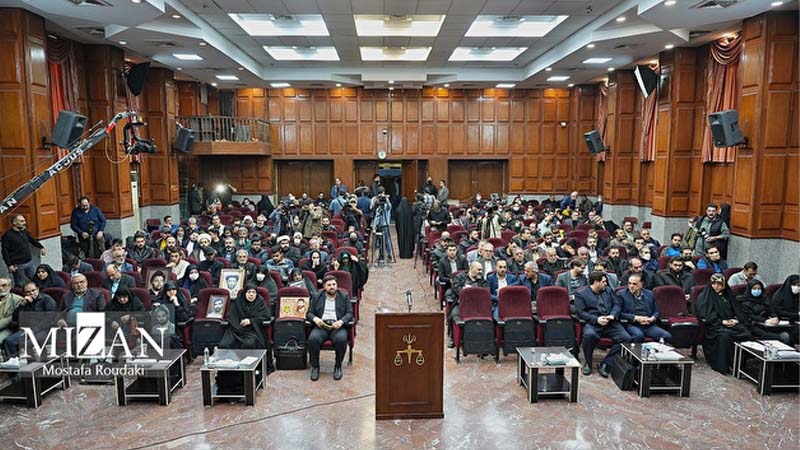
The 16th trial session of the hearing on crimes of members of the Mujahedin-e Khalq (MEK) terrorists was held in Tehran. The recent session was held at the 11th branch of the criminal court of Tehran province on Tuesday, August 13th in a case that tried 104 members of the MEK as well as the group as a legal entity in absentia. The court was presided by Judge Dehqani.

The court was attended by the lawyers of the plaintiffs, the family of the victims, the lawyers of the defendants the prosecutor’s representative and survivors of the group’s terrorist acts.

Molai, the lawyer of plaintiffs asked the court to deal with the terrorist act of bombing the office of the Islamic Republic Party on June 27th, 1981 out of many accusations included in the indictment.

As a survivor of the attack, Seyyed Mohammad Sajjadi, who was injured in that terrorist incident, was placed on the stand with the permission of the judge. “Many damages have been caused to the country by the horrible MEK, including myself, who was harmed in that terror attack,” he addressed the court. “I demand justice from the court. At that time, I spent all my wealth on treatment, and the treatment is still going on.”

The victim of the MEK’s terrorist act asked for severe material and spiritual punishment of the defendants. Asked by the judge to describe the explosion incident on June 27th, 1981, Sajjadi stated: “The meeting of the central council of the party started before the evening prayer, and the prayer was performed after the meeting. A few minutes after the start of the meeting, the explosion occurred.”

According to Sajjadi, as a result of the incident, the left side of his body, his eye, his lung and his head were hurt, and there is still a splinter in his ligament. He was also targeted by the MEK twice later.
“In September 1982, they hit the back of my head with a stick several times,” he told the judge. As an eye-witness, he was asked by the court about the extent of the damages the explosion caused to the building of the Islamic Republic party. Sajjadi answered, “The entire roof of the building collapsed”

Molai asked the judge for permission to show a video of Massoud Rajavi in which he admits to committing the terrorist act against the office of Islamic Republic party. The lawyer said, “We don’t have any proof as solid as confession.”

He further invited Ebrahim Khodabandeh, a former member of the MEK, in the international section of the group, as a witness, to appear on the stand. The judge clarifies that for the time being, Khodabandeh’s statements would be heard as the ones of an informant. The meeting to hear the testimony of the witnesses is scheduled for the next session.
Ebrahim Khodabandeh, a former member of the MEK and the director of Nejat Society, said: “I was a member of the organization for 23 years, and I accomplished missions for the organization in twenty countries, and I came to the country in 2003.”

About the bombing of the office of the Islamic Republic party he explained, “A public meeting was held in Iraq, which became known as the three-day meeting. In the meeting, the explosion of the office of the Islamic Republic Party was claimed by Rajavi. I remember Masoud Rajavi said in the meeting, ‘we have said everywhere that the people’s anger exploded the office.’” That was the anger of the People’s Mujahedin, (Khalq means people in Persian).
Based on Khodabandeh’s speech, “Rajavi said that our work was right and the Islamic Republic of Iran could no longer form this party. He was proud of it.”

August 14, 2024 0 comments
FacebookTwitterPinterestWhatsappTelegramSkypeEmail
MEK women
The cult of Rajavi

What was Aalan doing with a Kalashnikov at Camp Ashraf’s guard tower?

According to a document published by Amnesty International in January 1999, child soldiering is one of the worst forms of child labor abuse. Participation of children in the armed forces, especially in armed conflict, has devastating effects on their physical and mental integrity. Due to the small size and agility of children, they may be used in very hazardous assignments, and inexperience and lack of training may cause higher casualty rates among children. However, 1999 was among the same years that the Mujahedin-e Khalq (MEK) was smuggling the children of its members from Europe and America to Iraq, to join its so-called Liberation Army.

On May, 2024, Amir Yaghmai, a former child soldier of the MEK published a photo from that era on his account on X social network and wrote:
“MEK claims that it has had no child soldier. This is a picture of me at the age of 14 in a military uniform at Camp Ashraf. After 1 year of active brainwashing by the authorities, I was transferred from Paris to Iraq in 1998, and this captivity lasted for 6 years. until the arrival of the American forces.”

Amir Yaghmaei at Camp Ashraf-Iraq

Amir Yaghmaei at Camp Ashraf-Iraq

According to Amnesty International Child soldiering is usually a full-time occupation, which implies long hours of work and little possibility of returning home. Child soldiers are separated from their homes/families and rarely receive education.
On August 7, 2024, in the comments of Amir Yaghmai’s post and in order to validate it, another former child soldier named Azadeh Masoom published a photo of herself and two other child soldiers of the MEK. In this photo, the famous face of the child soldiers of the ME#K, Alan Mohammadi, can be seen next to Azadeh. In a few short sentences in caption, Azadeh refers to several dimension of child soldiering in the MEK’s army:
“This is the photo of Alan, 13 or 14 years old, who the MEK said she committed suicide with his weapon. What was a 13 or 14-year-old kid doing with a weapon? I was 17 years old sitting next to her, and Maryam Zuljalal, who is sitting on my left, I guess she was 17 years old because we were classmates when we were children.”

Alan Mohamamdi-Azadeh Maasoum and Maryam Zoljalal

Alan Mohamamdi-Azadeh Maasoum and Maryam Zoljalal

Based on the Amnesty International document, most of the children who participate as soldiers in the conflicts either never went to school or dropped out in the early years of school. This concept can be proven in a sentence from Azadeh Masum. She does not know exactly how old was the girl on her left, Maryam Zuljalal, but based on this, she guesses that she is the same age as she was at the time, seventeen years old, because they were classmates when they were children. This means that these two teenage girls stopped going to school before the age of 17 and were deprived of education while they were under the legal age. Alan’s condition was worse. She was no more than thirteen years old when she was brought to Camp Ashraf.

Another former child soldier, Mohammad Reza Torabi also emphasizes the reality of Alan’s child soldiering and her opposition to staying in the oppressive and suffocating environment of Camp Ashraf by re-sharing the photo of Azadeh Masoom:
“Another crime of the MEK. Azadeh, who like me managed to escape from the grip of the MEK cult, is talking about Alan Mohammadi, a girl who was tricked by the MEK when she was 13-14 years old and was sent from Europe to Iraq and Camp Ashraf. From the very first days, live all of us, she started receiving military training and was given a Kalashnikov to guard in the towers around the isolated camp. Finally, due to the pressure of the MEK organization, Alan decided to end her life by pulling the trigger of her Kalashnikov in the watchtower. She preferred death to continuing her stay in the MEK cult.
Now MEK say, we didn’t have child soldiers. So what was Alan doing with Kalashnikov in the guard tower?
Curse the Mujahideen and Rajavi!”

The presence of a young teenage girl in the guard tower of a military barracks with a Kalashnikov is a clear example of a child soldier in a hazardous environment. The hazardous and accident-causing environment is one of the criteria that is discussed in details in the article 3 of the Amnesty International document.
Based on the article, child spldiering as a hazardous work is determined by the followings:
(a) work and activities which expose children to physical, emotional or sexual abuse;
(b) work underground, under water, or at dangerous heights;
(c) work with dangerous machinery, equipment and tools, or which involves the manual handling or transport of heavy loads;
(d) work in an unhealthy environment which may, for example, expose children to hazardous substances, agents or processes, or to temperatures, noise levels, or vibrations damaging to their health;
(e) work under particularly difficult conditions such as work for long hours or during the night or work which does not allow for the possibility of returning home each day.

The above-mentioned cases are all the hazardous conditions that the child soldiers of the MEK were exposed to in the camps of the group, including Camp Ashraf. In many of the available photos of child soldiers at Camp Ashraf, they are clearly in military uniform, Kalashnikovs in hand, and riding tanks and other military vehicles.

In the memoirs of child soldiers, we constantly hear and read about the dangers that threatened children’s spirit, body and dignity every moment inside the MEK. IN 1999, the Amnesty International document has recommendations to the international community on the necessity of banning the participation of children in war. These recommendations require the existence of a separate article in this regard in the convention against of child labor.

This is despite the fact that in the same years, between 1997 and 2002, the MEK brought at least 300 child soldiers from Western countries to Iraq. Many of them are still trapped in the MEK’s camp in Albania, a number of them were killed during violent clashes, and some of them, like Alan Mohammadi, committed suicide. And, some like Amir, Azadeh and Mohammad Reza are brave and self-made survivors of that era who chose to live in the free world not with the help of human rights conventions and Amnesty International, but with a little aid from the United Nations and with their own efforts.

Mazda Parsi

August 12, 2024 0 comments
FacebookTwitterPinterestWhatsappTelegramSkypeEmail
MEK; Israel mercenaries
Mujahedin Khalq; A proxy force

In the conflict between Iran and Israel, where do the MEK stand?

Considering the escalation of the conflict between Iran and Israel, the stance of Mujahedin-e Khalq (MEK) during probable conflicts can be analyzed and predicted. Regardless of the relations between the government of Iran and other governments of the world, including the Zionist regime, the behavior of the MEK during past military conflicts has been recorded in the collective memory of the Iranian nation.

According to the existing testimonies and evidence, the MEK have always stood on the opposite side from the Iranian nation during tensions and military conflicts. Wherever enemies have shown hostilities against the Iranian nation, the MEK have struggled to have a share in these conflicts. So much so that they served Saddam Hussein during the Iran-Iraq war and were the spying and operational arm of the Iraqi Baath regime.

An immediate alliance with Saddam Hussein

Massoud Rajavi’s complicity with Saddam Hussein at the time of the imposed war was relatively immediate, so that shortly after Masoud Rajavi fled to France, he was expelled from the country, and it did not take long for him to quickly leave France for Iraq at the invitation of General Habbush, the then Iraqi chief of Intelligence service. Consequently, Saddam Hussein o0ffered them Camp Ashraf and provided Rajavi with many military equipment and other facilities.
As a result of this sinister alliance, a huge share of Iraq’s oil dollars was poured into the pockets of Rajavi’s organization, so that even today, when people are asked about the financial resources of the MEK, the main answer goes back to the large investments that the organization made with the dollars donated by Saddam Hussein.
Regarding the relations of the MEK with Israel, it should be noted that the fields of cooperation between the two sides have been laid out years ago. Despite the fact that the early Mujahedin received military training from Palestinian militant groups, and that Yasir Arafat was apparently one of Massoud and Maryam Rajavi’s favorite characters and even had meetings with him, the cooperation of the MEK with the Israeli intelligence agencies has been going on for decades. It has already started.

The extent of the MEK services to Israel

The first operational steps of this cooperation took place in 2002, when the MEK published the documents obtained by Israeli intelligence on Iran’s nuclear program. Gareth Porter, an American investigative journalist, has published his research on the role of the MEK as a media arm of the Mossad to expose Iran’s nuclear program. The crisis that caused Iran to be in conflict with the western world over its peaceful nuclear program. Porter calls it a “Manufactured Crisis.” In 2014, he wrote a book with the very title about Mossad’s role in creating documents against Iran’s nuclear program and delivering it to MEK.

In his book, Porter explains how George Bush and Israel succeeded in bringing Iran into crisis by claiming that Iran’s nuclear program is not peaceful. In this book, Porter explains in detail that the source of the American and Israeli claims about Iran’s nuclear program is doubtful.

The services of the MEK to Israel expanded in the following years. The MEK became Israel’s operational arm to assassinate Iran’s nuclear scientists. Ronen Bergman writes in the book “Get Up and Kill Him First” that after Ariel appointed Sharon Dagan as head of the Mossad, he put him in charge of disrupting Iran’s nuclear program, because they both saw Iran’s nuclear program as a threat to Israel. Dagan used various tricks to accomplish this. According to Dagan, the most difficult and of course the most effective was to identify key scientists in Iran’s missile and nuclear industry and then assassinate them. Mossad identified fifteen of these people and eliminated six of them.

The assassination of Iranian nuclear scientists was often carried out in the morning, on the way to work, with magnetic detonation bombs that a motorcyclist attached to their car. These operations and many others initiated by the Mossad, sometimes with the cooperation of the United States, were all successful. The operational forces for committing these assassinations were the MEK agents.

In 2012, NBC discussed about the assassination of 4 Iranian nuclear scientists since 2007 and quoted two American officials, without revealing their identities, and wrote that the attacks against Iranian scientists were carried out by members of the MEK with financial, training and logistic support of the Israeli intelligence service. The mentioned American officials told NBC that the American government was aware of the terror operation but had no role in it.

Investigative columnist Seymour Hersh stated in a report in the same year that Washington is involved in the training of the MEK agents. He said that the forces of the US Joint Special Operations Command (JSOC) started training them in 2005. Although Hersh was unable to contact the JSOC-trained members of the MEK who carried out the Israeli assassination operations, a senior former intelligence official told Hersh that the assassination operations received intelligence support from the US intelligence community. This security official said that the assassinations were basically carried out by the MEK, who are in contact with Israel, but America was the source of the information.
In a report that Al Jazeera published last year about the relations between Iran and Israel, it is also stated that over the past years, Israel has supported various groups that are violently in opposition to the Islamic Republic, and one of these groups is the People’s Mujahideen (MEK/ PMOI).

The most recent case regarding the terrorist cooperation of the MEK with Israel was the assassination of Kermani citizens during the fourth anniversary of General Soleimani. In a report, the Guardian published at the time, it noted the role of the MEK and Israel in this operation, although it acknowledged that American and British officials argued that the pattern of attacks on Kermani civilians was different from the pattern of assassination of nuclear scientists.
A strategic alliance

However, there are many evidence of operational and intelligence relations between the MEK and Israel, which are definitely more than two decades old. If the tensions between Iran and Israel increases, this time the MEK will act much more skillfully than during the time of Saddam Hussein, especially those who have received advanced espionage and military trainings from the Mossad and the US Army over the years. This time, the Cult of Rajavi will commit bigger betrayals with more destructive dimensions.

Cooperating with the enemy at war with the homeland is an unforgivable crime in all countries of the world. Treason is universally defined as engaging in war against one’s home country, attempting to overthrow its government, spying on its military, diplomats, or secret services for a hostile foreign power, or attempting to assassinate that country’s head of state. A person who commits treason – the MEK has a history in it- is considered as a traitor according to the law, and the punishment is severe according to international laws in all countries of the world. This means that in most countries the punishment for treason is life imprisonment, and in some countries where the death penalty is still customary, the punishment for betraying your own country is death.

Massoud Rajavi never stood on the right side of history by the side of his countrymen. In recent years, there have been news about Maryam Rajavi’s trip to Tel Aviv, her meeting with Netanyahu, or the Israeli ambassador in Albania, and similar news. Although the news could not be confirmed, what is certain is that the meeting with the Mossad agents has taken place at different levels of the MEK organization and the grounds for cooperation between the two sides have been provided from years ago. In case of a military conflict, the MEK is ready to provide services to Israel.

Mazda Parsi

August 11, 2024 0 comments
FacebookTwitterPinterestWhatsappTelegramSkypeEmail
Nejat Newsletter No.115
Nejat Publications

Nejat Newsletter No.115

INSIDE THIS ISSUE:

–  Help MEK Child Soldiers Rebuild their Lives
Children in the military, including state armed forces, non-state armed groups, and other military organizations, may be trained for combat, assigned to support roles, such as cooks, porters/couriers, or messengers, or used for tactical advantage such as for human shields

–  Mohammad Beit Salem, a 7-year-old victim of the MEK
Mohammad Beit Salem was only 7 years old when he was injured in a mortar attack by the terrorists of the Mujahedin-e Khalq (MEK/ PMOI/ Cult of Rajavi).

–  Nejat Society Albania’s Action in Support of Families
On Friday, July 19, 2024, the Nejat Society Albania took an action in support of the families of members of the Mujahedin-e Khalq (MEK), who want to contact their loved ones after decades

– Virtual conference of Nejat Society Albania
Aldo Solullari, Media manager of Nejat Society Albania held a virtual conference on the occasion of World Youth Skills Day. World Youth Skills Day, observed annually on July 15th, recognizes the potential of young people as catalysts for change and contributors to a prosperous and sustainable future for all.

– MEK, a common enemy of all nations
under the principle of universal jurisdiction, any state has the right to pursue, prosecute, and punish
such criminals. Given the egregious nature of their actions, MEK members involved in torture and violence may face international accountability for their crimes.

– MEK’s 15th trial court
Ebrahim Khodabandeh, Nejat Society CEO attended the MEK’s 15th trial court in Tehran.
The 15th session of the trial court of 104 Mujahedin-e Khalq (MEK) members and the group as a legal
entity was held on July 9th, 2024

– Story of Bijar Rahimi
For Bijar Rahimi, 21 years of captivity in a destructive cult means losing the best time of his life. His youth
was lost like many other youths who fell into the trap of the MEK. He was recruited by fraudulent tactics of the MEK while he was seeking a good job, with the dream of a better life and prosperity.

– Some points on “Children of Camp Ashaf”
Amir Yaghmai, former child soldier of the Mujahedin-e Khalq (MEK) explains some points about “Children of Camp Ashraf”. Children of Camp Ashraf is a documentary directed by the Iranian journalist and film maker Sara Moien. The film is based on the life story of four of near a thousand children
of MEK members ..

– Reflections on Nejat Society’s gathering in Albanian media
On June 23, 2024, Nejat Society Albania, held a gathering in Tirana. The gathering was welcome by the Albanian public and media. As an officially registered Albanian entity, founded by former members of the
MEK and Albanian citizens, Nejat Society Albania received a large number of Albanians and Iranians living in Albania, in Tufinë district of Tirana. The event was covered by correspondents from various Albanian media outlets.

– Val-d’Oise: search of the premises of the Mujahedin-e Khalq (MEK)
According to our information, the premises of the Iranian organization of the People’s Mojahedin were
the subject of a police intervention this Wednesday afternoon.

– Le Parisien report on France control operation of the MEK premises
SAINT-OUEN-L’AUMÔNE: CONTROL OPERATION OF THE POLICE, URSSAF AND FIREFIGHTERS AT AN IRANIAN ASSOCIATION ……An intervention seemed to indicate that around fifteen people lived there. Border police found three people who are prohibited from being on French territory.

– The great gathering of Nejat Society Albania in Tirana
On June 23, 2024, Nejat Society Albania, as a supporter of Iranians living in Albania and as an officially registered Albanian institute, held a large gathering with public invitation in Tufinë district of Tirana.

– Swedish SVT broadcasts “Children of Camp Ashraf” on the anniversary of Maryam Rajavi’s arrest
The documentary film “Children of Camp Ashraf” will be broadcast on Swedish TV channel SVT. Amir Yaghmai, a former child soldier of the Mujahedin-e Khalq (MEK), announced this news on X social network. The documentary will be shown in Swedish with English subtitles on Monday, June 17, at 10 pm local time. “Barnen Fran Camp Ashraf” is the Swedish title of the film.

– Why is le Monde’s investigative report on the MEK child soldiers worth to read?
The French newspaper Le Monde published a detailed report about former child soldiers of the Mujahedin-e Khalq (MEK). This report, written by Ghazal Golshiri, has four full pages of this widely circulated newspaper. It is titled: “We, the child-soldiers of the Iranian Mujahedin-e Khalq”. The publication of the report is important based on different aspects.
To view the pdf file click here

August 10, 2024 0 comments
FacebookTwitterPinterestWhatsappTelegramSkypeEmail
Newer Posts
Older Posts

Recent Posts

  • Library of Congress on the MEK

    June 1, 2026
  • FBI Document Confirms: MEK Killed Americans

    June 1, 2026
  • Injustice in the MEK as told by a former child soldier

    May 30, 2026
  • Guardian: Opposition Divided, Battle Among Mujahedin and Monarchists

    May 25, 2026
  • Premier of the Documentary “Aldo in Iran” and the Novel “The last Secret”

    May 23, 2026
  • Facebook
  • Twitter
  • Instagram
  • Youtube

© 2003 - 2025 NEJAT Society . All Rights Reserved. NejatNGO.org


Back To Top
Nejat Society
  • Home
  • Articles
  • Media
    • Cartoons
    • NewsPics
    • Photo Gallery
    • Videos
  • Publications
    • Books
    • Nejat NewsLetter
    • Pars Brief
  • About Us
  • Contact us
  • Editions
    • عربي
    • فارسی
    • Shqip