Nejat Society
  • Home
  • Articles
  • Media
    • Cartoons
    • NewsPics
    • Photo Gallery
    • Videos
  • Publications
    • Books
    • Nejat NewsLetter
    • Pars Brief
  • About Us
  • Contact us
  • Editions
    • عربي
    • فارسی
    • Shqip
Nejat Society
Nejat Society
  • Home
  • Articles
  • Media
    • Cartoons
    • NewsPics
    • Photo Gallery
    • Videos
  • Publications
    • Books
    • Nejat NewsLetter
    • Pars Brief
  • About Us
  • Contact us
  • Editions
    • عربي
    • فارسی
    • Shqip
© 2003 - 2024 NEJAT Society. nejatngo.org
Mujahedin Khalq; A proxy force

Trump’s Immigration Ban Undermined by Failed Logistics

As someone living in France, a country subjected to multiple Islamic terrorist attacks over the past couple of years, I’d be the last to criticize the spirit of President Trump’s initiative to secure American borders through extreme vetting. I’ve witnessed firsthand the result of creeping insecurity and cultural disintegration directly attributable to Europe’s insistence on treating its borders as mere suggestions rather than enforceable boundaries. If Trump fails to get a handle on the situation, America will look a lot like Europe.

The problem isn’t limited to dangerous radicals who might commit terrorist atrocities — it also expands to include those communities hiding these individuals from authorities, protecting them, harboring them via a code of silence. Police sources have told me that these areas are, in essence, no-go zones where the police are at high risk of attack. This is the endgame of a national immigration policy that fails to take into account security and cultural compatibility.

Entering America is a privilege, not a right. Every country that has succeeded in maintaining its cultural identity has a selective system in place that rejects or approves entrants based on country of origin.

The civil rights crowd that whines about arbitrary screening should welcome reliable vetting. Anything less would subject immigrants to ongoing suspicion. The problem for civil rights advocates, however, is that proper government vetting requires intelligence work, which these proponents typically reject in favor of personal privacy protections.

Proper vetting is also impossible without reforming the intelligence community. We’re talking about the same intelligence community that issued student visas to dead terrorists in the wake of the September 11 attacks; the same intelligence community that can’t confirm or deny when a key terror suspect is reportedly killed via drone strike. If they can’t confirm whether the terrorists they’re pursuing are alive or dead, how can they reliably vet the average joe coming into the U.S. from the same region?

Finally, Trump should keep in mind the lesson of Napoleon Bonaparte. A grand strategist, Napoleon nonetheless failed in 1812 to pay attention to the logistics of forcing his foot soldiers to rely on the sparse Russian landscape for food and water (rather than supply wagons) during the attempted conquest of the country. This defeat was instrumental in his downfall and eventual exile. As the old adage goes, amateurs talk about strategy, professionals talk about logistics.

And talking about logistics, whoever implemented Trump’s order to temporarily ban "immigrants and nonimmigrants" from seven Muslim-majority countries — Iraq, Syria, Iran, Libya, Somalia, Sudan and Yemen — from entering the U.S., should be drop-kicked into a black hole. The logistical implementation of Trump’s executive order was just about as effective as Napoleon’s Russian Campaign, minus the frostbite and starvation.

On Saturday morning, former New York City Mayor Rudy Giuliani told Fox News: "(Trump) said put a commission together, show me the right way to do it legally. I put a commission together … and what we did was we focused on, instead of religion, danger — the areas of the world that create danger for us."

If we’re talking about terror-sponsoring nations, why are Saudi Arabia, Qatar, Bahrain, Pakistan and other nations omitted? Moreover, what act of terrorism has Iran committed or sponsored against the United States?

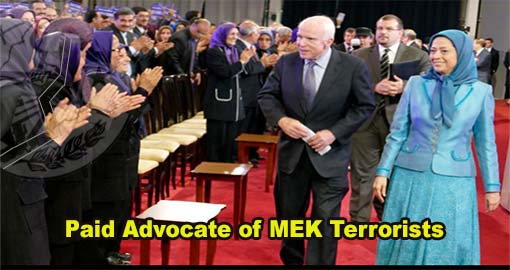
The selection of the seven countries is interesting unto itself. So is the fact that Giuliani attended the 2012 Paris rally of the Mujahedeen-e-Khalq, or MEK, an Iranian dissident group that was on the U.S. State Department’s list of foreign terrorist organizations. The MEK and the Islamic State share a common sponsor — Saudi Arabia. In 2007, the Associated Press reported that Saudi Arabia was one of "Giuliani’s law and lobbying clients…" Is that why they were not targeted?

The ban has caused needless chaos for law-abiding travelers worldwide. Legal permanent residents of the United States were detained at airports, not sure if they would be allowed to return home, dual passport holders were confused as to whether the directive applied to them and international airlines employing foreign cabin crew, already vetted six ways from Sunday, scrambled mid-flight. There’s no excuse for this. It smacks of a Keystone-Kop-style bumbling.

To put it in terms that Trump the real estate magnate might understand: You asked someone to build you a sleek new skyscraper and provided them the overall vision. But someone didn’t check the angles, and what you got back was the Leaning Tower of Pisa. That leaning monstrosity, like this administration, now has your name on it.

And the buck stops with you.

Rachel Marsden,Townhall.com

February 1, 2017 0 comments
FacebookTwitterPinterestWhatsappTelegramSkypeEmail
Former members of the MEK

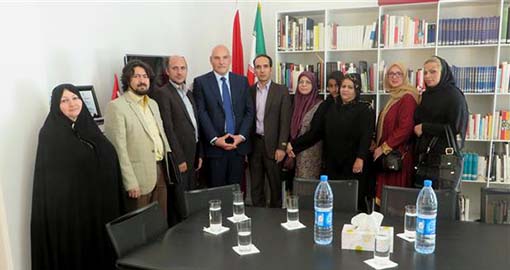
Pictorial – Rajabi Shahrestani defects MEK Cult in Albania

Mr. Rajabi was in Turkey when the Mujahedin-e Khalq agents deceived him into joining the group under the false promises of better life and work opportunities in Europe.

Mr. Rajabi was then transferred to MKO Camps in Iraq. He lost 15 years of his life within the Mujahedin-e Khalq Cult camps. In 2016 he was relocated to Albania along with other MKO members.

In Tirana, Mr. Rajabi managed to liberate himself from the clutches of the Rajavis Cult.

Majid’s brother who is an active member of Nejat Society and tried a lot to save Majid says:

“We haven’t seen our younger brother in more than a decade due to the manipulation practices of a criminal cult. Majid is now 41. I am really happy for my brother. He finally managed to find his way and released himself from the anti-Iranian Cult of MKO …”

Rajabi Shahrestani defects MEK in Albania

January 31, 2017 0 comments
FacebookTwitterPinterestWhatsappTelegramSkypeEmail
Mujahedin Khalq; A proxy force

Trump threatens N-deal

It is time to reboot Hands Off the People of Iran, argues Yassamine Mather

Iran in his sights?

You would have thought that the peoples of the Middle East, who have suffered so much this millennium under the Bush and Obama administrations, might be spared more destruction and devastation, but unfortunately things do not look good. With the new Trump administration it is very likely that, in addition to the existing war zones – Syria, Iraq, Yemen, Bahrain … – we will see new areas of conflict and new attempts at regime change from above.

Millions of civilians throughout the Middle East, but especially in Iran, are wary of the dangers ahead, and anxious about the close relationship between the US president and the Israeli prime minister. A number of events in the last few weeks have given rise to this anxiety.

A week before Trump’s inauguration, two of his closest allies – former New York mayor Rudy Giuliani and former US representative to UN John Bolton – joined two dozen ex-officials in signing a letter to Trump urging him to start talks with the Iranian opposition group, Mujahedin-e Khalq (MEK), and its front organisation, the National Council of Resistance.

For those who do not know much about the MEK, let me assure you it is one of the most discredited exile groups – nowadays more a religious cult, with practices similar to the Moonies (in recent years we have seen enforced mass divorce, enforced mass remarriage, worship of the married couple who are the cult’s leaders, a switch from supporting Saddam Hussein to becoming paid lackeys of Saudi Arabia …). The very fact that these close allies of Donald Trump could envisage such talks is proof once more that the US has learnt nothing from the Iraq war or attempts at regime change in Syria. If there is one way of making sure the Islamic rulers of Iran stay in power in Tehran, it would be to start a dialogue with the Mujahedin as a possible replacement. The Iranian people hate the MEK and their lunatic practices so much, one can envisage Iran’s rulers hoping the Giuliani-Bolton letter succeeds in its aim.

After this came Trump’s comments two days before his inauguration: the US should have seized Iraq’s oil in 2003. Now, anyone with even limited knowledge of the matter knows there were good reasons why Bush did not contemplate such lunacy. Had the administration done so, it would have been violating decades of international practice, including the Geneva conventions. But maybe we should not expect anything else from the man who supports waterboarding prisoners of war.

So, if the signs were ominous before the inauguration, what has happened since is even more worrying.

On January 21, Binyamin Netanyahu sent a ‘message to the Iranian people’. The Jerusalem Post published the entire text of Netanyahu’s letter, including the following:

I hope this message reaches every Iranian – young and old, religious and secular, man and woman …

I know you’d prefer to live without fear. I know you’d want to be able to speak freely, to love who you want without the fear of being tortured or hung from a crane. I know you’d like to surf the web freely and not have to see videos like this one using a virtual private network to circumvent censorship …

By calling daily for Israel’s destruction, the regime hopes to instil hostility between us. This is wrong. We are your friend, not your enemy. We’ve always distinguished between the Iranian people and the Iranian regime.

The regime is cruel – the people are not; the regime is aggressive – the people are warm. I yearn for the day when Israelis and Iranians can once again visit each other freely in Tehran and Esfahan, in Jerusalem and Tel Aviv.

Both in Tehran and throughout the Middle East the message was interpreted as a threat – an attempt to justify imminent plans for air attacks, now that the restraints imposed by the Obama administration on the more adventurous policies of the Zionist regime have been lifted. This message was followed by a phone conversation with the US president, where by all accounts the Iran nuclear deal was discussed.

The Israeli premier will be amongst the first world leaders to visit Washington and the Iranian people are justifiably worried about what the combination of neoconservative, pro-MEK advisors and Trump’s pro-Zionist stance will bring for the region.

Iran’s rulers have mixed feeling about the new administration. On the one hand, they are happy he is not a fan of Saudi Arabia and Trump’s comments about Russia have received positive coverage in Tehran. On the other hand, with allies and advisors such as Giuliani and Bolton, it is likely that Trump would not act to stop an Israeli attack on Iran, even if his declared priority is to defeat Iran’s main enemies in the region, Islamic State and Al Nusra.

As for the reformist faction of the Iranian regime, it is concerned about the impact of Trump’s presidency on the nuclear agreement signed last year. Trump has said on many occasions that he considers this to be “one of the worst deals ever made”. The more conservative factions of the regime, just like the ‘regime change from above’ opposition groups, are hoping Trump will tear it up.

Left

With all the controversy over the new president’s racist, sexist and anti-gay remarks, amongst other things, sections of pro-west Iranian opposition in exile have been forced to change their tune. For most of the last two or three decades they have told us that Iran’s rulers were backward because they had failed to promote anti-sexist, pro-LGBT policies. But now those rulers are no longer the only misogynists in town. No doubt the supreme leader, ayatollah Ali Khamenei, approved of one of Trump’s first initiatives – taking down references to LGBT equality from the White House website on his first day as president.

And by January 23 Trump was trying to outdo Khamenei on abortion. He signed an executive order blocking foreign aid and federal budget funding for international non-governmental organisations that provide or “promote” abortions. The new vice-president, Mike Pence, is of like mind: he facilitated the passage of several laws restricting abortions, when he was governor of Indiana.

As I write, Trump is expected to announce restrictions on US entry for citizens of seven predominantly Muslim countries, including Iran. Unlike the Israeli premier, Trump is not after winning hearts and minds in Iran (or elsewhere in the Middle East), yet he has fans amongst deluded sections of the Iranian opposition, including the MEK, who are convinced that sooner rather than later he will go for a full-scale military attack on Iran, or else give Netanyahu the nod to knock out its military and nuclear installations (while the US concentrates on ‘fighting al Qa’eda’ in Iraq and Syria!). Both scenarios are clearly frightening, yet in these uncertain times they cannot be ruled out.

All this coincides with a time when Iran’s rulers are facing considerable internal opposition from the working class. Strikes and protests in and around some the country’s major industrial sites are occurring daily, while retired teachers and civil servants, whose real income is falling daily because of inflation and the fall in the value of the Iranian currency, have organised demonstrations. While Iranians are using every opportunity to protest, the left is not only weak and divided, but have mostly lost all credibility – having, for example, accepted funds from US neoconservatives. Many former leftwing groups are now nothing more than single-issue campaigns (for women’s or LGBT rights, supporting Kurdish or Arab nationalism …), because it was easier to get funding from the west that way. Gradually that funding affected their politics. It was no longer fashionable to talk of imperialism and capitalism. Now they were against ‘backward Islamists’ and for ‘progress’.

Many such groups have had a hard time of it after the nuclear deal and so they were hoping a Clinton presidency would revive their fortunes. Unfortunately for them, it looks like under Trump their financial situation will not improve.

In the absence of a principled organised left, the voice of the Iranian working class – a class whose struggles continue, day in, day out, a class destined to play a significant role in the struggles ahead – is not being heard. Outside Iran we are not in a position to do much, but we must become the voice of our own class in Iran, theworking class. We must publicise the struggles against the Islamic government and its corrupt, capitalist backers, while remaining vigilant about the danger of new imperialist wars and aggression in the region.

That is why we will need to reboot Hands Off the People of Iran.

Weeklyworker.co.uk

January 30, 2017 0 comments
FacebookTwitterPinterestWhatsappTelegramSkypeEmail
Iran

Iran: Joint Takfiri – MKO plot against Iran failed

President of the Supreme National Defense University of Iran described Takfiri (extremist) movements as a scheme to impede Iran’s regional influence, saying Takfiris even look for intelligence aid from the terrorist Mojahedin-e Khalq Organization (MKO) to harm Iran.

Addressing a cultural ceremony in Tehran on Friday, Brigadier General Ahmad Vahidi said there is clear evidence that Takfiri terrorist groups show no hostility toward the Zionists and make no mention of the US either, but have concentrated on countering Iran’s influence.

Takfiris intend to get intelligence help from the MKO terrorists to carry out operations inside Iran, and seek to establish contact with all anti-Iranian groups, he warned.

The top general also made a reference to the supports that certain regional countries provide for the terrorist groups, saying this has made them argue that Turkey should be the region’s top power.

Takfiri terrorist groups have plans to make safe havens for their leaders in Jordan, General Vahidi noted.

More than two years ago, Leader of the Islamic Revolution Ayatollah Seyed Ali Khamenei had warned that Takfiri groups have resurfaced to serve the interests of the arrogant powers, and called for a “scientific, inclusive” movement to eradicate the threat of Takfirism.

“The Takfiri movements and their sponsoring states are utterly serving the arrogant powers’ objectives, namely (the objectives of) the US and the European colonialist governments as well as the Zionist regime (of Israel). They are practically serving them under an Islamic guise,” Ayatollah Khamenei said in November 2014.

January 29, 2017 0 comments
FacebookTwitterPinterestWhatsappTelegramSkypeEmail
Former members of the MEK

Mr. Majid Rajabi Shahrestani defects MEK in Albania

Mr. Rajabi was in Turkey when the Mujahedin-e Khalq agents deceived him into joining the group under the false promises of better life and work opportunities in Europe.

Mr. Rajabi was then transferred to MKO Camps in Iraq. He lost 15 years of his life within the Mujahedin-e Khalq Cult camps. In 2016 he was relocated to Albania along with other MKO members.

In Tirana, Mr. Rajabi managed to liberate himself from the clutches of the Rajavis Cult.

Majid’s brother who is an active member of Nejat Society and tried a lot to save Majid says:

"We haven’t seen our younger brother in more than a decade due to the manipulation practices of a criminal cult. Majid is now 41. I am really happy for my brother. He finally managed to find his way and released himself from the anti-Iranian Cult of MKO …”

January 29, 2017 0 comments
FacebookTwitterPinterestWhatsappTelegramSkypeEmail
Iran Interlink Weekly Digest

Iran Interlink Weekly Digest – 178

++ A backlash ensued against the French government for permitting Maryam Rajavi to make a speech in front of some MPs. Some writers directly addressed the head of parliament. They point out that there is no way you can say you don’t know this woman. There is no way MPs would do this without pay, especially when they claim she is a human rights activist. The government of France needs to stop promoting criminality and terrorism and curtail the MEK rather than supporting them.

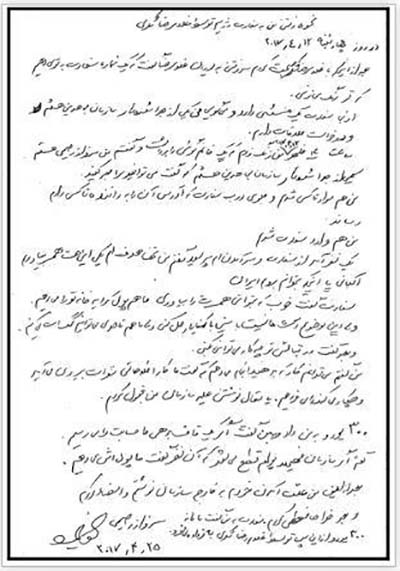
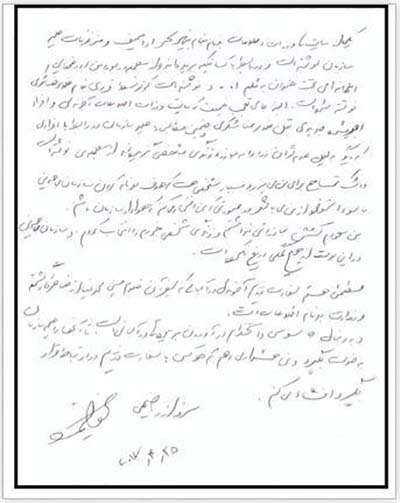
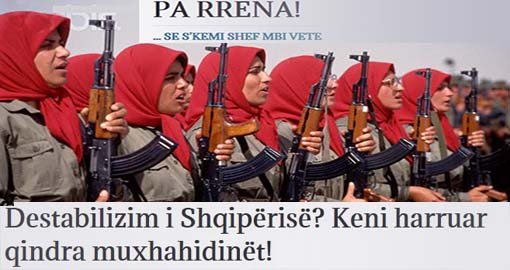
++ Reports from Albania say that after the Albanian foreign minister visited Iran and held talks with officials there, the whole MEK has fallen into a panic. Farsi commentators say ‘this reminds us of when Iran and Iraq got together’. The panic became so critical that a written message in the form of a letter from Massoud Rajavi (regardless whether he is dead or alive), had to be read to the members. The letter instructs the members: “Don’t panic! This visit has nothing to do with our future. The discussion was only about economic not political affairs. Our lobbyists have been instructed to involve the Pentagon and NATO so as to ensure there is no political agreement between Iran and Albania.” But this letter has had little effect and writers point out ‘You said the same thing over Iraq. We simply cannot trust you.’

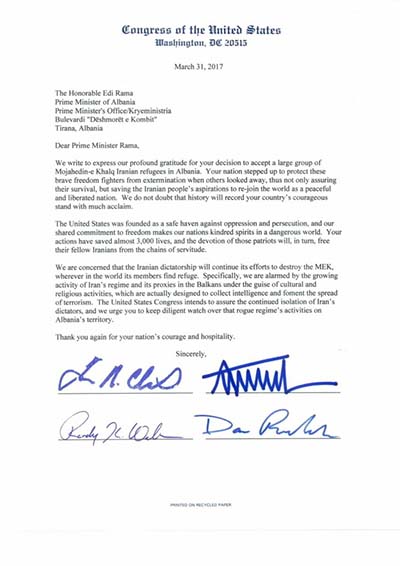
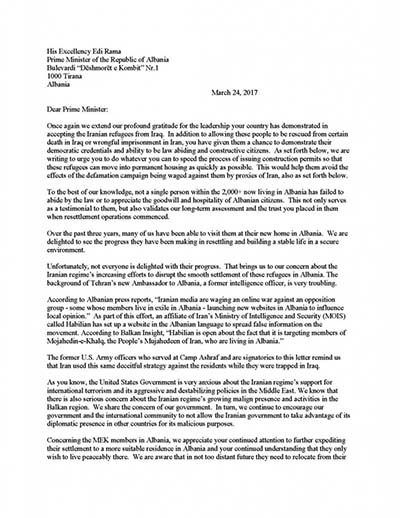
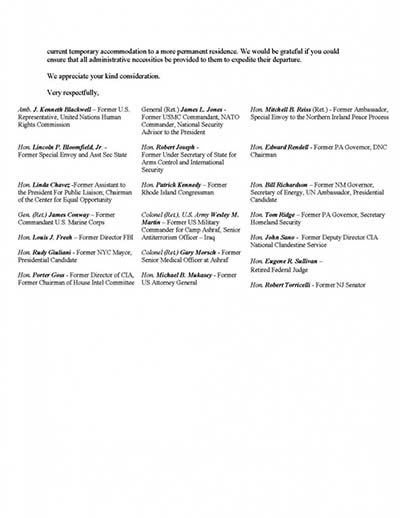
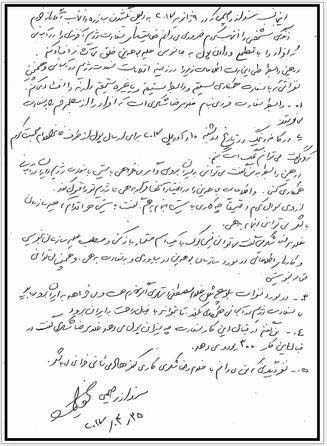
++ Nejat Society published an analysis of the letter signed by US officials in support of the MEK asking Trump to use the group. Nejat’s expert knowledge of the MEK leads the writer to assert that this letter has been dictated by Rajavi himself. Every one of these lobbyists and the inserting it as news into Fox News has clearly been paid for. Indeed, Rajavi has paid a lot of money for this. He invested thus heavily in order to provoke a reaction from Iran simply so he can claim – Descartes like – that ‘Iran is against my terrorism, therefore I am’. But he failed. Iran, being engaged with other matters, didn’t respond. Even Iran’s media took no notice. Of course, the writer points out, Rajavi’s ultimate purpose was to calm the members. The letter was largely for internal consumption. Rajavi needs something ‘big’ to focus on to keep the MEK together so it doesn’t collapse.

In English:

++ Nejat Society reported the latest defection from the MEK in Albania. Mr Mansour Fadaei’s parents had written a letter to their son on his birthday which was published by Nejat Society website. After hearing about the letter Fadaei made a determined effort to free himself from the clutches of the cult. Once he had escaped, he immediately contacted his parents.

++ In an interview with Sputnik, Sina Azadi, US-based expert on Iran’s foreign policy and US-Iranian relations, warned that if President Donald Trump sits down with the MEK, it will ‘ride roughshod over Washington’s interests’.

++ Mohammad Hossein Sobhani a former high-ranking MEK member wrote an article published by Nejat Society about his imprisonment in Saddam Hussein’s Abu Ghraib political prison because of his criticism of Massoud Rajavi’s leadership of the MEK. Sobhani was one of fifty MEK prisoners released from Abu Ghraib on 21 January 2002 following the intervention of international organisations.

++ Iran Interlink commented on a couple of articles which mentioned the possibility that President Trump might consult with the MEK leader Maryam Rajavi on Iranian affairs. Iran Interlink pointed out that “Although these articles mention the MEK as a potential advisor for the new US Administration, no government apart from that of dictator Saddam Hussein has ever openly engaged with them at any time during their four decades of existence. NIAC and the other groups mentioned in these articles are properly constituted and supported organisations. The MEK is a cult.”

January 27, 2017

January 28, 2017 0 comments
FacebookTwitterPinterestWhatsappTelegramSkypeEmail
Mujahedin Khalq; A proxy force

Donald Trump urged to work with terrorist organization NCRI

While the Iranian government and people call the exiled opposition group National Council of Resistance of Iran (NCRI) ‘terrorist’, nearly two dozen former top U.S. government officials have urged President-elect Donald Trump to work with the group!

According to Fox News, a letter signed by 23 former officeholders calls on Trump to consult with the Paris-based group.

“Iran’s rulers have directly targeted US strategic interests, policies and principles, and those of our allies and friends in the Middle East,” the letter reads, in part. “To restore American influence and credibility in the world, the United States needs a revised policy.”

The letter’s signatories include former New York City mayor Rudolph Giuliani; former Sen. Joe Lieberman; and retired Army Gen. Hugh Shelton, a former chairman of the Joint Chiefs of Staff under President Bill Clinton.

NCRI, the political arm of the Mujahideen-e-Khalq (MeK) and a political coalition of Iran’s democratic opposition groups and figures, was founded in 1981 with the aim of overthrowing the Iranian regime.

In 2003, the United States listed NCRI as a terrorist organization and closed its Washington office. But in 2012, the US State Department formally removed MEK from its list of terrorist organizations in a decision made by then-Secretary of State Hillary Clinton.

MEK’s past acts of terrorism included its involvement in the killing of U.S. citizens in Iran in the 1970s and an attack on U.S. soil in 1992. While the group says it does not intentionally target civilians, it has often risked civilian casualties. It routinely aims its attacks at government buildings in crowded cities. MEK terrorism has declined since late 2001.

Last month, a group of Iranian dissidents wrote a letter to Trump, urging the president-elect to follow through on his campaign promise to revisit the nuclear deal between Iran and six global powers, including the U.S.

“During the presidential campaign, we and millions of Iranians followed your forthright objection to the nuclear agreement reached between the Obama administration and the Islamic Republic of Iran,” the letter reads.

According to Fox news, the Trump transition team has not given any official response to the letter, and it’s unclear whether Trump has any plans to take a meeting with Iran dissidents and groups.

Earlier Sunday, Iran’s deputy foreign minister told reporters that “the new U.S. administration cannot abandon the deal.” Abbas Araghchi added that the agreement “will not be renegotiated” and repeated an earlier warning by Iran’s Supreme Leader Ayatollah Ali Khamenei, who publicly stated, “If they tear it up, we will burn it,” without elaborating.

Realiran.org

January 28, 2017 0 comments
FacebookTwitterPinterestWhatsappTelegramSkypeEmail
Mujahedin Khalq Organization members' families

Abdi family’s dear son is enslaved by the cult of MKO

Mrs. Abdi is an active member of Nejat Society – Tehran Branch. She is a suffering mother whose dear son; Ahmad is enslaved behind the bars of the Rajavis’ Cult.

Enduring much hardship and sufferings, Mrs. Abdi has done her utmost efforts to liberate Ahmad. She several times traveled to the war-torn country of Iraq.  She picketed in front of MKO Camps in Iraq along with other families asking to visit their beloved ones.

Mrs. Abdi Says:” the only thing I wish is that I meet Ahmad and embrace him tightly…”

Abdi family's dear son is enslaved by the cult of MKO

January 26, 2017 0 comments
FacebookTwitterPinterestWhatsappTelegramSkypeEmail
Former members of the MEK

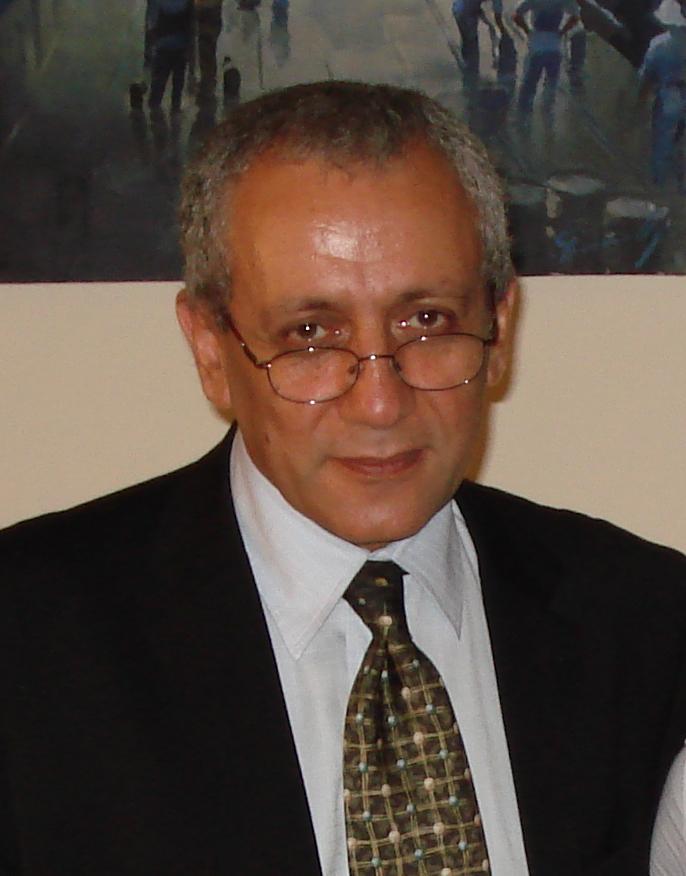
Mansour fadaei managed to defect the MKO Cult in Albania

Mr. Mansour fadaei managed to liberate himself from the destructive cult of MKO in Tirana, Albania.

Mansour’s parents wrote a letter to their son on the occasion of his birthday which was published on Nejat Society Website. Hearing about the letter, Mansour became more determined to release himself from the mental and physical captivity of the group.

Mansour contacted his parent as soon as he defected the MKO Cult.

While shedding tears of joy; Mansour’s parent went to the Nejat Society office and announced their dear son’s release from the terrorist, destructive cult of Mujahedin-e Khalq.

Mr. Fadaei defect the MKO Cult in Albania

January 26, 2017 0 comments
FacebookTwitterPinterestWhatsappTelegramSkypeEmail
Human Rights Abuse in the MEK

MKO dissident members at Abu Quraib Prison!

Mr. Mohammad Hossein Sobhani ; former high ranking member of the Mujahedin-e Khalq Cult wrote an enlightening article- in persian on the occasion of the release of 50 MKO dissident members from the Abu Quraib – the Iraqi Baath regime prison.

The article reads:” January 21st reminds me and others – who were prisoners of Abu Quraib, of the bitter as well as sweet memoirs of our freedom from that gruesome prison. In January 21, 2002 a number of 50 MKO dissident members whom were handed over to the Iraqi former dictator; Saddam Hussein by Massoud Rajavi, got released by the help of international organizations.

Honoring this day, I want to remind Massoud Rajavi and Mujahein-e Khalq that we do not let their treasons and crimes be forgotten….it is very bitter and regrettable to see an organization which claims to be after freedom, equality, justice, democracy and monotheistic classless society But imprisons dissent members and those who were no more willing to cooperate with the organization in solitary confinements for years and then hand them over to Saddam Hussein; the Iraqi former dictator. Saddam relatively imprisoned them at Abu Guraib prison under the name of “Mujahedin’s loan “[ Amanat-e Mojahedin ]. We, MKO dissident members, had committed no crime…  “

Mr. Sobhani, went to Iraq as a member of the Mojahedin-e Khalq in the early 1980s. In 1992, Mr. Sobhani declared his doubt and dissatisfaction with the group leader – Massoud Rajavi’s strategies. Since then he underwent a prolonged period of imprisonment .

Mr. Sobhani is one among hundreds of individuals who victimized by the MKO leaders.

The 28-page report, "No Exit: Human Rights Abuses Inside the MKO Camps," examines how dissatisfied MKO members were tortured and held in solitary confinement. The report is based on the direct testimonies of a dozen former MKO members, including five who were turned over to Iraqi security forces and held in Abu Ghraib prison under Saddam Hussein. 

Mr. Sobhani is one of these five witnesses:

” Mohammad Hussein Sobhani spent eight-and-a-half years in solitary confinement inside the MKO’s main camp in Iraq, Camp Ashraf, from September 1992 to January 2001. He was subsequently held in Abu Ghraib prison and left Iraq in 2002.

Sobhani first came in contact with the MKO in 1977, a year before the anti-monarchy revolution. By 1979, he was working “professionally and full time” with the organization. When the headquarters of the armed wing of the organization relocated inside Iraq, he followed suit. By 1991, he had risen in the ranks of the organization and had become a member of the Central Committee. However, ever since the “ideological revolution,” when divorces were mandated, he became uncomfortable with the path pursued by the leadership. His differences with the leadership of Masoud and Maryam Rajavi and other members of the Central Committee reached a climax in 1992. Masoud Rajavi argued for remaining in Iraq regardless of the end of the Iran-Iraq war and Saddam Hussein’s defeat in the first Gulf War in 1991, he said. Rajavi still hoped that fighting between Iran and Iraq would resume, and based the organization’s strategy on such a development. Sobhani says he found the possibility of a new war highly unlikely given the dismal state of Iraq’s armed forces. Other members of the Central Committee saw his arguments as a challenge to the Rajavis’ leadership:

As long as my criticisms were mild, I was left alone. But as soon as I persevered in my questioning, their behavior changed dramatically. In the beginning, I discussed my concerns personally with the leadership, Maryam and Masoud Rajavi. I also brought up my concerns with other members of the Central Committee. These discussions reached a dead-end. Once they became certain that I didn’t share their views, on August 28, 1992, they convened a meeting (neshast taiin taklif) to determine my faith and to decide if I was staying with the organization or not. The process began with intimidation, verbal abuse, and beatings. Of course, since I was a high ranking official I was treated better than ordinary members. I was told that my criticisms and questions were just an excuse to quit the struggle. Their conclusion was that I was a quitter (borideh) and didn’t have the strength to continue the struggle any longer.50

On August 31, 1992, Sobhani was moved to a prison and kept under solitary confinement for the next eight-and-a-half years.

After the first two months in prison, all of my beliefs in the organization fell apart. Up to that point I considered my differences with them as a matter of divergent political views; I wasn’t questioning the MKO’s underlying essence. I used to mark my prison walls each time I was subjected to severe beatings. There were many occasions of lesser beatings, but on eleven occasions I was beaten mercilessly using wooden sticks and thick leather belts.51

Sobhani was handed over to Iraqi officials in January 2001. He spent one month in mukhabarat  prison and then transferred to Abu Ghraib. He was held in Abu Ghraib until January 21, 2002, when he was repatriated to Iran in exchange for Iraqi POWs. In Iran, he was detained and interrogated by the Iranian government. After three days, he escaped from a low security detention center and fled Iran. He is currently living in Europe.

Joe Stork, HRW’s Washington director said:” Members who try to leave the MKO pay a very heavy price,"… These testimonies paint a grim picture of what happened to members who criticized the group’s leaders."

January 24, 2017 0 comments
FacebookTwitterPinterestWhatsappTelegramSkypeEmail
Newer Posts
Older Posts

Recent Posts

  • Rebranding, too Difficult for the MEK

    December 27, 2025
  • The black box of the torture camps of the MEK

    December 24, 2025
  • Pregnancy was taboo in the MEK

    December 22, 2025
  • MEPs who lack awareness about the MEK’s nature

    December 20, 2025
  • Why did Massoud Rajavi enforce divorces in the MEK?

    December 15, 2025
  • Facebook
  • Twitter
  • Instagram
  • Youtube

© 2003 - 2025 NEJAT Society . All Rights Reserved. NejatNGO.org


Back To Top
Nejat Society
  • Home
  • Articles
  • Media
    • Cartoons
    • NewsPics
    • Photo Gallery
    • Videos
  • Publications
    • Books
    • Nejat NewsLetter
    • Pars Brief
  • About Us
  • Contact us
  • Editions
    • عربي
    • فارسی
    • Shqip