Nejat Society
  • Home
  • Articles
  • Media
    • Cartoons
    • NewsPics
    • Photo Gallery
    • Videos
  • Publications
    • Books
    • Nejat NewsLetter
    • Pars Brief
  • About Us
  • Contact us
  • Editions
    • عربي
    • فارسی
    • Shqip
Nejat Society
Nejat Society
  • Home
  • Articles
  • Media
    • Cartoons
    • NewsPics
    • Photo Gallery
    • Videos
  • Publications
    • Books
    • Nejat NewsLetter
    • Pars Brief
  • About Us
  • Contact us
  • Editions
    • عربي
    • فارسی
    • Shqip
© 2003 - 2024 NEJAT Society. nejatngo.org
Iran Interlink Weekly Digest

Iran Interlink Weekly Digest – 166

++ Activity in Farsi language has been negligible over the past week, with nothing of significance to report.

In English:

++ Another article by Anne and Massoud Khodabandeh, ‘Albania: What would a de-radicalization program for the Mojahedin Khalq involve’, focuses on what needs to be done for the 2500+ MEK who have arrived in Tirana over the past three years so that they can return to normal civilian life. The first step, says the article, is to understand how the radicalisation process actually works and how this affects individuals. From this information it is possible to implement a plan which will re-engage and activate the person’s authentic self and emotions. This would include separating the ordinary members from the minders and leaders and removing all MEK control mechanisms. Another major step would be to allow the families of MEK members to have contact with their loved ones.

++ Tehran Times reports on a film titled Cyanide which premiered in Tehran this week. The latest film by Behruz Shoeibi concerns an episode in the history of the MEK in the 1970s. “Shoeibi, members of the cast and crew, and Cinema Organization of Iran Director Hojjatollah Ayyubi attended the screening of the movie at Eyvan-e Shams Hall. ‘Today is the time to spotlight this subject’, Ayyubi said in a brief speech before the screening of the film. ‘The world today is facing the threat of Daesh, but the Iranian people previously experienced such a threat by deviant groups such as the MKO, which was much worse than Daesh’, he added.”

++ In another of his insightful analyses of MEK activity, Mazda Parsi of Nejat Society has written about the radicalization of the MEK. He suggests that European countries were reluctant to take any MEK because, even though it claims to have renounced violence, the group still has the potential capacity as a radicalised extremist terrorist group to threaten European citizens as well as Albanians. The evidence for this lies in the radicalisation process itself and in the indoctrination of the MEK members. The self-immolations of 2003 following the arrest by French police of leader Maryam Rajavi were a result of this violent extremist mindset. Parsi says that the involvement of families, friends and human rights bodies is very important to the process of de-radicalisation. However, paid political advocacy for the MEK is proving to be an obstacle.

October 21, 2016

October 23, 2016 0 comments
FacebookTwitterPinterestWhatsappTelegramSkypeEmail
Iran

“Cyanide” about Mojahedin Khalq story premieres in Tehran

“Cyanide”, the latest film by Behruz Shoeibi, about Mojahedin-e-Khalq Organization (MKO, MeK – also known as People’s Mujahedin of Iran, PMOI), an Iranian political–militant organization in exile that carried out many

Photo: Hamed Komeili in a scene from “Cyanide”

terrorist operations during the 1980s to overthrow the Iranian government, premiered at Eyvan-e Shams Hall on Monday Evening.

Shoeibi, members of the cast and crew, and Cinema Organization of Iran Director Hojjatollah Ayyubi attended the screening of the movie.

“Today is the time to spotlight this subject,” Ayyubi said in a brief speech before the screening of the film.

“The world today is facing the threat of Daesh, but the Iranian people previously experienced such a threat by deviant groups such as the MKO, which was much worse than Daesh,” he added.

He said that he would do his best to see that the film would have successful screenings across the country.

Starring Hamed Komeili and Hanieh Tavassoli, “Cyanide” tells the story of Vahid Afrakhteh, a devout Muslim member of the MKO military unit during the reign of Iran’s last monarch, Mohammad-Reza Shah.

He is gradually changed into an obedient Marxist under the influence of his fellow member Taqi Shahram.

Vahid is arrested by Iranian intelligence agents after assassinating a U.S. military envoy in Iran.

He voluntarily cooperates with SAVAK to arrest his bandmates, all of whom are executed.

October 22, 2016 0 comments
FacebookTwitterPinterestWhatsappTelegramSkypeEmail
Former members of the MEK

Former members: Maryam and Massoud Rajavi should be prosecuted

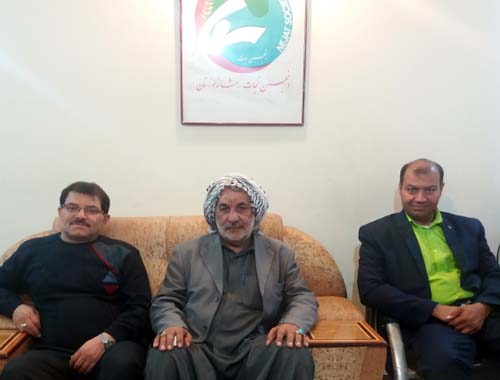
Ex-members of the Mujahein-e Khalq Cult held a meeting at Nejat Society office, Sari branch.

The former members reviewed the deteriorating condition of the MKO cult in Albania. They also shared their experiences while living within the Cult camps.   

Mr. Hadi Shaabani, Mr. Iraj Salehi, Mr. Mohamamdreza Eskardi, Mr. Mohamamd Farahi and Mr. Abolfazl Yahyaei participated the meeting.

At the end of the meeting they published a declaration. Referring to the complete transfer of the Cult members to Albania, the former members urged the UNAMI and all related bodies to facilitate the release of MKO members held hostages within the cult affairs.

The statement reads:”

We ; the separated members of the Cult of Rajavi spent the best years of our lives within the Cult camps under the rule of an authoritarian leader; Massoud Rajavi. We are eyewitnesses of the Cult physical and mental pressures on members … .

Massoud and Maryam Rajavi wasted our time and energy on the way of their own interests… we were deprived of the most basic human rights within the Cult affairs. Anybody who would dared to criticize the organization or the leader would have been silenced …

We had no access to the outside media, no contact to our families…

This organization has a black history of violence and terror and crimes against humanity… it has no public support. Until recently it has been on the FTO list of Europe and USA … the group allied with the collapsed dictator of Iraq; Saddam Hussein in suppressing the Iraqi Kurds and Shiites in 1991. The cult urged several members to commit self-immolation in different European states.

We ask the related authorities and United Nations High Commissioner for Refugees to prosecute Massoud and Maryam Rajavi for their crimes against Iranian and Iraqi people as well as their own cult members.

We ask you to facilitate the members who have transferred to Albania to visit their families without the interference of the cult elements.  They also should have the opportunity to decide their own fate. “

Nejat Society,

October 20, 2016 0 comments
FacebookTwitterPinterestWhatsappTelegramSkypeEmail
The cult of Rajavi

MKO, the ending stage of the radicalization process

The commitment to violence is what distinguishes a terrorist group from other extremist groups. For years, the Mujahedin-e Khalq Organization (the MKO) was committed to acts of terror and violence as its main strategy to fight the shah of Iran and then the Islamic Republic government.  However, the group hasn’t committed violent act since 2002. It claims that it has officially denounced terrorism even though it has never made any official statement openly.

Given that the MKO has denounced terrorism, why is there too much concern over the relocation of the MKO in Europe, Albania? According to the reports, not many member states of the European Union were willing to receive the MKO in their territory and ultimately Albania accepted to receive them in exchange for financial aid from the United States.

There is too much concern about the presence of the MKO in Europe because the MKO’s background indicates true facts about its nature as a terrorist destructive cult.

 Researchers have developed a number of different theories and conceptual models that seek to explain the process by which an individual becomes radicalized. Most of them consider certain stages from beginning to end of the process. Based on researches the ending stage of the process is always violent action.

This demonstrates that the MKO has already passed through all the stages although it is not apparently committed to terrorism now. Thus, the potential capacity of a radicalized extremist terrorist group threatens the European citizens, particularly the Albanians who hardly ever have enough information on true nature of the MKO.

Social scientists, law enforcement organizations, and intelligence agencies all agree that terrorists are the products of the dynamic process of radicalization. Radicalization makes the individuals get engaged in a system of beliefs – radical or ideological – and impose their beliefs on the rest of society. This is exactly what the MKO has passed through during its half a century–long history.

There are common elements in the experiences of most people who have become indoctrinated in the destructive terrorist cults, regardless of their beliefs or motivations. These elements make significant changes in the life style of a person including his social relations. The person’s behavior will become more intense and extreme over time compared with the normal life.

 Members of the MKO are kept under a very suppressive system that controls all aspects of their life. Celibacy is mandatory in the MKO; love and emotions are forbidden except for their leaders. Members have to reveal all their thoughts during the day in certain sessions –held daily and weekly in order to maintain mind control over members. Sleep deprivation, solitary confinement, mental and physical torture are usual practices in the Cult of Rajavi. Members have no access to the outside world or the news of the outside world. Now that they are in Tirana, the rank and file are allowed to go outside their apartment complex only under the supervision of a superior member.

Under the severe manipulation system of the Cult of Rajavi, most members are likely to have gone all the way to become a violent extremist. For this reason, you may not be surprised to see a dozen of the group members commit self-immolation following the arrest of their leader Maryam Rajavi by the French Police in 2003.

The world community particularly the United Nations and the Government of Albania have the crucial duty to interrupt the process of victimization of the MKO members. Besides, the international bodies should prevent members of the MKO to get to the point of threatening or using violence – although some of them have already reached the point.

The active involvement of families, friends and human rights bodies in the process of de-radicalization is very important.  Unfortunately, paid advocacy for the MKO is clear evidence of an absence of will to secure the European citizens and to release the victims taken as hostages in the MKO.

By Mazda Parsi

October 19, 2016 0 comments
FacebookTwitterPinterestWhatsappTelegramSkypeEmail
Mujahedin Khalq Organization members' families

Mr. Balaei: We are ready to travel to Albania

Balaei family is one of the victims of the MKO Cult.

Balaei family have two sons in the hands of the MKO Cult ruthless leaders. Kiumars was deceived by the Cult recruiters into joining the group in 1980s. Mehraban, the other brother joined the group while he was a POW of Iran- Iraq war. Actually he joined the group to flee the painful situation of Baath prisons.

Balaei family are members of Nejat Society, Gilan Branch. They do their utmost efforts along with other MKO  hostages families in order to facilitate their beloved sons’ release from the MKO Cult affairs.

Mr. Shadman Balaei; Kiumars and Mehraban brother – have announced his readiness to travel to Albania in order to help his brothers release themselves from the clutches of the destructive cult of Rajavi.

Balaei family is one of the victims of the MKO Cult

October 18, 2016 0 comments
FacebookTwitterPinterestWhatsappTelegramSkypeEmail
Albania

Albania: What would a de-radicalization program for the Mojahedin Khalq involve

In spite of American promises, no de-radicalisation programme is in place to deal with over 2500 members of the Mojahedin Khalq terrorist group who have relocated to Tirana from Iraq. The MEK has a long history of violent and criminal activity. This has not stopped now they are in Tirana. Unless the Albanian government introduces its own programme, it must accept responsibility for the consequences of allowing this terrorist group to continue unchecked.

What would de-radicalisation involve? Firstly, we need to understand how the person became radicalised in the first place. This knowledge will allow us to help them. A fundamental principle is that they were not radicalised by logic but by a manipulative process which is in part mental and part emotional. For this reason, they cannot simply be sat down and argued out of their beliefs with counter-narratives.

A brief overview of the process of radicalisation for any group – far-right extremists, Islamists and cults – starts with deceptive recruitment. The group uses a ‘recruiting script’ (which we recognise as the ideology) to first entice or ‘hook’ the recruit’s interest. Whether this is done in person or online, the recruiter will be an expert manipulative persuader – think hard sales.

Once drawn into the group’s sphere of influence by their engagement with the ‘ideology’, the person is covertly subjected to a range of psychologically manipulative mechanisms. These are intended initially to throw them off balance and trigger an infatuated, even altruistic response to the group and its beliefs. It is important to remember that as long as the recruit remains unaware of this psychological manipulation they will have complete faith in the ideology and the leader who proselytises it. They sincerely believe they are part of a righteous movement and their companions are worthwhile and trustworthy people.

As the recruit becomes more committed to the group, they are deliberately separated from external references and influences, such as work and studies, until they become dependent on the group for all their needs and opinions. A fundamental aim of radicalisation is to separate the recruit from their family and friends (even when they are also involved) since these are the people whose emotional ties can pull them away.

As dependency is being achieved, the recruit’s emotional responses begin to be trained, not by logic or argument but through fear. The outside world is depicted as dangerous, alien and worthless. This fear is described by experts as a ‘cultic phobia’. The recruit is afraid of what might happen if they leave the group and go back to normal life. Also to prevent this happening, the recruit and his group are made to feel they are superior to outsiders because they are the ‘true believers’.

Even though every group’s externally declared belief system or ideology is different, once the recruit has succumbed to the process of mind control, the ideology changes and becomes ‘whatever the leader wants’. All further indoctrination and manipulation is designed to make the recruit obedient to this one requirement.

When we talk about radicalisation, we tend to focus on how the process creates a violent extremist. Of course, violent extremist and terrorist groups de-sensitise their followers to horror. They will ensure they have no social, moral or religious barriers to committing any act, whether violent or criminal or self-harming.

But such groups also exert control over every other aspect of their members’ lives, including sex and relationships. Daesh, for example, uses both marriage and sex slaves to reward and motivate its fighters. It also kills with impunity anybody trying to exit the group.

Indoctrination therefore is often based on the idiosyncrasies of the leader.

Surprisingly, even though his group is committed to violent regime change, Massoud Rajavi’s primary concern was to have all his MEK followers love and worship him. Perhaps less surprisingly he also wanted all the women to be sexually available for him.

He achieved this by introducing obligatory celibacy starting with forced divorces and removal of all the children. He reinforced this regime through strict gender apartheid. He coerced elective hysterectomies among the leading women members as a demonstration of their ‘devotion to the cause’. The outward reasoning being that women who reject marriage and children will be more committed. The real reason was so that Rajavi could sleep with these women without fear of pregnancies.

To prevent people enjoying sexual responses and emotions, he introduced a compulsory confessional process. This requires every member to give a daily report about their sexual thoughts, reactions and even dreams. Anything confessed is denounced as a betrayal of the leader and is punished. But not confessing anything is also punished. Members often invent reports which they hope will lead to less harsh punishment.

The significance of this unnatural focus on sex and enforced celibacy is the effect on its victims. One MEK member has already been convicted in Tirana for the attempted rape of an 11-year-old boy. We should know if this is a one-off aberration or an indication of deeper problems among the members. An effective de-radicalisation programme would need to take these issues into account.

In essence, the key to successful de-radicalisation is to help individuals reconnect with their authentic self and emotions.

For the MEK, immediate short-term steps would include:

·        Separate ordinary members from leaders and controllers – remove all forms of organisational supervision.

·        Create small independent living groups responsible for their own domestic affairs – cooking, cleaning and shopping.

·        Encourage families to get in contact.

·        Introduce external sources of information in an informal way.

·        Offer paid work opportunities which are age and ability appropriate.

·        Introduce medical and psychological support workers.

One problem is the age of the MEK members. Many are too old to imagine starting independent life away from the group. In this respect, contact with their families would provide reassurance that an alternative lifestyle is possible.

In the longer term, the involvement of former members – who understand what it’s like inside the group and can talk to current members about their situation and how change is possible – has already proven to be helpful.

By Anne and Massoud Khodabandeh,

October 17, 2016 0 comments
FacebookTwitterPinterestWhatsappTelegramSkypeEmail
Former members of the MEK

Over a hundred MEK members left the group in Tirana

Neda-ye Haghighat reports that over one hundred of the MEK who arrived in Albania have separated from the group.

In an effort to control these desertions, the MEK has promised to pay the defectors and look after them separately from the main body of MEK members in return for their silence.

As long as they do not speak out about their experiences in the MEK as other former members have, the MEK will accommodate them. However, the number of such defectors is growing almost daily and it is clear that the MEK is slowly falling apart.

Iraninterlink Weekly Digest,

October 16, 2016 0 comments
FacebookTwitterPinterestWhatsappTelegramSkypeEmail
Iran Interlink Weekly Digest

Iran Interlink Weekly Digest – 165

++ Neda-ye Haghighat reports that over one hundred of the MEK who arrived in Albania have separated from the group. In an effort to control these desertions, the MEK has promised to pay the defectors and look after them separately from the main body of MEK members in return for their silence. As long as they do not speak out about their experiences in the MEK as other former members have, the MEK will accommodate them. However, the number of such defectors is growing almost daily and it is clear that the MEK is slowly falling apart.

++ Each year the MEK takes a different approach to marking Ashura, the most significant event in the Shia religious calendar. This approach depends on who the MEK’s current paymasters are. This year, because the MEK wants to fit in with Saudi demands, Ashura has been practically ignored.

In English:

++ Anne and Massoud Khodabandeh wrote ‘Albanian citizens fearful of radicalised Mojahedin Khalq neighbours deserve more information. The article highlights the fact that no de-radicalisation programme has been created to deal with the over 2500 radicalised MEK members who are now living in apartments in a suburban neighbourhood. The government of Albania has not communicated with its citizens about this. It has also neglected to warn the neighbouring families about the potential danger of sexual deviancy among the MEK due to the particular form of radicalisation which they undergo. The article was published in Albanian in Gazeta Impact.

++ Iran Interlink reported ‘Albania: Radicalised MEK member convicted for attempted rape of 11-year-old boy. After befriending a local family, last March MEK member Mousa Jaberifard sexually assaulted their young son. He was sentenced to four years in prison and will serve two years. While acknowledging that nobody knows yet whether this was a one-off event or an indication of deeper problems of sexual deviancy among the entire MEK population, the article concluded “Even though the group arrived in Albania under the auspices of the UNHCR, there is no programme to de-radicalise members of the group. This means that even if they separate from the MEK, the members remain radicalised and can still pose a threat.”

++ Mazda Parsi’s article for Nejat Bloggers ‘Flow of speaking and writing fees to the Mojahedin Khalq paid sponsors’ highlights the irresponsibility of the MEK’s paid sponsors who merely repeat the MEK’s own propaganda. “’Always well-financed with laundered funds from hazy sources (including Saddam Hussein, and more recently the Saudis and the U.S. among others), for years the MEK spread money around like honey in Washington, Paris and other power centers,’ writes Farid Khavari of the InvestmentWatchBlog. [Patrick] Kennedy tries to convince the audience that the MKO relocation in Europe as a step forward to have ‘closer contact with European governments and the world community, where they can tell their stories and continue their activism in favor of regime change in Tehran.’ He seems to be so manipulated by the group’s propaganda and money that he cannot understand that the notorious MKO cult will never be that viable force to bring regime change except with military intervention of the West. ‘Iranians would never vote for this government, and it could only be installed by U.S. military action,’ Farid Khavari writes.”

++ Nejat Society reported that Mr Shahab Forouzandeh left the Rajavi cult after he arrived in Albania. His family had tried on numerous occasions to meet with him in Camp Ashraf and Camp Liberty, but they were denied this right by the MEK leaders. Since arriving in Albania, tens of members have deserted the group and stepped into the free world reports say.

October 14, 2016

October 16, 2016 0 comments
FacebookTwitterPinterestWhatsappTelegramSkypeEmail
Former members of the MEK

Pictorial – Shahab Forouzandeh left MEK Cult in Tirana

Shahab’s family several times traveled to Iraq to visit their beloved son, however the MKO Cult leaders denied to let them meet Shahab.

The Forouzandeh family staged rally in front of MKO Camp Ashraf along with other family members, yet the Cult leaders deprived them of their certain right which was to be able to meet their family members taken as hostages in MKO Camps.

After years of efforts by the US, UNAMI as well as the Iraqi government the Mujahedin-e Khalq removed from Iraq and took refuge in Albania.

In Albania tens of MKO members have left the group and stepped the free world, reports say.

MKO member defect the Cult in Albania

October 15, 2016 0 comments
FacebookTwitterPinterestWhatsappTelegramSkypeEmail
Members of the MEK

Albania: Radicalized MEK member convicted for attempted rape of 11-year-old boy

An Iranian man, Mousa Jaberifard, was sentenced to three years in prison by the Court of Tirana, Albania after being convicted for the offense of sexual harassment and attempted rape of a minor. He was arrested in March this year after the parents of an 11-year-old boy called the police.

Jaberifard arrived in Albania in 2014 as one of the Mojahedin Khalq members from Iraq. A local family became friends with him. The family’s 11-year-old son told police that after going to the market with Jaberifard to buy bread, they arrived back at his apartment where Jaberifard undressed and tried to have sex with him. After many attempts, the boy managed to escape and inform his family who immediately called the police.

Jaberifard is one of over 2500 radicalised Mojahedin Khalq members who have arrived in Albania since 2013. Iran-Interlink warned last week:

“For the local citizens, mystery surrounds their arrival and their lifestyle. Should these secretive and covert neighbours be treated with suspicion or kindness? At a local level, the first thing neighbouring families need to be aware of is that among all MEK members, sexual relations have been banned for over 25 years. This means there are no marriages or children or young people in the organisation. More troubling are the obligatory confessional meetings in which members are required to admit any sexual thoughts or feelings and be punished for them. With this emphasis on sexual matters, it is not known how such people may react when they come in contact with ordinary people and their children.”

Even though the group arrived in Albania under the auspices of the UNHCR, there is no programme to deradicalise members of the group. This means that even if they separate from the MEK, the members remain radicalised and can still pose a threat.

October 13, 2016 0 comments
FacebookTwitterPinterestWhatsappTelegramSkypeEmail
Newer Posts
Older Posts

Recent Posts

  • Rebranding, too Difficult for the MEK

    December 27, 2025
  • The black box of the torture camps of the MEK

    December 24, 2025
  • Pregnancy was taboo in the MEK

    December 22, 2025
  • MEPs who lack awareness about the MEK’s nature

    December 20, 2025
  • Why did Massoud Rajavi enforce divorces in the MEK?

    December 15, 2025
  • Facebook
  • Twitter
  • Instagram
  • Youtube

© 2003 - 2025 NEJAT Society . All Rights Reserved. NejatNGO.org


Back To Top
Nejat Society
  • Home
  • Articles
  • Media
    • Cartoons
    • NewsPics
    • Photo Gallery
    • Videos
  • Publications
    • Books
    • Nejat NewsLetter
    • Pars Brief
  • About Us
  • Contact us
  • Editions
    • عربي
    • فارسی
    • Shqip