Nejat Society
  • Home
  • Articles
  • Media
    • Cartoons
    • NewsPics
    • Photo Gallery
    • Videos
  • Publications
    • Books
    • Nejat NewsLetter
    • Pars Brief
  • About Us
  • Contact us
  • Editions
    • عربي
    • فارسی
    • Shqip
Nejat Society
Nejat Society
  • Home
  • Articles
  • Media
    • Cartoons
    • NewsPics
    • Photo Gallery
    • Videos
  • Publications
    • Books
    • Nejat NewsLetter
    • Pars Brief
  • About Us
  • Contact us
  • Editions
    • عربي
    • فارسی
    • Shqip
© 2003 - 2024 NEJAT Society. nejatngo.org
Iran

Iran’s approach toward Saudi hostility

Saudi Arabia has intensified its anti-Iran rhetoric over the past years.

The kingdom has also been spreading Iranophobia to achieve its regional objectives.

Riyadh has attempted to brand Iran as a country which intends to plunge the region into turmoil. It accuses Iran of fanning the flames of conflicts in the Middle East, particularly in Syria and Yemen.

But it is Saudi Arabia that launched a military campaign against Yemen in March 2015, claiming thousands of lives and causing a severe humanitarian crisis in the impoverished nation.

The kingdom is also accused of backing terrorist groups which fight against the Syrian government. Riyadh has reportedly provided the terrorists with logistic and financial support in a bid to topple the government of Syrian President Bashar al-Assad.

In response to such hostile policies, Iran has called for holding political dialogue to end conflicts in Yemen and Syria. Tehran has always welcomed all moves which can help end bloodshed in these countries. The Islamic Republic has also sent humanitarian assistance to these countries to alleviate the people’s plight.

Saudi officials have also explicitly expressed support for an anti-Iran terrorist group known as Mujahedin Khalq Organization (MKO). The MKO terrorists have carried out numerous attacks against Iranian civilians and government officials since the 1979 Islamic Revolution, killing thousands of people.

Saudi Arabia also threw its weight behind the regime of former Iraqi dictator Saddam Hussein, which began an eight-year war against Iran (1980-88).

Apart from such hostile approaches, the kingdom refuses to shoulder the responsibility for last year’s Hajj stampede which resulted in the deaths of thousands of pilgrims, including hundreds of Iranians.

Despite Riyadh’s antagonism toward Tehran, the Islamic Republic has never taken approaches which could have pitted Muslims against each other.

Iran believes tensions among Islamic nations only benefit Israel and those who want to create division among Muslims.

The Islamic Republic is a regional power whose military might enables it to deter any act of aggression. Nonetheless, it prefers to follow up its complaints against Saudis through international bodies rather than get into a regional confrontation.

Iran Daily

September 25, 2016 0 comments
FacebookTwitterPinterestWhatsappTelegramSkypeEmail
Mujahedin Khalq Organization's Propaganda System

The MKO relocation; victory for who?

Following the relocation of the last members of the Mujahedin Khalq Organization in Albania, various arguments were stated by different sides.  MKO’s propaganda has also been active in releasing the most absurd and surprising reaction to this relocation. The move was celebrated by the group as a “Victorious Relocation”!

Regarding the background of the MKO’s presence in Iraq, the claim that the move to Albania is a victory seems bizarre. In the early 1980sthe group leader Masoud Rajavi accepted the offer by the former Iraqi dictator Saddam Hussein to take shelter in Iraq in order to fight against Iranians. They joined Saddam’s troops in killing many Iranians. The irony is that they killed their own country fellow men which will never be forgotten by Iranians. They considered Saddam as the enemy of their enemy so he is a friend. This is the most ridiculous statement in justifying the killing of your countrymen.

Saddam Hussein granted land, money and military equipment to the MKO.  Camp Ashraf, Located 60 kilometers North of Baghdad, 120 kilometers from Iranian border, became the headquarters of the group from which they launched their military attack against their own countrymen. The MKO WAS Saddam’s fifth column and proxy force against Iran.

After the fall of the Iraqi dictator, the MKO agreed to offer the same service to the US and Israel. The MKO was a very good option for the US and Israel to launch their proxy wars against Iran and to pry the secret out of Iranian nuclear program. They also aided Israel to assassinate Iranian nuclear scientists. Obviously, the MKO received a large sum and safe haven for their services by Israel and West.

Therefore, the presence of the MKO in Iraqi territory neighboring Iran has always been advantageous for the group leaders. However, it was disastrous for the rank and file of the group because they were stuck in Camp Ashraf that was occasionally attacked by the Shiits who were seeking to revenge the supporting role of the MKO in the suppression of Shiit’s uprisings by Saddam Hussein during the 1990s.

Although the members of the Cult of Rajavi –kept in the camp as hostages—were living in a hazardous area, the group leaders denied to leave the camp. The newly established Iraqi government was determined to expel the MKO but the group leaders urged to maintain their strategic container, Camp Ashraf. Ultimately, the camp was shut down by the Iraq government after several members of the group were killed in clashes between the group and the Iraqi police or Iraqi rebels.

Camp Liberty was a temporary location near Baghdad airport that hosted the MKO. Members were supposed to be resettled in third countries by the help of the UN High Commissioner for Refugees and the United States. In June 2013, the then UN envoy to Iraq Martin Kobler told the Associated Press that efforts to relocate residents of an Iranian dissident camp in Iraq are being stymied in part by lack of cooperation from the exiles themselves. Besides, Koberacknowledged that a major problem in resettling camp residents is a shortage of countries willing to accept them. He repeated his call for U.N. member states, including the U.S., to do more. “We do not have enough recipient countries. … There is also reluctance from the side of the Liberty residents to cooperate with the UNHCR," he said, referring to the U.N. refugee agency. [1]

Finally, it was the US government that convinced Albanian authorities to receive the MKO in exchange for US dollars. The part of Albanian government to accept the formerly terrorist designated MKO was so significant that the US Secretary of State John Kerry praised the country’s “humanitarian” aid. Thus, based on what kind of calculation or philosophy one can consider the MKO’s relocation as a “victory”?

While Maryam Rajavi calls the departure from Iran’s neighboring territory “a hammer that will descend upon the ruling theocracy”, Mustafa Saadoun of Al Monitor asserts that the Islamic Republic was the winner of the recent move criticizing the Iraqi government for its failure to take more advantages from the case. “Of course, the MEK’s departure from Iraq after they had been present there for 30 years has eliminated the threat posed against the Iranian regime, since the MEK’s proximity to Iranian interests in Iraq could not have been easy for Tehran,” he writes. [2]

Regarding Saadoun’s argument, it should be noted that the MKO has never been a real threat for Iran because of the popular base it lacks among Iranian public. The American journalist Barbara Slavin describes the MKO as “far from democratic organization it purports to be”. She reveals the cult-like nature of the MKO,”the group is a cult that forces members to be celibate, to give up personal wealth and to show complete allegiance to Ms. Rajavi.” [3]

Concerning the unpopularity of the MKO, Slavin finds it hard to imagine the MKO as the alternative of the Iranian government. “Hopefully, the former residents of Camp Ashraf will be able to construct new lives outside Iraq and memories of the movement will fade,” she writes. [4]

The relocation of the MKO may only be a victorious move for those brainwashed members who are taken by the group leaders as hostages. They are not in the danger of rocket attacks and bombings as they suffered in Iraq. Besides, living in Europe they seem to be able to find more opportunities to escape the bars of the Cult of Rajavi.

By Mazda Parsi

Sources:

[1] The Associated Press, AP Interview: UN Iraq rep urges exile cooperation, June 26, 2013

[2]Saadouin, Mustafa,What’s next for Baghdad-Tehran ties as last MEK members leave Iraq?, Al Monitor, September 10, 2016

[3] Slavin, Barbara,State Department Removes Last MEK Members from Iraq, Voice Of America, September 14, 2016

[4] ibid

September 24, 2016 0 comments
FacebookTwitterPinterestWhatsappTelegramSkypeEmail
Iran Interlink Weekly Digest

Iran Interlink Weekly Digest – 162

++ This week Farsi media has been dominated by analysis about the future of the MEK after they left Iraq. The BBC, Radio Farda, VOA and others predict the end of the MEK, as we know it, as a viable force. But as a mercenary force, we can only wait and see what they do next. At the same time, the MEK is on overdrive, using paid lobbyists, to say that ‘being deported from Iraq after thirty years is a victory’. This has been widely ridiculed by commentators.

++ There are many new films being broadcast from Albania, mostly by Albanian media, about the MEK in Tirana. Some show groups of MEK wandering about aimlessly, others are hiding behind windows and doors at the apartment block. Journalists have been able to talk with the MEK’s neighbours at their apartment block as well as other concerned citizens. The overriding message is that the MEK are ‘into themselves’ and don’t talk to anyone, not even officials. The neighbours see them as secretive people who hide behind closed doors and don’t interact with outsiders and who keep their curtains shut all day and night. The Arabic channel Akhbar Al’an managed to find a couple of MEK members outside the building and questioned them on camera. The film shows two women who are clearly ‘lost’. Asked ‘are you staying in Albania?’ One replied ‘Yes, this is our last stop’. But suddenly she looks at the other woman and then turns and says ‘No, we’re here until the regime is toppled’. The film shows the other woman hiding her face saying ‘my family in Iran are in danger’. But pictures of the same woman with posing with a Kalashnikov at the time of Saddam Hussein are all over the internet. All these reports conclude that the MEK as we know it is finished.

++ This week Iran’s President Rouhani spoke at the UN General Assembly in New York. As expected, the MEK staged a picket in a nearby square. This year, however, the attendance was negligible. None of the MEK’s usual lobbyists turned up and they had to make do with Joe Lieberman, who has clearly lost the plot and therefore resorts to unconvincing anti-Iran rants. Every year the MEK enacts a scenario showing a prisoner and prison guard to symbolise the human rights situation in Iran. This year however the actors in the MEK’s photos were blond haired. Perhaps they couldn’t find any Iranians to take part. There was no news coverage of the event except in Saudi media; they want to show that the MEK is still alive. However, in its weekly programme, Mardom TV broadcast some of the MEK’s photo-shopped images in which they try to disguise the fact there were no more than 20 people in the square. In some pictures, images of people holding a flag in each hand have been replicated over and over in an effort to show more flags. VOA had a brief discussion about the situation of the MEK. The MEK representative was Raymond Tanter who is a laughing stock for Iranians. Many wrote comments that ‘the death of the leader has to be announced by the former Saudi Intelligence chief, and on a Farsi broadcast channel the MEK send CIA-affiliated Raymond Tanter to represent them in English, which then has to be translated to Farsi for the audience’.

In English:

++ Fatjona Mejdini, Balkan Insight reports ‘Iranian Opposition Ex-Fighters ‘Transferred to Albania’. The article outlines the known facts about the agreement Albania made to accept 210 members of the Mojahedin Khalq in 2013. But says that since then “no official statement” has been released about the transfers by the Albanian government. Instead, the writer relies on American sources to provide information. “’In the last two years, Albania has accepted around 1,000 members of this group, and according to a high official of State Department, the country has promised that is going to accept also 2,000 others,’ wrote journalist Pam Dockins in an article for Voice of America after she was part of the press entourage accompanying US Secretary of State John Kerry to Tirana on February 14. Dockins’ article also said that during the visit, Kerry thanked the Albanian government for its effort in the taking the Iranians, although the issue was not publicly mentioned while he met the country’s political leaders.”

++ Pars Today (Translated by Nejat Society), Tirana, Albania, ‘How much does it cost to keep Iran’s enemies in Albania?’ The article does not dwell on the financial cost, but raises the issue of the political and security cost to Albania and Europe as the war between America and Iran has now been brought from Iraq to the border of Europe.

September 23, 2016

September 24, 2016 0 comments
FacebookTwitterPinterestWhatsappTelegramSkypeEmail
Former members of the MEK

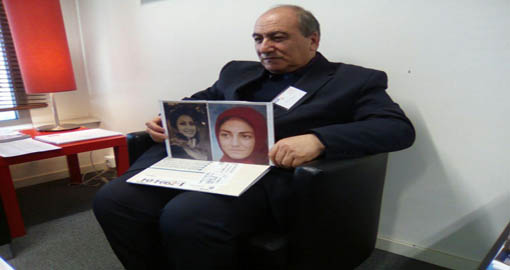
Panel of Mujahedin-e Khalq Cult critics

On Saturday, September 17th the Rajavis’ Cult critics gathered together in Cologne, Germany to review the 30 – year life of MKO in Iraq and eventually its expelling from the Iraqi soil, Iran-Zanan Website reported.

Ms. Batoul soltani, Ms. Zahra Moeini, Mr. Ali Akbar Rastgoo, Mr. Davoud Baghervand and Mr. Nader Keshtkar participated the panel.

The participants who had all spent many years within the Cult affairs, shared their experiences.

They analyzed Massoud Rajavi’s three decade of wrong policies and analysis in Iraq.

They also reviewed the MKO Cult’s expulsion from Iraq, relocation in Albania and its consequences and how the Cult leaders deal with this issue.

The MKO critics denounced the Cult’s efforts to deceive the public opinion into considering this strategic "great defeat" as a "great victory".

The participants also examined the bright horizons ahead of MKO dissatisfied members in Albania who are awaiting an opportunity to leave the group.

September 22, 2016 0 comments
FacebookTwitterPinterestWhatsappTelegramSkypeEmail
Albania

How much does it cost to keep Iran’s enemies in Albania?

The Albanian page of Pars Today Website published a report by an Albanian periodical Parrena on the recent relocation of the Mujahedin-e Khalq members in Tirana, Albania. The report is titled “the result of receiving Mujahedin, Albania on the verge of war.”

Parrena criticizes the Albanian government for accepting the MKO in its territory. Like the Zionists who settled in the Palestinian territory in the last century, 3000 members of the terrorist Mujahedin-e Khalq were relocated in Albania, according to Parrena.

The following, extracted of the report, was translated to Persian by Pars Today:

“The problem is absolutely not the MKO as a group of people with different race, religion or ethnic traits. The basic problem is that the MKO is the enemy of the Islamic Republic government. They are not only ideological its enemies but also active fighters who are officially denounced by the Iranian government as its enemy.

Having accepted the MKO in Albania, the war battle between Iran and Europe is situated in Albania. The group will soon launch its propaganda and its activities inside the Albanian borders while it is protected by the Albanian government.

Does Albania need such a danger?

Of-course, everything has its own price. To accomplish the deal, the US Secretary of State John Kerry came to Albania. But it should be asked how much it costs Albania to locate the enemies of Iran in the heart of Albania? Such a deal would be justified only if it is done for the national interests of the Albanians just like the “Kosovo-Albania Unification”.

 However, during the past month, no changes were seen in the Albanian cities, except the mobile stores haunted by large numbers of MKO members who seek to be equipped by the newest mobile or tablets.

Albanian public opinion is not able to realize what it means to bring war to your home. This is the dream of every Albanian politician: “Good relations with the United States. Nothing else matters.” […]

For the time being, the US is seeking to normalize the relations with Iran and the European Union is taking serious actions to improve the relations with Iran. But, we, “the hometown of the MKO”, what did we do and what did we obtain?

The MKO will continue the war it started decades ago now, in the “promised land”, in the Palestine it has found in the heart of Balkan.  

Well, what will happen next? What will the media do? Do the media suffer the sever lack of information on the issue? No, it is impossible. With a slight google search, you can find out everything about the MKO and the threat they pose. Nevertheless, the media sound to have sold themselves with a very low price too.”

September 21, 2016 0 comments
FacebookTwitterPinterestWhatsappTelegramSkypeEmail
USA

US Resettles Last MEK Members in Albania

On September 12, Secretary of State John Kerry announced that the last 280 members of a controversial Iranian opposition group, the Mujahedin-e Khalq (MEK), had been transferred from Iraq to Albania. Founded in 1965 as an urban guerilla group, it opposed the monarchy of Shah Mohammad Reza Pahlavi. The leftist group killed six Americans in Iran in the 1970s. The MEK participated in the 1979 Revolution but later broke with revolutionary leader Ayatollah Khomeini over ideology and direction.

In 1981, the MEK went underground. Members fled to Iraq and supported Saddam Hussein during the 1980-1988 war with Iran. The MEK helped Hussein’s forces suppress Shiite and Kurdish uprisings after the 1991 Gulf War. It also attempted an attack against the Iranian mission to the United Nations in 1992 and was thought to be responsible for attacks on Iranian officials in the 1990s. The State Department designated it a Foreign Terrorist Organization in 1997. But the MEK renounced violence in 2001.

During the 2003 invasion of Iraq, U.S. forces initially attacked MEK military targets. The group claimed neutrality though. As part of a cease-fire, members were disarmed and confined to their base at Camp Ashraf. The United States later designated them as civilian “protected persons.” More than 3,000 of the camp’s residents were moved to a former U.S. military base near Baghdad known as Camp Liberty in 2012 with the intention of resettling them elsewhere for their own safety. The State Department took the MEK off the terror list that same year, noting that it had not been positively linked to terrorist attacks for more than a decade. During the last few years, the United States has helped to resettle MEK members in several European countries, including Albania. 

The following is the full text of Kerry’s remarks on the recent transfer.  

Secretary of State John Kerry

John KerryOn Friday of last week, the last 280 members of the exiled Iranian opposition group, the Mujahedin e-Khalq, or MEK, as they’re known, were moved out of Camp Liberty in Iraq. And their departure concludes a significant American diplomatic initiative that has assured the safety of more than 3,000 MEK members whose lives have been under threat. And as everybody remembers, the camp they were in had on many occasions been shelled. There were people killed and injured. And we have been trying to figure out the way forward.

Well, the last 10 years have been filled with reminders of this challenge. I first became involved in this effort when I was in the Senate, and that is why during my first year as Secretary I appointed Jonathan Winer, one of my longest-serving and most trusted advisers, as our emissary to find a way to help the MEK be able to leave Iraq.

After steady progress over a period of months, I visited Tirana earlier this year and I discussed with the Albanian Government how to assist in facilitating the transfer and the resettlement of the last group of MEK members from Camp Liberty. Albania has a proud tradition of protecting vulnerable communities, as it did during the Kosovo conflict and in sheltering large numbers of Jews during World War II. I am very grateful that in this case too Albania was willing to play an important humanitarian role. I also want to thank the governments of Germany, Norway, Italy, the U.K., Finland, and other EU countries for helping to save the lives of the MEK. And this is a major humanitarian achievement, and I’m very proud that the United States was able to play a pivotal role in helping to get this job done.   —Sept. 12, 2016, during a press briefing

Iranprimer.usip.org

September 19, 2016 0 comments
FacebookTwitterPinterestWhatsappTelegramSkypeEmail
Iran

Iran denounces US efforts to secure Mojahedin Khalq terrorists

Iranian Parliament’s General Director for International Affairs Hossein Amir-Abdollahian criticized US efforts to support MKO terrorists, saying the US is completely oblivious to the safety and honor of the people of Iraq and Syria.

Hossein Amir-Abdollahian in response to US Secretary of State John Kerry’s remarks on securing the Mujahedin Khalq Organization (MKO) memebres , said “White House tries to establish a ceasefire in Aleppo to secure terrorists under siege by the Syrian army.”

He added that a review of US government actions and words clearly proves the country has not taken and will not take any single step to save people from the clutches of terrorists in the region and Syria.

Amir-Abdollahian said Kafriya and Al‐Fu’ah people in Syria in recent months are besieged by terrorists and live under grave humanitarian crisis, including blackout and the acute shortage of drinking water, medicine and food; however, the US does not pay any attention to the catastrophe and crimes against humanity, and worse, the United Nations supporting Washington’s treatment, is not capable of helping Kafriya and Al‐Fu’ah people.

“While the safety and honor of the Muslim people of Syria and Iraq is completely disregarded by the United States, John Kerry speaks proudly of securing MKO terrorists,” he noted.

September 17, 2016 0 comments
FacebookTwitterPinterestWhatsappTelegramSkypeEmail
Iran Interlink Weekly Digest

Iran Interlink Weekly Digest – 161

++ The MEK have finally been expelled from Iraq. The Iraqi government announced its satisfaction. US Secretary of State John Kerry described the move as a humanitarian success which saved the residents of Camp Liberty. Maryam Rajavi interpreted this as Kerry supporting the MEK. Commentators pointed out that this is not true. Kerry was helping save individuals not a terrorist group. They accused the MEK of hypocrisy. A group which began as anti-American and anti-Israeli now glad that the Americans have rescued them.

++ In Tirana, public pressure has increased as the people ask when will it all end – first Albania accepted Guantanamo Bay prisoners, now the MEK organisation. There is fierce opposition to taking more terrorists. Commentators remind us that the ball is now in the American court. The US and Albania must now de-radicalise and disband these terrorists or be seen as the Godfathers of terrorism.

++ The MEK celebrated the move to Albania. Maryam Rajavi claimed it as a great victory for the MEK, saying ‘we won’. She told her followers ‘by coming out of Iraq, we are now one step nearer to overthrowing the regime’. Commentators ridiculed this. The gist of this ridicule was that the MEK spent thirty years in Iraq and couldn’t do anything against Iran even with the full backing of Saddam Hussein. After his downfall the MEK insisted on remaining in Iraq against all advice and every demand to leave. As a result, since 2003 over two hundred MEK have been needlessly killed in their own bases in clashes with Iraqis. Only months ago, Maryam Rajavi was begging for the MEK to be re-armed in Iraq. How, people ask, is the MEK going to achieve the regime change which they couldn’t do from Iraq. They conclude that this bravado is for internal consumption only.

++ Massoud Khodabandeh was interviewed by BBC Farsi and by the popular and highly respected Bijan Farhoudi for Kayhan London. Both asked Khodabandeh about whether Massoud Rajavi is alive or dead. Khodabandeh reasoned that since Prince Turki refused to respond further to his announcement – through offering Maryam Rajavi his condolences – that he is dead, then we must assume that he really is dead. In fact, it is up to the MEK to confirm the status of Massoud Rajavi, not the Saudi Prince. Since they cannot or do not this, we can only assume that, as a cult, the MEK is afraid to acknowledge the death of its guru. Khodabandeh welcomed the MEK’s transfer to Albania as a good move and acknowledged that Iraq is certainly very happy to be rid of them. He said that in spite of the fact that the MEK was brought to Albania by the UNHCR and America as an intact terrorist group – which is illegal under refugee law – the move is very welcome because they are now safely out of Iraq. The most important step now, said Khodabandeh, is to de-radicalise them as terrorists. In further analysis, Khodabandeh said that as a cult leader, Rajavi ordered the MEK to celebrate as a form of anaesthesia, a painkiller, like taking aspirin because their internal problems as an organisation are so difficult to live with. He also pointed out that, as important as she claims this celebration to be, the fact that Massoud Rajavi gave no message is further evidence he is dead.

++ Several writers talk about the Saudi attempt to gather Iranian opposition groups together – some religious and others like Jundullah in the South – to form an anti-Iran alliance which would include the MEK. (The Kurdish Democratic Party has been paid to resume armed struggle after two decades and allow several of its people to be killed by the Iranian army as an annoyance to Iran. With no clear strategy or endgame, they are simply doing bandit work for the Saudis.) The Saudis invited several of these groups to undertake Haj. This was seen partly as a rebuff against Iran – which refused to send any pilgrims to Haj citing safety issues – but also as an excuse to gather the groups together for meetings. Ironically, some groups claimed before to be secular but their leaders and representatives still went for Haj. Except Maryam Rajavi, who was not invited in spite of boasting in her websites that she had been. Indeed, commentators mention that Saudi support for the MEK has disappeared in the past few weeks although MEK support for the Saudis remains just as strident. The inference is that the Saudis have realised that if the MEK could be made to co-operate with other opposition groups they would have already done so at some time in the past thirty years. But perhaps more significantly, the Saudis clearly no longer consider the benefits of supporting the MEK to outweigh the damage.

++ At the end of this month the government of Australia will review its list of proscribed organisations. Several families and formers have written to encourage the Prime Minister to maintain the MEK on this list. However, others write that the decision will be based on whether the MEK poses a serious security threat to Australia or not. But whether on or off such a list makes little difference to the future of the MEK. The group is dead, and like a dead person, needs no ID card (that of being listed as a terrorist group). So if it is taken away from them it doesn’t matter. In reality, although they are currently living behind closed doors and with curtains firmly shut in their apartment block in Tirana, this does not replicate the isolation of Iraq and sooner or later they will be coming out and the MEK will disband.

In English:

++ There are three main themes for a spate of articles this week. The main subject was the reaction of various parties to the departure of the MEK from Camp Liberty and their arrival in Albania. Iraq, the USA, the UN, Iran, Albania and the media in all these countries all expressed their views. The other issue of interest has been the increasingly fraught relations between Iran and Saudi Arabia and the Saudi’s unfortunate use of the newly deported MEK as a ‘threat’ to Iran. The Australian government’s review of its proscribed organisations list promoted formers to write to the Australian minster of Foreign Affairs and Trade.

September 16, 2016

September 17, 2016 0 comments
FacebookTwitterPinterestWhatsappTelegramSkypeEmail
Mujahedin Khalq; A proxy force

State Department Removes Last MEK Members from Iraq

Secretary of State John Kerry announced on Monday that the last 280 members of a controversial Iranian opposition group, the Mujahedin-e Khalq (MEK), had been removed from a camp near Baghdad and given refuge in Albania.

The news aroused little notice amid Kerry’s remarks about a bigger story – a new attempt at a cease-fire agreement in Syria. But the announcement marks an end to a long-running saga that was among the many unforeseen complications of the U.S. invasion of Iraq and toppling of Saddam Hussein in 2003. The relocation also diminishes the likelihood that the MEK will be able to foment more mischief in the Middle East.

A Marxist-Islamist group that killed six Americans in Tehran in the 1970s and lost out in a power struggle after the 1979 Iranian revolution, the MEK fled to Iraq and supported Saddam in the 1980-88 Iran-Iraq war. That decision earned the undying enmity of most Iranians – a fact that MEK leaders sought to conceal in their efforts to cultivate support in the United States.

The MEK also helped Saddam brutally suppress uprisings by Iraqi Shiites and Kurds after the 1991 Gulf War and is believed responsible for attacks on Iranian officials in the 1990s. For this reason, the group – which for decades kept adherents at a base outside Baghdad called Camp Ashraf – was persona non grata in a post-Saddam Iraq dominated by Shiites and Kurds.

The administration of President Bill Clinton put the MEK on the State Department terrorism list in 1997 in what some say was a gesture to the then reformist government of Iran, led by President Mohammad Khatami.  The political arm of the group, the so-called National Council of Resistance, lobbied for years to be removed from the list and finally succeeded in 2012 when Iran was at the height of its international isolation over its nuclear program.

Even after winning this fight, the group continued to hold “conventions” in Paris, where Maryam Rajavi, the widow of MEK leader Massoud Rajavi, held court. The MEK has also continued to pay large speaking fees to a bipartisan assortment of former U.S. officials, including  former New York City mayor Rudy Giuliani, who supports Donald Trump and Hillary Clinton backer Howard Dean, the former Vermont governor.

In July, a former Saudi head of intelligence and ambassador to the United States, Prince Turki al-Faisal, also appeared at such a meeting and called for the “downfall of the [Iranian] regime.” This led many observers to conclude that much of the MEK’s money is coming from Saudi Arabia, which is embroiled in a bitter rivalry with the Iranian government.

After Saddam was overthrown, the residents of Camp Ashraf were in obvious peril. The George W. Bush administration, which had earlier promised Iran that the MEK members would be declared enemy combatants, instead put the camp under U.S. projection.

For years, the MEK was able to use the plight of the stranded camp inhabitants to attract support for its cause. Given the hostility of the Baghdad government and occasional violent Iraqi intrusions into the camp, concern for these people’s welfare was justified. At the end of 2011, the group agreed to transfer the more than 3,000 residents of Ashraf to a former U.S. military base closer to Baghdad known as Camp Liberty and to allow the U.N. to begin processing residents for eventual resettlement.

It took years for U.S. officials to find countries willing to accept the MEK members; the effort was reminiscent of that required to try to empty out Guantanamo.

In announcing the departure of the last residents from Camp Liberty, Kerry called it rare “good news.” “Their departure concludes a significant American diplomatic initiative that has assured the safety of more than 3,000 MEK members whose lives have been under threat,” Kerry said.  “And as everybody remembers, the camp they were in had on many occasions been shelled.  There were people killed and injured.  And we have been trying to figure out the way forward.”

State Department officials say that Albania has accepted the largest number of MEK refugees. In addition, Kerry said, Germany, Norway, Italy, Britain, Finland and other European countries have taken MEK members. “This is a major humanitarian achievement, and I’m very proud that the United States was able to play a pivotal role in helping to get this job done,” Kerry said.

The group has also been in the news lately because of the release of recorded comments by the late Ayatollah Hussein Ali Montazeri condemning the Iranian regime for executing thousands of jailed MEK members in 1988 at the end of the Iran-Iraq war. MEK leaders had foolishly sent adherents into Iran after the Islamic Republic accepted a U.N.-brokered cease-fire. Then Supreme Leader Ayatollah Ruhollah Khomeini retaliated by sanctioning the killing of the detainees, many of whom had been scooped up as youngsters in the chaos following the revolution. Montazeri, who had been Khomeini’s heir apparent, was pushed aside because of his criticism of the executions and spent many of his last years under house arrest in the Iranian clerical center of Qom. His taped remarks were released by his son.

The 1988 executions – which also killed many leftists and other regime opponents — were a grotesque abuse of human rights. But sympathy for the victims should not lead to support for the MEK. Far from the “democratic” organization it purports to be, the group is a cult that forces members to be celibate, to give up personal wealth and to show complete allegiance to Ms. Rajavi.

As unpopular as the current government of Iran may be, it is hard to find Iranians who would switch from the current system to one led by the MEK. Hopefully, the former residents of Camp Ashraf will be able to construct new lives outside Iraq and memories of the movement will fade.

By Barbara Slavin, Voice Of America,

Barbara Slavin is Acting Director of the Future of Iran Initiative at the Atlantic Council in Washington.

September 17, 2016 0 comments
FacebookTwitterPinterestWhatsappTelegramSkypeEmail
Iraq

What’s next for Baghdad-Tehran ties as last MEK members leave Iraq?

BAGHDAD — On Sept. 10, commenting on the news that the last batch of Iranian dissidents affiliated with the Mujahedeen-e-Khalq (MEK) had left Iraq and were heading to Albania in a deal that the United States mediated and the United Nations supervised, the Iraqi government declared it had "closed the book on the Baathist regime."  

The last group of Iranians was composed of 280 dissidents. They had lived in Camp Liberty refugee camp in Baghdad since 2012, after the Iraqi government transferred them from Camp Ashraf in Diyala province, along the Iraq-Iran border, in which they had lived for almost three decades.

On Sept. 12, US Secretary of State John Kerry expressed his happiness about the MEK members’ departure from Iraq and escaping the danger that was threatening their lives there, saying, "Their departure concludes a significant American diplomatic initiative that has assured the safety of more than 3,000 MEK members whose lives have been under threat."

Kerry added, "[Camp Liberty] had on many occasions been shelled. There were people killed and injured. And we have been trying to figure out a way forward. … After steady progress over a period of months, I visited Tirana earlier this year and I discussed with the Albanian government how to assist in facilitating the transfer and the resettlement of the last group of MEK members from Camp Liberty. … I’m very proud that the United States was able to play a pivotal role in helping to get this job done."

Every now and then, Camp Liberty, which had sheltered MEK members for four years, would be bombed with mortars and rockets by armed groups close to Iran. For instance, Watheq al-Battat, a leader for the armed faction Hezbollah in Iraq who was reportedly killed in 2014, claimed responsibility for carrying out an attack against the camp in 2013, killing seven people and wounding 100 others.

On Sept. 10, Iraqi Prime Minister Haider al-Abadi’s media bureau issued a press statement, expressing the prime minister’s satisfaction with the departure of the last Iranian dissidents. The government statement read, "The Iraqi government has completely eliminated the presence of the MEK on Iraqi territory and was able to close this file and close the book on the Baathist regime."

A major burden has been lifted off Baghdad’s shoulders after 13 years. The MEK, which Iran-affiliated Iraqi parties call the "Khalq hypocrites," was close to Saddam Hussein’s regime and had opposed the velayat-e faqih project, which has had strong ties with the Iraqi governments for 13 years.

Iran exerted great pressure on Iraqi authorities to put an end to the MEK in their country, because the group created a source of concern for Iran’s presence and projects there. This is why Baghdad breathed a sigh of relief as it bid farewell to the opponents of velayat-e faqih.

Iranian Deputy Foreign Minister for Arab and African Affairs Hossein Jaberi Ansari said Sept. 11, "The hypocrite terrorists — the MEK — had many conspiracies and committed crimes against the Iranian and Iraqi peoples. This is why their departure helps to spread chaos all around the world. On the other hand, the departure of al-Qaeda, which attacked both the Iranian and Iraqi people, was a good thing. They will be brought to justice sooner or later."

Majed Ghammas, the representative of the Lebanese Shiite Supreme Council to Tehran, told Iranian Tasnim news agency that the MEK’s departure from Iraq was "humiliating."

Meanwhile, Fatima al-Zarakani, an Iraqi member of parliament for the State of Law Coalition led by Nouri al-Maliki, told Al-Monitor, "The MEK is a terrorist group. They had great cooperation with the Baathist regime to exterminate the Iraqi people. Their departure from Iraq is a major positive step toward getting rid of the Baathist regime’s affiliates in the war against Iraqis. … The MEK has played a negative role in Iraq before and after 2003, as well as it has sought to please the Baathist regime and Iraq’s enemies through acts that harmed the Iraqi political process."

However, Maryam Rajavi, the president of the National Council of Resistance of Iran, commented on the last Iranian dissidents’ transfer from Iraq to Albania and said, "This process is a strategic defeat for the regime in Tehran, where the bells rang marking the start of change [in Iran], attack and crawl operations."

She added, "The conspiracies and schemes to eliminate the MEK were defeated. The velayat-e faqih regime remained, along with its Ministry of Intelligence, its terrorism power and all its spies in Iraq who were hungry for the blood of MEK members, dragging their tails between their legs in shame."

For his part, an Iranian dissident who spent time in Camp Ashraf in Iraq but currently resides in Paris, told Al-Monitor on condition of anonymity, "The suffering the MEK members had to endure in Iraq over the past 13 years cannot be described. But we can describe the steadfastness with which we confronted Mullahs’ attempts to annihilate us; we were victorious and the dictatorial regime was defeated."

Of course, the MEK’s departure from Iraq after they had been present there for 30 years has eliminated the threat posed against the Iranian regime, since the MEK’s proximity to Iranian interests in Iraq could not have been easy for Tehran.

After 2013, Iraq’s Shiite governments missed the chance to take advantage of both the presence and the departure of MEK members in strengthening their position vis-a-vis neighboring Iran, thereby enhancing Iraq’s national interests in the midst of regional rivalries over Iraq.

By  Mustafa Saadoun , al-monitor, Translator : Cynthia Milan

September 17, 2016 0 comments
FacebookTwitterPinterestWhatsappTelegramSkypeEmail
Newer Posts
Older Posts

Recent Posts

  • A Criterion for Proving the Violent Nature of the MEK

    December 31, 2025
  • Rebranding, too Difficult for the MEK

    December 27, 2025
  • The black box of the torture camps of the MEK

    December 24, 2025
  • Pregnancy was taboo in the MEK

    December 22, 2025
  • MEPs who lack awareness about the MEK’s nature

    December 20, 2025
  • Facebook
  • Twitter
  • Instagram
  • Youtube

© 2003 - 2025 NEJAT Society . All Rights Reserved. NejatNGO.org


Back To Top
Nejat Society
  • Home
  • Articles
  • Media
    • Cartoons
    • NewsPics
    • Photo Gallery
    • Videos
  • Publications
    • Books
    • Nejat NewsLetter
    • Pars Brief
  • About Us
  • Contact us
  • Editions
    • عربي
    • فارسی
    • Shqip