Nejat Society
  • Home
  • Articles
  • Media
    • Cartoons
    • NewsPics
    • Photo Gallery
    • Videos
  • Publications
    • Books
    • Nejat NewsLetter
    • Pars Brief
  • About Us
  • Contact us
  • Editions
    • عربي
    • فارسی
    • Shqip
Nejat Society
Nejat Society
  • Home
  • Articles
  • Media
    • Cartoons
    • NewsPics
    • Photo Gallery
    • Videos
  • Publications
    • Books
    • Nejat NewsLetter
    • Pars Brief
  • About Us
  • Contact us
  • Editions
    • عربي
    • فارسی
    • Shqip
© 2003 - 2024 NEJAT Society. nejatngo.org
Iran

Five reasons Iranians hate Saudi rulers

Hajj 2016 is proceeding while Iranian pilgrims didn’t attend one of the biggest Muslim ceremonies due to conflicts between Saudi Arabia and Iran.

Meanwhile, some pilgrims from Syria, Yemen, Lebanon and Iraq were also prevented from travel to Mecca because of harsh policies of the new generation of Saudi rulers. Since 2011, Saudi Arabia has been supporting salafist groups in Syria and Iraq and have tried to spread insecurity to Lebanon and Iran as well. Consequently, in December 2015 German intelligence had warned that Saudi Arabia was at risk of becoming a major destabilizing influence in the Middle East.

Meanwhile, Leader of Islamic Revolution on Monday September 5 issued an important message to all Muslims around the world in which he paralleled Saudi Arabian authorities with the Quranic term “evil progeny of the taghut” which refers to Umayyad dynasty in Islamic history. The message and its harsh rhetoric reflects deepened conflict between Tehran and Riyadh. The conflict, however, doesn’t seem to be only at political levels and majority of Iranians are strongly opposed to the Saudi regime.

Here are five major reasons Iranian people hate Saudi rulers:

1- The hajj stampede in 2015 caused a new flare-up in tensions between Iran and Saudi Arabia. The September 2015 stampede and crush of pilgrims killed at least 7,477 people, according to a list that was published by Saudi Ministry of Health. Tehran has said 464 of the dead were Iranian and those who survived blame the catastrophe on Saudi mismanagement of the annual pilgrimage. Iranian President Hassan Rouhani called on the United Nations to investigate the incident. Iran has urged Saudi Arabia to apologize for the disaster and form an international Islamic fact-finding committee, but it has so far been refuted by Saudi rulers. In his recent message‌, Iran’s Leader highlighted the problem; “instead of apology and remorse and judicial prosecution of those who were directly at fault in that horrifying event, Saudi rulers – with utmost shamelessness and insolence – refused to allow the formation of an international Islamic fact-finding committee.”

2) In April 2015, 2 Iranian teenage pilgrims were sexually harassed by two Saudi security officers at Jeddah Airport. After that, thousands of Iranians protested outside Saudi Arabian embassy in Tehran over the abuse of these two Iranian pilgrims. On April 13th, Iran suspended minor hajj trips to Saudi Arabia until the Saudi government “applies a strong attitude” to the case. Although Saud al-Faisal, FM of Saudi Arabia, has pledged to Iran’s ambassador that his government will punish the two Saudi policemen very soon, nothing has happened yet!

3) On 31 July 1987 around 400 pilgrims, out of which two thirds had Iranian nationality were killed by Saudi security forces during a gathering. Iranian officials maintain that the Saudis had opened fire on the demonstrators without provocation, and that the demonstrations had been peaceful. For people of Iran and perhaps for the families of martyrs in other countries, that event is a sad event and that year’s Hajj is known and recalled as ‘Bloody Hajj’.

4) As the leading global exporter of oil, Saudi Arabia has refused to cut production in the face of plummeting oil prices to defend its market share. As a result, the world is now awash in cheap oil. The drop in prices already has forced Iran to splash its government budget. Saudi Arabia has used the oil price as a leverage to put pressure on Iran’s economy just at a time when the sanctions were imposed on Iran’s economy.

5) About a month ago, Saudi Arabia hosted Mujahedin Khalq Organization (MKO) leader Maryam Rajavi and supported the militia group’s gathering in France. This group initially did find its place on some Western state’s terror list. The MKO terrorist organization has a long record of assassinations taking lives of around 12000 high ranking Iranian officials and civilians. One of the most terrible of such terrorist attacks by the MKO was the bombing of the Islamic Republic Party’s headquarters. During this terrorist attack then-Head of Iran’s Supreme Court, Ayatollah Beheshti along with 72 of Iranian ministers, MPs and politicians were killed. Saudi Arabia is trying to reinvigorate MKO and other terrorist groups against Iranian People. Moreover, Saudis have long supported separatists groups such as ‘Pan-Turkism Party,’ ‘Democratic Solidarity Party of Al-Ahwaz,’ ‘Jundallah,’ etc.

By Ali Rajabi,

Ali Rajabi is a Tehran-based journalist working as political editor of Hamshahri newspaper.

September 14, 2016 0 comments
FacebookTwitterPinterestWhatsappTelegramSkypeEmail
USA

John Kerry: Moving Mojahedin Khalq from Iraq to Albania was an important accomplishment

Remarks Before the Daily Press Briefing

John Kerry

Secretary of State

Washington, DC

September 12, 2016

SECRETARY KERRY: Good afternoon, everybody. Happy Monday to all of you. Let me begin, if I can, just by – you can sort of see it with some of the banners and the large fish out in front of the State Department that this is a big week for the department, because on Thursday and Friday we’re going to be hosting our third Our Ocean conference, which we started two years ago with the meeting that took place in Chile interrupting this, and now this will be the final one for me as Secretary.

But happily, other countries have viewed this as an important enough initiative that for the next three years there are hosts who will be announced at the meeting on the weekend – on Thursday and Friday. We have almost 40, I think it’s about 40 ministers, foreign ministers; about 25 or so environment ministers. That is a large contingent of ministers who are coming here because of the global interest and commitment to this endeavor. And I think it’s going to be a very important set of substantive, impressive announcements that will be made in the course of those two days.

One of the reasons for this is that this is an issue that literally affects everybody on the planet. And it should be at the top of the global agenda, and that is where President Obama and the State Department are trying to put it in the course of these last three years.

Second, let me make a quick comment about good news, because obviously we know we live in a turbulent era and too often there are (coughs) one challenge or another about conflict that, unfortunately, doesn’t bring good news. But I believe it’s important to note a very important humanitarian accomplishment from late last week. I was going to mention it but it was so late – or early in the morning in Geneva – that I didn’t.

But on Friday of last week, the last 280 members of the exiled Iranian opposition group, the Mujahedin e-Khalq, or MEK, as they’re known, were moved out of Camp Liberty in Iraq. And their departure concludes a significant American diplomatic initiative that has assured the safety of more than 3,000 MEK members whose lives have been under threat. And as everybody remembers, the camp they were in had on many occasions been shelled. There were people killed and injured. And we have been trying to figure out the way forward.

Well, the last 10 years have been filled with reminders of this challenge. I first became involved in this effort when I was in the Senate, and that is why during my first year as Secretary I appointed Jonathan Winer, one of my longest-serving and most trusted advisers, as our emissary to find a way to help the MEK be able to leave Iraq.

After steady progress over a period of months, I visited Tirana earlier this year and I discussed with the Albanian Government how to assist in facilitating the transfer and the resettlement of the last group of MEK members from Camp Liberty. Albania has a proud tradition of protecting vulnerable communities, as it did during the Kosovo conflict and in sheltering large numbers of Jews during World War II. I am very grateful that in this case too Albania was willing to play an important humanitarian role. I also want to thank the governments of Germany, Norway, Italy, the U.K., Finland, and other EU countries for helping to save the lives of the MEK. And this is a major humanitarian achievement, and I’m very proud that the United States was able to play a pivotal role in helping to get this job done.

Finally, I’d like to take just a few moments to review with you the latest developments in Syria and the – I think you all are familiar with the agreement itself, but let me just quickly kind of summarize what Russia and the United States agreed on, which is a plan that we hope will reduce violence, ease suffering, and resume movement towards a negotiated peace and a political transition in Syria.

Now, the key elements of the plan, just so everybody is very clear about it, are, first, the resumption of a nationwide cessation of hostilities that excludes only al-Qaida affiliate al-Nusrah and Daesh. Now, this renewed cessation of hostilities went into effect today our time – not our time, but today about noon our time; at sundown in Syria a few hours ago. And the earliest reports are that there’s some reduction in violence as well as a few reports of fighting here and there, though it is far too early to draw any definitive conclusions, and I am not drawing any definitive conclusions.

I will say that there is a report that just crossed my desk from Reuters that the Syrian Observatory for Human Rights said that major conflict zones in Syria were calm after the ceasefire took effect at 7:00 p.m. on Monday. Their quote is, “Calm is prevailing,” the director said, giving an early assessment – I repeat, early assessment. And there will undoubtedly be reports of a violation here or there, I am confident, but that’s the nature of the beginning of a ceasefire almost always.

The second thing that we agreed on is that humanitarian assistance needs to begin to flow. Now, that can take a day or two or so. It depends. But the UN has indicated that they are prepared and preparing to take those deliveries in. And it is important – and a very important part of this equation – that access to humanitarian goods takes place. That includes all of the embattled neighborhoods of Aleppo over a period of time.

Now, we spent a lot of the last few weeks developing very specific arrangements to enable the passage of aid to Aleppo through the two main access points, Castello Road and the Ramouseh Gap. I don’t think I have to spell out for you how urgent this assistance is – in some cases, literally the difference between life and death for tens of thousands of people.

Third, we provided a provision that as long as there is a sustained period of reduced violence – reduced violence – and increased humanitarian access, and by that we mean seven consecutive days – the United States and Russia will set up a Joint Implementation Center to facilitate coordinated military action in response to the threat posed by al-Nusrah and Daesh. Now, under that arrangement, as soon as U.S.-Russia strikes begin, then the Syrian regime will be prohibited from flying combat missions over areas in which the legitimate opposition is present or al-Nusrah present, as defined by the map that has been agreed upon between Russia and the United States with the regime’s consent according to Russia.

Now, these areas have been clearly and jointly defined by our experts. What this would mean is it would take Syrian warplanes and their barrel bombs out of those skies and prevent the regime from doing what it has done so often in the past, which is to bomb a civilian apartment or hospital and claim that in doing so they were really targeting al-Nusrah. And I would hope that everyone who has deplored these kinds of attacks – and that should be everyone, period – is going to support the effort to bring these assaults to an end by virtue of providing for the calm and allowing these seven days of reduced violence to take place.

Now, I want to be clear: As important as each of these measures is in their own right, they are designed not for the purpose of having a ceasefire for the purpose of having a ceasefire. They are designed in order to provide a period of calm that restores some sense of seriousness of purpose to the Russian effort and the willingness of Assad to go to the table and negotiate. This is designed to bring people to the table in Geneva in order to get under the auspices of the UN and begin to negotiate a political transition and the restoration of a peaceful and united Syria.

Now, this afternoon, I reiterate my call to all parties to observe the cessation of hostilities. This is an opportunity for Syria, an opportunity for all of the people who’ve been under siege, and it’s an opportunity for a political, diplomatic process under the auspices of the United Nations to take the plan that Staffan de Mistura has developed and begin to work and see if it is possible – if – to have a diplomatic and political solution.

I want to praise the opposition’s courage in embarking on this arrangement and call on them to separate themselves from al-Nusrah in those areas where intermingling has been a problem. And to everybody concerned, I emphasize that every element of this arrangement is based on the reciprocal actions that need to be taken, not simply the promises that have been made. Promises are one thing. It’s the actions that will define whether or not this will be able to come together. If there is no compliance with the cessation of hostilities and no fulfillment of the principle of humanitarian access, then this arrangement, including the joint implementation center, will not go forward.

Now, I want to be clear as well that for all of the doubts that exist – and we know there are many – there will be challenges in the days to come. We expect that. I expect that and I think everybody does. But despite that, this plan has a chance to work. We know that Russia has stood up in the person of the foreign minister, Sergey Lavrov, and said that Assad has agreed to this plan, and they have obviously joined us in accepting responsibility for trying to put this into place. And we know that in Syria, as writ large, the desire for an end to the killing and the suffering is widespread, so there are a lot of people who will welcome an Eid gift of the moment of moving back from the day – daily destruction and inhumanity that has characterized Syria for the last five years.

We know that the international community, including leading Arab countries – Turkey, Iran, Russia, Europe, and the United States together – have all come together on a set of principles aimed at reducing the violence and making possible a Syrian-led political transition. And we know that the cessation of hostilities that went into effect last February did provide a glimpse of what a better future could look like. People returned to the streets for a while, went to cafes. They were able to even demonstrate on occasion. And they were able to go to work and attend school without fear until people resorted back to the habits that we’re trying to end.

Over the weekend, I read a story that referred to the U.S.-Russia plan as, quote, “flawed and full of caveats.” And I have to say to all of you, sure, this is less than perfect. This is perhaps one of the most complicated places in the world. But let me ask you: Flawed compared to what? Compared to nothing? Compared to daily violence that absolutely guarantees a future of even more violence and possible sectarian explosion in the region? What we have been seeing in Syria day after day, week after week, month after month is a lot worse than flawed, and it has been, it remains a profound human tragedy and a stain on the international community’s ability to be able to bring people to a table to try to negotiate outcome for something where everybody knows there is no military solution. There’s just escalation if kinetic is the route people choose to go.

Now, I’ve been in public life for more than four decades now, and I have never seen a more complicated or entangled political and military, sectarian, somewhat religiously-overtoned issue than what exists in Syria today. There are a bunch of wars going on, a bunch of different tensions between people, and you can cite them, whether it’s Kurd and Turkey or Kurd and Kurd or Sunni/Shia or Assad versus or others versus Assad or countries that don’t get along with each other in the region. This is a very toxic mix of interests and of agenda.

So this catastrophe developed step by step, folks. And it can only be reversed on a step-by-step basis. The U.S.-Russia plan is designed to advance the process of trying to reduce the violence so that we can get people to a table where they don’t just point to the bombs that are dropping on them which prevent from negotiating or the food that is being prevented – and medicine – from being delivered which prevents them from negotiating. This is the best thing we could think of, and President Obama has gone the extra mile here to try to find a way to see if we can bring people to the table, then end the violence while they go to the table to try to settle this.

We believe that this is the only realistic and possible solution to this conflict, is ultimately a political outcome. I urge all the parties to support it, because it may be the last chance that one has to save a united Syria.

So I thank you and I’d be pleased to respond to a couple questions.

MR KIRBY: We’ll start with Matt. We got time for two, folks. Matt, go ahead.

QUESTION: Thank you, Mr. Secretary. You probably saw or heard President Assad’s comments this morning – at least from earlier today – in which he said that he was going to continue to strike at terrorists wherever they were and drive them out of the country. Given that, and the fact that from what you just said it appears that his air forces are not grounded for the next seven days, that they will be able to continue operations, how exactly are you going to gauge this reduction in violence that you’re trying to achieve when they – and I think it’s a when rather than an if – when they continue attacks on Nusrah – that they say are on al-Nusrah but which you have said in the past are really against the opposition? How do you gauge that reduction of violence? And if you can’t do that, I’m not sure – can you explain how the next seven days are supposed to be different from the last seven months? And then —

SECRETARY KERRY: Yeah —

QUESTION: — if you get – if you are able to gauge a reduction in violence, it’s okay and the JIC gets set up, what is the consequence for a violation after that period? Is it just that the JIC dissolves and there is no more U.S.-Russia cooperation? Thanks.

SECRETARY KERRY: If what?

QUESTION: If there is a – supposing you get the seven days of reduced violence and the JIC gets set up, and then there is violation after that, from the government or – government side, is the only consequence that the JIC gets dissolved?

SECRETARY KERRY: No. Well, let me go to – let me go through each of those. First of all, it is a fact that under this agreement, except in the area that we have agreed on with the map, which is where the opposition is – and if Nusrah happens to be there, then Nusrah is included – that Assad is not supposed to be bombing the opposition because there is a ceasefire. Now, he is allowed and will be able outside of that area after – if the JIC gets set up – to target Nusrah, but that will be on strikes that are agreed upon with Russia and the United States in order to go after them.[1] So the issue is the seven days, which you’ve raised. And during these seven days, there is a demand that there be a reduced level of violence, and calm, and access. And that is to the satisfaction of each of the parties: satisfaction of Russia, satisfaction of the United States.

So yes, there’s some discretion in that. And if we deem that Assad is using these days in order to continue the practice that I just cited of pretending to go after Nusrah but bombing the opposition, we don’t have seven days of calm, folks. And so Russia here plays the critical role. Russia needs to make it absolutely clear to him that they want the seven days and that he needs to abide by that. And if we have serious questions about it, we’ll raise it with them, and we will not have seven days of consecutive calm and therefore we will not get to the joint implementation center.

Now, if we get to the joint – and again, I want to repeat: Russia said Assad has agreed to this ceasefire and he has agreed to the terms of this agreement. So we need to see that, and we will measure that over the course of the next days.

And finally, once the JIC, the joint implementation center is working and functional, then there is a method for resolving within the JIC these questions about a violation and what has happened. And it will not terminate it automatically immediately; that process can play out. But at any time – and there is a clear clause in the agreement – that either party believes this is being violated and the other side is not acting in good faith, either party has the ability to simply withdraw without – and terminate the arrangement.

So there has to be a display of earnest, good-faith effort to try to make this work, and we will judge that very quickly, I think. I mean, already our teams are continuing the efforts within the Geneva cell, which has already been established. I’m told the meetings today were very productive, very professional, very constructive, and they’re talking about how they proceed in the next days. And we will see what happens with respect to the next seven days. But Russia has a very clear responsibility; we also have a very clear responsibility with respect to the opposition, and we’ve been having those discussions with the opposition. This is a time for them to separate from Nusrah and to make it clear that they do believe in trying to put to test the political process. This is a test. Can you get to Geneva, can you put together a legitimate political negotiation, which can only happen in the context of a reduction in the level of violence? And we’ll see where it goes.

We’re going to measure it every single day and we’ll see where we are. It’s certainly too early to make that measurement today. It’s only a matter of a few hours.

MR KIRBY: Last question for the Secretary goes to Barbara.

QUESTION: Thank you. Just, I wanted to ask you a bit more about separating between al-Nusrah and the opposition. You said there would be zones that have been set up, but the fact is that there is a lot of intertwining between opposition groups and al-Nusrah and these are the most effective military alliances. So what steps will be taken to persuade the opposition to pull back from that?

And just with regards to what you were saying about the test of the political process, and it’s related to this question of the opposition – I mean, does this arrangement – do you sort of accept the idea that Syrian regime will go into talks in a stronger position? Because if the U.S. and Russia join together to hit the Syrian regime’s most effective enemies – that’s ISIS and al-Nusrah – and at the same time the opposition holds its fire, that will in effect be the result of what – how this ceasefire ends up.

SECRETARY KERRY: Well, it’s a good question, and let me be very clear in my answer to the second part of it when I come to it. But first, let me just say that in terms of the separation, you’re absolutely correct that in some places there has been what people have been referring to as marbleization of opposition with al-Nusrah, and yes, al-Nusrah has been, quote, “effective,” but al-Nusrah is al-Qaida. Al-Nusrah is a sworn enemy of the United States of America and of the Western world, of the allies, and of others in the region. And they have an external plotting entity that is plotting as I speak for attacks against some of our allies, friends, and ourselves.

So we cannot abide by – and President Obama has made it very clear – we can’t somehow adopt the moral hazard of just because they fight fiercely say, oh, we’re going to have – somehow allow al-Qaida to be the tip of our spear with respect to Assad. That would be crazy, and ultimately self-destructive because you’re going to have to turn around and deal with it. And it might even get out of control and produce something where you have a level of extremism and a level of terror and of the attraction of terrorists that you actually make matters worse in Europe, in the region, and elsewhere.

So we’re not going there. That is exactly why the President thought it was worthwhile making it clear to Nusrah, Jabhat al-Nusrah, and making it clear to Daesh, they’re outside of this and they are outside of this cessation.

Now, it is not advisable for the opposition, who have their support from some of the countries that are threatened by Nusrah, to be playing with Nusrah on an ongoing basis. That is a losing proposition. Because if we get the process moving forward adequately, it is clear that Russia and the United States are determined to take on terrorists because we both have – we have a mutual interest in doing that, and in terminating ISIL/ Daesh, as fast as possible.

So I believe that the opposition understands this and I don’t believe that Assad is sort of advantaged from that position. Why do I not believe that? Because if the talks fail, then it is going to go back to an increased effort against Assad, an increased amount of weapons, an increased amount of fighting, and Syria goes to an even darker place, and we can’t stop that. That’s what we’ve told the Russians. That’s what we’ve told people in the region – that the danger of where Syria is going is that it gets beyond the ability to create a united and hold together a united and nonsectarian and a secular Syria which can pull itself together and hold itself together.

And so Russia actually has an interest in not seeing this go there, and Assad has an interest in not seeing this go there. And if the talks fail – if there’s an inability to pull together over a period of time – by the way, it’s not going to happen overnight. That’s a long and difficult negotiation. But if there is a way to find a way forward to have a political resolution here, that is the best way for everybody to push back against the terrorists and to hold together a united Syria.

And if – and so the basic equation confronting Assad doesn’t change because he holds some new territory in the north of Aleppo or the south of Aleppo or somewhere else. It doesn’t change. So what? He holds it. The fundamental issue is still going to be: How do you make peace? How do you unite Syria? How do you bring these people together no matter where they are and stop the fighting, except against the hardcore terrorists who have been designated?

So I believe that there is no great advantage. As we’ve seen for three and a half years, everybody is always fighting for that last moment of advantage. And then you have a ceasefire. Does the fundamental equation change? No, not in the least. And I don’t believe it will now. So I don’t believe that they go in. The same fundamental challenge politically exists no matter where Assad is at this point. Now, it may be harder for Russia or Iran or somebody to persuade Assad to take steps; but if this war is going to end, he’s going to need to take steps. And I believe President Putin and others in the region understand that.

Now, with respect to Syria regime – oh, that answers the second part of the question. So —

QUESTION: Can you clarify something just super quick, Mr. Secretary? You said that it’s not advisable to the opposition to be playing with Nusrah; it’s a losing proposition because of their allies that are supporting them, but also because they know that you’re looking to take – the opposition understands that you’re looking to take on terror groups. Are you suggesting that if these marbleization doesn’t – if they don’t separate themselves, that they could get caught in the crossfire?

SECRETARY KERRY: We’ve made it very, very clear. And no, we’re going to be very careful in dealing with Nusrah in ways that the joint implementation group will allow us to do. But if they join with Nusrah in offensive action and attacks, then they’ve made a choice to be with Nusrah and then they clearly run the risk.

MR KIRBY: Thanks, everybody. Appreciate it.

SECRETARY KERRY: Thank you.

[1] The following information is attributable to Spokesperson John Kirby: “We have seen reports, based on the Secretary’s comments — and those of the spokesperson — this afternoon, that the U.S. and Russia could approve of strikes by the Syrian regime. This is incorrect. To clarify: the arrangement announced last week makes no provision whatsoever for the US and Russia to approve strikes by the Syrian regime, and this is not something we could ever envision doing. A primary purpose of this agreement, from our perspective, is to prevent the Syrian regime air force from flying or striking in any areas in which the opposition or Nusra are present. The purpose of the JIC, if and when it is established, would be to coordinate military action between the US and Russia, not for any other party.”

U.S Department of State,

September 14, 2016 0 comments
FacebookTwitterPinterestWhatsappTelegramSkypeEmail
Mujahedin Khalq Organization as a terrorist group

Trusting the cult of Rajavi to fight inequalities is a huge gaffe

Human society is dreaming the day that people will live together in peace regardless of their gender, ethnic, race, religious and national differences. Illuminated, open-minded people think of a society in which people value their most important common characteristic: humanity. Humanity is the basic notion for the qualities that make us human, such as the ability to love and have compassion, be creative, and not be a robot or alien. To achieve such ideals in a human society, one should trust those who actually practice the criteria of humanity not a destructive cult of personality like the Mujahedin Khalq with a dark history of violence and discrimination.

The Iranian nation includes a variety of ethnic minorities living in different parts of the country.  This means that the Iranian territory has the potential capacity for separatist groups. As Mohammad Sahimi the Iranian-American professor suggests, the US and Israel alliance have founded their strategy on using this capacity to create what they call the “new Middle East”. They mostly succeeded to make this strategy work in Iraq, Syria and Lebanon but not in Iran.

“One approach that had been discussed for years and is now being seriously pursued is inciting ethnic unrest and creating puppet separatist groups or “liberation movements” in Iran’s provinces where ethnic groups other than Persians make up a significant portion of the population,” writes Sahimi.  “They include Iran’s two Azerbaijan provinces, Kurdistan, and the oil-rich province of Khuzestan, where a small but significant part of the population is Iranian-Arab.” [1]

As it is known to everyone, the MKO is also one of the US-Israeli backed dissident groups to push Iran to turn into a client state. The MKO in its turn has so far cooperated with separatist group like Kurdish Pejak and now it is endeavoring to attract other separatists like Ahwazi Arabs. This year, the group annual gathering in Paris provided an opportunity for Ahwazi figures like Karim Abdian who might be so pleased to see Saudi Prince Turkie Faisal there calling for the fall of the Iranian government.

Karim Abdian announced his pleasure in an article published by Asharq Al-awsat. He writes about his experience of being in the list of MKO sponsors: “There appeared to be a drive to reach out to others in the Iranian opposition as well as Arab governments, in an effort to forge wider solidarity. Invited to attend for the first time, I headed a moderate Ahwazi Arab delegation as we sought to respond to the MEK’s offer to give our cause a fair hearing.” [2]

Abdian believes that the MKO is a reliable entity to unite with to form a federal state. As a matter of fact, federalism is the aim of certain separatists. Professor Sahimi asserts that in 2005, the American Enterprise Institute, the bastion of the neoconservatives, held a conference, “The Unknown Iran: Another Case for Federalism?” According to him the conference “, as usual, was attended by some who claim to represent a portion of the Iranian population. But the conference also provoked wide protests by Iranians.”[3]

While Karim Abdian resorts to the Cult of Rajavi as a trustable “non-Persian” opposition group, he indicates his ignorance about the current Mujahedin Khalq by recalling Ayatollah Taleqani as “the MEK’s ideological father”. He fails to know that Massoud Rajavi has been the absolute leader of the cult for at least the past 35 years.  He counts on the MKO alliance saying, “In a positive move, Dr. Mohammad Mohaddessin, the head of MEK’s foreign relations, stated in recent interviews with Al-Arabiya and Alkhabriah that MEK seeks the same autonomy for the Kurdish, Arab, Baloch, Azeri, Turkmen and Lur regions as well.”[4]

The recent move by the MKO to embrace Arab states and Arab separatists is just another effort to find financial sponsors to replace Saddam Hussein.  Adam Ereli, a lobbyist for Qatar and former U.S. Ambassador to Bahrain attended the MKO’s recent panel in Washington. He is an often-quoted critic of the Iran deal in the media and lobbyist for one of Iran’s biggest regional rivals, Qatar.”Over the past year, news outlets have consistently failed to disclose his work on behalf of Qatar when publishing his attacks on the White House’s nuclear diplomacy,” writes Eli Clifton of Lobelog. [5]

“Ereli wouldn’t be the first MEK-advocate with Sunni-Gulf ties to jump on the MEK’s bandwagon,” suggests Clifton. “Prince Turki bin Faisal al-Saud, the former head of the Saudi intelligence agency and longtime ambassador to the U.S., praised MEK leader Maryam Rajavi at the group’s annual gathering last July, in Paris. Prince Turki’s appearance, and his show of open support for the MEK, lends new credence to the rumors that the Sunni Gulf states are a possible source for the group’s mysterious funding.” [6]

Professor Sahimi accurately conclude that “the efforts to break Iran up will ultimately fail, as Iran has existed for thousands of years”. [7]Separatists and their allies particularly the Cult of Rajavi should know that Iranian nationality is one single identity that all ethnic minorities of Iran are living under it and brightened Iranians are those who seek a peaceful world together with all human beings of all races, religions and ethnic backgrounds. Mujahedin Khalq have indicated that humanity does not mean to them, what matters to the Rajavis is the survival of their cult of personality.

By Mazda parsi

Sources:

[1] Sahimi, Mohammad, Stop Supporting Separatist Groups in Iran, Antiwar.com, October 15, 2012

[2] Abdian, Karim, How the Iranian Opposition can Unite and Win?,Asharq Al-Awsat, September 4,2016

[3] Sahimi, Mohammad, Stop Supporting Separatist Groups in Iran, Antiwar.com, October 15, 2012

[4] Abdian, Karim, How the Iranian Opposition can Unite and Win?,Asharq Al-Awsat, September 4,2016

[5] Clifton, Eli, Congressional Research Service Expert and Gulf Lobbyist Headline MEK Event, LobeLog

August 31, 2016

[6] ibid

[7] Sahimi, Mohammad, Stop Supporting Separatist Groups in Iran, Antiwar.com, October 15, 2012

September 13, 2016 0 comments
FacebookTwitterPinterestWhatsappTelegramSkypeEmail
Iraq

Iraq ‘deeply satisfied’ with expulsion of Mojahedin Khalq terrorists

Iraq has hailed the expulsion of the remaining members of the anti-Iran Mujahedin-e Khalq Organization (MKO) terror group, describing the eviction process as an “outstanding success.”

In a statement released on its website on Saturday, the Iraqi Foreign Ministry voiced its “deep satisfaction” with the relocation of the last group of the MKO members from Camp Hurriyet (Camp Liberty), a former US military base in Baghdad, “abroad…at the request of the Iraqi government.”

The statement was published one day after the terror group said the last 280 of its members were all flown to Albania. The UN refugee agency also confirmed the transfer.

Iraqi leaders had long urged MKO remnants to leave the Middle Eastern state, but a complete eviction of the terrorists had been hampered due to the US and European support for the terrorist outfit.

International efforts to solve the crisis were met with “an outstanding success,” the statement read, adding that Baghdad “has fulfilled all of its commitments in accordance with [the] Memorandum of Understanding signed with [the] UN in 2011 concerning the resettlement of members of Mujahedin-e Khalq in other countries.”

It further expressed “gratitude for the measures and efforts” by the world body and a number of its member states, including Albania, that helped facilitate the relocation.

In 1986, the MKO members fled Iran for Iraq, where they received support from the then Iraqi dictator, Saddam Hussein, and set up Camp Ashraf, now known as Camp New Iraq, in Diyala Province near the Iranian border.

In December 2011, the UN and Baghdad agreed to relocate some 3,000 MKO members from Camp Ashraf to Camp Hurriyet.

The last group of the MKO terrorists was evicted in September 2013 and relocated to Camp Hurriyet to await transfer to third countries.

The MKO, the most hated terrorist group among the Iranians, has carried out numerous terrorist attacks against Iranian civilians and government officials over the past three decades.

Out of the nearly 17,000 Iranians killed in terrorist assaults since the victory of Iran’s 1979 Islamic Revolution, about 12,000 have fallen victim to MKO’s acts of terror.

There has also been a deep-seated resentment toward the outfit in Iraq both for its criminal past and its full support for Saddam in the brutal crackdown on his opponents.

Washington and the EU have removed the MKO from their lists of terrorist organizations. The anti-Iran terrorists enjoy freedom of activity in the US and Europe, and even hold meetings with American and EU officials.

September 13, 2016 0 comments
FacebookTwitterPinterestWhatsappTelegramSkypeEmail
Mujahedin Khalq; A proxy force

Dirty deals between the MKO, Saudis and their lobbyists in the US

Sunday marks the 15th anniversary of 9/11 and many events have been planned to honor the victims who lost their lives. However, you may be shocked to hear that there are still people who celebrate the violent act of terrorist extremists of Al-Qaida.

These people include the Mujahedin Khalq Organization ( the MKO/ the Cult of Rajavi) whose disappeared leader ;Massoud Rajavi gathered the rank and file in Baqerzadeh Camp and congratulated members on the occasion of the collapse of imperialists’ twin towers, offering candies. He said,” this was reactionary Islam, let’s see what revolutionary Islam will do.” (He refers to his group’s ideology as revolutionary Islam)

Surprising is the recent allegations made by one of the American sponsors of the MKO, former senator “Joe Lieberman” in his piece on the Wall Street Journal in which he has tried to link Iran to 9/11!

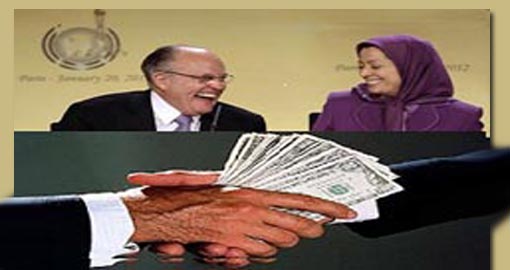
Lieberman is a famous pro-war figure against Iran. He was the one who called on bombing Iran in a 2010 speech to the Council of Foreign Relations. Lieberman who is a paid speaker for the MKO, addressed the group’s events promising them he will “be working closely” with them for a change of regime in Iran.”

Not only the support for the cult of Rajavi as a “resistance” or “opposition” group indicates the ignorance of the group supporters, but also it demonstrates the complexity and filthiness of the political deals that the MKO and its supporters are involved in.

The Iranian American Progress Action Center ( IAPAC) has posted a photo of Maryam Rajavi and his American friends such as Joseph Lieberman and Rudolph Juliani former mayor of New York.

IAPAC’s comment under the photo is revealing. The page explains how Lieberman is selling the American’s security to the Israel-Saudi-MKO alliance:

“There was a commission dedicated to fact finding about 9/11, so far all we know is they didn’t release the parts associated with Saudis and  does not point a finger to Iran as a co-conspirator.”

The page believes that Lieberman’s new allegations “seems to have appeared out of thin air to help Lieberman install his radical Islamic friends.”

However, IAPAC fails to note that the MKO celebrated the 9/11 disastrous event in 2001. It does not notify that Massoud Rajavi has promised his followers to accomplish what AL-Qaida didn’t succeed to do.

The page is right to warn about the dirty relations of warmongers. “Clearly Lieberman and his Saudi owners and Bibi ( Benjamin Netantahu) are creating a pre-text for a war with Iran,” IAPAC commented.” We should not allow American blood and treasure to be wasted on another unnecessary war to make Netanyahu and Saudis realize their dreams.”

The truth is that 9/11 hijackers were from Saudi Arabia who were honored by the MKO at that time. Leiberman and other anti-Iran Hawks should be prudent enough to at least know what the MEK is , otherwise they can continue their hypocrisy.

Mazda Parsi,

September 11, 2016 0 comments
FacebookTwitterPinterestWhatsappTelegramSkypeEmail
Australia

Open letter to the Australian minister of Foreign Affairs and Trade

Department of Foreign Affairs Trade

R G Casey Building, John McEwen Crescent, Barton ACT 0221 Australia

Dear Minister,

On November the 25th the listing of the Iranian “Mojahedin-e Khalq” organization (MKO/MEK), aka “People´s Mojahedin Organization of Iran” (PMOI) with its political wing, the “National Council of Resistance of Iran” (NCRI) and its military wing, the “National Liberation Army” (NLA) on the Consolidated List has to be extended.

Since years, the MKO tries to appear as a democratic exile-opposition, calling themselves “the Iranian resistance”. They spent a lot of money to acquire support from international former political and military officials and launched a huge public-relations-campaign to present themselves as the “only alternative to the Iranian regime”.

But we as MKO-dropouts, critics and relatives of MKO-members daily suffering the ideology and practices of this Cult know better:

Behind the wall, the MKO is a cultish organization with no support among the most Iranians (exiles as well as those living in Iran). The majority of the Iranians despise the MKO for their alliance with Saddam Hussein in the 80s and for their position against the nuclear program (by most of the Iranian population the program is seen as a legitimate right). At least there is the occult and even messianic image, which has been arranged to Maryam Rajavi “President-elect” and “Sun of the Revolution” and the cultish structure of the organization, which raises questions of democracy within the organization itself because Maryam Rajavi remainedthe President of the organization since her “election” in 1993 without any sign of political pluralism.

Daniel Benjamin, the former U.S. State Department’s counterterror coordinator, told the FP-Website 2015: “Being delisted as a Foreign Terrorist Organization — a decision I took part in — doesn’t mean that this group … has suddenly … become trustworthy or worthy of engagement.”[2], beat up critical demonstrators in Saint-Michel in 2012[4].

As well as in physical violence, the MKO is well trained in psychological warfare:

They strictly separate their Members form families and friends. The members do not have any contact to their relatives. Former members and critics are denounced as “agents of the Iranian intelligence” in general. The MKO fights to silence every critical voice. Therefore they already crashed several homepages from former members and critics with cyber-attacks.

But the MKO members also do not flinch from using violence against themselves:

A lot of MKO-members took part in a large number of hunger strikes in the last years (also in Australia) and so revealed servile obedience to their leader, Maryam Rajavi. You may not forget the self-illumination-protest by MKO-members after the French police raid the MKO headquarter in Paris in 2003.

The terrorist history of the MKO, which was reported to the Australian Parliament in brief by Nigel Brew in 2012[6]

In the last years the MKO tried everything to play a role in the Middle East:

First they were fighting to stay in Camp Ashraf at all costs. But when they had to accept that this fight is not to win, they changed their focus to bring the members to Albania and find some allies in the Region. So Maryam Rajavi met with members of the Syrian Revolution, she swarms over the Saudis and lately she met with Palestine President Abbas. So it is no surprise, when several dropouts, escaping from Camp Liberty, tell the MKO has even close ties to ISIS ensuring the MKO can stay in the region.

We as MKO-dropouts, critics and relatives of MKO-members suffering this Cult, urge you to carefully consider the upcoming decision to extend the MKO-listing, or not.

Yours sincerely,

Cologne, August the 31th 2016

1 Hassan Abbaskhani

2 Jahangir Abbassi

3 Amir-Hooshang Abdi

4 Assdollah Abdi-Nematabadi

5 Sorayya Abdollahi

6 Marhemat Abolfathi

7 Heidar Abolhassani

8 Alireza Abooli

9 Amirhossein Abrishamkar

10 Esmael Aghapoor

11 Roya Ahmadbeigi

12 Sajedeh Ahmadi

13 Mohammad Ahmadi

14 Baba Ali Ahmadi

15 Batool Ahmadkhani

16 Mahnaz Akafian

17 Behrooz Akbari Motlagh

18 Reza Akbari Nassab

19 Ali Akrami

20 seyyed Saeed alavian

21 Rostam Alboogheibish

22 Jalil Alboogheibish

23 Behzad Alishahi

24 Asghar Alizadegan

25 Gholamali Allafpoor

26 Ali Amani

27 Zommorod Amini

28 Samad Amiri-Param

29 Bagher Amiri-Param

30 Haj Abdolhamid Anssari

31 Hamid Arab-Dargi

32 Zahra Arab-Dargi

33 Behzad Arab-Dargi

34 Ali Arab-Dargi

35 Amir-Hossein Arab-Dargi

36 Mohammad Araghi

37 Gholamreza Araki

38 Fatemeh Arbabi

39 Hadi Arbabi

40 Eskandar Arjomandi

41 Arman Armani

42 Milad Aryaei

43 Mehdad Ashena

44 Zahra Ashraei

45 Mohammad-Javad Assadi

46 Siavosh assadi

47 Abbas Assadi

48 Mastaneh Assadzadeh

49 Behrooz Assadzadeh

50 Abdolreza Asskereh

51 Mohammad Atabai

52 Siavosh Atighi

53 Maasoomeh Attarian

54 Issa Azadeh

55 Hedieh Azadi

56 Adel Azimi

57 Hassan Azizi

58 Ahmad-Reza Azizi

59 Shahin Baba Ahmadi

60 Fariborz Baba Ahmadi Karimi

61 Mohammad-Reza Bagheban-bashi

62 Hamdamali Bahmani

63 Davood Bakhtiari

64 Reza Bamadi

65 Nader Banifarhan

66 Fahim Bavi

67 sekran Bavi

68 Hossein Bazzazian

69 Rabee Behbahani

70 Raheleh Behbahani

71 Khanom Behbahani

72 Narges Beheshti

73 Mohahmmad

September 11, 2016 0 comments
FacebookTwitterPinterestWhatsappTelegramSkypeEmail
Albania

Albanian Paper: Last of the Mojahedin Khalq arrived to Albania – USA thanks Albania

Yesterday the last 280 Mojahedin members from Camp Liberty, Iraq, arrived in Albania.

Senator McCain welcomed the completion of the mission of transferring the Mojahedin, and thanked the Albanian government.

“In 2003, the United States made a commitment to protect thousands of members of the Iranian dissident organization. Today marks the culmination of this commitment with the safe and successful relocation of all these Iranian dissidents in Albania.

“I express my deepest thanks to the Albanian Government for its hospitality and courage in its efforts to resolve the humanitarian crisis. Albania’s readiness to provide shelter for dissidents is a true testament to the spirit and values ​​of the Albanian people”, he said.

The Mojahedin Khalq (MEK) is an Islamic movement founded in September 1965 to oppose the Shah of Iran and later to fight against the Islamic regime which came to power through violent revolution and murder in 1979.

The group moved to Iraq in 1986 and built Camp Ashraf near the Iranian border, after being granted refugee status by the then president Saddam Hussein.

Washington described the MEK as a terrorist organization in 1997 which had killed six Americans in 1970. In August last year, the United States removed it from the list of foreign terrorist organizations.

The decision was taken by the US Secretary of State, Hillary Clinton, who argued at the time that the Mojahedin had renounced violence and terrorist acts and worked for the closure of Camp Ashraf, after which the MEK engaged in violent protests with Iraqi security forces.

Shqiptarja, Tirana, Albania, Translated by Iran Interlink

—

Vijnë muxhahedinët e funditSHBA falenderon Shqipërinë’Testament për vlerat e shqiptarëve’Çfarë janë muxhahedinët?

Dje kanë mbërritur në Shqipëri 280 muxhahedinët e fundit nga “Kampi i Lirisë” në Irak.

Senatori amerikan McCain ka përshëndetur përfundimin e misionit të muxhahedinëve, ndërsa ka falenderuar qeverinë shqiptare

“Në vitin 2003, Shtetet e Bashkuara ka bërë një angazhim për të mbrojtur mijëra anëtarë të organizatës disidente iraniane.

Sot shënohet kulmi i këtij angazhimi me zhvendosjen e sigurt dhe të suksesshëm të të gjitha disidentëve iranianë në Shqipëri.

I shpreh falënderimet e mia më të thellë të Qeverisë së Shqipërisë për mikpritjen e tij dhe guximin në përpjekjet e saj për të zgjidhur këtë krizë humanitare.

Gatishmëria e Shqipërisë për të siguruar strehim për disidentët është një testament i vërtetë për frymën dhe vlerat e popullit shqiptar’ shprehet ai.

Muxhahedinët (MEK) është një lëvizje islamike e themeluar në shtator të vitit 1965 për të kundërshtuar lëvizjen “shah” në Irak dhe më tej për të luftuar kundër regjimit islamik i cili erdhi në pushtet nga revolucioni i dhunshëm dhe i vrasjeve në vitin 1979.

Ky grup u vendos në Irak në 1986 dhe ndërtuar kampin Ashraf pranë kufirit iranian, pasi i është dhënë statusi i refugjatëve nga presidenti i asaj kohe Adam Hyseni.

Uashingotni e ka cilësuar si një organizatë terroriste pasi në 1997 vranë 6 amerikanë në vitin 1970. Në gusht të vitit të kaluar, Shtetet e Bashkuara të Amerikës kanë hequr nga lista e organizatave të huaja terroriste, një grup muhaxhedinësh iranian të vendosur në Irak (Mojahedin-e-Khalq) ΜΕΚ.

Vendimi është marrë nga Sekretarja e Amerikane e Shtet, Hillary Clinton, i cili u argumentua në atë kohë me faktin se muhaxhedinët kishin hequr dorë nga dhuna dhe nga aktet terroriste dhe bashkëpunuan për mbylljen e kampit Ashraf, për shkak të të cilit ka pasur protesta të dhunshme me forcat e sigurisë të Irakut.

September 11, 2016 0 comments
FacebookTwitterPinterestWhatsappTelegramSkypeEmail
Iraqi Authorities' stance on the MEK

‘MKO was expelled from Iraq in disgrace’

Majed Ghamas, the representative of the Supreme Iraqi Islamic Council in Tehran, has said that the Iraqi nation disgraced the Mojahedin-e-Khalq Organization (MKO) by expelling their remaining members from Iraq, Tasnim reported on Saturday.

The top Iraqi envoy described the MKO as one of the shadowy groups that sought to launch a new wave of terrorist activities in the region.

He said the MKO must stop their terrorist activities as they want to enter other countries.

“The MKO reminds Iraqi people of very painful memories. This is a mutual feeling between Iraqis and Iranians,” Ghamas said.

“Saddam, as the key sponsor of the MKO, was ousted and then the Iraqi government attempted to expel the terrorist group from Iraq, and today, with the Iraqi people’s support, the MKO has been expelled from the country,” he added.

The MKO has existed as an Islamist-Marxist group in Iran since 1965, when it fought against the former Shah of Iran. It performed a number of attacks against the United States soldiers stationed in Iran and then it was put on the U.S. State Department terrorist list.

After the 1979 Islamic Revolution in Iran, the group resorted to bombings and assassinations. It then sided with the Saddam Hussein army the war against Iran in the 1980s.

Backed by the Saddam regime, the MKO launched a military attack on Iran in 1987, one week after UN Resolution 598 brought the war between the Iraq-Iran to a halt.

Iran accuses the group of being responsible for 17,000 deaths.

Saddam also used the group against Shias in the south and Kurds in the north.

September 11, 2016 0 comments
FacebookTwitterPinterestWhatsappTelegramSkypeEmail
Albania

Last remnants of anti-Iran MKO terrorists relocated from Iraq to Albania

The last remaining members of the anti-Iran Mujahedin-e Khalq Organization (MKO) have been relocated from a camp in Iraq to Albania.

According to a Friday statement released by the terror group, the last 280 MKO terrorists were all flown to Albania after leaving Camp Liberty (Hurriya), a former US military base in the Iraqi capital Baghdad.

“This final round of departures marks the successful conclusion to the process of relocating members of Mujahedin-e Khalq Organization (MKO) outside of Iraq,” it said.

The UN refugee agency also confirmed that all the remnants of the group had left the Arab country.

“The international community has now successfully achieved the relocation of all Camp Hurriya residents from Iraq to third countries,” said William Spindler, the spokesman for the Office of the UN High Commissioner for Refugees (UNHCR), on Friday.

Back on August 25, another 155 members of the group, including a number of its senior leaders, had fled Iraq for Albania.

Iraqi leaders had long urged MKO remnants to leave the Arab country, but a complete eviction of the terrorists had been hampered by the US and European support for the group.

The MKO, the most hated terrorist group among the Iranians, has carried out numerous terrorist attacks against Iranian civilians and government officials over the past three decades. Out of the nearly 17,000 Iranians killed in terrorist assaults since the victory of Iran’s 1979 Islamic Revolution, about 12,000, including many top officials, have fallen victim to MKO’s acts of terror.

The terror group fled Iran for Iraq shortly after the Islamic Revolution and began receiving support from Iraqi dictator Saddam Hussein, while siding with him in his eight-year bloody war against Iran in the 1980s.

In December 2011, the UN and Baghdad agreed to relocate some 3,000 MKO members from Camp Ashraf in Iraq’s Diyala province to Camp Liberty. Another group of the MKO terrorists was evicted by the Iraqi government in September 2013 and relocated to the camp to await potential relocation to third countries.

On August 4, Iran’s Ambassador to Baghdad Hassan Danaeifar said that the Iraqi government with the cooperation of the UN had expelled 65 percent of the MKO terrorists and the rest would be deported in the next 45 days.

There has also been a deep-seated resentment toward the group in Iraq both for its criminal past and its full support for Saddam in the brutal crackdown on his opponents.

The terrorist group, which has built a cult-like following, is also known for the brutal elimination of its own members over dissent.

The MKO is listed as a terrorist organization by much of the international community.

September 11, 2016 0 comments
FacebookTwitterPinterestWhatsappTelegramSkypeEmail
Camp Liberty

Final group of Iranian dissidents leaves Iraq camp

BAGHDAD — A camp housing members of an Iranian opposition group in Iraq was officially closed after the last 280 residents were flown to Albania on Friday, the group said.

FILE – In this Tuesday, Sept. 11, 2012 file photo, members of the Mujahedeen-e-Khalq organization seen inside the Liberty refugee camp in Baghdad, Iraq. The Iranian opposition group said Friday, Sept. 9, 2016 that a camp housing its members in Iraq has been officially closed after the last 280 residents were flown to Albania. The Mujahedeen-e-Khalq has been based in Iraq since the 1980s, when they received arms and support from Saddam Hussein during the Iran-Iraq war. (Hadi Mizban, File/Associated Press)

The Mujahedeen-e-Khalq has been based in Iraq since the 1980s, when they received arms and support from Saddam Hussein during the Iran-Iraq war. U.S.-led forces disarmed the group after the 2003 invasion and settled them at a base north of Baghdad.

Late Friday night a car bomb targeting a shopping mall in eastern Baghdad killed 11 people and wounded 28, according to police and hospital officials. Three Iraqi policemen were among the dead, the officials added.

All officials spoke on condition of anonymity as they were not authorized to brief the press.

The attack comes as Iraqi ground forces are moving into position around Mosul ahead of a planned operation to retake the militant-held city from the Islamic State group.

The Iranian opposition group, whose members who were flown out of Iraq Friday, was listed as a terrorist organization by the U.S. State Department for years over its killing of Americans. The MEK was also accused of taking part in the brutal suppression of a 1991 Shiite uprising against Saddam, allegations denied by the group.

The MEK says it renounced violence in 2001. The U.S. military in Iraq signed an agreement with the group in 2004, promising that members would be treated as “protected persons” under the Fourth Geneva Convention. The State Department removed the group from its list of terrorist organizations in 2012.

On Friday, U.S. State Department spokeswoman Elizabeth Trudeau thanked the governments of Albania and Iraq.

“We are grateful to the Government of Iraq for facilitating the departure of the MEK. And we are specially appreciative of the extraordinary efforts of the Albanian Government, the Albanian Prime Mister Rama, to welcome these people who are in need of international protection,” Trudeau said.

U.N. Secretary-General Ban Ki-moon thanked member states and international organizations for “the successful resolution of this humanitarian issue,” in statement issued by his spokesman.

Iraqi forces raided Camp Ashraf, the group’s longtime base north of Baghdad, in 2009, shortly after U.S.-led forces handed over responsibility for the camp to the Iraqi government. The group was later relocated to a former military base in the capital.

Armed groups have repeatedly attacked the group since Saddam’s ouster, killing scores of its members.

While the casualty figures could often not be independently verified, the United Nations repeatedly expressed concern about the safety and security of residents of the group’s camps.

The group said last year that more than 20 members were killed in a missile attack on their camp, but the figure could not be independently verified and the MEK has made exaggerated claims to the media in the past.

By Qassam Abdul-Zahra , Associated Press writer Murtada Faraj contributed to this report.

September 10, 2016 0 comments
FacebookTwitterPinterestWhatsappTelegramSkypeEmail
Newer Posts
Older Posts

Recent Posts

  • A Criterion for Proving the Violent Nature of the MEK

    December 31, 2025
  • Rebranding, too Difficult for the MEK

    December 27, 2025
  • The black box of the torture camps of the MEK

    December 24, 2025
  • Pregnancy was taboo in the MEK

    December 22, 2025
  • MEPs who lack awareness about the MEK’s nature

    December 20, 2025
  • Facebook
  • Twitter
  • Instagram
  • Youtube

© 2003 - 2025 NEJAT Society . All Rights Reserved. NejatNGO.org


Back To Top
Nejat Society
  • Home
  • Articles
  • Media
    • Cartoons
    • NewsPics
    • Photo Gallery
    • Videos
  • Publications
    • Books
    • Nejat NewsLetter
    • Pars Brief
  • About Us
  • Contact us
  • Editions
    • عربي
    • فارسی
    • Shqip